

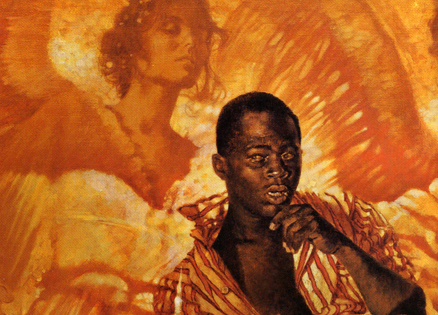
Embrace God's truth with our new book, The Lies that Bind

Easter Awakening

I leaned over the hospital bed in which my 18-year-old son, Art, lay in a comatose state that seemed like death. Tubes fed him through the nose; a machine breathed for him, breaking the harsh stillness of the room with its mechanical gasps.

I moved my lips close to Art’s ear and whispered, “Honey, I had a dream last night, so beautiful that it seemed real. Two magnificent angels stood by your bed. It means you will be healed, I know it.”

Did he hear me? Can the soul hear when the body is asleep? Art didn’t move, and he didn’t acknowledge my words. If only he would open his eyes! Just that, Lord.

Before the accident two nights earlier, this limp form under the stiff hospital bedsheets had been a strapping high school senior, star captain of his football team and the finest son a mother could ever want. Proud of the body God had given him, Art didn’t drink or smoke. He held strong values and went to church regularly. His dream was to play professional football and set a good example for other young people.

But now doctors held out little hope that he would walk or talk or do anything productive again. It was as if Art had gone on and left his broken body behind. Could that be true?

On the evening of January 1, 1989, Art had attended a dance with some friends. When his father and I went to bed that night, a cold rain beat at the windows. I am usually a sound sleeper, but at about 1 a.m. I awoke with a start and shook my husband. “Arthur,” I said, my heart racing, “I’m afraid something terrible has happened to our boy.”

Before I could get back to sleep, a call came from St. Vincent’s Hospital. Art had been driving his friends home when a pickup truck turned into the side of his car, slamming it into a tree. One of Art’s passengers died. The others weren’t badly hurt. But Art lay close to death in the emergency room.

I will never forget the panic of that night, the dread and the sense of helplessness as my boy fought for life. After Arthur and I threw on some clothes we raced in our car to St. Vincent’s. Along with some friends and family members we had alerted, we huddled together and prayed unceasingly while doctors worked on Art.

The news from the operating room was grim. Art’s windpipe and chest were nearly crushed from the impact with the steering wheel. Most worrisome was the injury to his brain.

“All that’s saved him so far,” one doctor told us, “is his strong athlete’s body. But the area around his brain stem is so severely damaged he might never regain consciousness.”

At about 5 a.m. Dr. Frank A. Redmond finally came to us and said Art’s condition was stabilized and he would be moved into the intensive care unit. He revealed that on at least one occasion that night Art had been clinically dead but they were able to revive him. “I did a lot of praying,” Dr. Redmond admitted. “Something kept your boy alive.”

Eventually they let us see Art in ICU. I tiptoed to his bedside. To see him so still, to see the breathing tube in his trachea, his closed and swollen eyes—my own flesh and blood—it was just devastating. I collapsed into my husband’s arms and sobbed. “We can’t give up,” he whispered, holding me tight. “We have to keep praying for a miracle.”

I wiped my eyes and turned back to Art. Would his eyes ever open again, his lips speak, or his arms move voluntarily? Would he ever again sneak up behind me in the kitchen, throw those muscled arms around my waist and kiss me, saying, “Ma, I sure do love ya”?

The doctors didn’t think so. “Even if your son wakes up, he probably won’t be able to walk,” one said. “He won’t have a memory. He won’t know who you are.”

I refused to believe my own son wouldn’t know me. God is merciful.

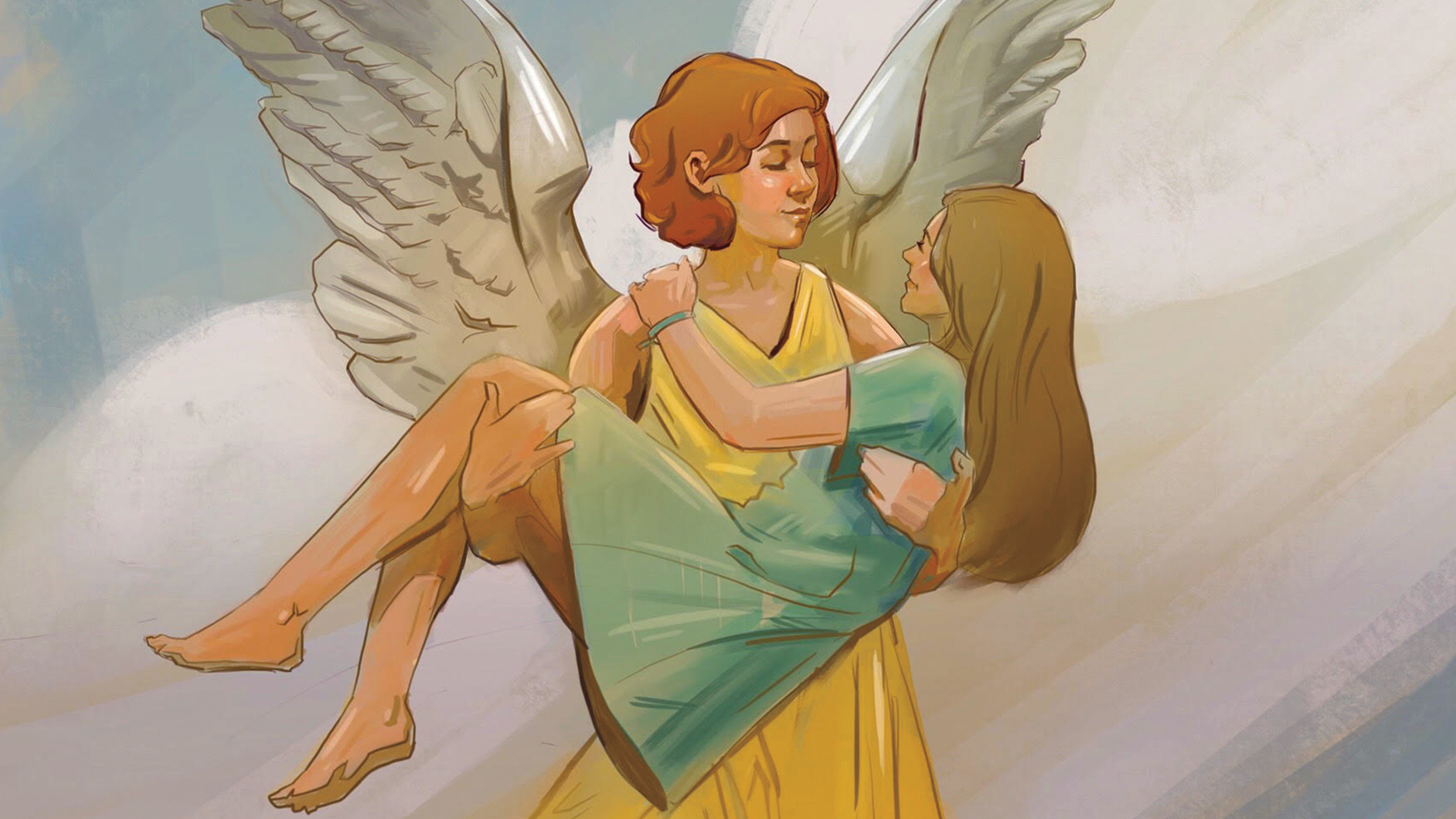
Asleep in a nearby room the hospital let me use that night, I was given a different prognosis. In a dream as vivid as life, I saw two colossal angels floating over Art’s bed, one above his head and the other at his side. They were glowing, shimmering, their streaming robes lighter than air. Their faces were indistinct, but they had a golden brilliance that emanated love, compassion and healing.

Then I saw Art sitting up in bed, talking with his friends. My heart beat with joy. My son would be healed! What else could this vision mean?

I awakened with the images still flowing through my mind and rushed into Art’s room, half expecting to see him sitting up in bed laughing. But he was still in a coma, still near death. That is when I pressed my lips close and whispered my dream to him.

From then on I carried the picture of those two great heavenly beauties in my mind’s eye, and every day I reminded Art about them. I knew his spirit heard me. That’s why we talked to him—his father and I, our relatives and ministers, his friends from school, and the football team and his coaches. We spoke to Art constantly, telling him how much we loved him, keeping a vigil.

Thirty days passed. I was at my son’s side continually, talking, praying, playing tapes from his friends. I refused to believe he wouldn’t ever get up out of that bed, that he wouldn’t know his own mother. The doctors tried to temper my optimism, while we continued to pray.

What in life is more realistic than faith, more practical, really, than hope? Isn’t that all I had? I knew my son would get well. I kept visualizing it and thanking the Lord, over and over again.

But it was hard to keep believing as the weeks wore on. To see my boy fed by tubes when he used to feast on my cooking, homemade lasagna and fried chicken.

Finally Art was transferred to St. Francis Hospital in Green Springs. Every time I came to visit him all of the nurses would shake their heads, knowing the question that was on my lips: Has there been a change? Anything?

Three months passed. Then I saw the angels again.

It was during Holy Week and Art’s older sister, Rachael, and I had been talking about how much Art loved Easter. Again I dreamed I was at Art’s bedside. Those same golden angels, both powerful and compassionate, looked over my son, who was awake, his eyes alert and bright. This time, however, the angels were both on Art’s right. I took this as a reaffirmation of God’s message.

Art’s eyes opened on Good Friday. I had had a special feeling when I came to see him that afternoon. When I walked into his room those big, brown eyes were looking right at me. Could it really be? I slowly walked around the bed. Art’s eyes followed. He was awake! He was tracking me! I fell to my knees at his bedside and gave thanks.

Doctors, however, were cautious about interpreting this too optimistically. Then came Easter. As his father and I arrived for a visit after church, a nurse rushed up waving a piece of paper. In a handwriting I knew as well as my own was our phone number, obviously written out with great difficulty.

“It was as if he wanted us to call you,” the nurse reported. “His memory is intact!” On the day of our Savior’s resurrection, part of Art had been resurrected, too. He hadn’t forgotten us.

A month went by and nothing much changed. Art still hadn’t uttered a word since coming out of his coma. One day Art’s grandmother accompanied me to the hospital. When we left Art’s room she lamented, “Delores, I don’t think he’s ever going to talk again!”

I was about to disagree when a familiar voice jolted us: “Ma!”

We froze. It rang out again, loud and clear. “Ma!”

Art was talking. His first word now was the first word he had ever said as a baby: Ma. I knew the Lord would not let my son forget his mother.

Though his words were few and hesitant, the hospital immediately began speech therapy, followed by physical therapy. His progress was slow—until a therapist used a little psychology and a mirror. The athlete in Art was proud of the body he had taken care of and trained so well. When the therapist showed Art how his physique had atrophied during the coma, Art’s face tightened with determination. From that moment on he strove to regain his old physical form.

Finally Art was able to tell us what he recalled about the night of the accident.

“I remember being on the operating table,” he said. “I saw the doctors working on me. Three times I tried to leave my body, and three times the Holy Spirit made me go back because my family was praying and God would heal me.”

Art has had a long road back, and I remind him about the angels I saw in my dream whenever his struggle is wearing him down. His speech was slow for a long time, but now he speaks almost as well as he did before the accident. He walks with a cane, but leans on it less and less.

This June he will graduate from the University of Toledo with a degree in marketing. Art still wants to play football again, which some people might think is too optimistic. But Art believes that with the power of many prayers behind him, anything is possible.

I know it’s a miracle when my son sneaks up behind me in the kitchen, slips his arms around my waist, kisses me and says, “Ma, I sure do love ya.” It’s the miracle we prayed for and the one the angels in my dream promised. It’s the miracle of my Art, alive today.

Download your FREE ebook, Angel Sightings: 7 Inspirational Stories About Heavenly Angels and Everyday Angels on Earth

Do You Believe in Angels?

The sun was just beginning to come up as I pulled into the ER parking lot. The morning started smoothly enough, with only a handful of routine cases. I was coming out of room 4 when Virginia, the head nurse, walked over, glanced at the empty major trauma room, and motioned for me to follow her.

“Dr. Lesslie,” she began. Her voice was somehow different, and it surprised me. She was speaking quietly, but with a definite seriousness, and there was something else there. It was a gentleness, something I couldn’t remember hearing before. “Do you believe in angels?”

I sat there, looking at this ex-military nurse, with her starched and stiff white uniform and the pointed white cap on her head. This was a woman who intimidated most of the physicians on the medical staff and who never backed down from the biggest, most belligerent troublemaker in the ER. In fact, with her feet apart and her hands on her hips, she never failed to back down all of them. And here she was, sitting in front of me and asking me this question.

I studied her face for a moment and knew that her question was serious. And I knew she really wanted to know what I thought. “I do, and I think if you work in the ER long enough, you have to.”

“You know I’m not talking about wings and harps and halos and all of that,” she replied, smiling a little. “Although I’m not ruling it out entirely.” She chuckled a little, and I found myself relaxing, intrigued by this conversation. We had never talked like this before. “Do you remember the little Carpenter girl?” she asked me. “Emmy, I think her name was. The child with the leukemia?” It had only been a few months, and I clearly remembered the six- year-old.

“Yes, I was here the last time she came in,” I answered. “You were here too, if I remember correctly. It was just two days before she died.” “And do you remember what she told us that morning?” I tried to focus, struggling to remember anything Emmy might have said, something that would have stuck in my mind. But I had been busy, in and out of the room, trying to get things lined up for her admission and talking with her specialists. “I don’t know,” I answered finally. “I don’t remember anything unusual.”

“Well, I was in the room with her, and she was lying on the stretcher, as calm and peaceful as always. And then she asked me if I saw them.” Virginia paused and put her hand to her chin. Then she took another deep breath, sighed, and went on. “I asked her. ‘Who?’ and she pointed to the end of the stretcher and said, ‘Those beautiful ladies.’ ”

Virginia’s voice was trembling, and tears were forming in her eyes. But she continued. “I told her I couldn’t see them, but I knew they were there. And Emmy said, ‘They like you, Miss G.’ And Dr. Lesslie, I can’t explain it, but I had this feeling, it was the most peaceful…” She couldn’t go on, and I waited.

Finally, she looked up at me. “And then that little girl smiled and said, ‘Miss G, they told me not to worry and that everything will be alright. They said Jesus knows my name. And he knows yours too.’ ” Once more she was silent, and I just looked at her. And then I wiped away the tears from my own eyes. Virginia sat up straighter, slapped her knees, and leaned closer to me.

“Dr. Lesslie, there are different kinds of angels in this world, and I believe the Lord puts them in our lives when we need them most, at just the right time and at just the right place. It’s all more than I can understand, but I know it’s all real. And I do believe in angels, Dr. Lesslie. You just have to keep your eyes open. They’re out there and they’re with us. I know that for certain.”

Don Piper’s Angelic Experience

I was on my way home from a convention, heading to Alvin, Texas, where I served as a minister at South Park Baptist Church. I drove at a moderate 50 miles an hour because the January day was chilly and rainy, and the narrow two-lane freeway had no shoulders. About 11:45 A.M., an 18-wheeler coming from the other direction weaved across the center line and hit my car head-on. The truck rolled on top of my car, slamming it into the side railing. The accident report states that the impact was about 110 miles per hour.

The first responders on the scene examined me, found no pulse, and declared that I had been killed instantly. I have no recollection of the impact.

In my next moment of awareness, I was standing in heaven. Joy pulsed through me as I looked around, and at that moment I became aware of a large crowd of people standing in front of an ornate gate. Every person was smiling, shouting and praising God as they surged toward me.

The first person I recognized was my grandfather. He looked exactly as I remembered him, with his shock of white hair and what I called a big banana nose. He stopped in front of me. “Donnie!” His eyes lit up, and he held out his arms and embraced me, once again the robust, strong grandfather I had known as a child.

Also in the crowd was Mike Wood, a childhood friend who was killed in a wreck at age 19. As he slipped his arm around my shoulder, I was amazed by the brightness of his smile. He seemed so alive.

There were others: Barry Wilson, my classmate in high school who had drowned in a lake; two teachers who had nurtured me in my faith; relatives I had last seen at family reunions. All looked exactly as I once knew them—although they were more radiant and joyful than they’d ever been on earth.

Coming out from the gate, only a short distance ahead, was an even more luminous light than that which surrounded us. I could hardly grasp the dazzling colors. A holy awe came over me as I stepped forward toward the gate. I had no idea what lay ahead, but I sensed that with each step, heaven would grow more wondrous.

Then came the music.

I can only describe it as a swoosh of wings. But I would have to magnify that thousands of times to explain the effect of the sound in heaven.

Or the sounds, I should say. A myriad of sounds filled my mind and heart. The most amazing one, however, was the angels’ wings. I didn’t see them, but they made a beautiful melody with a cadence that seemed never to stop. The swishing resounded as if it was a form of unending praise.

A second sound remains, even today, the single, most vivid memory I have of my entire heavenly experience. Hundreds of songs were being sung at the same time. As I approached the magnificent gate, I heard singing from every direction and realized that each voice praised God. I write voice but some seemed to be instrumental. Praise was everywhere, and all of it was musical, yet comprised of melodies and tones I’d never experienced before. Every sound blended, and each enhanced all the others.

I did not see God. Although I knew God was there, I saw only a shining iridescence as I peered through the gate. The only way I’ve made sense out of that part of the experience is to think that if I had seen God, I would never have wanted to return. My feeling is that once we’re in God’s presence, we will never return to earth again, because it will be empty and meaningless by comparison. For me, just to reach the gates was amazing, a foretaste of joy divine.

Then, just as suddenly as I had arrived at the gates of heaven, I left.

A fellow pastor, Dick Onerecker, and his wife, Anita, were traveling home from the same conference when they came upon the crash scene. Dick got out of his car and walked toward a police officer. “I’m a minister,” he said. “Is there anybody I can help, or pray for?” The police officer shook his head. “The people in the truck are shaken up but they’re fine. The man in the car is deceased.”

Dick tells it this way: “God spoke to me and said, ‘You need to pray for the man in the car.’” Dick and I had never met. But over the protestations of the EMTs he walked to my car and crawled into the trunk, the only way he could reach me. He strained to reach over the backseat, put his hand on my shoulder and prayed for me. Then he sang “What a Friend We Have in Jesus.”

And I began to sing with him.

Dick scrambled out of the trunk of my smashed car and raced over to the nearest EMT, shouting, “He’s come back to life!” In that first moment of consciousness, I was aware of two things.

First, I heard my own voice and then became aware of someone else singing. The second thing I was aware of was that someone clutched my right hand. It was a strong, powerful touch, and the first physical sensation I experienced with my return to earthly life.

A little more than a year after the accident I was privileged to share my story in Dick’s church. His wife, Anita, was there, and so was my own family. Because I still wore leg braces, two people had to help me walk up on the platform.

Afterwards, Anita wanted to correct me on one small detail. “You said Dick held your right hand. But that was physically impossible.”

“I remember it so clearly,” I said.

“You were slumped over on the seat toward the passenger side with your right hand on the floor of the car. From where Dick was, he could barely reach your shoulder. There was no way he could have reached your right hand. Someone was holding your hand. But it wasn’t Dick.”

Immediately I thought of the verse in Hebrews about entertaining angels unaware. As I pondered for a moment, I also remembered other incidents. Many times during my months in the hospital, in the middle of the night when I was at my worst, I felt a presence—something, someone—sustaining and encouraging me.

Since that conversation with Anita, the facts confirmed by Dick, I’ve been more convinced that the angel gripping my hand was God’s way of sustaining me and letting me know that he would not let go of me no matter how hard things became.

I may not feel that hand each day, but I know that hand is there.

READ MORE: DON PIPER ON ’90 MINUTES IN HEAVEN’

Do Angels Really Exist?

My friend Beverly Hughes (co-founder of Sweetwater Youth Ranch in Asheville, NC) posted this story recently, and I asked her if I could share it with you…

It was the day after Christmas in 1994, and with two toddler girls, I was exhausted. The past few days had been hectic with shopping, baking, wrapping gifts and making rounds to visit grandparents. This was the day I was looking forward to. I already had plans to stay home, sleep late and watch my babies play with their new toys.

But now I was in a huff because I had been awakened abruptly. It was almost like someone had hit me to wake me up. I rolled over and looked at the clock to see what time it was, and 6:00 AM glared at me in bright red letters.

The windows in our single-wide mobile home were frosted over, and for good reason—it was 13 degrees outside. I glanced at my husband, and he was sound asleep. I looked to see if the girls had gotten out of bed and come into our room, but they hadn’t. I lay there listening to see if I could hear little footsteps, or even big ones from an intruder, but there was only silence. Everybody was fast asleep but me.

I started to fall back asleep but a gnawing feeling loomed over me. I could smell the water pot that sat on the wood stove, which usually meant it was empty. I threw the covers off and trekked to the living room where my eyes landed on the water pot that was half full.

Disgruntled, I turned to head back to my cozy bed when I noticed a flicker on the ceiling beside the wood stove pipe. It took me a minute to focus because it was just a flicker and my eyes were still half shut, but as I focused, I realized it was a flicker of fire. I made my way back to the bedroom where I woke my husband and announced “I think we are on fire!”

He sat straight up and replied “You THINK we are on FIRE?” He followed me to the living room where the flicker had by now spread farther around the pipe. He jumped into action, yelling, “Call 9-1-1, and then get the girls out of the house!” He grabbed his gloves and started ripping out the ceiling around the pipe, removing the fire into the ash bucket.

I called for help, and then turned around to see he had the front door propped open so he could carry the ash bucket out and dump the embers onto the frozen ground. He told me to get the truck and to take the girls to Grandma’s house.

As I returned from dropping them off, I was met by the firemen looking for our home. They followed me, and we found my husband already had the fire under control. After assessing the situation, the fireman said we were fortunate. Considering the age and construction of our mobile home, it would have gone up in a blaze in seven minutes had I not awakened.

Seven minutes.

As I stood there letting it sink in that our lives were spared by a margin of seven minutes, I was overwhelmed. I looked at the charred hole in the ceiling, the black ashes ground into the carpet, the few pictures left on the wall and my husband’s burnt gloves lying on the table, and I wondered why we were alive.

Why did I wake up? Who woke me? I believe with every fiber of my being that an angel—my guardian angel—had shaken me just a few hours earlier and whispered into my heart that I could not go back to sleep.

Twenty-one years later, as I lay there thanking the Lord for another day, I was reminded of that frozen winter morning when He let me know without a shadow of a doubt that He had a job for us to do. I lay there wondering, “What can I do today to serve Him?”

The answer was clear. “Tell your story. Proclaim My power, My glory and My grace.”

What story can you tell today about what God has done for you?

Do Angels Help You Pray?

Prayer can be a lonely business.

Sure, we may pray with others in church or around the dinner table. We may ask friends to pray for us. But much of the time, we pray alone, right? Especially our most desperate prayers, those we might not share with others. But did you know that you never pray alone? The Bible says that even when you don’t know what to pray, the Holy Spirit of God prays with you (Romans 8:26).

But did you know that angels also play a role in your prayers?

The eighth chapter of the last book of the Bible begins by describing a lengthy silence in heaven. John, the apostle who wrote the account, doesn’t explain the silence, but I believe it was a silence of anticipation. A silence of expectancy. A silence of eagerness.

Because virtually the next thing John describes in Revelation 8 concerns the prayers of the saints:

[An] angel, who had a golden censer, came and stood at the altar. He was given much incense to offer, with the prayers of all the saints, on the golden altar before the throne. The smoke of the incense, together with the prayers of the saints, went up before God from the angel’s hand (Revelation 8:3-4, NIV).

I think that was why heaven fell silent. That is how heaven views prayer, how heaven receives prayer.

Notice that the angel had a golden censer. There was nothing more valuable to the first-century mind than gold, and there is nothing more valuable in the economy of God’s Kingdom than prayer.

Notice also that the angel was given “much incense” to offer along with the prayers, purifying them and ensuring their acceptability before the throne of God. The incense that was used in the tabernacle and Temple throughout Israel’s history was expensive stuff. It was compounded from a detailed commandment issued by God himself (Exodus 30:34). Some of the ingredients had to be imported, from Arabia, for example. So the picture of “much” heavenly incense—as opposed to the earthly kind—indicates an impressive investment.

There could be another reason the angel was given “much incense” to offer. The incense was intended to mingle with “the prayers of all the saints”—eloquent and upright prayers, as well as imperfect prayers, prayers offered in weakness, and prayers that are incomplete or misguided. My prayers (which must require mounds of incense). And yours.

Your prayers—the good, the bad, and the ugly—are hand-delivered by an angel, offered along with the prayers of preachers and priests, monks and missionaries, children and dying saints, and all of it purified with “much” heavenly incense.

Note, finally, that the comingled incense and prayers “went up before God from the angel’s hand.” We routinely think in terms of God hearing our prayers (and perhaps often imagine that He hasn’t heard). But the picture of Revelation 8:4 involves more than hearing. The smoke and smell of incense mingled with the prayers, so that God received them, saw them, smelled them, heard them, inhaled them.

So, any time you pray, try to remember that you never do so alone—and that your prayers are hand-delivered by an angel, purified with “much incense,” to the golden altar before the throne of God. All of them. Perhaps in a more comprehensive way than we have ever been bold enough to imagine.

Adapted in part How to Survive the End of the World by Bob Hostetler (Leafwood Publishers, 2012).

Did She Get a Glimpse of Heavenly Love?

The last thing I remembered, I was sitting in my hospital room, recovering from the birth of my second child, a daughter. It was February, 1971. After a long, difficult delivery my husband and parents had gone home to rest. The baby was in the hospital nursery. I was ready to sleep too. Then my back started to hurt. I told the nurse when she came to check on me and then…

How could I explain it? More nurses rushed in. One said the word “hemorrhage.”

The next thing I knew I was weightless, floating around as if on a cloud. I was happy. My soul was filled with a marvelous peace I was sure no human had ever experienced. Not on earth, at least. Lord, where am I?

But I already knew. There was no place on earth that felt this good. I had to be in heaven. How wonderful, I thought, to feel this way forever!

I drifted happily, imagining a perfect future stretching out before me. Then my thoughts began to stray. I had a lot of people I loved back on earth. People who loved me too. Like my parents. Lord, it will be really hard on them to lose a child. But I had brothers and a sister who would be with my parents to help and support them. Together the family could come to terms with my death. Eventually they would learn to be happy again…

Once more I drifted, relishing the sensation of a world without cares or sorrow. I also became aware of another sensation, a soft touch on my head, gentle and soothing. An image of my husband rose up before me. James. Lord, it will be really hard on him to lose his wife, I thought. But James was young, I told myself. He was a good man. He would find new love. Find a helper, a partner. Someone to depend on. He’ll find happiness again.

Happiness was all around me now, filling my heart, lifting me higher. Nothing could compare to how loved I felt. How perfectly happy. The gentle touch on my head continued. Now I could identify it. Someone was playing with my hair, stroking the strands. I’d done the same to my daughter many times as we sat together, or when I read her a story before bed…

My daughter! I saw both my children clearly before me. Melissa, two and a half, and her little sister, Teresa, not even a day old. I immediately felt something other than joy. Lord, my children. Who will teach them? Who will tell them about you and your love?

I tried to imagine someone—anyone—loving my children as much as I did and I couldn’t. I didn’t want to leave them. Not for anything. Not even for heaven. “Please let me go back,” I said. No voice replied, but words appeared before me, as if projected on a screen: “Ask and it shall be given.”

A moment later I was somewhere else. Back in my body. It was as if someone had laid me down gently, holding my head and my feet, like laying a baby in a crib. The delicious sensations of heaven were replaced by the scratchy sheets of a hospital bed. I heard people around me. A doctor, the nurses. “You lost a lot of blood,” the doctor said. “Lost consciousness. We’ve been giving you transfusions.”

The doctor packed me in bandages until the hemorrhaging stopped. By the time my parents and James rushed back to the hospital I was doing better. Luckily I didn’t need surgery. The baby and I were able to go home in a couple of days.

When my mom came to visit, I was still very weak and anemic from the blood loss. But I had no complaints. “That night, after we left, I called the hospital to ask how you were doing,” Mom said. “I called just as everything was happening…”

It was hard to imagine so much going on while I was floating on a cloud of peace. I was only unconscious for about 15 minutes, but my memories of the experience were incredibly vivid. I hadn’t told anyone about my experience. It was too hard to describe. Besides, what if James or my parents thought I imagined it?

“Wilma,” Mom said. “I called the hospital after we left because I knew something had happened. I wasn’t going to tell you, but—”

“Tell me what?”

“I saw you in your hospital room,” she said. “In a vision. The doctors were working on you. And there was someone else there. An angel.”

“You had a vision? Of me?” I said. “You saw an angel in my room?” Mom nodded. “The angel was standing at the head of your bed. She was playing with your hair.”

I felt a tingle on my scalp where the angel’s fingers had been. “The angel took her hand and ran it under you from the top of your head down to your feet. I saw everything so clearly. Watching her I was afraid. I was sure she was taking you to heaven.”

“No, Mom,” I said. “What you saw was the angel bringing me back.” One day I’d return to that glorious place, I knew. Until then, I would be the best mother I could be. I had a new baby and a toddler. When they got older I would teach them about angels. I knew just where to start. With my very own guardian.

Did you enjoy this story? Subscribe to Angels on Earth magazine.

Did God’s Voice Help Save Her Son’s Life?

Three-year-old Jonah was all tucked in, ready for a bedtime story. Tonight’s, I decided, would come from the Bible. I told Jonah about Samuel, a little boy like himself, who lived in the temple with the priest Eli. One night after Eli lay down to sleep, Samuel heard someone call his name. He ran over to Eli and said, “Here I am!”

“But it wasn’t Eli who had called Samuel’s name,” I explained to Jonah. “It was the Lord.”

When the story was over, we spoke about Samuel, and how God speaks even to little boys. I thought it might be fun to talk about what God’s voice might sound like. I asked Jonah, “Have you ever heard the voice of God?”

“Yes,” he said, without hesitation. “The day I got run over by the truck!”

I was stunned. Of course, I remembered the day he was talking about. I would never forget it. It was only a few months earlier. It seemed like only yesterday that the doctor had finally removed the cast from Jonah’s leg.

My husband, Wade, had driven his truck to work that day. I was at home doing the dishes when I heard Wade pull into the driveway. Usually he backed the truck in, but today he drove in straight. He jumped out and ran into the house to grab a tool he’d forgotten. “See you tonight,” he said, kissing me goodbye.

I returned to doing the dishes. Wade backed out, the tires crunching over the crushed shells in the driveway. Then I heard a terrible scream. Wade? I thought. He ran back into the house, carrying Jonah in his arms. When had Jonah gotten outside? A black tire mark showed on one of his legs.

“I was backing out of the driveway,” Wade said. “I turned out into the street and looked back. Jonah was curled up on the ground. I ran over him!”

Wade laid Jonah on the couch. I called 911. Soon the house was full of paramedics, firemen and police. An EMT gently prodded Jonah. Wade and I held our breath and prayed.

Finally, the EMT looked up at us. “He’s going to be fine,” he said.

We almost collapsed with relief. Thank you, God! I thought.

We took him to the hospital for a full examination. He had a small fracture above his knee and would have to wear a cast for six weeks, but he had sustained no internal injuries. “Wherever he was, I never saw him at all from behind the wheel,” Wade told me shakily after we got home. “He must have run up beside me as I went out. The police think the truck just bumped him.”

Jonah had been through so much that we didn’t want to upset him with a lot of questions. At three years old, he probably couldn’t really tell us what happened exactly anyway. But as I was putting him to bed that first night with his leg in a cast, he asked me, “Mommy, why does Daddy have a tire under his truck?”

“That’s a spare tire,” I started to explain. “In case Dad…” I trailed off, realizing what Jonah’s question meant. He had never seen the tire before, because it could only be seen from underneath the truck. Jonah had been run over. He had just avoided being crushed by any of the tires.

“If he’d been just a few inches further down the driveway,” Wade said when I told him. “I would have run over him when I turned onto the street.”

Neither of us could bear to think of what could have happened. But at church the following weekend—Easter Sunday service—we felt as if we had our own miracle to celebrate, and left it at that. We accepted that we may never know exactly what had happened. But now, after the bedtime story about young Samuel, Jonah was filling me in on the mystery.

“God spoke to you that day?” I said.

“I was trying to climb up on the back of Daddy’s truck,” he said. “Like a garbage man. The truck started moving and I fell off,” he said. “But I held on to the bumper.”

I could easily picture it. Jonah gripping the back bumper, his arms outstretched as the truck rolled in reverse, pulling him headfirst and dragging him on his back down the driveway, his body all but hidden beneath the truck. There was no way that Wade could have seen him as he backed out. Jonah…

“That’s when I heard God,” Jonah said, matter-of-factly. “He said, ‘Let go!’ So I let go.”

He let go just in time to stay safe between those big wheels, and to watch the spare tire pass over his head but be out of harm’s way when those big wheels turned.

What an unexpected ending to tonight’s bedtime story. God had spoken to Jonah as clearly as he spoke to Samuel. Or maybe little boys just know how to listen.

For more angelic stories, subscribe to Angels on Earth magazine.

Did Angels Protect Her During a Snow Mobile Crash?

Wind whipped through my hair as I flew over the snow. It was glorious! Until my snowmobile sputtered beneath me. Not again. I slowed to a stop. My friends zoomed ahead on the snow-covered trails through the woods, maneuvering easily, dodging trees and rocks.

I’d never ridden a snowmobile before today. But when I met some folks who invited me up to the trails outside Twisp, Washington, I jumped at the chance. Excitement? Count me in. I went scuba diving, climbed mountains, even jumped out of airplanes. Did I ever worry about hurting myself? Never! I was young and invincible. I’d gotten a few bruises here and there, but I couldn’t imagine getting seriously hurt. Not me. Especially on this slow-mobile I was riding.

One of the group headed back toward me. “Conked out again?” he said as he swished up beside me.

I lifted my goggles. “Yes. Again. This is frustrating.” Speeding through the snow was so much fun, but sputtering to a stop every 10 minutes was anything but. We’d been out over an hour and I wanted to race over the snow.

“Why don’t we switch?” he said.

“I was hoping you’d say that.” I quickly climbed onto his big, shiny snowmobile, put my goggles back on and tightened my helmet’s chin strap.

“This one’s more powerful than the one you’re riding,” my friend said.

“You need to be careful with it.”

“I can handle it.” I was an expert by now, after all.

I settled myself on the seat and started the engine. Right away I could feel its power. I stepped on the accelerator and off I went, speeding through the snowy forest. The machine ran like a dream, except for a slight pull to the left that made it a bit difficult to steer. I accelerated, which made it easier. A little more acceleration and it wasn’t pulling at all. This is better!

All at once a field full of boulders came into view up ahead. I gripped the handlebars and prepared to make a sharp right turn to avoid them. My eyes dropped to my speedometer: 89 miles per hour. That fast? I squeezed my brakes hard and jerked the handlebars to the right.

The snowmobile kept going straight. It didn’t slow a bit. It couldn’t. I’m not touching the ground! I realized. I was airborne and headed straight for that field of boulders. I lifted my eyes to the sky. Well, God, here goes.

I waited for the fear to hit me. The fear of knowing I was about to be seriously hurt, if not killed. Instead I felt complete peace. I was not afraid.

The snowmobile hit a boulder and I was launched out of the seat. I smashed through the windshield and sailed into the air, over the boulders, my arms straight at my sides, as if I’d been shot out of a cannon. I must have looked like a small missile flying over those huge rocks. To my right I heard a crash.

My flight ended with a muffled thump that put me facedown in a soft patch of snow. I was afraid to move. I carefully shifted an arm, a leg. Wow, I feel great. I had landed perfectly in a tight space between several boulders. Even my arms had been protected by being straight at my sides. It was as if God had picked me up by the collar and said, “I think I’ll put you down right…here.”

Someone was calling my name. The friend who’d switched snowmobiles with me came running, jumping from boulder to boulder to the spot where I lay. He pulled me out of the snow and turned me over.

“I’m fine,” I said. “Really, I’m fine.”

“I should have given you a stronger warning,” he said. “You could have been killed.” He was almost in tears.

It wouldn’t have done any good. Some lessons just have to be learned the hard way. But this time wasn’t one of them, at least not for me. In the distance I saw smoke and flames coming from where the snowmobile had crashed. But God had spared me. If I was indestructible that day, it was only by God’s grace.

Today I still like adventure. I go hiking, swimming and cycling. But that daredevil girl I used to be is long gone. I know my limits, and I know God’s the only one who has none.

Did you enjoy this story? Subscribe to Angels on Earth magazine.

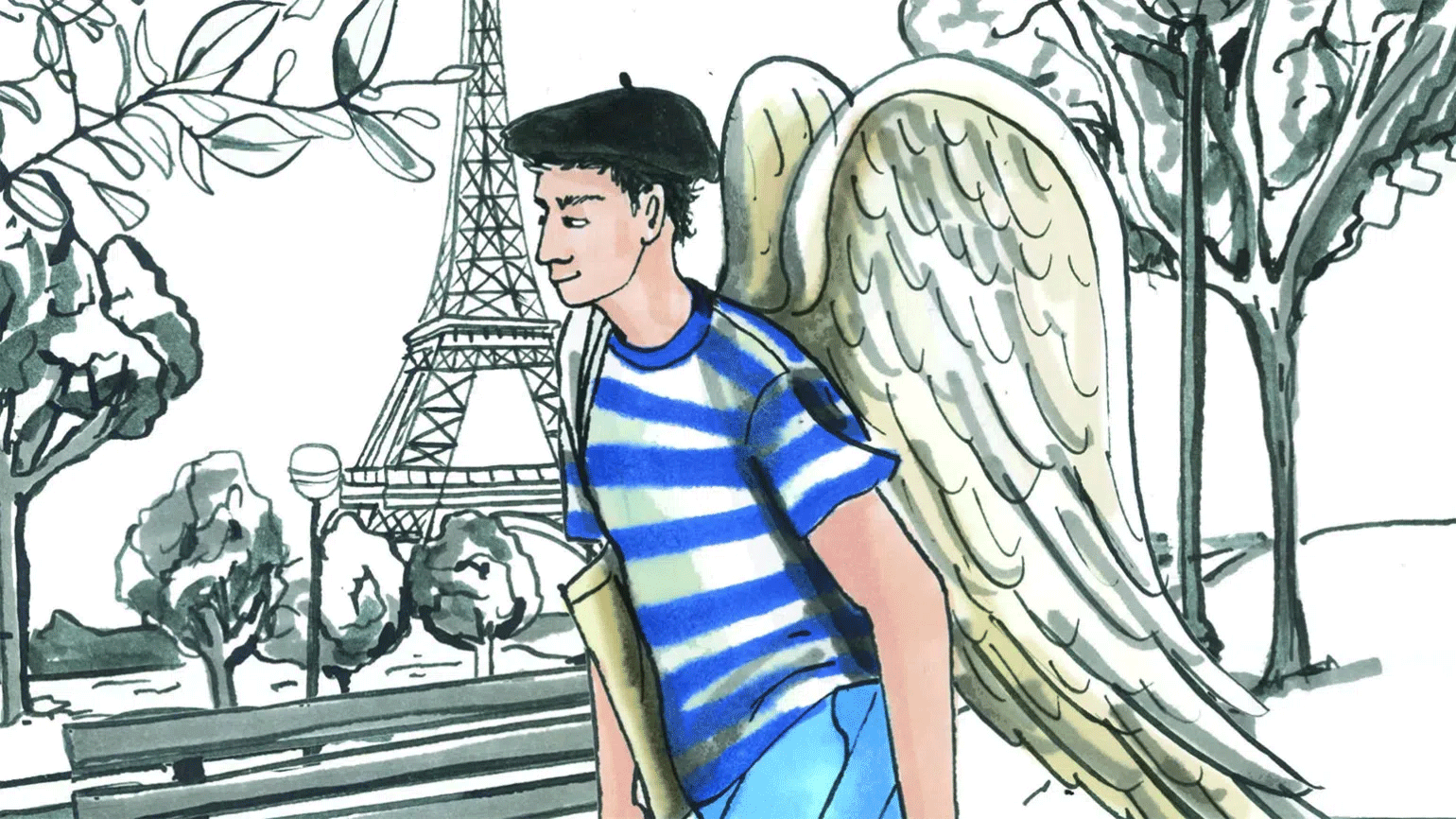
Did an Angel Help Her Find Her Missing Passport in Paris?

Getting home from Eastern Europe was an arduous journey, but my traveling companions and I would make the most of our two-hour layover in Paris. We didn’t have time to venture out into the city to sightsee, so Mark, John and I found a charming airport restaurant that might as well have been a bistro on the Champs Élysées. I decided to take a picture of the menu as a memento.

I reached into my backpack for my camera. I rummaged around for it, expecting my fingers to brush against the familiar shape of my passport. I’d kept it close at hand during our two-week mission trip to teach English in Belarus. I felt my camera, but where was my passport? My lifeline while traveling abroad! Panic set in. I unzipped the backpack and opened it all the way to see the contents inside. I checked every pocket. A thorough search confirmed my worst nightmare. “My passport is missing!” I told Mark and John.

“Do you remember when you had it last?” John asked.

I racked my brain. We’d traveled from Minsk to Paris’s Charles de Gaulle Airport. I’d definitely had the passport when we landed. I’d shown it at various checkpoints, pulling it out of my backpack several times. My traveling companions were much taller than me, and walked at a quicker pace, so I had to hustle to keep up with their long strides. At least once, I’d shoved my passport back into my bag hastily. Had it fallen out then? How would I make the final leg of our journey to San Francisco without it?

I stood up and put my backpack on my chair. “I need to retrace my steps,” I said. “Eat without me!” I weaved my way through the airport crowd. When I reached the first checkpoint, I used my limited French to ask one of the employees if anyone had found an American passport on the ground. “Non, madame,” he replied. He directed me toward the security desk to inquire about my passport there.

I don’t know if it was the language barrier or what, but I got turned around. I flagged down several people, but no one could tell me where I could find airport security. Eventually, someone sent me upstairs, to a second floor I hadn’t known existed. I found a business office of some kind. It wasn’t airport security. And it was empty. A dead end.

Desperate and hopeless, I bowed my head. “Please, God, I need your help,” I whispered. “I need to find my passport, and I don’t have much time.”

When I looked up, I blinked in surprise at the handsome young man standing before me. I hadn’t heard him approach. “What’s wrong?” he asked. Though he had a noticeable French accent, his English was clear. What a relief!

“I lost my passport,” I explained. “I’ve been so careful with it, but it’s not in my backpack and I’m due to fly home in less than two hours.”

He nodded patiently. “Let’s go back to your friends.”

Funny that he assumes I’m with friends, I thought. I hadn’t mentioned it. And what good would that do? I still wanted to find airport security and report my lost passport. But there was something about this young Frenchman I couldn’t quite put my finger on—something that made me put all my trust in him. We quickly returned to the restaurant where I’d left Mark and John. “Did you find it?” Mark jumped up to ask.

I shook my head. “Sadly, no.”

“Which backpack is yours?” the Frenchman asked. I pointed to my bag, still on the seat where I’d left it. He unzipped it, reached in and—without further ado—pulled out a passport. “Is this yours?” he asked, handing it to me. Stunned, I flipped it open to find my own photo staring back at me. The Frenchman smiled.

“Yes, it’s mine!” Mark, John and I looked at one another, all of us speechless. It was as if I could see the thought bubbles above their heads: What just happened? They’d seen me search the backpack thoroughly and were clearly as stunned as I was to see the passport reveal itself.

I finally turned back to the Frenchman. My savior. “Thank you so—” He was gone. I whipped my head around but didn’t see him. “I can’t believe my passport was in my backpack the whole time,” I said to my friends.

“No,” said Mark, “it most definitely was not.”

“What?”

“Francine,” said John, “we checked your backpack ourselves. After you left, we wanted to make sure you hadn’t overlooked the passport while searching for it in a frenzy. We took our time and went through the backpack carefully, methodically. Your passport was not in there.”

We had just enough time to gather our things and head over to our gate. As we boarded our flight home, my passport clutched in my hand, I knew the rest of our trip would be safe and blessed. I had an angel watching over me—one with a French accent.

For more angelic stories, subscribe to Angels on Earth magazine.

Did an Angel Appear When Her Son Was Seriously Ill?

The Minneapolis cityscape was a blur as the train rattled along the tracks. I usually loved watching the scenery go by, but it was hard to enjoy the family outing with our 16-month-old fussing so much. Leo sat in his stroller, chubby legs kicking. He wasn’t himself.

“Is he okay?” Josh asked.

“I don’t know,” I said. “He’s been like this all day. And he didn’t eat much at dinner.” I hoped the train ride would help calm him.

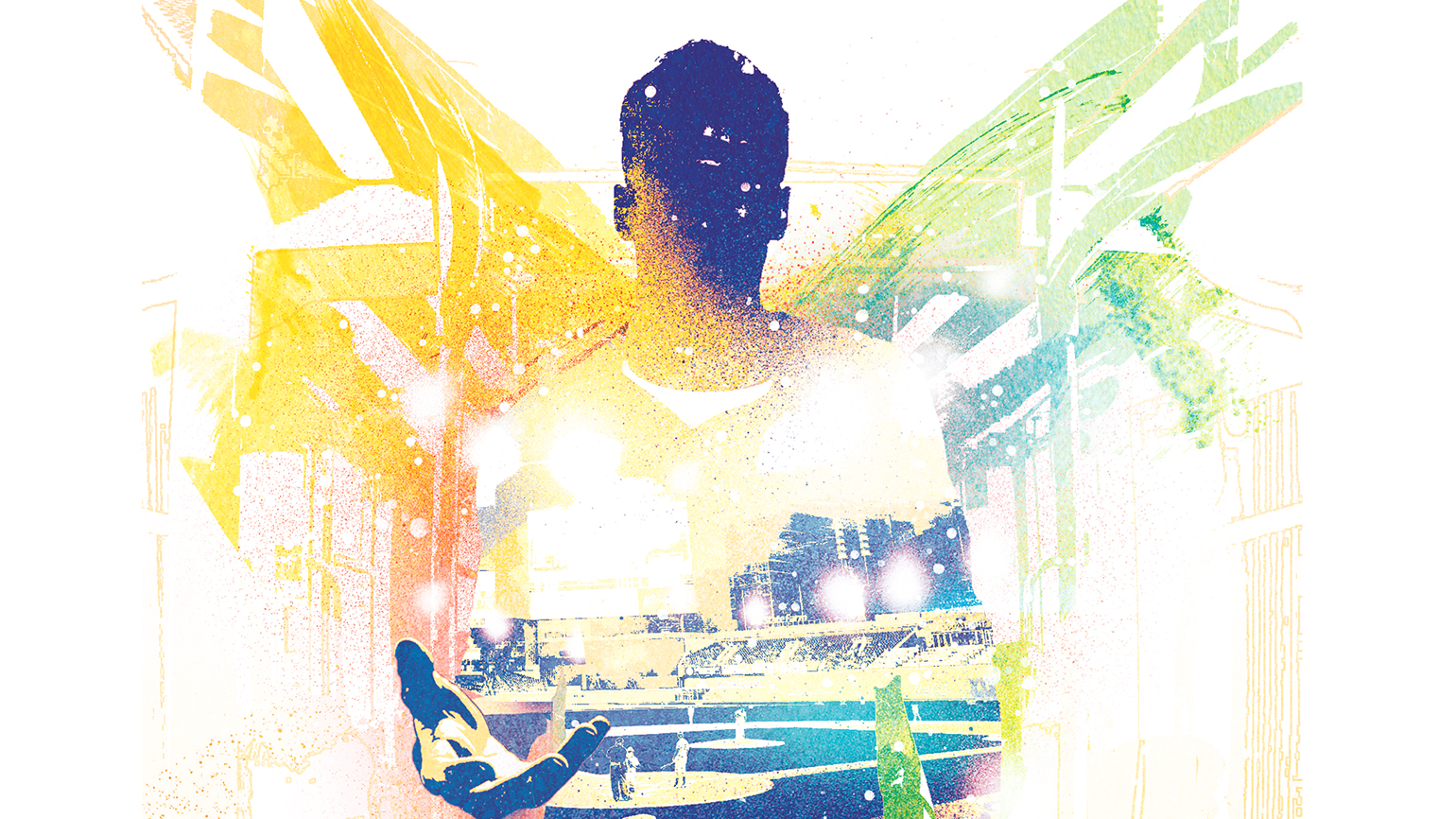
We were on the light-rail headed to Target Field to see the Minnesota Twins face off against the Detroit Tigers. I loved baseball—a love I hoped to pass down to our son. But it was clear that Leo wasn’t enjoying the experience so far.

I was wondering if we were going to be late, when I had the sudden sensation that someone was watching me. I turned my head. A white and golden light sparkled in a human shape. Was the sun playing tricks on me? I blinked hard.

The figure took a step toward me, offering an open hand. Almost like it was asking me to dance. I could feel the energy emanating from it, so powerful it made me feel small. Something about its posture was questioning. Like it was asking me if I understood. Look at me, Stephanie, the figure seemed to say. Do you see that I’m standing here with you?

I nodded and the figure of light was gone. I looked around me to see if anyone else had noticed. Was it a sign? A warning? An angel? But why would an angel be interested in a baseball game?

The train doors opened. I checked the time. We were late. And we had to get to the stadium and find our seats. I’d try to process the experience later.

Part of me felt like something important would happen that night. Leo seemed to feel it too. He refused to settle down. Throughout the game, he squirmed in my arms, even head-butting me a few times. The game ran long because of rain delays. “Great game,” Josh said sometime around the seventh inning. I just wanted it to be over.

That night, back at home, Leo vomited in his crib. The next morning, he vomited again. He couldn’t keep anything down. I stayed home from work to look after him. He was breathing more heavily and he seemed tired. I still couldn’t get him to eat. I took him to the pediatrician.

Leo’s chest X-ray showed nothing. The doctor shrugged. “Your son’s symptoms aren’t consistent with one illness,” he said. “Let’s just watch him.” He prescribed a steroid and an antibiotic. While it wasn’t the definite answer I’d hoped for, the doctor didn’t seem worried, so neither was I. Leo had always been a healthy kid.

I even felt comfortable picking up a night shift at work. But when Josh called in the middle of it, I knew it was Leo. “I can’t get him to take his medicine,” he said. “And he’s still not eating.” I raced home. Leo was limp, his lips were blue. We went to the hospital. The ER doctors thought it was possibly a respiratory issue. They ran more tests. Leo got worse.

Around 3:00 in the morning, we received some disturbing news. “Your son’s toxicity levels are off the charts,” the doctor explained. “Usually that indicates he ate something he shouldn’t have—aspirin, paint thinner, antifreeze…. If Leo got into something he shouldn’t have, you need to tell us now.”

I said, “We would tell you.” The doctor took a step closer to me and held my gaze, as though trying to determine whether or not I was telling the truth. He moved Leo into the pediatric ICU.

Josh and I waited, hoping to get some answers soon. I looked at my husband. Something about his expression made me think of the angel I’d seen on the train, its offer of strength and peace. I’d told myself I’d think about the experience later, and maybe now was the time. Should I tell Josh what I saw? Was an angel with us right now?

My thoughts were interrupted by an update from the doctor. Leo had to be intubated to help his breathing. He was sedated and put on dialysis to flush the toxins from his system. High levels of acid in his body had caused a stroke. No one knew what was at the bottom of it. Poisoning was ruled out because his acid levels increased, even after treatment.

With all the bad news, I couldn’t hold it in anymore. “Josh,” I said, “I saw an angel the night of the baseball game.” As I explained myself, Josh didn’t say a word. I could see that the data analyst in him didn’t know what to make of me. But ever since I’d seen that sparkling angel, I knew that, in the end, everything was going to be okay. That’s what got me through.

It took two months before the doctors could confirm their suspected diagnosis: methylmalonic acidemia, MMA, an inherited disorder in which the body is unable to process proteins and fats. The toxins had built up in Leo’s body until he was in crisis. If not properly managed the disease can be fatal. Each state determined what disorders are screened for at birth, but the year Leo was born Minnesota had changed its screening providers. The machines used hadn’t been sensitive enough to flag his condition.

Thankfully Leo’s form of MMA was one of the more manageable types and we would eventually be able to take him home. He’d have to be on a low protein diet, special formula and medication all his life. The stroke left Leo like a six-month- old, so he had to relearn how to swallow, roll over onto his stomach and even use his fingers to grasp his toys. All because his condition wasn’t caught early on.

With the help of the Minnesota Department of Health, changes were made to our state’s screening measures. And I understand that Michigan may follow suit. Once again, I thought of the sparkling angel I saw before the game. Minnesota Twins verses the Detroit Tigers. Minnesota verses Michigan. Only one team was victorious that night, but for a newborn baby both states are winners.

For more angelic stories, subscribe to Angels on Earth magazine.

Day of the Dolphins

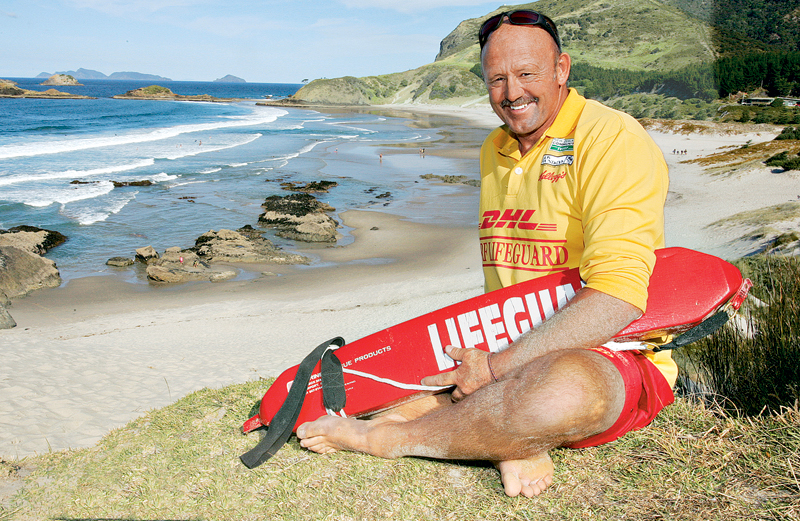
Saturday, October 30, 2004. The half-mile crescent of Whangarei’s Ocean Beach glowed white in the early morning light. January and February—the high months of summer in New Zealand—were still far away, and the water was cold on my feet from the winter just past.

With me were my fellow lifeguards Karina and Matt, my daughter Nicky—also a lifeguard—and her friend Helen, a novice. This was to be Helen’s first official summer lifeguarding at Ocean Beach.

That morning, we were going to show her one of the beach’s most challenging features: the jagged lines of rocks that jut far out to sea at the north and south ends of the beach.

Each summer, we rescued swimmers who got picked up by the beach’s powerful rip currents and swept into those razor-sharp rocks. You can’t be a good lifeguard at Ocean Beach without being comfortable among them.

The five of us swam out and soon found a spot where the rip was running. A strong rip current at Whangarei is like a conveyor belt. In seconds, it can carry a hapless swimmer—or a lifeguard intent on rescuing him—hundreds of yards out into the sea.

We were far offshore in no time, floating by the tip of the half-submerged line of rocks at the northern end of the beach.

Helen swam out of the pull of the current and watched as it swept Nicky, Karina, Matt and me toward the rocks.

“See?” I said as we ducked and bobbed around them. “It’s not as dangerous as it looks. Keep your arms and legs close to your body. The rocks can cut you without your knowing.” Helen swam in and gave it a try herself. “You’re doing fine,” I encouraged her. “Now let’s tackle the south end.”

“That’s too much of a swim for me,” Matt said. “I’m on duty.” He signaled to the patrolling lifeguards on the beach, and someone whizzed out in a boat to pick him up. Karina, Nicky, Helen and I started for the distant line of the southern rocks.

Ten minutes into the swim—and a good 150 yards offshore—the boat buzzed past again. Matt was in it.

“Flipper!” he shouted.

The girls and I stopped swimming and scanned the waves. Pfft! A few yards away, a big gray fin popped out of the water. Then another, and another. A half-dozen bottlenose dolphins circled us. Dolphins often came in to Ocean Beach to surf. I swam with them all the time.

Typically, a pod checking out a group of swimmers like us would circle once or twice, then head off to play in the waves. But these guys weren’t going anywhere. Pow! One of the dolphins slapped the water with its tail flukes. “What are they doing?” Helen asked.

“Just having some fun,” I said. I hoped it was true. The dolphins circled in closer and closer, moving in tight, fast formation. They corralled Nicky, Karina, Helen and me so close together that we were practically touching.

“What’s happening, Dad?” Nicky asked. My daughter knew dolphins as well as I did. This was definitely not normal dolphin behavior.

“I don’t know,” I said. “I’m going to see if I can break out of the circle.”

I lay on my back and kicked hard, determined to break through whether the dolphins wanted me to or not. Helen stuck close behind me. The dolphins didn’t try to stop us. When we were clear of the circle, I stopped and looked back. The dolphins zoomed around Karina and Nicky, making the water roil. What were these guys up to?

Suddenly, one dolphin broke away. Was their game over? No—the dolphin charged at Helen and me! An attack? I swam in front of Helen to try and protect her. From what, I couldn’t imagine. I braced for the impact.

At the last second, the animal shot down underneath us. I turned in the water, anticipating where it would break the surface.

My blood froze. Just six feet below us in the crystal-clear water, a massive shape cruised menacingly. The sheer bulk of the creature identified it right away: a great white shark. It looked to be a good 10 feet long.

One of us must have gotten cut on the rocks. The great white had picked up the scent of blood, detected us swimming and stalked us. Now the dolphins behavior made perfect sense. When Helen and I swam out of their protective ring, the shark must have followed.

One of our rescuers immediately broke away in a last-ditch attempt to divert the shark from the two of us.

The dolphins were doing everything in their power to keep the shark from attacking. But how much longer could they keep the killer at bay?

“Have you ever known dolphins to act this way?” Helen asked. She was much too calm to have seen the danger we were in.

“No,” I managed, stealing a glance underwater. With horror, I watched the huge form turn beneath us—and head toward Nicky and Karina.

I gulped back the urge to shout. If they knew, they might panic and splash the water. That would make them more attractive to the shark.

The dolphins are here for a reason. God, please help them do the job they’re meant to do. Almost as if the dolphins heard my plea, the circle churned the water even more violently. They’re trying to confuse the shark, I thought. They know he wants the girls.

A buzzing sound made me turn my head. Matt and another lifeguard were in the boat. They sped toward us. We were safe! The boat slowed down near Nicky and Karina and the wildly agitated dolphins. Matt jumped overboard. The boat sped off again. They didn’t know about the shark, either!

The waters around Nicky and Karina died down. The dolphins slowed some, their circle widening. They seemed calmer. They stopped slapping their tails. The shark must be gone.

“Come on,” I told Helen. “Stay right behind me.” We swam over to where Matt, Nicky and Karina treaded water. The rest of the pieces fell together in my head.

Great whites like the element of surprise. They’d much rather attack a wounded or unsuspecting animal than a healthy and alert one. The dolphins had a clear message for the enemy shark: Its presence had been detected. So move on!

“Let’s head in,” Matt said. I could tell he knew more than he wanted to let on. Sure enough, back on shore, Matt told me that he had seen the shark. “When I saw how long the dolphins were staying,” he said, “I decided to join in the fun. I hopped overboard, the boat left and then I saw the shark.”

Like me, he’d kept the knowledge to himself for fear the girls might panic. And as we explained to them, panic is the worst thing you can do around a shark.

Did what happened that day scare me? You bet. Do I still lifeguard at Whangarei’s Ocean Beach? Do I allow my daughter to do the same? And encourage her friend Helen to keep at it? Yes on all counts.

Whether it’s the unusual danger of a patrolling great white, or the more common problem of rip currents and rocks, the surfers and swimmers at Ocean Beach rely on us. I like to think we do an even better job of looking out for them, now that an angelic pod of dolphins has proven once and for all that someone’s looking out for us lifeguards as well.

For more angelic stories, subscribe to Angels on Earth magazine.

Could She Survive Chemo and Find a Bone Marrow Donor?

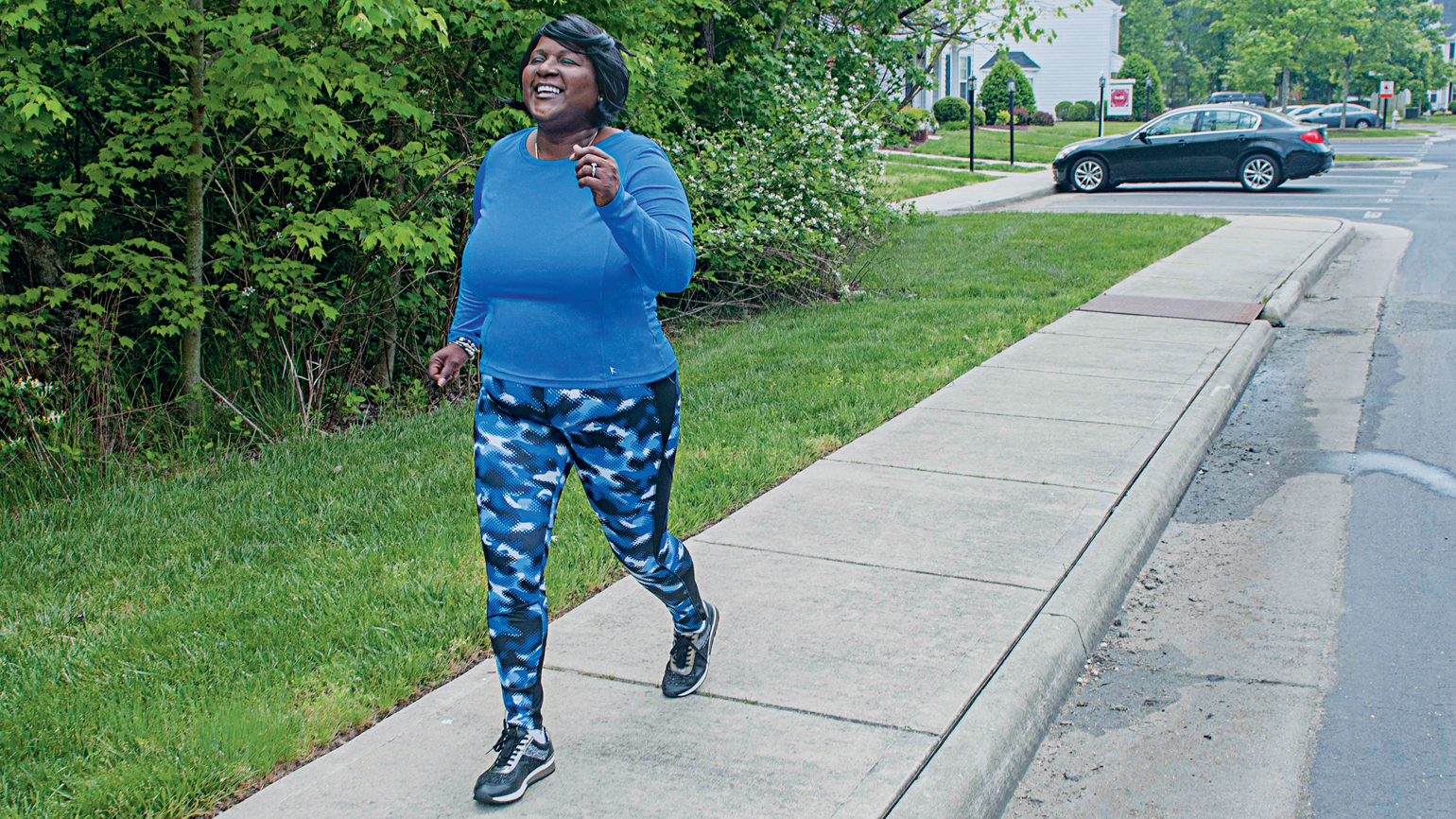
I’ve been in the medical field for over 20 years and always knew helping others was my calling. As head dialysis technician at Virginia Commonwealth University Health System, I had the experience, knowledge and confidence to meet the needs of every one of my patients.

Then in August 2014, I was diagnosed with acute myeloid leukemia and the tables turned. I became the one in need.

My husband, Norman, and I were soon to celebrate our second anniversary, and we’d planned a romantic getaway for the occasion. But something wasn’t right with me. I felt worse and worse, until I couldn’t hold down any food or drink. We had to cancel our trip. When excruciating pain landed me in the ER, I thought it must be an ulcer. It proved to be much more serious.

“Ms. Groomes,” the ER doctor said, “I’ve scheduled you for an appointment at Massey Cancer Center.” My white blood cell count was too high. I needed to see a hematologist. I told Norman first. Then I called my sister, Cynthia, my prayer warrior. “Whatever it is, I know God can heal me,” I told her. “He’s done it before and he can do it again.”

Meantime, I made Cynthia promise not to tell anyone else in the family. I didn’t want them to worry over me. I was determined to get this behind me so I could go on with what I was meant to do on this earth, take care of others.

The day of the appointment, Norman and Cynthia were with me for support. Additional tests showed I had blood cancer. “Acute myeloid leukemia is an aggressive blood cancer, “the hematologist said evenly. “Some cancers take years to develop, but AML can infect your entire body in just a matter of months.”

I was admitted to the hospital that night. AML had taken over 98 percent of my body, devouring my red blood cells. Without immediate chemotherapy, I could be dead in four to six weeks. “How long will I be here? “I asked the nurse from my hospital bed. I had patients in the dialysis center to tend to.

They needed my assistance. I had to take their vitals, ensure their rooms were sterile, double-check their machines, and monitor their reaction to the treatment that could run as long as four hours. I’d sit with some, pray with others, until they felt better. They relied on me and I couldn’t let them down. The nurse listened and patted my hand. I was going to be here for a while.

Eventually, I would need a bone marrow transplant. But first I needed to be in remission. The doctors were unsure if I would make it through chemo, which would wipe out my immune system. Any infection could kill me easily. As the treatment took effect, I could barely muster the energy to sit up on my own.

Some days, I slept 16 hours and it wasn’t a restful sleep—I was almost always in pain from the top of my head to the soles of my feet. I suffered from night sweats, fevers and chills all at the same time. Chemo also killed my taste buds and my appetite. I was no longer a caregiver—I was a bona fide patient.

By now, my whole family knew. Friends’ acquaintances, friends of friends—everyone. I couldn’t hide it any longer. I needed a bone-marrow donor. The transplant coordinator was honest with me from the beginning.

She said my chance of finding a match was slim to none. The donor would have to be a match at the proteins level, which is generally culture specific. My donor had to match at least six of eight human leukocyte antigen markers—neither my sister Cynthia nor any of my other four siblings were matches. What were the chances of finding anyone who’d be a candidate for me?

I knew what a potential donor
 had to go through—information sessions, physical exams, giving blood samples. Who had that kind of time? And the procedure could be painful or cause side effects. What stranger would offer him or herself in that way? Prayer kept me going—prayer for myself and my donor, if one was out there.

Against all odds, a donor did step up and not just any donor but a perfect donor, a perfect match for me. My donor was another me! Now, all I had to do was survive chemo treatment. Some days were better than others but God was with me every step of the journey, as were my family and countless others who went out of their way to help during my
 43 days in the hospital.

In December 2014, a routine biopsy showed zero percent leukemia. I was in remission and scheduled for a transplant in February 2015. But a week before surgery, the leukemia returned. It was at six percent. I was devastated. What about my donor? Was she supposed to just put her life on hold? 
I could easily lose her.

After a few weeks in the hospital with complications from the second round of chemo, I was stable enough to go home with a medication drip that had to be changed every 12 hours and a heart vest I had to wear round the clock, ready to deliver an electric shock to restart my heart if it stopped. Still, I was at the hospital every day for blood work.

By September, I was back in remission and my heart was strong enough to prep me for the transplant.

Nine months after my original transplant date, in November 2015, my donor—my perfect match—
was ready to see the commitment through. Who was this selfless individual? The operation was a success, and I prayed for my donor’s healing as hard as I prayed for my own. When the official “waiting period” was over, and the donor agreed, the donor program, Be the Match, gave me the donor’s information.

Her name was Raykell. She lived in Illinois. I had to ask what made her make such a sacrifice for someone she did not even know. “I had a friend whose son needed a bone-marrow transplant,” she said, “so I signed up to see if I was a match.” She wasn’t, and the boy passed away in 2006 before a donor could be found. Raykell forgot all about the donor list until one Sunday morning in 2014.

“I was at church and our pastor was hosting a donor drive for Be the Match. I remembered I was already registered so I knew I didn’t have to register again. The very next day, I received a call.” Raykell was a match for someone—for me. “God was preparing me all those years ago, getting me ready to help someone in need,” she said. “It didn’t matter that I didn’t know who it was. God knew.”

Raykell and I were a match spiritually as well as physically. We talked every day, still do. Because wasn’t she right? God put us on the earth to care and be cared for. Even me.

Did you enjoy this story? Subscribe to Angels on Earth magazine.