Embrace God's truth with our new book, The Lies that Bind

Correction

A little while ago, I learned we’d made a terrible mistake in the March/April issue of ANGELS ON EARTH. At the end of a touching and wonderful piece by Jo Donofrio of Westlake, Ohio, we ran the name of another contributor.

We liked the story so much, we sent it out in our ANGELS ON EARTH e-newsletter—still with the wrong byline. Jo saw her story online and called us, thank goodness. We were so sorry! Jo couldn’t have been more gracious.

Here’s the story again, “Birthday Greetings” by Jo Donofrio.

—–

Find more All About Angels blog posts.

Colleen Hughes is the editor-in-chief of ANGELS ON EARTH magazine, a GUIDEPOSTS publication. She’s been at GUIDEPOSTS for 20 plus years, and lives in a Hudson River town with her two daughters and two cats.

Commanded by Angels to Preserve the Earth’s Canopy

Death was near, my body shutting down. I lay limp in my bed at home, barely aware of my wife, Kerry, and my mother at my side. All I felt was sadness. And regret. What a waste. I was an alcoholic, too often an embarrassment to Kerry and our two sons, Jared and Jake. I didn’t want my kids to see me like this.

Too late, that summer of ’92, I’d tried to get sober—cold turkey, here in my bed. But my liver and kidneys couldn’t take the sudden withdrawal. I could barely breathe, my lungs filling with fluid. A friend took me to the emergency room, where they gave me a blood transfusion, but the doctor’s face was grim.

“We need to put you on dialysis,” the doctor said. “That will give you time to say good-bye to your family.” I’d come home a day ago. I was still alive. Barely.

Forty-one years. What had I accomplished? I was proud of the boys. Jared was 12 and Jake was 10, my helpers on our family tree farm. I’d tried to encourage them, told them to never give up on their dreams. But Kerry was really the one who’d seen to their upbringing.

The farm, 150 acres in northern Michigan, was my other passion. We grew shade trees: maples, locusts, birch. Did my life even matter?

Suddenly I felt a hard pulse in my chest, like a thud. I floated from the bed toward the ceiling. I looked down. My body lay in the bed lifeless. I looked awful, bloated, my skin yellow and gray. Like I’d washed up on a beach. Is this it? I thought. My time on earth over?

I felt a touch, gentle, yet firm, on my right arm. I turned to see a beautiful female in a radiant white gown. There was a fragrance, sweeter than any flower. I breathed it deep into my lungs. “We know you’re scared,” she said. “But we’re here to help.”

“Who are you?” I said.

“We’re here to help you,” she repeated. To my left there was another female, nearly identical to the first, holding my other arm. Angels? I wondered to myself. What could they want from me?

We left the confines of the house and entered a tunnel of light. The walls were a brilliant white, except for the glow of a thin pink and blue helix running through it. Then we shot off, like we were on the tip of a missile. It scared the starch out of me. But it was only for a few seconds.

I stepped out onto a vista. Below me a white, sandy beach leading to a vast body of water. In the distance a gleaming metropolis, lit by a prism of light, like a sunrise. I felt a comfort I’d never dreamed possible.

Love. Unconditional love. It seemed to flow all around me, like waves caressing me. My sadness, my sense of failure left me. I wanted to stay here forever.

Dozens of light beings, radiant, glowing personages walked toward me on top of the water. They didn’t have wings. They wore white gowns but the light, shimmering around each of them, was golden.

In the midst of them was another angel, a towering presence. He looked to be at least ten feet tall. He was clearly leading the others. Under a dark blue cape he wore a translucent gown of lighter blue.

I heard a booming sound, like thunder. It was the lead angel. “You can’t stay. You must go back.”

“But…” I started.

“You have work to do,” he said. Work? What kind of work? I didn’t want to leave. But before I could get another word out I was back hurtling through the white tunnel with the first two angels to my bedroom. I lowered back into my body, and then they were gone.

But what was the work I was supposed to do? “Wait! Wait!” I shouted, suddenly sitting upright.

“David, what’s wrong?” Kerry said, taking my hand.

It took a moment for me to know where I was. “It’s nothing,” I said. “But I know I’m going to get better. There were angels…”

Kerry squeezed my hand. “Don’t talk,” she said. “You’re so weak.”

Day by day, week by week, my body healed. It wasn’t easy. But every morning and night, I saw a small white glow near the ceiling. I lived for those moments, an assurance that God was still with me. What is the work he wants from me? I wondered. It made me nervous, not knowing. What if I can’t do it?

But there was no further instruction. By fall I was strong enough to get out of bed. One day, with halting steps, I went out to the porch and sat in a lawn chair. Everything seemed more alive than I remembered it, the chickadees, jays and finches singing so joyfully from their perches in the trees.

I could almost sense what they were feeling—there was gladness and celebration, an energy about them, but also an unease—something not right in their world. It was amazing, like I was getting a glimpse behind a magical curtain.

Could this be what God meant for me? To be more in tune with nature? I could do that. It was kind of nice actually.

But that wasn’t the only change. I had no interest in alcohol. I got misty-eyed just sitting outside with the birds, working next to our sons on the farm, eating one of Kerry’s home-cooked meals. I had a tenderness and compassion I’d never felt before. I couldn’t understand it. Why was this happening to me?

Then one winter night I awoke just after 1:00 a.m., surprised to find the bedroom lit by the warm glow that had given me such comfort. The light grew brighter and brighter until it was blinding. I covered my eyes with my hands, but it barely made a difference.

Kerry was sound asleep by my side. “Okay, I’m listening,” I said. “Just tell me what I need to do.”

A soft, warm female voice said, “Get a pad and pen and go to the living room.”

I rose out of bed, found a legal pad and a pen and sat nervously on the edge of my leather chair. But the voice was gone. My eyes grew heavy. I awoke with a start and looked at the clock. 5:55 a.m. But what about…I looked down at the pad in my lap. Page after page, filled with a detailed, formal outline.

I stared in wonder at the words: Dying trees. Champion species. Cloning. Reforesting. It was my handwriting, but nothing I’d ever even thought about. I had no memory of taking any of it down.

My heart raced as I read through what I’d written. The earth’s trees and forests getting sicker, weakened by pollution, drought, disease and bugs able to survive the warmer winters.

I was to clone the biggest, strongest, hardiest trees—trees that had lived hundreds, even thousands of years—so the world could one day be restored to its natural order by the giants of the forest. I felt like Noah, a simple man told to become a shipbuilder and a zookeeper and…

There had to have been a mistake. I wasn’t a scientist. I didn’t know the first thing about cloning or the environment. Where to even begin?

I needed help, a second opinion. I went to Jared’s room and shook him awake. “I need you to read this and tell me what you think,” I said.

Jared’s eyes opened wide as he read. “Dad, this is amazing,” he said.

“Can I help? We need to do this.”

“You really think we can?” I said.

“Why not?” he said. “You’re always saying nothing’s impossible.”

That summer, nearly a year after the angels first visited me, Jared and I collected our first DNA from a sugar maple, after learning the technique from researchers in Oregon. Seventeen years later my original outline became a reality.

It’s grown from my family and me into a nonprofit with nearly a dozen employees and volunteers, the Archangel Ancient Tree Archive.

We’ve taken DNA from more than 60 of the most magnificent trees on the planet, coast redwoods, giant sequoias, bristlecone pine thousands of years old, willow and yew—enough to create thousands of trees. We’ve been helped by angels—both heavenly and earthly— every step of the way.

We’re all called to help the earth. You don’t have to be a scientist. You only have to listen to the angel beside you.


Comforted by a Butterfly Angel

“Happiness is a butterfly, which when pursued, is always just beyond your grasp, but which, if you will sit quietly, may alight upon you.” I reread the quote in my car, hoping it would give me confidence. So far, it wasn’t working. I still felt unsure. Anxious. Far from still and quiet.

I picked up the envelope from beside me on the car seat. Am I making a mistake? Inside was my letter of resignation as library director, giving the required two weeks’ notice. All I had to do was drop off the letter at the county courthouse. Last night it had felt like the right thing to do, but now, sitting in the parking lot, I had doubts. I had no future plans, no job lined up, no idea what I would do next. I just knew I couldn’t keep doing this.

When I first started working at the library, I loved it. Back then I was a library aide. Then I got promoted. My new position gave me many more responsibilities, responsibilities I wasn’t adequately trained for. I did the best I could. I worked extra hours. Took work home. Did independent research to teach myself how to do my job better. But it wasn’t enough. The expectations were impossible, the stress overwhelming. The anxiety was starting to affect my health. Normally I would have gone to my dad for support. He was always ready to listen to any problem I had. But he’d just recently died from an aneurism. I had to make this decision on my own.

I looked at the envelope that held my resignation letter. Dad would want you to do what’s best for yourself, I thought. My hand was shaking. Lord, I could use a butterfly here.

Butterflies had always had a special meaning for me. As a child I raised them with my mom and a cousin. We grew the kinds of plants that caterpillars laid their eggs and fed on: fennel, parsley and dill. When it was time for the insects to spin their green or brown cocoons, we brought them inside. We watched over the butterflies when they emerged, keeping them safe while their new wings dried and they got ready to fly. Swallowtails were the easiest. I don’t know how many generations of those black-and-yellow beauties we released into the wild, waving them off as they flew into their new life.

The kids at the library loved it when I brought in a butterfly kit so they could witness the whole cycle from beginning to end. Their parents were spellbound too. Who could fail to be amazed at the sight of a caterpillar emerging as a butterfly from a cocoon? Who wouldn’t feel inspired watching each one spread its wings for the first time and take to the sky?

I glanced around the parking lot. There wasn’t a butterfly in sight. Since Dad died they’d seemed to show up when I needed them most. The black swallowtail I’d spotted right after he’d died. The brown one that alit on Dad’s lawn chair—the chair he used to sit on beside me and talk in the evenings. The little butterfly that perched on my elbow when I repainted the post with our address in front of the house.

I took a deep breath and got out of the car. This time you’re the one who has to spread your wings and fly, I told myself. The workers in the courthouse barely looked up as I dropped off my letter. They couldn’t know how scared I was.

I got back in my car and drove to the library for work. In two weeks, I would no longer be the director here. A new chapter in my life would start. Had I done the right thing? I could only hope.

I crossed the parking lot toward the library’s side door, where I usually entered. On the wall was a big metal button to press to open the door. I reached out my hand and stood still and quiet. Someone had beaten me to the button. A big black and blue swallowtail, its wings spread wide as if to make sure I didn’t overlook its message. Whatever awaited me in my new life, butterflies would be at my side.

Did you enjoy this story? Subscribe to Angels on Earth magazine.

Carl Jung’s Heaven-Sent Vision

Have you ever seen a mysterious image that doesn’t just appear in your mind’s eye, but concretely, in front of you? Something so certain but apparently ephemeral? God speaks to us in these moments, these visions—some of which can be astonishingly real.

I was fascinated to learn that the Swiss psychologist and psychoanalyst Carl Jung (1875–1961) experienced a heaven-sent vision himself. In my training to become a spiritual director, I’ve read a lot of Jung’s writings. He’s proven especially helpful in unlocking unexplored parts of myself, allowing me to see the illusory in the everyday, which has been crucial to my spiritual growth. A rigorous scientist and the author of countless scholarly tomes and articles, Jung was also a man of faith. After all, he had a phrase in Latin carved above the front door of his home that, in English, roughly means “invoked or not invoked, God will be present.”

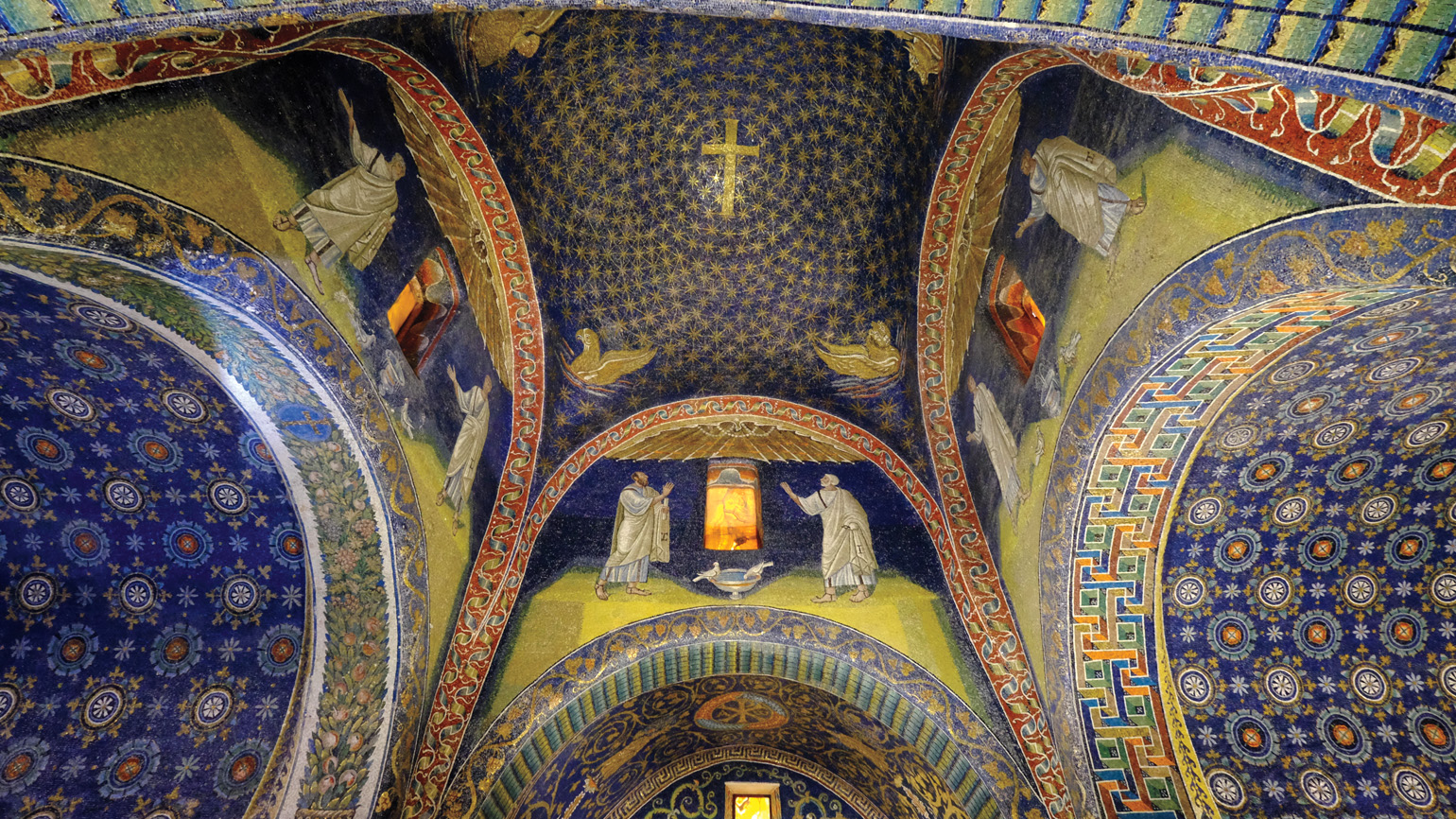
Even in the midst of treating patients and doing research in Switzerland, he traveled extensively. In particular, he made two trips over a 20-year period to the Italian coastal city of Ravenna, taking in its extraordinary mosaics.

What’s incredible about the mosaics in the holy buildings in Ravenna is that these Christian works of art date back as early as the fifth century. Seminal days in the spread of Christianity.

I saw them myself when I lived in Italy after college. Thousands of luminous, colorful pieces of glass forming vivid designs and pictures. For instance, in the ceiling of the tomb of Galla Placidia, a Roman empress, there are symbols of the four gospels: an angel for Matthew, a lion for Mark, the ox for Luke and an eagle for John.

Jung had seen all that at the Mausoleum of Galla Placidia in 1913, but when he went back 20 years later, visiting the tomb and then the baptistry, he was surprised to see four “mosaic frescoes,” as he calls them, that he didn’t remember seeing the first time around—most significantly, a scene of Christ holding out his hand to rescue Peter, who had attempted to walk on water like Christ, but after a moment of doubt was “sinking beneath the waves.”

Jung and his travel companion spent much time discussing the mosaics. When they left the baptistry, Jung tried to find photographs of the mosaic frescoes in a nearby shop, but was unable to find anything. He returned home to Switzerland empty-handed but asked a friend who was heading to Ravenna to pick up the search. Jung described what he saw in detail. The man came back and said that all four of the mosaics Jung thought he saw simply didn’t exist.

That seemed odd. Jung’s travel companion couldn’t believe it. She’d seen the mosaics too. Jung had even mentioned the scene they saw in a lecture he gave. In the end, he had to admit that what he’d “seen” was simply not there.

It was a monumental lesson for Jung. Writing about what he saw many years later, Jung recalled the scene vividly. The blue water, the chips of mosaic, Peter reaching out to Christ to be rescued. Those images brought him healing. At the time of the visit, he felt he was drowning, at odds with himself. As he writes in his memoir, Dreams, Memories and Recollections, “The same thing happened to me as to Peter, who cried for help and was rescued by Jesus.” What he was sure he saw—brought to consciousness essential pieces of his personality. He felt whole again. Rescued by Jesus.

He carried the experience over into his practice as a therapist and teacher. “Since my experience in the baptistry in Ravenna, I know with certainty that something interior can seem to be exterior, and that something exterior can appear to be interior. The actual walls of the baptistry, though they must have been seen by my physical eyes, were covered over by a vision of some altogether different sight which was as completely real as the unchanged baptismal font.”

It is these sorts of insights that I find so helpful in my immersion in Jung. In visions like this, the unconscious speaks. It gives us the chance to see some part of ourselves that we had never encountered before and to integrate that into our personality, becoming closer in the process to the whole being that God made.

The next time you see a vivid image in a dream, or even experience a vision in your waking life, take a note from Carl Jung. God could be rescuing you.

Busy Christmas Angels

There’s way too much to do this time of year!

We just got our tree last night, so at least the house smells of Christmas even if our decorations aren’t up and the stockings aren’t hung. The seven-foot pine is standing straight (pretty much) in its stand, awaiting lights and ornaments and the Christmas angel that will top it all off—if I can find her in the attic. But by the time homework and the dinner dishes were done last night, it was late and we all needed to get ready for bed.

Alas, our tree will remain bare again tonight. While my colleagues will be dancing and dining at the Guideposts Christmas party in New York, I’ll be enjoying the winter concert at our local elementary school, where a certain fifth-grader I know and love will have a solo on flute. My daughter Evie turns 10 this year, on Christmas Eve, and I couldn’t very well miss her performance.

But I will miss dancing tonight with all the earth angels I work with, and celebrating this joyful (if busy) time of year with them. We are a close group, many of us longtime friends who have danced through Guideposts Christmas parties until our sides ached. Who has much time for eating when our own Nancy Galya hires such a great DJ year after year?

Yes, there’s way too much to do during the Christmas season. And all of it proves just how much I have to be joyful about. Now tomorrow night—for sure—we decorate that tree!

Brought Safely to Shore by Ocean Angels

Uncle Peter and I headed down the wooden walkway toward the ocean with our beach towels in hand.

“Too bad no one else wanted to join us!” he said. We’d left the rest of the family back at the picnic tables, but there was no way I was going to miss the chance for a swim.

My feet sank into the warm sand. I wiggled my toes. I was feeling good. Energized. Healthy. Able to take care of myself. That was certainly a change, because for so long every day had been a struggle.

As a teenager, I’d developed a variety of illnesses. My ailments worsened and multiplied as I entered adulthood: with my thyroid and immune system, migraines, chronic fatigue and vitamin deficiencies.

As my body weakened and my pain intensified, I relied more on God. He got me through the hardest days.

Now I was feeling better than I had in years. More than ready for a swim! I spread my towel out on the beach and looked out to sea. There wasn’t a cloud in the sky. In the distance, seagulls perched on the jagged rocks of a break wall that protected an old fishing pier.

Like a scene from a postcard, I thought.

“Looks like we have the beach to ourselves,” Uncle Peter said. “And on this beautiful day!”

I ran down to the shoreline. The ankle-deep water was choppy, and it sent sand and broken seashells crashing against my feet. It was rougher than I had expected.

But the salty ocean breeze felt good against my face, and it would be nice to cool off. I wasn’t going to let a few waves spoil my day at the beach.

“Let’s wade out past the white caps,” I said. “The water’s always calmer once you put a little distance between yourself and the shore.”

We fought through the waves until the water was up to our waistlines. Instead of getting calmer, the sea got even rougher. Some of the waves were taller than I was, and the undertow made it hard to stand still.

I tried to paddle back to shore, but I couldn’t fight the waves. I looked back at Uncle Peter.

A wave crashed over me. Knocked me down. My body tossed and turned beneath the surface of the water. Salty seawater filled my mouth. The sea swirled around me. I couldn’t see. I couldn’t breathe. My chest tightened as I ran out of air.

I was helpless again. Only this time I was struggling underwater instead of being sick in bed.

Finally my head broke through the surface. I saw my uncle in the distance, closer to shore. I tried to make my way toward him, but my muscles were weak compared to the might of the ocean. I couldn’t even catch enough breath to call for help.

A wave crashed over my head. The undertow pulled me farther out to sea. Every time my head popped up, a wave came to beat me down. Each one pushed me closer to the break wall that protected the pier—and closer to the jagged rocks.

All those years God had helped me fight—was it just to let me drown here? Dear God, please help me! I still need you! I may not be sick anymore, but I’m not strong enough for this! I struggled to swim, but the power of the ocean was too strong. Another wave. I went under.

Then, instead of the dull rush of the undertow around my ears, I heard the wind and the waves of the beach. I opened my eyes. I was no longer near the rocks. In fact, I was much closer to shore than I had been just a moment before. Practically on the sand. How did I get here?

I touched my feet to the ocean floor. Gasping for breath, I dragged myself to the beach. I collapsed next to Uncle Peter on the dry sand. We lay there for a few minutes, struggling to catch our breath.

Finally I could speak. “I don’t know how I got out of that,” I said. “One second I was being pulled toward the rocks by the pier. The next I was near the shore.”

“All I know is, you were being pulled farther from me,” he said. “Then, you were on the beach. Are you all right?”

“Yes, I think so.” But how?

Uncle Peter and I made our way back to the others. We tried to tell them what had happened. “It’s a mystery how I escaped the water and rocks,” I said. As the words left my lips, an image came to my mind.

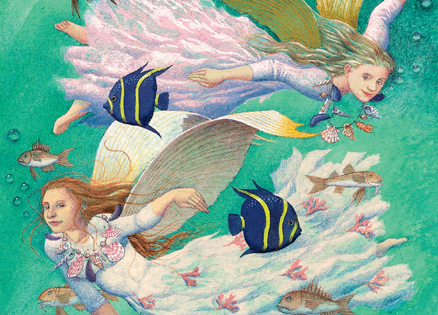
I saw myself back in the ocean. I was not alone. Two bright white figures stood on either side of me. The waves roared, but they were not affected by the fury of the water. Each figure took an elbow, and together they guided me toward the beach.

Two angels pulled you to safety, I thought.

How had I not seen it before? It was God all along. He had seen me struggling, and sent angels to move me away from the dangerous water.

Tears sprung to my eyes as I realized the enormity of what he had done. I had relied on him for strength and guidance when I was ill, and he was still there for me. Every minute of every day. He always would be. Sick or strong, I could rely on God to help me ride out the waves.

Biker Angel

It was my husband’s idea to celebrate my 34th birthday with a vacation trip to Yellowstone and the Teton Mountains—on our Honda Goldwing motorcycle. Steve lived and breathed motorcycles. In nine years of marriage, I’d learned to like them, too, but a three-day journey from our home in Wisconsin was proving to be a long ride. “We’ll finally get some time alone together,” Steve had said. “What more could you want?” For me, there was one thing more I wanted. A baby.

Tests showed that Steve and I were both capable of having children, but so far nothing had happened. And it wasn’t for lack of trying. Steve was resigned to letting nature take its course. But I wanted us to be a family. A family with kids. I’d tried talking about adoption, but Steve always said it wasn’t an option for him.

By that third day into our journey, I was exhausted. Camping by the roadside, eating snacks at convenience stations—I was ready to be there. I switched on the microphone in my helmet and buzzed Steve on our intercom. “I’m so looking forward to Jellystone,” I said.

“Yellowstone, silly,” Steve said.

“Right.” At this point I couldn’t even think straight.

“We don’t have far to go. Hang on and enjoy the view,” Steve said, giving me the thumbs-up. The scenery whizzed by without my paying much attention. If Steve only understood how much I want a child, I thought. Sometimes it was hard for me to think of anything else.

I leaned around Steve to see if there was a sign for Yellowstone. Up ahead was a giant roadside billboard featuring a smiling toddler in a diaper. The message read, “Adoption Is an Option.” Not for my husband, it wasn’t. Dear God, please help me accept the things I cannot change.

We were weary-eyed and numb when we finally pulled into a campsite just inside Yellowstone National Park. It was crowded, and we’d neglected to make reservations. “What if there’s no room at the inn?” I said.

Steve handed me his wallet. He stayed with the bike, and I went to the ticket window. “You’re in luck,” the attendant said. “We have one bike spot left at No. 9. There’s a bear box to protect your food.”

I told Steve about the bear box. “What’s that all about?”

Steve chuckled. “Bears live here,” he said. “We’re just visitors.”

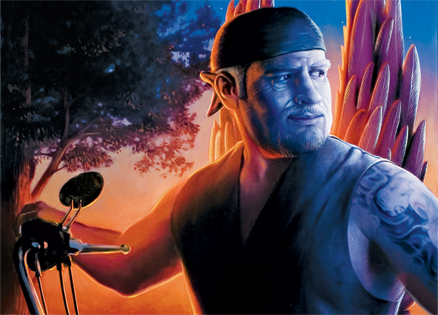
We unhitched the trailer and popped open our tent. “Evening,” said the old biker camped next to us.

“Evening,” I said. Right away I noticed that his motorcycle was just like ours, only older. Steve helped me open the tent, then reached for a soda from the cooler. “I’m going to talk to our fellow camper,” he said. “I’ll leave you to set up, if that’s all right.”

“Sure,” I said, waving him off. Now that we were here, I was determined to have a good time. My worries would be waiting for me when we got home.

“Nice bike,” I heard Steve say.

“Name’s Ed,” said our neighbor.

I finished unpacking and joined the men. Ed was as passionate as Steve about motorcycles. He was from Saskatchewan, Canada, and had been biking for years. “Travelin’ solo lately. The wife likes to stay home with the grandkids,” he said. “A fella’s gotta get on his scooter and see what it can do, aye?” Ed stood up and danced a little jig. “How long you two been married?” he asked.

“Nine years,” I said.

“Kids?” Ed asked.

Steve was silent. “It doesn’t seem to be in God’s plan for us,” I said.

“Yes, indeed,” Ed said. “Eleanor and me were married near 10 years and feeling like something was missing. You know the feeling, aye?”

“All too well,” I said.

“I wanted nothing to do with children unless they came from me. Stubborn, aye?”

I couldn’t help reaching for Steve’s hand. Ed kept on: “Finally I gave in. We adopted a little girl. Best decision we ever made.”

Steve stood up, turned around and kicked at the dirt.

“Not adopting would have meant no grandchildren,” Ed said. “Life without a child is one thing. Being alone in later years is another.”

Steve turned back.

“It’s something to consider,” he said. “See you in the morning, aye?”

Steve ushered me into our tent. “That was weird,” he whispered. “A stranger on the road. Riding a bike like ours. Talking about adoption…and making a lot of sense. Maybe I’ve been stubborn, just like Ed was.”

I couldn’t believe my ears. Was Steve changing his mind?

In the morning we saw Ed before he left. He looked at Steve. “Did you give any thought to what I said?”

“It’s definitely something to consider,” Steve said. “Definitely.” Then Steve and Ed shook on it.

“Don’t wait too long, aye?” Ed said. Then he winked at me. “Have fun in Jellystone,” he said. He waved goodbye and rode off on his bike.

“Did he say Jellystone?” I said. “Was he for real?”

“Maybe,” Steve said. “A real angel.”

I thought of the smiling baby on the billboard. Thank you, God. Adoption was now an option.

Download your free ebook Angel Sightings: 7 Inspirational Stories About Heavenly Angels and Everyday Angels on Earth.

Be an Angel Day: Live Chat with Colleen Hughes

Hey, everybody, please join me today (Tuesday, August 19) at noon ET when I’ll host our first live chat in honor of Be an Angel Day. I’ll answer as many of your Angels-related questions as I can, and get us all in the mood to be an angel.

Simply come back to the All About Angels blog on Guideposts.org tomorrow at noon, and type your questions in the box provided. You’ll be able to follow along there as I answer. You can also set up an e-mail reminder now at the box below.

Do me a favor and forward this to friends you think might be interested. Let’s make this a real party. I look forward to chatting with you!

Colleen

Download your free ebook Angel Sightings: 7 Inspirational Stories About Heavenly Angels and Everyday Angels on Earth.

Be an Angel Day

Thursday, August 22nd, marks the 20th annual Be an Angel Day, celebrated throughout North America and several other countries. The day encourages us to give thanks for angels by imitating them.

What does it mean to be angelic? Practice acts of kindness and help others in need (anonymously if that’s possible, just like angels often do).

Be an Angel Day was started by Jayne Howard of Upperco, Maryland, in 1993 when angels were beginning to attract some attention among the general population.

The idea caught on, and people organized festivals, parades and art fairs devoted to angels. Often angel food was served as part of the celebration.

Many people reported seeing rainbows that day, even when it was not raining.

Jayne and other angel experts received recognition in the press, and the holiday’s popularity grew, with Be an Angel Day celebrated in twenty countries.

As the years continued, Be an Angel Day evolved into a day of helping others. Today it’s primarily a non-denominational, non-profit event, and the manner of serving is left up to each participant.

The angelic help you can offer is not defined or limited. It can be physical, emotional, or spiritual. Think about paying a stranger’s toll, sending an anonymous card to someone who needs cheering up, or, if you can afford it, buy some groceries for a family out of work and leave them on the porch. Donate blood. Take a child on a nature walk or help her plant a tree. Visit someone in a hospital or nursing home.

“The primary goal,” says Jayne, “is to reach someone who is shut off from love.”

The angels, our faithful companions, are sure to be delighted as we share our knowledge of them with one another. Make their day a special one, and it will be doubly special for you.

Banking on an Angel

Growing up in South Akron, Ohio, Sam Ciccolini loved two things above all else—God and music. “I knew that when I grew up I was either going to be a priest or a concert pianist,” he says. Neither goal would be easy. “Like most families in my neighborhood, we had it tough—especially after my father died. My mother scrubbed floors and took in washing.”

In his senior year of high school, Sam won a piano competition. His future as a pianist looked great. But equally great was the call of the spirit. He was also accepted at a seminary. “I knew the Lord wanted me where I could do the most good. That meant seminary. I also knew if it was God’s will I’d be able to use my love of music too.” At seminary Sam saw a note on a bulletin board asking for volunteers to work in a prison halfway house. “The men would leave, and before I knew it they’d be back. ‘Why are you back in here?’ I’d ask. I always got the same answer: ‘Alcohol.’” As a kid, Sam watched countless lives destroyed by drinking. He also saw the lack of empathy alcoholics received. Sam saw it differently. “These men and women didn’t need punishment. They needed love.”

In the late sixties, treatment for alcoholics and drug addicts was still in the dark ages. Among the clergy, alcoholism was often seen as a moral problem: a matter of character. “Something that couldn’t be changed,” Sam recalls. Though Alcoholics Anonymous had been a potent force since its birth in Akron in 1935, there were few places where an alcoholic could be immersed in a 12-step lifestyle long enough for it to stick. Rehabs as we know them today simply didn’t exist on a large scale.

Father Sam graduated from seminary in 1967 and took an assignment at St. Anthony’s Church in north Akron. Soon he was working daily with alcoholics and addicts, using tools he’d picked up from AA’s Big Book. Then he got an idea. “I knew of this big abandoned house near where I grew up. We got permission to use it, cleaned it out, put some cots in there and started Akron’s first therapeutic rehabilitation community for alcoholism.”

Father Sam called it Interval House. The name hearkened back to his passion for music (“interval” denotes the space between two notes on a scale), and also suggested what he most wanted to give to those suffering: a space set apart from the confusion and pain of their lives, within which they could find their way to God. “Many alcoholics really did want to change, more than anything. AA gave them spiritual tools—they just needed time and space to use them. For people at the lower end of the economic ladder, time and space can be hard to come by. That’s what we provided.”

It worked. Father Sam again found himself seeing the same faces back at Interval House, just as he had when he’d worked at the prison halfway house. But this time, the people coming back were doing so to thank him for helping to change their lives. “It was wonderful, but it was also frustrating. We were constantly turning people away because of lack of space.” One day Father Sam was having coffee with the prior of a Carmelite monastery on the fringes of Akron. “I actually knew the place from when I was a kid,” Sam says. “The monks raised chickens, and my mom would drive out to buy cracked eggs for a nickel a dozen. I always loved the atmosphere of the place. It had something truly holy about it.” The prior told Father Sam that the monastery would soon be closing. “When I heard that, something just clicked. Natural beauty is a profoundly healing thing. The buildings were already set up to accommodate a contemplative community—and that, in essence, is what a rehab is. I realized I’d found the place where I could truly give alcoholics and addicts the spiritual interval that would allow them to achieve lasting change.”

To raise enough money, Sam borrowed on his car and got his classmates in ordination to chip in. To a man, they each gave their month’s salary. When Sam approached the Bishop of the Diocese of Cleveland, he received not only the Bishop’s blessing, but also a check from the Bishop’s personal bank account. Sam was elated, yet overwhelmed. “The first thing I did after the monastery was ours was walk into the chapel, drop to my knees and say, ‘Lord, now what? Help me.’” Ever since, he’s never stopped doing that.

This month marks the thirty-fifth anniversary of the Interval Brotherhood Home. Since opening in 1970, it has helped more than 8,000 alcoholics and addicts find their way to sobriety and a new life. In an America full of larger, far better funded rehabilitation facilities, the chances of someone at IBH staying sober after he or she leaves are significantly higher than the national average. Why? Most people would say: Father Sam himself. He will have none of that. “There is indeed something special about this place, but that’s not because of me. It’s because of the spirit that is present here. I felt it from the beginning.”

As for his musical abilities, Father Sam was right about finding a way to make use of them too. “Running this place is a little like conducting an orchestra. There’s so much happening, so many people coming and going. And isn’t recovery itself about rediscovering the music in one’s life?”

This story first appeared in the October 2005 issue of Guideposts magazine.

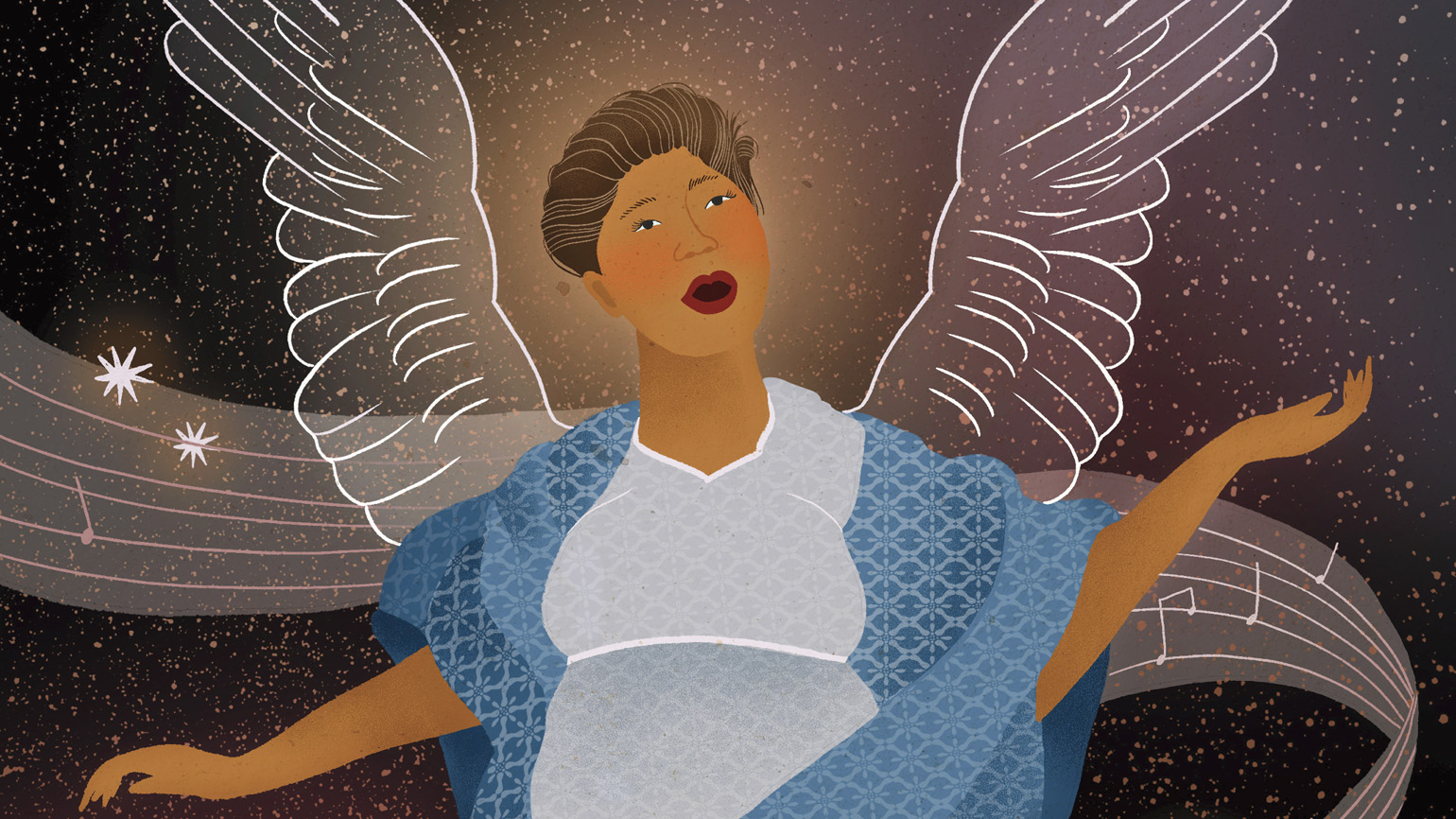
A Woman Singing ‘Amazing Grace’ Comforted Her

Somewhere on the hospital ward, a woman was singing, her voice loud enough to disrupt my thoughts. My focus was on my husband, Bill, lying in the bed in front of me. He needed all the prayer and attention I could give him, even in the middle of the night.

The painkillers the doctor had prescribed were helping him sleep, but the medication to treat the shingles infecting his eye had brought on frightening side effects. He’d been in the hospital for nearly a week, and he wasn’t getting any better. He’d taken leave from his job as a manufacturing engineer, couldn’t drive, couldn’t trust his balance, felt constant pain. It was awful seeing him like this. Bill was only 62, vital, energetic. An avid hiker and mountain climber. I wished there was more I could do for him, some comfort I could give him. I felt hopeless, alone. Lost on a journey I couldn’t see an end to. I was praying constantly, but God felt unreachable.

Only a couple months before, Bill and I had celebrated our fortieth wedding anniversary, vacationing in beautiful Banff, Canada. We’d planned to go backpacking, but changed our minds when Bill complained of headaches. The pain grew excruciating on the drive home. It was weeks before doctors diagnosed the cause as shingles. It seemed my husband couldn’t catch a break. Ten years earlier Bill had been diagnosed with chronic lymphocytic leukemia, a cancer that was essentially untreatable. Periodic chemotherapy had allowed him to maintain an active lifestyle, but his immune system was vulnerable. It felt like we were walking a trail along a precipice, just one false step away from calamity.

“Stay strong,” I whispered to him now. “We’ll get through this together.” I doubted he could hear me, but no matter. At the moment it was me who needed reassurance.

The woman. She was still singing. The words to “Amazing Grace” filtered through the air. “I once was lost and now I’m found…” Did she not realize how her voice was carrying?

I trained my thoughts back on Bill. We’d spent the majority of my 59 years together and had faced other challenges in our marriage. The first 20 years, actually, had been difficult. We bickered constantly, and not over anything important. Still, the arguments were heated. Both of us were stubborn, strong-willed. We were each so intent on making our own points that we didn’t have the patience to listen, had no interest in compromise. Bill would leave the house in a fury and go hiking, his way of cooling off. Which only made me more upset and resentful. I wanted to keep fighting. A few marriage counseling sessions got us nowhere.

Finally, we committed to spending 12 weeks in a couples communication class. We learned how to listen to each other, to repeat back what we heard the other one saying, to validate one another’s feelings. We followed the facilitator’s advice to plan weekly activities together. Often, we went hiking, away from everything, deep in the forest, huffing and puffing up steep switchbacks until at last we reached a majestic peak. Alone together, urging each other along on our journeys, it was like I was meeting Bill for the first time, falling in love with him all over again. A love we’d nurtured these last 20 years. With Bill in a weakened state, I had to remain strong, to honor that love for the both of us.

There was no ignoring the woman’s singing anymore. It had gotten louder, more soulful. I went out to the wing of rooms that circled the nurses’ station and followed the sound. I stopped when I found the source a few rooms down from Bill’s.

I peeked inside the doorway. The room was darkened. An older woman in a bright blue dress sang to her loved one in the bed, her voice comforting, soothing. “Precious Lord, lead me on…” I listened to one gospel hymn after another. I didn’t make eye contact with the woman. Her gaze never left the patient she watched over. But her beautiful words enveloped me, held me in a safe embrace. I knew the woman in blue wasn’t singing to me, and yet I couldn’t help but feel that I’d been meant to hear her. No one was looking out from the other rooms. Even the nurses didn’t look up. The moment was personal, private even.

I didn’t want to intrude. I tiptoed back to Bill’s room, lifted up by the words of those hymns. I didn’t know what the future held. I only knew that Bill and I were in God’s hands.

The next morning, I went back to the room where I’d seen the woman in blue. I wanted her to know what peace she’d given me. But the room was empty. The moment we’d shared felt even more divine. As if I’d been blessed by an angel.

When Bill awoke, he was a new man. The pain that had plagued him receded. His sense of balance was restored. He was discharged in the afternoon, and we went home. Within days Bill was talking about going back to work.

But it wasn’t to last. Weeks later the pain returned, as bad as ever. One night, Bill tossed and turned, unable to sleep. “I feel like I’m going to explode,” he said. “I don’t know if I can make it through the night.”

My mind raced, wanting somehow to soothe him. Then in my mind I saw the image of the woman singing, her voice filling the sterile hospital halls. I took Bill in my arms. “Jesus, lover of my soul…” I sang softly. Bill nestled against me. Moments later he was breathing evenly, asleep. For a second time, it seemed, the angel in blue had found a way to comfort us both.

Not long after that, Bill had a stroke. His health rapidly worsened. And yet the last days we spent together were some of the most meaningful, most beautiful moments of our entire marriage. We freely shared our love for each other in an outpouring of emotion. Every minute to be treasured. I grieved that I was losing Bill, but I wouldn’t have traded that time together for anything. The peace I discovered upon my encounter with the captivating woman in blue never left me.

Bill and I had promised to love each other in sickness and health, acknowledging that there would be challenges along the way. How little did we know. And yet we were better for the struggle. It seemed a bit like a strenuous hike. How difficult it felt. Punishing, even. And then we would reach the summit with its glorious view, and I understood that the reward was in the journey.

For more angelic stories, subscribe to Angels on Earth magazine.

A Whale of an Angel Tale

Small-town life never seems to change. I barely had to think about my daily routine as I went through it one morning in early spring. Grab a cup of coffee; make breakfast; kiss my husband, Tony, good-bye as he left for work; clear the table; do the dishes. Next was my list of errands to get done around town.

I got in the car and drove past the old Roebling’s factory, left behind from the days when Bordentown provided the steel cables for the Brooklyn and Golden Gate bridges, transporting them on the nearby Delaware River. The factory was long-closed now. I doubt anything exciting has happened around here since, I thought as I pulled up to my regular dry cleaner.

The man at the counter barely looked at me as I handed him my ticket. It was just the same at the supermarket. The cashier wearily rang me up. The woman behind me gave my groceries an impatient shove up the conveyer belt and started unloading her own purchases without a glance at me.

Clothes picked up and shopping done, I stopped in at the bakery to get something for dessert. The usual pastries. The counter was full of the familiar display of buns and cakes. I barely had to look at them to see the selection. My eye was much more drawn to the woman ahead of me in line.

“Jumped clear out of the water!” she said as I stepped up behind her to pay. “Can you believe it? Right there in the Delaware River!”

The woman was bursting with excitement, waving her hands in the air as she talked. She looked so different than everyone else I’d seen that day. It was as if we were all in a black-and-white movie and she in brilliant Technicolor. What could possibly have happened around here to make her look like that?

“What was in the river?” I couldn’t stop myself from asking.

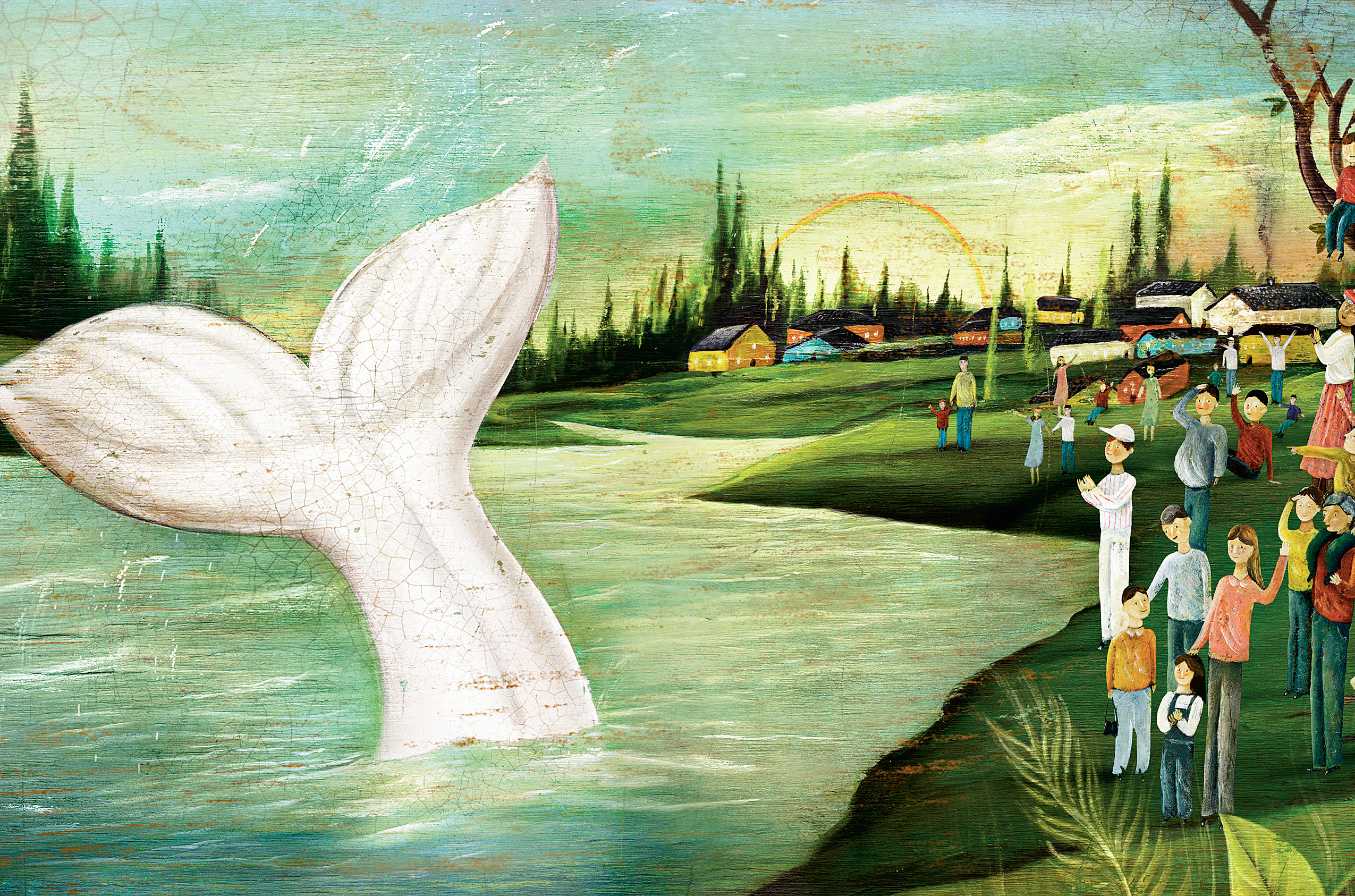
The woman turned to me with a wide grin. “A whale!”

“A what?” I looked to the baker for a confirmation—maybe this woman was seeing things.

He shook his head and laughed. “She says there’s a whale in the Delaware River. A big white whale. Craziest thing I’ve ever heard, but she swears it’s true.” He winked at me.

“You’ll see,” the woman promised us as she gathered up her bags. “Everyone will be talking about it.”

I bought my own pastries and drove home to do the laundry. By the time I’d finished I’d forgotten the woman at the bakery with the wild story. After dinner Tony watched TV while I cleared up the dishes. “Marilyn,” he called suddenly. “Come quick! You’ve got to see this. You’ll never believe it.”

I ran into the room. He pointed at the television. A reporter was standing out by the river, the wind whipping through his hair. Tony turned up the sound.

“Local residents thought they must be dreaming when they saw a whale in the Delaware River, but this is no joke. The beluga white swam all the way from the Arctic to visit our area.”

“Well, I’ll be,” I said. The woman at the bakery was right—there was a whale in the Delaware River. A whale named Helis, according to the news report. No wonder she had looked so excited. Imagine seeing a real live whale!

The next day when I went to the bank, everyone in line was buzzing.

“I heard that Helis came here from Greenland,” a man said.

“Or Russia,” said a woman with a toddler around her leg. “My mother-in-law actually saw him break the surface. He blew a spray through his blowhole!”

“I want to see the whale! I want to see the whale!” her little boy shouted.

His mother squeezed his hand tight. “And I want to see the whale, too, honey!”

“So do I!” I announced. Well, why not? It wasn’t every day a whale came to Bordentown, New Jersey.

The next day was Saturday. Usually Tony and I spent the day doing things around the house. “How would you feel about going for a drive this afternoon?” I asked as we finished breakfast. “Maybe go down to the river?”

A smile broke out on Tony’s face. “You mean go whale watching?” he said. “It’s a date.”

The shore was crowded with people by the time we got there. Several film crews were set up with bright lights. A lot of people had cameras. One family with children were crowded by a telescope. The children bounced around while their dad set everything up.

The fresh air blew in off the water, ruffling my hair. I took in a long, deep breath. We should get out here more often, I thought.

“See anything yet?” a woman with binoculars asked me.

We shook our heads.

“Me neither,” she said. “But I’m sure he’ll be up sometime.”

“We saw him,” two older women said proudly. In five minutes there was a whole circle of people swapping “fish” stories: people who saw the whale, people who knew people who saw the whale, people who thought they saw the whale, people who were convinced they’d see the whale if they were patient and kept looking. Tony and I joined right in.

We never saw Helis that day, but it still felt like a holiday. Tony and I started driving out to the river more often. Whenever there was a new Helis sighting we’d go directly to the spot. As the weeks went by, the weather got warmer and the trees began to blossom. I’d lived here for years. How had I never realized how beautiful Bordentown was in the spring?

More and more I appreciated the small-town world around me. It became part of my daily routine to smell the fresh air, gaze at the trees, feel the sun on my face. I wasn’t the only one. Store owners took breaks to walk outside and stretch. The baker sold whale cookies in Helis’ honor. Our minor-league baseball team, the Trenton Thunder, stopped playing when Helis appeared near the field. They ran over to get a look—and the opposing team ran right along with them, much to the coaches’ frustration but to the crowd’s delight!

Driving home along the interstate one evening in late spring, I marveled at how different life seemed since Helis came to town. How could a beluga whale have such an effect on people? I glanced at the river, orange and gold in the sunset. Something erupted through the surface. Helis’s huge white head sparkled in the sun. He spouted a great fountain from his blowhole into the air. I held my breath as he rolled in the water. His fins were so graceful. They’re like wings, I thought. Angel wings.

I knew my face was shining, just like that woman in the bakery. I had seen something special. Right here in Bordentown, New Jersey, where every day seemed special now, whale or no whale. What might tomorrow bring?