Embrace God's truth with our new book, The Lies that Bind

(Angels on) Earth Day

We’re celebrating Earth Day in my house by using as many recyclables as possible to produce less trash, at least in these 24 hours.

No plastic sandwich bags in those school lunches today, cloth instead of paper napkins (classy, right?), and we all agreed to drink tap instead of bottled water.

We’ll have leftovers for dinner so nothing in the fridge goes to waste. And tonight my friend and neighbor Stephen Looser will not call to warn, “Colleen, I just drove past your house and every light is on!”

It feels good to participate in this global effort that encourages people to be angels for our planet. Happy (Angels on) Earth Day!

—–

Find more All About Angels blog posts.

Colleen Hughes is the editor-in-chief of ANGELS ON EARTH magazine, a GUIDEPOSTS publication. She’s been at GUIDEPOSTS for 20 plus years, and lives in a Hudson River town with her two daughters and two cats.

Angels on Canvas

Brushes and paint were spread around me in my den.

I laid the first layer of blue paint across the paper, a “wash” I remembered my teacher calling it. I closed my eyes and tried to envision what it was I wanted to paint. But all I could see was a vast dark void, swirling, menacing storm clouds that seemed to envelop me. My mind was full of anger, fear, panic.

My eleven-year marriage was over. Our finances, I’d discovered, were a shambles. In a few days I would have to leave this house, the place I’d hoped to make a home for my children and husband. Everywhere I looked I was reminded of failure, of cherished dreams that hadn’t turned out the way I’d planned.

Like this painting, I thought. A few shapeless strokes on a piece of paper. I stared at it, trying to imagine a scene, someplace far away, something soothing. It was no use.

I’d been an actress all my life, but painting was new to me. I’d only had two one-hour lessons from an artist who had offered to teach me the basics of watercolor. I’d happily accepted, eager for anything that could take my mind away from court filings and financial documents.

“Visualize the details of what you’re painting,” my instructor said. “See the shapes and colors, the whites and darks. Sometimes it’s what you don’t see that’s most important.”

How was I supposed to do that after two lessons? I thought as I looked at my nondescript brush strokes on the paper in front of me.

I closed my eyes and took a deep breath, but all I could see was darkness. All I could think about were my worries. I said a quick prayer: God, please be with me. Show me a way to find comfort.

In my mind, I looked again into the gray haze. My muscles relaxed slightly. It was a relief to shut out the world for even a few minutes. I let myself enjoy the peace. I felt almost as if I were floating, a gentle rocking motion. I tried to focus, tried to look into the distance.

Slowly, I began to make out water, a lake. And then, I could see it! The whole picture in front of me, with unbelievable clarity. There was the sunlight catching the water, creating a kaleidoscope of colors. And a gentle breeze rippling the surface. In the background a marsh.

I opened my eyes, but the scene remained in my mind. I dipped my brush in the green paint and began layering it over the blue, the lake coming alive on the paper. It was amazing, how many shades of blue, green, brown, white and gray there are in water. It was as if I was seeing it for the first time.

I added the marsh with a few strokes of my brush, and then closed my eyes again. I could see it clearly: There was a brown, wooden boat, empty, but floating peacefully on the water. As if it were waiting to carry someone to the shore. How had I missed it the first time?

Little by little the dinghy took shape on the paper. I noticed its curves, how part of it was hidden under the water—seeing what wasn’t there! I stepped back and looked at the painting. I’d done it! Maybe not a masterpiece, but a beautiful work of art all the same.

I felt the most incredible feeling of warmth and support, as if a heavenly presence were there beside me, guiding me, teaching me to see the world with new eyes, in all its beauty and exquisite detail, a future so much bigger than any of my immediate troubles.

I looked closely again at the painting. There were no angels visible in the swirls of color, but I knew they were all around. And like my teacher said, sometimes it’s what we don’t see that’s most important.

Life, I realized, is constantly changing and evolving, like a painting. And that it only takes a few brush strokes and eyes open to possibilities to change your entire perspective. It worked for me at a difficult time in my life, and I haven’t put my brushes down since.

Buy Jane’s new book Among Angels in our shop!

Plus, find more inspiring angel stories.

Angels of the Sea

We’ve been working on a great rescue story set on the beaches of Pichilemu, Chile. Without giving too much away, I’ll just say that a young surfer in trouble finds angels of the sea.

It’s not the first time we’ve come across such an underwater miracle at Angels on Earth, and it makes me think our mission statement needs editing. Something like: Angels on Earth presents true stories about heavenly angels and earthly angels, animal angels and angels of the sea!

Our mission statement has always included humans who have played angelic roles on earth. But then there’s this video, which shows another category altogether–a human who has played an angelic role not on earth but underwater. Enjoy watching this scuba diver rescue a very grateful dolphin. I’m not sure which of them is more angelic.

Angels in Bloom: A New Friendship Blossoms

Retirement was a big change for my neighbor Mary Ann. “The biggest downside,” she told me, “is that I miss having a reason to get myself out of the house.”

Her children found a solution. They gave Mary Ann a big potted begonia plant with bold pink petals. All summer it bloomed by her front door. “I love coming outside to admire it!” she told me one day.

“Are you going to take it in for the fall?” I asked once the weather started to change. “I never have luck with houseplants,” she said. “I suppose my begonia was only meant to last the summer.”

I hated to think of her losing that plant—and the joy it gave her. Maybe I could keep it alive, and plant it in the ground next spring. I called a greenhouse for advice. “A begonia will have a hard time surviving the dry winter air, even indoors,” the man told me. But for me it was worth a try.

Mary Ann was delighted with my scheme. All winter she checked up on the plant, sometimes just poking her head out and calling to me from the porch. “How’s the begonia doing?” she’d ask, and we’d wind up chatting about all kinds of things.

That spring I replanted the healthy begonia outside Mary Ann’s front door. Those bold pink blossoms are a reminder of a blooming friendship.

Angel’s Glow: A Civil War Mystery

Most people who knew Bill Martin, a high school student in Bowie, Maryland, knew he was a Civil War buff. His interest started because of his father, Bill, Sr., who read all sorts of books on American history. Bill and his family visited battlefields across the country, including Shiloh in southwestern Tennessee. There he learned about the geography of the area, the events leading up to the battle and the staggering death toll suffered on both sides.

After returning from their trip, Bill and his mother, Phyllis, discussed the battle over dinner. “A colleague of mine told me something we didn’t hear about on our tour,” Phyllis said. Bill was all ears.

Some of the fallen soldiers’ wounds were said to have emitted a mysterious glow, and those soldiers were more likely to survive. Shiloh National Military Park was never able to confirm that anything of the sort took place, but the story spread so rapidly, it became something of a Civil War legend. What was this phenomenon that history had dubbed the Angel’s Glow?

Phyllis was a microbiologist for the USDA Agricultural Research Service in Beltsville, Maryland. Her research focused on bioluminescent bacteria—microorganisms that produce light—particularly the kinds that live in soil. One variation she studied, called Photorhabdus luminescens, emitted a blue glow. “My colleague wondered if bacteria had anything to do with the soldiers’ glowing wounds,” Phyllis said. “We may never know. It’s not something that scientists are clamoring to research.”

But Bill recognized an opportunity. “Do you think it’s possible it was bacteria?” he asked his mom. Being the family scientist, Phyllis replied, “Well, you can do an experiment and find out.”

In early April 1862, Union soldiers under the command of General Ulysses S. Grant were camped along the west bank of the Tennessee River in Hardin County. Their objective was to take over a nearby rail center that would give the Union control of the region. Before the reinforcements arrived, the Union soldiers were attacked by Confederate troops led by General Albert Sidney Johnston. What followed were two days of intense combat. On April 6, furious fighting took place in a local peach orchard.

But by April 7, with reinforcements, the Union secured a victory. The battle was over, but not without heavy human cost. The number of casualties was staggering: more than 23,000 Union and Confederate soldiers combined.

Combat doctors were unprepared—more than 16,000 wounded men needed care. Many of them lay sick and dying in the muddy fields, waiting for a medic or a bed. One evening, as dusk fell on the field of Shiloh, some of the soldiers noticed that their wounds were glowing a light blue.

It is believed that these wounds were cleaner and less prone to infection. Almost as if an unearthly power was protecting the soldiers. None of this was documented at the time, but it eventually became part of Civil War lore.

All these years later, the Angel’s Glow was still a mystery. Were there really angels in the battlefield at Shiloh? Or was it the work of a helpful bacteria? Bill resolved to find out.

Enlisting the help of his friend, Jonathan Curtis, Bill set out to find an answer. He handled the historical aspects of their project, and Jonathan focused on the science, with Phyllis advising. The boys’ research showed that the soil at Shiloh was a perfect breeding ground for P. luminescens bacteria. They put this bacteria in a petri dish with other infectious bacteria and found that it killed off dangerous pathogens. P. luminescens, while infectious, is not very dangerous to humans. It actually cleaned the soldiers’ wounds of the more harmful germs and stopped infection from spreading. Mystery solved?

Not so fast. The boys’ lab experiments showed that human body temperature was way too warm for P. luminescens to flourish. The bacteria needed colder temperatures to survive. Then how did these glowing bacteria thrive? Bill and Jonathan turned to the battle’s weather reports. Nighttime temperatures in Tennessee during early spring created some chilly conditions. The body temperature of a soldier exposed to the elements all night would have dipped dramatically.

To test their theory, Bill and Jonathan went outside on a cool spring day and sat in the rain. Using an infrared thermometer, the boys checked the surface temperatures of their legs. The temperature was low enough for P. luminescens to thrive! The wounded soldiers at Shiloh would have been even colder. Hypothermia created the very conditions the bacteria needed to survive. It seemed that the soldiers in the most danger were the ones who received a saving grace.

Even after the experiment was completed, Phyllis’s colleagues continued to approach her with their own theories about the Angel’s Glow. One friend who studies nematodes, a microscopic organism that creates P. luminescens, told her they often contaminate peaches. He wondered if Shiloh’s peach orchard, where part of the battle took place, had anything to do with the presence of the lifesaving bacteria. Even now, there’s so much left to discover.

Bill and Jonathan presented their research at the 2001 Intel International Science and Engineering Fair. They won first place in team competition for tracing the nearly 140-year-old mystery to bacteria.

For the wounded soldiers, survival was nothing short of miraculous. Writer Ambrose Bierce, who fought in many Civil War battles, including Shiloh, wrote that “God’s great angels stood invisible” among the soldiers. Invisible, yes, but still doing their divine work.

Did you enjoy this story? Subscribe to Angels on Earth magazine.

Angels Escorted His Mother to Heaven

I rolled my carry-on up to the ticket agent. At least our plane was on time. God, please help Ma hang on until we get there. I couldn’t bear to think of losing our mother without seeing her one last time, of being able to hold her hand and tell her I loved her. But my sisters and I were 1,000 miles away, boarding an early morning flight from Boston to Atlanta.

Every winter Ma traveled from her home in the Northeast to spend a few weeks with our brothers in the South. She’d seemed in good health, still in her early seventies, though she’d had heart problems all her life. On this trip, she’d been there only a few days when she’d had a heart attack, then complications from pneumonia.

Community Newsletter

Get More Inspiration Delivered to Your Inbox


One of my brothers had called with the grim news. “Ma’s not doing well,” he said. “Come right away.” I’d left my home at midnight to pick up my sisters for the 6 A.M. flight. We found our seats, and I wrestled our luggage into the overhead bins. “I hope we’re not too late,” I said, and settled in.

From the time I was a boy, Ma had told me that her name, Angelina, meant “little angel” in Italian. She’d taught me to pray, to trust in God and that angels watched over us. But now that her death was imminent, doubt and fear consumed me. What did I really know about heaven? The idea of eternal life, of one day being able to enjoy Ma’s presence again, was certainly a comfort. But how could I know it was true?

The plane taxied down the runway. As we lifted off, my mind traveled back in time to an incident I hadn’t thought about in years, maybe the most frightening day of my life.

I was five years old, eating at a diner with my parents. Ma had ordered the fried chicken. She raised a crispy piece to her mouth for a bite when she stopped cold. “I don’t feel so good,” she said. “My fingers are numb.” The chicken slid out of her hands and she collapsed onto the table.

“Somebody call an ambulance,” my dad shouted. The EMTs arrived; it was a heart attack. Ma was pronounced DOA at the hospital, but doctors were able to revive her with defibrillator paddles. She didn’t talk much about such details, not wanting to worry me. When I got a little older I finally got up the courage to ask her exactly what had happened.

I found Ma on the couch, crocheting an afghan as usual, the colorful yarn in a basket by her side. I sat next to her, and she put down her handiwork to give me her full attention.

“I was so afraid that night,” I said.

She took my hands in hers. “Dying is nothing to be afraid of, Paul. Everything I’ve ever taught you is true. You see, when I was at the hospital I was given a glimpse of heaven. I left my body and floated through a bright tunnel until I arrived at an enormous ball of light. It glowed with colors deeper and more vivid than any of these yarns here or any rainbow I’ve ever seen. I felt such peace. Death is sad for those left behind, but you should never be afraid, for me or for anyone else. Heaven is real. I promise.”

Ma gave me a hug and went back to working with her yarns. It was clear now why she gave away her afghans as gifts, as if she were passing along proof of God’s love. Now, sitting on the plane, I looked out above the sunlit clouds, and the memory wrapped around me with all the warmth of the colorful afghan Ma had made for me.

My brother met us at the airport, and Ma’s five children gathered at her bedside. I took her hand in mine, as she’d done on the day she told me of her experience. “Ma, it’s me, Paul. I love you.” A tear rolled down her cheek. She had waited for us to say goodbye and now she could rest. When she passed away a few hours later, I imagined the angels who were with her all her life escorting her into God’s welcoming arms. I knew I’d see her again, and in the meantime my colorful afghan warms me with its promise.

Did you enjoy this story? Subscribe to Angels on Earth magazine.

Angels and Green Sauce

Sitting at my desk with black beans and yellow rice from the Cuban restaurant in the neighborhood, I proofread our latest issue of Angels on Earth while I ate my lunch. It took me by surprise when I had to stop in the middle of an angel story and reach for a tissue. I was crying! But not over an author’s dramatic retelling. Not this time.

Sophie’s Cuban Cuisine gives each patron two complimentary servings of their “secret green sauce,” made fresh daily with jalapeno peppers. At least that’s the only ingredient they’ll share. I always ask for a third serving, even if I have to pay an extra fifty cents, and I put all three on my rice and beans. The spiciness of the sauce varies from day to day, depending on the potency of the peppers. The variation doesn’t matter to me, since I like my food spicy enough to cause tears to drip from my eyes. No complaints here today! The sauce hit the jackpot! I guess I got used to such over-the-top hotness by eating all that Cajun food down in New Orleans, where I grew up.

Community Newsletter

Get More Inspiration Delivered to Your Inbox


My habits haven’t changed much at all, now that I’m cooking in the North. In fact, my daughter Louisiana’s first word (besides Mama) was “spicy,” and she was the only child I knew who added a liberal dusting of black pepper to most things she ate. I texted her at college with the memory. Right away, she texted back. “Thanks, Mom,” she said. “It’s been a rough morning of classes, so I needed the smile!”

I guess angels had made sure today’s batch of secret green sauce was potent enough to bring me to tears and my thoughts to a college girl who still needs her mom.

Angel of Vietnam

In the late 1960s my husband and I were raising four sons. Television news was filled with devastating reports of the war in Vietnam. My heart especially reached out to the children in that faraway country.

My husband was a Korean War veteran, and we had always felt drawn to Asian culture. Now, with little possibility for another child of our own, I dared to hope that a Vietnamese child waited for us. The girl I’d always wanted!

I’d seen a story on the news about a humanitarian group that rescued children from Vietnam. One morning I phoned the group’s office. The woman who answered refused to take my application.

“You couldn’t be considered as adoptive parents,” she explained. “You have four children. An orphan saved from this war-torn country would go to a couple without any children.”

Of course. Wasn’t I being selfish, wanting another baby when I had been so blessed already? And yet there was a nagging in my heart. I called other agencies, but the response was the same. I hung up the phone after the last lead. God must be saying no. Perhaps he had another purpose.

The little girl I envisioned was only a product of my imagination. But just in case, I prayed, let an angel in Vietnam watch over her.

In 1972 I gave birth to a healthy baby daughter. I was overjoyed. My heart settled. God had given me the girl who’d been missing from our family. He’d had other plans, after all! We quickly adapted to life with our new brood of five. Meanwhile, the war in Vietnam raged on.

By April 1975 the Americans were pulling out of the country. Operation Babylift was under way: Military planes were scheduled to fly several thousand children to the United States.

I watched television each night as vast throngs, mostly women and children, flooded the highways in Saigon in an attempt to flee the conquering North Vietnamese. Buses, tanks and broken-down trucks carried hundreds of people, all hoping to reach a U.S. helicopter that would fly them to safety.

Thousands more fled on foot, without possessions, water or food, dodging bullets at the same time. Desperate mothers passed their babies over barbed wire to strangers at the American Embassy.

Others attempted to balance themselves on swaying gangplanks to reach the safety of a boat. Many more toppled into the water below. By month’s end the fall of Saigon was complete. It seemed as if even the angels had left Vietnam.

I couldn’t get those desperate pictures out of my mind, and that nagging feeling returned. If America had airlifted so many children here to the U.S., wouldn’t they need homes?

“Dear God,” I asked one morning, “was my timing off all those years ago?” Was there a little girl out there somewhere who needed us now? Many agencies were handling the influx of needy children and churches volunteered to sponsor families. I started telephoning again.

“Our first job is to find foster homes for these children while we try to locate their relatives,” a social worker explained. “It’s important to reunite as many families as we can. This may take years.” Then she paused. I knew what was coming next.

“Anyway,” she said, “your family is far too large to be considered for placement.”

Her rejection stung. Was there ever a limit on love? Still, it was time to concentrate on the treasures I already had. It was time to give up the dream. “Good-bye, little girl,” I said in my heart. “May your angel keep you safe.”

Years passed, and the children grew up, left home and became independent. Our third son, who had learned martial arts at an early age, spent a year teaching in Japan, as well as visiting China and Korea. I was not surprised when he announced that he was bringing a special girl home to meet us.

“Anh grew up in Texas,” he explained, “but she’s Asian.”

Anh was lovely, and our family liked her right away. But it wasn’t until our second or third evening together that I had the chance to ask about her life.

“My father comes from Korea,” she explained. “When he was on a business trip to Vietnam he met my mother. They eventually got married there, and my two older brothers and I were born there.”

A funny tingling started at the back of my neck as I quickly calculated the years. “That must have been during the war,” I said.

“Oh, yes,” Anh said. “I was only 2 when we escaped. My father was stranded in another country and couldn’t help us. It was during the fall of Saigon.”

Shivers ran up my spine. Those television news reports from all those years ago—it was entirely possible that I had seen Anh’s mother, one of those struggling to save her children. “How did you get out?” I asked.

“It was amazing,” Anh explained. “My mother told me she saw a man in the shadows, watching as people tried to cross the narrow gangplank to board a boat. It was impossible for her to hold onto me and my two young brothers.

“She asked the man if he would take the boys and get them on. He took them by their hands and walked away. Mother prayed she had done the right thing.”

“And then?”

“When we reached the deck of the boat my brothers were already there waiting for us.”

“You found them so easily in all the confusion? But how?”

“We never knew,” Anh said. “The man who helped us didn’t wait around to explain.”

But I knew. Tears stung my eyes. The angels had not left Vietnam. They worked their quiet miracles in the midst of devastation, just as they do in every disaster.

And there was at least one special angel—the angel I had asked for long ago to watch over a little girl. This girl. Her angel had been with her all her life.

God had known how much better it would be for Anh to be raised with her reunited family in a welcoming community in Texas. It was there that she grew to be the confident and charming young woman who would be a wonderful wife to my son John.

My Vietnamese daughter wasn’t a dream. God hadn’t said no. It had simply taken 28 years for me to understand how he’d answered my prayer. I didn’t mind. Some things are well worth waiting for.

Download your FREE ebook, Angel Sightings: 7 Inspirational Stories About Heavenly Angels and Everyday Angels on Earth

Angel in the Operating Room

All six of my children had been born naturally, in the comfort of our home. I knew the natural ways to induce labor—walking, evening primrose oil, a bowl of pineapple chunks, a warm bath. I was a pro at breathing rhythms and the most comfortable delivery position. By child number seven, I knew what I was doing. But after 35 hours of labor, my home-birth doctor sent me on to the hospital.

“You need advanced medical attention,” he said. “Your labor isn’t progressing.” I didn’t know if I was more disappointed or scared.

My husband, Michael, helped me to our old blue Mercedes van. We’d already made arrangements to deliver our baby at the hospital in Jackson Hole, Wyoming, if I had any complications. The eight-mile drive from our home in Teton Village should have been easy. But a blizzard was underway. As we inched down the winding Rocky Mountain road, the snowfall was so heavy we could hardly see. I had to roll my window down to help navigate just so we wouldn’t slide into a ditch. Meanwhile my contractions were lengthening, the pain more intense.

We pulled up at the hospital entrance just as I didn’t think I could sit in that passenger seat any longer. The staff escorted me to a bed and prepped me for delivery. The whole atmosphere was foreign to me, so sterile and severe. My other births were warm, loving, comfortable. Soothing herbal essential oils burned while Michael held my hand and I knew when the time was right to push. I felt like I was in charge.

Now I anxiously watched the white uniforms moving around and jumped when a nurse ran a cold stethoscope along my belly. Every 30 minutes I was given a shot to progress labor. I could feel the baby’s head pressing on my pelvis. Try to relax, I told myself. I was exhausted. Where to turn to for strength? Dear God, I’m out of my element. Are you here? Like you are in our home?

One of the senior doctors approached. I could tell he didn’t have good news. “You’ll need a C-section,” he said. “We can’t wait any longer.”

There was no time for questions. Nurses rushed me into the operating room. I lay there, helpless. I gripped the sides of the metal bed rail. The anesthesiologist leaned over me and put a mask on my face. I blinked slowly, then closed my eyes.

When I opened them again I was looking down. Below me was a panoramic view of the operating room. There was an awful lot of commotion—beeping machines, clanking metal tools, frantic activity. A woman lay unconscious on the table. She was bleeding badly. Who is this woman? I wondered. What happened to her?

“You don’t need to see this.”

A figure moved in front of me, filling my vision. An angel—the most beautiful of angels, dressed in periwinkle garments with pearlescent wings and sea-blue eyes that held me in their gaze.

“Don’t take your eyes off of mine.”

I didn’t blink. I stared deep into those eyes and let peace wash over me like a wave. Then suddenly everything went dark.

I opened my eyes again—white ceiling, bright light . . . Of course, that was me in the hospital bed. I looked around for the angel, but only saw the medical personnel that had gathered in my room.

“Where’s my baby?” I asked. “Did my baby survive?”

Michael stepped toward me holding a bundle. “Meet Isaac Michael,” he said. “Our healthy baby boy.”

I took him in my arms while Michael explained what had happened. When the doctor made the incision for the C-section, he severed an artery. “You were dying right there on the table, Charlene,” Michael said. “It took four blood transfusions to save you.”

In fact, I saw what it took to save me. And I haven’t turned my eyes away since.

Read more: An Angel in the ICU

Angel in the ICU

I lay awake and kept telling myself to get up when car wheels squealed to an abrupt halt. I bolted from my bed as I heard people screaming, “Call an ambulance.” Stumbling to the phone, I dialed the emergency number. The operator told me help was on the way.

As I made my way downstairs, it occurred to me that I hadn’t heard the bus go by, the one my husband Chris took each morning to his office in the city.

Chris would be the first one to run in and call an ambulance, I thought. The bus stop was right on the corner, one house from ours.

As my thoughts raced, so did my heart. I went to my front door. My now panicked voice pierced the warm air and brilliant sunlight of a perfect June day.

“Is it a man?” I yelled to the people surrounding a body lying on the side of the road. Without waiting for an answer, “Does he have a mustache?”

“Yes, yes,” a serious face turned toward me.

I ran out to the street. A man lay in a fetal position. I couldn’t see his face, but I recognized his clothes.

“Chris!” I screamed and raced toward him. I cradled him in my arms. Blood ran from his ears and his eyes were closed. I cried. “I’m here. Hold on, honey. You’re going to be okay. Hold on. I need you.”

I have no idea how long I held him, but I looked up to see an ambulance and EMTs. One of them gently asked me to move away and I did.

Chris’s eyes rolled as if he fought for consciousness.

I left him with the EMTs and raced to my neighbor’s house. I asked them to watch my children. When I returned, Chris lay on a gurney and they were lifting him into the ambulance.

“I want to get in. I’m his wife—”

“Sorry, ma’am, but you can’t. The situation is too critical.”

Although he didn’t say so, it seemed obvious to me that they didn’t know if Chris would make it to the hospital alive, and they didn’t need to try to calm a hysterical wife inside the ambulance.

They rushed off to the nearest state trauma hospital. I followed behind inside a separate emergency vehicle.

“Oh, God, no. Please, God, no.” How could this be happening? We were a happy family with three girls, ages two and almost four, and my fourteen-year-old stepdaughter. Chris had a good job that he liked, and I was thrilled to be able to stay home raising our children. My life had seemed so good and normal.

“Oh, God, I’ll do anything. Please let my husband be okay.” With my hands shaking, I cried as I raced toward the hospital. It took nearly a half hour, and I continued to cry out, “Please let him live.”

At the emergency room entrance, several attendants rushed to the aid of the EMTs to get my husband inside the hospital as quickly as possible. I learned later that just as the ambulance pulled in, Chris lost consciousness.

The next several minutes were filled with a flurry of hospital personnel asking me to fill in paperwork. I signed legal waivers so that no one would be held responsible for the outcome of the necessary brain surgery, not even the doctors. They laid out everything that could go wrong, but no one advised or encouraged me.

“Let’s just get through this next step,” the attending physician said when I begged him to give me hope. “We’re going to operate to relieve the pressure on your husband’s brain.”

“And then what?”

“We’ll let you know when he’s in recovery.”

No matter how many times I asked (and in my anxiety it was often), the answers were the same: “No, we don’t know what his condition is now.” “Yes, it’s true that he might not survive.”

I could respond only with a nod and sit quietly and pray. The word had gotten out and our family and friends gathered in the private waiting room. We cried, prayed, and offered words of encouragement to each other.

The morning passed slowly. A doctor or nurse occasionally came into the waiting room. The most information I received was from one nurse, who said, “He’s doing all right. The surgery is progressing.”

Still no promises. I stopped asking, thankful to know that so far Chris was alive.

“Your husband is out of surgery,” a nurse told us. That was the first piece of good news. Chris had survived the surgery. That was all she could tell us.

A doctor stopped in to tell me Chris was in critical but stable condition. He had survived the surgery, but the next few days would tell whether he would live.

A nurse finally led me to the ICU for a five-minute visit. Before I went inside she said, “You’re going to see a lot of bandages.” She must have seen the fear in my eyes because she spoke slowly and with a kindness in her voice. “Your husband is in an induced coma to keep him still in the aftermath of the trauma and surgery. Don’t be afraid to talk to him. He can probably hear you.”

I entered the sterile room, and my husband was unrecognizable because of the swelling, bruised eyes shut tight, and the mummy-like bandages wrapped around his head.

“Hi, honey. It’s me, Elise.”

I touched Chris with trepidation. I didn’t want to disturb his battered body.

The monitors beeped. The multiple intravenous lines ran from various bags and bottles that apparently dripped life back into my husband’s body by way of the arteries near his heart.

I was able to make the five-minute visits several times. When evening came, the doctor advised all of us to go home. They didn’t want us to wear ourselves out. I understood their words, but I didn’t want to go so far away. I felt I needed to be close to the hospital.

I stayed with my sister, who lived about half the distance we did from the hospital. I slept for a few hours only because deep exhaustion took hold of my mind and body. I called the nurse in the ICU within seconds of waking. Chris had made it through the night. I sighed in relief.

Chris was stable, the nurse told me. When I arrived there, he was still in a coma and looked monstrous. They moved him to a private room and I sat at his bedside throughout the day. Chris fidgeted, his legs shifting from side to side. The nurse assured me this was not significant. “It’s likely involuntary,” she said.

I drank Diet Coke and moved food around on a plate in the hospital cafeteria. Back at the room, I greeted immediate family as Chris’ mother, several brothers, and my sisters arrived. Death was still possible, so all of us knew this could be our last visit with Chris.

“I love you,” I said many, many times. Despite my own uncertainty, I added, “You’re going to be okay.”

I told him what happened, so that when he came out of the coma, the knowledge of his accident would already be planted in his mind.

As the day turned into night, I felt I needed to get home to my girls, yet I was afraid to leave Chris—afraid that he might die in the night. I couldn’t do anything for him, but I still felt I needed to be with him as much as possible.

But I had to care for our children. I arrived home to hugs and kisses and one freaked-out teenager. We sat at our dining room table as I ate a little and told the girls that Daddy was away for a short while. I don’t recall what I said, but I was thankful that at least two of them were too young to really understand. I felt numb, but strangely at peace.

That night, I fell into bed right after my call to the ICU. Fear greeted me as I closed my eyes, anticipating haunting images, scary flashbacks of my husband, whose bandages made him appear like the walking dead from a horror movie.

Instead, a sense of calm and stillness flowed over my body. Images of my husband were vivid. I was wide awake and yet I could see Chris lying in his bed. The monitors, the bandages, and the IV lines made up part of the picture, but behind Chris was a large figure with a tall, squarish body.

I couldn’t see the face, but I knew it was an angel from God. He stood there and then he wrapped his arms across Chris’s chest and hands as if to show me he was protecting Chris. Chris appeared to be at rest, tranquil, even comfortable.

Every night and often during the day, that image flooded my mind for several weeks. Daily I received uncanny peace from the being whose message to me was as if he were saying, “I’m watching over Chris. He’s in my hands and he’s going to be okay.”

When Chris finally awoke, he was confused and disoriented, didn’t know who I was at first, couldn’t walk or talk sensibly, couldn’t feed himself, and lived in a rehabilitation facility for six weeks.

I had an absolute certainty that he would recover. I had what I believed was blessed assurance. And so we pressed on, the figure continuing to appear in my thoughts until my husband returned to our home.

The road to recovery was a long one marked by profound pain yet great triumph.

But the peace, hope, and that tall figure were there until I took Chris home. After that the figure disappeared. He had finished his mission and brought deep peace to a troubled wife.

Angel in the Cornfield

Nick Leibold: Just after 11 a.m. and already the sun was blistering hot in Northern Iowa. Sweat ran down my back as I finished mowing a wide strip of grass between endless rows of corn—an area with drainage too poor for crops.

Not that we’d seen rain lately. The ground was dry and dusty, coating everything with a film of dirt.

Thankfully I was nearly done, just in time for lunch with my wife, Kendra. Normally I’d be inside an air-conditioned cab, but for small jobs I like driving my dad’s 1963 John Deere tractor, pulling a mower behind me.

I’m a fourth-generation farmer, born and raised here, like most of my neighbors. Around these parts no one is a stranger.

I backed the tractor to the edge of the field, close to a post I’d wrapped with old wire fencing taken down years ago. I heard a loud scraping noise, like the mower blades caught on something. I pressed the control to lift the blades—

Out of nowhere, a sharp pain stabbed me in my chest. Hard to get a breath. I had to get off the tractor! But I could barely move. I half-fell, half-stumbled to the ground.

READ MORE: EXPERIENCING THE ANGELIC REALM

Lying there on my right side, I was helpless. Didn’t have the strength to grab my cell phone from my right pants pocket. How long before Kendra comes looking for me? She was my only hope.

This time of day everyone was working. No one would be driving down our road. It was all I could do to keep my eyes open. The sun beating down on me. “Please hurry,” I whispered. What was the point? There was no one to hear my plea.

Aaron Blatti: “Nick, can you hear me?” My neighbor barely nodded. A circle of blood pooled on his back. Not 15 minutes before, I’d decided to take my antique tractor for a spin.

Normally I go straight at the intersection. But today I’d felt a strange urge to turn left. That’s when I saw Nick lying in the grass. The mower sitting over some rusty old wire fencing nearby. Could a piece of wire have plunged into his back? It looked like he’d been shot.

“We’re going to get you help,” I said. I hit speed dial on my cell phone for the sheriff ’s department. “Nick Leibold’s been hurt bad,” I said. I called my wife to call Kendra. Dear God, please keep Nick alive, at least until his wife can get here.

Minutes later I heard a car coming up the road. A brown van pulled in behind my tractor. The van was spotless, not a speck of dirt on it.

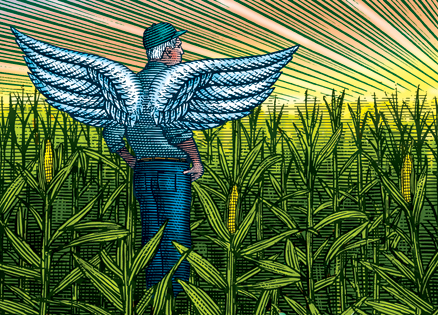
A white-haired man walked toward me. No one I’d ever seen before. A farmer, dressed in jeans and a button-down short-sleeve shirt, his hair neatly trimmed under a ball cap. “Anything I can do?” he asked.

“We are waiting on the ambulance,” I said. “We may need help lifting him.”

The man nodded. “I’ll stand here and block the sun.” I wouldn’t forget the kindness from a complete stranger.

At last Tim Phillips, a volunteer first responder, arrived. He put an oxygen mask over Nick’s face and cut the back of his shirt open, an entry wound barely visible. Kendra pulled up.

“The most important thing is to keep him calm,” Tim told her. But I could see the worry on his face. We were running out of time.

Kendra Leibold: I wasn’t scared. Not at first. Nick didn’t seem to be in pain. There was only a little blood on his back. I crouched next to him and stroked his cheek. “I’m right here, honey,” I said.

The ambulance arrived and the paramedics rushed a backboard to Nick’s side. The men lifted him onto it and then each of us took a corner and carried it to the ambulance. The ambulance pulled away, roaring down the road.

Wow, they’re in a hurry, I thought, my chest suddenly tightening. That can’t be good. I saw the almost-gleaming brown van leaving behind it.

“Did you get that farmer’s name?” Aaron asked.

“No,” I said. “I figured he was a friend of yours.”

Aaron made me promise to call if I needed anything. “We’ll be praying for you and Nick,” he said.

I hopped in the car, the ambulance and the van up ahead, a thick cloud of dust billowing behind them.

At the hospital it seemed like forever before a doctor met with me.

“Your husband has massive internal bleeding,” he said. “He needs major surgery. We’re going to airlift him to the Mayo Clinic.”

An icy chill run down my spine. Nick was dying! The Mayo Clinic was 70 miles away in Minnesota. What if there wasn’t time?

“I’ll let you know when the chopper gets here,” the doctor said. “Until then, we’re doing our best to keep him stable.” He went through the doors, back into the ER. I wanted to see Nick. Had I told him I loved him that morning?

Soon Pastor Kevin arrived with Nick’s dad, Joe, close behind. We waited together. At last the doctor escorted us back to Nick. He was semiconscious, an array of monitors flashing and beeping, IV tubes running from his hand. I touched his arm and kissed him.

“I love you,” I said. Could he even hear me?

“Dear God,” Pastor Kevin prayed. “Help Nick and Kendra feel your comforting presence.”

I tried to feel God beside me, but all I felt was worry.

The chopper arrived for Nick, and Joe and I left for the Mayo Clinic. The drive seemed never ending. Nick seemed someplace unreachable, a world away. I tried to focus on Pastor Kevin’s prayer. God, are you really here with us?

We found the ER and I ran inside while Joe parked the car. It was 1:30 p.m. A nurse took me to a waiting room to speak with a doctor.

“Your husband’s in surgery,” he said. “He went through three bags of plasma on the way here. Good thing the chopper had plasma on board. Not all of them do.”

We sat in the waiting room for hours. I felt helpless. Friends and family drove up to be with us. I appreciated them, but all we could do was pray. It didn’t seem like enough.

It was evening when the surgeon came to the waiting room. I searched his face for any sign of hope, but found none.

“Your husband’s suffered a major trauma,” he said. “We found a small piece of wire lodged in the back of his breastplate. It ruptured a major vein, the vena cava, and went through his heart, liver and diaphragm.

“He’s had a huge amount of internal bleeding. I’m hoping he’ll make it through the night, but you need to prepare yourself…”

I felt faint. The news only seemed to get worse by the hour. Nick needed a miracle, something amazing, like the healing touch of an angel. But what were the chances of that? I needed to be realistic. That’s what the surgeon was telling me.

Aaron Blatti: The next morning I drove down mile after mile of back roads, looking for that brown van. It’d nagged at me ever since I’d come home from Nick’s cornfield. I knew everyone in town, knew the cars they drove. I’d never seen that old farmer or his van.

Besides, how could it not have been covered in dirt like every other car in these parts? I had to get to the bottom of it.

“I think he was an angel,” my wife said plainly. But I was skeptical. Surely, I’d know if there was an angel standing beside me. Still, I’d driven for hours, even stopped and asked folks if they knew of a brown van. No one had the faintest idea what I was talking about.

Kendra Leibold: I pushed Nick in his wheelchair to the hospital chapel. A week and a half had gone by since that first fear-filled night here at the Mayo Clinic. It was only now, after two more marathon surgeries, that I dared believe that Nick was going to live.

Even the doctors were amazed. It was humbling, mind-boggling really. We knew that Nick had months of recovery ahead of him, but I couldn’t wait to thank God for all that had happened.

Aaron arriving in the nick of time. The stranger who had—“Honey,” I said, barely able to contain my excitement. “Do you remember the farmer who stood by you?”

Nick nodded. “He blocked the sun,” he said.

“Maybe he did way more than that,” I said. “Aaron could never track him down. Couldn’t find any proof he existed at all. Aaron’s wife thinks he was an angel sent to watch over you.” Nick looked up at me from his wheelchair and smiled.

Two days later, the doctor cleared Nick to go home. “I can’t explain it,” he said. “But there’s no longer any need for therapy.” It seemed Nick’s angel was still on the job, the comforting presence Pastor Kevin had asked for.

Nick Leibold: Aaron came to visit soon after we returned home. “You’re looking better than the last time I saw you,” he said.

The three of us talked about everything that had happened: Aaron deciding to take a joyride, his sudden urge to go by our fields, the care of the first responder, the helicopter carrying plasma, my miraculous recovery—and of course the unaccounted for stranger.

It was a lot to take in. To think that we’d all been in the presence of a heavenly being, how he’d quietly seen to every detail of my care. Amazing! And yet, like a farmer, he hadn’t drawn attention to himself, happy to give the glory to God, the one who makes all things possible.

READ MORE: ANGEL SIGHTINGS

Angel in the Ambulance

On the Friday before school started, I was cleaning and equipping the bus I would drive that year. I had parked it near my mom’s town house, and while I scrubbed the seats and made the windows sparkle, Travis Daniel, my four-year-old, played inside at Mom’s. At least that’s where I thought he was until he startled me from the street: “Hi, Mommy!”

“Danny, you’re supposed to be with Grandma.” He was all smiles at the foot of the steps leading onto the bus. “You stay right there,” I said. “I’m coming out now.”

I turned to put down my rag and cleaning spray. When I looked again through the open bus door, my body tensed and the scene unfolded like a dream.

A black Chevy Blazer sped past. Danny was flattened against its front, as though he had been sucked into the grillwork. The driver stared straight ahead in disbelief, his arms stiff on the wheel as he tried desperately to brake. In horror, I jumped out of the bus, covering my mouth with my hands. After agonizing seconds the car stopped, and Danny, in T-shirt and shorts, skidded across the searing asphalt on his back and lay crumpled in the street.

“Danny!” I screamed, weak with fear. I couldn’t move. At the back of my mind the gruesome question hammered away: What if he’s dead? What if he’s dead? “Not my Danny. Please, God,” I prayed. “Not my Danny.”

READ MORE: SAVED BY AN ANGEL’S PRAYERS

A silent instruction directed me: Run to him. I raced across the pavement and dropped down beside my son. I knew I shouldn’t move him; he was unconscious. Another instruction: Lay hands on the sick and they shall be healed. Immediately I put my hands on Danny—all over his body. “Please, God, heal my boy.”

“Come on,” someone said gently, “let’s call Victor. The ambulance is on its way.” Victor, my husband, was on a house-painting job. I didn’t want to leave Danny, but a couple of neighbors who had heard the Blazer’s screeching tires took me by the elbow and guided me to my mother’s house, where I phoned a message to my husband. I wanted to get back to my son, but when I hung up, another instruction came: Start a prayer chain. Quickly I called a friend from church: “We’re in desperate need of prayer,” I said. “It’s Danny. He’s been hit by a car.”

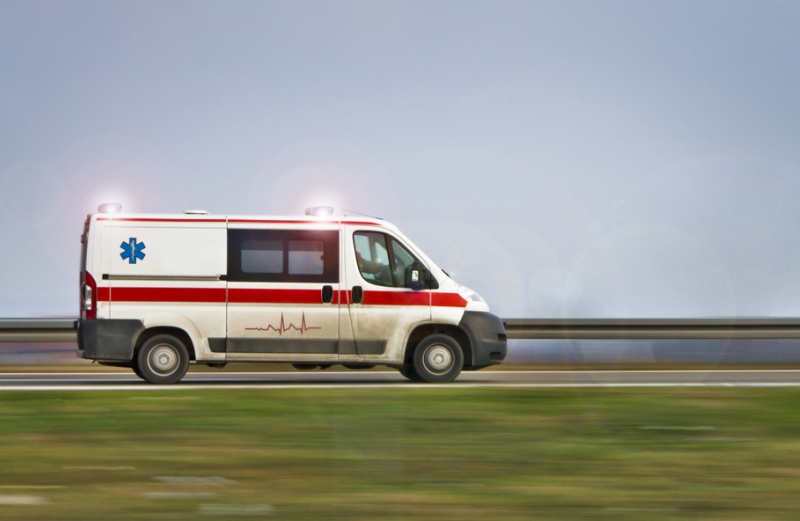
My mother took the phone when the ambulance arrived, and I ran to it. Out of the corner of my eye I saw the driver of the Blazer sitting on the curb crying. Someone helped me into the ambulance, where two EMTs bent over Danny. We roared off, siren blaring. Lightly stroking Danny’s cheek with my finger, I noticed the huge swelling that had formed on the back of his head. Put your hands on his head. I followed the instruction, my praying and breathing becoming one, but Danny’s face turned a sickly purple. The EMTs worked frantically. “We’re coming in on code blue!” one barked over the radio.

We burst into Commonwealth Hospital, where a medical team took over. Victor was there, and so was a crowd of people, some of them strangers; all were praying for our son.

A doctor came out and took us aside. “X rays show that Danny’s neck appears to be fractured,” he said. “He’s hemorrhaging. We’re especially worried about his spleen, and he has severe burns on his back.” Danny’s chances of survival were slim. “He has to be moved to Fairfax Hospital; it’s better equipped.”

Danny was loaded back into an ambulance, his X rays traveling with him so they could be looked at immediately. Victor and I followed the ambulance to Fairfax, where we discovered another group of people holding a prayer vigil for Danny. Some of them introduced themselves. “I work nearby and wanted to come.” “A friend called and asked me to pray.”

All because of a single command to start a prayer chain, I thought.

Danny was on the second floor, being prepared for surgery. When Dr. Russel Seneca, the surgeon, approached us, a stillness filled the room. “We have to operate to stop the bleeding,” he said. His report echoed the one we’d heard at Commonwealth: Danny was in danger. “Dear Lord,” Victor whispered, “be with our boy.”

Someone grasped my hand. Everybody in the room went down on bended knee, and we prayed, some of us aloud, some silently. The room seemed electrified with energy, and I heard one man predict with conviction, “There’s not going to be any surgery on this child.”

That’s impossible, I thought. If Danny has any chance at all, it’s with surgery. I thought about all the miracles God had performed already: the instructions he had put in my mind, the number of people he had brought together in prayer, and the confidence I felt that no matter what happened God would be with Danny.

Everyone got up just as a nurse rushed in: “Mr. and Mrs. Mosher, Dr. Seneca wants you upstairs right away!” Victor and I, expecting the worst, went to the second floor.

“We took another set of X rays,” the doctor said. “That’s standard procedure. But the X rays are conflicting: The second set shows no fracture in Danny’s neck. What’s more, the bleeding has stopped. There’s no need to operate.” Victor and I stood silent.

“I’m baffled,” Dr. Seneca went on. “We all are. We’ll keep Danny under observation here for a couple of days, then send him home.”

For the rest of the day and overnight, Victor and I traded shifts at the hospital. On Saturday Danny regained consciousness. He was transferred from the ICU to a room in the children’s ward, and I sat by his side. “Precious, Mommy’s here. You’re going to be all right.” He just stared at me, not saying a word.

Sunday morning Dr. Seneca released Danny. He would need physical therapy to learn to walk again; the third-degree burns on his back would take time to heal. And, of course, his dad and I worried about emotional scars.

“Keep Danny on the living room couch,” the doctor advised. “Let him be in the center of activity. Get him to talk about the accident, anything he can remember.”

At home we got Danny settled on the sofa. Mom, Victor and I gathered round and assured him he would be up and playing again soon. “Danny, do you know what happened?” I asked.

Concentrating, he looked at me. “The black car hit me.” He was straining, thinking back, trying to find the words in his four-year-old mind.

“Is that all you remember?” I asked.

His face lit up. “I remember the angel that flied!”

“There was an angel?” I pressed, wondering what Dr. Seneca would say about this.

“Uh-huh. In the ambulance. He put my arms around his neck and flied with me.” I was relieved to hear that Danny had been dreaming pleasantly and not traumatized right after the accident. God is good, I thought.

“I saw the man sitting on the side of the road,” Danny went on. “He was crying.”

Danny was describing something he couldn’t possibly have seen while he was unconscious!

“Where did you go?” Victor asked.

“The angel took me to see Jesus and I sat on his lap. He was bright, like a big lightbulb! Everything was bright!” Danny took a breath and finished, “Jesus said he was going to heal me.”

From the beginning God had sent me the reassurance that my son was being watched over. Danny hadn’t been dreaming about his angel any more than I had dreamed the instructions that had carried me every step of the way through this ordeal, giving me the peace of mind to cope with the accident.

With therapy Danny learned to walk again, and the burns on his back healed with no scarring. In fact, there was no scarring on his body at all, except for a tiny circular bald patch on the back of his head—the only physical reminder of what had happened.

Today, my son is 17, and he likes to be called Travis. He is a big strapping fellow with one more year of high school. He’s a certified EMT at Manassas Park Volunteer Fire Company 9, which is just four doors from our home. As a junior member of the fire brigade, he assists at accident scenes and other critical situations—just like the EMTs who came to his own rescue 12 years ago.

“Sometimes I wonder why God decided to keep me around,” he says. “Maybe it’s to help people.” When I hear a siren wail I know that if Danny’s on duty he’ll do all he can for whoever’s in trouble, and I imagine my prayer flying to heaven on the wings of the angel that “flied” him there.