Embrace God's truth with our new book, The Lies that Bind

The Power of Surrendering

When I think of things military, a lot of descriptive words and phrases come to mind—courage, discipline, honor and victory. But not so much the word, “surrender.” But I’ve come to learn that surrendering is an important part of being in the military—and being a part of a military family. Here’s how:

1. Surrender One’s Will
To be an effective part of a military unit, each soldier must surrender his own will to that of his commander. It’s only when an army works together that they can accomplish the things they’ve be recruited to do.

A military family is also at war. We fight fear, challenges, and the stress of having a loved one in a difficult life situation. When we surrender—accept our circumstances and have faith in God’s ability to keep us safe—we become an effective part God’s purpose.

Please Donate to Guideposts Military Outreach

2. Surrender to a Larger Purpose
The men and women in our military have committed to service beyond their own comfort and decisions. They go where they are told and perform the job they’ve committed to do. This isn’t easy, but their ultimate service and sacrifice are what keep our country safe.

As military families look beyond our own hardships, we can be used by God to affect not just our loved ones but also others who are also struggling.

3. Surrender to God’s Peace
By serving with our military, the service men and women are part of the organization that brings peace. They keep us free from attack, and they serve here at home, keeping us safe during natural disasters.

Yes, military families live under the imminent possibility of what our loved ones are facing. But when we acknowledge that God is more than able to take care of them, we are surrendering to His authority. That is what brings peace, no matter the circumstances that surround us.

Yes, surrender is an odd trait for a healthy military family. But when we learn the power behind surrender, we find ultimate peace from the only One able to guarantee it.

The Power of Choices

I have Olivia’s crib still up in her bedroom. Considering she is only 18 months old, that may not seem so strange. But Olivia hasn’t slept in her crib for nine months.

When Olivia learned to stand up, her perfect sleeping habits instantly stopped. And in my sleep deprived state, I decided to join the ranks of co-sleepers. (My twin sister Susan has co-slept with both of her kids.) I put a mattress on the floor in her room and slept with her there.

Blissfully, we have co-slept for the past nine months. But the only problem with co-sleeping is that I need her to fall deeply asleep before I can leave her. (As much as I would love to go to sleep at 8:30 p.m., that isn’t an option in my life!)

Bedtime can be a wrestling match, with her sitting up and insisting, “All done” or “Go…go…” and grabbing my finger in an attempt to persuade me to give up and take her downstairs to play.

Enter the crib and the power of choices.

When my older son was a toddler, my sister Susan found the book, Love and Logic Magic for Early Childhood: Practical Parenting from Birth to Six Years by Jim Fay and Charles Fay, and it revolutionized my parenting.

Giving children choices empowers them—and most often ends arguments and whining. (Try it; it is magic!)

So Susan and I both make sure our kids’ days are full of choices, allowing them to have a sense of control over their lives. “Do you want two pieces of broccoli or three?” (Note that no broccoli is not an option.) “Do you want to have a bath or a shower?” “Do you want to go to bed now or in ten minutes?”

And at bedtime, when Olivia sits up, refusing to go to sleep, I calmly point to the crib and say, “Do you want to sleep in your crib?”

“No!” she admits and flops her head down on the pillow.

Then she always tries again, sitting up she says, “All done.”

I reply, “It is sleepy time. Where do you want to sleep, crib or bed?”

“BED!” and she drops her head to her pillow, snuggles up to me. End of discussion.

Oh, the power of a simple choice. It’s magic.

So, the crib? It isn’t going anywhere just yet.

The Powerful Stories That Bring Us Together

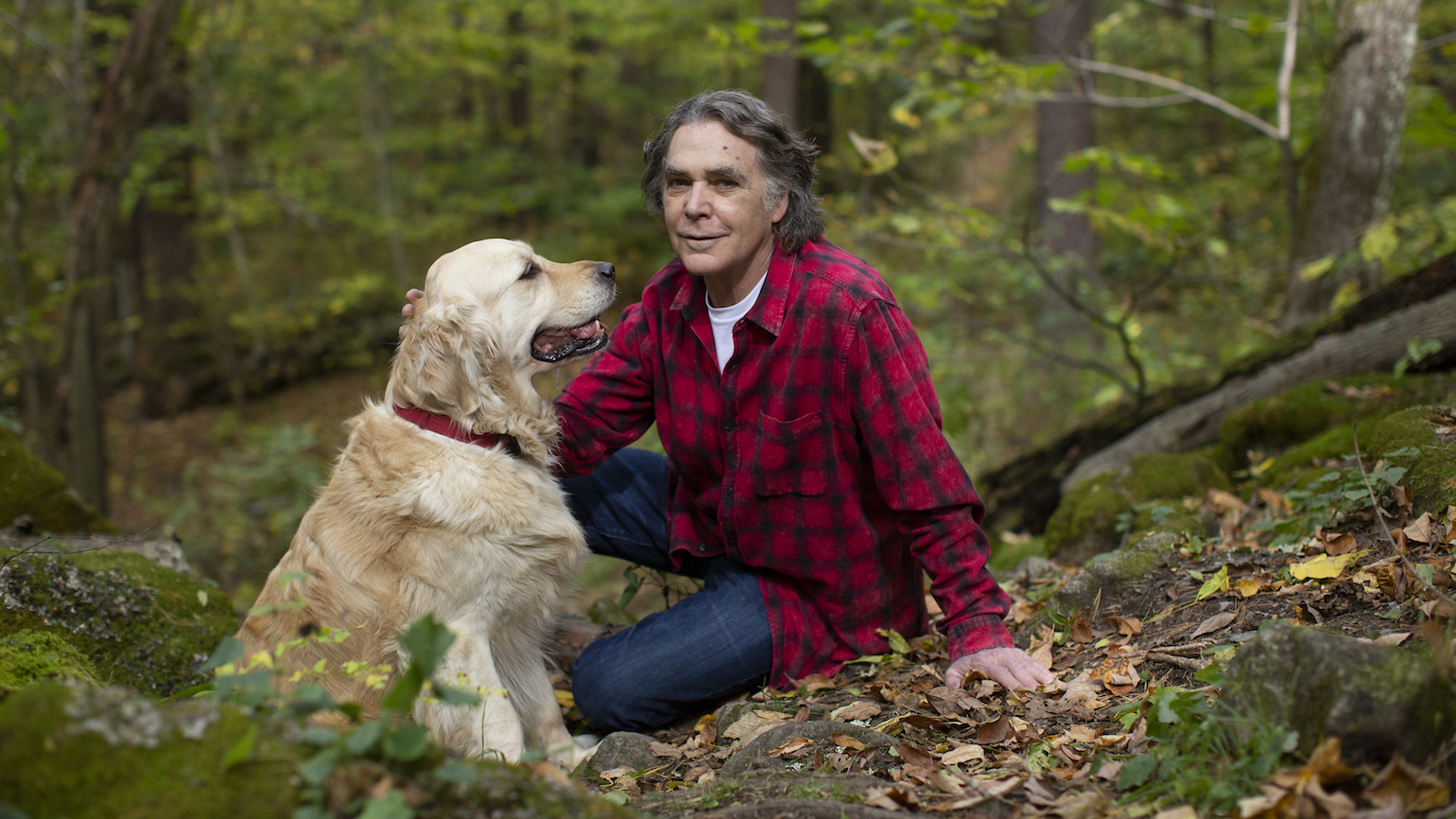
Even on these cold January days, my golden retriever Gracie and I bundle up—or at least I do—and find a trail that isn’t too deep in snow or too icy to get a good strong hike in. We do it for the exercise certainly. We’ve lost a combined 47 pounds these 10 pandemic months on these trails, as I think I’ve mentioned. It’s more than exercise, though. I do my best thinking out in the woods (I can’t speak for Gracie).

Today I got in a lot of thinking. It could have been the windless silence, or the low winter sun glancing off the fresh snow. In the wake of the shocking violence in Washington, I thought about Guideposts magazine and how, at Guideposts, we believe that everything is possible with faith, hope and prayer, even overcoming the profound and historic challenges of a deeply divided nation.

Guideposts has never been about politics. We don’t do controversy. There are plenty of places where folks can find that, maybe too many. Guideposts tells stories of hope and inspiration that relate to our readers’ everyday lives, what we’ve done for more than 75 years and what I’ve done in one role or another for 35.

Even in these past few difficult years, our differences seemingly insurmountable, our readers have shared stories that inspire and uplift, that celebrate a diversity of views. You might remember an article co-authored by a pastor and an imam, whose congregations shared a parking lot, and how they came to learn about and respect each other’s devotion to faith; or another where an environmentalist and a logging executive discover that they have more in common than not.

In our February issue, we feature a cover story by the pastor of a diverse church. He describes how his congregation deals with social justice and the Black Lives Matter movement, even though they don’t all agree on these issues. They do not necessarily seek to change each other’s mind but to honor their shared humanity and reach common ground.

These stories are not about agreeing to disagree. That would risk trivializing the problems we face. We called our February story Our Common Ground. We are seeking more uplifting pieces from people overcoming differences within their churches, their neighborhoods and even their families.

We hope to help bring people together, to love more and hate less, as we have since Dr. Peale and his wife, Ruth, founded the magazine. So please let me know what you think at egrinnan@guideposts.org.

The Pet Finder’s Success Story

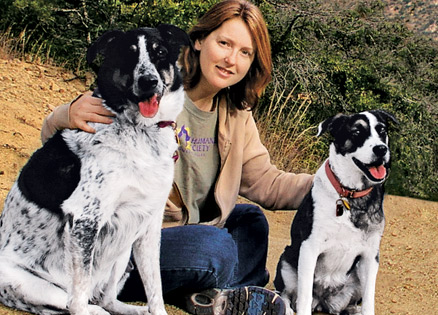
You’ve heard of Petfinder.com—a website that helps shelters and rescue groups find loving homes for animals?

Maybe you even found your own pet through the site—we’ve facilitated more than 13 million adoptions.

But did you know Petfinder started as an inspiration that came out of the blue on the way to a New Year’s dinner?

As a kid I’d volunteered with a rescue group, but as an adult, I’d turned to a career in natural resources. Until that night, I had no idea I was about to get involved in pet adoption again.

Back in 1995 Google wasn’t a verb and Facebook didn’t exist. The world wide web was more of a wild world.

My husband, Jared, and I weren’t dot-commers. He was beginning his medical residency and I worked for New Jersey’s urban forestry. But we were intrigued by the sense that anything was possible on the web. We just didn’t think it was being used effectively.

The question was, what would benefit from its fantastic search capabilities? That’s what we were discussing in the car that night on the way to meet friends for dinner. The site we were dreaming of would be searchable, sortable and colorful.

We tossed around ideas. Maybe real estate listings? But that didn’t seem right. If we were going to try to use some of this new digital power, it should be worthwhile. “The ultimate website would harness technology for a socially responsible cause,” Jared said.

I nodded. We fell silent. What cause needed our help? Then we both said, in unison, “What about animal shelters?”

I got goose bumps when I thought of all the lives we could save. What were the chances the same inspiration would strike us at the same instant?

Sure, we loved animals and I’d “rescued” them when I was a kid (like the snake I found in the backyard and convinced my parents to let me keep), but now my focus was on planting trees and building green spaces in cities and Jared’s was on healing the sick. We didn’t even have a pet. Yet I knew every year, millions of abandoned pets—healthy, loving animals who wanted only for a home—were killed.

We couldn’t wait to tell our friends our idea. They volunteered to help.

Jared and I worked on Petfinder.com—that’s what we named it—whenever we weren’t at our jobs. He did the programming and I designed the site. Our friends helped spread the word to shelters.

Animal-welfare groups are usually strapped for funds, so we wanted the site to be free to them and to potential adopters. That meant all expenses came out of our pocket. But we knew if we saved just one life a month, it would be worth it.

We launched the site with 13 shelters. I entered all the data because most shelter folks didn’t have access to the internet.

It was odd for the Petfinder creators to be without a pet, but that didn’t last long.

One morning a few months after we launched, I was on my way to work, walking to the train station, when I had my purse snatched—by a dog. Off he ran. I followed and retrieved it—and him, using my purse as a leash (he wouldn’t let go). The dog seemed to be on his own, so I called Jared. He picked us up.

This was our first chance to use our site ourselves. We checked with shelters to see if anyone was looking for him. Then we posted him on Petfinder, named him Max and prepared to interview prospective adopters.

We discovered how effective Petfinder was. Soon we heard from several interested people. But none seemed right.

“I’ll take him,” one man said. “He’s used to living outside. Perfect for guarding my junkyard.” Used to living outside? I don’t think so. That’s when I realized we’d already found Max a home—ours!

In those early days, my biggest struggle was hearing heartbreaking stories about abused or abandoned animals. The pup who was left tied to a lamp post in a thunderstorm. The dog who almost ran into traffic trying to escape some mean kids throwing rocks at him.

Because of his physician’s training, Jared was able to keep his emotions somewhat apart from the work. But me, I’d go from outrage to sorrow to helplessness as I put up dogs’ photos on our website. Could our efforts make a difference when there were so many animals in desperate need?

Then a few months into our project, something changed. Somehow my perspective shifted. I started to see the hopeful side of those sad stories, like the woman who chased off the mean kids and coaxed the dog into her car, or the vet who stayed after hours to patch up a street cat who’d been injured, or the family who adopted an abused dog and lovingly taught her to trust again.

Or the wonderful community in Bowling Green, Kentucky, that helped a stray dog with a broken jaw. A police officer carried him off the street to the humane society, which posted him on Petfinder. A veterinary dentist donated his services. A woman in another state saw the Petfinder posting and knew her friend in Ohio would be the perfect owner. Once the adoption was arranged, a chain of volunteer drivers took the dog to his new home.

Finding the heroes in those situations—and there always are—was empowering. It reminded me that no matter how small, every action a person takes to help one of God’s creatures has an impact. And that when we put together all the pieces each of us works on, we can make a big difference.

There was one thing, though, about Petfinder I didn’t understand—the idea that you could see an animal’s picture and know you were meant to be together.

“It was love at first sight!” I kept hearing from happy new pet owners, like the couple who drove from Florida to Michigan to adopt a black cat they saw on our site. I assumed Petfinder would be like the Yellow Pages, but you’d still need to meet your new pet to fall in love.

That is, until about a year after we started Petfinder. I was going through some incoming adoption lists when a photo of a big, spotted mutt named Kobie made me stop short. I couldn’t turn away from his face looking out from behind the bars of a crate in a shelter in Harlem.

He was a year old, but he had the eyes of an old soul. I know you, I thought. I called the shelter. Kobie was scheduled to be euthanized at five o’clock that day. I’d never make it there in time.

The woman at the shelter proposed a deal: “I’ll put Kobie in my Jeep and meet you halfway…but you have to take two other dogs that are going to be euthanized today.”

What am I getting myself into? But it was too late. I’d made up my mind the second I saw Kobie’s photo. Jared wasn’t so sure, but we drove to the halfway point and piled the dogs into the car.

Friends fostered the other two, and it didn’t take long for Kobie to become a part of our family.

Two years later our site went nation­al. I left forestry to devote myself to it full-time. Today, more than 12,500 animal welfare groups post animals on Petfinder; 65 percent of animal adoptions in the U.S. come through the site, includ­ing most of the animals on my farm in North Carolina.

Max and Kobie have passed on, but I live with three horses, seven chickens, a guinea hen, two goats, a sheep, two guinea pigs, two cats and a dog.

Helping animals find homes isn’t always easy, but it’s what I was meant to do. Every day I’m reminded we’re all connected in ways beyond our imagining.

Maybe it goes back to what first struck me about the web, that anything is possible. I hear so many stories like Max and Kobie’s, and well, with over two million adoptions a year…let’s just say I get a lot of goose bumps.


The Perfect Recipe: Faith, Family and Food

I’m a chef and I run seven restaurants, all but one here in my native New Orleans. I spend most of my waking hours—morning to midnight—in the kitchen. You’d think I couldn’t wait till Sunday, my one day off.

You’d be right, but it’s not because I take a break from cooking.

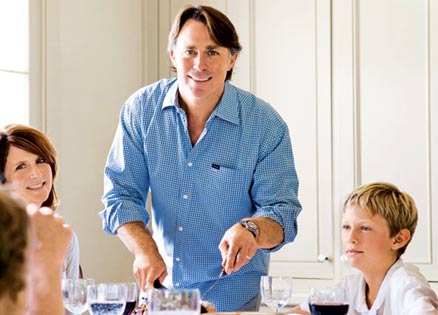
Actually, Sunday is my favorite day in the kitchen. It’s the day I cook for my family—my wife, Jenifer, and our four boys, Brendan, Jack, Luke and Drew—and whoever else drops by.

First comes breakfast, something simple and sweet, like beignets or cinnamon buns, before we’re off to church. Afterward, we’ll stop at the grocery for whatever we forgot.

Then it’s home to start supper. Weeknights I’m at work and I rarely have the chance to be the typical dad spending the evening with his kids, so I relish Sunday suppers. I get to hang out with my boys, sharing what I love with them.

On Sundays I cook in a totally different way than in my restaurants. There’s no rush to plate meals. I can take my time and cook from the heart, inspired by the kind of food I grew up with, my grandmother Grace’s Southern classics.

Even now, I can close my eyes and go right back to Grace’s kitchen, to the scents and sounds of her making breakfast.

I can smell buttery biscuits in the oven, strong dark coffee with chicory in a French drip on the burner, a cast-iron skillet of rendered bacon fat. I can hear the snap and crackle of eggs cooking in the hot fat, the clank of metal against glass when she opened a jar of scuppernong preserves.

“Good morning, John, angel,” she’d say. “What can I get you for breakfast?”

I’ve never forgotten those happy times I spent at my grandmother’s table. I promised myself that when Jenifer and I had children, I’d cook for them just as Grace cooked for me. And that’s what I do on Sunday.

The centerpiece of our Sunday menu is always a roast of some kind (Jen uses the leftovers to make easy, healthy school-night suppers). The sides are family favorites like garlicky string beans, sweet corn pudding and Provençal stuffed tomatoes.

Dessert is simple and delicious, a cake or pie using whatever fruit’s in season.

I like to give each of the boys a task. Brendan’s a teenager, which means he specializes in eating. He’s also got a precise mentality so I can rely on him to dice onions, carrots and celery properly. Jack, 10, and Luke, nine, like to get their hands dirty kneading pie dough and pressing the bread-crumb-and-herb stuffing into those tomatoes. Drew, seven, is determined to keep up with his brothers.

When Jack claimed he was the first to bake a cake, Drew went and mastered a cobbler, which he insists on calling a cake. He’ll run into the kitchen, lips stained purple, with a bowl full of blueberries just picked from our bushes, asking, “Daddy, you gonna bake a cake with me and my berries?”

I’m usually at the stove stirring a sauce or cooking the vegetables. When I look over my shoulder at my boys, each intent on his task, I feel this indescribable joy of everything being right with the world.

It’s the same joy I feel sitting down to Sunday supper with my family and any friends who’ve dropped by. We might have 20 to 40 guests on any given Sunday, which works out fine since I always cook extra.

The tradition of the Sunday feast accomplishes so much more than feeding us. It nourishes our souls. Sunday is the day we slow down and get away from distractions like shopping, video games and TV and connect with one another.

Well, except if the New Orleans Saints are playing. On game days, we’ll still eat together—at halftime. It helps if dem Saints are winning. But even when they don’t, Sundays are still saintly.

Try John’s delicious and easy-to-prepare recipe for Provençal Stuffed Tomatoes.

Download your FREE ebook, True Inspirational Stories: 9 Real Life Stories of Hope & Faith.

The One Who Never Grows Weary

There are just a few minutes to sit in the sun. We had an early morning soccer game and then a run into town for baseball cleats. In an hour, we have a Scouts gathering. But for now, it is still. Lonny and I find deck chairs that are hiding in the shade. We pull them to the patio. I tilt my face toward the rays of spring and close my eyes as the younger boys play in the yard.

I’m at rest.

Until Rugby nudges my knee.

He has his football in his mouth and he’s looking at me with remember-me-mama eyes. I scratch his ears and hope this will be enough. But the pup has something else in mind. He wants to play.

He drops the football at my feet and sits. He cocks his head. I’m a softie for a little blond guy–puppy or boy. The time of rest is over. I take Rugby’s football and head for the lawn.

But as I go, I have a thought.

Isn’t it wonderful that the Lord never tires?

To think about it is almost more than I can understand. We, in humanity, wear skin. For now, we exist in physical bodies that wear and spend and grow weary. I remember how when the kids were younger, getting the boys to bed at the end of the day was a major feat. Baths. Teeth. Book. Bible. Prayers. The tuck-in part of the day, precious as it was, spent the last of the strength I had.

Now that they’re a bit older, it seems that we move faster still. Tiredness is a fact of life.

READ MORE: GOODNESS IN THE RAIN

Yet He, our Father, never lacks strength.

Do you not know?

Have you not heard?

The LORD is the everlasting God, the Creator of the ends of the earth. He will not grow tired or weary, and His understanding no one can fathom. (Isaiah 40:28)

This truth is sweet comfort to my soul. He’s always present, always powerful, reaching into my life with loving hands. He doesn’t break. His attention doesn’t fade or divert.

He doesn’t grow weary.

I throw the football, and Rugby tears across the lawn in a golden puppy streak. A moment later he returns, his partially collapsed football clenched in his teeth.

He drops it by my side, and I throw it again.

Rest time is over, but I’m energized and renewed by thoughts of our never-tiring Lord.

The Mysterious Ways of Love and Death

In our December/January issue of Mysterious Ways, our associate editor Diana Aydin explores the mystery of long time couples who, at the end of their lives, die within moments of one another. These deaths are natural, but often unexpected, and they tend to happen more often than the odds of random chance suggest they should. The heart, Diana discovered—through her interviews with experts such as Dr. Mimi Guarneri—posessess a power over the human body beyond merely pumping blood. Its response to losing one’s soul mate can literally cause the heart to break.

Last week, all-around good guy and former NFL quarterback Doug Flutie witnessed this phenomenon firsthand. In a post on Facebook, he announced the sad news that he’d lost his parents, Dick and Joan, on the same day.

The Fluties were a team throughout their 56 years together, and when it came time for the end, nothing could separate them, even death. One of my favorite writers, Kurt Vonnegut coined a word for this kind of connection between two people—a duprass.

In his apocalyptic novel, Cat’s Cradle, he writes of one couple, “They were lovebirds. They entertained each other endlessly with little gifts: sights worth seeing out the plane window, amusing or instructive bits from things they read, random recollections of times gone by.” Members of a duprass, he writes, “always die within a week of each other.” In the case of his characters, they die within the same second.

Certainly, faith tells us that in the next life, our lost loved ones will be waiting for us, no matter how long we take. A deep love between two people doesn’t mean one can’t outlive the other, and many surviving spouses find their remaining years, even decades, filled with the joy of grandchildren, new experiences, unexpected wonders.

But perhaps someone knows when two people truly can’t live apart. When a couple is so entwined, their purposes so aligned, a merciful hand may reach from beyond to spare one from a life without the other.

Pick up the December/January issue and give Diana’s story a read. Let us know what you think. Is this phenomenon simply coincidence, or the result of stress? Or is there a force that knows us better than we know ourselves… and knows whether or not we have more living yet to do?

As always, share your stories with us.

The Most Amazing Friends in the World

On Friday, a friend drove me 45 minutes to visit my 14-year-old daughter Maggie in the hospital. My friend waited while I visited with my daughter, and then drove me home again.

I picked up a small suitcase, retrieved my 12-year-old son, Stephen, from his class at the New-York Historical Society, and the two of us got on a bus to another city to visit my eldest daughter, Elizabeth, who is in a treatment program to help her overcome anorexia.

Because of an accident on the highway, the trip took nearly six hours instead of four, so another friend I was staying with picked us up at the bus station late in the evening.

This friend drove my son and I too see Elizabeth on Saturday morning, and then Stephen and I went to a museum on Saturday afternoon. We stayed overnight, treated to dinner and chocolate souffles.

On Sunday we got on the bus back to New York, so that I’d be able to visit Maggie again on Monday.

We arrived home, tired, at 8:30 p.m. to find a jumble of boxes on the floor. While I was gone, my mom’s Bible study group had sent a huge delivery of food.

There were frozen meals and fruit, milk and vegetables. There were eggs, cereal, yogurt and even mini cupcakes. The refrigerator was packed solid. It was my own personal miracle, manna in a wilderness of exhaustion.

There have been several times in the past couple of years when healthcare professionals have peered at me and asked with genuine curiosity, “How about you? How do you stay strong?”

I smile and respond, “I have a great network. I have the most amazing friends in the world.”

It’s true. I have friends who drive me to save me time, who give me a place to sleep, who bring me meals, and most of all who pray for me. I have friends I’ve never met, and friends I see all the time.

I am not alone in my struggles at all: I have Christ with me, present in every person who reaches out in one way or another to shoulder my burdens.

Not surprisingly, knowing that a difficult situation draws me closer to Jesus changes the way I look at it. That one piece of knowledge transforms a challenge that, on the surface, looks like a disaster into something much more palatable: a way to grow in faith.

The Miraculous Giant Tomato

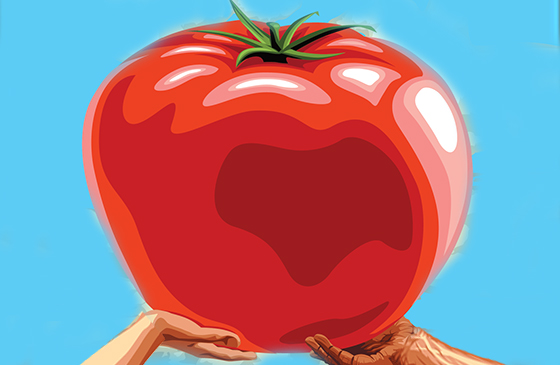
Everything’s bigger in Texas, right? But the giant Beefmaster tomato that appeared in my garden one summer day was like nothing I’d ever seen before. It was a real beauty–red, without a blemish. It bent the vine to the ground.

How had I missed it earlier? I checked my garden at least twice a day. This behemoth had seemingly appeared overnight.

I plucked my prize and brought it inside to weigh it. Two pounds! My mouth watered. I thought of making salsa or jam, or simply slicing it, with salt…

Suddenly, a thought took hold of me and wouldn’t let go. Give the tomato to Grandpa.

What? That seemed like a bad idea. Grandpa lived on a farm just a few miles away, but I hadn’t seen him since Grandma’s funeral. And for good reason. At the service more than one person commented, “That woman was a saint for putting up with him all those years.”

The dirt had barely settled on the coffin when he groused, “When are we eating? Ma’s buried, let’s get on with it.” He was offensive and insensitive. You never knew what would come out of his mouth, but you knew you wouldn’t like it.

I’d figured that out when I was a kid. The farm was paradise–100 acres of cornfields, cattle and, best of all, a huge vegetable garden. Grandma always greeted me at the door. “C’mon over here and let’s make some cookies,” she’d say, gently taking my hand and leading me to the kitchen.

We baked, hung laundry and cooked. Grandpa? He stayed out back, working the land. I knew, even then, that farming was incredibly demanding, and watching him fostered my own love of gardening. Still, I longed for a hello, a wink, a “thanks for coming.” Something. Then one day, I got it.

“How much was that?” he said with a scowl, pointing to my new car. “What do you need a brand-new vehicle for? Plenty of used ones out there!”

“Just ignore him, he doesn’t mean any harm,” Grandma said.

But his remarks hurt. Didn’t he even want to know me? I was his granddaughter, for crying out loud!

I only visited in order to stay close to Grandma. Now that she was gone there was no reason to go out there. It certainly didn’t matter to Grandpa. So why was I standing in my kitchen with an incredible urge to give him this amazing tomato? It didn’t make sense.

And yet I couldn’t bring myself to slice into it. I tried but I just couldn’t do it. I was so frustrated that I finally surrendered. I took the tomato, got in my car and drove to Grandpa’s farm.

When I arrived, Grandpa was on his four-wheeler, riding in from the fields. Under his hat his face was a weathered mask carved by the elements and by years of working in the Texas heat, but at 84, he was showing no signs of slowing down.

Must be that nasty temper of his that keeps him going, I thought. I got out of my car and stood there in the scorching summer sun, waiting for him to acknowledge my presence.

“What are you doing here?” he finally asked, cutting the engine. So much for a hello.

“Hi, Grandpa,” I said, trying to sound cheerful, or at least civil. “I just stopped by to see how you’ve been doing.”

“Well,” he said, stepping down from the four-wheeler, “now that Ma’s gone, I have to do all the cooking and cleaning. And I think someone has been stealing corn from the field…”

I wiped the sweat off my forehead and tried to tune out his complaining. I opened the passenger door and hauled out the tomato.

“Hey, Grandpa! Look at this guy!” I bragged, holding up my prized fruit.

He gave it a cursory glance and stared out into the fields. “So? I’ve got a whole garden full of those.”

“Of course,” I said, lowering the tomato to my side. “You grow great tomatoes.”

“I need to get to the cows. No time to visit,” he said.

He climbed back on the four-wheeler and sped off so quickly that gravel flew in every direction. I contemplated flinging my precious tomato after him.

Now it didn’t seem so impressive. More like a symbol of futility. I couldn’t wait to get rid of it. I ducked into Grandpa’s house, dropped the tomato on the counter and bolted. Maybe the old guy would eat it. Maybe not. I didn’t care. The next time I had a strange urge, I planned to ignore it.

A few days later, Grandpa’s number showed up on my caller ID. He’d never called me before. Never. I braced myself, thinking it would be horrible news from a friend or relative phoning from his house.

“Hello…” I said.

“How did you get that tomato so dang big? You use Miracle-Gro or somethin’?”

“Huh? Grandpa?”

“That giant tomato you brought? How the dickens did you get it so big?” he asked. “I ain’t never grown one nowhere near that big and I’ve been growing tomatoes for seventy years!”

His voice was gruff, but for the first time I detected a hint of friendliness, like he was trying. And maybe a little lonely without Grandma. I knew how that felt.

“Well, I always put a lot of manure in my garden,” I explained, maybe a little smugly. “I don’t like to use any chemicals.”

“I ate on that tomato for days. And it was good. Real good.”

Was that a compliment?

“Next time,” he said, “call first, so we can go in the house and talk for a while, spend some time.”

I almost dropped the phone. “Okay, I will,” I promised.

And I did. I called Grandpa regularly after that and visited him often. He was still a tough old Texas farmer, but on the inside, his heart seemed to have grown overnight. Just like the largest tomato I’d ever seen.

Download your FREE ebook, Mysterious Ways: 9 Inspiring Stories that Show Evidence of God's Love and God's Grace

The Making of Christmas Mother-Daughter Tradition

I thought I loved Christmas as much as anyone ever could, but when our daughter Elizabeth was born, my holiday cheer jumped to a new level. My husband, Wyman, and I hung her stocking between ours on the mantel and then we stuffed it to overflowing. Four years later we added a stocking for baby Abbey and spent evenings by the tree with cocoa and carols. It felt good to sit after full days of mothering a toddler and a newborn during the holiday rush.

But the Christmas before Abbey was born, Elizabeth, a “big girl” at three, wanted to help Mommy with all the preparations. Our tree wound up with the ornaments displayed in a clump on the bottom—an eye-catching focal point for our guests. Some of our ceramic Dickens’ Village characters literally lost their heads (or feet) in the process.

That year I also let Elizabeth put the stamps on the Christmas cards. What could go wrong? Every single stamp was placed—with care—at a different angle in a different spot, perhaps upside down and three inches from the edge or on the back side of the envelope entirely. I’m still not sure how many of those cards actually reached their intended recipients.

We moved on to wrapping presents, which Elizabeth did with flair, using socks and glitter under Wyman’s watchful eye. “This one needs another bow!” Where it might fit, with the others fighting for space, nobody knew, but she did make use of every bow in the house. Elizabeth’s personal style would have no equal on Pinterest.

I’d signed my name to the gift tags ahead of time with “with love from Katie and,” so Wyman could write the rest. But Elizabeth’s helpful hands were too fast for anyone to keep up with, and many of the artfully wrapped gifts waited under our tree to be handed out “with love from Katie and.”

After the wrapping was finished, it was time for “Katie and” to start the baking. I had the perfect recipe in mind for Elizabeth. So far, her kitchen duties had been limited to crushing crackers and putting them on top of a casserole before it went into the oven. A mess, sure, but a safe one. She was now ready to put the finishing touch on my mother’s famous date nut balls by rolling them in powdered sugar, just like I had done when I was her age.

I moved purposefully into the kitchen with my big pregnant belly. I chopped the nuts, Wyman stirred the candy mixture on the stove and Elizabeth waited patiently at the table for her turn to shine. Once the mixture was ready and cooled down enough to handle, it was Mommy and Daddy’s job to roll one dollop at a time between our palms and drop the balls on a plate. Wyman was a bit overzealous and instead of using a light rolling motion with his palms, he squeezed the mixture so hard that the butter escaped it and ran down his forearms. Elizabeth and I reassigned him to the role of documentary photographer, and the actual date balls became a mother-daughter thing, just the way they’d started out with my mom and me. By the time we were done, it looked like it had snowed in our kitchen. No matter. Elizabeth’s first batch of date balls was a raging success.

Now Abbey’s old enough to join our mother-daughters tradition. The girls finish off the job by licking their fingers. “What’s your favorite part of making date balls together?” I asked them recently. I just knew the answer would be the tasty powdered sugar, but it wasn’t. “We like to eat them!” they said.

You will too.

The Love and Grace of Christmas Joy

“Mama, come play a game of I Spy?”

It’s evening, and I’ve just returned from the grocery store. The kitchen is overflowing brown bags and boxes. My youngest son, Isaiah, calls from the dining room. My oldest son, Logan, home from college, had taken him Christmas shopping.

I step over a box brimming with produce and follow Isaiah’s voice. He’s stands near the table, green eyes bright. “I’ll go first and you guess!” he says. He scans the room and his tongue hooks the corner of his mouth. “I see something silver.”

I look to the buffet. To the cabinet in the corner. To the life-clutter on the table. “The candleholders,” I say.

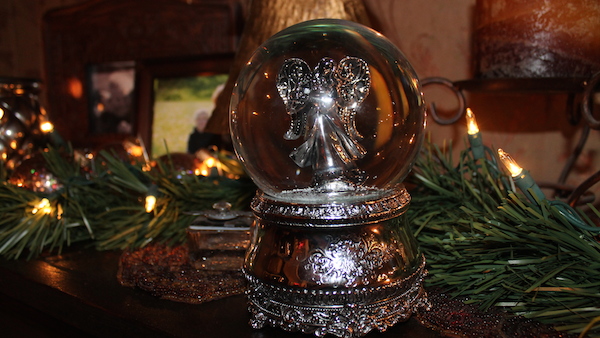
Isaiah’s eyes go round, and he dips his blond head toward the piano. After a second, I see there’s a new snow globe on top. It’s silvery and vintage. It’s beautiful. My breath catches and I hold the cool, round globe in an instant.

“It’s to make up for the one,” Isaiah says.

I’m puzzled. I bend my knees to kneel beside him.

“For the one I broke last year,” he explains. “Logan helped me buy this one to replace it.”

Logan smiles and nods, and I turn the key on the bottom of the globe. The quiet room goes full with dainty notes. I admire the angel through the glass dome. She holds a wreath under a silver-glitter shower.

Isaiah loops one arm around my neck and touches my cheek with his other hand. “Remember, how I dropped your snow globe? It broke and the music still played. The sparkly water ran into the gaps in the floor.” His face flushed and his eyes filled with tears. “It was so, so sad.”

Truth is, until this moment I didn’t remember the shattered snow globe. The brokenness had long been forgotten. But being here, in the dining room, music box singing and silver flakes falling and in precious proximity of tenderhearted boys, I remember, and I begin to understand that this forgetting, this removing of transgressions, is a bit like God’s love.

You know that he appeared to take away sin, and in him there is no sin. (I John 3:5, ESV)

When I trust in Jesus as Savior, my mistakes, my sin, my shame, are long forgotten. When the Lord looks at me, he sees them not. He sees the holy, white, clean, clear righteousness of His own son.

My Redeemer.

My Savior.

Jesus Christ. The amazing gift of Christmas.

My throat suddenly feels tight, and my spirit swells in my chest. My son knows just exactly when to press into my arms. Happiness, the redeemed kind that washes over spirit and soul and fills the heart to the deepest place, becomes mine anew.

“What do you think?” Isaiah asks.

“I’m grateful,” I say.

For the snow globe. But mostly for the love and grace that brings Christmas joy.