Embrace God's truth with our new book, The Lies that Bind

A Mission of Mercy Inspired by Faith and Farm Life

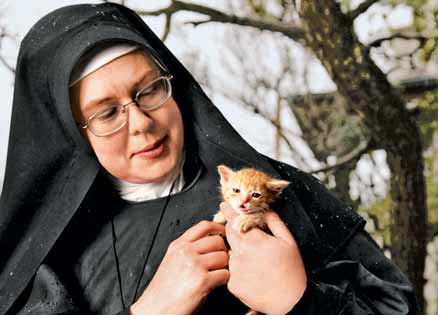
I’ve been rehabilitating stray and abandoned dogs and cats and finding new homes for them for almost 30 years, and in that time, I’ve met quite a number of incredibly dedicated animal rescuers. But even I was amazed by the gentle yet fearless young woman I talked to this past spring, Sister Michael Marie, a Catholic nun with the Missionaries of the Sacred Heart in Clarksburg, Ohio. She has traveled the world as a relief worker with a special mission: to rescue animals in areas hit hard by natural disasters.

“They are all God’s creatures,” she says. “Helping animals also helps the people who love them. It’s just another way of serving the Lord.”

On March 11, Sister Michael Marie awoke to the terrible news that a massive 9.0-magnitude earthquake had struck northern Japan, triggering a tsunami that swept through coastal cities and villages, killing thousands and displacing hundreds of thousands more.

Soon the horror deepened into the worst nuclear crisis since Chernobyl in 1986. Partial meltdowns and radiation leaks at the Fukushima Daiichi nuclear power plant forced the evacuation of more than 200,000 souls.

Sister could only imagine how many animals had been stranded or injured, and she knew she needed to help. A month after the quake, she arrived in Japan with a team from Kinship Circle, an organization that runs an animal disaster-aid network and sends trained responders, all volunteers, to stricken areas. Some of the team cared for sick and injured animals. Others distributed pet food and clean water.

Sister Michael Marie provided a different kind of help—and hope. People at evacuation centers begged her to look for the animals they had left behind with a week’s supply of food and water, thinking they would be back home by then. Now that their towns were off-limits indefinitely because of the nuclear emergency, they were frantic.

Since she was allowed past police checkpoints into exclusion zones, Sister focused on locating stranded pets and farm animals and moving them to safer places like shelters and foster homes until they could be reunited with their human families. Sister was willing to risk earthquake aftershocks and exposure to radiation to rescue them.

Perhaps even better than most animal lovers, she understood the unique bond people have with their furry and feathered companions. After all, she had spent most of her 36 years around animals—living with them, raising them, nursing them when they were sick or injured. She grew up on her family’s 40-acre farm in Wisconsin, with dairy goats, sheep, pigs, geese, guinea fowl, chickens and turkeys, not to mention dogs and cats.

At age 12, Sister asked her parents if she could have pet rabbits. They wanted their daughter to learn that raising animals was a serious responsibility, so they had her sign a “contract” promising that she would handle all of the rabbits’ care, and the cost of their food would come out of her allowance.

The lesson took. She kept rabbits until college.

Sister would wander the woods behind the farm, where there were beavers, wolves, foxes, otters, owls, even eagles. She often found herself thinking of St. Francis of Assisi and following in his path. “Farm animals, wild animals, pets, I prayed for them all,” she says. “And I wanted to protect them.”

At first, she thought that the best way for her to help animals was to become a veterinarian. After college, Sister worked for a few years as a technician in an animal hospital to gain hands-on experience. Eventually, though, she felt drawn to a higher calling.

At age 24 she enrolled in the Missionaries of the Sacred Heart convent. “I never expected that animals would continue to be part of my life’s work,” Sister says. “I thought God was leading me to serve people in need,” which was the mission of her order.

One day the mother superior went to a conference on providing emotional and spiritual support to disaster victims and came back with an idea for Sister Michael Marie. “I know of your past work,” the mother superior told her.

She thought Sister could apply her skills and knowledge to animal disaster aid, and reminded her of the time a family had called the convent frantic about their children’s sick rabbit.

“You gave them some advice, and the rabbit recovered. Remember how grateful the family was? This is how you can help people the most, through helping their animals.”

Sister Michael Marie got trained in disaster relief by the Red Cross and FEMA, and since then has volunteered in disaster areas all over the globe. In 2007 she went to flood-ravaged French West Africa. She worked on the Gulf Coast in 2010, searching for aquatic animals afflicted by the BP oil spill and reporting them to a rescue hotline. At the beginning of this year, she was in Brazil tending to animal victims of mudslides.

Still nothing could have prepared Sister for the devastation and ruin she faced in Japan. In mid-April she drove with volunteers from Japan Earthquake Animal Rescue and Support (JEARS) to the towns of Minamisoma and Okuma in Fukushima prefecture, mere miles from the damaged reactors.

Getting to each town was a challenge. Roads had snapped and crumbled. Power lines dangled precariously. At one point, their van ground to a halt. There was a jagged tear in the road, and the other side had sunk several feet below theirs. Sister and the others had to pile boulders and chunks of broken concrete to bridge the gap enough to drive farther.

Minamisoma and Okuma were like ghost towns. Many buildings were flattened, reduced to rubble. Those still standing were eerily empty. Residents had left in such haste that cars sat in the middle of the streets and bicycles lay on the ground where they’d been dropped.

Pets and farm animals wandered around, searching for food and for someone familiar. The rescuers were able to see to them, but Sister noticed that other animals hadn’t been so lucky and had already died of starvation and dehydration.

One woman evacuated from Minamisoma had broken down in tears explaining to Sister how she’d had to leave in such a hurry that she wasn’t able to track down two of her cats. Sister searched the area around the woman’s house without any luck, but she left a live trap with food that might lure the cats out of hiding.

“Just knowing that someone cared enough to come all the way from the United States to help her pets brought the owner comfort,” Sister says.

Sadly many of the animals could not be located, but Sister and her team were heartened by those they were able to save such as one black Labrador retriever that was spotted near a police checkpoint about 20 miles from the Fukushima power plant. It took half an hour of quiet talking and tasty treats to get close enough to touch him and slip a leash over his head. Then the dog froze and refused to take another step. Sister picked him up and carried him to their van.

“He was very thin—all his ribs showed—but his muscle tone was pronounced,” she says. “This dog had traveled for quite a distance, and he was so tired.” And scared. Yet he rode in the van for several hours to a JEARS shelter without making one sound of protest, as if he knew these strangers would take good care of him.

The dog turned out to have radioactive material in his fur, so he was decontaminated and remains at the shelter waiting to be reunited with his family.

“Were you afraid?” I asked Sister.

No. All she felt was gratitude that the Lord had put her where she could do the most good.

“Helping all his creatures is a way of doing God’s work here on earth,” she told me in her soft voice. “After all, wasn’t Noah’s Ark the first animal rescue shelter?”
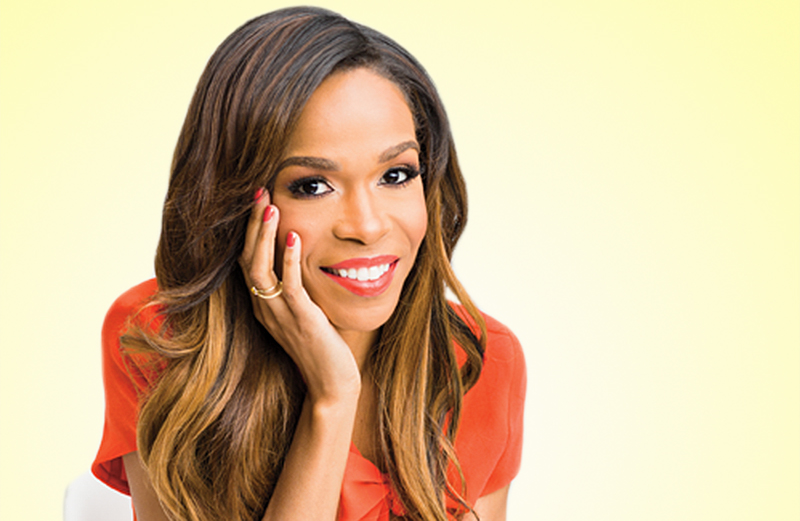
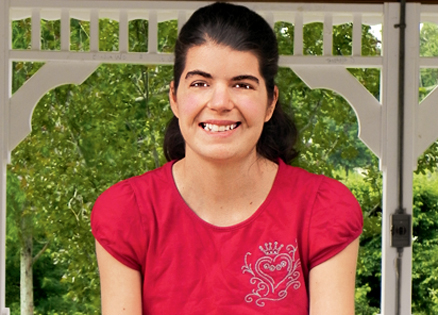
Michelle Williams: The Family That Wouldn’t Give Up Hope

We were all there, the whole Williams family; every relative that lived close to my parents’ Illinois home had gathered around my dad’s hospital bed. Mom is one of eight, and almost all of them are ministers, so you can imagine the prayer that was going on in that room.

Help would have to come from God, because the doctors had already talked to Mom about withdrawing life support.

“We don’t think he’s going to make it,” they said.

Gospel music filled the room, but there was no response from Dad. No expression on his face, no change in the slow, anguished breathing, no fluttering of the eyelids, no grip in the hand I was holding. My music group, Destiny’s Child, had just finished our final tour.

I’d been home the month before to throw my grandmother, Dad’s mom, an 85th birthday party and had seen all the family then.

What a happy time that was. Running errands for Mom and Dad, picking up my nieces from school, babysitting, cooking up some mac and cheese and banana pudding, my favorites, just like always.

Now everything had changed. Dad had had a stroke, his second one, and unlike with the first, it didn’t look as if he’d recover. I remembered that first stroke as if it happened yesterday. My whole world stopped.

I was a freshman in high school. Mom had gone down to a church convention in Memphis for the weekend. It was a Sunday morning and with Mom gone, Daddy got us ready for church. He didn’t say anything, just tapped me on the shoulder and gestured. Nothing unusual about that.

Mom was the one who made noise in the morning, calling down the hall, “Get yourselves dressed, children, we’re heading out the door in five minutes!” Dad was quieter. Did I notice that he didn’t say anything in the car either? No. He just dropped us off and drove on. I figured he had an errand to run.

During worship he would be up in the sound booth, doing the audio, like every Sunday.

But at the end of the service he wasn’t anywhere to be found. Not at coffee hour or Sunday school. It was Granny who showed up in her car to take us home.

“Get in, kids.” She looked worried, but you could see she was trying to hide that from us. “Your daddy’s in the hospital,” she said “He’s had a stroke. Your mom’s on her way back from Memphis. I’m sure everything will be fine. The doctors will take good care of him.”

Daddy evidently knew something was wrong as soon as he woke up. He couldn’t hear well. Found it hard to talk. He took us to church and then drove straight to the ER. Someone there must have called Granny.

I hate to think now of the danger he put himself in, driving like that after a stroke, he should have called 911.

I don’t think he knew what was going on, but checking into the hospital was the right thing to do. And dropping us at church first? Well, God always came first in our family. Still I think God would have understood. The sooner you get medical help at the merest sign of a stroke, the better.

I should know. I’ve become an ambassador for the American Heart Association’s Power to End Stroke campaign and I make a point of letting people know things like that. But that’s now and this was then.

Dad had all the risk factors for stroke: diabetes, high blood pressure, and smoking even though he didn’t smoke that much. Mom’s a nurse and after Daddy came home she had a battle plan. No more pie à la mode. No smoking. A list of exercises.

His hearing came back; his speech was okay, but the way we ate changed totally. Goodbye salt, farewell butter. Mrs. Dash made her first appearance in our kitchen, along with grilled chicken–not fried–and lots of salads. Daddy was only in his forties. He had to stick around.

I’m sure glad he did because he got to see me make something of myself in the music business, winning Grammys, writing hit songs, singing all over the world. I owed a lot of that success to him.

On Mom’s side, I was steeped in gospel. I sang “Blessed Assurance” as a solo in church when I was only seven.

But Daddy exposed me to a lot of other music. He was the neighborhood’s go-to guy to DJ a birthday party or barbecue. Down in the basement he had stacks of milk crates full of vinyl–jazz, hiphop, pop, rock. Ray Charles, Bon Jovi, the Winans, Chaka Khan, Carman and Commissioned.

He took me to my first concert. He was also a real history buff. His father had served in World War II and Korea, and Dad could recount all the important battles. You should have heard him rattle off all the names in the Bible too, from Abraham on down.

I wrote about Mom and Dad in my songs. In “Purpose in Your Storm,” I put down a lyric, “Daddy told me things will happen, go on ahead and cry.” Like what all those prophets from the Bible foretold.

And for my mom: “Mama’s been where you goin’, it’s gonna be all right. He’ll never put more on you than you can bear.”

I wrote those words in 2003 for my album Do You Know, a year before Daddy’s second stroke. (It turns out that if you’ve had one stroke there’s a strong likelihood you’ll have another, especially if you don’t make any lifestyle changes).

Standing in his hospital room now, holding his hand, praying my heart out, I wondered if those lyrics were really true. This seemed like more than any of us could bear. How would he bounce back from this? How would we?

I heard all my aunts’ and uncles’ prayers, the gospel music playing. Mom was storming the heavens. We couldn’t lose Daddy now. Please, God, was all I could say. Please.

And then I looked down at Daddy’s feet. No way! It was his toe. His big toe. He was tapping his big toe! Not out of rhythm, not randomly, but right on the beat. I stared for a long time, counting. There was no doubt. No doubt at all. He was still with us.

Heaven would have to wait a while longer for this DJ. It was a long haul, but Daddy made great strides. He learned to walk with a walker; he was able to write again.

He still never got speech back, but he knows exactly what’s going on, following every conversation, taking it all in and letting us know what he thinks. I like to tease him, telling him, “You stuck around because you’re nosy. You don’t want to miss anything.”

Most Sundays he sits with Mom instead of in the sound booth. He raises his hands when we sing in church, something he had to work hard at in physical therapy, letting it out for the Lord.

And he’s got this prayer closet he goes into at home. He’ll maneuver behind the sliding doors with his walker and then sit there for the longest time, talking to God.

It’s been almost 10 years now that this survivor has been with us. We’ve had some scary moments. Not long ago he had to be rushed to the hospital with pneumonia, which is another complication that often afflicts people who’ve had strokes.

I’ve said my own prayers. I ask God to heal him completely, bring his voice back, let him walk, let him dance, let him spin. But in the end, I leave it in God’s hands, say a prayer of thanks that I still have my dad, and pray, Your will be done.

When I sit with him and sing a favorite song, I can see how God’s will has been done, in his life and in mine. And I’m so grateful for that, which is why I decided that what God wanted from me was to speak out on the subject of stroke and stroke prevention.

All it took was a tap of the toe.

Read Michelle’s tips for recognizing the symptoms of a stroke.

Watch as Michelle discusses stroke prevention and treatment.

This story originally appeared in the August 2014 issue of Guideposts magazine.

A Miraculous Birthday Breakthrough

Everything was ready for my trip. I was one of five speakers traveling to Florida for a “Sharing Our Faith” conference. I headed to my daughter Kelly’s room to say good-bye. At the door, I heard Kelly talking to herself and stopped to listen. “Okay. Tomorrow. Spelling test,” she murmured.

I loved the sound of Kelly’s voice, and I didn’t hear it nearly as often as I wanted. Kelly was born with a rare syndrome called Cornelia de Lange. The genetic disorder had caused multiple problems, including severe reflux and heart defects, as well as developmental delays.

Talking was especially hard for Kelly. She communicated mostly in two-word phrases. Names she shortened to a first or last name—never both together. At the high school where she attended special-education classes, the students and teachers hardly ever heard a word out of her.

Even at home she never initiated a conversation and rarely made eye contact. But alone in her room, she sometimes spoke to herself in a stream-of-consciousness way. Whenever I heard her, I would stop and listen.

“Kelly?” I said, stepping inside. “It’s almost time for me to leave for the conference. I’ll be back on Monday. The day after your birthday.”

Kelly nodded.

I hated to be away the day my eldest child turned 18, even if she didn’t mind. There was a time, after Kelly was first diagnosed, that an eighteenth birthday seemed impossible.

The conference kept me very busy, but whenever I had a moment to myself I thought about Kelly. The night before her birthday I called home to check in. I spoke with my husband, Larry, but as usual Kelly refused to talk on the phone. “We’ll wish her happy birthday for you tomorrow,” Larry promised.

That night I had dinner with the leader of our team. “Why don’t you come with me to the church where I’m preaching in the morning?” he said. “You could give your testimony.” It sounded like a great plan.

I went back to my room to prepare. I didn’t need much practice to deliver a talk on how my faith came alive years before. I’d told the story in front of many a congregation. Yet this time, when I started to practice alone, something felt wrong.

“This is the only testimony I’ve got, Lord,” I said. “What else am I supposed to talk about?”

The answer was clear: Kelly.

As of her birthday tomorrow I’d have loved her for 18 years exactly. I needed God to be a little more specific about what he wanted me to say. But when I prayed for an answer, all I heard was, Trust me. You’ll know.

When I arrived at the church the next day, I was nervous. Inspiration had not struck me during the night. In minutes I would step in front of a church full of people still not knowing what I might say!

I grabbed the service bulletin and scanned it for the day’s readings. Luke 13: 10-17, where Jesus laid hands on a woman suffering from a disabling spirit. “She was made straight, and she glorified God.” The woman had been troubled for 18 years.

Eighteen years! Kelly turned 18 years old today! I turned to the pastor. “I think I’m supposed to give my testimony after the Gospel reading,” I said.

When the time came for me to speak, the words flowed out of me. I told the congregation how special Kelly was to our family and to everyone who met her. I’d given testimonies before, but not like this. God was at work in this room. I could feel it.

“While most of us are busy searching for how to serve him,” I concluded, “Kelly always knows how to just be a child of God.”

When I finished, the entire congregation spontaneously sang “Happy Birthday to You” to Kelly. I couldn’t think of a better birthday present for her. Afterward several people came up to tell me how much joy and hope her story had brought them.

“My son is a special-needs child too,” a young mother told me. “Listening to you talk about Kelly reminded me how blessed I am to have him.”

“Any time I see a child who’s different, I’m going to think about your daughter, Kelly,” another man said. “Maybe they can teach me how to be a child of God too.”

So many people had been touched by Kelly on her birthday—it felt like a miracle God was working just for her. And I had gotten to share in it though I was miles away from her. Thank you, Lord, for this gift!

The rest of the day went by in a blur. I didn’t even get a chance to call Larry and tell him how the day started. I did tell my teammate, Tom Herrick, as we were leaving the conference that night. Tom was a longtime family friend, and we were all looking forward to him visiting for a few days—especially Kelly.

“I’m going to sing a big ‘Happy Birthday to You’ to her,” Tom said.

“She’ll love that,” I said. I took out my cell phone and dialed. I expected Larry or one of the boys to answer—

“Kelly?” Kelly did not answer the phone. “Happy birthday!” I said.

“Mommy, I’m eighteen,” Kelly said. “I’m an adult now! I cleaned my room today. It’s all ready for Tom Herrick.”

I was so shocked by her response I could barely speak.

When Kelly gave the phone to her father, I could hear the joy in his voice. “She just woke up this morning and started talking,” he said.

And then I thought back over the day. The service this morning, the scripture from Luke, and the testimony it inspired from me—all along God had been preparing me for the great breakthrough that was to come. The release of Kelly’s sweet, angelic voice was a miracle!

Download your FREE ebook, Angel Sightings: 7 Inspirational Stories About Heavenly Angels and Everyday Angels on Earth

A Message of Hope from a Cat Named Seth

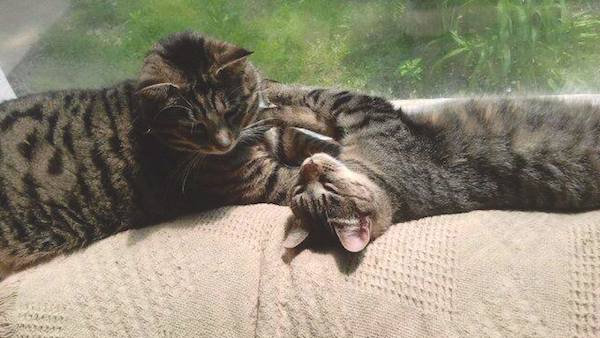
Every so often I get a message on the Mysterious Ways Facebook page from a gray tabby cat. No, really!

You see, Dana Apple, a frequent Mysterious Ways contributor, has a cat named Seth. He happens to be a big Mysterious Ways fan.

Dana sends me photos of Seth along with messages from him in distinct “cat English.” It always makes me smile.

Seth has quite the personality. He’s a stray who showed up at Dana’s house about two and a half years ago. According to Dana, Seth doesn’t get along with her other cats, except for one–Layla, who mistook Seth for her mother when they first met.

About a week ago, I was at my desk at work, really stressed. My sisters and I are currently on the hunt for a new apartment, and it’s been a nightmare times ten. May is one of the worst times to look for an apartment in New York City–not enough apartments, too many people looking. Our lease ends in two weeks, and we still have no place to call home. Needless to say, we’re all on edge. So much so that the three of us have been arguing like cats and dogs!

Read more amazing stories! Click here to subscribe to Mysterious Ways

I was feeling pretty blue about all of it, especially the fighting. And then a message popped up on the Mysterious Ways Facebook page. From Seth. It was a photo of him and Layla with this message:

“I do not know why, but I need to tell you – sometime sisters are kind of a little pain, but you just have to take it becase they love you. Hav a grate weekend. Seth” [sic]

I couldn’t believe it! How on earth had “Seth” known? I emailed Dana and asked her that very question. She said she’d recently posted the photo to her Facebook page and simply decided to send it to me. “I thought you’d like it,” she wrote in her email, “but as [Seth] said, ‘I don’t know why, but…’ Trust and follow the urge. So very glad it was timely!”

Talk about “mysterious ways”! I texted Seth’s photo and message to my sisters right away.

Are we sometimes a pain to one another? Yes. But we love each other, and we’ll get through the horrors of apartment hunting. That’s the message I received loud and clear from a cat named Seth!

Amazing Story of How a Lost Dog Made It Home

We worry about the weather out here in Oklahoma, maybe more than most folks, especially in spring when vicious storms and tornadoes can gather deadly strength in the course of an afternoon. One minute the sun is shining and the next you’re running to the basement for shelter. But that spring seven years ago, there was little that could dampen my happiness. Just months earlier I’d given birth to twin girls, Emerson and Preslee. Harley, our Dalmatian, had a litter of 12 pups. One was very special.

We called her “Muff” because her brown ears made it look as if she were wearing tiny earmuffs. Dalmatian puppies are usually all white—the spots come later—but Muff stood out with her solid brown ears. We gave away the other puppies, but kept Muff for ourselves. The perfect puppy for my babies, I thought. “They’ll all grow up together,” I told my mom.

One blustery afternoon early that May, Muff and Harley didn’t come back from playing outside. “Muff!” I shouted into the whipping wind. “Harley! Where are you?” May is the heart of tornado season out here, and there were reports of dangerous storms coming. I was worried. “They’ll come back. They probably chased a rabbit or something,” my husband, Brian, tried to assure me. “Dogs can always find their way back home.”

Get the new daily devotion for animal lovers!

But the next day they still weren’t back, and the weather was worse, much worse. I called the animal shelter, drove around town, checked with the neighbors. I was at my mom’s place when she said, “There’s a tornado coming and it looks real bad.” I scanned the darkening horizon, the sky bruised with storm clouds. “Lord,” I said, “keep my dogs safe, especially Muff. She’s just a pup.”

We took shelter in a nearby elementary school basement. Even down there I could hear the wind howling mercilessly outside. Still, I couldn’t stop thinking about Harley and Muff. Were they stuck out in the storm? I almost hoped they had been stolen. Then at least they’d be out of harm’s way. Harley was older and could take care of herself, but Muff would be helpless. All at once the wind’s howl turned to an incredible roar, like we were being run over by a freight train, and even my worries about the dogs were drowned out by it.

Finally it was over. The first thing I did was search for Muff and Harley. Driving around town, I realized how lucky my family had been. The tornado left a swath of unbelievable destruction less than a half mile from our house. The humane society shelter was chaotic—bursting at the seams with dogs and cats gone stray in the storm. Their eyes all searched desperately for a familiar face to claim them. But no Harley. No Muff.

Six months after the tornado, we moved into a new house 15 miles away. I still worried about the dogs. What if they came back to the old home and didn’t find us there? Where would they go then? I knew I was being unrealistic, but I still held out hope. It was a hope that faded with time, especially for Harley, but once you have a dog you never forget him. I always wondered about poor little Muff with those cute brown ears. The years passed, and we got two new dogs—a Dachshund and a Labrador retriever. The girls grew up playing with them. But my heart still skipped a beat anytime I saw a Dalmatian.

Then, six years after that terrible tornado season, on a Saturday afternoon a week before Easter, my mom called. She told me she and my sister had been surfing the internet when they came across the web site of Rocky Spot Rescue, a local organization that puts dogs up for adoption. “We don’t need another dog,” I started to say, but she cut me off. “I think you need to see this,” she said.

I turned on my computer and clicked to the web site. I scrolled down to the photograph of the dog Mom told me about. Chills ran down my spine. Those ears, just like earmuffs. The web site said this dog—named Ginger—had originally been rescued a week after the tornado six years ago. Could it be Muff?

Brian was cautious. “Lots of dogs got picked up after the tornado. I bet a bunch were Dalmatians,” he said. “Besides, do we have room for a third dog?”

“The shelter is hosting an open adoption at the pet store tomorrow,” I told him. “I have to act on this. Otherwise, I’ll always wonder if it was her.”

“Okay,” he said. “We’ll all go tomorrow. But don’t get your hopes up, Hon.”

Getting ready for bed that night, I had my doubts. What had become of Muff in six years? Why was she still up for adoption? Even if it were her, after six years, would she remember us? How could we even be sure it was her? She was only a puppy when she disappeared. I called my mom. “Maybe I should just let it be,” I sighed. “Nonsense,” Mom assured me. “A dog never forgets a scent. If this dog is Muff, she will know you.”

Sunday afternoon—Palm Sunday—we all piled into our SUV and headed to the pet store. My hands clutched a bunch of Muff’s puppy pictures. The girls talked excitedly about having a new dog to play with. “Now, don’t get too excited,” Brian said to them. “We’re just going to check this out.”

“But if it is Muff, we’ll get her, right?” Emerson said.

My husband gave me a look. “We’ll see,” I said.

The second I entered the pet store, my eyes scanned the dogs lined up for adoption. There were many Dalmatians, but none had those ears. I went up to one of the shelter volunteers. “Excuse me, but do you still have the Dalmatian you called Ginger?”

“Yes,” she said, “But she’s not available for adoption now. She’s recuperating from a dog bite.”

“Can we see her?” I couldn’t hide my excitement.

“Why her?” the volunteer inquired.

“Because…” I said hesitantly, “I think she’s our dog.”

I handed her Muff’s puppy photos. She flipped through them, eyes wide with disbelief. “Those ears look familiar, all right,” she agreed. “I’ll call the shelter right away and tell them about you. I’ll let them know you’re coming down.” She gave us directions and we drove off.

All the way to the shelter, my heart pounded. Please let it be Muff. Please let her remember us. As we pulled up, I could see a bunch of dogs in the fenced-in yard, some running around playing, others lazing in the shade. One Dalmatian stood at the fence. The car came to a stop and the dog turned toward us. I stepped out and called to her, “Muff?”

There was not even a moment of hesitation. The instant she heard my voice, she started to bark happily. She put her paws up on the fence, then tried to climb it, jumping up and down. The shelter employees came outside to see what all the commotion was about. “She doesn’t react that way to anybody,” one of them said to me. “She’s usually so shy.”

They let me in and the dog almost bowled me over. I kneeled down and put my arms around her. She was all over me, licking my face, barking, nuzzling against my chest. She was a whole lot bigger now, and filled out, but there was no mistaking that this dog knew exactly who I was. I held her head and looked deep into her eyes. “It’s her,” I shouted out. “It’s Muff!”

“Amy,” Brian said, his voice choking with emotion, “this dog definitely has to come home with us.”

It took us a while to find where our poor puppy had been the past six years. Rocky Spot had rescued her from the animal welfare division just days before she was scheduled to be euthanized. Her first adoptive parents after the tornado couldn’t care for her after she was hit by a car and broke her hip. Her next owners moved and left her behind, tied to a tree. She had other traumas and travails that I couldn’t even believe. But miraculously, she survived it all. And I don’t use miraculously as a figure of speech.

We call her Ginger now, but she’ll always be Muff to me. The kids got their new dog and I got my old one back. That first Easter Sunday, Muff—Ginger—and I went for a walk, just the two of us. She kept close, walking contentedly at my side, occasionally looking at me as if she couldn’t believe it. I knew how she felt. I could still remember clear as ever that day of the tornado when I searched the neighborhood for her, shouting into the rising wind. But my prayers too had been taken up by that same wind to the only One who could keep my dog safe when I could not. Now at last, she’d come home.

Did you enjoy this story? Subscribe to All Creatures magazine.

A Marriage That Was Meant to Be

Jason was different from the other handsome Jewish boys I met in college at Syracuse. I’d liked him the second my roommate’s boyfriend introduced us, in the fall of 1995.

He went to nearby Ithaca College, and on our first date, I was struck by our similar backgrounds and values, even with him growing up in New York and me in California. He was fun, and his faith was central to his life. “It’s because of what my grandparents went through,” Jason said. “They are Holocaust survivors.”

“Mine too,” I told him.

We didn’t talk much more about that. Too heavy a subject for a first date. Besides, neither of us knew much more. His grandparents, like mine, rarely spoke about their wartime experiences.

Sweetness and joy, not sadness, filled my grandparents’ home. They lived in Florida, and I visited them two or three times a year. Their house always smelled of fresh-baked sugar cookies or my favorite, Grandma Ada’s chocolate chip cake.

“When your father was little, I fed the neighborhood kids till their bellies burst,” she told me.

“It’s true,” my father added. “She was always in the kitchen.”

Every so often, I’d catch a glimpse of the numbers tattooed on Grandma Ada’s arm. One time, after getting my ears pierced, I asked why she never wore earrings. She cringed.

“A Nazi guard tore my earrings out,” she said, her voice shaking. She straightened up. “No more talk about that. Your earrings look pretty. Now, have a cookie.” That was the last she ever said about it.

It was my father who told me that Grandma Ada had been a prisoner at Auschwitz, one of the most notorious concentration camps. The tattoo on her arm was an identification number put there by her captors. Grandpa Leo survived a different camp. They met after the war and emigrated to New York City.

That was when their history seemed to start. Grandpa Leo told stories about working several jobs as a waiter to support my grandmother and my father. Grandma Ada talked about parties they threw.

“We shared holidays with other families who survived,” she said. “And so many simchas, joyful occasions…weddings, bar mitzvahs, graduations, anniversaries. Life went on.”

They took me to temple for Shabbat, Friday evenings and Saturday mornings, and I got to see families celebrate their simchas. For blessings over the wine and the challah, I joined the other children up front to drink a cup of grape juice and eat a bite of the braided bread.

Back at my grandparents’, we lit Shabbat candles and ate a feast, starting with Grandma’s soup and ending with her chocolate chip cake.

At my own bat mitzvah, my grandparents beamed with pride. “These traditions are important,” Grandma Ada told me. “We must keep them alive.” She didn’t need to say why. Passing on her faith made sure that a part of all those who had died lived on.

Something Jason understood. After our first date, I knew we’d made a real connection. I asked him to my sorority’s winter formal. We spoke on the phone a lot over the next few weeks.

At home for Thanksgiving break, I got a call from Jason. We chatted a bit about our holidays. Then Jason said something odd. “Tell your father that Jaffa, Jerry and Simon say hello.”

“Who?” I asked.

“My uncles, Jaffa, Jerry and Simon Bergson,” Jason said.

My father was surprised when I mentioned those names, and so were my grandparents. “Nadzia and Milton’s boys? They were our dear friends back in New York!” Grandma Ada said.

The story came out. She had first befriended Nadzia in Auschwitz. After the war they lost touch, until years later, when they bumped into each other one day on the street.

My grandparents were thrilled I was dating Jason. “It’s bashert!” Grandma Ada declared. “Meant to be.”

She was right. In 1998, Jason visited my grandparents and told them he planned to propose. As soon as I said yes, Grandma Ada got us a silver Passover Seder plate and Elijah cup. “To use with your family… and your children,” she said.

Jason and I have done just that. Our twin sons are named in memory of their great-grandmothers. They are a constant reminder of how sweetness and simchas can grow even from the deepest sadness.

Try Grandma Ada’s Chocolate Chip Cake!

Download your FREE ebook, True Inspirational Stories: 9 Real Life Stories of Hope & Faith

A Marriage That Started With Spaghetti

Some couples have their song. Others their spot, the place where they had their first kiss, or where he proposed. John and I have spaghetti. Baked spaghetti.

It goes back to New Year’s Eve, 1979. My family had moved from Greenville, South Carolina, to the tiny farm town of Fountain Inn six weeks earlier. I was miserable. We moved often, first because of Daddy’s military service, and then because my parents were looking for a place to settle down.

A shy 14-year-old, I just wanted to call a place home—home home—and make friends I wouldn’t have to leave in a few months.

When our new next-door neighbors invited my brother and me to their church youth group’s New Year’s Eve progressive dinner, it took all my courage to go. The first course was at a house down the road. The rec room was quite the scene—kids were shooting pool, hanging out, talking.

I found a stool in the corner and perched there awkwardly, wishing I was brave enough to speak to someone. When it was time to eat, everyone trooped into the kitchen to get salad— yuck! I stayed put.

That’s when he walked up. An older boy in a crisp plaid shirt, with steelblue eyes, wavy brown hair and a smile that made my heart quicken.

“Hey, I’m John,” he said. “What’s your name?”

“Carol.” I was too flustered to say anything more than that.

“Nice to meet you,” John said. “You’re new in town, right? Where are you from?”

“Greenville,” I replied.

I found out he was 16 and had grown up here, on a farm that had been given to his family in a land grant from King Charles II back in the 1600s. Wow, here I was, six weeks in town, and this guy’s family had been here for 300 years!

“Time to move on,” the youth minister called. “Everyone get back on the bus.”

I snagged a seat right by John and we kept talking until the bus pulled up at the next stop, a farmhouse. John held the door open for me. What a gentleman! I thought.

We stood in line in the kitchen with our plates, waiting for our host to dish out the main course. “Where’s your house?” I asked, not wanting our conversation to dry up.

He gave me a quizzical look and said, “Right here!”

I was mortified. Of course…this was the farm he’d been telling me about. Our host was his mom. Duh!

“Mom made her famous baked spaghetti,” he said.

“Baked spaghetti? What’s that?”

“Wait till you try it,” John said, excited. “Mom serves it at all our youth events. You’ll really love it.”

He was right. Every bite was the perfect combination of melted cheese, tender pasta and seasoned beef. “This is the best spaghetti I’ve ever had,” I said, getting up to get seconds.

John grinned. “What did I tell you?”

The party moved on to the next house, where John and I shared dessert and counted down to the New Year together. It was almost as though we were on a date, just the two of us. But all too soon, the night was over.

A few days later, he called. “Hi, Carol. I was wondering if you’d like to go out sometime.”

My heart leaped…then sank. “I can’t,” I said. “I’m not allowed to date until I’m sixteen.”

“Oh,” John said. “Well, I’ll talk to you later, then.”

We hung up. I guess baked spaghetti on New Year’s Eve is the only date I will ever have with him, I thought.

The next day at school he caught up to me in the hall and asked me out again. I told him my father had laid down the law. John was undaunted. He asked me out a third time. Since John was brave enough to keep trying, I worked up the nerve to go to Daddy.

I told him about John, how we’d met, what a gentleman he was. “He’s the nicest guy, Daddy,” I said, then begged, “Can I please go out with him?”

Daddy asked our next-door neighbors about John. They spoke so highly of him that Daddy relented. “Okay, you can go on a date with this boy,” he said. “With one stipulation. He has to come to the house on Saturday and meet me first.”

Oh no! Daddy was a six-feet-two Yankee truck driver who’d served in Vietnam. Even I was intimidated by him! Surely John would turn tail and run at the mere prospect of confronting my father.

But when I told him the requirement for our date, John gave me a confident smile. “I’ll be there.”

Finally Saturday came. Daddy decided to cut down some trees around our house. Poor John. Not only did he have to face my father, he had to do it while Daddy was wielding a chain saw!

All I could do was spy on them from the house and pray that John survived the interrogation. He got right in there, helping Daddy finish pulling down a tree. With the chain saw switched off, I heard Daddy demand, “What are your plans with my daughter?”

“I was thinking I could pick Carol up for church tomorrow morning and take her to lunch afterward,” John said.

Daddy fired up the chain saw again. I couldn’t hear the rest of their conversation. I saw them shake hands, and John turned to leave. I ran outside to tell him goodbye. Not forever, I hoped.

“You have my permission,” Daddy said gruffly.

Daddy says that that was one of the best decisions he ever made. John and I think so too. We built our home on his family’s farm, right next door to the house where we first shared baked spaghetti on that memorable New Year’s Eve.

It’s home home, where we’ve raised two kids together and where we recently celebrated our twenty-ninth wedding anniversary.

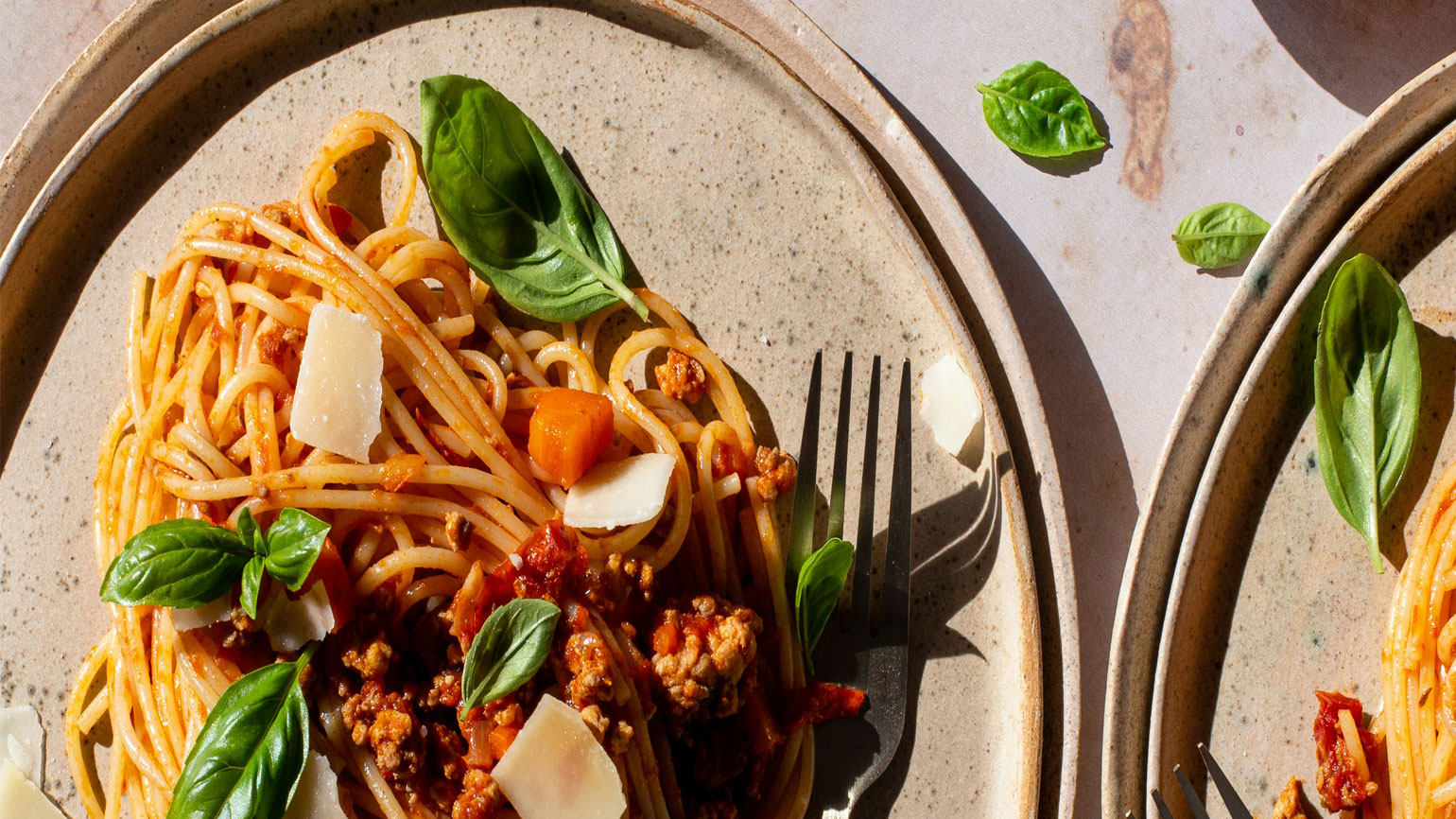
Try Carol’s recipe for the same baked spaghetti that brought her together with John.

A Marine Mom’s Perspective on the Fourth of July

When I was growing up, the Fourth of July holiday meant large family picnics in my grandmother’s back yard. We feasted on grilled hamburgers and Mom’s potato salad.

Afterward, we’d move to the park and watch the fireworks, set against a midnight black sky and accompanied by the strains of patriotic music.

It was the perfect mid-summer break, but nothing more.

As young parents of three growing boys, we continued to celebrate the Fourth in much the same way. Then the terrorist attack of September 11, 2001 changed our perspective.

As a family–and a nation–we were reminded just how much we had to celebrate in this great country…and just how quickly it could be taken from us.

Fast-forward to the first Fourth of July after our oldest son’s enlistment in the Marine Corps. That fact changed the focus of this holiday for us forever.

The patriotic music still rings loud, but the stirring strains now bring tears to my eyes. The fireworks are just as glorious, but the explosions seem to represent the echoes of war fought on distant shores. When I think of the birth of this country, I can’t help but remember the sacrifices made by so many.

For me, the price of freedom can now be quantified. I see it in the kiss of wife sending a husband away on deployment, or a mother watching her son leave for war–none of them certain their soldier will return.

It’s found in the sacrifice of a young man, still in high school, who’s willing to fight for our for freedom by joining the Army. It’s in the tears of a father who proudly watches as his daughter graduates from Marine Corps boot camp.

The Fourth of July is no longer just a pleasant summer break. It’s forever linked to honor and sacrifice. These people are my friends, my community, my support, and the hope of the future.

I’ve watched as these scenarios have played out before my very eyes. In my heart, the phrase, the home of the free and the brave is illustrated by the face of my son–and thousands of sons and daughters like him–who were willing to put it all on the line for our freedom.

So this Fourth of July, think about those who inspired that stirring music and whose willingness to serve made it possible to celebrate. Take time to say a prayer for those who serve and those who love them.

A Marine Dad’s Most Important Duty

I’d been on plenty of marches in my time as a Marine, but never anything like this. My platoon today was undisciplined, stopping to kick at twigs, talking and laughing as we hiked through the woods, no one paying attention to the sound of rushing water ahead.

Then again, I expected that from a bunch of 10-year-olds.

I was about as far from the battlefield as I could get, accompanying my son, Patrick, and his fifth-grade class on a three-day field trip at Camp Classen in the Arbuckle Mountains of southern Oklahoma.

I looked down at Patrick, sitting in the three-wheel jogger I pushed in front of me. My son has cerebral palsy and 10 years ago doctors didn’t think someone with his brain damage would live, much less be hitting the trail with his classmates.

Before Patrick, the biggest challenge I had was achieving my dream: becoming a Marine officer. My dad was a Navy man, and I knew I wanted to serve in the military. In college at The Citadel, I chose the Marines. To me there was no greater honor than leading the most elite fighting force on earth.

First, I had to go through officer candidate school—two six-week courses of the most grueling physical and mental tests I’d ever faced, including the Confidence Course, a race through 11 obstacles with names like “Slide for Life” and “Jacob’s Ladder.”

I scaled tall barriers and swung from monkey bars high above the ground. Our commanders urged us on. Nothing was beyond our capabilities, they said.

In 10 years I rose through the ranks, becoming company commander. I served in Operation Desert Storm, then led my men in Somalia. Our mission was humanitarian: get food to starving people, rebuild roads and disarm the warring local factions.

But we came under fire. When times got tough, I prayed. God always saw me through. At the end of my six-month deployment cycle, I returned home to Camp Pendleton in California. I’d have six months to spend with my wife, Nancy, just in time for the birth of our first child.

Nancy was a Marine too. We planned to alternate deployments so we could raise our child and maintain our military commitments. I was convinced that being a career Marine—a lifer—wasn’t just my plan but God’s plan too.

My knees buckled when I saw our son, Patrick, for the first time. I was love-struck. I tore myself away from the hospital around midnight two days after his birth to get some rest.

The ringing phone jarred me awake at 4:00 a.m. Patrick was sick. Meningitis. I rushed to the hospital. He’d gone into septic shock.

“We’re taking him to the NICU in San Diego,” the doctor said. “He may not have long.”

The Camp Pendleton community rallied around us. The base chaplain baptized Patrick. I prayed, harder than I had even under fire in Somalia. Patrick clung to life like a little warrior and after a month in the hospital, he was discharged.

The doctors couldn’t give us a solid prognosis, but a sonogram showed anomalies. His motor skills and learning ability could be impaired, perhaps severely. We’d have to closely observe his behavior.

At the base daycare center, we noticed differences. Other babies moved more, rolling over and lifting their heads. Patrick was often still, and couldn’t keep his head up. Nancy set him in an Exersaucer and needed to put a pillow in to keep him upright.

After five months, it was clear Patrick lagged behind his peers. I put my finger in his right hand and he gripped it tight, but when I tried his left, Patrick’s hand and arm hung limp. Nancy read up on the symptoms. Everything pointed to cerebral palsy.

One afternoon I tucked Patrick in his crib for a nap. I went to the window to lower the blinds. Outside, a group of Marines ran by in tight formation, getting ready for deployment. My time home was almost over, and the process had begun for my promotion to Major, which would bring new responsibilities.

It was my dream…but it wasn’t possible anymore. Nancy was medically discharged after suffering a mild stroke after Patrick’s birth, and she couldn’t care for him alone. I have to quit too, I thought.

I turned back toward Patrick. He looked peaceful, already asleep. I was terrified. Get it together, Marine. After Iraq, Somalia, how could this shake me? But war I knew. Raising a son with disabilities? I hope you have a plan, Lord, because I sure don’t.

We left Camp Pendleton and Nancy and I found jobs in Texas, where her family is located. We worked opposite shifts so one of us could be there for Patrick.

We settled into a routine. Nancy put Patrick to bed at a sitter’s house and went to her night-shift job at a snack food company while I got some rack time. I’d pick Patrick up in the morning, get him dressed and spend the day with him.

I tucked Patrick in his crib for his afternoon nap and went to my second-shift job managing the processing line at a hot dog plant. Nancy had the evening shift. Our time with him was exhausting. I needed to hold him the whole time he played, retrieve every toy he wanted.

Other kids display some independence after a year, but Patrick couldn’t do anything by himself. One night, before I dropped off in an exhausted sleep, I turned on the news and saw a report of Marines being deployed.

That could have been me. I missed the camaraderie, the 170 men in my unit, all looking to me for answers. My life was all about Patrick now, and I didn’t have any answers.

Our neurologist finally diagnosed Patrick with cerebral palsy, and entered him in early intervention therapy. Physical, occupational and speech therapists came to our house. The stretching and balance exercises reminded me of the training I’d gone through at Marine OCS—for Patrick, they were just as grueling.

The occupational therapist put a hairbrush in 14-month-old Patrick’s hand, and I expected him just to hold it. Instead, he started brushing Nancy’s hair!

Patrick started speaking little by little. And after three years of intensive physical therapy, I watched him take his first, slow, unsteady steps with the aid of a walker. He’d still need a wheelchair for longer distances, but…he’s standing on his own!

We had two daughters, Katie and Nicole. We didn’t hold back on family activities for Patrick. He loved our trips to the lake, where he’d sit in a tube while I towed him in our boat. He sang along with the girls to any song on the radio.

When Patrick was six, we found a program that allowed him to be mainstreamed into some classes and activities. One day I took Patrick with me to the supermarket. In the checkout line, I saw a little girl, standing with her mom, staring at him.

“Why are you in a wheelchair?” the girl blurted. The mom’s face turned red. “I’m so sorry,” she said.

“It’s all right,” I said. Patrick needed to learn to deal with situations like this. “Let him answer.”

Patrick did…but he didn’t stop there. “You want a ride?” he said. The two of them spun around the checkout area, laughing and squealing. If I were still in the Corps, I would have missed this.

Then Patrick reached fifth grade. “Guess what?” he said after school one day. “I’m going to be in the talent show!” He was still behind his peers academically and he needed a walker for balance if he was on his feet for long. Had I given him too much confidence? I didn’t want to set him up for failure.

I thought about a song Patrick and I loved to sing together: “The Greatest” by Kenny Rogers, about a boy who dreams of being a baseball player. The song’s message was perfect for Patrick: Be proud of what you can do. Could he sing it?

Every day after school I played the song and helped Patrick memorize the words. Nancy and I rehearsed his routine with him. The day of the show, he wheeled to center stage wearing a baseball cap, carrying a bat and ball.

While he sang, he threw a ball in the air with his right hand, his bat across his lap. I waited for the end of the song, anxious. Patrick beamed and sang the last verse in a full, loud voice, “I am the greatest, that’s a fact, but even I didn’t know I could pitch like that!” The auditorium erupted.

Patrick came offstage and into my arms. I hugged him tight. I may not have been leading 170 men anymore…but I was leading the one who mattered most to me. He’d come to me for an answer, and he paid me back with love. That was better than any “Sir, yes, sir.”

Now, on the trail at Camp Classen, I ruffled Patrick’s hair. We emerged from the woods and reached the water. I stopped cold. We were at a dam holding back a lake. A rush of water fell six feet to the river below.

The only way across was a row of round cement pillars spaced out along the edge of the falls. No way could I wheel Patrick across. “We didn’t know there wasn’t a bridge,” his teacher apologized.

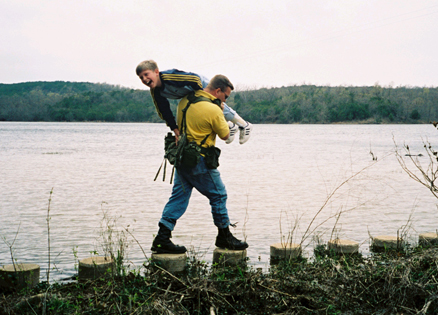
I stared again at the pillars. They reminded me of something I’d seen a long time ago. The Confidence Course. “No one stays behind!” I yelled. I hoisted Patrick onto my back. “Hold still,” I said, stepping onto the first pillar.

Halfway across, he started laughing. His laughter echoed across the lake, a sweeter sound than I could ever have imagined. Maybe God did have a plan for me all along. The Marines were just a part of it, training for the most important duty of my life: being Patrick’s father.

Al Roker on How Parenting a Child with Special Needs Inspires Him

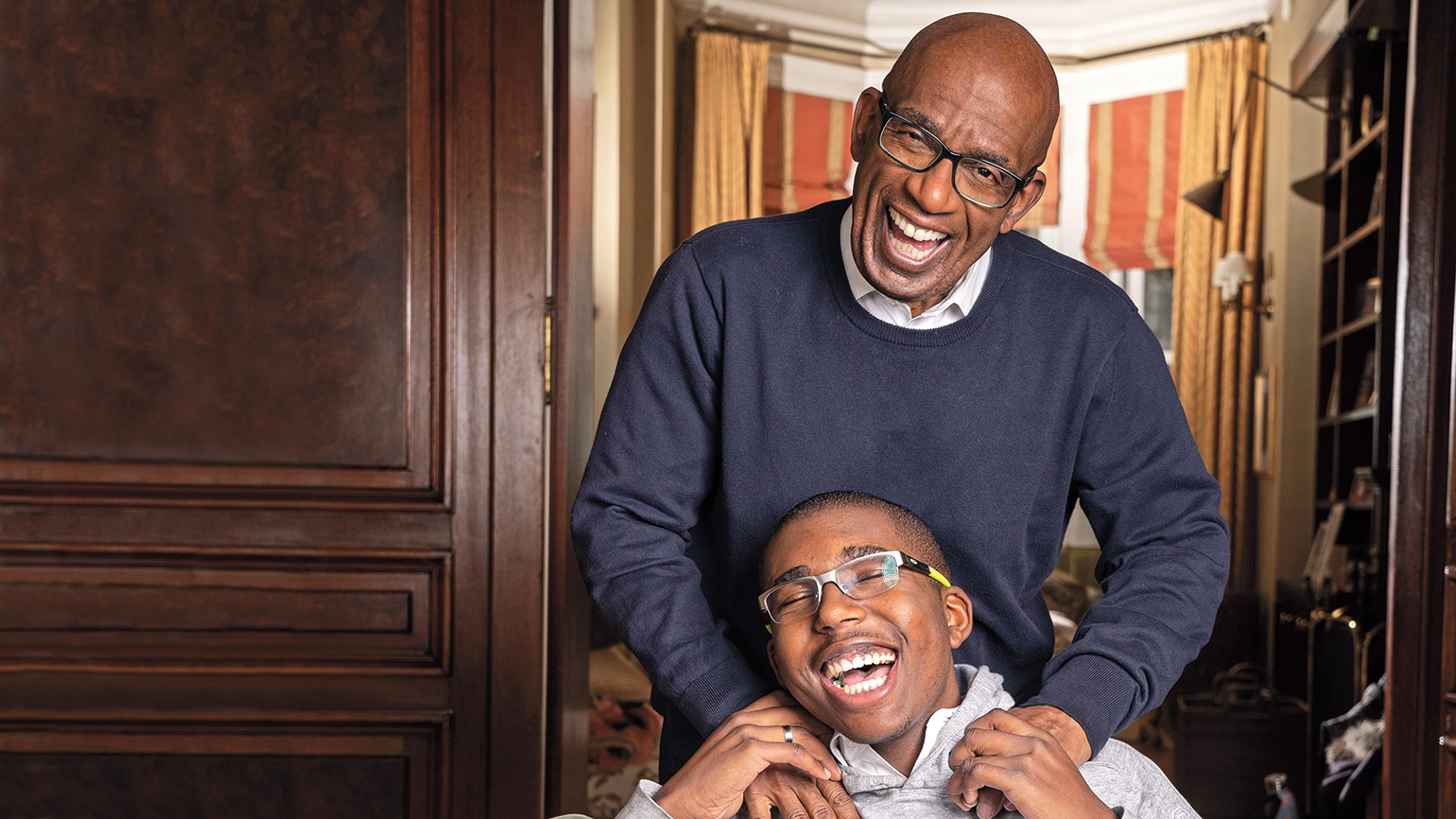
We’d spent the weekend at our house upstate, my teenage son, Nick, and me. My wife, Deborah Roberts, is a senior correspondent for ABC News. Nick’s sister Leila is at college, and his oldest sister, Courtney, is grown. Sometimes it’s good for just the two of us guys to get away. That drive up and back is some of the best time we have one-on-one. You know, when you have your teenager in a car with you, it’s a good chance to connect—if Nick doesn’t spend too much time distracted by his iPad or phone. Focus and conversation can be a problem for my son, more so than most kids, as he is a kid with special needs.

Al Roker on the cover of the May 2019 Guideposts
     As seen on the cover of the May 2019
issue of Guideposts magazine

It was a Sunday and we had gotten up early—not my usual 3:45 a.m. wakeup for the Today show but still pretty early. We were driving back to Manhattan and hoped to make it in time for the morning worship service because back home, at St. James Episcopal Church, Nick is a crucial part of the worship team and he takes his responsibilities very seriously.

It’s not something Deborah or I would have expected. To see Nick process down the center aisle at the beginning of the service, carrying the cross, his eyes on the altar, our pastor and the other ministers following behind, the organist pulling out all the stops, the choir and congregation singing their hearts out, the other acolytes following his lead as the principal cross bearer. Nick is focused, dignified, reverent, the brass cross shimmering in the candlelight. “You must be proud of your son,” someone will say.

Yes, I am. More than they’ll ever know. The obstacles in this kid’s way were things that might have tripped up many others. Not Nick, not even with the disabilities he was born with.

That morning, driving into town, I looked at the dashboard clock and considered the traffic—where was everybody going so early in the morning? But I was determined we would make it. I know it’s important to him. Recently, explaining to Deborah why being at church was a priority for him, Nick told her, matter-of-factly, “Mom, I’m a churchgoing guy.” Not your average teenager at all.

I went to church when I was growing up in Queens, but in those days, everybody did. It was expected. Mom and Dad took us to worship every weekend, but in so many other ways my dad was not your typical 1950s dad. For one, he was really in touch with his emotions. He cried easily, laughed hard and hugged and kissed us kids a lot. I remember going off to college, to SUNY Oswego, in upstate New York, getting my first taste of freedom. That day I left, Mom put on a brave face. Dad was a puddle of tears.

Read More: Lauren Daigle: God Showed Me My Future

The comfort he had with his emotions was a good model for me when I entered parenthood. Children can test your patience. Even an even-tempered guy like me can raise his voice. But I always knew I was loved. Dad’s hugs and kisses said as much. I try to do the same. I don’t always succeed, but with Deborah’s help and cajoling, I try.

When Deborah and I got married, we knew we wanted children. My older girl, Courtney, was adopted during my previous marriage, but we wanted to add to our family. When we first found out we were pregnant, we were over the moon. The miscarriage that followed broke our hearts. We ended up doing in vitro fertilization, and after a few attempts, we welcomed Leila into this world. I told that story in Guideposts in 2003. “Science may have helped us on our path to pregnancy,” I wrote back then, “but it couldn’t get us all the way to the end. The only thing that could do that was the power and grace of God.”

Leila was a walking miracle. We wanted to tell the world. We were just as thrilled when her brother, Nick, was born, four years later. He too was an answer to prayer—like all children—but we knew right from the beginning that he would be up against a whole different set of challenges. He wasn’t developing as fast as he should have, not holding our fingers as tightly, not always meeting our gaze, not as quick to crawl. At three, he hardly talked and could barely walk.

Doctors and specialists put him through a slew of tests. Was it cerebral palsy? Autism? Maybe it was a processing disorder. Now that he’s 17, I can tell you that, yes, he’s somewhere on the spectrum and maybe obsessive-compulsive. But those labels can be frustrating; they don’t begin to describe who Nick really is.

He started working with speech, behavioral and occupational therapists, developing strength, conversational skills and mobility. We enrolled him in a program at a school to suit his needs, watched him make friends, signed him up for tae kwon do—at his insistence—and took him to Sunday school. I had my doubts about the tae kwon do.

Read More: ‘This Is Us’ Star Chrissy Metz on Resilience

Nick blossomed, far more than Deborah or I could have ever expected, given his original iffy prognosis. In tae kwon do, you have to master systematic sequences of moves to progress to the next level. Turned out that all those repetitive drills were just the thing for Nick. Where his OCD nature can be a drawback in some situations, it was a strength here. And he proved to be very competitive. “I’m going to get my black belt,” he told us.

“Don’t push it,” I wanted to say, “You don’t have to aim so high.” You hate to see your kid disappointed. But who were we to hold back our son? His sister Leila was doing tae kwon do too, and maybe he wanted to prove something to her—and to himself.

He did earn his black belt—Leila got her red belt, one notch below. Deborah and I were pleased for both of them. After that, though, Nick decided he’d achieved his goal and was ready for other challenges. Since then he’s been taking swimming, chess and basketball lessons. And then there is church.

St. James does a good job of getting kids involved. There are sermons for kids, children’s choirs, Sunday school, playgroups, a Christmas pageant with parts for everybody as well as that corps of acolytes. On Sundays when I was feeling really down about Nick—wondering where our son would find his place in this world—I found it a comfort to note that some of the acolytes also had special needs. One performed his duties in a wheelchair; another had Down syndrome.

Nick watched and wanted to join them. And the folks who oversaw the acolytes were happy to have him.

I have seen how kids’ minds seem to wander during worship—I’ll admit mine does too sometimes. Truth be told, Deborah is really the spiritual shepherd of our family flock. I tend to bolt after church to do grocery shopping while Deb mingles with our congregation.

But ever since he’s become an acolyte, Nick has the clearest focus, Sunday after Sunday. Those qualities that you might think would hold him back are exactly the ones that drive him forward. If I thought tae kwon do was all about form and purpose, so is this. Lighting the candles, carrying a torch, holding up the Bible for the lesson to be read and marching down the center aisle with the cross, concentrating on that altar. On Sundays he serves the Lord.

Read More: ESPN’s Maria Taylor Relies on Faith to Guide Her Career and Life Decisions

Nick is a hard worker; he’s got a great sense of humor; he’s outgoing and a good swimmer; he’s developing a pretty good top-of-the-key basketball shot. He takes chess lessons a couple times a week, and he does okay. He’s also very affectionate—like his grandfather—and full of love to share.

Do I get frustrated with my son sometimes? You bet. But then I remember my dad, how understanding he was. And Deborah reminds me that I have to show my son not only that I love him but that I like him as well. More than that, I admire him.

But let’s be clear about something: When you parent a kid, it’s not just the two of you; there’s a third party helping. I can’t begin to take credit for who Nick is and who he might become. All sorts of specialists can tell you about limitations for this and that. Nick never got that message.

Last year, he went on a mission trip to Haiti with teens from church, helping out at an orphanage, reading to the kids, playing games with them, doing chores. When we picked him up at the airport, the first thing he said in the car was “I can’t wait to go back.”

Until then I have to make sure we get to church on time—no matter what. After all, my son is a churchgoing guy.

For more hope and inspiration, follow us on Instagram: @guidepostsmagazine

For more inspiring stories, subscribe to Guideposts magazine.

A Love Connection Thanks to the Farm Animals

You know it’s a match when the bride and groom agree on an all-animal wedding party.

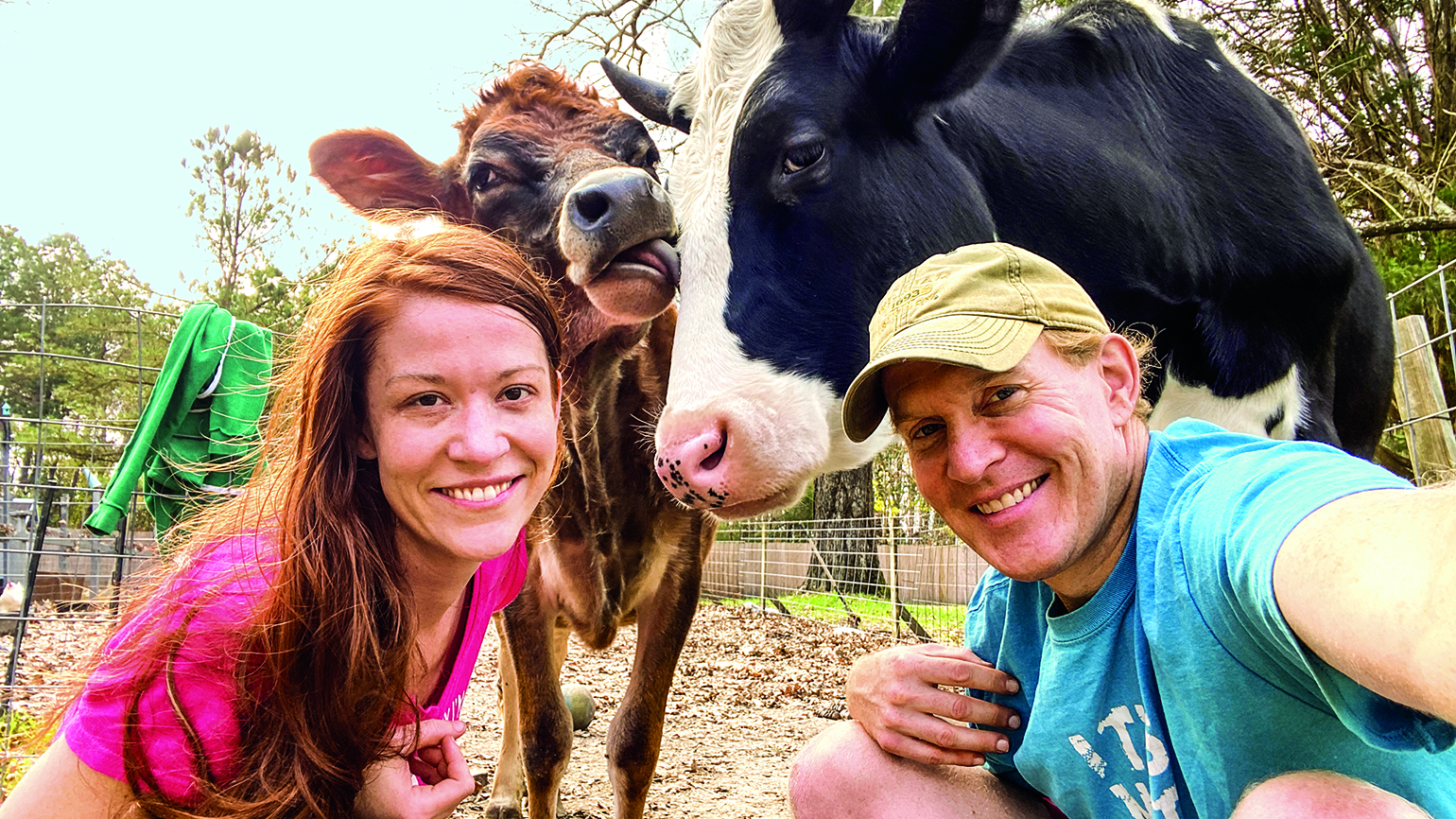
It all began in 2011, when Ryan Phillips switched to a vegan lifestyle to improve his health and developed a passion for ending the suffering of animals farmed as food. Then a family asked if he could take in a breeder pig, and he couldn’t say no, despite living on the second floor of a Williamsburg, Virginia, condo with a no-pets policy. Within a few years, Ryan was caring for pigs Pumpkin, Charlotte and Millie; Tesla the rabbit; Emmie the Yorkie; and Beatrice the chicken—all in the condo.

Fast forward to October 2018, when Ryan bought land 10 minutes down the road and established Life With Pigs Farm Animal Sanctuary. He saved his first dairy cow the following month. She had a twin brother, and a heifer with a bull twin will most likely be infertile and unable to produce milk. The farmer had marked her to be killed, but his daughter begged him to let Ryan pick her up. Her dad agreed. Ryan named the three-day-old calf Jenna in honor of the farmer’s daughter and called his sanctuary friends for advice on keeping this scrawny but determined calf alive.

Jenna asking to play

Meanwhile, more than 2,000 miles west, in Arizona, another animal-lover named Mallory had been following Ryan’s journey on social media. She loved seeing photos of Ryan snuggling with Jenna. It was clear that this cow considered Ryan, who slept in the barn with her during her tentative early days, to be her dad. In 2019, Ryan posted about wanting to save a local cow from abuse, and Mallory jumped in to help. She spent weeks coordinating the rescue with Ryan by phone. Eventually, Mallory flew east to meet the animals at Life With Pigs—and, of course, Ryan, whom she quickly fell for.

With her human-like behavior and goofy nature—sticking her giant head in every window until someone came out to play, for example—Jenna charmed Mallory further. Soon Mallory, who’d lived in Arizona her entire life, decided to stay in Virginia with Ryan and his growing animal sanctuary for good.

“I had a crush on a guy I saw on the internet hugging his cow,” she says on the Life With Pigs website. “I never imagined I’d end up spending my life with him.”

Ryan popped the question in the cow barn, with Jenna nudging his leg to remind him to get down on one knee. The couple traded cow rings in a farm ceremony as “best cow” Jenna and “cow of honor” Maisie led a wedding party of three dogs, three pigs and a gaggle of chickens and turkeys. “Jenna played such an important part in our meeting that we agreed she had to be front and center,” Ryan says.

Though she adores Mallory, Jenna still demands attention from her dad. “She’ll put her two horns on my waist and push her head up against me while I hug her neck,” says Ryan. “She can tell when you’re sad and will rub against you. The pigs will too. One of the biggest things I’ve learned is all animals have their own personalities, and they all know how to give and receive love.”

These days, Ryan and Mallory are busy caring for the 25 animals at Life With Pigs as they continue their mission of educating the public on animal agriculture. Their newest family member is Annie, a blind cow, who relies on Jenna for support. We’re sure Jenna’s up for the job—as long as Ryan is close by.

For daily animal devotions, subscribe to All God’s Creatures magazine.

A Long-Distance Friendship Forged from 9/11 Events

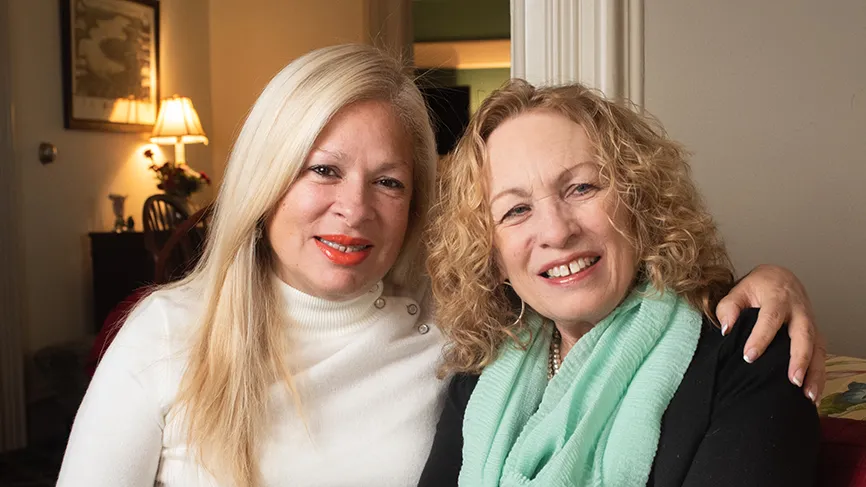
Maria Barreto-Mojica, a resident of New York City, lost her fiancé, a lieutenant with the New York Fire Department, to the tragic events of September 11, 2001. She found hope, solace and a new friend when Charlene Klein, from Wisconsin, mailed her a “big, cozy robe.”