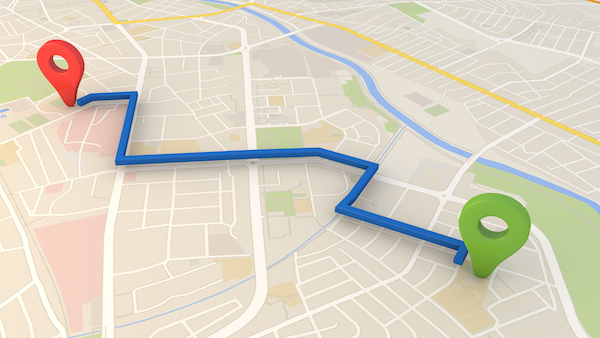
Sometimes I think our SUV’s GPS has a mind of its own—and not a very good mind in my opinion. That thing has taken us on some crazy trips! On one occasion, it was for an extra three-hour journey of all the back roads in South Carolina. I suspect we repeated some of them at least two or three times. Maybe four.
In other instances when we’ve been near our home, our GPS has suggested a route that we know isn’t the best way. And once when I was in a big city, the skyscrapers blocked out the signal and this country girl spent some frantic moments making turns and praying that I wouldn’t end up in scary areas.
Sometimes our GPS doesn’t give us any warning that we have a turn until it’s too late to make it. And on other occasions, it’s quit giving directions just when we were at a critical point for our destination, leaving us floundering about how to get there.
There have been times when I’ve been tempted to throw it out the window. That might be hard to do since it’s built into the console. But it did make me think about something: We never have to worry that God’s Positioning System will give us bad directions.
G – We have to get in His Word.
It’s impossible to know the right directions unless we read or hear them. Everything we need is already there in God’s road map for life—and it all works perfectly as long as we follow His directions.
P – We need to pray and ask God for direction.
The Bible says that if we search for God we’ll find Him. Just as I told my sons exactly what I wanted them to do when they were little boys, God doesn’t hold back on letting us know His desires and plans for us.
S – We need to stay close to Him.
We should listen when He tells us what He wants us to do. When we stay close to God, we can hear His whispers, and we can feel His presence.
And unlike my frustration with the GSP in our vehicle, we’ll never get wrong directions or be frustrated when we follow His directions for us.
I will instruct you and teach you in the way you should go. (Psalm 32:8)
The act of forgiveness is one of the most difficult things life asks of us. Yet it is one of the most necessary—mentally, spiritually, even physically. As the director of the Stanford University Forgiveness Project, I’ve devoted over 15 years to helping people let go of the grievances, grudges and heartache in their lives.
I’ve worked with mothers whose sons were killed in sectarian violence in Northern Ireland, with families of 9/11 victims and with thousands of everyday people who have been let go from jobs, cheated in business, betrayed by their spouses or mistreated by their parents. My research shows that forgiveness is a skill you can develop and practice like any other. And I can say with scientific certainty that learning to forgive makes you healthier, happier and, most important, deepens your relationship with God.
It’s often people who are at their lowest point, who feel disconnected from God and their friends and family, who come to me for help. They know the Bible says they should forgive, but it doesn’t spell out how to do it. Most people, I’ve discovered, don’t really understand what forgiveness even is—and what it isn’t.
Forgiveness changes the present, not the past. Forgiveness is a personal choice. It’s not about changing the person who hurt you. It’s not about condoning their actions or even reconciling with them. It’s a choice you make to heal yourself. Letting go means deciding that you’re not going to allow anger and bitterness to poison your life. It’s about taking control of your thoughts and emotions and not playing the part of the victim in your life story.
Research shows that people’s reactions to the exact same event differ widely depending on their point of view. In one study, participants were given details of a car accident where the driver was grossly negligent. Some were told that they were injured victims. Others were given the part of rescuers and heroes. The “victims” felt angry and helpless. The “heroes” felt their self-confidence soar. By forgiving you’re able to take on a new role. Instead of remaining a victim of someone else’s bad behavior, suddenly you’re someone who persevered, who had courage, who learned from their mistakes.
I know the power of this transformation. I’ve lived it myself. My best friend growing up was a boy named Sam. He was the brother I never had. We were inseparable. Then in college he met a woman who didn’t want him spending time with me. Almost overnight he cut me out of his life. When they got married I didn’t even rate a phone call, much less an invitation.
The pain of his rejection ate at me long after I celebrated my own wedding and went to graduate school to study psychology. I didn’t realize how cynical and distrustful I’d become until one day my wife said, “Fred, I love you, but I don’t like the person you’ve become.”
I was devoting more energy to someone no longer in my life than I was to the people I cared most about. There’s an expression I’ve heard: Holding onto resentment is like drinking poison and expecting the other person to die. That was me. I needed to let go.
I read everything I could about forgiveness, which at the time wasn’t much. The topic took hold of me. I thought long and hard about what Sam had done, why it bothered me. I began to understand how my holding a grudge was really my inability to handle rejection.
Something amazing happened. I got so interested in forgiveness I didn’t have time to fixate on the past. Had I discovered something that could benefit others? I was a scientist. I needed to know for sure.
I designed my first experiment and put an ad in the paper asking for volunteers who were having trouble forgiving. Nearly 200 people applied! I wasn’t the only one looking for answers.
By the end of the experiment I knew I’d found my life’s work. And I was no longer angry at Sam. It was funny, our dispute seemed more like a blessing. I wanted to share what I’d learned.
Put your hurt into words. When someone mistreats you, you have a very real reaction. Your blood pressure shoots up. Your muscles tense. Your body’s ready to do one of two things: fight or flee. It’s an instinctive response.
Fortunately it usually doesn’t take long for the higher brain to realize there’s no grave danger, and life returns to normal. But sometimes you can’t get past it. Your thoughts turn back to what the other person has done, and each time triggers the fight or flight reflex. Your stress level skyrockets.
The first step toward forgiveness is to confront those feelings. Chances are you’re experiencing a variety of emotions: fear, betrayal, confusion, anger, shame. Write them all down. Think about how each one makes you feel. Then tell just a few close and trusted friends.
Doing this fights the tendency to minimize or deny what you’re going through. It’s okay to admit you’re hurting. You can’t address a problem you won’t acknowledge.
Be specific about what happened. Just as important is knowing what caused your hurt and why it matters so much to you. This is different from describing your pain. You’re acknowledging that something specific did happen to you.
Again, write it down and share it with a few trusted friends. It’s not enough to say your ex-husband is a jerk or your sister is annoying. What did they do? Why did it upset you? You’re moving beyond raw emotions to understanding why you feel the way you do. Ask yourself if these feelings are a pattern in your life.
Remember, this isn’t about changing the person who hurt you. It’s about understanding yourself in a deeper, more healing way. The thing that hurt you is in the past. By remaining resentful, you are only re-inflicting that pain on yourself.
Change the channel to positive. Imagine your life is a 500-channel TV lineup. On Channel 51 there are nature shows. Channel 14 features love stories. Channel 28 has inspirational programming.
But of course there are channels that are frightening, that cause worry, that make you angry. Those are what you flip to when you feel betrayed. The problem comes when that’s all you watch for weeks, months or even years. You miss the amazing, life-affirming things happening all around you.
Forgiveness comes through deliberately changing the channel to the positive. Do things that focus your attention away from yourself and your past hurt. Call a friend you haven’t talked to in a while. Get involved at church. Play with your children. Go on a hike and breathe in the beauty around you.
Keep at it day after day, until positivity blots out negativity. Use the beauty of the world to conquer your hurt. Your stress and anger will ease. You will find, as I did, that you have become a forgiving person.
Pray for comfort. For some people just knowing forgiveness is an option can be immediately freeing. But for most of us, forgiving takes time and effort.
One of the best ways to get into a forgiving frame of mind is through prayer. When you feel your anger resurfacing, your body tensing, pray. Take a deep breath, pushing your stomach out then relaxing it as you exhale. Do this with each prayer you say. Prayer is calming. It forces your mind to slow down and redirect your thoughts away from yourself.
Practice, practice, practice. Forgiveness is a life skill you can learn and get better at. Look for small ways every day to forgive—the driver who cuts you off in traffic, the sales clerk who’s rude, the coworker who didn’t give you credit for your idea. Then when something more difficult happens you’ll be far more able to handle it. It doesn’t mean that you won’t feel deep hurt or disappointment. Forgiveness doesn’t make you immune to emotions. But you’ll take it less personally. You won’t lose sight of the wondrous things happening all around you.
It’s good for body and soul. How do I know that this is true? Because I’ve seen the amazing results in study after study. The same process works whether you are a college student bickering with a roommate or a mother grieving the loss of a child.
The women I worked with in Northern Ireland initially rated their pain at 8.5 on a 1 to 10 scale. Their stories were truly heartbreaking. At the end of one week of practicing forgiveness the hurt they felt had fallen to an average a bit over 3.5. Six months later it remained below 4.
Forgiveness is a transformative act, a path to spiritual contentment. Studies from a variety of disciplines demonstrate that spirituality is tied to healthier lives. Why? Because you can’t be consumed by anger and feel a close, personal connection with God. It’s most often when people focus on others, when they’re able to see the wonder in their lives, that they feel God’s infinite love.
When you forgive it releases the stress you’ve built up from focusing inward on your pain. Prolonged stress has a negative effect on your body. In one study I divided participants into two groups and asked them to rate the number of times they felt physical symptoms such as a racing heart, upset stomach and dizziness. The group who completed forgiveness training reported significant decreases in their symptoms initially, and still four months later. The group that didn’t go through training experienced no change.
I’ve seen the power of forgiveness. Thousands of times. Lives unchained from the traumas of the past. Do you need to forgive? Then take the first step into a brighter and blessed future.
It is easy for us in the Northeast to find negatives this time of year. It’s too cold, and so gray. The darkness sets in so early (who’s motivated for adventure after work when the sun sets at 5pm?). The roads get icy. Flights are cancelled due to blizzards.
If I am not careful, I forget to appreciate that the early mornings are lighter; that the warmth of our homes, schools and offices are great comforts; that the sky at sunset this time of year can be spectacular; that being out of doors can be refreshing—invigorating even.
Reminding myself of these more rewarding, positive elements (as my grandfather, Norman Vincent Peale practiced) stops me from looking ahead to that first spring day when my long winter coat is no longer necessary, to the first outdoor soccer practices, to starting a new garden. Anticipation can be a good thing but this kind of looking ahead keeps me from just being in the here and now and finding peace and grace in it.
One of my dearest friends, Sam Lardner, is a singer and songwriter. I am a huge fan of his music, and one of his songs is by far my favorite, “Be.” The song harkens back to a time and place when Sam felt perfectly present in the moment. He was just “being” and appreciating the gratification in that. To me this state feels like grace.
Each time I listen to this song, I practice being more present in my moments, in both attitude and conviction. This time of year forces me to be all the more deliberate in my practicing. I am so glad Sam Lardner’s “Be” is readily accessible to me. Now I’d like to share the song with you so it is within your reach too.
I’m standing in front of my late wife’s closet. Happy Lent. I mean, can you say that?
Let me step back, both from the closet and that sentence. In my last piece for Guideposts.org I conjured up memories of my boyhood Lents, the whiff of candle wax and incense, the saints shrouded in purple, a practice which I never completely understood. So much of Lent was connected to church and my duties as an altar boy, and the obscure, ancient rituals we observed. And some not so ancient ones.
“What have you given up for Lent, Edward?” Father Walling would ask.
“Swearing.”
“You shouldn’t swear anyway. That doesn’t count.”
Traditions of Lent
Even as I was tripping over my cassock, I understood that the 40 days of Lent were the sacrificial prelude to the miracle of Easter and the Risen Redeemer. In fact, in the ancient church Lent was a period of intense purification for those wishing to convert to Christianity and who fasted and purged in preparation for baptism on Easter. Only in later centuries did the tradition arise among the faithful of honoring these catechumens by making small sacrifices themselves, a habit or pleasure you would temporarily relinquish, like milkshakes or going to the movies.
There was also this odd ripple: You were exempt from this self-denial on Sundays. Lawyers must have been involved in this decision because I could never make sense of it.
By the time I was a teenager I was running out of new things to give up and later, when I found a fresh dimension of spirituality in 12-step groups, where you truly did suffer and struggle to give something up to God, I questioned the whole purpose of these trivial gestures. Did God really care if we didn’t chew gum for Lent? Weren’t some of the things we abandoned for our own good?
And yet I cannot forget how everyone in my family would disclose what they had given up, especially my parents. As I have written, Dad was a sugar junkie and chocoholic who predictably fell off the Lenten wagon. He may have thought of himself as setting a poor Christian example, but those petty fails made him seem more human to me than he would ever know. My mother, as usual, was a different story.
Mom just charged ahead, doing more rather than less—more volunteering, more prayer, more giving. She did more of what helped others and sacrificed her time and energy doing so. Additive in her sacrifice rather than subtractive. She showed that you could do Lent without church—that a meaningful Lenten sacrifice could be more than a church-bound ritual.
The Sacrifice of Giving
I lost my wife, Julee, last June. Since then, I have resisted doing something with her things. She had a serious wardrobe. She used to say, “I don’t have children, I have clothes.” Don’t worry, she said it with a smile. Julee couldn’t have children.
Why couldn’t I distribute these things? I could use the closet space. That’s what Julee would have said. I could still hear the wry note in her voice. No, it wasn’t that. I wasn’t trying to hang on to her. I was past that. It just seemed like such an insurmountable task, and I was Sisyphus. And how would Bloomingdale’s survive without her?
I fingered a delicately embroidered silk scarf in scarlet which held a trace of Joy, her perfume. It was still tucked under the collar of a sleek coat. The world was full of people who needed clothes, especially this time of year. Nice clothes, any kind of clothes. New York City was dealing with an influx of immigrants, most of whom arrived with only the shirts on their backs. There were the homeless and homeless shelters. The working poor. The people Jesus cared for and cared about. Why couldn’t I undertake this task for Lent? I could. It would be my Lent.
And maybe not just this year. This could be a Lenten practice every year. I have plenty of clothes I don’t need. Most of us do. There’s a drop box right at the end of my block and several churches nearby that hold clothing drives. It’s what my mother would do. Lent was about the sacrifice of giving.
A Last Act of Love
I won’t try and fool you by saying a lot of this emotional paralysis about clothes and loss and guilt and so many other things is not part of grieving, and I wonder if grief is something we learn to live through or learn to live with. Or if it is just the last act of love.
One year Julee said she was going to give up smoking for Lent.
“But, Jules, you quit smoking years ago,” I scoffed.
Our Lord Jesus sums up living positively with two rules: “‘You shall love the LORD your God with all your heart, with all your soul, with all your mind, and with all your strength.’ This is the first commandment. And the second, like it, is this: ‘You shall love your neighbor as yourself.’ There is no other commandment greater than these.” (Mark 12:30-31).
Of course, if we love God with everything we have, we won’t disobey him. And if we love our neighbors, we won’t steal from them, lie to them, or do any of the other negative things that can destroy their happiness and peace of mind (and ours!). However, none of us is perfect, and the Scriptures warn God’s people over and over against the ungodly, negative behavior that it’s so easy to fall into.
But how can you and I avoid such behavior and live more positively? One thing’s for sure: we can’t live as we should in our own strength. All of us sin and come short of God’s desire for us (Romans 3:23). “Without faith it is impossible to please Him [God]” (Hebrews 11:6). Today we can live as we should by “looking unto Jesus, the author and finisher of our faith” (Hebrews 12:2).
An old Cherokee Indian tried to help his grandson by telling him about the war between good and evil that affects everyone. He said, “The battle is between two wolves inside us all. One is Evil. It is anger, envy, jealousy, greed, arrogance, self-pity, resentment, inferiority, lies, and false pride. The other wolf is Good. It is joy, peace, love, hope, serenity, humility, kindness, generosity, truth, compassion, and faith.” The boy asked, “Which one wins?” The old Indian answered, “The one you feed.”
What are you doing to feed your positive side, to help good triumph in your own life? The closer you live to God, the more positive, upbeat and truly successful you will be. Read your Bible; pray; attend worship services. Join with the Psalmist in saying, “It is good for me to draw near to God” (73:28).
Like most kids, I loved getting lost. Not really lost, but lost in a more intentional way. I had one favorite place to do it too: Montrose Park just above Georgetown in Washington, D.C. Montrose featured—and still features—a boxwood maze: a winding labyrinth made up of strategically planted and carefully trimmed shrubs.
Today I don’t find the Montrose maze all that intimidating. But at age four or five, it felt huge. And hugely attractive. Moving deeper and deeper into its twisting green interior, I felt the rest of the world fade away. Something, I knew, was waiting for me at the heart of that maze. And the closer I got to it—my hands now and then brushing against the tiny green leaves of the walls on either side of me for reassurance—the more excited I became.
There was something a little scary about being in that maze. That was part of its allure. Just beyond its walls my mother was waiting, and a single shout would bring her to my rescue. Because of that, I was able to savor the sense of disorientation that entering its borders created. After finding that mysterious center and emerging back into the world, I would always feel just a little larger—a little more grown-up—than I had when I had first entered.
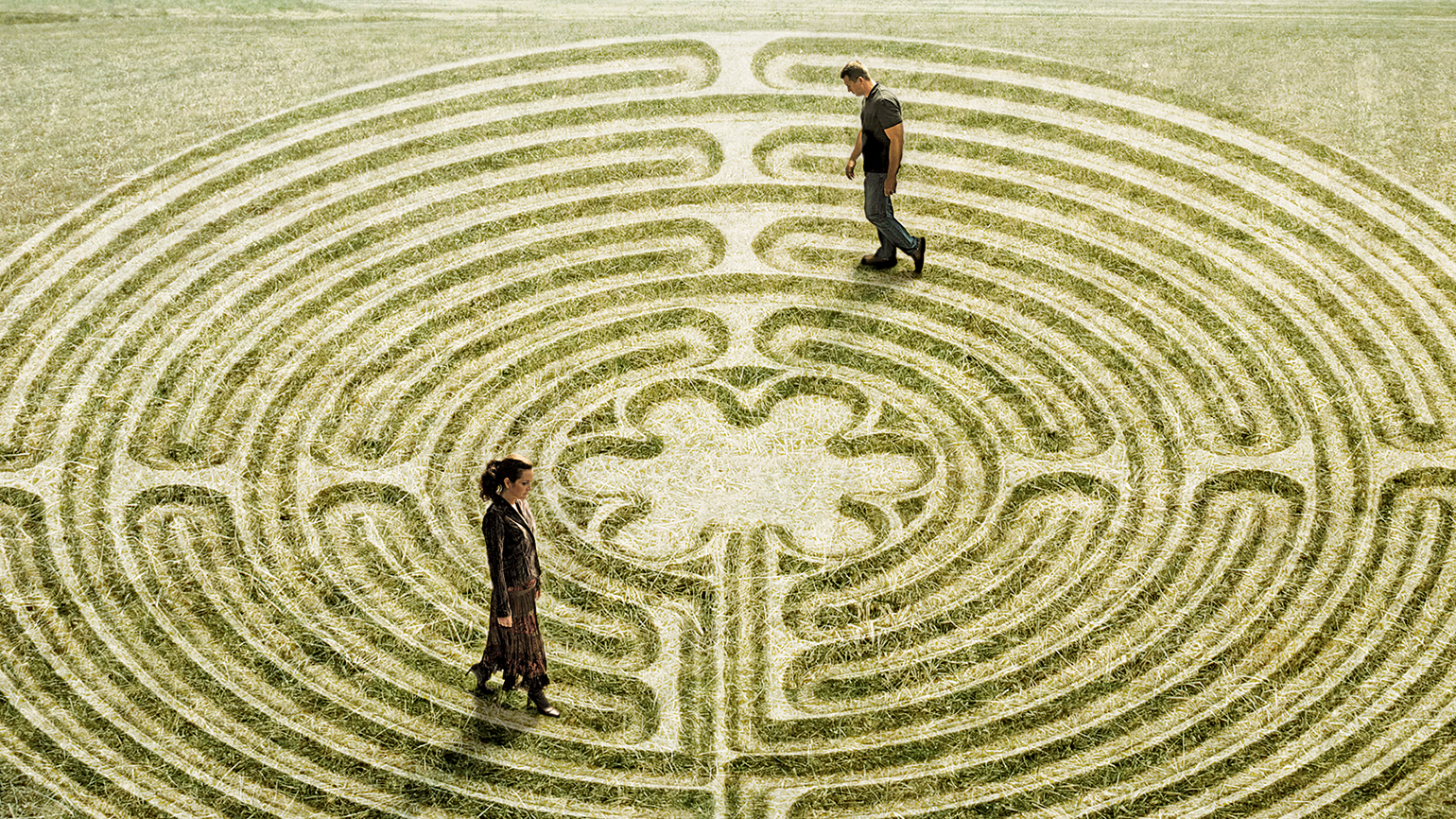
Those childhood visits to the Montrose boxwood maze came back to me recently when I paid a visit to St. Thomas Episcopal Church in Mamaroneck, New York. Several years ago St. Thomas installed a permanent labyrinth on its grounds. Unlike the Montrose hedge maze that drew me into its depths as a kid, the St. Thomas labyrinth is flat. Because there are no walls to block your view, you don’t lose sight of the outside world. You just follow along the path laid out at your feet.
There’s another critical difference: The labyrinth at St. Thomas’s has no wrong turns to it. To use the technical language employed by maze scholars, it is unicursal rather than multicursal. As much as it twists and turns, there is only one path, so you can’t really lose your way even if you wanted to. All that’s necessary to reach the center is faith in the path you’re on, and a little patience.
In spite of those differences, once I entered the labyrinth at St. Thomas, a strangely familiar feeling came over me: the same feeling I’d gotten as a kid. Once again I was moving, turn by turn, toward a mysterious center: a center that I could see as it got closer, then farther away, then closer again as I followed the labyrinth’s curves and reversals. A center that now, just as then, felt like it held some essential and enormous secret. By losing myself in the curves of the St. Thomas maze, I was finding a part of myself as well.
The labyrinth at St. Thomas Church is just one of thousands that have sprung up in recent years, ever since 1991 when Lauren Artress, the canon of Grace Cathedral in San Francisco, laid down a large canvas labyrinth in the nave of the church and began teaching people the art of walking it. This canvas labyrinth became so popular that in 1994 an indoor floor tapestry was laid down in its place, followed by a permanent limestone labyrinth last year. In 1995 a stone version was also opened in the church’s meditation garden. What lies behind the allure of the labyrinth? As Canon Artress puts it, the answer has everything to do with its mysterious center. “The labyrinth,” says Artress, “teaches us that if we keep putting one foot in front of the other, we can quiet the mind and find our center.” The journey may be difficult, even confusing. But “the lesson is to trust the path.”
Both the labyrinths at Grace Cathedral and St. Thomas Church are patterned after the largest church labyrinth in the world: one that, in the early 13th century, was laid down in limestone and marble on the floor of the western nave of Chartres Cathedral in France. Both the Grace Cathedral and St. Thomas Church labyrinths are a little smaller than the one at Chartres and, of course, they’re not as finely wrought. But they also differ in another way. While the center of the labyrinths at Grace Cathedral and St. Thomas’s are empty (to suggest the mystery of the divine presence that walkers will hopefully encounter there) the one at Chartres has an indentation where a large brass medallion used to sit (it was removed during the Napoleonic wars and melted down to make cannons).
Though no paintings or drawings of the Chartres medallion have been found, scholars have good evidence for what was pictured on it: a battle between a hero from Greek mythology named Theseus and a monstrous creature with the body of a man and the head of a bull called a Minotaur. This Minotaur, legend tells us, lived in a labyrinth built by King Minos on the island of Crete. Each year Minos offered sacrificial victims to the Minotaur, until the day when Theseus braved the maze, did battle with the monster and finally slew it.
Wait a minute, you might say. What is a picture of a ferocious battle between two characters from Greek mythology doing at the heart of a medieval Christian cathedral? The answer has something to do with that slight sense of trepidation that I always felt when entering the Montrose maze as a kid. The fact is, mazes are both calming and scary—and no one knew this better than the early Christians. They saw in the story of Theseus’s journey to the heart of the labyrinth and his victorious battle with the Minotaur a parallel with another, more recent story.
In the original Christian view of the labyrinth, its twists and turns are those of earthly life (in some versions, even of hell itself), and at the heart of the labyrinth we encounter not peace and tranquility but a struggle to the death between Christ and Satan. As maze scholar Craig Wright has pointed out, “The myth of the maze expresses the hope of salvation—that eternal life will be won for all by the actions of the one savior.”
It was this reading of the story of the hero Theseus and the Minotaur that the creators of the Chartres labyrinth had in mind when they placed that seemingly incongruous image at the center of their labyrinth. In medieval Christian symbolism, the West is associated with death and the underworld. By placing the labyrinth at the westernmost part of the great cathedral, where everyone entered, the architects of Chartres were suggesting that every Christian must journey in spirit with Christ through the struggles of this earthly life—and even through hell itself—before emerging into the light of heaven (which is symbolized in the cathedral by the rose window stationed high above the famous labyrinth).
The journey into and out of the labyrinth that many contemporary maze walkers take today is, then, quite different from the one that those first creators of church labyrinths imagined. Of these two very different visions for labyrinth walkers, which one is actually correct? They both are.
As I suspected even as a child in Montrose Park, being lost in the twists and turns of life can be an adventure—but it can also be a battle. All of us get lost in life to some degree. But the promise of the labyrinth is that ultimately we do so to our own benefit. By putting our faith in the path, we reemerge from the labyrinth of life as different, larger beings than we were when we first entered it. We will lose ourselves only to find ourselves. Or as the poet T. S. Eliot famously put it:
We shall not cease from exploration And the end of all our exploring Will be to arrive where we started And know the place for the first time.
For more inspiring stories, subscribe to Guidepostsmagazine.
Here’s a little story about how God puts us back on the right path. My daughter, Ally, and I were trying to squeeze in a three-mile walk/jog before nightfall, so we picked up the pace. As we hurried down that last hill at Otis Golf Course in Bedford, Indiana, the sun dropped below the horizon, and it grew immediately darker.
Then, out in front of us, something crossed the road. I was just about to ask Ally what it was since she was a bit in front of me, but before I could speak she said, “Look, a kitty! Looks like MarMar.”
Marnie Moo is our Tuxedo cat who is affectionately known as “MarMar.”
With that, Ally ran after the kitty that was now nestled in some tall grass on the side of the road.
Just as Ally was about to reach down to pet the pretty kitty, we both realized it wasn’t a pretty kitty at all.
It was a skunk!
Ally retreated just in time to avoid the wrath of the scared skunk, and we finished our walk/jog in a full-out sprint.
Though the skunk did resemble MarMar, we discovered an important lesson that night—things are not always as they appear.
So many times in life, I have acted impulsively on what I thought looked good, only to have it turn out just the opposite. I run toward it with great enthusiasm and expectation only to find a perturbed Pepe Le Pew awaiting me.
I bet you have, too.
It’s just how many of us are wired. If you’re like me, you often leap before you look; proceed before you pray; say ‘yes’ before you’re sure. But here’s the good news. God created us, and He knows us better than we know ourselves.
He has made provisions for those of us who chase after kitties that turn out to be skunks, and He watches over us. Every time I’ve leapt before I’ve really looked, He has been there. He always knows where I am, and He always puts me right back on the right path.
I love what Psalm 139 says:
Lord, you have examined me and know all about me. You know when I sit down and when I get up. You know my thoughts before I think them. You know where I go and where I lie down. You know everything I do. (Verses 1-3, NCV)
That’s comforting to me, and it should be reassuring to you, too. It’s another way of saying, “Don’t worry. Even if you step out in the wrong direction, He knows where to find you. And, even if you go one direction and walk through what seemed to be a good door, but it wasn’t a ‘God’ door, He will be there to help you.”
Sure, it’s always best to look before you leap, pray before you proceed, and hear from God before you say “yes,” but if you occasionally (or often) find yourself pursuing Pepe Le Pew, don’t fret. God is a God of grace, and He sees your heart.
He knows that once He gets your enthusiastic self back on the right path, you’ll run your race well and finish strong—hopefully free from skunk spray.
I walked out of my house that Sunday last June carefully carrying my newest culinary creation—blackberry jam cake with caramel icing—to my daughter Cathy’s car for the drive to the Virginia/Kentucky District Fair, where I’ve been entering my food and crafts since the early 1980s.
Cathy had the trunk of her Camry filled to the top with my canned corn, peaches, spaghetti sauce, sauerkraut, jellies and pickles. I put my quilt entry in a hard plastic tote. We found a spot for my three fudges and peach pie. Making sure everything fit securely was like a giant game of Jenga.
“We’re all set, Mama,” Cathy said as she shut the trunk.
“Now drive real slow,” I told her. Those 17 miles to the fairgrounds might be the most challenging part of this whole process. Every time the car hit a bump, I sent up a prayer asking that no Ball jar cracked and no icing got smudged. (Judges take off points for that.)
We pulled into the fairground parking lot and lugged all the boxes across the gravel, past cows and goats and the Ferris wheel, to the exhibit building. Fair staff greeted us at a long table where they logged in my entries. Early the next day, an anonymous panel of judges would get to work to decide the winners. Results would be posted the first day of the fair.
Like always, I ended up calling Cathy that night to go over what I’d made and wonder if I should have changed this or that. Waiting for the results is nerve-racking even for someone like me, who has been doing this for decades.
I have to laugh, though, when I think of how I got here. God sure had his hand in it because back when I was a young newlywed, I had absolutely no interest in cooking. All I could make were sandwiches. My husband, Frank, liked bologna and tomato with mayo so that’s what I made for dinner—every night.
Poor guy. Never complained once. I packed sandwiches in his lunch pail too with a thermos of coffee and a glass bottle of Pepsi to take with him to the coal mines. My father was a miner, and one of my brothers had died in a mining accident, so I always said extra prayers for the Lord to watch over Frank as I kissed him goodbye.
The Thanksgiving our first baby, Frank Jr., was one, I wanted to step it up a notch. I made a big turkey. I had no idea what that little pouch of stuff inside the bird was for so I just left it in. Fortunately, Frank said he’d never tasted better turkey. That boosted my confidence.
I scoured magazines for recipes. Asked everyone at church. I would have asked my mother, who was an excellent cook (her chocolate fudge at Christmas was my favorite), but she’d suffered a stroke that left her bedridden and unable to talk.
My mother-in-law, Celia, lived right next door to us. One day, I saw her making a quilt with little Dutch doll appliqués. “I’d like to make one for Cathy,” I told her. “Can you show me how?” By then, Frank and I had the first of our two daughters. “Come sit next to me, Linda,” she said.
Celia was real patient with me. I was holding the quilting fabric in my lap and actually sewed it to my skirt! We both had a good laugh. Later, after my mom died, my mother-in-law gave me a gentle hug. “I can’t ever take your mom’s place,” she said, “but I’ll always be here to help you.” And she was. I learned from her how to can tomatoes, make sauerkraut and roll the flakiest piecrust. I improved my sewing and learned how to embroider.
In his teens, Frank Jr. liked working on model kits, gluing hundreds of tiny plastic pieces to make cars and such. He was especially proud of a stagecoach and horses he’d made, and he entered it in the fair. “Mama, you should enter those pillowcases you sewed,” he said. “Nah. I would never win,” I said. “Well, you don’t know that,” he said.
So I folded the crisp white pillowcases I had embroidered with little birds and roses and gave them to him to enter. Would you believe they won a blue ribbon! That inspired me. I’ve entered every fair since.
I’ll always be grateful to my son for giving me that little push I needed. Nine years ago, he died in an accident while driving his tractor trailer. He was studying to be a minister. I take comfort knowing he’s with the Lord. Still, it’s bittersweet come fair time knowing he’s not here to cheer me on.
I start planning what I’ll enter in the fair months in advance. Last year, things slowed me down. In October 2021, Cathy lost her husband to Covid. I lost my oldest brother and his wife to it in December. Right after Christmas, I was diagnosed with leukemia.
For the first time in a long time, I didn’t feel like cooking. So Frank took us out for dinner. But the next day, I got back to doing what I love. Cooking and canning got my mind off the diagnosis and the grief. So did reading my Bible and talking to God. I stirred and prayed, asking God to give me strength to get through this battle too.
The Tuesday after Cathy and I dropped off my entries, Frank took me to the fairgrounds to see how I did. Inside the exhibit building, all my entries were displayed on shelves. I couldn’t believe my eyes. I counted 25 blue ribbons! They were on my fudges, yeast rolls, biscuits, kraut, canned peppers, pies, jellies, preserves, brownies, chocolate chip cookies and that blackberry jam cake. My quilt embroidered with a butterfly won. (A far cry from those early days when I sewed the quilt to my skirt.) I even swept some categories!
Frank hugged me. “I always knew who the best cook was.”
I take a chemo pill once a day, and doctors tell me I’m doing great. The Lord has been so good to me. He gave me cooking and crafting to sustain me through life’s heartaches. He saw fit that I get this far. I’m in his hands the rest of the way. And if he gives me more opportunities to win blue ribbons, I’m going for them. I’m already planning what my entries will be for this year’s fair.
Sheltering at home can be stressful, but it also provides lots of time and opportunity for home projects you’ve been putting off. To help you, we’ve created a collection of all the best, expert-approved decluttering tips on Guideposts.org.
“A rearranging project is something that can be done in 15 minutes or less, and it will leave a single corner, surface, drawer or shelf in your home looking noticeably clean and orderly,” Rossi writes.
Because cleaning can be so overwhelming, decluttering expert Kathi Lipp created the 60 percent rule. This rule suggests that you’re allowed to take a cleaning break, when you’ve gotten rid of 60 percent of the clutter. Lipp says this will help you avoid burnout and leave mental energy for you to move on to other spaces.
Joshua Becker, author of The Minimalist Home, says one simple way to keep yourself motivated is to not try to selling the things you’re decluttering. “Trying to sell everything you’re getting rid of just adds time, stress and usually frustration to the process,” Becker says.
As an alternative, he recommends donating your cast offs instead. “You can’t change the past, you can only learn from it,” Becker says. “Just because you made a mistake by buying things that you’re not using doesn’t mean you have to carry [them] into the future.”
If you can’t donate immediately, at least take the time to label and pack up your donation boxes, so you can take them as soon as you are able.
Dana K. White is a decluttering expert whose life changed when she gave up organizing and started getting rid of things instead.
One of her secrets to clearing out a space is called the container concept. This simple idea states that the size of your storage spaces determines how many items you can keep.
“You can have as many socks as will fit in your sock drawer,” White says. “Let that be the deciding factor.”
When clearing out closets, Colleen Ashe, the founder of Ashe Organizing Solutions, suggests remembering that most people wear 20 percent of their clothing 80 percent of the time. That means most of us can get rid of a lot of clothing.
“If you haven’t worn it in over a year—maybe it has a stain, maybe it is missing a button or maybe you never liked the color—it’s probably time to give it away,” Ashe says.
“Put ‘like’ things together,” White says. Doing this will allow you to see how many of each item you own. Then, using the container concept, figure out how many of that item will fit in your space and keep only that number.
For each step, she recommends gathering the set of items in question from around the house and gathering them in one central location for decluttering.
What should you do when you’re determining where to put things away? Designer and blogger Myquillyn Smith recommends leaving a designated empty surface in each room of your home.
“I know for so many years I always felt like, ‘Oh, we need a bigger house because I don’t have a place for my stuff,’” Smith says. “Really, I just needed less stuff.”
I woke to darkness and lay in bed going over the busy day ahead of me. Finally I got up and flicked on the light switch—nothing happened. I checked my phone. No Wi-Fi, no data. With our spotty cell service, there was no way of knowing if we had received outage alerts or school cancellation emails.
I grabbed a sweater and went downstairs, found a flashlight and a match to light the gas stove, then boiled water to brew coffee. Out the window, the falling snow obscured the sunrise. Snowdrifts covered the road.
My work meetings and deadlines, my sons’ classes and tests, my husband’s plans—everything would have to wait. God, why did this happen today of all days? I asked. Thankfully, the woodstove was still going strong. I took a deep breath and thought, I suppose we have everything we need.
The house was quiet as I sipped my coffee and cuddled our dog. One by one, my husband and sons came downstairs and groaned at the turn the day had taken.
I opened the curtains to let in light. We gathered at the table and had cereal. After breakfast, my husband played a game of solitaire. Then my sons joined him in building a house of cards that reached three levels…until our cat jumped up to investigate and knocked it down. We played a round of Scrabble and had my favorite snow day lunch: grilled cheese and tomato soup.
We took a long walk in the woods behind our house, trudging through the drifts along the stream. We spotted deer tracks and played in the snow that was coming down in big fluffy flakes. When we returned, all the clocks in the house were blinking. I started to make dinner, happy to have things back to normal—even better than normal.
A day that began without electricity, cut off from the rest of the world, ended with hot chocolate and power restored. Recharged by the unexpected gift of a day together.
For more inspiring stories, subscribe to Guidepostsmagazine.
Some people consider my husband, Ben, and me a Christmas couple. I like that. Not just because it’s my favorite holiday and Ben is into Christmas year-round. But because our love story is so connected to Christmas—it’s a part of who we are as a couple. The presents, the ornaments, the food, the songs, the scents, the lights and all that our family does to celebrate Jesus’ birth. The magic and joy of the season are a feast for all the senses God has given us.
Back when I was a sophomore at Jones County Junior College, just down the road from Laurel, I was the design director for the yearbook, and we were doing a feature story on this guy Ben, a big presence on campus. I had a secret crush on him. At six foot six, always surrounded by friends, he was impossible to miss.
As seen in the Dec-Jan 2023 issue of Guideposts
We finally met in early December when he came to the yearbook office to do the interview. Three days later, we got in my blue VW Bug and drove over to Mason Park to look at the Christmas lights. By day six, we knew we were going to get married. I know it sounds crazy, but that’s why we call that week in December “love week.”
All too soon, Ben had to leave to be with his family for Christmas. My mom had just tried out the recipe for these chocolate, oatmeal and peanut butter cookies. You don’t bake them—you boil them. Super easy. Ben took one bite and loved them. So she put a huge batch in a gallon-sized Ziploc baggie, and he ate them on his five-hour drive home. Couldn’t afford to stop for a burger. Didn’t need to.
Every Christmas since, Mama has boiled a batch. “Why do you make those awful cookies?” Daddy will mutter. “I can’t stand them.” “They’re not for you,” Mama says. “They’re for Ben.”
What would we do without the love of parents, making Christmas happen for their children?
I got the love-to-cook gene from Mammaw, my grandmother on my dad’s side. She was the keeper of our family recipes. She made something we called Mother Goose’s Sunday Rice, a concoction of rice, chicken broth, onions, bell pepper and Velveeta cheese. One of our many favorites.
But when Mammaw died in May 2020, at the age of 97, we couldn’t find any of those recipes. We helped Daddy sort through her belongings: the crocheted doilies, the Blue Willow dishes, the glass tea pitcher, the dented aluminum biscuit bowl. I took photos of each room, exactly as she had left them, so we would always remember the Christmases and birthdays and Sundays spent around her dinner table and her out-of-tune piano. I found a few cookbooks but not her recipes.
Finally it was time to give the last of her things to Goodwill. We were hoisting her dining room console when its door flew open, nearly spilling the contents onto the pavement. Inside were two ceramic canisters, one shaped like a ripe peach, the other like a basket of strawberries.
They were stuffed to the brim with her hand-written recipes. Peanut brittle, my cousin Jim’s favorite Christmas cake, spaghetti and meatballs, her famous creamy layered dessert called Chocolate Delight. It felt like a wink from heaven, God letting Mammaw give us one final gift that would carry on in us and in our children.
I took those recipes, scanned them into my computer and put them together, along with the photos I took, in a book. Everyone in our family got a copy on Christmas morning. They all cried.
One of the first gifts I ever got was a toy kitchen. At three, I had a miniature stove with tiny pots, pans, utensils, dishes and plastic food that I “cooked” and served to my parents. A few years ago, my cousin Jim and my best friend, Mallorie, got a toy kitchen for their daughter, and Ben helped them set it up.
We had no idea how much work it took. They weren’t finished till well after midnight Christmas Eve. Christmas Eve 2019, Ben was up late building another tiny kitchen for our first-born, and the tradition continues.
Now we look to give our two daughters—Helen, who turns five in January, and one-and-a-half-year-old Mae—the magic of Christmas.
For Helen, it begins well before December. Ben has taken to singing her a slew of Christmas songs all year long. Helen has assigned me only one carol, “Away in a Manger.” It’s become her favorite lullaby, our bedtime duet.
We want Helen and Mae to know there’s a reason for the season. On December 1, out comes the Advent calendar. Mama made a beautiful one of fabric. It has a Christmas tree on top with jingle bells, and at the base are 24 small pockets, each holding a tiny ornament. Every night we read a line or two from the Christmas story in the Bible. Then Helen takes out the ornament and hangs it on the fabric tree.
Our daughters are catching that Advent feeling of joyful anticipation, counting the days. For our church’s variety show, Helen plans to do a dance from The Nutcracker or sing a carol. “Away in a Manger,” of course!
Another family favorite is “Blue Christmas,” sung by Elvis Presley. We play his Christmas album every year. Mama used to tell my brother, Clark, and me, “Now, kids, I want you to know there are only two kings in this world: Jesus and Elvis.” King Elvis helps us celebrate the birth of the King of kings.
Mama got to see Elvis in concert twice, and there’s a video of me as a newborn with my dad and uncle and grandfather singing “Blue Christmas.” Horribly out of tune, mind you.
Every year, Mama puts out on the buffet a ceramic sculpture of Elvis Presley’s Graceland, something she got years ago. That first Christmas, we sprinkled fake snow all over the lawn. Somehow that snow has survived. Every year, we gather it up and sprinkle the same snow on Elvis’s ceramic lawn. No wonder the first word Helen learned to spell was E-L-V-I-S!
The sense that’s most evocative to me is smell. There are so many scents I associate with Christmas. Mulling spices warming on the stovetop, the things Mama baked. I’d come home from college, pull into the driveway, the house glowing like a lantern. And even before I walked in the door, the cinnamon-clove-nutmeg aroma of apple cobbler greeted me.
In Laurel, the season begins on the first Saturday in December with Pancake Day, put on by the Kiwanis Club for college scholarships. We stand in line on Oak Street, waiting outside the YWCO (the O stands for organization). Every person I’ve ever known is there. Inside the colonial brick building, we feast on all-you-can-eat pancakes, sausages and coffee. Then we go watch the parade—the longest Christmas parade in the state, they say. One year, Ben and I were Mr. and Mrs. Loblolly Lumberjack, the town mascots, on a float.
It’s worth remembering that scents were part of that very first Christmas, when the wise men brought fragrant myrrh and frankincense as well as gold to the Christ Child. This year, we’re opening a new store called the Laurel Mercantile Scent Library, with 50 fragrances to start.
The magic of fragrance is that you can light a candle and be transported to a memory—every great scent tells a story. Like the smell of Pancake Day or apple cobbler or the pomanders Mama and I used to make every year, sticking a million cloves in oranges so they looked like ornaments, which she’d put on a tiered stand.
I’ve barely mentioned the gifts we give or have been given. Like the cinnamon pears my family gave away at Christmastime. My parents have tons of fruit trees in their backyard, and we’d pick the ripe pears and can them with Red Hots candy.
Or the rock tumbler I got as a kid. It came from a science toys catalog. You’d put in a few rocks and switch it on for weeks of tumbling. Daddy put it in the garage, and I’d check on it. Six weeks later, I took out a handful of polished rocks. I was so excited.
When we were getting ready to open Scotsman Manufacturing, our cutting board factory, I gave Ben a book the CEO of General Motors had written about what gives a company longevity. The year Helen was turning one, he gave me a journal where I could write down the advice I want to give our daughter. I haven’t written in that one yet—it’s too perfect—but I keep a journal to give to my daughters someday. Like that ceramic Graceland that Mama promises to give me. Someday.
Ben and I put snacks in each other’s stockings, Slim Jims and SweeTarts in mine, Slim Jims and Reese’s Peanut Butter Trees in his. The December we met, there were only four stockings over the fireplace in my parents’ house—for me, my brother, Mama and Daddy. Now there are nine. That’s the best thing, the biggest blessing.
Every December, Ben and I celebrate “love week” by doing the same things we did during those first six days. Have lunch at our alma mater’s cafeteria, get cheese sticks from Sonic and ride in an old car to look at the lights in Mason Park.
The whole month of December should feel different from the rest of the year. It’s when we remember how Christ was born. People think it’s crazy that Ben wears a suit, tie and cufflinks every Sunday. But it’s the same thing. He puts on a suit on Sundays because Sundays should feel different. It’s when we worship God.
You might wonder if this sinks in with Helen and Mae, who are pretty young after all. But it’s never too early to start. Helen loves to paint. At age two, she was painting something vigorously, swiping the brush around on the canvas. I glanced over her shoulder and couldn’t believe it.
Without her knowing, we could see that she had painted Baby Jesus in the manger, with Mary and Joseph watching over him. How could she picture the scene so vividly? How did she know? Was it because she heard the story every night with the Advent calendar or sang it with “Away in a Manger”?
We hang up that painting every year at Christmastime—to celebrate the gift that was given to us when Christ was born.
For more inspiring stories, subscribe to Guidepostsmagazine.
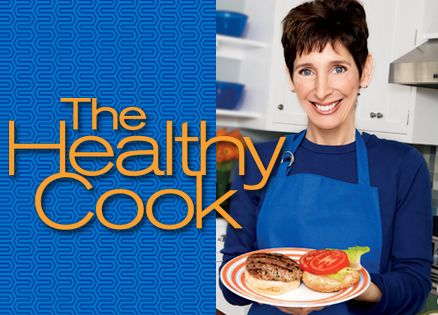
I’m a chef and nutritionist. Some of my best recipes come from working with people who have dietary restrictions.
One of my clients was fighting cancer and had to cut out red meat. Problem was, he was a fast-food junkie. He’d hit the drive-through for breakfast. He almost cried when his wife showed me his stash of fast-food coupons and had me throw them out.
I knew I had to find a tasty burger alternative to convince him to eat healthy. I came up with this recipe and got him to try the turkey patties for breakfast, knowing he needed a protein fix in the mornings. He practically broke into song. “It’s like a symphony of taste!” he said.
The combination of flavors woke up his taste buds, which had been dormant after his treatments, yet the ginger, parsley and fennel made these burgers easy on the stomach.
The best part? My client discovered that a healthy change can be a happy one too.
Fennel and ginger are natural digestive aids, and if you use dark meat instead of white, you’ll get three times more iron per serving.
Ingredients
2 lbs. ground dark meat organic turkey
⅔ c. yellow onion, minced
¼ c. fresh basil leaves, finely chopped
¼ c. fresh flat-leaf parsley, finely chopped
½ tsp. fresh ginger, minced
½ Tbsp. garlic, minced
½ tsp. sea salt
1 tsp. crushed fennel seeds
1 tsp. dried oregano
1 tsp. red pepper flakes
Olive oil
Preparation
1. In a large bowl, combine all ingredients except for oil. Mix well.
2. Shape into desired patty size.
3. Heat a grill pan brushed with oil. Brown patties over medium heat on both sides, about 3 minutes per side.
4. Cover and continue to grill 3 more minutes, till cooked through. Or in a sauté pan, add just enough oil to coat a hot pan. Sauté over medium heat for 3 minutes on each side to brown, decrease the heat and add a tablespoon of water. Cover to steam the inside, about 6 minutes.
5. Try in pita pockets or on buns.
Serves 8
Rebecca’s Tips:
•Everyone likes these, even the most finicky kids.
•Patties can be individually wrapped and frozen for up to 3 months.
•If you don’t have fresh basil on hand, just use fresh parsley.









 Marnie Moo is our Tuxedo cat who is affectionately known as “MarMar.”