Embrace God's truth with our new book, The Lies that Bind

Journeying ‘In the Heart of the Sea’

Many know the plot of Herman Melville’s classic epic novel Moby Dick; the obsessive Captain Ahab hunts for the great white whale responsible for much of his seafaring misery. What you may not know is that Melville’s fictional yarn was based, at least partly, in truth. In his latest film, In the Heart of the Sea, director Ron Howard seeks to explore that truth.

In the winter of 1820, a New England whaling ship, the Essex, was attacked by a mammoth whale, its crew left stranded in the far reaches of the Pacific. While Moby Dick focuses on Ahab’s obessesion with defeating his sea-dwelling foe, Howard’s film (based off of the best-selling book of the same name by Nathaniel Philbrick) chronicles the true account of the Essex and its crew, after the whale destroys their ship and the hunters become the hunted.

Aussie actor Chris Hemsworth (Thor, The Avengers) plays swashbuckling first mate Owen Chase, a family man determined to earn his captain’s hat, despite the class limitations imposed by his father’s farming background. Chase is a leader amongst men with a knowing swagger and an uncanny ability to persuade others to follow him—that makes him a threat to the gifted but inexperienced Captain George Pollard (the brilliant Benjamin Walker), who struggles with his role on board the ship. Chase and Pollard are at odds for the better part of the first half of the film as Pollard aims to test his crew’s salt by sailing them directly into a coming squall, almost capsizing the ship before their journey has even begun.

But the man-vs.-man plot quickly expands thanks to a menacing leviathan – a large white whale bent on serving out his own special vengeance to the men hunting his species for whale oil. The whale wreaks havoc on the ship and the crew, eventually sending the Essex to the bottom of the ocean and stranding the men on the outer edge of the sea.

There is plenty of action and the cinematography, especially the sequences shot on board the ship, is breath-taking, but what’s most intriguing to Howard is the chance to demystify the mythology of the Essex and tell the true struggle of a group of ordinary men thrust into extraordinary circumstances.

“Though the film is set in the past, it touches on ideas about relationships, survival, humanity and nature that are relatable and thought provoking, and connect to our own sensibilities about who we are as people,” Howard says.

The director had his actors endure plenty of their own trails in order to bring authenticity to the film. Hemsworth describes the 500 calorie a day diet he eventually found himself on as a “pretty ugly” experience filled with mood swings and negative side effects.

Strong turns from Cillian Murphy and Tom Holland — the young man set to take on the role of Spiderman next year — round out the talented cast that thrives despite some regrettable script limitations. Bits of clunky dialogue and the intertwining story of Melville (played by Ben Whishaw in the film) interviewing an aged deckhand who survived the ordeal means the action is often interrupted.

While the movie’s draw rests on the clash between man and beast, it’s the fight for survival in the aftermath that is truly harrowing and worth the price of admission.

“There are three great trials encompassed in this story: man against man, man against nature, man against self,” Walker says. “How can you overcome those trials and survive? That’s the question of the movie. But there’s beauty in that; you see the endurance of the human spirit.”

Jones Refuses to Let Life’s Hurdles Deter Her

Remember the dramatic intro to ABC’s Wide World of Sports? “The thrill of victory…” Footage of hurdler Lolo Jones at the 2008 Beijing Olympics could have run with the second part of that famous phrase: “…and the agony of defeat.”

The gold-medal favorite, she was flying in finals of the 100-meter hurdles, ahead of the pack with just two hurdles to go. She planted her foot, her lead leg soaring over the ninth barrier. Then, disaster. The heel of her right lead foot clipped the top of the hurdle. She stumbled.

That was the difference between first place and seventh. She’d made the most basic mistake a hurdler can make.

Lolo pounded the track with her fists, unable to quell the tears. “Why? Why? Why?” she cried out, the hurt almost more than she could bear. She’d faced adversity her whole life. It seemed like there was always one more hurdle to get past.

Growing up in Des Moines, Iowa, Lolo went to eight schools in eight years. Her single mother worked two jobs to feed their family of six.

One summer they lived in a church basement, and Lolo would hurry upstairs early every morning so other kids at the church day camp wouldn’t know about her living situation.

She found refuge in the classroom and on the track. In high school when her mother said they were moving again, to a small town, Lolo stayed behind in Des Moines. “I can’t go somewhere where there’s not a track,” she said. Instead, she shuttled among families of friends.

At LSU she set collegiate records and led her team to a national title. She set her sights on the 2004 Olympics. It wasn’t to be. She failed to qualify. She wanted to quit right then and there. But her coach knew better. “I’ll see you at practice tomorrow,” he said.

Chasing the dream of being an elite athlete meant forgoing a steady job. Lolo worked part-time—at Home Depot, a gym, a restaurant—earning barely enough to pay her bills and travel to meets. Still, she kept pushing herself, getting stronger and faster.

She finished the 2006 season ranked fourth in the U.S. In 2007 she won her first national championship, in the 60-meter hurdles. She was peaking right on schedule, everything finally coming together for the 2008 Olympics. This was supposed to be her moment.

Then she clipped that hurdle. That night in Beijing, the hurt still raw, she did what she’d always done when life’s challenges seemed overwhelming. She prayed.

She counted the many ways that God had blessed her. Her health. Her strength. All the people who had supported her. The opportunity to run in the Olympics. A favorite quote from Frederick Douglass came to her: “If there is no struggle, there is no progress.”

Without all the adversity she would never have developed the drive to make it to the Olympics. Adversity had been a blessing. Lolo turned her focus to London and 2012. She’d be there.

Not surprisingly she’s faced trials since Beijing. A year ago she underwent spinal surgery that forced her to take months off from training. She came back in January as fast as ever.

There will always be hurdles in life. The thrill of victory, Lolo knows, comes from growing in faith and fortitude for having cleared those hurdles and run the race set before you.

Read more inspiring Olympic profiles.

John Wooden, in Profile

John Wooden, UCLA basketball’s “Wizard of Westwood” has died at the age of 99.

The university said Wooden died of natural causes at Ronald Reagan UCLA Medical Center, where he had been hospitalized.

—–

As I drove through Westwood Hills and into the UCLA campus, I wondered about the man I was to see—John Wooden, one the most successful college basketball coach in the country.

Many coaches would consider it a dream come true to have—just once—the best college basketball team in America. During a period UCLA won 192 games, including 47 in a row, and lost 14.

As a sports fan, I knew about John Wooden the coach. I was curious about Wooden the man.

I parked near the Pauley Pavilion, a new five million dollar arena which winning Wooden teams had helped build. As I walked toward the administrative offices I remembered that for four years this campus was the home of Lew Alcindor (otherwise known as Kareem Abdul-Jabbar), that seven-foot, two-inch giant who dominated three of Wooden’s championship teams and became one of professional basketball’s greatest stars.

In a series of articles Alcindor had given me some insights into John Wooden—his intense conditioning program, his “antiseptic needle” (clean but incisive criticism), his rules about short hair, his insistence on academic as well as athletic excellence.

Some UCLA players grumbled about these rules, according to Alcindor, and felt that the coach was trying to make them prototypes of his own Horatio Alger, rural-America, Christian upbringing. During one game in the 1968-69 season, Coach Wooden had planned to insert into the lineup a player named Bill Sweek, but for reasons of strategy changed his mind. Sweek, angry at being left out, walked off the court.

After the game the coach lit into Sweek for his violation of team discipline. In the hot exchange which followed, the young man blurted out his suspicion: Wooden, he felt, gave preferential treatment to players who conformed to his image of the wholesome All-American boy.

According to Alcindor, the whole team was tense and upset when Coach Wooden gathered them together at practice the next day. Most expected Sweek to be dropped from the team. Wooden surprised them. “None of us is too old to change,” he said. “I’m going to try to understand you better from now on.”

Sweek apologized for his insubordination and the two shook hands. According to Alcindor, “From then on we were a closer bunch of human beings. When we went on to win our third straight national championship, I wasn’t as impressed by this victory as I was by the way a group of very different men had come together in tolerance and affection.”

My first impression of John Wooden was of a soft-spoken, scholarly looking man. When I was seated by his desk, I asked him about the Sweek incident.

The coach studied me with clear, direct eyes. “The incident was blown up a bit,” he said mildly. “The social issues and other matters are tearing some players apart inside; you just can’t treat them all the same. And yes, it’s true, I’m learning to understand their differences.”

He paused a moment. “Bill Sweek is a fine young man. He wrote me to say that he was going into the ministry.”

Between incoming telephone calls, the coach answered questions about his boyhood years on a farm outside Martinsville, Indiana, and spoke of his father, Joshua Hugh Wooden, a man who never achieved material success, but was a “great person.”

When young John Wooden went out for basketball in grade school, there was no money for basketball uniforms, so each boy had to buy his own jersey and shoes. “I often played with my jersey on top of my overalls,” Wooden recalled.

“Our coach and school principal was Earl Warriner. He taught me a lot more than just basketball. One morning he told us that a game had been arranged for that afternoon. Now I was the team’s top scorer and was getting a big head about it all. On this particular day I had left my shoes and jersey home, so I told the coach he’d have to excuse me from classes early to go home and get them. ‘Or else I won’t be able to play.’ Mr. Warriner looked at me quietly for a moment and said, ‘That’s too bad, isn’t it, Johnny? We’ll sure miss you.’

“Well, I was pretty shaken by this. When school let out, I found a way to get home in a hurry, grab my jersey and shoes and be back in school before the game started. Coach Warriner paid no attention to me. I did not play—and we lost. After the game he put his arm on my shoulder and said, ‘Johnny, we could have won with you in there, but winning just isn’t that important.’”

“That must have cut your ego some,” I said.

“Yes, it did. And it taught me that you don’t have good team spirit if one player thinks he should get special favors.”

As the coach talked I began searching my memory. He reminded me of someone. But who?

“When I was in high school,” Wooden continued, “one of my teachers—Mr. L. J. Shidler—asked us one day in class to write out our definition of success. Mine, like most of them I guess, had to do with power, status and material possessions. Mr. Shidler was very disappointed in my answer. He told me that to him ‘success is that peace of mind which comes from knowing you’ve done everything in your power to become the best that you are capable of becoming.’ I’ve never forgotten that.

Later Mr. Glenn Curtis, my high school basketball coach, used what he called a ‘ladder of achievement’—listing qualities like enthusiasm, loyalty, team spirit—to inspire us to play better. I’ve used ideas from those men, from my father and from Ward ‘Piggie’ Lambert, my coach at Purdue, and added a few of my own to make a chart I call ‘The Pyramid of Success,’ which I use in my coaching.”

John Wooden went from high school to Purdue University in the early 1930s, where he won All-America honors. He worked hard to make college expenses, digging sewers one summer, waiting on tables and selling sandwiches. After graduation he played professional basketball for a while before starting a career as English teacher, then on into coaching.

Since basketball today is a continuous 40-minute flow of running, jumping, sprawling players who can move fans—and coaches—into a frenzy of emotion, I asked Coach Wooden how he kept from becoming an ulcer-ridden insomniac. To my surprise he began to talk about poetry and its therapy for times of tension.

“From boyhood I’ve memorized great writings of all kinds,” Coach Wooden said. “Doing this feeds my soul. I’ll be driving along a freeway, upset about a practice session, or concerned about a player, when out of the depths will come some verse I memorized years ago. Repeating it lifts my spirit, and sometimes it will even give me an answer to what’s troubling me.”

“And that’s how you keep calm during a game?”

“Yes, and—and with this.” He took out his wallet and removed a small aluminum cross. “I often keep this in the palm of my hand during a game. It will help prevent me from jumping up and shouting at the referee. It also reminds me that basketball is not the most important thing.

“Mind you, I sometimes lose sight of this. I’ve yelled at officials and gone and apologized to them later. Plenty of times I’ve been ashamed at the way I’ve needled players on the other team.”

A call came and Coach Wooden excused himself for a moment, leaving me his brown, zippered notebook to leaf through. There were special prayers, page after page of verse—all neatly typed. Then I came to some notes of a speech he had given to a boys club:

“It is a great experience to be an athlete, to test your skills against the best, to achieve records,” he had told this group. “But there is One who is not very much impressed by all this, or by your sports car or your fancy clothes…. We are on an aimless course which goes around in circles and ends nowhere until we win the real victory. And the life that wins the real victory is the one which places itself totally in the hands of the Lord Jesus Christ.”

When I said goodbye to John Wooden, I realized who he had reminded me of—Guy Baker, my coach back in the 1930s at Bigelow Junior High in Newton, Massachusetts. Mr. Baker also cared about his boys and the character each was forming. Once he caught me in a lie and kept me out of a baseball game. At the time I was devastated, but the lesson in honesty stuck.

Thank you, Guy Baker and Earl Warriner and L. J. Shidler and Piggie Lambert and Glenn Curtis and John Wooden—and all you teachers of boys and molders of men. Thank you for what you have given to all of us.


John Wayne: His Life, Career and Charity

Content provided by INSP.

John Wayne had a 50-year film career and is recognized around the world. This May, INSP will air his films in a month-long event. Recently, we chatted with Ethan Wayne about his famous father.

“Each film brought some adventure, brought some magnificent scenery, brought you a strong character, that was also fair. He was an aspirational character. I think there were a lot of qualities in the John Wayne characters that people liked. They wanted to be like him,” Ethan says, “I remember as a young boy…that he relished where his films had ended up and the way they delivered entertainment to the public.”

Indeed, the characters John Wayne portrayed spanned the spectrum of humanity—lawmen and outlaws, soldiers and historical figures, ranchers, trailblazers, and tough men with soft hearts. He even showcased his flair for humor in films like McLintock!. “With John Wayne, it goes beyond acting…He’s representing, on screen, people who built the country,” Ethan says.

John Wayne was born Marion Morrison on May 26, 1907 in Winterset, Iowa. Before the Morrisons moved to Glendale, California in 1916, they faced many challenges, but those hardships shaped the character of the boy who would become an American icon. “I think he found solace in school and relationships in school,” Ethan says.

At Glendale Union High School, the future star excelled in academics and sports. He captained the football team in a championship season and on a football scholarship, attended the University of Southern California. When an injury cost him his scholarship, he left school to work. “You know he had setbacks. That never shut him down. He kept pivoting and moving forward,” Ethan says.

As an aspiring actor, John Wayne got a job as a prop boy, where he observed renowned director, John Ford, with whom he would later work with on Stagecoach, Fort Apache, and Rio Grande, among other movies. He learned from director Raoul Walsh, who gave him his first leading role in The Big Trail and is often credited with helping create the screen name, John Wayne.

Because he was born when John Wayne was already a 55-year-old veteran actor, Ethan has a unique perspective on his father’s films. “I get to see my father when I didn’t know him, as a younger man.”

John Wayne died of cancer on June 11, 1979 and left several legacies: His extraordinary film career, The John Wayne Cancer Foundation, and now the in-depth exhibit, “John Wayne: An American Experience”.

Ethan is about to drive to Pioneertown, California where a John Wayne Grit Series Run will be held on May 22, to benefit the John Wayne Cancer Foundation. “He was very compassionate. He just gave, and gave, and gave, and gave, financially, emotionally, with his time,” Ethan says, “Yeah, he was a special guy.”

The Duke Days of May event airs on INSP, featuring John Wayne movies Fridays, Saturdays, and Sundays in May at 8PM ET. Visit INSP.com for the full schedule and how to find INSP on your TV.

Johnnie Moore: What Am I Supposed to Do with My Life?

How well I remember asking that question when I was young: “God, what am I supposed to do with my life?” What am I supposed to be? What kind of career should I have? What is my calling? Where should I live?

Johnnie Moore is barely into his thirties but he addresses the question in his new book with a maturity beyond his years, and whether he realizes it or not, his thinking and advice is good for people well beyond their twenties. Because the truth is, people of all ages ask themselves, “What am I supposed to do now, Lord?” In fact, it’s a question you shouldn’t stop asking.

Johnnie worked for a dozen years at a large university, and as he says, five days a week, he was dealing with minutiae and the existential demands of leadership but then on Sundays, he was a preacher, leading worship.

It is that very combination of practicality and spirituality that makes Johnnie a dependable guide. For instance, he is visibly impatient with people who simply wait for the Lord to tell them what to do. “If God told us everything, we wouldn’t need God. So he doesn’t, for our own good,” he writes.

“God gives us the ability to make choices and the information we need to make good ones. When we relinquish that ability and push the choice back to God, we are virtually giving up that freedom, telling him that we do not appreciate the gift he has given us. This is neither honoring to God nor beneficial to us.”

Of course Johnnie believes in praying for help and discernment, but it’s prayer on the go. He uses Paul as a model, pointing out that the peripatetic apostle didn’t wait until God showed him exactly where to go and when; Paul just went until God stopped him.

“God’s will is more about going till he stops you than waiting until he starts you,” says Johnnie.

He sees our own inner discontent as a gift. “It’s discontentedness that reminds us to dream again, to go after God’s will again, to dig down deep and stay committed for the long haul. It’s discontentedness that promotes the possibility of change, and it’s discontentedness that rouses us from the ease of the everyday.”

Johnnie criticizes his own generation for their unwillingness to commit. “We have a hard time just staying in one place, doing any one thing, for any period of time. And what are the results? Shallow faith, weak relationships, short attention spans, more stress, lack of stability in family life, poor physical health, and bad work ethic, among others.” No pulling punches there.

He would say that his own success comes from sticking in one place for a dozen years. “It’s amazing what you can accomplish if you pick one place and one goal and just stick to it for the long haul.”

Recently he left the groves of academe for the challenges of Hollywood, taking on the chief of staff role at Mark Burnett and Roma Downey’s production company.

(Note to Johnnie: I have worked at the same place for 30 years now, and every day I learn something new and find new challenges. No wonder I think your advice is good!)

The book has a subtitle, God’s Will Demystified, which is why I think it’s for more than just the vocation-searching twenty-something. As Johnnie points out, growing in faith means developing a series of habits that strengthen us.

“The more decisions you make,” he writes, “the more you’re prepared to make bigger ones and the more you’ll understand the process that leads you to making a decision when you come to another crossroads.”

At some point, at any age, we all need to step out in faith. And that means taking action. “Faith grows through taking steps of faith,” Johnnie writes, “and faith chooses an attitude of optimism when everything seems to discourage it.

“Faith is required in nearly every moment of significant change in life, and God requires more faith when you’re ready for it. Faith challenges you to flex your spiritual muscles beyond what you think you can bear, but God knows what you’re capable of bearing…Our challenge is taking the leap; it’s God who steps in to catch us and carry us back down to solid ground.”

I’d take that leap with Johnnie Moore any day.

Jim Caviezel on the Very Personal Motivation Behind His New Faith-Based Film

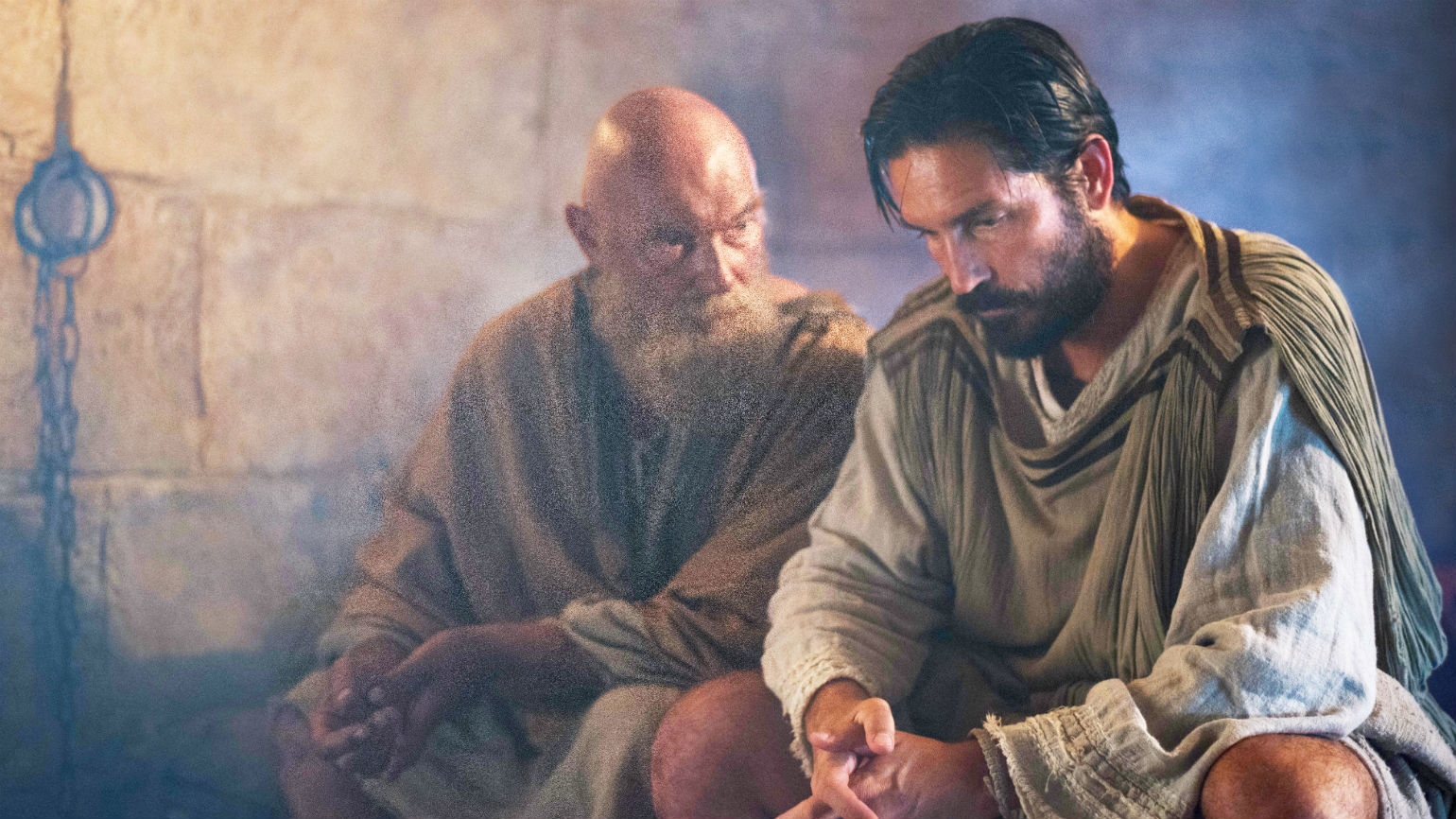
Jim Caviezel starred in The Passion of the Christ 14 years ago and he’s taking on another Biblical retelling with his latest film, Paul, Apostle of Christ but the actor’s not worried about being typecast with his more religious roles. In fact, he’d like to keep making faith-based films, as long as the scripts are good.

“We don’t go to Will Ferrell and say, ‘Will, you’ve done a comedy. Why do you keep doing comedies?’” Caviezel tells Guideposts.org when asked why he decided to sign on to his latest spiritual film written and directed by Andrew Hyatt.

According to the actor, he’s been offered plenty of bad Bible movies since starring as Jesus in The Passion but with Paul, Apostle of Christ and Hyatt’s script, Caviezel, who plays Luke, saw an opportunity to do justice to one of the most inspiring figures in the Bible.

“What I loved about this, as opposed to other stories that have been big box office films is that the performances in this movie are strong, but the words are still stronger. We don’t need to change them.”

The movie follows the final days of Paul, as he’s imprisoned by the Romans, tortured, beaten, and persecuted for his faith. When one of his followers, Luke, risks his life to visit Paul in prison and write down his testimony, the two form a close bond and work together to spread the message of Christianity. Luke, a Greek and a doctor who comes to know Jesus through Paul’s preachings, dedicates his life to serving the faith.

Most of the dialogue in Paul, The Apostle comes straight from the written text of the Good Book – a selling point that appealed to the actor. But he also had a personal reason for signing onto the film. Last year, Caviezel’s long-time friend and attorney Frank Stewart passed away after a long battle with cancer. Caviezel says he’s dedicating the movie to his friend because it was Stewart who led him to a closer relationship with God.

“He showed me Christ,” Caviezel says of Stewart. The two would often take long walks by the water, discussing issues, bantering back and forth, and debating one another, much like Luke and Paul do in his new film. “He was my teacher. I was the student. I was like, ‘Oh my gosh, Paul really is Frank to me.’ We bantered all the time. It was funny. I’d go rounds and rounds with him, but he’d always go back to, ‘Okay, you’re right. This is unfair, but what are you going to do about it?’ A big part of being Christian is forgiveness and understanding. If you love only people that love you, what does Jesus say on that?”

Caviezel hopes his film will challenge people to open their minds and their hearts, the same way Frank challenged him all those years ago.

“This film is about forgiveness at all costs,” Caviezel says. “It doesn’t mean weakness. It doesn’t mean the acceptance of evil, it means that we can meet evil face to face, with love.”

It was important to the actor that the film – which spends most of its time with Luke as he talks with Paul, encourages his fellow Christians, and is forced to constantly escape the wrath of the Romans – mirror the Bible, but that it also showed these famous religious figures like Paul through a very human lens.

“These people were real, breathing human beings that suffered. They had pain,” Caviezel explains. “The most important people in that theater are the people watching it, going, ‘Wow. I can relate to these guys.’”

The movie doesn’t shy away from explicit violence, another selling point for Caviezel. The actor knew it was important to the integrity of the story to tastefully show as much as possible when it came to the struggle and suffering of early Christianity. These men and women endured plenty of hardship in order to share their faith. In Caviezel’s opinion, there’s a lesson in their perseverance that we can all learn.

“Why do we read history? So it doesn’t repeat,” Caviezel says. “The Bible’s different. When you read that, it literally speaks to you. It talks to you. It really has a power. There’s a voice that speaks to you as you’re reading it. It’s extraordinary, but why is it so important now? Because each of us is playing a different character. Now, me, I get to play Jesus, but then I get to play Luke. Some of us get to play Matthew or John, but let’s be honest here, on a certain day, when we are sinning, who are we like? Are we like the Pharisees? Are we Pilot the politician? That’s what this film does. It challenges people to answer those questions.”

Jennie Garth on Faith, Family and Hallmark’s ‘A Time to Dance’

What is actress Jennie Garth up to these days? If you’re a fan of writer Karen Kingsbury or the Hallmark channel, you’re probably going to be interested in the answer.

Garth, who rocketed to fame as Kelly Taylor on the show about the 90s’ favorite zip code, 90210, has the starring role in A Time to Dance, the TV movie based on the novel by New York Times and Guideposts best-selling author Karen Kingsbury. The film premieres on Hallmark Movies & Mysteries this Sunday at 9/8 p.m.

READ MORE: ROOTS REMAKE AIMS TO INSPIRE A NEW GENERATION

A Time to Dance tells the story of seemingly perfect couple Abby (Garth) and John Reynolds (Dan Payne), two high school sweethearts who get married, have kids, and along the way, lose their connection as husband and wife. They decide to throw in the towel, but before they can break the news to their grown children, their oldest daughter announces her engagement—along with the news that she plans to get married on her parents’ 22nd anniversary.

Abby and John agree to delay the news of their split until after the wedding in order to avoid tainting their daughter’s special day. “Life interrupts their plan to divorce,” Garth tells Guideposts.org. “And time allows them to revisit memories and remember why they fell in love.”

Garth describes the personal struggle her character went through after sacrificing her own ambitions for her children:

“Abby had sort of given up on her life [ambition] in order to raise her kids and be her husband’s wife,” she explains. “She took a backseat to her husband, who is a prominent high school football coach in their community. [Now] she wants to have her own story, too.”

A mother of three daughters ages 18, 13, and 9, Garth knows what it’s like to prioritize family. She also says she felt drawn to this project because the faith element in Kingsbury’s novels reminded her of her father, a man of strong faith. “It was a calling to do the project for [him],” she says.

READ MORE: KAREN KINGSBURY’S INSPIRING ENCOUNTER IN NEW YORK CITY

Now that the film has wrapped, Garth has a little down time for her other passions.

In the past couple of months, she’s vacationed with her family, grown vegetables in her own garden, and devoted time to her photography website. Other days might find her whipping up homemade recipes for her hubby, hand making crafts with her daughters, or even crocheting “matchy matchy sweaters” for her Miki pups, Roxy and Pinky.

She also volunteers with the American Heart Association–another calling based on her close relationship with her father, who passed away in 2008 after years of battling heart disease. She and her daughters also work with the organization Feeding America: “We go down to the local food bank,” Garth says. “The girls pack boxes of food; they love doing that.”

The joy she and her children find in giving back is something she hopes all parents can experience with their kids.

“I wish everyone had the opportunity to do something like that on a regular basis—to do some sort of neighborhood outreach or have some way of giving back,” she says. “It puts things in perspective for your kids.”

Get a two-book set from best-selling author Karen Kingsbury!

Jean Trebek on Finding Joy with Her Husband Alex During Their Greatest Challenge

Alex Trebek passed away at 80 on November 8, 2020. This August 2020 story from Jean, his beloved wife of nearly 30 years, inspires us all to face our challenges with courage and faith and to embrace and savor the hope and joy that surround us all.

We’d gone to Israel to visit the sites of the Holy Land in December 2018, taking our son and daughter, Matthew and Emily, then 27 and 24. We’d finished dinner one night, and I looked across the table at Alex. His coloring seemed off. “You feeling okay?” I asked.

“I’m good,” he said. Alex is not one to complain. But he admitted that he was having some stomach pains. I figured, okay, we were in a different country. Maybe it was something he ate. Later, back home in California, things were still not right. His doctor ran some tests, then some more. We weren’t so worried that we canceled a trip to New York. It was there, in our hotel, that we got a call from his doctor. “We need to see you as soon as you get back from your trip. We have some concerns.”

Jean and Alex Trebek on the cover of the August 2020 Guideposts
As seen in the August 2020
issue of Guideposts

Some concerns. What did that mean? I pulled my mind back from the fear that was welling inside me. We didn’t know what we didn’t know. I wouldn’t let myself jump to conclusions. But I knew Alex was thinking what I was thinking.

We cut our trip short. He went in for a CT scan—all of this at Cedars-Sinai in Los Angeles, not far from our house. The doctor called back within hours. “We need to talk,” he said. We went back and got the news. Pancreatic cancer with a tumor that had spread to the soft lining of his stomach. Stage IV.

It felt as if the bottom dropped out of my world. Again. Alex has been everything to me. I met him when I was 21, a challenging period in my life. His friendship—we were friends for a long time before becoming a couple—changed my life.

I’d grown up on the East Coast, in a tight-knit Catholic family on Long Island. There were just three of us kids: my older brother, Chris, my younger sister, Audrey, and me. I moved to California to go to Pepperdine University. College was exciting, but it was so hard being away from everything I’d known. Chris was a year and a half older than me, and I looked after him. We were inseparable. Like Frick and Frack, my mom said.

After leaving Pepperdine, I was still here on the West Coast, trying to recover from a tragedy I never thought I’d get over. Saturdays I had a part-time job, doing bookkeeping for a guy in Malibu. Alex was my boss’s buddy. He’d come over every Saturday to play backgammon and have lunch. I knew that he was on some TV show, but he never said much about it and I didn’t ask.

One day I called my mom back on Long Island and told her I’d met this nice guy, Alex Trebek. “Don’t you know who he is?” she said. “He’s the host of that game show Jeopardy!

If only I could have told Chris. He would’ve gotten such a kick out of knowing that his little sister knew some guy on TV. Chris and I were close in age and closer in our connection. I took a lot of responsibility for him. Born with hydrocephalus—water on the brain—back when they knew much less about how to treat it, he was really delicate and had some developmental delays.

We went to school together, and I promised my parents that I would watch out for him. Sometimes I would even leave my classroom to go check on him. I took care of my brother, and it felt like a gift rather than a burden. Other kids might have resented that responsibility. I thought it was a blessing. Then came that terrible day my sophomore year of college.

I was on the phone with Mom when she said there was someone at the door. “Hold on a sec, Jean,” she said and put the phone down. I heard a man’s voice. The next thing I heard was a terrible scream. Mom’s scream. The man got on the line. He said he was a police officer. “Who am I talking to?” he asked. “Her daughter,” I said. Where was my mom? What had happened? “There’s been a car accident,” he said, “and your brother was killed.” December 7, 1984. The worst day of my life.

Now, almost 35 years later, came this grim diagnosis. All the terrible pain and loss I’d felt at Chris’s death came back. Only my faith in God’s ultimate goodness and love had gotten me through that period of my life. Then I met Alex, as if the Lord had led me through my grief to the man I would love forever. I couldn’t imagine my life without him. Could I accept this diagnosis? Could my faith sustain me now? Could I be strong for Alex and myself?

I looked over at Alex. How would he manage? Right away he exhibited that same strength he’d always had, that steadiness and calm I drew from him. His attitude wasn’t “Why me?” but much more “Okay, what do we do?”

“We need to get you on chemo,” said the doctor, “to stop the cancer from spreading.” That was the first protocol. Alex would start right away. Once a week, I would take him to his appointment. I’d sit with him and then drive him back home. Look after him the way I once did for Chris. No matter how resilient you are, cancer has a way of making you feel truly vulnerable. Alex and I needed each other more than ever.

I wondered then how long we had. More than a year and a half later, we’re still at it, every day a gift.

Some days it’s a struggle for Alex to get out of bed. But he’s never missed taping a show. That passion for his work—it’s a kind of calling. He truly looks forward to getting to the studio at 5:45 a.m.—so he can do several episodes in a single day. It rejuvenates him.

It rejuvenates me as well. With each passing day, I have found so much to be grateful for. Alex’s work. Our kids, our friends, a sunset, a flower blooming in our garden. This didn’t have to be a death sentence. It could be a life sentence. A constant reminder of how precious life is. The smallest things that I once took for granted now carry more meaning. I think that is how God keeps us in the moment. He focuses us with grace.

We’ve made lifestyle changes that have helped. Alex is definitely a meat-and-potatoes guy. We’ve cut back on sugar and shifted to a more vegetarian diet. We discovered quinoa pasta. He likes that. And because the chemo and the pain meds affect his appetite, I give him a protein drink in the mornings loaded with good things. We usually eat one big meal a day at 5 p.m. Then we watch Jeopardy! Of course, he knows most of the answers, but he never tells me! Sometimes I play along like any other fan. And I am a big fan.

Alex never tried to hide the news from his audience. He went public right away. The outpouring of supportive messages and sincere concern was overwhelming. The viewers and contestants really care. After all, they’ve been with him even longer than I have. One recent contestant, who didn’t know the answer to the question on Final Jeopardy, instead wrote on his card, “What is We ♥ You, Alex!” Alex, who is known for keeping a cool head on the show, was very touched by that remark.

Truth to tell, some days I feel really sad and angry. Then I’ll say, “That’s enough, Jean.” I’ll try to do something for someone else to pull myself out of it. Not just for Alex but for one of our friends. Sending a reassuring e-mail, calling someone, sharing a cup of tea. Opening myself up. Accepting what’s happening. Thank goodness, I had already started insidewink.com, a lifestyle website, and my blog on the site is a way to share our journey with others.

On the website, I’ve interviewed a variety of amazing people…actors, spiritual leaders, others who have made a difference. I pose a question like “What does forgiveness mean to you?” or “Has there been something that changed your life for the better?” The beauty of it is to hear what comes out of people.

Our slogan at insidewink through all of this has been “share the good.” If Alex is having a rough time, if he’s exhausted after a chemo session, I can look for the good. I can share what’s good in our lives and in other people’s. How people care for and love one another.

I’m not alone in taking care of Alex. Our son, Matthew, owns three restaurants in Harlem, New York. He closed them during the quarantine and came home to L.A. It has been a huge blessing to have him here, along with our daughter, Emily, who lives close to us and visits all the time. My sister and my mom are another extraordinary source of support. My church community is wonderful, as well as all our dear friends.

One thing I have always found so dear about Alex—and something you probably don’t know about him—is that he is a tinkerer. Our garage looks like a small hardware store. He can fix anything and loves to. The other afternoon I caught him fiddling over something with his tools. I almost interrupted him to ask what he was up to. But then I thought, No, I just want to watch…to just be in this moment.

Maybe what I learned about caregiving for Chris is still with me. I kept an eye out for Chris, like my parents told me to. Most of the time, though, it was just the joy of being in each other’s company. That’s what it’s like for Alex and me. We go on little walks together, if he’s up to it. We eat dinner together. We watch comedies and movies on TV. Or we’ll sit in the swing in our backyard and sway to and fro, feeling the warmth of the sun, gazing at the flowers or up at the sky, knowing we are loved. Not just by each other but by a God who will see us through all things.

For more inspiring stories, subscribe to Guideposts magazine.

Jeanne’s Brain Tea

I’m a chef, nutritionist and author. I’m also the daughter of someone who struggled with dementia for a decade before eventually dying of it. Given my genetics, I worried that I was on a timetable, that my mind had an expiration date of age 70 or so.

So I decided to explore the role that food plays in fighting Alzheimer’s and other types of dementia. My latest book, The Healthy Mind Cookbook, focuses on the connections between food and brain health. More and more studies show that what we put on our forks has a definite impact on mind and memory. I learned that it’s important to keep hydrated: Even a one to two percent loss of fluid in the brain has been linked to a host of mental impairments, including poorer short-term memory retention.

One of the scientists I talked to was Jeanne Wallace, a Ph.D. who knows a great deal about the brain. I asked Jeanne to share one of her favorite recipes. Her concoction harnesses the protective effects of green tea and certain berry extracts. I call it Jeanne’s Brain Tea, and it’s so delicious, you can enjoy it hot or cold. I especially like that the blueberry juice in it doesn’t spike blood sugar; such spikes can cause fatigue and fuzziness.

This brew of berries, orange peel, and cinnamon sticks (the orange peel adds brain-boosting antioxidants while the cinnamon helps regulate blood sugar) comes together in just 15 minutes, and you’ll often find a thermos of it in my car on those long California commutes. I’m doing what I can to keep my body and brain healthy. You can too!

Ingredients

4 c. filtered water
4 organic green tea bags
1 cinnamon stick
Peel of 1 small organic orange or 2 tsp. dried organic citrus peel
3 Tbsp. unsweetened blueberry juice concentrate
3 Tbsp. unsweetened concentrate of another juice, such as raspberry, tart cherry, black currant, cranberry, lingonberry or pomegranate
Sweetener (optional)

Preparation

1. Bring water to a boil and add tea bags, cinnamon and orange peel. Turn off heat and let steep for 3 minutes, then remove tea bags.

2. Let tea cool to room temperature. Remove cinnamon stick and orange peel, strain into a glass pitcher and add berry concentrates.

3. Drink warm or chilled. If desired, add sweetener. Store in an airtight container in the refrigerator for up to 1 week.

Cook’s Notes: Using a paring knife, peel the orange just above the bitter white pith. Use frozen blueberries for ice cubes.

Excerpted from The Healthy Mind Cookbook, by Rebecca Katz with Mat Edelson, Copyright © 2015 by Rebecca Katz with Mat Edelson. Reprinted with permission of Ten Speed Press, an imprint of Penguin Random House LLC. Photograph by Maren Caruso.

Jason Ritter’s Show Of Faith

Jason Ritter is no stranger to shows that ask big questions.

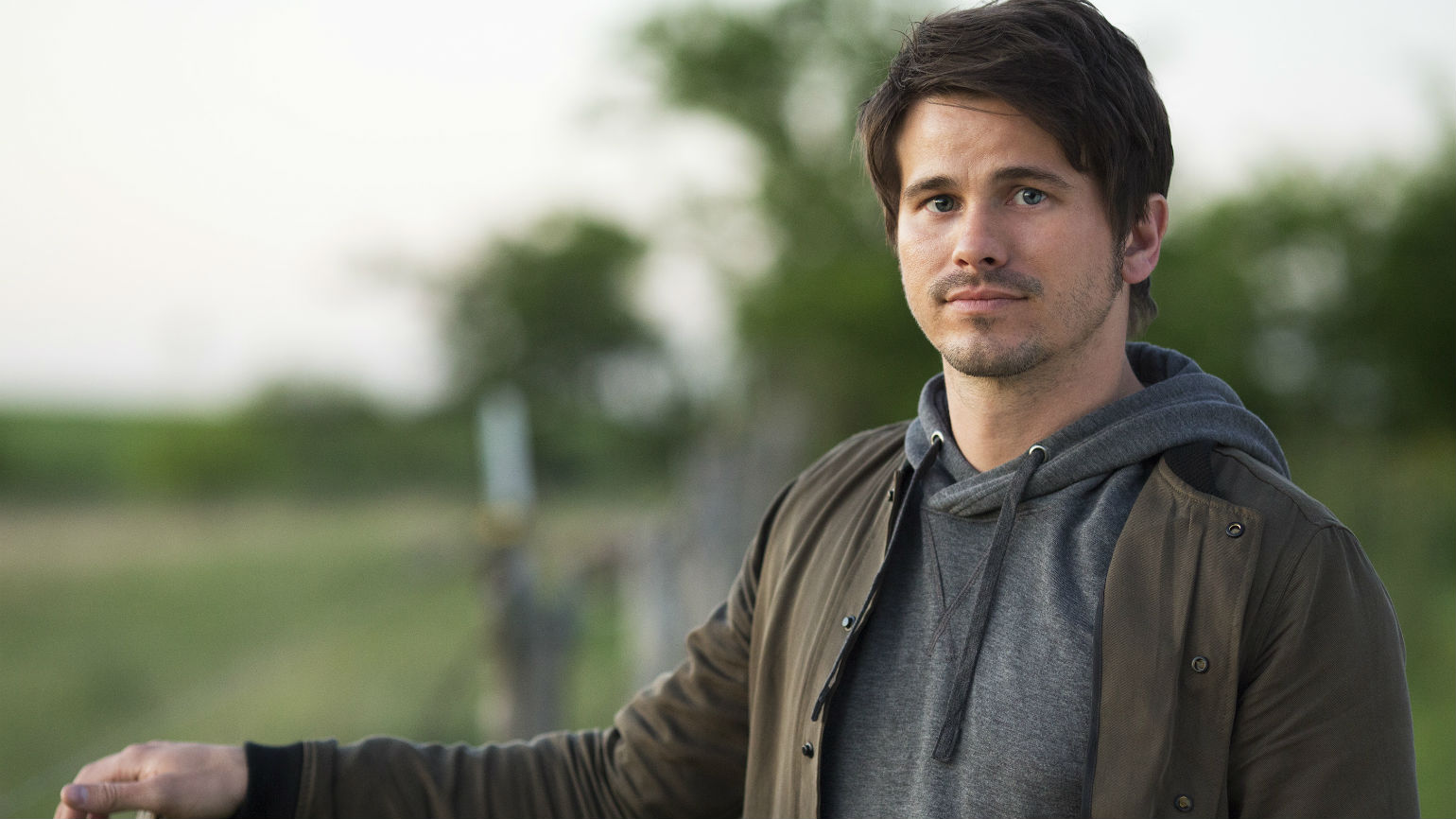
The actor and son of the late John Ritter once starred in Joan of Arcadia, a CBS drama that followed a young girl who spoke to God and who was tasked with helping others. Now it’s Ritter’s turn to save the world … literally. The actor plays Kevin Finn in ABC’s new fall comedy, Kevin (Probably) Saves The World. The show focuses on Kevin, a desperate man reeling from a recent suicide attempt who’s chosen by God to help save humanity by performing good deeds. On top of all of this, he’s also busy trying to reconnect with his estranged family and get along with his celestial protector, his guardian angel of sorts.

There’s plenty of humor to be found in the show, but, according to Ritter, there’s also a lot of heart.

Guideposts chatted with the star about his character’s struggle with faith, the deeper message of the show, and carrying on his father’s legacy.

GUIDEPOSTS: What drew you to this story and this character?

Jason Ritter: One of the things that drew me to this character is that he’s not a guy who thinks very much of himself. In fact, he’s spent most of his life trying to fill the hole that he feels inside of him with money and with success, and these things that he’s been sort of taught will make him happy. And all of that’s been taken away and he has no infrastructure. I like the fact that he’s been tasked with this huge job of saving all of humanity when he’s barely been able to function in his own life. I always think characters are more interesting when they’re flawed and Kevin certainly has no shortage of flaws, but that always strikes me as real. I think we also can enjoy superhero movies and things like that where the characters are incredible and invincible but I always feel like we connect more with people who make mistakes and are imperfect.

GUIDEPOSTS: Obviously the show has some spiritual elements to it. Does spirituality play a role in your own life, and do you have to be spiritual to enjoy and get something out of this show?

JR: I don’t think you have to be spiritual to get something out of it, but I think that that word covers a lot of ground. I think maybe if people are like, ‘I’m not spiritual,’ but then look for coincidences in their life or ask themselves big existential questions about being here, to me that counts. Spirituality to me basically just means being curious about the world around us and how our actions affect others.

I think that’s one of the beautiful things about humanity in general is that we have the ability to stop just surviving and go, ‘Why is this all happening? Why are we here?’ I definitely have my own beliefs and I like looking right into these questions and I like sort of being asked to think about these kinds of things. So it’s no coincidence that I’ve gravitated to these projects over the course of my career.

GUIDEPOSTS: Kevin is a flawed character, but are there any ways in which you’re like Kevin? I’m assuming all of his good traits.

JR: No, some of his bad stuff too. I think Kevin and I have a lot of similarities. There are definitely times where I’ve been focused on myself or I’ve been so focused on trying to make my life the way that I want it to be that I’ve neglected friendships and relationships. I’ve excused myself by saying, ‘Oh, I’m so busy,’ and stuff like that and I’ve hoped that if friends of mine were needing me that they would call me, but I think definitely there were some elements of this character who’s, not by meaning to, but he’s let people down. And I certainly hate that feeling but unfortunately I’m familiar with it.

GUIDEPOSTS: Did your dad teach you any lessons that you’re using now that you have your own series?

JR: He had such an incredible work ethic. He really took it seriously. I think that is the main thing that I feel like I’ve finally kind of locked into on this show for some reason. It may be because it sort of clicked into me at a certain point of my life. I don’t know what it is but he was always looking for little extra things that he could do or he could put in. He was never just trying to do the bare minimum.

GUIDEPOSTS: This is a funny show but it also deals with some serious issues. How do you balance the humor with those heavier moments?

JR: It was one of the biggest challenges of the series and of the character but also it felt freeing in a way because that’s how I experience life and how a lot of people experience life I. I really do think that the hardest times that I’ve laughed have been in the darkest and most painful moments of my life. And I feel like those laughing moments are incredibly healing. Humor is a huge tool in helping us lift ourselves out of those dark moments.

GUIDEPOSTS: What’s the big journey that Kevin will go on this season, other than the small thing of trying to save all of humankind?

JR: I think one of the most interesting struggles for Kevin is this struggle with faith. Faith is the belief in something without having proof. That’s what makes it faith. You believe in something because you believe it, not because you’ve seen hard evidence.

There are lots of moments where it’s not going well or he doesn’t see the goal at the end of the plan. He’s just sort of following the signs of the universe and he starts to get lost in the weeds and goes, ‘I must be off track. Something must be wrong,’ which I think is such a natural way to feel after tragedy, especially. It’s been interesting to see him kind of have doubts and then the struggle to rejoin with his own sort of beliefs in the larger goal, in the larger picture.

GUIDEPOSTS: We don’t want to spoil too much of this season, but is Kevin going to save the world?

JR: I would say he’s got a fairly good shot. I think it’s slightly more than a coin flip at this point

Jason Heyward Honors a Fallen Friend

Unproven rookies don’t get to choose their uniform numbers.

So when Jason Heyward, a 20-year-old right fielder, reported to the Atlanta Braves’ Lake Buena Vista, Florida, spring training complex in February 2010, he was issued No. 71. Anonymous. Forgettable. The type of number that keeps you humble.

Heyward hit the ball hard in the Braves’ early spring training game—hard enough for manager Bobby Cox and the team’s star veterans to take notice.

Almost daily, it seemed, the powerfully built 6-feet-4, 240-pounder hit a rocket somewhere—into the right-centerfield alley, over the center fielder’s head, far over the right field fence.

Cox kept putting Heyward in the lineup. He had this unshakeable feeling: This kid is special, this kid is going to be a star.

Cox learned how special the day he told Heyward that not only had he made the team, but he was the Braves’ new starting right fielder.

First Heyward asked to change his uniform number to 22. Then he visited Tammie Ruston, his high school British Lit teacher at Henry County High School in McDonough, Georgia, near Atlanta, and gave her one of his new jerseys.

Ruston burst into tears.

Ruston’s only child, Andrew “Willie” Wilmot, had worn No. 22 when he and Heyward had led Henry County to the 2005 Division AAAA Georgia State High School championship.

Wilmot, a catcher, and Heyward were best friends. “We looked up to each other,” Heyward told MLB.com. “He was fun to be around. Everybody around school loved him.”

Wilmot was a year older than Heyward, and he enrolled that fall at Walter State Community College in Morristown, Tennessee, to play collegiate ball. A year later he died in an auto accident.

Heyward didn’t want to forget him. It wasn’t enough, he decided, to visit Ruston every off-season. He sought a way to honor his friend. Most of all, he wanted to keep Wilmot’s memory alive for Ruston, and for the Henry County High baseball team.

What better way than to adopt his friend’s jersey? “There are people who will get together with you when it’s easy to walk the other way,” he told cbsatlanta.com.

Ruston was overwhelmed. She attended the Braves’ season opener, courtesy of Heyward, and watched from the right field seats—the closest she could sit to No. 22. She swelled with pride when Hall of Fame player and Braves right field icon Hank Aaron threw out the ceremonial opening day pitch—to the team’s new right fielder, Heyward.

Ruston’s heart was in her throat when Heyward came to bat in the bottom of the first inning. The Braves had two men on against Carlos Zambrano, the Chicago Cubs’ four-time All-Star.

Zambrano threw two fastballs, both inside. Then a third, over the inner half of the plate. Heyward pivoted and ripped—his first big-league swing.

Veteran players will tell you there is a special sound when a great slugger connects. That’s the sound that Cox and the Braves players heard. The ball shot like a laser into the right field seats, near where Ruston was sitting.

Heyward’s teammates leaped from their dugout seats. So did the 53,081 fans. So did Ruston.

“Baseball season now brings a special loneliness for me,” Ruston told the Atlanta Journal Constitution not long after. “But I know that a piece of Andy lives on. That brings me so much more comfort than I can begin to express.”

Justin Heyward played for the Braves for five seasons. In November 2014, he was traded to the St. Louis Cardinals.

But he still wears no. 22 in tribute to his departed best friend, and he still visits Tammie Ruston and her family every year in the offseason.

James Stewart’s Inspired Performance

How well do any of us really know our parents?

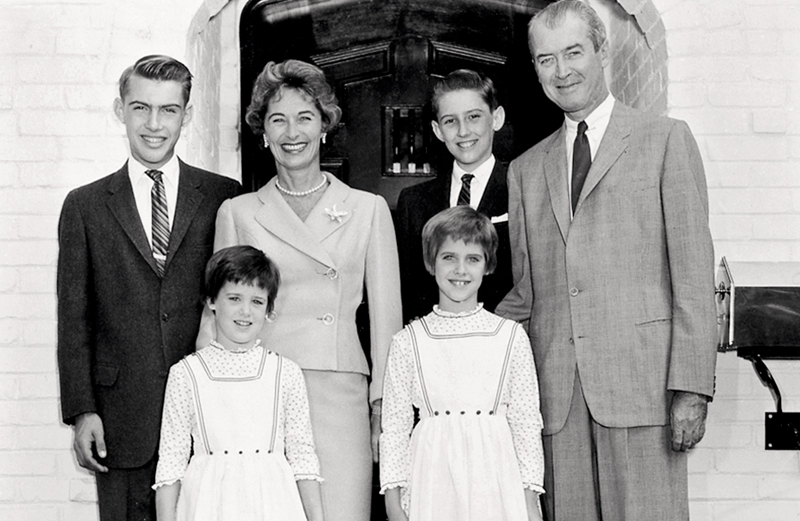
The whole world, it seemed, knew my dad, Jimmy Stewart.

A few years after my twin sister, Judy, and I were born, Look magazine named him the most popular movie star on the planet. To us he was just plain Dad.

We loved how he’d fold his lanky frame down to our level and pull us up on his lap for a story. His folksy, halting drawl left us in stitches. He was so loving and good-natured, we hated to upset him.

Sometimes, though, we heard the “disappointed” voice instead of the laughing one. Judy and I weren’t always angels.

READ MORE: JIMMY STEWART ON A FATHER’S STRENGTH

Today, people tell me they can’t hear Dad’s voice without thinking of Christmas and his portrayal of George Bailey in It’s a Wonderful Life. But I’m partial to one of his later holiday roles. It had a limited run before a very select audience.

It was 1958. Judy and I were seven and our family was spending the holidays in Hawaii. You’d think we’d be thrilled, but we were wondering if it would even feel like Christmas so far from home.

There’d be no singing carols on the piano bench next to Dad, his long fingers gracefully skimming across the keys. No Christmas dinner in the formal dining room. And what really mattered–how would Santa know where to bring our presents?

We asked about it night after night in our prayers, and Mom assured us again and again that Santa would find us, even in Hawaii. But there’d be no chimney to slide down in a hotel room. How would he even get in our room?

Christmas Eve the hours dragged by. Finally, Mom announced, “It’s time for little girls to get to bed. Santa won’t come until you’re asleep.” She was already in her nightgown and Dad had on his blue-and-white-striped pajamas. Even with his long arms the sleeves fell past his wrists.

Judy and I got in bed and looked at each other. We didn’t have to say a word to know we were thinking the same thing. This didn’t feel like the night before Christmas at all. There wasn’t even a place to put up our stockings!

Mom and Dad kissed us goodnight and for the first time in my young life I fell asleep dreading Christmas morning.

The next thing I knew Mom was shaking me. “Dad went out to get a newspaper and then there was a knock on the door,” she said. “Wake up and see who’s here.”

I sat up and rubbed the sleep out of my eyes. There was Santa! “Ho! Ho! Ho! Merry Christmas, Kelly and Judy!” our visitor said, laughing merrily, his voice deep and powerful.

It was really him. White beard, red suit, black boots and a big belly–though he was taller than I’d imagined. Santa sat down and Judy and I scrambled onto his lap. I felt so comfortable, as if I’d sat there hundreds of times. Everything about him felt so…familiar.

READ MORE: JIMMY STEWART ON IT’S A WONDERFUL LIFE

I looked closely at Santa. I didn’t recognize his face, covered by mounds of white beard. But I’d seen those hands before, those long fingers. And sticking out ever so slightly from one red sleeve was the cuff of his pajamas with those blue and white stripes.

Mom and Dad were trying to fool us into thinking that Santa had come!

“So, Santa, how ya doin’?” I asked, punching him playfully on the shoulder. Judy looked at me in astonishment. With a wink I shared my skepticism. She nodded–now she knew what our parents were up to. “Yeah, Santa ole boy,” Judy joined in. “Long trip, eh? How are those reindeer doing?”

“Ho! Ho!” Santa boomed. “Why they’re having breakfast. They eat hay and mangoes here in Hawaii. They sure do like soaking up some sun before we head back to the North Pole.”

On and on Judy and I went. We couldn’t break him. He had an answer for everything, delivered with that jolly booming voice and twinkling eyes.

By the time we hugged our visitor goodbye and he remind­ed us to be good girls, my stomach was churning. What if he was the real deal? What happened to little girls who were rude to Santa?

Mom told us to wash our hands before breakfast and then we’d see what Santa had brought us. She seemed irritated. In the bathroom with Judy, I was nearly in tears. “I think that really was Santa,” I whispered. “He didn’t sound like Dad at all.”

“We were so mean to him,” Judy said.

“Mom’s not happy,” I said. “She’ll tell Dad when he gets back from the store. They’ll be so disappointed in us.”

But Judy thought of something far worse. “What if Santa takes our presents away? What if he leaves us with coal?”

There was no doubt what was in store for us. And we’d brought it upon ourselves by not trusting Mom and Dad. We walked out to the breakfast table quaking. There sat Dad.

“Merry Christmas!” he cried, sounding just like George Bailey. “I hear Santa dropped by. Boy, I wish I’d been here.” We went to his chair and he lifted us up onto his lap, his long arms hugging us close.

Soon we were telling him all about Santa and everything we’d said and done. He didn’t scold us. In fact, he laughed so hard there were tears rolling down his cheeks. Like he was hearing it all for the first time.

I’ve long forgotten what Santa brought us that year. But I will never forget the greatest gift of that Christmas–the knowledge that Mom and Dad loved us so much that they would do everything in their power to help make our prayers come true.

Did you enjoy this story? Subscribe to Guideposts magazine.