Embrace God's truth with our new book, The Lies that Bind

How KB is Changing the Narrative of Christian Rap

Trying to pigeonhole hip-hop artist KB is a lot like trying to box in his music: impossible. The 26-year-old Tampa native is a husband, a father, a boxer, and a Christian — who raps.

KB uses his mic to share the message of redemption and hope in Christ, pouring out his imperfections, insecurities and deepest desires all over a dope beat. That winning combination has produced critical acclaim for the young rapper, whose sophomore studio album Tomorrow We Live, released in April, hit the top of Billboard’s Christian Albums. It also made the top 10 on Digital Albums (#3), Independent Albums (#2), and Top Rap Albums (#4) and #18 on the Billboard 200 charts.

Community Newsletter

Get More Inspiration Delivered to Your Inbox


Following in the footsteps of his mentor and founder of his label, Reach Records’ Lecrae (the Grammy Award-winning rapper credited with revolutionizing Christian hip hop), KB is flooding the mainstream music industry with the Gospel.

READ MORE: MATT REDMAN ON FATHERHOOD, FAITH AND ‘UNBROKEN PRAISE’

But the artist is very clear: “I’m not the Christian Kanye West.” He tells Guideposts.org of his Reach Records crew, “We’re our own artists and when we come into the industry, we have to deal with [being dismissed as copies of secular rappers]. We have something [original] to say, we have a style of music that isn’t just reproducing.”

“We’re changing the narrative of Christian rap. As opposed to trying to divorce ourselves from Christian rap — because people are going to call you what they’re going to call you. It’s not what they’re used to. We’ve been able to really redeem it. So now, moving forward, people are going to say, ‘No, Christian rap is good, because these guys are killing it.’ I think we’re going to be earning the name.”

Critics across the industry agree and have praised KB for his ability to push the envelope stylistically and break out of the traditional boundaries of Christian hip hop. His second single, the conviction-stirring, soul-level cry to God, “Crowns and Thorns” is a layers-deep confession of someone who, like Paul, longs to do God’s will but wrestles with sin:

Struggling, oh, I be struggling / My idols are mimicking Jesus / I bury my sin, in 3 days it’s back up again

“I want to make music about the kinds of things that keep me up at night,” the artist says of his new album. Influenced by his love for history and the early church and recorded in South Africa, Tomorrow is an album for the oppressed and his latest single, the high-energy “I Believe” is its anthem. With its war cry, “I believe that we will win!” KB speaks to people facing impossible circumstances—cancer, institutional racism, suicide and poverty, to name a few—and provides them with a new hope in Christ. It’s a raw look at what makes the man and the artist tick; what inspires him, what motivates him and what pains him.

Even more revealing than the lyrics on his new album is the short documentary he filmed to accompany his sophomore release. In it, KB gives his fans a look inside his own closet, pulling out his skeletons to introduce his music and his life’s purpose to others who may draw strength from sharing in the journey.

KB was born Kevin Burgess. The artist’s parents divorced when he was a child and his father abandoned the family. KB and his mother had to live in an unsafe community on the south side of St. Petersburg, Florida.

“It does things to you psychologically [when you are not] trying to live but [just] trying to survive. When you think of life all through the lens of survival as opposed to trying to build a life, it does something to you,” he says.

The artist has also been open about the impact his broken relationship with his father had on him and his documentary expands on that, revealing details about his long search for his dad. He hired a private investigator–and discovered that the man who created and abandoned him had died just a few years earlier.

READ MORE: HILLSONG UNITED: BUILDING AN EMPIRE

“The challenge is talking about him in a way that’s honest but also honoring,” KB says of the on-camera search for his dad. “I didn’t realize that a piece of my identity was missing in not knowing who my real father was. I almost immediately felt healing when I found out what he was and what he was about.”

Through it all, his pain and struggles have shaped both him and his craft. “I think the most beautiful thing is that it’s really given me a heart of compassion. I wouldn’t change it for the world,” KB says of his difficult childhood.

“Even living in fear and in an under-resourced environment, it opened my heart. I feel so much compassion towards people who are there. I want my life’s work to empower and help people who are there. Everybody is fighting a battle that is deeper than you could ever imagine, so be kind to them, be patient with them. They’re hurting just like you.”

Thanks to a kind, patient and encouraging mother, he excelled in school and was accepted into an accelerated college program, though he was just a junior in high school. But more than just his life changed as a result—his soul changed too.

“I got into this program—such an amazing program—and it didn’t satisfy me,” KB says. “It wasn’t enough. The American dream isn’t enough. It was at that point when I was introduced to Jesus, that I was able to find purpose.”

A friend handed him a Christian rapper’s CD of at lunch one day on campus and he heard the Gospel presented on wax; that began his love affair with Christ and hip hop. He graduated from Trinity College with a degree in theology and wound up forming an alliance of creatives and missionaries called HGA (His Glory Alone).

Flash forward a few years and KB is now one of the most exciting artists to watch in the hip-hop world, making healing music from which those struggling with their own issues can draw encouragement and motivation. It’s the purpose behind his new record and, more important, the reason he believes God put him on this planet.

Tomorrow We Live expands on the idea that God hasn’t forgot about us,” KB said. “It may be difficult today, we may not have a lot to sing about today, but we can always look forward to where He’s taking us; where we will be, how things will be and use that to fuel what we’re doing today. Tomorrow We Live isn’t about forgetting about today and waiting for something to happen, it’s about being encouraged because we know we will win. We know things are settled. We know we’re moving towards a better existence; therefore, we care about fighting hard to bring that into today’s reality.”

How Justin Baldoni Found His Calling and Made the Movie ‘Five Feet Apart’

These days, Justin Baldoni is perhaps best known for playing Rafael on the television show Jane the Virgin. But less than a decade ago—when he was in his mid-twenties—he felt lost and had decided to give up acting.

“I realized that I was talking a lot, but I wasn’t doing a lot,” Baldoni told Guideposts.org. “I was focused on…trying to make it as an actor, and letting my happiness be dictated by my material success.”

Baldoni decided to find a better way to be of service.

“It was about shifting the way that I fundamentally viewed what I did,” he said. “Was it about me, or was it about using my profession to say something [meaningful] and [be] a light?”

Faith has always been important to Baldoni, who is Baha’i, a religion that emphasizes unity: unity with God, with religion and with human kind.

“I had a very honest, real conversation with God where I got on my knees and I asked God to come and use me,” Baldoni said. “I said, ‘Please use me in a way that will benefit Your creation. Use me as a tool. I don’t care what it is, just help me find my way, and use me as a tool.’”

It was through prayer and listening that Baldoni began to get a sense of his true calling: telling meaningful stories that would inspire hope and joy.

“I believe at the end of our lives we’re going to be asked what we did with our time, and did we leave this world better than we found it. Were we of service to each other?” Baldoni said.

Baldoni started a production company in the living room of his house as it was going into foreclosure. He was inspired by the Baha’i teaching, “I’ve made death a messenger of joy for thee, wherefore dost thou grieve?” He decided to find out how joy could be part of death.

The result was My Last Days, a documentary series about people living with terminal illness and finding hope and joy in the midst of unimaginable circumstances. While making the series, Baldoni met Claire Wineland, who was living with cystic fibrosis and became “like a little sister” to him. It was Claire who told Baldoni that people with cystic fibrosis have to stay six feet apart from other people with the disease.

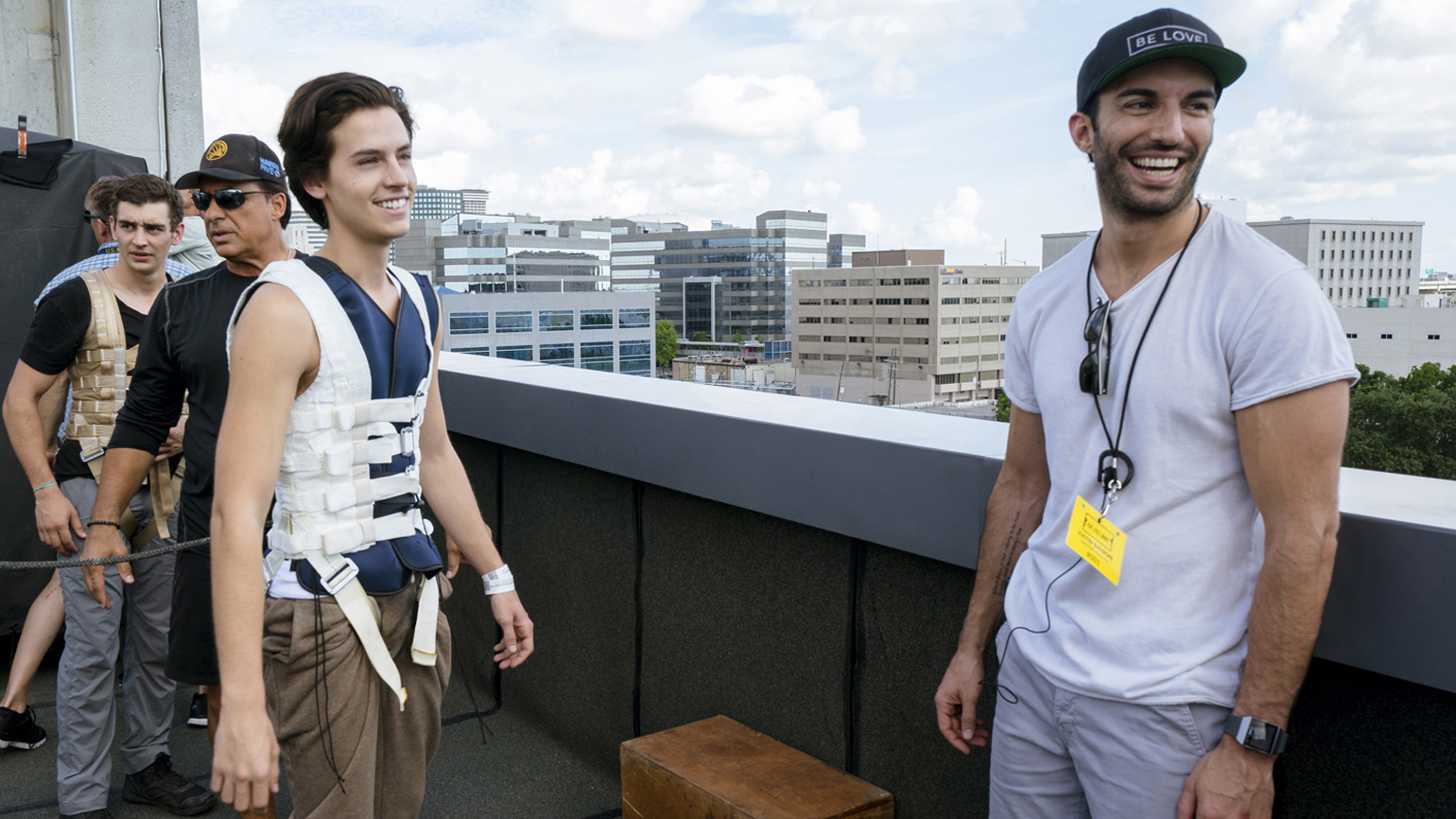
Seven years later, Baldoni is releasing his feature directorial debut, Five Feet Apart, about two teens (played by Haley Lu Richardson and Cole Sprouse) living with cystic fibrosis who meet in a hospital and fall in love despite the risks. For Baldoni, accurately portraying the disease was of prime importance. Wineland was a consultant on the film and a cystic fibrosis nurse was present on set.

“From the location of the scars, to the g-tube, to the ports, which most cystic fibrosis patients have never seen on screen before, it was so important for me to get it all right,” Baldoni said.

He also wanted to raise awareness of the disease.

“Only three percent of Americans even knew what [cystic fibrosis] was before we released the very first trailer,” Baldoni said. “I’m really proud to say that new numbers just came out, and we increased cystic fibrosis Google search queries by 110% in just the three-and-a-half months we’ve been promoting this movie.”

For Baldoni, the movie is about more than cystic fibrosis, though. It’s about what it means to be alive.

“It comes back to my faith,” Baldoni said. “This idea that we’re only here for a short time, and if we allow it in… the recognition of our mortality can actually be the thing that inspires us.”

He’s come a long way from the self-interested man he was in his twenties.

Wineland passed away in 2018, just before Baldoni completed the first cut of the movie. Five Feet Apart is dedicated to her. Baldoni hopes the movie inspires people to reach out to their loved ones—and to learn more about cystic fibrosis and consider donating to Wineland’s nonprofit Claire’s Place Foundation.

“I hope people walk away with a new sense of appreciation for their life,” Baldoni said. “I learned so much spending the last six years with people who have chronic and terminal illnesses. They’ve taught me how to live. They’ve taught me how to love.”

How Guideposts Readers Can Spread the Love

This morning was surprisingly cool for early August in the Berkshires, ideal for a hike in the hills before the workday began. I leashed up Gracie, filled our water bottle and headed for the nearby Appalachian Trail, hiking north towards Benedict Pond and Beartown State Forest.

Leashed because I don’t trust her. Not that she’ll run off but that she’ll find mud. I made that mistake last week and look what happened. (See Exhibit 1, right.) I had to take the rest of the day off just to get her clean. It wasn’t going to happen again.

The first mile or so is a slog, equivalent to climbing 50 flights of stairs according to my iPhone. Then the trail flattens out as it winds through the forest and runs along a farmer’s field. The cows weren’t out this morning for Gracie to bark hello to. We pressed on. We hit a patch where the air was scented by wildflowers and the birds were in full song. Yes, a God-given morning for sure.

Finally, we came to a section that had been washed out by last night’s thunderstorms. Mud. Stinky mud. Gracie stared longingly. “We’re turning around,” I said. I had to induce her with bits of dried bison treats.

On the way down we passed a young couple huffing and puffing their way up, loaded down with camping gear. I nodded. “You only have about a half mile to go,” I said. A second later the man turned around.

“Hey,” he said. “Are you that guy?”

I stopped. “What guy would that be?”

“You know, the guy in that little magazine.”

I’m rarely recognized, especially in the East, so this was a shock.

“You mean Guideposts?” I said.

“Yeah,” the woman said. “I recognize your dog. You’re even prettier in person!” (This was addressed to Gracie, not me.)

“You read the magazine?”

“Last night we pitched our tent on a platform at the shelter on East Mountain,” the woman said.

“I know it,” I said.

“Someone left some magazines in the hut, and we grabbed a couple to read in our tent. It was raining.”

“We’re not churchgoers or anything like that,” the man added, “but we enjoyed some of the stories.”

I smiled. “I always ask if there was one you especially liked,” I said.

“Yes,” said the woman. “The one by Michelle Williams about her depression. My sister has depression. I have that issue in my pack to give to her.”

“That’s great. You can always send her a link to the story from our site.”

“Maybe I’ll do that. Coverage isn’t great out here, though.”

With that they were on their way. “Watch out for the mud!” I called.

I imagine a lot of you are vacationing this month and bringing your Guideposts along. I know some readers like to save their issues but if you’re not one, why not leave your magazine behind? Maybe whoever picks it up might not be a churchgoer or anything like that but they may enjoy the stories. And that’s a start.

Do you leave your Guideposts where others can read them? Let me know by emailing me here. Safe travels!

How Ginger Zee Learned to Manage Her Depression

As a meteorologist on TV, I’ve covered every natural disaster from Katrina on. Hurricanes, floods, tornadoes, wildfires—I’ve reported on them all, and one thing I’ve seen firsthand is how people rebound, no matter the devastation. They take stock, draw on their faith, rebuild and grow because they’ve faced the worst. Often they are the first people to reach out and help when others are suffering.

In my own life, I’ve struggled with a different sort of natural disaster—devastating bouts of depression. The first struck when I was 22, a recent college grad looking for a job in television meteorology. I know now that transitions can be a trigger for major depression. Back then I couldn’t understand why I felt life wasn’t worth living. As if I were a prisoner in a strange dark room without even a hint of light.

Ginger Zee, ABC News chief meteorologist and TV personality--as seen on the cover of the April 2018 issue of GuidepostsFor a long time, I ran away from depression. I’d try to escape by throwing myself into a relationship with the wrong guy or telling myself that a few glasses of wine were all I needed to cheer up. I saw therapists, but they didn’t help much because I wasn’t willing to be completely honest with myself or them.

I’m a people pleaser, and it was as if I had to please even the therapists. I’d tell them what I thought they wanted to hear. I’m sure it looked like I was a big success as a broadcaster, going straight from college to one job after another, moving to bigger markets, from Grand Rapids to Chicago and now New York. ABC News had just hired me to be the weekend meteorologist on Good Morning America. It was all I’d dreamed of and prayed for, all that I’d worked so hard to achieve. Yet I felt empty inside.

Worse than that, I could feel myself plunging into that dark room I’d tried so hard to avoid. It had happened before. Things would be going well, and then the darkness would descend like a fast-rolling fog. I’d find myself trapped in a small, cold place with the blinds all the way down.

This time it hit me in a hotel room in Washington, D.C., where I had a meeting, when I was far from my family and friends in Michigan. I was in deep trouble, and I didn’t want to run away from it, not this time. There was too much at stake.

I called my mom back in Michigan and my cousin and, with their help, came up with a plan. I would check into a mental health hospital in New York for a weeklong, inpatient therapy program before I started my job at Good Morning America. I’d confront this monster once and for all.

Of course, the minute I checked in, I wanted to check myself out. I don’t belong here, I told myself. The other patients seemed really sick compared with me. They had serious mental illnesses, not my garden-variety depression. Some of these people, like my roommate, could barely speak. I wanted her to like me (I wanted everyone to like me), and she just ignored me, didn’t even say a word.

Then I had my first one-on-one session with my therapist, Dr. Wilson. He was clinical, matter-of-fact, not trying to be my parent or best friend. He wanted to get me out of this place, which I wanted too, and for the first time someone helped me connect the dots.

What was it about me that got me sucked into such emotional turmoil? Why did I feel that when anyone was angry or frustrated or sad, it was my fault and I needed to fix it? Why did I always end up going out with the wrong man while running away from men who weren’t natural disasters themselves? Therapists always make you talk about your childhood, and with Dr. Wilson I thought, Oh, here we go again. But he pushed me to untangle the feelings and needs buried deep inside me, and I came to a profound understanding I’d never had before.

My father and mother are wonderful people, and I’ve always felt loved by them, but their marriage didn’t work out. They got divorced when my brother and I were young, and both remarried. He and I spent most of our childhood bouncing from one household to the other with stepparents and half brothers and sisters added to the mix—no wonder I felt compelled to change apartments four times in the five years I lived in Chicago. Chaos felt normal.

The one source of stability was my father’s mother, Hilda Zuidgeest. My Oma (Dutch for “grandmother”). She and my grandfather had emigrated from Holland in the 1950s, after enduring the brutal Nazi occupation during WWII. What she suffered was horrendous, much of which she never talked about, yet she and my grandfather had come through the experience somehow stronger (like I said, I’ve seen this time and again with people who have suffered terrible loss).

She had a thick accent and a great sense of humor. “If you’re not Dutch, you’re not much,” she’d say with a smile. We went to her house for Sunday dinner. She would say grace, thanking God for the good food and our family. She usually put in a joke that made us chuckle, then we would eat. Roast chicken, mashed potatoes, cauliflower with cheese, salad, crepes, an apple pie that she got at the diner where she bused tables, all served on blue-and-white Dutch plates in her dining room with blue-and-white curtains, the cuckoo clock on the wall singing out the hours.

She was tall, strong, with curly white hair and a taste for craft-show sweatshirts with colorful appliqués. Most of all she was honest—intensely honest—with others, with herself, with me.

In my early twenties, I was engaged to a guy I knew I shouldn’t marry. I tried to stop the wedding once. I’d put all the stamped and addressed invitations in the mail, only to go back to the mailbox hours later and plead with the postman to let me have them back—God bless him, he did. Then my fiancé urged me to reconsider. I agreed to go ahead with the wedding, mostly because I didn’t want to hurt his feelings.

Three weeks before the wedding, Oma and I went cherry picking. We were going to use the cherries to make jam as favors for a wedding that I knew shouldn’t happen.

After an hour, Oma grabbed my basket with her weathered hands. “Let’s rest for a moment,” she said. We paused, then she looked at me, her blue eyes piercing. “If you don’t want to get married, you don’t have to,” she said.

Long past when any guests could fully refund their airfare or the bridesmaids could cancel their dresses or we could get the caterer’s deposit back, Oma spoke the truth. And that allowed me to recognize it. As much pain as it would cause others—I still can’t bear to recount the tearful conversation I had with my soon-to-be ex-fiancé—it was more important to be honest.

This was the message that Dr. Wilson tried to convey to me in the intense sessions that we had. Finally I understood. I would never get myself out of that dark, gloomy room of depression if I kept running away from any possible conflict, if I didn’t separate other people’s feelings from my own, if I insisted on pleasing others without paying attention to how I felt.

By the time I finished that inpatient hospital stay and started my new job at Good Morning America, I was a different person. There was a lot more work to do, and I met regularly with Dr. Wilson, learning how to look more deeply at my inner life, how to track emotional storms as closely as I did meteorological storms, how to be likable by liking myself first, following the Golden Rule, to love your neighbor as yourself.

Finally when the right man came around, I was ready—okay, I got scared off a couple times because Ben was so easygoing and joyful and loving and not given to chaos of any kind. We married in June 2014. We had our first child, our son Adrian, named for my Dutch grandfather, in December 2015. When he put his cheek against mine for the first time in the delivery room, I felt this deep and instant love.

One thing I want to do for Adrian and his baby brother is re-create those Sunday dinners at Oma’s. Not just the food—although I wish I could make those crepes like Oma did!—but the warmth, the trust, the dependability, the good humor and the gratitude in everything she said, everything she did.

https://d2zfkpu1r6ym98.cloudfront.net/sites/guideposts.org/files/ginger_zee_embed2.jpgOma is no longer with us, but every evening I do something that I think she would understand. I make a list in my head of all the things that I’m grateful for. If there was a dark note in the day, I pay attention to it. If I’m angry or upset or frustrated in some way, I try to articulate why.

And when someone attacks me on social media, telling me how lame a segment was or how awful my clothes were or how ugly my hair is, I make a point of saying, “I’m sorry that’s how you feel….” I want to let that person know I value their opinion even if I don’t agree with it. And as Dr. Wilson taught me, I don’t absorb all their negativity.

Depression is different for everyone. Some people require more extensive therapy or hospitalization or medication. Some slip into dark places where they are tough to reach. What I appreciate about my journey of depression is that it has made me stronger, more compassionate, more understanding.

That’s what I want to tell anyone who has weathered one of life’s storms. You can get through it and become a better person. Those natural disasters have purpose, and with hard work—emotionally and spiritually—you can find gratitude in each of them. The clouds don’t last forever. They can’t and they won’t. That’s just how the atmosphere—and life—works.

For more inspiring stories, subscribe to Guideposts magazine.

The cover of Natural Disaster by Ginger Zee

Ginger Zee is the author of Natural
Disaster: I Cover Them, I Am One
,
available in bookstores everywhere.

How Gary LeVox Learned to Live on Faith

A faint glow appeared on the dark horizon.

Nashville was close, I could feel it. Goosebumps ran up and down my arms.

I’d made this six-hour drive down I-71 from Columbus, Ohio, so many weekends to sing at karaoke bars with my cousin Jay, who lived in a tiny one-bedroom not far from Music Row.

But this time was different. I was moving to Nashville for good. Every time my truck hit a bump, I heard everything I owned rattle in the back, reminding me of what a huge leap I’d made. The biggest of my life.

I was 27, and knew success in Music City was a long shot. I left behind a job I’d had for 10 years, a job I loved, training the developmentally disabled to work and live independently. Now, nearing that distant glow, I thought about the clients I’d left.

My eyes still felt wet from the tears I’d shared with Ruth, whom I’d worked with for seven years. She’ll be okay. But will she ever understand how much she meant to me?

Music was big in my family. My grandfather taught me to sing my first song when I was seven, “Old Rugged Cross.” I recorded it on a little tape recorder, my high, quiet voice struggling to be heard over my grandfather’s guitar.

I got my first electric guitar for Christmas that year, and learned to play by watching my dad and my grandfather.

The first time I sang in public I was nine, in the Christmas pageant at church. Over the years, my little voice got big. I never took lessons; it was a gift from God. One that I wanted more and more to use.

By high school I knew I wanted to be a singer. Guitar strings and tapes weren’t free, though. Mom suggested I take a summer job where she worked, at the Ohio Department of Mental Retardation. My mom, grandmother and Jay’s mom had all worked there for decades.

“Follow me around, see how you like it,” Mom said.

That first day I watched Mom guide a man down a hallway, pushing a vacuum. She was training him for a janitorial job, but he kept missing spots. They repeated the hallway over and over. He’ll never get this right, I thought. How does Mom do it? But they kept at it.

Finally, at the end of the day, he cleaned the entire floor by himself. He was beaming. He hugged me, hugged Mom. I couldn’t help but smile, his joy was contagious.

I wasn’t finding much to smile about in music. After a stint in college, I played clubs around Columbus, but couldn’t make a living. I was frustrated.

In the meantime, I got a job doing what I’d watched Mom do so well. I trained seven to eight people a day, breaking down, step by step, each part of having a job: punching a time card, packing a lunch, basic conversation.

One of my clients got so nervous in front of people he couldn’t fill up a bottle of cleaning fluid without spilling it. But every day he tried harder. He didn’t let the small stuff get him down.

I didn’t stop dreaming about a music career, but I could see why Mom liked this job. The people are inspiring.

One day I was at the training center when a group of clients came back from the Special Olympics. I was about to turn back to what I was doing. But then I saw my client–the one who’d made all those spills.

That can’t be… He was proudly displaying a medal he’d won racing in front of a stadium full of strangers.

Wow. He’d put aside his fears. Just because he had challenges didn’t mean he would give up. That took a kind of faith I’d never seen before. He took a risk each day, hopeful he’d succeed. I was happy my client had done it. I longed to draw on that kind of courage myself.

At the end of my shift on Fridays, I’d drive to Jay’s place in Nashville. We wrote songs all night and performed them the next day. Often we played to empty rooms.

But one night at a popular karaoke bar, Lonnie’s Western Room in Printers Alley, the crowd was feeling it. I got the loudest applause. It felt good.

A guy in a cowboy hat approached. He offered a weekday gig at his guitar bar down the street. “I’d love to,” I said, “but I don’t live here.”

Jay shook his head at me on our way back to his place. “You have a gift, Gary. Can’t you tell God wants you to use it? You have to move down here.” Yeah, right. Jay had more talent than most, and he’d gotten a few gigs. But he wasn’t making much money at it. Besides, I was helping people.

I left Jay’s place headed back to Ohio, watching the lights of Nashville fade in my rearview mirror. Man, that stage felt good, I thought. Not just the energy from the crowd. It felt like I was in the right place.

Should I turn around? I shook it off. In Ohio I could see success in every person I helped. Who knew what I’d find in Nashville? I prayed for God to lead me.

I was being silly, I figured. God wanted me in Ohio. My clients needed me. Like Ruth. I had been her trainer, helping her be a greeter at Walmart. The first time I met her, she was too shy to even look up at me. Her confidence was shot. She even told me she’d never have anyone fall in love with her.

Over the years, though, I saw her become more comfortable in her own skin. That’s what’s important, not some impossible dream.

One day I met with Ruth, but she seemed distracted, staring off into space. “Is something wrong, Ruth?” I asked. She just shook her head. Was her confidence taking a nosedive again? “See ya tomorrow,” I said at the end of the day, but she darted out without a goodbye. I hoped she was okay.

A few days later, though, she practically bounced into the room. “What’s up, Ruth?” I asked.

“I have a boyfriend!” she shouted gleefully. That was why she’d seemed distracted the other day–it was the day she’d finally had the courage to talk to one of her coworkers, another of our clients. Yesterday he’d asked her out. Way to go, Ruth! I almost shouted.

This wasn’t just about getting a job, I realized. Being a janitor or a greeter–that’s not where my clients’ joy came from. A job was the first step toward living life like anybody else–that was Ruth’s dream. She’d taken a leap, and it paid off.

Seeing her so happy, I felt that pull again, the pull I’d tried to ignore for too long. How many of my clients had I seen get jobs, even when no one thought they could? Every day they put themselves out there, facing obstacles far greater than any I’d ever face.

They’re living their dreams. Is it time to start living mine? Maybe I was at this job for a reason, but not the reason I thought.

I wrestled with my decision for weeks. Telling Jay was easy. He was excited I’d decided to move in with him. I gave my two weeks notice, but telling my clients was the hardest. Finally came the day I knew I couldn’t just say, “See ya tomorrow.” I sat down with Ruth and told her I was leaving.

“When are you coming back?” she asked me.

“I don’t know,” I said. She cried, and I cried too. They were more than clients, I realized. They were friends. I was going to miss them all. “I couldn’t do this if it wasn’t for you,” I told Ruth.

Now, driving to Nashville at last with everything I owned in the back of my truck, I felt a feeling I hadn’t known before. I stopped feeling the bumps of the road as that glow on the dark horizon became speckled with the lights of the city.

The Grand Ole Opry, the Country Music Hall of Fame. I could picture them so clearly. This is where I’m going to make it, I thought. I was finally living on faith, like I’d seen my clients do. I felt like my prayers had been answered.

It was slow going in Nashville at first. We played in places so small, Jay had to set up his keyboard next to the cigarette machine. One night we played from 9 to 3 and left with 27 cents in the tip jar.

I worked two jobs to pay the rent, building swimming pools by day, delivering newspapers after our gigs. Jay and I lived off ramen noodles and peanut butter and jelly sandwiches–minus the jelly.

But my clients back in Ohio stayed in my heart and my mind. Slowly but surely, our shows got a following. One night our guitarist couldn’t make it, and Jay’s friend Joe Don joined in.

By the time we reached the chorus of our first song, “The Church on Cumberland Road,” I knew we had something special.

When we signed our record deal I finally got to feel the joy that my clients felt. I couldn’t have done it without them. I’d spent so much time teaching them how to fulfill their dreams, I hadn’t realized what they were teaching me.

Ruth showed me that sometimes it takes a leap of faith to get where you’re supposed to be.

Download your FREE ebook, The Power of Hope: 7 Inspirational Stories of People Rediscovering Faith, Hope and Love


How Faith and His Best Friend Helped This Husband in His Caregiving Journey

When his wife, Nicole, was diagnosed with terminal ovarian cancer, Matthew Teague knew he couldn’t handle it all alone. Hospital visits, treatments, medications; Nicole would need consistent support. Plus, they had two young daughters to care for. How could Matthew do it all? Enter Dane Faucheux, a close friend of the couple since their college days.

After Nicole was diagnosed in 2013, Dane left his home in New Orleans to move in with the Teague family in Fairhope, Alabama. He stayed for more than a year.

Matthew Teague, played by Casey Affleck in Our Friend; photo by Daymon Gardner
Matthew Teague, played by Casey Affleck
in Our Friend; photo by Daymon Gardner

Matthew shared the details of their harrowing journey in a 2015 Esquire article which details the incredible sacrifices Dane made to help see them all through this tragic time.

“The medicine was a full-time job,” Matthew said in a recent interview. “The changing of IV bags, administering of pills… For months I didn’t sleep more than 15 minutes at a time. I was lapsing on things, like making sure my kids were brushing their teeth. Dane took that on.”

Dane came along on hospital visits, stayed with their daughters during the late-night hospital trips, did the cleaning, cooking, laundry, and grocery shopping. He was also there for Matthew. Dane would remind him to sleep or to eat and at one point even arranged a hiking trip for the two of them so Matthew wouldn’t burn out.

“Cancer has a way of stripping away your illusions about your abilities and your dignity,” says Matthew. “You are left with nothing but a request for help.”

Not only did Dane help—he went above and beyond. He left his life in New Orleans — his home, his job, his girlfriend, his friends—to help Matthew with the overwhelming tasks of caregiving. And he did it without being asked.

“What Dane did was selfless,” says Matthew. “It gets to the heart of the Christian story. An act of great sacrificial love.”

Yet even Dane couldn’t stop Nicole’s steady decline. No matter how many meals he prepared or late-night talks he engaged in, he couldn’t stop Matthew from losing his wife. In the face of Nicole’s passing, Matthew needed to turn to something else: his faith.

“When I think of my faith, I think about when my daughters were small and when I held them, how they would throw themselves around carelessly, knowing that I had them,” says Matthew. “But when there was a loud noise, they would grip onto me. During that time, I held onto God in that same desperate way.”

In the time before and after Nicole’s death, Matthew studied theology to better understand what his faith could teach him about this experience. In many ways, it was his only lifeline. And it offered something that can be scarce when a loved one has a terminal illness. Hope.

“Without faith, there would only be the prospect of oblivion,” he says. “Through faith, my girls and I have the hope of something on the other side. We have the certainty that their mom is in a place of great joy. Our faith was essential to our survival.”

The trio’s story gets to the heart of what it means to love someone and how faith in each other and God can carry people through even the most difficult times. For Matthew, none of it would have been possible without Dane.

“Every story needs a hero,” he says. “Dane is my hero. He just also happens to be my best friend.”

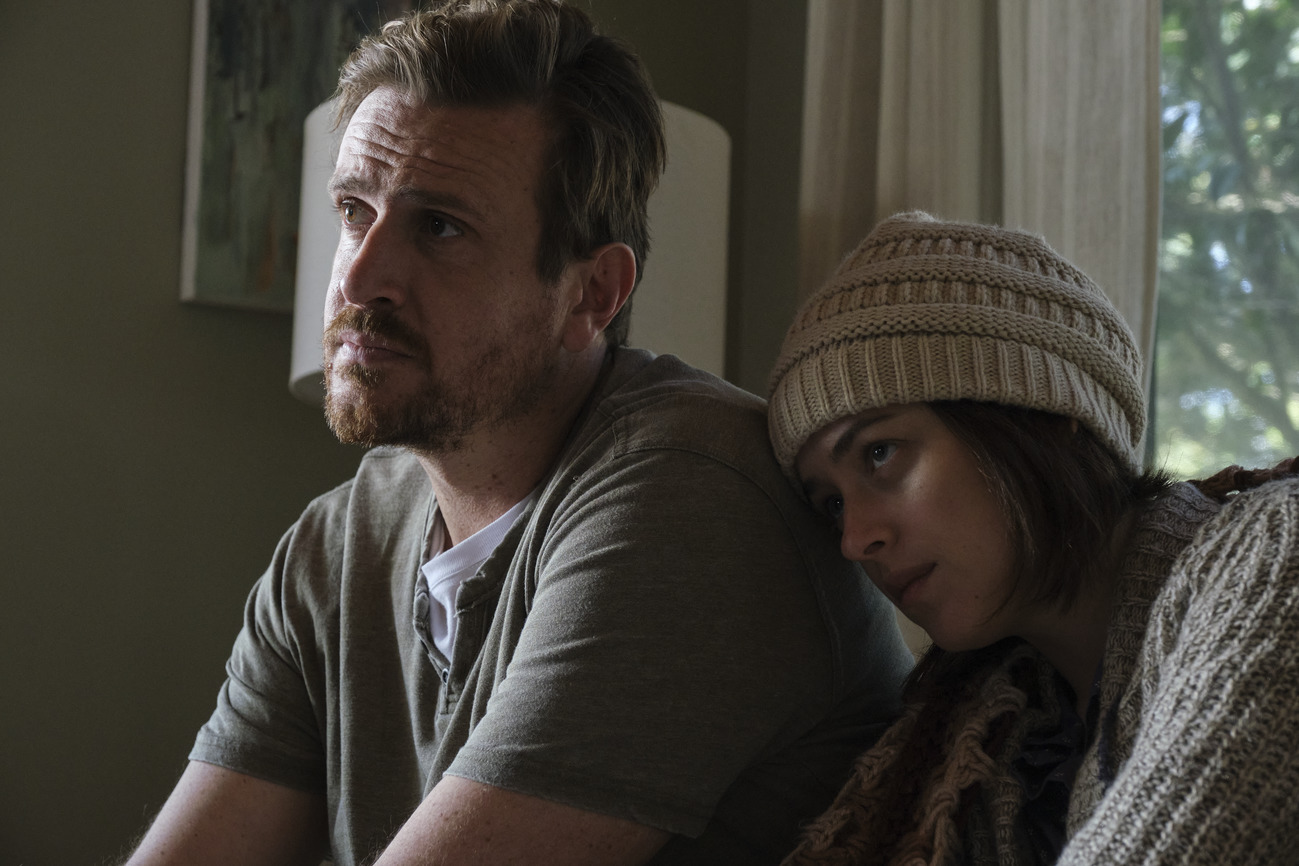
Since Nicole’s passing in 2014, Dane has returned to New Orleans and Matthew has been working on the movie about their incredible story. The two are close friends to this day. Our Friend, which opened in January, stars Casey Affleck as Matthew, Jason Segel as Dane, and Dakota Johnson as Nicole.

How Comedian Chonda Pierce Is Using Laughter to Heal

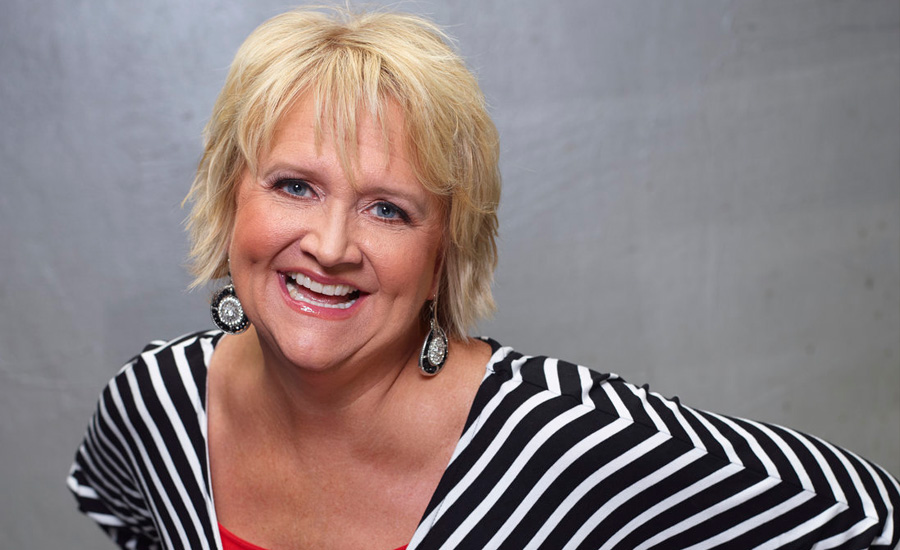
Comedian Chonda Pierce lives for making others laugh.

The five-time Emmy-nominated performer known for her fierce wit, southern charm and Christian values has spent over two decades on stage, poking fun at herself and connecting with her fans. It came as a surprise then when the star’s heart-breaking documentary Chonda Pierce: Laughing in the Dark released late last year.

A deeply personal, moving look at tragedy, mental illness and the resilience of the human spirit, Pierce’s film followed her family as they dealt with the death of the comedian’s mother, a painful separation with one of her children and the loss of her husband all over the course of three years.

READ MORE: THE POWER OF PRAYER DOODLES

“I would have much rather have had a better documentary, a happily ever after,” Pierce tells Guideposts.org of the film.

Still, she chose to put her life in front of the camera because she hoped her experiences might inform others.

“When we sat down in the editing room, what we had was a story of survival and hanging on to your faith when it is the most difficult,” Pierce explains. “It was just apparent that it could be helpful for people going through so many different types of drama.”

For Pierce, drama has never been in short supply.

Raised in South Carolina with a preacher for a father, the comedian remembers her mother dragging her to community theater as a young girl.

“She just knew I was always such a little ham,” Pierce jokes.

In college, while other girls were auditioning for leading roles and love interests, Pierce only had one goal: to make the crowd laugh. She got a job at a theme park called Opryland U.S.A. impersonating comedy legend Minnie Pearl. If there was ever a doubt that comedy could be a career, it was erased during those six years on stage.

“I always say comedy sort of found me,” Pierce says. “I just fell in love with hearing people chuckle. I fell in love with the healing that it was for me and my life.”

For the comedian, laughter has been the greatest medicine. When she was diagnosed with depression she decided to share that battle on stage by being completely honest about her own experience with the disease.

“My deep depression never showed up until much later in life,” Pierce says, explaining how menopause and some issues from her childhood may have contributed to that initial downward spiral.

READ MORE: STARTING OVER AFTER LOSING THE LOVE OF YOUR LIFE

She went to rehab which armed her with a set of tools she uses to this day.

“Find a doctor that understands these things,” Pierce advises anyone else suffering. “Find a great counselor. Keep moving and keep making an effort to feel normal. God gave every one of our systems in our body finite, incredible ways to work and when one of them breaks down your body will let you know. Pay attention to what your body is saying.”

She also wants to help erase the stigma that surrounds depression.

“People won’t get help because they don’t want to be told they’re crazy,” the comedian says. “Well I always tell people ‘The whole stinking world is crazy, so join the club.’”

Her journey with the disease has been so life-changing that the comedian and her brother started the Branches Recovery Center, which offers counseling and treatment to those with depression, anxiety and addiction, regardless of their ability to pay.

“Being from a middle class family, it was all we could do to cut and scrimp to get that bill paid,” Pierce says of how expensive her own treatment was. “So we said let’s find a place and hire some incredible people and begin to pray that God will send us a way to provide for the people that need this that can’t pay.”

The center may be Pierce’s proudest achievement.

“You always wonder what your legacy is going to be,” she explains. “My brother and I have things that we’re so blessed to see God remedied from such a dysfunctional childhood and that’s one of them.”

Still, she views the work she does on-stage as the greatest way she can help others heal. Her latest project – a three part one-hour series called Stand-Up for Families airing on the Dove Channel — is one aimed at bringing the home back together.

The comedian has paired up with other performers known for their dedication to “keeping it clean” in order to bring a show to TV that will have kids and their parents rolling on the floor.

“We [wanted] everybody [to] share the couch and be together,” the comedian explains.

Whether it’s baring her soul on stage, helping others heal from illness or just providing an hours-worth of laughs for families on TV, Pierce is grateful God’s given her a job that brings others joy.

“I think that comedy is such a tool to open the heart, to loosen up the muscles, to loosen up the brain,” the comedian says. “I love that my job works at letting the walls down so that before I leave the stage we can leave people with something pertinent, something more than just a laugh. God knew how important it would be to laugh because he said it is a great medicine and when used properly, it is the greatest of medicines.”

Chonda Pierce Presents: Stand Up for Families airs May 3 on the Dove Channel.

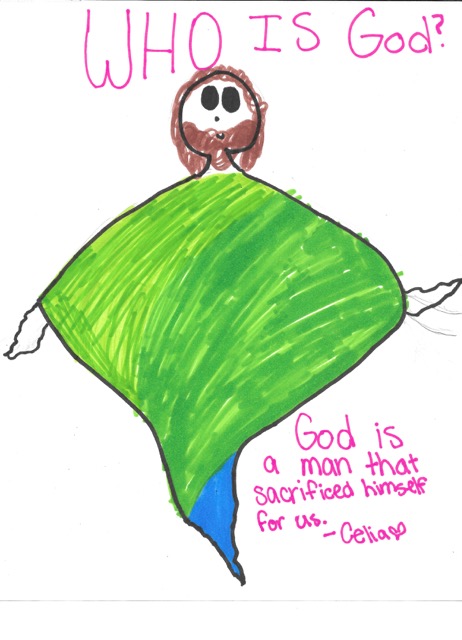
How Children See God

Monica Parker’s new book, OMG! How Children See God, features surprising, delightful and inspiring drawings from kids.

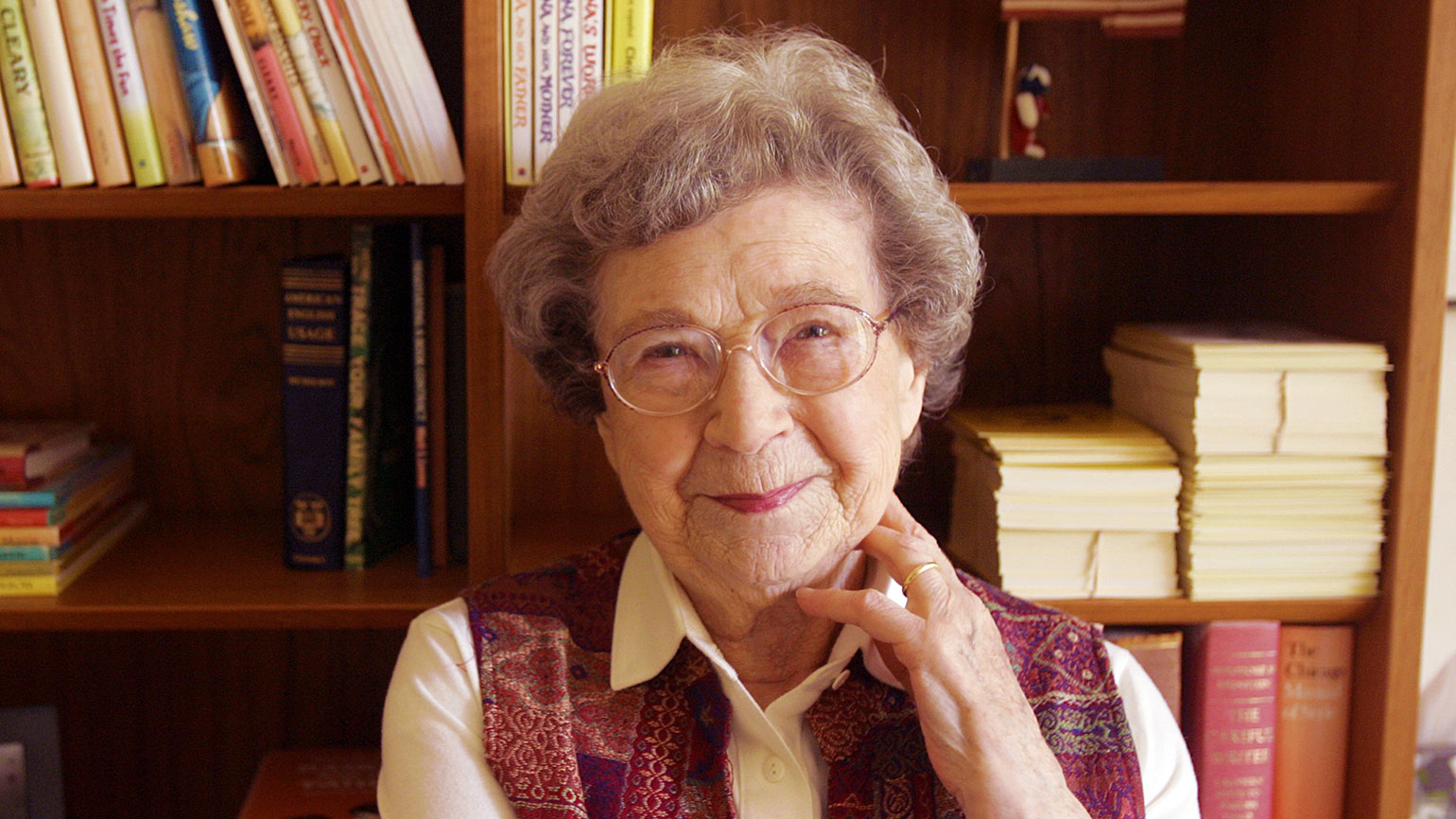
How Beloved Children’s Book Author Beverly Cleary Inspired This Writer

To the untrained eye, a pingpong ball is just a pingpong ball. To a Beverly Cleary fan, it’s two motorcycle helmets for mice. Just cut apart and add rubber band chin straps.

Ever since I read Cleary’s series about Ralph, the motorcycle-riding mouse, I’ve never looked at a pingpong ball—or the world—the same way. Amazing to think that it’s been more than forty years since I checked out The Mouse and the Motorcycle from my school library in Northport, Alabama, and yet that one particular image is as clear to me as ever.

And why shouldn’t it be? It’s perfect.

Oh, how I wanted a mouse of my own to ride a toy motorcycle around my house! Thanks to Cleary’s genius, a talking rodent friend seemed not only possible but probable.

Cleary, who passed away last week at 104, was one of the main reasons I became a children’s author.

While much of children’s literature attempted to explain the world from the point of view of a wise and gentle adult, Cleary created protagonists who saw the world as only children can. I devoured every title that bore Beverly Cleary’s name. She seemed like a friend who understood me in ways I didn’t yet understand myself.

Ginger's grade school -project
From Ginger’s grade school project on her favorite
authors, circa 1978.

I’ve written eight children’s books and have always kept Beverly’s sense of wonder in mind. I didn’t realize it at the time, but my own character, 10-year-old Aleca Zamm, would decades later be cut from Cleary’s most popular character—Ramona Quimby’s—cloth: curious, spunky, and the center of all manner of misadventures.

I don’t remember at exactly what age I decided I wanted to write books, but I know that by second or third grade, my teacher assigned a project that allowed us to focus on whatever we wanted. My best friend picked dolphins; I chose children’s authors, with a large chunk of my project being about who else? Beverly Cleary!

I told that story recently to a school group. One of the students said, “That’s amazing! You did your project on children’s authors and then you became one!”

“Yes,” I said. “And even more amazing, my best friend who did her project on dolphins—became a dolphin!”

Really?” the students gasped.

And that perfectly sums up why I love writing for children: the lack of cynicism, the belief that fantastic, magical things can happen. Best friends can become dolphins; mice can ride toy motorcycles and become our friends.

That’s what Beverly Cleary taught me. In the hands of a gifted storyteller, anything is possible… and so very funny.

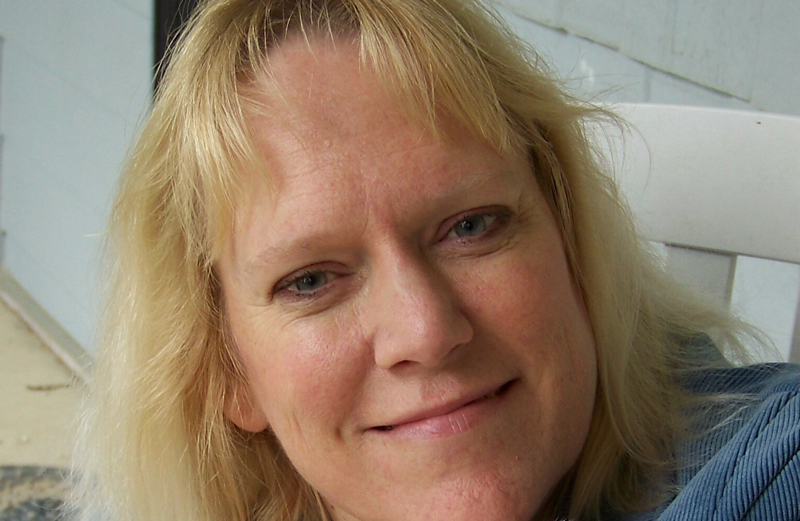
Ginger Rue’s latest book is nonfiction, Wonder Women of Science, co-authored with rocket scientist Tiera Fletcher, and profiles today’s most outstanding women in STEM fields. You can visit Ginger at www.gingerruebooks.com.

How Baseball and Prayer Brought Her Comfort

Riley is the author of Disappearing Actspart of the Secrets of Mary’s Bookshop series from Guideposts Books.

When I was a child, I looked forward to summer all year. Even now, when warm weather rolls around, anticipation blooms right along with the garden. Maybe it’s because my childhood consisted of two distinct worlds.

My parents divorced when I was very young and my brother, sister and I spent the school years with my mom near Boston and the summers with my dad in California. My faith helped me through the difficulties of being in a split family. An energetic church youth group and a great Christian school kept me busy and happy during most of the year, but my dad was never far from my thoughts.  Praying for him in my nightly prayers brought me comfort until I could see him again.

My father was a very busy physician, but while we were living with him, he put in as much time as he could with us.  One of my fondest memories is going to baseball games at Dodger Stadium.  Now, I wouldn’t classify myself as an avid sports fan. But attending a live game at the stadium is a different matter, and going with my dad was an adventure.

Where else could you yell at the top of your lungs for the home team and drop peanut shells at your feet? Most of all I loved being with my family. My dad would teach us about baseball stats and strategies of the game.  I realize now that like a baseball team, the more time we spent together, the stronger and closer we became.

I was blessed to be able to relive some of those special moments while writing Disappearing Acts. Mary Fisher and her sister Betty also have happy childhood memories of their summers, spending time on Cape Cod with their grandparents and attending local baseball games. Later they created similar happy times with their own families.

It’s no wonder, then, that when a treasured autographed baseball belonging to Mary’s late husband disappears under mysterious circumstances, she won’t rest until it’s found. I can understand how Mary feels: I still have one of the warm, fuzzy blankets that we’d take along to the stadium just in case the air turned chilly. It’s one of my favorite mementos and I’d hate to lose it. Every time I wrap up in it, I think of my dad and those wonderful summer evenings.

I will never forget those special times. Like with Mary, the shout of “Play ball!,” the crack of the bat and the cheering crowd will forever symbolize those times where ties of family love were strengthened.  Now that I have children of my own, I thank God for the lessons he taught me to never take my family for granted and to cherish every moment with them.

How a House-Building Mission Trip in India Changed His Life

This writer takes a mission trip to Trivandrum — a gorgeous, rural section of Kerala in the southern west tip of India—to build concrete houses for families in need. In this life-changing experience, he learned how to build a house on the job and more about the Kerala culture. He even met sacred cows that live off the lush vegetation. Enjoy his experience through pictures.

How a Divinely Timed Song Became an Anthem During the Pandemic

Since releasing her debut album in 2009, Christian singer and songwriter Kari Jobe has sold more than 1.4 million albums, been nominated for a Grammy Award and brought home multiple Dove awards. She has more than one billion career streams. Originally from Texas, Jobe now lives in Nashville, and tours the country with her husband, fellow Christian Music singer Cody Carnes, and their two young sons.

Jobe was getting ready to release a new album when the coronavirus pandemic hit the country and delayed those plans. But in early March, the couple, together with the band Elevation Worship, did manage to release a song, “The Blessing,” which quickly skyrocketed to the top of the charts. Says Jobe: “For this song to be an anthem in this season, keeping people connected and unified… I’ve been very moved.”

When did you decide to become a worship singer?

I grew up in a Christian home. My parents were in ministry and I spent so much of my time at church. It was all I knew and I loved it—I loved worship and music. When I was 10 years old, I was sitting in the back of my parent’s van and a song I loved came on; I had this revelation that people can use music to say things to God. That a song can be a prayer. I remember whispering to God that one day I wanted to write music that helped people pray.

Years later, when I was preparing to go off to college, I remembered that powerful moment and that prayer. I decided to pursue songwriting and worship. Now, I’ve been doing it for over 20 years.

You wrote “The Blessing” with your husband and members of the Elevation Worship Band. What inspired you?

We [Cody Carnes, Steven Furtick, Chris Brown, and myself] wrote the song in late February 2020. For us, this song came from the things we’d heard all our lives in the church, specifically a section of [The Book of] Numbers 6, which says “The Lord bless you and keep you…” This is an age-old blessing from God over the people. This song came out of our desire to write about this passage.

As we wrote the first verse, the bridge just started to happen, and we wrote about some of God’s blessings. And the truths we said just became lyrics. Sometimes, I almost felt like we didn’t write it. I felt like we were just a part of it [being written].

This divinely inspired song also had some divine timing as well, didn’t it?

We felt this song was special and that we needed to get it out quickly, but we didn’t understand why. It’s hard to get something like this out fast, but we worked hard and released the song on March 6th on YouTube. The following Friday, the pandemic [shutdown] hit America. Then we understood why we felt so compelled to get it out.

And now at the end of October that YouTube video has more than 32 million views! What a reception!

Oh man, it’s been so wild! Just the beauty of people sharing it and talking about it. People have even been redoing it in other countries, like the U.K., India, and South Africa. It’s been very sweet and honoring.

What kind of impact have you seen the song make?

One memory really stands out. During the early days of Covid, I went on a Dallas radio station that had a connection with a local hospital. They played the song for the people over the hospital intercom while we stood outside praying. We lifted our hands and asked God to bless the people inside. And the people inside—patients and workers— stood in the windows and shined flashlights out to let us know they were there and listening. It was a very tangible moment of people connecting during that time.

Has this song personally comforted you during the pandemic? Has it impacted your faith?

Absolutely. In my toughest moments during this, when I’m tired or sad or anxious, I’ve whispered the words to myself. I’ve used it as a prayer. I’ve sung it while rocking my baby son to sleep. Even when I don’t feel it, this song has reminded me that God is there for me.

As a mom to two young children, I sometimes don’t feel very aware of what’s happening in the world, but I’m seeing it so much more now. When I turn on my social media or look at my phone, I’m seeing other people’s stories. It has been a gift to help me get outside of my own head and learn what other people are going through. We are all in this together and it’s going to be alright.

What has this song taught you about the concept of blessings, particularly in a Covid world?

I’m learning that declaring blessings over ourselves doesn’t always have a quick return. It’s sowing seeds in our spirit and we must trust and believe in faith. And only then will we begin to see what happens. Blessings are a spiritual interaction with God.

It’s been a hard year for everyone. I think the hardest part has been having to trust God in the midst of so many unknowns. But He is still so present. Even when He’s giving grace for people to walk through seasons of loss or isolation. The blessings of God apply to us all.

What are the most compelling lines of this song to your personally?

There’s a line in the song that goes, “In your weeping, and rejoicing, He is for you.” This line applies to so many areas of my heart. It means that we have seasons of weeping or seasons of joy, but God is still with us. We wanted to write a song around all the blessings we believed and prayed over ourselves. We just didn’t know that we’d need all those [blessings] all at once and all of a sudden [with Covid].

Are there any other songs on your recently released album, The Blessing, that have been especially impactful for you?

What’s interesting is none of the songs [on this album] were written during Covid. “The Blessing” was the final song for the album. We wrote some of these other songs about two years before. God went before me even in that aspect.

The song “Your Nature” talks about bringing life to a barren place, bringing life to the darkest spaces. I had no idea how applicable that would be now. Even just 7-8 months into… [Covid], you feel like this is going to be our lives now. How will we come back from this? That’s what this song is about.

Another song, “Rest”, focuses on sitting back and not striving to figure everything out. The chorus of that song says, “So I rest here with you.” I even give space in the song for the listener to rest. It makes you take a moment to rest and reflect on God’s goodness and realize that He’s got it.