Embrace God's truth with our new book, The Lies that Bind

Horehound Candy

A piece of horehound candy is like a trip back in time.

Ingredients

3 qt. of water 1 t. lemon juice
¼ c. dried horehound steams, leaves and flowers. 1 t. of butter
3 c. brown sugar Superfine sugar to roll candy in
1 t. cream of tartar

Preparation

1. Bring water to a boil and remove from the heat.

2. Add the horehound and let it steep for 30 minutes.

3. Strain and let settle.

4. Pour 2 ½ c. of liquid into a heavy saucepan

5. Add brown sugar, cream of tarter and lemon juice and bring to a boil.

6. When liquid reaches 240 degrees, add butter.

7. Continue to boil without stirring until mixture reaches 312 degrees. Remove from heat and pour mixture into a shallow buttered pan.

8. Let cool enough to roll into small pieces; roll pieces in superfine sugar.

8. When cool, wrap individual pieces in wax paper, so they don’t stick together.

Makes 50 pieces.

Nutritional Information (per piece): Calories: 50; Fat: 0g; Cholesterol: 0mg; Sodium: 0mg; Total Carbohydrates: 14g; Dietary Fiber: 0g; Sugars: 14g; Protein: 0g.

Don’t miss Douglas’s inspiring story about having his young eyes opened by an elderly neighbor.

Download your FREE ebook, The Power of Hope: 7 Inspirational Stories of People Rediscovering Faith, Hope and Love.

Hope Haven

Upon starting at GuidepostsBooks last year, my first task was spearheading the development of our newest original fiction series, Stories from Hope Haven, which follows the lives and families of four very special nurses in the fictional small town of Deerford, Illinois.

At that time, the prospect of holding the finished product in my hands seemed so far away. Yet here I am today, less than a year later, able to flip through the pages of book one, The Best Medicine by Anne Marie Rodgers.

Holding the first copy of a book has to be one of the greatest joys for an editor. The long hours the author spent writing and revising, the long hours I spent reading and rereading, the long hours our production team spent copyediting and proofing resulted in something we can all be very proud of.

I’m not a mother yet, but I imagine there are parallels between raising a child and fostering a project from infancy, sending it off into the world, and praying people will come to love this “baby” as much as we do. Just picture the author, editor, and production team standing on a porch, clutching tissues, waving to the book as it takes one last look back before heading to its new life in the real world. That’s where we stand now, on the porch waving to Stories from Hope Haven, praying we’ve done everything we could to prepare it for success.

As with GUIDEPOSTS’ other fiction series, we have several authors writing for the same series here. It has been fascinating watching the talented authors of Hope Haven collaborate. Each author has brought boundless creativity and enthusiasm to the table. They’ve taken what was a blurb of an idea and crafted a fully textured world filled with genuine and warm characters. The four nurses are particularly endearing: there’s Candace Crenshaw, a young widow trying to heal her broken heart, Anabelle Scott, the wise older nurse coping with her newfound empty nest, Elena Rodriguez, who recently returned to the church which causes tension with her husband, and James Bell, whose wife struggles with multiple sclerosis.

I don’t want to gush too much in front of my other books (of course I love all of my projects equally…), but Stories from Hope Haven is truly wonderful, filled with so much heart, tenderness and emotion. We hope you enjoy.

Lindsay Guzzardo
Editor
GuidepostsBooks

—–

Buy Stories from Hope Haven!

Check out the latest titles from GuidepostsBooks in our shop!

Hope for a Homer

I’m an outfielder for the New York Yankees, and I can do a lot of things to help my team win a ball game.

I’m blessed with great speed—I leg out bunts, steal bases and stretch singles into doubles. I’ve learned to be a disciplined hitter—I draw walks and I get on base. I’m pretty good with the glove too—I get to a lot of balls because of my speed.

What I definitely am not blessed with is power. I’m no slugger. One look at me and you’ll know why.

The official Yankees’ guide lists me as 5’ 10,” 185 pounds, but that’s generous. When I walked to the plate the night of May 15, 2009, I had one career home run to my credit. And I didn’t have much of a prayer of hitting another.

Then again, prayer had already been a big part of my day. That morning I’d visited kids at New York-Presbyterian Morgan Stanley Children’s Hospital, not that far from Yankee Stadium. I have to admit, when I walked into the hospital reading room, I didn’t know much about the boys and girls I’d be seeing—how sick they were, what they were going through.

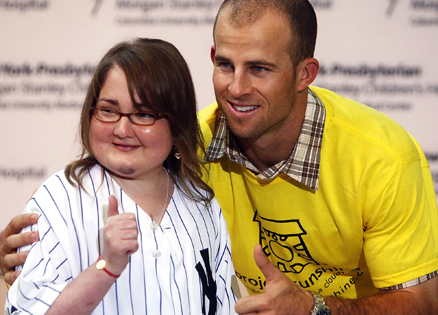
Project Sunshine, an organization that provides free educational, arts and social programs to kids with medical challenges, had put the visit together. I was there with Linda Ruth Tosetti, one of Babe Ruth’s granddaughters. She told the story of how the Babe had once promised a sick child that he’d hit a home run for him, and how, later that day, he had done exactly that.

Then Linda introduced me. I explained that I almost never hit home runs. I told some baseball stories—about how I made the Yankees, about my better-known teammates, like Derek Jeter.

Afterward, one girl came up to me in her wheelchair. She was on the small side, but flashed a huge smile. She introduced herself: Alyssa Esposito, 18, of Long Island, New York. She told me she was waiting for a heart transplant. “I’ve been here since January,” she said.

Oh, man, I thought. To me, a bad day was going 0 for 4 at the plate. And here was this girl, just a teenager, fighting for her life.

Alyssa tapped me on the arm. I figured she wanted an autograph. Instead, she said, “I have something I want to give you.” She unhooked a bracelet from around her wrist. It was simple, a yellow cord with a small silver charm. She had gotten it that morning from Project Sunshine. “This will make you hit a home run tonight,” Alyssa said. “I prayed about it.”

“Thank you,” I said, slipping the bracelet on, praying that by some miracle I’d slug a ball out of the park. More important, I prayed she’d get the transplant she’d been waiting for.

“I’ll be watching the game,” she said.

When I got to Yankee Stadium in the afternoon, I checked the lineup card for our game that night against the Minnesota Twins. I wasn’t scheduled to play. So much for answered prayers, I thought. I hoped Alyssa wouldn’t be disappointed. I took off her bracelet and tucked it safely in my locker. Then I pulled on my uniform and turned my focus to baseball.

The game began. I sat on the bench, watching our left fielder Johnny Damon roam the outfield, tracking down fly balls. Then the craziest thing happened. In the third inning, Johnny—generally a mellow guy—got into it with the home plate umpire over a called third strike. The ump tossed him out of the game.

Joe Girardi, our manager, pointed to me. “Gardy,” he said, “you’re playing left.”

My first time up, I singled. My next at-bat came in the seventh inning. We were trailing the Twins, 4-1. With two out, I stepped to the plate. I have to be honest, I wasn’t thinking about Alyssa. I was thinking about doing my job: getting on base, then maybe stealing second to get into scoring position so we could get back in the game.

Strike one. Focus, I told myself.

Strike two. I stepped out of the batter’s box and gathered myself. Took a deep breath.

I was ready for the third pitch. I lined a shot that sliced toward the left field foul line. Single, I figured, running to first base. Our first base coach waved his arm—the signal to head for second. Turning, I saw the ball get past the Twins left fielder and roll to the wall. Double, I thought. But as I neared second, I saw the ball take a crazy carom away from the left fielder. Triple, I decided and raced for third.

That’s when our third-base coach began windmilling his arm. I went into an all-out sprint for home. I knew it would be a close play. Ten feet from the plate, I dove headfirst. Safe! An inside-the-park home run!

In the dugout, the guys were all over me. Inside-the-park homers are pretty exciting, and very rare. We’d cut the lead to 4-2 and were back in the game.

I took a seat on the bench and tried to catch my breath. That’s when it occurred to me: It happened just like Alyssa said it would!

I told my teammates about Alyssa and the bracelet. I think she inspired us, because we rallied in the ninth inning to win the game, 5-4.

Alyssa’s prayer for me had been answered. But what about my prayer for her? Take care of her, Lord, I pleaded.

The next day, one of the Yankees publicists pulled me aside. “Did you hear about Alyssa?” he asked. “They found a donor. She had a successful heart transplant last night.”

I saw Alyssa that summer, when she was well enough to visit Yankee Stadium. She flashed a huge grin and tapped her chest, where her new heart was. “You had a big heart to begin with,” I said.

“Do you still have the bracelet?” she asked.

“I keep it in my locker,” I said. It’s a reminder of the power of prayers—and of the One who answers them.

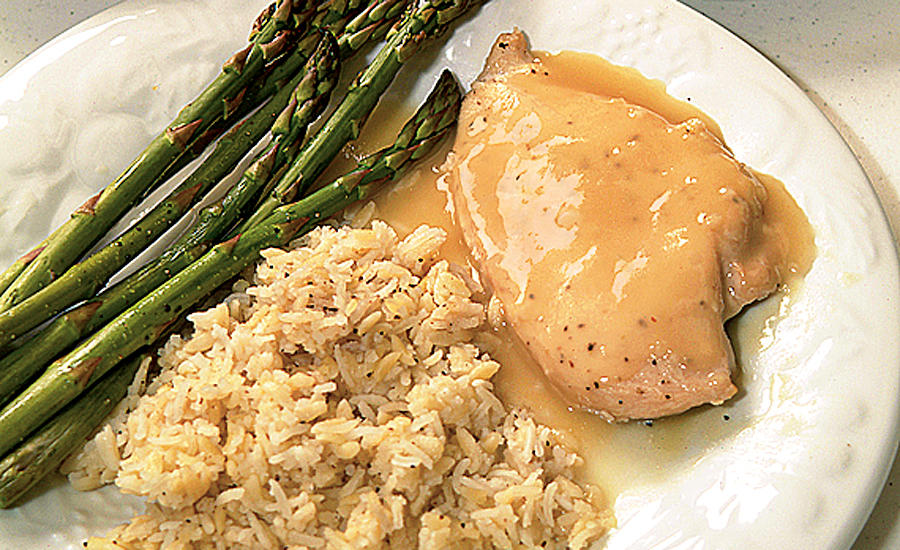
Honey-Mustard Chicken

Diane and I developed this recipe in our “test kitchen.” It’s easy to cook, tastes great and only contains 240 calories per serving!

Ingredients

6 4-oz. boneless, skinless chicken breasts ⅓ c. honey
Kosher salt 2 Tbsp. Dijon mustard
Black pepper 1 Tbsp. all-purpose flour
1 Tbsp. canola oil ½ c. fat-free, low-sodium chicken broth
Unsalted butter

Preparation

1. Pat the chicken breasts dry, then season with salt and pepper.

2. Heat the oil and butter in a large skillet over medium-high heat. Brown the chicken in the oil and butter mixture, 4–5 minutes per side. Once browned, set the chicken aside.

3. In a medium bowl, whisk together the honey, Dijon mustard, flour and broth. Add to the skillet and bring to a boil. Once the sauce thickens, return the chicken to the pan and cover it. Allow the chicken to simmer in the sauce over low heat until cooked through, 10–15 minutes.

4. Serve each chicken breast with 2 tablespoons sauce and a side of vegetables and orzo or rice.

Serves 6.

Nutritional Information: Calories: 240; Fat: 7g; Cholesterol: 70mg; Sodium: 5700mg; Total Carbohydrates: 17g; Dietary Fiber: 0g; Sugars: 15g; Protein: 26g.

Read about how this dish came about in Wednesday Night Special!

Hominy and Kidney Bean Chili

Ingredients

1 Tbsp. olive oil 1 med. onion, chopped
2 tsp. chili powder ½ tsp. ground cumin
½ tsp. granulated garlic ⅛ tsp. ground cinnamon
1 tsp. dried oregano 2 cans diced tomatoes with green chiles in liquid
1 can hominy, drained and rinsed 1 can red kidney beans, drained and rinsed
2 med. zucchini, cut into chunks Salt and freshly ground black pepper
1 c. roasted red bell pepper, diced ¼ c. fresh cilantro

Preparation

1. In a heavy 4-quart Dutch oven, heat oil. Stir in onion and cook over medium-high heat, stirring frequently, till it softens, 2 to 3 minutes.

2. Lower heat to medium. Stir in chili powder, cumin, garlic and cinnamon; cook for 1 minute. Stir in oregano. Add tomatoes, hominy, beans and zucchini. Season to taste with salt and pepper. Bring to a boil.

3. Cover, reduce heat and simmer till zucchini is tender but still firm, 8 to 12 minutes. Stir in red pepper and cilantro just before serving. Ladle into bowls and top with lime wedges and cheese.

Homemade Rolls

Ingredients

2 cups warm water (not hot)

2 packages dry yeast

½ cup sugar

2 teaspoons salt

¼ cup soft or liquid shortening

1 egg, beaten

6½–7 cups flour

Preparation

1. Put warm water in a large mixing bowl. Add yeast, sugar, salt, shortening and beaten egg and mix well. Add about 4 cups of flour and mix in with a large spoon.

2. Gradually add the rest of the flour and mix by hand till mixture is neither sticky nor dry. Cover and allow to rise till doubled in size.

3. Punch down and make into rolls approximately 1½ inches in diameter; allow to rise again.

4. Bake at 375°F for 15–20 minutes. Best served warm.

Makes 18 rolls

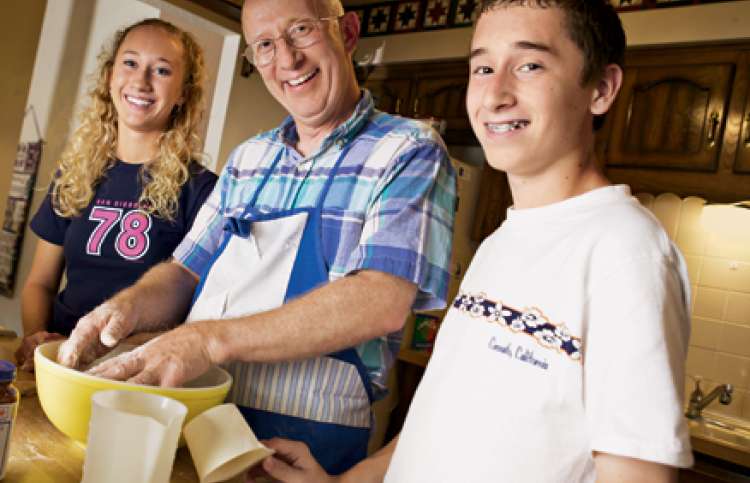
Read the story behind Bev’s rolls.

Holding Out Her Hand in Faith

Sleet whipping off Detroit’s Lake St. Clair hissed against our family car. Staring gloomily ahead, I sat close to my parents. Daddy took one hand from the wheel and patted my shoulder. “You were fine. Just fine.” Mother agreed with him.

I didn’t believe them, not one bit.

I was 14 and had just played the role of the juggler in my school’s Christmas play, Le Jongleur de Notre Dame. I loved the legend about the little fellow who had no gift but his talent to give the Christ child and I had practiced hard for the performance. But now I was sure I hadn’t done well.

Self-doubt and self-condemnation were not new to me. I wanted so desperately to do things right that nothing I did ever seemed good enough.

Later this misguided perfectionism haunted me. To achieve distinction in the theater I needed two things: sensitivity and assurance. I believed I had my share of the former, but the latter was woefully lacking.

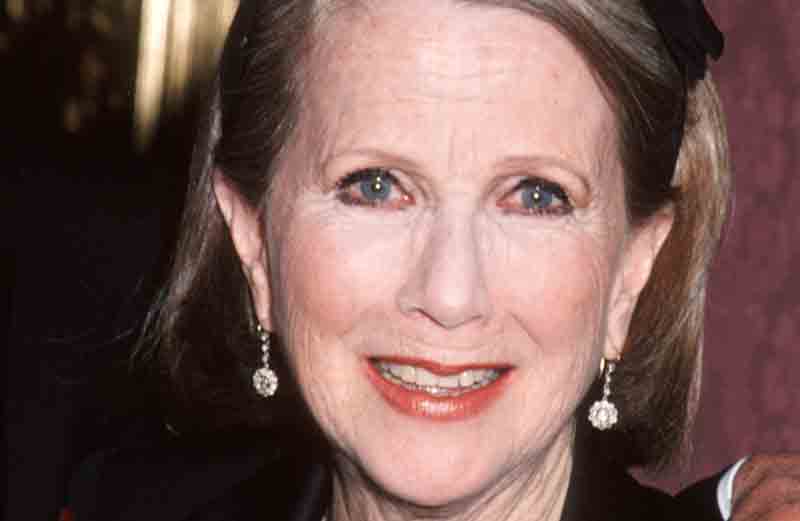
In 1950 I found myself in a Broadway hit, The Member of the Wedding. As the cast staged this tense drama daily, Ethel Waters, also in the show, and I grew very close. I was 24, just beginning my career; Ethel, in her 40s, was an established star.

I came to love her very much and would watch with awe as she projected the warm emotions that melted the hearts of her audiences. For my part, I was tormented as usual by doubts.

One night I gave a performance that seemed so inept to me that I even felt guilty about taking curtain calls. As I trudged down the corridor to my dressing room, Ethel Waters was just about to step into hers. She stopped and looked at me, her face full of compassion.

“Why, Julie,” she said, “what’s troubling you?”

I was about to murmur a polite “Oh, nothing,” when suddenly all of my misery overflowed in a flood of tears. Ethel came over and gathered me up in her loving arms. “There, there,” she said softly. “No need to feel that way. You’re doing fine.”

“But I’m not,” I sobbed. “I know I’m not!”

Ethel stepped back and looked at me. “You’re trying to do it all alone. You know the Lord Jesus, don’t you? All you have to do is give those troubles and worries to Him. He’ll take care of them for you.”

I was grateful to Ethel and dried my tears. I wished so much I could believe her. But though I prayed and went to church, somehow I could not seem to let go of my fears.

Then one day, near the end of the play’s run, Ethel asked me how I was doing. I told her the truth: not very well. “It’s so hard,” I said. “So hard.”

“No,” she said quietly. “It really isn’t.” She took my hand. “Jesus is right here. If you want the strength and the confidence you need, all you have to do is ask—and hold out your hand.”

Hold out your hand. Somehow those words got through to me. After that, every time the fears came back to haunt me I would visualize myself holding out my hand for help.

Slowly a deep realization came that Ethel was right. I became convinced that Someone was there, and whenever I reached out my hand, He would take it.

I had many occasions to explore that principle over the years that followed, but one stands out with particular vividness.

In 1955 I was offered the part of Saint Joan of Arc in Lillian Hellman’s adaptation of Jean Anouilh’s play, The Lark. At first I was overjoyed at the opportunity to portray the mystical young girl whose faith in her own spiritual guidance changed the course of history.

But then, as images of Sarah Bernhardt, Siobhan McKenna, Uta Hagen, Katharine Cornell and other immortals who portrayed her so beautifully became frighteningly real, I suddenly was appalled. Who was I to be following in such footsteps?

The more I thought about it, the more the whole idea of playing Saint Joan terrified me. I was sure that I couldn’t measure up to the role. But then suddenly Ethel Waters’s words came back.

I didn’t have to do it all by myself. All I had to do was turn to the Lord and hold out my hand. So I did—and found a quiet confidence, a strong sense of assurance, that stayed with me through every scene and stays with me to this day.

Download your FREE ebook, The Power of Hope: 7 Inspirational Stories of People Rediscovering Faith, Hope and Love

His Return to the Majors

Has there ever been something that you were sure you were meant to do? I wanted to be a pitcher. From the time I was four years old I used to lie in bed at night and dream about playing baseball in the big leagues.

After years of sandlot games, Little League, high school and college ball, I got my shot in 1983 when the Milwaukee Brewers organization picked me in the first round of the draft.

But after a year of pitching in their minor-league system I developed a pain in my throwing arm. I had elbow-reconstruction surgery. I spent all of the 1986 season warming the bench. The next year I threw in just four games, and had to have surgery on my shoulder, which also sidelined me in 1988.

Then, during spring training in 1989, I was tossing a few balls to loosen up when I felt something give in my shoulder. I’d popped a ligament. I was only 25 years old and my career was over. I never even made it to the Show—what ballplayers call the majors.

I went back home to Texas, where my wife, Lorri, and I talked a lot about what I’d do next. We decided that if I couldn’t pitch, I’d finish college and get certified to become a schoolteacher. I had another surgery, to remove a three-inch bone spur from my shoulder. For the first time in years my left arm was pain-free, and I realized, Maybe I can’t play at the level I used to, but I can still be part of the game. So I started coaching here and there, and even got back on the mound to toss batting practice.

That’s how I ended up at Reagan County High School, teaching science—and coaching the baseball team. I had my work cut out for me. The Reagan County Owls had only three wins in each of the previous three years. Still, where some coaches might’ve seen the Bad News Bears, I saw a potential all-star team. The guys just needed to work harder, and hear some encouragement.

Whenever the team lost, it was tough for them to bounce back. But one of the reasons I became a coach was to help kids overcome tests like that. My own baseball days had taught me plenty about facing challenges.

One day in April of 1998 I’d put the team through a tough workout, then sat them down on the outfield grass to have a talk. “Believe me, guys, I know how hard it is,” I said as I looked at their sweaty, tired faces. “But you can’t let up just because of that. You need to set goals and stick to them.” A few boys nodded, and I continued. “It’s fine to dream, even better to dream big. You’ve got to work and pray hard to achieve as much as you can, while you can.”

One of my pitchers piped up. “What about you, Coach? What about your dreams?” he asked. “Don’t you still want to play in the big leagues?”
I chuckled. “I gave that dream up a long time ago,” I told them. “I got married, became a teacher, had kids. Now I’m here coaching you. And I don’t regret any of it. I’m right where the Lord wants me.”

My team wasn’t convinced. “We know how much you love playing ball, Coach,” one of the kids said.

“As hard as you throw, you should be in the majors,” another joked.

There was some laughter, so I teased back, “You just don’t like taking batting practice out in the hot sun.”

My talk had gone over better than I’d expected. The guys wouldn’t let up. They wanted to see me chase a dream, even if it was one I’d put behind me. I loved being a teacher and a coach. Finally we made a deal. “Okay, okay,” I relented, “if you guys get to the playoffs this year, I’ll try out for a major-league team. But you’ve got to understand—my playing days are over.”

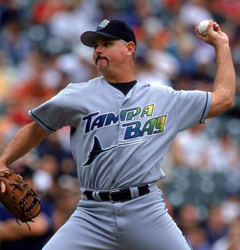
I was sure I wouldn’t have to make good on my promise, since not one baseball team in the history of Reagan High had ever made it to the playoffs. I don’t know if it was my pep talks, but the team pulled together. By the time I heard the Tampa Bay Devil Rays were holding open tryouts nearby, my high schoolers were headed to the playoffs. “Coach,” they all said, “what about you?” I had to follow through on my end of our deal.

That June Saturday the sun was blazing down on the diamond at Howard Payne University in Brownwood, Tex. At the sign-up table, I saw Doug Gassaway, the same scout who’d discovered me 17 years earlier. “Are you bringing some of your kids for a tryout?” he asked. I told him I was there for myself, and explained about the promise I’d made my team. Doug laughed, but he was nice enough to put me on the schedule. Last, as a courtesy, in case I embarrassed myself.

There must’ve been about 50 or 60 teenagers milling around with their mitts and cleats. Look at these guys, I thought. What am I doing here? I’m 35 years old, for Pete’s sake! Even if I’d made it to the majors way back when, I’d be retired by now.

Finally, my turn came. “Come on, Jim, hurry,” Doug said, eager to get home. He’d seen some good players, but no one especially promising. Lord, don’t let me make a fool of myself, I prayed. Just let me get out of here with my dignity intact, so the kids know I tried.

I wound up and hurled one to the catcher. At least I got it across the plate. I pitched a second, then a third, and it didn’t feel much different than throwing batting practice for the Owls. My arm felt great. After a while, dozens of guys were crowded behind the backstop looking at the radar gun. What’s up with that? I wondered. Either I’m doing really well or just plain terrible.

When I was done, one of the kids who’d tried out came up to me. “Do you know you were throwing ninety-eight miles an hour?” he asked, wide-eyed.

“No way!” I said. In the minors my fastest pitch was barely 88 mph.

“Way!” the kid said. “They even checked with a second radar gun.”

Then Doug came over, smiling. “If only you were ten years younger.”

“Don’t I wish!” I said.

“I’m bumfuzzled, Jim,” he said. “Realistically, I don’t know what I can do. But I’ll try. I’ll call you.”

There was a message waiting for me when I got home. Doug wanted me to pitch again in two days, to see if I could throw hard again so soon after tryouts. Monday I met him and I consistently threw the ball at 95 mph. “We’re ready to sign you, Jim,” he told me. “You’ll have to be in Saint Petersburg in two days for workouts.”

Suddenly, I had a lot of thinking to do and not much time to do it. Lorri and I talked to God, then to each other. “Could this really be where God is leading?” I asked her as we sat at our kitchen table. “I thought I was right where he wanted me.”

“I don’t know, Jimmy,” she said. “Maybe he brought this dream back again for a reason.”

My long-buried visions of playing in the big leagues came back to life. I felt like a boy again. But I hadn’t made it in baseball the first time. Now I had a great family, a rewarding career, and strong ties in San Angelo. Did I want to risk it all on a dream?

“I have that job lined up to teach at a new school in the fall,” I reminded Lorri. “Maybe that’s where I belong.”

“I know this isn’t what we planned,” she said, “but you do have the summer off. If there were ever a good time to turn our lives upside down, this would probably be it.” We both laughed.

“There’s a lot of unanswered questions, Lorri,” I said. “I don’t know where I’ll end up playing, how long we might be apart, or if I’ll be able to support our family on what they pay in the minors. Plus, you’d be on your own with the kids while I’m gone.”

“I can cover home plate,” she said. “For the rest, we’ll have to ask God.”

Two days later, with my wife’s blessing, I was in St. Petersburg, getting into shape. I didn’t know what to expect, but it turned out I threw harder and faster than I had when I was 19. After two weeks I was sent to a Double A club in Orlando, then moved up to Triple A in Durham, pitching for the Devil Rays’ top farm team. I was as surprised as anybody, but tried not to get my hopes up.

In September, the minor-league season ended, and between the two teams, I finished with a record of 3 and 2, with one save and 22 strikeouts in 28 innings.

I gave it my best, and it was quite a ride, I thought as I packed up to drive home to Texas. But that same day I got called up to the Show. I was astounded.

On Saturday, September 18, I was put on the Tampa Bay roster. I became the oldest major-league rookie in nearly three decades. We played the Texas Rangers that day. Their stadium in Arlington is just a few hours’ drive from my home, so I got to see Lorri and the kids for the first time in three months.

In the bottom of the eighth with two outs, I was sent in to relieve. I don’t think I took a breath from the time I left the bullpen, but I managed to strike out Royce Clayton on four pitches.

A million thoughts raced through my head that night. But I kept coming back to one thing: that talk I’d given the Owls after a hard day’s practice. “It’s fine to dream,” I’d told them, “even better to dream big.”

I’d figured my words might be inspiration enough. Who could’ve guessed I would also show them by example? That’s what can happen when you dream big and trust God with those dreams—even if they take a little longer than you expect to come true.


Hillsong United’s New Album of Hope and ‘Wonder’

What do you do when you’re Hillsong United, one of the most influential contemporary Christian bands in the country, and you’re planning the release of your next album? You follow Beyoncé.

“She’s a model [for us],” frontman Joel Huston joked with Guideposts.org about why, like the R&B diva is wont to do, the band kept their sixth studio album, Wonder, a surprise until less than a month before its release date. Forgoing the normal promotion schedule for an album is a bit risk for a Christian band—even a multi-platinum-selling one whose last album, Empires, peaked at #5 on the Billboard 200 charts—but they’re not worried.

“I honestly believe that good art will make a way for itself,” Huston says. “Sometimes we can oversell something and it takes away the beauty of what you’re trying to say and what you want it to be.”

For Hillsong United, the simple beauty of the world—despite the political and social uneasiness people are feeling—is what they’re hoping to help people find.

“You look around at what the atmosphere of the world is currently and it’s like, ‘Well, what can we bring?’” band member Matt Crocker says. Their answer is 12 tracks of healing music that can inspire listeners to marvel in the majesty of God and to find joy and hope through faith.

The chorus of the title track—I see the world in light/ I see the world in wonder/ I see the world in life/ Bursting in living color—is a celebration of everything good that God has given us.

“As Christians we’re called to bring that joy and that happiness that we know as Christ living in us and so [we said], ‘Let’s be a mirror reflection of that with this album.’ We put everything we had into bringing that sound.”

In “Future Marches In,” the band takes that message of hope a bit further, urging listeners to fight against fear and defeat by turning to faith with lyrics like: Don’t hide in silence while the truth screams out/ Don’t fear the future shaking up this ground/ There’s a freedom that marches in a different sound.

Still, Huston says the main goal of the record and the group isn’t to force people to faith but to model the beauty of living as a believer through their music.

“If the music is good, we shouldn’t have to be slamming it down people’s throats, Huston says.

“I think it’s the same with the gospel. I don’t think we have to be Bible-bashing people in order for them to get it. I think the best way to get people to understand the gospel is to love them and to just live in a way that is reflective of the beauty of God.”

For more from the band, check out our interview with them below:

Hillsong United: Building An Empire

It’s a Saturday night and I’m sitting at a picnic table in Central Park, waiting to interview Taya Smith and Jonathon “JD” Douglass, two members of the band Hillsong United. I’m here to talk about their new album Empires — which drops May 26th— and to dig into the psyche of the group whose music reaches over 50 million churchgoers on any given Sunday and who’s sold more albums than mainstream platinum artists like Lady Antebellum, Mumford and Sons and yes, even Miley Cyrus.

I want to know what it’s like to have millions of people across the globe singing your songs, repeating your lyrics, screaming your name when your worldwide tour makes a stop in their hometown. It has to be an ego-boost, an affirmation of God’s favor in your life, but it’s clear as Smith settles into her seat across from me, rocking a pair of black, cut-up skinny jeans and nestling a cup of hot lemon water; JD flashing a big grin while trying to manage his long, wiry (and I’ll admit) attention-grabbing mane of hair, that ego is the last thing anyone from this band has to worry about.

READ MORE: CROWDER’S NEW SEASON OF MUSIC

“It’s the grace of God. It’s the biggest privilege because we know it’s not us and we’re not awesome, but through the grace of God, we get to do this and our heart is that we would serve with everything that we have, love people and just pray that God would use us,” Smith says when asked about the success of the group’s last album Zion, which cracked the Billboard Top 5 two years ago and whose single “Oceans” held the number one spot on Billboard’s Christian music charts for 45 straight weeks.

Success like that doesn’t come often, especially for a Christian worship band, but according to JD, what United was able to do with Zion had nothing to do with their talent and everything to do with their willingness to trust and follow God.

“None of us ever sat down and said let’s start a band, make albums, tour the world,” the singer explained. “For us, the opportunities that we get, we just know who we are. I hope you don’t think this is a cliché, but we’re actually the most normal, ordinary people that go through every single insecurity as everyone else. We’ve just encountered a good God.”

We just want to hear the heart of God and let that be the message.

Good doesn’t even begin to describe the career the band has had in the past few years. With 15 albums, millions of records sold, hundreds of thousands of Twitter followers and undoubtedly even more fans, the group, which was birthed in the youth ministry of Australia’s Hillsong Church, is the name in Christian music right now. You can’t turn on K-Love in the car or visit a Christian youth conference without hearing their lyrics. It’s both a blessing and a weight.

“There’s definitely pressure, but what we decided to do more than ever was to not feel it and to not carry it,” JD said of the group’s journey making their newest album. “We didn’t shy away from hard work but we didn’t strive to try and compare ourselves to what we’ve done before.”

The result is Empires, the band’s fourth studio album and, both lyrically and stylistically, it’s bravest to date. On it are the classic worship anthems Hillsong is famed for – the title track and songs like “Touch the Sky” and “Heart Like Heaven” were made to be sung by the masses – and a few tracks which speak not only to lead singer and songwriter Joel Houston’s ability to pen a good tune – “Prince of Peace” is his crowning achievement in this category – but also the band’s willingness to experiment with new sound. Synth beats, guitar riffs, percussion solos and quirky electro influences all have a place on the new record and surprisingly pair well with some of the album’s heavier lyrics.

It’s challenging to keep creating music that appeals to the kind of vast, completely varied audience that is Hillsong’s fan base, but even after all these years, JD says the group’s goal still hasn’t changed.

“We are trying to write songs that reflect a relationship that we all have with Jesus. Ultimately, the number one goal would be that people would hear this good news that is the gospel, that Jesus came and gave his life so that we could have grace. Then as well, if they’ve already heard that message, we want to encourage them on this journey.”

For Smith, who started out as a youth leader in the church before being asked to lend her vocals to “Oceans” two years ago, her journey — to being a part of the band — is the perfect example of God’s timing and grace.

“I love the story of Taya and her coming in and singing ‘Oceans,’” JD said. “We’d known each other for a little while, and I just knew that she had a great voice and she was a cool girl. She was really known not for her singing but just being a great youth leader and it was the last day of recording and we really needed somebody to sing ‘Oceans’ and we thought ‘Well, let’s just give this Taya girl a try.’ It was our last option, our only option and the song is doing what it’s doing majorly because of who Taya is and what her voice is doing on that.”

READ MORE: A NEW SOUND IN CHRISTIAN ROCK

Smith, for her part, never expected the song to touch as many lives as it has, or the fame that came with it.

“[I] thought it was a great song, great lyrics, that was it. But what it’s actually done and how it’s reached people, that’s completely a surprise for me and definitely a story of God taking it where maybe music has never gone before. These guys are just really good stewards and they just did the best with whatever’s been put in their hands and they gave it everything and I fell like that’s what we did with Empires as well. Everything that we have we just laid it on the table. Like Joel says, our job is to build a ship. Build a ship the best that we can, make it really sturdy, and wait for God to just breathe on it. “

Part of building that ship includes promoting the new album, something the band finds themselves in the middle of doing. Tonight, they’re playing to a packed crowd at Summer Stage at Rumsey Playfield in New York City; tomorrow, they’ll catch a flight to L.A. where they’ll play the Nokia Theatre. And then of course, there’s a new movie coming out later this year, Let Hope Rise, which documents the rise to the top. It’s an exhausting schedule, one that most people would balk at, but watching them jump around the stage with boundless energy, and hearing a crowd of thousands crooning along to their lyrics, it’s easy to see why they do what they do.

“God’s love and grace is ridiculous,” JD said. “We have to glorify Him and tell people about Him. We just want to hear the heart of God and let that be the message.”

I think people are starting to listen.

Her Poems Are Her Prayers

Three years ago, I wrote a story for Guideposts about how a poem saved a forest.

I’m a professional poet. One of the best-known aspects of my work is what I call Poem Store. I set up a typewriter in a public place and write poems on request for whatever people choose to pay.

My Guideposts story, published in April 2016, was about an unlikely friendship with one of my Poem Store customers, a timber company executive named Neal Ewald. I’m a passionate environmentalist. Neal’s company, Green Diamond Resource Company, planned to log a pristine tract of old-growth redwood trees near the northern California town where I lived.

At the time we met, I had no idea who Neal was. All I knew was that he asked me to write a poem commemorating his wife, who had recently died of cancer. We got to talking and became friends despite our differences, and through our conversations and the work of local environmental groups, Neal decided to sell 1,000 acres of redwood forest to the county to be set aside as a preserve. Neal and I helped each other learn something about collaboration and openness to new perspectives.

Many Guideposts readers wrote me about my story. Some were moved by Neal’s devotion to his wife. Others wrote about their own love of nature. Above all, readers told me how much they love poetry, especially the way it connects them to God and helps unite people across divides of politics and belief.

I’ve always believed poetry is a conversation with God. It felt deeply affirming to learn readers feel the same way.

All my life I’ve read, written and been nurtured by poetry. I’ve also developed a simple but nourishing prayer practice. I use poetry in my prayers. Lately I’ve begun to think that, in many important ways, poems are prayers. Hearing from readers, talking to my Poem Store customers, watching the faces of children when I speak in schools, I see evidence every day of the spiritual power of words. My own story shows how a love of words—especially that way of arranging words we call poetry—can become a life-sustaining source of spiritual connection.

I was born in Royal Oak, Michigan, and spent much of my childhood in the Florida Keys. Wherever my family was, there were books and someone to read them to me. Camping in Canada, we shared stories in the tent. In the Keys, I spent lazy afternoons listening to fishermen’s tales on the docks.

I was always happier outside, and even before I knew how to form letters I carried notebooks with me and filled them with my own cryptic language. When I finally did learn to write, my first poem was about a fox I’d seen on a trail in the woods—a few lines about the fox’s stillness and its orange color.

I studied poetry at Florida State University. I didn’t grow up with a lot of organized religion, so I reached out toward God in a way that made sense to me. Every morning and evening, I spent time in silence. I began assembling what I thought of as an altar—bits of nature gathered on hikes or trips to the beach: shells, leaves, feathers, stones. I didn’t have a name for what I was doing. Eventually I realized I was praying.

I wanted the words of my prayers to match their subject. I began writing poems to recite as I sat. No matter where I was or where I lived, even if I had to do it in front of roommates or guests, I stuck to my prayer practice. Talking to God, I felt renewed.

After graduating with a degree in poetry, I decided not to follow the typical path of an academic poet. I wanted to travel, to see if I could combine my love of words and the outdoors into work that sustained me. I bicycled through Central and South America, studied farming on a road trip across the United States and worked as a gardener, learning to use compost and recycled rainwater to make the earth bloom. The work supported my writing and confirmed my commitment to environmentalism, to stewardship of the earth.

For a long time, I wasn’t sure how these various parts of my life—reading, writing, prayer, love of the earth—were connected. I knew they were connected; I felt it. But I didn’t have the precise words to express it.

Then I discovered Wendell Berry and Mary Oliver. Both are poets, what scholars call nature writers. Wendell Berry is a Christian and an environmental activist. Reading his work was a revelation. Here was a writer arguing boldly that caring for the earth and farming sustainably are ways to honor God. Berry’s poetry calls quiet attention to the landscape of his rural Kentucky home, finding God’s presence in the everyday fact of nature.

Mary Oliver was less outspoken about her spiritual beliefs but nevertheless showed me how writing poetry could be a sacred act. Oliver wrote poetry all her life. She grew up in a dysfunctional family near Cleveland, Ohio, and escaped turmoil at home by retreating to the woods, where she built huts of sticks and wrote.

Oliver’s poems usher readers into the forest, her green cathedral. In one called “Praying,” she encourages readers to keep prayer simple: “a few words together and don’t try to make them elaborate.” Prayer, she writes, is not “a contest but the doorway into thanks, and a silence in which another voice may speak.” Those words fit my thoughts about writing and prayer perfectly. Inviting that “other voice” to speak, the poem isn’t just about prayer. It is a prayer.

Wendell Berry and Mary Oliver showed me how poetry could become prayer in action. Their poems are not merely celebrations of beauty, but bold reminders of humanity’s responsibilities. The Earth is God’s gift to us, and it is our duty to take care of this planet as it cares for us.

Making a living as a writer is not easy. You might think being so frank about spirituality would make my path even harder. I find it’s the opposite. Because my goal is to share a spiritual connection and inspire readers to see the world and themselves in a new way, I write in plain language and devote a lot of time to sharing poems in public, whether in workshops or schools or at the Poem Store. I believe poems, like prayer, should be living and active. They are meant to be shared. They make things happen.

Mary Oliver and Wendell Berry certainly changed my life—and the lives of countless other readers. My Guideposts story about Neal Ewald was another example of poetry’s power. I see the same power at work when I set up my Poem Store. Customers share deep desires, personal pain and hopes for change and growth. The poems I write in response help them turn their private thoughts into a call to God, to whatever wisdom will help them find what they seek.

People often ask how they can weave more poetry into their life. My answer might sound counterintuitive: “Practice some sort of prayer every day. Read and write as often as possible. Go outside whenever you can.”

I mean what I say. Poetry is most effective when it comes from a place of strong vision and purpose. Vision and purpose come from connection to what is sacred. If you’re like me, you probably connect to God most easily in prayer, in reading books that inspire you and in the natural world.

I still sit at my altar every morning and evening. My prayer, my faith and my purpose remain fueled by language. I hope you too can find that connection to what matters most in the words you love.

For more inspiring stories, subscribe to Guideposts magazine.