


Embrace God's truth with our new book, The Lies that Bind

Guideposts Classics: Joan Fontaine on Finding a Church Home

Most of us move through life looking for something. For years my search was for a sense of belonging, truly belonging somewhere. I spent half a lifetime looking for a place where I could feel deeply at ease, accepted, part of a family, surrounded by people who cared.

I had begun to believe that no such place existed. Then I found one.

Celebrating Guideposts' 75th AnniversaryI’m sure the origins of my search go back to my childhood when ill health and the isolation that it brings played such a large role in my life. My mother told me that I spent the first two-and-a-half years of my life wrapped from head to toe in cotton bandages due to the eczema that covered me.

My father, Walter de Havilland, was a professor teaching at the Imperial University in Tokyo, where I was born. Mother always believed that the goats’ milk that is given to babies in Japan started me on my endless succession of ailments.

My parents’ marriage was not a happy one. When I was two-and-a-half, Mother, my sister and I left Japan and settled in Saratoga, California, where doctors assured Mother that the climate would be healthier.

It was true that my eczema got better, but just about every other conceivable illness followed.

My earliest memories are of tastes–castor oil and Scott’s Emulsion and the hatefulness of unsweetened licorice cough syrup–and of white-uniformed strangers bending over me with long, hurting needles.

I suppose it was no wonder that with such handicaps I found it hard to relate to other children. And indeed the life we led was different from other children’s carefree existences.

By now my mother had remarried. My stepfather was an investment counselor, but I’m sure he should have been a general.

The bedroom my sister and I shared, when I wasn’t quarantined with some infection, was modeled after a barracks: khaki spreads on iron bedsteads, khaki-painted furniture against dun-colored walls, military-style inspections morning and night.

At his insistence, each Sunday we wrote out the schedule for the week ahead in precise segments:

7:00-7:15 bathe and dress
7:15-7:45 breakfast
7:45-8:15 make beds; tidy room
8:15-8:30 walk to school

and so on through the long regimented day. My stepfather was a well-intentioned man, and I respected him, but he was unable to give the warmth, the open affection, the understanding touch that I yearned for.

And yet all the illness and isolation and regimentation had their compensations, for instead of real companions, I found my friends in books and in the dramatic sketches Mother taught my sister and me to act in when friends came to visit.

On days when I was unable to sit up in bed, I would weave long thrilling dramas in my head. Little did I think, at such lonely moments, that I was going through the perfect apprenticeship for an acting career.

But apparently it showed to those around me. One day a friend of Mother’s who had seen our little living-room dramas received a call from the actress May Robson. May was looking for a young girl to play the role of the ingenue in her next play.

“Joan de Havilland,” said Mother’s friend without hesitation. And so I found myself in the wonderful make-believe world of theater.

By now my sister was an established actress, so in order not to trade on her name I took our stepfather’s name, Fontaine. Acting was a strenuous career for a girl as sickly as I was, but I soon came to know why Dame Sybil Thorndike called it “Doctor Theater.”

No matter how I felt or how high my temperature, when the curtains parted, a burst of energy always flooded into me, and I went on, oblivious to everything but the part I was playing.

An increasingly successful movie career had many rewards, but it did not bring me the warmth and close relationships that I kept seeking, sometimes desperately.

Perhaps it was the lack of a warm father figure in my childhood that made my expectations of marriage so ridiculously high. My husband was to be everything I had longed for as a girl. All-loving, all-strong, all-wise, he would be the answer to every need.

And each time he fell short of those expectations the disillusionment was keener, the depression that followed more serious. Each time I felt as if I were a wanderer with no place to go, no place to belong.

It was during one of those bleak times in 1972 that I finally realized what I had been doing. I had been idolizing human beings, trying to make of them what flesh and blood can never be. Even if a man could be the father I dreamed of, the brother I never had, he could never be God.

Of course I wanted a center to my life, of course I wanted perfect faithfulness, perfect love—only I had been looking for those things in the wrong places.

I remember so well the day, sitting alone in my New York apartment, when that realization came to me. I remember because with it, quietly and clearly, came the answer I had been seeking for so long.

Not far away was a tranquil place of worship called the Church of the Heavenly Rest. I began to attend services there. A few months later I consulted the rector, Burton Thomas, and told him I needed to be baptized.

With just a few friends to stand with me, and Dr. Thomas’s wife, Hazel, as my godmother, I was baptized, and I knew that I had found the place where I belonged at last.

Baptism is an inrush of grace—and grace changes people. Have I been changed? I believe so. Where I was judgmental and sometimes too demanding, I now feel more sympathy for other people, more tolerance, more understanding.

My friends, who seem closer and dearer, tell me that I seem closer and dearer to them. I feel stronger in myself; I’m not looking so desperately for some other human being to lean on. I belong to a church and a church belongs to me, and I feel surrounded by love and joy.

Sometimes when a bird sings in Central Park and no one else stops to listen, I feel myself overwhelmed with wonder and gratitude to the Giver of such gifts.

And sometimes I wonder why it took me so long. Then I think of that marvelous parable of the workers in the vineyard (Matthew 20:1-16), and remember that in God’s sight there is no soon or late.

In that story each worker received the same reward no matter when he came. For me that reward was the gift of knowing I belong.

For more inspiring stories, subscribe to Guideposts magazine.
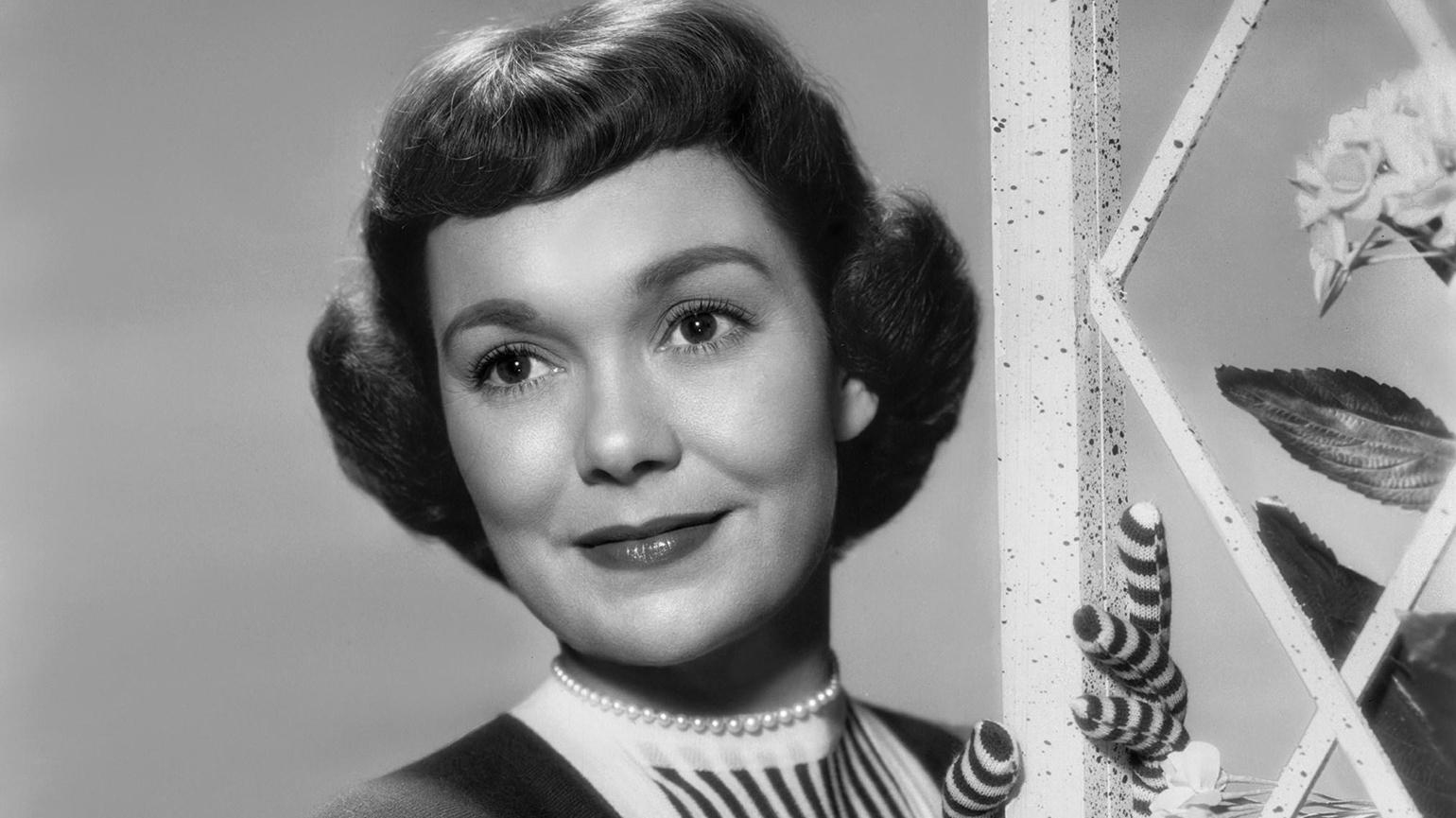
Guideposts Classics: Jane Wyman on the Ten Commandments

How annoyed I get today when I hear someone teased for being shy! “Come on!” they shout, dragging him into a crowded room. “Don’t be shy!” As though not being shy were a matter of will power. Or, “You’re just shy!” as though that were the most minor of problems.

Shyness is not a small problem: it can cripple the whole personality. It crippled mine, for many years.

As a child my only solution to the problem of shyness was to hide, to make myself as small and insignificant as possible. All through grade school I was a well-mannered little shadow who never spoke above a whisper. In ballet class I haunted the corners of the room, hoping the dancing master would not see me.

READ MORE: HELEN HAYES ON THE REWARDS OF GIVING

The very thought of performing in front of someone made me wilt with fear, quite literally.

The saddest part of it was that I idolized Dad Prinz, the dancing master. He was the most understanding man I had ever met and I longed to tell him so. I never did.

Then my parents left St. Joseph, Missouri, and moved to Los Angeles. And now a new and more threatening dimension had been added to life outside the big city high school walls. Dating. It seemed to me that on some prearranged signal, every boy and girl in school paired off.

Every girl, that is, except me. I don’t know whether I could have had dates or not; it simply never occurred to me to try. Hadn’t I been told many times that I was not pretty? I lugged home piles of books every night and disappeared into them.

And then the Depression came. In California it seemed to hit older people like my father especially hard. Overnight I was thrust from my safe little book-world into the world of job hunting.

In all that vast, bewildering city, I knew only one person who might give me a job: LeRoy Prinz, the famous Hollywood dance coach, Dad Prinz’ son. He gave me a tryout and discovered I had a sense of rhythm. “As long as you’ve got that,” he said, “I can teach you the rest.”

READ MORE: DONNA REED ON FAITH IN HARD TIMES

Under LeRoy Prinz’ coaching I began to get chorus parts in the movies, those lavish, glittery, extravagant movies we loved in the hungry ‘30s.

It was work when the family badly needed the money, but for a girl who had grown up in terror of being looked at, it was also agony.

Then I made a discovery: a good shield for shyness is a bold exterior. Did my heart turn over when the man with the megaphone bellowed out my name? Were all the other dancers prettier?

Never mind. I covered up by becoming the cockiest of all, by talking the loudest, laughing the longest, and wearing the curliest, most blatantly false eyelashes in Hollywood.

And then one day a fellow chorus girl gave me a piece of advice:

“Jane, you’d improve your looks about a thousand percent if you’d peel off those trimmings and wash your face.”

I was crushed. I wept. I hated her. But the next day, feeling completely bald, I showed up on the set without my disguise. We hadn’t been rehearsing half an hour before a comparative stranger stopped and stared at me.

“Gee, Jane,” he said. “You look great.”

For me it was the heavens parting. Could he have meant that I looked great? It was the first hint I had that I could be myself without the sky falling in.

But the insight went only skin deep. I shed the eyelashes, but I wasn’t about ready to shed the tough, smart little shell.

I had begun to get a few minor acting parts and they were just the kind you would expect. I was the brash blonde girl reporter rushing into the newspaper office to shout “Stop the presses!”

Then one day on the set someone else said something that shone another bit of light through the defense I’d set up.

“When I first came out to Hollywood,” he said, “I discovered there are two kinds of people here. There are the ‘closed people,’ the careful ones who don’t take risks and don’t get hurt. And there are the ‘open people,’ the ones who give life all they’ve got.

“They make mistakes, they get hurt, but they also get back a lot of joy.”

READ MORE: LORETTA YOUNG ON THE POWER OF LOVE

I recognized myself right there as one of the closed people and my bright personality as the shell for a clam. I began to want very much to open the shell. I began to loathe the brassy blonde I played in the movies. Suddenly I longed to play real people, to move the hearts of real people.

Today I would call this quality of deep yearning, “prayer,” and what happened next, a small miracle. Then, I only knew that no sooner had I set my heart on changing than I was offered two roles about unmistakably real people: first in Lost Weekend and then in The Yearling.

I worked on those parts as I’d never worked before, sat up nights with my lines, studied them for hidden meanings over my meals. When those films were finished, the studio decided I was ready for the role of the deaf-mute in Johnny Belinda.

With that part came the Academy Award, and surely, I thought, surely now I will stop hiding. Surely I will feel some kind of self-esteem and confidence.

But the months passed, my Oscar collected dust on a shelf, and I made a dismal discovery. External achievements change nothing: inside I was the same tormentingly stay person I always had been.

My real self still was hiding in the shadows, sending someone else out front to greet the world. It was an exhausting way to live.

Then, 10 years ago, I went to England to do a picture for the Royal Academy. It was a lonely time: I knew no one outside the cast and I did a lot of walking, and thinking.

During my solitary rambles I found myself wandering into Westminster Abbey, first as a sightseer—then over and over again to try to grasp something I felt there. Something that felt like approval. Like acceptance. Like love.

READ MORE: ANN BLYTH ON PERSONAL FAITH

I tried to dismiss the experience. It was, I rationalized, only the reaction of a homesick woman in a foreign land. I almost had convinced myself when I met the man who at last threw a searchlight on the girl in the shadows.

I was back in Hollywood and tie was a kindly old priest with a manner so gentle, so uncritical, that suddenly I found myself talking to him about things I’d never told anyone.

I found myself telling him about the little girl who was too shy to speak above a whisper, about my lifelong struggle with the same feelings. “I thought if I only could succeed at something, then I wouldn’t be shy. But I have had success, of a kind, and I feel just the same.”

“Of course you do.” The priest smiled at me. “Shyness isn’t a matter of doing well, or not doing well. It isn’t a matter of whether you’re handsome or plain.”

Over his cluttered desk, tie looked at me. “Shyness, Miss Wyman, is a little matter of self-centeredness.”

I blinked. The words were harsh but he said them so mildly, that I resisted a familiar impulse to flee into a protective shell.

“That’s all,” he continued cheerfully. “Just a little tendency to think of the whole world as terribly interested in oneself. You know, the feeling that every eye in the room is focused on one—whereas actually most of the other people there are pretty much involved with their own problems.

“Now fortunately,” he went on as he rummaged for something in the maelstrom on his desk, “the Bible gives us some very specific instructions for dealing with selfcenteredness.” He located his Bible, found the passage he wanted, and handed it to me.

I looked at the Bible passage. It was the Ten Commandments.

“The first four,” he said, “deal with our relationship to God. They get our attention out where it belongs: on Him and His majesty. And the last six tell us how we ought to conduct ourselves toward other people. They keep our attention out there, away from ourselves and onto our neighbors.”

I looked down at the Commandments again. I had read them a hundred times, of course, but something in the old priest’s voice filled them with an unspeakable promise.

It was the first of many interviews with this priest who became my spiritual mentor. And I have never forgotten what he told me the first time we met, about the cause of shyness, and its cure.

Not that I have succeeded in following all the Commandments in all their fullness, but the act of trying to has worked a big change in my life.

For when I looked away from myself I discovered a whole world full of other people. Fascinating people, people with woes and joys I had never imagined. I didn’t have much time left to worry about the impression I was making, once I really began seeing them.

But best of all, out there, I am finding God. Not much of Him, yet. At first it was just a shadow, a glimmering. But getting to know Him better, listening for Him, contemplating Him, loving Him, is a 24-hour-a-day assignment. Shy? I just haven’t got time.

For more inspiring stories, subscribe to Guideposts magazine.
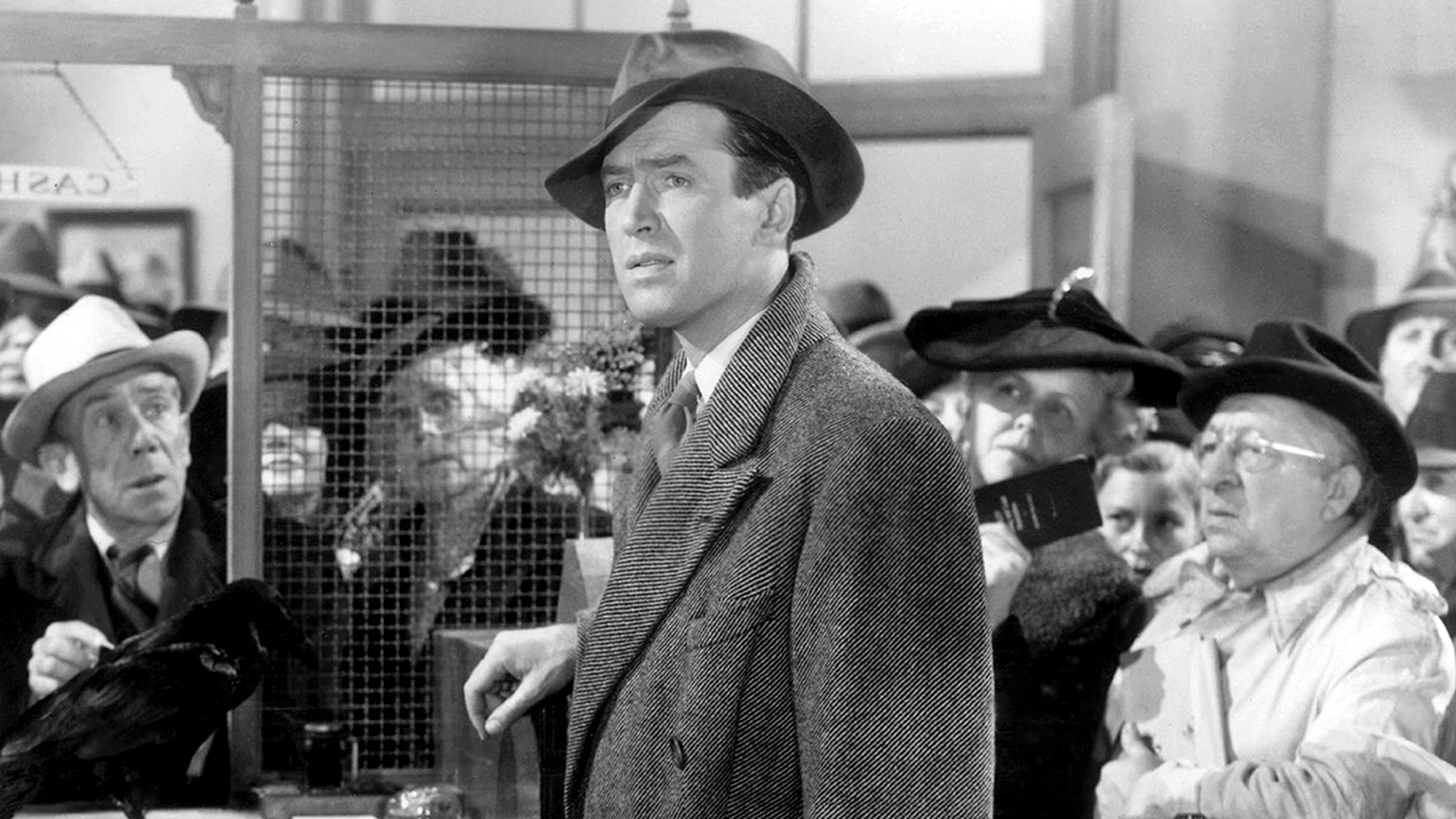
Guideposts Classics: James Stewart on ‘It’s a Wonderful Life’

A friend told me recently that seeing a movie I made more than 40 years ago is a holiday tradition in his family. That movie is It’s a Wonderful Life, and out of all the 80 films I’ve made, it’s my favorite. But it has an odd history.

When the war was over in 1945, I came back home to California from three years service in the Air Force. I had been away from the film business, my MGM contract had run out and, frankly, not knowing how to get started again, I was just a little bit scared.

Hank Fonda was in the same boat, and we sort of wandered around together, talking, flying kites and stuff. But nothing much was happening.

Read More: James Stewart on a Father’s Strength

Then one day Frank Capra phoned me. The great director had also been away in service, making the Why We Fight documentary series for the military, and he admitted to being a little frightened too. But he had a movie in mind. We met in his office to talk about it.

He said the idea came from a Christmas story written by Philip Van Doren Stern. Stern couldn’t sell the story anywhere, but he finally had 200 twenty-four-page pamphlets printed up at his own expense, and he sent them to his friends as a greeting card.

“Now, listen,” Frank began hesitantly. He seemed a little embarrassed. “The story starts in heaven, and it’s sort of the Lord telling somebody to go down to earth because there’s a fellow who’s in trouble, and this heavenly being goes to a small town, and…”

Frank swallowed and took a deep breath.

“Well, what it boils down to is, this fella who thinks he’s a failure in life jumps off a bridge. The Lord sends down an angel named Clarence, who hasn’t earned his wings yet, and Clarence jumps into the water to save the guy. But the angel can’t swim, so the guy has to save him, and then…”

Frank stopped and wiped his brow. “This doesn’t tell very well, does it?”

I jumped up. “Frank, if you want to do a picture about a guy who jumps off a bridge and an angel named Clarence who hasn’t won his wings yet coming down to save him, well, I’m your man!”

Production of It’s a Wonderful Life started April 15, 1946, and from the beginning there was a certain something special about the film. Even the set was special. Two months had been spent creating the town of Bedford Falls, New York.

For the winter scenes, the special-effects department invented a new kind of realistic snow instead of using the tried and true cornstarch.

As one of the longest American movie sets ever made until then, Bedford Falls had 75 stores and buildings on four acres with a three-block main street lined with 20 full-grown oak trees.

As I walked down that shady street the morning we started work, it reminded me of my hometown, Indiana, Pennsylvania. I almost expected to hear the bells of the Presbyterian church, where Mother played the organ and Dad sang in the choir.

I chuckled, remembering how the fire siren would go off, and Dad, a volunteer fireman, would slip out of the choir loft. If it was a false alarm, Dad would sneak back and sort of give a nod to everyone to assure them that none of their houses were in danger.

I remembered how, after I got started in pictures, Dad, who’d come to California for a visit, asked, “Where do you go to church around here?”

“Well,” I stammered, “I haven’t been going—there’s none around here.”

Dad disappeared and came back with four men. “You must not have looked very hard, Jim,” he said, “because there’s a Presbyterian church just three blocks from here, and these are the elders. They’re building a new building now, and I told them you were a movie star and you would help them.”

And so Brentwood Presbyterian was the first church I belonged to out here.

Read More: James Stewart’s Inspired Performance

Later, that church was the one in which Gloria and I were married. A few years after that it was the same church I’d slip into during the day when Gloria was near death after our twin girls were born. Then after we moved, we attended Beverly Hills Presbyterian, a church we could walk to.

It wasn’t the elaborate movie set, however, that made It’s a Wonderful Life so different; it was the story. The character I played was George Bailey, an ordinary fella who thinks he’s never accomplished anything in life.

His dreams of becoming a famous architect, of living adventurously, have not been fulfilled. Instead he feels trapped in a humdrum job in a small town. And when faced with a crisis in which he feels he has failed everyone, he breaks under the strain and flees to the bridge.

That’s when his guardian angel, Clarence, comes down on Christmas Eve to show him what his community would be like without him. The angel takes him back through his life to show how our ordinary everyday efforts are really big achievements.

Clarence reveals how George Bailey’s loyalty to his job at the building-and-loan office has saved families and homes, how his little kindnesses have changed the lives of others and how the ripples of his love will spread through the world, helping make it a better place.

Good as the script was, there was still something else about the movie that made it different. It’s hard to explain. I, for one, had things happen to me during the filming that never happened in any other picture I’ve made.

In one scene, for example, George Bailey is faced with unjust criminal charges and, not knowing where to turn, ends up in a little roadside restaurant. He is unaware that most of the people in town are arduously praying for him.

In this scene, at the lowest point in George Bailey’s life, Frank Capra was shooting a long shot of me slumped in despair.

In agony I raise my eyes and, following the script, plead, “God… God…dear Father in heaven, I’m not a praying man, but if you’re up there and you can hear me, show me the way. I’m at the end of my rope. Show me the way, God…”

As I said those words, I felt the loneliness, the hopelessness of people who had nowhere to turn, and my eyes filled with tears. I broke down sobbing. This was not planned at all, but the power of that prayer, the realization that our Father in heaven is there to help the hopeless, had reduced me to tears.

Frank, who loved spontaneity in his films, was ecstatic. He wanted a close-up of me saying that prayer, but was sensitive enough to know that my breaking down was real and that repeating it in another take was unlikely. But Frank got his close-up.

The following week he worked long hours in the film laboratory, repeatedly enlarging the frames so that eventually it would appear as a close-up on the screen. I believe nothing like this had ever been done before. It involved thousands of enlargements with extra time and money. But he felt it was worth it.

There was a growing excitement among all of us as we strove day and night through the early summer of 1946. We threw everything we had into our work.

Finally, after three months, shooting some 68 miles of 35-millimeter film, we completed the filming and had a big wrap-up party. It was an outdoor picnic with three-legged races and burlap-bag sprints, just like the picnics back home.

Frank talked enthusiastically about the picture. He felt that the film and actors would be up for Academy Awards. Both of us wanted it to win, not only because we believed in its message, but also for the reassurance we needed in this time of starting over.

But life doesn’t always work out the way we want it to.

The movie came out in December 1946, and from the beginning we could tell it was not going to be the success we’d hoped for. The critics had mixed reactions. Some liked it; others felt it was “too sentimental…a figment of simple Pollyanna platitudes.”

As more reviews came out, our hopes sank lower and lower. During February 1947, eight other current films, including Sinbad the Sailor and Betty Grable’s The Shocking Miss Pilgrim, outranked it in box-office income.

The postwar public seemed to prefer lighthearted fare. At the end of 1947, It’s a Wonderful Life ranked twenty-seventh in earnings that season. And although it earned several Oscar nominations, despite our high hopes, it won nothing. “Best picture for 1946” went to The Best Years of Our Lives.

By the end of 1947 the film was quietly put on the shelf.

But a curious thing happened. The movie refused to stay on the shelf. Those who loved it loved it a lot, and they told others. They wouldn’t let it die any more than the angel Clarence would let George Bailey die. When it began to be shown on TV, a whole new audience fell in love with it.

Today, after some 40 years, I’ve heard the film called “an American cultural phenomenon.” Well, maybe so, but it seems to me there is nothing phenomenal about the movie itself.

It’s simply about an ordinary man who discovers that living each ordinary day honorably, with faith in God and a selfless concern for others, can make for a truly wonderful life.

For more inspiring stories, subscribe to Guideposts magazine.
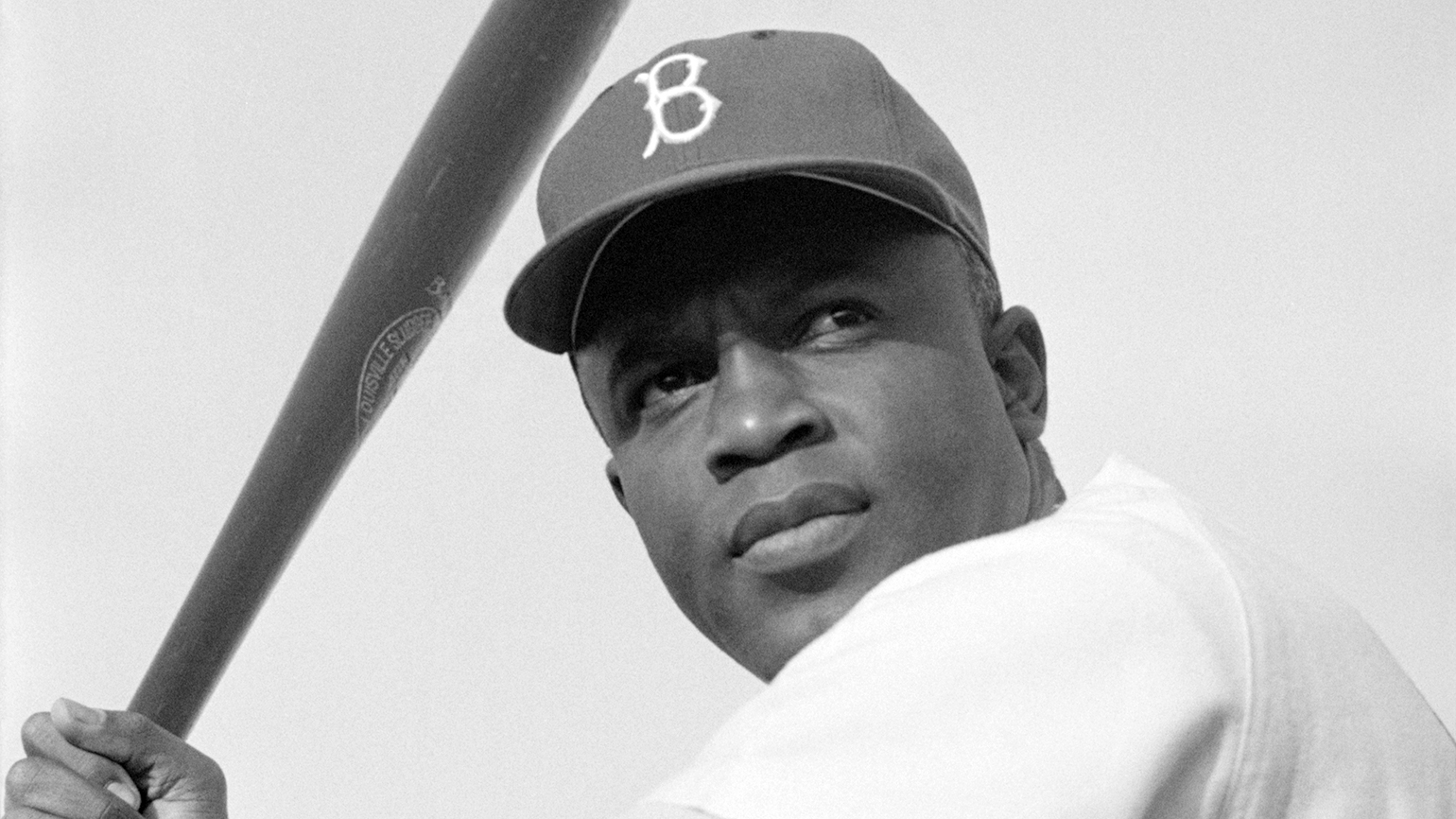
Guideposts Classics: Jackie Robinson on Facing Challenges

This is going to be a big year for me. After more than six years of shooting for a chance to manage a major-league baseball club, I’ve finally got one and I’m very happy about it. I’m grateful that the Cleveland Indian organization has enough confidence in me to let me lead its team on the field this year. Now it’s up to me to do the job.

That job, successful managing, is to me mostly a matter of caring about people and helping them to make the most of their own abilities. In that way, I suppose, managing baseball is not much different from any other job—or any other part of life actually—where working and living with other people is involved.

To me, no man did the job any better than Birdie Tebbetts, who was managing Cincinnati when I broke into the majors in 1956. Birdie is the best example I know of a man who cared deeply about the members of his team and wanted the best for them. And how he was loved by his players! The Bible says that love is kind and patient, full of hope and trust; if you believe that, then Birdie was a guy who really loved his players, too.

I remember my rookie year; I was 20 and scared stiff, though I tried not to show it. Birdie put me in left field for the opening game of the 1956 season against the Cardinals, and I got two hits in three at-bats. Though we lost, 4-2, on Stan Musial’s two-run homer, I came away from the game feeling good. Then I went into a tail spin, getting only two hits during my next 23 at-bats. I was really confused and beginning to doubt I was ready for the big leagues.

Before a Tuesday night game at old Crosley Field in Cincinnati, Birdie put his arm around me and said, “Frank, this guy they’re pitching tonight is one of the best, and he fools some of the veterans. I’m taking you out of the line-up tonight so you can watch him. You’ll be able to do the job against this pitcher eventually, but I don’t want you to get discouraged. I don’t want you to lose faith in yourself. You’re going to be a great player, but it takes time. I’ve seen too many players ruined by rookie slumps; I don’t want that to happen to you.”

And so I watched from the bench that night, secure in the knowledge that my manager was doing something for my own good, that he really cared about me. A few games later, Birdie put me back in the line-up, and I got a couple of hits. From then on, I started to play well. I hit .290 for the season and finished second in home runs in the National League, hitting 38. Birdie’s sensitive handling of me at a crucial time, I’m convinced, was the key. If he hadn’t really cared, and shown it, he would have let me play my way right back to the minors.

I want my players to know I care about them as people. And people who care about one another support one another; they work, hope and dream together.

Another thing about Birdie was his readiness to share his experience with the players. Always surrounded by rookies on the bench during a game, Birdie was constantly teaching.

“Now watch the runner, boys. He just got the sign to steal.”

“Let’s move our third baseman and shortstop back. This guy couldn’t drag a bunt with a thirty-foot bat.”

“Watch the pitcher. He’s telegraphing his curve ball.”

Anyone who sat beside Birdie for a whole game couldn’t help but learn something new. And that’s the way he wanted it.

George Powles, the manager of the Oakland American Legion baseball team on which I played as a teen-ager, was another manager who knew how to share himself with others. I was the youngest of ten kids in my family and fatherless after the age of eight, so I was ripe to respond to a man like George, who saw some potential in me. On weekends we would begin playing ball at nine o’clock in the morning and continue until dark. After practice, as if we hadn’t had enough baseball, George would invite us over to his house for sandwiches and baseball talk. What a student of the game he was!

One of the most memorable, and practical, things George told me came one day when I struck out on a fast ball because I wasn’t ready for that pitch, and it was by me before I could get the bat around. Afterward, George took me aside and said, “Always anticipate the fast ball. That’s the one that arrives at the plate the quickest. If the pitch isn’t a fast ball, you can adjust.” It was several years later in the major leagues before I heard that simple bit of logic repeated.

Another thing I believe is important in dealing and working with people is good communication, keeping those lines open all the time. Misunderstanding can almost always be traced to a lack of openness, directness between people.

Fred Hutchinson was one of my managers at Cincinnati early in my career, and although he knew the game as well as anyone, he was a tight-lipped leader. More than once, that lack of communication created some problems.

Once I got hit on the arm with a fast ball, and my arm swelled to twice its normal size. I had trouble swinging a bat; my arm hurt whenever I tried. Finally Fred told me he was taking me out of the lineup; he wanted to give my arm some rest.

The trainer worked on it and I did rest for a couple of games. I was improved enough to play, but because Fred didn’t engage in conversation easily, his players, especially one as young as I was, kept their distance and were often reluctant to volunteer information.

We were playing Houston and had fallen behind by two runs. In the last of the ninth, when we loaded the bases with one out, Fred needed a right-handed pinch hitter, and I figured he would ask me. Instead, he motioned to another player. That player, not a particularly good hitter, grounded into a double play and we lost the game.

Afterward, a reporter wondered why I hadn’t pinch hit. “Does your arm hurt too much?” he asked me.

“No,” I told him. “I could have batted, but I wasn’t asked.”

He wrote that in his story, and the next day Fred called me to his hotel room to tell me, very forcefully, what a mistake I’d made. The whole affair taught each of us a lesson, I think, for we seemed to get along better after that, and I came to appreciate Fred’s other qualities that made him a good manager.

Since then I have made a vow to myself to stay in touch with my players. Hearing from them is as necessary as their hearing from me—just as keeping communication lines open between parent and child, worker and employer, neighbor and neighbor, is important.

As a matter of fact, it’s really remarkable how much managing a team of ballplayers is like managing one’s own life—caring, sharing and communicating with others. And I’m sure that it’s because getting along with other people is such an important part of both. That’s why I think everyone should know something about managing.

For more inspiring stories, subscribe to Guideposts magazine.

Guideposts Classics: Irene Dunne on Her Faith Journey

At an evening party in my home several months ago, a fascinated group gathered around former Congresswoman Clare Booth Luce, who held her audience, not by brilliant discourse on politics or the theatre, but by her eloquent statements on her personal religious convictions.

An elderly gentleman smoked his cigar and listened quietly. When the party broke up, he turned to me and, shaking his head admiringly, he said, “You see, she’s just too smart not to be on the safe side!”

I was amused, but later on, as I went about ashtrays and putting out lights, I thought again about my guest’s remark. What he doubtless meant to say was, “She’s too smart not to be on God’s side.” How hard it is for most of us to talk about our religious feelings, I mused. But to tell others about them, to share your treasure, is so important, for surely the best way to keep your religion is to give it away freely.

READ MORE: ROSALIND RUSSELL ON FAITH AND HEROISM

Now I am no theologian, no scholar, not even a writer. I ask myself, “How can I find a simple, uncomplicated, sincere way of telling others about the richness, satisfaction, and joy that my religion brings to my life, so that they, too, may desire to open the door and let God in?”

Then it occurred to me it was something like seeing your friends for the first time since your return from a wonderful trip—let’s call this a heavenly trip. You had such a glorious time, you’ve already sent post cards, saying, “Wish you were here.” If you have the gift of words, your description of the place will make them want to go.

Even if you have not the gift, they will note that your trip has refreshed and restored you; your step is buoyant, your heart is light. The place where you have been, and still reside in secret, has done so much for you that all who come in contact with you will yearn to go there too. They want their cup filled to overflowing as is yours.

And the wonderful part of this heavenly trip is that everyone can go. Of course, the trip will entail sacrifices. Pleasures nearer home may have to be foregone; perhaps what may seem like valuable time will be taken away from the office or from social engagements. And the journey may take a long time. It all depends upon the person and the way he chooses to go about it.

For my own part, I can recount for you no dramatic stories en route. I did not, like Saul of Tarsus, suddenly awaken to find myself already in the Heavenly Place. Nor did tragedy or affliction force me to be towed in, or sirened in by ambulance, as has happened to so many. Neither did I have to search long and hard for the right road as did Thomas Merton who tells about it in “The Seven Storey Mountain.”

No, I was placed on the road at an early age, and it was straight and narrow and pleasant, though I suppose I made a few detours here and there and from time to time I took more rest than was necessary.

I was born into the Catholic faith at Louisville, Kentucky, and there was schooled by the Sisters of Loretta. Early in my youth I began to study voice and piano. I can remember attending early Mass, then going to a nearby Baptist Church to sing in the choir. I took my religion entirely for granted.

READ MORE: MARY ASTOR ON THE GIFT OF FAITH

On the opening night of my earliest musical show years ago, I was observed from out front, making the Sign of the Cross before my entrance. I had no recollection of this whatsoever. That’s how automatic, yet so much a part of me, my religion was.

The process by which I began to be happily aware of its enormous benefits to myself and others and to consciously try to practice it in my daily living, has come about very slowly, but I hope, just as surely.

Folks often ask me wonderingly how I have managed to keep my balance in the tinsel world in which I have lived. It is no wonder that those who are suddenly smothered in unaccustomed luxury and adulation are sometimes inclined to lose their sense of values and are tempted to play God themselves. Bishop Fulton Sheen says: “Twentieth Century man who thinks he is a God has to be psychoanalyzed to find out why he feels like the devil.”

In my own case I had the good fortune to be kept on the beam by the prayers of my saint-like mother. My father, a river steamboat man who became a United States Supervisor of Steamships, died when I was very young. Mother and I moved to Madison, Indiana, and I studied at a musical conservatory in Indianapolis.

While on my way to East Chicago to take a job as teacher of music and art in high school, I stopped to visit friends in Chicago. Just by chance I read where the Chicago Musical College was holding auditions for young singers, the winner to receive a scholarship.

I tried out, and to my astonishment—won. This encouraged me to try to become a singer in the Metropolitan Opera Company in New York City, and shortly Mother and I were on our way to New York.

I never did get to the Metropolitan, but the decision started me on my career. Throughout my working years in motion pictures, Mother’s steady faith has been an unfailing source of strength to me.

Her death a number of years ago was the most shattering personal blow I have ever had to bear. My mother’s presence and her prayers for me, like my religion, were something I had possessed all my life and taken too much for granted. How alone I would have been at that time if she had not pointed the way to another Comforter who would never leave me!

It is not alone in the crises of life that God has sustained and strengthened me, but also in day-to-day living problems, the unending decisions and petty annoyances. Most of us have grave responsibilities to our marriage and our children. I, for one, wouldn’t have the nerve to attempt to bring up my daughter without God’s help. To do so would seem to be the most incredible egotism!

Out of my heart and my own experience, I know that God has infinite treasure to bestow. The joy and peace of mind that accompany love of God and faith in Him are beyond the power of words. Because of my religion, I know that I have lived a richer, fuller, more satisfying life than would have been possible without it.

With all its hardships, the journey is worthwhile. Faith is a wonderful resort. How I wish you were here—if you’ve missed it!

For more inspiring stories, subscribe to Guideposts magazine.
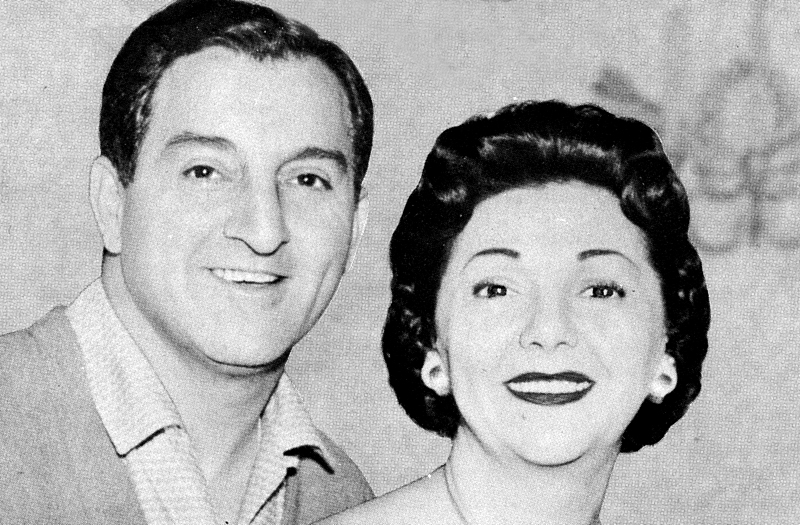
Guideposts Classics: How Danny Thomas Kept His Promise

It happened in Detroit in 1934. I was on “The Happy Hour Club” radio show when the announcer walked me over to the new singer, and said:

“Rosemarie, I’d like you to meet another singer, Amos Jacobs.”

His grin was boyish and uncertain. I liked it. Most of all I liked his eyes. They were bright with truth.

Two years later we were married.

Somewhere along the line he decided to change his name, so he took the first names of his two brothers and called himself Danny Thomas. Danny was a singer then, who later became a comedian—by accident.

In 24 years of marriage we have shared all the ups and downs of an actor’s life, and been blest with three children. Yes, we’ve had our quarrels, too, but underneath it all there has always been the abiding promise, “Till death do us part.”

It’s pretty hard for Saturday’s quarrel to go very far when you’re kneeling next to each other at mass the following Sunday; or when you eat in our dining room. For on the wall there’s a large mural, a mahogany carving of the Last Supper.

Our dining room table is U-shaped, so no one ever has his back to the picture.

Danny’s success on television has made it possible for him to keep a promise he made a long time ago, a promise to a saint named Jude. Looking back, it seems to me that the meeting between Danny and the Saint was inevitable…

Danny was born in Deerfield, Michigan, into a home of few material possessions, but one that had a wealth of love and mercy. Come to think of it, these are the real roots of our happiness today, not anything that came later.

He got these traits from his parents who were Lebanese. Danny’s father tried to raise dray horses in Deerfield, and didn’t do so well, and then they moved to Toledo, Ohio, where he tried to peddle dry goods, and didn’t do much better.

Danny’s mother was a woman of remarkable strength, of a simple and undeviating faith. She raised her daughter and eight sons on stories about the old country.

“In the old country,” she would say, “people were measured in only one way; either they had hearts and souls or they didn’t. Their wealth or lack of it, their power or their weaknesses were never mentioned. Such things didn’t matter.”

When Danny was ten he was selling candy in a theater. There the acting bug bit him.

By 16 he was a performer, a singer; at 18 he worked as a factory hand and as a night watchman so he could buy a new suit for a job on “The Happy Hour Club” radio show in Detroit. He hitchhiked his way there.

On that show he became known as “The Tin Horn Cavalier,” partly because he used a gas pipe and a funnel for his act, “Trumpet Impressions,” and partly, I suspect, because of his nose.

One night he was so broke he had to break a date with a girl, who became so furious that she wrote a letter to the radio station, asking:

“Is that his nose, or is he eating a banana?”

Danny read it over the air that night, and suddenly found himself a comedian. That brought him a few more theater jobs than before, but he still had to struggle.

Even after we were married and had our first child, he was earning only $35 a week—when he worked. He struggled, bitterly, trying to find his level. I begged him to quit this crazy, uncertain business, and get some kind of a job, any job, with a steady check.

I used to pray at night: “Dear Lord, let Danny open a grocery store, or anything that will be steady and keep him at home. You can have Danny Thomas, just let us have Amos Jacobs.”

On one of his blackest nights, when he was working in a small club, Sam (name changed for obvious reasons), an employee he knew, burst in on him like a wild man, raving about how St. Jude had cured his wife of cancer. Danny asked him who this Jude was.

Sam explained that Jude was really Judas Thaddeus and that he was one of the apostles, but was called Jude because they didn’t want to confuse him with that other Judas.

Sam went on to say that his wife was given up at the hospital, but that he knelt down on the marble floor at midnight and stayed there until dawn, asking St. Jude to intercede with God for her.

Just when the sun came up, the doctor walked out, lifted Sam up, and said: “I don’t know whom you’re talking to, but thank him, because things are happening that I can’t understand. I’ve called all the doctors over to see it. Whatever cancer there was is no longer there.”

Before Sam left, he pressed a card into Danny’s hand. It was a prayer to St. Jude. “Ask him to help you, Danny,” Sam said. “He helps all the helpless and hopeless.”

Confused and happy for his friend, Danny put the card in his pocket.

The next night Danny was passing a church, and stopped in. When he put his hand in his pocket to get something for an offering, Danny felt the card.

He knelt and had a long, friendly chat with Jude, and asked him if he thought God wanted him to go on trying to be a comedian or to give it up and open a grocery store.

Danny then promised that if God showed him which way to take, he would build a shrine for St. Jude where the helpless and hopeless could come when they wanted to pray.

Not long after this, Danny got his first important job: one week, for $50, at a small Chicago night club. He stayed there for two years. For the first 26 weeks he got a $10 raise every two weeks. Then he was offered a half-interest in the place.

When Danny went to church to give thanks for all this, he sat down for a moment to think, and next to him on the seat was a little pamphlet. On it was a prayer to St. Jude.

Danny felt good and bad at the same time; bad, that he had forgotten all about his promise to St. Jude, and good, that Jude had reminded him so gently about it.

Danny came home and told me that being a partner in a night club was no way to build a shrine to Jude, and that he had decided that the shrine was going to be a different thing, a research hospital to find cures for children’s diseases.

I said he was a religious fanatic, and he said, “Honey, I love you, but this I must do.”

It wasn’t long after this decision that Danny found his real place in the entertainment business; first in movies, then in television. Meanwhile he never quit on his promise.

After talking to the experts, he learned that one of the most practical locations for the shrine was in Memphis, Tennessee, next to the State University, because the medical college had the largest student body in the country and one of the best faculties.

He also learned that it would cost $2,000,000 just to build the hospital, not to mention maintaining it.

It took Danny over ten years to get most of it; by his own contributions, through endless benefits he played, and by raising it among all the Arabic-speaking people in America.

These people are of all faiths—Catholic, Protestant, Jewish, and Moslem—and they represent all walks of life, from plumbers to psychiatrists. But I believe it was the first time they had ever done something together, as an ethnic group, here in America.

On November 2, 1958, in Memphis, Tennessee, Danny dug up a spadeful of earth to break ground for the St. Jude Hospital Foundation. One friend has called it: “Danny’s house of thanks.” It will soon be open. The labs are already busy researching leukemia.

Part of that first spadeful of earth is encased in a jar in our living room. And Danny still carries in his pocket the thumb-worn card with the prayer to St. Jude on it.

For more inspiring stories, subscribe to Guideposts magazine.
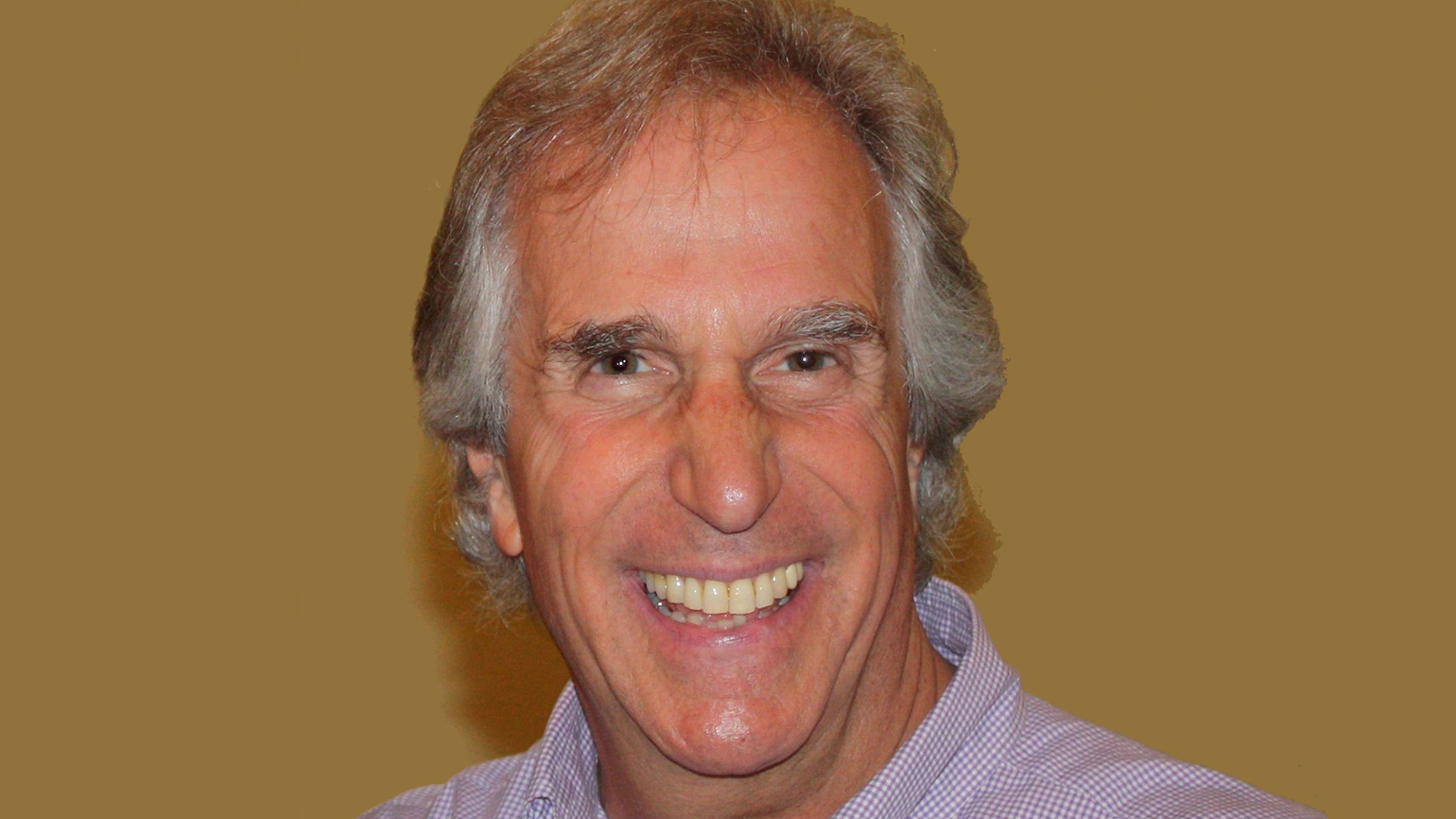
Guideposts Classics: Henry Winkler on Making the Most of God’s Gifts

For years I played one of television’s most popular characters, The Fonz—Arthur Fonzarelli, also known as Fonzie—that supercool guy on the hit series Happy Days who came on like Marion Brando in The Wild One but was really a street-sweet guy with a heart of gold.

Fonzie rode a motorcycle, and slicking-back his hair with a flick of his comb, set teenagers in the audience shrieking. Kids all around the country greeted each other with The Fonz’s familiar, “Hey … ay … AY!

In fact, Fonzie became such a part of American life that the black leather jacket he wore on the show is now displayed as part of the permanent collection at the Smithsonian Institution in Washington, D.C.

READ MORE: SHIRLEY JONES ON FATHERLY LOVE

Over the years Happy Days and all its characters and cast became like a real family to me. And yet, sometimes there were doubts in my mind about Fonzie.

I was trained as a classical actor at Yale Drama School, and I’d always meant to be a “serious” actor—doing drama, not comedy. And there were times when interviewers asked me if I felt I was “compromising myself” by playing a character like The Fonz.

Well, I’d answer that every acting job is important if it’s conveying a worthwhile message and you adapt the part to your own talents and tastes. That it took every bit of my training and skill to make the character of Fonzie come alive on the home screen—and that it was more demanding to play comedy and bring it off successfully.

I meant every word of what I said, but occasionally I too would wonder: Was playing the character of Fonzie doing anybody any good? I’d been raised in the Jewish faith and still felt a real peace and closeness to God when I worshiped in a synagogue. Was I doing what I was really meant to do? Was I using my God-given talents in the best possible way?

I’m chairman of an annual event called the Special Arts Festival that’s held at the Music Center in Los Angeles. It’s sort of a special olympics of the arts, where children with mental and physical handicaps come to perform in their own amateur theatrics, to show their talents, and exhibit their artwork.

READ MORE: DONNA DOUGLAS ON GIVING HER BEST

The walls are filled with paintings done by the boys and girls, music rings out as they play instruments and sing songs. It’s an exciting time for everyone as the kids have a chance to display what they can do and become aware of the special contributions they can make.

Children are there from all backgrounds and all walks of life, and as I walk through the crowds, I do a lot of hugging. I hold the hand of a little girl in a wheelchair. I joke with a young boy without a leg.

Several years ago there was such a racket that it’s amazing I heard the voice at all. “Fonzie,” someone said. A small, shy voice in all the hubbub. “Fonzie!”

A little girl with large brown eyes and dark curls looked up at me. She was perhaps five years old—just staring at me. She didn’t say another word. She wouldn’t answer my questions. I just figured she was simply one of those shy ones that you see occasionally.

I told the little girl how glad I was to see her, then stood up and looked into the face of the woman who must have been her mother. But why were the woman’s eyes shiny with tears?

The crowd closed around us and l went on.

And then one day I got a letter—from the mother of the little girl. She told me all about her daughter—I’ll call her Claire. Claire was autistic. In the entire five years of her life, Claire had not spoken a single word. Until she called out… “Fonzie!” Somehow the character of Fonzie had broken through to her, enabling her in that one mysterious moment to make a connection. With life.

The next year Claire was at the festival again, and I eagerly went to see her. This time her voice was firm and clear. “Hi, Fonzie,” she said.

“Claire’s teachers say she now has a vocabulary of over 50 words,” her mother told me. “They can’t believe what’s happened.”

Just at that moment Claire tugged at my hand. “My sister,” she said, pointing out the young girl standing close to us. “Hug her, too.”

Sometimes we wonder if we’re doing our best for God. We’re not sure if we’re doing what we should with the gifts He gave us. That little girl showed me that we simply have to do whatever comes our way to the best of our abilities. And trust that God will find His way to touch someone else with them.

And what is that trust called? It’s called faith.

Did you enjoy this story? Subscribe to Guideposts magazine.

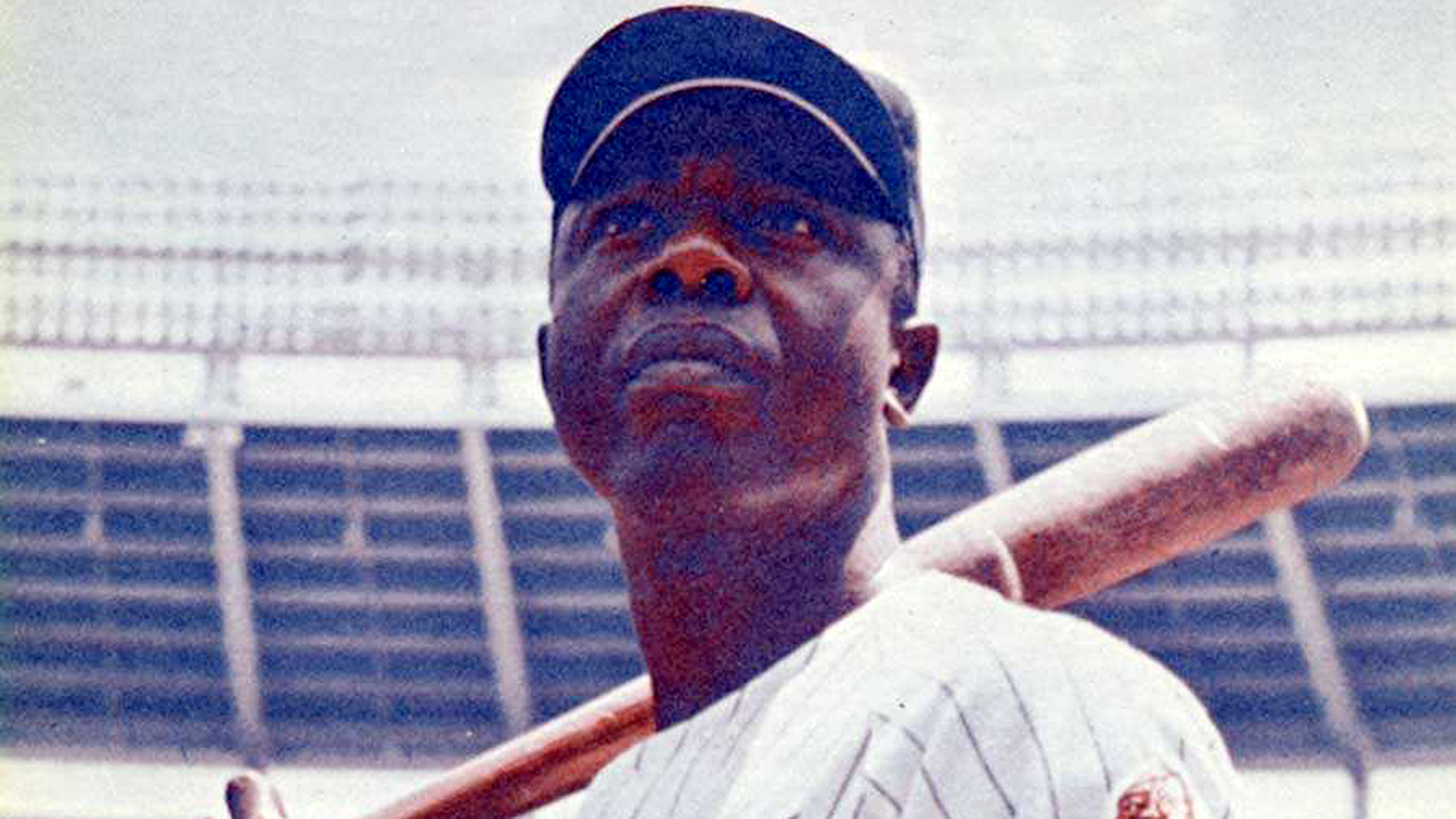
Guideposts Classics: Hank Aaron on Sacrificing for Others

No matter where I go, someone is bound to ask me if I think I will break Babe Ruth’s record of 714 home runs. The Babe is a legend now. He created more excitement than any player who ever lived.

What I find so hard to believe is that Hank Aaron, a nobody from Mobile, Alabama, is really the first player in 40 years to challenge that home-run record. Who am I to be in this position? How did it come about?

Well, I sure didn’t make it on my own. There were a number of people who helped me at crucial times. And because of those people I’ve tried to live my life a certain way during my 21-year career in baseball.

ENJOYING THIS STORY? SUBSCRIBE TO GUIDEPOSTS MAGAZINE!

My parents were strict with us kids. We had rules, we did chores and we all went to the Baptist church every Sunday.

There were plenty of spankings too. When I was 15 I was once offered two dollars to play baseball on Sunday afternoon. I turned it down. I knew Mama would never allow me to play ball on a Sunday.

My father, Herbert Aaron, was a boilermaker’s helper in a ship-building company and worked long hours to feed and clothe his wife and six children. He didn’t have much time to play ball or talk to us, but when he did, it meant something.

Like the time I skipped school to listen to the Brooklyn Dodgers game at the local poolroom. For some reason he got off early that day and saw me there. He didn’t get mad; he just crooked his finger at me to walk home with him.

I thought I was in for it, but my father didn’t punish me. He just asked some questions. Like what I was doing out of school and in a poolroom.

“I was listening to the Dodger game,” I said. “I want to be a baseball player. I’ll learn more about how to play listening to the Dodgers than sitting in a classroom.”

My daddy wasn’t an educated man, but he and my mama had made up their minds that their children were going to get educated. “You don’t think those fellows playing in the big leagues are dumb, do you?” he asked me.

“No, but they didn’t learn to hit and throw in a classroom,” I answered.

“You can be a baseball player and get an education too,” he continued earnestly.

We had an old car that was parked in our yard, and we sat in that car and talked and talked. I told him I was going to drop out of school when I got a chance to play baseball. He turned around and put his hand on my shoulder.

READ MORE: BABE RUTH ON THE FOUNDATION OF FAITH

“Son, I quit school because I had to go to work to make a living. You don’t have to. I put fifty cents on that dresser each morning for you to take to school to buy your lunch and whatever else you need. I only take twenty-five cents to work with me. It’s worth more to me that you get an education than it is for me to eat. So let’s hear no more about dropping out of school.”

You don’t forget this kind of sacrifice by your father. Herbert Aaron was always ready to deny himself something if it would help his family.

When I was 17 I was offered $200 a month to play ball for the all-black Indianapolis Clowns. I could hardly believe it. That kind of money for a game you loved! Only when I promised to continue my education later (which I did) were my parents willing to let me accept the offer.

So one day in May, 1952, my mother, two of my sisters and a brother took me to the Mobile railroad station for the trip to Charlotte, North Carolina, to join the Indianapolis team where they were having spring training. I left with two dollars, two sandwiches and two extra pairs of pants. It was while playing with the Clowns that I encountered this fellow by the name of Jenkins.

Jenkins was a pitcher and I roomed with him when we were traveling. He was tall and bony with big eyes and real short hair.

One night I was about to drink a container of milk when a bug flew into it. Disgusted, I poured it out. Jenkins was watching me.

“Aaron, do you know how many people in this world would have given anything for that milk you poured out?”

“There was a bug in it.”

“That doesn’t matter. Waste is a sin. There are too many starving people in this world for us to waste food like that.”

I would get annoyed with Jenkins and his preaching at times. We would get two dollars a day for meal money and when we stopped to eat, Jenkins would buy a few slices of bologna and a loaf of bread. He’d eat the bologna and half the bread and then sell the other half to another player.

Then one day after he received the two dollars for meal money, I saw him put one dollar in an envelope and seal it.

“What are you doing that for?”

“Mailing it to my wife,” he said. “I send her half my meal money every day.”

You know, I’ve never forgotten that tall, bony, unselfish guy. And I’ll think of him at some fancy banquet with all the food going to waste. Or when I’m telling my own kids not to be wasteful. Jenkins, like my father, had that rare quality of self-sacrifice.

I guess if I had real hero-worship for anyone, it would be for Jackie Robinson of the Brooklyn Dodgers. I was about 14 when he became the first black to play in the big leagues. I read everything I could find about him.

What fascinated me so much was that Jackie was an emotional, explosive kind of ballplayer. Yet during that crucial first year in the big leagues, he didn’t lose his temper in spite of a steady barrage of insults from fans and other players.

How did he keep control? I learned later that he prayed a lot for help. And he also had a sense of destiny about what he was doing, so much so that he felt God’s presence with him. He learned to put aside his pride and quick temper for the bigger thing he was doing.

Jackie’s example helped me when I faced a similar situation while playing with Jacksonville, Florida, in the Southern Association back in 1953. Blacks had never played in this league before. Three of us—Horace Garner, Felix Mantilla and myself—were the ones to break the color line.

I’m not the crusader-type, and there were times, frankly, when I wanted out. Like those bus trips from the ball park after each game on the road. The white players were left at the hotel while Horace, Felix and I were taken to a private home.

The best way to lick this racial thing is to play well. Play so well that the fans forget your color. And that’s what happened that year. As one sports writer put it, “Aaron led the league in everything but hotel accommodations.”

You learn a kind of acceptance in a situation like this. You set aside the thing that bugs you so that you can get on with doing what you know you’re supposed to do. I lost my temper a couple of times last spring when some fans heckled me from the stands. Then I’d remember Jackie and what he accomplished with his self-control, and the fact that there will always be people who resent you if you try to climb too high.

I’m not trying to preach a sermon with these stories, but they do add up to something basic which I think has enabled me to play baseball year after year now for 21 years. Like my parents—and Jenkins—and Jackie Robinson and others, I’m learning to do without something I want at the moment—like certain foods, drink and other temptations—to achieve the bigger thing ahead that is really right for me to want.

Certain parts of spring training in recent years have been agony and a punishment that I would have liked to skip. But at my age I have to discipline my body to keep on playing. The home runs keep coming only if my body is fit.

I also know this: I need to depend on Someone who is bigger, stronger and wiser than I am. I don’t do it on my own. God is my strength. He gave me a good body and some talent and the freedom to develop it. He helps me when things go wrong. He forgives me when I fall on my face. He lights the way.

The Lord willing, I’ll set a new home-run record. If I don’t, that’s okay too. I’ve had a wonderful time in baseball and have enough great memories to last two lifetimes. I have been blessed.

For more inspiring stories, subscribe to Guideposts magazine.
Guideposts Classics: Gloria Gaynor on Finding Faith

At a time in my life when I felt as if I were on a seesaw, praying one day and then smoking and drinking and partying the next, I went to a little Baptist church in New Jersey with my godmother. At the end of the service, the minister asked if anyone wanted to accept Christ as savior. Accept Christ? I didn’t even know what that meant.

When I got home I dusted off a study Bible a friend had given me some years before. We had discussed religion, and she must have realized how little I knew. Now I wanted to find out more.

I sat down in my dining room and let the Bible fall open. God, I’ve been praying all my life. I believe my prayers have been answered, but now I want to know who this Jesus really is. It was 1982 and I was the “Queen of Disco,” with more success as a singer than I could ever have dreamed of. My single I Will Survive had been a hit, topping charts around the world, and yet I still felt empty. I needed to sit in that dining room in our New Jersey apartment, read the Bible and look back at how God had worked in my life.

I grew up in Newark, one of seven kids, and we were a singing family. My mother sang; my brothers sang; even my youngest sister, Irma, who had a terrible voice, sang. We all loved music and constantly had the radio going. I would walk into the kitchen for a glass of water and turn on the radio. I remember once my mother took a pencil and wrote on the wall, “Gloria has just come into the house and left again without turning on the radio.” She said, “This has to be put down for posterity.”

When I was a girl my mother had surgery on her throat. After the operation she could no longer sing. Still she tried. One day she was trying to sing a beautiful song called Lullaby of the Leaves. I had heard her sing it hundreds of times. But now she couldn’t reach the notes. Finally she turned to me and said, “Gloria, sing it for me.” I didn’t think she had ever paid any attention to my singing. And there she was asking me to do one of her favorites.

My first public recognition came when I was 13 years old. I was practicing a song by Frankie Lyman—Why Do Fools Fall in Love?—under the staircase in the hallway of our building. The lady from upstairs leaned over the banister and said, “Oh, I thought that was the radio.” Wow, I thought, I really can sing.

Later, after I had graduated from high school, I was baby-sitting for a couple of days. Every morning at 10:00 I heard footsteps in the apartment above me. I began to follow the sound of those steps; wherever they stopped, I sang underneath. I wasn’t interested in applause. I just wanted my voice to be heard.

A few nights later, my brother Arthur and I went to a nightclub. As we were sitting at a table with our Cokes, I sang along with the band. The next thing I knew the bandleader said there was a girl in the audience named Gloria and perhaps if the audience applauded, they could get her to do a number or two. Too surprised to ask questions, I went up onstage and sang. Afterward the band asked me if I would like to work with them—starting the next night! As it turned out, the person whose footsteps I had been serenading was the manager of the club.

That was my start in show business. For the next few years I performed in clubs for nearly nothing. I loved every minute of it. I went in with my book of 200 songs, the band chose enough of them to get through the engagement, then we went to work. It was a wonderful experience. It built character, fortitude and confidence. By the time I was being hailed as “Queen of Disco” in the mid ’70s, I had put in countless hours of work. And I had said my share of prayers.

For as long as I could remember, I had prayed every night for all my family and friends. As a child I had a list that I said in the same order: God bless this one, that one. Whatever worries or troubles, I told God and asked him to put them right. I honestly can’t recall a time when God didn’t answer the smallest request, like a sunny day for a picnic or snow on Christmas. But I still didn’t know who Jesus was.

Two things happened that led me to that New Jersey church and started me reading my Bible in earnest. First, my mother—my closest companion—died. With her gone I became more and more aware of a great emptiness at the center of my life. I was looking for something to fill the ache inside me, yearning for something I couldn’t even identify.

Then on March 12, 1978, I had a terrible accident onstage. I was performing at the Beacon Theater in New York City. I was doing a number during which I danced away from three backup singers and then turned around, twisted my microphone upside down and snapped the mike cable like a whip. The singers grabbed the cable, but they didn’t hold on to it. I crashed backward over a monitor at the side of the stage, severely injuring my back.

What upset me later when I saw a videotape of the fall was the reaction of the band members. They didn’t look at me. They didn’t reach out for me. Nothing. The whole audience stood, and some tried to catch me. But those three singers didn’t. I had worked with them for several months, and I had thought we had gotten really close. Is there no one who really cares about me?

I was in the hospital for several months, and while there I began to read the Bible, almost out of boredom. I must have read the first chapter of Genesis 15 times. I never got further than that because I didn’t understand what I was reading; I don’t think I really wanted to. It was a semiprivate room, and one of my roommates called later to tell me that my reading had got her going to church. At least it did her some good.

When I was released from the hospital I stayed away from partying for a while, but then I couldn’t stand being left out of the good times. I wanted to study and talk to people about God, but I didn’t know any Christians well enough to ask the questions that nagged me. It got so bad that I stopped praying at night because I returned home so late I just fell into bed.

Then came my visit to that little Baptist church. For the first time, I was really ready for whatever God told me. At home I sat at my dining room table with my study Bible. I prayed, God, I want to know who Jesus is. I’m listening. I want to hear from you.

My Bible fell open to a chapter titled “Harmony of the Gospels.” Verse by verse it showed how the Old Testament prophecies were fulfilled. I wrote and studied and read. The verse that really spoke to me, a verse I had sung in Handel’s Messiah as a schoolgirl, came from Isaiah: “Behold, a virgin shall conceive and bear a son and shall call his name Immanuel” (7:14). And then the study Bible referred me to Matthew, where it is explained that Immanuel means “God with us.”

At that moment, the Good News spoke to me. God with us. Jesus is God with us. He is with us always, every day. He had been with me when I was a girl listening to my mom sing, when I was teenager, when I was a young woman performing in clubs night after night. Jesus is God with us.

For the next two years I sat down at my dining room table every time I had the chance, and I spent an hour or two studying the Bible. Today I feel blessed, and unshakable in my faith because I didn’t get it from my aunt, my mother, my grandmother or the lady upstairs—the Lord taught me.

I believe I was born again that first day that I sat down with the Bible. I had money and fame, but there was a great void, a God-shaped void, in my life. I was willing to let my old self die and ready to accept the gifts and strengths he would give me. I can’t tell you exactly what day it was because I never marked it on a calendar. But for me it was my second birthday.

For more inspiring stories, subscribe to Guideposts magazine.

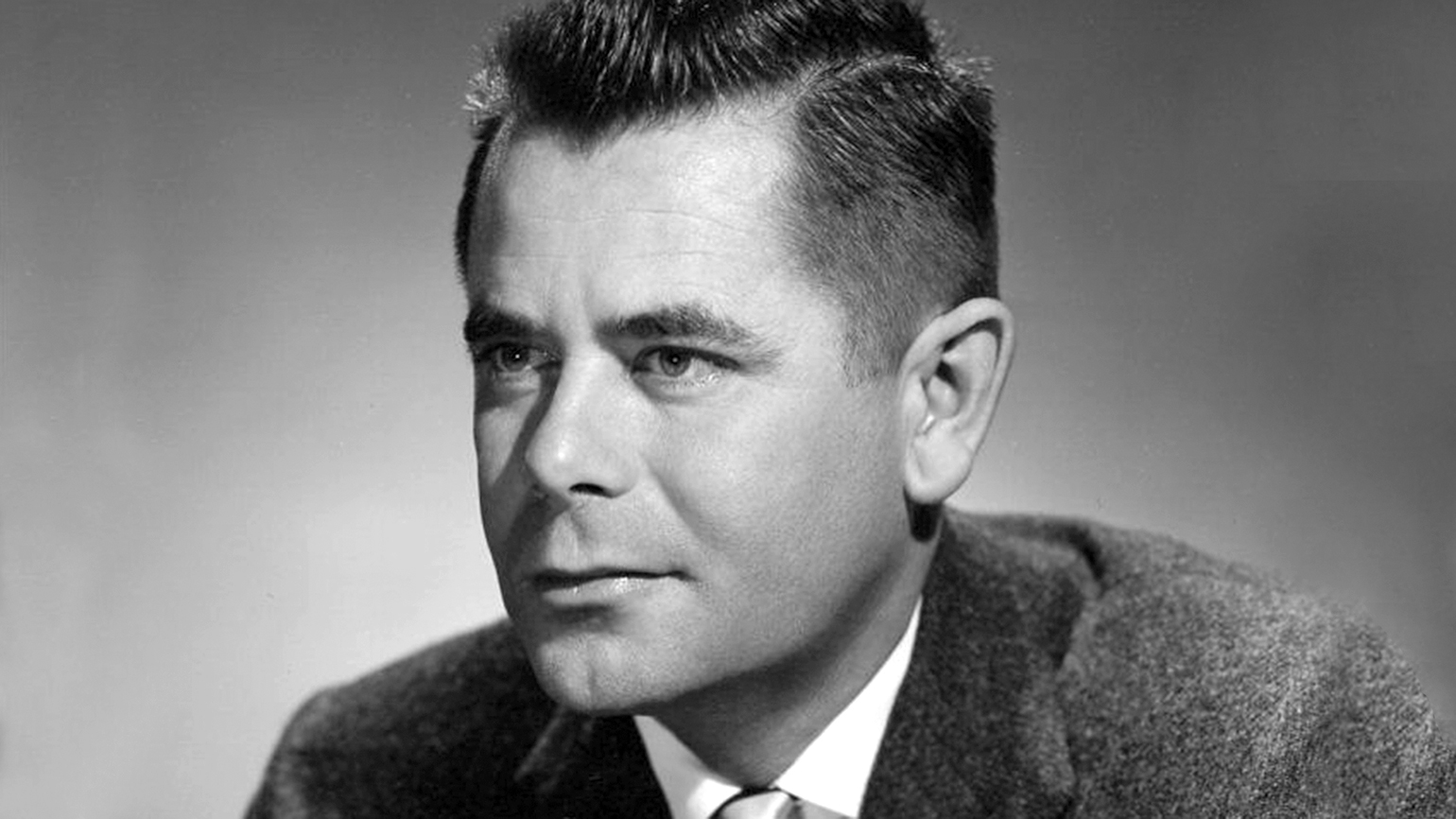
Guideposts Classics: Glenn Ford on the Blessings of Sunday School

Twelve years ago I married one of the most famous dancing stars in Hollywood. Today I am married to a Sunday school teacher. I haven’t changed wives, either. I am still married to the glamorous Eleanor Powell. What’s more, the change in my wife’s roles, far from dimming the drama in our lives, has led us both to a richer experience.

The truth is that since our son, Peter Newton Ford, arrived ten years ago, both Ellie and I have found God in a new way.

In the beginning, neither Ellie nor I was a stranger to God. I think we had always tried to be “good” people in His sight. Ellie was raised a staunch Presbyterian, and I taught in the Episcopal Sunday school for a while after I graduated from high. Then, although we had not yet met, the same thing happened to us that seems to happen to a lot of people.

We just got too busy. Ellie was breaking into musical comedy in New York. I was making screen tests in Hollywood and appearing on Broadway. Show business can be pretty high tension whether you’re scrambling up the ladder toward the top or balancing on one foot to stay there. Almost without my noticing the change, Sunday wasn’t church day anymore. It was a day of rest. No performance. No audience. No tension. It was old-clothes day, read-and-sleep day.

For myself, I honestly believed that skipping church wouldn’t dim my faith in God or make any difference in my relationship to Him. Occasionally, if I felt a personal need, as I did when my father passed away, I still went to church and came away strengthened, refreshed.

Dad’s passing, when I was 22, left me more deeply disturbed than I would confess. I couldn’t shake off my sorrow and loneliness. Still close to the church habit, I walked around New York one gloomy Sunday and finally entered a church at random.

The minister read from the 14th chapter of John: “Let not your heart be troubled: ye believe in God, believe also in me. In my Father’s house are many mansions…” I have heard those words since—in Westminster Abbey, on the deck of the U.S.S. California when I was in the Marine Corps—always with the same feeling that they reached out to answer a personal need.

That morning in New York was the first time their tremendous promise penetrated my consciousness, and I left the service filled with such peace as I had not known in many weeks.

Now, would any man wittingly turn his back on such a source of help? You wouldn’t think so. But my immediate need had been met, and Sunday once more became a day of rest.

Then, after Ellie and I had been married for two years, along came Peter.

Peter made the usual changes in our lives. The night watch, diapers, never putting down an open safety pin, hiding Father’s shiny cuff links when he got to the toddling stage. But it went deeper. Our own reeducation had begun.

Mine started almost at once. I had to begin to practice what I preached about table manners, and opening and closing doors for ladies, being alert in matters of honesty, neatness, the use of the English language. Peter’s mother pointed out very firmly that we couldn’t expect young Peter to “do as we say and not as we do.”

Then Peter was enrolled in Sunday school in the Presbyterian Church of Beverly Hills. Or I should say Peter and Glenn and Ellie were enrolled. For could I say: “Run along, little man, and learn about God. Dad will sleep.”

Obviously not. Furthermore our Sunday school encouraged parents to sit in the back of the church while their young were being instructed.

We didn’t exactly study their lessons with them, but I found myself learning other things. I learned that, in neglecting church, I had been missing something, that church could act as a catalyst between God and me, help to keep Him front-and-center in my consciousness, increase my awareness of Him in daily living.

I found that forming part of a congregation meant a closer tie with my fellow man, a giving, a sharing, as well as taking. Gradually I realized that, while I’d had no complaints before, things seemed to work more smoothly; I felt better; and I could only believe this stemmed from an increased vigor in my religious life stimulated by having Peter take us to Sunday school.

I watched, too, our friends who attended church as families, and saw that church life seemed to act as a magnet, a center that drew them into harmonious unity.

Perhaps the finest thing I learned was to watch with humility the fulfillment that can come from accepting Divine direction.

When Ellie decided to marry me and give up her career for family life and motherhood, I’ll admit to moments of wondering if it weren’t a shame that all my wife’s wonderful talents should be reserved only for Peter and me and our immediate circle. Knowing how much real pleasure her dancing had given thousands, I sometimes felt that it was selfish of me to stand by and let her hide her light under a bushel of household duties.

But Ellie seemed sure that her decision was the right one and that if she were doing the Lord’s will, a way would open up which would enable her to blend her professional talents with her family duties. Without her seeking it, without tension or struggle, a new opportunity did unfold which was part and parcel of our family life and through which she has reached a new audience of millions.

The seed was small and it grew naturally. One morning I dashed into Sunday school just under the wire to find Ellie leading the singing. Obviously she was enjoying it, and so were the kids. Shortly afterward she began serving as a substitute teacher, then took a regular class of her own.

That was 7 years ago, and she has yet to miss a single Sunday. Never have I seen her inspire a Broadway audience the way she inspires those youngsters. They don’t miss any Sundays either. And soon, on week days, the neighborhood kids were flocking around demanding Bible stories. She was, in theatrical terms, a “natural.” Nor was I the only one to notice it.

Over a year ago she was asked to teach her Sunday school class on television. We had both turned down TV offers before. Again Ellie said “no,” this time for a different reason. She felt her former professional status might make suspect her appearance before the public in this new role. It took our own minister, Dr. Sam Allison, and the Reverend Clifton E. Moore of the presbytery quite a while to persuade her.

Once persuaded, she went into action. She added several children to her group to include all denominations. We hired a bus, and right after her regular class in church, off we went to the television station.

Technically, now I produce my wife’s show, Faith of Our Children, for Station KRCA, Channel 4, in Los Angeles, something I once dreamed of doing. But in those days of “restful Sundays” I never dreamed it would be such a show, nor that I could be so proud of the production. If Ellie, in the years of her retirement, became simply Glenn Ford’s wife, well, every Sunday I now become Teacher’s husband. Nominally I’m supposed to “obtain suitable guests, write and produce,” but actually I load the bus, brush hair and straighten ties, or provide an escort to and from the drinking fountain.

Whenever I try to summarize exactly how this all happened to us, I find myself turning to my star performer. At the close of each TV performance, Ellie shares with every listening parent the secret for happier living that our own son Peter taught us, when he took us to Sunday school with him.

“Stay with your children more,” she suggests. “Play with your children more. Above all, pray with your children more.”

For more inspiring stories, subscribe to Guideposts magazine.
Guideposts Classics: George Foreman on Overcoming Adversity

I’m from Houston, Texas, and proud of it. Back when I was growing up, Houston didn’t show up in the news a whole lot. We had a Texan—Lyndon B. Johnson—as president for a while, and we had the Astrodome.

But in general we weren’t all that used to making headlines. So one of my greatest sources of pride as a professional boxer was being able to represent my hometown to the world. With every opponent I put on the canvas, I felt like I was putting Houston on the map.

These days, I live a quieter life as pastor of the Church of the Lord Jesus Christ, only a few miles from the neighborhood where I grew up. My congregation is small—about 150 people most Sundays—and that’s just the way I like it. In my new life, the Lord has called me to serve him with humility. It’s a role I treasure and work at.

READ MORE: MUHAMMAD ALI—THE MAN BEHIND THE LEGEND

But I still have my hometown pride—especially since 2005, when Hurricane Katrina hit the Gulf Coast. Katrina put Houston in headlines around the country and around the world. It also gave this city challenges it had never seen before. Challenges so great that many people wondered if we’d make it through in one piece.

During my boxing career I conquered most of the challenges I faced in the ring. But the challenge of being genuinely happy was another matter. In 1974, when I fought Muhammad Ali in Africa, I received a five million-dollar paycheck—and I lost the fight!

But if you think that that five million made me happy, think again. I’ve been poor with millions of dollars, and I’ve been rich when I was broke. Money never gave me any real joy, but with God in my heart I’m a rich man no matter what.

Katrina underlined that for me. It taught all of us here in Houston that no matter how good you have it in this life, it could be gone in a second. A single storm can sweep through and take it all away. But if you’ve got God, you’ll be okay.

Here are four things I want you to remember when you have to face down adversity, four things that have helped me:

1. Giving Helps Everybody
“It’s more blessed to give than to receive.” I used to hear that all the time as a kid, but believe me, I didn’t buy it. About the only thing I enjoyed giving with regularity back then was a punch.

But today I know that it is more blessed to give than to receive. And the blessing lies in how it makes you feel. Every good feeling in life passes—from enjoying a delicious meal to becoming heavyweight champion of the world. (I can personally vouch for the truth of both those statements.) But the feeling you get from helping someone else is different. It lasts.

I remember very well the day I discovered this. It was shortly after I’d regained the title of heavyweight champion of the world at age 45 back in 1994. I was driving along when I passed a cousin of mine who was walking down the street. I pulled over and picked him up. “How are you doing today?” I asked him.

“Pretty good. I’m looking for a job and I’m sure I’ll find one. I just wish I had a car.” Right then and there I drove my cousin to my house and gave him one of my cars. He was so grateful, and so happy. And seeing how much help I’d been to him made me happy. I still get joy when I think about it, and when I think about how I was blessed to be in a position to help him.

I’m not the only one who knows this secret. One Sunday soon after the evacuees came to the Astrodome, I looked out at my congregation and saw a whole lot of new faces. I knew why. My congregation was taking people into their homes and bringing them to church. Some of them were even wearing clothes that I recognized.

These people had lost so much that my congregation literally had to give them the shirts off their backs. My congregation is not affluent by any means, but nobody was saying, “I can’t give because I don’t have enough myself.”

People often use the expression, “You could feel the love in the air,” and you really could that day in my church. After the service, I got introduced to some of the visitors.

When I shook hands with someone who I knew was wearing borrowed clothes, I didn’t let on I knew, but just said, “That’s a real nice outfit.” There was such gratitude from those people at the way my congregation had opened their hearts to them. It was a day I’ll never forget.

2. It’s Not Our Circumstances That Determine Our Happiness
It’s our attitude toward those circumstances. The Bible says, “And we know that all things work together for good to them that love God.” Those words don’t promise that only good things will happen to you if you love God. But they do promise that if you love him, whatever happens can turn out to be in your favor.

God can turn any loss into a gain. Want proof? If you followed my boxing career you might recall that I was not always very well-disposed toward Muhammad Ali. And vice versa. We weren’t just opponents in the ring; we were enemies. After he defeated me in that fight in Africa, I spent months thinking of nothing else but how I’d pay him back.

But believe it or not, that defeat turned out to be a big blessing. I was on the comeback trail, fighting my way back to a rematch with Muhammad, when I lost to a journeyman fighter named Jimmy Young in San Juan, Puerto Rico. In the dressing room after the fight, I was taken out of my body. I met God, and realized the life I’d been living without him had been empty.

Soon after that experience, I called Muhammad and let him know what had happened to me. I told him I didn’t hate him anymore. In fact, I told him I loved him! He responded to my kindness, and a true friendship developed between us.

In my trophy case at home, I have a photo on display. The picture shows me right after I’ve been knocked down in that fight in Africa, with Muhammad standing over me. That photo is the first thing you see when you come into the room. Why? Because it was that exact moment that got me started on my search for God. The worst single thing that ever happened to me turned out to be the best.

It doesn’t matter what your own worst moment is. Storms of all kinds rage through our lives, and sometimes they can take everything from us. But if you have faith, your own worst moment can become your best.

3. You Never Know What God Will Bring You
Some years ago, a business friend gave me some advice. “George,” he said, “you ought to have your own product.” He sent me a small, funny-looking grill built with a slant to it and told me the people who made it were looking for a personality to market it. I put it aside. After all, who would want a slanted grill? That’s when my wife Mary stepped in. “That grill works great,” she said. “The grease rolls right off and the food tastes delicious.” She fixed me a burger to prove it. I took a bite. Mary was right. It was good.

“Okay, I’ll tell them I’m interested,” I said. “Maybe they’ll send us a bunch of free grills and we can give them away.” Well, I got those free grills. But I have to tell you, they weren’t the best part of the deal. I never would have dreamed what God was sending my way the day that funny-looking grill arrived on my doorstep. And if I hadn’t listened to Mary, I still wouldn’t!

4. No Storm Lasts Forever
It’s funny how often people use storm images when they talk about adversity. Jesus calmed a storm that terrified his disciples. The fact is bad times really are like storms. They flood in and knock you down, and it can seem like they’re going to sweep away everything good in your life. But eventually the waters subside. Sometimes—as in the case of Katrina—they can take a long, long time to go all the way down. But they always do.

Not too long after I gave my life to the Lord, my first marriage broke up. My then-wife just couldn’t cope with this new George she suddenly found herself living with. The pain of her leaving me was so great. And there I was, the pastor of a church. I was supposed to be giving people advice on how to live their lives, when I could barely get my tears to stop long enough to deliver any sermon at all.

The pain was so fierce I made a deal with God. Lord, I said, if you’ll take away this pain, I promise I’ll tell people they can make it through anything.

The next day I woke up and something was different. Losing my wife still hurt—bad—but I felt a strength inside that I hadn’t the day before. I was ready to move on.

Eventually, I met and married Mary. After my life came together again, I didn’t forget that promise I made to the Lord when the pain was at its greatest. With faith, you have the strength to survive any adversity. I’ve been giving my congregation—and anyone else who will listen—that message ever since.

Which gets me back to my hometown, and to our life after Katrina. We’ve had some struggles—overcrowding, housing shortages, job shortages, kids starting school—but in the end we did make it through in one piece. In fact, we’ve grown stronger in the sharing of adversity.

Adversity is never far from us in this earthly life. But neither is the help we need in getting through it. If I have the Lord in my heart, I have the one thing that truly matters. I believed that before Katrina and I believe it even more passionately now. We have proof of it right here in my hometown.

For more inspiring stories, subscribe to Guideposts magazine.

Guideposts Classics: Gene Lockhart on God’s Presence

When I was four my brother, myself and another boy were clearing the ice for “curling,” a game played in our native Ontario. While sweeping, the ice broke, and the three of us plunged into the freezing water.

A passer-by saw the accident. He quickly got a long pole and fished out our companion, who was so frozen and frightened he could not tell the man that there were still two other children under the ice. The man pushed the pole out again to retrieve what looked like the boy’s cap, but it was the belt around my coat. He hauled me to the surface, and to the shore.

My brother drowned. I was thought dead. With frantic work it was hours before a sign of life appeared.

Later, while holding me in her arms, I heard my mother murmur, “Thank you, dear God, for being with him.”

I was puzzled, “Where had God been? Where was He now?” Today, almost half a lifetime later, I have searched my mind and heart to reassemble the jigsaw pieces of yesterday—and to answer the question, “Where is God?”

God was certainly in the love my mother bore me when I first saw light. She loved people. For her no one could do wrong. If they did, she would find ample reason to prove it was not their fault.

No matter how empty our larder was, neither Mother nor Father could ever turn anyone away from our door. And many came. Mother loved the nearness of friends and children. At the least provocation she would stage a concert or a show in the town hall, or even in our living room, and almost always for children, from 7 to 70.

For example, one day a stray collie dog came to our door. Mother chatted with him, patted him, and fed him. Before he ate his food, he jumped up in gratitude, rolled over, leaped over a chair, and played dead. Mother laughed with delight.

“Children! Come and see the star of our show next Saturday”.

At the age of eight I started dancing with the famous “Kilties Band of Canada,” for which my father sang. Between engagements I received coaching in comedy from Harry Rich, who had another pupil at that time, my friend Beatrice Lillie. Today God finds in her His perfect instrument of laughter.

As I grew up and was preparing for a career on the stage, my mother advised me: “Arm yourself with another skill to take up the long intervals of searching for work.”

At De La Salle College, I enrolled in a business course. Later I worked in the Toronto ticket office of the New York Central Railway, and then for the Underwood Typewriter Company. I am still wondering why I was hired. But the ways of the Lord are not our ways. He had something in mind.

The son of the president was Ernest Seitz, who became my good friend and collaborator in writing songs. After my discharge from the Canadian Army at the end of World War I, we completed six songs. One of the songs was, “The World is Waiting for the Sunrise.” That was in 1921 and I believe it is still a popular song to this day.

In one’s heart there is always a God of hope.

At the age of 22 I decided to besiege New York. In due course my pockets were empty. I was too proud to write home for money, so I did what I had been taught from childhood: I got on my knees and prayed. A day later I was given a job installing a filing system for a milling company. While there I continued my studies, took singing lessons and knocked on many doors looking for stage work.

Then came a break—my first professional job in America—on a Chatauqua and Lyceum circuit. It lasted for 90 weeks. Since then, I have played an astonishing variety of roles. The One who notes the fall of a sparrow has tempered me with a multitude of failures and humbled me with a small measure of success.

One of my successes was my marriage to Kathleen Arthur, an actress and musician of great merit in her own right. Shortly after our marriage we were twice blessed: I appeared in my first Broadway hit, Sun-Up, which ran for two and a half years. We were given a lovely daughter, June. She began dancing in the Metropolitan Opera ballet school at eight. Today she is a television and stage actress.

There has always been a sweetness in the life and work Kathleen and I have had together that could only come through the guidance of a Divine Power.

For a number of years we gave our own recitals and prepared the material ourselves. We were in New York with the advent of radio. I wrote five programs a week, and we appeared in two of them. Every Sunday night for two years, we were in “Sunday Nights at Nine,” an informal revue where artists with new ideas and faith could find a platform. Among the artists who appeared and went on to fame were Shirley Booth and Van Heflin.

Yes, He manifests Himself in actions large and small: in a helpful letter, a small service to another, an expression of sympathy, a sincere handshake. It may even be a simple: “Good evening.”

One night in August, 1933, I was walking down a New York Avenue when I passed one of the directors of the Theatre Guild, head down, lost in thought. When I hailed him with a hearty, “Good evening,” he looked up, but did not reply.

The Theatre Guild summoned me the next morning. After a reading I was assigned the part of Uncle Sid in Eugene O’Neill’s tender comedy, Ah, Wilderness. The success of the play led me to Hollywood and the beginning of a long and happy career that still endures.

So, the God I know is a God of bounty and laughter, of hope and kindness, of testing and trusting. He is, above all, a God of mercy.

Fourteen years ago I went swimming off Laguna Beach, in California, and was caught in a fierce rip tide. I couldn’t find bottom, nor could I struggle out of the undertow.

I had two thoughts then: First, I asked God’s forgiveness. Second, I wondered how long the struggle would continue. I was sinking for what seemed to be the last time when a hand yanked me out. He was there again, in a watchful lifeguard.

Sometimes, before and after my skirmishes with death, I’ve forgotten to give thanks to the Saving Hand that swept me back to life. Thoughtlessly, I patted myself, egotistically praising my own luck, or vigor, or talent. Now I know. In each instance the circumstances of rescue implied intervention that was more than human.

The God of mercy was with me.

Inching slowly toward what is called “Success,” we are all restless with ambition. But, in my later years, as my thoughts turn to the end of my life, I know I have received, through the fire of time, a deeper sense of His power, a glimmer of the gentle way He molds a soul. I have felt the touch of His sure hand in human friendships and in the eternal beauty of nature.

Whenever one hears the song of a bird, the turning of leaves, the moving of waters, the silence of mountains, there is God.

In the agony of doubt, in the peace of mind, in the turmoil of life and in the peace of soul; in all of these there is God.

My life has proved to me that God is everywhere. I know now that the heart is ever restless, until it rests in God. Yes, all the world is waiting … for His presence.

For more inspiring stories, subscribe to Guideposts magazine.