Embrace God's truth with our new book, The Lies that Bind

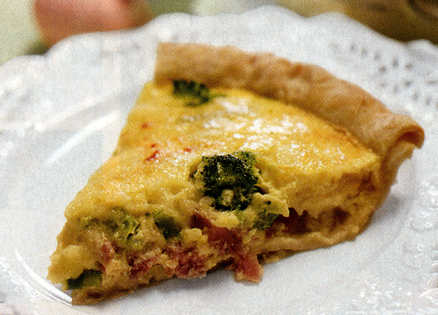
Easter Ham Quiche

The word “holiday” means family and friends, and I use any excuse to spend more time with mine.

Every Easter I make a big ham and have everybody over for dinner. But then I do something just as yummy with the leftovers: Easter ham quiche.

I love this recipe because it’s quick and simple and works for breakfast, lunch or dinner!

Ingredients

Preparation

1. Heat oven to 375°.

2. Layer ham, broccoli and cheeses in pie crust.

3. Beat eggs with milk and half and half, then add salt, pepper and mustard.

4. Pour over ham, broccoli and cheese.

5. Bake for 40 to 45 minutes, or until knife inserted in center comes out clean.

6. Let stand a few minutes before serving.

9″ pie crust 1 ½ c. cubed cooked ham
1 c. broccoli florets, cut into small pieces ¾ c. shredded Swiss cheese
¾ c. shredded cheddar cheese 4 eggs
¾ c. milk ¼ c. half and half
¼ tsp. salt ½ tsp. pepper
½ tsp. ground mustard

Duck Dynasty: A Family Built on Faith

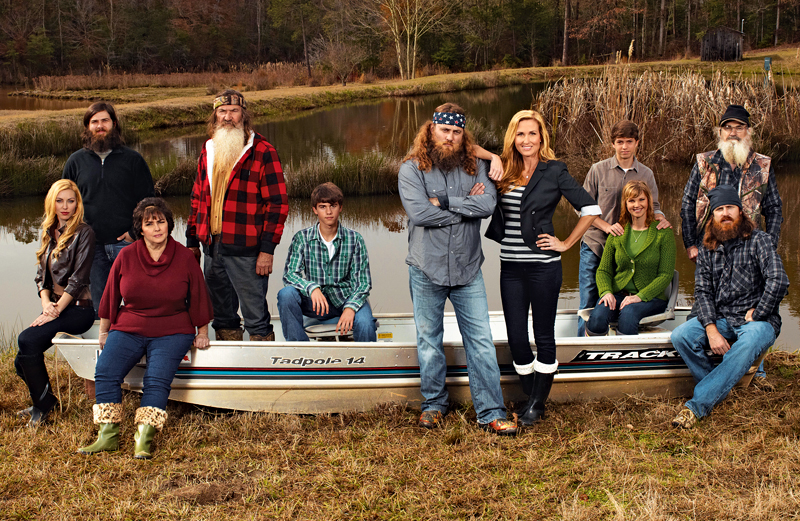
I don’t want to mention names, but a lot of what’s on reality TV today is people gossiping, backbiting, cheating and being mean to each other. But not on our show. Duck Dynasty is about the family I married into, the Robertson clan, who make world-class duck calls.

We try to present something different for our viewers. We do have our disagreements, but every episode ends with a meal and a prayer, and in between we have a lot of laughs.

In fact, the first time we sat down as a family to watch Duck Dynasty we laughed so hard at ourselves that we could hardly hear the TV.

Our show is about ducks, fishing, beards, good eating—and the values that keep a family together. After 21 years of being a Robertson, there are some great life lessons I have learned.

1. Support each other.
They say we court young in the South. I met my husband, Willie, when we were in third grade, at Camp Ch-Yo-Ca. His mom, Miss Kay, was the camp cook that summer and her boys attended the camp for free.

Willie had big dimples and the cutest sideways smile. I had a diary that I never used much, but that summer I wrote, “Met a boy at summer camp and he was so cute. He asked me on the moonlight hike and I said yes!”

As my father-in-law, Phil, likes to say, I’m a city girl. The “big city” I grew up in was West Monroe, Louisiana, population 13,000.

The Robertsons lived out in the country on the Ouachita River. That’s where Phil launched his duck-call business, Duck Commander (“Phil, you didn’t call that duck. You commanded it,” claimed a friend, hence the name). They still live out there.

The first time I visited was with a church group when I was in fifth grade. I was surprised that the house was so tiny. Kay didn’t even have a dishwasher, but she cooked for the Duck Commander employees every day along with her four hungry sons. She spent practically her entire day in the kitchen.

The business was struggling, but that didn’t stop Phil from bragging about his sons. “Have you met my boys?” he asked me. “They’ll make good providers someday.” How could he have known that back then?

Willie and I didn’t start dating seriously until my senior year of high school. He had an orange 1980 Mustang with torn white leather seats and lived in a rented house in town with six other guys.

I loved to drop by in the mornings and Willie would make me fancy omelets for breakfast. He was a great cook then (he still is), and I could hardly make a thing (and still can’t).

When we first decided to get married, my parents weren’t thrilled. They were afraid I would drop out of school, start having kids and never go to college. Then they saw how committed we were. They supported us all the way—something that runs in both our families.

2. Work works.
For years, the entire Duck Commander operation was run out of that little house. Willie and his brothers helped with everything. They would sand and stain duck calls, dip them in polyurethane, pack them up for shipping.

It used to embarrass Willie when he would go to school with his fingers brown from tung oil. The boys also took the orders, because people called the house to place them. Whoever took the order would just grab a napkin or paper plate and write it down.

There would be a big stack of paper plates or napkins sitting on the kitchen counter with orders on them. It may have been a rudimentary system, but it worked.

If Willie wanted anything, he had to work for it. He still talks about the cool parachute pants that he bought in high school with money he made selling worms.

In our young married days, with both of us going to college, he did tons of extra jobs: working at a bowling alley, as a janitor for a real-estate agency, in an ice-cream plant (he hated being in the freezer all day).

I finished college with a degree in art education and helped out by hand-painting a limited edition of duck calls while our babies slept.

Even today, with business booming, our children know that when we say, “All right, kids, it’s family cleanup time” or “family wash-the-car time” or “family clean-out-the-garage time,” it’s nonnegotiable. You just do it because you are part of the family. The family that works together stays together.

3. Don’t take yourself too seriously.
The Robertsons tease each other all the time. It’s a sign of affection, but it does take some getting used to. One time I burned the dinner bread and felt terrible about it. Now everybody jokes that you know dinner is ready at our house when you hear me scraping the bread.

Like I said, I’m no great cook, but Kay, who truly is, once fried the shrimp at Christmas a tad too long. They came out dark brown and rubbery. Every Christmas the guys ask her if she’s going to serve rubber shrimp again. Even Kay still laughs at that joke.

In the early days, Kay also made sure that the Duck Commander business was a fun place to work. If it was somebody’s birthday, she cooked the birthday boy or girl’s favorite meal for lunch. There were always a lot of laughs.

Duck Commander is still a fun place. We take our work seriously, but not ourselves.

4. There’s always room for one more.
I learned this from both of our families. Willie and I had two kids, John Luke and Sadie, when we decided to adopt a baby. I’d always been inspired by the verse that says true religion is to look after orphans and widows in their distress (James 1:27).

We had a friend who was teaching a class for pregnant teenagers, some of whom were putting their babies up for adoption. We filled out the paperwork and the adoption agency called us. They showed us this picture of a baby boy and we fell in love like that! We named him Will.

Just a few weeks after the adoption I found out I was pregnant. Our Bella is 10 months younger than Will.

It was pretty crazy for a while. If the two of them were left alone for a moment, they’d squeeze toothpaste out of the tube and smear it all over the bathroom mirror or dump the cereal out of the boxes. I used to carry them both at once, one on each hip, just to keep them out of trouble.

We weren’t quite finished, though. We welcomed Rebecca, an exchange student from Taiwan, into our home during her junior year of high school. She ended up staying with us and going to college here in the States. We consider ourselves her American mom and dad.

She has now been with us eight years. We also support an orphanage in the Dominican Republic. The Robertsons didn’t always have a lot, but they made a place at the table for someone who needed a good meal or a listening ear.

5. Put your best face on at home.
Kay has been a great example of this. She works really hard at her marriage to make it fun and to make Phil happy. She writes little notes for Phil even after all these years, and he does special little things for her too. It’s not give and take. It’s give and give.

Many people go to work and give their all to the outside world, but at home they’re negative or griping or just plain dull. They leave their best selves at the office. We try to make every day at our house like a homecoming. That way our kids know that home is where you should be the happiest.

6. Trust that the Lord will provide.
We are more successful than we ever dreamed. But if it all disappeared tomorrow we would be okay, because we would still have our faith in God. It’s what allows us to forgive each other, love each other and listen to each other.

Neither Phil nor Kay will let us forget how God kept Duck Commander afloat in those rough early days. Once a bank payment was due and Kay told Phil that they simply did not have the $800 they needed. “Let’s go and check the mailbox,” Phil suggested. “Maybe there will be a check in there.”

Kay knew differently. No one owed them anything and they owed the bank $800. Reluctantly she walked with Phil to the mailbox. There they discovered an envelope postmarked Japan. It was an order for duck calls with a check for $800.

Duck Commander had never sold a duck call to Japan before, but somehow at the time when Phil and Kay needed it, the Lord provided.

As Willie says, having faith that the Lord will provide is the only way you can ever be successful in this world. It gives you the courage to take risks.

You have to be willing to fail while working your tail off to succeed. You have to believe in what you’re doing and keep your faith in who you are. That’s the reality behind our reality-TV show.

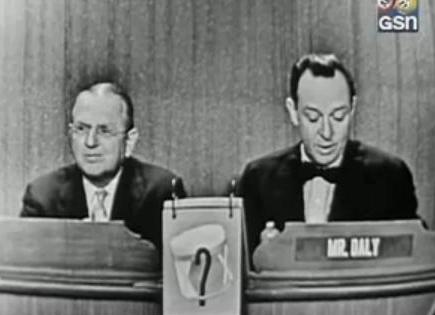
Dr. Norman Vincent Peale on “What’s My Line?”

Let’s meet our first contestant. The blindfolds are all in place, panel?

Yes, sir.

Yes.

Good. Will you come in and sign in, please?

[APPLAUSE]

I would like to ask you, first of all, if you’re familiar with our scoring system. Are you?

I am.

Good. In that event, let’s let everybody at home and those who are here with us in the theater, except my friends on the panel, know exactly what your line is.

[APPLAUSE]

All right, panel. Needless to say, you are blindfolded because there is an area of identification involving either appearance, dress, handwriting, location– all sorts of things that we normally use as sort of little helps and aids to you. We’re not going to give you this trip. But we will let you have one bit of help. Our guest is salaried. And let’s begin the general questioning with Bennett, sir.

Uh– does your job as a salaried job come from a non-profit-making organization?

Yes.

Is the non-profit-making organization something to do with government?

No.

One down and nine to go, Ms. Francis.

Uh, is the non-profit-making organization anything to do with the church?

Yes, ma’am.

Uh– are you an important member of any particular religion?

Not so much.

Well, now, I must now, I think, correct that answer and say that our guest is indeed an important member of one faith.

Well, I’m going to take your word for the truth, John.

Yes.

[LAUGHTER]

Um– have you written any books?

Yes, ma’am.

Have you a column in any newspaper?

Yes, ma’am.

Uh– does one call you doctor?

If they want to be real respectful.

[LAUGHTER]

Well, that’s what I want to be.

And they would want to be, Ms. Arlene.

Um– are you by any chance– oh, dear, there are two I’d like to ask about.

Go ahead.

Are you Dr. Norman Vincent Peale?

Yes!

Are you?

[APPLAUSE]

I must say, congratulations, Arlene. That was magnificently done. Bennett, you unlocked the door, of course, with that question about–

I was expecting the mayor of Dublin tonight.

[LAUGHTER]

I tried to talk with a brogue, but I gave it up.

[LAUGHTER]

Oh my. And of course– actually, I suppose the question about the books was a critical one too, because we all know that Dr. Peale has written–

A bestseller. And you didn’t publish it, Bennett.

No, this is the remarkable thing about Dr. Peale’s book. If memory serves me right, I’ve read recently you have another book–

That is right, John.

–coming out very soon.

That is right.

“Stay Alive All Your Life.”

It’s “Stay Alive All Your Life,” yes, sir.

It’s about to be published?

Yes, tomorrow, as a matter of fact.

Tomorrow’s publication day? Well, wonderful, sir. Well, I, with a great many others, have had great benefit from your earlier books and look forward to this new one. Yes, Arlene?

Well, that’s a real compliment.

I was just going to say that the last time I saw Dr. Peale, we were on a heavenly mountaintop in Switzerland. And he looks as though he’s been there all the time.

[LAUGHTER]

We had a good time, didn’t we?

Wonderful, yes.

Dr. Peale, you should give your publisher a little publicity. Who is the publisher of your new book?

Now, that I call real generous.

[LAUGHTER]

Prentice Hall, Incorporated.

There we are. And Bennett has done his good deed for the next 300 years–

That’s really a Christian spirit.

[LAUGHTER]

He really turned the other cheek, didn’t he, Doctor?

He surely did.

Well, Dr. Peale, thank you very much for being our guest. I’m sorry we didn’t give them more trouble. We’d hoped you’d be out here with me much longer than this.

Well, I wish I had, then.

Nice to have had you with us, Doctor.

Thank you, John.

[APPLAUSE]

Dr. Peale’s Question and Answer Department appears in each issue of “Look Magazine.”

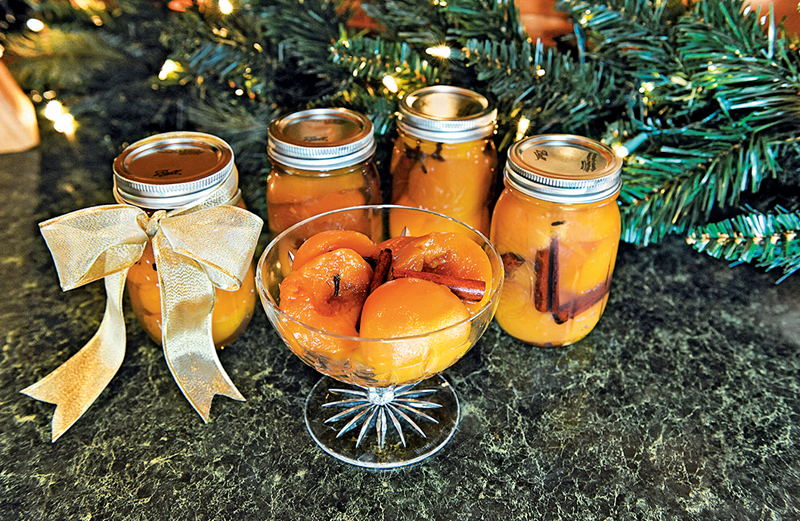
Dolly’s Pickled Peaches

If you’ve never had a pickled peach, you’re in for a treat. I love canning these and tying them with pretty ribbons for friends and family at Christmas. My aunt Lily Owens won all kinds of ribbons at the fair for her pickled peaches. The best peaches to use are clingstones, and they should be firm and about perfect.

Ingredients

4 c. sugar 8 cinnamon sticks
1 c. apple cider vinegar 2 tsp. whole cloves
1 Tbsp. peeled, coarsely chopped ginger 4 lbs. peaches

Preparation

1. Put a large pot of water on to boil. Prepare a large bowl with ice and water.

2. Combine sugar, vinegar, ginger, cinnamon sticks and cloves with 2 cups of water in another large pot. Cover, and bring the mixture to a boil, stirring often, until the sugar has dissolved.

3. Remove the pot from heat and set aside. Parboil the peaches in batches by submerging them in the boiling water for 30 seconds. Remove with a slotted spoon and drop into the ice water.

4. When cool enough to handle, remove the skins. Halve and pit the peaches. Transfer the peaches to the sugar-spice mixture and place the pot over low heat. Cover and simmer until the peaches are heated and tender when pierced with a fork, about 10 minutes.

5. Remove from heat. Use a slotted spoon to pack the peaches quickly into hot, sterilized pint-size jars, filling them within ¾ inch of the rim.

6. Remove any air bubbles by sliding a nonmetallic spatula between the jar and the peaches 2-3 times. Clean the rim and threads of the jar with a damp cloth.

7. Center a heated lid over the band and screw it down firmly and evenly. Place the jar in a canner or hot-water bath for 30 minutes.

8. Remove the jar and set on a towel to cool for 12-24 hours. The canned peaches will keep up to 1 year in a cool, dark place.

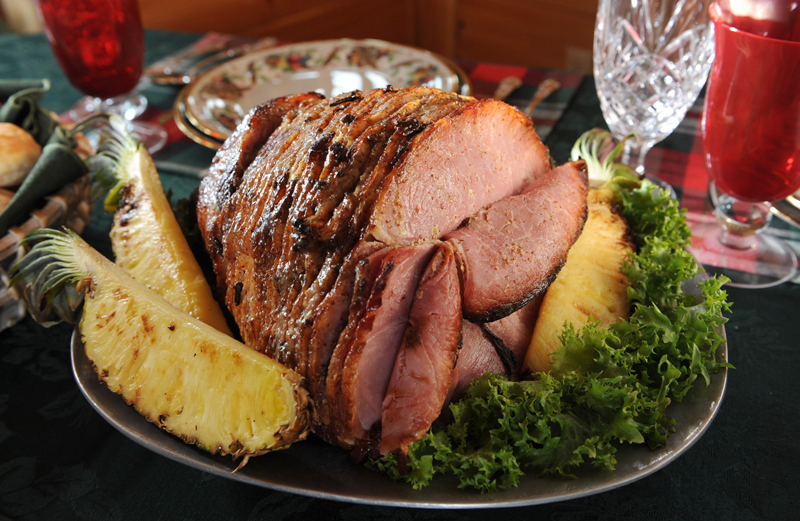
Dolly’s Hickory-Grilled Ham

Daddy always reserved the best pork shoulder from the slaughterhouse for our holidays, which always made us feel special.

Ingredients

1 6-lb. smoked ham, fully cooked with bone in 1 Tbsp. whole cloves
½ c. Dijon mustard 1 large fresh pineapple
½ c. brown sugar, firmly packed 4-5 tennis ball-sized hickory wood chunks

Preparation

1. Soak the hickory chunks in water for 1 to 24 hours before using.

2. Cut the ham bone loose from the meat but do not remove it. Combine the mustard, brown sugar, and a half-cup of water in a small bowl and stir until smooth. Brush the mixture all over the ham.

3. Prepare a charcoal grill to low heat (250°F to 300°F) with the rack 8 inches above the coals. Drain the hickory chunks and place them on the coals around the edges of the grill.

4. Place the ham on the rack, close the cover, and grill for 45 minutes to 1 hour, turning and brushing often with the mustard mixture.

5. Transfer the ham from the grill to a cutting board. Score the ham in a pattern of 1-inch diamonds, slicing about a quarter-inch to a half-inch into the meat. Insert a clove into the middle of each diamond.

6. Return the ham to the grill and cook until the center of the meat registers 140°F on an instant-read meat thermometer, about 30 minutes. Transfer the ham to a cutting board.

7. Meanwhile, cut the pineapple into 12 wedges: slice vertically though the leaves, keeping the leaves intact. Grill on a lightly-oiled rack, cut side down, until charred, about 2 minutes.

8. Remove the bone from the ham and slice. Serve with the grilled pineapple.

Oven Baking (if you don’t have access to a grill):
1. Use a fully-cooked spiral ham. Pre-heat oven at 375°. Put the ham in and reduce temperature to 325° and bake for 10 minutes before brushing on the glaze.

2. Bake for 45 minutes to 1 hour (about 7–10 minutes per pound). Put pineapple wedges around the ham in the baking dish during the last 5-10 minutes.

Serves 10 to 23.

Nutritional Information: Calories: 340; Fat: 7g; Cholesterol: 145mg; Sodium: 3410mg; Total Carbohydrates: 32g; Dietary Fiber: 1g; Sugars: 22g; Protein: 39g.

Try more of Dolly’s favorite recipes, and don’t miss her inspiring story about her family’s Christmas traditions.

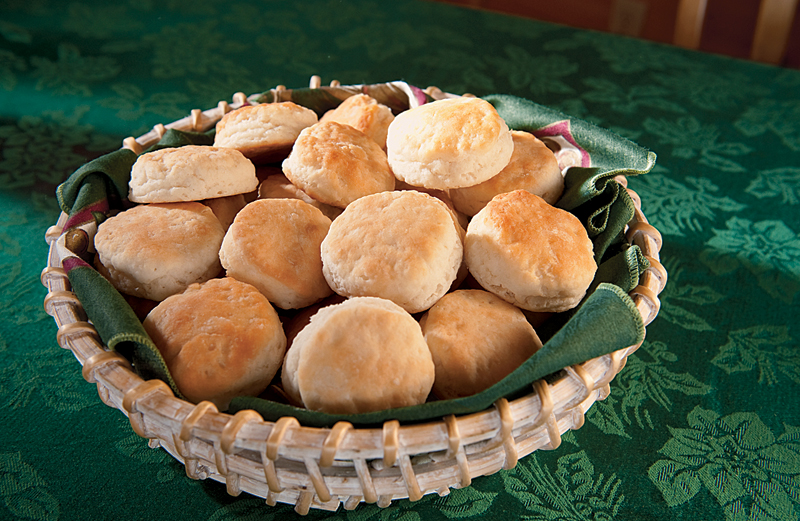
Dolly’s Biscuits

Ingredients

2 c. all-purpose flour, plus extra as needed 1 tsp. salt
¼ tsp. baking soda 5 Tbsp. lard or vegetable shortening
1 Tbsp. baking powder 1 c. buttermilk

Preparation

1. Sift together the flour, baking soda, baking powder and salt into a large bowl. Cut in the lard with a fork or pastry cutter until the mixture forms coarse crumbs.

2. Add the buttermilk and gently mix with your hands until thoroughly combined. If the dough is too tacky, add a bit more flour.

3. Knead the dough for 2 minutes. Wrap the dough in plastic wrap and refrigerate until chilled, about 20 minutes.

4. reheat the oven to 450°F. Roll the dough out onto a clean, lightly floured surface to 1/2 inch thick.

5. Using a 2-inch biscuit cutter or an overturned glass, cut out the biscuits. It’s okay to reroll the scraps to cut more biscuits.

6. Bake on an ungreased baking sheet until golden brown, 13 to 15 minutes.

7. The biscuits can be wrapped tightly and frozen up to 2 weeks.

Makes 2 dozen biscuits.

Nutritional Information (using vegetable shortening): Calories: 70; Fat: 3g; Cholesterol: 0mg; Sodium: 190mg; Total Carbohydrates: 8g; Dietary Fiber: 0g; Sugars: 0g; Protein: 2g.

Try more of Dolly’s favorite holiday recipes, and don’t miss her inspiring story about her family’s Christmas traditions.

Download your FREE ebook, The Power of Hope: 7 Inspirational Stories of People Rediscovering Faith, Hope and Love.

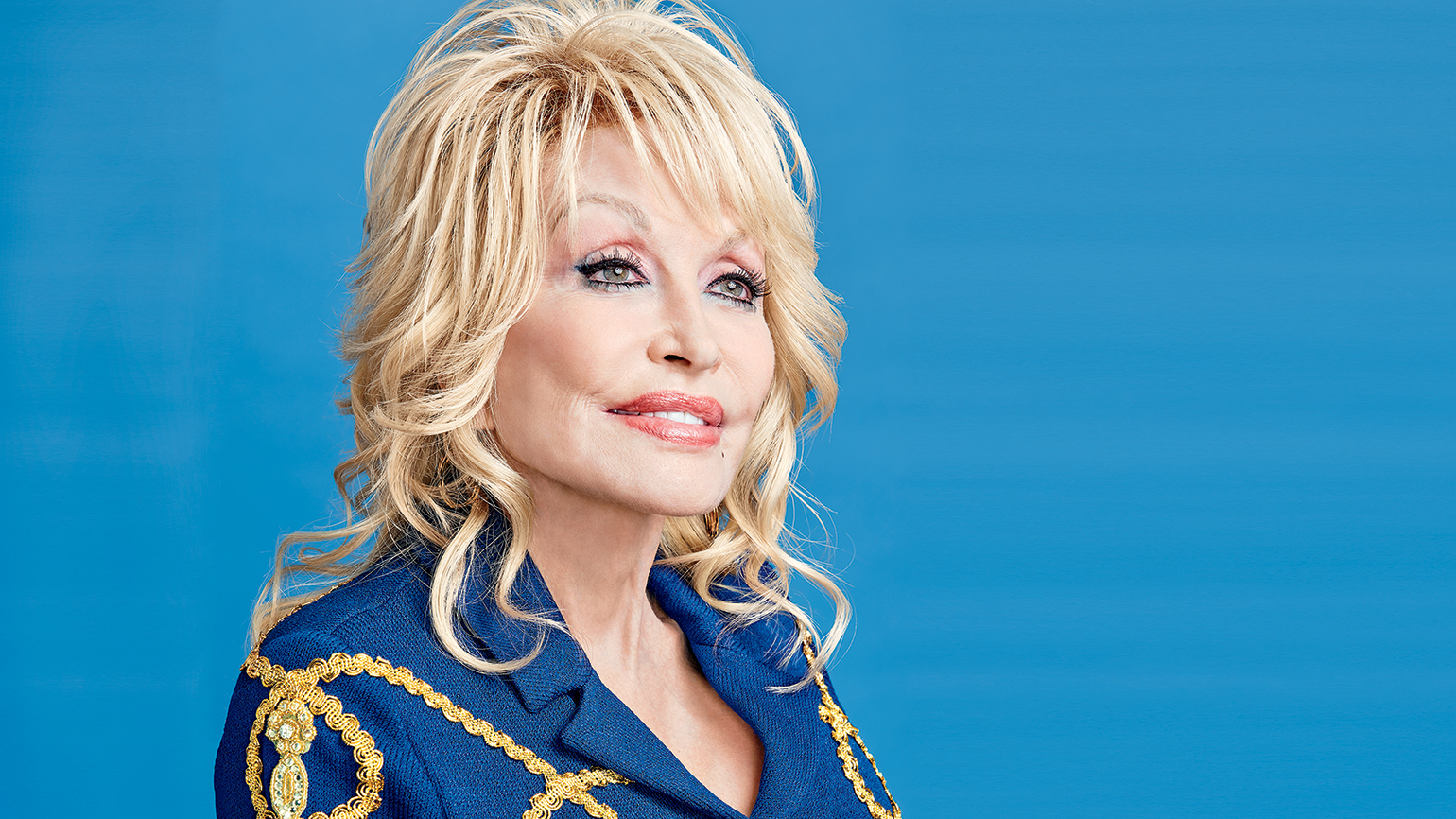
Dolly Parton’s Ready for Christmas at Dollywood

No one does Christmas quite like Dolly Parton.

The country music icon just launched her annual holiday celebration, Smoky Mountain Christmas, at her amusement park, Dollywood, in Pigeon Forge, Tennessee. From November 4 to January 3, the festive event features light displays, southern cooking and live musical performances of Christmas classics like It’s A Wonderful Life and Parton’s own Christmas in the Smokies.

“Christmas is special to me as I think it is for everybody,” Parton tells Guideposts.org. “We always think about it being the birth of Jesus, and of course, that means a great deal to me. I grew up with that faith and it’s the faith that keeps me going, still, but Christmas is just a special time. I love the beauty of it, the fun of it, the decorations, and the lights; that’s why I think that the Dollywood Christmas has become so popular.”

The devastating fires that raged through the area late last year had caused some to worry that the amusement park might be shut down this holiday season, but Parton says the community has rallied together after the tragedy.

“We were afraid that people were gonna stay away,” Parton says. “But now I think that people are coming back and seeing that it’s beautiful. We’re all back in business. The Smokys are roaring again.”

Along with getting people into the Christmas spirit, Parton’s been busy promoting her latest album, I Believe in You, a collection of songs specifically for children—a first for the artist.

“I’ve been writing other children’s songs through the years and it just seemed like a good year for children for me. And so, we just decided we’d just do a mainstream children’s album,” Parton says.

Parton had penned the songs while getting her nonprofit, Imagination Library, off the ground. The library, which opened in 1995, began as a way to benefit the children of her home county. Today, the library sends more than one million books per month to children around the world.

“It was based on something personal to me because I’ve often talked about my dad not having a chance to get an education,” Parton says of the library. “He actually inspired the idea and he got to help me a little bit while we were in development. He felt real proud. I think he got a lot of joy and fulfillment out of that, and that made it even more special to me.”

Proceeds from her new children’s album go to buying more books for the library and for the kids who need them.

“It’s one of the most special things I’ve ever been involved in in my entire life and something I’ll always take great pride in, because you can’t go wrong by helping the kids,” Parton says of the library and her new album. “Just to help children in their most impressionable years; if they can learn to read, even if they live in poor places and don’t have the money to get an education, if you can read, you can find a book on anything, it opens up new worlds.”

For Parton, keeping busy by making sure her park stays open to help families celebrate the holidays and crafting new albums to guarantee kids in need can pursue an education through reading, brings joy and a sense of fulfillment to the singer’s life.

“I always say I’ve dreamed myself into a corner, and now I’ve gotta be responsible,” Parton explains. “So I’ve gotta keep working.”

Dolly Parton’s Memorable Guideposts Moments

She’s the Queen of Country music. A living legend. A Medal of Freedom honoree. A woman of deep faith. And she’s been featured on the cover of Guideposts magazine three times! Come along with us as we look back at some of the memorable stories Dolly Parton has shared in Guideposts. Thank you, Dolly, for inspiring us through the years!

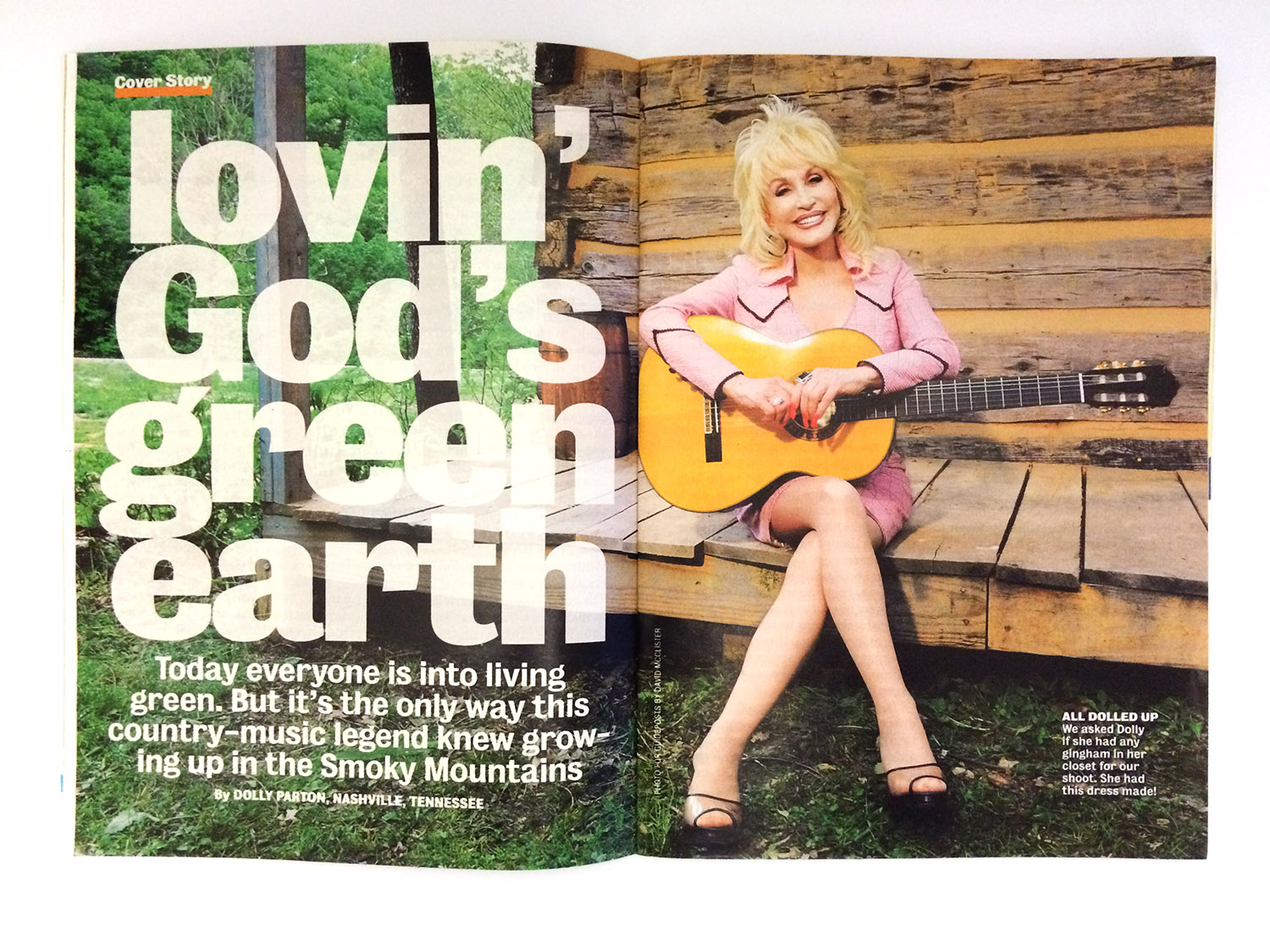
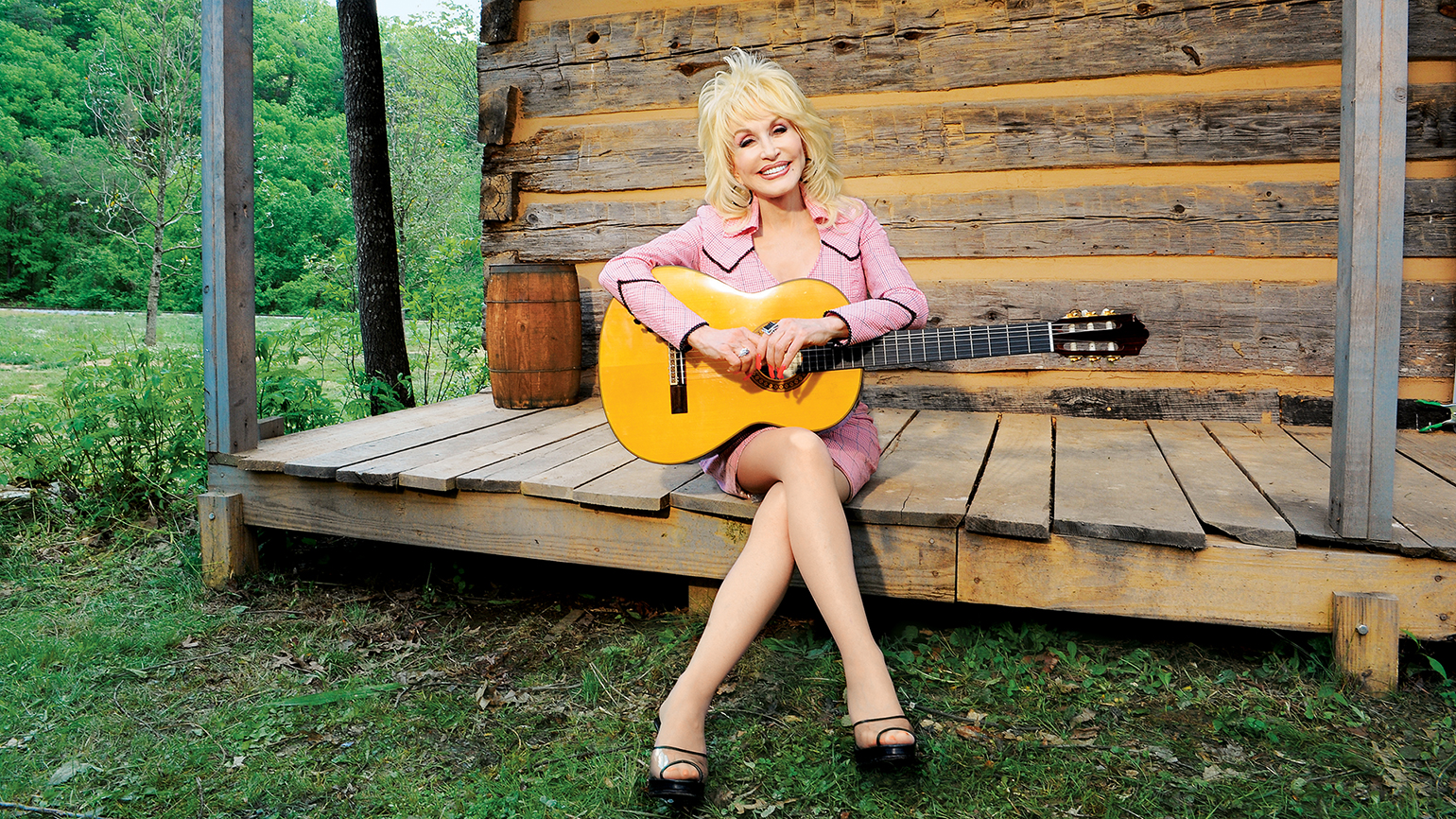
Dolly Parton’s Home in the Mountains

Did you hear? I got a new job this year, one I’m thrilled to pieces about.

It’s the 75th anniversary of the Great Smoky Mountains National Park, and they’ve made me their ambassador.

Don’t look so surprised! I know I don’t seem like much of a nature girl and, okay, I probably won’t be going hiking in my heels anytime soon. But the Smokies…they touch my soul. Let me tell you why.

All that I am comes from those mountains where I was born and raised.

If I close my eyes, I can see the mist on the peaks, the bluebirds on the fencepost, the meadows filled with purple ironweed and wild daisies.

READ MORE FROM DOLLY PARTON: DOLLY’S DREAMS

I remember chasing butterflies and hummingbirds and tying June bugs to a string to make what we called ’lectric kites (don’t worry, we released them).

I loved running barefoot in the hills, my feet tender in the spring then brown and tough by summer’s end. Just hearing the word “barefoot” still conjures up a sense of wonder and freedom for me because that’s what I had growing up.

Not that life in the Smokies was easy by today’s standards. I was the fourth of 12 children of a sharecropper and his wife.

It was so cold the day I came into the world that when the kitchen in our one-room cabin was mopped, the water left a film of ice on the floor. The doctor rode up on a horse, and I like to think God guided their steps along the snowy mountain ridge leading to our cabin, much the same way he guides my every step today.

The land Daddy farmed then belonged to an old woman named Martha Williams. We called her Aunt Marth. She had an old spinning wheel that seemed as big as a Ferris wheel, and I’d watch her make yarn. It was magical to me, like spinning dreams out of thin air.

Aunt Marth would put me up on her knee and sing: “Tip toe, tip toe, little Dolly Parton, tip toe, tip toe, ain’t she fine…” I was amazed that she knew a song that had my name in it, never thinking that you could put anybody’s name there.

Later on, Daddy bought us our own place way back in a mountain holler. It was overgrown, the fences were down, the roof leaked, but he worked day and night and made something of it.

I like to joke that we had two rooms and a path and running water—if you were willing to run to get it.

In all seriousness, though, we had everything we needed. I should say, God gave us everything we needed, and almost all of it came right from his good green earth.

Everyone’s into living green now—for good reason—but that was the only way we knew how to live back then in the mountains.

Daddy planted beans, corn, pota­toes and turnips. He hunted, so we’d have meat—bear, turtle, rabbit, squirrel, groundhog. We went fishin’ and froggin’ and ate whatever we could catch.

Sometimes people will say to me like they can’t believe it, “You ate possum?!” and I tell ’em, “We ate what we got and we were glad to have it.”

We raised chickens that peered up through the cracks in the floorboards for bits of bread and crackers. We picked berries from the bushes, fruit from the trees. Mama canned everything and put it up for winter. About the only things we had to buy from the general store were coffee and sugar.

Mama was a great cook and taught us all her tricks. But she was always cooking for 12 growing kids, so even now when I get a hankering for chicken and dumplings, I can’t make just a little bit for my husband and me. I make a huge pot, enough to feed a family of 14, and then I’ll have company over or put the leftovers in containers and freeze ’em for later.

Finding a way to put everything to good use, that was a way of life in the Smokies. It wasn’t just about taking care of what we’d been given. It was about survival, about trying every day, every minute, to make things a little bit better.

Our whole family would work for days to clear trees and move rocks just to scratch out enough land to plant one more row of corn. Our labor was worth it. There was gold in that fat ear of corn and the home-churned butter we rolled it in.

We kids never had any store-bought toys, but we made up plenty of games to play with each other. One time I decided we should dig a hole to China. We picked a spot and started digging with tin cans and knives and forks, just about anything that moved a little bit of dirt.

One of my brothers insisted that if we got to China we would all be standing on our heads, but the rest of us pooh-poohed that notion. Even if we never did make it to the other side of the world, we learned how to dig for our dreams…kind of like the way people put feet to their prayers. We discovered that powerful combination of imagination and hard work.

My sisters and I played house with moss. There was a kind of thick, luxurious green moss that grew in the shady places up in the hills. We’d use it to cover stumps and pretend they were upholstered chairs and sofas or we’d lay it on the ground for carpet.

Even today I’d be hard-pressed to find anything more beautiful in a store. Spend a little time in nature, and you just have to marvel at the wonders of God’s creation.

Take pokeberries. They’re dark purple and when you mash them up, the juice is like a dye. We painted our skin with pokeberry juice so that it looked like we were wearing bracelets or wristwatches.

Sometimes we would paint what we called Jesus sandals on our feet. We would dress up in gunnysacks for robes and carry tobacco stakes as our walking sticks and go gallivantin’ through the holler pretending we were the disciples. We felt real holy, but somehow our kinship with Jesus was lost on Mama when we came home covered with those awful purple stains.

I don’t know how he found the time, but Daddy made us little toys, cars that he whittled out of branches. He’d use old thread spools for wheels and rubber bands to make them run. You’d wind them up and off they’d go, clattering across the front porch.

Mama made us things too. Once she made me a doll out of a corncob with a corn-shuck dress and corn silk for hair. I named her Little Tiny Tasseltop, and she inspired my first song.

Daddy said that I sang before I even talked. That might be something of a tall tale (we mountain folk love a good yarn), but music ran deep in me, that’s for sure. I could latch on to anything that had a rhythm or tune and make a song to go with it.

I would hear two notes of a bobwhite or the sound of Mama snapping beans, and before I knew it, I’d be tapping on a pot with a spoon and singing. I loved it when wild geese flew overhead. I would get into their honking and snap my fingers to their cadence and sing with them, yearning to fly myself.

Life in the mountains wasn’t always blissful. There were scary things too. Bobcats that let out blood-curdling screams in the middle of the night. Panthers that supposedly could reach through a crack in the wall and grab babies from their cribs. I never actually saw a panther, but I knew the cracks in the wall existed.

Once a tornado swept through the holler. We heard the wind howling and we could even feel it through the cracks in our walls. Mama had us all on the floor, praying “that the storm will pass over us and leave us unharmed.” Those of us old enough to know what was really going on prayed like we’d never prayed in our lives. We—and our house—survived the tornado pretty much unscathed.

That was just one of the miracles of my childhood. Another came every year—Christmas. The mountains looked so stunning in the winter. Snow had a way of making even our humble house beautiful…the glow of the fire through the windows, the crackle of a pine knot burning, even the smoke that curled in the clouds.

We’d bring in fresh snow and mix it with vanilla, milk and sugar to make snow cream, the closest we ever got to ice cream. Daddy would go out to find a tree, a cedar with an old bird’s nest in it. We added to nature’s ornaments with strings of popcorn and Mama’s gingerbread men.

There was an unspoken truce among us that allowed the gingerbread men to hang in peace until Christmas Day. After that, forget it. We’d be looking at a tree decorated with gingerbread heads.

I knew there was a world beyond the Smokies—the geese and butterflies had to be flying somewhere, after all—and I wanted to see it for myself. So I moved away after high school. But I always came back for what I discovered growing up there: wonder and wisdom, music and inspiration, freedom and faith.

Even today, in these hard economic times, I think, well, if the worst happens and I lose everything, I can always go home to the mountains, plant a vegetable garden, maybe raise a few chickens.

I’ll go back to God’s green earth and he’ll give me everything I need, just like he always has.

For more inspiring stories, subscribe to Guideposts magazine.

Dolly Parton: Dream Big, Pray Big

How did someone like me, born in a cabin on the banks of the Little Pigeon River in the Great Smoky Mountains of Tennessee, end up where I have in life? The answer is both complicated and simple. I like the simple part. I dreamed big and I prayed big. Then I worked like the dickens at the opportunities the Lord put before me.

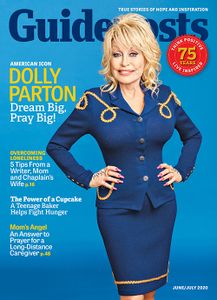
As seen on the cover of the June-July 2020 issue of <em>Guideposts</em>

We didn’t have much back then in that one-room cabin with the dirt floor, even less than that most times. Daddy was a sharecropper and later a farmer, a man who worked in the fields until his hands bled to provide for us, his 12 children. He couldn’t read, but he was still one of the smartest men I ever knew.

I was the fourth child in the lineup (you could say almost all of us were middle children!), and when I was trying to make my grand entrance, Mama was having a lot of trouble with the process. Back then in the hills with us rural folk, you didn’t go to the hospital. You had your baby at home. But with me they needed a doctor quick.

Daddy got on a horse and galloped into town, where there was an old church and a Methodist minister who happened to be a doctor. Dr. Robert F. Thomas rode back with Daddy and got to Mama just in time. There’s a good chance I might not be here without him. I’m pretty sure I came out crying big. I bet I could have hit high C even then! Which brings me to my first dream.

I Want to Sing
I wrote my first song at age five. Mama had made me a corn cob doll with beautiful corn silk hair, a dress made of shells and black eyes Daddy had put on with a fire poker. “Little tiny tassel top,” I sang to it, “I love you an awful lot / Hope you never go away / I want you to stay!”

I would take a tin can, put it on a tobacco stake, stick it in a crack on our porch and serenade the pigs and chickens and ducks in the yard. At first my siblings guffawed, but then they noticed something: I could sing. I took notice too.

We Partons sang in church and played our own instruments too. My uncle gave me a guitar when I was eight. I strummed it till my fingernails cracked. I learned to play fiddle, like most everyone in the family did. More and more, music felt like what I wanted to do for the rest of my life. It became my first big dream, and naturally I asked God if I was on the right track and if he would help, to make this dream ours together.

I knew I couldn’t just stay in the hills. The minute I graduated from high school, I moved to Nashville, ready to launch my career as a singer and songwriter. I was only 18 years old. Sure, it took a lot of grit and determination, all those qualities I’d learned from growing up where I did.

That hard life—or at least what some might call it—was a blessing. I learned if you didn’t get something the first time you tried again and again until you did or something else came along that you probably were supposed to get in the first place!

Eventually my blessings came in bundles. I wrote and published more than 3,000 songs. Imagine, it all started in a little old country church and singing to a bunch of barnyard critters. Who could have dreamed that it would lead to the Country Music Hall of Fame? Plus Oscar nominations for a couple of movies you might remember.

You know what I found? One dream is just a stepping stone to another.

I Want to Give Back
As I said earlier, my daddy couldn’t read. A lot of his generation in our neck of the woods couldn’t. That didn’t mean they weren’t smart. Heck, they were some of the smartest. But I learned that reading not only opens up new opportunities for folks; it opens up whole new worlds. Reading puts your imagination into hyperdrive, like Spock and Captain Kirk do with the Enterprise. You just go light years!

So what did I do with this dream? Again, I started with prayer, making sure the Lord didn’t think I was off my rocker. Then an idea came. I started something called the Imagination Library.

My wish was for every child who yearned for a book—like me—and didn’t have one or the means to buy one to be able to get a copy of their own. We could give away books all around the world. There is nothing so empowering and liberating as a book given to a child who has none.

I partnered with thousands of local organizations who knew how to get something like this done. In the past 25 years, we’ve given away more than 130 million books all over the world to children who might never have had any. Think of that! Think of the power of a book to fire the imagination. To ignite learning for years to come.

A book can be like a seed leading to a lifetime of growth. Back when I was growing up in the backwoods of Tennessee, a book was a rare commodity for a young ’un. But once I got one and learned to read, I never stopped. To this very day, I’m always in the middle of one book or another, keeping my imagination in hyperdrive. Which leads to my third dream.

I Want to Create Something Wonderful for Families
“How can you use me?” I ask God. “What can I do today?” I’m a light sleeper, and I get up in the wee hours of the morning. That’s my prayer time, the easiest time to reach out to God, in the quiet and calm before everybody has woken up and phones start buzzing and e-mails ding.

I’m alone with God and can ask for his direction. Dreams flood in, dreams so big they seem unattainable. How can I do that? How is that possible? I’ve learned over the years to trust the dreams to God. No telling what will happen. And it will happen if it’s supposed to happen.

Like the crazy idea that I’d build a theme park based on family and fun. Good wholesome fun. You know how it came to me? I was out in Hollywood one day and I looked up at that famous sign in the hills and thought to myself, If I could only change that letter H to a D, I wonder what would happen. Dollywood. That’s what would happen! [Note: Dollywood is currently closed due to the pandemic; for updates, visit Dollywood.com]

There it was, an idea for the girl from the backwoods to go home and build something, a destination for all those folks who come to the Great Smoky Mountains. When I talked to my advisers, they told me I was out of my mind (you can be sure they’re not my advisers anymore).

Somehow we made it happen. I got a lot of encouragement from my husband, Carl, behind the scenes. (In fact, to celebrate our fiftieth anniversary in 2016, my wedding dress and his wedding suit were put on display in the Chasing Rainbows Museum at Dollywood.)

Yes, there are roller coasters, which you won’t ever see me on—I get a little motion sick—and great local food like the funnel cakes and barbecue that I loved as a kid and still do. I have to tell my wardrobe folks to add an inch or two in my costumes when I’m at Dollywood.

By the way, can you guess what one of my favorite places in the park is? It’s a little country church we named for the mountain doctor and preacher who delivered me. We moved pieces of it, like the windows and doors that date to the late 1800s, from the hills of Sevier County, my home county, to Dollywood and built the Robert F. Thomas Chapel.

To my mind, it is the heart of Dollywood. People can come in to write down their prayer requests. They can have some quiet and make sure their prayers are as big as their dreams and most of all to make God a partner in them. I couldn’t have done anything good in my life without God by my side.

It’s been a while since Dr. Thomas brought me into this world, but the dreams don’t stop and neither do the prayers. That’s what keeps me going. To dream big, pray big. No reason why you can’t too.

For more inspiring stories, subscribe to Guideposts magazine.

Dogs, Faith and Mystery

Has there been a dog in your life that felt put there for reasons beyond simple, loving companionship? For reasons perhaps known only to God? For me that dog was a golden retriever named Millie, whom many of you know from my blogs and devotionals, and for whom so many of you prayed when she was fighting her final battle with cancer.

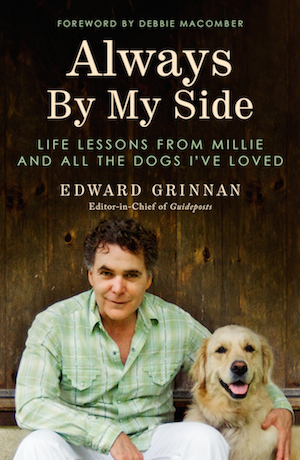
I’ve written a new book, Always By My Side, Life Lessons from Millie and All the Dogs I’ve Loved, about how Millie and my other dogs influenced my personal and spiritual development in ways that are not only surprising but profound, as if they were instruments of heaven sent to guide me at life’s most challenging moments.

Read an Excerpt from Always By My Side

Did you know a dog introduced me to my wife? That another dog stopped me from taking a step that could have cost me my life? That my boyhood poodle, Pete, would sit up with me at night after night as I fought asthma? If there was a single reason I wrote the book, it would be to show that my dogs have helped me become a better human being.

Ostensibly my book is about dogs, but really the book is about love, the love that God mysteriously brings to us through the creatures I believe he sends to teach us life lessons in loyalty, bravery, sacrifice, compassion, tenderness, empathy and joy. A dog has been at my side at nearly every important turn in my life, even if I wasn’t always aware of it at the time. Only when I look back, as I do in this book, do I see God’s hand in the presence of those extraordinary animals.

Order Your Copy of Always By My Side by Edward Grinnan

I can’t imagine life without a dog to love and be loved by. Yet the heartache of loving dogs is that we outlive all but the last one. And so my dogs have taught me about letting go when letting go is the hardest but kindest thing of all. They have given me the gift of acceptance. And the profound possibility that someday God will reunite us.

When Millie was sick, you Facebook fans poured out your prayers by the thousands. Every day I received some note or post that lifted my hurting heart. I knew then that I would have to repay you for your love. I would have to write a book about it, because the experience changed my life. This is that book.

Click here to read an excerpt of Always By My Side.