Embrace God's truth with our new book, The Lies that Bind

Does God Really Care About Pro Football?

A fellow football fan sent me a cartoon the other day. It showed a downtrodden player speaking to the media: “First I’d like to blame the Lord for our defeat …”

Isn’t it consistent, my friend teased, that if Broncos quarterback Tim Tebow, a devout Christian, thanked the Lord for victories, players should also blame heaven for their losses?

I don’t think my provocative friend really expected an answer so I just responded with a sarcastic little smiley face. But his question deserves some thought. Does God care about football? Is he really in the huddle with Tim?

First, let’s be fair. Tebow thanks the Lord just as profusely after a loss. He thanks him for the opportunity to play pro football, to escape serious injury and for the chance to praise him publicly, win or lose. But it is that now-iconic pose called Tebowing that has fused with the national consciousness and our obsession with football. Check out YouTube. People are Tebowing everywhere, both mockingly and earnestly. Will it be long before we have streakers kneeling in the end zone and Tebowing?

Given all the inane celebratory choreography players perform after scoring touchdowns (admittedly some of them are pretty entertaining), Tebow’s display seems low-key by comparison, even respectful. He is young and exuberant in his faith, and some might say a bit exhibitionistic. Maybe he just gets a little carried away. But is it worse than miming a roll of the dice, dancing the salsa or performing CPR on the ball? What about the jump-and-bump?

I might argue that former coach and TV commentator Tony Dungy demonstrates his faith in a more effective and mature manner. But Tony has been around for a long time. He has a truly inspiring life story and has made his faith felt throughout professional sports as both a player and a mentor. It’s hard not to respect how Tony Dungy carries himself. He’s had a lot of practice.

I have a feeling Tim Tebow might pull back a little on the Tebowing thing next season, if only to avoid the appearance of trivializing his faith by linking it to scoring a touchdown. Most folks I know think God couldn’t give a heavenly hoot about pro football. They’re right. Meanwhile I’m curious to know what you think of Tebowing. Please post below. And while I’m at it I’d like to thank the Lord for helping me write this blog today. Let me strike the pose….

Director Amma Asante Is Empowering The Next Generation

Critically acclaimed director Amma Asante’s latest film, A United Kingdom, is in theaters now, and it’s a milestone worth noting. She’s beating the odds as a Black woman filmmaker who has released four feature-length films in the past 13 years.

Asante is not only celebrating her success, she’s committed to sharing it. She made a personal decision to mentor aspiring women directors.

“It shouldn’t be a privilege in the world we live in today, but it is,” Asante tells Guideposts.org of her directorial success. She shares her story at a New York press junket for her latest film, which stars Guideposts’ cover star David Oyelowo and Rosemund Pike.

“Simply being a female film director is a privilege,” she says, “but when we hit the intersection [of race], understanding what it takes for any female film director to get to a third film yet alone a fourth , is almost tantamount to winning the lottery.”

According to a recent study by the University of Southern California’s Annenberg’s Media, Diversity & Social Change Initiative 80 percent of female directors made just one film in the past ten years. For female directors of color, the odds are even greater at 83.3 percent. It’s not for lack of talent that women and women of color directors are able to make so few films, it’s lack of support.

That reality was simply unacceptable for Asante, whose experience creating critically acclaimed films would be invaluable to any aspiring director.

In addition to A United Kingdom, she directed the award-winning film, A Way of Life in 2004. Her critically acclaimed second film Belle followed almost 10 years later in 2013. The 47-year-old BAFTA award winner has just wrapped production on her fourth film Where Hands Touch, starring teen icon Amandla Stenberg, which will be released later this year.

READ MORE: David Oyelowo on Faith and Family in Hollywood

Her commitment to helping others began 3 years ago.

In 2014, the director found herself on stage in New York, accepting an award alongside Katie Couric and Barbara Walters. The women were honored by Gloria Steinem’s organization for their exemplary work in media and for being strong role models for women in the industry. That experience, and the mantra of Steinem’s organization, “Each One, Teach One,” resonated with the director.

“I made a commitment to myself that whenever I could, I’d bring an aspiring female director to shadow me in order to offer the universe gratitude and to pass on the opportunity,” Asante said.

She made good on that promise during filming of A United Kingdom in Botswana where four aspiring female directors, two from California, one from Uganda and one from the U.K. were invited on set to watch Asante work and learn from her leadership abilities.

READ MORE: Lupita Nyong’o Inspires In ‘Queen of Katwe’

“I’m privileged and I want others to share in that same privilege,” Asante said. “I cannot show a person how to make a film over the period of eight weeks. It’s just not possible. What I can do is show them what a Black female look likes in leading, to allow them to hold that vision in their head as they move forward. I can allow them to see what it takes to stand up to a lot of men when it comes to insuring that your vision is projected on screen and allow them to absorb that same power so that they can carry if forward themselves.”

Now that filming has ended, Asante keeps in touch with the women, excited to see where their careers take them and ready to step in to offer whatever help she can in bringing their own visions to life. For the director, it’s all about leaving a positive legacy and advancing progress – something she has in common with the heroes of her films.

“I don’t have children, I have my films and I have whatever is left of what I give of myself to other people,” Asante says. “I hope that when I’m gone, my legacy will be the films and also whatever I’ve been able to offer to these women.”

Diogo Morgado Is Acting with a Purpose

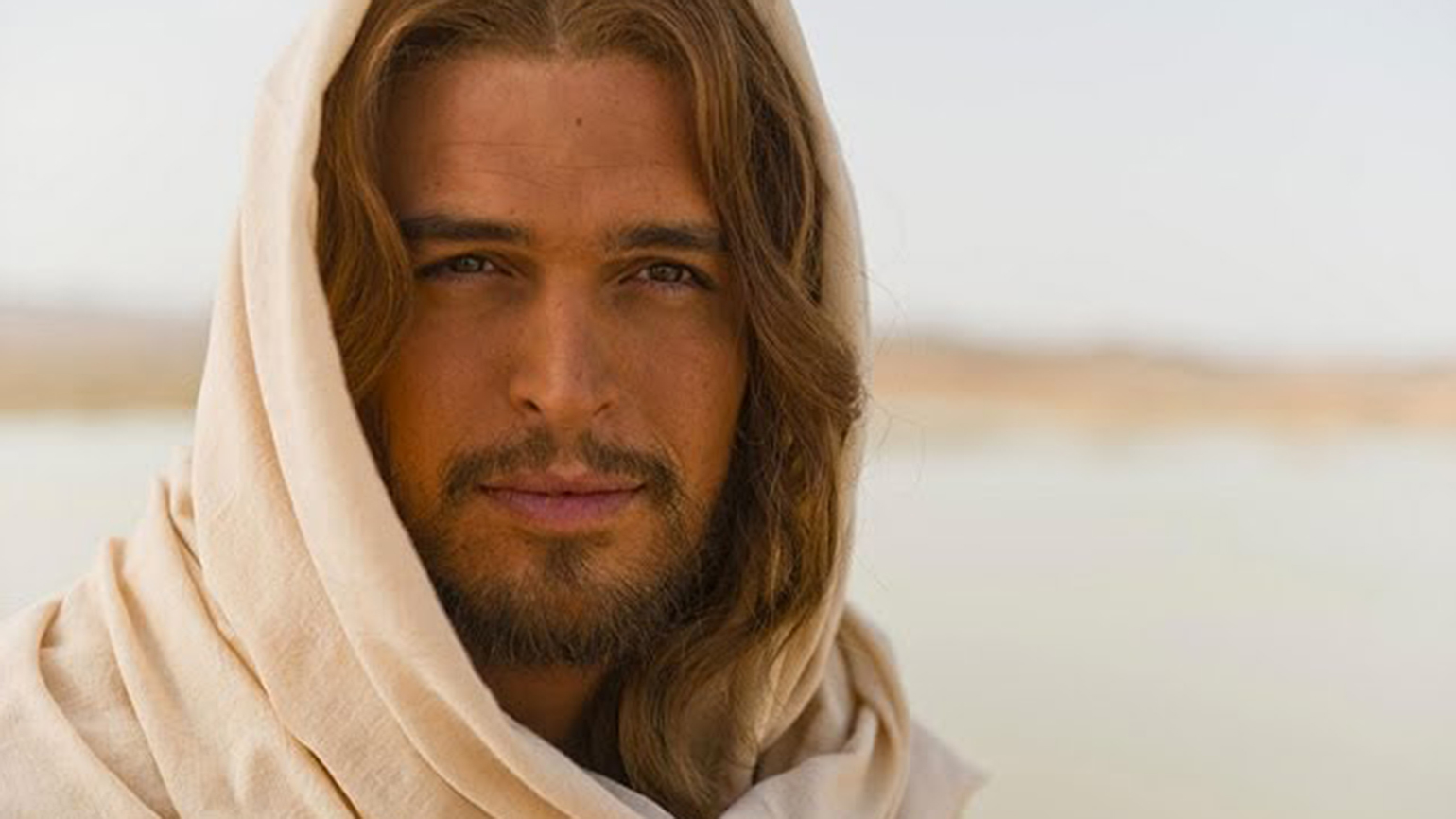
Actor Diogo Morgado — who shot to stardom thanks to his role as Jesus in the 2014 film Son of God — is taking his talents to the small screen, starring in the latest UPtv-produced movie, Love Finds You in Valentine.

“I want [to be a part of a story] where people were overcoming obstacles and where, at the end, people would have an uplifting, hopeful feeling about life,”Morgado tells Guideposts.org.

The inspiring TV movie does just that.

FIND MORE ABOUT LOVE FINDS YOU IN VALENTINE

Morgado plays Derek, a man with a troubled past who was forced as a kid to survive on the streets of Chicago before finding a home with his adoptive family in the small town of Valentine, Nebraska. One Tree Hill actress Michaela McManus stars as the film’s protagonist Kennedy Blaine, the heiress to a large piece of land in a town she’s never been to that comes with a complicated legacy. The two find a connection in a place called Circle Cross Ranch.

For Morgado, it was important that his character be more than just the hunky love interest.

“We made sure we brought something deeper and more meaningful than your generic love story,” Morgado says of himself and director Curtis Grey.

The actor spent weeks prepping for the role, pulling from the book the film is based on for inspiration. He also had to get a bit dirty. Playing a ranch foreman and cowboy meant Morgado spent plenty of time outdoors learning to overcome a great fear of his: riding horses.

“I can do anything you want, I’ll fall from tall buildings,” Morgado jokes. “Just don’t give me a horse.”

As a 12-year-old kid, Morgado was hit and injured by a horse while trying to ride, causing the actor to forever lose his desire to saddle up again.

But the challenge of horse riding ended up bringing him even closer to his character.

“To be honest, the fact that I was afraid of horses and I had to overcome that, it was true of Derek as well,” Morgado explains. “He was afraid of life. He was lost as a kid and he had to take a leap of faith with this ranch and he found his salvation. As an actor, I was overcoming my fear in order to honor this character. It became personal for me.”

Morgado — who has been vocal about his faith – says the opportunity to be a part of a story with a positive message was another draw for him.

“It’s not like I need to be a hero that saves the day, as long as that story keeps being told and reminding people that that’s what life is about,” Morgado explains. “If the message that comes out of the story is something I believe, I’ll be a part of it, regardless of the role.”

He hopes his commitment to honest, inspiring storytelling will come to define his career.

“I would love for people to go back and say ‘He tried, as hard as he could, to portray the wide aspects of human beings and of life.’”

Love Finds You In Valentine premieres Feb. 14th at 7 p.m. on UPtv.

Dietrich Bonhoeffer’s Love Story Explored in New Book

The German theologian and martyr Dietrich Bonhoeffer became a hero of faith after he was executed by the Nazis in 1945 for his vocal resistance. He is also known around the world for his theological model of “costly grace.”

Like many people, writer Amanda Barratt became fascinated by Bonhoeffer through reading about his remarkable life. But when she found out that Bonhoeffer had been engaged to Maria von Wedemeyer at the time of his death, she became obsessed with the woman who stood by him while he was imprisoned. My Dearest Dietrich, Barratt’s newest novel, is the result of her fascination.

Guideposts.org spoke to Barratt about answering God’s call, weaving history into fiction and how working on the book challenged her own faith.

Guideposts.org: Many books have been written about Dietrich Bonhoeffer. How is My Dearest Dietrich different?

AB: It’s a love story between Dietrich Bonhoeffer and Maria von Wedemeyer. It tells their story in a narrative format. There’s been many wonderful biographies, and books and documentaries about Dietrich Bonhoeffer, but this takes us deeper into his life through this fictional format, and also introduces us to the woman that was right at his side, during [the] most pivotal years of his life, when he was imprisoned.

Guideposts.org: Why did this story appeal to you?

AB: I first discovered Dietrich Bonhoeffer through Eric Metaxas’ book, Seven Men: And the Secret of Their Greatness. A few months later, I came across a quote from a book called Love Letters from Cell 92, which is the correspondence between Dietrich Bonhoeffer and Maria. Immediately [after discovering] that there was this woman in his life, I wanted to know what kind of a woman would capture the heart of a man like Dietrich Bonhoeffer.

The more I thought and prayed about it, the more inspired I became. So one day decided I’m going to tell this story. From then on, Dietrich, Maria and I were a team.

Guideposts.org: What drew you to tell this particular story from Bonhoeffer’s life—of his relationship with Maria?

AB: The thought of writing the story of a man that’s so revered as Dietrich Bonhoeffer was very daunting to me, but eventually, I just felt that I needed to tell this story, that people needed to hear this story, and that Maria’s story needed to be told. We don’t know a lot about her.

Eberhard Bethge, Bonhoeffer’s best friend, [published] the first biography that’s ever been written about Dietrich Bonhoeffer. It’s over 1,000 pages long. Maria is mentioned on four of them. I was like, “Why? We need to know about this woman.” She was an incredible person, and Dietrich Bonhoeffer obviously thought so. The more I read about her, the more I [realized she was] a hero in her own right.

Guideposts.org: Was there anything you came across in your research that you found particularly surprising?

AB: I was able to come across some unique resources, that I don’t believe other people who have written about Bonhoeffer discovered. One of them was an interview that Maria did in 1974, from Malcolm Muggeridge’s television documentary A Third Testament. I was actually able to listen to her talk about [the time] after Dietrich had been taken, and no one knew where [was]. She was traveling across Germany on foot, and she arrived at Flossenburg concentration camp, but she arrived there in February, and he didn’t get there until April.

There was intense emotion in her voice, as she shared about what this meant had meant to her—and this was 30 years later after she became a successful businesswoman.

I also loved discovering Dietrich, not only as the author, pastor, theologian, and man of resistance, that many of us know him to be, but as a very human, and even flawed man. I think it’s a temptation to consign [him] to a pedestal, but I feel like that makes him distant and unrelatable. He did live out costly discipleship, he did serve God with all his heart, but he was also very human. He struggled with raw emotions of fear during this imprisonment. He fell in love at the most unlikely time of his life, and he fought that falling in love. That’s the Dietrich Bonhoeffer that I came to know, and I came to share in my book, not some cardboard cut-out, labeled brilliant theologian and martyr.

Guideposts.org: How did working on this project affect your faith?

AB: This is the most transformative project I’ve written. The faith that these two people lived…totally changed me.

A Bonhoeffer quote I love is: “Who stands firm? Only the one…whose life will be nothing but an answer to God’s question and call.”

[I try] to let that be my prayer, to let my life be nothing but an answer to God’s call.

This interview has been edited for clarity and length.

Devoted Dad

One day, when Melvin Mora, the third baseman for the Colorado Rockies, was a young boy, he was walking with his dad in front of the family’s home.

Suddenly, a man approached, pulled out a gun, pointed it at Melvin’s father, and pulled the trigger. Mora’s father stumbled into the house and collapsed on a couch.

“I was six years old,” Mora recalls. “I didn’t know how to react…I saw my sister crying, so I began to cry. The thing I most remember was that he was lying on the couch. I saw blood…And then he died.”

The Moras, who lived in a gritty neighborhood in the Venezuelan town of Agua Negra, about 150 miles west of Caracas, were poor but never went hungry when Melvin’s father was alive. He worked as a trash collector and farmer and always brought food home for the family table.

But after the shooting, which was a case of mistaken identity, poverty gripped the family. It was difficult for Mora’s mother to provide for a family of six boys and four girls. Melvin was moved from relative to relative. But one thing stayed constant for him: sports.

“I was one of those kids who was always looking for a sport to play,” he says. He started boxing but more naturally gravitated toward soccer, by far the most popular sport in Venezuela. He became very good, so good, in fact, that he was named to the Venezuelan national soccer team as a teenager.

But soccer players, even extraordinary ones, did not make much money in Venezuela in the late 1980s. An athletic coach, who became something of a surrogate father to Melvin, steered him to baseball. He told the youngster that more money could be made in that sport. He was right.

Fast-forward to 2010. Mora, 38, is a two-time All-Star and just made the switch to Colorado after 10 seasons in Baltimore with the Orioles.

But for Mora, baseball is his career, his avocation; his passion is fatherhood. The man who lost his own father at the age of six now has six children of his own, including eight-year-old quintuplets.

“The most wonderful thing is to be a father,” the ballplayer says. “When you have a lovely life, and you grow up without a parent, you want to have nothing happen to your kids. You just want to be there for them.”

His wife, Gisel, says he has devoted himself to his children, to Tatiana and the quintuplets—Genesis, Rebekah, Jada Priscilla, Christian and Matthew David.

“My friends can’t believe what he does as a father,” she explains. “He often comes home from the ballpark well after midnight. But he gets up at 6:30 in the morning, makes the kids their breakfast, takes them to school, and then goes back to bed. He wants to be a part of their lives, because he knows what it’s like to not have the influence of a father.”

As a major league ballplayer, he is away for much of the spring and summer. When he’s not on the road, though, he wants to be with his children.

“A friend of mine,” Mora says, “who lost a daughter to a car accident always tells me, ‘No matter what, before your kids go to bed, give them a kiss because you never know when the last time might be when you will see them.’ So every night I have the opportunity to kiss them goodnight, I do it.”

Mora didn’t have much time as a child to develop a loving relationship with his father. He wants to be sure that Tatiana and the quintuplets have that opportunity.

“I don’t want anything back from my kids,” he says. “They love me, and that’s fine. That’s enough for me.”

‘Desert Dancer’: Not Just Another Dance Movie

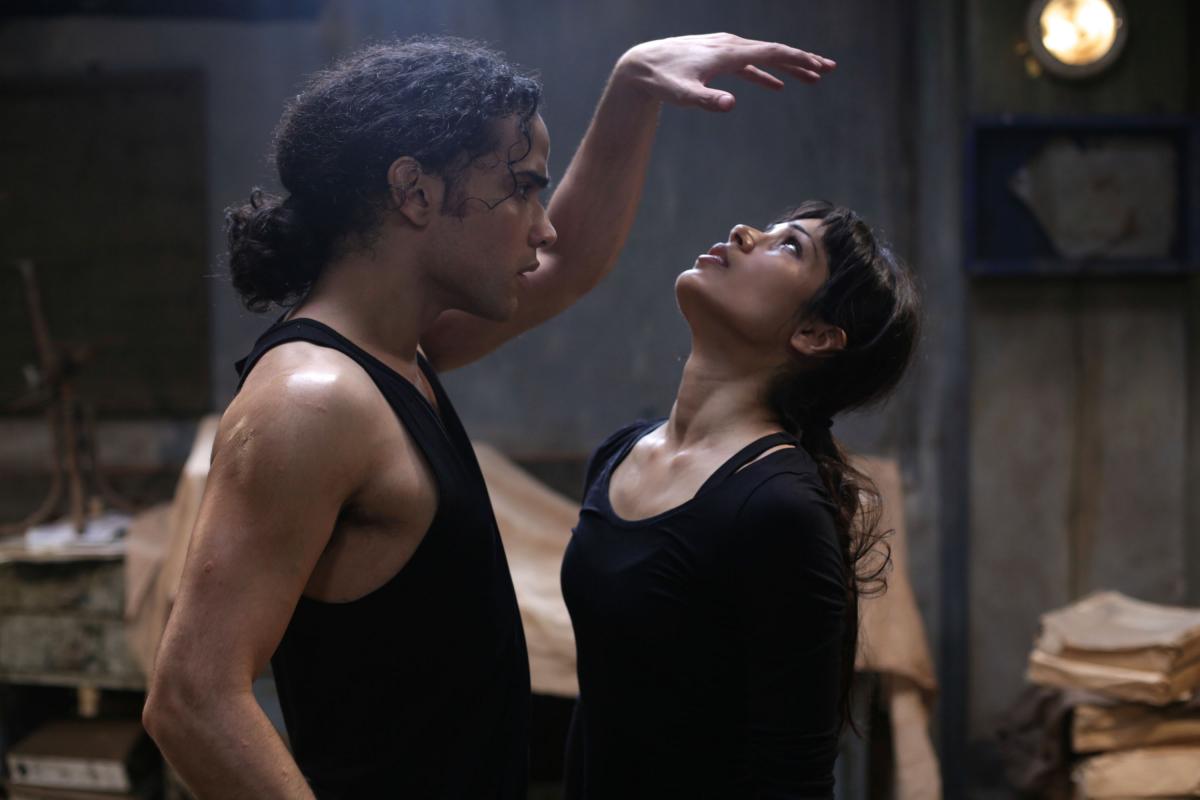
Desert Dancer is a movie about dancing, but you shouldn’t call it a “dance movie.”

That title conjures up more familiar genre fare, like Kevin Bacon bringing the barn down in Footloose or Patrick Swayze sweeping Jennifer Grey off her feet in Dirty Dancing. Richard Raymond’s film chronicling the true story of exiled Iranian dancer Afshin Ghaffarian may have equally stunning choreographed numbers – it would be hard not to with Akram Khan, the same man responsible for choreographing the opening of the London Summer Olympics, behind the scenes – but it has something else too: purpose.

RELATED: REECE RITCHIE ‘INSPIRED TO DANCE’

The film sets out to do justice to Ghaffarian’s struggle and the struggle of an entire nation yearning for the same rights and freedoms much of the rest of the world enjoys. A tall order, but one the cast, including Reece Ritchie — who’s given the enormous task of bringing Ghaffarian to the screen — and Slumdog Millionaire star Freida Pinto have dedicated themselves to for the past three years.

Produced on a shoestring budget, the film is raw and often unfiltered. Ghaffarian’s life plays out before our eyes. From a small boy secretly attending a Utopian art school in his hometown to a university student, conspiring with his friends to create an underground dance company in a country where dance has been outlawed, each scene on screen moves with intention.

Ritchie plays Ghaffarian for the better part of the film. A young college student, Ghaffarian is introduced to things he couldn’t find at home; peers with free-thinking ideas, unrestricted access to the Internet, Youtube. He soon discovers his passion; dance, but because it is outlawed (and severely punished by men who dub themselves the morality police) he and his friends must do it in secret. In a dingy room of a decrepit building, the group finds freedom, not just from the government and those trying to limit their rights, but freedom within themselves.

This is especially true for Pinto’s character – a woman who deals with her own personal demons in destructive ways. Pinto’s performance is gripping and hard to watch at times, but it brings an integrity to the film. These aren’t just a bunch of kids wanting to imitate Michael Jackson dance moves they pick up off the internet; they’re real people with real struggles.

And though we’re hesitant to label this a dance movie, the dancing is one of the most beautiful parts of the film. From Pinto’s mesmerizing audition to Ritchie and Pinto’s dance in the desert and finally Ritchie’s protest at the end of the movie, it’s easy to see why the actors needed to put in months of training in order to prepare for their roles. For their characters, dance isn’t just fun, it’s something that could cost them their lives and so, the only time to dance is when there is a purpose behind it.

Besides educating its audience on the political climate and the limitations on freedom that the people of Iran face to this day, Desert Dancer also succeeds in reminding us of what true passion is and the importance of finding it in your own life.

Desert Dancer opens in theaters April 16.

Delilah: Her Faith and Her Fans Support Her in Tough Times

One of my favorite things about doing my radio show is hearing people’s stories. Every night, without fail, someone will call to wish a spouse happy birthday or congratulate a child who’s graduating. Then as their story unfolds, I realize that it was the whole reason God had me in the studio that night—to make that connection, to have that conversation, to share a prayer or piece of Scripture, to share a memory or song.

Years ago, when I was in my twenties, I went to a tiny church—there were maybe 50 or 60 members—where the minister, Pastor Mike McCorkle, preached a life-changing sermon. I asked him about it recently, and he doesn’t even remember what he said. I do. I’ll never forget.

He imagined that when he stands before the Lord, when he dies, he’s going to be asked two questions. The first is “What did you do with me?” Did you give God your best or just the scraps? Was faith just an afterthought? Did you put Jesus at the center of your being? And the second: “What did you do with the people I put in your path?” Every person you encounter, your family members, your teachers, your friends, your coworkers, even strangers, are put there for a reason. Did you honor them? Did you respect them? Did you take the time to get to know their story?

The conversations I have with my listeners are real. They know I’m going to be honest with them and they can be honest with me. Most of them know about the joys in my life and the deep sorrows I’ve had to face. None of which I could have gotten through without my faith.

I met a homeless woman on a blistering hot day in Philadelphia, and in my efforts to help her and people like her I started a charity called Point Hope (named for one of the coldest places on the planet: Point Hope, Alaska). A woman at a refugee camp in Ghana sent me an e-mail asking for help. I figured it was some sort of scam at first, but when I followed it up through friends at World Vision, I discovered she was indeed real. Since then, I’ve made dozens of trips to that refugee camp, adopted children from it and supplied it with fresh water, schools, medical stations and adult career and farming programs.

Someone was put in my path, and I felt compelled to respond.

I have 13 children—10 adopted, three biological. I’m heartbroken to say that two of them are already gone from this world. Sammy came from an orphanage in Ghana. We knew he had sickle cell anemia when he became part of our family, but he blossomed in our home. He loved to eat, to laugh, to tease, to draw, to paint, to dance. On the night the adoption was complete, he said to me, “Mama, I always thought I would die alone in the orphanage.”

As it was, he died in our arms at age 16 from complications of sickle cell. The doctors did all they could, but they couldn’t stop his heart from failing. Before he passed, Sammy pointed to me and my husband, Paul, and put his hands in the shape of a heart. Now when I am struggling and missing him, I whisper a prayer. Sometimes even within the hour, I’ll be led to something heart-shaped in nature, a seashell on the beach, a sandstone on the path. Signs from God that my son’s spirit lives on.

My world shattered a year ago, on October 2, 2017. That night, my beautiful son Zachariah Miguel Rene-Ortega, the last child I carried in my womb and gave birth to, chose to leave us. He was just 18 years old and had been battling depression. These have been the hardest months of my life and that of my family. I miss Zack every minute and hour of every day. Despite the heartache and grief, I praise God for the life I live. I know that God is looking after us, and that knowledge—along with the love and understanding of family, friends, and so many others—has kept me going.

One of my most endearing memories of my Zacky illustrates what his heart was truly like and truly capable of. When Zack was just 10 years old, a girlfriend from church let me know that the African Children’s Choir was going to perform at our church. I had been working in Ghana, West Africa, for five years and had adopted two young girls from there.

My girlfriend knew I’d love the music, and even though the choir children were from a different country, my adopted girls might like seeing other children from West Africa. We’d arrived home late the night before, after a long drive from snow-covered mountains, and woke up in time to get to the 10:30 a.m. service and the choir performance. The sink at home was full of breakfast dishes; the living room was a makeshift laundry center for ski gear. Snowboards and sleds leaned against the side of the porch.

After the service, I took my daughters to meet some of the young performers. The director of the choir, a middle-aged man from the Midwest, approached me with a broad grin, grabbed my hand and pumped my arm as he exclaimed, “Thank you! Thank you! We will be happy to come to the farm for lunch.” I tilted my head to one side and said, “Excuse me?”

“Your son, the little boy in the green shirt, just told me you have a huge farm with lots of goats and cows, and then he invited me to bring the choir to lunch. Normally the church sponsors a lunch for us at the cafeteria or a local restaurant, but your pastor is not here today,” he said. “I guess no one thought about how we would feed the children.”

The man’s enthusiastic smile was met with my bewildered expression, and just as I was about to explain that my house was filled with ski gear and my fridge was all but empty, Zack appeared at my side. He put his arms around me and said, “Mom, I told him what a good cook you are and how you feed all the orphans in Africa. Can they come home and have lunch with us?” His impish face was absolutely adorable, and his smile did to me what it always did: made me absolutely incapable of saying anything but yes….

Thirty children, eight adult chaperones, plus the director and his wife. That meant 40 guests along with my own household of 10…. My mind raced into action. I hurriedly called my husband, Paul, and asked for help. He had just dropped our teenage girls off at the farm. He agreed to rush back to the farm and start picking up skis and snowboards. I called two of my adult children, Tangi and Trey Jerome, to help as well.

When I got home, the skis, snowboards and damp gloves had all been snatched up and tossed in bins, the dirty dishes in the sink were shoved in the dishwasher and a huge pot of water was already on the stove and beginning to boil. Within a half hour, the bus arrived and 30 children between the ages of five and 18 started spilling out.

It was freezing outside, and I knew their bodies had not yet had time to acclimate to the cold, so the children were not the least bit interested in staying outside to look at our goats, horses or even the zebra. They all ran into the house trying to get warm, and although my house is a good size, together we filled up every room.

The food was ready soon, and we provided lunch. Once everyone had eaten their fill, the kids sang. Even more beautiful than the songs they’d sung at church.

After two hours of breaking bread and sharing stories and songs, the director said the choir had to leave; they had a long road trip ahead of them. The kids gave us hugs and prayed for us, then filed outside. As the bus rumbled up the long drive, light snow began to fall. I was ready to collapse into a heap when I heard Zack declare, “I hope it snows really hard and the bus gets stuck and they have to spend the night here with us!” That was one time I was so grateful that his prayers were not answered!

Zack was like me in many ways, one being that he had a big heart for others, especially those who were hurting or in need.

I won’t hold my last-born biological baby again until eternity. I won’t stroke his long, beautiful hair or feel his breath against my skin. I won’t hear his voice—except for the few recordings I have—until I see Jesus face-to-face. I hope the Lord won’t mind if I rush to hold both Zack and his older brother Sammy in my arms before getting the tour of paradise.

In the days and weeks after I lost my boys, I did not know if I had the heart to go on. When Zack took his own life, I had to step away from my radio program for three weeks before I could find the strength and courage to put my voice back on the air. The outpouring of love, support and prayer from my listeners—the hundreds of thousands of you who in that moment stopped in your path to consider where my heart was—restored me.

For more inspiring stories, subscribe to Guideposts magazine.

Delicata Squash with Toasted Squash Seeds and Aleppo Pepper

Brian Leth, the chef de cuisine at Vinegar Hill House, came up with this easy-to-make dish one day at the height of summer, as he was fantasizing about what he’d like to eat when it got cold again.

The squash gets even sweeter with the maple syrup, but both are balanced and reined in by the two types of pepper, toasted squash seeds, and sea salt. The result? A rich, buttery, deeply satisfying vegetarian entrée that’s inspired by a cold-weather classic from your grandmother’s recipe collection: the twice-baked potato.

Ingredients

Six delicata squash, 3 to 4 inches long, halved lengthwise

8 tablespoons (1 stick) unsalted butter, divided

Coarse salt

2 tablespoons pure maple syrup

Freshly ground black pepper

1 to 2 tablespoons extra-virgin olive oil, plus more for garnish

2 egg whites

Ground Aleppo pepper or paprika, for garnish

Sea salt, for garnish

Preparation

1. Preheat the oven to 425˚F.

2. Scrape the seeds from the squash and place them in a colander. Rinse under cold water to remove as much pulp as you can. Drain, then transfer the seeds to a plate lined with a paper towel and reserve.

3. Peel 6 of the squash halves (the least attractive ones) and cut them into 1-inch cubes. Place the cubed squash in a large saucepan with a tight-fitting lid. Add 6 tablespoons of the butter and season with salt. Cover and cook over low heat, stirring occasionally, until the squash is soft, 25 to 30 minutes. Transfer to a blender and, working in batches, puree the squash with the maple syrup. (You can also use an immersion blender to puree the squash.) Add the remaining 2 tablespoons butter, pureeing until the mixture is silky smooth and thick. Refrigerate until ready to use.

4. While the squash is cooking, line a rimmed baking sheet with parchment paper and lightly oil the paper. Season the remaining squash halves with salt and pepper and place them cut side down on the baking sheet. Bake for 20 minutes, or until tender.

5. Reduce the oven temperature to 375˚F. Toss the reserved squash seeds with the olive oil, salt, and pepper and spread on a parchment-lined rimmed baking sheet. Toast the seeds in the oven until they are crispy and aromatic, 15 to 20 minutes. Stir the seeds halfway through the cooking time to break them apart.

6. Whip the egg whites to soft peaks and fold them into the cooled squash puree. Spoon the puree into the baked squash halves. Return them to the oven and bake for 15 minutes, or until the puree and the edges of the squash are golden brown.

7. To serve, drizzle each squash half with olive oil and garnish with the toasted seeds, Aleppo pepper or paprika, and sea salt.

Serves 6

Debbie Macomber’s Spiritual Bond with Her Readers

The following interview first appeared on Bookish.com, and is used here with permission.

If you don't think that God has much of a place in romance novels, then you haven't spoken with beloved storyteller Debbie Macomber. In her new book Once Upon a Time: Discovering Our Forever After Story, she tries to help her readers understand their lives—and even their connection to her work—as a continuous story written by God. Macomber tells Bookish how she credits the Big Guy with everything from meeting her husband to finding the perfect word.

Bookish: Why do you think it is so important for people to find their own story?

Debbie Macomber: Because I'm a storyteller, let me start with how I met my husband. I was living and working in Seattle and sharing a large house with seven other girls. Saturday night we all had dates, but mine phoned and cancelled at the last minute. Here I was—dressed, ready to go and without a date. Then the phone rang and it was Wayne. He asked for one of my roommates, and when I explained that she was out for the night, he hesitated and asked if I was doing anything. We were married a year later.

Looking back, I can see how God arranged for me to meet Wayne. Without my husband's love and support, I don't know if I would have ever been able to write. When we look for our own story, it becomes apparent how God has worked in our lives, how He has been in control.

Bookish: Where can people find inspiration for their story?

DM: It's all around us. When a child or grandchild asks what it was like "in the old days," that's inspiration. It's like a conversation: Someone tells of an incident in his or her life and it reminds us of something similar. Many people are like me—inspiration comes when we are holding our pen and writing in a journal.

Every time you think, "That reminds me…" be prepared for the story that will follow.

Bookish: Do you have a muse?

DM: If by muse you mean one person who has inspired my writing, then no. The Holy Spirit, of course, is far more than a muse—He's the one who births ideas and understanding. But, as far as muses, I'm inspired by the writing of so many who've gone before me—those authors I've talked about in my books. The ones whose autographs and photos line the walls of my office.

But my real muses are my readers. I can't tell you how many times a reader has told me a story that ends up sparking something for one of my books.

Bookish: What's the thing you've written that you were most concerned fans and readers wouldn't appreciate? What do you think it is about your writing that makes your books so popular?

DM: Actually, I think there are several factors, the most important being prayer. Before I write, I ask God to guide my words and my story; I pray that my readers will resonate with the characters and come away feeling uplifted and hopeful about life.

God gave me the gift of storytelling. Sometimes words get in the way. When I write, it isn't important to pause in the action to relay a lot of description. I want to tell the story. One time I wrote an entire book without once describing the heroine. My editor asked me to go back and fill in a few details, which I did. After the book was published, I received a letter from a reader who said she absolutely loved the way I described my characters. I was stunned because I use such little description. What I learned from her letter is that once readers get involved in the story, their minds automatically fill in the details.

Bookish: Do you want to make your readers cry when reading your novels? Do you cry when writing your own novels?

DM: In my 30-plus years as an author, I've discovered that there is an emotional—almost spiritual—link between the author and the reader. If I cry creating a scene, my readers will experience that same emotion. If I laugh, they will laugh. If I put my heart on the page, it will link with theirs.

Do I laugh? Yes. Do I cry? Yes. And my heart is on every single page.

Bookish: What's something about you that your fans would find surprising?

DM: There are times I feel as if I've already laid it all there—telling my stories in both fiction and nonfiction—but what seems to catch most readers by surprise is the fact that I'm dyslexic and grew up hearing nothing but negative feedback when I shared my dream of becoming a writer.

Bookish: Which authors do you find inspiring? If you could give an aspiring author one piece of advice what would it be?

DM: First of all, I explain that a writer writes. We don't spend our time telling everyone we're going to be writers. Nor do we brag about what great plots we have or broadcast that one day our names are going to be on a bestselling novel. We write every single day. This isn't an easy occupation. Selling my first book was one of the hardest achievements of my life. My books got rejected so fast they hit me in the back of my head on my way home from the post office. If you think selling your book will be easy then, by comparison, being a brain surgeon is a snap.

Write. Believe in yourself. Face rejection with a positive heart. Trust God to lead you.

Bookish: What is the single greatest love story of all time?

DM: I love easy questions. Thank you. The greatest love story of all time is the love God has for each one of us. For God so loved the world that He gave us Jesus so that we can walk straight through the gates of heaven. (Talk about golden arches!)

Danielle Chuchran On UP Film, ‘Love Finds You In Charm’

Last year, the UP channel premiered Love Finds You In Charm, a coming of age story based off Guideposts author Annalisa Daughtey’s book of the same name. With the film recently releasing on DVD, Guideposts caught up with one of it’s stars, Danielle Chuchran. Chuchran plays Emma Miller — a small-town Amish girl with dreams of a life removed from her stifiling community. The movie follows Emma’s journey of self-discovery as she finds love with a farm boy named Noah Weaver (played by Texas Rising star Trevor Donovan) and friendship in the small town of Charm, Ohio.

Click Here To Get Your Copy Of Love Finds You In Charm

Chuchran shared with Guideposts.org why she was excited to be a part of Emma’s story, the suprising thing she learned about the Amish community and the influence she hopes the film has on audiences.

What drew you to the story?

I thought it was a beautiful story of self discovery. Emma was looking so hard for a life so different from the one that she led, but ultimately she realized that everything that she could ever want was right in front of her. I felt the story was easily relatable to so many people in the world.

What’s one way you wish you were more like your character?

Emma has so many wonderful qualities about her. I feel my favorite is her longing for her individuality, she knows she is different and she embraces it. I wish that sometimes I had more confidence in my uniqueness and didn’t feel the pressures to conform to how people believe I should be.

The story was filmed in Amish country. What’s one thing you learned about the Amish way of life that you didn’t know before?

It was fascinating to learn about the different groups of Amish people. There are certain groups that are much stricter than others. We had a wonderful young woman on set with us who brought the horse and buggy we used who was Amish and she would come to set in an Abercrombie sweatshirt over her Amish attire and with her cell phone. She had a lot of fun teaching me about the expectations and regulations of the culture and how they varied [from group to group].

Can you tell us one thing about your fellow cast members that fans might not know?

Trevor Donovan is such a goofball. I loved working with him. He always kept me laughing and has such a great sense of humor. He is great with animals. I thought at one point he might have brought home one of the pygmy goats! He is a great horseman but he hated his crazy tight pants he had to wear during filming. (I really don’t know how those didn’t rip once.)

What do you think the message of this film is and what do you hope viewers walk away with after seeing the movie?

Be open to the things. Emma was convinced that she had to travel the world, leave everything behind to find what she wanted when all she had to do was open her heart to see that her life and prince were right in front of her. I also feel that there was a profound message to be true to yourself. Emma knew that there was something missing in the life she was leading so she took the chance to search for that missing piece even though so many around her discouraged it. Listen to your heart and hear what it has to say, it’s usually right.