

Embrace God's truth with our new book, The Lies that Bind

Cynthia Erivo: Playing Harriet Tubman Changed My Life

I stand on the bridge above the freezing, roaring river. I am out of options, the enemy closing in on me from each direction. The only way out is down. To jump into the swirling rapids below. The way to safety, to freedom. Or to death. I look to the left, look to the right and then do what I always do, ask God for help. Then I jump.

“Cut!”

Actress Cynthia Erivoc on the cover of the October 2019 issue of Guideposts
As seen on the cover of the October
2019 issue of Guideposts

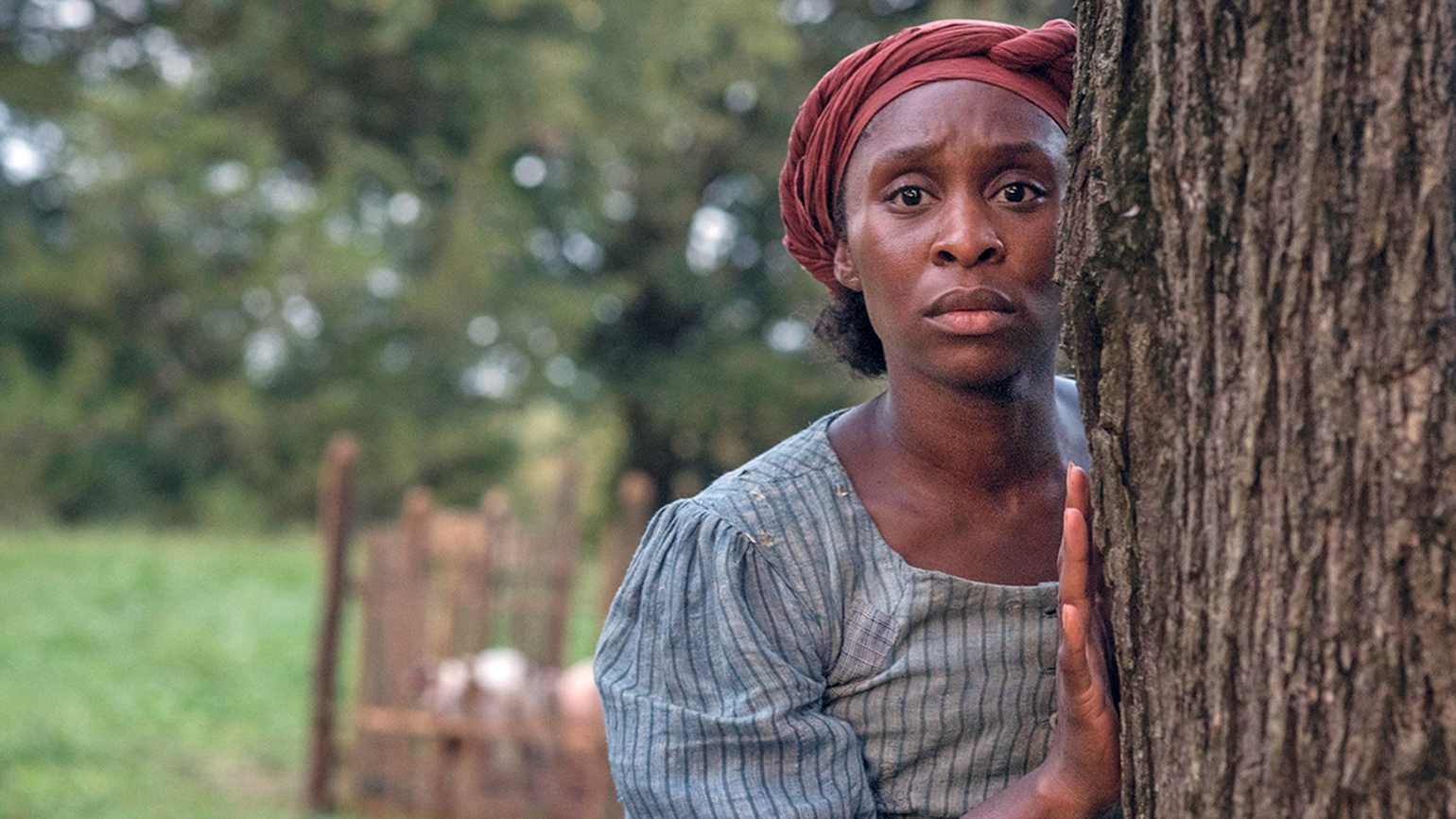
I play abolitionist Harriet Tubman—a woman of great courage, strength and faith—in the movie Harriet. Taking on the role was a leap in and of itself. A leap of faith.

Most of us know the story. Harriet Tubman made multiple trips into slave-owning territory and brought out some 70 enslaved people on what was called the Underground Railroad, even though by doing so she could have been killed or returned to slavery herself. In the Civil War, she fought with the Union, the first American woman to lead a military expedition. She was celebrated for her valor. All of that can be found in the history books I read as a child growing up in England. (My mother had immigrated there from Nigeria.) What was really at the heart of Harriet Tubman’s bravery?

As an actor, you naturally study the character you’re playing, read all you can about them. One reason I was cast was that I’m short like Harriet Tubman, a little over five feet. I’m also a fairly physical actor. She was strong, powerful. To play this part, I knew I would have to work out even harder than usual to be able to do what she did. Lots of trips to the gym.

To really master a role, every actor tries to find a way into the character she’s playing. To play Harriet, I had to understand faith at its most elemental level. To understand her faith and courage, I needed to probe my own faith and call on it. Harriet never did anything without listening to God for guidance, being present to the dangers she faced and present to what could take her through them. “I prayed to God to make me strong and able to fight,” she once said. “And that’s what I’ve always prayed for ever since.”

My faith is always with me. It was my mother who taught me how to pray. We prayed over dinner, and she heard my bedtime prayers. I also heard her pray in the shower and in the bathroom when she was getting dressed before work. She prayed out loud, talking to God as though he was right there in the room with her. There were no restrictions when it came to prayer. You could pray at any time and all times. God was with you.

I realized that’s exactly how Harriet survived, being in touch with God constantly. She could jump into that cold water because she prayed, “River of peace, flow through me. Lord, help me, help me through.” She could rescue others without heeding her own safety and freedom because she believed God was always with her and for her. I would have to feel the same. To shoot scene after scene in frigid temperatures, I needed to be Harriet Tubman. Before I even left my house and got to the set, I prayed, “Keep us safe, keep our bodies safe, keep our minds alive and make the place safe for her to be in. Bring Harriet into this place.” I asked God to give me the strength to get through the day and tell the story as truthfully as I could and to know that Harriet herself was watching over us.

The obstacles to the film were huge, but then the obstacles Harriet faced in her life were far greater. She suffered terribly. As an adolescent, she came between a violent slave owner and another slave. The owner hurled a heavy metal weight at the slave, but it hit Harriet in the head instead, injuring her permanently. For the rest of her life, she suffered dizziness, pain and seizures. During seizures that rattled her body, she would have visions, visions of God communicating to her.

I had to be strong like her, but I also had to feel—from the inside—what it would be like to be a slave. To be subjugated and abused. To have seizures and visions. Reenacting one, I felt wretched, raw, emotionally undone. Super-exposed. Which I imagine is how Harriet felt. It must have been unbelievably hard. But sometimes going through an illness can open you up to things you wouldn’t be able to do otherwise. In suffering, we also find a new closeness to God.

There were two songs Harriet often used, according to historians, when she was sneaking into dangerous territory via the Underground Railroad. A fellow abolitionist had nicknamed her Moses, and naturally enough she would sing “Go Down, Moses” and “Bound for the Promised Land,” bringing liberated slaves to a new promised land. Those spirituals became passwords, and she would change the cadence to let others know if it was safe to come out in the middle of the night.

Though she couldn’t read or write, Harriet was savvy and wise. If she noticed someone trying to identify her on a train, she picked up a newspaper and pretended to read it. In a scene from the movie, a slave owner waves a wanted poster in her face. Isn’t she this Moses? Shouldn’t she be arrested and put in jail? No, no, she coyly suggests. It couldn’t be her. She’s not at all the right height.

She had been born Araminta Ross and called Minty, but when she found her way to freedom she chose a new name. In the movie, we show that historic moment when, at the Pennsylvania Society for the Abolition of Slavery, she tells William Still—portrayed by actor Leslie Odom, Jr.—that she is Harriet Tubman, Tubman for her husband, who was still in Maryland, Harriet in honor of her mom.

Prayer was always with us on the shoot. We filmed in cold weather because Harriet often traveled in the wintertime. It was safer. People were more likely to be indoors, and she was less likely to be noticed. Facing the elements, I would prepare by singing to myself, listening to gospel music—Kim Burrell and Mali Music—the way Harriet would sing to herself to stay connected to her faith.

I also prayed with the other actors right on the set. In one scene, Harriet meets with Reverend Green—the actor Vondie Curtis-Hall—and he prays for her, for her upcoming journey. We were in the church, I was sitting opposite Vondie, and we were two actors doing a scene. Yet the prayer was real and unrehearsed. It had to be.

There was a day on the set when everything seemed to be going wrong. We were rushing around, and I didn’t feel I truly had time to prepare for a scene we were about to do, that pivotal moment when Harriet walks across the Delaware border to freedom. Kasi Lemmons, our wonderful director, wanted to catch the sunrise, but the weather wasn’t cooperating. It was cloudy and overcast. Rain started to fall. We’d never get the shot she wanted. Time was running out.

Still, the cameras were rolling. We’d have to settle for less. We’d do what we could. What would Harriet Tubman have done? She would have called on God. She always called on God. She couldn’t have done the heroic things she had done without that. As Harriet—as myself—as both of us, I said a prayer of my own. I stepped across the border. All at once the clouds parted, and this big bright yellow-orange sun came forth, shining in my eyes. There was even a rainbow. Then another one, a double rainbow. It was overwhelming. God speaking, Harriet speaking, in unison. I looked around me, and everyone was in tears, the camera crew, Kasi, everyone. What you see in the movie is what really happened, no CGI.

It was such an honor to portray her, but I couldn’t have done it without my faith. Being Harriet meant being in God’s continual presence. There were times I couldn’t even separate myself from her. To know this woman who refused to let circumstances dictate her future, refused to cave to fear, who stood up to the evil of slavery. Guided by her faith, she changed the course of history. Playing this role changed my life too.

For more inspiring stories, subscribe to Guideposts magazine.

Curried Carrot Soup

Ingredients

1 large onion, diced

2 tablespoons olive oil

1 teaspoon orange zest

1 tablespoon mild yellow curry powder

2 pounds carrots, peeled and diced

1 quart vegetable stock

salt

freshly ground black pepper

Preparation

1. In a large saucepan, sauté onion in olive oil till translucent.

2. Add orange zest, curry powder and carrots. Sauté till carrots are tender.

3. Add veggie stock and puree with an immersion blender. Season with salt and pepper to taste.

Serves 8–10

Read about the unique restaurant that makes this soup in Hope in the Soup Kitchen!

C.S. Lewis: A Devoted Father

The story begins so simply. During World War II, four English schoolchildren—two brothers and two sisters—are sent to live in an old country house to escape the bombing of London. One day they stumble upon an ordinary-looking wardrobe in a strangely empty room.

If you’ve read C. S. Lewis’s beloved books for children, The Chronicles of Narnia, you know what happens next.

The children are swept into a magical land where they meet mythological creatures, talking animals, an evil witch and the Great Lion Aslan himself, perhaps the most compelling and enduring image of God ever to appear in a story for children.

For many years now I’ve been blessed with the job of being what you might call the caretaker of Narnia. I help run a company that oversees all of C. S. Lewis’s writings. No movie, stage play or anything else based on the Narnian chronicles gets made without my permission.

You’d be surprised at some of the strange things people want to do with the books. Once, someone came to us wanting approval to make a musical of the first book in the series, The Lion, the Witch and the Wardrobe, in which the reindeer pulling the White Witch’s sleigh suddenly turn into dancing go-go girls.

A screenwriter thought American audiences would like the story better if a scene involving enchanted Turkish delight candy featured a bewitched cheeseburger instead! However, the Narnia movies currently in production, including The Voyage of the Dawn Treader, have avoided such errors.

Actually, it’s not quite accurate to call what I do a mere job. It’s more like a moral responsibility—a way of paying back one of the most profound debts of my life. You see, I’m not just a fan of C. S. Lewis. I’m also his stepson.

Lewis (I’ve always called him Jack, the nickname used by everyone who knew him) married my mother, Joy Davidman, when I was 10 years old. Four years after that my mother died. I was estranged from my father, who lived in America.

Suddenly a 62-year-old professor of medieval English literature who’d been a bachelor for almost all his life was the closest thing I had to a father. Jack was as grief-stricken as I was. And yet he did everything he could to raise me. I saw a C. S. Lewis few people knew, and I grew to love him deeply.

I didn’t feel that way on first meeting him. My own father was a successful writer, but he was an alcoholic and by the time he and my mother divorced he frightened me. My mother got to know Jack Lewis after writing to tell him how much his books on Christianity had meant to her.

The two began corresponding and then my mother moved to England and enrolled me in school there. I was excited to meet the author of the Narnia books and I pictured someone from Narnia itself, maybe a knight with a sword.

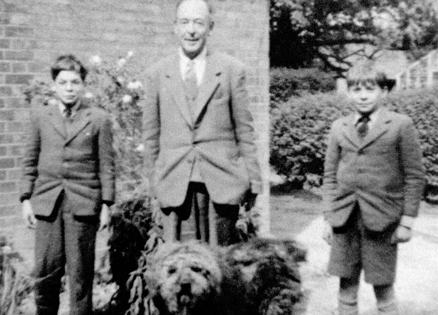
What I encountered instead was a bald, stout old man dressed in a shabby tweed coat and with tobacco stains on his teeth and hands.

I was crushed—until I began to get to know him. Almost immediately I noticed how funny he was. You always knew which room of the house he was in because someone was laughing there.

One of the first things he did was invite me out for a walk in the woods behind his house near Oxford. Jack loved trees and animals and gardens. More than that, he knew exactly how to talk to a child.

He was straightforward and took me seriously, not like some grown-ups, who get cutesy and condescending around children. He asked me what I liked to read and told me his favorite childhood books, including the Bea­trix Potter stories, which he said he still loved as an adult.

Most of all we talked about Narnia. We often spoke of it as if it were a real place, as if a faun or a centaur might appear in the woods at any moment. It was a delightful game.

I was enrolled at a boarding school, so I mostly saw Jack during the holidays. Perhaps what I loved most about him was how much he loved my mother.

She was diagnosed with cancer only a few months after she and Jack married. Doctors told her she had just months to live, but after much prayer she made what at first appeared a miraculous recovery.

She and Jack had four happy years, including trips to Ireland and Greece and—what I most remember—evening after evening of sitting by the fire at home or around the dinner table talking.

They talked about everything, especially books. They suited each other exactly. I had never seen my mother so content.

Then suddenly it was over. My mother’s cancer returned in force and in 1960 she died. Her last words were, “I am at peace with God.” To the world Jack presented a brave face, continuing his scholarly duties and keeping up a vast correspondence.

At home, though, he often wept openly. I tried not to do anything that would provoke his grief and he did the same for me.

I was a teenager by this point and he wasn’t in the best health. But he welcomed me home every holiday, kept close tabs on my progress at school and even bought me a motorcycle when I was older.

Two years after my mother died I learned that my father had been diagnosed with cancer and, rather than face the disease, had committed suicide. I was now an orphan. Jack knew just what to say to me.

He didn’t offer trite condolences—he knew too much about pain and grief for that. There had been tragedy in my family and he didn’t try to sugarcoat that. He could have washed his hands of me but he didn’t. Instead, he made me a part of the last years of his life.

Jack died in 1963, when I was 18. At his funeral I saw a candle burning in a simple candlestick on his coffin. Others say they remember no such thing. But I am certain I saw that candle. Its flame burned unwaveringly through the whole service.

It was a perfect image of Jack’s love—for me, for my mother, for anyone blessed enough to have come into his circle of friends.

Jack Lewis embodied values that sound old-fashioned these days—courtesy, duty, loyalty. He was steadfast in his devotion to me and so I now do my best to remain faithful to him. What would I have done without him, alone there in England with no one to turn to?

I had gone as a child hoping to meet a knight in armor from a fairy tale. I got something far better, a father who understood that what children need most of all is unwavering love.

Find out which C.S. Lewis books Guideposts readers love most!

Hear Douglas Gresham talk about the making of The Voyage of the Dawn Treader.

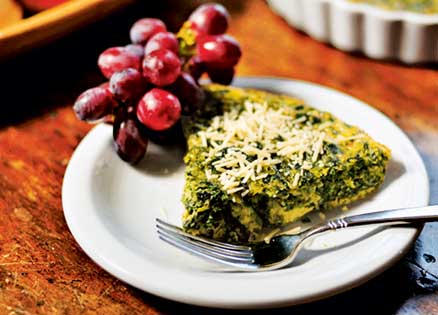
Crustless Spinach Quiche for Christmas

The La Canada Presbyterian Women’s Bible Study Group holds an annual Christmas brunch that can’t be beat. For 15 years in a row, I’ve taken my Crustless Spinach Quiche, and I don’t think they’d let me in the door without it! Bake one for your next holiday gathering, or for a memorable Christmas morning breakfast.

Ingredients

2 Tbsp. butter ½ c. flour
3 eggs 1 tsp. baking powder
1 c. milk 4 c. baby spinach leaves, washed and dried
2 c. Cheddar or Monterey Jack cheese—or any combination of both, shredded

Preparation

1. Preheat oven to 350 degrees. Put butter in 9-inch pie plate and place in preheated oven until melted. Swirl butter in pie plate to carefully coat the bottom and sides.

2. In a medium-size bowl, beat eggs.

3. Add milk and blend well. Then add cheese, flour, baking powder and spinach. Mix ingredients together.

4. Pour mixture into buttered pie plate and smooth out the top.

5. Bake for 30-35 minutes, until quiche is golden brown on top.

Serves 8.

Nutritional Information: Calories: 220; Fat: 15g; Cholesterol: 105mg; Sodium: 310mg; Total Carbohydrates: 9g; Dietary Fiber: 1g; Sugars: 2g; Protein: 11g.

Crustless Spinach Quiche

Your whole family will enjoy this tasty and nutritious meal, and you’ll be happy because it’s so easy to prepare.

Ingredients

8 large eggs, beaten 1 ½ c. whole milk
1 c. Gruyère or Swiss cheese, grated 1 1 lb. package frozen chopped spinach, thawed
Pinch of freshly ground nutmeg ½ tsp. kosher salt
¼ freshly ground black pepper

Preparation

1. Preheat oven to 375°F.

2. Butter a 9-inch pie plate.

3. Combine eggs, milk and cheese.

4. Squeeze spinach of excess water and stir into eggs along with nutmeg, salt and pepper.

5. Pour mixture into pie plate and bake till puffed and center is just set, about 45 minutes.

Serves 6-8.

Nutritional Information: Calories: 220, Fat: 14g, Cholesterol: 270mg, Sodium: 370mg, Total Carbohydrates: 8g, Dietary Fiber: 2g, Sugars: 4g, Protein: 18g.

Note: To quickly thaw frozen spinach, put it in a colander and run it under hot water. Be sure to squeeze out all the excess water.

Read how Suzanne became inspired to learn to cook and read her six tips on How Be a Good Covered-Dish Neighbor.

Crowder’s New Season of Music

In early 2012, the future of David Crowder’s music career was up in the air. His self-titled band had broken up, he’d left the church staff he’d been a part of for 16 years and he’d dug himself up from his Texan roots and planted in the soils of Atlanta, Georgia’s Passion City Church. To hear the singer describe it, it was a time of indecision and uncertainty. He didn’t know if he’d make music (professionally) ever again after the band disbanded. So he was left searching for a new purpose.

With his first ever solo album, he found it. Neon Steeple — which debuted last May — is the most personal and vulnerable we’ve ever heard the man whose wiry beard rivals that of a Duck Dynasty cast member (note: he was working on his long before those guys scored their own TV show) and whose good ol’ boy persona has made him popular amongst his legion of fans and big names in Christian circles like Pastor Louie Giglio and singer Chris Tomlin.

READ MORE: A NEW SOUND IN CHRISTIAN ROCK

Guideposts.org sat down with the singer before he took the stage at the New York City stop of his nationwide tour to talk the bittersweet ending of the band and how he’s single-handedly transforming the landscape of the Christian music scene.

A New Season

In the world of Christian music, David Crowder Band is a name that holds weight. Through 12 years, six studio albums, countless Dove awards and a Grammy nominations, the guys from Waco, Texas had amassed a loyal fan following. But in 2012, the group that began thanks to its founder’s desire to get a younger audience excited about church just wasn’t excited about signing on to yet another three-record deal.

“It was just very apparent,” Crowder told Guideposts.org. “This is over.”

The news was a shock to fans, in part thanks to the massive success of the band’s final album Give Us Rest. The fact that the breakup came without headlines of feuding members or nasty confrontations made it even harder to understand.

It was just a new season of life.

“There wasn’t any internal conflict.” Crowder explained. “It wasn’t like the stereotypical, ‘band breaks up because they’re angry at one another’. I didn’t even know what I wanted to do next; it just felt like this was the end. It was just a new season of life.”

That new season led to a move east, a new community in Giglio’s Passion City Church and a new opportunity to create music.

“I couldn’t turn off the faucet.” Crowder said. “Songs just kept coming and I thought ‘I need to be doing music somehow.’ It’s just in me and how I’m wired. I feel like I’m utilized and useful when I’m in that position; when I’m able to articulate for people that have had a similar church experience as I’ve had.”

That experience is one his younger fans — the college kids who attend Passion conferences and follow his zany Twitter and Instagram feeds — readily identify with.

“I grew up in the church, in a very traditional scene, and when I got to school, my mind was blown by all the ideas and things I’d been sheltered from. It’s like, ‘I need to weed through this and decide what of this faith is mine and what have I just inherited from my parents,’ and then throw my arms around it. For me, Christ is a very compelling figure and something I wasn’t willing to set aside, but what of it is just institutional baggage and how can I help other people find freedom?”

A New Sound

To do that, Crowder first had to decide what direction he wanted to take his solo career. While David Crowder* Band had been known for its bluegrass feel, makeshift instruments and worship-style lyrics, Crowder’s new sound compiles some of the best memories of his own childhood.

“I grew up in East Texas, so there was no avoidance of country music,” the singer said. “Country music is just a part of the lifestyle and in my family, gospel and bluegrass were right alongside. The Gaithers was sitting next to Willie Nelson. But then too, I feel like I spent too much time sitting in front of the TV, in an ‘80s age with Nintendo and Atari, so those little 8-bit beeps and blips, I just think fun, innocent childhood when I hear either of those things. I started thinking, If I’m going to do something new, I still want it to be within the church, I still want it to be community based, where you have a bunch of people and music is in the middle of this and we’re just authentically responding to our experience of God.

The end result, dubbed “folktronica” is a term Crowder doesn’t necessarily claim credit for (though he rightly could) but one which describes the sound of his new album almost perfectly.

“It’s a little bit of folk, a little bit of tronica,” the singer joked. “We need the banjo and we need the 808 kicking; the Appalachians and Ibiza all together.”

This is definitely the most personal I’ve gotten on a record.

While stylistically, Crowder’s sound has certainly changed, the biggest difference in Neon Steeple is what he accomplishes lyrically. Tracks like “Come As You Are,” “I Am” and “Lift Your Head Weary Sinner” all speak of redemption, healing and the possibility of new beginnings.

“I feel like this is definitely the most personal I’ve gotten lyrically on a record,” Crowder explained.

Free from the constraints of writing in a group setting, the songwriter was able to learn a new way of putting pen to paper.

“I’ve learned lyrically, I’m more inspiration driven. It felt impossible for me to sit down and conjure up something that’s art. I don’t even know how you can control the moment, it feels like the wind starts blowing and you’ve just got to be ready. I felt like the only way I could develop my craft was to spend a lot of time as a collector. I would just listen a lot, read a lot, pay attention to words that move me and move other people, how they are put together because especially in church music, there’s a very limited vocabulary set. The way I could develop is to pay attention to songs that have stuck around forever. Just paying attention to that stuff, I felt like I’d be ready whenever the wind started blowing again.”

READ MORE: AN INSPIRING ROLE MODEL

Judging by the reviews his latest album has received, success is in the cards for Crowder’s solo turn. But then again, pleasing the critics isn’t what the singer cares about. It’s the fans that matter. The ones that crowd into nightclubs or pack concert arenas like the one we ventured to in Times Square for the chance to see in person what Crowder’s followers love most about the artist: his live act. Perched on stage that resembles a cross between the front of a Cracker Barrel and a Star Wars movie set, Crowder croons everything from his new music, to old fan favorites, snippets of a rap song by Drake and a Bill Gaither record. He lets the music speak for itself and the crowd — who knows just about every tune — takes over the lyrics, seeming to discover their own faith through his words.

To Crowder, that’s the best part.“My journey’s been very similar to everybody else’s on the planet. We’re all kind of in the same boat, so to have the words be exactly my experience and see people relate to that experience, it’s just really cool.”

Creamy, Cheesy, Smokey Croissants

April is National Grilled Cheese Month!

To celebrate, try this twist on the classic.

Ingredients

6 Tbsp. Mayonnaise 2 Tbsp. Dijon mustard
2 med. cloves garlic, minced 1 tsp. fresh rosemary, finely chopped
Salt 4 large croissants, halved lengthwise
¼ c. sun-dried tomatoes, coarsely chopped 6 oz. Brie cheese, coarsely grated
6 oz. Swiss cheese, coarsely grated 4 1 oz. slices smoked turkey

Preparation

1. Mix mayonnaise, mustard, garlic and rosemary. Add salt to taste. Set aside for up to 30 minutes at room temperature or up to a day refrigerated.

2. Spread 2 tablespoons mixture on bottom half of croissants. Layer on tomatoes, Brie, Swiss cheese and turkey. Add croissant tops.

3. Heat a nonstick skillet over medium-low heat. Cook sandwiches 2 to 3 minutes, covered, until golden brown. (Because of their high butter content, croissants can burn easily. Watch carefully.) Turn over, pressing each with a spatula to compress. Cover and cook 2 to 3 minutes, until undersides are golden brown. Turn once more, pressing again; cook for 1 minute.

4. Let cool 5 minutes.

Serves 4

Cousin Betty’s Banana Bread

My father’s cousin Betty was a big part of my life growing up.

Christmas, New Year’s, the Fourth of July or Easter, the whole family would head to Betty’s house to celebrate. You could always count on two things: Betty looking perfectly pulled together and a table full of her homemade dishes. Cousin Betty’s banana bread was always my favorite. It’s perfect with coffee or tea at any Easter gathering.

Ingredients

½ c. shortening 1 tsp. baking soda
1 c. sugar 1 tsp. salt
3 eggs, beaten 1 tsp. vanilla
3 ripe bananas, mashed 1 egg
¼ tsp. salt ¼ c. chopped walnuts
2 c. flour 3 Tbsp. cold water

Preparation

1. Mix shortening and sugar together in large bowl. Add eggs and mashed bananas to sugar mixture.

2. In a small bowl, mix flour, baking soda and salt. Once thoroughly mixed, add dry ingredients to large bowl. Mix together. Add vanilla, nuts and water. Mix well.

3. Pour into an 8-inch greased loaf pan. Sprinkle nuts on top. Bake at 350 degrees for 1 hour or until done in the middle(test with a toothpick).

Serves 12

Corn Salad with Buttermilk Dressing

After a lifetime of eating Southern-style (ie. not terribly healthy), chef Babette Davis began to change her culinary ways after turning 40. Now, she’s the propeietor of a vegan soul food shop in Sousthern California.

Ingredients

Salad
1 small shallot, thinly sliced
½ tsp. salt
3 ears sweet corn, kernels scraped from cobs
4 small cucumbers, chopped
1 red sweet pepper, diced
4 smallish sprigs dill, minced
¼ c. fresh flat-leaf parsley, minced
Crumbled feta cheese, rinsed and drained, for garnish
Dressing
1 c. cashews
¼ c. buttermilk
⅔ c. plain yogurt (not Greek-style), stirred
1 Tbsp. white wine vinegar
3 Tbsp. sweet onion, minced
1 small garlic clove, minced and mashed with a pinch of salt
¼ c. extra-virgin olive oil
Salt and freshly ground black pepper

Preparation

1. Toss shallot with salt and let sit for about 20 minutes to draw out harshness. Rinse well and pat dry with a paper towel.

2. In a large bowl, toss corn kernels lightly to separate them, then add shallot and all remaining salad ingredients except feta; toss again to combine.

3. For dressing, whisk together buttermilk, yogurt, vinegar, onion and garlic in a small bowl. Slowly add oil, whisking until incorporated. Season with salt and pepper. Refrigerate until slightly chilled.

4. Garnish salad with feta, and serve dressing separately.

Serves 6.

Nutritional Information: Calories: 230; Fat: 15g; Cholesterol: 15mg; Sodium: 260mg; Total Carbohydrates: 21g; Dietary Fiber: 4g; Sugars: 10g; Protein: 8g.

From The Food52 Cookbook Volume 2: Seasonal Recipes From Our Kitchen to Yours, by Amanda Hesser & Merrill Stubbs and the Food52 Community (William Morrow). Copyright © 2012 by Food 52, Inc. Reprinted by permisison of William Morrow, an imprint of HarperCollins Publishers.

Corn Bread Cake

This recipe comes from Servings from the Heart, a cookbook that raised funds to support the outreach missions of Marjorie’s church, including a food bank and a children’s home, and her own efforts to create turbans for cancer patients who’d lost their hair while undergoing chemo and radiation treatments.

Ingredients

4 large eggs 1 ½ c. self-rising flour, sifted
1 c. granulated sugar 1 tsp. vanilla
1 c. light brown sugar, packed 1 c. chopped pecans
1 c. canola oil

Preparation

1. Preheat oven to 350°F. Grease and flour 9 x 13-inch baking pan and set aside.

2. In a mixing bowl, combine ingredients in order listed. Pour into pan evenly, especially into corners.

3. Bake about 35 minutes or until toothpick inserted comes out clean.

Serves 20.

Nutritional Information: Calories: 270; Fat: 16g; Cholesterol: 35mg; Sodium: 135mg; Total Carbohydrates: 29g; Dietary Fiber: 1g; Sugars: 21g; Protein: 3g.

Don’t miss Marjorie’s inspiring story about her efforts to raise funds in support of women who are fighting cancer.

Download your FREE ebook, The Power of Hope: 7 Inspirational Stories of People Rediscovering Faith, Hope and Love.

Cooking to Show You Care

I carefully crack another egg, and the yolk and white plop into a mixing bowl. I only have to spoon out just a bit of shell. Not bad for me. I check the recipe for the next step and stir in one and a half cups of milk.

I’m doing it! Making spinach quiche to take to a woman from synagogue who’s recuperating from surgery. Me. Suzanne Schlosberg! Not that long ago the idea would have been laughable. I barely knew how to make toast.

Once, when a friend had a baby, I’d had a pizza delivered to her. Why not? My husband, Paul, and I lived on takeout.

Then I had babies—twin boys, Ian and Toby. That first week home from the hospital I didn’t think I’d survive. Sleep was impossible. We subsisted on cereal and peanut butter, when we remembered to eat at all.

One afternoon I opened the door to get the mail. There on the step were two huge plastic containers with notes stuck to their lids: “Taco Soup. Eat now.” and “Freeze for later.”

I screamed for joy and ran the canisters into the house. Paul and I ladled soup into two bowls, zapped it in the microwave and devoured it. In an hour, the “Eat now” container was empty.

The soup was more like chili, a thick brew of three kinds of beans, hamburger and tomatoes. Hearty and delicious. I looked longingly at the second tub and marveled at how one person had made me feel so loved and cared for. One day, I vowed, I’ll do this for someone else.

Eventually my life returned to something close to normalcy. I joined a book club and a group for mothers of twins and triplets. At every meeting there were homemade goodies. At synagogue there were always requests for food. I wanted to join in. There was just one problem. I still didn’t know how to cook.

Then I met Sara Quessenberry. For her, cooking was as natural as eating. She actually invented her own dishes. I told her how I dreamed of one day saying those magic words: “What can I bring?”

She wrote down some recipes for me. “Try these,” she said. “Cooking is like anything else. It gets a lot easier the more you do it. Just follow all of the directions.”

I made hummus with homemade pita chips for the next book-club meeting. New neighbors moved in. I took them a plate of fudgy brownies. Then a friend had a baby. I remembered that amazing taco soup.

I flipped through the recipes Sara had given me and found one for sweet potato and rice soup. It sounded a little tricky. Could I really pull it off?

Two hours later I knocked on my friend’s door and handed her a giant tub filled with soup. “Enjoy!” I said. She thanked me, but it was seeing her face go from bleary-eyed to blissful that meant the most to me. I’d been there. And not that long ago.

“It gets better,” I said. “One step at a time.” It felt wonderful to give her a bit of warmth and comfort. I’d learned how to cook. More than that I’d discovered how easy it is to show I care.

Now I take the quiche from the oven and cover the pan with foil. I can’t wait to deliver it. I know it will be appreciated. Maybe it will turn out to be food for the soul too, like the love that warmed me even more than that simple bowl of taco soup did.

Try Suzane’s recipe for Crustless Spinach Quiche. And read her six tips on How Be a Good Covered-Dish Neighbor.

Download your FREE ebook, Paths to Happiness: 7 Real Life Stories of Personal Growth, Self-Improvement and Positive Change.

Cookie Johnson on Faith, Purpose and Survival

Dressed in white with a stoic look on her face, Earlitha “Cookie” Johnson sat next to her superstar husband Earvin “Magic” Johnson at a press conference that would become an iconic moment in sports history.

It was November 7, 1991, only two months into her marriage to the 3-time MVP of the NBA. Unbeknownst to the flock of journalists present, Johnson was also pregnant with the couple’s first child. She braced herself as her husband made the announcement that would change both of their lives forever:

“Because of the HIV virus that I have attained, I will have to retire from the Lakers today,” the 6’9 legend announced to the world, shattering misconceptions of who could be impacted by the virus.

While some of the sports journalists in the room that day were crying, Johnson writes of that day in her new memoir, Believing in Magic: My Story of Love, Overcoming Adversity, and Keeping the Faith, “I was completely numb.”

Johnson and her unborn child did not contract HIV, but the stigma of AIDS and the wide-spread ignorance about HIV threatened to ostracize them from friends and loved ones. Above all, Johnson feared for her husband’s life and for the future of their family.

“Back then, in 1991, we’d really only heard of AIDS; that was the first time I’d heard of HIV, when he was diagnosed,” Johnson tells Guideposts.org. “You just automatically thought it was a death sentence.” While her husband was determined to be the face of HIV and educate the masses on getting tested and living a healthy life, Johnson had to choose what her role in this fight would be.

AIDS activist Elizabeth Glaser—who contracted HIV through a blood transfusion and passed it on to her two children in childbirth—was able to convince both Johnsons that coming forward about the HIV diagnosis would save lives and be critical to the awareness movement.

Once Magic’s doctors informed her that symptoms of HIV could take up to ten years to manifest, Johnson decided not to focus on when or how he contracted the virus, but only on his life.

“Are you going to try and help him live, or are you just going to leave him and let him die?” Johnson asked herself. “I made that decision that I was going to help him live.”

But to support her husband, she first had to support herself and her baby.

“I had to get in deep into the [Bible],” Johnson tells Guideposts.org. “Going through it at the time, it was scary, but God said, ‘no weapon formed against me shall prosper’; He said, ‘if you put the kingdom of God first and His righteousness, all things will be given to you.’ You have to remember these promises, and say, ‘I’m not going to worry because of what God said.”

The promises of God, and particularly Psalm 91, would become her lifeline.

“That helped me get through the pain to where, now, I feel like I can easily talk to Him. I don’t have to turn to Him only when there’s a problem, I can turn to Him anytime, rejoicing.”

These days, Cookie and Magic Johnson have many reasons to rejoice. She’s the owner and designer of the jean line CJ by Cookie Johnson, the mother of two children, and her husband continues to be living proof that there is abundant life after an HIV diagnosis and an HIV/AIDS awareness activist and philanthropist through the Magic Johnson Foundation. After 12 years of on-and-off dating, 2 broken engagements and a brief, two-week split 10 years into their marriage, the Johnsons also just celebrated their 25th wedding anniversary with a lavish ceremony on the French Riviera with family and friends.

“When you think about Earvin making it through HIV and us making it through 25 years, that’s a testimony,” Johnson says. “God really wanted Earvin to be the face of HIV and to help save as many lives as possible. In the beginning it didn’t feel like it but when you look back on it, Earvin took on that role and all the blessings came afterwards. My role was to keep him strong so he could do his purpose. God kept us together when there were so many break-ups, so many times I could’ve walked away, he could’ve walked away, but somehow every time we walked away we always got back together. I believe that was God pulling us through because He had this purpose for us and it continues.”

While Johnson was out promoting her jean line across the country, she discovered her purpose extended beyond supporting her husband and children; many women also flocked to her as a source of inspiration in tough times.

“Women would come up to me and go, ‘I didn’t come for the jeans, I just wanted to meet you because you have no idea how you’ve helped me in my life, just watching you and your husband.’ And they would share their stories and we would be crying together and it happened everywhere I went.”

Johnson decided the time was right to share her story with the world.

“The whole point of writing this book was I felt like I was telling my testimony,” she says of Believing in Magic. “I thought maybe if I write a book it can help more people in that same way, to see the way God works in my life, maybe it could help someone else in their life.”

By sharing the ups and downs of her life, she hopes other swill be encouraged to know that they are not alone.

“[Whatever you’re going through,] God can help you navigate through that,” she says. “[My] prayer always is, ‘God, what is your plan for me?’

Hearing God’s plan, she says, is like having a gut-level feeling. “You know it’s right because you will have such a peace about it. You don’t always know exactly what [your path] is, but it’s about taking that fear and turning it into faith. That’s what keeps you going.”