

Embrace God's truth with our new book, The Lies that Bind

Remembering Bob Newhart: 94 Years of Faith, Family and Funny

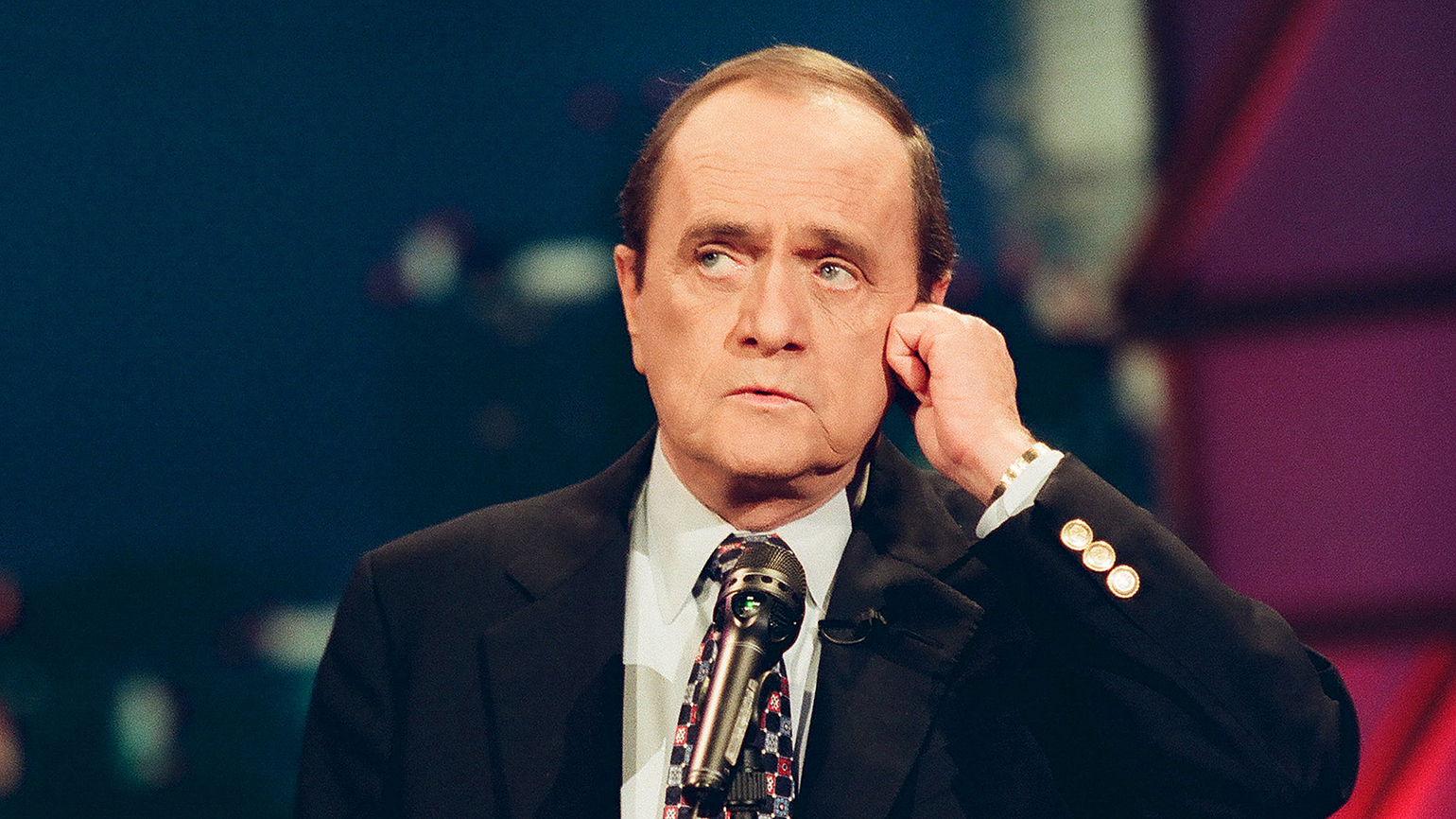
Bob Newhart passed away on July 18, 2024, at the age of 94. To celebrate his memory, we share this profile of the beloved comedian, which we originally shared in a slightly different form on his 91st birthday.

Actor and comedian Bob Newhart never considered retiring, even after more than 60 years in show business. As he said in an interview with Closer Weekly magazine, “I don’t think I’ll ever stop performing. It’s in my blood.”

Newhart was born on September 5, 1929, in Oak Park, Illinois, the only boy among four children. One of his three sisters—Mary Joan, who passed away in 2018—was a nun, a member of the Sisters of Charity of the Blessed Virgin Mary. His father was part-owner of a plumbing and heating-supply business.

Newhart was educated in Catholic schools and attended Loyola University of Chicago, graduating with a bachelor’s degree in business management. He was drafted into the Army in in 1952, serving stateside during the Korean War as a personnel manager.

Discharged in 1954, Newhart attended law school for a time but grew disillusioned and withdrew when he was asked to undertake unethical actions while serving an internship. It was then he entered the business world, working as an accountant for United States Gypsum. He later joked about rectifying petty cash imbalances by taking money out of his own pocket.

In 1958, Newhart took a position as an advertising copywriter for Fred A. Niles, a film and television producer in Chicago, and it was there that his unlikely journey to a career in comedy began. He and a colleague used to conduct telephone conversations for laughs, creating humorous scenarios and swapping funny lines. Eventually, they began recording the calls and sending them to local radio stations, hoping to get air time.

Before long, though, the co-worker relocated to New York City, so Newhart adapted the routines, creating the familiar one-sided conversations for which he’s so well-known. A deejay to whom he had sent some tapes shared them with the head of talent at Warner Bros. Records, and in 1958, Newhart signed with the label.

Newhart had a record deal before he’d even performed stand-up before a live audience—certainly not the typical path to success that comedians followed in those days.

On April Fool’s Day, 1960, Newhart’s first album, The Button-Down Mind of Bob Newhart, was released to immediate acclaim. It reached #1 on Billboard’s pop album chart, the first comedy album ever to do so. It also earned a Grammy Award for Album of the Year and Newhart was awarded the Grammy for Best New Artist.

Six months later, Newhart’s follow-up album, The Button-Down Mind Strikes Back!, was released and it also proved to be a success, winning a Grammy in the Best Comedy Performance in the Spoken Word category. The two albums, for a time, were simultaneously ranked #1 and #2 on the Billboard chart.

In 1961, Newhart hosted a variety show on NBC entitled The Bob Newhart Show. Although it lasted just a single season, the show garnered an Emmy Award nomination and a Peabody Award.

Over a seven-year span from 1961, Newhart released five more comedy albums while making frequent guest appearances on variety programs such as The Dean Martin Show and The Ed Sullivan Show. Newhart later guest-hosted The Tonight Show 87 times.

In 1972, Newhart starred as psychologist Bob Hartley on the sitcom The Bob Newhart Show; Suzanne Pleshette played Bob’s wife, Emily. The show, which ran for six seasons, was a hit with audiences and critics alike.

A decade later, Newhart starred in another sitcom, Newhart, this time portraying Dick Louden, an author turned innkeeper in rural Vermont. That very popular program aired for eight seasons.

It wasn’t until 2013, though, when Newhart guested as Arthur Jeffies (a.k.a. Professor Proton) on The Big Bang Theory, that he received his one and only Emmy Award (he was nominated eight other times) in the Outstanding Guest Actor in a Comedy Series category.

Newhart did not lack for accolades and honors, however. A member of the Academy of Television Arts & Sciences Hall of Fame, he was ranked at 17 in TV Guide‘s list of the 50 Greatest TV Stars of All Time, received the Kennedy Center’s Mark Twain Prize for American Humor and is depicted, in his familiar role of psychologist Bob Hartley, in a bronze statue that is on permanent display in the sculpture park at Chicago’s Navy Pier complex. His 2006 memoir, I Shouldn’t Even Be Doing This!, was a New York Times best seller.

A devoted family man, Newhart and his wife, Virginia—or Ginnie, as he called her—raised four children together. The Newharts, who were set up on a blind date by comedian Buddy Hackett (Ginnie babysat Hackett’s kids at the time), celebrated their 60th wedding anniversary shortly before Ginnie’s passing in April 2023.

How did the Newharts manage to stick together for so long in a town where lengthy marriages are rarer than hen’s teeth?

“Being Catholic has a lot to do with it,” Newhart told Patrick Novecosky in an interview for Legatus.org. “You work a little harder. You don’t just have your first fight and walk out the door.”

Though he and Ginnie resided in Los Angeles, Newhart has never had much use for the glitz and glamour of Hollywood. His focus is on his family. “I have four kids and 10 grandchildren,” he told Novecosky. “I’ve always said: I don’t care how successful you’ve been in this business, if you haven’t had a good family life, what have you really achieved? Not an awful lot. You can be the richest man in the world and look back at your marriages that were disasters and what have you really accomplished? That’s the way I look at life.”

Newhart shared with Novecosky his suspicion that the Man Upstairs enjoys a good joke, too: “I think God has an incredible sense of humor. All you have to do is look around the world. There’s no question that He has an incredible sense of humor.”

Bobby Murcer’s Return to Yankee Stadium

Opening Day. There’s nothing like it, particularly at Yankee Stadium, one of the world’s most storied ballparks.

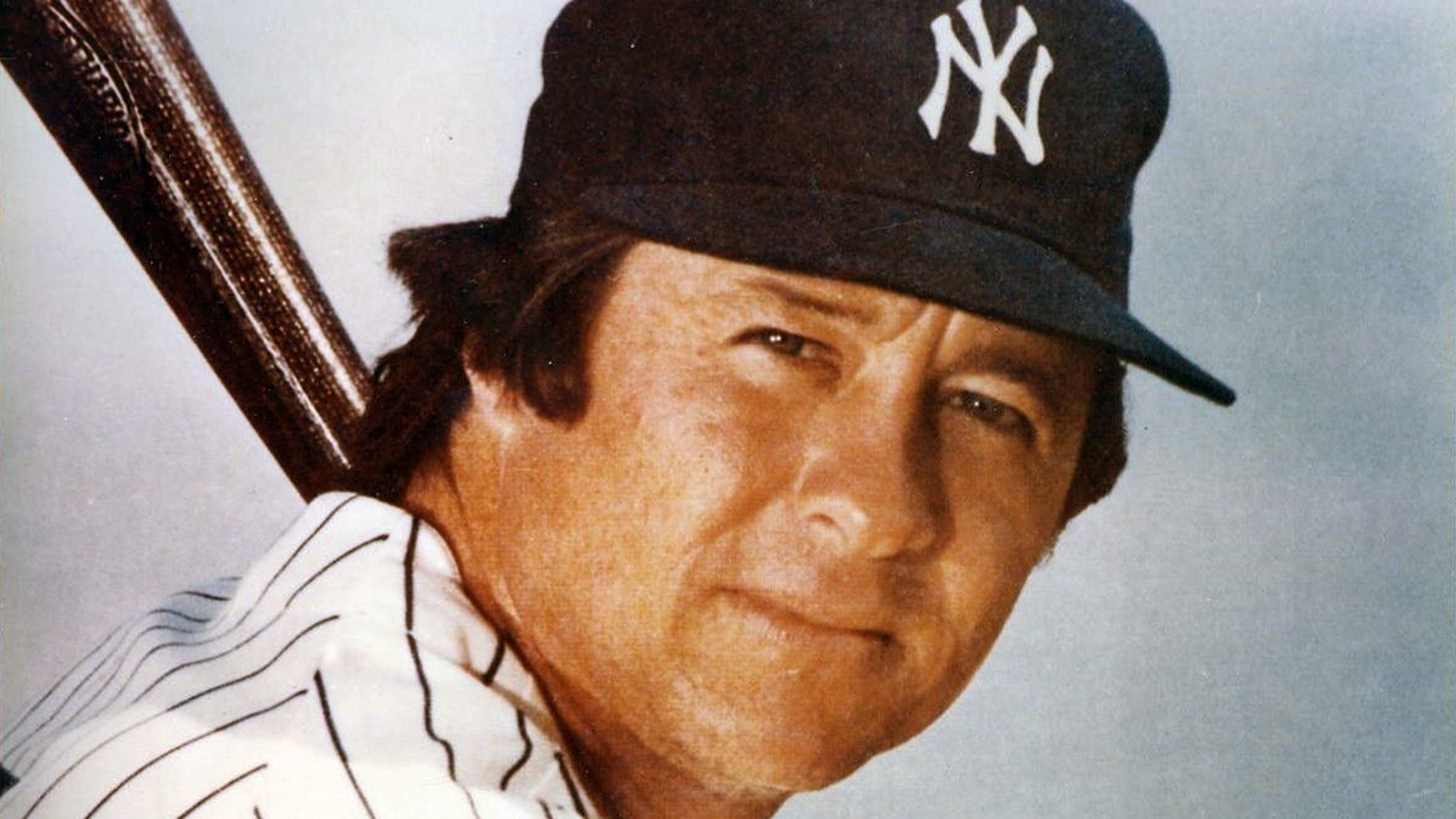
The rich history, the celebrities, the sold-out stadium packed with fans—all the promise of spring packed into one baseball game. I’ve been part of Opening Day at the stadium for 37 years—13 as a Yankees player, the last 24 as a Yankees broadcaster.

But I’ve never gotten chills like I did last April 2, when I stepped into the broadcast booth at the start of the third inning, high above the field. Certainly, no one expected me to be there that day, at least not officially to call the game.

Fans—over 55,000 of them—began to clap, some even chanted my name. Yankee players tipped their caps from the top step of the dugout.

But this time it wasn’t for anything I’d said from the broadcast booth or done on the field. They were cheering that I was simply in the ballpark. Four months earlier I’d been diagnosed with brain cancer. Doctors didn’t know if I’d ever even see another Opening Day.

I have played sports all of my life and have always prided myself on being tough—a guy who takes the field even when he’s hurting, and plays through the pain.

So last fall, when the headaches began, I went about my business. But the pain just grew worse and I felt exhausted too. I went to see my doctor. He ordered a series of tests.

On Christmas Eve 2006, while most people were getting ready to celebrate with their families, I was in the car driving home from the hospital with my wife, Kay. I had just undergone an MRI.

What’s wrong with me? I wondered. It just didn’t make any sense. Though I was 60 years old, I still worked out and stayed in shape. Then my cell phone rang. It was the doctor. I pulled over and punched on the speaker phone.

“Bobby, I have your results,” the doctor said. He paused.

“Tell it to me straight,” I told him.

“We found a tumor. I’m going to confer with some specialists and be back in touch with you to talk about the next step.”

Tears ran down Kay’s face and I pulled her close. She and I had known each other since I was 11 and she was nine. We’ve been married for four decades. She likes to tell people that she knows I love the Yankees, but she’s the home team. And she is—my teammate for life.

“We’ll get through this,” I assured Kay. “I’m not going anywhere.”

In bed that night, though, I wasn’t so sure. The doctors wanted to operate in two days. Their haste worried me. I remembered my brother DeWayne, how he lost his battle with lung cancer years ago.

Finally I did the only thing left to do. There in the darkness of my room, I prayed. For strength. For courage. For life.

The day after Christmas, my brother-in-law Dwaine came with Kay and me to Houston, Texas. My Oklahoma City doctor had recommended the head of the neurosurgery department at the University of Texas M.D. Anderson Cancer Center for my surgery.

But when we arrived at the cancer center, another doctor was there to greet me. “Dr. Sawaya is not in the clinic today,” he said. “I’m Jeffrey Weinberg.”

I eyed him suspiciously. Dr. Weinberg looked young, no older than my own kids.

“We can operate tomorrow, or you can wait till Dr. Sawaya returns,” he said. “I’ll leave the room and let you think about it for five minutes.”

“Life and death decisions made in minutes,” I said to Kay, after he left.

We phoned my hometown doctor. There was urgency in his voice. I really couldn’t wait another week, he told me.

My family came to Texas to be with me before the surgery. My son, Todd. My daughter, Tori. My in-laws. Dwaine. I won’t lie; we were all scared and worried. That night we huddled in a hotel room and talked about the good times and the hope that we had.

“There’s a Bible verse that has always helped me,” Dwaine volunteered, pulling a Bible from the bedside drawer and reading: Be strong and courageous. Do not be afraid. The Lord your God will go ahead of you. He will be with you; he will neither fail you nor forsake you.

I had always been a person of faith. I went to church, read my Bible and prayed. But this was like no other situation I had ever faced. Now I had no control over my life. There was nothing I could do to manage this but trust God.

The next day Dr. Weinberg led a team of surgeons through a six-hour procedure, removing a tumor about the size of a golf ball. When I came to, in the critical-care unit, I asked Tori for a mirror.

Minutes later, she was back with a compact. I opened it and looked at my reflection. My head was wrapped in a turban of bandages. I tilted the mirror higher. Behind my head were monitors flashing sets of numbers. I stared at them intently.

“What are you doing?” Kay asked.

“I want to watch the monitors,” I said.

“Bobby, you don’t know how to read them,” she said.

But I stared at those numbers, hard, like I was looking at a box score. Those numbers, I knew, told how I was doing in the same way a player’s batting average described how well he was hitting.

The next day, Dr. Weinberg came by with the pathology results. “Bobby,” he said, “the tumor was malignant.”

The wind went out of me. Cancer. I exchanged glances with Kay, then faced Dr. Weinberg. “What’s the next step?” I managed to ask.

“Chemotherapy and radiation treatments,” Dr. Weinberg said.

“Then I’ll be well?”

The doctor hesitated. “There is no cure,” he said at last. “We’ll treat it as a chronic disease. Life expectancy for this type of cancer averages about 14 months.” Whoa.

“Some people do better. Much better. You need to meet Dr. Hassenbusch, another neurosurgeon on staff here. About two years ago Dr. Hassenbusch had a tumor removed from his brain and had the same prognosis that you’ve been given. He’s been on a vaccine for over a year. It’s still in the experimental stages but we are seeing significant results.”

Kay squeezed my hand. “We’re in this together,” she whispered.

She was right, as she has so often been. There’s strength in team, I realized. In family, in my doctors, in the Lord. I remembered Dwaine’s verse: God had gone ahead of me. He was with me and would not forsake me.

A calm came over me. I don’t have to do this alone, I realized. For the first time since Christmas Eve I felt myself relax. My whole body just sort of let go.

Six weeks of chemotherapy and radiation was grueling. I couldn’t eat, my hair fell out, I felt plain lousy. The one good thing in all of this was that I met Dr. Hassenbusch. He gave me hope. Before I got sick, I awoke each day with all the things I needed to accomplish running through my mind.

But now Kay and I begin the day on the couch by reading a devotional. Then we pray and ask God to guide us.

I had been involved in baseball since Little League, and as a result, measured my life by spring training, the season, play-offs and off-season. I was determined to make it back to Yankee Stadium in April, back in time for Opening Day. Somewhere deep inside of me, I wanted, needed, to be in New York to share in that hope—the beginning of a new season.

We asked friends for prayer. The Yankees told the media about my illness.

One day in late January I heard Kay tapping on her computer keyboard. “Come over here, Bobby, and look at this,” she said.

I bent down over her shoulder and peered at the screen. She had logged on to a sports website. In big letters across the screen, it read, “Yes, a million.”

“What does that mean?” I asked.

“It means that a million people have logged on to this website to wish you well,” she said.

I pulled up a chair. It was true. More than a million people had posted messages to say that they were praying for me. Even Red Sox fans! One man wrote that he had never prayed before, but was starting now, in hopes of my recovery. What a powerful message!

Several shared how they had battled cancer or had loved ones with brain tumors. They wanted to talk to someone who understood. They sought me out not because I’d been a sports hero, but because they needed someone who could relate to what they were going through.

Not only was a new season on the horizon for the Yankees, but I too had entered a new season. Certainly not one I signed up for, but I felt secure in the knowledge that God had gone before me. Often that meant sharing the peace I had found with other cancer sufferers.

Opening Day, April 2, I walked into Yankee Stadium. Yogi Berra, Yankee captain Derek Jeter, manager Joe Torre and the rest of the team raced over and hugged me.

But that was nothing compared to the huge standing ovation I got from the fans. When I got to the broadcast booth, the crew put my picture up on the video screen out in right-center field.

Everyone in Yankee Stadium, it seemed, rose to their feet. Tears pooled in my eyes. I got so choked up, I couldn’t speak, and that’s not like me.

I thought of Kay, my family, Dr. Weinberg, Dr. Hassenbusch and all of the people who had said they were praying for me. And most of all, I thought of that Bible verse Dwaine had read aloud in my hospital room. I stood and waved to the crowd.

Yes, I know now, the good Lord will go before us. He will not fail us.

Bluegrass Jambalaya

This delicious jambalaya that will have your family requesting seconds. And here’s a slimming tip: If you omit the rice from this recipe and serve it as a soup, the per-serving calorie count drops to 180.

Ingredients

1 T. canola oil 2 T. no-salt-added tomato paste
1 c. onion, finely diced 4 oz. turkey sausage, cut into bite-sized pieces
½ c. celery, finely diced 3 c. no-salt-added chicken stock
2 c. bell peppers, finely diced 1 c. brown rice
2 cloves garlic, chopped 8 oz. uncooked small (36/45 per lb.) shrimp, peeled and deveined (about 1 cup)
1 t. ground cumin
¼ t. cayenne pepper 4 green onions, sliced

Preparation

1. Place saucepan over medium heat and add oil.

2. Once hot, add onions and celery; reduce heat and cook till vegetables are softened, about 5 minutes.

3. Add peppers, garlic, cumin and cayenne; cook for 3 minutes.

4. Add tomato paste and sausage. Add stock and bring to a boil.

5. Stir in rice, cover, reduce heat to low.

6. Simmer, covered, for 40 minutes.

7. Add shrimp. Cook till shrimp is just cooked through and pink, about 5 minutes.

8. Garnish with green onion.

Serves four.

Nutritional Information: Calories: 386; Fat: 8.8g; Cholesterol: 103.6mg; Sodium: 371mg; Total Carbohydrates: 55.7g; Dietary Fiber: 7.1g; Protein: 17.6g.

Download your FREE ebook, The Power of Hope: 7 Inspirational Stories of People Rediscovering Faith, Hope and Love.

Bluegrass in My Soul

In many ways, 1996 was the worst and the best year of my life. My dad was dying of cancer. And that September, Bill Monroe passed on. People call him the “Father of Bluegrass,” and I’d always thought of him as my musical father. Two men who had been my foundation in life. And I was losing both of them.

Mr. Monroe’s state funeral was held at Nashville’s Ryman Auditorium, the historic home of the Grand Ole Opry. Mandolin in hand and heart in my throat, I took the stage with musicians Vince Gill, Marty Stuart, Roy Husky, Jr., and Stuart Duncan. Looking back at us was a sea of country music royalty. On the stage next to us, Mr. Monroe’s mandolin stood on a pedestal, lit from above. I turned to the other musicians, gave them a nod, and we started playing.

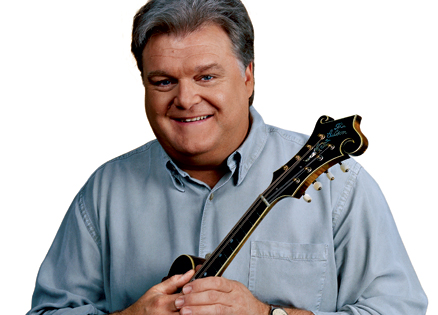
Bluegrass is my life. In the little mountain town of Cordell, Kentucky, where I grew up, I heard bluegrass and gospel music every day, either played live or on the big clunky 78s my parents liked to spin in our living room at the end of the day. I was singing in church by age three. Dad bought me my first mandolin when I turned five. I learned how to play it, and on weekends I’d bring it down to the town grocery store. I’d sit on the counter next to the Coca-Cola cooler and pick away. Folks would clap and throw me change—nickels, dimes, even a quarter now and then. The money was handy, but I’d have played if there weren’t a soul around. The music fed something deep inside me.

I was six when Bill Monroe came to town to perform. It’s hard to describe the kind of figure Mr. Monroe cut in the eyes of a small Kentucky hill town like ours in 1960. Mr. Monroe wasn’t just a famous singer like Elvis. He was a famous singer who sang our music. Pure. Simple. Straight from the heart. Just the way you’d hear it played on a front porch or at a church meeting. Mr. Monroe came from country stock himself, and he’d gone out into the world without changing to suit anybody. When he played in towns like ours, he was welcomed like a returning hero.

Mr. Monroe was a couple of songs into the concert when some people who knew me from the grocery started yelling out my name. Finally, he finished a song, looked out at the crowd, and said, “Wherever you are, Ricky, you better get up here. Sounds like folks want to hear you play.”

I don’t think I even had time to feel nervous. I jumped off my dad’s lap and made my way toward the front of the auditorium. Mr. Monroe reached down and pulled me onto the stage with him.

“What do you play, son?” he said, his eyes twinkling.

“The mandolin, sir,” I managed to say.

Mr. Monroe slid his own mandolin off and held it out to me. I stood there, open-mouthed with awe. Bill Monroe’s mandolin. He slipped the strap over my shoulder. “Okay, son,” he said, adjusting the strap. “Let’s hear some music.”

I started picking a bluegrass hit called “Ruby” and the crowd went wild, clapping and hollering for their hometown kid. I finished the song and Mr. Monroe gave me a nod. He took the mandolin off my shoulder, picked me up and set me back on the ground. I felt like my feet had just hit earth after a trip to heaven.

Folks would bring up that day for years afterward. “You’re the young fellow who played Bill Monroe’s mandolin,” someone would inevitably say at a church social or fair where I was playing. I’d nod my head and feel a sense of pride. Not cocky pride, but the good kind. The kind that comes when you’re doing what you believe God wants you to be doing. And God wanted me to play bluegrass. There was no doubt in my mind about that. Why else would he put such a desire in my heart?

I graduated from high school and played bluegrass full-time with another legendary figure, Ralph Stanley. Every now and then we’d run into Mr. Monroe at a bluegrass festival. Sometimes he’d ask me to get up and play with him. I’d go back to that day when I was six and he had strapped his mandolin onto me. He’d done more than just give a young boy the thrill of his life that day. He’d passed something on. Something strong and vital and meaningful, something I feel every time I pick up my mandolin.

In 1981 I moved to Nashville, my sights set on a record deal. It wasn’t long before I got one. The album wasn’t straight bluegrass. It couldn’t be if I expected it to sell. “Bluegrass is great stuff,” Nashville agents and promoters said. “But it doesn’t have enough excitement, enough crowd appeal.”

Excitement? To my mind, nothing in popular country had the fire of a real down-home bluegrass session. But I needed to move records, so I kept my sound popular enough that the record company and the radio stations were happy.

I enjoyed some great commercial success in mainstream country, but I still managed to play pure bluegrass with Mr. Monroe. Either I’d call him to the stage at a gig I was playing, or he’d call me up at one of his—it didn’t much matter.

Every now and then Mr. Monroe and my dad would ask, “Ricky, when you gonna make a bluegrass album? A real one, through and through?”

I’d always give them the same answer. “When the time is right, I will.”

In the mid nineties, Mr. Monroe’s heart started to give out. After he had bypass surgery, I visited him at least once a week while he recovered in a nursing home. Sometimes on those visits, we wouldn’t say 10 words. Mr. Monroe would reach for a mandolin that was always set close by his bed right next to his Bible and start picking out a tune. Then he’d hand the mandolin to me and I’d pick a tune. Time went right out the window. We’d play for three or four hours until the nurses said visiting hours were up.

Mr. Monroe’s heart problems worsened. During my last visit he was propped up in a wheelchair. His dashing signature white cowboy hat couldn’t disguise how far gone he was. At a loss for what to say, I played a few licks on his mandolin, then held it out to him. He looked at me and shook his head. The sparkle in his eyes had all but disappeared. That sparkle I’d seen the day he first called me up onstage from my daddy’s lap. He was ready to go home. I set the mandolin down and told him I loved him. Then I said, “Mr. Monroe, this music is bigger than one person. God gave you bluegrass and you gave it to the world. I’m going to play bluegrass as long as I live, I promise you that.” I took one last look, left the room and started bawling.



Mr. Monroe passed on a few weeks later. I was as heartbroken as I’d ever been. With Mr. Monroe gone, my path in life now seemed unclear. On top of that, country music was changing. Videos were becoming more important. The music itself was taking a backseat to gloss and image.

Record sales were everything. Tradition? That seemed to have been forgotten. And the more things changed the more old-fashioned I felt, trying to keep up with something I didn’t necessarily believe in. Lord, I wondered, who am I?

That was how I was feeling that day onstage at the Ryman Auditorium for Mr. Monroe’s funeral. I counted off and me and the boys kicked into a full-on version of “Rawhide,” Bill Monroe-style. Just like that the music took over, the way it always did. Raw music, pure and rich, as big and deep as the country that created it. Then, in that glorious tapestry of sound, I heard Mr. Monroe again, alive as ever, living and breathing in the music that was his soul. It was part of my soul too. Always had been. I thought back to my dad and Mr. Monroe’s question, “When you gonna make a bluegrass album?” The Lord was telling me it was time to use the desire he’d put in my heart.

The crowd was on its feet. The light shone down on Mr. Monroe’s instrument. And I knew I was who I had always been. I was the boy who had played Bill Monroe’s mandolin.

Blueberry Almond Muffins

These muffins are wonderful breakfast treats. The blueberries, full of antioxidants and low in fat, make these great for anyone with diabetes.

Ingredients

2 c. all-purpose flour ⅔ c. sugar
1 Tbsp. baking powder ½ tsp. baking soda
¼ tsp. salt ¼ c. vegetable oil
1 egg 1 c. 1 percent milk
½ Tbsp. vanilla 1 ½ Tbsp. almond extract
1 c. fresh blueberries

Preparation

1. Preheat oven to 350°F.

2. In medium bowl, whisk together flour, sugar, baking powder, baking soda and salt until well blended.

3. In another bowl combine oil, egg, milk, vanilla and almond extract until well blended.

4. Pour liquid mixture into middle of flour mixture and stir until not quite all combined.

5. Add blueberries and gently finish combining. Spoon batter into 18 muffin cups, filling each about 2/3 full.

6. Bake until a toothpick inserted in the center comes out clean, about 15 to 18 minutes.

Blessings in Concert

Michael W. Smith is a successful Christian musician. He’s toured with Amy Grant, released 22 albums—many winning Grammy and Dove Awards, and authored ten books.

But as he describes in his latest book, A Simple Blessing: The Extraordinary Power of an Ordinary Prayer, the blessing he says over the audiences at his live performances has become a surprising source of inspiration–for both Smith and his fans. Here it is:

In the name of Jesus Christ,
I bless you with the promises of God,
which are “yes” and “amen.”

May the Holy Spirit make you healthy
and strong in body, mind, and spirit
to move in faith and expectancy.
May God’s angels be with you to
protect and keep you.

Be blessed with supernatural strength
to turn your eyes from
foolish, worthless, and evil things, and to shut out
the demeaning and the negative.
Instead may you behold the beauty of things
that God has planned for you
as you obey his Word.
May God bless your ears to hear the lovely,
the uplifting, and the encouraging.
May your mind be strong, disciplined,
balanced, and faith-filled.

May your feet walk in holiness and
your steps be ordered by the Lord.
May your hands be tender and helping,
blessing those in need.
May your heart be humble and
receptive to one another
and to the things of God, not to the world.

God’s grace be upon your home,
that it may be a sanctuary of rest and renewal,
a haven of peace where sounds of joy
and laughter grace its walls,
where love and unconditional acceptance
of one another is the constant rule.

May God give you the spiritual strength to
overcome the evil one
and avoid temptation.
May God’s grace be upon you to
fulfill your dreams and visions.
May goodness and mercy follow you
all the days of your long life.

Watch our interview with Michael W. Smith!

Download your FREE ebook, A Prayer for Every Need, by Dr. Norman Vincent Peale

Blessed with the Gift of Song

People from all over the world filled the corridors of the cruise ship. My husband, Dale, and I caught snippets of French, German and even Chinese. We were a long way from our quiet life in rural Montana.

Sailing along the Alaskan coast was like a dream, and there were so many things to do: eat delicious food, swim in the pool, relax at the spa. First Dale and I headed to a Bible study. “This ship really has it all,” Dale said. “We can do anything!”

Almost anything, I told myself. But I couldn’t stop thinking about my secret dream: to sing on a cruise ship. I had asked our cruise coordinator about it just after we’d booked our trip.

“Is there anything else I can do for you?” she asked.

“I’d love to sing on the ship!” I blurted out. She must have thought I was crazy. Back when Dale and I went on our first cruise, the music made me want to sing onboard, to share the joy I got from singing about God with others.

But only professionals sang on cruises. I thought I’d forgotten the idea completely—until the words popped out of my mouth.

“I’ll look into it,” she said cheerfully. I was put in touch with a few cruise representatives, but I never heard anything after I arrived onboard. Dale and I took our seats in the Bible study.

We greeted the other passengers, and the pastor read some Scripture to get things started. Then he opened the floor to anyone who wished to contribute. Dale raised his hand. “My wife has a song she’d like to sing,” he announced. I nearly fell off my seat.

The pastor nodded permission. The other passengers looked at me expectantly. This is what you wanted, I thought. Could I just start singing right then and there?

I stood up, my heart pounding. Dale squeezed my hand. “We’re pilgrims on a journey… on a narrow road…” I sang. The group applauded as I finished the final note. I did it, I thought. Thank you, God, for giving me my dream! I sat back down.

I’d barely touched the chair when someone called out, “Sing another one!” Everyone agreed. “Go on, hon,” said Dale. I sang two more gospel songs before we adjourned. What a day! What a trip!

The next afternoon, Dale and I were walking to our room when I heard my name. I spun around. It was a woman from the Bible study. “Won’t you sing something for me?”

Why not? I sang right there in the hallway. Heads turned toward me. One man nodded to my words. A woman smiled as she passed. “They weren’t even from the Bible study,” I said to Dale when I finished.

We continued to our room. But we didn’t make it far. Another couple stopped us. “You have a great gift,” the wife said. “Care to share it again?”

We sailed on, up the Alaskan Panhandle. Ketchikan, Juneau, Skagway. And all the way, people kept asking me to sing. One evening, as Dale and I were leaving the dining room, a family called to me from their table, asking for a song. Dale laughed—he’d gotten used to it by now.

I started a hymn. As I went into the chorus, waiters stopped serving to listen, trays in hand. All of the attention had turned to me.

I finished the song to a ripple of applause. I felt honored, but not because the other passengers liked my voice. I was exhilarated by what God had done for me. We all have dreams. When those dreams come from God, they really do come true.

Download your FREE ebook, Angel Gifts: Inspiring Stories and Angel Crafts to Nurture Your Creativity

‘Black Or White’ Attempts to Bridge the Racial Divide [REVIEW]

Black or White, the Mike Binder-directed film, is a story about love across racial lines that is loosely based on Binder’s real-life story. After major studios passed on the project, it was funded by Binder’s long-time friend and the star of the movie, Kevin Costner. For his part, Costner does an excellent job bringing to life the sad, cantankerous drunk that is his character. As a man recently widowed and left to care for his young, bi-racial granddaughter, Costner gives one of his most vulnerable performances to date and continues to prove how thoroughly watchable he is onscreen. Co-stars Octavia Spencer, Anthony Mackie and newcomer Jillian Estelle also turn in inspired work. The young actress, who had to beat out thousands of other hopefuls for the role of Costner’s granddaughter, Eloise, gives the story the heart it needs.

Unfortunately, Binder relies heavily on racial stereotypes to tell his story. Costner is the predictably affluent white man, a partner at a firm living in a well-to-do neighborhood complete with a pool and Spanish-speaking maid. Eloise’s father (played by Andre Holland) is the dead-beat dad, a street thug who seems to prefer spending his time getting high than being a real presence in his daughter’s life. The beginning half of the movie slowly sets the stage for the ultimate courtroom battle over who should retain custody of Eloise. Should she continue to live with her grandfather, who’s been her parental figure for much of her life, or should she stay with her biological grandmother (Spencer), the maternal presence she so desperately needs after her mother and maternal grandmother have passed away?

There’s no easy answer, though things are wrapped up a bit too tidly in the end, and oftentimes heavy scenes are approached too simplistically to make a real impact. What can and should be admired about the film, though, is its courage. Even when some of its bravado is lost in glossed-over issues and heavily scripted (yet rousing) dialogue, the movie’s purpose remains clear. Both Spencer and Costner’s characters care more about family than they do race, though outside parties try to fuel the argument by bringing color into the mix.

The film attempts to maintain a fair view of both sides. Yes, Costner’s character can provide stability and a financially secure life for Eloise, but he’s also stricken with grief and resentment after the earlier death of his daughter and more recent passing of his wife and can often be found with a glass of liqour glued to his hand. Spencer’s character, on the other hand, is full of tough love and offers Eloise the family, history and culture she’s assuredly missing out on in her solitary life with her grandfather, but her son’s penchant for getting into trouble, his violent outbursts and life-crippling addictions make moving Eloise out to Compton to be with her father’s side of the family so questionable. Meaningful commentary on issues of race and deliberate effort on the part of the director and actors not to shy away from things too sensitive or hard to talk about give the film integrity and the performances greater value.

Black or White is no Selma (a movie which deserves more recognition than it’s received), but its timeliness can’t be ignored. Perhaps it isn’t the most revealing look at race and racial issues in this country (it has that feel-good family tint that promises a happier ending than most similar real-life situations), but at least it has the courage to try.

Berry-Chia Breakfast Crisp

I was tidying up my desk at home when I came across them—my old scripts.

I believe that there are no coincidences. Looking back on my life, I could easily see how one thing led to another. Hobbies that turned into jobs. Interests that developed certain skills. It all made sense.

Except for one thing that didn’t quite fit. The six years I spent writing and producing murder mysteries.

It was a passion that started the summer I joined a writers group at my local library. The librarian mentioned she was looking for plays to be performed at the town’s centennial celebration. That’s how I wrote my first script—Who Stole Widow Murphey’s Cow? The dark comic twist at the end took everyone by surprise. People loved it. The show was performed three times that summer!

I wrote another murder mystery play. Then another. Like the one about a florist who accidentally poisoned herself. Or the one about a deadly wood chipper. And who could forget The Gatekeeper and the Mystery of Life? I kept writing and writing plays. Always comedic murder mysteries, one after the other.

I even put on shows at the RV park where my husband and I worked. They really brought residents together. Some of them volunteered as actors. Others made flyers advertising my plays. A few even teamed up to design and paint the sets.

Eventually, though, my husband and I retired and moved. I retired my murder mysteries too. I’d lost interest, as if a flame had gone out. I flipped through the old scripts now. Why had I been so obsessed? It’s not as if my stint writing clever plots had ever led to something. I wasn’t going to sell a script to Hollywood anytime soon.

And then it hit me. Something I’d read in a book ages ago. At the time, I’d been having nightmares. So one day, browsing in a bookstore, I picked up a volume at random: Edgar Cayce on Dreams. “God speaks to you in dreams,” the first line read. I took it as a sign and purchased the book. Funny thing was, the minute I tried to decipher my nightmares, they stopped. But I did come away with a lifelong love of dream study. And a handy tip: Whenever you have a question, put it to God before you go to sleep.

Maybe I could use that technique now. I sat at my desk, got out a pen and scrap of paper. “God,” I wrote, “why did you put murder mysteries in my life?” That night, before bed, I slipped the note under my pillow and got under the covers. I dreamed vividly. I saw myself in some kind of office building. There was a man standing by a door. I didn’t recognize him. He had that kind of vague, hazy face I’d seen in dreams before. “Right this way,” he said. “We’ve been expecting you.”

“You have?” I said.

He opened the door to a conference room with high ceilings, light and airy. In the middle of the room was a large table. I tried not to stare, but I found it impossible. Around the table sat 12 or so nuns in full habit. Nuns!

I wasn’t Catholic. I’d never even talked to a nun before. But somehow I didn’t feel out of place among them. I felt as if I belonged. “This is your seat,” the man said, pointing to the head of the table.

“Mine?” I said. There had to be some mistake. But the nuns simply looked at me as if my arrival were the most natural thing in the world. I took my seat.

“Welcome to the committee,” the man said. “We create dreams for people on Earth. The kind of dreams that improve and change lives.”

What? A committee for dreams? Ridiculous! And with that I was back in my bed, alarm clock blaring.

“I had the weirdest dream!” I said to my husband at breakfast. I told him all about the office building, the conference room and the nuns.

“What do you think it means?” my husband said.

I took a sip of coffee. The dream was bizarre. But for some odd reason, I knew exactly what it meant. All those years I’d spent writing murder mysteries? All those intricate plot lines, cliffhangers and twists? The kinds that audiences could never see coming? They had been leading me to something all along.

“That’s my job in heaven,” I said. “I’m going to create dreams!”

Ben Utecht on ‘You Will Always Be My Girls’

Hi, “Guideposts.” I’m Ben Utecht, former NFL player and Super Bowl champion with the Indianapolis Colts, husband to an amazing wife Karyn, and four beautiful daughters Elleora, [INAUDIBLE], Amy, and Haven. In 2009, I took my fifth documented concussion, and that really led to a very difficult decision in my life which was to walk away from the game that I loved to play. And that was due to some of the cognitive problems that I was facing with memory loss.

I don’t know what would have happened to me emotionally if I didn’t have music, because music provided purpose. I was challenged to write a song that I had never had the courage really to go through. And that was really to kind of go through this therapy of dealing with what the future could hold. And so I sat there on a plane, 30,000 feet above the ground and began to write this letter to my wife and girls.

And I remember just being so embarrassed because I’m this big masculine football player and I’m beginning to weep like a little boy on that plane, and I pulled my hat down. But I just poured myself out into this letter. The intention was that with that we would pull out of that a song that could really be a legacy for my wife and daughters. And also, I think, provide a platform of hope for people who are going through difficult times on their own.

I don’t take my moments, I don’t take those memory moments with my family for granted anymore. Because I don’t know how long they’re going to be there. Every moment is important.

You know without my relationship with the Lord, I don’t know where I would be. That really helped me through this process to stay focused and really begin to understand that there’s so much more to my life than football.

[MUSIC – BEN UTECHT, “YOU WILL ALWAYS BE MY GIRLS”]

I’m in here counting the days, while my mind is slipping away. I’ll hold on as long as I can to you. I may not remember your name, or the smell of a cool summer rain. Everything and nothing has changed, nothing has changed. And I will remember your smile and your laughter long ever after this moment is gone. You’ll always be my girls. You’re the beauty of my world. And no matter how tomorrow unfurls, you will always be my girls.

I can still feel you here. And this pain is beyond all tears. When love does what it does, it stays. Yes, it stays. And I will remember your smile and your laughter long after this moment is gone. You will always be my girls. You’re the beauty of my world. And no matter how tomorrow unfurls, you will always be my girls.

Seasons turn and turn again. Seasons turn. [INAUDIBLE] Remember when. The love in your hearts made this man complete. My Cinderella, you danced on my feet. You will always be my girls, you’re the beauty in my world. You’re the only thing that matters, that matters to me. You will always be the ones, I could run to. And no matter how tomorrow unfurls, till the moment I am done with this world, my [INAUDIBLE] babies in curls. You will always be my girls.

Ben-Hur: How Lew Wallace Found Faith in Epic Fiction

This August, nearly 60 years after MGM’s blockbuster movie, a new version of Ben- Hur, starring Jack Huston and Morgan Freeman, will reach theaters. As with a lot of major studio releases, there will be a book to accompany it, a novel with a picture of Ben-Hur himself in a chariot on the cover. But what’s unusual is that this novel was originally written in 1880.

As it happens, the author was my great-great-grandfather, Lew Wallace, and I wrote this contemporary version of his novel. Along the way, I found out a great deal about my ancestor, how he came to write his masterpiece, and how it defined his faith.

As a little girl, I was very proud of Lew. He had been a Union general in the Civil War. He had put Billy the Kid in jail (we had a letter from the Kid hanging in our back hall). He was a diplomat and, of course, a best-selling author. Editions of Ben-Hur took up serious shelf space in our house. I even have dim memories of my parents bringing home an illustrated program from the 1959 premiere of the film starring Charlton Heston.

READ MORE: MY WIFE REWROTE ‘BEN-HUR

What I didn’t have was familiarity with the book that started it all, because Ben-Hur in its original version is a tough slog for today’s readers. But while adapting it I not only became a great fan of the text but also came to understand the surprisingly moving backstory.

Lew Wallace, it turns out, was a seeker—one of those people whose eyes are on the horizon looking for something more. When he was young, it was adventure. He ran away from home in Indianapolis at 16 to join the Texan war for independence, but got no farther than the banks of the nearby White River. Later, as a soldier, he longed for glory, and it seemed within his grasp until the Battle of Shiloh, in April of 1862.

He was then 34, the youngest major general in the Union Army, a striking figure on a big bay horse, in charge of the 3rd Division—nearly 6,000 hardened soldiers. On the morning of the battle they were held in reserve, waiting for General Ulysses S. Grant to call them up to the field of action.

Yet there was a long delay between Lew’s receiving Grant’s orders and his troops’ arrival at the Union line. In fact, they got there at the close of the first day’s fighting. This was Lew’s disaster.

READ MORE: HOW BOOTH SAVED LINCOLN

Shiloh was one of the first major battles of the Civil War. The casualty numbers were appalling. In Washington, Union leaders demanded to know why Grant’s troops had performed so badly. His excuse: General Wallace didn’t get there in time.

Lew claimed the orders were unclear, but that didn’t matter; he was stripped of active command and the brilliant trajectory of his military career was halted. He never got over it. Years later he was still trying to clear his name. His anger and shame and shock never really died away.

How do we know this? From Ben- Hur. The years after the Civil War were hard for Lew. After a futile military adventure in Mexico, he unenthusiastically practiced law in Indiana. By middle age he was deep in debt. His escape was writing. In 1873 he published The Fair God, a novel about Hernán Cortés’s 1519 conquest of Mexico. The book was only moderately successful, but Lew kept writing.

His next effort was a novella about the Magi—it’s easy to see how this chronic adventurer responded to the story of three men who answered a mysterious call and set out into the desert in search of a redeemer. But he put his novella aside.

What turned that fragmentary story into a sweeping saga was a chance conversation. In 1876, Lew found himself in a train compartment with Robert Ingersoll, a superstar of the day—a sought-after speaker and America’s foremost agnostic. Ingersoll enjoyed grilling new acquaintances about their faith.

Lew had considered himself a Christian, but he didn’t go to church, didn’t pray regularly and barely knew the Bible. He was embarrassed by Ingersoll’s questions. He felt he should know more about his faith. And he decided that the best way to educate himself would be to write a novel set at the time of Christ, about a young man whose life is changed by Jesus.

READ MORE: HARRIET TUBMAN’S INSPIRING LIFE

People often forget that the novel’s full title is Ben-Hur: A Tale of the Christ. And though the film versions have tended to focus on the chariot race, Lew’s book (like my version) goes beyond that to include the hero’s redemptive encounters with Jesus. It was the spiritual content that launched Ben-Hur into widespread success.

When it was first published, in 1880, Lew expected merely respectable sales figures. He went off to Constantinople (now Istanbul) to serve as U.S. Minister to the Ottoman Empire. When he came home, five years later, to his surprise and great relish, he was famous. Ben-Hur’s combination of excitement and inspiration had touched thousands of readers.

Do you remember the plot? The hero, Judah Ben-Hur, is a young prince of Israel, living in a palace in Jerusalem, when his childhood friend Messala returns from years in Rome. As boys, they were inseparable, but Rome’s heavy-handed occupation of Jerusalem, along with Messala’s arrogance, now comes between the young men.

Watching a parade of Roman soldiers from his rooftop, Ben-Hur knocks loose a tile, which wounds a Roman officer. In retaliation, his mother and sister are imprisoned and he himself is carried off in chains to serve as a slave in a Roman galley. Messala does nothing to intervene and Ben-Hur spends five years belowdecks pulling an oar, nursing dreams of revenge.

READ MORE: THE SURPRISING SAGA OF THE CHAINED PRINCE

Like his hero’s, Lew’s life had been derailed in a shocking way. At Shiloh, his trust in a golden future was shattered. His anger and sense of outrage fuel the storytelling; Ben-Hur’s bitterness is Lew’s own. What’s more, Ben- Hur’s violent response to his grievance was one that would have been familiar to Lew, who was first and foremost a soldier. Ben-Hur’s revenge during the chariot race is merciless.

That race is not the end of the book, though. Ben-Hur continues to solve his problems with violence, leaving an impressive body count. Even his encounters with Jesus fail to change his habits until the Crucifixion, when he finally understands the message of peace. In the 1880s, as the national trauma of the Civil War receded, that was a thoroughly welcome idea to the reading public of America.

And though Lew never did become a regular churchgoer, writing Ben-Hur nurtured his faith. His authentic belief and his reverent treatment of Jesus’ message helped his book become a phenomenon.

In an era when fiction was often frowned on, this novel that featured Jesus as a speaking character was recommended from pulpits across the country. Word-of-mouth success was followed by a play seen by millions and, ultimately, multiple film versions.

My experience writing this new book echoed Lew’s. He claimed that he lived with his characters, that they lived and spoke to him in his imagination, and my process is similar. Like my great-great-grandfather, I have imagined myself into Jesus’ presence, not once but repeatedly. I have a feeling you know what I mean.

For more inspiring stories, subscribe to Guideposts magazine.

Behind the Scenes of ‘The Shack’ with Sam Worthington

Sam Worthington, in his story about the making of his new film, The Shack, for the April 2017 Guideposts, reveals that he knew as soon as he read the script that he wanted to play the lead character, Mack Phillips, in the much-anticipated motion picture. His opportunity to star in the movie, Worthington wrote, was “more than coincidence.” In this image gallery, Worthington shares some stills that will appeal to fans of the book and the movie.

Read Sam’s story about the making of the film from the April 2017 issue of Guideposts!