

Embrace God's truth with our new book, The Lies that Bind

A Hero Beyond the Finish Line

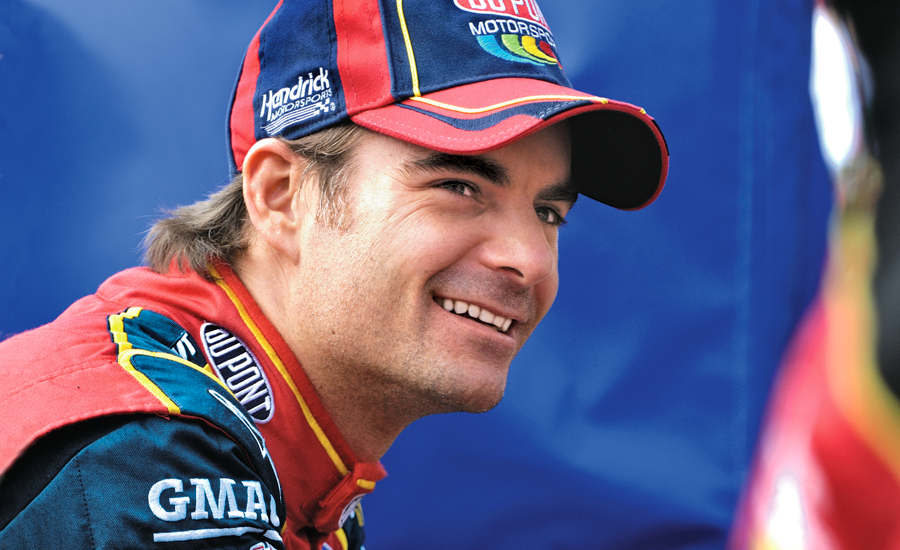
My stepdad got me hooked on racing when I was five years old. After I won my first race, that was it. From then on, chasing that next checkered flag was the goal. Life was about winning races.

Everything I did was geared to going fast and crossing the finish line first. Everything in between was just filler. Two things changed that. Two kids, actually. Ray J and a boy I’ll call Gil.

Ray J is the son of my former crew chief, Ray Evernham. Ray and I were like brothers. We clicked from the moment we met. He worked tirelessly to forge a winning team. I did the driving, but we won races together.

I got to know his family too, especially Ray J, who was only one year old at the time.

One day in our first NASCAR season together, Ray wasn’t at the track when I got there. Something had to be very wrong. Ray was always there.

“Ray caught the first flight back home this morning,” a crew member told me. “There’s something wrong with Ray J. The doctors think it might be leukemia.”

A chill went through me. Leukemia. Cancer. Ray J was a healthy, energetic kid. How could this happen? I couldn’t imagine what Ray and his wife must be going through. I called Ray immediately.

“You know I’m there for you, buddy. Whatever we can do, let us know.” Ray sputtered something about hating to miss work for even a day. “Forget it,” I interrupted. “Your family comes first.”

And I meant it. For one of the first times in my life the next race didn’t seem so important. Racing and life weren’t the same thing.

For the next few months Ray kept us up to date on his son’s progress, but it was tough going. Chemotherapy, radiation, long stays in the hospital. Little Ray J’s hair fell out and there were times he was so weak he could barely play.

With every new round of treatment, Ray would cling to hope, but, boy, was it hard. Wasn’t there something I could do? I always met challenges by going faster, pushing myself harder. How could a stock-car driver like me make a difference to a kid who was battling cancer?

I thought of Geoffrey Bodine, a fellow racer. He had hosted Make-A-Wish Foundation families at the track, and I’d had the pleasure of meeting some of those remarkable kids.

These children were facing some of life’s toughest challenges with determination and great spirit, and I wanted to become more involved.

Some people warned me that it could be really hard to see kids so ill. But if I wasn’t afraid to drive a car around an oval track at 200 miles an hour plus, then why should I let myself be afraid to visit with sick kids?

I signed up with Make-A-Wish. I was nervous–but excited–as the date of my visit grew closer. A six-year-old boy with osteogenesis imperfecta, a rare bone disease, was coming to the track. Gil.

His bones were so weakened by his condition that several broke during birth. By now he’d become so fragile that if I even hugged him I might break one of his bones. “He can’t wait to meet you,” a coordinator from Make-A-Wish told me.

There he was, sitting in a wheelchair, his family standing behind it. His legs were gnarled and atrophied and his torso was as small as a three-year-old’s.

He had a hat with a “24”–my number–and a Jeff Gordon shirt that looked to be about three sizes too big. His grin was three sizes too big too, stretching from ear to ear.

“Hey, buddy,” I said. “How are you?”

“Fine.” Gil raised his hand for a high five. Now I was nervous. If I hit his hand, wouldn’t I shatter his bones? If I acted like he was too fragile to touch, I’d risk shattering his spirit.

In a race we think about everything beforehand. We try to plan for every possibility. But this was something I was unprepared for. I looked at his family. They seemed as stymied as I was. Quickly I said a prayer that I’d do the right thing. I held up my hand. He tapped it and then pulled his hand back.

That big smile got even bigger. “Ow!” I said. “Don’t hurt me, man. Wow, you’re so strong.”

I knelt down and we talked. He was a huge NASCAR fan. He couldn’t get outside and run around, but watching the races and learning everything he could about the drivers distracted him from his pain. “I love it when you win, Jeff.”

Win. That word again. A concept, really. Had I ever thought much about what it meant? Was it all about just crossing the finish line first? It was as though someone was showing me how big winning could be, how it was about more than me and my car and my team and that next checkered flag.

“Hey, man,” I said, “I’ll be thinking about you out there. I promise.”

I have too. I’ve seen tons of other kids through the Make-a-Wish Foundation. I’ve also worked with the Leukemia Society and the Marrow Foundation. And we started our own, The Jeff Gordon Foundation. It’s all about helping sick kids, kids who are immeasurably brave, the true winners.

As for Ray J, all the prayers and treatments and hospital stays had their effect. One night two years after Ray J’s diagnosis, Ray called me from his home. “You’re missing a great party here, buddy,” he said.

“For the race?” We’d just won one and I thought that’s what he was talking about.

“Better than that,” Ray said. “Ray J is in full remission. The doctors say he’s finished with chemo. He’s all better.”

That Christmas I did celebrate with Ray and Ray J. I’d bought the kid a big plastic electric car. Ray J climbed inside and grabbed the wheel. “Be careful with that, son,” his dad said. Ray J put his pedal to the floor and drove straight into the Christmas tree. We laughed so hard we couldn’t stop.

I’m not going to try and fool you. Winning on the track is what I’m always aiming for. That’s my job, how I support my family and my foundation. But winning is best when it’s about something bigger and better than crossing the finish line first.

I can make a difference–any one of us can–in ways far beyond what’s humanly possible to imagine. Two kids taught me that.

Did you enjoy this story? Subscribe to Guideposts magazine.
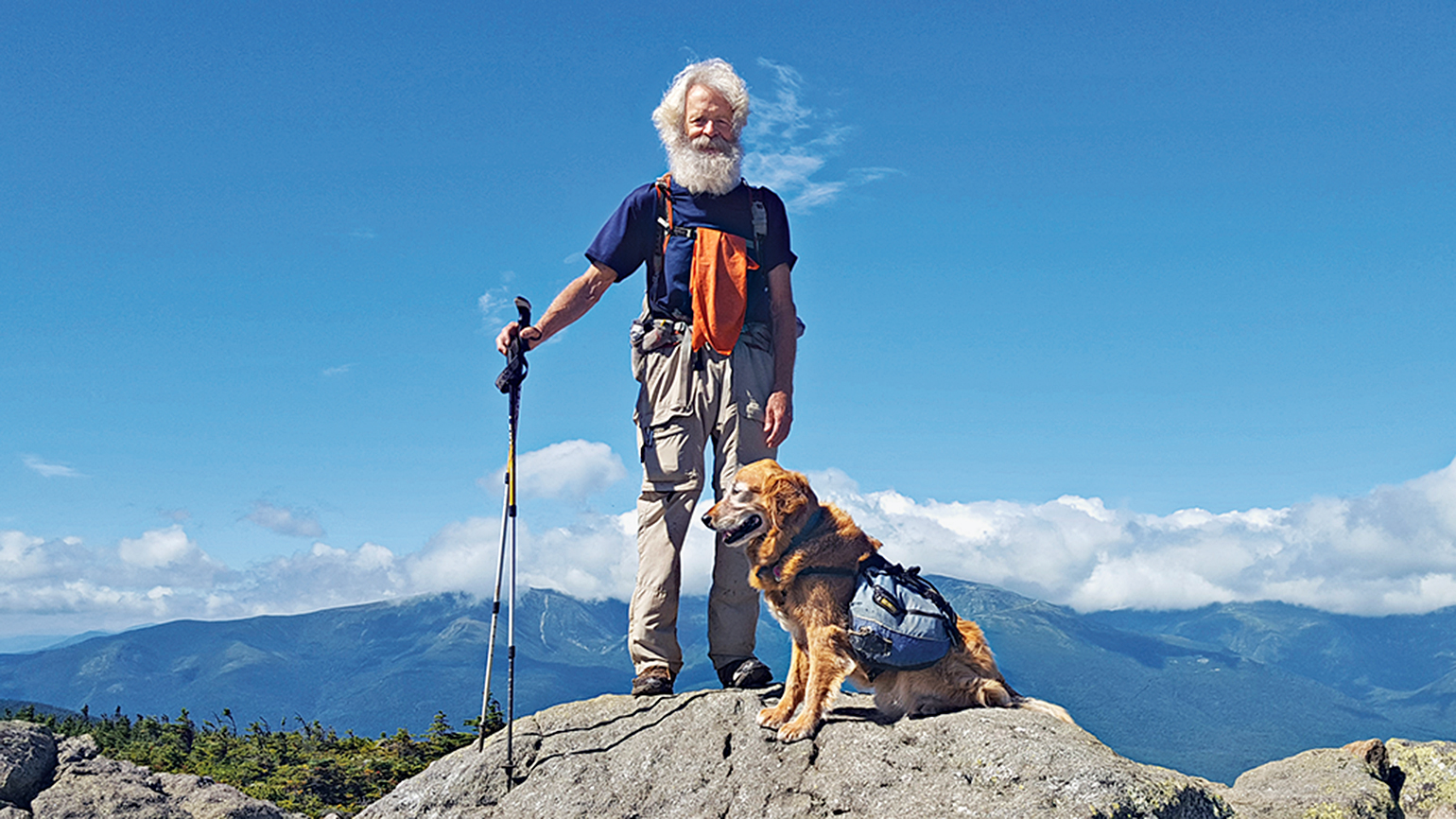
A Grueling Thru-Hike on the Appalachian Trail Reacquainted Him with God

Eight months after setting out on the 2,190-mile Appalachian Trail, I was a mere 120 miles from finishing.

It was October. Ahead lay Maine’s One Hundred Mile Wilderness, one of the most remote and unforgiving stretches of country in the eastern United States. I was 75 years old, and I was exhausted, mentally and physically. I’d lost 30 pounds since starting the trail at Springer Mountain, Georgia. My white hair and beard were long and unkempt.

I was in the hospital. Tendons in both arms were torn after frequent falls. My right shoulder was swollen, hot and useless.

Did I plan to quit? Absolutely not.

All my life, I’d wanted to hike the Appalachian Trail—the AT, as we hikers call it. I’d postponed that dream through decades of work and family life. The call to thru-hike the trail—hike it from one end to the other in a single year—came from some deep part of me I still didn’t fully understand. Who or what was calling me? I had to get back out there to find out.

I’d first encountered the Appalachian Trail in the White Mountains of New Hampshire during summer camp when I was 12. The AT passes through the heart of the Whites, traversing a spine of bare rock called Franconia Ridge. Our backpacking route had followed the trail across the ridge, which is often buffeted by strong winds. Hiking that ridge, blown by the wind, surrounded by the peaks of the Presidential Range, I’d felt a strange exhilaration.

Two years later, I suggested to a school friend that we hike the entire trail. Life went on, and the hike never happened. I went to college, got married, became a father and opened a law practice in Lancaster, Pennsylvania, where my wife, Bonnie, had grown up. We had five kids, three boys and two girls.

Though the AT was 50 miles from our house, I never set foot on it. I did some camping with the kids but otherwise did exactly what the world expected of a responsible husband, lawyer and father of five. That did not include spending eight months walking in the woods.

There’s a reason I was so responsible. My parents were alcoholics. They fought a lot when I was a kid. Life was unpredictable. My brother was the rebel. I was the good son.

I did all I could to make sure my own kids’ upbringing was steady, secure. Bonnie and I were active at our local parish and in prayer groups. Work, family and church were my top priorities.

The kids grew up and went off to college. Bonnie and I were in our sixties. One day, nearing my sixty-fifth birthday, a thought jumped into my head: Wouldn’t it be neat to celebrate that birthday on top of Katahdin?

Mount Katahdin—Penobscot Indian for “Chief Mountain”—is the northern terminus of the AT. Summiting this mound of rocks, just 13 feet shy of a mile high, is the crowning achievement of a northbound thru-hiker.

I hadn’t thought of the trail in years, yet suddenly I was hooked. I announced to Bonnie that I planned to hike the Appalachian Trail. I didn’t ask. Just announced.

“Mm-hmm,” she said, looking at me as if she would have appreciated some input. But the desire to hike that trail welled up from some deep part of me, where the memories of that boyhood hike on Franconia Ridge were stored. There was something wild out there, more true and life-giving than the routines of everyday life.

True to form, I didn’t walk out the door that minute. I wound down my law cases and hiked more than 400 miles in Vermont and Pennsylvania to prepare myself and my golden retriever, Theo, who would accompany me on the trail.

It took me 10 years to get ready.

On Valentine’s Day, 2016, my family gathered to bid me farewell. I gave Bonnie a ring with three precious stones, representing our love for each another. On February 18, I kissed her goodbye and headed for Springer Mountain. Theo and I were on our way. They say a thru-hiker takes five million steps on the AT. Theo might take twice that many.

It was winter. An experienced thru-hiker cautioned against starting the trail so early. A native New Englander, I wasn’t bothered by cold and snow. I had a tent with room for Theo and me, a sleeping bag, cooking gear, rainwear, emergency supplies and warm clothing. Down booties at night were a real plus.

We passed through the Great Smoky Mountains in heavy snow, the Virginia highlands in sun, the Shenandoah Ridge in rain, then West Virginia and Maryland. We settled into a comfortable rhythm of walking all day, pitching camp (while Theo rolled in the dirt or leaves to rub off the feel of his saddle bags), filtering water, preparing food and sitting together peaceably in the gloaming. I reveled in the endless woods, the majestic views and the silence.

Most of all, I loved not knowing where I’d sleep or what was over the hill. I was free from the routines of society. AT thru-hikers traditionally adopt trail names. Mine was Sojo, for Sojourner. I was on a journey, led by God.

After 500 miles, I switched to summer gear. A few miles later, I realized my low-cut boots were causing blisters between my toes. I developed plantar fasciitis. By the time I reached Pennsylvania, known as “Rocksylvania,” things were rough. Theo was managing fine. My feet, however, were killing me.

In Port Clinton, at the foot of a steep descent, I took a break. Bonnie met me. She looked at me, thin and exhausted, and said, “You need to come home.” I knew she was right.

At home, Bonnie was amazed how I downed a full blender of milkshake in one gulp. She shopped for the best health foods for me to take on the trail. My doctor wanted me to stop for fear of dehydration, but I told him I’d be fine. I saw a podiatrist, who showed me how to protect my toes with toe spacers and moleskin pads. Using the spacers and pads and wrapping my feet in duct tape, I headed back to the trail after a three-day break. My feet gradually healed.

My shoulders didn’t. I fell more than 30 times on the rocky trail, bracing myself and my 30-pound pack every time I landed. For a long time, I ignored the pain. I made it through the mid-Atlantic states and headed into New England at the height of summer. By August, I was back in the White Mountains, back on Franconia Ridge, back in the rocky, windswept terrain that had first inspired my love of the AT. The strong winds and kaleidoscopic fanfare of clouds and sunbeams made me feel as if God himself were welcoming me.

It took me days to get through the Whites. After some of the trail’s most difficult stretches, including a mile of huge boulders, some requiring that I remove my pack and crawl underneath, I arrived in Monson, Maine, at the start of the One Hundred Mile Wilderness. I could ignore my shoulders no longer. I feared my right shoulder was infected.

A doctor drew 45 ccs of cloudy fluid out of my shoulder and put me in the hospital for four days of IV antibiotics. He wanted to operate.

I knew that the trail up Katahdin closes by mid-to-late October. I would never make it if I had surgery. I told the doctor I wanted to hike.

Summiting Katahdin in October can be hazardous. I had to break up the last section of the trail and tackle the mountain while the weather held. I took a shuttle van to the base of Katahdin. Theo and I got up at 3 a.m., summited at noon and made it back for a shuttle ride back to Monson that same day.

Then we set off through the One Hundred Mile Wilderness, the last leg of the trail. It took us 10 days. I was numb in body and spirit. A thunderstorm turned to snow for seven days. I walked through rivers in full gear. My fingers and toes were frozen. The whole time, I’d picture Bonnie and the kids and chant in rhythm with my footsteps: “Their… love…will…see…me…through.”

On October 27 at 1:45 p.m., I took my five millionth step, exiting the trail. My thru-hike was over.

There was no elation. No celebration. Katahdin was under five inches of snow. I’d made the right decision to summit it earlier.

Bonnie flew to Bangor, Maine, and rented a car to meet me. It was wonderful to see her, but we were both too dazed for excitement.

Now I was done. And I was different. But how?

Back home, I felt alienated from everyday life. The trail was like a river running through my mind. Memories flowed past of the trees, the streams, the sky, the clouds, the wind and the peaks.

What had I found on the trail that had been calling to me for so long?

There was my love at the end for Bonnie and the kids. But that love, I knew, was embedded in a larger love. For so long my love for my family, my sense of responsibility, came before hiking the AT. I never questioned that decision.

But when at last I said yes to the trail’s call, I discovered why it was so powerful. It wasn’t just woods and water and rocks and sky that I found. I found God himself. He accompanied me every step. He showed me sides of himself I’d never experienced. On the AT, I found a wild God, the God of all creation, the God of love, companionship, protection and support. The God who saw me through a difficult childhood and gave me answers to the questions I didn’t even know to ask. God’s love never ends. For a thru-hiker, neither does the AT.

For more inspiring stories, subscribe to Guideposts magazine.

A Gold Medal in Positive Thinking

Let me tell you about a little girl named Wilma Rudolph. Wilma was born in the back woods of Tennessee in a shack to very poor people. She was a premature baby born at four and a half months and very frail. It was doubtful as to her longevity.

When she was four years old, she had double pneumonia and scarlet fever, a combination that left her with a paralyzed and useless left leg. As a result, she had to wear an iron brace and was told by a doctor that she would never walk normally.

Fortunately for little Wilma, she had a mother who instilled in her that despite her leg, she could do whatever she wanted to do with her life. And, she told her that all she needed to do was to have faith, persistence, courage and an indomitable spirit.

So, at nine years of age, Wilma took away the brace and took a step that the doctor told her she never could take. In four years time, she had developed a rhythmic stride, which was a wonder medically.

Then, Wilma got the notion—the incredible notion—that she would like to be the world’s greatest woman runner. Seems like an impossibility for a person who once had a paralyzed leg, but Wilma was determined. So, at 13, in high school, she entered a race. She came in last—way, way last.

She entered every race they had, and every race she came in last. And, they begged her in the name of pity to quit it. But, one day, she came in next to last. And there came a day when she won the race, and from then on, she won every race that she ran.

Then she went to Tennessee State University, where she met a coach named Ed Temple. And, Ed Temple saw the indomitable spirit of this girl—that she was a believer and that she had great natural talent. And he trained her so well that she went to the Olympic Games along with Mr. Temple.

And, there, she was pitted against the greatest woman runner of those times, a German girl named Yetta Heine. Nobody had ever beat Yetta Heine. But, in the 100 meter, little Wilma beat her; and again in the 200 meter. Now she had two gold medals.

But, when they handed the baton to Wilma, in her excitement, she dropped it, to see Yetta taking off down the track. It was impossible that anybody could catch this fleet and nimble girl, but Wilma did. And, she had now three gold medals.

How did she do it? She wanted to. And you will never become what you want to be, unless you want to. And, second, she knew what she wanted to become, and you’ll never in the world become what you want to be unless you know what you want to be. And, in the third place, she was a reader of the Bible and a follower of the one who said, “Nothing is impossible, if you have faith.”

After 40 Years, This Dental Hygienist Becomes a Singing Sensation

It landed in my mailbox like a blast from the past. A small manila envelope with a return address from Brooklyn, New York, and a name I didn’t recognize. Inside was a CD, its title, Parallelograms, in loopy script over the image of a young woman with long hair in a miniskirt and boots, walking in a blue-tinted field.

I flipped the CD box over. Had I really written and sung all those songs? It seemed impossible. These days I might sing to myself, driving to work as a dental hygienist. My 12-string Martin [guitar] was buried deep in a closet, the reel-to-reel masters of those long-ago recording sessions gathering dust somewhere. Linda Perhacs, the CD said. That was me all right. Me a million years ago.

It was 1970, to be exact. I was a dental hygienist working for a Beverly Hills periodontist on Rodeo Drive. The patients were a roster of Hollywood stars—Paul Newman, Cary Grant, Henry Fonda among them—who depended on their perfect smiles for their work.

My then husband and I lived in a tiny bungalow out in Topanga Canyon. It seemed tinier still when we fought, which was always. To get away, I’d grab my Martin and sit under an old oak, the scent of eucalyptus in the air, a sea breeze rustling the mustard in the fields. Songs would come to me. Lyrics spilled out of me: “In the soar of the leaves, and needle tufts and form, in the grasses and the reeds, and the spilling over stones…”

Not that anyone would mistake me for Joni Mitchell or Joan Baez. Yet the music was healing. I soothed myself with song and felt close to God. I need you more than I ever have, Lord.

One day, one of our patients, Leonard Rosenman, looked at me while taking his bib off. “Linda, you must have talents besides scaling teeth,” he said. Leonard wrote movie scores. His latest was for Beneath the Planet of the Apes, starring Charlton Heston.

“I’ve written a couple of songs,” I said. “I’m not really a songwriter or anything. I just like doing it for myself.”

“I’d love to hear them,” he said. “Can you get me a tape?”

That night, I sat in my kitchen and recorded four songs on my cassette player, convinced I’d never actually have the courage to share them with Leonard. Except the next time Leonard was in the office, I gave him the tape. He called me as soon as he got home.

“Linda, your voice, these songs, they’re incredible. I want you to make an album.”

I didn’t believe him. Was he just being nice? Nice enough to convince Universal Records to sign me to a recording contract. Whenever I could get off work, I’d drive to the studio where some of the best session players in the business—usually a guitarist, drummer and bass player but in one song a full 100-piece orchestra—backed me up. It wasn’t really even a dream come true because I had never dared to dream of something this amazing. It was a kind of miracle.

It took several months to lay down all the tracks. With each one done, I got the master—the original reel-to-reel tape. Remember, this was the seventies.

The title track came to me one night while I was driving home from Leonard’s house in Bel Air. I looked up at the sky. Luminous bands of yellow, green and blue formed a perfect parallelogram. Music rumbled inside my head. I have since learned my ability to see vibrant colors whenever I hear certain sounds is a phenomenon called synesthesia. For some it’s a distraction, a nuisance. I think of it as a gift from God.

I pulled off the next exit and got out a piece of paper. I scribbled a picture of what I’d seen in the sky and jotted down some lyrics: “Parallelo-lelogram… Spiralelo-lelo-gram…”

“That’s it,” Leonard said later. “It’s going to be a huge hit.”

The first I saw of the finished LP was in a music executive’s office in Studio City. “We need to talk about a tour,” he said. “We want you to go on the road and perform. It’ll help sell the album.”

“A tour?” My palms turned sweaty. I couldn’t do that. I’d never done that! It would be a disaster. “I’m sorry,” I said. “I can’t do a tour. I just can’t.”

That was that, the end of my career as a recording artist. The record simply disappeared. I never saw it in a single store, never heard any of the songs played on the radio. Parallelograms vanished. By then so had my marriage.

Still, my faith grew stronger. God felt as present as that parallelogram in the sky, as if the reason I’d made the LP was to grow closer to him, which was just fine. More than fine. A kind of miracle. I didn’t pick up the Martin for decades. I continued my career as a dental hygienist, only occasionally wondering “what if.” Now, some 30 years later, the record had come back. As a CD in a manila envelope with a note attached. “If this is the right Linda, I’ve been searching for you,” the note read. “Would you please call me? Michael Piper.”

I called him. “I can’t believe it’s really you,” Michael’s voice boomed through the phone. “I’m, like, your biggest fan.”

Michael had started an independent label selling small-batch CDs of records that were no longer available. He wanted to sell mine. “I came across your album in a used record store. That song ‘Parallelograms.’ It gives me goose bumps.”

I told Michael I had the masters and would be glad to lend them to him. We stayed in touch. The CD of Parallelograms caught on, more and more people buying it and sharing comments online. The record had a second life—or rather the life that it had never had the first time around. I started writing new songs.

In 2008, Parallelograms was rereleased, this time by Sunbeam Records. One night, my phone rang. It was a DJ from an internet radio station. “Linda,” he said, “we’re doing a show at a small theater in downtown L.A. We want you to be one of the performers.”

“I’ve never really sung for an audience,” I said, that same dread from years before threatening to overwhelm me.

“This audience will love you.”

I couldn’t say no, not when all of this seemed meant to be.

A few weeks later, I walked onstage to the cheers of nearly 300 people. “I’m sorry if I kept you waiting,” I said. That got a few gentle laughs. I’d been waiting too, for almost 40 years, though I didn’t know it. Almost 40 years! I leaned into the microphone and my fear…it was gone. All I felt was love.

Since 2012, I’ve recorded two albums, most recently one called I’m a Harmony. I wrote my second and third albums as messages of peace and love for a world in desperate need of both. A lot of my fans are decades younger than me. I’m amazed and flattered when groups I’ve never heard of, like Wilco and Daft Punk, cover my songs. I still work in a periodontist’s office five days a week, polishing smiles.

The rest is music. Beautiful, radiant music that had waited for me all these years. A kind of miracle, isn’t it?

For more inspiring stories, subscribe to Guideposts magazine.
A Family Recipe

Thanksgiving morning. If it hadn’t been for my teenagers, Amy and Andrew, I wouldn’t have gotten out of bed. The year before, my wife, Bev, had died from cancer. The kids and I talked about spending Thanksgiving at home, just the three of us. But our neighbors Marilyn and Joe wouldn’t hear of it. “You’re having dinner with us,” Marilyn said.

I trudged down the hall to the kitchen and made a cup of tea. The kids were still in bed. The only sound was the hum of the refrigerator. These were the moments I used to spend with Bev, planning our day and dreaming about the future. Bev seems so far away. How do I cope without her?

I heard the kids getting up. The phone rang. It was Marilyn. “Still coming for dinner?” she asked, though it was more of a reminder than a question. “We’ll eat around four.”

“Anything we can bring?” I asked.

“Just yourselves. Oh, wait, I don’t have any bread,” Marilyn said.

“Leave it to me,” I said and hung up.

Bread. I’d have to find a store that was open. Then I remembered Bev’s delicious rolls—yeast rolls from scratch that my mother had taught her to bake.

Cooking didn’t come naturally to Bev, so I was glad she asked Mom for help. The recipe had been in our family for generations. I can remember going to my great-grandmother’s log cabin for Thanksgiving, the scent of baking bread wafting from her wood-burning stove. I’d take a roll, add a dab of butter and let the warm, crumbly bread dissolve in my mouth.

Mom wrote out the recipe on a card for Bev and coached her through the process. The yeast rolls were Bev’s first step in becoming a serious cook.

Bev’s recipe box was still on the kitchen counter. I flipped through the cards. Spaghetti and meatballs, strawberry salad, chocolate pie, all of Bev’s specialties were there. Each card was written in her neat hand, except the very last one, for yeast rolls. I recognized Mom’s writing.

I pulled out the card. I’d watched Bev and my mom make those rolls many times. I held a family tradition in my hand. A tradition passed down from my great-grandmother to my wife. Bev was gone, but the Williamson family tradition didn’t have to end with her.

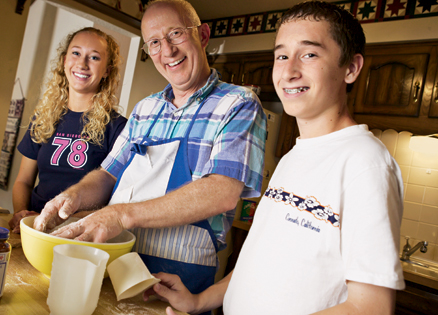
I put on an apron, got out a mixing bowl and lined the ingredients on the counter. “Dad, what are you baking?” Amy asked, stumbling into the kitchen, her brother trailing her. “I’m making your mother’s yeast rolls,” I said and got to work.

I stirred the yeast into warm water, beat an egg and added the flour. I kneaded the dough and let it rise. After separating the dough into balls and arranging them in a large baking pan, I noticed there was more dough left.

Bev always used to let us have a roll before dinner, I thought, staring at the bowl. That was the leftover dough. I put the extra balls in a separate baking pan and set the oven timer.

In minutes it smelled just like my great-grandmother’s log cabin. Surrounded by that heavenly aroma, I sat at the kitchen table and thought about Bev—the way she made us all laugh, how incredibly unselfish she was, how she taught us to live and to love.

The timer buzzed. I took both pans out of the oven and called the kids into the kitchen. “Let’s all have one,” I said, putting the extra rolls on a plate.

We sat down at the kitchen table. I took my children’s hands and bowed my head. “God, it’s been a tough year for us. We miss Bev so much. We thank you for the time we had with her. We’re grateful for the little reminders, each day, of her presence in our lives still. And we’re blessed that we have one another.” I squeezed the kids hands, then broke open a roll. A puff of steam came out.

It was a day of Thanksgiving.

Try these Homemade Rolls.

A ‘Deepwater Horizon’ Survivor Shares Why People Should Go See The Movie

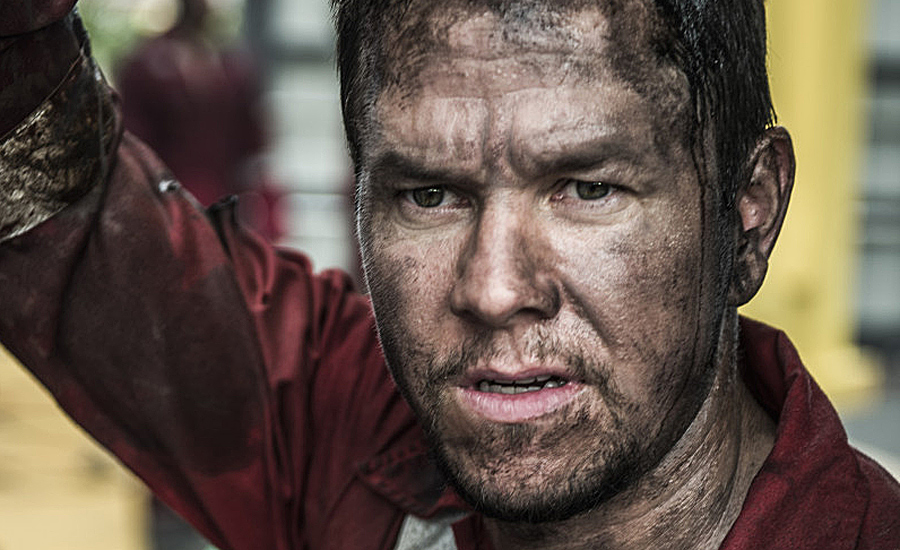
The film Deepwater Horizon has drawn critical praise for its gripping story of the 2010 explosion and fire on the oil rig of the same name, just off the Louisiana coast. Many Americans remember the story unfolding on their TV screens, as the crippled rig dumped 50,000 barrels of oil a day into the Gulf of Mexico, killing wildlife and threatening the ecosystem.

For Caleb Holloway, who worked on the rig and served as a consultant on the film, it was a story of tragedy and survival, one that changed him and, at times, challenged his faith.

READ MORE: LUPITA NYONG’O INSPIRES IN ‘QUEEN OF KATWE’

On April 20, 2010, Holloway was just 28 years-old, newly married and looking at a possible promotion in his department, when the rig caught fire. While most of the world remembers the aftermath of the spill, he still battles with the effects of living through it.

“It’s hard to think back and focus on one thing because there were so many things happening,” Holloway tells Guideposts.org. When the rig exploded, 126 men and women were on board – 11 would perish before the flames were finally put out.

“Just the fact that so many people survived something like that is incredible to me,” Holloway says “Eight of the guys that passed away, that was the crew I had worked with for years Of course the environment is important to me, but that was all that the focus was on. I don’t even remember hearing the names of my friends that passed away in the news. I think it’s important for people to know their names.”

Though it’s been six years since the tragedy, Holloway still gets choked up recalling the friends he lost on the rig. It’s why he agreed to take a call from Peter Berg when the director first contacted him about making a film documenting the disaster.

“I wanted to make sure he had talked to all the families and that they were on board before I committed to it because that was very important to me – that they were okay with what he was going to do,” Holloway recalls.

Holloway agreed to participate and saw the film as a way to honor the friends he lost. Working on the movie and seeing the final product was challenging for Holloway, who relived his own experience when he first saw the film.

From Left: Caleb Holloway, guest and Mark Wahlberg at the premiere of Deepwater Horizon

Holloway was on the upper deck when the blowout happened. He got to a lifeboat, helping others to safety along the way. When he got off the rig and onto a rescue boat, he helped triage fellow crewmen while everyone waited for news of any more survivors. He was hoping to hear the names of his friends, guys he had worked with on the rig for the three years he’d been there. No news came.

The survivors sat for hours on the boat, watching the rig burn as the Coast Guard did its final rescue sweep. When no one else was found, the crew gathered in the middle of the boat.

“A lot of us joined hands and said a prayer for them,” Holloway remembers, “That’s when it sunk in that those guys were gone.”

Holloway was able to send a text to his wife, letting her know he was okay. She had been driving to hospitals around Louisiana, asking if any of the crew had been admitted. He would see her a day after the explosion, in a hotel where the families were gathered to welcome back their loved ones.

Holloway remembers walking through that lobby, rounding the corner and seeing the wife of one of his good friends, Roy Wyatt, an assistant driller. The two went hunting together. Holloway often stopped by Roy’s house and spent time with his family. Roy didn’t make it off the rig that night.

“I was so emotional at that point, I just couldn’t face them,” Holloway says.

He went home and tried to recover. A few FBI and ETA agents stopped by the house, asking questions and warning him he may be subpoenaed in the investigation that would follow the oil spill. Holloway credits his family and a local men’s Bible study with helping him get through that difficult time.

“I found myself questioning God,” Holloway admits. “‘Why would you take these innocent guys away from their families? Why wasn’t it me?’ I was constantly asking those questions. Several months later it was like a light switch flipped on. ‘Who am I to question anything?’ I had to accept it. I had to embrace it and move forward.”

READ MORE: DIANE GUERRERO OFFERS HOPE TO CHILDREN OF UNDOCUMENTED IMMIGRANTS

His wife told him something that helped.

“My wife told me ‘God’s will looking forward is so unpredictable but when you look back, it’s unmistakable,’” Holloway says. The pair had been trying to have children before the rig exploded.

“God knew I wasn’t ready for kids because I needed to go through this,” Holloway, now a firefighter and a father, says. “He tested my faith with this. He’s got a plan and He’s going to show me that plan and sometimes it’s going to be hard, and sometimes my faith is going to be tested but I held firm to it and now I have an amazing life. If someone ever told me to count my blessings, it’d be impossible.”

Holloway was able to view the film before its premiere in Louisiana and he’s proud of the work the cast and crew put into the movie and how committed Berg was to telling his friends’ stories with integrity and accuracy.

“They did an incredible job with the movie but throughout the years, I guess I had sugarcoated what really happened to my brothers and my crewmates out there and then to have such a visual of it happening was really hard,” Holloway says. “I was a mess through the whole thing.”

He knows the film will be difficult for others to watch as well but he hopes people see the movie anyway – if only to learn the names of the brothers he lost that night.

“Human life is above anything in my opinion,” Holloway says. “These guys were just out there making a living, sacrificing for their families. I just want people to honor the 11 men we lost and maybe be inspired by these guys who worked hard to provide for their families.”

A Death Row Chaplain Speaks on Grace and Mercy

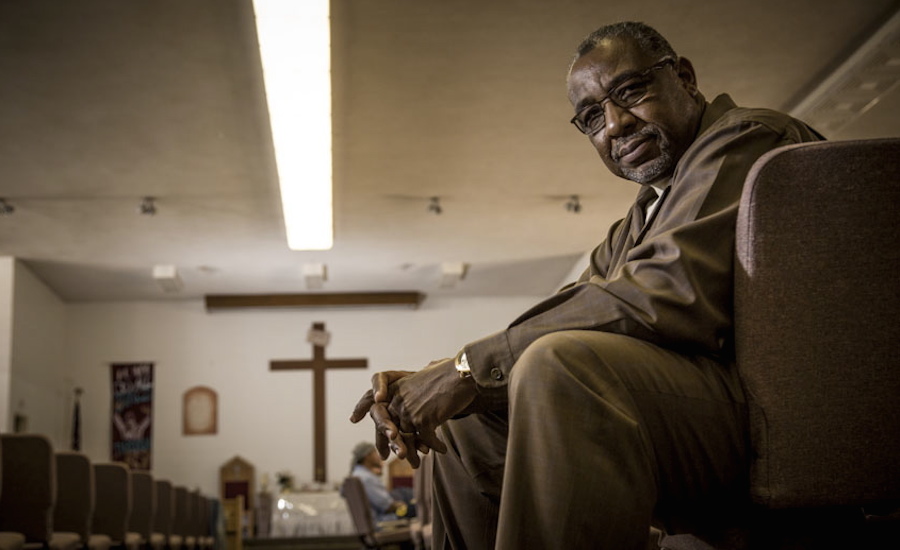
Some people end up in places that most of us don’t ever want to find ourselves. Take Earl Smith–he spent 27 years at San Quentin Prison, a maximum-security facility. He was not there for a crime but because he adhered to the call of God to be a prison chaplain.

He spread seeds of love and hope, and the light of God into the broken hearts of men, who were once young innocent boys, but along life’s journey took the wrong path.

As a young man, Chaplain Smith, was lost in gangs, drugs and crime until he chose God.

In his new book, Death Row Chaplain: Unbelievable True Stories from America’s Most Notorious Prison, he writes, “The men of San Quentin and many others struggling with their place in the world face the same dilemma that I did: the choice between the difficult but righteous path and the old, destructive path. Which path we choose when confronted with these moments of decision making will determine the course of our lives-and the two paths are adjacent and unmarked.”

READ MORE: EARL SMITH ON BEING FORGIVEN

In working with inmates, one of the key questions Chaplain Smith asked them to ask themselves was, “Am I my crime?” In other words, did their crime define them, or are they something more and better?

Chaplain Smith reminds us, “Even if you think someone is his crime, God does not. He knows better. God doesn’t have checklist for forgiving us for our errors. He cares about one thing; that we ask Him sincerely for forgiveness through a relationship with Jesus Christ.”

READ MORE: EARL SMITH, FAITH AND FOOTBALL

Chaplain Smith is the first one to say that God’s forgiveness doesn’t mean the men don’t pay for their crime. However, it is the start of getting them on the right path. Chaplain Smith reminds us that God’s grace is available to men in prison as much as it is for each of us living on the outside.

God can raise us higher than our actions through His love and grace. How has God’s grace lifted you? Please share with us.

Lord, thank you for Your mercy and love that is available to us all. We are better people because of your grace, for each of us falls short of your righteousness.

Buy Earl Smith’s book: Death Row Chaplain: Unbelievable True Stories from America’s Most Notorious Prison

Adam Greenberg’s Inspiring Comeback

Deep breath, I told myself. You have a job to do. I’d played thousands of baseball games in my life, but never one like this. Never one in the major leagues.

I’d worked harder than anyone could imagine, spent years battling to beat the odds that I’d get this far, and now I was about to achieve my boyhood dream. I was a five-feet-nine, 180-pound guy in a six-feet-two, 210-pound world. But on this July 2005 night, I’d made it.

I glanced down at my blue jersey with the Chicago Cubs “C” in red on the front. Soak it all in, I thought, as I emerged from the visitors’ dugout in Marlins Stadium, where my Cubs were playing Florida. This is just the beginning.

Somewhere in the stands, my parents were watching. I pushed the thought of them aside, and studied the pitcher. A big left-hander named Valerio de los Santos. I had never seen him before.

I bat lefty, and I figured like most left-handed pitchers, he’d start me with a fastball, probably on the outer half of the plate. My last thought as I dug in in the batter’s box was Be aggressive.

And then de los Santos wound and fired, the very first big-league pitch I ever saw. A 92-mile-an-hour missile, a fastball, a high heater…or was it? Standing 60 feet, 6 inches away, I had less than a second to decide what the pitch would do. It was barreling straight at my head.

Is it going to hook over the plate at the last instant? I wondered. Or is this a wild pitch?

The pitch bored in on me. It’s not hooking, I realized. I tried to spin out of the way. Too late. The ball smashed into my head with a sickening sound. I crumpled to the ground.

I thought my head had exploded. I cupped it with both hands, afraid it would break into pieces if I let go. My eyes rolled back. Stay alive! Stay alive!

It would have been so simple to close my eyes and let go. But it wasn’t just my life I was battling for. After all those years of struggle to make it to the top, the ballplayer in me wasn’t about to say goodbye to my career after a single pitch.

I looked up. The team trainer leaned over me, firing questions to test my cognition. “Where were you two days ago?” he asked loudly.

“I was in the minors,” I said, groaning, “and I’m not going back.”

Seven years ago, people in sports weren’t as aware of the danger of concussions as they are today. The team doctor examined me in the locker room (I have almost no memory of being helped off the field). I didn’t feel very well, but nothing was broken. “Just rest,” he advised.

Then my parents walked in. “Adam, are you okay?” my mother asked, rushing to my side. By then I was more embarrassed than anything.

“I’m fine,” I assured her. I figured I’d be playing again in a day or two. Back at the plate collecting my first major-league hit and giving the ball to my folks.

It was the last game I would play while healthy for two years.

For the longest time, I couldn’t understand what was going on with my body. No one could.

The morning after the beaning, I woke and walked outside. The light made me nauseous. A few days later I tried to go jogging, and my eyes felt disconnected from my head, as if they were just floating in there somewhere. Several days after that, I bent to put my shoes on and fell over. My season was over.

Years passed, and I never got fully better. My game fell apart. Many of my friends wondered why I just didn’t give up playing.

How can I explain it to you? I thought. You start out in life with a dream, you dedicate your life to that dream, and it’s almost impossible to let go of it without a fight.

Nights after a bad game, I’d sit alone in a motel room on the road and think of all I’d sacrificed to play ball. All the thousands of pushups in my bedroom, so that coaches would notice my strength, not my diminutive frame. The high school parties I skipped, so I could get in another couple of hours of training.

The family vacations where Mom would say, “Come on, kids, let’s take a walk along the beach,” and I’d make some excuse, so I could return to our hotel room and practice swinging my bat in front of the mirror—the bat I’d snuck into our luggage.

For seven years, while my friends were establishing their careers, getting on with their lives, I just couldn’t let go of baseball. I bounced around the minor leagues, going from the Cubs system to the Los Angeles Dodgers to the Kansas City Royals to the Los Angeles Angels and finally out of organized baseball entirely.

Even then, I couldn’t bring myself to quit. I signed on to play with the Bridgeport Bluefish, an independent-league team with no connection to a big-league club. It was the lowest rung in professional baseball.

Some days it seemed like the only person who wanted me to stay on the field was Lindsay, my wife. Lindsay was the one great thing that happened to me in those lost years. One night at home I sat her down. “Tell me what to do,” I said.

She looked at me with searching eyes. “Honey, you love baseball so much, and I love seeing you do something you love,” she said.

I hugged her hard. But deep inside, I wondered if she could ever really bring herself to tell me the truth: The beaning had derailed my career.

One midwinter morning in 2011 I traveled to Sacramento, California, to visit Dusty Baker—my manager the day I stepped to the plate for the Cubs, and now manager of the Cincinnati Reds.

Once, when I was at my lowest, ricocheting around the minors, Dusty had left me a phone message. “Hey, this is Dusty Baker,” the voice said. “Just letting you know I’m thinking about you and that God has a plan for you. Keep believing. Don’t ever give up.”

Now I needed his advice again. Dusty is the most honest man I know, I thought, as I drove north on the freeway. He’ll tell it to me straight.

“How are you, Greeny?” Dusty greeted me like a son. We spent the afternoon in his man cave, catching up. That evening, he took me out to dinner. Over coffee, I turned to him. “Do you think I should sign on for another year in independent-league ball?”

“Listen,” he said, “you can’t go back there. You need to start your life. Your life is more valuable than this game. You can take yourself to the next level.”

Then it struck me: A few years earlier, when Dusty spoke of God’s plan, he wasn’t talking about baseball.

I let go of baseball that day. I went home and told Lindsay, “I’m not playing ball this year.”

I started a nutritional-supplement business, and went all in on it, with all the energy I’d had for the game. “I’m with you, honey,” Lindsay said. That was all I needed. I was at peace.

Isn’t it funny? Once I let go of baseball, baseball decided it wasn’t quite ready to let go of me. An opportunity arose to play on the Israeli national team. And then this crazy Cubs fan began a national campaign to get me one more major-league at bat.

One night at 11:30, I got a phone call from David Samson, the president of the Miami Marlins.

“I was there when you came to bat for the Cubs seven years ago,” he told me. “And I’ve been following your career. So many fans believe you deserve a major-league at bat, after all you’ve been through. On behalf of the Marlins, I would like to extend you a one-day contract to play for us.”

You’re back where you started. That’s what I told myself as I stepped to the plate in Miami last October, leading off the sixth inning of an otherwise inconsequential game between the Marlins—my Marlins—and the New York Mets.

I tugged on my batting helmet. You’ve done this before. No need to be nervous. Get a good pitch to hit. The same advice I’d given myself seven years earlier.

The Mets’ pitcher was R. A. Dickey, who would go on to win the Cy Young Award as the best pitcher in the league. I took a deep breath. The crowd rose to its feet. Chills ran down my spine. I wasn’t expecting that, I thought. I stepped away from the plate, both to calm myself and to savor the moment. Just like before.

I dug in in the batter’s box. Dickey let go his first pitch. It was a knuckleball, far slower than the fastball de los Santos had fired. It looked great to hit—and then dropped three feet just as it arrived at home plate. Strike one.

A minute later it was strike two, then strike three. I had fanned on three pitches.

Seven years, and all I can manage is a strikeout? I thought.

I lowered my head, and turned toward the dugout. Then I heard the cheers. All the Marlins players were up on their feet, applauding. I raised my eyes to the stands. The crowd was giving me a standing ovation. Seven years and you never gave up, they all seemed to be saying.

Not till the night was over, after I’d sat for interviews, hugged my new teammates goodbye and said goodnight to my family, did I think of Dusty again. God’s plan. Maybe I was put here as an example to others.

Maybe God wanted to reinspire me as well. Several months ago the Baltimore Orioles called. They signed me to a minor-league deal. By the time you read this, I’ll be starting a new season, back on the field, following the plan that’s been laid out for me.

Read and watch more inspiring baseball stories!

Download your FREE ebook, Rediscover the Power of Positive Thinking, with Norman Vincent Peale.

A Brief Tour of the Eternal City

We got the most out of 48 hours in Rome… beginning with one unexpected, breathtaking day.

Buon Giorno! “Good day,” as the Italians say. I’ve just returned from a two-week trip to Italy, and it’s been tough getting back to work here at Mysterious Ways (although, receiving the first published copies of our upcoming October/November issue was a nice boost).

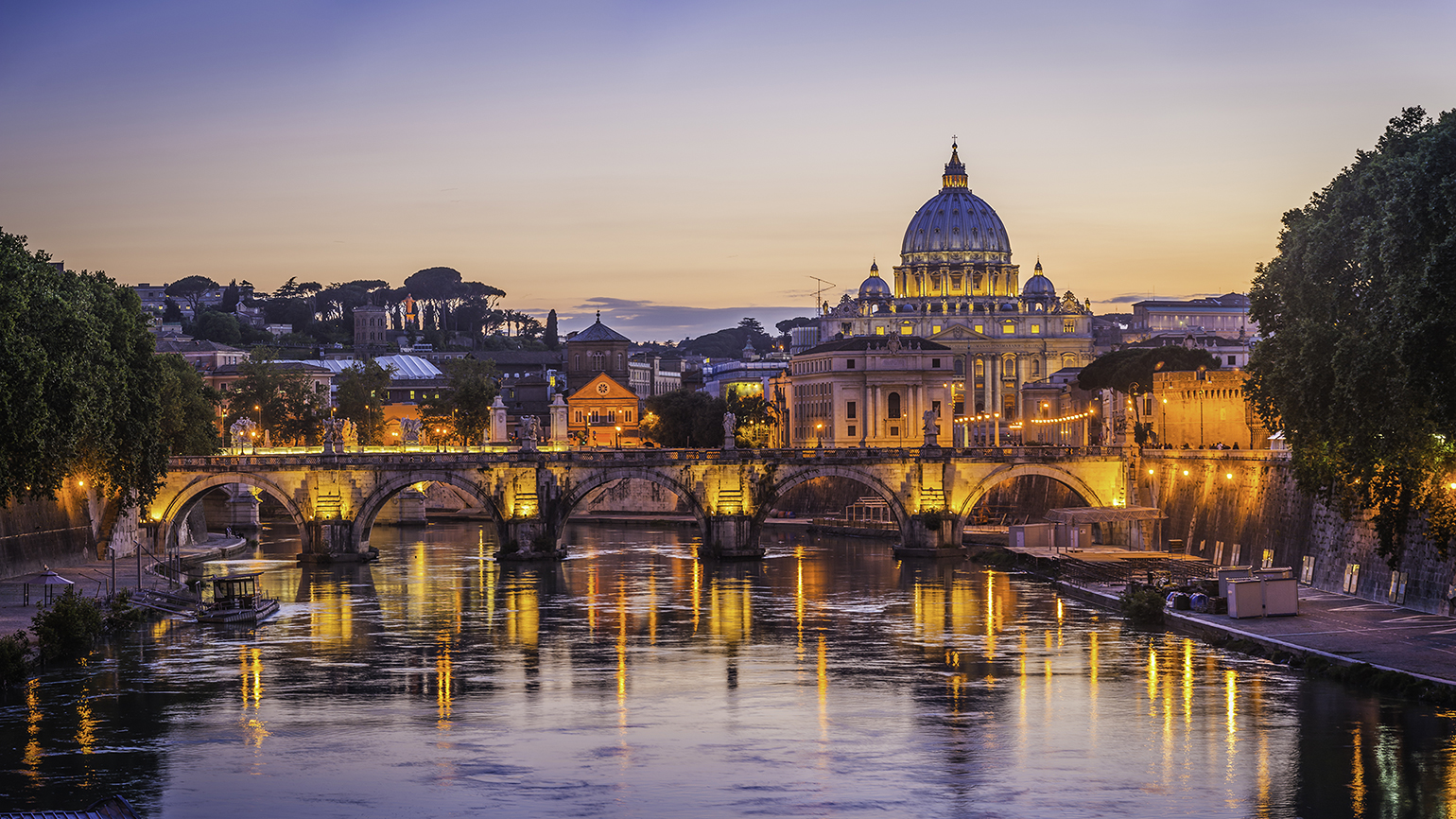
My wife and I spent the last two days of our trip in Rome, a city that once stood at the center of the ancient world and is now Italy’s busy capital. We knew 48 hours wasn’t nearly enough time to peel back all the layers of history that exist in this incredible place. We only hoped we could get everything in.

As it turned out, that wasn’t a problem. At almost every turn, Rome inspired us to keep moving. In fact… we saw almost all the highlights in just one day.

Vatican CityOur first stop was Vatican City. We met our guide at 7:30 AM and followed her through the Vatican Museum, home to some of antiquity’s finest works of art, collected or commissioned by the Popes beginning in the 16th century.

The highlight, of course, was the Sistine Chapel and Michelangelo’s famous interior decor–the ceiling, with its nine scenes from the Book of Genesis, and the fresco above the altar, The Last Judgment.

We were warned by our guide that pictures inside the holy place were strictly forbidden. But… then how to explain the photos on the postcards sold in the gift shop? More than a few others around me disregarded the rules, sneaking cell phone pictures on the sly. I couldn’t blame them.

Michelangelo was known as a sculptor, not a painter, when he was hired to decorate the chapel’s ceiling (the artist himself believed he was being set up to fail by some of his rivals)–but that ended up aiding his work. Each of the 343 figures he chose to depict, from Adam and Eve to the prophets, jumps out in 3D, like a sculpture.

It took Michelangelo four years to complete the ceiling–but one day to complete the panel depicting God’s creation of the world. One day. Perhaps that’s what inspired our journey to come.

The PantheonThe skies turned ominous as we walked across the Ponte Sant’Angelo and through the narrow side streets to the Pantheon, the world’s oldest building in continuous use. Built in the 1st century BC as a pagan temple, it was converted to a church in the 7th century.

Just as it began to drizzle, my wife and I stepped inside, where we were treated to another beautiful sight. The rain fell softly through the oculus of the Pantheon’s towering dome and onto the ornate marble floor below. Photos were allowed here, but the moment was impossible to capture on film, as my iPhone snapshot shows.

Not wanting to walk in the rain, we considered returning to the hotel for a nap. The skies settled the debate, suddenly clearing. We decided to head for the Tiber River and follow its winding path south to the old Jewish Ghetto, where Rome’s Jewish community was forced to live after a papal decree in 1555.

For lunch, we ate Roman Jewish cuisine–a fried artichoke, braised beef with pasta and an antipasti plate of kosher salamis–and then visited the synagogue built in celebration after the ghetto walls finally came down, and Rome elected its first Jewish mayor in the late 19th century. The synagogue proved that the Roman flair for elaborate decoration isn’t just reserved for Christian houses of worship.

The pit stop energized us.

We strolled northeast past the Circus Maximus (where Romans held their chariot races) to the Roman Forum (the political and religious center of ancient Rome) and the Colosseum.

It was too late to go inside, but we’d have plenty of time the next day.
We finished our walk by heading up the Via Corso (Rome’s Broadway) and seeing the Trevi Fountain (unfortunately, under restoration) and Spanish Steps. There, we sat for a moment, taking in the sunset and resting our throbbing feet.

We made it back to our hotel around 8:30, enough time to get ready for dinner at Ditirambo, a trattoria just off the Piazza Navona where we enjoyed Cacio e Pepe, a fresh burratta mozzarella, and a sample plate of five Italian appetizers, each one of them a work of art nearly as fine as Michelangelo’s (though they didn’t last as long).

When I look at the path we travelled on Google maps–you can see the journey here–I’m blown away. “Only” six miles of walking (not including times we went down the wrong road or doubled back), but in those six miles, we saw more than 2000 years of history unfold.

Rome may not have been built in a day–but we sure toured it in one!

I’d love to hear about your memorable vacations. What unexpected journeys did you take? What places have inspired you?

A Brief History on Why Jews Give Presents at Hanukkah

This holiday season Santa Claus is getting a little support from Hanukkah hero children’s book author Arthur Levine, thanks to his latest The Hanukkah Magic of Nate Gadol (Candlewick). Levine, who co-edited J.K. Rowling’s Harry Potter series, teamed up with illustrator Kevin Hawkes to create a magical story of why Jews give gifts at Hanukkah.

We spoke with Levine to discuss the inspiration for creating the character, Nate Gadol— and how it was inspired by real-life Jewish history.

First things first. Why do Jews give presents at Hanukkah?
In the late nineteenth century, stores realized they could advertise to Jewish immigrant communities. These families, who’d escaped poverty and pogroms in Europe, could suddenly afford to participate in gift-giving alongside their Christian neighbors. It became a symbol of Jewish prosperity in the United States. In fact, the first English word to appear in Yiddish newspapers was “presents.”

In your story, Jewish children get Hanukkah gifts after Nate Galdol helps Santa Claus. What inspired you to create a different origin story?
The real story of why Jews give presents at Hanukkah felt crass. Why not make it magical?

Did you worry Jewish people would find Nate’s story disrespectful?
Hanukkah is a very minor Jewish holiday. It’s not even in the Torah. It’s not like I’m writing about an elf on Yom Kippur!

What about Santa Claus?
Some people fixate on Santa Claus in Nate Galdol. They worry it’s an assimilationist story about Jews becoming like Christians — it’s not! Santa is mythical and Nate is a mythical figure. It makes sense that they would know each other.

Nate’s magical powers “make things last as long as they needed to.” Where did this idea come from?
I was inspired by my family, and Jewish values like tzedakah (charitable giving). My maternal grandparents were immigrants. They had to make everything last. My Aunt Jenny was famous for cooking an entire Rosh Hashanna meal—apple cake included!—with a quarter stick of butter. I thought the Hanukkah miracle, in which a small amount of oil lasts as long as is needed, should also play a role in Nate’s powers.

You’ve raised your son Jewish. Did you write this book for him?
Well, I wrote it for myself, and to inspire Jewish children who’ve grown up watching Christmas specials in December. Christmas and Santa Claus are great. We should enjoy them! But we can create our own stories, too.

What do you hope children — and adults! — take away?
Nate is a magical story, but my hero is not a genie. He just gives people a little nudge! He helps people follow their natural impulse to care for each other.