Embrace God's truth with our new book, The Lies that Bind

A New Year’s Eve Prayer

Transitioning from one year to another can be emotional. When the Christmas festivities come to an end, we have time to reflect on the events, experiences and changes that occurred throughout the year. The things we set out to achieve, those we accomplished and those we did not. The new friends we have made. And loved ones who are no longer with us.

As with most changes we deal with loss and gain. I know for some, this year seemed too long and too hard. However, if we look back, we can identify a time when the strength of the Lord moved us forward. I find this helps me focus on the goodness of the Lord and to expect good things in the New Year.

Read More: 7 Ways to Live a Happier, Healthier Life

We can’t go back in time, but we can pray that God will order our steps in the New Year as the proverb says, “All our steps are ordered by the Lord; how than can we understand our own way?”

The truth is we can’t always fully understand God’s ways, or even our own ways. But we can cast ourselves into the loving hands of God who knows and understands the steps we need to take.

Author Henri Nouwen wrote, “You can’t see the whole path ahead, but there is usually enough light to take the next step.” Our steps may not always be in the right direction or always clear, but if we pray to the Lord to order our steps, it will happen in His mysterious way. God can surprise us and help us make it the best year yet. What is your hope for the New Year? Please share with us!

Lord, I don’t always know what the future holds, but I do trust You who holds the future and will order my steps in unexpected ways.

A New Beginning

We’re in the early stages of launching a new fiction series, which may just be my favorite part of my job (I know, I know. I say that about everything. What can I say? I like my job!)

This series revolves around four nurses at a very special hospital. These men and women are caring, qualified, and compassionate, and they are also inspired by their faith to make sure that every patient gets the best possible care.

I was talking to the author of the first book in the series today, and brainstormed ideas and talked about plot points. As we talked, I was struck by the fact that I really had no idea what it’s like to bring a hospital setting to life. I’m thankful that I haven’t had to spend much time in hospitals personally, but in this case, when it came to figuring out how nurses work (Who do they report to? Do they all work together, or do they have specialties? Do they have desks? How do they interact with doctors?), I was lost.

I know that we have a lot of caregivers out there, and I want to make sure these books are authentic and pay tribute to the work that they do, mostly unsung, every single day, but I had no idea how to do it! What does a book editor know about nursing?

Lucky for me, our authors are so much more knowledgeable than I am. This author knew exactly what to do—how the hospital should look, what the nurses would be doing, how they would react to situations. Talking to her, I felt so much better about this series, because I was reminded, once again, that it doesn’t really matter how little I know, because God has given us all different experiences and opportunities, and he has once again managed to pair me up with someone who has exactly the right skills and talents to do the job before us. It’s never felt better to be reminded how little I know.

Beth Adams is the creator and editor of GUIDEPOSTS’ Home to Heather Creek fiction series.

A Neat Trick to Get the Most Out of Your Daffodil Bulbs

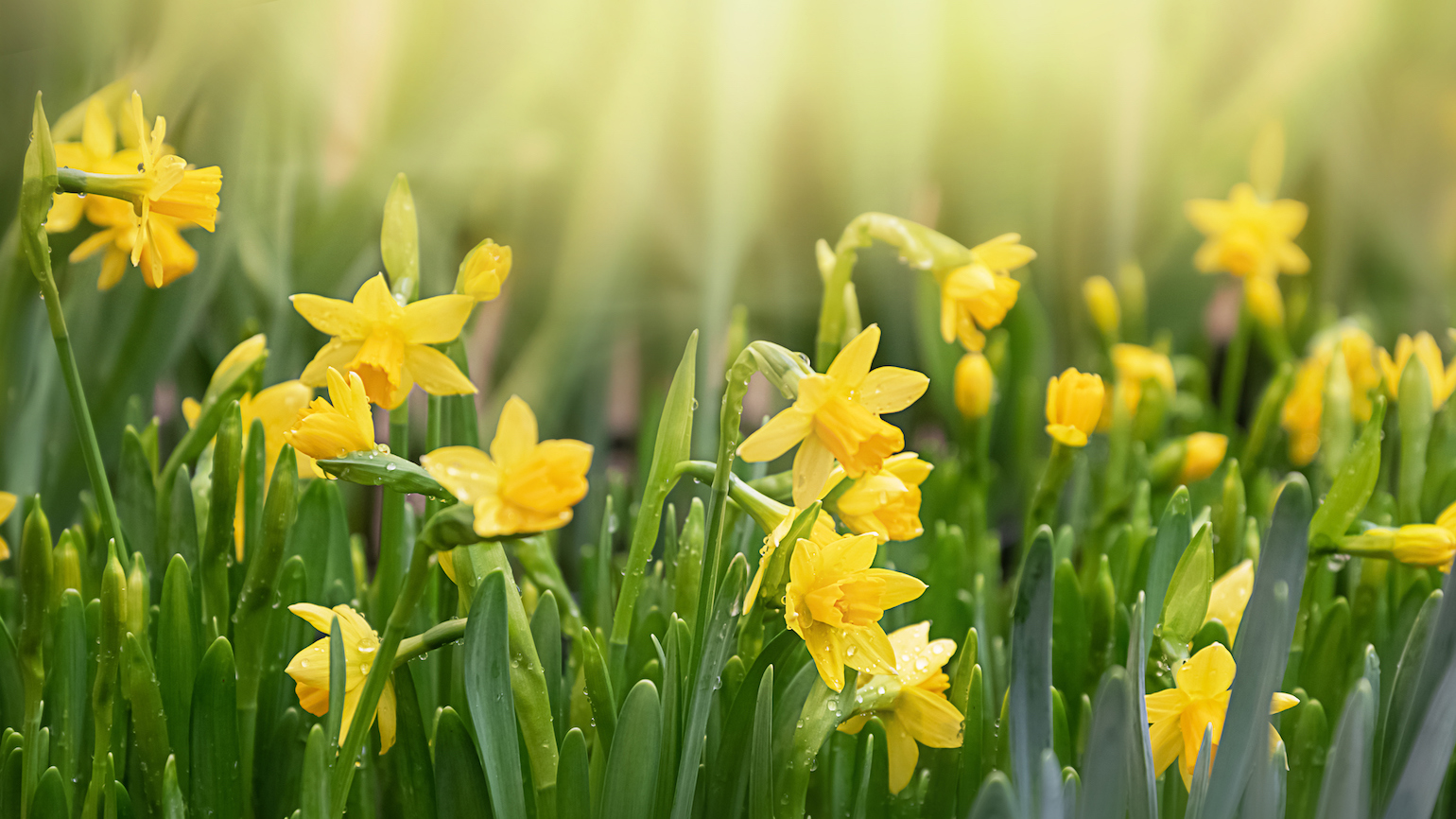
Daffodils are the star of the spring show in my garden. I adore tulips….but so do the rabbits with whom I share my green space. Daffodils are toxic to bunnies, so we get to live in harmony when their sun-drenched show is in full flower in early spring.

Though, in Keats’s famous words, “a thing of beauty is a joy for ever,” we all know spring bulbs fade and die back after a few weeks of glory. When they do, their blooms browned, their leaves splayed and pale, it’s tempting to take to them with pruning shears, lest your garden look sloppy and neglected.

This denies your daffodils in two ways. First, pruning spent daffodil foliage denies the plant the opportunity to engage in its full cycle of bloom, decay and rebirth. And second, it robs you, the gardener, of a satisfying spring task to keep your garden looking neat and attractive.

Try this easy technique to keep your daffodils thriving even while they sleep their way toward next year.

Once the blooms have died off and the foliage has lightened in color and flopped out into a flat spray, gather its long leaves into a ponytail-like clump. Divide the bunch in half and tie the leaves into a loose single knot. The leaves will form an appealing, rounded shape that can sit in your garden without giving off neglected vibes. If you plant hostas or other spreading plants near your daffodils, they might even become camouflaged by their greening neighbors.

Now the most satisfying part of all. Eventually, as the summer heat builds, the bulb in the soil will be ready to let go of the foliage, having reconstituted itself with all the nutrition it needed from the summer chapter of its growing cycle. You’ll know you’ve reached that moment when a gentle tug on your knots releases them easily from the ground.

Lifting as you would a duffel bag handle, stroll through your garden and liberate each bundle from its spot. As you do, you’ll know you’ve invested in your plants’ future well-being—and left your garden looking neat and tended in the meantime.

You might, as you work your way through your garden, even turn back to Keats, who praised daffodils in his poem Endymion for “the green world they live in; and clear rills / That for themselves a cooling covert make / ‘Gainst the hot season.”

How do you care for your daffodils after they’ve bloomed?

An Easy Way to Remember to Use Positive Words

When I attend services at my synagogue, one of the most meaningful moments is a verse from Psalm 51 that we recite to prepare for a series of blessings known as Amidah, or Standing Prayers: “God, open up my lips, so my mouth may proclaim Your praise.”

In his second grade religious school class, my son has learned to sing that verse in Hebrew, to a tune that includes, in English, “Open my lips to good words, to pure words, open my heart to love.”

At any age, the power of the spoken word can’t be overstated. And yet sometimes the quality of the words that pass our lips is less than we hope for or expect from ourselves. When stress or worry weighs on us, we can find ourselves saying things we don’t mean, using our remarkable power of speech in negative ways.

To keep my language in check, I turn to a simple, elegant technique I also learned from my son—the idea that before we speak, we should stop and “THINK” to ensure our words are:

True

Helpful

Important

Necessary

Kind

In the speedy swirl of everyday life, it can feel hard to examine each word choice this closely. But practiced over time, THINK can become an automatic internal guide that gently shepherds our words in a positive direction.

It’s the combination of the THINK ideas that strikes me most. Honesty is a high value, but remembering that true words also need to be necessary and kind can save us from being bluntly hurtful to someone we care about. Information can be important, but if it’s not helpful in the moment to someone who is struggling, it’s not worth saying aloud. Kindness is paramount, but if you can’t truthfully say something kind in a heated moment, it’s better to take a break from speaking.

I love Psalm 51 so much because it is a prayer to have a voice—but also a desire that we might have the insight and discernment to choose to use our voice in a way that serves both our lives and the wider world. It’s an invitation to think (or THINK) before we speak, and to make our words wise, positive proclamations for all to hear.

A Leap of Faith

The youngest of my three kids started preschool recently, and it got me thinking that I’m entering a new stage of life myself, a time when I can refocus on my career. More specifically, it got me thinking about how I might continue the work of my late grandparents, Guideposts cofounders Norman Vincent Peale and Ruth Stafford Peale.

Someone suggested I write a blog for Guideposts.org. That sounded interesting except for one thing. One big thing. I’m not a writer. My background is in clinical social work, a profession I chose because I was inspired by my grandparents’ dedication to service and outreach. Could I write a blog and make it meaningful to someone—anyone? I wondered. What would Grandma and Grandpa have thought about this?

They were pretty game people, always willing to try something new. There was that time their children and grandchildren (yes, I’ll admit I exercised my persuasive powers) convinced them that our family had to spend Christmas in a setting totally different from their upstate New York home, someplace far away… like Africa. You should have seen my grandfather at age 90 on the banks of a river in Kenya washing out his undershorts and hanging them up to dry outside his tent!

That family Christmas on safari turned out to be unforgettable, and it occurs to me that Grandma and Grandpa would look at blogging as a new adventure that’s just as exciting and worthwhile. They would’ve been thrilled to learn about another way to reach people with true stories and messages of hope and faith and inspiration.

When Grandma and Grandpa started Guideposts back in the 1940s, they didn’t have all the answers as to how to make everything work, but what they had was faith. The magazines and books, the ministries and outreach programs that are part of Guideposts today all grew out of that. So I’ll take my inspiration from my grandparents and jump into blogging. Call it a leap of faith.

Thanks for staying tuned!

A Language of the Spirit

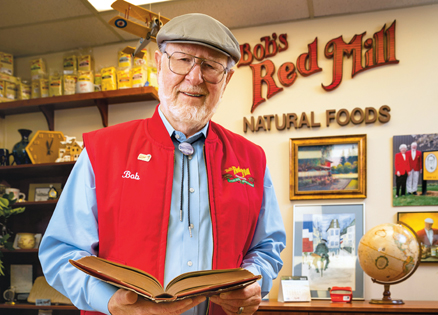
Nowadays people know me for my Bob’s Red Mill cereals and flours, stone-ground just like they did in Bible days. That’s me on the front of every package in my trademark cap and bolo tie. We’ve been in business now for 35 years, and some folks assume it’s what I always wanted to do.

But the truth is, the career that became my calling is one I stumbled upon. Literally. At the time, running a grain mill was the last thing on my mind. It was 1978, and my working days were over. At 49, I’d retired to pursue the one dream I wanted more than anything.

“The wife and I are moving to Portland, Oregon. Going to seminary,” I told the guys one Saturday morning down at the hardware store. “We want to learn Greek and Hebrew so we can read the Bible like it was originally written.”

My buddies looked at each other, confused. “You’re kidding,” one said.

“No, I’m dead serious,” I said. “I’ve wanted to do this for twenty years.”

It was as if I’d told them Charlee and I were buying his and her Ferraris. I could tell what they were thinking: Those poor Moores, having a midlife crisis.

But that wasn’t it at all. Nothing to do with my receding hairline. In fact, life was good. Our sons were grown. The mill we’d launched together a few years earlier—almost on a whim—was doing great. Well enough that I hadn’t thought twice about turning it over to them.

Not that I wasn’t sending up plenty of prayers about this new adventure we were embarking on. I knew it sounded crazy. But then I’d always been wired a little differently than most folks.

I’m the kind of guy who’s always thinking, studying, tinkering until I know everything—I mean, everything—there is to know on a subject. I have this need to understand how all the parts fit together. Ask Charlee, sometimes it feels more like a curse than a blessing.

That’s how I first got the idea that I wanted to learn Hebrew and Greek. Back then, in 1963, I was managing the JC Penney auto center in Redding, California. I was reading a fascinating book one evening after work.

The author, an eighteenth-century scholar, said there were errors in the Bible, introduced by the men who translated it from the original Hebrew and Greek.

Hebrew, in particular, he explained, is subject to misinterpretation because the words don’t have vowels: th rdr dds thm n hs mnd. Well, I saw the problem right away.

“One wrong letter changes everything,” I told Charlee. “The entire meaning of a sentence.”

“What’s that, honey?” she said, looking up from her mystery. I explained what I’d read. “I see what you mean,” she said. “But what can we do about it?”

I chewed on that for a moment and then, it was like a lightbulb went on in my mind. “What if we learned to read Greek and Hebrew?” I said. “Then we could really study the Bible for ourselves!” She gave me a look and went back to her book, shaking her head.

I knew as well as she did: The last thing I needed was something else to take on, what with three sons to raise, the chicken coop out back to tend to (my idea), my workshop jammed with nearly finished projects (yet more of my ideas), not to mention my job.

Now, in my early thirties, I wanted to be a biblical scholar too? Why not discover a cure for cancer? Or jump to the moon?

But I couldn’t let it go. I bought a book on how to read Hebrew. For weeks I studied it, a little bit each night. But the more I read, the more confused I got. I had to find help. A teacher. That’s when I discovered the closest place that offered the classes I needed was a seminary in Portland, 400 miles away.

I couldn’t uproot my family to chase this wild dream of studying ancient languages. Still, it gnawed at me. If the Bible was God’s instruction manual, how could I be sure of the directions without reading them in the original?

“Maybe I’m just not meant to know,” I finally admitted to Charlee. It killed me to say that. But what else could I do? I put my dream on a shelf, like all those other projects I hoped to get to someday.

My whole life it seemed I’d been searching for something. What was it that God meant for me to do? Fresh out of the Army I’d gone to work at U.S. Electrical Motors, then bought a service station, did that until I got the job with JC Penney.

In 1974 I started the mill with our boys, another idea inspired by a book I read. Even though the business was successful, I felt less like I was on a journey with a destination and more like I was just jumping from one thing to the next with no earthly idea how all the pieces fit together.

One day I was studying the Bible and it hit me. The boys were grown. We had the money we’d put away for retirement. “Charlee,” I said, “what do you think about us going to seminary?”

The next day I called Western Evangelical Seminary in Portland, Oregon. Yes, the admissions counselor said, it would be fine for us to audit a class or two a semester. He suggested we start with Greek. “I think you’ll find it easier,” he said.

Charlee and I moved to Portland, and now here we were just days away from my dream coming true. I felt like an explorer headed off in search of treasure beyond compare.

Then came the first day of class. I squeezed into my seat and looked around the classroom—into the faces of students younger than my boys. I’d worn a coat and tie, wanting to make a good impression. They were all in jeans and T-shirts.

The professor walked into the room. Even he was younger than me. I glanced at Charlee for reassurance, but her gaze was fixed on the instructor. “Turn in your Bibles to John 17:17,” he said.

I flipped to the page and my eyes searched in vain for one word I recognized. γ ασoν α το ς ν τ λ γος σ ς λ. It was definitely Greek to me. Then again it could have been Swahili for all I knew. The memory of my failed attempt to teach myself flashed through my mind.

Was this really a dream I was meant to pursue? What if too many years had gone by? What if even a professor couldn’t help me?

“Don’t worry,” the professor said. “I don’t expect you to be able to read this. Yet. But you will, in time. The key is repetition, until it becomes familiar. I recommend flash cards.”

That night Charlee and I wrote 20 Greek words on note cards. Words like sanctify and truth, commandment and righteous. We stayed up late quizzing each other. It was no use. In Greek, every word looked the same. Indecipherable. I fell into bed, defeated. What had I gotten us into?

But the next morning I woke revived. After a breakfast of Charlee’s whole-wheat pancakes we started studying again. I liked puzzling through the words, the mental challenge of it. Like a workout for the brain. Invigorating.

Slowly some of the letters began to make sense. Then a word: ψομαυδμευτ. Commandment. “That’s right!” Charlee exclaimed. My smile stretched from ear to ear. This was it. My dream. It was really happening.

In class I still felt overwhelmed, the lessons never easy no matter how hard I studied. I worried that I wasn’t keeping up. Then one day a young man sitting next to me leaned over and said: “Would it be okay if I came over tonight and studied with you? You know, you’re way ahead of us.”

“Uh, well, okay,” I said, not sure I really believed him. But he showed up right after dinner. The next night a friend came with him. Soon Charlee and I were tutoring half the class at nightly study sessions. I was actually teaching Greek? This had to be God’s doing.

Charlee and I loved being students. We’d study in the morning, go to class, take an afternoon walk, then hit the books and flash cards again with our classmates after dinner.

But the more I learned the more I realized how little I really knew. I could recognize maybe a hundred words in Greek. Read a few simple verses. But I was never going to be a biblical scholar. I hadn’t even begun to study Hebrew. I still had more questions than answers.

Where am I supposed to go from here? I asked in my prayers.

One morning I opened my Greek Bible to John 17:17, the verse our professor had us turn to the first day of class. It was amazing. The words nearly jumped off the page, as plain as day. “Sanctify them through thy truth: thy word is truth.”

I knew exactly what that meant. God’s word was truth. The same today as it was for the first Hebrew scribes. No translation needed. Nothing complicated. Trust in God. That was what I needed to know. What I needed to do.

It was a few days later that Charlee and I were out walking in the woods when we came across an abandoned, old-fashioned flour mill with a For Sale sign out front. It was rundown, dilapidated, a place only a committed tinkerer could love. A hidden treasure just waiting to be discovered.

Even the owner was surprised when I told him we planned to turn it into a working mill again. We painted it red. Just because I like the color. Used only whole grains, like it says in Genesis. That’s how Bob’s Red Mill was born.

Today, 2012, we have more than 300 employees and our 400-plus products are carried in stores throughout the U.S. and Canada, and in over 70 countries throughout the world.

To think that this all started with what some might consider a midlife crisis. I would say it was more like a midlife calling, the kind of wondrous thing God can lead you to when you keep your mind open.

Download your FREE ebook, Rediscover the Power of Positive Thinking, with Norman Vincent Peale

A Joyful Phrase to Celebrate the Good Things That Come Our Way

If you are familiar with only one Yiddish phrase, it’s likely, “mazel tov,” the exclamation of joyous congratulations offered at milestone moments from weddings to graduations to births to “smaller” achievements like the completion of a large project or success at a recipe that long eluded the chef.

What you might not know, if you’ve ever wished anyone “mazel tov,” is that the literal translation of what you’re saying is not “congratulations.” It’s actually, “good luck.”

Tov in Hebrew and Yiddish means “good.” And mazel (in Yiddish; the word is mazal in Hebrew) has several possible translations, the closest being something like “fortune” or “luck.”

At a time of year when “luck” is on the minds of those who celebrate Saint Patrick’s Day, this linguistic treat has something inspiring to tell us. If “mazel tov” means “good luck,” what are we to make of its nearly-ubiquitous usage as “congratulations”?

After all, reaching an achievement, milestone or any accomplishment often has something to do with the good fortune to be in a position to attain a goal and do something worthy of congratulations.

But passive “luck” is never the whole story of an accomplishment. When we see and use the resources available to us, when we persevere beyond what we initially thought possible for ourselves or when we recognize how precious and fragile our achievements are—that recognition is an accomplishment in and of itself.

And it is surely worthy of a full-throated “congratulations.” Lucky us, to have such a crisp, joyful term to celebrate the good things that come our way.

What would you wish yourself “congratulations/good luck” for today?

A High-Wire Walk with God

The two-inch-wide steel cable felt cold and wet beneath the elk-skin-soled moccasins my mother had made me. I slid one foot forward, then the other.

Below was the lip of Niagara Falls, where 600,000 gallons of water per second plunged 170 feet straight down to jagged rocks. Billowing white clouds of spray spewed hundreds of feet into the air.

The wind machines and fire hoses I’d practiced with were nothing compared with the turbulence that buffeted me and the swirling mist that made it hard to even see the high wire swaying under my feet.

I grasped the 40-pound balancing pole. It lowered my center of gravity and helped steady me on the 1,500-footlong wire I was walking, crossing from New York to Canada. I still had a long way to go.

“Looking good, Nik.” My dad’s voice came through my earpiece, quiet and soothing against the roar of the falls below. “Nice calm steps.”

My heart pounded, not from fear but from excitement. Out there in the floodlit darkness were thousands of people watching me attempt this feat, hundreds of news cameras recording my every step.

Other people had crossed the Niagara Gorge back in the 1800s but never directly over Horseshoe Falls. I had dreamed of doing this walk since I was six years old, and now, 27 years later, it was finally happening. “Thank you, Lord,” I said out loud, over and over.

You might be wondering how someone gets a dream like this—I know it seems crazy to a lot of people. I really think that my dream chose me. Walking the high wire is in my blood. I’m part of the seventh generation of a circus family that began performing in Eastern Europe in the 1780s.

My mom walked the line while pregnant with me. I was walking a two-foot-high practice wire in my parents’ backyard by the age of two.

One night a program about my family came on TV. Grainy, silent news footage showed a balding man walking a wire between two tall buildings in Puerto Rico. Suddenly, the wire started to shake, and the man’s pole bobbed up and down like a seesaw.

My mom tried to coax me away from the television but I was mesmerized. The man lowered himself, then grabbed at the wire and hung on for a moment before falling to his death.

“Who was that?” I asked my parents.

They exchanged a long look before my dad answered. “That was your great-grandfather, Karl Wallenda. Your mother’s grandfather. He made the family name what it is.”

I was too young to fully understand then what he meant, but I knew Karl was important. I peppered my parents with lots more questions about him and the rest of our family while we traveled the country, as we did much of each year, performing in circuses and fairs.

My parents walked the wire, while my older sister and I had supporting roles in their act. It might be surprising, but I never really worried about my parents doing what they did for a living. Before every show we prayed together. “Dear Father, protect us, and may our talents be used for your glory,” my dad would say.

We often drove in a truck for 12 or more hours a day, singing along to praise and worship music, before settling in at a campground where my sister and I caught up on our lessons with Mom. On one of these trips, we visited Niagara Falls.

“I want to walk across the waterfall when I grow up,” I announced to my parents.

My dad chuckled. “No one has even been allowed to try that for almost a hundred years.”

Shaking her head, my mom added, “There are lots of other things you can do in life besides walking the wire, Nikolas. Work hard and you can do anything.”

But as I grew, I begged my parents to let me perform on the wire with them. They wanted me to prove I was ready; they would throw things at me and shake the wire in our backyard to distract me as I walked, testing my focus.

My friends from the youth group at our church would come over and we’d play around on the wire. Everyone knew about my family legacy, the legacy Karl had created.

You see, the Wallendas weren’t always wire-walkers. Karl was born into the third generation of circus Wallendas and when he was 17, he answered a newspaper ad seeking a hand balancer who wasn’t afraid of heights.

Karl learned how to walk and do handstands on the wire. He started his own troupe, brought it to America and conceived its amazing signature act, the seven-person chair pyramid.

For years, my family performed the act flawlessly before thousands of people. But during a performance in Detroit in 1962, the front man in the pyramid lost his footing, causing a chain reaction that sent three men hurtling 40 feet to the ground. Two of them died and the third—Karl’s own son—was paralyzed.

Yet Karl went on to perform daring solo sky walks over gorges and between high-rises, building up the Wallenda name, until 1978, when he plunged to his death in that sudden, silent fall in Puerto Rico at age 73. By the time I was born, the following year, the large Wallenda clan had broken up into several different groups.

As I grew older, the hardships of our daily lives began to wear on me. Sometimes our truck would break down and my mom and dad didn’t know how they’d find the money to get us to the next show. They struggled to stretch their meager pay to cover food and clothes.

My parents encouraged me to get out of the family business, especially after I turned 13, when they had to declare bankruptcy. Around the same time, though, they finally relented and let me walk the wire professionally.

Up on the line, it was so natural, so easy, but down in the real world, I lay awake at night listening to my parents’ tense whispers about money and convinced myself it was best to let go of my dream of following in Karl’s footsteps.

At 15, I got myself a nice, normal job as a busboy at First Watch, a breakfast-and-lunch restaurant in Sarasota. I worked my way up the ranks until I ran the kitchen. I got accepted to Southeastern University, a Bible college in Lakeland, Florida, and planned on studying to become a pediatrician.

I’d started dating Erendira, a beautiful girl I’d known for years who was also from a circus family. I was happy, so happy. And yet the wire still beckoned, and Erendira understood its lure.

Then our family was invited to resurrect the seven-person pyramid by the same Detroit circus where two Wallendas had lost their lives 36 years earlier. I wanted to be a part of it. I wanted to help close that tragic chapter of our family legacy. And then maybe, just maybe, I would be able to move on.

We trained for months before successfully reenacting the pyramid for an audience teeming with reporters. As I came down from the wire afterward, the dream I had tried so hard to abandon was ignited again within me—more like a calling than a dream.

That night, I watched news reports about our accomplishment, and inevitably there was a clip of Karl’s fateful fall. He was a man of such vision, such passion, following his calling no matter what. Was it that same passion that drove me?

Be sensible, I told myself. Become a doctor and have a good life like Mom and Dad want for you, like Erendira deserves. Yet I knew my family had a special gift, a talent they had stayed true to for years.

I didn’t know why God had given us this gift, but I knew in my heart that the only way to honor it was to use it. Even if it was difficult, even if it was dangerous. Danger was real, but fear was a choice. I would choose faith instead—after all, that was a part of my family legacy too. Everything we did was for the glory of God.

My parents fought my decision. “We want you to study and move on, Nikolas,” my mother said. Her anxiety was clearly stamped on the features that were so composed when she walked the wire.

Dad raised his head from his hands. “I should never have allowed you to be part of the pyramid. We wanted better for you, Nik.”

And yet now, high above Niagara, it was my father’s voice guiding me at every step. My hands were going numb around the balance pole, my eyes straining to keep their focus through the stinging mist. Dad urged me forward.

I thought of how far I had come since that leap of faith almost 15 years earlier. I had broken world records; my mom and I had completed the same walk that had taken Karl’s life, as a tribute; I had persevered through two years of red tape just to get permission to attempt this walk.

Not everything had gone as I’d hoped—I’d had to wear a tether for the first time in my career to keep my television sponsor. But now I was so close to completing the walk, I could hear the cheers of the audience on the Canadian side rising to greet me.

I dropped to one knee on the wire and blew a kiss heavenward to Karl before rising and jogging the last few steps to the end of the line, where I hugged Erendira and our three children close.

Those cheers were wonderful, but you know what was even better? All the people who talked and wrote to me afterward, telling me that watching my walk had inspired them to take the first step in pursuing their dreams or facing their fears.

My next plan is to walk across the Grand Canyon in June, 1,500 feet above the river and the magnificent ancient rock. And this time there will be no tether or net, in keeping with the way the Wallendas have performed for decades.

Before I set out, I will join with my family in prayer, just as I do before every walk I take on the wire. We will thank God for a gift we may not understand but which we know we must honor. I train, I focus and I have faith in the path I feel called to follow—I know God is with me every step of the way.

View images of Nik performing his amazing feats!

Download your FREE ebook, Rediscover the Power of Positive Thinking, with Norman Vincent Peale

A Great Way to Share Your Garden with Others

This summer, I had a few conversations with neighbors about our gardens. Some of these neighbors are already my friends, but others are just folks whose front-facing plantings I’ve wondered about, admired or downright envied. When the opportunity presented itself, I led with, “Ooh, can we talk about your garden?”

Just before a heat wave conspired with a drought to fairly well decimate many of our gardens, I reached out to this group of neighbors and wondered if anyone was interested in taking a stroll to visit our respective growing spaces.

The idea wasn’t to present price-of-admission-worthy gardens, but to visit together with neighbors who share a love of getting our hands dirty. Things we were encouraged to do: celebrate garden surprises and successes, lament failures, shake our fists at bunnies, squirrels and other plant-hungry creatures, ask for advice and offer our best practices.

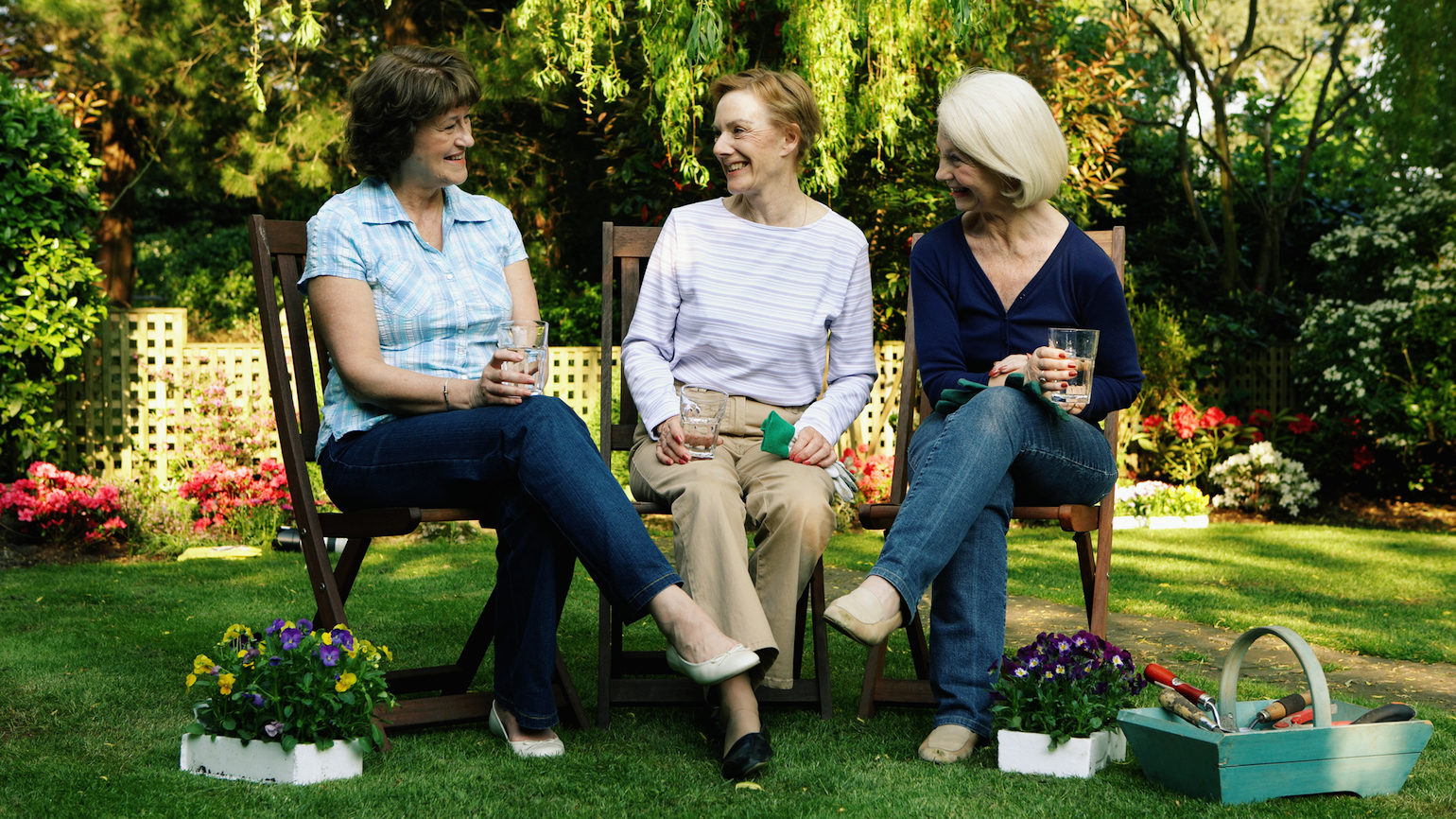
As a new-to-each-other group of neighbors of all different ages, we strolled, we chatted, we learned. We ended up with a handful of seeds from columbine plants ready to drop their pods. And we landed in one neighbor’s backyard for easy refreshments and to keep the conversation going.

I came home that evening filled with joy and gratitude—not only for the pageful of tips, hacks and native, pollinator-friendly plant ideas I had jotted down, but for the feeling of community connection that always comes with getting to know your neighbors.

Unlike a gathering at a communal space like a park, this was more intimate because we let each other in—literally into the backyard, where we shared the parts of our outdoor spaces that aren’t visible on a walk around the block, but also into the parts of ourselves that are vulnerable, the parts that make mistakes by planting too close or too sparsely or water too much or forget to weed or pull “weeds” that are actually flowers.

A garden is a sacred space, a living experiment, a place to use our bodies and explore our feelings and learn bit by bit how to care for whatever spot on the planet we call home. Inviting someone into your garden is an act of trust, a gesture of friendship and shared stewardship. After all, my neighbor’s flowers attract butterflies and bees that also enrich my garden. And spending time together in our sacred garden spaces nourishes the growing places inside each of us.

As the season tips toward fall, my neighbors and I plan to gather again to discuss favorite bulbs, swap plants we’re ready to re-home and share the last of our vegetable harvests. Strolling to peek at each of our gardens as they lean towards their winter’s rest, we’ll hold fast to the seeds of next spring, a season that will be all the more beautiful because we will watch it bloom—through our own efforts and those of our neighbors.

A Grateful Person Is a Happy Person

Psychologists have found that simply asking people to identify specific aspects of their lives for which they are thankful, alters their perspective in a powerful way. A grateful perspective impacts our mood and stops us from allowing negative thoughts such as resentment, envy and regret to take over.

When we take a moment to appreciate the good things in life such as a job, home, friends, and family, we feel good about the present and hopeful for the future. The list of what makes an individual appreciative varies from person to person. But the key for all people is to prevent the bad things from getting in the way of the good things. Even in tough times, if we look hard enough, we can find the good.

Research has proven that jotting down positive events can cultivate gratitude in our lives. After doing this myself, I found that expanding the list to include positive people, experiences and all other things that I am truly thankful for, has increased my positive outlook by far. I suggest you do the same. A biblical proverb states, “A cheerful heart is good medicine, but a crushed spirit dries up the bones.”

Be inspired each day with Daily Guideposts 2019​

There are many ways to cultivate gratitude: writing, praying, singing, drawing and more. In Psalm 103:2 it says, “Let all that I am praise the Lord; may I never forget the good things he does for me.” What good things has the Lord done for you? Please share what you are thankful for and make every day a day of Thanksgiving.

Lord, thank you for the joy that fills our hearts when we think of all the good in our lives. Help us to make gratitude a daily practice.

A Gift for Jesus This Christmas

Earlier this week three of our grandchildren came by to bake cookies and to hang out for a few hours. Within a couple of minutes of their arrival, they gravitated to the Christmas tree.

Eden, 4, asked, “Grandmama, who gets that big present?”

Before I could open my mouth to reply, her twin, Ethan, chimed in, “Is this one for me?”

Anna is our oldest grandchild at 11. She can read now, so she squealed, “This one is for me!” as she looked at one of the boxes.

Then just about every present under the tree was brought to us, one by one, along with a constant stream of questions about whose gift they were holding. Those kids could have done inventory!

Read More: 8 Classic Christmas TV Specials We Love

Gifts are a big part of Christmas. Just ask any kid (or one of us big kids). We put a lot of effort into buying our gifts, choosing just the right one for each person and then wrapping those presents in festive paper.

But I realized: It’s His birthday that we’re celebrating. Why don’t we give gifts to Jesus at Christmas?

So here are my gifts for Him this year:

G – I’m going to GIVE unto others in His name. And as I do, I’ll share about God’s goodness and faithfulness and His most perfect gift that’s available for all—His gift of love wrapped in swaddling clothes, lying in a manger.

I – I’m going to INVITE others to share Christmas with my family. God’s welcome mat is out for everyone. Why shouldn’t I do the same? Senior citizens, single parents and those far from home and family are often alone at Christmas. I can easily set extra plates on the dinner table and offer a warm welcome as we celebrate the reason for the season.

F – I’m going to FIND opportunities to spend time with Him. That’s one of the most special gifts I can give. Finding time to read His love letter to me, to talk with Him and to be still long enough so that I can hear His whispers to my heart.

T – I’m going to give Him THANKS for all He’s done. God’s been so good and blessed my family so much that I could never thank Him enough, but I can try. And I hope that my words of praise will be music to His ears, almost like a Christmas carol from my heart to His.

What gift could you give Him this year?

A Garden Miracle?

A funny thing happened about a month ago when I opened the double doors of a small storage area in the back of my house where I keep my garden supplies during the long New England winter. There, on top of a tower of dirt-filled pots, was a flash of green, topped with two of the most unlikely frilly pink flowers you’ve ever seen.

A quick examination revealed that, in fact, this was a living, growing plant, with no explanation to account for its existence.

How was this possible? The unheated space had been sealed up all winter, save for the times we opened the doors to pull out snow shovels, salt or sleds. It was still cold outside. And hadn’t I removed all growth from my plants before storing the pots last fall?

Could this be one of those garden miracles I’ve read about?

Once I caught my breath, I looked around and discovered something approaching a plausible explanation—there are small glass panes along the top of the double doors, and it’s possible that a ray of sun beamed directly on that pot, giving it just enough light and warmth to enable it to inhabit its own personal greenhouse.

In the weeks since, I’ve slowly been bringing my pots outside to warm them up and get them ready for planting. My “miracle plant” has dropped its flowers, but it is still lovely, green and alive. And while I’m not sure a miracle was at work in my shed this winter, I am also no less in awe of the lessons this wonderful plant has to teach.

For one thing, I am moved by the happenstance of the whole thing. Had I started to stack my pots six inches to the left or right of that spot, the plant might not have gotten that narrow beam of light. Had I pulled out the roots of the plant instead of cutting back the greenery in late fall, there would have been nothing but dirt in that pot. Who knows what other happy accidents my seemingly inadvertent actions might yield?

But there’s something else that inspires me about this—just how little light and warmth it took for this plant to move forward, grow and flower. I’m not saying we should be stingy with love and kindness and all the other bright, warming things we do for ourselves and others. But isn’t it comforting to consider that just a drop of sunshine can enliven and awaken a day, a place, a life?

When it comes to positivity, a little goes a long way. Just ask my little miracle plant.