Embrace God's truth with our new book, The Lies that Bind

Autumn Inspiration Turns to the Bible

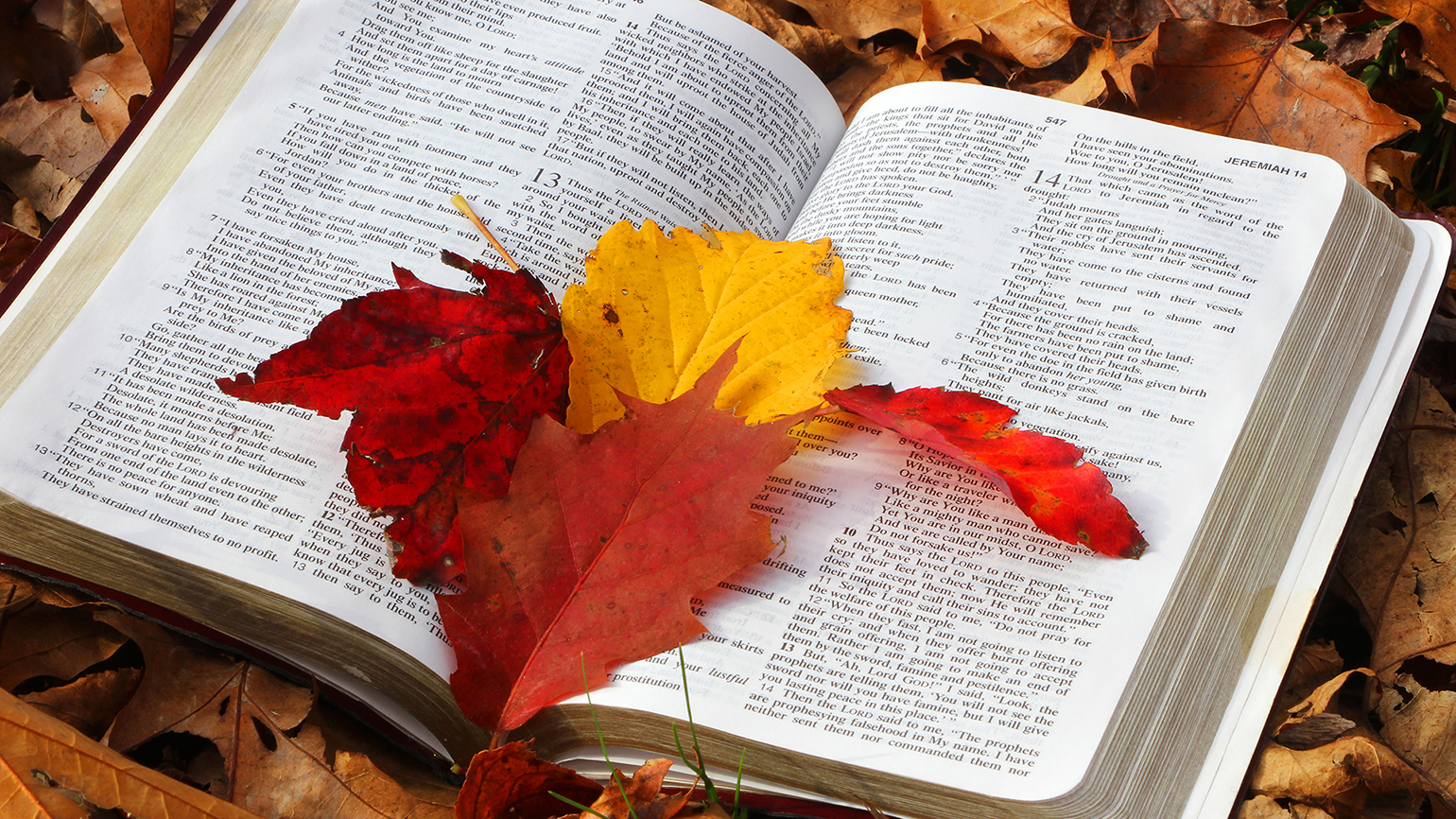
Here in the mountains of North Carolina, fall is a spectacular time when God paints the leaves in vibrant red, bright yellow and vivid orange. Add in burgundy, green and brown, and it’s beautiful beyond words. And since our house is surrounded by woods on three sides, I get a fresh new view every day.

Yesterday, I stood at the window and watched falling leaves float gracefully in the wind. It almost looked like it was snowing leaves. As I walked out on my deck, I smiled as I heard the sound of dry leaves crunching underfoot.

Read More: How Grace Finds Us

But there’s one more thing that I think of when I look at God’s autumn handiwork on the leaves, and that’s His “leaves” in the Bible. I thought I’d share some of them with you today:

For He Himself has said, “I will never LEAVE you nor forsake you.” (Hebrews 13:5)

No man shall be able to stand before you all the days of your life; as I was with Moses, so I will be with you. I will not LEAVE you nor forsake you. (Joshua 1:5)

And the Lord, He is the One who goes before you. He will be with you, He will not LEAVE you nor forsake you; do not fear nor be dismayed. (Deuteronomy 31:8)

Behold, I am with you and will keep you wherever you go, and will bring you back to this land; for I will not LEAVE you until I have done what I have spoken to you. (Genesis 28:15)

And David said to his son Solomon,“Be strong and of good courage, and do it; do not fear nor be dismayed, for the Lord God—my God—will be with you. He will not LEAVE you nor forsake you, until you have finished all the work for the service of the house of the Lord. (I Chronicles 28:20)

I will not LEAVE you comfortless: I will come to you. (John 14:18)

I think that’s so awesome that I can see His promises and tie them into the seasons of my life. Thank You, God, for the colorful display of the autumn leaves and for the sweetness of the “leaves” that You’ve left for us in Your Word.

For more inspiring stories, subscribe to Guideposts magazine.

August Is Happiness Happens Month

Most of us can recall the children’s song “If You’re Happy and You Know It.” Well, the Secret Society of Happy People want us to do more than just clap our hands. They have, since 2000, worked to have August designated Happiness Happens month.

The celebration was created to counter cynicism and negativity and spread expressions of happiness. They believe that happiness is contagious. Therefore if folks talk about their happy moments and experiences, positive attitude will prevail and good feelings will go viral.

To do our part in the happiness conspiracy, we contacted Maria Diaz, an embroidery designer, and asked her to craft a Happiness Happens design. Use our instructions and pattern to create your own Happiness Happens pillow.

Or you can go to our Facebook page and tell us what makes you happy. Simply finish the sentence: Happiness Happens when…

A Teacher’s Hair Loss Proves to Be a Blessing for a Student

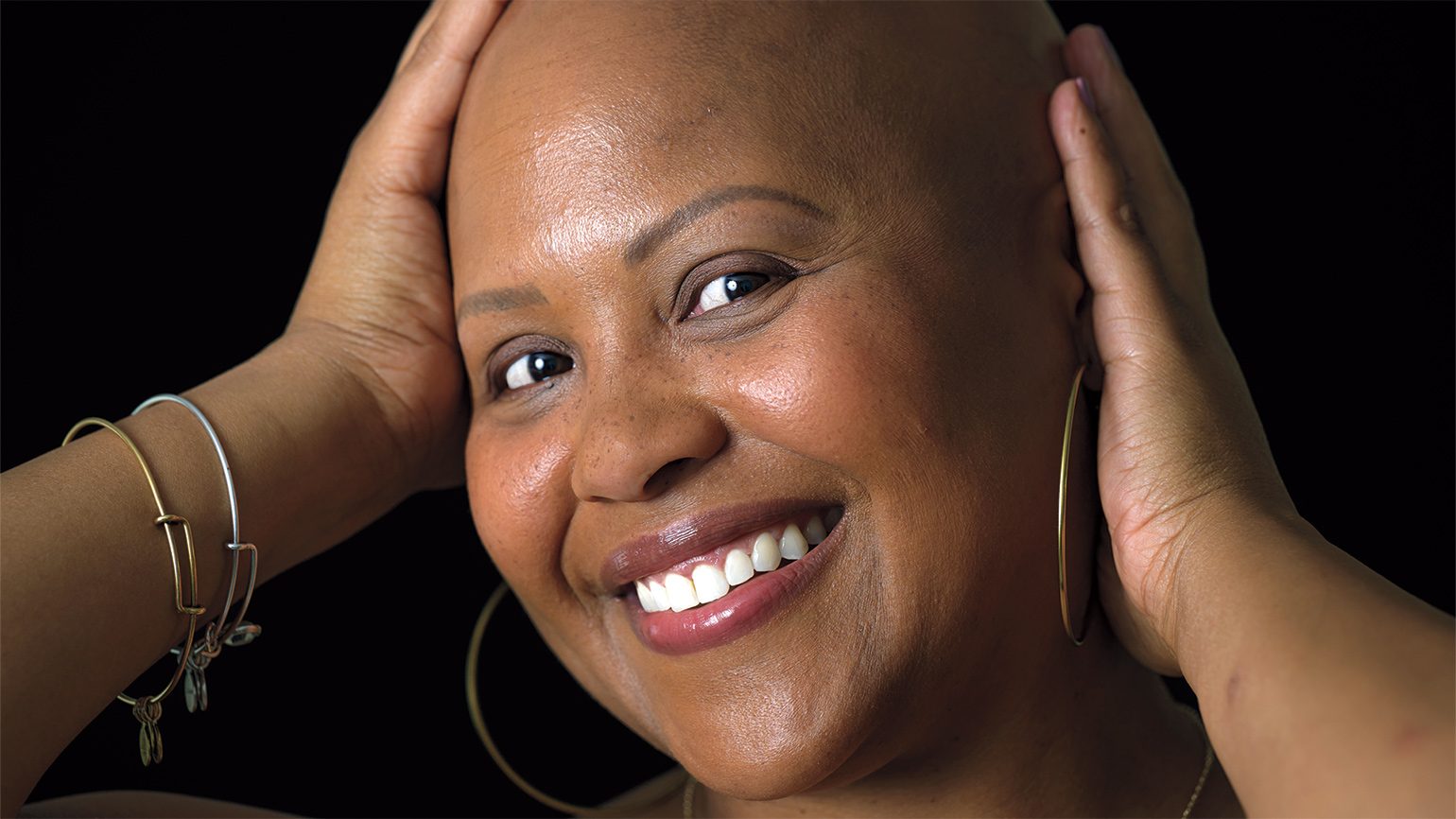
The first day of school, fall of 2014. I’m a high school Spanish teacher, and I was getting ready to go to work. I looked in my bathroom mirror, and all I could focus on was my bald head. Never mind my carefully penciled eyebrows, my more-confident-than-I-felt smile. My eyes were drawn to my hairless scalp, and I knew everyone else’s would be too. My colleagues, my students…was I ready to have them all staring at me, wondering or even asking if something was wrong? I’d never liked calling attention to myself.

So much had changed in the two and a half years since I’d noticed the first signs of hair loss. I’d never given my hair much thought before that. In high school, I’d been an athlete, so I mostly kept my hair in a ponytail. During college, then my early years as a teacher and wife, I wore it long, curls cascading to my shoulders. My first daughter was born in 2009. A few minutes of styling before work or church was all I had time for.

That’s what I was doing one morning in January 2012 when I saw pea-size bald patches on my head. I made an appointment with a dermatologist. She did a cursory examination. “I wouldn’t worry about it,” she said. “Call me if they get bigger.”

In March, I learned I was pregnant again. I was so excited, I forgot about the bald spots until I found a clump of hair in the bathtub drain. The patches had grown to the size of a quarter.

Worried, I went to a new dermatologist in Philadelphia. She examined my scalp and asked about everything from my hair care routine to the stress in my life. “You have alopecia areata,” she said. “It’s an autoimmune disease. No one’s sure what triggers it, but your immune system mistakenly attacks your hair follicles. The important thing to know is, alopecia is not a health concern.

”There was nothing physically wrong with me?“

For some people, it’s a temporary condition with partial hair loss,” the doctor said. “Others lose all the hair on their scalp and body permanently.”

Temporary condition. I clung to those words. The doctor said there were treatments that could help reduce hair loss, but I didn’t want to risk any side effects while I was pregnant.

Mercifully, I was able to style my hair to cover the worst of the patches so no one noticed as the school year wound down. By summer, the hair on the sides and back of my head was thinning. I hadn’t wanted to worry my mother, but I needed her reassurance. She had lost her hair while she was undergoing cancer treatment years earlier. She would understand what I was going through.

I went to her house. “I need to show you something,” I said. I pushed my hair aside so she could see the bald patches. “It’s alopecia.”

“You’ll be okay, Tabitha,” she said. “You can deal with this.”

She led me upstairs, where she kept a collection of scarves and head wraps. Mom showed me different ways to tie them. “Remember, with or without hair, you’re always beautiful in God’s sight,” she said. “You are fearfully and wonderfully made.”

I marveled at my mother’s faith and strength. Even dealing with cancer, she’d been a rock. I wished my faith were as unshakable.

As the bald spots grew, so did my questions and doubts. I wondered if I’d done something wrong, something to bring this upon myself. I started losing the hair on my eyebrows, the rest of my body. “God, what’s happening to me?” I asked. “I just want to understand.”

Unlike my mother, who thrived on being front and center, I was more comfortable staying in the background. I’d never liked drawing attention to myself, but with my hair loss, there was no avoiding it. Even with a scarf covering my head, I felt exposed.

All summer, I left the house only when I had to. I told people I was focusing on my three-year-old and my pregnancy. Really, I was hiding, pulling away from everyone, even God.

I dreaded going back to work. I called the principal to tell him about my condition and that I’d be wearing a scarf. “Whatever you’re comfortable with,” he said. “We’ll support you.”

The first day of school, I sat in my car in the parking lot, trying to work up the nerve to walk into the building. I retied my scarf, making sure it was secure. It could be worse, I told myself, imagining the humiliation of teaching with my balding head uncovered.

I hurried into my classroom before the first bell. Teachers sometimes share personal anecdotes with their students, to build a relationship while maintaining professional boundaries. I hadn’t figured out what to say if a student asked about my scarf. To my relief, my students were too caught up in their own lives to ask about mine. One young woman wearing a wide headband, the kind some athletes wear, smiled warmly. I gave her a tentative smile back and turned to the day’s lesson. After the last bell, I rushed home to hide again.

That became my pattern. Soon I’d lost nearly all the hair on my body. I went back to the dermatologist.

She explained that I had alopecia universalis, a type of alopecia areata with the most advanced hair loss. “Your hair is unlikely to grow back,” she said. Then she took a long look at me. “I don’t say this to everyone, but, sister, you can really rock the bald.”

I was crushed. I forced back the tears. This was never going to get better. I yanked my scarf around my head and left. In the safety of my car, I let go and sobbed. “God, what do I need to do to fix this? Please tell me!”

The semester passed in a kind of numb grief. It seemed as if I had lost more than my hair. I’d lost my sense of myself. A teacher was supposed to explain things and find answers, yet I wasn’t able to find an explanation for my condition. I couldn’t shake the feeling that it was a punishment for some failing of mine, like an Old Testament curse.

My baby was born in December, a beautiful girl. I was grateful she was healthy. Maternity leave gave me a chance to shut myself away again. I made excuses for not seeing friends and family. In my isolation, my feelings of unworthiness increased.

I went back to teaching when my leave ended, counting the days until summer break. I wore scarves and stayed away from mirrors. I avoided talking to people too. The few I chose to tell about my condition were supportive, but that didn’t change how I felt about myself. It wasn’t that I thought I looked ugly. I felt shame because I believed my baldness was calling attention to the fact that something was wrong with me spiritually.

If only I knew how I’d let God down. Had I not been obedient enough? Good enough? Was I no longer worthy of his love? Thinking I had to earn his grace, I read my Bible with greater purpose than before, delving deep into his Word. I watched online sermons, taking careful notes.

I stuck with this regimen through summer and the following school year. My alopecia didn’t improve—I lost what little hair remained—but slowly something inside me shifted. Instead of looking at myself and worrying that I was spiritually lacking, I looked to God. Trusting him absolutely, the way my mother did, was what made us spiritually complete.

One day, I was reading Luke 12. Verse 7—“Indeed, the very hairs of your head are all numbered. Don’t be afraid; you are worth more than many sparrows”—resonated with me. God knew every hair I’d lost, even better than I did. I was fearfully and wonderfully made. Like the sparrows, I was created by God. Known by him. Loved by him.

My spiritual growth was what had me standing at my bathroom mirror on the first day of school in 2014, wondering if it was time to stop hiding and reveal my bald self to my students and colleagues. I dressed in the plainest, least attention-getting outfit I owned and pulled on a scarf. I was keeping my options open.

In the school lot, I sat in my car for a moment. It’s now or never, I prayed. God, I trust your love. I pulled off my scarf, grabbed my bag and walked to the building. I reached up and touched my smooth scalp. I could hardly believe it…. I was out in public with my head uncovered! My first-period students filed into my classroom. They did a double-take when they saw me. I pointed to my bald head. “Y ves que no tengo pelo (You see I have no hair),” I said. “No estoy enferma, pero es que tengo alopecia (I’m not sick, but I have alopecia). Soy fuerte y sana (I’m strong and healthy).”My students nodded. It was no big deal to them. I was rocking the bald!

Between class periods, an old student dropped by. I remembered her, the one with the sporty headband and warm smile. “Ms. Williams! It’s so good to see you,” she said, giving me a big hug.

“There’s something I want to share with you,” she said. “You’ve probably noticed I always wear a headband.”

She reached up to pull it off. Underneath were bald patches.“I’ve been afraid to tell anyone I have alopecia,” she said. “But seeing you today, hearing how up-front you’re being…it’s given me the courage to share my secret.”

Never could I have imagined my alopecia being a source of inspiration to others, a way of serving God. But he had known all along.

“Thank you,” I said. “You don’t know how much you’ve helped me.”

The bald patches were barely noticeable, her face was so aglow with newfound confidence. “I want you to know that you’re beautiful,” I said. “Fearfully and wonderfully made.”

For more inspiring stories, subscribe to Guideposts magazine.

A Soup Kitchen Blessing

At our church’s Saturday kitchen we serve our guests a hot meal and some bread and fruit to go, but I like to think we also give a dose of hope. Or at least they can do that for us.

The whole operation is volunteer-run and that we can feed some 200 people Saturday after Saturday seems a minor miracle.

My role among the volunteers is small. I’m not a cook or server or pot washer but sort of a busboy assembling and re-assembling place settings through the course of the morning.

“Morning…Welcome…Glad you’re here…Thanks for coming,” I say dozens of times during the day, squeezing in between tables, wiping up spills with the sponge, setting up another placemat with napkin and fork.

I also like to sing. (No surprise there.) So in the midst of scraping food scraps into the composting bin and dumping trash, I’ll burst into a tune and see if I can get our guests to join in.

On the Fourth of July weekend we sounded pretty good on a slew of patriotic songs. Christmas is coming up and I have no doubt we’ll be launching into a few carols. And “Amazing Grace” works for any season.

But last Saturday I led a song we’d never done before. There was a mom with two kids eating at one table. The oldest daughter looked to be about five years old and seemed mighty shy.

“Would you help me sing?” I asked. She nodded hesitantly. “I’ll bet you know this one,” I said.

I started in on “This little light of mine…” and sure enough, she was right there with me. “I’m gonna let it shine,” she burst out proudly. She sang the whole thing without hesitating.

I don’t know what the other guests thought, but I think it was one of the best duets I’ve ever sung. “You’re a star!” I told her. She blushed.

The song was over, and there were plenty of tables that needed new placemats, napkins, forks. I went back to work. The line of guests snaked around the serving line.

But we were all singing that song to ourselves. “It’s going to be stuck in my head all day,” said Ned, one of the stalwart volunteers.

Seemed to me that song offers a pretty good description of what we are all doing there. We’ve all got lights to shine and gifts to offer. What a privilege when we can share them with those whom Jesus might have described as “the least of these.”

Thanksgiving is coming up. Let your light shine.

Asking for God’s Wisdom

Melanie Dobson is the author of The Courier of Caswell Hall from the American Tapestries series.

I graduated from college in Virginia 20 years ago, ready to embark on a career in journalism. I began sending out dozens of résumés to newspapers across the country, but instead of landing a job, a stack of rejection letters accumulated in the tiny bedroom I rented from a girlfriend. Fear began to overwhelm me, and I felt as if I might implode from anxiety.

A friend’s parents owned an old home near Williamsburg, and I escaped there one weekend for a retreat. Just like the character Lydia Caswell in my latest novel, The Courier of Caswell Hall, I sat under the shade of a tree, overlooking the wide James River, and sought wisdom from God. I desperately needed direction, but wasn’t sure which way to turn.

Since I was sitting along the James, I opened my Bible to the book by the same name. This is what I read:

If any of you lacks wisdom, you should ask God, who gives generously to all without finding fault, and it will be given to you. But when you ask, you must believe and not doubt, because the one who doubts is like a wave of the sea, blown and tossed by the wind. That person should not expect to receive anything from the Lord. Such a person is double-minded and unstable in all they do. (James 1:5-6)

I stared at the words in awe. I was the one lacking wisdom, the one being blown and tossed by the wind, scattered and unstable as I floundered about in my search for a job. That morning along the river, God spoke directly to me and put an incredible peace in my heart. Trust me, he seemed to whisper when I asked him for wisdom. And so I decided to trust.

I returned to my little room in Virginia Beach, but this time I stopped throwing résumés to the wind. I began a slow, deliberate, prayerful search for a job and less than a month later, God opened the door for a position in Colorado (where I had always wanted to live), working with an organization I loved. I remained in awe. Looking back, I now see clearly why I had to wait and, most of all, why I had to learn to trust him and his timing.

Last year I had the opportunity to return to the James River to do research for The Courier of Caswell Hall. As I visited the old plantation homes with my daughter, God reminded me of his faithfulness over the past two decades.

I don’t always understand the way he works, but I’m so grateful that in the midst of chaos and confusion, I can ask him for the gift of wisdom. And he gives it generously every time, without finding fault.

Are You Under Construction?

I’d griped for weeks, ever since I first saw the sign that the Craggy Bridge over the French Broad River would be closed for several weeks. We live out in the country and that’s my favorite back way into town since traffic is often a mess on the main roads.

When construction started, it was as bad as I’d imagined. More cars were now funneled onto the already busy main roads, adding 30 minutes or longer each way. It didn’t help that I’d leave home each time forgetting that the bridge was closed, meaning that I’d get almost to it and would then have to detour, adding even more time.

I griped some more as I knew it would be weeks before the bridge opened again. It seemed like it took forever. But my first drive over the repaired bridge was eye-opening.

The old one had been filled with potholes, and I’d often bumped my way across it to the stop sign. The sidewalks had been crumbling, and I’m sure there had been safety issues under the bridge that I couldn’t see—like deteriorating concrete and rusting metal.

Now, riding over it feels like driving across silk because it’s so smooth. Not a pothole anywhere. The structure is safer and looks so much nicer. The construction and repairs made it worth every minute I’d had to detour.

And that’s when God whispered, “It’s exactly the same way for My children. Sometimes I have to shut you down for repairs so I can make you a better Christian.”

Our Father sees those safety issues, the flaws in us that will keep us from serving Him at full capacity. So He puts up His “Under Construction” sign and goes to work, strengthening the areas that are weak and filling the potholes in our lives with His grace and forgiveness.

And we often gripe as we go through those times, fussing as we think God’s forgotten us, that He doesn’t care. But he puts us under construction because He does care about us—and the final result is worth it, to experience His new and improved version of us.

Does God have you under construction today? Are you going through tough times? Then rest assured that He’s making something strong and beautiful out of you.

Being confident of this very thing, that He who has begun a good work in you will complete it until the day of Jesus Christ. (Philippians 1:6 )

Are You a Good Advertisement for God?

Whenever I drive the back way home, I pass a nice home set on a hill. It’s a lovely place, and I always remember it as being well groomed. That is, until recently. I drove by there a couple of weeks ago, and the first thing I noticed was how unkempt and overgrown the place looked. The new growth on the bushes protruded in a haphazard manner. The grass was high and weeds sprouted in abundance. Fallen branches littered the lawn.

I was quite surprised. I noticed a sign at the far end of the large lot so I figured the mystery had been solved, that the house and grounds had deteriorated because the place was for sale and the owners had moved out.

When I drove around the curve where I could see what was written on the sign, it was an advertisement for a landscape and lawn maintenance company. I laughed out loud and said, “That’s what you want your yard not to look like.”

I don’t think the landscape company picked up any new customers from that sign.

On another occasion, I picked up a copy of a glossy program being sold at a national event. I flipped through the pages, enjoying the lovely smiles of those who were featured. And then I reached a page that left me puzzled. The people in the photo had odd expressions on their faces. One frowned. Another looked like he was in pain. Everyone in the photo was somber.

With all the other pages filled with smiling faces, it stood out as unusual. I sat there and studied it for a few minutes as I thought about the fact that this was the photo they’d chosen to draw people to them and the product they were advertising.

And then I read the text where it talked about “the joy of serving Jesus.” Oh my. Their faces certainly didn’t advertise that serving Jesus was a joyous privilege.

We laugh, but what are we advertising when it comes to our spiritual testimonies? Do others see lives that are overgrown with sin? Do they see folks who have allowed weeds of neglect to creep into their lives as they’ve missed time in prayer and Bible study?

Do they look at us as Christians and say, “Why would I want to be like that?”

You see, we so often forget that others are watching us. Stop and think about it: You might be the only representative of Jesus that some of them will ever see.

And just like the folks in the event booklet, if we don’t reflect the joy of Jesus as we serve Him, then why would others want to follow Him as well?

Sweet friends, is your life a good advertising campaign to draw folks to God? That’s something for all of us to think about today.

A Recipe for Joyful Living

We all know about new Year’s resolutions, those big promises we make to ourselves every January first–lose 10 pounds, join a gym, give up eating ice cream before bed.

And we all know what happens. We start backsliding by the second week, and by the end of the month, we find ourselves in our pj’s with a pint of Ben & Jerry’s, feeling like failures. Again.

Don’t get me wrong–I believe in good health. But I also believe in being realistic. (Last year my biggest resolution was to take some time off, a real family vacation, which we hadn’t done in six years, and we actually managed that.)

So take a bit of advice from someone who cooks for a living. No Spartan diets, no self-recrimination, no punishing workouts, just a few sensible guides to eating right. You can eat well and still eat right. Your family will feel better and you will too.

You might even drop a few pounds, but mostly, you will be happy because you will be feeding body and soul. Here’s my recipe for well-being.

1. Gather round the table.
In my family, as in many Italian families, meals aren’t just about eating, they’re about sharing and connecting. Maybe that’s why it takes us so long to eat! We’re too busy talking and laughing. We love each other and we love food. It’s in our genes.

My great-grandparents owned a pasta factory in Naples. My grandfather Dino De Laurentiis made his name as a movie producer, but he started out as a boy selling pasta door-to-door.

I was born in Italy, but we moved to America when I was young, and one of the things we brought with us was the Italian idea of a big weekend lunch, a meal that can start anytime after one-thirty in the afternoon and might stretch on into the early evening.

It’s not the prelude to the day’s activities, it’s the main event.

Sunday afternoons we’d gather at my grandfather’s and everybody would crowd into the kitchen. One of my earliest memories of cooking was making pizza.

My grandfather, Dino, gave each of us kids a ball of dough and we would roll it out with a rolling pin–think of how fun that was–and then add toppings: salami, olives, peppers, cheese. He’d put them in the oven and we’d laugh and play and joke until they were ready.

A meal wasn’t just about food, it was about togetherness. About love.

Those family meals always began with a blessing from Grandfather, a big spiritual thank-you for the food and for us. He had survived tough times during World War II and knew what it was to go hungry. He was grateful.

When you eat slowly, talking to people you love, bonding with them, appreciating what’s on your plate, you eat healthier. You live better.

You don’t have family close by? Invite friends to share a meal with you. Welcome them into the kitchen. I’m honored when someone asks me to help them cook. That’s when I know they’re really letting me into their life.

2. Eat a little of everything, but not a lot of anything.
This is my number one rule about eating. I don’t believe in diets. Food is not the enemy. Diets are tough to stick to and cause a sense of deprivation, often resulting in roller-coaster weight loss and gain, not to mention mood swings.

I’m not a yo-yo. You don’t need to be one either. Instead adopt a balanced way of cooking and eating that works for you. If you make smart choices, your taste buds will grow used to them. Your body will tell you what it needs.

I learned a lot about good eating from my mom. She always made dinner from scratch. Not fancy things, basic things. Meatloaf, pasta, lasagna, chicken, risotto, polenta, meatballs, and always something green on the plate–broccoli, spinach, arugula.

My parents never really overindulged. It’s hard not to when you go out to eat. Restaurants serve giant portions and you feel compelled to eat every bite.

At home, you have more control over the portion sizes. And when you cook it yourself, you’re more likely to appreciate all the good flavors. Besides, it’s cheaper.

Even today, cooking all day long in a TV studio, I can’t wait to cook at home for my family. I feel like a dancer following my own choreography, reaching for a little of this, a little of that.

My husband, Todd, is from the Midwest and loves meat, so I’ll grill a small steak for him and add a fried egg on top. I’ll do a quick penne with spinach sauce or fettuccine with broccoli rabe for our daughter, Jade.

It makes me happy to know I can make them happy. I nourish my soul by nourishing my family.

3. Grazing is good.
While breakfast is absolutely the most important meal of the day, you can forget that old rule about not snacking between meals. Five smaller meals are so much better for you; they are easier for you to digest than three big ones, and make for a healthy metabolism.

Instead of the highs and lows and feeling like you’re starved or stuffed, you stay even-keeled throughout the day. Try it. Your body adapts to this routine and begins to work much more efficiently.

Vegetables, legumes and fruits–all packed with fiber–make up most of what I eat. When I want pasta (which is often), I have it at lunch so I have more time to use its fuel during the day.

At dinnertime, I pack in a little more protein to hold me until morning, and I make sure to give myself plenty of time to digest before I go to bed; I aim for three hours or so before falling asleep. Most doctors will tell you that’s best.

For snacks I always have a ziplock bag of almonds handy. If I go out, I tend to order several appetizers instead of an entrée. If we’re invited to a buffet, I pick up a small plate and fill it. That way I don’t overeat. The ideal serving should be about the size of your palm.

4, Tune in to your body.
When I was younger I was totally addicted to sugar. I relied on it to give me energy boosts throughout the day. In fact, I would eat less “regular” food in order to leave room for dessert. If it was chocolate, it was for me: chocolate-covered almonds, graham crackers, cookies, chocolate anything.

I put tons of sugar in my coffee and iced tea. I was also into the Italian custom of dipping sugar cubes in espresso and sucking on them.

This didn’t affect me much when I was in my twenties. I had more energy in general and didn’t see a huge downside to eating that way.

When I became pregnant, however, everything changed. I was responsible for this little life inside of me and I took the saying “eating for two” to heart. My body needed–and my baby deserved–better. This made me rethink my whole lifestyle, my whole relationship with food.

So I started making little adjustments here and there, changing bit by bit. I cut down on my sugar intake. I ate more, which makes sense because I was pregnant, but I was eating more vegetables, protein and whole grains and a lot less junk. I started using organic ingredients and produce.

And guess what? I felt better–even better than better. Pregnant. It was a miracle.

Once Jade was born, I didn’t revert to my old habits. I was named Giada, which means jade in Italian, because of my green eyes. We gave our daughter the same name, just Americanized.

Jade has taught me so many things, but I like to think of this new lifestyle as her first lesson, her first gift to me. A blessing that changed my life.

5. Celebrate.
In Italy, certain holidays are associated with certain foods. Just the way Americans eat turkey at Thanksgiving, Italians eat fish on Christmas Eve.

Traditionally it should be seven courses of fish–seven for the seven hills of Rome, or for the seventh day, when God rested, or maybe because seven is the most often used number in the Bible.

In our family, we don’t have all seven courses, but we always have fish, and at Easter, naturally, we eat lamb. Lamb ragù or stuffed lamb shoulder or lamb chops.

And on New Year’s Eve it’s lentils. They’re supposed to bring prosperity (probably because they’re round, like coins). Let me recommend my mother’s vegetarian “meatloaf,” which is full of lentils, good for you and good to eat as well.

There’s no reason to compromise taste for the cause of good health. They can go hand in hand. They do in my kitchen and can in yours. Food is a connection to who we are, how God made us and how we can make our loved ones happy. Buon appetito. Buon anno. Happy New Year.

Try Giada's mother's recipe for vegetarian "meatloaf"!

Download your FREE ebook, Rediscover the Power of Positive Thinking, with Norman Vincent Peale

A Pastor’s Blessing

The e-mail came to my in-box sounding like something written by the Apostle Paul 2,000 years ago: “Dear Hamlin, Praise the Lord, brother, may the grace of our Lord Jesus Christ and the love of God and the fellowship of the Holy Spirit be with you all, brethren. Mine is to thank the Almighty who made us to meet. Live long and God bless you.”

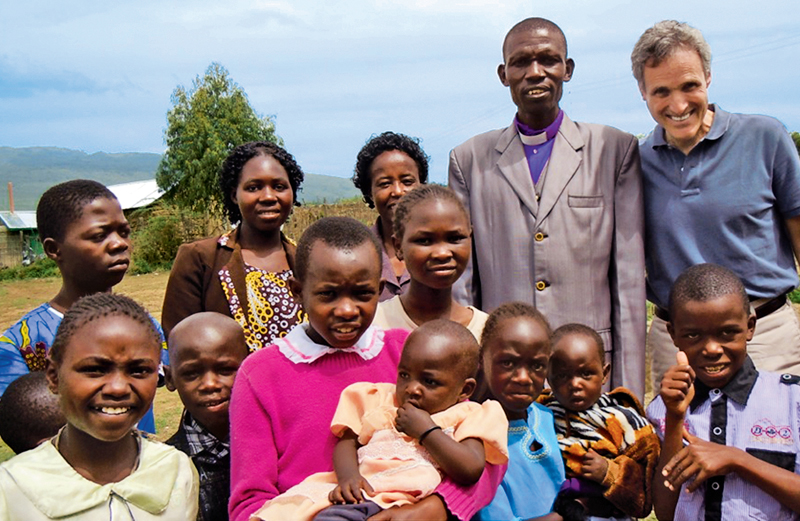
Except this message came from the very modern-day Pastor Cornelious who runs a church in Naivasha, Kenya. And, like the best messages from friends–brethren, as he would term us–it had photos attached. More about the photos in a minute. First, let me tell you how I met Pastor Cornelious.

Last January my wife, Carol, and I went to Kenya with our friends Richard and Gretchen. They wanted us to see the well they were digging in a dry part of the country, where Richard had served in the Peace Corps years ago.

They had raised money through their church, and although our participation was modest, they insisted we join them, along with two other friends, on this once-in-a-lifetime trip.

We’d never been to Africa and we both were a little hesitant. Quite frankly, we were worried about seeing a lot of poverty.

Kenya is not the poorest country in the world by any means, but with a booming population and limited resources, its per capita income puts it near the bottom tenth. How relaxing would a vacation be among people who had so little?

The first part of the trip was a dazzling safari. Our small group had six days and nights sleeping under the stars.

The wildlife was spectacular. We saw buffaloes, zebras, rhinos, hippos swimming in muddy lakes, gazelles racing, antelopes, wildebeests, howling hyenas, baboons, monkeys, the shy dik-dik, graceful giraffes and herds of elephants.

The snows of Mount Kilimanjaro lurked in the sky like a cloud against the brilliant blue and we counted all the different kinds of birds–89 that I recorded in my journal. This from a city boy who wouldn’t have been able to tell you the difference between a sparrow and a wren.

On Saturday night we were coming back into civilization, staying at a lodge overlooking Lake Naivasha before continuing on to the village whose well Richard and Gretchen were helping to fund.

The lodge had been built when Kenya was a British colony, and it reeked of England: old photos on the walls of ladies having high tea on the lawn, bouquets of roses in all the rooms. We asked if there was a church in the town where we could worship in the morning.

“Of course,” we were told.

Sunday at nine, we got into our jeep and drove through the village on dirt roads, children waving and asking for sweets. The church was a modest whitewashed concrete-block building with a dirt floor. The name, though, showed great aspirations: Living Water Gospel Church World Wide.

There were six plastic chairs inside, set up in front for the six of us Americans. The rest of the congregation sat on rough wooden benches, studying falling-apart-at-the-seams English Bibles.

I gazed up at the tin roof. A lot of holes, which made me wonder what happened during the rainy season.

There was no fancy acoustic system, no stained-glass windows, no recessed lighting, but the hand-painted message at the front was confident: “Whoever believes in me as the Scripture has said, streams of living water will flow within him” (John 7:38).

And taped on a sidewall was a black-and-white sign that would have been recognized by any worshipper. A cell phone with a line going through it.

The worship began with music. The singing, led by the teens, was accompanied by one drummer and one kid clanking a tire rim. We joined in, clapping and swaying, doing our best to approximate the Swahili.

At one point Carol nudged me. “We should sing for them.” So we stood and sang “Amazing Grace.” The genial Pastor Cornelious then sang it back to everybody in Swahili.

Yes, of course, this congregation had less–a lot less–than we did back in the States, but its spirit was infectious. Pastor Cornelious gave a lively sermon in Swahili, translated by his copastor into English. Worldwide indeed.

He must have been told that Americans were impatient, as he kept consulting his watch. Evidently he had promised the people at the lodge that he would have these busy tourists in and out in an hour.

I craned my head around to look back at the congregation, trying to figure out how everyone managed to keep their clothes clean in a place with few paved roads and no Laundromats. It seemed a minor miracle. Of course, they had Lake Naivasha.

Richard was asked to address the congregation. He thanked them for their welcome and explained that we were here not only to admire the beauties of their country but also because we had raised money to build a well in another part of Kenya “that is not blessed as you are with this beautiful lake next to your town and such living waters.”

An offering was taken up. A woman brought around a large purse to collect it. I took out a twenty. “Let’s do more,” Carol whispered. I found some more bills and dropped them in. We all did. The place could use the money.

Pastor Cornelious, consulting his watch again, led us in prayer. We sang another song and then went outside to chat in the warm sun–like an American coffee hour without the doughnuts or coffee.

“Thank you, thank you,” we said many times. We took photos on our cell phones, exchanged e-mail addresses, then jumped into our dusty jeep.

Just as we were driving off, Pastor Cornelious raced out of the church with an envelope. “We wanted you to have this as a gift,” he said in his careful English. He thrust it into Richard’s hand. “It is for the well you’re digging in that part of Kenya that isn’t blessed like ours with such living waters.”

“Thank you,” we said. A little later, when we stopped for lunch, Richard opened the envelope and stared for a moment at its thick wad of bills. All those tens and twenties we’d given them, they’d given right back to us, along with their own hard-earned shillings.

“They gave us the entire offering,” Richard said. “Everything we gave them and their own money too.”

The widow’s mite didn’t seem like just a parable anymore. I had been so hesitant about meeting poverty face-to-face, but what we saw was the rich, raw, passionate expression of faith. Pure generosity the way the early Christians practiced it. I felt like I was hearing one of Paul’s exhortations to give, and seeing it acted upon, instantly.

Pastor Cornelious and I started e-mailing once I was back home, his messages filled with exuberant greetings of brotherly love. Our little travel group decided we wanted to do something for the generous Living Water Gospel Church in Naivasha.

We thought of all those Bibles that were falling apart. Maybe we could give them some new ones. “Dear brother in Christ,” I wrote Pastor Cornelious, adopting his tone, “we have a vision of giving your church a library. Are there any books you would particularly like?”

He gave me a short list and I asked him how many Kenyan shillings it would take for them to build a bookcase. He named a price.

I wired him the money through Western Union. And I started mailing books. The greatest expense has been postage. (Amazon doesn’t deliver to Naivasha.)

For a long time I wasn’t sure that my packages were arriving, so I was particularly delighted to receive Pastor Cornelious’s most recent e-mail, with the aforementioned photos of the bookcase and the books.

I’m not sure Pastor Cornelious ever guessed he would have this “World Wide” connection someday. I couldn’t have ever guessed I would get e-mails from a Kenyan who sounds like the Apostle Paul. But with a little faith and a lot of hope and prayers, amazing things happen.

Download your free eBook, Let These Bible Verses Help You: 12 Psalms and Bible Passages to Deepen Your Joy, Happiness, Hope and Faith.

An Unlikely Baseball MVP (Most Valuable Parent)

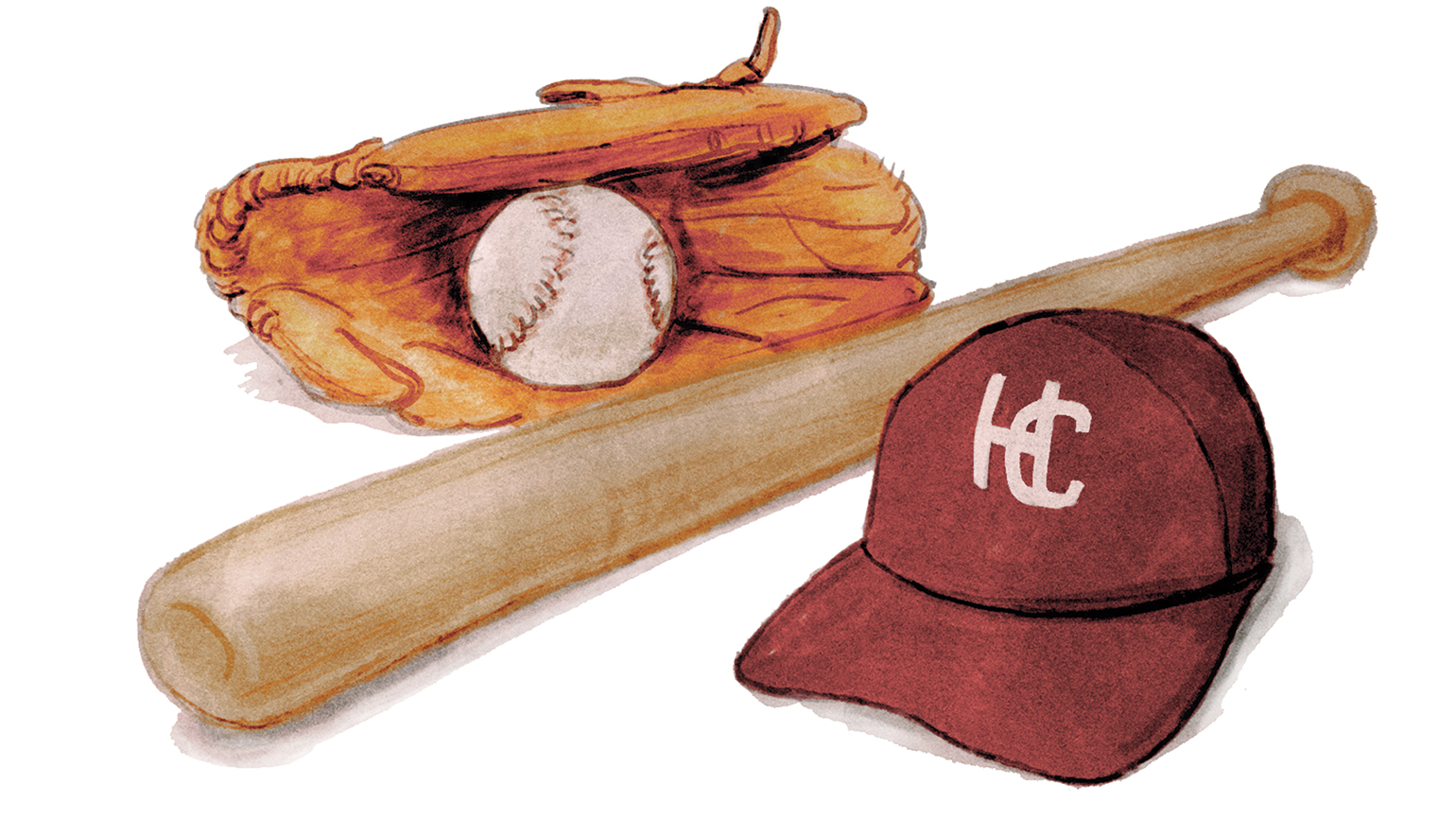
Every spring, the posters appear around our uptown Manhattan neighborhood, inviting parents to sign up their kids for the Hudson Cliffs Baseball League. A fun way to spend weekends in spring, introducing kids to the joys of the game on ballfields down by the Hudson River, in view of those fabled cliffs. The league has been around for 30 years now. And guess who started it?

Me. Rick Hamlin. The guy who knows next to nothing about baseball or sports in general. The one whose most fervent prayers as a boy came when he was stuck out in right field during P.E., entreating God, “Please, please, please don’t let the ball come to me.” It would have taken a minor miracle for me to catch the thing, and even then, I’d never be able throw it into the infield.

And yet I later happened to become the father of two boys, eight-year-old Will and five-year-old Tim, both of whom were interested in the sport. Saturday mornings, I’d take Will out to the playground and we’d play ball with a few other boys and their dads. I was so glad those fathers could coach and pitch and knew the rules of the game.

I’d play catch with Will, and thanks to my weak arm, the ball would drop at his feet before he could get in position to catch it. After a few too many misses one day, he sank to the ground and said, “How am I ever going to make the major leagues?”

I wanted to tell him, “You got the wrong dad, kid.” I mean, when I’d gone to the sporting goods store, I bought him a mitt for the wrong hand. Who knew that a right-handed kid should get a mitt for his left hand? That’s how clueless I was.

Still, I wanted to find some way of giving our kids confidence on the field, a confidence I’d never had. There was an official Little League in our area, but it was super-competitive and catered to older boys. What if we had something a little more low-key, something that welcomed both boys and girls, with T-ball and softball for the younger ones?

I happened to share the idea with a couple neighbors on the playground. “That would be great!” they said, their eyes lighting up. Me and my big mouth. Now who could organize such a thing? Not me. I tried to put the idea aside, but it wouldn’t leave me.

Like Moses, I felt I was being called to do something way out of my league (no pun intended). Remember how Moses struggled to speak, exclaiming, “for I am of slow speech and of a slow tongue” (Exodus 4:10), and yet God called him to lead the Israelites out of Egypt?

Okay, Rick, I told myself. You had this big idea. Now you’ve got to do something about it. One thing I could do was make a few phone calls and get information. I had to do that often enough at work as a writer and editor at Guideposts.

So I started calling the city’s parks and recreation department, explaining that there were some families uptown who wanted to start a baseball league in our neighborhood. Were there any fields we could sign up for? We’d need two ballfields, ideally down by the river, for several hours every spring weekend.

The parks and rec department bounced me around. Finally I spoke to the official who could help us. I made our request for the fields, and he asked me to call him back in a few days. I half-wondered if I was supposed to slip him an envelope of cash. No, that would never do. Not for the Hudson Cliffs Baseball League.

Now that was the sort of thing I knew how to do: Come up with names for things, like putting a title to a story I wrote. Hudson Cliffs came from the name of the neighborhood’s elementary-middle school, P.S. 187.The scariest phone call I ever made was calling that official back. What if he said no? What would I tell my boys then? I think I prayed even harder than I used to when I was out there in right field as a kid.

“Yes, we’ve got something for you,” the man said. Two verdant ballfields for four hours every Sunday morning, from early April to mid-June. That will mean missing Sunday school, I thought. Then again, we could still make the Sunday evening service.

“Wonderful,” I said to the man. “Thank you so much.”

Hudson Cliffs was launched. What a joy it was to sit on the benches behind home plate, watching Will and Tim hit the ball, run the bases…and make clutch catches in the outfield. Wow. How grateful I was for the other parents who did the coaching and refereeing. They did the hard work. As for me, I was christened “Commish” by a friend. The most unlikely baseball commissioner ever.

After several years of play, Will and Tim aged out of Hudson Cliffs. Amazingly enough, the league still goes on, these days run by the Hebrew Y.

Our now-grown sons sometimes tease me, arguing with each other about who is going to retell the Hudson Cliffs origin story at my funeral. That’s not going to happen for a long time, I hope.

Meanwhile, both Will and Tim are new dads, each with a boy of his own, and I can’t wait to see what they’ll have to do. I know better than anyone: Parenthood—like the Lord—can call you to do the most unlikely things, things you never knew you could do until you try.

For more inspiring stories, subscribe to Guideposts magazine.

An Inspiring Carnegie Hall Debut

I have a confession to make: I didn’t come to New York to be a writer and editor. I came here to be a professional singer. I’d sung a lot in college, in the chapel choir, in glee club, in an a capella men’s group and in musicals. I figured I was ready to take on the Big Apple.

I was accepted at the Manhattan School of Music, snagged a paid gig in a church choir and found a couch to sleep on in a rambling Upper West Side apartment.

Two of my roommates were actor/singers. They were actually in Broadway shows at the time. They would come home from the theater and start singing arias at midnight.

“Rick, check out my high C.” “How do you think my French accent is on this song?” “Do you think this piece will work for my audition tomorrow?”

I loved all of it, even if I found it intimidating. Would I be able to perform in a Broadway show or sing opera and concerts, the way they did? The city was full of talented up-and-comers.

There was good singing everywhere… clubs, Broadway, Lincoln Center, even in the parks and on the subway. But we all knew the very best place to be heard, the venue that signaled you had really made it: Carnegie Hall.

I remember taking a girl to a sold-out recital there when the only seats left were tucked onstage behind the singer.

For most of the concert we could only see his back—occasionally he’d turn and bow to us—but we could see the hall as he saw it: seemingly limitless rows of seats rising all the way to the upper balconies, where the people looked like peapods.

“Can you imagine singing here?” my date whispered.

Funny thing was, I could. I mean, it would be scary, but wouldn’t it be amazing? Just to feel your voice disappear into the vastness of that celebrated hall, the famous acoustics of the place amplifying your singing so you could be heard by the peapods all the way in the back of the upper balconies.

Maybe, I said to myself, someday.

“How do you get to Carnegie Hall?” the old joke goes. Answer: “Practice, practice, practice.” Well, I practiced hard.

I took dance lessons and acting lessons along with my voice lessons so I could market myself as an actor/singer who could “move well.” I had professional photos taken and mass-mailed my 8-by-10 glossies and résumé to casting directors and agents.

I auditioned all over town, waiting at cattle calls to sing “a few measures” before being told “Thank you,” which usually meant “No thanks.”

I did musicals in church basements, sang South Pacific and West Side Story in summer stock, was a spear carrier in Shakespeare, got tenor gigs in various choruses and did so many performances of children’s theater that I could recite lines in my sleep.

And yet my dream did not come without doubt. I asked myself and God, Is this really what I’m meant to do? Not that I wasn’t grateful to be employed in such an incredibly competitive business, but was it really me?

If God gave me this gift—and singing felt like a God-given gift—was this how I was supposed to use it?

I liked the people I worked with, but to tell the truth, I didn’t really like the work.

I didn’t like traveling all the time. Didn’t like bonding with a group of singers and actors for several intense weeks only to go our separate ways after the show was done. Didn’t like not knowing where the next job was coming from. Didn’t like getting nervous before a show.

More important, I had fallen in love with the woman I’d taken on that date to Carnegie Hall, and if we were to be married and have children someday, was this the life I wanted as a husband and a father? The life of a vagabond tenor?

We got married and had so many of our musical friends perform during the ceremony, hitting their high C’s, that it sounded like a concert. By then I had relaunched myself as a writer/editor, almost as precarious an existence as that of an actor/singer, but not quite.

“Practice, practice, practice” is good advice for writers too, and gradually I made a career for myself, landing on staff at the magazine you are now reading, where I have been very happy, happier than I would ever have been as a professional tenor.

Besides, I still found places to sing for the sheer amateur joy of it. Sundays with our church choir, concerts here and there and an excellent Gilbert and Sullivan group, the Blue Hill Troupe, where I often was cast as the lead.

Performing a few nights a year for friends and family was better than a life on the stage. Broadway didn’t miss me.

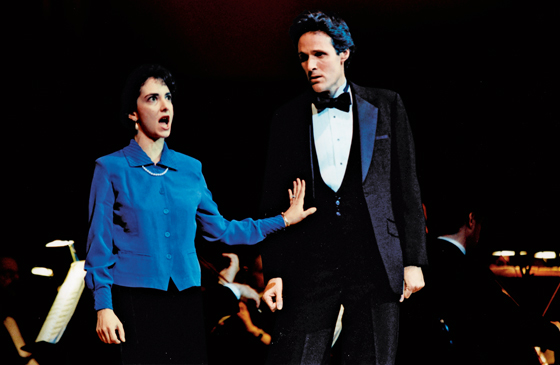
Then, a dozen years ago, the Blue Hill Troupe was asked to give a concert with the New York Pops orchestra. Guess where? Carnegie Hall. It would be a night to remember, singing in the chorus, looking out over that famous hall.

Then the director called. “We want a couple of our soloists to perform. I want you and Joanne to do the love duet from Pinafore. Okay?”

“Sure,” I blithely said. I hung up and pulled out the score. My friend Joanne Lessner and I would have to stand up in front of the orchestra next to the conductor and sing 42 measures all by ourselves onstage at Carnegie Hall. How thrilling! How absolutely terrifying!

We practiced, practiced, practiced. On our own, together, with a pianist and on the afternoon of the actual performance with the full orchestra.

The red seats were empty, but I did steal a glance up and could picture someone looking down and seeing how very small I was on the vast, fabled stage where the greatest singers on earth had performed.

“God,” I muttered, “this might have been a dream of mine long ago, but I feel completely inadequate now. Why on earth did you let me say yes?”

“You sounded great up there,” my fellow tenors said. They had to be lying. Couldn’t they see me balling my hands into fists to keep them from shaking? Couldn’t they tell that that vibrato was coming from sheer nerves? That I was squeezing out every note?

If I could only back out of the whole thing now… but my name was in the program. People were depending on me. I couldn’t disappoint them.

My long-lost dream of performing at Carnegie Hall was coming true, whether I liked it or not.

I prayed on the subway train that evening, wearing my tux, heading to Fifty-seventh Street. Please, God, just don’t let me mess up. That’s all I ask. I kept picturing the conductor waving his baton at me and nothing coming out of my mouth.

Backstage the conductor gave the troupe a pep talk: “Have fun out there.” We patted each other on the back and then filed out onstage.

Joanne’s and my duet wouldn’t come until halfway through the program. That meant I had to sing a half dozen other pieces with the chorus, marking the minutes to my doom.

Finally it was our turn. our cue came and Joanne and I walked forward. The conductor lowered his baton. The orchestra began. And we sang, the music rising to the back of the hall.

I don’t know how it happened. I didn’t flub a lyric, didn’t miss a note, didn’t run out of breath, didn’t trip over my feet. Didn’t mess up. The nerves gave way to calm and then the calm gave way to joy, the joy of using a God-given gift. God wouldn’t have put me there if I couldn’t do it.

We finished and bowed. The audience applauded. The 42 measures were over. We walked back to join the group for the rest of the concert.

“Flawless… awesome,” my friends in the tenor section congratulated me under their breath. You did it, I thought with glee. You really did it. You’ve sung in Carnegie Hall! I was in awe.

But at the same time I told myself, You don’t ever have to do this again. Once for a lark, once for the challenge, once to say that you’ve done a thing you dreamed about. Once to know that you have made the right choices in life and have used your gifts to the best of your ability.

Once in a lifetime was enough. More than enough.

Download your FREE ebook, True Inspirational Stories: 9 Real Life Stories of Hope & Faith

An Insightful Easter Message to Trust God’s Timing

It was a beautiful spring day, and a sense of peace stayed with me as I left the Cathedral on Easter Monday morning. I paused for a moment on top of the steps leading to the Avenue, now crowded with people rushing to their jobs. Sitting in her usual place inside a small archway was the older woman selling flowers. At her feet corsages and boutonnieres were parading on top of a spread-open newspaper.

The flower lady was smiling, her wrinkled face alive with some inner joy. I started down the stairs-then, on an impulse, turned and picked out a flower.

As I put it m my lapel, I said, “You look happy this morning.” “Why not? Everything is good.”

She was dressed a bit shabbily and seemed so very old that her reply startled me, “You’ve been sitting here for many years now, haven’t you? And always smiling. You wear your troubles well.”

“You can’t reach my age and not have troubles,” she replied. “Only it’s like Jesus and Good Friday…” She paused for a moment.

“Yes?” I prompted.

“Well, when Jesus was crucified on Good Friday, that was the worst day for the whole world. And when I get troubles I remember that, and then I think of what happened only three days later–Easter and our Lord arising. So when I get troubles, I’ve learned to wait three days… somehow everything gets all right again.”

And she smiled goodbye. Her words still follow me whenever I think I have troubles: “Give God a chance to help…wait three days.”