Embrace God's truth with our new book, The Lies that Bind

A Joyful Phrase to Celebrate the Good Things That Come Our Way

If you are familiar with only one Yiddish phrase, it’s likely, “mazel tov,” the exclamation of joyous congratulations offered at milestone moments from weddings to graduations to births to “smaller” achievements like the completion of a large project or success at a recipe that long eluded the chef.

What you might not know, if you’ve ever wished anyone “mazel tov,” is that the literal translation of what you’re saying is not “congratulations.” It’s actually, “good luck.”

Tov in Hebrew and Yiddish means “good.” And mazel (in Yiddish; the word is mazal in Hebrew) has several possible translations, the closest being something like “fortune” or “luck.”

At a time of year when “luck” is on the minds of those who celebrate Saint Patrick’s Day, this linguistic treat has something inspiring to tell us. If “mazel tov” means “good luck,” what are we to make of its nearly-ubiquitous usage as “congratulations”?

After all, reaching an achievement, milestone or any accomplishment often has something to do with the good fortune to be in a position to attain a goal and do something worthy of congratulations.

But passive “luck” is never the whole story of an accomplishment. When we see and use the resources available to us, when we persevere beyond what we initially thought possible for ourselves or when we recognize how precious and fragile our achievements are—that recognition is an accomplishment in and of itself.

And it is surely worthy of a full-throated “congratulations.” Lucky us, to have such a crisp, joyful term to celebrate the good things that come our way.

What would you wish yourself “congratulations/good luck” for today?

A High-Wire Walk with God

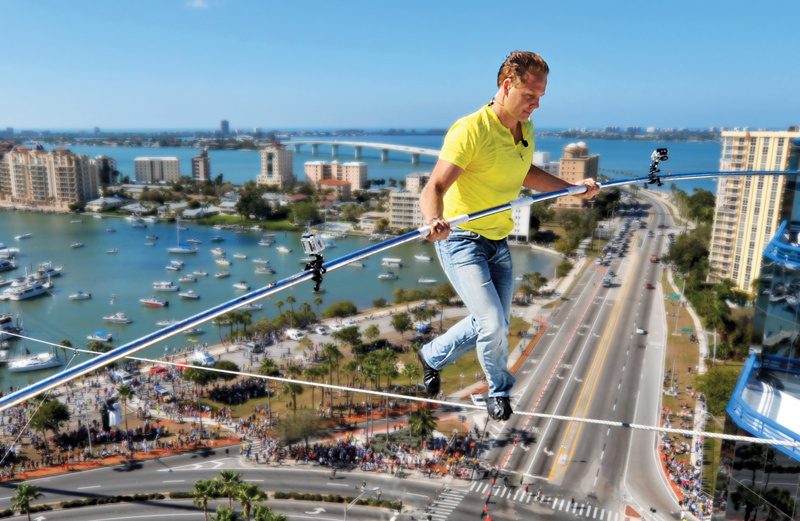
The two-inch-wide steel cable felt cold and wet beneath the elk-skin-soled moccasins my mother had made me. I slid one foot forward, then the other.

Below was the lip of Niagara Falls, where 600,000 gallons of water per second plunged 170 feet straight down to jagged rocks. Billowing white clouds of spray spewed hundreds of feet into the air.

The wind machines and fire hoses I’d practiced with were nothing compared with the turbulence that buffeted me and the swirling mist that made it hard to even see the high wire swaying under my feet.

I grasped the 40-pound balancing pole. It lowered my center of gravity and helped steady me on the 1,500-footlong wire I was walking, crossing from New York to Canada. I still had a long way to go.

“Looking good, Nik.” My dad’s voice came through my earpiece, quiet and soothing against the roar of the falls below. “Nice calm steps.”

My heart pounded, not from fear but from excitement. Out there in the floodlit darkness were thousands of people watching me attempt this feat, hundreds of news cameras recording my every step.

Other people had crossed the Niagara Gorge back in the 1800s but never directly over Horseshoe Falls. I had dreamed of doing this walk since I was six years old, and now, 27 years later, it was finally happening. “Thank you, Lord,” I said out loud, over and over.

You might be wondering how someone gets a dream like this—I know it seems crazy to a lot of people. I really think that my dream chose me. Walking the high wire is in my blood. I’m part of the seventh generation of a circus family that began performing in Eastern Europe in the 1780s.

My mom walked the line while pregnant with me. I was walking a two-foot-high practice wire in my parents’ backyard by the age of two.

One night a program about my family came on TV. Grainy, silent news footage showed a balding man walking a wire between two tall buildings in Puerto Rico. Suddenly, the wire started to shake, and the man’s pole bobbed up and down like a seesaw.

My mom tried to coax me away from the television but I was mesmerized. The man lowered himself, then grabbed at the wire and hung on for a moment before falling to his death.

“Who was that?” I asked my parents.

They exchanged a long look before my dad answered. “That was your great-grandfather, Karl Wallenda. Your mother’s grandfather. He made the family name what it is.”

I was too young to fully understand then what he meant, but I knew Karl was important. I peppered my parents with lots more questions about him and the rest of our family while we traveled the country, as we did much of each year, performing in circuses and fairs.

My parents walked the wire, while my older sister and I had supporting roles in their act. It might be surprising, but I never really worried about my parents doing what they did for a living. Before every show we prayed together. “Dear Father, protect us, and may our talents be used for your glory,” my dad would say.

We often drove in a truck for 12 or more hours a day, singing along to praise and worship music, before settling in at a campground where my sister and I caught up on our lessons with Mom. On one of these trips, we visited Niagara Falls.

“I want to walk across the waterfall when I grow up,” I announced to my parents.

My dad chuckled. “No one has even been allowed to try that for almost a hundred years.”

Shaking her head, my mom added, “There are lots of other things you can do in life besides walking the wire, Nikolas. Work hard and you can do anything.”

But as I grew, I begged my parents to let me perform on the wire with them. They wanted me to prove I was ready; they would throw things at me and shake the wire in our backyard to distract me as I walked, testing my focus.

My friends from the youth group at our church would come over and we’d play around on the wire. Everyone knew about my family legacy, the legacy Karl had created.

You see, the Wallendas weren’t always wire-walkers. Karl was born into the third generation of circus Wallendas and when he was 17, he answered a newspaper ad seeking a hand balancer who wasn’t afraid of heights.

Karl learned how to walk and do handstands on the wire. He started his own troupe, brought it to America and conceived its amazing signature act, the seven-person chair pyramid.

For years, my family performed the act flawlessly before thousands of people. But during a performance in Detroit in 1962, the front man in the pyramid lost his footing, causing a chain reaction that sent three men hurtling 40 feet to the ground. Two of them died and the third—Karl’s own son—was paralyzed.

Yet Karl went on to perform daring solo sky walks over gorges and between high-rises, building up the Wallenda name, until 1978, when he plunged to his death in that sudden, silent fall in Puerto Rico at age 73. By the time I was born, the following year, the large Wallenda clan had broken up into several different groups.

As I grew older, the hardships of our daily lives began to wear on me. Sometimes our truck would break down and my mom and dad didn’t know how they’d find the money to get us to the next show. They struggled to stretch their meager pay to cover food and clothes.

My parents encouraged me to get out of the family business, especially after I turned 13, when they had to declare bankruptcy. Around the same time, though, they finally relented and let me walk the wire professionally.

Up on the line, it was so natural, so easy, but down in the real world, I lay awake at night listening to my parents’ tense whispers about money and convinced myself it was best to let go of my dream of following in Karl’s footsteps.

At 15, I got myself a nice, normal job as a busboy at First Watch, a breakfast-and-lunch restaurant in Sarasota. I worked my way up the ranks until I ran the kitchen. I got accepted to Southeastern University, a Bible college in Lakeland, Florida, and planned on studying to become a pediatrician.

I’d started dating Erendira, a beautiful girl I’d known for years who was also from a circus family. I was happy, so happy. And yet the wire still beckoned, and Erendira understood its lure.

Then our family was invited to resurrect the seven-person pyramid by the same Detroit circus where two Wallendas had lost their lives 36 years earlier. I wanted to be a part of it. I wanted to help close that tragic chapter of our family legacy. And then maybe, just maybe, I would be able to move on.

We trained for months before successfully reenacting the pyramid for an audience teeming with reporters. As I came down from the wire afterward, the dream I had tried so hard to abandon was ignited again within me—more like a calling than a dream.

That night, I watched news reports about our accomplishment, and inevitably there was a clip of Karl’s fateful fall. He was a man of such vision, such passion, following his calling no matter what. Was it that same passion that drove me?

Be sensible, I told myself. Become a doctor and have a good life like Mom and Dad want for you, like Erendira deserves. Yet I knew my family had a special gift, a talent they had stayed true to for years.

I didn’t know why God had given us this gift, but I knew in my heart that the only way to honor it was to use it. Even if it was difficult, even if it was dangerous. Danger was real, but fear was a choice. I would choose faith instead—after all, that was a part of my family legacy too. Everything we did was for the glory of God.

My parents fought my decision. “We want you to study and move on, Nikolas,” my mother said. Her anxiety was clearly stamped on the features that were so composed when she walked the wire.

Dad raised his head from his hands. “I should never have allowed you to be part of the pyramid. We wanted better for you, Nik.”

And yet now, high above Niagara, it was my father’s voice guiding me at every step. My hands were going numb around the balance pole, my eyes straining to keep their focus through the stinging mist. Dad urged me forward.

I thought of how far I had come since that leap of faith almost 15 years earlier. I had broken world records; my mom and I had completed the same walk that had taken Karl’s life, as a tribute; I had persevered through two years of red tape just to get permission to attempt this walk.

Not everything had gone as I’d hoped—I’d had to wear a tether for the first time in my career to keep my television sponsor. But now I was so close to completing the walk, I could hear the cheers of the audience on the Canadian side rising to greet me.

I dropped to one knee on the wire and blew a kiss heavenward to Karl before rising and jogging the last few steps to the end of the line, where I hugged Erendira and our three children close.

Those cheers were wonderful, but you know what was even better? All the people who talked and wrote to me afterward, telling me that watching my walk had inspired them to take the first step in pursuing their dreams or facing their fears.

My next plan is to walk across the Grand Canyon in June, 1,500 feet above the river and the magnificent ancient rock. And this time there will be no tether or net, in keeping with the way the Wallendas have performed for decades.

Before I set out, I will join with my family in prayer, just as I do before every walk I take on the wire. We will thank God for a gift we may not understand but which we know we must honor. I train, I focus and I have faith in the path I feel called to follow—I know God is with me every step of the way.

View images of Nik performing his amazing feats!

Download your FREE ebook, Rediscover the Power of Positive Thinking, with Norman Vincent Peale

A Great Way to Share Your Garden with Others

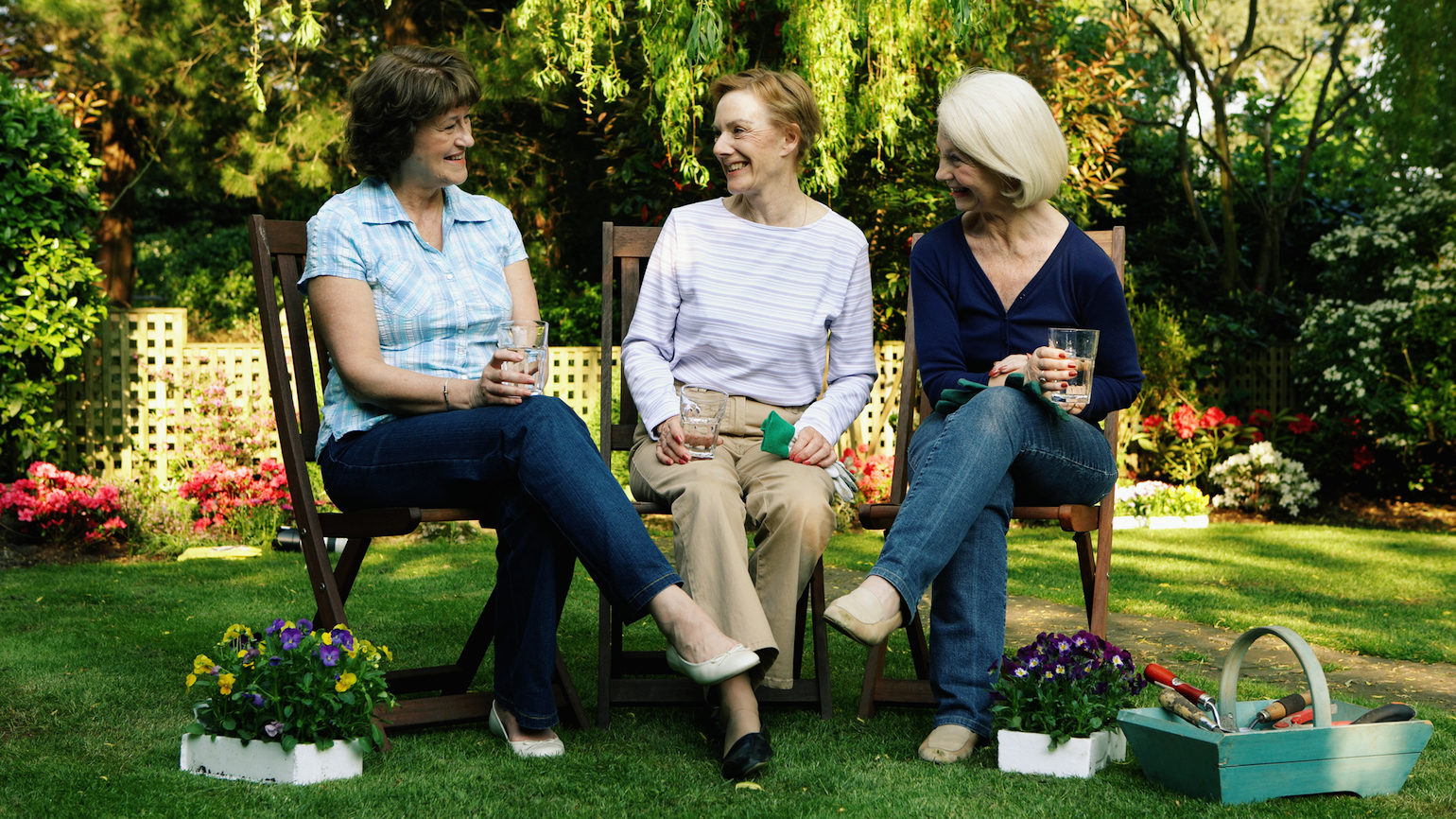
This summer, I had a few conversations with neighbors about our gardens. Some of these neighbors are already my friends, but others are just folks whose front-facing plantings I’ve wondered about, admired or downright envied. When the opportunity presented itself, I led with, “Ooh, can we talk about your garden?”

Just before a heat wave conspired with a drought to fairly well decimate many of our gardens, I reached out to this group of neighbors and wondered if anyone was interested in taking a stroll to visit our respective growing spaces.

The idea wasn’t to present price-of-admission-worthy gardens, but to visit together with neighbors who share a love of getting our hands dirty. Things we were encouraged to do: celebrate garden surprises and successes, lament failures, shake our fists at bunnies, squirrels and other plant-hungry creatures, ask for advice and offer our best practices.

As a new-to-each-other group of neighbors of all different ages, we strolled, we chatted, we learned. We ended up with a handful of seeds from columbine plants ready to drop their pods. And we landed in one neighbor’s backyard for easy refreshments and to keep the conversation going.

I came home that evening filled with joy and gratitude—not only for the pageful of tips, hacks and native, pollinator-friendly plant ideas I had jotted down, but for the feeling of community connection that always comes with getting to know your neighbors.

Unlike a gathering at a communal space like a park, this was more intimate because we let each other in—literally into the backyard, where we shared the parts of our outdoor spaces that aren’t visible on a walk around the block, but also into the parts of ourselves that are vulnerable, the parts that make mistakes by planting too close or too sparsely or water too much or forget to weed or pull “weeds” that are actually flowers.

A garden is a sacred space, a living experiment, a place to use our bodies and explore our feelings and learn bit by bit how to care for whatever spot on the planet we call home. Inviting someone into your garden is an act of trust, a gesture of friendship and shared stewardship. After all, my neighbor’s flowers attract butterflies and bees that also enrich my garden. And spending time together in our sacred garden spaces nourishes the growing places inside each of us.

As the season tips toward fall, my neighbors and I plan to gather again to discuss favorite bulbs, swap plants we’re ready to re-home and share the last of our vegetable harvests. Strolling to peek at each of our gardens as they lean towards their winter’s rest, we’ll hold fast to the seeds of next spring, a season that will be all the more beautiful because we will watch it bloom—through our own efforts and those of our neighbors.

A Grateful Person Is a Happy Person

Psychologists have found that simply asking people to identify specific aspects of their lives for which they are thankful, alters their perspective in a powerful way. A grateful perspective impacts our mood and stops us from allowing negative thoughts such as resentment, envy and regret to take over.

When we take a moment to appreciate the good things in life such as a job, home, friends, and family, we feel good about the present and hopeful for the future. The list of what makes an individual appreciative varies from person to person. But the key for all people is to prevent the bad things from getting in the way of the good things. Even in tough times, if we look hard enough, we can find the good.

Research has proven that jotting down positive events can cultivate gratitude in our lives. After doing this myself, I found that expanding the list to include positive people, experiences and all other things that I am truly thankful for, has increased my positive outlook by far. I suggest you do the same. A biblical proverb states, “A cheerful heart is good medicine, but a crushed spirit dries up the bones.”

Be inspired each day with Daily Guideposts 2019​

There are many ways to cultivate gratitude: writing, praying, singing, drawing and more. In Psalm 103:2 it says, “Let all that I am praise the Lord; may I never forget the good things he does for me.” What good things has the Lord done for you? Please share what you are thankful for and make every day a day of Thanksgiving.

Lord, thank you for the joy that fills our hearts when we think of all the good in our lives. Help us to make gratitude a daily practice.

A Gift for Jesus This Christmas

Earlier this week three of our grandchildren came by to bake cookies and to hang out for a few hours. Within a couple of minutes of their arrival, they gravitated to the Christmas tree.

Eden, 4, asked, “Grandmama, who gets that big present?”

Before I could open my mouth to reply, her twin, Ethan, chimed in, “Is this one for me?”

Anna is our oldest grandchild at 11. She can read now, so she squealed, “This one is for me!” as she looked at one of the boxes.

Then just about every present under the tree was brought to us, one by one, along with a constant stream of questions about whose gift they were holding. Those kids could have done inventory!

Read More: 8 Classic Christmas TV Specials We Love

Gifts are a big part of Christmas. Just ask any kid (or one of us big kids). We put a lot of effort into buying our gifts, choosing just the right one for each person and then wrapping those presents in festive paper.

But I realized: It’s His birthday that we’re celebrating. Why don’t we give gifts to Jesus at Christmas?

So here are my gifts for Him this year:

G – I’m going to GIVE unto others in His name. And as I do, I’ll share about God’s goodness and faithfulness and His most perfect gift that’s available for all—His gift of love wrapped in swaddling clothes, lying in a manger.

I – I’m going to INVITE others to share Christmas with my family. God’s welcome mat is out for everyone. Why shouldn’t I do the same? Senior citizens, single parents and those far from home and family are often alone at Christmas. I can easily set extra plates on the dinner table and offer a warm welcome as we celebrate the reason for the season.

F – I’m going to FIND opportunities to spend time with Him. That’s one of the most special gifts I can give. Finding time to read His love letter to me, to talk with Him and to be still long enough so that I can hear His whispers to my heart.

T – I’m going to give Him THANKS for all He’s done. God’s been so good and blessed my family so much that I could never thank Him enough, but I can try. And I hope that my words of praise will be music to His ears, almost like a Christmas carol from my heart to His.

What gift could you give Him this year?

A Garden Miracle?

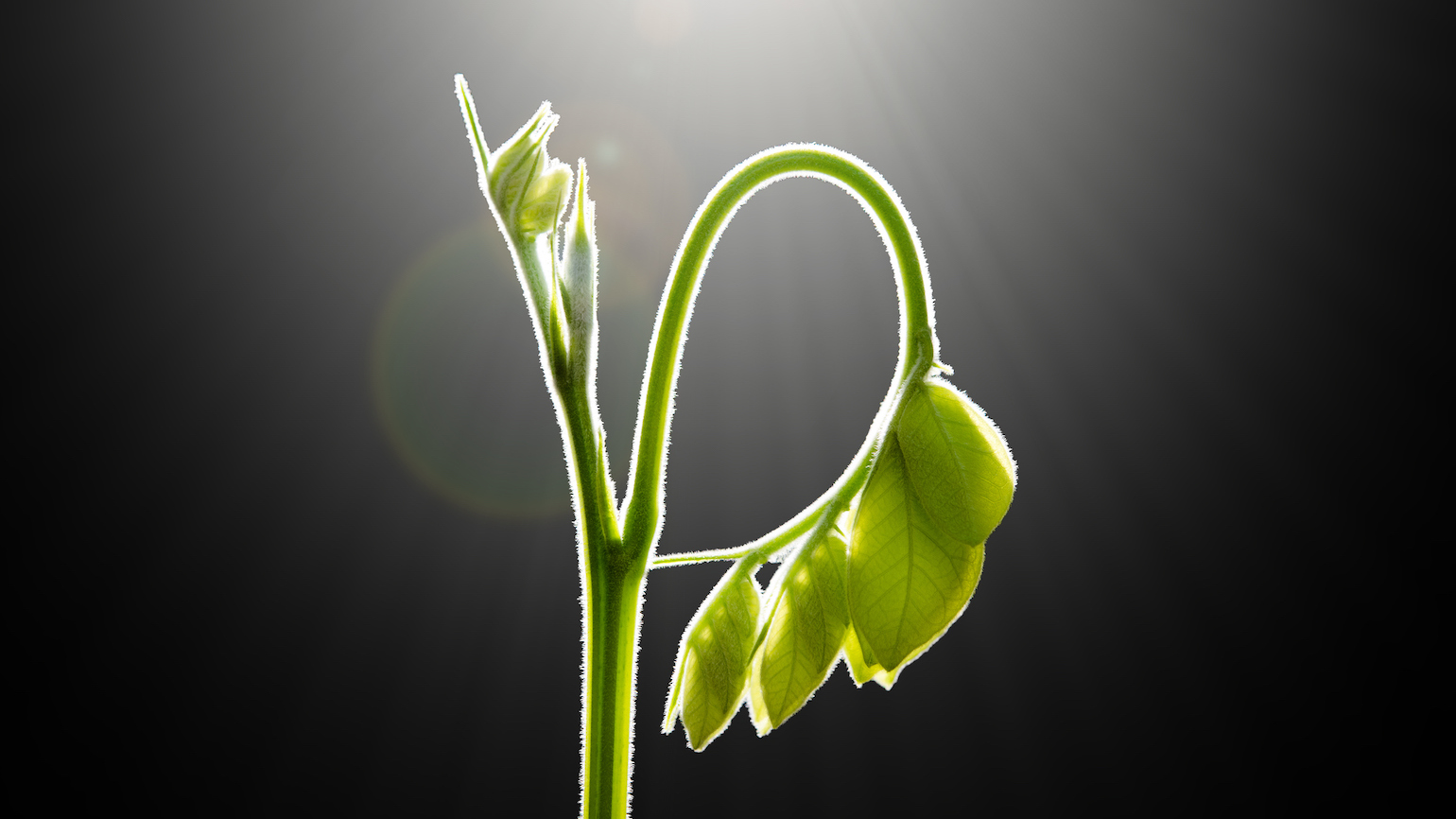
A funny thing happened about a month ago when I opened the double doors of a small storage area in the back of my house where I keep my garden supplies during the long New England winter. There, on top of a tower of dirt-filled pots, was a flash of green, topped with two of the most unlikely frilly pink flowers you’ve ever seen.

A quick examination revealed that, in fact, this was a living, growing plant, with no explanation to account for its existence.

How was this possible? The unheated space had been sealed up all winter, save for the times we opened the doors to pull out snow shovels, salt or sleds. It was still cold outside. And hadn’t I removed all growth from my plants before storing the pots last fall?

Could this be one of those garden miracles I’ve read about?

Once I caught my breath, I looked around and discovered something approaching a plausible explanation—there are small glass panes along the top of the double doors, and it’s possible that a ray of sun beamed directly on that pot, giving it just enough light and warmth to enable it to inhabit its own personal greenhouse.

In the weeks since, I’ve slowly been bringing my pots outside to warm them up and get them ready for planting. My “miracle plant” has dropped its flowers, but it is still lovely, green and alive. And while I’m not sure a miracle was at work in my shed this winter, I am also no less in awe of the lessons this wonderful plant has to teach.

For one thing, I am moved by the happenstance of the whole thing. Had I started to stack my pots six inches to the left or right of that spot, the plant might not have gotten that narrow beam of light. Had I pulled out the roots of the plant instead of cutting back the greenery in late fall, there would have been nothing but dirt in that pot. Who knows what other happy accidents my seemingly inadvertent actions might yield?

But there’s something else that inspires me about this—just how little light and warmth it took for this plant to move forward, grow and flower. I’m not saying we should be stingy with love and kindness and all the other bright, warming things we do for ourselves and others. But isn’t it comforting to consider that just a drop of sunshine can enliven and awaken a day, a place, a life?

When it comes to positivity, a little goes a long way. Just ask my little miracle plant.

A Fun, Easy Craft that Will Reduce Your Plastic Bag Use

Single-use plastic bags are harder than we might think to banish from our daily lives. Even if we bring bags into the grocery store, we’re still likely to gather produce in plastic sacks, plus pick up a loaf of bread, frozen vegetables or any number of other items that are kept fresh inside plastic bags.

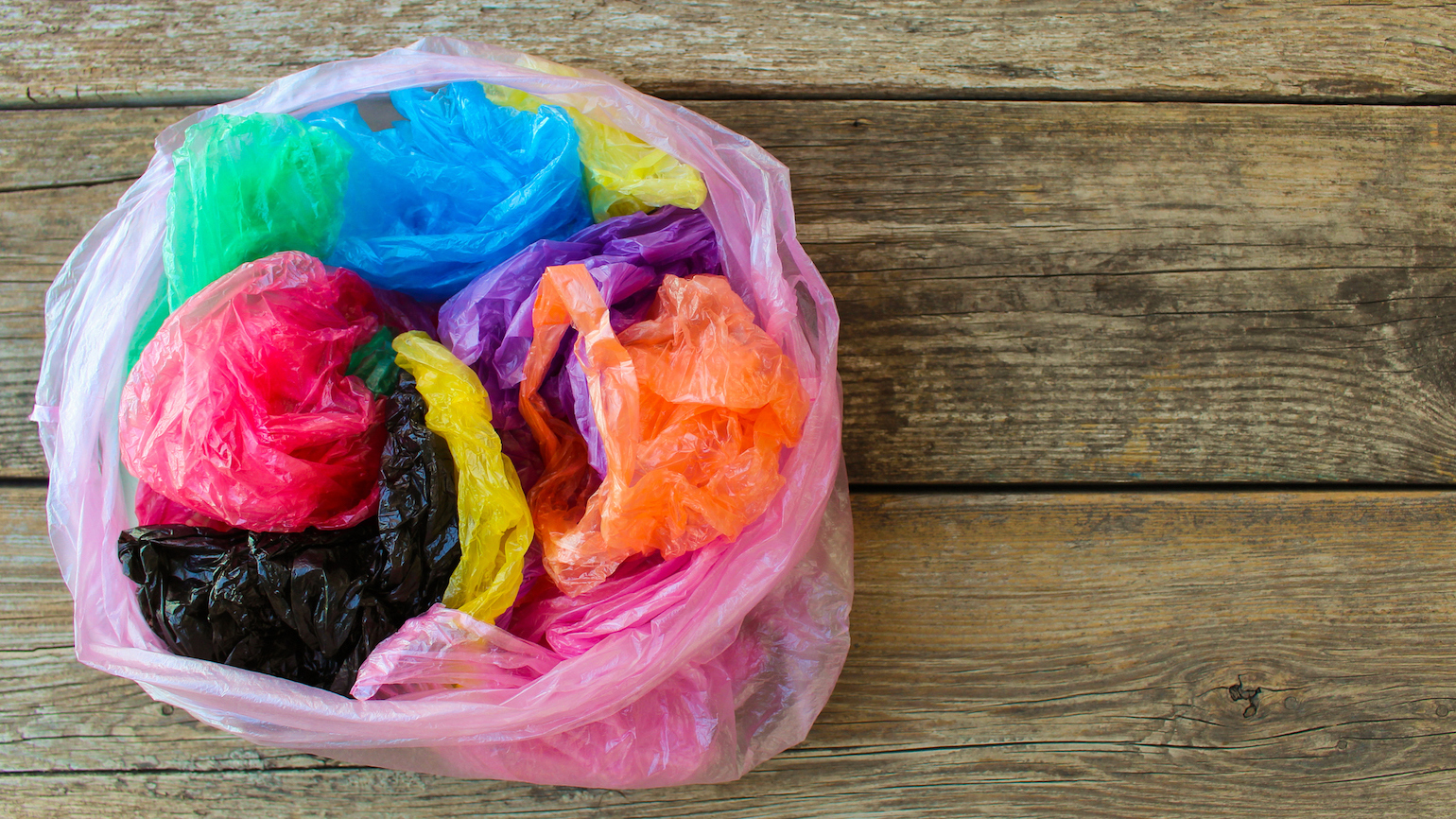
If you’re like me, you have a bag full of these plastic bags stashed somewhere in your pantry or garage. These can come in handy when you need to transport something and don’t want to bring a new bag into the world. But each of us can and should do more, at a time when oceanic scientists tell us that as many as 5.25 trillion macro and microplastic pieces are currently floating in the open ocean. Though these plastics do degrade, they do not biodegrade—they are here to stay.

My town’s cultural council has partnered with an artist-in-residence who is teaching us as a community to collect single-use plastic bags and create “plarn,” or plastic yarn with them. The plarn can be crocheted into artistic sculptures….but also into highly practical items like sleeping mats for the homeless, and, in a delicious twist, shopping bags.

Plarn is easy and fun to make. Here’s how.

Simply take a clean plastic bag and smooth it out flat. Fold it the long way in half and in half again. Cut off any handles plus the seam along the bottom of the bag—you should have a tube-shaped object in front of you. Now cut the tube into one-inch strips, each of which is a loop. When you’ve cut a pile of loops, link them end-to-end as you would with rubber bands. You can watch a 2-minute video like this one for easy-to-follow instructions.

Once you’ve created yarn, you can get out your crochet hook! You can make shopping bags, sleeping mats, rugs and other decorative treasures.

A craft project that can help protect the oceans? I’m on board. Are you?

A Faith Fueled by Forgiveness Bonds Victim and Assailant

I shifted on the couch, searching for some way to sit without my legs and back aching. I’d lived—if that was even the word—with this constant pain for four years now. But that was only part of what was bothering me tonight. I sat for an hour, pen poised above a sheet of white notebook paper inside a binder. I needed to write this letter, wanted to believe it could make a difference. But the words wouldn’t come.

It was Marian, my wife, who had urged me to do this. “You can’t go on keeping this inside of you,” she told me. There was plenty I wanted to say. I wanted the slimeball who did this to me to know my agony. I wanted to tell him what he’d taken from me—my job as a Wyoming state trooper, my self-worth, my very will to live.

But the worst was the anger, a raw, festering hatred that smoldered inside of me. If only I’d killed Mark Farnham when I’d had the chance. At least I’d have that satisfaction. So many times I’d asked God to take this burden from me. Instead, nearly every waking hour, and then at night in my dreams, I relived that day.

I was eating lunch at the Country Kitchen in Rock Springs, taking a break from working the fender benders occasioned by a March snow. I hadn’t bothered wearing my bulletproof vest. I knew I’d be spending most of the day writing accident reports.

My radio crackled: bank robber in a tan vehicle possibly headed up Highway 430. I swallowed the last bite of my chiliburger, extra onions, left my money on the table and rushed out.

Just past milepost 13 I saw a car matching the description and pulled it over. I hit the mike to call dispatch with my badge number: “Rock Springs, 105, a tan Mercu—”

BOOM! A bullet pierced the windshield and tore into my eye. It felt like it was on fire. I opened my door for cover, only to slump onto the passenger seat, my service revolver underneath me. “Shots fired! Officer down,” I screamed into the radio. I looked up. There was a man standing over me. Mostly I saw the barrel of his pistol. He pumped four more bullets into me, then ran.

Somehow I lurched out of the cruiser and emptied my .357 Magnum into the back of his car as it sped away. Blood was everywhere. Stay calm, I told myself, lowering myself to the pavement. I’d never been one to pray, but now I begged God to look after me and Marian. We’d been married only six months. We were just kids in our twenties. Let her know I love her, I prayed. I felt as if I were drifting away from myself. Then the world went dark.

I woke the next morning in intensive care. My father was holding my hand, Marian next to him. They told me the doctors had removed my eye, part of my liver and most of my intestines. One of the bullets was lodged against my spine and couldn’t be safely removed.

“It’s a miracle you’re alive, Stephen,” Marian said.

At first that’s how I saw it too. Two months later I was back on the force. A few bullets weren’t gonna keep me down. I came from tough Wyoming stock. I could take care of myself. But inside something was wrong. Something I didn’t know how to fix. Patrolling filled me with dread. My hands trembled when I pulled someone over. I’d never known such fear. It was overwhelming.

And so was the physical pain. I took pain pills to get through the day. At night I drank beer until I fell asleep. That’s when the night terrors would come: blood raining down on me. Every night I woke screaming and crying, Marian holding me. “I’m right here,” she’d say. “It’s going to be okay.” But I knew better.

Four months after he’d left me for dead on that highway, I sat in a courtroom and watched that bank robber, Mark Farnham, plead guilty to attempted second-degree murder in exchange for a life sentence. I started shaking with rage. A life sentence! Wasn’t that what he had given me? He deserved to die for what he’d done! One of my shots had hit him in the shoulder. If only I’d had more time to aim…

One evening I pulled over a motorist for speeding. I went to the car and asked for his license. He reached behind him and I was sure I saw a .44 Magnum in his hand. I drew my weapon. “Get out of the car,” I ordered, my revolver inches from his head. I looked again. Not a gun, a wallet. He’d simply done what I’d ordered him to do.

That was it. I went on disability. I wasn’t up to being a cop, physically or mentally. Day after day I hobbled around the house, mostly to get another beer from the fridge. What good was I to anyone like this? I started asking myself. Why hadn’t God just let me die that day? I was desperately depressed. I met with the police chaplain. I told him about the anger and the pain and how hopeless my life seemed. “Have you forgiven Mark Farnham?” he asked.

Forgiven? He had to be kidding. Forgiveness wasn’t even on the table. I could only hope that somehow Farnham was suffering as much as I was.

The chaplain’s eyes searched mine. “I don’t mean with words,” he continued. “You need to forgive him in your heart. That’s when you’ll find the healing you’re looking for.”

That evening I told Marian the chaplain’s advice. “Forgive that guy? Have you ever heard anything more ridiculous?” I said.

She looked at me for a long moment. “All I know is you’ve got to do something,” she finally said. “This isn’t getting any easier.”

Then, out of the blue, Marian joined a church. “I want to meet some people,” she said. “I love you, Stephen, but we can’t go through this alone.” Every Sunday she would come home and tell me what the minister had said about God’s love and the power of prayer. “I wish you’d come with me,” she said. Why not? It’s not like I had anything else to do. And I wanted to be with my wife.

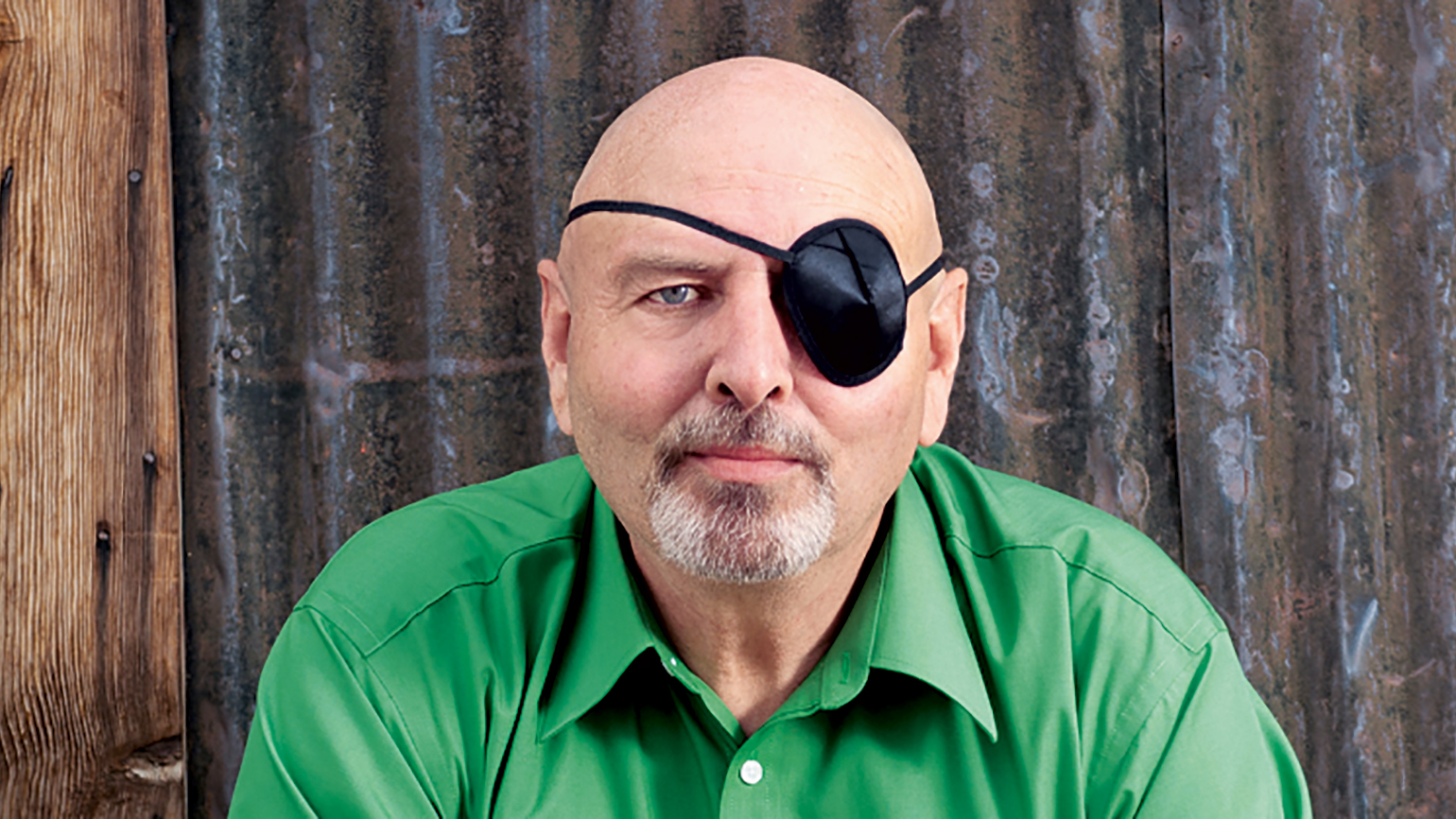
It felt good to get out of the house. The congregation was welcoming. No funny looks at the man with the eye patch and the limp. I wanted to believe the minister when he said we could turn our cares over to God. But even me? Surely he meant people who hadn’t been shot five times and had their future stripped away from them.

I went back, mainly for Marian. One Sunday she walked to the front to get baptized. I was stunned. I saw a change in her. She was stronger, more hopeful. “We’re going to get through this,” she told me so many nights. “God isn’t through with you.” So that Easter I got baptized too. It couldn’t hurt, right? But by that afternoon my body was aching, my stomach still churning with emotions I couldn’t handle.

One Sunday the minister preached on the redeeming power of forgiveness. “Don’t do it for the other person. Do it for God, who forgives all men.”

After church Marian asked me, “Do you think you’ll ever be able to forgive Mark Farnham?”

“How can I,” I snapped, “when I always feel like this?”

But deep inside a feeling took hold, as if God himself had just thrown me a lifeline in that sermon. “What happened to you that day was a crime,” Marian said. “What’s happened to you since is a tragedy. God made sure those bullets didn’t kill you. But your anger is going to do what those bullets didn’t.”

She got me a binder, a piece of paper and a pen. “Put it in words,” she said. “Let it all go. Give it up to God. He’s the only one who can handle it.”

But what to say to Mark Farnham that I hadn’t already said a million times in my head—that I hated him and blamed him for everything that had gone wrong in my life. All at once I was back on that highway, bleeding, rolling on my back, asking God for help. But was I willing to accept it now when I needed it as much—no, even more—than that day I nearly died? Physically surviving was just the beginning. Now it was my spiritual survival that was in critical condition.

My pen poised above the paper, I felt the most incredible sensation, the anger leaving, a transfusion of… Dear Mark, I just want to share my joy with you, I wrote, the words coming fast. If you haven’t already, won’t you join me in Christ’s love?

That was it. That was the secret! The way to defeat hate is with love. It was as if by extending a hand I’d loosened the grip inside me. My body hurt, but there was inner peace, a comfort in knowing God was still helping and had always been even in my darkest struggles.

I dropped my note in the mail. I didn’t expect to hear anything back. That wasn’t the point. The world seemed a different place. That morning I marveled at the beauty of the sunrise and the power of the good Wyoming wind. Felt the soothing touch of my wife’s hand and heard the melody of her laugh. God’s blessings too numerous to count.

A few days later a thick envelope arrived from the state penitentiary, an 18-page letter from Mark Farnham. He told me how at the age of 24 he’d moved west, lured by the prospect of good money in the Wyoming oil fields. But he’d gotten addicted to cocaine and soon owed twenty-five thousand dollars to drug dealers. He panicked, bought a pistol at a pawnshop and robbed a bank. Something snapped when I pulled him over. Fury and fear took over. He would live with the guilt of that day until he died, he said. “I don’t deserve the gift you’ve given me, Stephen.”

Later that year I went to a revival at the prison. Mark was wearing blue jeans and a white T-shirt. Standard prison gear. He looked up at me, squinting in the sun from behind glasses. Not a monster at all. Just a guy who’d struggled on his own, gotten scared and didn’t know where to turn. Like me.

We wrapped each other in a huge bear hug, the hatred I’d once felt now gone, vanquished by the love of a God who doesn’t give up on us even when we give up on ourselves. “I’m glad I didn’t kill you,” I said.

“Not half as glad as I am that you’re alive,” he said.

That was nearly 30 years ago. I’m proud to count Mark as one of my best friends. I visit him often. Every year I go before the parole board and ask for his release. I don’t know that it will ever happen. But I’m forever thankful for the reprieve we’ve already been granted. I’ve learned that only God holds the key to the prison in our hearts.

Download your FREE ebook, Mysterious Ways: 9 Inspiring Stories that Show Evidence of God’s Love.

Advice from a Waffle House

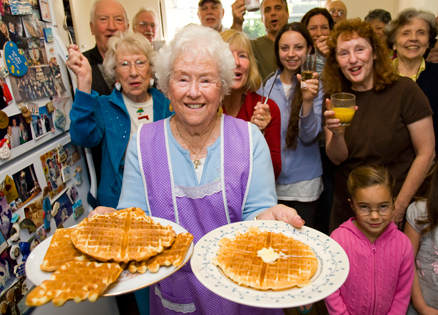
A few minutes before nine Saturday morning. I straighten my apron and scan the table.

Two tubs of butter? Three bottles of maple syrup? A 10-cup coffee pot? Yup, all set.

I turn over the sign on the front door: “Barb’s Best Ever Waffles, Open.” Soon, folks will be arriving for an all-you-can-eat breakfast.

A waitress at a waffle house, I’m not. But each Saturday morning I welcome friends, family and neighbors into my kitchen for coffee, conversation and all the crispy, buttery waffles they can eat.

It all goes back to when my husband, Gil, and I were raising our four children in Van Nuys, California. Oh, how we cherished Saturday mornings! It seemed like the only time we weren’t rushing off somewhere.

Weekday mornings were hectic, making a quick breakfast for our two boys and two girls, packing their lunches, getting them off to school on time. Sunday mornings were for church.

Saturday mornings, though, were all about long, leisurely breakfasts. The kids only wanted one thing: waffles. Extra time in the morning meant I could play with different ingredients like Bisquick, millet flour and buttermilk.

One morning I set a plate of waffles down only to look up and see four sets of hands grabbing for the last one. That’s when I knew my recipe had turned out just right. We’d linger at the table, laughing, sharing stories—the kids with syrup dripping from their chins.

“They look like hummingbirds,” Gil and I would joke. Time seemed to stand still. There was no sense of urgency, nowhere to be except with each other.

Over the years, though, a lot of things changed. The children grew up, moved out and started their own families. Then, in my fifties, I lost my beloved Gil to cancer. The house seemed so lonely without him.

I knew I had to get out, so I joined nearly every club in town: the women’s golf team, the welcome wagon, the church choir. Anything to get me around people. I made an effort to chat more with my neighbors. And I never stopped making waffles. Sometimes my kids or grandkids would join me; other times, I’d whip up a batch just for me. That’s how Saturdays were for a while.

Then, one day it hit me: Maybe I should invite some of these new friends over for waffles. What better way to not feel so alone? I asked several women from the choir. We had a great time that Saturday. That gave me the courage to invite a few more members of my church the following week.

Well, word of mouth must’ve spread, because more and more folks turned up each Saturday.

“I’ve heard you make the best waffles in town,” they’d say. It opened the door (literally) to a Saturday morning neighborhood tradition, one that my new husband, Ernie, happily joined in too. Six years ago I moved to a new part of town, and it’s followed me here too.

I never know how many people to expect (record attendance is 27), but I like surprises. The regulars choose their favorite mugs and help themselves to coffee or juice, and the newcomers seem to make themselves at home pretty quickly.

So far, I’ve worn out three waffle irons. Most folks eat two waffles. The record is seven, held by my athletic grandson, Will, who usually follows breakfast with surfing (it’s a wonder he doesn’t sink out there!).

My guests are like family. One neighbor who comes with her son, says, “You know, my son and I talk more during your waffle breakfast than we do all week.”

Another couple and their gardener patched up their differences in my kitchen and parted as friends. Guests have traveled from as far away as Germany, Japan, Bhutan.

A new family just moved in down the block. I found their two young sons on my doorstep one Saturday. “Are you the lady who gives out free waffles?” they asked. I couldn’t help but smile.

Everyone washes their own dishes, and some stay and sit a spell. They share their aches and pains, their joys and sorrows, their prayers. Every now and then, I stop and listen. To the voices floating through the kitchen, the laughter, the young voices mixed with old. Brings back memories of those sweet, unhurried Saturdays when my children were small.

Come noon time, I turn over the “Barb’s Best Ever Waffles” sign on the door and say a prayer of thanks. For Saturdays, for waffles and for the fellowship they provide.

I just turned 94, and serving others really keeps me going. When you open your heart and your home, you make room for more than just guests. You let the blessings in too.

Try making Barb’s Best Waffles yourself!

Advice for Success: Kick!

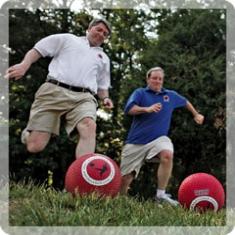
Ten years ago, Jimmy Walicek and David Lowry were out with their friends one night and got to wondering if there was a fun way they could meet new people. Most of the guys had made close friends in college through their coed fraternity, but in the working world the only social outlet seemed to be softball, which often turned super-competitive and excluded non-jocks.

Then somebody mentioned kickball, “and the idea went around like a blazing fire,” recalls Jimmy. “We tested it out with friends and found it was just as fun as we remembered.” In just a month, 150 people were playing. “Apparently we hit a nerve,” says David. “Turns out a lot of people wanted an inclusive post-collegiate social group.”

At first they managed the club during off-hours from their jobs—information technology for Jimmy and public administration for David. After three years, though, “a lot of people” had ballooned to 400. So the pair, along with pal Johnny LeHane, decided to organize and run the World Adult Kickball Association full-time.

While there’s “Adult” in the organization’s name, there are decidedly kid-like aspects to the game that they’ve maintained. For instance, do-overs are allowed if both teams agree. The founders try to keep the competition low-key and foster fun by making post-game parties part of the package.

Leaving good jobs to play kickball might seem crazy to most people, but for David and Jimmy, it has made a lot of sense. Now WAKA has a staff of 70 to organize the 32,000 registered players in 23 states and is even gaining popularity in the Middle East, thanks to a couple of kickballs the guys sent over to our troops in Iraq to help boost morale. WAKA supports kids too—each division picks a children’s charity to donate time and money to throughout the season. To date, WAKA teams have contributed more than $135,000 to nonprofits.

Besides making friends, getting exercise and giving, there’s something else happening on the kickball fields of America. Dating! David says he’s been to at least a dozen kickball weddings and is now hearing about their kickball babies.

“For me it’s been the ability to do something I’m passionate about,” says David, WAKA’s executive director. “Making a difference in people’s lives, knowing this organization helps people socialize, network and sometimes even get married. It’s the modern-day version of golf. It’s relaxed. The whole thing is funny to begin with.”

David and Jimmy’s Tips

1. Realize there are many ways to achieve your goals.
We wanted to help make people’s lives better, easier and more enjoyable. We never envisioned kickball would be the way to do it.

2. Determine what you want as an end result.
Doing so will open your eyes to the many roads that can take you there.

3. Impossible is an opinion.
You’re the one who decides what’s possible.

A Different Kind of Thanksgiving

“I think you should pick up Daniel from play school,” my husband said to me over the phone. “There’s a storm on the way.”

I didn’t see any signs of a storm. But since Dennis had insisted, I drove to pick up three-year-old Daniel, taking along eight-year-old Drew. By the time we got back home, 10-year-old David was doing his homework. Although the sky was gray, the weather wasn’t looking all that threatening. What had Dennis been so alarmed about?

I had some phone calls to make before dinner, to remind women of a meeting at my house the next morning. As I dialed, I looked about contentedly. The antique dining table and chairs had been polished to a fine glow. I’d taken out our best china, crystal and holiday napkins, and arranged them on the orange linen tablecloth. I felt proud of our nice house and all our fine possessions. Thanksgiving was one week away. How much I had to be thankful for!

As my first call was answered, the lights began to flicker. On the other end of the line my friend said, “Debby, the storm is here. We should get off the phone.” We hung up quickly, and I called the boys to help me go through the house and turn off lights and unplug appliances.

Suddenly the power went off. The house was plunged into darkness.

I took two candles from my Thanksgiving centerpiece, lit them and herded the boys into the den. But as we stepped in the doorway, both candles abruptly went out.

And then I heard a terrible roaring outside, a thumping, like a high-speed train thundering over joints in the tracks. A tornado!

“Run to the bathroom,” I told the boys. “Run!”

David took off, and I stumbled after him, shoving the two younger boys ahead of me. By the time I got to the bathroom, David was already facedown in the tub. I rushed to open the window, as I’d been told to do if a tornado struck, and as I shoved it up, the wind sucked the slatted blinds completely out through the opening. Now the noise was unbearable.

Drew and Daniel had run back out into the hall in a panic. I went after them, pushed them down and threw myself over them. “Pray, kids,” I cried. “Ask God to protect us.”

There was a deafening explosion. My long hair was lifted upward. Pellets of some hard substance stung my body, and my mouth was filled with the taste of dirt. A strong smell of pine burned my nostrils.

And then everything was quiet. We lay there, too frightened to move, until I dared to open my eyes and look. Over my head the sky was filled with wild slices of lightning. The roof was gone.

Daniel and Drew squirmed beneath me. “Help me get up,” I said, hugging them both. There were three doors just over our heads, and in a flash of lightning I saw that a big bureau from one of the bedrooms was now next to us in the hall. We kicked and dislodged the doors enough to crawl out.

“David!” I called out. “Where are you?”

No answer.

In the bathroom, all I could make out was a mound of bricks, ceiling tile and insulation. David could have been sucked out through the window just the way the blinds had been! I screamed his name.

There was a rustle, then a crash of plaster. Under all the junk moved a leg in red jogging pants. “Mom, I’m okay,” a voice called.

All that remained of our house was the small uncovered space, about 8 by 10 feet, whose walls surrounded me and my children. We’d been shielded from the flying debris by the doors that had fallen over us.

Through the driving rain I could see that other houses were still standing. Electric wires hung like spiderwebs. But no one was stirring.

We picked our way through chunks of brick and pieces of wood, across the street to the home of our neighbors, the O’Donnells. With both fists I beat on the door.

From inside I heard a muffled voice, then Martha swung the door open and we grabbed each other and clung together. She and her children had been huddled in a closet. We stared in disbelief at our neighborhood. Many homes were damaged, but mine was completely destroyed.

Slowly other neighbors came out. Rescue vehicles arrived. Dennis drove up and rushed to throw his arms around me and the boys. Together we surveyed our property—what was left of it. In the debris I could see the shattered remains of crystal and china, the splintered remnants of antique furniture. I was devastated. “Dennis, there’s nothing left!” I wailed, bursting into tears.

Still in shock, we went to Wal-Mart to buy some dry clothes, and I got a look at myself in a mirror. My hair was matted and almost gray from the insulation, glass fragments and pine needles that had blown into it. (Before hitting us, the tornado had roared through a grove of evergreen trees.) Dirt was ground into the pores of my skin.

“We were in the tornado,” I explained to the cashier. “Will you take a check?”

“Sure,” she smiled. “Why don’t you make it out for a little extra? You folks can probably use the cash right now.”

We were dirty and wet, but the clerks could not have been nicer. The manager kept the store open past closing—and gave us a discount on all we bought.

From there we went to Days Inn, the first motel we found that still had electricity. The desk clerk promptly advised us that we would be their guests at no charge.

From the motel I telephoned Charles Freeman, our pastor, and told him of our plight. His first words were, “What can we do for you? What do you need?”

“We need people to help us go through the ruins to see what we can salvage . . .” I told him, my voice breaking.

“We’ll be there,” he promised.

By 8:15 the next morning our friends from church had arrived, along with my husband’s coworkers. Soon some three dozen volunteers were sifting through the mess that had once been our home.

The women at church cooked us a hot dinner and arranged a place for us to stay, stocking an out-of-town friend’s house with everything we’d need. They outfitted us with clothes and purchased backpacks so the children could go back to school.

Strangers came with fruit baskets, casseroles and cookies, pans and kitchen utensils. They brought us clothes and even remembered to bring hangers. A friend, knowing of my love for cooking, gave me a complete set of pots. One brought me a purse. “Every woman needs a purse,” she said. In it she put a pair of earrings, a lipstick, a scarf, and a handkerchief attached to a note that said, “Debby, this is for all those tears.”

As friends and neighbors came forth to lend and give us plates and eating utensils, even the simplest cracked dish looked wonderful. One family even gave us a dinette set they were no longer using. I looked at our beautiful antique dining room furniture lying in splinters and thought how grateful we were to have that dinette set.

We all went to my father’s for Thanksgiving that year. It wasn’t the kind of big to-do I’d been planning the week before, but it was the best Thanksgiving we’d ever had. How much I had to be thankful for!

A Different Kind of Strong

I squeezed my 300-pound frame into the seat at Texas Stadium. Far below me my Dallas Cowboys teammates were on the field warming up to face the Kansas City Chiefs, a critical mid-December game. It killed me not to be down there.

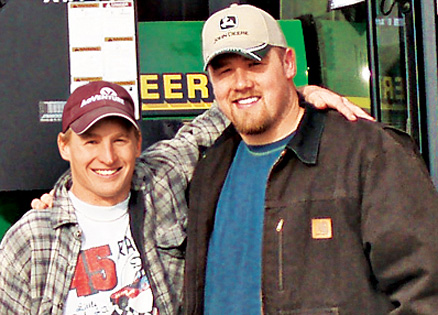
I glanced at the guy to my left, frail, thin, a cane resting against his leg. He put out a bony, calloused hand that vanished in mine. “Ryan Odens,” he said. “You look like you’ve played some ball.”

“Actually, I’m an offensive lineman for the Cowboys,” I said. “Just on the practice squad. Coach doesn’t even let us on the sideline on game day.”

“Man, wait’ll I tell everybody back in Iowa I sat next to a Cowboy,” he said.

I forced a smile. His enthusiasm only reminded me how far I had to climb. Fourteen weeks into my rookie season, I hadn’t played a single down. I knew what I had to do: get stronger, hit harder, read the blitz quicker.

I tried not to lose hope. But already I was on my second team. Dallas had just picked me up from Detroit. If I failed here, next season I’d be watching the games on TV with Mom and Dad in Gig Harbor, Washington. Would I ever get to start in the NFL?

Dallas got the ball first. The Cowboys QB that day, Drew Bledsoe, took the snap and threw a bullet to a wide receiver streaking downfield. Ryan struggled to his feet with his cane and pumped his free hand in the air. “All right!” he yelled.

Man, Ryan was a big-time fan. He’d hop up and yell every time the Cowboys made a big play. Whatever had happened with his legs didn’t keep him from showing his spirit. We talked between downs. Finally, I said, “Do you mind my asking what happened to you?”

“Rolled my truck five years ago going around a curve,” he said. “Broke my spine, five vertebrae. The doctors said I’d never walk again. Turned out it was the best thing that ever happened to me.”

Just then a Dallas running back broke free for the big first down and we never got back to the accident. The Cowboys scored the winning TD with 26 seconds to go. We stood to leave.

“Let me give you my number,” Ryan said. “If you’re ever in Iowa give me a call. I’d love to show you my farm.”

“Sure,” I said, giving him my number. Iowa? I didn’t expect I’d be passing through there anytime real soon.

Day after day I put in extra hours in the weight room, Alabama blasting on my iPod. Then I’d go back to my apartment and pore over the playbook until I fell asleep exhausted.

Was I making any headway? I was going up against the best of the best. Even my prayers seemed to fall short of the mark.

The Cowboys lost two of the last three games and missed the playoffs, not that I had anything to do with it. I flew back to Detroit to clean out the apartment I’d rented there. I’d just tossed the last box in my car when my cell phone rang.

“Hey man,” a voice on the other end said, “it’s Ryan Odens. From Iowa. We met at the Cowboys-Chiefs game. I figure you’re heading home soon. Why don’t you swing by here on the way?”

“Uh, well, I guess I could,” I said. “Just for the night.”

I was bleary-eyed when I pulled up to his house in Sibley, Iowa, after 12 hours on the road. Ryan met me out on the porch. “I hope you’re hungry,” he said. “We’re going to my mom’s for dinner.”

He hobbled down the stairs to his truck, his cane barely enough to support his wobbly legs. But he just kept at it. I climbed in the passenger side. “What do you grow here?” I asked.

“Corn and beans,” he said. “My brother and I farm about twelve hundred acres. I couldn’t have done it without Easter Seals. They paid for a hoist so I could get back on my tractor.”

He popped a CD in the player. Alabama’s “Can’t Keep a Good Man Down” pulsed through the speakers—one of the songs I lifted weights to. I thought about how difficult it was to push myself day after day. Where does this guy find the strength?

We got to his mom’s house. Ryan opened the front door to a living room full of people. His mom came in from the kitchen. “We’re so glad you could make it,” she said. “I hope you like roast beef and mashed potatoes.”

“How’d you know?” I said.

We sat down and Ryan said grace. I took some meat from the platter, then took a bite. It practically melted in my mouth.

“So what’s it like being on the Cowboys?” someone asked. It felt odd, being the center of attention. Who knew if I’d even make the team next year?

But they didn’t seem to care. Soon they had me talking about growing up in Gig Harbor, my dad’s veterinary practice and his creaky old Fleetwood.

It was close to midnight when Ryan and I headed back to his place. I was dragging, and Ryan had to be tired too but he was belting out the words to “Forty Hour Week.” Amazing how he kept going and going. There was something I’d been meaning to ask him…

“That thing you said back in Dallas about the accident being a good thing,” I said. “What did you mean?”

He was quiet for a moment. “I thought if I just pushed myself hard enough I’d walk again,” he said. “But I couldn’t. I wasn’t near strong enough, physically or mentally. It had been three months. I didn’t know where to turn.

"One night I cried out to God. I said, ‘Show me you’re really there.’ The next day I took my first step in the therapy pool. Mom was there, like she’d been all along. My family, so many people in town—they gave me so much support.

"A few months later I was driving a tractor again. It was tough. Still is. But I know I’m not doing it alone.”

I peered out the window into the darkness. All these months I’d been comparing myself to pro football players—huge, powerful behemoths. And yet it was this skinny Iowa farmer that I felt a real connection with.

The next morning I woke early and went out onto the porch. The crisp winter air felt fresh and invigorating, inviting. Before long Ryan came out. “Well, you’ve got a good day for driving.”

“I was thinking I’d stay another night if it’s okay with you,” I said.

Ryan beamed. “That’s great!” he exclaimed. “But I hope you don’t mind me putting you to work later on.”

After breakfast we drove out to a field with a section of broken fencing. Ryan grabbed a bent metal pole, straining to wrestle it out of the ground, his legs bowing painfully. “Let me get that, Ryan,” I said.

“Nah, I can handle it,” he said, grunting. He finally extracted it. “You drive the new one in.” No problem. Then we spliced new barbed wire between the poles. “Ready for another?” Ryan asked, his breathing labored.

I looked at him in wonderment. Everything he did was a struggle, even walking, standing up. Things I took for granted.

Ryan never quit. He had a different kind of strength, a strength that didn’t come from working out and weight lifting, but from faith and determination, the things I needed most. It wasn’t an accident that we’d met.

I ended up spending a week in Sibley. There’s always something to do on a farm. But mostly I just wanted to hang with Ryan, two good old boys with a lot more in common than meets the eye.

I just finished my seventh year in the NFL, the last two with Miami. I missed last season with a knee injury. I have another uphill battle ahead of me.

I’m not worried, though. I love football, but it’s not the most important thing. A year ago I married a woman I met in Dallas. Ryan was at the wedding. He’s my best friend and a constant source of inspiration.

It’s funny. I wasn’t where I wanted to be that day at Texas Stadium. But God put me exactly where I needed to be.

Download your FREE ebook, The Power of Hope: 7 Inspirational Stories of People Rediscovering Faith, Hope and Love.