Embrace God's truth with our new book, The Lies that Bind

Are You a Good Advertisement for God?

Whenever I drive the back way home, I pass a nice home set on a hill. It’s a lovely place, and I always remember it as being well groomed. That is, until recently. I drove by there a couple of weeks ago, and the first thing I noticed was how unkempt and overgrown the place looked. The new growth on the bushes protruded in a haphazard manner. The grass was high and weeds sprouted in abundance. Fallen branches littered the lawn.

I was quite surprised. I noticed a sign at the far end of the large lot so I figured the mystery had been solved, that the house and grounds had deteriorated because the place was for sale and the owners had moved out.

When I drove around the curve where I could see what was written on the sign, it was an advertisement for a landscape and lawn maintenance company. I laughed out loud and said, “That’s what you want your yard not to look like.”

I don’t think the landscape company picked up any new customers from that sign.

On another occasion, I picked up a copy of a glossy program being sold at a national event. I flipped through the pages, enjoying the lovely smiles of those who were featured. And then I reached a page that left me puzzled. The people in the photo had odd expressions on their faces. One frowned. Another looked like he was in pain. Everyone in the photo was somber.

With all the other pages filled with smiling faces, it stood out as unusual. I sat there and studied it for a few minutes as I thought about the fact that this was the photo they’d chosen to draw people to them and the product they were advertising.

And then I read the text where it talked about “the joy of serving Jesus.” Oh my. Their faces certainly didn’t advertise that serving Jesus was a joyous privilege.

We laugh, but what are we advertising when it comes to our spiritual testimonies? Do others see lives that are overgrown with sin? Do they see folks who have allowed weeds of neglect to creep into their lives as they’ve missed time in prayer and Bible study?

Do they look at us as Christians and say, “Why would I want to be like that?”

You see, we so often forget that others are watching us. Stop and think about it: You might be the only representative of Jesus that some of them will ever see.

And just like the folks in the event booklet, if we don’t reflect the joy of Jesus as we serve Him, then why would others want to follow Him as well?

Sweet friends, is your life a good advertising campaign to draw folks to God? That’s something for all of us to think about today.

A Recipe for Joyful Living

We all know about new Year’s resolutions, those big promises we make to ourselves every January first–lose 10 pounds, join a gym, give up eating ice cream before bed.

And we all know what happens. We start backsliding by the second week, and by the end of the month, we find ourselves in our pj’s with a pint of Ben & Jerry’s, feeling like failures. Again.

Don’t get me wrong–I believe in good health. But I also believe in being realistic. (Last year my biggest resolution was to take some time off, a real family vacation, which we hadn’t done in six years, and we actually managed that.)

So take a bit of advice from someone who cooks for a living. No Spartan diets, no self-recrimination, no punishing workouts, just a few sensible guides to eating right. You can eat well and still eat right. Your family will feel better and you will too.

You might even drop a few pounds, but mostly, you will be happy because you will be feeding body and soul. Here’s my recipe for well-being.

1. Gather round the table.
In my family, as in many Italian families, meals aren’t just about eating, they’re about sharing and connecting. Maybe that’s why it takes us so long to eat! We’re too busy talking and laughing. We love each other and we love food. It’s in our genes.

My great-grandparents owned a pasta factory in Naples. My grandfather Dino De Laurentiis made his name as a movie producer, but he started out as a boy selling pasta door-to-door.

I was born in Italy, but we moved to America when I was young, and one of the things we brought with us was the Italian idea of a big weekend lunch, a meal that can start anytime after one-thirty in the afternoon and might stretch on into the early evening.

It’s not the prelude to the day’s activities, it’s the main event.

Sunday afternoons we’d gather at my grandfather’s and everybody would crowd into the kitchen. One of my earliest memories of cooking was making pizza.

My grandfather, Dino, gave each of us kids a ball of dough and we would roll it out with a rolling pin–think of how fun that was–and then add toppings: salami, olives, peppers, cheese. He’d put them in the oven and we’d laugh and play and joke until they were ready.

A meal wasn’t just about food, it was about togetherness. About love.

Those family meals always began with a blessing from Grandfather, a big spiritual thank-you for the food and for us. He had survived tough times during World War II and knew what it was to go hungry. He was grateful.

When you eat slowly, talking to people you love, bonding with them, appreciating what’s on your plate, you eat healthier. You live better.

You don’t have family close by? Invite friends to share a meal with you. Welcome them into the kitchen. I’m honored when someone asks me to help them cook. That’s when I know they’re really letting me into their life.

2. Eat a little of everything, but not a lot of anything.
This is my number one rule about eating. I don’t believe in diets. Food is not the enemy. Diets are tough to stick to and cause a sense of deprivation, often resulting in roller-coaster weight loss and gain, not to mention mood swings.

I’m not a yo-yo. You don’t need to be one either. Instead adopt a balanced way of cooking and eating that works for you. If you make smart choices, your taste buds will grow used to them. Your body will tell you what it needs.

I learned a lot about good eating from my mom. She always made dinner from scratch. Not fancy things, basic things. Meatloaf, pasta, lasagna, chicken, risotto, polenta, meatballs, and always something green on the plate–broccoli, spinach, arugula.

My parents never really overindulged. It’s hard not to when you go out to eat. Restaurants serve giant portions and you feel compelled to eat every bite.

At home, you have more control over the portion sizes. And when you cook it yourself, you’re more likely to appreciate all the good flavors. Besides, it’s cheaper.

Even today, cooking all day long in a TV studio, I can’t wait to cook at home for my family. I feel like a dancer following my own choreography, reaching for a little of this, a little of that.

My husband, Todd, is from the Midwest and loves meat, so I’ll grill a small steak for him and add a fried egg on top. I’ll do a quick penne with spinach sauce or fettuccine with broccoli rabe for our daughter, Jade.

It makes me happy to know I can make them happy. I nourish my soul by nourishing my family.

3. Grazing is good.
While breakfast is absolutely the most important meal of the day, you can forget that old rule about not snacking between meals. Five smaller meals are so much better for you; they are easier for you to digest than three big ones, and make for a healthy metabolism.

Instead of the highs and lows and feeling like you’re starved or stuffed, you stay even-keeled throughout the day. Try it. Your body adapts to this routine and begins to work much more efficiently.

Vegetables, legumes and fruits–all packed with fiber–make up most of what I eat. When I want pasta (which is often), I have it at lunch so I have more time to use its fuel during the day.

At dinnertime, I pack in a little more protein to hold me until morning, and I make sure to give myself plenty of time to digest before I go to bed; I aim for three hours or so before falling asleep. Most doctors will tell you that’s best.

For snacks I always have a ziplock bag of almonds handy. If I go out, I tend to order several appetizers instead of an entrée. If we’re invited to a buffet, I pick up a small plate and fill it. That way I don’t overeat. The ideal serving should be about the size of your palm.

4, Tune in to your body.
When I was younger I was totally addicted to sugar. I relied on it to give me energy boosts throughout the day. In fact, I would eat less “regular” food in order to leave room for dessert. If it was chocolate, it was for me: chocolate-covered almonds, graham crackers, cookies, chocolate anything.

I put tons of sugar in my coffee and iced tea. I was also into the Italian custom of dipping sugar cubes in espresso and sucking on them.

This didn’t affect me much when I was in my twenties. I had more energy in general and didn’t see a huge downside to eating that way.

When I became pregnant, however, everything changed. I was responsible for this little life inside of me and I took the saying “eating for two” to heart. My body needed–and my baby deserved–better. This made me rethink my whole lifestyle, my whole relationship with food.

So I started making little adjustments here and there, changing bit by bit. I cut down on my sugar intake. I ate more, which makes sense because I was pregnant, but I was eating more vegetables, protein and whole grains and a lot less junk. I started using organic ingredients and produce.

And guess what? I felt better–even better than better. Pregnant. It was a miracle.

Once Jade was born, I didn’t revert to my old habits. I was named Giada, which means jade in Italian, because of my green eyes. We gave our daughter the same name, just Americanized.

Jade has taught me so many things, but I like to think of this new lifestyle as her first lesson, her first gift to me. A blessing that changed my life.

5. Celebrate.
In Italy, certain holidays are associated with certain foods. Just the way Americans eat turkey at Thanksgiving, Italians eat fish on Christmas Eve.

Traditionally it should be seven courses of fish–seven for the seven hills of Rome, or for the seventh day, when God rested, or maybe because seven is the most often used number in the Bible.

In our family, we don’t have all seven courses, but we always have fish, and at Easter, naturally, we eat lamb. Lamb ragù or stuffed lamb shoulder or lamb chops.

And on New Year’s Eve it’s lentils. They’re supposed to bring prosperity (probably because they’re round, like coins). Let me recommend my mother’s vegetarian “meatloaf,” which is full of lentils, good for you and good to eat as well.

There’s no reason to compromise taste for the cause of good health. They can go hand in hand. They do in my kitchen and can in yours. Food is a connection to who we are, how God made us and how we can make our loved ones happy. Buon appetito. Buon anno. Happy New Year.

Try Giada's mother's recipe for vegetarian "meatloaf"!

Download your FREE ebook, Rediscover the Power of Positive Thinking, with Norman Vincent Peale

A Pastor’s Blessing

The e-mail came to my in-box sounding like something written by the Apostle Paul 2,000 years ago: “Dear Hamlin, Praise the Lord, brother, may the grace of our Lord Jesus Christ and the love of God and the fellowship of the Holy Spirit be with you all, brethren. Mine is to thank the Almighty who made us to meet. Live long and God bless you.”

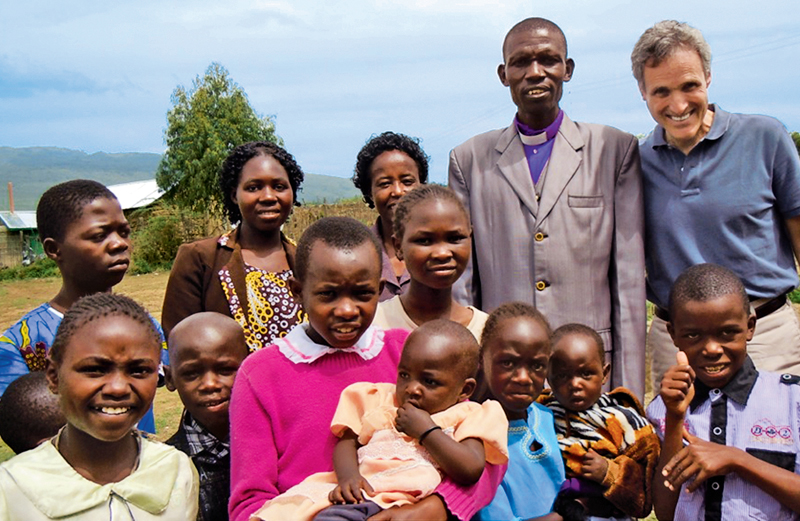
Except this message came from the very modern-day Pastor Cornelious who runs a church in Naivasha, Kenya. And, like the best messages from friends–brethren, as he would term us–it had photos attached. More about the photos in a minute. First, let me tell you how I met Pastor Cornelious.

Last January my wife, Carol, and I went to Kenya with our friends Richard and Gretchen. They wanted us to see the well they were digging in a dry part of the country, where Richard had served in the Peace Corps years ago.

They had raised money through their church, and although our participation was modest, they insisted we join them, along with two other friends, on this once-in-a-lifetime trip.

We’d never been to Africa and we both were a little hesitant. Quite frankly, we were worried about seeing a lot of poverty.

Kenya is not the poorest country in the world by any means, but with a booming population and limited resources, its per capita income puts it near the bottom tenth. How relaxing would a vacation be among people who had so little?

The first part of the trip was a dazzling safari. Our small group had six days and nights sleeping under the stars.

The wildlife was spectacular. We saw buffaloes, zebras, rhinos, hippos swimming in muddy lakes, gazelles racing, antelopes, wildebeests, howling hyenas, baboons, monkeys, the shy dik-dik, graceful giraffes and herds of elephants.

The snows of Mount Kilimanjaro lurked in the sky like a cloud against the brilliant blue and we counted all the different kinds of birds–89 that I recorded in my journal. This from a city boy who wouldn’t have been able to tell you the difference between a sparrow and a wren.

On Saturday night we were coming back into civilization, staying at a lodge overlooking Lake Naivasha before continuing on to the village whose well Richard and Gretchen were helping to fund.

The lodge had been built when Kenya was a British colony, and it reeked of England: old photos on the walls of ladies having high tea on the lawn, bouquets of roses in all the rooms. We asked if there was a church in the town where we could worship in the morning.

“Of course,” we were told.

Sunday at nine, we got into our jeep and drove through the village on dirt roads, children waving and asking for sweets. The church was a modest whitewashed concrete-block building with a dirt floor. The name, though, showed great aspirations: Living Water Gospel Church World Wide.

There were six plastic chairs inside, set up in front for the six of us Americans. The rest of the congregation sat on rough wooden benches, studying falling-apart-at-the-seams English Bibles.

I gazed up at the tin roof. A lot of holes, which made me wonder what happened during the rainy season.

There was no fancy acoustic system, no stained-glass windows, no recessed lighting, but the hand-painted message at the front was confident: “Whoever believes in me as the Scripture has said, streams of living water will flow within him” (John 7:38).

And taped on a sidewall was a black-and-white sign that would have been recognized by any worshipper. A cell phone with a line going through it.

The worship began with music. The singing, led by the teens, was accompanied by one drummer and one kid clanking a tire rim. We joined in, clapping and swaying, doing our best to approximate the Swahili.

At one point Carol nudged me. “We should sing for them.” So we stood and sang “Amazing Grace.” The genial Pastor Cornelious then sang it back to everybody in Swahili.

Yes, of course, this congregation had less–a lot less–than we did back in the States, but its spirit was infectious. Pastor Cornelious gave a lively sermon in Swahili, translated by his copastor into English. Worldwide indeed.

He must have been told that Americans were impatient, as he kept consulting his watch. Evidently he had promised the people at the lodge that he would have these busy tourists in and out in an hour.

I craned my head around to look back at the congregation, trying to figure out how everyone managed to keep their clothes clean in a place with few paved roads and no Laundromats. It seemed a minor miracle. Of course, they had Lake Naivasha.

Richard was asked to address the congregation. He thanked them for their welcome and explained that we were here not only to admire the beauties of their country but also because we had raised money to build a well in another part of Kenya “that is not blessed as you are with this beautiful lake next to your town and such living waters.”

An offering was taken up. A woman brought around a large purse to collect it. I took out a twenty. “Let’s do more,” Carol whispered. I found some more bills and dropped them in. We all did. The place could use the money.

Pastor Cornelious, consulting his watch again, led us in prayer. We sang another song and then went outside to chat in the warm sun–like an American coffee hour without the doughnuts or coffee.

“Thank you, thank you,” we said many times. We took photos on our cell phones, exchanged e-mail addresses, then jumped into our dusty jeep.

Just as we were driving off, Pastor Cornelious raced out of the church with an envelope. “We wanted you to have this as a gift,” he said in his careful English. He thrust it into Richard’s hand. “It is for the well you’re digging in that part of Kenya that isn’t blessed like ours with such living waters.”

“Thank you,” we said. A little later, when we stopped for lunch, Richard opened the envelope and stared for a moment at its thick wad of bills. All those tens and twenties we’d given them, they’d given right back to us, along with their own hard-earned shillings.

“They gave us the entire offering,” Richard said. “Everything we gave them and their own money too.”

The widow’s mite didn’t seem like just a parable anymore. I had been so hesitant about meeting poverty face-to-face, but what we saw was the rich, raw, passionate expression of faith. Pure generosity the way the early Christians practiced it. I felt like I was hearing one of Paul’s exhortations to give, and seeing it acted upon, instantly.

Pastor Cornelious and I started e-mailing once I was back home, his messages filled with exuberant greetings of brotherly love. Our little travel group decided we wanted to do something for the generous Living Water Gospel Church in Naivasha.

We thought of all those Bibles that were falling apart. Maybe we could give them some new ones. “Dear brother in Christ,” I wrote Pastor Cornelious, adopting his tone, “we have a vision of giving your church a library. Are there any books you would particularly like?”

He gave me a short list and I asked him how many Kenyan shillings it would take for them to build a bookcase. He named a price.

I wired him the money through Western Union. And I started mailing books. The greatest expense has been postage. (Amazon doesn’t deliver to Naivasha.)

For a long time I wasn’t sure that my packages were arriving, so I was particularly delighted to receive Pastor Cornelious’s most recent e-mail, with the aforementioned photos of the bookcase and the books.

I’m not sure Pastor Cornelious ever guessed he would have this “World Wide” connection someday. I couldn’t have ever guessed I would get e-mails from a Kenyan who sounds like the Apostle Paul. But with a little faith and a lot of hope and prayers, amazing things happen.

Download your free eBook, Let These Bible Verses Help You: 12 Psalms and Bible Passages to Deepen Your Joy, Happiness, Hope and Faith.

An Unlikely Baseball MVP (Most Valuable Parent)

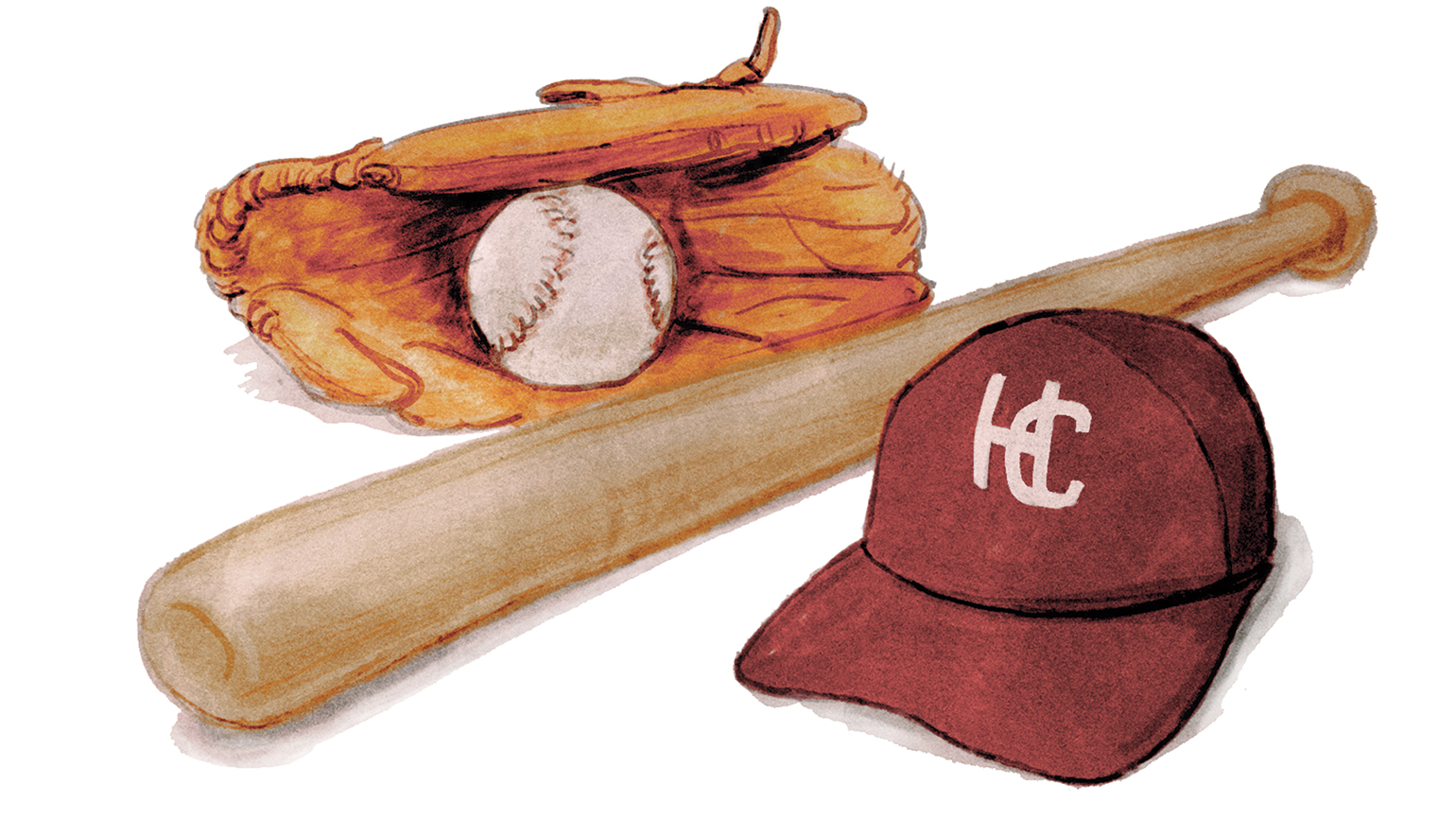
Every spring, the posters appear around our uptown Manhattan neighborhood, inviting parents to sign up their kids for the Hudson Cliffs Baseball League. A fun way to spend weekends in spring, introducing kids to the joys of the game on ballfields down by the Hudson River, in view of those fabled cliffs. The league has been around for 30 years now. And guess who started it?

Me. Rick Hamlin. The guy who knows next to nothing about baseball or sports in general. The one whose most fervent prayers as a boy came when he was stuck out in right field during P.E., entreating God, “Please, please, please don’t let the ball come to me.” It would have taken a minor miracle for me to catch the thing, and even then, I’d never be able throw it into the infield.

And yet I later happened to become the father of two boys, eight-year-old Will and five-year-old Tim, both of whom were interested in the sport. Saturday mornings, I’d take Will out to the playground and we’d play ball with a few other boys and their dads. I was so glad those fathers could coach and pitch and knew the rules of the game.

I’d play catch with Will, and thanks to my weak arm, the ball would drop at his feet before he could get in position to catch it. After a few too many misses one day, he sank to the ground and said, “How am I ever going to make the major leagues?”

I wanted to tell him, “You got the wrong dad, kid.” I mean, when I’d gone to the sporting goods store, I bought him a mitt for the wrong hand. Who knew that a right-handed kid should get a mitt for his left hand? That’s how clueless I was.

Still, I wanted to find some way of giving our kids confidence on the field, a confidence I’d never had. There was an official Little League in our area, but it was super-competitive and catered to older boys. What if we had something a little more low-key, something that welcomed both boys and girls, with T-ball and softball for the younger ones?

I happened to share the idea with a couple neighbors on the playground. “That would be great!” they said, their eyes lighting up. Me and my big mouth. Now who could organize such a thing? Not me. I tried to put the idea aside, but it wouldn’t leave me.

Like Moses, I felt I was being called to do something way out of my league (no pun intended). Remember how Moses struggled to speak, exclaiming, “for I am of slow speech and of a slow tongue” (Exodus 4:10), and yet God called him to lead the Israelites out of Egypt?

Okay, Rick, I told myself. You had this big idea. Now you’ve got to do something about it. One thing I could do was make a few phone calls and get information. I had to do that often enough at work as a writer and editor at Guideposts.

So I started calling the city’s parks and recreation department, explaining that there were some families uptown who wanted to start a baseball league in our neighborhood. Were there any fields we could sign up for? We’d need two ballfields, ideally down by the river, for several hours every spring weekend.

The parks and rec department bounced me around. Finally I spoke to the official who could help us. I made our request for the fields, and he asked me to call him back in a few days. I half-wondered if I was supposed to slip him an envelope of cash. No, that would never do. Not for the Hudson Cliffs Baseball League.

Now that was the sort of thing I knew how to do: Come up with names for things, like putting a title to a story I wrote. Hudson Cliffs came from the name of the neighborhood’s elementary-middle school, P.S. 187.The scariest phone call I ever made was calling that official back. What if he said no? What would I tell my boys then? I think I prayed even harder than I used to when I was out there in right field as a kid.

“Yes, we’ve got something for you,” the man said. Two verdant ballfields for four hours every Sunday morning, from early April to mid-June. That will mean missing Sunday school, I thought. Then again, we could still make the Sunday evening service.

“Wonderful,” I said to the man. “Thank you so much.”

Hudson Cliffs was launched. What a joy it was to sit on the benches behind home plate, watching Will and Tim hit the ball, run the bases…and make clutch catches in the outfield. Wow. How grateful I was for the other parents who did the coaching and refereeing. They did the hard work. As for me, I was christened “Commish” by a friend. The most unlikely baseball commissioner ever.

After several years of play, Will and Tim aged out of Hudson Cliffs. Amazingly enough, the league still goes on, these days run by the Hebrew Y.

Our now-grown sons sometimes tease me, arguing with each other about who is going to retell the Hudson Cliffs origin story at my funeral. That’s not going to happen for a long time, I hope.

Meanwhile, both Will and Tim are new dads, each with a boy of his own, and I can’t wait to see what they’ll have to do. I know better than anyone: Parenthood—like the Lord—can call you to do the most unlikely things, things you never knew you could do until you try.

For more inspiring stories, subscribe to Guideposts magazine.

An Inspiring Carnegie Hall Debut

I have a confession to make: I didn’t come to New York to be a writer and editor. I came here to be a professional singer. I’d sung a lot in college, in the chapel choir, in glee club, in an a capella men’s group and in musicals. I figured I was ready to take on the Big Apple.

I was accepted at the Manhattan School of Music, snagged a paid gig in a church choir and found a couch to sleep on in a rambling Upper West Side apartment.

Two of my roommates were actor/singers. They were actually in Broadway shows at the time. They would come home from the theater and start singing arias at midnight.

“Rick, check out my high C.” “How do you think my French accent is on this song?” “Do you think this piece will work for my audition tomorrow?”

I loved all of it, even if I found it intimidating. Would I be able to perform in a Broadway show or sing opera and concerts, the way they did? The city was full of talented up-and-comers.

There was good singing everywhere… clubs, Broadway, Lincoln Center, even in the parks and on the subway. But we all knew the very best place to be heard, the venue that signaled you had really made it: Carnegie Hall.

I remember taking a girl to a sold-out recital there when the only seats left were tucked onstage behind the singer.

For most of the concert we could only see his back—occasionally he’d turn and bow to us—but we could see the hall as he saw it: seemingly limitless rows of seats rising all the way to the upper balconies, where the people looked like peapods.

“Can you imagine singing here?” my date whispered.

Funny thing was, I could. I mean, it would be scary, but wouldn’t it be amazing? Just to feel your voice disappear into the vastness of that celebrated hall, the famous acoustics of the place amplifying your singing so you could be heard by the peapods all the way in the back of the upper balconies.

Maybe, I said to myself, someday.

“How do you get to Carnegie Hall?” the old joke goes. Answer: “Practice, practice, practice.” Well, I practiced hard.

I took dance lessons and acting lessons along with my voice lessons so I could market myself as an actor/singer who could “move well.” I had professional photos taken and mass-mailed my 8-by-10 glossies and résumé to casting directors and agents.

I auditioned all over town, waiting at cattle calls to sing “a few measures” before being told “Thank you,” which usually meant “No thanks.”

I did musicals in church basements, sang South Pacific and West Side Story in summer stock, was a spear carrier in Shakespeare, got tenor gigs in various choruses and did so many performances of children’s theater that I could recite lines in my sleep.

And yet my dream did not come without doubt. I asked myself and God, Is this really what I’m meant to do? Not that I wasn’t grateful to be employed in such an incredibly competitive business, but was it really me?

If God gave me this gift—and singing felt like a God-given gift—was this how I was supposed to use it?

I liked the people I worked with, but to tell the truth, I didn’t really like the work.

I didn’t like traveling all the time. Didn’t like bonding with a group of singers and actors for several intense weeks only to go our separate ways after the show was done. Didn’t like not knowing where the next job was coming from. Didn’t like getting nervous before a show.

More important, I had fallen in love with the woman I’d taken on that date to Carnegie Hall, and if we were to be married and have children someday, was this the life I wanted as a husband and a father? The life of a vagabond tenor?

We got married and had so many of our musical friends perform during the ceremony, hitting their high C’s, that it sounded like a concert. By then I had relaunched myself as a writer/editor, almost as precarious an existence as that of an actor/singer, but not quite.

“Practice, practice, practice” is good advice for writers too, and gradually I made a career for myself, landing on staff at the magazine you are now reading, where I have been very happy, happier than I would ever have been as a professional tenor.

Besides, I still found places to sing for the sheer amateur joy of it. Sundays with our church choir, concerts here and there and an excellent Gilbert and Sullivan group, the Blue Hill Troupe, where I often was cast as the lead.

Performing a few nights a year for friends and family was better than a life on the stage. Broadway didn’t miss me.

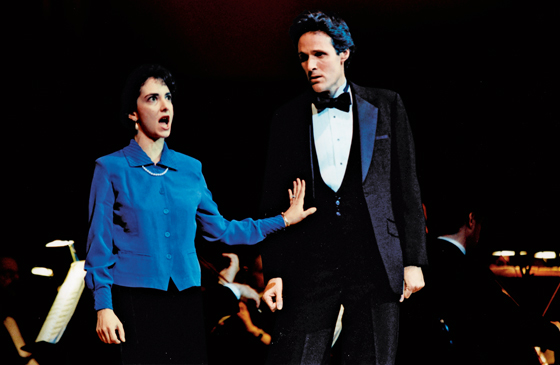
Then, a dozen years ago, the Blue Hill Troupe was asked to give a concert with the New York Pops orchestra. Guess where? Carnegie Hall. It would be a night to remember, singing in the chorus, looking out over that famous hall.

Then the director called. “We want a couple of our soloists to perform. I want you and Joanne to do the love duet from Pinafore. Okay?”

“Sure,” I blithely said. I hung up and pulled out the score. My friend Joanne Lessner and I would have to stand up in front of the orchestra next to the conductor and sing 42 measures all by ourselves onstage at Carnegie Hall. How thrilling! How absolutely terrifying!

We practiced, practiced, practiced. On our own, together, with a pianist and on the afternoon of the actual performance with the full orchestra.

The red seats were empty, but I did steal a glance up and could picture someone looking down and seeing how very small I was on the vast, fabled stage where the greatest singers on earth had performed.

“God,” I muttered, “this might have been a dream of mine long ago, but I feel completely inadequate now. Why on earth did you let me say yes?”

“You sounded great up there,” my fellow tenors said. They had to be lying. Couldn’t they see me balling my hands into fists to keep them from shaking? Couldn’t they tell that that vibrato was coming from sheer nerves? That I was squeezing out every note?

If I could only back out of the whole thing now… but my name was in the program. People were depending on me. I couldn’t disappoint them.

My long-lost dream of performing at Carnegie Hall was coming true, whether I liked it or not.

I prayed on the subway train that evening, wearing my tux, heading to Fifty-seventh Street. Please, God, just don’t let me mess up. That’s all I ask. I kept picturing the conductor waving his baton at me and nothing coming out of my mouth.

Backstage the conductor gave the troupe a pep talk: “Have fun out there.” We patted each other on the back and then filed out onstage.

Joanne’s and my duet wouldn’t come until halfway through the program. That meant I had to sing a half dozen other pieces with the chorus, marking the minutes to my doom.

Finally it was our turn. our cue came and Joanne and I walked forward. The conductor lowered his baton. The orchestra began. And we sang, the music rising to the back of the hall.

I don’t know how it happened. I didn’t flub a lyric, didn’t miss a note, didn’t run out of breath, didn’t trip over my feet. Didn’t mess up. The nerves gave way to calm and then the calm gave way to joy, the joy of using a God-given gift. God wouldn’t have put me there if I couldn’t do it.

We finished and bowed. The audience applauded. The 42 measures were over. We walked back to join the group for the rest of the concert.

“Flawless… awesome,” my friends in the tenor section congratulated me under their breath. You did it, I thought with glee. You really did it. You’ve sung in Carnegie Hall! I was in awe.

But at the same time I told myself, You don’t ever have to do this again. Once for a lark, once for the challenge, once to say that you’ve done a thing you dreamed about. Once to know that you have made the right choices in life and have used your gifts to the best of your ability.

Once in a lifetime was enough. More than enough.

Download your FREE ebook, True Inspirational Stories: 9 Real Life Stories of Hope & Faith

An Insightful Easter Message to Trust God’s Timing

It was a beautiful spring day, and a sense of peace stayed with me as I left the Cathedral on Easter Monday morning. I paused for a moment on top of the steps leading to the Avenue, now crowded with people rushing to their jobs. Sitting in her usual place inside a small archway was the older woman selling flowers. At her feet corsages and boutonnieres were parading on top of a spread-open newspaper.

The flower lady was smiling, her wrinkled face alive with some inner joy. I started down the stairs-then, on an impulse, turned and picked out a flower.

As I put it m my lapel, I said, “You look happy this morning.” “Why not? Everything is good.”

She was dressed a bit shabbily and seemed so very old that her reply startled me, “You’ve been sitting here for many years now, haven’t you? And always smiling. You wear your troubles well.”

“You can’t reach my age and not have troubles,” she replied. “Only it’s like Jesus and Good Friday…” She paused for a moment.

“Yes?” I prompted.

“Well, when Jesus was crucified on Good Friday, that was the worst day for the whole world. And when I get troubles I remember that, and then I think of what happened only three days later–Easter and our Lord arising. So when I get troubles, I’ve learned to wait three days… somehow everything gets all right again.”

And she smiled goodbye. Her words still follow me whenever I think I have troubles: “Give God a chance to help…wait three days.”

A New Year’s Eve Prayer

Transitioning from one year to another can be emotional. When the Christmas festivities come to an end, we have time to reflect on the events, experiences and changes that occurred throughout the year. The things we set out to achieve, those we accomplished and those we did not. The new friends we have made. And loved ones who are no longer with us.

As with most changes we deal with loss and gain. I know for some, this year seemed too long and too hard. However, if we look back, we can identify a time when the strength of the Lord moved us forward. I find this helps me focus on the goodness of the Lord and to expect good things in the New Year.

Read More: 7 Ways to Live a Happier, Healthier Life

We can’t go back in time, but we can pray that God will order our steps in the New Year as the proverb says, “All our steps are ordered by the Lord; how than can we understand our own way?”

The truth is we can’t always fully understand God’s ways, or even our own ways. But we can cast ourselves into the loving hands of God who knows and understands the steps we need to take.

Author Henri Nouwen wrote, “You can’t see the whole path ahead, but there is usually enough light to take the next step.” Our steps may not always be in the right direction or always clear, but if we pray to the Lord to order our steps, it will happen in His mysterious way. God can surprise us and help us make it the best year yet. What is your hope for the New Year? Please share with us!

Lord, I don’t always know what the future holds, but I do trust You who holds the future and will order my steps in unexpected ways.

A New Beginning

We’re in the early stages of launching a new fiction series, which may just be my favorite part of my job (I know, I know. I say that about everything. What can I say? I like my job!)

This series revolves around four nurses at a very special hospital. These men and women are caring, qualified, and compassionate, and they are also inspired by their faith to make sure that every patient gets the best possible care.

I was talking to the author of the first book in the series today, and brainstormed ideas and talked about plot points. As we talked, I was struck by the fact that I really had no idea what it’s like to bring a hospital setting to life. I’m thankful that I haven’t had to spend much time in hospitals personally, but in this case, when it came to figuring out how nurses work (Who do they report to? Do they all work together, or do they have specialties? Do they have desks? How do they interact with doctors?), I was lost.

I know that we have a lot of caregivers out there, and I want to make sure these books are authentic and pay tribute to the work that they do, mostly unsung, every single day, but I had no idea how to do it! What does a book editor know about nursing?

Lucky for me, our authors are so much more knowledgeable than I am. This author knew exactly what to do—how the hospital should look, what the nurses would be doing, how they would react to situations. Talking to her, I felt so much better about this series, because I was reminded, once again, that it doesn’t really matter how little I know, because God has given us all different experiences and opportunities, and he has once again managed to pair me up with someone who has exactly the right skills and talents to do the job before us. It’s never felt better to be reminded how little I know.

Beth Adams is the creator and editor of GUIDEPOSTS’ Home to Heather Creek fiction series.

A Neat Trick to Get the Most Out of Your Daffodil Bulbs

Daffodils are the star of the spring show in my garden. I adore tulips….but so do the rabbits with whom I share my green space. Daffodils are toxic to bunnies, so we get to live in harmony when their sun-drenched show is in full flower in early spring.

Though, in Keats’s famous words, “a thing of beauty is a joy for ever,” we all know spring bulbs fade and die back after a few weeks of glory. When they do, their blooms browned, their leaves splayed and pale, it’s tempting to take to them with pruning shears, lest your garden look sloppy and neglected.

This denies your daffodils in two ways. First, pruning spent daffodil foliage denies the plant the opportunity to engage in its full cycle of bloom, decay and rebirth. And second, it robs you, the gardener, of a satisfying spring task to keep your garden looking neat and attractive.

Try this easy technique to keep your daffodils thriving even while they sleep their way toward next year.

Once the blooms have died off and the foliage has lightened in color and flopped out into a flat spray, gather its long leaves into a ponytail-like clump. Divide the bunch in half and tie the leaves into a loose single knot. The leaves will form an appealing, rounded shape that can sit in your garden without giving off neglected vibes. If you plant hostas or other spreading plants near your daffodils, they might even become camouflaged by their greening neighbors.

Now the most satisfying part of all. Eventually, as the summer heat builds, the bulb in the soil will be ready to let go of the foliage, having reconstituted itself with all the nutrition it needed from the summer chapter of its growing cycle. You’ll know you’ve reached that moment when a gentle tug on your knots releases them easily from the ground.

Lifting as you would a duffel bag handle, stroll through your garden and liberate each bundle from its spot. As you do, you’ll know you’ve invested in your plants’ future well-being—and left your garden looking neat and tended in the meantime.

You might, as you work your way through your garden, even turn back to Keats, who praised daffodils in his poem Endymion for “the green world they live in; and clear rills / That for themselves a cooling covert make / ‘Gainst the hot season.”

How do you care for your daffodils after they’ve bloomed?

An Easy Way to Remember to Use Positive Words

When I attend services at my synagogue, one of the most meaningful moments is a verse from Psalm 51 that we recite to prepare for a series of blessings known as Amidah, or Standing Prayers: “God, open up my lips, so my mouth may proclaim Your praise.”

In his second grade religious school class, my son has learned to sing that verse in Hebrew, to a tune that includes, in English, “Open my lips to good words, to pure words, open my heart to love.”

At any age, the power of the spoken word can’t be overstated. And yet sometimes the quality of the words that pass our lips is less than we hope for or expect from ourselves. When stress or worry weighs on us, we can find ourselves saying things we don’t mean, using our remarkable power of speech in negative ways.

To keep my language in check, I turn to a simple, elegant technique I also learned from my son—the idea that before we speak, we should stop and “THINK” to ensure our words are:

True

Helpful

Important

Necessary

Kind

In the speedy swirl of everyday life, it can feel hard to examine each word choice this closely. But practiced over time, THINK can become an automatic internal guide that gently shepherds our words in a positive direction.

It’s the combination of the THINK ideas that strikes me most. Honesty is a high value, but remembering that true words also need to be necessary and kind can save us from being bluntly hurtful to someone we care about. Information can be important, but if it’s not helpful in the moment to someone who is struggling, it’s not worth saying aloud. Kindness is paramount, but if you can’t truthfully say something kind in a heated moment, it’s better to take a break from speaking.

I love Psalm 51 so much because it is a prayer to have a voice—but also a desire that we might have the insight and discernment to choose to use our voice in a way that serves both our lives and the wider world. It’s an invitation to think (or THINK) before we speak, and to make our words wise, positive proclamations for all to hear.

A Leap of Faith

The youngest of my three kids started preschool recently, and it got me thinking that I’m entering a new stage of life myself, a time when I can refocus on my career. More specifically, it got me thinking about how I might continue the work of my late grandparents, Guideposts cofounders Norman Vincent Peale and Ruth Stafford Peale.

Someone suggested I write a blog for Guideposts.org. That sounded interesting except for one thing. One big thing. I’m not a writer. My background is in clinical social work, a profession I chose because I was inspired by my grandparents’ dedication to service and outreach. Could I write a blog and make it meaningful to someone—anyone? I wondered. What would Grandma and Grandpa have thought about this?

They were pretty game people, always willing to try something new. There was that time their children and grandchildren (yes, I’ll admit I exercised my persuasive powers) convinced them that our family had to spend Christmas in a setting totally different from their upstate New York home, someplace far away… like Africa. You should have seen my grandfather at age 90 on the banks of a river in Kenya washing out his undershorts and hanging them up to dry outside his tent!

That family Christmas on safari turned out to be unforgettable, and it occurs to me that Grandma and Grandpa would look at blogging as a new adventure that’s just as exciting and worthwhile. They would’ve been thrilled to learn about another way to reach people with true stories and messages of hope and faith and inspiration.

When Grandma and Grandpa started Guideposts back in the 1940s, they didn’t have all the answers as to how to make everything work, but what they had was faith. The magazines and books, the ministries and outreach programs that are part of Guideposts today all grew out of that. So I’ll take my inspiration from my grandparents and jump into blogging. Call it a leap of faith.

Thanks for staying tuned!

A Language of the Spirit

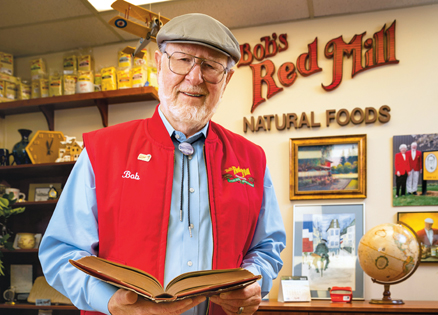
Nowadays people know me for my Bob’s Red Mill cereals and flours, stone-ground just like they did in Bible days. That’s me on the front of every package in my trademark cap and bolo tie. We’ve been in business now for 35 years, and some folks assume it’s what I always wanted to do.

But the truth is, the career that became my calling is one I stumbled upon. Literally. At the time, running a grain mill was the last thing on my mind. It was 1978, and my working days were over. At 49, I’d retired to pursue the one dream I wanted more than anything.

“The wife and I are moving to Portland, Oregon. Going to seminary,” I told the guys one Saturday morning down at the hardware store. “We want to learn Greek and Hebrew so we can read the Bible like it was originally written.”

My buddies looked at each other, confused. “You’re kidding,” one said.

“No, I’m dead serious,” I said. “I’ve wanted to do this for twenty years.”

It was as if I’d told them Charlee and I were buying his and her Ferraris. I could tell what they were thinking: Those poor Moores, having a midlife crisis.

But that wasn’t it at all. Nothing to do with my receding hairline. In fact, life was good. Our sons were grown. The mill we’d launched together a few years earlier—almost on a whim—was doing great. Well enough that I hadn’t thought twice about turning it over to them.

Not that I wasn’t sending up plenty of prayers about this new adventure we were embarking on. I knew it sounded crazy. But then I’d always been wired a little differently than most folks.

I’m the kind of guy who’s always thinking, studying, tinkering until I know everything—I mean, everything—there is to know on a subject. I have this need to understand how all the parts fit together. Ask Charlee, sometimes it feels more like a curse than a blessing.

That’s how I first got the idea that I wanted to learn Hebrew and Greek. Back then, in 1963, I was managing the JC Penney auto center in Redding, California. I was reading a fascinating book one evening after work.

The author, an eighteenth-century scholar, said there were errors in the Bible, introduced by the men who translated it from the original Hebrew and Greek.

Hebrew, in particular, he explained, is subject to misinterpretation because the words don’t have vowels: th rdr dds thm n hs mnd. Well, I saw the problem right away.

“One wrong letter changes everything,” I told Charlee. “The entire meaning of a sentence.”

“What’s that, honey?” she said, looking up from her mystery. I explained what I’d read. “I see what you mean,” she said. “But what can we do about it?”

I chewed on that for a moment and then, it was like a lightbulb went on in my mind. “What if we learned to read Greek and Hebrew?” I said. “Then we could really study the Bible for ourselves!” She gave me a look and went back to her book, shaking her head.

I knew as well as she did: The last thing I needed was something else to take on, what with three sons to raise, the chicken coop out back to tend to (my idea), my workshop jammed with nearly finished projects (yet more of my ideas), not to mention my job.

Now, in my early thirties, I wanted to be a biblical scholar too? Why not discover a cure for cancer? Or jump to the moon?

But I couldn’t let it go. I bought a book on how to read Hebrew. For weeks I studied it, a little bit each night. But the more I read, the more confused I got. I had to find help. A teacher. That’s when I discovered the closest place that offered the classes I needed was a seminary in Portland, 400 miles away.

I couldn’t uproot my family to chase this wild dream of studying ancient languages. Still, it gnawed at me. If the Bible was God’s instruction manual, how could I be sure of the directions without reading them in the original?

“Maybe I’m just not meant to know,” I finally admitted to Charlee. It killed me to say that. But what else could I do? I put my dream on a shelf, like all those other projects I hoped to get to someday.

My whole life it seemed I’d been searching for something. What was it that God meant for me to do? Fresh out of the Army I’d gone to work at U.S. Electrical Motors, then bought a service station, did that until I got the job with JC Penney.

In 1974 I started the mill with our boys, another idea inspired by a book I read. Even though the business was successful, I felt less like I was on a journey with a destination and more like I was just jumping from one thing to the next with no earthly idea how all the pieces fit together.

One day I was studying the Bible and it hit me. The boys were grown. We had the money we’d put away for retirement. “Charlee,” I said, “what do you think about us going to seminary?”

The next day I called Western Evangelical Seminary in Portland, Oregon. Yes, the admissions counselor said, it would be fine for us to audit a class or two a semester. He suggested we start with Greek. “I think you’ll find it easier,” he said.

Charlee and I moved to Portland, and now here we were just days away from my dream coming true. I felt like an explorer headed off in search of treasure beyond compare.

Then came the first day of class. I squeezed into my seat and looked around the classroom—into the faces of students younger than my boys. I’d worn a coat and tie, wanting to make a good impression. They were all in jeans and T-shirts.

The professor walked into the room. Even he was younger than me. I glanced at Charlee for reassurance, but her gaze was fixed on the instructor. “Turn in your Bibles to John 17:17,” he said.

I flipped to the page and my eyes searched in vain for one word I recognized. γ ασoν α το ς ν τ λ γος σ ς λ. It was definitely Greek to me. Then again it could have been Swahili for all I knew. The memory of my failed attempt to teach myself flashed through my mind.

Was this really a dream I was meant to pursue? What if too many years had gone by? What if even a professor couldn’t help me?

“Don’t worry,” the professor said. “I don’t expect you to be able to read this. Yet. But you will, in time. The key is repetition, until it becomes familiar. I recommend flash cards.”

That night Charlee and I wrote 20 Greek words on note cards. Words like sanctify and truth, commandment and righteous. We stayed up late quizzing each other. It was no use. In Greek, every word looked the same. Indecipherable. I fell into bed, defeated. What had I gotten us into?

But the next morning I woke revived. After a breakfast of Charlee’s whole-wheat pancakes we started studying again. I liked puzzling through the words, the mental challenge of it. Like a workout for the brain. Invigorating.

Slowly some of the letters began to make sense. Then a word: ψομαυδμευτ. Commandment. “That’s right!” Charlee exclaimed. My smile stretched from ear to ear. This was it. My dream. It was really happening.

In class I still felt overwhelmed, the lessons never easy no matter how hard I studied. I worried that I wasn’t keeping up. Then one day a young man sitting next to me leaned over and said: “Would it be okay if I came over tonight and studied with you? You know, you’re way ahead of us.”

“Uh, well, okay,” I said, not sure I really believed him. But he showed up right after dinner. The next night a friend came with him. Soon Charlee and I were tutoring half the class at nightly study sessions. I was actually teaching Greek? This had to be God’s doing.

Charlee and I loved being students. We’d study in the morning, go to class, take an afternoon walk, then hit the books and flash cards again with our classmates after dinner.

But the more I learned the more I realized how little I really knew. I could recognize maybe a hundred words in Greek. Read a few simple verses. But I was never going to be a biblical scholar. I hadn’t even begun to study Hebrew. I still had more questions than answers.

Where am I supposed to go from here? I asked in my prayers.

One morning I opened my Greek Bible to John 17:17, the verse our professor had us turn to the first day of class. It was amazing. The words nearly jumped off the page, as plain as day. “Sanctify them through thy truth: thy word is truth.”

I knew exactly what that meant. God’s word was truth. The same today as it was for the first Hebrew scribes. No translation needed. Nothing complicated. Trust in God. That was what I needed to know. What I needed to do.

It was a few days later that Charlee and I were out walking in the woods when we came across an abandoned, old-fashioned flour mill with a For Sale sign out front. It was rundown, dilapidated, a place only a committed tinkerer could love. A hidden treasure just waiting to be discovered.

Even the owner was surprised when I told him we planned to turn it into a working mill again. We painted it red. Just because I like the color. Used only whole grains, like it says in Genesis. That’s how Bob’s Red Mill was born.

Today, 2012, we have more than 300 employees and our 400-plus products are carried in stores throughout the U.S. and Canada, and in over 70 countries throughout the world.

To think that this all started with what some might consider a midlife crisis. I would say it was more like a midlife calling, the kind of wondrous thing God can lead you to when you keep your mind open.

Download your FREE ebook, Rediscover the Power of Positive Thinking, with Norman Vincent Peale