

Embrace God's truth with our new book, The Lies that Bind

A Different Kind of Strong

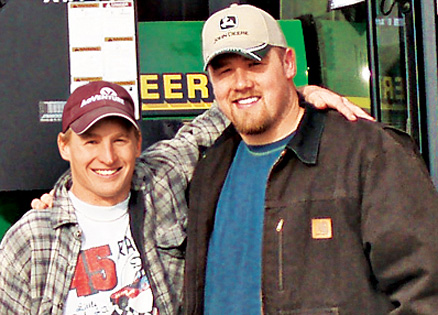
I squeezed my 300-pound frame into the seat at Texas Stadium. Far below me my Dallas Cowboys teammates were on the field warming up to face the Kansas City Chiefs, a critical mid-December game. It killed me not to be down there.

I glanced at the guy to my left, frail, thin, a cane resting against his leg. He put out a bony, calloused hand that vanished in mine. “Ryan Odens,” he said. “You look like you’ve played some ball.”

“Actually, I’m an offensive lineman for the Cowboys,” I said. “Just on the practice squad. Coach doesn’t even let us on the sideline on game day.”

“Man, wait’ll I tell everybody back in Iowa I sat next to a Cowboy,” he said.

I forced a smile. His enthusiasm only reminded me how far I had to climb. Fourteen weeks into my rookie season, I hadn’t played a single down. I knew what I had to do: get stronger, hit harder, read the blitz quicker.

I tried not to lose hope. But already I was on my second team. Dallas had just picked me up from Detroit. If I failed here, next season I’d be watching the games on TV with Mom and Dad in Gig Harbor, Washington. Would I ever get to start in the NFL?

Dallas got the ball first. The Cowboys QB that day, Drew Bledsoe, took the snap and threw a bullet to a wide receiver streaking downfield. Ryan struggled to his feet with his cane and pumped his free hand in the air. “All right!” he yelled.

Man, Ryan was a big-time fan. He’d hop up and yell every time the Cowboys made a big play. Whatever had happened with his legs didn’t keep him from showing his spirit. We talked between downs. Finally, I said, “Do you mind my asking what happened to you?”

“Rolled my truck five years ago going around a curve,” he said. “Broke my spine, five vertebrae. The doctors said I’d never walk again. Turned out it was the best thing that ever happened to me.”

Just then a Dallas running back broke free for the big first down and we never got back to the accident. The Cowboys scored the winning TD with 26 seconds to go. We stood to leave.

“Let me give you my number,” Ryan said. “If you’re ever in Iowa give me a call. I’d love to show you my farm.”

“Sure,” I said, giving him my number. Iowa? I didn’t expect I’d be passing through there anytime real soon.

Day after day I put in extra hours in the weight room, Alabama blasting on my iPod. Then I’d go back to my apartment and pore over the playbook until I fell asleep exhausted.

Was I making any headway? I was going up against the best of the best. Even my prayers seemed to fall short of the mark.

The Cowboys lost two of the last three games and missed the playoffs, not that I had anything to do with it. I flew back to Detroit to clean out the apartment I’d rented there. I’d just tossed the last box in my car when my cell phone rang.

“Hey man,” a voice on the other end said, “it’s Ryan Odens. From Iowa. We met at the Cowboys-Chiefs game. I figure you’re heading home soon. Why don’t you swing by here on the way?”

“Uh, well, I guess I could,” I said. “Just for the night.”

I was bleary-eyed when I pulled up to his house in Sibley, Iowa, after 12 hours on the road. Ryan met me out on the porch. “I hope you’re hungry,” he said. “We’re going to my mom’s for dinner.”

He hobbled down the stairs to his truck, his cane barely enough to support his wobbly legs. But he just kept at it. I climbed in the passenger side. “What do you grow here?” I asked.

“Corn and beans,” he said. “My brother and I farm about twelve hundred acres. I couldn’t have done it without Easter Seals. They paid for a hoist so I could get back on my tractor.”

He popped a CD in the player. Alabama’s “Can’t Keep a Good Man Down” pulsed through the speakers—one of the songs I lifted weights to. I thought about how difficult it was to push myself day after day. Where does this guy find the strength?

We got to his mom’s house. Ryan opened the front door to a living room full of people. His mom came in from the kitchen. “We’re so glad you could make it,” she said. “I hope you like roast beef and mashed potatoes.”

“How’d you know?” I said.

We sat down and Ryan said grace. I took some meat from the platter, then took a bite. It practically melted in my mouth.

“So what’s it like being on the Cowboys?” someone asked. It felt odd, being the center of attention. Who knew if I’d even make the team next year?

But they didn’t seem to care. Soon they had me talking about growing up in Gig Harbor, my dad’s veterinary practice and his creaky old Fleetwood.

It was close to midnight when Ryan and I headed back to his place. I was dragging, and Ryan had to be tired too but he was belting out the words to “Forty Hour Week.” Amazing how he kept going and going. There was something I’d been meaning to ask him…

“That thing you said back in Dallas about the accident being a good thing,” I said. “What did you mean?”

He was quiet for a moment. “I thought if I just pushed myself hard enough I’d walk again,” he said. “But I couldn’t. I wasn’t near strong enough, physically or mentally. It had been three months. I didn’t know where to turn.

"One night I cried out to God. I said, ‘Show me you’re really there.’ The next day I took my first step in the therapy pool. Mom was there, like she’d been all along. My family, so many people in town—they gave me so much support.

"A few months later I was driving a tractor again. It was tough. Still is. But I know I’m not doing it alone.”

I peered out the window into the darkness. All these months I’d been comparing myself to pro football players—huge, powerful behemoths. And yet it was this skinny Iowa farmer that I felt a real connection with.

The next morning I woke early and went out onto the porch. The crisp winter air felt fresh and invigorating, inviting. Before long Ryan came out. “Well, you’ve got a good day for driving.”

“I was thinking I’d stay another night if it’s okay with you,” I said.

Ryan beamed. “That’s great!” he exclaimed. “But I hope you don’t mind me putting you to work later on.”

After breakfast we drove out to a field with a section of broken fencing. Ryan grabbed a bent metal pole, straining to wrestle it out of the ground, his legs bowing painfully. “Let me get that, Ryan,” I said.

“Nah, I can handle it,” he said, grunting. He finally extracted it. “You drive the new one in.” No problem. Then we spliced new barbed wire between the poles. “Ready for another?” Ryan asked, his breathing labored.

I looked at him in wonderment. Everything he did was a struggle, even walking, standing up. Things I took for granted.

Ryan never quit. He had a different kind of strength, a strength that didn’t come from working out and weight lifting, but from faith and determination, the things I needed most. It wasn’t an accident that we’d met.

I ended up spending a week in Sibley. There’s always something to do on a farm. But mostly I just wanted to hang with Ryan, two good old boys with a lot more in common than meets the eye.

I just finished my seventh year in the NFL, the last two with Miami. I missed last season with a knee injury. I have another uphill battle ahead of me.

I’m not worried, though. I love football, but it’s not the most important thing. A year ago I married a woman I met in Dallas. Ryan was at the wedding. He’s my best friend and a constant source of inspiration.

It’s funny. I wasn’t where I wanted to be that day at Texas Stadium. But God put me exactly where I needed to be.

Download your FREE ebook, The Power of Hope: 7 Inspirational Stories of People Rediscovering Faith, Hope and Love.

A Delightful Moment in the Garden—When to Move On

By early July, daffodil season feels like it was eons ago—yet it’s one of my favorite annual moments in my life as the caretaker of a patch of these bright, sunny spring bulbs.

Why?

Because just a few weeks ago, once the blooms had either faded or found their way into cheerful tabletop bouquets, I took a few minutes to knot off my daffodils’ wilting greenery into pleasing little bundles. I was neatening up my garden as early summer plants started to emerge, while also enabling my daffodils to experience their full annual growth-dormancy cycle so they put on a spectacular show next year.

And so, by early July, I get to wander around my garden looking at my knotted daffodil greens, waiting for the right moment for the most satisfying early summer task—removing a fat handful of weeds in one light tug. Once I see slender streaks of brown leaves woven among the pale greenery, I know: it’s time.

Reaching down, I grasp each knot like I would pick up the handle of a purse. Then I pull, firmly but without having to “put my back into it.” When the bundle is ready, it will let go of its parent-bulb with a pleasing pop of release, and I’ll find myself holding a long mane of leaves ready for the yard waste or compost bin. Take a look at the video below to see how it’s done.

Interestingly, even if your daffodil bulbs are all the same variety, not all your bundles will be ready to pull at the same time. If the knots don’t let go easily, gently release your hand, leave the bundles in place and look forward to checking back in after a couple of days.

I always bring a reflective mindset to this annual task. I love the juxtaposition of letting go, removing and clearing away what’s no longer vibrant, while also knowing I’m preserving the health and promise of these beautiful bulbs to experience the rest they need, and then return to full glory when their season comes around again.

As I work my way through my garden, I ask myself, what will I let go of to ensure that I’ll keep growing when a new day dawns?

What will you?

A Delayed Greeting Card Opened Her Eyes to the Blessings of Marriage

I woke up smiling. On this day, 41 years ago, my husband, Jeff, and I promised to love and cherish each other till death do us part. It was our forty-first wedding anniversary!

Who could forget our wonderful fortieth anniversary celebration last year? The fortieth is the ruby anniversary. Our four children and eight grandchildren gathered at our favorite Italian restaurant. Delicious food, funny and affectionate toasts, a scrumptious cake. Jeff gave me a ruby drop necklace. Just magical.

This morning, I reached for my sweet man to give him an anniversary kiss. He was already out of bed. I smelled coffee. Of course! He was bringing me coffee in bed. I settled back on the pillows and waited.

And waited.

I heard kitchen noises, but they didn’t sound like a china cup and saucer being arranged on a tray next to a croissant and a vase containing a single red rosebud.

I got up and went to the kitchen, just in time for Jeff to brush past me, giving me a quick kiss that landed somewhere between my nose and my eye.

“Gotta run, babe. Big project. Might be late tonight. Happy anniversary!”

With that, my man headed for the other love of his life—his hardware business. Our family owned a regional hardware chain. Our son ran the business now, but Jeff still went to work every day.

I suppose I should be grateful he remembered our anniversary at all. Celebrations were not Jeff’s strong suit. He splurged when it counted, like that ruby necklace. Most of the time, he was a hardware man.

Besides, who cared about a forty-first anniversary? A totally unremarkable number. I poured myself a cup of (now cold) coffee and idly googled “forty-first wedding anniversary.”

That was a mistake. There was no official symbol. Some people said it was land…as in reserving a burial plot?

There was no traditional gift, no flower, no official color. Suggestions for celebrating included “downsizing your home” and “planning for retirement.” Really?

I consoled myself by thinking of past anniversaries. Our tenth anniversary (tin), we were chasing toddlers, changing diapers. We celebrated by reheating cold pizza in tinfoil.

Ten years later, Jeff borrowed a motorboat and took me on a river cruise, complete with picnic lunch. We spent the night at a hotel on the water, and Jeff gave me a pair of earrings with emeralds—the gemstone for twentieth anniversaries.

For our pearl anniversary (30), we returned to San Antonio, where we’d spent our honeymoon. We stayed in the same hotel and ate at the same restaurant where we’d eaten our first meal together as man and wife. Once again, Jeff went all out on a gift, a strand of cultured pearls.

I resigned myself to nothing special at all happening on this anniversary. I answered emails and organized items for an upcoming church garage sale. I kept my phone nearby in case one of the kids or someone else called to say congratulations.

No one did. I couldn’t blame them. Like I said, who cares about a forty-first anniversary?

Jeff and I were married on June 14, 1981. That whole first year, Jeff and I gave each other a gift on the fourteenth of each month. So romantic! That stopped when the babies arrived.

I thought about the decades that followed. The joys of family life but also the hardships. Our third child, Blake, died of meningitis when he was three years old. The pain of that loss never went away. Just a few years ago, it was compounded when our daughter-in-law Erin had complications during childbirth and our grandson Welles was stillborn.

Owning a business is hard. Jeff worked constantly, and money was always an issue. We didn’t take expensive vacations or indulge in big purchases. We made our own fun here in our suburban neighborhood.

We nursed parents through old age. Wrangled two teen boys and two teen girls. There were plenty of times when we felt like yoked mules, just trudging along. We had our faith, and we had each other. That sustained us.

Maybe the time for wedding anniversary celebrations was behind Jeff and me. The fortieth was wonderful, and it was up to the good Lord whether we made it to 50. Probably I should let it go.

I went out to fetch the mail, still hoping at the back of my mind that someone had sent us a card.

There was a card! It was from a dear friend in West Virginia. I decided to wait till Jeff got home to open it.

Jeff dragged in the door after dark, tired after a long day. I hadn’t come up with dinner yet, so we sat down and opened the card.

It was beautiful. On the front was a picture of a gift box bursting with flowers, a bottle of champagne and two heart-shaped balloons. Inside was an intricate pop-up of a vintage bicycle, loaded with more flowers and heart balloons.

“Thinking of you!” my friend had written inside.

“I love it,” said Jeff. “Our first date was on bicycles, remember?”

“We rode to Federico’s for Mexican food,” I said. “I thought there would be mariachi music. Instead, Manuel serenaded us with ‘Me and Bobby McGee.’”

“And I bought you a rose,” said Jeff.

“We rode back to my house, and you sat in the yellow rocker and told me your life story. Then I told you mine.”

“That did it for me,” said Jeff. “I was in love.”

“Took me a little longer,” I joked.

“Federico’s closed a long time ago, didn’t it?” Jeff mused.

“I think it’s a laundromat now.”

“Wish we could relive that first date,” said Jeff.

“We can still go out for Mexican food,” I said.

Elena’s, one of our favorites, was packed. We waited 15 minutes before getting a table—by the bathrooms. Crowd chatter was so loud, we could barely hear each other. And no candle in sight.

Jeff reached across the table for my hand, and our eyes met. Just magical.

“What’s been the best part of these past 41 years?” I asked.

“Your cooking,” said Jeff, and we laughed. I’m a terrible cook.

“Your turn,” he said.

“Your predictability,” I answered more seriously. “You’re always the same. I never have to wonder about your mood or how you will be.”

“Sounds dull,” said Jeff.

“The opposite,” I said. “You’re steadfast. I can always count on you, no matter what.”

“I got you a card, but I didn’t get a chance to write in it yet,” said Jeff.

“Same here,” I said. “I was feeling let down that this year’s not special like last year.”

“Feels pretty special to me,” Jeff said. “I can’t imagine living these last 41 years with anyone but you.”

Those words, and everything they represented, were the gift I had been waiting for. God had blessed Jeff and me with a good life together. Our marriage itself was the celebration.

The next day, I called up my friend to thank her for the lovely anniversary card that she’d sent.

“Anniversary card?” she said. “It was just a ‘thinking of you’ card. You know how I like to send cards. I mailed it weeks ago. It must have gotten lost.”

“Lost?” I said. “Nope. It arrived right on time.”

For more inspiring stories, subscribe to Guideposts magazine.

Acts of Kindness That Only God Sees

As I left our apartment building, I noticed the planted area in front had gotten a bit weedy. The neighbor who normally tends to the mini-garden is away on vacation. I stopped and pulled a few handfuls of wood sorrel and a bit of encroaching crab grass and went on my way, depositing the plant debris in the trash can around the corner. Chances are no one will notice except me. Well, and God.

I took the dog out that evening and I brought a handful of extra plastic grocery bags. Someone—I don’t know who—put up plastic holders for bags, in case someone walking a dog forgot to bring a poop-scooper. There are no assignments for refilling the containers; it’s something people do because they can. Chances are no one notices except the person doing it. Well, that person and God. And the person who would have been stuck with nothing to clean up after his dog.

It’s been good for me to get in the habit of doing simple, thoughtful acts no one sees. It weakens my need for approval from others, keeps me aware that I can make the world incrementally better and sharpens my eye for seeing the opportunities God puts in my path. It trains my heart in thoughtfulness. And if by chance someone does catch me in the midst of doing a quiet kindness, it may open their eyes to ways they, too, can make the world better.

A Christmas Lesson in Gratitude

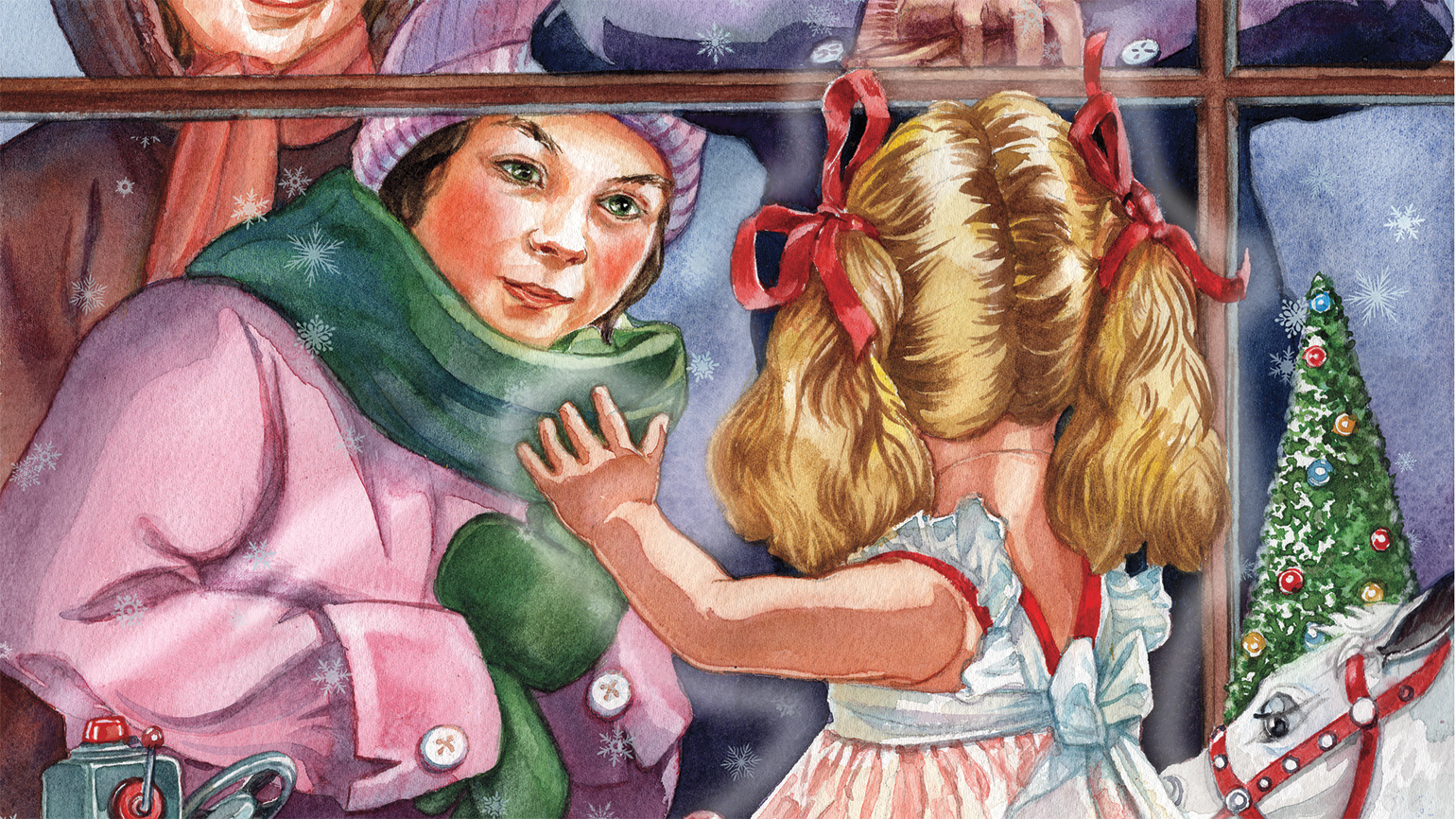
She was by far the most beautiful doll I’d ever seen. And she could talk.

“I hope Santa will bring me one for Christmas,” my friend Maryanne whispered. The two of us had our faces pressed up to the toy store window that separated us from the Chatty Cathy doll inside. “She’s the only thing I wrote down on my list.”

Chatty Cathy was on every young girl’s Santa list that Christmas. But I didn’t tell Maryanne what I knew for a fact: Santa wasn’t real. I remembered how disappointed I’d felt when a babysitter spilled the beans, and I didn’t want Maryanne to feel that way too. Knowing the truth about Santa did have one advantage, how-ever. It gave me the idea to search the house for presents that might be hidden away for me until Christmas morning. Between my parents and the relatives who lived with us in our Brooklyn brownstone, there was no shortage of places to look. In fact, deep in the back of Aunt Thecla’s closet I’d found my Chatty Cathy doll. Bingo! On Christmas morning, she would be mine. I could hardly wait. Until then, Chatty Cathy would remain my secret.

“What are y’all looking at?”

Maryanne and I didn’t even have to turn around to know who had come up behind us at the store window. No one else in our neighborhood had an accent like Jenna Lee’s. She and her family had only arrived from South Carolina a few months ago, without her father. I didn’t know the particulars, only that they had relocated under difficult circumstances. Her mother worked long hours as a waitress, which often left Jenna Lee to take care of her four younger sisters.

“We’re looking at Chatty Cathy,” Maryanne said. She moved aside to make space for Jenna Lee to see inside at the window.

“If you pull the string on her neck, she’ll talk to you,” I explained.

Jenna Lee wrapped her coat tightly around her. I could see it was far too thin for the New York winter.

“Chatty Cathy can say 11 things,” Maryanne went on. “Like ‘I love you’ and ‘Tell me a story.’”

“I ain’t never seen anything like her,” Jenna Lee said, stroking the glass window with one finger. “She would be nearly as good as having a real live friend like you two.”

“Maybe you’ll get one for Christmas,” said Maryanne.

Surely, that was impossible. Not as long as there was no Santa in the picture. If her mom had had any money to spare, Jenna Lee would have had more than the two dresses she rotated every day. When she came over to play dolls with me, she’d brought clothespins with eyes drawn on them. I elbowed Maryanne in the ribs, hoping she’d change the subject.

Maryanne didn’t take the hint. “What’s on your list for Santa this year?” she asked.

“We don’t make lists,” said Jenna Lee, her eyes never leaving Chatty Cathy’s face. “We’re grateful for whatever Santa leaves in our stockings. Last year I got five dollars to spend just on myself. I was real careful, so the money lasted a long time.” She wrinkled her brow. “I just hope Santa can find us this year.”

“Santa knows everything,” Maryanne assured her. I didn’t know the half of Jenna Lee’s family situation, but walking home, I thought about what Jenna Lee had said about being grateful. My aunt Thecla always said that’s what Christmas was all about: being grateful for what we have. It was easy to be grateful knowing I had a Chatty Cathy doll in her pink and orange box, just waiting for me to open her up on Christmas morning. I wondered if being grateful was hard for Jenna Lee.

That doll in the store window never left my mind in the coming weeks, busy as I was. I baked cookies with my mom and tried to keep Uncle Edmund’s taste tests to a minimum. I decorated the tree with my dad and wrapped presents with my grandmother and Aunt Thecla.

With family all around every minute of every day, I hardly had time to myself. It wasn’t until I was alone in bed at night that I imagined the conversations Chatty Cathy and I would have once she was mine.

On Christmas morning, we all gathered around the tree. I thought I’d burst with excitement. I scanned the brightly wrapped packages with my name on them, judging which one was the right size to hold the best doll I’d ever seen. Arms handed out presents this way and that. The adults were up and down in their seats. Cousins tumbled around on the floor. Aunt Thecla grabbed the discarded bows to save for next year. I could hardly hear myself think amid the laughter and oohs and ahhs. I unwrapped a new sweater, a set of Nancy Drew books, a Mousetrap game—but no Chatty Cathy.

Maybe it was mislabeled, I thought. Every time someone else opened a gift, I held my breath, looking for that pink and orange box Chatty Cathy came in. But it never appeared. Grandma got her new apron. Mom got a new saucepan. Aunt Thecla got yet another Bible. Everyone, it seemed, got what they wished for but me.

“All those presents made me hungry,” Uncle Edmund announced when the gifts were opened, the floor littered with wrapping paper. “Let’s all go eat!”

The rest of the family moved into the dining room for breakfast. I stayed behind, crawling around, looking for a package that had gotten lost. My doll had to be somewhere!

I was halfway under the sofa when the doorbell rang. Aunt Thecla answered it. Jenna Lee’s familiar accent rang out from the foyer. “Merry Christmas!” she said.

I pulled myself up and went to the door. “I know it’s early,” Jenna Lee was saying, “but I had to come show Jacquelyn what Santa brought me!”

Aunt Thecla clapped her hands. My heart leapt to my throat when I saw what Jenna Lee held in her arms. A Chatty Cathy doll. My Chatty Cathy doll. The one I had seen in Aunt Thecla’s closet. I was sure of it.

“Santa was really good to us,” Jenna Lee said, cuddling my doll in her arms. “And the owner of the restaurant where Mama works invited us for Christmas dinner.” She sighed. “A Christmas farewell dinner. We’re going back to South Carolina.” She stuck out her hand to me. “Thank you for being my friend, Jacquelyn. It’s been real nice knowing you.

”I knew I had to shake her hand, but what I wanted to do was grab that doll out of her arms. I would probably miss Jenna Lee eventually, but in this moment, I was just angry that she’d somehow stolen my doll.

We said goodbye, and Jenna Lee went home. I turned to Aunt Thecla. I didn’t care if she knew that I’d snooped in her closet. I had to know: What had happened to my doll?

Aunt Thecla ushered me into Grandma’s sewing room and shut the door. “I did buy that Chatty Cathy for you,” she admitted. “But two nights ago, I found out that Jenna Lee’s family is going to be separated for a while.”

“What do you mean?” I asked. “Isn’t she going home to South Carolina like she said?”

“Yes, but she and her siblings are going to live in different foster homes for a while. I thought Jenna Lee would need a friend to hold onto until her family is back together.”

Aunt Thecla with all her Bibles must have gotten an inspiration from God himself. “That was exactly what Jenna Lee said about Chatty Cathy,” I told Aunt Thecla. “That she would be like having a real friend, like me and Maryanne.”

Aunt Thecla looked up to the ceiling. “Thank you, Jesus,” she said. “Now let’s get back to the others. I smell those cinnamon rolls.”

My parents were teasing each other over Dad’s new Christmas sweater. Uncle Edmund and Grandma were singing. Everybody else helped themselves to breakfast. I stood quietly amid the chaos. Aunt Thecla stroked my hair. “If you really want that Chatty Cathy doll,” she said, “I’ll start saving for it.”

I looked at my family gathered around the table, laughing, eating, singing. I thought of Jenna Lee alone somewhere without her parents or any of her siblings and only Chatty Cathy to talk to. “I don’t need one,” I said. “I have all of you.”

I never did get a Chatty Cathy doll. But whenever I played with Maryanne’s, I wasn’t a bit jealous. If I could have given Chatty Cathy a twelfth thing to say, it would have been, “I’m grateful for all that I have.” Just like Jenna Lee. ­

For more angelic stories, subscribe to Angels on Earth magazine.

A Childhood Memory Inspired Him to Become a Gingerbread House Artist

Not many people have thought as much about gingerbread as I have. Making cookies with Mom’s special gingerbread recipe was always a Christmas tradition. One year, for something a little different, she and I made a simple gingerbread house for dessert.

It was the centerpiece of our Christmas table. My cousins eyed it throughout the meal. “We can’t eat that,” my aunt said. “It’s too pretty.” I was the first to help myself to a chunk of roof. Eating it was the whole point.

Gingerbread house; photo courtesy Matt Maley
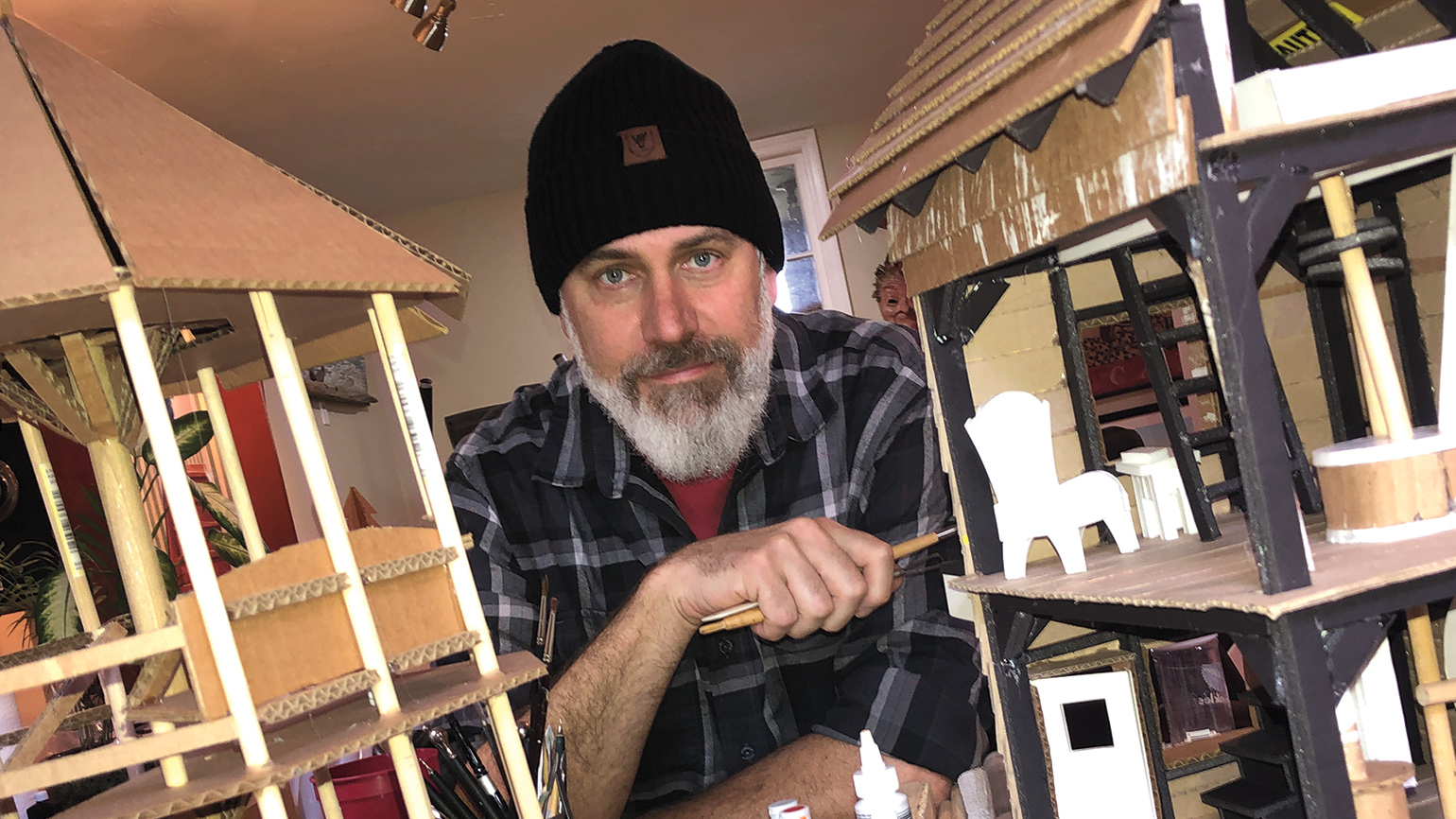
One of Matt’s gingerbread creations

Well, eating that one was. When my daughter, Lianna, and I made one of those gingerbread house kits many years later, eating it was definitely not the point. But we had a blast, adding a few touches of our own. Then my wife, Adrienne, mentioned an annual gingerbread house contest held at Mohonk Mountain House resort in the foothills of the Catskills, not far from where we live. “First prize is a two-night stay,” Adrienne said. “Why not enter?”

I’m an artist by trade, mostly graphic design and illustration, but I’ve also done quite a bit of sculpting. And what was a gingerbread house if not a type of sculpture? Only every part of it had to be edible. The challenge! The creativity! The fun!

I considered digging out my mom’s gingerbread recipe, but her cookies were a little too soft for what I had in mind. I needed the industrial strength stuff that would taste like something right out of The Flintstones. My aunt had been on to something with her comment about a house that was too pretty to eat.

In the fall of 2017, I worked feverishly on the project. Educating myself, testing out ingredients—but first I built a cardboard and foam core mock-up of my vision: a spiral staircase and flower tower with a gigantic candy cane as the central load-bearing rod. I worked out the kinks in the model, so rebuilding the whole thing with gingerbread pieces wasn’t that hard. At the end I went nuts with icing for the ivy and flowering vines.

On the day of judging, Adrienne and I walked around the grand hall at Mohonk. More than 100 gingerbread houses were on display amid the Christmas finery. “It’s like the Academy Awards,” Adrienne whispered as the winners were announced. I took first place. I was hooked.

In 2018 I was sure that the candied stained-glass windows on my gingerbread treehouse would give me the winning edge. I nabbed fourth place. In 2019 I crafted a three-story grist mill with a water wheel and a stream. I pulled an all-nighter trying to get the water to look like it was flowing. I woke with a start, surrounded by bits of chocolate and gingerbread crumbs, when Lianna put a steaming cup of coffee in front of me. “Keep going, Dad,” she said. “You’ll figure it out.”

I won third place. But my real reward came when I noticed a little boy carefully studying the mill. “Momma,” he said, “I want to live in there.”

Maybe that’s what my crazy hobby was all about. A way to recreate the wonder I felt the year Mom and I made our first gingerbread house. That, and the camaraderie that comes along with it. Last year, a college friend and I participated in a national gingerbread competition on the Food Network. We didn’t win, but I did get invited to the Gingerfriends Facebook group. (Who knew?)

One late night I posted about my frustration: “The chocolate melts down my fingers faster than I can sculpt it!” Ten minutes later: “Dude, I keep a glove in the freezer for that.” What a game changer! Each year I design and build a different house. None of them last more than a single Christmas. But the gingerbread house tradition is fixed in me forever.

Adrienne recently surprised me with an out-of-season request. “I have a craving for gingerbread,” she said. “Nothing fancy. Maybe some cookies?” We pulled out Mom’s recipe. I really did intend to make only the cookies. But I found myself sculpting a little log cabin to slide into the oven alongside them. Despite the softer texture, that house was as strong as anything I’d ever made. Delicious too. This year, I’ll use Mom’s recipe in competition, and the family tradition will reach a new height.

A Box of Encouragement

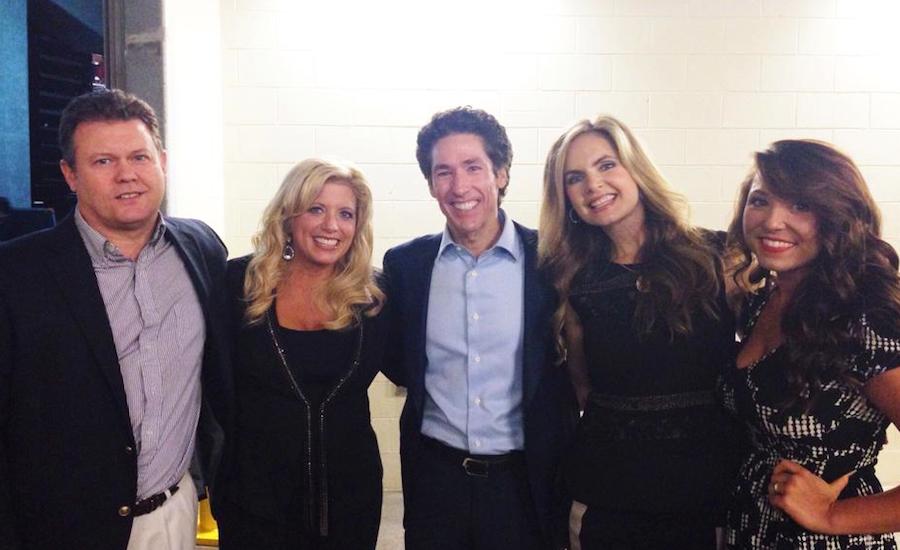
Last week at the Night of Hope in downtown Los Angeles, Victoria Osteen shared a story about a very special birthday present from a dear friend. It wasn’t expensive jewelry or a designer handbag or her favorite perfume. It was a decorative box. And though it was lovely, the box wasn’t the real gift.

When Victoria’s friend presented it to her, she said some wonderful things about the birthday girl. Then, she acted as if she were putting those compliments into the box and began passing it around to everyone else at the table.

One by one, Victoria’s family and friends said loving things about her, and one by one they “placed” their kind words into the birthday box.

Victoria shared how much that night had meant to her, and that today she has that beautiful box in a place of prominence in her office as a reminder of the sweet words that were put in the box and in her heart.

I relate to that story because I have what I call “an encouragement drawer.” As a writer, I sometimes get rejection letters from editors and publishers.

In fact, over the years I’ve probably received enough rejection letters to wallpaper my entire office, but thankfully there have been acceptance letters, contracts and awards along the way, too.

But you know what means even more? The thank you cards and sweet notes that I’ve received from writers I’ve met at the many writers’ conferences where I’ve been blessed to serve as faculty.

I don’t teach at these conferences for the prestige or the money or the chance to reconnect with some of the most talented writers in the world—I teach because I made God a promise that I would.

Before I was ever on faculty at these events, I was a bright-eyed and bushy-tailed conferee, hoping to sell an article and pitch my picture books to the right children’s editor.

More than 15 years ago, I remember looking forward to one particular conference. I knew the cost of attending really wasn’t in our budget, but I also knew that if I asked my husband to give me the conference for my birthday, he would. And that’s exactly what he did.

We were living in Texas, and the writers’ conference was several thousand miles away. I had researched the editors who were going to be there and the workshops being offered, and I was sure this conference would be life-changing for me.

It was–just not in the way I’d anticipated.

The very first day of the “Writing for Children” class, I sat in the front row. I was so excited that I hardly slept the night before. I couldn’t wait to learn from this prolific children’s book writer–until she greeted us with: “Well, I wish I had better news.

The children’s market is almost impossible to break into right now. I mean, I am well-published in this genre and even I’m having a tough time making a sale…Honestly, if you’re interested in writing anything else besides children’s, I would try that for now.”

I couldn’t believe what I was hearing! Some of my fellow conferees got up and left. I stayed until the end, hoping her mood would improve and praying she would offer some words of wisdom.

Neither happened.

I walked back to my room that afternoon defeated, discouraged and downright mad. Later that night, I prayed: “God, if I am ever on the other side of the podium, I promise You that I’ll never miss an opportunity to bless others. I’ll work for You, God, and I will encourage others to write for You, too!”

It was a simple prayer but I meant it, and I’ve never forgotten it.

That’s why when I receive emails, thank you notes and cards saying, “thank you for helping me see that I can really make it as a freelancer,” “thank you for encouraging me to write that devotional proposal–I got a contract!,” or “thank you for being so excited about my children’s manuscript. I was about to give up before meeting with you,” I put them in my encouragement drawer. (I have four!)

And, on those days when I receive three rejection letters or a bad review of a recent book, I’ll sneak into my office, open one of those encouragement drawers and read a few cards.

Like Victoria and her birthday box, I immediately feel uplifted after spending a few moments meditating on the nice things that people have written to me.

Maybe you don’t have a birthday box filled with wonderful compliments or an encouragement drawer filled with thank you cards and notes, but you do have the Word of God, and it’s filled with promises, affirmation and encouragement–just for you.

Spend some time in His Word today and meditate on the good things that God says about you and maybe write a few thank you notes of your own.

Wouldn’t it be nice to fill up somebody else’s encouragement drawer?

A Back to School Prayer for Teachers

Therefore encourage one another and build each other up, just as in fact you are doing. (First Thessalonians 5:11, NIV)

When I was in first grade, my teacher Mrs. True made an announcement that would forever change my life.

“We’re having a poetry contest this week,” she said, “so use today and tomorrow to come up with your best poem.” We had just studied the various types of poems, and I decided I really liked the ones that rhymed.

As my classmates wrote about their parents, grandparents, aunts and uncles, brothers and sisters, I carefully crafted the words to my poem: “I Love Penny.” Penny was my 7-year-old wiener dog and my best friend in the whole world. My poem went a little something like this: “Penny is my very best friend. I’ll love her to the very end. She’s a very special wiener dog. I love her though she smells like a hog…”

OK, so I wasn’t exactly a first grade Dr. Seuss, but my poem was good enough to win first prize. (I guess the other first grade poets were really bad.) At any rate, I won a few sparkly pencils and the honor of going first in the lunch line. Mrs. True also displayed my poem in the front of the room for all to see. I felt very special.

Michelle reading from one of her children's books to a group of young readers.​Little did Mrs. True know that her lesson on poetry and subsequent contest was a turning point in my life. After winning that writing contest I thought to myself, “Hey, I am actually good at something…maybe I should do more of this writing stuff.” And, so I did.

I started writing all the time. I wrote poems about every member of my family. I wrote short stories about two squirrels named Frank and Millie. I even became the editor of my elementary school newspaper, “The Panther Paw.” And all the while, Mrs. True was cheering me on.

Today, when I make appearances for “Young Author’s Day” at elementary schools and read my children’s books to the students, I am always asked two questions: “How old are you?” (which I quickly skip over) and “When did you become a writer?” Without missing a beat I always answer, “In first grade…when Mrs. True taught me about poetry, and I won a contest for a poem about my big, fat wiener dog.”

Teachers make such an impact on who we become as adults. They have a voice into our young, eager hearts, and that voice may be the only one that offers an encouraging word. I’m so thankful for Mrs. True and for teachers like her who challenge young people to follow their dreams.

Though I am not a teacher in the school system, I often teach at writers’ conferences, and I always ask God to help me be a “Mrs. True” in someone’s life. Offering an encouraging word at the right time can be life-changing for someone. Why not be a “Mrs. True” in somebody’s life today?

Let’s pray for our teachers as they start back to school:

Father, thank You for Godly teachers in our schools. Bless them, Lord, and help them to be encouraged today, just knowing that they are making a difference in so many lives. As this new school year begins, Lord, I ask that You wrap Your loving arms around them and give them grace, patience, love and wisdom for their best school year yet. In the Mighty Name of Jesus, Amen.

Adapted from Heavenly Humor for the Teacher’s Soul (Barbour Books 2011)

7 Ways to Bring Joy to the World Today

The word “joy” appears more than 150 times in the Bible. There are over two dozen scriptures dedicated to the power and importance it has in our lives, yet when it comes to truly defining and implementing joy, we’re left a bit on our own. While happiness is definied simply as a state of being, joy is something much more. It’s a feeling that stays with us, that emanates from our being, not dependent on certain circumstances or our current moods. But how do we find joy in our life and, more importantly, how do we share that joy with others?

Here are my tips for arming yourself with joy and spreading it to those around you, inspired by my new book, Fight Back with Joy.

1) Smile at the people you see.

A recent study found that smiling can increase our happiness level and make us more productive, but the grin must be genuine. Start in your own home. Smile at your roommate. Your spouse. Your kids. Allow your eyes to light up, your hidden teeth to show. Look each person in the eyes. Remember that you’re beaming the joy of God to them. You’re reflecting the delight of your Heavenly Father.

2) Radiate grace.

When you see a coworker, spouse, or child make a mistake, do something clumsy, or break something valuable, rather than becoming angry, bring levity to the situation with laughter and compassion. Help them clean up the mess with a big smile and verbally affirm the person’s value and worth.

3) Sing or hum throughout the day.

All of creation has joined a holy chorus giving praise to God. You can join in right now, wherever you are. Turn on the radio. Plug in the iPod. Hum to yourself. Offer joyful praise to God.

4) Place an exclamation point on today!

Don’t let this be another average day. Pause for a moment and consider what simple acts you can do to make today special for you and those whom you love. You don’t need much time or money. Pick wildflowers or gather some fresh tree branches and place them in a vase. Light a few candles. Pull out the white Christmas lights and hang them around your living room. Set out the fancy dishes. Wear your favorite shirt. God has placed the exclamation point of His love on your life. Do something to reflect that exclamation point of loving Him back by celebrating this day He has made!

5) Write a kind note to someone you love.

If you need a fresh infusion of joy, then bless someone else. Grab a notecard and start jotting down all the things you appreciate about someone. Feel the gratitude well up in your heart. Then, pop that notecard in the mail and spread the joy.

6) Do something you love.

Most people I know aren’t guilty of doing what they love too much, they’re guilty of doing it far too little. God has gifted and wired you for specific activities that renew your joy, fill you with delight, and remind you of His love. One of my great joys is hiking. When I experience creation, gratitude abounds in my heart, and I come home a much happier person than when I left (just ask my husband, Leif!). What is your joy-filling activity? Are you an outdoors person, a coffee shop connoisseur, love shopping with friends, settling down with a great book, or cooking a new recipe? Do the activity that God uniquely wired you to thoroughly enjoy and give Him thanks for it while you’re doing it. Celebrate your Creator.

7) Strike up a conversation with a stranger.

A recent study at a Chicago train station asked commuters to participate in a simple experiment. One group was asked to talk to the stranger who sat next to them. The other group was instructed to keep to themselves. By the end of the ride, the commuters who spoke to a stranger reported a more positive experience—even though most had predicted the ride would be more pleasant if they sat quiet and alone. Research is beginning to reveal what I suspect God knew a long time ago, namely, that interacting with strangers helps us feel happier and more connected. Instead of keeping to yourself, say “hello” and strike up a conversation with those around you.

7 Powerful Ways to Spark Creativity

“Creativity is like crabgrass,” writes Julia Cameron in her bestselling book The Artist’s Way, “it springs back with the simplest bit of care.”

As a writer whose livelihood depends on imaginative prose, I know all too well the blocks to creativity. It’s tempting to put down the pen when I have nothing to say. However, when I persevere through the blocks and continue to express myself despite my self-consciousness, my art becomes a holy act and a spiritual discipline that connects me more deeply to God, to my readers and to others.

Here are some ways to spark your creativity.

1. Empty your cup

According to a Zen proverb, a scholar with many ideas and opinions came to visit a Zen master for advice. The master poured his guest a cup of tea and kept pouring until the cup overflowed. “Stop pouring!” The man said, “the cup is already full.” “You are like this cup,” the master said, “come back when you have an empty cup.”

The laws of physics are such that we can’t fill any space – a tea cup or the right brain lobe, where creativity happens – if it’s already crowded. Dry periods, especially those that are unintentional, often precede imaginative spurts. Creativity is nurtured in spaces of emptiness, when our brains can file memories so that those experiences can be accessed when we’re ready. Even emptying a little of your cup—driving home in silence instead of listening to music—can go a long way to sparking creativity.

2. Get out of the way

In the 2000 movie “The Legend of Bagger Vance,” the mysterious Bagger Vance (played by Will Smith) advises a young golfer on how to get his swing back. He says, “Inside each and every one of us is our one, true authentic swing. Something we was born with. Something that’s ours and ours alone. Something that can’t be learned… something that’s got to be remembered…. All we got to do is get ourselves out of its way, to let it choose us.”

When we make creativity about us, we get tripped up, judging our talents by arbitrary measurements, like popularity or a spot in an art exhibit. Our challenge is to move past our egos so that we can dance to the rhythm of our inner song.

3. Focus on the why

Recently I presented a concept for a multimedia project to an audiovisual expert. To my surprise, he didn’t comment on my detailed outline. Instead, he urged me to catch a glimpse of the forest through the trees. “You’re too focused on the how rather than the why,” he told me. This meant going back to a blank page and thinking more deeply about my mission. It meant setting aside my agenda and allowing for the unexpected to happen. In focusing on the “how” of a creative project—a deadline, the intended audience, the bottom line—we can lose our voice and get distracted from our higher purpose. Strategy is important, but we create more meaningful work when we free ourselves to trust the process.

4. Let go of perfect

Nothing stymies creativity like perfectionism. When your attempt to paint, write or compose a perfect masterpiece handcuffs your efforts to create, remember Kintsugi, the Japanese art of fixing broken pottery with gold. By accentuating the fractures in a piece as opposed to covering them up, the pottery becomes even more valuable than its flawless original. When I write and speak, I try to live by the words of Leonard Cohen in his song, “The Anthem”: “Ring the bells that still can ring, forget your perfect offering, there’s a crack, a crack in everything, that’s how the light gets in.”

5. Identify your fears

For many years my fears unconsciously blocked my efforts to create. I abandoned my more personal writing and concentrated on reported stories that were safer to publish. A year ago, I got serious about pinpointing what was blocking me from pursuing my heart’s desire to share more intimate parts of my journey with readers. I realized I was scared of re-experiencing the feelings of rejection that were so painful early in my development. My task, then, was to comfort the scared little girl inside me—through journaling, art therapy and meditation practices—in order to develop the confidence and self-assuredness needed to share my story. Ask yourself these questions: What fear is blocking your creativity? What do you need to do to overcome it?

6. Show up

When I was training for a marathon, my running coach had just one piece of advice: show up. If I showed up for practice and ran with him five miles a day, adding distance on the weekends leading up to the marathon, I would complete the 26.2 miles on race day. Anne Lamott says something similar in her book Bird by Bird: Begin with the first draft, no matter how awkward it is. “Almost all good writing begins with terrible first efforts,” she writes. “You need to start somewhere. Start by getting something—anything—down on paper. A friend of mine says that the first draft is the down draft—you just get it down. The second draft is the up draft—you fix it up.” Even if all you write today is two grammatically incorrect sentences, that effort will promote better writing tomorrow.

7. Team up

The Girl Scouts designed the Buddy System for a reason. We often need a helping hand to guide us out the woods and read a compass correctly. Connecting with a kindred, creative soul can stimulate our imaginations, boost our confidence and give us the support we need to be vulnerable and express ourselves.

In his book The Power of Two, Joshua Shenk explains how the synergy of a pair is much greater than the sum of two parts. He studied several famous creative pairs: The Beatles’ John Lennon and Paul McCartney, Marie and Pierre Curie, who discovered radioactivity, civil rights leaders Ralph David Abernathy and Martin Luther King and comedians Larry David and Jerry Seinfeld. “The pair is the primary creative unit,” he writes. “Two people can do things together that are better, bolder and more enduring than what they do alone.”

“Creativity is an act of faith,” writes Cameron. In working to cultivate our own creativity, we open ourselves up to a more powerful relationship with our Creator.

7 Easy Ways to Deal with Difficult People

Thanksgiving was still a week away, but Susan was already nervous. Her thoughts turned to the previous year’s family gathering, when her aunt had pointed out that Susan was still single—loudly.

“‘Do you think you’ll ever meet a nice guy? Or any guy?’ she shouted across the table,” recalls Susan, a 41-year-old magazine editor. “Then she started ticking off the accomplishments of her own three children. As I tried to tell everyone about my new job, my aunt interrupted, saying, ‘You should focus on getting a man.’”

Difficult people. We encounter them in every area of life: family, friends, neighbors, coworkers, bosses. These are the folks who have nothing nice to say, the bullies and gossips who thrive on drama. The holidays can be particularly fraught.

“We’re told that this is the best time of the year,” says marriage and family therapist Linda Mintle, Ph.D., a nationally recognized expert on relationships. “But long-simmering tensions often come to a head.” At any time of year, an interaction with a difficult person can be confusing, anxiety-inducing and exhausting.

“Difficult people have trouble regulating their emotions,” Dr. Mintle says. “They view any conflict as a personal attack.” Other experts agree: You are unlikely to change someone’s bad behavior. The good news is you can make a plan, control your reaction—and stay sane—while interacting with a difficult person.

Try a little understanding. Start by asking yourself how this person became so difficult, Dr. Mintle suggests. “This is very important, particularly from a Christian point of view,” she says. “People don’t wake up one day and say, ‘Hey, I want to be a difficult person.’ Did they have a troubled childhood? Have they been hurt in some way? Is there a family issue? Are they under tremendous stress? If you know their background, you can bring kindness, empathy and understanding to the situation.”

Often their faultfinding says more about them than about you. In Susan’s case, her aunt comes from a generation in which a woman’s identity centered on being a wife and mother. Perhaps her aunt can’t fathom that marriage might be other than a woman’s top priority. Or maybe her aunt once wanted a career and, unable to pursue it, resents Susan’s success.

Stay calm. “If someone is blaming or criticizing you, don’t match their intensity,” Dr. Mintle says. “Try not to react.” Take a timeout if necessary. Sometimes “the feeling part of your brain gets triggered, and the thinking part goes offline. Then you need to distract your brain.” She advises counting to 10, deep breathing—and praying for self-control. A fan of the Serenity Prayer, she frequently says the following: “God, help me to not react and to see them as a person made in your image.”

That can mean looking for what’s likeable, even admirable, about them. Dr. Mintle had an uncle who constantly created tension. He goaded her into arguing about politics and criticized everyone in the room. “I tried to find one positive thing about my uncle to focus on,” she says. “I reminded myself that he took care of many people. Then I turned the conversation to sports. We were both huge college football fans, so if we could talk about the big game, we could laugh and defuse the conflict.”

Taking a step back to calm down and reassess is particularly helpful in a tense work situation. Organizational psychologist Amy Cooper Hakim, Ph.D., coauthor of Working With Difficult People, says, “Take a moment before responding. Ask yourself, ‘Is this something I should sit on until I’m more levelheaded or I’ve had better rest or I’m less stressed about other things?’ Let the phone call go to voicemail if you’re not ready to talk. That’s the beauty of caller ID.”

Know your triggers. One way to stop conflict from escalating is to become familiar with your own triggers—those behaviors in others that push your buttons. “Maybe you work with someone who makes you feel crazy,” Dr. Mintle says. “Figure out why. Maybe it’s because he always cuts you off mid-sentence—the exact same way your father did.” Setting aside your own baggage lets you assess the situation more clearly.

“It can help you avoid automatically reacting in a non-productive manner,” Dr. Mintle says.

Go in soft. When it’s time to have a conversation with a difficult person, Dr. Mintle recommends starting softly. “Say, ‘I really value our relationship. There’s something I need to talk to you about.’ Choose your words carefully; make sure you use I and we—not you. Try: ‘I think we both feel upset about the situation. Tell me what you need from me.’”

Dr. Hakim likes the Platinum Rule, which takes the Golden Rule further: “Do unto others as they would have you do unto them. Basically, this reminds us that we all come from different places. What we think is best may not be what is best for the other person. That recognition could change everything.”

Never tell a person that they’re difficult. “It almost always backfires,” Dr. Mintle says. “They don’t see it that way, and it will only exacerbate their anger.” She believes many high-conflict people have personality disorders that leave them with poor impulse control and a need to win at any cost. “You are not going to get anywhere by fighting back. Instead, listen to them and show as much empathy and respect as you can.”

Focus on the facts. Make sure your discussion is about the facts—not the person’s character. “Calmly tell the neighbor that you are upset they built a fence that cuts onto your property,” says Dr. Mintle. “You don’t need to say their house is ugly and all the neighbors hate them. And stick to one issue at a time. Don’t bring up something that happened years ago.”

Taking emotion out of the situation is “the key to managing negative, caustic, difficult workplace relationships effectively,” Dr. Hakim says. “It’s almost as if you were to share the situation with someone who has no stake in it. If you can get your mindset that way, then you’ll be able to be more pragmatic in your approach and recognize when speaking up really matters.”

Set boundaries. Sometimes, despite your best efforts, the conflict will escalate. Name-calling, violence and other forms of abuse are never acceptable. “That’s when you need to set boundaries and say, ‘This is not okay.’ Difficult people will test those boundaries and keep pushing you. Stand your ground,” Dr. Mintle says. “You can’t make someone change, but you can respond in a way that is respectful and kind yet doesn’t let them walk all over you.”

Dr. Hakim adds, “In our head, we should be asking, ‘Is this worth it? Is this something I can accept?’ Asserting yourself is important. Sometimes we’re afraid to speak up for fear of being disliked or being labeled in a particular way.”

Forgive. When all else fails, you may need to cut ties. Even then, Dr. Mintle says, having a forgiving attitude is critical. “I think about Jesus and the Sermon on the Mount. He talked about how you have to love your enemies and pray for those who persecute you. It’s really hard but really worthwhile.”

She asks God to help the person get the help they need and let her not be part of the problem. “When you hold on to resentment, it impacts your health and well-being. Ultimately, forgiveness is a gift you give yourself.”

For more inspiring stories, subscribe to Guideposts magazine.

7 Simple Acts of Kindness

Who he is: Sather Gowdy is a law student at Gonzaga University, a lifelong resident of Spokane, Washington, and the man behind Heal Spokane, a movement and nonprofit focused on improving his community. “Heal Spokane is dedicated to serving our city through acts of kindness,” he says. “I’m just a regular guy who is passionate about helping others and serving my neighbors.”

What he does: “Heal Spokane is all about grassroots acts of service that support our most vulnerable populations,” Sather says. Over the past year, he has spent more than 500 hours doing everything from cleaning up trash and mending fences to buying food for food banks and building relationships with neighbors.

Why he does it: In October 2017, Sather felt as if his world were falling apart. He went through a bad break-up. He totaled his car. Then two close friends passed away within weeks of each other. Sather withdrew, avoiding going out.

Everything changed one day as Sather was returning home from class.

“I was ready to lock myself inside,” he says. “Then an elderly woman yelled from across the street, ‘Could you help me?’ She was tiny, gray-haired and standing by her car—the trunk was open and full of groceries. I helped her get them inside.”

His neighbor was originally from Germany, and the two chatted for a bit about World War II. (Sather is something of a history buff—especially anything that’s related to Winston Churchill.) Then they said their goodbyes.

“As I walked home, I realized my heart felt lighter for the first time in weeks,” Sather says. “I wondered if I could turn all the negative energy in my life into positive energy.” He made a decision: He wasn’t going to close himself off from others anymore. He committed to performing at least one act of kindness every day for someone in his community. “Once I stopped focusing on my own pain and started focusing on serving others, I experienced an immediate difference,” Sather says. “I was no longer waking up angry. Instead, I woke up wondering who I could help today.”

Friends suggested he start a Facebook page to document his journey. He was asked to speak at his old high school’s Martin Luther King, Jr., Day assembly. Sather challenged the more than 2,000 students there to commit to creative acts of kindness and service for seven days to see if this healed some of their own hurt. The movement has spread through Spokane as hundreds have taken the kindness challenge and pledged to serve their community.

How he does it: Sather started small. He noticed a neighbor’s fence was damaged. He wanted to fix it but didn’t know how. “I didn’t let lack of knowledge stop me!” he says. “I found a YouTube video on mending a crossbeam wooden fence, bought a hammer and nails, and repaired it.”

As the movement has grown, so have Sather’s responsibilities. He dedicates a few hours each day to “getting my hands dirty,” finding ways to personally serve others—usually by helping clean up areas of the city or assisting elderly neighbors with yard work and other tasks.

“Nowhere does it say that serving others will always be fun,” Sather says. “It’s hard work to remain committed to spreading kindness through serving others, even in the face of unkindness, skepticism or hate. But even on the toughest days, it’s worth it to see the smile on my neighbors’ faces.” For inspiration, he turns to his hero Churchill: “The task which has been set before us is not above our strength…. Its pangs and toils are not beyond our endurance. As long as we have faith in our cause and an unconquerable willpower!”

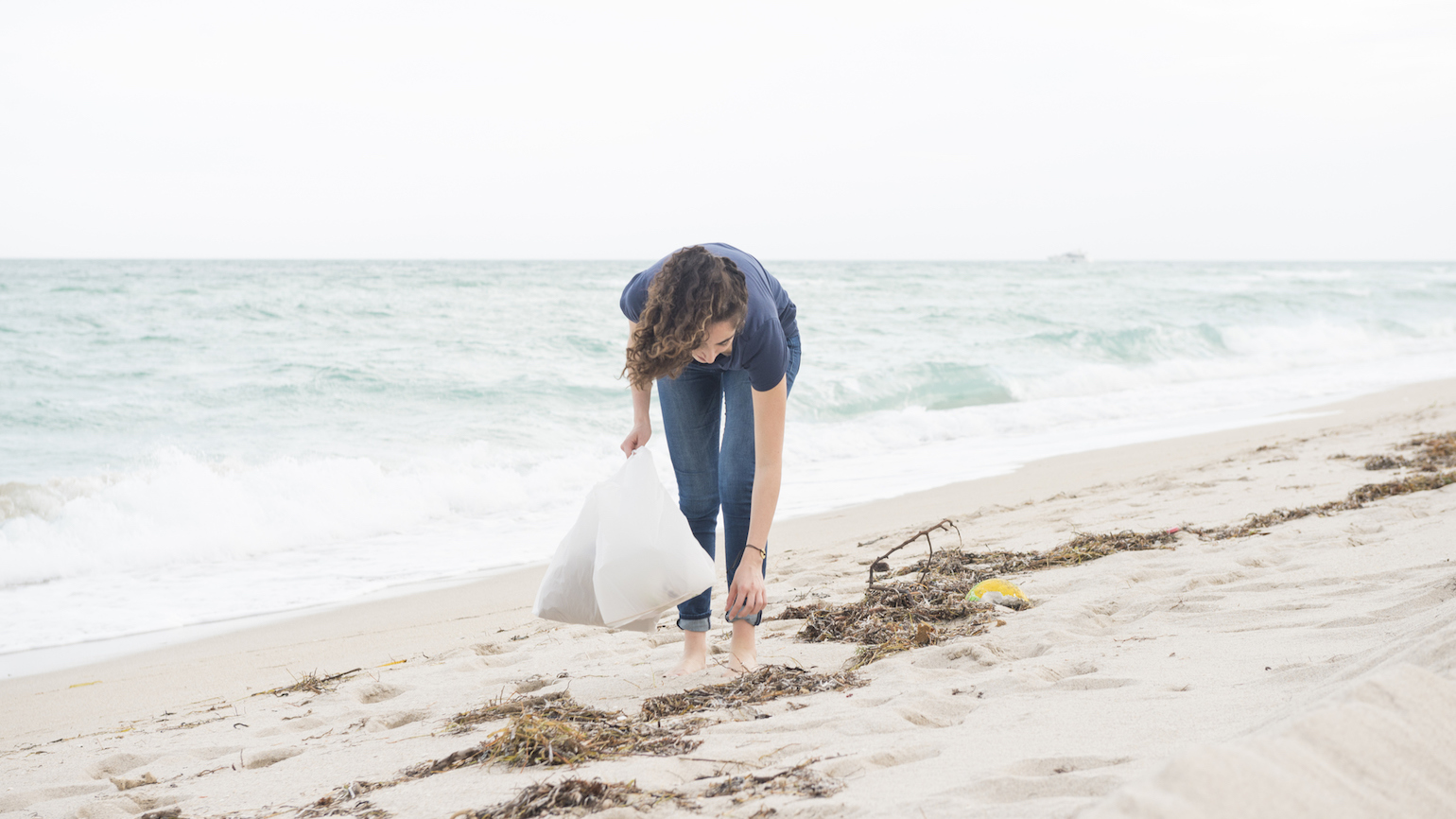
How you can do it: Sather says one of the amazing things about serving others is that anyone can do it. It’s as simple as walking outside and picking up a piece of litter or helping a neighbor carry in some groceries.

“Think of something that everyone complains about, that everyone also has the power to fix…and then go do it,” Sather recommends. An alley near his house, for example, was constantly filled with trash. Neighbors talked about how much they hated it, yet no one did anything about it. One of Sather’s first multiday acts of service was spending a few hours daily for two weeks cleaning up the alley.

“When I was done, I saw a visible reaction in people in my neighborhood,” Sather says. “Joy that the alley was clean. And increased pride in our neighborhood.” More than seven months later, the alley is still clean. Sather often sees neighbors checking on it, picking up lingering garbage or cutting back overgrowth.

Says Sather, “Start small. You’ll be amazed at the size of your impact.”

For more inspiring stories, subscribe to Guideposts magazine.