


Embrace God's truth with our new book, The Lies that Bind

5 Ways to Stay Spiritually Fit

The same traits you need to become physically fit also apply to being spiritually fit. Michelle Cox explores five of them:

“I’d maybe join you if you ever looked like you enjoyed it.” Our neighbor laughingly made that comment to my husband, Paul, as he jogged by Shannon’s house. Paul usually ran into him near the end of his 3-4 mile run, after he’d climbed the steep hill by Shannon’s house. I doubt many people would be running with joy at that point on the trail.

Paul loved exercising and was sad when knee surgery put an end to his days of jogging down our country roads. Like Shannon, I never joined Paul on his run—partly because he did it early in the morning, and I am so not a morning person, and partly because I had claimed that verse in 1 Timothy 4:8 as my life verse. You know, the one that says, “Bodily exercise profits little.”

I suspect I took it a little out of context, but it always sounded good when I said it. But then I started having some health problems, with my blood pressure and blood sugar inching up to a place where my doctor wasn’t happy with me.

So I started walking each day, building up my time and distance. It was a new habit that’s lasted more than four years now. I never got to the point that I was excited about doing it, but I did love it when I began seeing good results from my lab work and when I started feeling better and had more energy. And, miracle of miracles, I even lost some weight! Those days or consistent exercise paid off.

Being physically fit is important for all of us, but it’s even more important for us to be spiritually fit. Here are a few traits that will help you become spiritually strong:

1) Be consistent.
Determine to be faithful. Daily consistency is key. Time spent in prayer and reading the Bible will make you stronger as you run the race of life.

2) Do it anyway.
There will be days when you won’t feel like it—but do it anyway.

3) Find a mentor.
Find someone who will mentor and encourage you—someone you can have deep conversations with about God and faith.

4) Find positive thinkers.
Surround yourself with like-minded people. They will inspire you to keep going—and they won’t discourage you from following Him.

5) Inspire others.
Be an inspiration for others. Let them see the joy of Jesus in you . . . even during difficult times.

I think Paul sums it up best in 2 Timothy 4:7, “I have fought the good fight, I have finished the race, I have kept the faith.”

READ MORE: 5 MORE STEPS TO SPIRITUAL FITNESS

Just like our neighbor watched Paul on his daily run, other folks are watching to see how we run the race for God. I sure hope they’ll see us running with joy!


5 Ways to Regain Your Childlike Wonder as an Adult

Have you ever watched a young child see something for the first time? An animal at the zoo, a towering skyscraper, a night sky full of stars? This wonder and awe they hold for everything around them is an important part of being a child— and it can be an example for how we should strive to experience the world as adults!

“A sense of wonder speaks of our hunger to be moved, to be engaged and impassioned with the world,” says speaker and author, Gregg Levoy. He suggests that viewing life from a place of wonder is a great way to live fully, deepen our spirituality and connect with God. He also says that experiencing wonder becomes harder as we age—but why?

“None of the reasons are developmental,” says Levoy. “The passion for learning doesn’t naturally wane as we get older. Something gets in the way.” For example, being told not to ask too many questions, focusing on achieving instead of discovering, or not having adults in our lives who exhibit a sense of wonder.

However, that does not mean our childlike wonder can’t be regained. It is always with us; we just need to take steps to find it again.

Here are Levoy’s tips to reconnect with our childlike wonder:

  1. Get up and get out

Getting out into the world— whether it’s going to a new destination via plane, or simply taking a new path on your daily walk— is an incredible way to stoke a sense of wonder in your life. “Growing your sense of wonder is often about simply getting out from behind the desk or [away from] the chores, habits and routines in your everyday life,” said Levoy. “It’s about creating opportunities to encounter wonder by putting yourself in its path.”

  1. See your life through another’s eyes

Even though we are all surrounded by the beauty of God’s world, we can sometimes forget to see it that way. The things we see every day, like our driving route to work or the aisles of our grocery store, start to feel dull. “Try looking with renewed wonder at something you’ve looked at a thousand times,” said Levoy. “Reintroduce yourself to the charms of your town by seeing it through the eyes of a visitor, or to the wonders of the world through the eyes of your children.”

  1. Use all your sense

Levoy says we refer to it as a “sense of wonder” because it requires just that. Sense. Our five senses should play a huge part in our lives so we can fully take in the wonderful world around us. Savor the taste of a favorite family recipe. Close your eyes as you listen to your favorite song. Literally stop and smell the roses! “You can greatly extend your senses, and thus your apprehension of wonders, by utilizing new lenses,” said Levoy. “[Look at the world through] magnifying glasses, binoculars, microscopes, [and] telescopes…”

  1. Seek out wondrous displays

There are many things that are sure to elicit wonder in us— a colorful sunset, a synchronized flock of birds, a firework show. Bringing these things into your life, and even making them a small part of your busy schedule, will make wonder a part of your everyday life. “Stop and stare whenever you enter grand lobbies and atriums,” Levoy said. “Get a season pass to the art museum. Put the ‘Astronomy Picture of the Day’ website on the toolbar of your computer.”

  1. Look at things from new angels

Sometimes all we need is a change of perspective to turn the ordinary into the fascinating. For example, imagining the rushing waters that created the Grand Canyon puts it in a whole new light. Or picturing the builders who managed to erect shimmering skyscrapers makes them that much more extraordinary. Levoy has a way to make even a glorious sunset more wondrous. “If you’re watching a sunset, stare not at the sun, but at the Earth,” he said. “You’ll begin to make out what’s really going on. The sun is not setting. The Earth is rising, spinning hugely in space. You’ll begin to make out its actual motion and remember that you live on a planet hanging in midair.”

5 Ways to Keep Your Teenager on Track This Lent Season

Lent is a time for reflection and repentance, deepening our relationship with God—especially for our teens. It offers a great opportunity for your teenager to stay on track with their faith and belief. Here are some ideas to keep them focused and motivated during this special season.

Why Lent is Important for Teenagers

Did you know that the teen years are an important part of a person’s spiritual journey? According to Dr. Lisa Miller, a professor and clinical psychologist at Columbia University who studies spirituality in the lives of children and teenagers, we go through a kind of spiritual surge in our teenage years. “During physical puberty, there is an augmentation in our capacity for transcendent awareness and experiences,” she says.

In fact, various religions see the teenage years as a spiritually significant time. In the Jewish faith, children have a bar or bat mitzvah at 12 or 13 years old. Children in Catholic and other Christian churches have their confirmation between ages 11 to 17.

Lent can be an important time for a teenager’s spiritual life, especially if you are there to guide them through it. Here are 5 tips for ways to celebrate the Lenten season with your teenagers.

5 Tips to Celebrate Lent With Your Teen

Mother and teen daughter in the kitchen together discussing their lent goals

1. Talk to your teenager about what they hope to accomplish during Lent.

Taking the time to have an honest discussion with your teen, ask them what they hope to accomplish during Lent. Invite them to be creative and think holistically, beyond the traditional observances, such as fasting or saying extra prayers. While teens might not always feel comfortable talking with their parents about their personal faith matters, building a safe and open space that allows them to express themselves without judgment fosters a strong faith-based foundation into adulthood.

Mother and her teen daughter looking at their lent goals on a smartphone

2. Help your teen set realistic Lent goals

We all want to achieve great things in life, but setting the right kinds of goals can be challenging. Help your child set goals that are ambitious and high-reaching, yet realistic and constructive. One way to ensure this is by breaking down the goal into smaller ones that work together, taking baby steps and rewarding themselves at each stage for their effort and work. This can help build positive habits and keep morale up and makes sticking with goals much easier.

READ MORE: What to Give Up for Lent: 15 Meaningful Suggestions

Parents on the couch with their teen daughter making their lent goals on a laptop

3. Create a plan to help them meet their Lent goals, including daily or weekly check-ins

Having an effective plan makes it easier to stay on track and pushes your teenager towards success. Those who have chosen to observe Lent can start by developing a clear plan of action that includes daily or weekly check-ins to ensure they are working towards their overall goal. It’s important to keep in mind that sticking with the plan and remaining accountable along the way is integral to achieving the desired outcome. With proper implementation, setting and following through, can make this season especially rewarding and spiritual.

A mother encouraging her teen daughter during Lent
Getty Images

4. Encourage and support them throughout the Lenten season

Encouraging and empowering teens to stay focused and dedicated throughout Lent can make all the difference. Here are some ways you can keep your teen on track all through Lent:

  • Reach out through loving texts, emails or handwritten letters
  • Set time to talk about their feelings, goals and progress during the season
  • Gift items like faith journals, prayer cubes or Bibles to keep them focused on their journey

READ MORE: 20 Unique Lent Gifts for 2023

A father celebrating his teen son during the Lent season
Getty Images

5. Celebrate your teen’s successes at the end of Lent

After an incredible Lenten journey of self-discipline and internal growth, it’s important to recognize the successes of teenagers. Whether this is staying away from their favorite late-night snacks or rising early for prayer, celebrating their dedication to live better, faithful lives can help encourage them during this oftentimes challenging season. With celebrations, such as family board game nights or inviting friends out for dessert, there are many ways young people can enjoy the end of Lent in a meaningful and spiritual way.

No matter how you and your teen choose to celebrate the Lenten season, there is always room for bonding—both with each other, and with God. Keep them on track, guide them through the season, and remember to celebrate together when the season comes to an end. Making Lent an important spiritual time for yourself and your teen will bring joy to your family year after year.

READ MORE ABOUT LENT FOR TEENS AND FAMILIES:

5 Ways to Cope with Grief Over Missed Occasions

The spread of Covid-19 has shut down schools and workplaces and led to the cancellation of weddings, vacations, graduations and numerous other special occasions. Many people are having to navigate the grief of these losses from their own homes and struggling to make peace with their new reality. Guideposts.org spoke with grief expert David Kessler about how to manage the specific kind of grief that people are experiencing from the cancellation of much looked forward to events.

Kessler is the author of numerous bestselling books on grief including his latest, Finding Meaning: The Sixth Stage of Grief. He spent years talking to people about their grief, and is finding that the emotions people are experiencing because of the coronavirus are very different from other types of grief.

“We’re familiar with the death of a loved one,” Kessler said. “[We’re unfamiliar] with dealing with job losses, financial losses…the loss of that perfect wedding that you’ve probably been planning since you were nine. These are huge losses people are dealing with.”

Here are a few of Kessler’s suggestions for managing these very unique kinds of grief:

1. Acknowledge what you are feeling

One of the things people are struggling with is acknowledging that what they are feeling is not just discomfort, stress or sadness, but grief. But as Kessler explains, that’s exactly what many of us are facing.

“Grief is change we did not want. We’re all dealing with changes that none of us are wanting,” Kessler said.

The first step to navigating your grief, Kessler says, is to acknowledge it.

“These are huge losses people are dealing with,” Kessler said. “It helps to name them and recognize them so we can be sad about them and let those feelings through.”

2. Accept that your grief counts

Kessler said there are very few hard and fast rules for grieving, but one that he adheres to is that we can’t compare our losses.

“If your child was planning on studying abroad, and now that’s been ruined, that’s their worst grief,” he explained. “If a wedding has been canceled, that’s the bride, the groom’s and their family’s worst grief.”

Health and safety are things to be grateful for. But just because no one has died doesn’t mean you don’t have a reason to grieve.

3. Allow yourself to feel it

Kessler said it isn’t enough to acknowledge your emotions, you have to actually let yourself feel them. If you feel sad, and then feel guilty about being sad because other people have it worse, that makes the grieving process more difficult.

“If you fully feel the sadness, it moves through you,” Kessler said. “If we can just feel it, rather than suppress it, we’re going to do much better.”

4. Recognize what’s in your control

One of the scariest things about the spread of the coronavirus is that it is completely out of our hands. But just because this is a global issue doesn’t mean there aren’t things individuals can do to take action.

Kessler said focusing on the things that are in your control can help people let go of the events they may be missing. You can’t control the cancellation of a funeral or graduation, but you do have control to make sure your hands are washed, that you are practicing social distancing and eating healthy.

5. Look for meaning

Kessler worked closely with Elizabeth Kübler-Ross, whose research created the five stages of grief, to add a sixth stage called finding meaning. In his opinion, this final stage is something everyone will have to do in the wake of the pandemic.

For example, Kessler said those whose wedding is cancelled might end up with a stronger marriage for going through these hard times together. A missed family vacation may bring the family closer together through long distance calls and video chats. Sheltering at home can help individuals focus on what really matters in their life. Focusing on these things can help make grief meaningful.

As Kessler said, “when a bone is broken, the place where it is broken becomes the strongest place in the bone.”

Kessler is hosting a free online grief support group for anyone who would like to join.

5 Ways to Banish Winter Gloom

January. I don’t know what it is–the short days and long nights, the drooping temperatures, the joys of Christmas receding in the rearview mirror while the promise of spring feels far off–but the gloom sets in.

You know how it is. You try to savor the beauty of the winter snowfall, but suddenly your mind wraps around all the work that comes with it: digging the car out, shoveling the walk, washing all that muck and salt that collects on your boots. And do you have another pair of thick wool socks?

Need some help dispersing any January gloom? Try this:

1) Take a picture
Sometimes I don’t see the beauty of winter until I get out my iPhone (okay, I don’t mean to sound hopelessly 2017). The other day on my morning run I was noticing the ice on the river. I paused from my usual huffing and puffing around the park and snapped a shot.

It was only later, when I posted that picture to Instagram that I could see it: the bands of white and gray across the water and then mirroring in the cliffs, with a hint of pink where the rising sun was hitting it. It was beautiful.

2) Sing a song
You knew I’d say this. You don’t have to sing it out loud. Sing it to yourself. Can’t sing? Sure you can. My dad had a tin ear but he always sung lustily from the front pew (where he wouldn’t bother too many folks). I used to joke with him and tell him that he had about three notes–and sometimes they were the right ones.

The psalm says “Make a joyful noise to the Lord.” Nothing there about it having to be pretty.

3) Look up
Now that I got you thinking about your cell phone…look up from it. Look around you. Turn it off for a moment. The other day on my morning commute on a crowded subway train, I looked up from my phone and noticed that the man standing in front of me had a cane.

“Would you like to sit down?” I said. “That would be nice.” I got up, cursing myself for my self-involvement. At least I had finally noticed. I had looked up.

4) Know the temperatures WILL change
One winter our car was buried in snow, almost three feet of it. We spent days shoveling the snow and clearing it all off. It took almost a week. But guess what? Just as we finished, a warm spell hit and the rain came. The dirty snow all melted in a matter of days.

Trust God, trust nature. Things will change. That’s the way of the creation.

5) See the signs
The crocuses do come, the days slowly get longer, hope isn’t lost. I was walking by our neighbor’s place and noticed the sign “Hope” in the planter in front. A remnant from their Christmas decorations. It was still there. Bravely reminding me: “Hope is right here.”

5 Tips for Ensuring an Emotionally Healthy Christmas

If you’re anything like me, you love the traditions, the lights, the color and the joyous anticipation the holiday season inevitably brings. For many of us, these special moments and time-honored traditions are tied to those we love most dearly. While these are the people that make up our most precious memories, close family and friends can often bring up…stuff. This is the stuff we wish were different, the stuff from the past, the stuff we don’t like about ourselves. Unfortunately this “stuff” can prevent us from enjoying the people we love most during the holidays. Here are some things that I am wishing for from myself this Christmas that may be helpful to you as you visit your own loved ones.

1. Know Thyself

Know your sensitive spots. What makes you hurt? When you feel that hurt, what kind of hurt do you feel? Inadequate? Unsafe? Rejected? Alone? Where might that have come from? Chances are, every time you feel emotional pain, you are feeling the same two or three feelings no matter how diverse the situation or the people involved. These “sensitive spots” tend to come from life circumstances or relationships gone awry. What are yours?

Knowing our pain and where it comes from provides an opportunity to understand ourselves and realize the real truth about our situation rather than placing blame where it doesn’t belong. Once we are able to grasp what button may have been pushed, we have to own it! Having the humility to recognize when you are being reactive as a result of your own pain is a gift you can give yourself and others.

2. Give Grace

We all have these “sensitive spots” and we all have different ways we tend to cope with these feelings. Each one of our family and friends has their own pain and their own ways of coping. It’s no one’s fault, it just is. The best thing we can do for ourselves and others is to work on what’s on our own side of the fence and have compassion and understanding for what may be stirring on the other’s side. In doing this, we set the stage to enjoy peaceful interactions with our loved ones during the holidays.

3. Get clear on what you don’t do

Having healthy boundaries means knowing when to say “yes” and when to say “no.” While not everyone experiences this as challenging, many of us have difficulty knowing when to say, “no.” Often, this is because we are haunted by the word, “should.” We carry expectations about what we should be doing during the holiday season to make the season special for our loved ones or to carry on tradition. Instead of focusing on what we need to do, it can be helpful to articulate the things we don’t do. It used to be important to me to handwrite all of the addresses for my Christmas cards. There was just something that felt more personal about a hand-addressed card. But in this season, I have to let that go and decide that handwritten cards now belong on the list of things I no longer do. This is just one small example and there are many others. But it can be so freeing to make a list of things that are not life giving and may be taking time from the events or relationships that do matter to you.

4. Don’t abandon the routine … completely

The holidays offer a perfect opportunity to break from our routine to rest and enjoy time with loved ones. But sometimes we can find ourselves living in extremes. We are rigid in routines and push ourselves, struggling to find the time or reason to rest. And then when it comes time to rest and enjoy, we abandon all routine and structure. But the reality is that our choices and rhythms around rest and how we fuel our bodies can have a profound impact on how we feel emotionally. Life usually works best when we can keep a little routine in our rest and keep a little rest in our routine. Rather than living in extremes, we are wise to maintain more balance all year round.

5. Make others feel special

Someone once told me that there are two mentalities you can bring to a party. You can have a “look at me” mentality. Or, you can have a “there you are” mentality. Insecurity pulls us into ourselves, making it difficult to experience genuine connection with others. But being confident in our own significance leads us to help others be confident in their own. Talking to people in a way that makes them feel like they are the only person in the room is the best way to work a room.

Nicole Zasowski is a licensed marriage and family therapist and author of “From Lost to Found.” She is based in the state of Connecticut where she lives with her husband and two sons. As an old soul who wears her heart proudly on her sleeve, Nicole loves using her words to help others find an enduring peace and joy outside of circumstance.

5 Jigsaw Puzzles to Keep You Busy All Winter Long

Let’s face it: the entire country misses Betty White. The beloved actress and comedian died on New Year’s Eve just weeks before her highly anticipated 100th birthday celebration. Some are coping by watching reruns of The Mary Tyler Moore Show or the classic ’80s sitcom The Golden Girls. Me? I’ve just ordered my 1,000-piece Golden Girls Jigsaw Puzzle.

Paying tribute to famous personalities is certainly not the only reason to do jigsaw puzzles. Study after study confirms: doing jigsaw puzzles sharpens your brain, improves your memory and can help you cope with stress. Mostly, I think they’re fun. You can do them alone or make a night of it with friends and family. It’s no surprise that sales of jigsaw puzzles have soared during the pandemic. I love opening a new puzzle, running my hands through the pieces and settling in to spend some serious time with the image in front of me.

Check out these five puzzles that are perfect to tackle in 2022.

Golden Girls 1,000-Piece Puzzle. This puzzle by the Toynk company rates high on the nostalgia factor. When completed, you’ll have a colorful and stylistic design of one of TV’s favorite foursomes. Betty White and the three other actresses—Bea Arthur, Rue McClanahan and Estelle Getty—may all be gone, but they do not have to be forgotten.

I’m a Puzzle Online Site. You can play thousands of puzzles—think animals, landscapes and more—for free on this site. Pick your puzzle and the level of difficulty or upload your own image and they’ll turn it into a puzzle for you lickety split. If you tire of the traditional rectangular puzzle shape, try experimenting. You can request a puzzle in a different shape. How about a heart for Valentine’s Day?

Ravensburger Krypt Gradient Puzzle. Gradient puzzles, which feature a design that doesn’t use an image but instead shows a slow color shift from one side of the board to the other, are everywhere this year. We like this 631-piece option from the German puzzle powerhouse company Ravensburger. Part of their popular ‘Krypt Gradient’ series, this one, which is recommended for ages 14 and up, will test your ability to distinguish between different hues.

2022: Year of the Tiger. This year’s Chinese lunar calendar is the Year of the Tiger, a creature known in the culture as the king of all beasts, representing confidence, strength and bravery. You’ll roar with delight when you finish this challenging puzzle by Zazzle; choose from seven different sizes—starting with 30 oversized pieces right up to 1014 pieces.

Gray Malin The Beach Double-Sided. Photographer Gray Malin is famous for his aerial shots of the world’s most exotic beaches. This 500-piece puzzle from Galison features sunbathers on one side and snorkelers exploring an ocean reef on the other.

7 New Year Planners and Devotionals to Help You Start This Year Right

Like many people, you may be longing for a fresh start in 2023. Luckily, Guideposts has many resources to help you stay kind, positive and inspired in the new year. Whether you are buying something for yourself or giving one as a gift, these new year planners and devotionals will help you both be productive and slow down to connect with God in 2023.

Cover of Walking in Grace 2023 new years devotionalWalking in Grace Devotional 2023

Make time with God a positive habit with America’s favorite new year devotional! In just five minutes a day, Walking in Grace 2023 helps you find the spiritual richness in your life. This year’s theme is Filled with Praise which offers a powerful and comforting day-by-day reminder of God’s greatness. Enjoy writers like Edward Grinnan, Rick Hamlin, Julia Attaway, Marci Alborghetti, and Debbie Macomber; each one shares what it means to them to rest in God’s hands. Buy at ShopGuideposts.org

Cover of All God's Creature 2023 planner for the new yearAll God’s Creatures Daily Planner 2023

Life can sure get hectic sometimes! Fortunately, you can stay calm, get organized and remain peaceful throughout the year with our new All God’s Creatures Daily Planner 2023. This 13-month calendar is brimming with the stunning beauty of God’s beloved animals—great and small. With a colorful and fun design, this new year planner is filled with adorable animals, heartwarming stories, uplifting Scripture verses, pet care tips, and more! Buy at ShopGuideposts.org

Cover of Finding God in the Garden new years devotionalFinding God in the Garden Devotional

Tending a garden awakens something deep in our hearts. Perhaps that’s because the joys and trials involved in nurturing, protecting, and growing beautiful plants have so many parallels to tending the garden of our souls. Finding God in the Garden will help you celebrate the metaphors of the garden, quiet your mind, celebrate each day, and be in awe of God’s creation each day of the new year. This undated devotional offers a bounty of spirit lifting devotions that will speak to your heart in a unique and inspiring way. Buy at ShopGuideposts.org

Cover of Running in Faith devotional for the new yearRunning in Faith Devotional

This unique devotional combines expert tips to help you run longer and stronger with inspiring true stories to help deepen your walk with God. Week after week, you’ll be encouraged by inspiring stories of ordinary men and women who have become both spiritually and physically fit. Inside this undated devotional you’ll find training tips from a veteran runner, enlightening scriptures that speak to your heart, thought-provoking questions to help you reflect, room for you to journal, and even step-by-step training plans for 5K, 10K, half marathon, and marathon. Buy at ShopGuideposts.org

Cover of Guideposts Daily Planner 2023 new years plannerGuideposts Daily Planner 2023

Take time for your faith every day with this beautiful 12-month calendar and prayer planner in one! Guideposts Daily Planner 2023 features daily Scriptures, moving devotions to start each month, plus a three-year calendar and holiday planner. Pocket dividers let you store your personal prayer requests, cards, notes, and daily to-do’s in one place. Order now and receive a free Guideposts Pocket Planner 2022— the perfect way to take your plans and prayers with you wherever you go. Buy at ShopGuideposts.org

Cover of Mornings with Jesus 2023 new years devotionalMornings with Jesus Devotional 2023

Start each day of 2023 with encouragement for your soul! Every page in our newest Mornings with Jesus contains a Scripture quote, an uplifting devotion that demonstrates how Jesus’ life and teachings apply today, and a Faith Step that will inspire and challenge you to apply the day’s message to your life. With humor, humility, and grace, the writers share relatable insights that allow you to center yourself with Jesus’ guidance on a daily basis. Buy at ShopGuideposts.org

Cover of All God's Creatures 2023 new years devotionalAll God’s Creatures Devotional 2023

These daily devotions are perfect for animal lovers everywhere! All God’s Creatures 2023 features 365 devotions about God’s gift to us—whether they are furry or feathered. Each entry includes enlightening scripture to help you reflect on God’s goodness, uplifting animal stories from your favorite authors, and faith-in-action steps to help you live in God’s world. Get the hardcover edition or order for your favorite eReader. Buy at ShopGuideposts.org

5 Easy Ways to Make Gratitude a Habit

A grateful attitude is good medicine. However, the busyness of life, financial issues and work stress can distract us from all that we have to be thankful for. As humans, we have a tendency to focus on troubles and not on blessings, but there are practical things we can do to help boost our appreciation for our life and start a gratitude habit.

1)  Start the Day by Making Gratitude Your Attitude

When we wake up each day, we have the choice to have a grateful mindset and spirit. Begin each day by stating what you are grateful for and be thankful in prayer. In doing so, we can positively affect how we experience the rest of the day. Here are a few things you can do to begin your gratitude habit in the morning

2)  Say “Thanks” More Often

This one word has the power to uplift the attitude of the person you thank as well as your own. Let others know they are appreciated, and you’ll feel good, too, as a result. Say “thank you” to those who help you at work, your doctor, the supermarket staff and others.

3)  Create a Gratitude Journal

Be intentional. Journal every day about the things, people, experiences, moments, events and meals you are grateful for. Over time you can look back and see the goodness of God in your life. READ MORE: Start a Gratitude Journal

4)  Be Uplifted by Others

Read stories or watch videos about people who have overcome great challenges in their lives. These stories can help us realize that even in the worst of times we have a lot to be thankful for. READ MORE: Inspiring Stories that Will Leave You Feeling Grateful

5)  Spread Thanksgiving Throughout the Year

Enjoy a meal with people you are grateful to have in your life. Make it a positive practice of being with those who fill your heart with love and gratitude.

A wise person once said, “A cheerful heart is good medicine, but a crushed spirit dries up the bones.” It takes positive habits to ensure that we remain cheerful and grateful in the different seasons of our lives. How do you make your gratitude a habit? If you have any tips on how to boost one’s thankfulness, please share with us.

Lord, thank you for the gift of gratitude; help us to be intentional and develop practical habits to boost our gratitude.

5 Benefits and Perks to Improving Your Spiritual Wellness

In addition to your physical health, your spiritual well-being is important and can have a strong impact on your overall health. Spiritual wellness can be obtained in many ways—through meditation, mindfulness, journaling or prayer—and significantly contributes to your life’s meaning and purpose. Here are five benefits of improving your spiritual wellness, as well as activities you can do to get started.

The opportunity to reflect

Often times, we become so caught up in our busy lives that we forget to take a moment to pause and evaluate our decisions, actions and choices. For example, a busy mom may be preoccupied with errands and school drop-offs and pick-ups to pause for a moment to reflect or appreciate the people, things and events around her. Taking time to reflect will help deepen the connection with oneself and create a stronger sense of self-awareness and mindfulness. So, the next time you find yourself overwhelmed with the day’s tasks, try taking time—in the morning or night—to say a prayer of thanks or use a journal to write down your thoughts and expectations of the day ahead.

Reduces stress, anxiety, and depression

Spiritual wellness can have an impact on your health by reducing stress and improving mental illness. Some spiritual practices such as yoga, walking or meditation can help manage stress while improving your mood. Whether it’s with your family, friends or by yourself, take a walk around your neighborhood or a local park to embrace the outdoors and feel a stronger connection with nature.

Brings you closer to God

A great way to improve your spiritual well being is by praying. Through prayer, you become closer to God and are more aligned with your faith values. Prayer can provide a clearer view of what’s important by offering a new perspective. It can help you focus on all the good things in your life rather than dwelling on the failures and problems. You can pray in the morning, at bedtime, or even take a few minutes throughout your day to say short, one-word prayers that will strengthen your faith and help you feel centered.

Gain a better sense of peace

A peaceful mind is a great benefit of spiritual wellness as it brings forth a sense of calm and reconnection. Find quiet places, such as a backyard or a park to gather your thoughts and feel more at ease with yourself. With a clearer mind, you’ll be more capable of handling tasks or responsibilities, be happier and concentrate better.

Improves relationships

People who are spiritually balanced can have deeper, more meaningful relationships with those around them. They are often better at handling conflict, offering support to those who need it, and having a good balance between their own needs and the needs of others. For example, a young couple navigating marriage for the first time can benefit from spiritual wellness because it allows them to have better communication and understanding of each other’s needs as they begin a new chapter of their lives.

4 Ways to Protect Your Relationship with God

I’m always impressed when a baseball player slides into a base—but I don’t recommend that action for grandma types. I can say that from experience. Yes, in a graceful move of epic proportions, I recently slid down an embankment at my son’s church and landed halfway under our SUV.

Thankfully, nobody but my husband saw my slip and slide, so my pride was spared. My foot was another matter. When I got up, I saw the little toe on my right foot sticking outside my sandal.

When I slipped my shoe off, four toes pointed straight ahead. The little toe stuck out to the side like a right turn signal. There was no doubt it was broken—especially when it started screaming “OUCH!” at me! Bruising started halfway to my ankle.

Read More: Inspiring Billy Graham Quotes

I have a long history of (ahem) gracefulness. So, from previous experience, I knew to put a piece of gauze between the toes and to use first aid tape to secure the broken toe to the ones next to it.

But, oh my, it’s been impressive how much that little toe has hurt—especially since I had to leave the next week for a lot of walking at The International Christian Retail Show.

My feet always hurt after that event, even when I’m not injured. My broken toe did some serious talking to me by the end of each day at the convention center.

I can’t tell you how much I’ve protected that foot, tucking it behind me whenever anyone walks nearby, choosing the chair at the dinner table where nobody will be near my injured toe, and constantly reminding my husband and grandchildren, “Don’t get near my foot!”

And then it was as if God whispered to me, “What if you took care of your faith and soul that carefully?”

Read More: 12 Prayers for Summer

Wow, that hit me. I’d never thought about that before, but I want to be proactive about protecting my heart from influences that would derail my faith. How can I do that?

I came up with 4 ways to start:

1) I can spend time in God’s Word. He’s included first aid tips there for anything that would injure me.

2) I can surround myself with people who also love God. We’ll be far more likely to protect our faith if we hang out with others who have similar values.

3) I can pray and ask God to guard my heart so that I won’t make wrong choices.

4) And just as I taped that broken toe to the strong ones next to it, I can attach myself closely to God so that I can feel His presence in every circumstance.

That broken little toe has been a great reminder of how much one move can impact my life and soul.

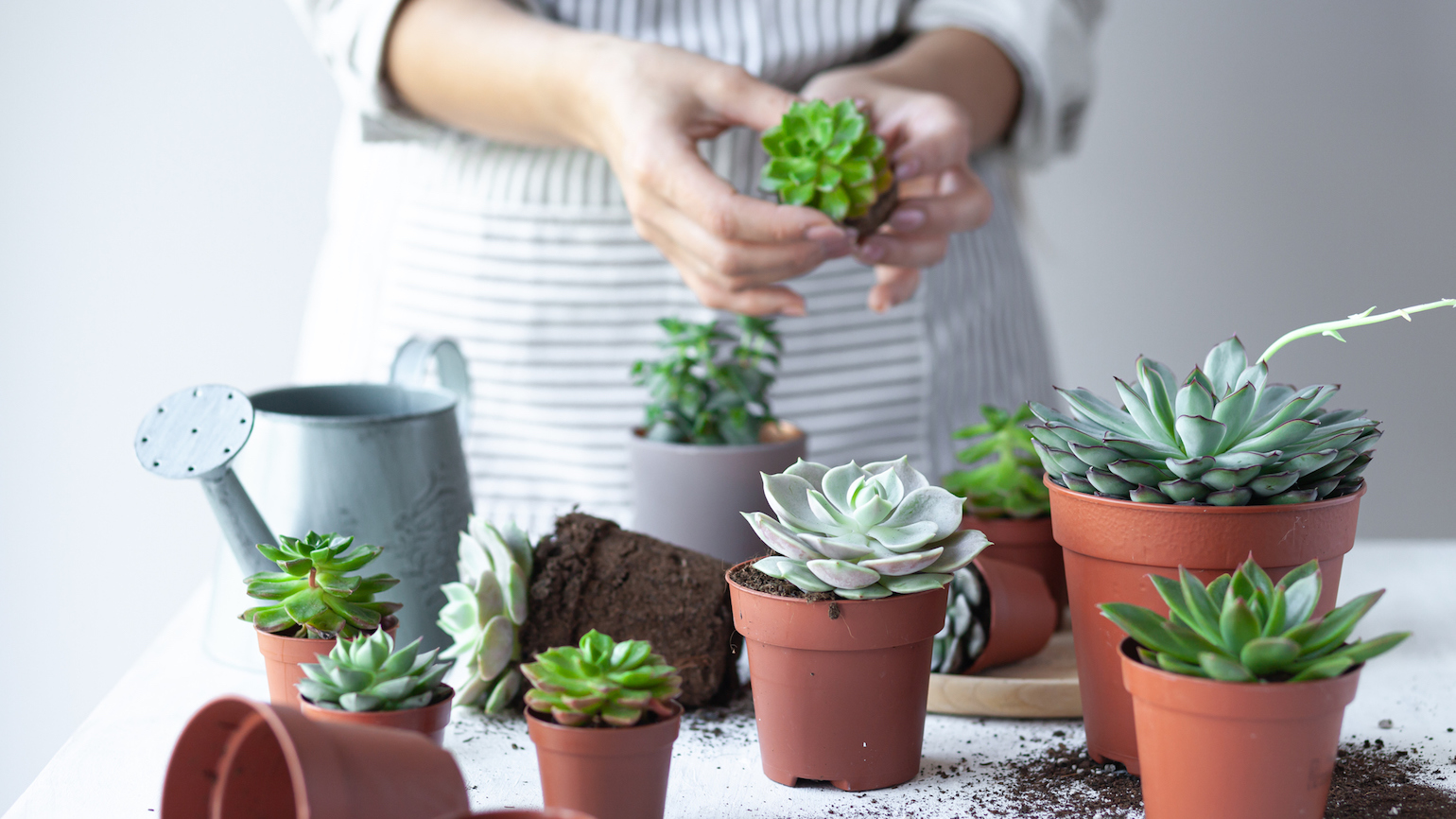
4 Things Succulent Plants Can Teach You About Life

I’ve been on a journey to improve my skills in caring for houseplants, and in recent months, that’s drawn me to succulents—a category of plant defined by the ability to store water in broad stems (think of a cactus) or in thick, juicy leaves (think of an aloe plant). Succulents are famous for being easy to care for because they not only enjoy, they actually prefer to spend lots of time in a dry, untended environment.

Part of the pleasure of learning and exploring the wildly diverse spiky, smooth, pointy, round, squat and spreading world of succulents is that it gives me the opportunity to see my own life—in all my hopes, worries, victories and challenges—reflected in those tiny pots of green. Here are four lessons my succulents are teaching me these days:

1) Roll with Mistakes
Don’t get me wrong—there’s ample room for error in caring for succulents, from over-watering to setting in a too-sunny or too-shady spot to using a soil mix with poor drainage. I’ve made every mistake in the book, and each time I do, I wait for that moment when disappointment and frustration morph into learning and hope for something new to understand, something different to try.

2) Let It Be
Sometimes, the best thing we can “do” for a growing thing is to leave it alone. Let it be—whether “it” is a succulent that likes its soil to get completely dry before having another drink, or a new routine or habit that needs some time to take hold before you adjust, fuss and study it closely again.

3) Trust Inner Resources
A particularly satisfying aspect of succulent care is to give its leaves a gentle squeeze. Unless the plant is badly in need of a deep drink of water, the leaves will surprise you with their balloon-like juiciness, the inner nourishment it is able to draw on in its own time, when it needs to turn inward and support its own growth using the resources it has collected over time.

4) Reach Out with Roots
Propagation—using a cutting or even a single leaf to create a new plant—is easier with succulents than with many other plants. Some plants, like the other-worldly “Mother of Thousands,” sprouts “pups” that send out roots while they’re still attached to the parent plant. Other succulents, like jade can be propagated by letting a clean 4-inch cutting or single leaf dry out and callous before sticking it into a well-draining mix of perlite and soil. From there, the plant knows what to do. Letting it reach for water, extending its roots with almost no effort on your part, is perhaps the ultimate metaphor for our own strength, the potential that lies within each of us to grow, to expand, and to find beauty and comfort wherever our roots can take hold.

What do you love about succulents?