Embrace God's truth with our new book, The Lies that Bind

4 Reasons Why Hugs Are the Perfect Gift

One night while I was out of town, my husband, Paul, attended the church where our youngest son is youth pastor. He enjoyed snuggles during the service from Ava, our 7-year-old granddaughter, and Nolan, our 3-year-old grandson,.

When church was over, Paul said his goodbyes to everyone. He headed down the hallway to the exit when he heard Nolan’s little footsteps running behind him and then, “Granddaddy! Granddaddy, don’t leave! I need another hug before you go.”

Yes, a definite heart-melt moment.

And that got me to thinking about the gift of hugs.

1) Hugs give comfort.
After my dad’s suicide, a woman I didn’t know came to his visitation. She softly said, “My dad did the same thing.” And then she wrapped me in a hug that gave so much solace.

2) Hugs say what we can’t.
I recently attended the funeral of a man who was very special to our family. There were so many things I wanted to say to his sweet family, but the words simply weren’t there.

3) Hugs show love.
Does anything feel better than a child’s arms wrapped around you? Or what about the hugs from a soldier’s family as he returns from deployment? Hugs speak volumes.

4) Hugs provide security.
A hug before a child leaves for school says, “I love you, and no matter what happens at school today, you have someone at home who cares about you.”

Those kinds of hugs are wonderful, but the best hugs are the ones we get from heaven—the ones God sends to us in those moments when we’re hurting or when we need to know we are loved. I’ve had many instances in my life like that. Times when things were falling apart or when my heart was breaking—and then I’d feel His sweet presence wrap around me like a holy hug. I can’t describe the comfort that brought.

A friend once told me about a female co-worker who came to her and said, “Would you mind giving me a hug? No one ever touches me.”

That was so sad to me. There’s a deep need in all of us to feel loved—and human touch is part of that. So today my challenge is to find someone to hug—a senior citizen who lives alone, a single mom who has the weight of the world on her shoulders, a friend who’s lost someone she loved, a child who doesn’t receive love at home, our spouse, our children—the list could go on and on.

Just do it—because a hug is a gift from the heart, and it’s always the perfect gift for someone who needs it

4 Reasons Why an Interruption Can Be a Blessing

I’m one of those people who hates interruptions. I make my daily to-do list with every intention of working through it until each item is completed. And inevitably the phone will ring or the clothes dryer will buzz or my computer will freeze, and I have to pause and reboot it. Or there’s the flu that never seems to arrive at a convenient time, usually right in the middle of a tight deadline.

But as all of us have learned, interruptions are a part of life. It’s how we respond to them that makes the difference—and I’ve found that often there are good reasons for the disruptions that come along:

1. For Our Protection
There have been many times when I’ve driven somewhere and traffic came to a stop because of road work or a wreck ahead. Or there’ve been instances when I’ve had to take a detour or been stuck at a red light because the cars in front of me were slow about moving when the light changed. Those moments used to make this full-speed-ahead gal impatient, but then one day, God showed me that those minutes I waited at the red light or behind stopped traffic might have protected me from the danger ahead.

2. To Teach Us That We’re Not in Control
I’ve made numerous plans and had big dreams that I thought would be awesome. Then I’ve seen it all fall apart. I’ll be honest, there were times I grieved the loss, wondering what God was doing, why He wasn’t blessing my plans. But with the beauty of hindsight, I’ve realized that my plans would have been a mistake; I was so much better off with God in control.

3. To Make Us Listen
Sometimes God has to interrupt me so I’ll slow down long enough to hear His whispers to my heart. It’s in those be-still moments that I can feel His presence.

4. To Cause “U-turn” Moments
Sometimes God interrupts our plans because He has a “U-turn” for us. That can be difficult when our lives are disrupted by job losses or broken relationships, but we can rest assured that God always has something better for us. I’ve learned that His dreams are always bigger than anything I’d imagined.

Are you aggravated by the interruptions in your life? You just might discover that God means them as blessings.

4 Prayers for Money Worries

We’re not the first people in history to face economic challenges. Far from it. But still. These days it feels like our volatile economy, soaring unemployment rates, financial uncertainty and worries about finding a job, keeping a job or managing on a fixed (or disappearing) income make our current circumstances more, well, frightening than many of us have ever known.

“These are the times that try men’s souls,” we may cry with Thomas Paine. Or we may loosely paraphrase him: “This really stinks.”

It’s easy to spout platitudes, even to ourselves, but it’s harder—much harder—to think, believe and pray in such a way that actually helps. We should, of course, give ourselves permission to pray, simply, “Help!” or “Get me out of this,” which are similar prayers to the way our Savior prayed in the Garden of Gethsemane. I pray those a lot, myself. But there’s another kind of prayer I rely on in scary economic situations. I call it “a Zarephath prayer.”

It’s based on an incident in the life of Elijah, when God sent him to a widow in a town called Zarephath. She lived with her son, and had only enough flour and oil in the house for one more meal. Her plan, she told Elijah, was to “make a meal for myself and my son, that we may eat it—and die” (1 Kings 17:12, NIV). She was exhausted and out of options.

But Elijah told her to cancel her plans:

Elijah said to her, “Don’t be afraid. Go home and do as you have said. But first make a small loaf of bread for me from what you have and bring it to me, and then make something for yourself and your son. For this is what the Lord, the God of Israel, says: ‘The jar of flour will not be used up and the jug of oil will not run dry until the day the Lord sends rain on the land.’”

She went away and did as Elijah had told her. So there was food every day for Elijah and for the woman and her family. For the jar of flour was not used up and the jug of oil did not run dry, in keeping with the word of the Lord spoken by Elijah (1 Kings 17:13-16, NIV).

That account has often inspired my prayers when I’ve felt financially exhausted and out of options. In fact, as I look back in my prayer journal, I see a succession of four prayers I have used—sometimes in quick succession, other times over a period of weeks—in times of need:

1) Lord God Adonai, let it be to me as it was to the widow of Zarephath. Let the jar of flour not be used up and the jug of oil not run dry until the day you send showers of blessing on me, my home, my land, my life. Amen.

2) Abba, Father, Yahweh Yireh, my Provider, I know that what looks to me like severe cash flow challenges in the weeks and months to come are no different to you than a handful of flour in a jar and a little olive oil in a jug. What you did for the widow of Zarephath through your servant Elijah, please do for me and, more importantly, for my household, in Jesus’ name, amen.

3) Lord God Adonai, my defender and provider, I pray once more as I have prayed before: let it be to me as it was to the widow of Zarephath. You know my need of the moment; you know my need in the future. You know what is yet to come in, and what is yet to go out. You know the state of my jars, the condition of my pantry. I lean on you still, I depend on you to make much of little and enough of not enough, in Jesus’ name, amen.

I’m grateful and reassured by a fourth Zarephath prayer that I have also prayed on occasion, giving thanks that God answered:

4) Lord God Adonai, You have been to me as You were to the widow of Zarephath. You have supplied and sustained and showered Your blessing on me, my home, my work, my life. Please let Your faithfulness to me through these scary times of need and adjustment and faith be remembered in the future whenever I am tempted to doubt Your provision, amen.

These prayers help me believe that, if God replenished a poor widow’s store of flour and oil, He can also see me through times of scarcity and want.

4 Positive Ways You Could Be Using Social Media

Billions of people around the world use social media. There’s no doubt that popular platforms like Snapchat, Twitter, Instagram and Facebook offer incredible opportunities to connect with others and build community. However, along with the benefits come negative side effects. Stories of cyberbullying and trolling grace our news feeds daily and all of that negativity can make what was once intended as a fun and empowering pastime seem just not worth the effort anymore.

But it doesn’t have to be that way. Social media, for all of its faults, isn’t inherently bad. In fact, these sites can be the perfect places to spread positivity and hope. Here are four ways to change the conversation on your news feed.

1. Post an inspiring quote or Bible verse

Vision boards are tools that keep you focused on a goal and give you a bit of daily inspiration. Some people write quotes on their bathroom mirror or hang beautiful photos at their desk at work to keep them inspired. Social media may just be the perfect place to share your vision with others. Like to start your day off with a motivating quote? Share it on Instagram! Find a powerful Bible verse in your morning devotion? Post in on Twitter. Dreaming of an exotic vacation next summer? Create a board on Pinterest to share with friends and followers. Whatever’s motivating and inspiring you every day will probably do the same for someone else. Why not share the love?

2. Stay in touch with friends and family

Facebook was created with the goal that the website would make it easier for people to become friends, stay in touch and be active (online) participants in each other’s lives, even if they weren’t able to see each other face-to-face. But Facebook isn’t just about connecting with friends and family anymore. Now, we can follow pages of celebrities we like, magazines we read – we can even get caught up on what’s trending in the news. What’s slowly happened as a result is us forgetting to use Facebook for what it was created for – connecting. So the next time you see a friend post a status asking for help, announcing a new job promotion or maybe even complaining about their day, comment on it. Let them know you care by showing them they haven’t been lost in your news feed.

READ MORE: 5 WAYS TO PRAY FOR OTHERS ONLINE

3. Share charities and causes you follow with others

One of the great things about sites like Twitter and Instagram is the ability to plug into organizations and programs you wouldn’t have ever known about otherwise. Being able to share real-time updates on marches and fundraisers, photos of mission trips to other countries and posts announcing the launch of new campaigns are just a few reasons why the whole social media boom has been beneficial to companies and charities doing great work. If giving back is something you’re passionate about, or if you just happen to stumble upon an article detailing a new ministry doing amazing projects you think people should know about, share it on your own feeds. Not only do you get the opportunity to promote goodness and change in the world, but you also might be able to connect a friend or follower to a cause and charity that may end up changing their life.

4. Follow inspiring people doing good work

One of the added benefits of social media is being able to track what some of the most important people in the world are doing and even converse with them. While celebrity Twitter rants and feuds usually make the news, there are plenty of great people quietly doing amazing things that you wouldn’t know about if you didn’t follow them on Instagram or visit their Facebook page every now and then. Identify the people and the causes that mean something to you and be sure to give them a follow. Having your news feed flooded with meaningful postings by people you admire can only bring inspiration in your own life and as a result, may propel you to do some inspiring deeds of your own.

4 ‘Pillars of Happiness’ for Older Adults

Three quarters of Americans report that the pandemic has inspired them to reconsider their priorities in life, dedicating themselves anew to their most cherished values, according to a new survey.

Are you among them? Especially for retirees and older adults, the uncertainty and disruption of the pandemic has opened many doors for self-reflection.

The research, conducted by a partnership between Harris Poll, the consulting firm Age Wave, and the financial firm Edward Jones, points to four “pillars” that connect with happiness and peace of mind among retirees.

1) Health
“At least I have my health,” goes the old chestnut. Whether you live with a chronic condition or are simply facing the realities of living in an aging body, overall health is a central predictor of happiness for older adults—as is each person’s attitude toward their health and wellness. One interesting finding from the survey was that despite the disproportionate risk of the COVID pandemic for older adults, a majority (61 percent) expressed a less anxious, more optimistic mindset, agreeing that the pandemic gave them “more appreciation for what makes life meaningful.”

2) Family
“Having friends and family who care about me” was a top priority for more than 75 percent of respondents to the survey, and “having a positive impact on family and others” had the particular attention of retirees when asked how they define success. Especially after a year of unwelcome distance from family members, restoring connections and reinvigorating relationships are of paramount importance.

3) Purpose
An interesting finding of the survey was that more adults (67 percent) named “spending time with loved ones” as a primary source of purpose than those (40 percent) who identified giving back to the community. Especially after a time of isolation and loneliness for so many, this highlights the primary importance of relationships in happiness.

4) Finances
Health care costs, providing for future generations and other post-retirement financial anxieties are deeply embedded in retirees’ happiness. A majority (61 percent) said they wish they had prepared for their retirements more robustly. If you are a pre-retiree, this finding might inspire you to invest in your future in a new way.

Do these resonate with you as “pillars of happiness?”

4 Fun and Easy Crafts to Make with Leaves

“Autumn is a second spring,” wrote the author Albert Camus, “when every leaf is a flower.”

As the air turns chilly and crisp, we are drawn simultaneously outdoors, to marvel at the changing season unfolding before our eyes, and indoors, to cozy up with warm cider and perhaps the first fire of the season.

Why not combine the two by working on nature-based crafts while sipping from your warm mug? Here are four fun and easy ways to incorporate autumn leaves, in all their “flowering” glory, into handmade crafts.

1) Leafy Wreaths

Perhaps the easiest fall craft to make with leaves is a wreath. A foam or pressboard wreath form is very inexpensive, or better yet, a cardboard form can be thrown away along with the leaves, at the end of the season. Some fresh, bright leaves, a little hot glue and a few minutes will get your home or mantle ready to embrace the fall.

2) Pressed Leaf Art

Pressing leaves is a time-tested way to preserve autumn leaves at their most vibrant. Follow a tutorial like this one to press and dry your leaves. From there, the crafting options are limitless! Glue pressed leaves onto card stock and frame, or glue them onto folded paper to make a cheerful seasonal banner.

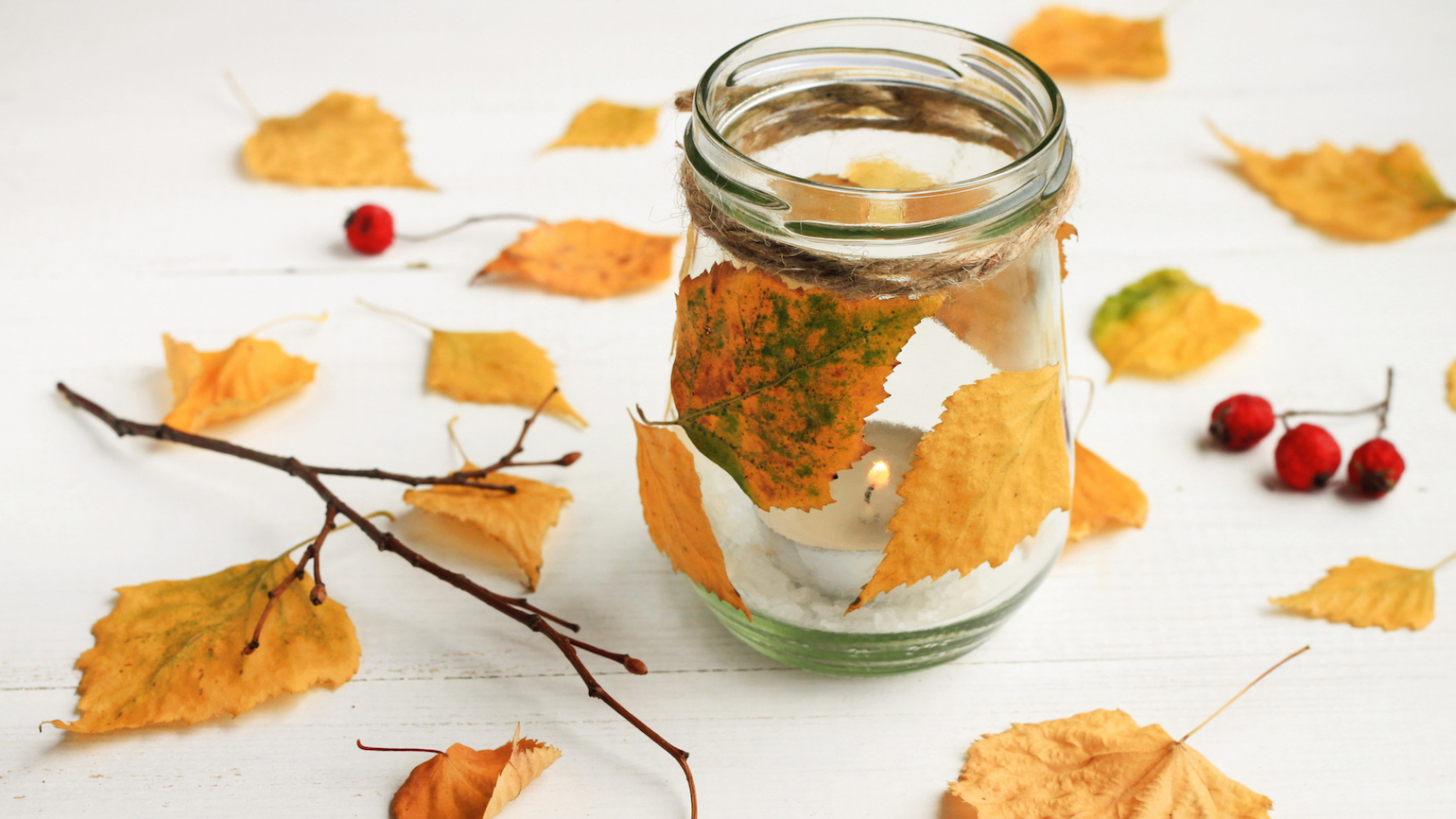
3) Leafy Mason Jars

A Mason jar, a bottle of Modge-Podge or other clear-drying, sealing glue and a sponge are all you need to make beautiful leaf-lined jars that are stunning votive candle holders or autumn vases. Be sure your jar is clean and dry, and that your leaves are either freshly fallen or gently moistened so they will bend to the right shape. Brush the outside of the jar with glue, attach your leaves and coat with more glue.

4) Leaf-Printed Table Linens

Freshly fallen leaves are beautifully shaped and, with their veins still plump, ready to use to make prints on paper, pillowcases or table linens. Use some acrylic paint to coat the back of a leaf, then press it onto the fabric or paper of your choice, being sure to cover the leaf with waxed paper as you press so it doesn’t slip or smudge.

However you choose to savor Autumn leaves, take a minute of gratitude for the blessing of fall.

3 Ways to End Each Day on a Positive Note

“At the end of the day,” the actor Ben Vereen is quoted as saying, “give up your worries and give thanks for the journey.” I love the idea of regarding each and every day as a journey—small steps within the larger framework of your whole life, but also unique, finite moments in and of themselves. None of us can predict what each new day will bring. But we can choose to end it on a positive, peaceful note.

1) Lay Eyes on the Sunset

There’s only one today, and there’s no better way to embrace that truth than by finding a spot to behold the uniqueness of the sunset. Even if it’s cloudy, even if you can only glimpse a moment of the waning light, take the opportunity to watch the sky brighten, color and then fade into darkness. It’s an inspiring and very specific way to say to yourself, “day is done.” You might enjoy this feeling so much that you offer nature an applause!

2) Make a Gratitude List

Look back over the day with self-compassionate, grateful eyes. Take a moment to list—aloud or in writing—a few things that you are thankful to have done, thought or felt. You can think very broadly (I’m grateful I felt well today) or at a micro level (I’m grateful I remembered to buy eggs last week so I could have them today). Or you can reflect on something in the middle, from conversations you’re glad to have had to the feel of a favorite t-shirt on your skin. Your list needn’t be long to urge your mind in a positive direction as the day draws to a close.

3) Tidy Up (Just a Little)

As we continue to spend more time at home, small corners of clutter can feel like they’re taking up permanent residence in our space. At the end of each day, spending just a couple of minutes tidying up any area can keep your home feeling fresh. It can occupy your hands with an easy task and represent in a physical way how kitchen gadgets, opened mail, books and clothing served your day. It’s both important and satisfying to tuck them back into their places, just as you’ll do when you settle down to sleep.

How do you end your day on a positive note?

3 Ways to Celebrate ‘Plenty’ This Thanksgiving

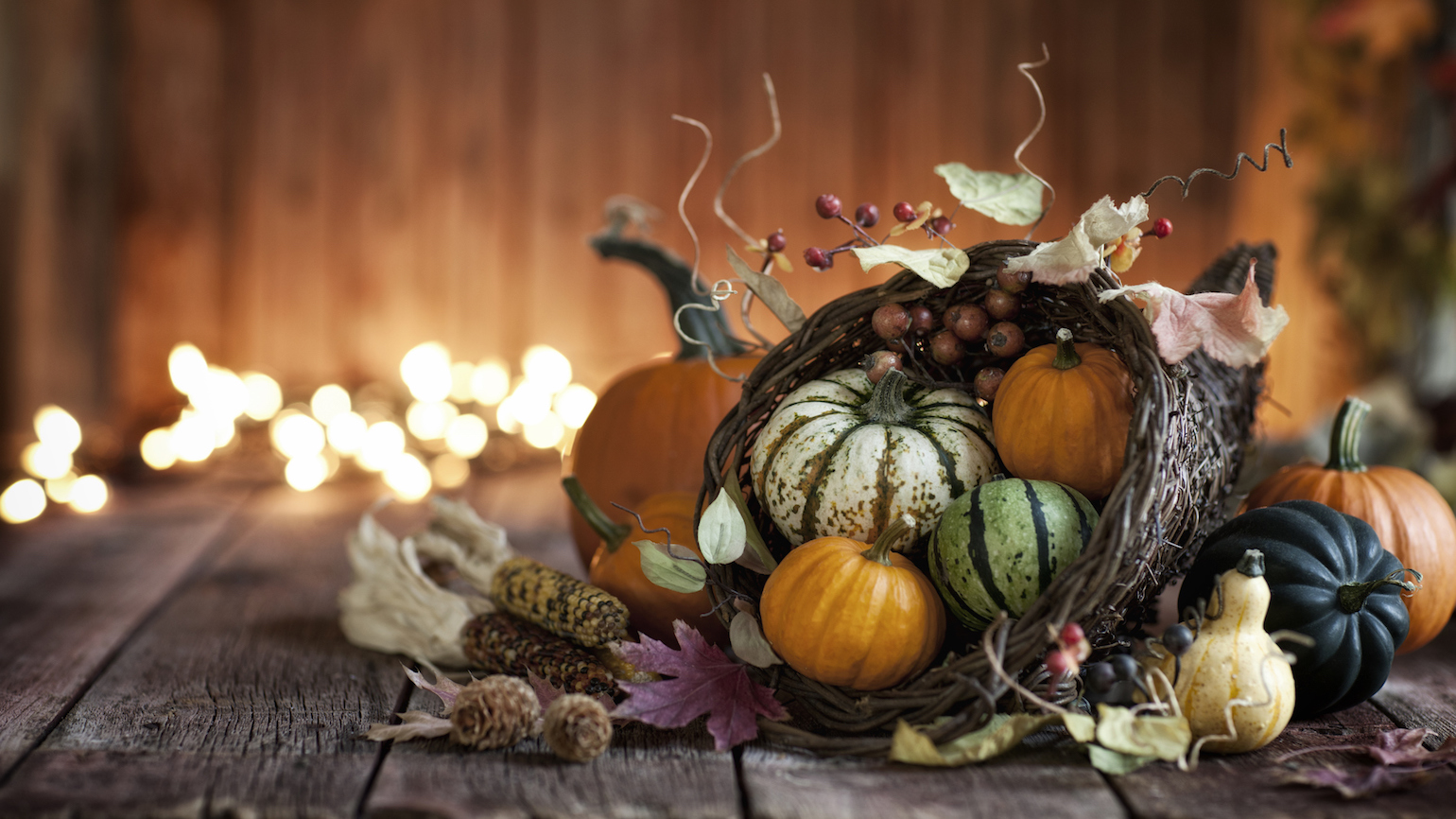
I learned recently that the “horn of plenty,” or cornucopia, has a number of ancient roots, including Greek myths involving horned creatures that nourished gods and symbolized abundance. From ancient times to this day, there seems to be a human impulse to embrace plenty, to celebrate the gifts life sets before us—or that we seek out and cultivate for ourselves.

There is a fine line, however, between “plenty” and “excess.” To stay on the positive side of the equation this Thanksgiving, here are three ways I like to celebrate with humility and gratitude.

1) Broaden Your Definition
“Plenty” doesn’t just apply to food. We should also take the time at Thanksgiving to acknowledge and appreciate the other “plenties” that fill our lives. Plenty of loving friends and family members. Plenty of interesting books to read, work to do, goals to achieve. Life offers so many types of richness—may we notice and celebrate each one.

2) Share Your Plenty
Not everyone has the opportunity to sit down at a Thanksgiving table that’s full of food and family. Whether by volunteering your time at a local food bank or homeless shelter, inviting a single friend to join your family’s celebration or collecting donations to provide for those who need support, you can be sure that you’ll appreciate your “plenty” all the more when you share it with others.

3) Say It Out Loud
Many families have the tradition of going around the Thanksgiving table and sharing the things each person is grateful for. Maybe this year, you can ask your guests to share a thought about something they’re grateful to have “plenty” of. Some people might say, “gravy!” But others might warm your heart with expressions of gratitude for gifts that you wouldn’t have otherwise noticed or acknowledged.

What does “plenty” mean to you?

3 Tips That Will Make Ginger Your Holiday Beverage Go-To

Ginger is a curious ingredient. It’s actually a root, and I’ve long wondered who was the first human being to break it open, inhale its spicy warmth and set it over a fire to simmer into a magical concoction of purely peaceful bliss.

At Christmastime, gingerbread is popular for both eating and decorating. But there are so many other ways to make ginger part of your positive holiday experience.

1) Make a Warming Tea

A fresh knob of ginger is easily transformed into a warm, comforting beverage. You can break off a small piece at the grocery store if you don’t want to buy a huge hunk…although it does keep for months well-wrapped in the freezer. Use a sharp paring knife to thinly slice the ginger and set it to simmer on the stove. You can let it steep for an hour or more—the longer it cooks, the stronger and spicier your resulting “tea” will be. You can add other warming spices like cinnamon sticks, whole cloves or star anise pods to the brew. Not only will your home smell warm and welcoming, you will be left with a warm sipping liquid that can be enjoyed as-is or spruced up with a squeeze of lemon, a dollop of honey—or both!

2) Spice Up Your Coffee

A few slices of fresh ginger or a scant teaspoon of ground ginger can elevate your cup of Joe to new flavorful heights. Adding ginger to coffee is an easy and inexpensive substitute for pricey and high-calorie “gingerbread” beverages sold in coffee shops during the holiday season. You will also enjoy the warming zing of a new flavor in a familiar favorite drink.

3) Get Fizzy with It

On the off chance you find yourself having indulged too much over the holidays, a cold fizzy ginger drink is soothing to the tummy in addition to tasting light and delicious. You can either add honey-sweetened ginger tea (see above) to some sparkling water, or you can create ginger simple syrup by boiling 4 ounces of fresh ginger together with 1 cup of sugar and 1 cup of water until the sugar is dissolved. Pour the syrup into carbonated water to taste, sip and enjoy!

What is your favorite way to enjoy ginger during the holidays?

3 Questions to Celebrate Labor Day with Purpose

“All labor that uplifts humanity has dignity and importance and should be undertaken with painstaking excellence.”

This quote from Martin Luther King Jr. strikes me as a rich source of reflection as we head into Labor Day weekend. Because between the barbecues and the last sips of summer, shouldn’t we connect with the meaning and purpose we derive from the labors of our lives, orienting ourselves toward a positive relationship with the difference our work makes to ourselves, others and the world?

Dr. King’s words bring up three questions I will be asking myself this weekend:

1. What Am I Doing to Uplift Humanity?
There’s no disputing that Dr. King’s life work made a positive impact on the world around him, and it is still resonating through the decades to connect with humanity’s biggest challenges. You don’t have to be a minister, an activist or a political figure to uplift your life and community, though. Your job, whatever it might be, makes the world a better place when you do it with mindful and positive energy.

2. How Do I Find Dignity in My Labor?
Dr. King was fond of the phrase “all labor has dignity.” He used it when he addressed striking sanitation workers in Memphis just weeks before his assassination, reminding them that without someone to collect our garbage, our society would be ill and unsafe. If each and every job has inherent value, we can all take pride in the difference we are able to make. The dictionary definition of “dignity” is, “The state or quality of being worthy of honor or respect.” Turn that idea onto your daily work and remember—you are worthy.

3. How Can I Best Pursue Excellence?
The author Hunter S. Thompson once said, “Anything worth doing is worth doing right.” In other words, if you have taken on a job, it’s important to accomplish it to a high standard for success. Whatever your work life is—whether it’s a paid job or the labor of caring for a home or family—setting standards for yourself is key to gleaning purpose and meaning from everyday actions. Don’t dial up the pressure, though—excellence is a journey, and the simple act of pursuing it betters our lives at every step along the way.

3 Questions: Lysa TerKeurst

Lysa TerKeurst is the president of Proverbs 31 Ministries and the best-selling author of more than 25 books. Her newest, Good Boundaries and Goodbyes: Loving Others Without Losing the Best of Who You Are, was born out of her own personal struggles, extensive theological research and therapeutic experiences that transformed the way she defined and pursued healthy relationships.

1. Why are boundaries so crucial to our spiritual well-being?

I’ve learned that when there’s chaos, there’s usually a lack of healthy boundaries. Many of us experience chaos in relationships, but we feel powerless to change what we desperately feel needs to be changed. So many beautiful principles exist about how to love people and sacrifice for people. Those are good, but I also think some of it has been taken out of context.

We don’t want to call something love when it’s enabling bad behavior. I started to ask, what are the biblical truths about having better relationships? What did God originally intend with boundaries? I found it fascinating that in Genesis chapter two, when God has the first recorded conversation with Adam, of all the topics in the world God could have chosen for that conversation, he chose a boundary.

As I studied the Bible, I found many instances of the Lord setting boundaries to protect us, not limit us. I now believe that boundaries aren’t just a good idea but God’s idea. They’ve always been a crucial part to God’s plan of bringing order to chaos.

2. You say that health cannot bond with unhealth. What does that mean?

My counselor, Jim Cress, taught me this. When one person is pursuing healthy choices in a relationship and the other person is not, there’s tension. Mental health is a commitment to reality at all costs. We have to evaluate what reality is, to acknowledge the truth. Then we can communicate what is healthy and ask the other person if they are willing to make changes so that the relationship is healthy.

If they’re unwilling or incapable, then the only option is to draw boundaries so you don’t put yourself in a situation where you need the other person to change for you to be okay. We have to remember that boundaries aren’t to shove the other person away. I put boundaries on myself and on the relationship so I can stay true to the best of who I am and who God has called me to be.

3. How can we navigate saying goodbye to a relationship?

First, we have to acknowledge that not all relationships go the distance. Some are for a season; some for a lifetime. I’ve had to say goodbye. But I’d never been taught a healthy, biblical perspective of how to say goodbye, and when and how to manage the hurt afterward. I needed to learn.

One biblical example can be seen in Paul and Barnabas, who had a sharp disagreement and parting of ways. Each had their reasons and their perspective. I’m sure it wasn’t what they wanted. It happens to us in relationships today. But there is an indication Paul kept his heart soft even when the relationship never looked quite the same. There’s a lot we can learn from that. We can’t control the other person and prevent them from walking away, but we can make sure the hurt doesn’t become the defining mark of our life or a destructive force in our heart.

For more inspiring stories, subscribe to Guideposts magazine.

3 Positive Ways to Pursue Personal Freedom

This article is based on information provided by Home Instead Senior Care.

Like most people, those who have dementia need activities that provide pleasure and a sense of purpose. It’s just that people with Alzheimer’s face their own set of challenges. As a caregiver, you may also face challenges as you try to determine which activities are appropriate and helpful for your loved one.

Follow these practical tips, and helpful reminders, to keep your loved one active and engaged.

Understand That “Laziness” May Not Be What it Seems

A person’s brain changes with dementia. Even in the early stages, people begin to lose the ability to perform day-to-day tasks without guidance and cues. So when someone with dementia appears to be lazy, it is very often the case that he or she has actually lost the ability to do simple things.

You might try carrying out the task at hand alongside this person and talking him or her through each step—casually. This can be a great help.

Boost Daytime Energy by Treating Sleepless Nights

Medications are available to alleviate nighttime sleep issues for people with dementia. But it’s better to try the non-drug suggestions first. Two good ways are to maintain regular hours for meals and bedtimes, and to get morning sunlight exposure whenever possible.

Try These Conversation Tips

· Ask more open-ended questions: “Tell me about your time living in Hawaii,” instead of “Did you live in Hawaii?” This may encourage longer and more meaningful answers.

· Language centers are damaged by dementia. Keep in mind that behavior communicates a message. If your loved one appears stressed or sad, check to see if he or she needs to go to the bathroom, is hungry or in pain.

· Make it a point to use positive body language. Smile and hug (when invited) since people with dementia read your face and can sense when emotions are upbeat.

The Soothing Effects of Music

Studies have shown that people with Alzheimer’s can become less aggressive and more relaxed when they listen to music. Playing music from the person’s early life is a good place to start, as it may trigger the strongest positive memories and feelings.

Methods to Encourage Physical Activity

· It’s best to not have an involved discussion with your loved one when you’re trying to convince him or her to do something physically active. You might just say, “Come on Dad, let’s go for a walk around the block.”

· Asking for assistance with anything that requires getting up and moving can be effective. The more calm and natural you are in making these requests, the less likely your loved one will refuse.

· Because something that works once may not work the next time, you may have to approach the issue in a variety of ways.

· Even when people may no longer be able to take initiative, asking them to do something with you can be a successful approach.

Make it Easier for Your Loved One to Go Out in Public

· Go out with your loved one so that you can be there to help if you notice he or she forgets something.

· Say the name of anyone you run into to avoid potential embarrassment.

· Think of one of the person’s favorite pastimes, and go to the associated environment together, just to be surrounded with the activity. For example, if your father loved to golf, take him to a driving range or golf course to watch the other golfers.

Use Music to Stimulate the Five Senses

Music hooks into all the senses, and can bring joy to a person with Alzheimer’s disease. It can help relax a person and/or stimulate engagement.

Science has shown that song lyrics and music occupy a different part of the brain than do words and language. So music can be soothing and fun even for someone who is well into the illness.

· Watch to be sure you don’t overstimulate with music, though. Intersperse slower, more mellow tunes with the higher energy ones.

· If a song goes over particularly well, it can be good to repeat it since people with dementia may enjoy a “reprise.”

Do Things Your Loved One Used to Enjoy

It’s often helpful to find something your loved one had a passion for before developing Alzheimer’s disease. You might still be able to do anything the person enjoyed. Even talking during short walks can provide a big boost.

Make Social Engagements Easier

· It is possible that your loved one no longer wants to go on outings with you because they are overwhelming to your loved one. It helps to plan activities that are not overstimulating or anxiety-producing.

· Consider things your loved one has always enjoyed doing. You may need to modify some of these activities because they will no longer be appropriate. For example, being around large numbers of people may be too much to manage now. Try to create a scaled-down version of what the person has always loved.

· People with dementia need to remain socially and mentally stimulated, and this is a great way to allow for it.

Keep Trying to Engage Your Loved One

Don’t give up on finding things that can stimulate your loved one. If the person is losing cognitive skills, try music, encourage physical activity, and get out into nature for sensory stimulation, natural vitamin D and the amazing spiritual connection thatcomes with it.

Find Favorite Things from the Past

· Try to come up with things that the person cherished in earlier years. It could be a musician, board game, baking specialty, etc. Reminding the person of these things will help to bring about feelings of comfort and happiness.

· Don’t be frustrated if it takes time to figure out which memories connect. With patience you will eventually find some things.

Use Photographs to Capture and Preserve Old Times

· Photo albums are a great way to keep long-lasting memories for someone with Alzheimer’s, and oftentimes they allow you both to reminisce. Photos help generate a feeling of familiarity and comfort.

· Invite other family members to look at old photos with you and your loved one. Just move on if the person doesn’t recognize everything, and begins to get confused or embarrassed.

· If you find a few photos that spark a particularly positive response or discussion keep them on hand to look at together whenever you can.

Gently Coax Your Loved One To Answer Questions

· Getting someone with Alzheimer’s or another dementia to voice a preference can be a challenge. The pat response to the question, “How are you feeling,” might be, “fine.” When you ask what the person wants, the answer might always be, “I don’t want anything.”

· It is difficult to be patient when you ask questions, and don’t get the kinds of answers you expect. But rather than putting someone on the spot by asking about complex feelings or posing open-ended questions, try offering choices: “Would you like to take your bath now, or after dinner?”, or “Would you like soup or chicken for dinner?”

· This approach can give the person a sense of independence, and also make it easier to accomplish your goal (e.g., getting your loved one to eat or bathe).

· You can also ask simple questions that only require a “yes” or a “no.”

Is It a Good Idea to Bring Up Things Your Loved One Doesn’t Remember?

· If you have a feeling that it will upset your loved one to discuss things from the past that he or she can no longer remember, then don’t bring them up. Instead, let the person to take the lead and talk about things they dorecall, like childhood experiences.

· Depending on the level of memory loss, people with dementia may become sad or depressed when asked to talk about things they don’t recall.

· Talking about things that your loved one can remember might help bring more happy memories to the surface.