“Autumn is a second spring,” wrote the author Albert Camus, “when every leaf is a flower.”
As the air turns chilly and crisp, we are drawn simultaneously outdoors, to marvel at the changing season unfolding before our eyes, and indoors, to cozy up with warm cider and perhaps the first fire of the season.
Why not combine the two by working on nature-based crafts while sipping from your warm mug? Here are four fun and easy ways to incorporate autumn leaves, in all their “flowering” glory, into handmade crafts.
1) Leafy Wreaths
Perhaps the easiest fall craft to make with leaves is a wreath. A foam or pressboard wreath form is very inexpensive, or better yet, a cardboard form can be thrown away along with the leaves, at the end of the season. Some fresh, bright leaves, a little hot glue and a few minutes will get your home or mantle ready to embrace the fall.
2) Pressed Leaf Art
Pressing leaves is a time-tested way to preserve autumn leaves at their most vibrant. Follow a tutorial like this one to press and dry your leaves. From there, the crafting options are limitless! Glue pressed leaves onto card stock and frame, or glue them onto folded paper to make a cheerful seasonal banner.
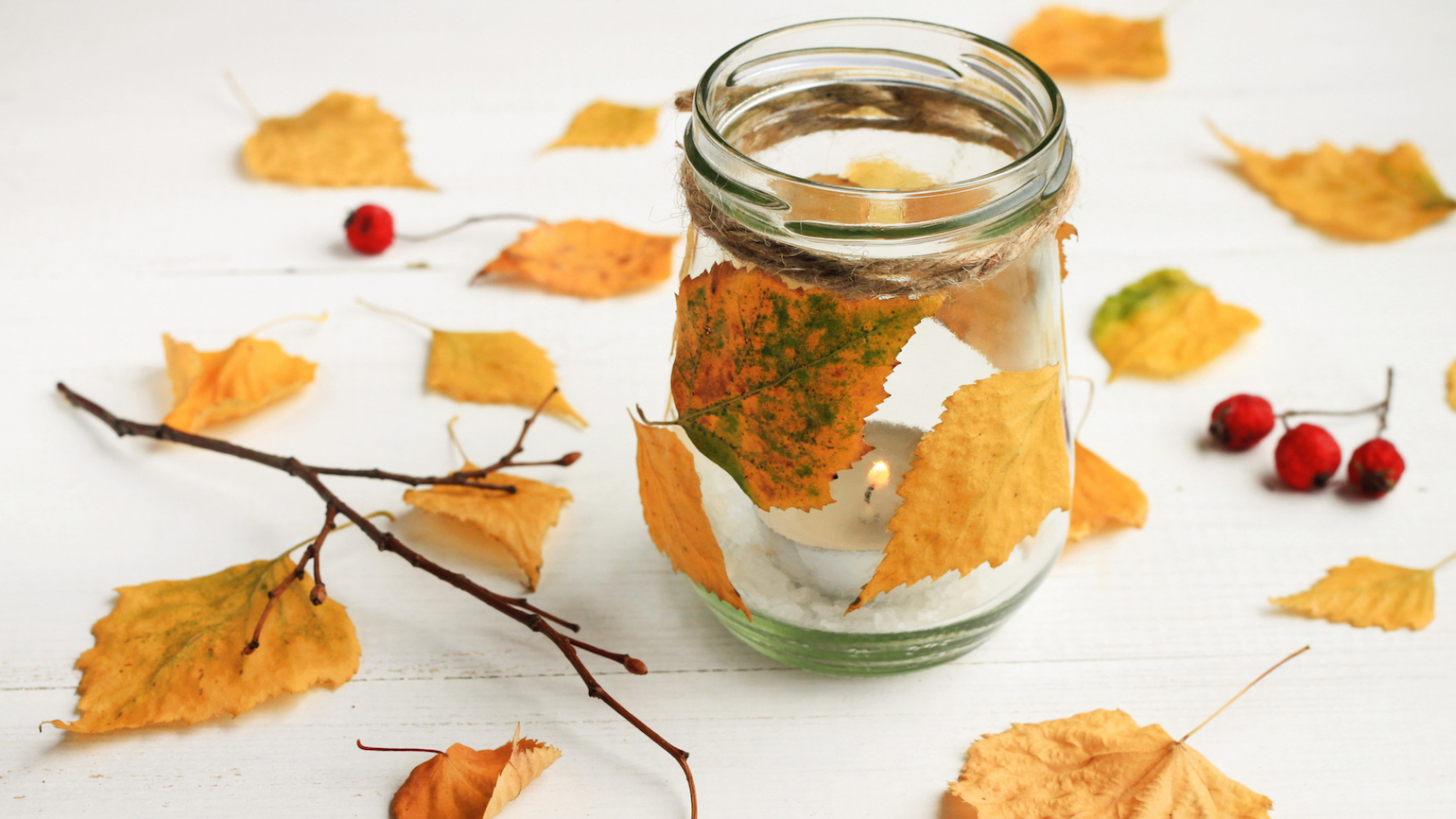
3) Leafy Mason Jars
A Mason jar, a bottle of Modge-Podge or other clear-drying, sealing glue and a sponge are all you need to make beautiful leaf-lined jars that are stunning votive candle holders or autumn vases. Be sure your jar is clean and dry, and that your leaves are either freshly fallen or gently moistened so they will bend to the right shape. Brush the outside of the jar with glue, attach your leaves and coat with more glue.
4) Leaf-Printed Table Linens
Freshly fallen leaves are beautifully shaped and, with their veins still plump, ready to use to make prints on paper, pillowcases or table linens. Use some acrylic paint to coat the back of a leaf, then press it onto the fabric or paper of your choice, being sure to cover the leaf with waxed paper as you press so it doesn’t slip or smudge.
However you choose to savor Autumn leaves, take a minute of gratitude for the blessing of fall.
“At the end of the day,” the actor Ben Vereen is quoted as saying, “give up your worries and give thanks for the journey.” I love the idea of regarding each and every day as a journey—small steps within the larger framework of your whole life, but also unique, finite moments in and of themselves. None of us can predict what each new day will bring. But we can choose to end it on a positive, peaceful note.
1) Lay Eyes on the Sunset
There’s only one today, and there’s no better way to embrace that truth than by finding a spot to behold the uniqueness of the sunset. Even if it’s cloudy, even if you can only glimpse a moment of the waning light, take the opportunity to watch the sky brighten, color and then fade into darkness. It’s an inspiring and very specific way to say to yourself, “day is done.” You might enjoy this feeling so much that you offer nature an applause!
2) Make a Gratitude List
Look back over the day with self-compassionate, grateful eyes. Take a moment to list—aloud or in writing—a few things that you are thankful to have done, thought or felt. You can think very broadly (I’m grateful I felt well today) or at a micro level (I’m grateful I remembered to buy eggs last week so I could have them today). Or you can reflect on something in the middle, from conversations you’re glad to have had to the feel of a favorite t-shirt on your skin. Your list needn’t be long to urge your mind in a positive direction as the day draws to a close.
3) Tidy Up (Just a Little)
As we continue to spend more time at home, small corners of clutter can feel like they’re taking up permanent residence in our space. At the end of each day, spending just a couple of minutes tidying up any area can keep your home feeling fresh. It can occupy your hands with an easy task and represent in a physical way how kitchen gadgets, opened mail, books and clothing served your day. It’s both important and satisfying to tuck them back into their places, just as you’ll do when you settle down to sleep.
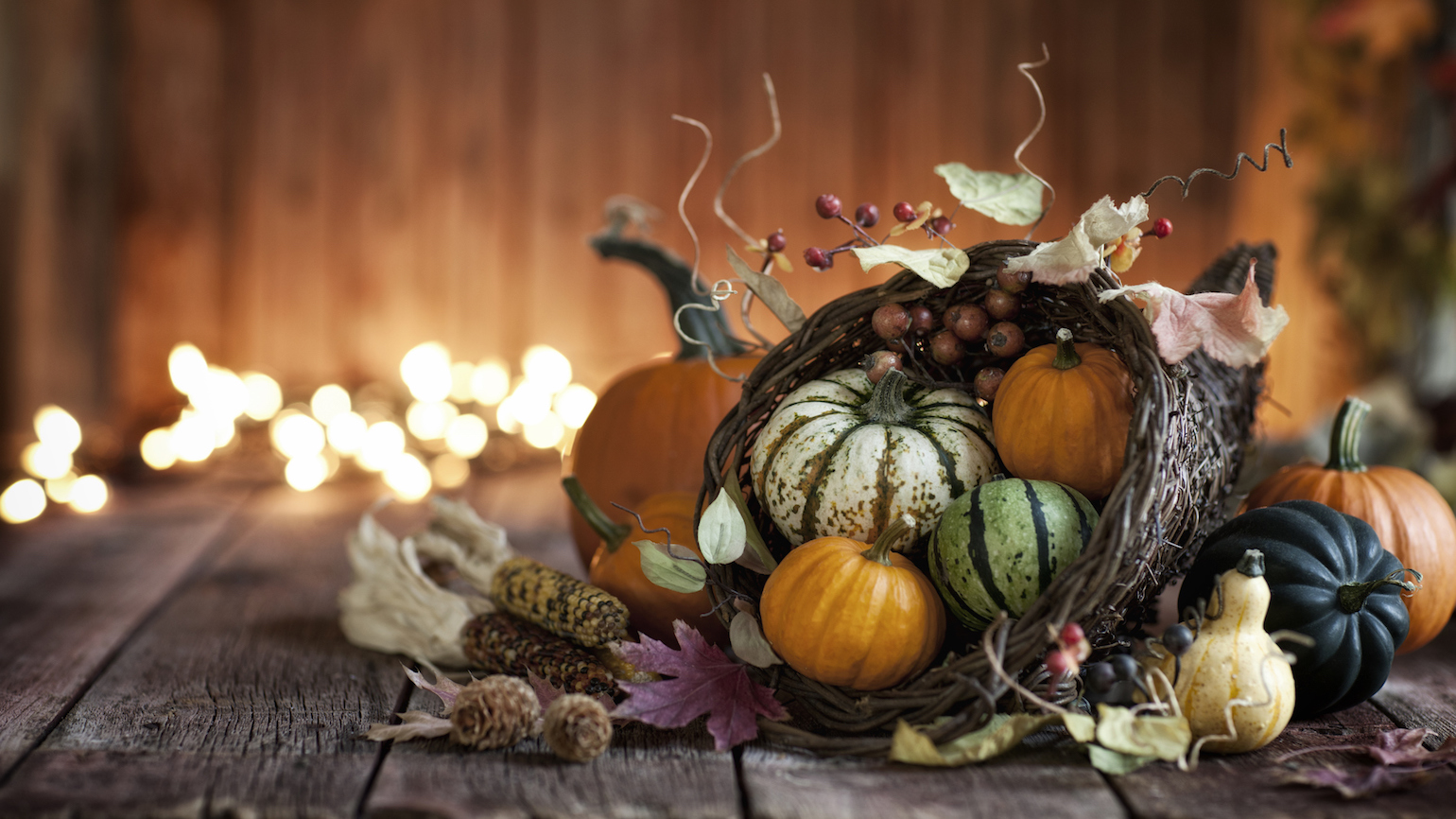
I learned recently that the “horn of plenty,” or cornucopia, has a number of ancient roots, including Greek myths involving horned creatures that nourished gods and symbolized abundance. From ancient times to this day, there seems to be a human impulse to embrace plenty, to celebrate the gifts life sets before us—or that we seek out and cultivate for ourselves.
There is a fine line, however, between “plenty” and “excess.” To stay on the positive side of the equation this Thanksgiving, here are three ways I like to celebrate with humility and gratitude.
1) Broaden Your Definition
“Plenty” doesn’t just apply to food. We should also take the time at Thanksgiving to acknowledge and appreciate the other “plenties” that fill our lives. Plenty of loving friends and family members. Plenty of interesting books to read, work to do, goals to achieve. Life offers so many types of richness—may we notice and celebrate each one.
2) Share Your Plenty
Not everyone has the opportunity to sit down at a Thanksgiving table that’s full of food and family. Whether by volunteering your time at a local food bank or homeless shelter, inviting a single friend to join your family’s celebration or collecting donations to provide for those who need support, you can be sure that you’ll appreciate your “plenty” all the more when you share it with others.
3) Say It Out Loud
Many families have the tradition of going around the Thanksgiving table and sharing the things each person is grateful for. Maybe this year, you can ask your guests to share a thought about something they’re grateful to have “plenty” of. Some people might say, “gravy!” But others might warm your heart with expressions of gratitude for gifts that you wouldn’t have otherwise noticed or acknowledged.
Ginger is a curious ingredient. It’s actually a root, and I’ve long wondered who was the first human being to break it open, inhale its spicy warmth and set it over a fire to simmer into a magical concoction of purely peaceful bliss.
At Christmastime, gingerbread is popular for both eating and decorating. But there are so many other ways to make ginger part of your positive holiday experience.
1) Make a Warming Tea
A fresh knob of ginger is easily transformed into a warm, comforting beverage. You can break off a small piece at the grocery store if you don’t want to buy a huge hunk…although it does keep for months well-wrapped in the freezer. Use a sharp paring knife to thinly slice the ginger and set it to simmer on the stove. You can let it steep for an hour or more—the longer it cooks, the stronger and spicier your resulting “tea” will be. You can add other warming spices like cinnamon sticks, whole cloves or star anise pods to the brew. Not only will your home smell warm and welcoming, you will be left with a warm sipping liquid that can be enjoyed as-is or spruced up with a squeeze of lemon, a dollop of honey—or both!
2) Spice Up Your Coffee
A few slices of fresh ginger or a scant teaspoon of ground ginger can elevate your cup of Joe to new flavorful heights. Adding ginger to coffee is an easy and inexpensive substitute for pricey and high-calorie “gingerbread” beverages sold in coffee shops during the holiday season. You will also enjoy the warming zing of a new flavor in a familiar favorite drink.
3) Get Fizzy with It
On the off chance you find yourself having indulged too much over the holidays, a cold fizzy ginger drink is soothing to the tummy in addition to tasting light and delicious. You can either add honey-sweetened ginger tea (see above) to some sparkling water, or you can create ginger simple syrup by boiling 4 ounces of fresh ginger together with 1 cup of sugar and 1 cup of water until the sugar is dissolved. Pour the syrup into carbonated water to taste, sip and enjoy!
What is your favorite way to enjoy ginger during the holidays?
“All labor that uplifts humanity has dignity and importance and should be undertaken with painstaking excellence.”
This quote from Martin Luther King Jr. strikes me as a rich source of reflection as we head into Labor Day weekend. Because between the barbecues and the last sips of summer, shouldn’t we connect with the meaning and purpose we derive from the labors of our lives, orienting ourselves toward a positive relationship with the difference our work makes to ourselves, others and the world?
Dr. King’s words bring up three questions I will be asking myself this weekend:
1. What Am I Doing to Uplift Humanity?
There’s no disputing that Dr. King’s life work made a positive impact on the world around him, and it is still resonating through the decades to connect with humanity’s biggest challenges. You don’t have to be a minister, an activist or a political figure to uplift your life and community, though. Your job, whatever it might be, makes the world a better place when you do it with mindful and positive energy.
2. How Do I Find Dignity in My Labor?
Dr. King was fond of the phrase “all labor has dignity.” He used it when he addressed striking sanitation workers in Memphis just weeks before his assassination, reminding them that without someone to collect our garbage, our society would be ill and unsafe. If each and every job has inherent value, we can all take pride in the difference we are able to make. The dictionary definition of “dignity” is, “The state or quality of being worthy of honor or respect.” Turn that idea onto your daily work and remember—you are worthy.
3. How Can I Best Pursue Excellence?
The author Hunter S. Thompson once said, “Anything worth doing is worth doing right.” In other words, if you have taken on a job, it’s important to accomplish it to a high standard for success. Whatever your work life is—whether it’s a paid job or the labor of caring for a home or family—setting standards for yourself is key to gleaning purpose and meaning from everyday actions. Don’t dial up the pressure, though—excellence is a journey, and the simple act of pursuing it betters our lives at every step along the way.
Lysa TerKeurst is the president of Proverbs 31 Ministries and the best-selling author of more than 25 books. Her newest, Good Boundaries and Goodbyes: Loving Others Without Losing the Best of Who You Are, was born out of her own personal struggles, extensive theological research and therapeutic experiences that transformed the way she defined and pursued healthy relationships.
1. Why are boundaries so crucial to our spiritual well-being?
I’ve learned that when there’s chaos, there’s usually a lack of healthy boundaries. Many of us experience chaos in relationships, but we feel powerless to change what we desperately feel needs to be changed. So many beautiful principles exist about how to love people and sacrifice for people. Those are good, but I also think some of it has been taken out of context.
We don’t want to call something love when it’s enabling bad behavior. I started to ask, what are the biblical truths about having better relationships? What did God originally intend with boundaries? I found it fascinating that in Genesis chapter two, when God has the first recorded conversation with Adam, of all the topics in the world God could have chosen for that conversation, he chose a boundary.
As I studied the Bible, I found many instances of the Lord setting boundaries to protect us, not limit us. I now believe that boundaries aren’t just a good idea but God’s idea. They’ve always been a crucial part to God’s plan of bringing order to chaos.
2. You say that health cannot bond with unhealth. What does that mean?
My counselor, Jim Cress, taught me this. When one person is pursuing healthy choices in a relationship and the other person is not, there’s tension. Mental health is a commitment to reality at all costs. We have to evaluate what reality is, to acknowledge the truth. Then we can communicate what is healthy and ask the other person if they are willing to make changes so that the relationship is healthy.
If they’re unwilling or incapable, then the only option is to draw boundaries so you don’t put yourself in a situation where you need the other person to change for you to be okay. We have to remember that boundaries aren’t to shove the other person away. I put boundaries on myself and on the relationship so I can stay true to the best of who I am and who God has called me to be.
3. How can we navigate saying goodbye to a relationship?
First, we have to acknowledge that not all relationships go the distance. Some are for a season; some for a lifetime. I’ve had to say goodbye. But I’d never been taught a healthy, biblical perspective of how to say goodbye, and when and how to manage the hurt afterward. I needed to learn.
One biblical example can be seen in Paul and Barnabas, who had a sharp disagreement and parting of ways. Each had their reasons and their perspective. I’m sure it wasn’t what they wanted. It happens to us in relationships today. But there is an indication Paul kept his heart soft even when the relationship never looked quite the same. There’s a lot we can learn from that. We can’t control the other person and prevent them from walking away, but we can make sure the hurt doesn’t become the defining mark of our life or a destructive force in our heart.
For more inspiring stories, subscribe to Guidepostsmagazine.
Like most people, those who have dementia need activities that provide pleasure and a sense of purpose. It’s just that people with Alzheimer’s face their own set of challenges. As a caregiver, you may also face challenges as you try to determine which activities are appropriate and helpful for your loved one.
Follow these practical tips, and helpful reminders, to keep your loved one active and engaged.
Understand That “Laziness” May Not Be What it Seems
A person’s brain changes with dementia. Even in the early stages, people begin to lose the ability to perform day-to-day tasks without guidance and cues. So when someone with dementia appears to be lazy, it is very often the case that he or she has actually lost the ability to do simple things.
You might try carrying out the task at hand alongside this person and talking him or her through each step—casually. This can be a great help.
Boost Daytime Energy by Treating Sleepless Nights
Medications are available to alleviate nighttime sleep issues for people with dementia. But it’s better to try the non-drug suggestions first. Two good ways are to maintain regular hours for meals and bedtimes, and to get morning sunlight exposure whenever possible.
Try These Conversation Tips
· Ask more open-ended questions: “Tell me about your time living in Hawaii,” instead of “Did you live in Hawaii?” This may encourage longer and more meaningful answers.
· Language centers are damaged by dementia. Keep in mind that behavior communicates a message. If your loved one appears stressed or sad, check to see if he or she needs to go to the bathroom, is hungry or in pain.
· Make it a point to use positive body language. Smile and hug (when invited) since people with dementia read your face and can sense when emotions are upbeat.
The Soothing Effects of Music
Studies have shown that people with Alzheimer’s can become less aggressive and more relaxed when they listen to music. Playing music from the person’s early life is a good place to start, as it may trigger the strongest positive memories and feelings.
Methods to Encourage Physical Activity
· It’s best to not have an involved discussion with your loved one when you’re trying to convince him or her to do something physically active. You might just say, “Come on Dad, let’s go for a walk around the block.”
· Asking for assistance with anything that requires getting up and moving can be effective. The more calm and natural you are in making these requests, the less likely your loved one will refuse.
· Because something that works once may not work the next time, you may have to approach the issue in a variety of ways.
· Even when people may no longer be able to take initiative, asking them to do something with you can be a successful approach.
Make it Easier for Your Loved One to Go Out in Public
· Go out with your loved one so that you can be there to help if you notice he or she forgets something.
· Say the name of anyone you run into to avoid potential embarrassment.
· Think of one of the person’s favorite pastimes, and go to the associated environment together, just to be surrounded with the activity. For example, if your father loved to golf, take him to a driving range or golf course to watch the other golfers.
Use Music to Stimulate the Five Senses
Music hooks into all the senses, and can bring joy to a person with Alzheimer’s disease. It can help relax a person and/or stimulate engagement.
Science has shown that song lyrics and music occupy a different part of the brain than do words and language. So music can be soothing and fun even for someone who is well into the illness.
· Watch to be sure you don’t overstimulate with music, though. Intersperse slower, more mellow tunes with the higher energy ones.
· If a song goes over particularly well, it can be good to repeat it since people with dementia may enjoy a “reprise.”
Do Things Your Loved One Used to Enjoy
It’s often helpful to find something your loved one had a passion for before developing Alzheimer’s disease. You might still be able to do anything the person enjoyed. Even talking during short walks can provide a big boost.
Make Social Engagements Easier
· It is possible that your loved one no longer wants to go on outings with you because they are overwhelming to your loved one. It helps to plan activities that are not overstimulating or anxiety-producing.
· Consider things your loved one has always enjoyed doing. You may need to modify some of these activities because they will no longer be appropriate. For example, being around large numbers of people may be too much to manage now. Try to create a scaled-down version of what the person has always loved.
· People with dementia need to remain socially and mentally stimulated, and this is a great way to allow for it.
Keep Trying to Engage Your Loved One
Don’t give up on finding things that can stimulate your loved one. If the person is losing cognitive skills, try music, encourage physical activity, and get out into nature for sensory stimulation, natural vitamin D and the amazing spiritual connection thatcomes with it.
Find Favorite Things from the Past
· Try to come up with things that the person cherished in earlier years. It could be a musician, board game, baking specialty, etc. Reminding the person of these things will help to bring about feelings of comfort and happiness.
· Don’t be frustrated if it takes time to figure out which memories connect. With patience you will eventually find some things.
Use Photographs to Capture and Preserve Old Times
· Photo albums are a great way to keep long-lasting memories for someone with Alzheimer’s, and oftentimes they allow you both to reminisce. Photos help generate a feeling of familiarity and comfort.
· Invite other family members to look at old photos with you and your loved one. Just move on if the person doesn’t recognize everything, and begins to get confused or embarrassed.
· If you find a few photos that spark a particularly positive response or discussion keep them on hand to look at together whenever you can.
Gently Coax Your Loved One To Answer Questions
· Getting someone with Alzheimer’s or another dementia to voice a preference can be a challenge. The pat response to the question, “How are you feeling,” might be, “fine.” When you ask what the person wants, the answer might always be, “I don’t want anything.”
· It is difficult to be patient when you ask questions, and don’t get the kinds of answers you expect. But rather than putting someone on the spot by asking about complex feelings or posing open-ended questions, try offering choices: “Would you like to take your bath now, or after dinner?”, or “Would you like soup or chicken for dinner?”
· This approach can give the person a sense of independence, and also make it easier to accomplish your goal (e.g., getting your loved one to eat or bathe).
· You can also ask simple questions that only require a “yes” or a “no.”
Is It a Good Idea to Bring Up Things Your Loved One Doesn’t Remember?
· If you have a feeling that it will upset your loved one to discuss things from the past that he or she can no longer remember, then don’t bring them up. Instead, let the person to take the lead and talk about things they dorecall, like childhood experiences.
· Depending on the level of memory loss, people with dementia may become sad or depressed when asked to talk about things they don’t recall.
· Talking about things that your loved one can remember might help bring more happy memories to the surface.
“There comes a day each September when you wake up and know the summer is over and fall has arrived,” said the writer Ann Rinaldi. The ineffable change is immediately recognizable, and unlike any other change of season throughout the year. The temperature is different, the clarity of the air is different and even before they change colors and drop from their branches, the leaves start to sound different.
Autumn is a season many celebrate, with pumpkin-spiced…everything on menus and in candle shops, and the fall leaves providing a joyous opportunity to marvel at the ever-changing nature of the world we live in.
It is also the end of the growing time of year. These early September days—when the turn toward the cooler months is just beginning—can leave some yearning for languid summer days and outdoor gatherings that lingered long into the dusky evening.
How you greet each new season sets the tone for how positively you are prepared to enter into a new time of year. If you are someone who knows you’ll be challenged by the early sunsets and cold temps of the fall and winter, setting a positive mindset at the beginning of the season can set you on solid ground to face the months ahead.
1) Celebrate Rest
“Autumn is springtime in reverse,” says the writer Terri Guillemets. That means that the natural world that reached upward toward the warming sunlight of spring is now quieting down, preparing to store its energy reserves the summer brought. So, too, can you see the turn toward autumn as the chance to slow down, to shore up what you’ve been able to enjoy this summer and know that this quieter time of year is building toward a fresh, new spring on the other side.
2) Make Meaningful Traditions for Yourself
One of my favorite fall tasks is putting the garden to bed.While I typically am still enjoying tomatoes and herbs from my veggie beds into September, it is a time of year when I start to cut back and rip out plants whose season has passed and tuck new bulbs into the ground for next spring’s flowers. Other early fall rituals I enjoy include a walk in a favorite nearby tree-filled park, and the first sip of hot apple cider on a chilly evening. Whatever your favorite way to step into fall, make a moment of it and take the time to relish the crisp newness of autumn.
3) Make a New “School” Year’s Resolution
If you’re like me, September gives me a “back-to-school” zing of excitement that makes me want to learn something new, practice a skill, set a goal or gift myself the fresh-start feeling of a new season of learning. You can set your intention or resolve toward a goal of your own this fall—and who knows, by the time January’s New Year’s Resolution season comes around, you might be well positioned to move even further along your path toward personal growth and positive living.
When something is weighing heavily on me, it settles into front row seats in my mind, talking loudly, spilling popcorn and demanding I pull my attention away from anything else that might come up during my day. I literally wear this issue on my face—I often am asked, “wow, what’s wrong?” when I wasn’t aware I was projecting struggle or negativity.
Recently, I’ve been paying more attention to how much attention intense situations actually warrant in a given moment, especially when other things—mundane daily tasks and meaningful events alike—are asking for a seat up front. These techniques have helped me compartmentalize my emotions in a healthy way, so I am in better control of how to address serious issues in their own time and place.
1) Try “Extreme Focus”
When you feel the pull of a stressful situation, you might have the impulse to compartmentalize it by pushing it to the side. But sometimes it is more helpful to push everything else to the side and focus on your stressor in a technique entrepreneur Ryan Blair calls “extreme focus.” He recommends setting aside a short and well-defined period of time to go all-in on a given problem. When that time is up, though, it’s time to gently close that compartment and move on with your day.
2) Create Healthy Boundaries
If there’s a person in your life who reminds you of a painful topic every time you get together, you might want to politely decline the next invitation to have coffee with them. You can’t be expected to compartmentalize in a healthy way if you are feeling pressured by your surroundings to dive into the deep end of a negative emotional pool. When you are feeling more secure in your thinking about an issue, reach back out to your friend and see what they are doing this weekend.
3) Don’t Make False Connections
Not every emotion gets to have a compartment—not if you are going to move through each day with a balanced and positive mindset. Sometimes, there are problems, or small aspects of bigger-picture problems, that you can simply choose to let go of, disconnecting them from your most pressing challenges. You might be disappointed your sock drawer is still a mess, for example, but that doesn’t mean you should carry negative self-talk about your organizational skills to your office.
“Laughter is the sun that drives winter from the human face,” said the author Victor Hugo. I love this quote for its suggestion that metaphorical suns can lift and brighten us during the cold season. Laughter is certainly one such source of warming light, one of many I look to when the temperature is low.
In the winter, I think of my home as the canvas on which I can paint the warmth I wish to experience. Here are my three favorite ways to cozy up my home so the winter can stay where it belongs—outside my door, not on my face.
1. Set Warming Smells to “Simmer”
Ginger, cinnamon, clove, nutmeg—these are the scents I associate with the kind of warmth that I want to radiate out from deep in my soul. Supermarkets or natural food stores carry numerous brands of teas that feature those scents, but you can also easily make a stovetop potpourri by floating some cinnamon sticks, whole cloves, orange peel, and anything else that seems warmingly delicious-smelling in simmering water.
2. Wrap Yourself in Soft Things
You can wrap yourself in warmth whether you are hibernating for the afternoon or venturing into the cold. Choose blankets for your sofa and bed that feel soft and dreamy to the touch. Set aside a special fluffy scarf for the days when you need some extra coddling. And, in the words of your wise parents when they didn’t want to turn up the thermostat….put on a sweater! The softer, the better to make you feel emotionally as well as physically warm.
3. Hack Your House
There are some simple hacks you can do to make your home more energy-efficient, Give these a try to get the heart-warming feeling you are making the most of your money:
–Run your ceiling fan in reverse to push the warm air from the ceiling, where it wants to collect, downward to where you are.
–Use plush fabric stuffed with beans or rice to block drafty doorways.
–Leave sunny window blinds open during the day to warm the air using a principle called “passive solar heating.”
The 2023 Lent season is upon us. While this holy time usually includes giving something up, we can also use it as a time to connect more closely with God through prayer. Help your loved ones boost their prayer life this Lent with one of these unique Lent gifts.
Every editorial product is independently selected, though we may be compensated or receive an affiliate commission if you buy something through our links. Ratings and prices are accurate and items are in stock as of time of publication.
Prayer cubes are a great way to refresh your prayer life. This wooden, six-sided Lenten prayer cube is a great tool for the Lent season. Simply roll the cube when you need a prayer and let the chosen side guide you through your talk with God. Each prayer, some of them based on the Psalms, leads you to a place of penitence and joyful anticipation for Easter Sunday. This prayer cube can also be a fun way to introduce prayer and Lent to your child. Buy at Amazon.com
Not sure what to cook during Lent? This unique cookbook was written by an award-winning chef and former Vatican Swiss Guard. It includes 75 recipes that were written with the Lenten season in mind. From hearty stews to zesty salads, you’re sure to find meals the whole family will enjoy as you sit down to break your fast. Inside you will also find beautiful reflections by a biblical scholar on the meaning of Lent. Buy at Amazon.com
This pocket coin is a way to hold onto your faith during Lent. Keep it in your pocket and reach for it whenever you need to lean on God’s guidance or use it as a prayer reminder so you remember to take some time to speak with God once a day. These gold-plated coins make the perfect Lent gifts for friends and family that need a tangible way to hold onto God’s divine peace. You can order one for yourself, or a whole set to pass out to loved ones right when they need it.Buy at Amazon.com
This beautiful candle holder is the a wonderful gift for any home observing the Lenten season. Made of resin stone, it holds five candles for each Sunday of Lent, as well as one holder for Good Friday. The center of it depicts the cross with the Lent symbols of Christ’s purple robe, crucifixion nails, and the crown of thorns. The size is ideal for placing this Lent candle holder on a shelf, mantle, or table. Families can light each candle together while reading a Lent devotional. Buy at Amazon.com
Dive into each day of Lent like never before with this gorgeous art book. Written by Sister Wendy Beckett, the British nun known for her BBC shows on art history, this book depicts forty pieces of art for every day of Lent. Each artwork includes insights from Sister Wendy that will lead you to understand art and Lent on a deeper spiritual level. As art historian Janina Ramirez writes, “For those who want to appreciate the spirituality behind some of the world’s greatest works of art, this book will be hugely inspiring―not only during Lent but at any time of the year.” Buy at Amazon.com
This prayer journal with its stunning purple color is an excellent addition to your ideas for Lent gifts. It features over 180 pages of guiding prayers and motivational Scripture, as well as space for you to journal your own thoughts and prayer requests during Lent. Buy at Amazon.com. The modern design includes:
Give this rosary bracelet as a gift or buy one for yourself as you enter the Lenten season. Its adjustable size makes works for anyone in your life, from kids to teenagers to adults. The simple design allows you to pull a bead toward the cross as you pray throughout Lent. This gift also comes with a prayer card so you can let your prayers be guided to a closer connection with God. Buy at Amazon.com
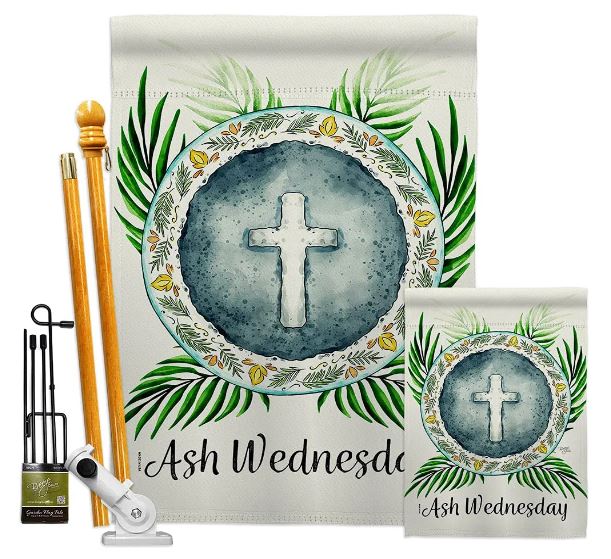
Celebrate the beginning of Lent at home with these beautifully made Ash Wednesday flags. With one for your home and one for your garden, you can be reminded of the reason for the season anywhere. The double-sided flags are made in the U.S.A. and depict Lent symbols like a cross, ashes, and the green Lent palm fronds. Give this flag set as a gift to your family, friends, neighbors, or even yourself. Buy at Amazon.com
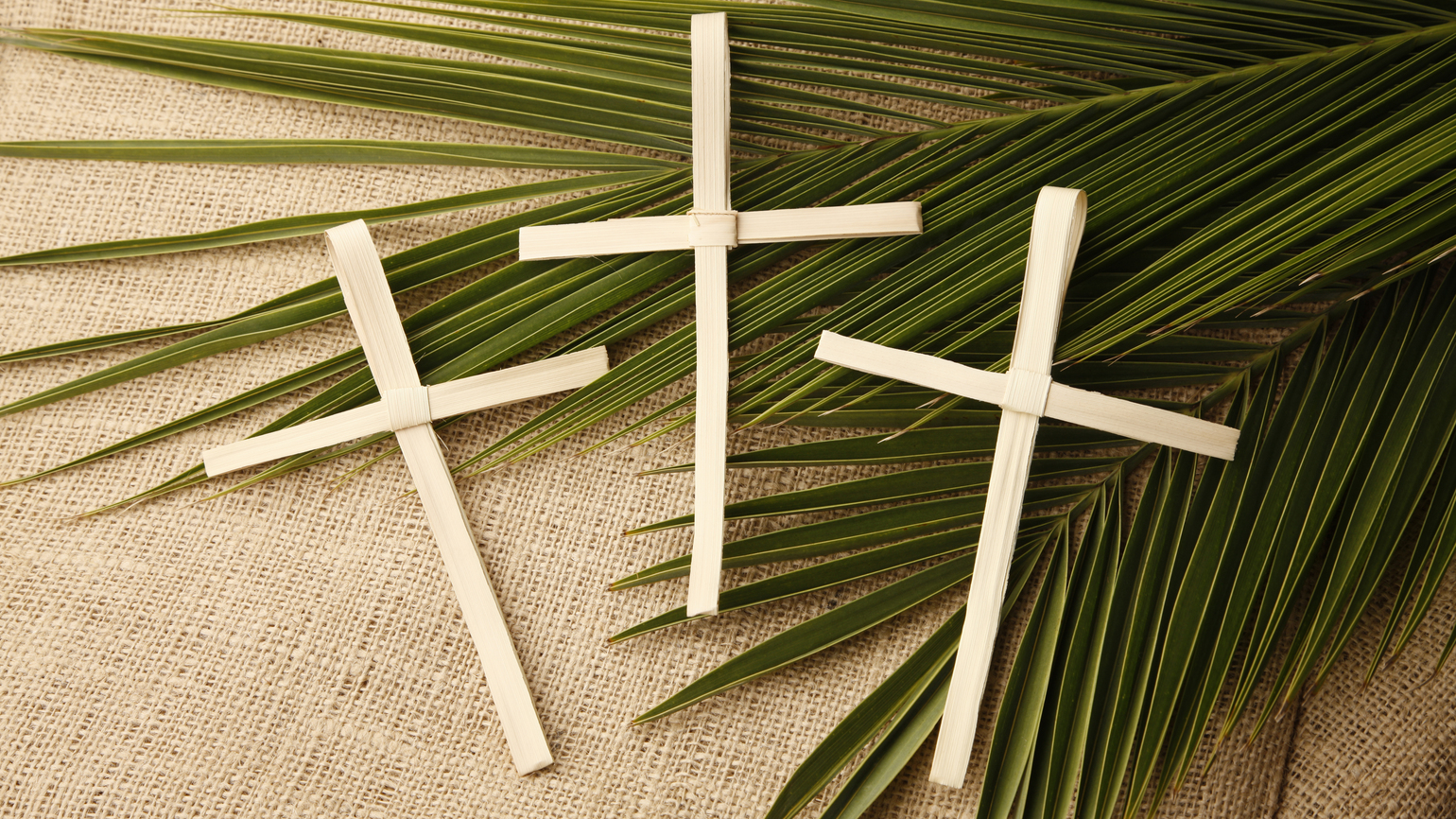
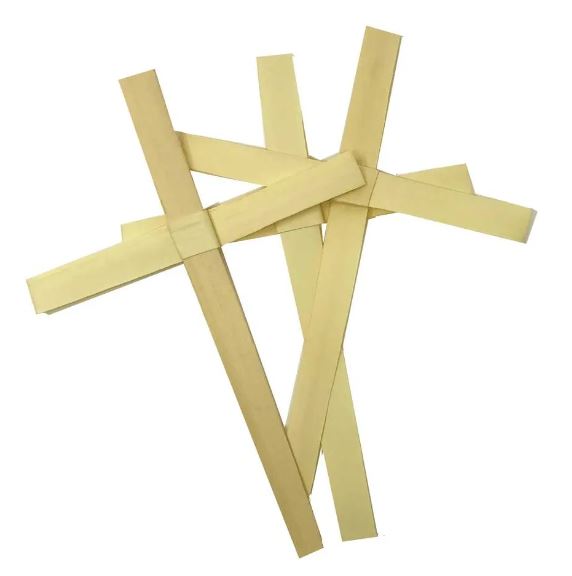
These palm crosses are handmade with real Palmyra palm. All proceeds from the sales go toward Boys Town Society, a child welfare organization outside of Madurai. These large palm crosses are the perfect thing to bring to church on Palm Sunday. Pass them out to members of your family, friends, or the whole congregation as Lent gifts. As one reviewer wrote, “Having folded… many palms into crosses on Palm Sundays, I have never seen palm crosses as even and beautiful as these.” Buy at Amazon.com
Have a greener Lent with this reusable tote bag. Instead of using paper or plastic bags while out shopping, bring along this beautiful tote to carry anything you need. It’s optimal for carrying groceries, books, or anything else you take with you in your day to day. The design includes a piece of comforting Scripture (Philippians 4:8) as well as gorgeous illustrations of flowers that truly pop as we enter the Spring season. Buy at Amazon.com
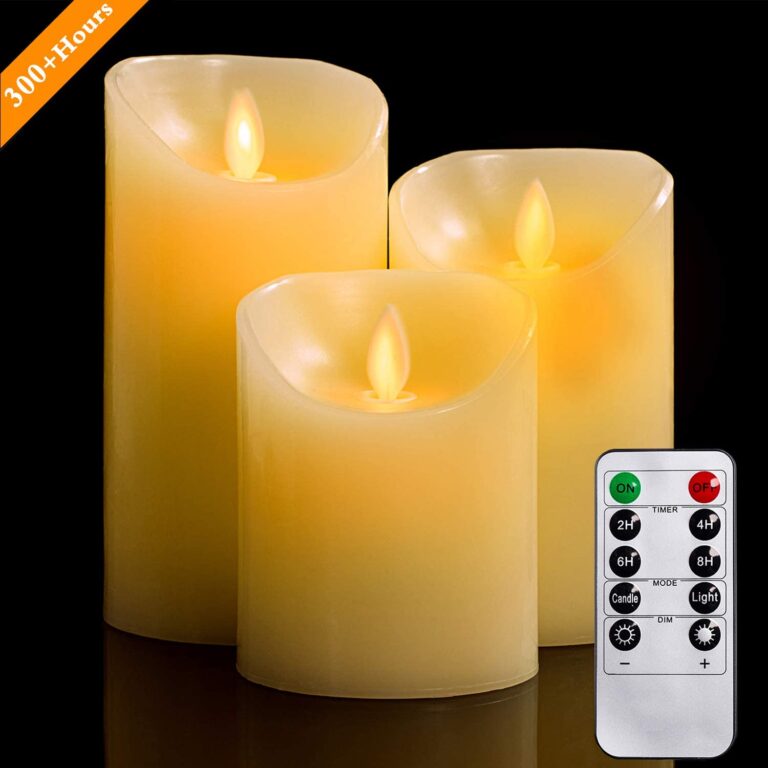
Transform your prayer life during Lent with these flameless candles. The flickering effect gives them the feel of a real candle with the added perks of safety and no mess. The remote control lets you change the settings from afar and even put on a timer to remind you it is time for prayer. Put these flameless candles in any room of your house to slow your mind, sit in silence, and reach out to God for comfort. They are fitting for your own home or as Lent gifts for loved ones who are hoping to pray or meditate more. Buy at Amazon.com
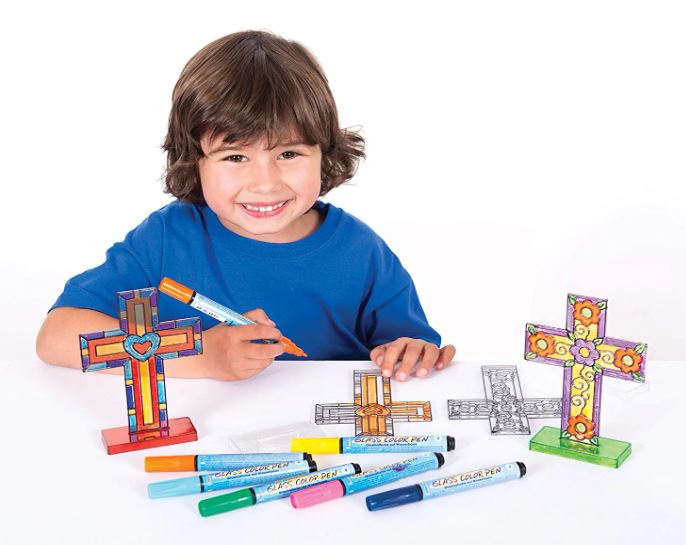
Looking for a way to introduce your kids to Lent? Teach them about this holy season through a Lenten cross suncatcher they can color in themselves. Let them pick each color as you talk to them about the significance and importance of Lent. After the cross is complete, let them choose a spot in their room to put it so they can always be reminded of God’s presence on their lives. Be sure to add it to your Lent gifts shopping list for your kids, grandkids, nieces or nephews. Buy at Amazon.com
Take your kids on a journey through Scripture with this collection of Bible stories. Each story will teach your child more about the history and importance of Lent, with easy-to-read retellings and reflection questions so you and your kids can discuss together. This book is a great tool to help your kids grow closer to God and gives them the space to share their own thoughts on the Lenten season with you. Buy at Amazon.com
This beautiful tea set is the perfect way to start your mornings during Lent. The box is filled with individually wrapped tea bags with flavors like French vanilla, lemon honey, jasmine, mint, earl grey and English breakfast. They are a nice treat to sip on as you read Scripture, do your Lent prayers, or begin your Lenten fasting. Each tea bag also includes a touching Bible verse affirmation so you can enter each day of Lent with inspiration and hope. Buy at Amazon.com
Daffodils—also called Lent lilies—are a common symbol during the Lenten season because they usually bloom around Ash Wednesday. Bring the feeling of Lent into your home with this daffodil scented soy candle. Crafted to burn for 49 hours and with a long-lasting scent, this candle is lovely to light when you are saying your Lent prayers or looking to unwind after the end of a long day. If you are looking for unique Lent gifts, add this one to your shopping bag. Buy at Amazon.com
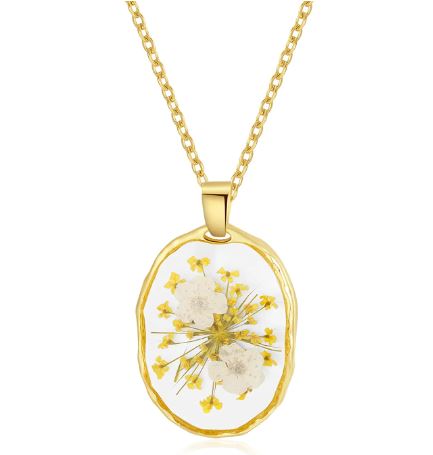
Give a loved one the gift of carrying a symbol of Lent with them wherever they go. This necklace design has pressed wildflowers, including daffodils (or Lent lilies). These beautiful flowers symbolize rebirth and hope, two themes we can keep close to our heart as the Lent season leads us to Easter Sunday. Purchasing this unique necklace helps support a small business, started by a stay-at-home mom.Buy at Amazon.com
These beautiful rosary beads are made of real amethyst, so the purple color is ideal for the Lent season. Each bead will lead you through your rosary or Lenten prayers. The length is just right so you can either wear it, hold it, hang it on your rearview mirror, or somewhere in your home. Let this beautiful Lent gift guide you or your loved ones’ prayers through the season from Ash Wednesday to Easter Sunday. Buy at Amazon.com
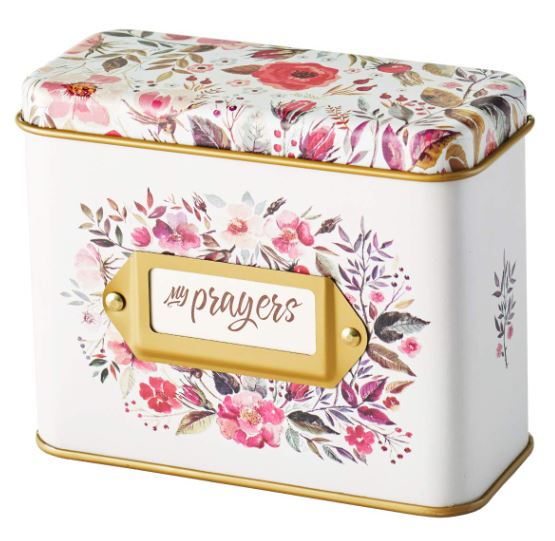
If you are making a list of Lent gifts for your loved ones, be sure to add this beautiful and durable prayer card tin. Prayer cards are a wonderful way to get your prayers out when you are struggling to express them. With 50 double-sided cards included, this tin can hold your Lent prayers after you write them. Start on Ash Wednesday and write a prayer every day during Lent. Then look back at them on Easter Sunday and give thanks for God’s work in your life. Buy at Amazon.com
Support a small business by buying this purple Bible cover, a wonderful addition to your Lent gifts list. The durable faux leather will protect your favorite Bible and the unique design includes Scripture (Proverbs 31:25) to inspire you. Get it with the first Bible you buy your child or grandchild or give it to a loved one who has a beloved Bible they want to keep safe. It includes a back pocket for a journal, a pen loop so you can always take notes, and a zipper so you can easily bring God’s word, including your favorite Lent Bible verses, with you wherever you go this Lent season. Buy at Amazon.com
What is it about spring that makes us want to try something new? Spring activities are a chance to turn over a new leaf and embrace our lives with a fresh sense of discovery and purpose. Whether you are a couple, a family, or trying something new on your own, committing to one of these pursuits will make this a season you won’t ever forget. Here are 20 spring activities to bring more inspiration, positivity, and meaning to your spring season.
The weather is warmer, and the sun is shining (some of the time), so grab your light jacket and head outside for some much-needed time in nature.
1. Go on a Daily Meditative Walk
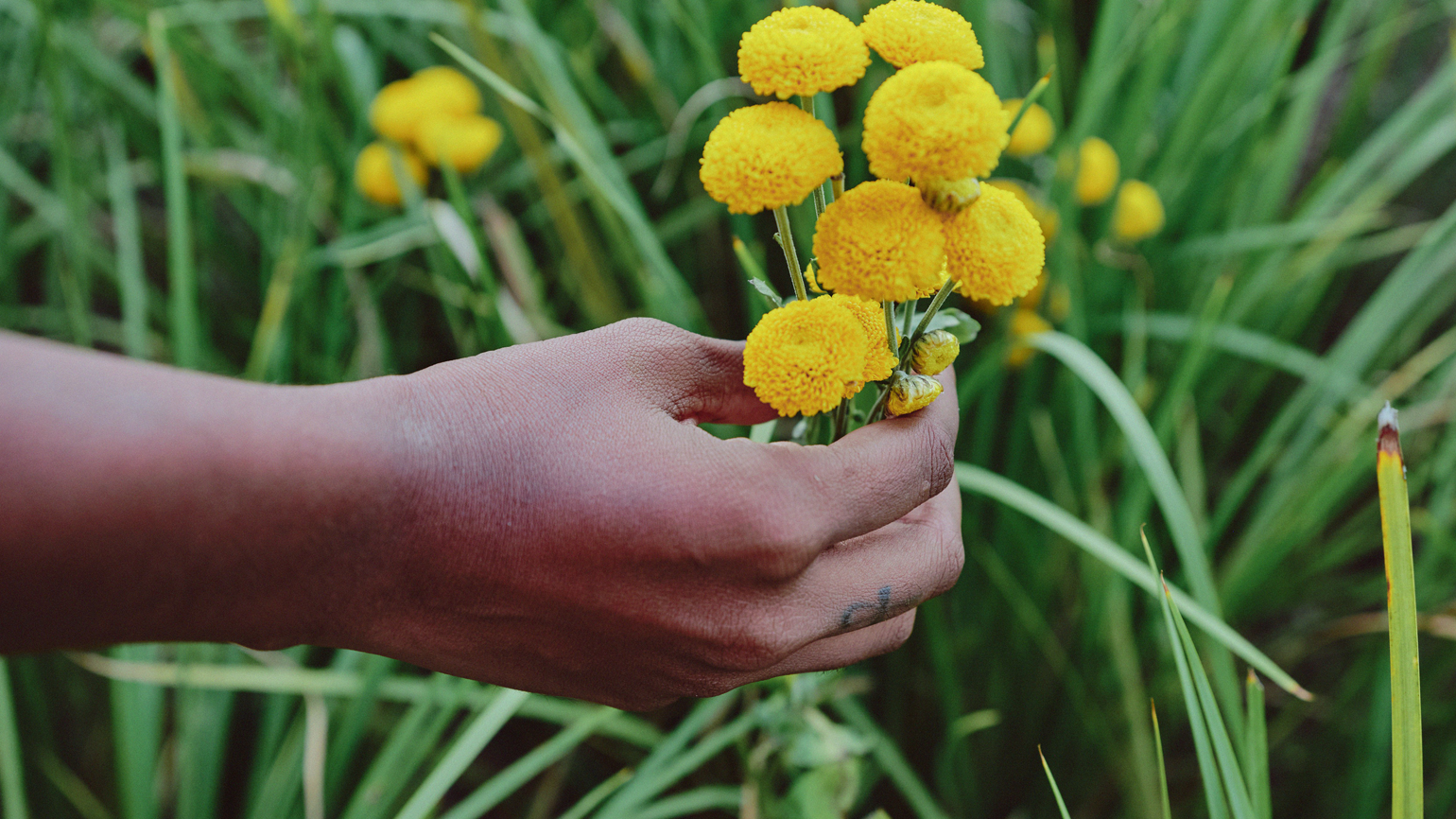
Did you know spring can be an acutely stressful season? Between spring school semesters, busy work schedules, spring cleaning, and the return of outdoor activities, it’s hard to take the time to appreciate this beautiful season. A fun spring activity to help you enjoy this time of year is a daily or weekly walk. Instead of focusing your walk on a destination or as a form of exercise (which is great) try to make your walk more of a meditative experience. Let your mind naturally wander as you wander your neighborhood. Take the time to notice your favorite parts of the spring season—like the blooming flowers, freshly green trees, buzzing bees, and the returning birds.
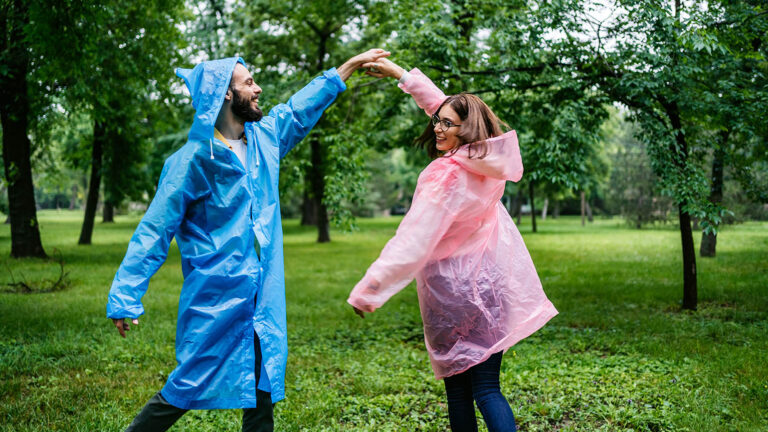
Even with warmer weather on the way, we still need to get through all those April showers. But don’t let the cloudy weather keep you down. Use rainy days as an excuse to have a little fun. When the weather predicts some rain, step outside instead of staying indoors. Dance in the rain, splash in some puddles, construct a boat out of leaves and watch it sail through streams of water, or grab your umbrella and go for a walk. It’s a sure way to keep your spirit up until summer days arrive. Soon you’ll find yourself more excited for rainy days than sunny ones. Just be sure to have a towel ready when you get back home.
3. Visit a Botanical Garden
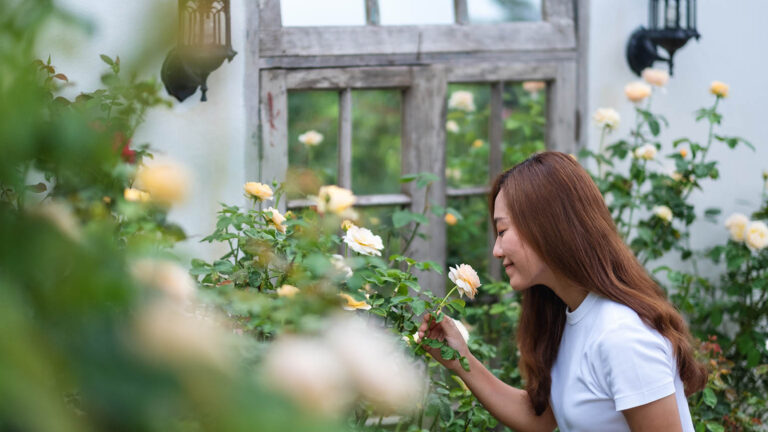
Depending on where you live, April and May are usually the peak season to go and see some flowers. So, plan now for a trip to the best place to see all kinds of flowers and plants: a botanical garden. Simply Google the closest one to you and make a day of it. Check out their calendar for events, like walking tours, kids’ days, volunteer events, art festivals, learning workshops, and other fun spring activities. You’ll be surprised how much they have to offer. Take the whole family or go on a solo trip for some one-on-one time with nature.
4. Go Stargazing
Warmer weather also means a chance to step outside after sunset without those biting winter temperatures. When you do go outside at night, look up. The spring night sky is filled with amazing stars, planets, and maybe even some meteor showers. If you live in a city, drive out to a more rural area for a better view. Bring a blanket, a telescope if you have one, and maybe even a little hot chocolate to keep away that lingering winter chill. Try to find some of the spring constellations, like Orion, Leo, Virgo, and the Big Dipper. Let the brilliance of the night sky fill you with a sense of awe and wonder.
5. Volunteer with Your Local Park
Do you have a favorite local park that you love to visit, whether for picnics, dog walking, or other spring activities? Lend a hand in keeping that park clean and healthy. Many local parks need help with trash pick-up, planting new trees, and other landscaping work. Reach out to the park’s community organization—it may be the city or county’s parks department, or even a neighborhood organization—and see if they have any volunteering opportunities. Bring the whole family along or round up your friends for a day of fun, outdoor volunteer work. It will make the whole park a more enjoyable place during spring and beyond.
Spring Activities for Families and Kids
With spring break and more daylight, spring is the perfect time for families and kids to come together and focus on family time.
6. Start a Family Garden
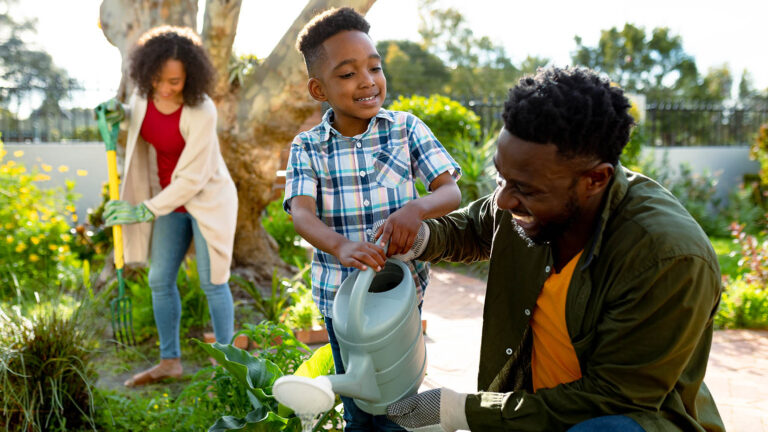
Looking for a spring activity that will bring the family together while teaching responsibility and teamwork? Try planting a family garden this spring. Pick an area in your yard or join a local community garden. Map out your plot and decide what you are going to plant together. Consider giving everyone a type of plant to look after or dividing up tasks, like watering, tilling, and pruning. Or work together through every step to make sure each type of plant flourishes. Pick a day of the week when everyone is free so you can all meet in the garden for some fun family time.
7. Do One New Activity Every Week
With busy work schedules, school schedules, after school activities, and more, it’s difficult to find time to spend together as a family. And it is even harder to pick something everyone will enjoy. This year, when you sit down to write your calendar of spring activities, set aside some time for one new activity on a monthly or weekly basis. Let each member of the family pick something they want to do with everyone. It can be anything from doing a new art project together, going to the zoo, having a family sports day, or checking out a street festival. It doesn’t matter what you do, as long as everyone is together and having fun.
8. Plan a Picnic
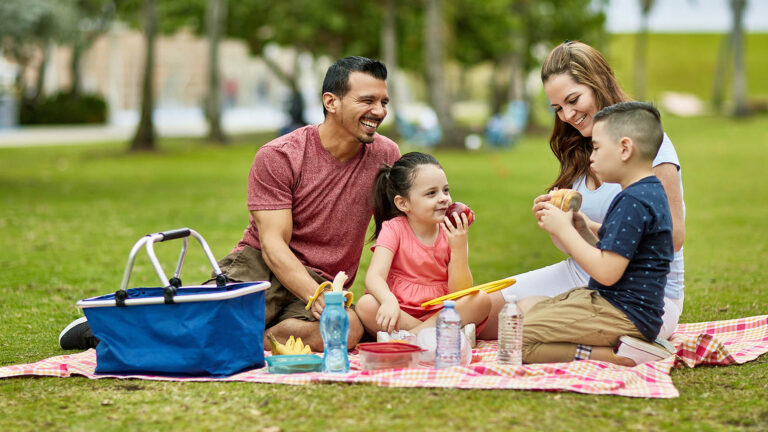
Enjoy even more outdoor time with the whole family by planning a picnic. Have each member of the family pick out their favorite snacks and sandwiches, then head to your local park, beach, or your own backyard. Let everyone also pick out a fun picnic activity to play, like freeze tag or cloud watching. Designate a blanket from your home to be the picnic blanket and keep it in your car trunk or by the door so you can have a spontaneous picnic any time the family wants to create some cherished memories.
9. Go on a Nature Walk
Spring is the season of budding plants, singing birds, and buzzing insects. Meet the world as it reawakens with a nice, long nature walk. You can do this spring activity at a local hiking trail, park, or even through your own neighborhood. Look up seasonal fauna and flora that you want to keep an eye out for as you walk and mark them down as you spot them. Check if your city or county hosts a nature walk and join other families on an adventure. See the ways that communing with nature brings us peace and connects us to one another.
10. Fly a Kite
“With your feet on the ground, you’re a bird in flight with your fist holding tight to the string of your kite,” goes the iconic song “Let’s Go Fly a Kite” from Disney’s Mary Poppins. Flying a kite is one spring activity we will never get tired of doing. According to the American Kitefliers Association, the earliest accounts of kite flying go back to China in 200 BC. Take part in this ancient pastime by grabbing your own kite and heading to the closest open field. Wait for a day when it is particularly windy—spring is the best for this—and let your wings soar through the sky.
Spring Activities for Adults and Couples
Whether you are looking for more alone time or a chance to connect with your spouse or significant other, use the spring season as a chance to try something new.
11. Start a New Positive Micro Habit
For many people, spring is a time of renewal—starting over, trying new things, and adding better habits into their daily life. Whether your goal is to take up a new hobby, be more positive, eat better, exercise more, or even quit a bad habit, starting a new positive habit isn’t always easy. This spring, bring a new micro habit into your schedule. Micro habits (small habits that can be done within a few minutes) include anything that improves your life in a meaningful way. Examples include waking up 15 minutes earlier, starting your day with a few minutes of prayer or meditation, stretching during your workday, or making a calming cup of tea before bed.
Journaling before or after a busy day lets us slow down, reflect, and focus on the most important things in your life. And couples journaling is a great way to do this with your spouse. For your spring activity, take up couples journaling together. Here are some tips for how to get started:
Pick out a journal together.
Keep the journal in a place where you both have access to it.
Pick out a pen color for each of you so you know who wrote what
Give yourself some journal prompts, like “what do I love most about my spouse?” or “what am I most grateful for in our lives?”
Designate when you will each write in the journal—will you do it separately throughout the day and read it together before bed? Or maybe sit together to talk and write down your thoughts in the journal as you go?
13. Share Your Feelings Through Bouquets
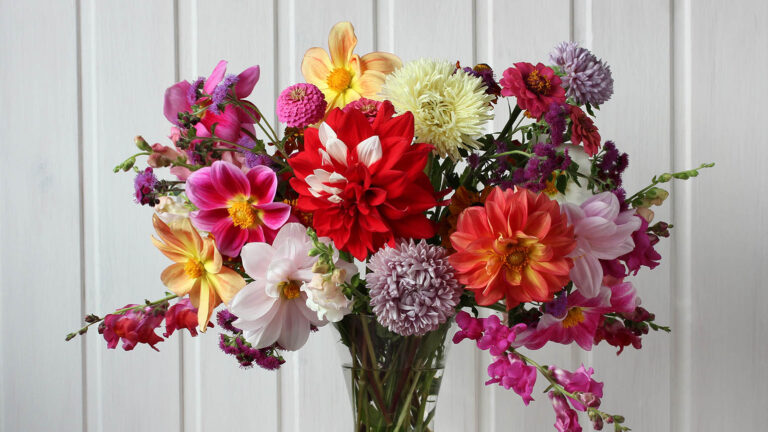
Did you know there is a language of flowers? Also called floriography, this age-old practice was popular during Victorian times as a way for people to communicate with each other through bouquets of flowers. Roberta Messner from Huntington, West Virginia received one such bouquet when she was ill and had not seen her friends in a long time. “The red carnation meant, ‘Our hearts ache for you,” she said of the bouquet they sent to her. “The daisy announced loyal love; the jaunty sunflower, adoration; the iris, faith and hope. The yellow tulip wanted to see sunshine in my smile again. The blue hyacinth recalled my constancy. The pink carnation had a few words to say about never forgetting me.”
Pick someone you’d like to send a bouquet to—your spouse, your mom, your sibling, your closest friend—and look up the different meaning behind each flower to send them a unique, heartwarming message.
14. Start a New Reading Habit
Spring can be an opportune chance to step outside and enjoy the fresh air and sunshine. And bringing a book along with you will make that outside time even more enjoyable. This spring, commit to reading more and take up a new reading habit. Reading on a regular basis can reduce stress, help with sleep, improve brain connectivity, and increase vocabulary and comprehension—all things that would be helpful to focus on during spring, with busy schedules and shifting sleep schedules from the start of daylight-saving time. Here are a few things you can do to start that new reading habit:
Make a comfortable reading spot for yourself
If you can’t commit a lot of time, go chapter by chapter
Add your reading time to your calendar so you never forget
Use a reading habits tracker like Libib, BookSloth, Goodreads or Bookly
15. Take Up a New Hobby
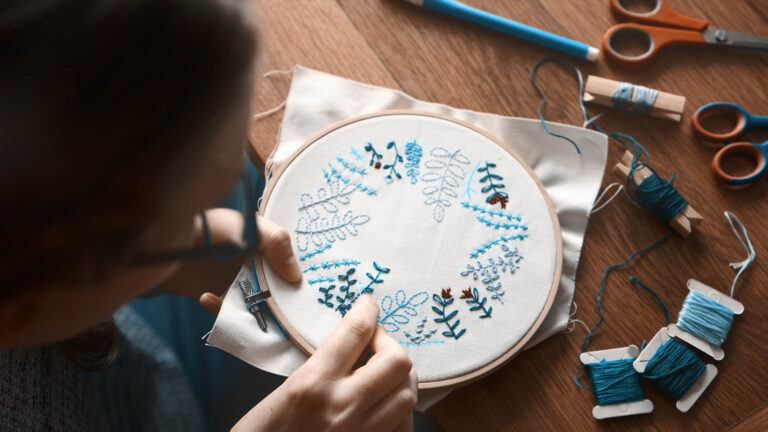
Try something new this spring by taking on a new hobby, either on your own, with your spouse, with a group of friends, or with your family. Pick something that you’ve always wanted to try, like an art craft, a sport, or even a musical instrument. Add your new hobby into your calendar so you always set aside time to do it. Don’t focus so much on being good at your new hobby. Seeing yourself improve will always feel rewarding, but instead focus on how doing the hobby brings you joy. If you try one hobby and don’t enjoy it, don’t be afraid to put it down and pick up a new one. Doing a new hobby on your own can be a great way to set aside some much needed alone time, while doing a hobby as a couple or with friends will bring you an even deeper sense of connection with your loved ones this spring.
In the busyness of the spring season, don’t forget to slow down and focus on your spiritual life.
16. Pray or Meditate in a Garden
Praying or meditating in a new location can revitalize your practice and give you a new perspective on life. This spring, start a habit of praying or meditating amongst the flowers. Go into a public park, a community garden, or your own backyard. Pick a spot that is comfortable where you can have a little quiet. Slowly breathe in and out and savor the scents around you—from the nourishing soil to the fragrance of the flowers. As you pray, focus on the life around you and remember how you and every singing bird, blooming flower, and buzzing insect was created by God. As you meditate, focus on your breathing and each part of your body to bring yourself to a space of absolute peace.
Take up the spring activity of picking a verse from the Bible for each day. Pick a beloved verse to revisit and add it to your daily prayer. Or think about something you want to accomplish that day and find a piece of Scripture to guide you through it. Try opening the Bible once a day to a random page and seeing what words God has in store for you. Here are some spring Bible verses to get you started:
Ask the Lord for rain in the springtime; it is the Lord who sends the thunderstorms. He gives showers of rain to all people, and plants of the field to everyone. —Zechariah 10:1
Let us acknowledge the Lord; let us press on to acknowledge Him. As surely as the sun rises, He will appear; He will come to us like the winter rains, like the spring rains that water the earth. —Hosea 6:3
For behold, the winter is past; the rain is over and gone. The flowers appear on the earth, the time of singing has come, and the voice of the turtledove is heard in our land. —Song of Solomon 2:11-12
Thanksgiving shouldn’t just be reserved for November. Focus on the spiritual importance of gratitude in your life this spring by starting a gratitude journal. Pick out a journal and put it somewhere that you’ll remember to write in it, like near your bed or on your desk. Choose a time during the day when you will sit down and write or keep the journal on hand to write throughout your day. Fill the journal with things you feel grateful for—from your best friend to a tasty meal to a video that made to laugh to a powerful moment of prayer. Take your gratitude practice a step further by reaching out to your loved ones with notes letting them know why you are thankful to have them in your life.
While doing all these spring activities, we sometimes forget to stop and actually enjoy the blessings of this season. This spring, make an effort to observe and enjoy the world around you. When you are doing your daily spring walk, listen to the dulcet sounds of birdsong. If you visit a botanical garden, stop to smell the sweet fragrance of the different kinds of flowers. When you go to a baseball game with the whole family, look up to the sky and marvel at the clouds between innings. Don’t let the days of this beautiful season pass you by without taking the time to notice it.
20. Start a Daily Devotional Habit
Are you looking for a spiritual practice and positive habit that will bring you closer to God? Try adding a daily devotional habit to your list of spring activities. While a devotional won’t give you everything you need in your spiritual life, it will keep you grounded and connected to your best self. As Jesus says, “Love the Lord your God with all your heart and with all your soul and with all your strength and with all your mind…” (Luke 10:27). To start this spring habit, pick a time of day, a place to sit and read your devotional, and consider reaching out to others to join you.
Spring activities can get us outside into the sunshine, bring us together with our families, give us a chance to focus on ourselves, and renew our spiritual lives. Try one of these suggestions and see just how quickly spring becomes your favorite season.