I’ve long been a believer in the “a little goes a long way” approach when it comes to kindness. You have probably experienced the delight of an unexpected kindness, often something so simple it can almost pass notice, except that it lights you up inside.
The shut-down, slow-down and new normal of living with the coronavirus pandemic has changed so much, including the ways we show each other we care. Here are some random acts of kindness you can do in a way that’s socially distanced, safe and also deeply meaningful.
1) Send a favorite inspirational quote to a friend with a simple note saying, “This keeps me going. How are you?”
2) Write a gratitude letter (or email or text message) to a friend. Be specific about what you’re thankful for in them.
3) Display a motivational saying in your window or write it in chalk on your sidewalk.
4) Drop off a small gift (a lovely bar of soap, a few flowers from your garden, a book you loved) on a friend’s porch—anonymously.
5) Take on a task that your spouse or children typically do around the house to give them a break.
6) Compliment someone you encounter during your day (postal worker, grocery clerk, etc.) on a job well done.
7) Give a friendly nod to a stranger as you pass by.
8) Do something kind for yourself. Get out the cloth napkins. Light a soothing candle. Practice positive self-talk.
9) Make a donation to a charity you care about, either anonymously or in the name of a loved one.
10) Write a positive review of a local business you love and want to succeed.
All great stories are love stories. And most great Guideposts stories are love stories…love of family, love of partner, love of country, love of God. Love is the universal, cosmic, all-encompassing ultimate theme.
From the Greeks to the soaps (and it’s not that great a leap in terms of subject matter) we are always trying to figure out love, why it makes us happy or crazy or brave or compassionate. So many of the qualities that make us human are fed by love.
I remember the first time I was dragged to the theater to see Shakespeare. It was seventh grade and we were loaded onto a bus and driven to Wayne State University in Detroit to see a production of Twelfth Night, something no seventh-grade boy wants to sit through. Upon trying to read the play beforehand I found the language archaic and impenetrable and the prospect of watching it performed unbearable. I was prepared to sneer.
Then the stage lights came up on bewitching Illyria and cast nothing short of a spell on me and my adolescent cynicism. I fell in love with the romance of Viola and Orsino, with the beauty of the spoken dialogue, and with William Shakespeare. I’d walked into the theater a hardened young teen; I left a romantic. The following year Franco Zeffirelli released his film version of Romeo and Juliet and like every boy in my general demographic I formed a ridiculous crush on the actress playing Juliet, Olivia Hussey, that persists in some vague way even to this day.
Love does amazing things to us. It redeems and transforms and inspires. The editors have put together their 10 most inspiring Guideposts love stories. Have a look and then tell us what your favorite love story is.
Happy Valentine’s to everyone!
Hope for Love
Award-winning actress Andie MacDowell yearned for a happy family, united through faith and love.
Happiness Is Owning a Dog
When author Dean Koontz welcomed a dog into his home, he had no idea the personal growth and life lessons he would gain from the experience—a different kind of love story.
A Military Wife’s Mission
After a serious injury in Iraq, this soldier needed his wife. Her inspiring story shows the strength it took to help him heal.
Faith Reunited Them
In this inspiring story, faith and prayer reunite a divorced couple.
Daily Prayer for True Love
A lonely woman relies on hope and faith when she meets a man who may be “the one.”
Prime Cut
A divorced and broken woman finds the courage to put herself out there again…and finds love!
A Life-Changing Love
I had this funny feeling that something big was about to happen.
How Italy Saved Their Marriage
After 20 years our marriage felt stale. No, worse—empty. We were headed for divorce until we headed for Italy.
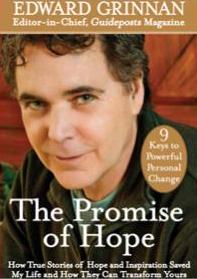
Read Edward’s never-before-told story of personal transformation in his new book, The Promise of Hope.
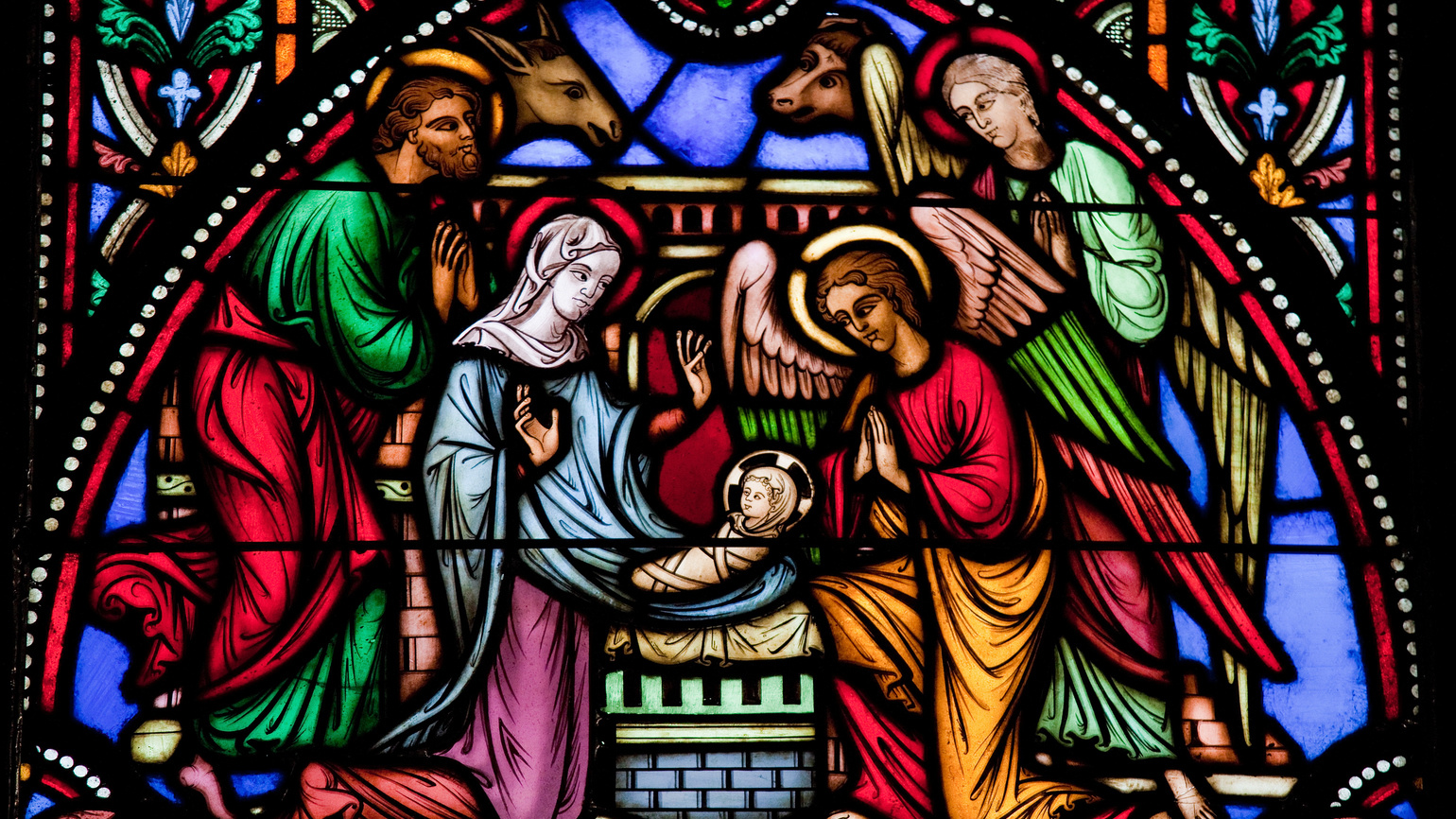
As the holiday season approaches, let us also remember the season of Advent. This holy time of year is for prayer, reflection, and spiritual preparation for Christmas Day. Learn more about the origins and meanings of this season with these 10 interesting Advent facts.
1. Advent means “arrival”
The word Advent comes from the Latin word adventus, which means “arrival” or “coming.” It refers to the arrival of Jesus Christ. Learn more about the meaning of Advent.
2. Advent is different from Christmas
For some, Advent and Christmas are synonymous. In fact, Advent has a separate time period and purpose. While Christmas celebrates the birth of Jesus, Advent is considered a time of preparedness for His coming.
3. Advent marks the beginning of the liturgical year
What exactly is the liturgical year? Also called the church year, it is the cycle of days observed by many Christians in commemoration of the life of Jesus Christ.
Advent begins four Sundays before Christmas Day, therefore its beginning date changes every year, depending on when Christmas falls. This 2022 Advent season begins on Sunday, November 27th (just three days after Thanksgiving). In 2023, Advent will begin on Sunday, December 3rd. In the year 2024, Advent will begin on Sunday, December 1st. Advent always ends on Christmas Eve, December 24th.
5. When did it begin? No one knows!
The truth is, no one knows for certain when the season of Advent started being celebrated. There are many historical theories. Some believe it originated as a period of fasting before Christmas. Others say Advent was a time of preparedness before the feast of Epiphany. Whatever the origins, it is an important spiritual time for people around the world today. Learn more about the history and facts of Advent.
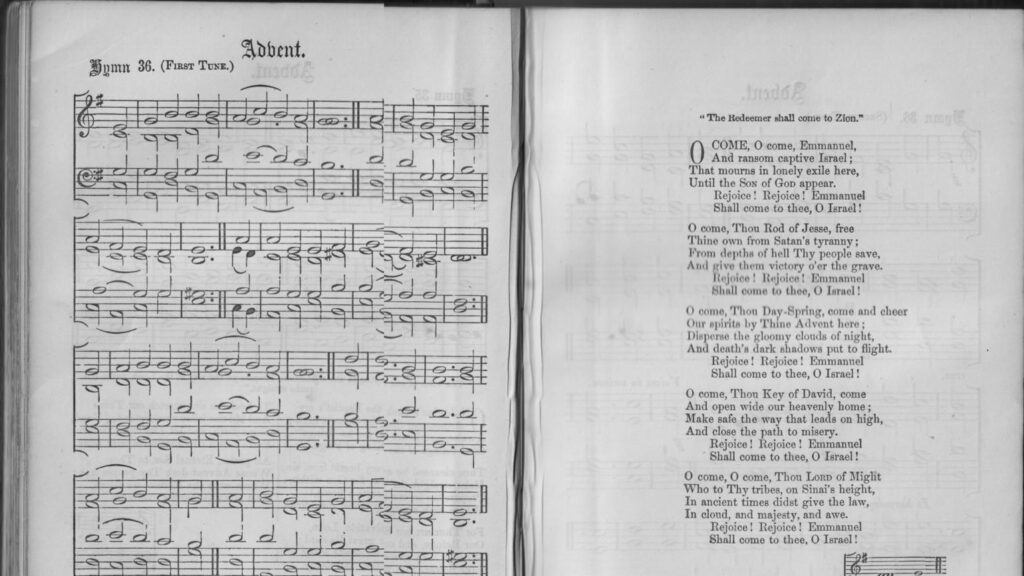
6. There are Advent hymns and carols
Much like Christmas, there are Advent hymns and carols to help you get into the season’s spirit. Perhaps the most famous is “O Come, O Come, Emmanuel,” which dates back to the 8th or 9th century and was traditionally sung in the days before Christmas Eve. “Advent Suite” by John Michael Talbot and Michael Card is also a popular song around this time of year for its stirring lyrics and spirit of reflection.
7. Advent has various symbols
While Advent celebrations vary around the world, a common tradition includes the use of a wreath and candles. The wreath is evergreen—usually fir, holly, juniper, or spruce—to symbolize eternal life. The four candles are various colors, often three violet (symbolizing reflection and humility) and one rose-pink (symbolizing joy). The candles are lit each Sunday and sometimes a white candle is added and lit on Christmas Eve. Learn more about the meaning of lighting candles at Advent.
8. Advent has 4 themes
Each Sunday of the Advent season focuses on one of four themes, or virtues. The themes can be different based on denominations or preferences. The most common themes are hope, peace, joy, and love. Some traditions include lighting a specific candle on the wreath to symbolize each of the four virtues. Learn more about the four themes of Advent.
9. Advent calendars originated in Germany
Much like Advent itself, there are differing accounts as to who invented the Advent calendar. Most agree that they began in Germany in the 19th century. Reichold & Lang was one of the earliest companies to create and sell Advent calendars. But in fact, Advent calendars are all thanks to Gerhard Lang’s mother. She created a calendar with treats behind it for Lang and his siblings to enjoy on the days leading up to Christmas. Through the years, others have put their own spin on the tradition, including putting pictures, chocolates, or Bible verses behind the calendar windows. Learn more about the history of Advent calendars.
10. Advent is celebrated around the world
Advent is celebrated in the Roman Catholic, Anglican, Episcopalian, Lutheran, and many Protestant churches. People around the world have their own traditions when it comes to the season. For example, in Ireland a family will place a lit candle in their window. In China, people hang colorful lanterns and give apples as a gift. In Mexico they celebrate Las Posadas, or “The Inns,” in which a child dressed as an angel leads a procession around the town to commemorate the journey of Mary and Joseph.
Do you know other Advent facts? Share them with us!
When times are hard or the future seems uncertain, it’s easy to feel fearful and full of despair. But these stories remind us that even in the darkest times, there is always a glimmer of hope.
In this brief sermon, Guideposts founder and author of The Power of Positive Thinking, Dr. Norman Vincent Peale, shares why hope is so important and how to cultivate it in yourself.
One of my favorite Bible texts is, “This is the day the Lord has made, let us rejoice and be glad in it.” (Psalm 118:24) Each morning I pause to thank God, to feel joy at another day of life. On many Sunday mornings when I greet my church congregation from the lectern, I remind them that indeed this is the day the Lord has made.
I think we all want to be thankful every day and rejoice in it, although sometimes that can be difficult or even feel impossible. How to rejoice when grieving or troubled by life’s problems? Where is the joy in a day of pain or worries?
Being glad in the new day doesn’t mean that sorrow and challenges will not be present. It’s not about denying reality; life is hard. But I find joy in a fresh chance to experience the goodness of God—beginning with the sunrise that brings warmth and light after a night of darkness. I’m reminded that God has a purpose and plan for me every single day. It might be to encourage others, help my family or pray for someone in need. When I think of all the possibilities, I refuse to let my own troubles take away the joy of the Lord.
It’s knowing that we can depend and draw on His presence when solutions to life’s problems seem far away. When we are weak, His strength makes us strong. In the midst of the chaos of the day, His peace is greater and surpasses all human understanding and conditions.
We can all rejoice in a new day because we are not alone, and His presence will bring out the best in us. When we cannot see what to celebrate, we pray that His love will invade our thoughts. Every single day we can experience this. Do you believe that today can be amazing?
The harmony of the song during the church service was beautiful, but then the words caught my attention: words about God moving mountains that we don’t see. Those words slammed into me because of a recent experience I had with mountains.
Several weeks earlier, my husband and I spent six days near Vancouver, Canada. Executive Producer Brian Bird and I have co-authored a book, When God Calls the Heart, in conjunction with the When Calls the Heart television series, and we’d traveled to Vancouver for the Hearties Family Reunion that they host each year for fans of the show.
The first few days we were there, the weather was gloomy and rainy. The socked-in clouds limited visibility, but thankfully on our third day there, it started clearing a bit as we headed out for our visit to the set where the show is filmed.
We had a fun day touring the town, church and houses that we’ve seen on our television screens and meeting the stars, writers and crew from the show. After days of gloom we were thrilled when the sun finally showed up.
Late that afternoon, we started back to our hotel, and when we were halfway there, my husband and I both gasped and said, “Where did those mountains come from?” We’d been there for days and hadn’t had a clue that we were surrounded by towering peaks, some of them capped with snow. They’d been obscured by the thick clouds.
So that was my mental visual as the ladies sang about God moving mountains that we don’t see. Tears sprang to my eyes as I thought about all those times God has changed circumstances in my life and about moments when I whined or complained because God wasn’t doing things in the manner I thought He should. I thought about all those moments when I wondered if He cared, because the direction He was sending me didn’t make sense. Maybe some of you are experiencing moments like that right now.
I’ve learned that those are the moments we have to trust Him—because even though we don’t see them, He sees the mountains—the obstacles in our lives—that are there. Sometimes those unexpected moments are God moving us around the mountains that would have defeated us or caused us great harm.
But we also have the confidence that the God who made those mountains can move them whenever He wants—whenever it’s His perfect time and plan for our lives.
Lord, in those moments that don’t make sense to me, help me to trust You, knowing that you see the mountains in my life that I didn’t know were there. Thank You for protecting me…even during times when I didn’t even know You were doing it. Help me to be ready and available whenever You want to move the mountains in my life. Amen.
There are people we meet for a divine purpose—not just someone who crosses our path, but someone God wants us to meet. It’s as if there is an unseen plan unfolding to ensure that it happens. And when it does, time slows down.
Recently, my colleague Michelene, who works in the Guideposts Philanthropy department, experienced this while visiting a longtime supporter of the organization, Cindy. Although they had spoken on the phone and exchanged emails, it was their first time meeting in person.
They had a wonderful encounter, and when they were about to say their goodbyes, they exchanged business cards. At that moment, something clicked in Michelene—Cindy’s business card stated her maiden and married names. Michelene quickly realized that Cindy’s maiden name was the same as another man’s who had supported Guideposts, but who recently passed away. Michelene had had a great relationship with him.
When Michelene mentioned the coincidence of the names, it turned out the man was Cindy’s father. She started to cry and was thrilled to know that Michelene had known her father and spoken with him several times. They discovered they were both grieving the loss of a parent. Michelene’s mother had died in June and Cindy’s dad in December of the same year. Michelene recalled the day when Cindy’s brother called to let her know that his father had passed. The father had kept one of the note cards that she had sent him. Little did she know, Cindy was his sister.
The two women found comfort and strength in one another that day and shared their pain of losing a parent. They left the meeting feeling uplifted and inspired by their time together. And knowing it was no coincidence at all that they met. The Lord ordained their steps, allowing them to connect in a very special way. That day, they both felt as if their parents were smiling down on them from heaven. We never know who God will bring into our lives, but when it happens, it’s a divine connection!
The word “Lent” comes from an Old English word that refers to the lengthening of days, the coming of spring. That’s not how we usually think of it. Lent sounds like it should be dour and gray. A season of self-sacrifice and taking away. Think again. The meaning of Lent is about opening up. No matter what the weather is like, newness and new life are just outside the window. And in you.
Does every day feel the same? Does it feel like you’re in a rut? Is your prayer life the “same old, same old?” Welcome in Lent, this season of inner growth and spiritual sustenance. It’s there on the calendar for you to recharge. Recharge.
Give yourself a Lent goal
Sometimes we don’t even know what we want until we give it some focus. Until we write it down. Take out a pen and paper (okay, you can do it on your laptop too) and write a Lent plan. Put down some goals. Things you want for yourself in your spiritual life. Things you want for your loved ones. Don’t try to make it fancy. Just be honest. You’re the only one who’s going to see it. You and God.
It’s a curious moment. Those 40 days of Lent come just before Easter. We have a time of self-reflection before we launch into the celebration of the Resurrection and new life. But think about what we’re honoring. Those 40 days Jesus spent in the wilderness were His preparation for a transforming ministry. When we give ourselves 40 days, we’re discovering the Jesus within us. Finding our time to share with Him.
Do something new
When we give up something for Lent—like chocolates or wine—we’re doing something sacrificial, not because it seems like a good idea but to give ourselves a reminder of how Jesus went on a 40-day fast. I remember when my wife gave up worry for Lent. Now there’s a challenge! It was terrifically hard, but every time she found her mind turn to worry, she had to turn to God for peace of mind and sustenance.
I’m afraid I spend a lot more time thinking about myself than I do about other people. I tell myself that it’s just what you have to do in this world. You know, looking out for number one. But shouldn’t number one be God? Jesus used that time in the wilderness—God used it—to face down the tempter. To say no. Putting Lent on your calendar is a way to re-focus and see where you need to say no. Fully explore the meaning of Lent.
It was the Spirit that sent Jesus into the wilderness in the first place. And Jesus by His actions makes sure the Spirit doesn’t leave Him. The Spirit is here to guide all of us to a life that is new and transformative. Let Lent put your focus there.
At the end of Jesus’s time in the wilderness, angels came and comforted Him. That angelic comfort is awaiting all of us at the end of our trials. Look for it. Welcome it. Invite the angels in. Lent is not just a time to say no. It is also a time to say yes.
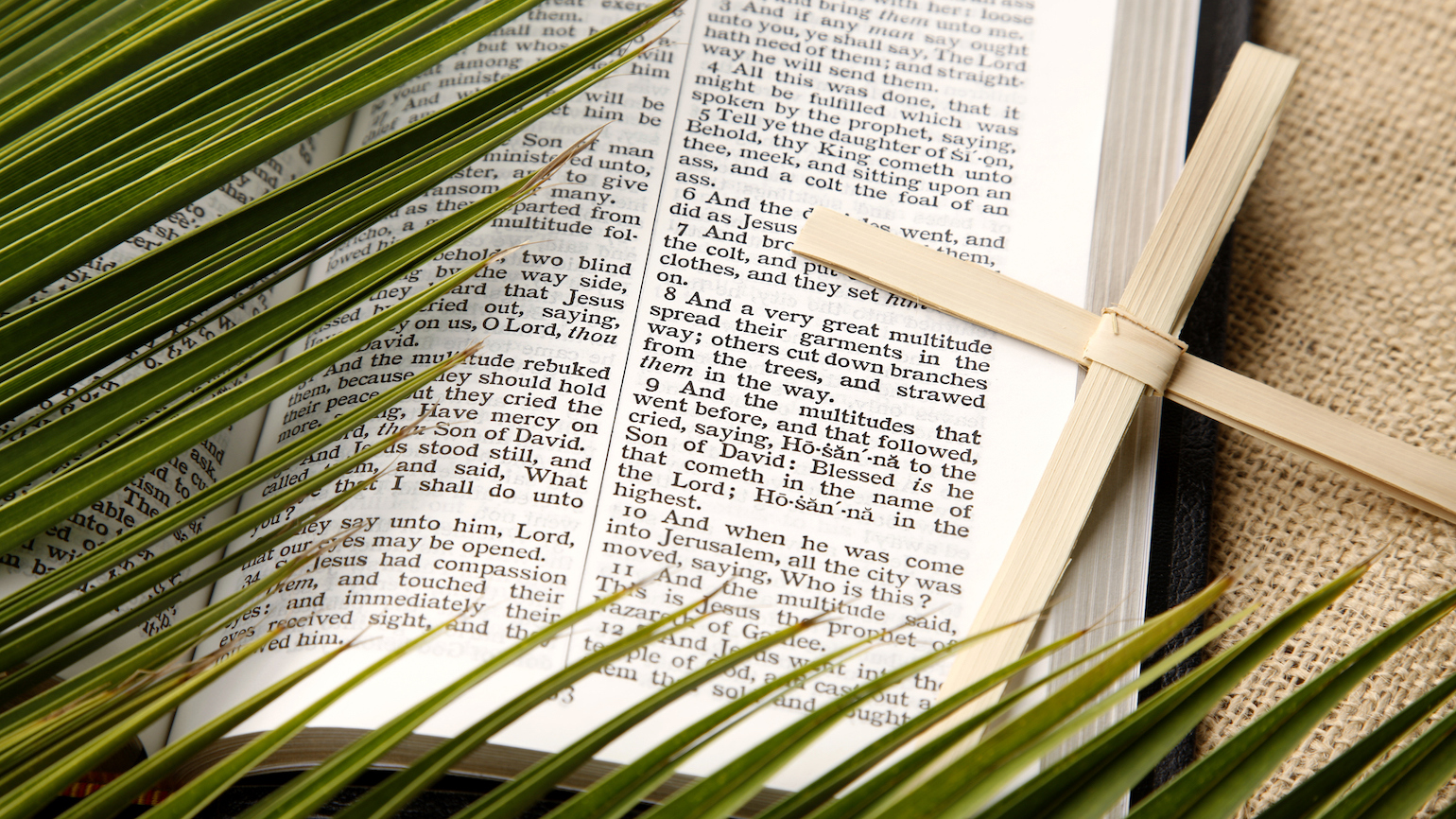
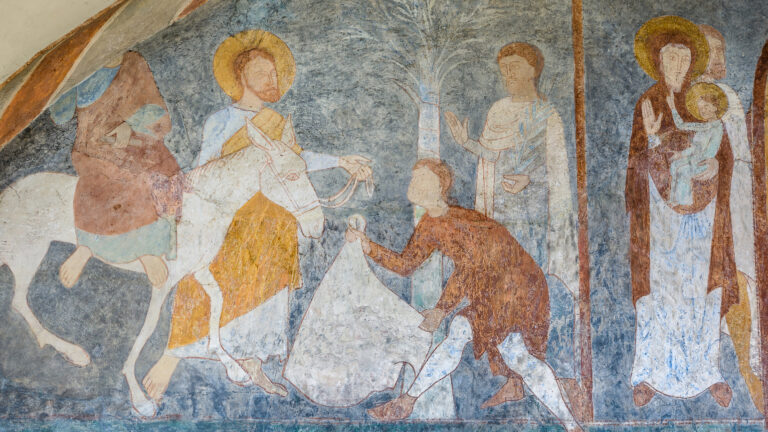
To followers of Jesus, Easter is the most important day of the year…or should be. It’s the day we celebrate the central event of history, the moment when Jesus rose from the dead to make eternal life possible for human souls like you and me. What if we truly prepared for Easter this year? The Lent season is coming to an end. Now is the perfect time to focus on rebirth and new beginnings. The first Palm Sunday in the Bible and Palm Sunday Scriptures can guide us in approaching the coming resurrection celebration.
What if we prepared ourselves and our souls in meaningful ways, ways that can be found in the Biblical accounts of the days leading up to the first Resurrection Sunday? Here is what the first Palm Sunday in the Bible can teach us:
1. Luke 19: 29-31—Do What Jesus Says
Luke the historian records the first Palm Sunday, a week before the resurrection:
As [Jesus] approached Bethphage and Bethany at the hill called the Mount of Olives, he sent two of his disciples, saying to them, “Go to the village ahead of you, and as you enter it, you will find a colt tied there, which no one has ever ridden. Untie it and bring it here. If anyone asks you, ‘Why are you untying it?’ tell him, ‘The Lord needs it’” (Luke 19: 29-31, NIV).
Jesus sent two of His disciples on a strange little mission. We don’t know which two disciples went, nor do we know what they talked about on the way. But it wouldn’t be surprising if they wondered, “You really think we should just untie the colt and take it?” “You think the Master knows the owner?” “You think this is a test of some kind?” “What if somebody takes a swing at us?”
You see, we typically read the Bible like a play, as if all the characters knew the script. But they didn’t. And yet, whoever they were, those disciples did what Jesus said. And their simple obedience brought glory to God. The Bible says that shortly after they completed their mission, “the whole crowd of disciples began joyfully to praise God in loud voices” (Luke 19:37, NIV).
That’s a good model for the week before Easter. We could do no better than to follow the example of those two unnamed disciples. Your obedience probably won’t involve a donkey. Only you and God know what it WILL involve. Is He calling you to repentance and faith in Him? Is He telling you to forgive someone? To help someone? To give something up? To say yes to something? To say no to something?
Whatever it is, you may be surprised—like the disciples Jesus sent to Bethphage—at how your simple act of obedience will bring glory to God.
Another part of the first Palm Sunday in the Bible clues us in to a second way to prepare for Easter:
As [Jesus] approached Jerusalem and saw the city, he wept over it and said, “If you, even you, had only known on this day what would bring you peace—but now it is hidden from your eyes. The days will come upon you when your enemies will build an embankment against you and encircle you and hem you in on every side…because you did not recognize the time of God’s coming to you” (Luke 19:41-44, NIV).
We tend to forget that this event was even part of the Triumphal Entry. We get caught up in the crowd, the shouts, the emotion, and excitement—while Jesus’ tears go unnoticed.
But apparently the crowds and the disciples didn’t pay much attention to His tears, either. Matthew didn’t record it. Mark didn’t mention it. Luke is the only writer to record this event.
The Greek word Luke used to say Jesus “wept” signifies more than tears; it suggests the kind of soul-wracking, gut-wrenching sobbing a person does at the tomb of a friend. It is the word used of Mary’s sobs at the tomb of her brother Lazarus, of Mary Magdalene’s sobs at Jesus’ tomb, and of Peter’s “bitter” weeping after he denied Jesus and heard the cock crow.
Jesus wept violently for the people of Jerusalem.
Not for Himself. Not for the cross that awaited Him. But for the fate that would come upon that city, when Roman armies would invade in 70 A.D., raze the city, destroy its glorious temple, and brutalize its rebellious people. Everyone else was having a party, and Jesus was filled with compassion for the lost sheep of Israel who didn’t even know their own sad condition.
That, too, is a good model. We could do no better than to prepare for Resurrection Sunday by letting ourselves feel what Jesus feels for those who are hurting, wandering, searching—those who don’t even know they’re searching. For lost sheep, many of whom don’t even know they’re lost sheep.
3. Matthew 21:10-11—Tell Who Jesus Is
Matthew’s Gospel concludes the story:
When Jesus entered Jerusalem, the whole city was stirred and asked, “Who is this?” The crowds answered, “This is Jesus, the prophet from Nazareth in Galilee” (Matthew 21:10-11, NIV).
When Matthew reports that the city was “stirred,” he uses the word, seio, from which we get our word “seismic.” It’s the same word he used later in his Gospel when he said that at the moment Jesus died on the cross, “The earth shook and the rocks split” (Matthew 27:51, NIV).
The city was stirred as an earthquake “stirs” the ground.
Isn’t that what needs to happen in your community this Easter: to be stirred? Isn’t that what your community is longing for? Waiting for? To see if the people who fill the churches and sing Jesus’ praises really know Him? To fulfill the promise of the first Palm Sunday in the Bible?
To prepare for Resurrection Sunday, tell who Jesus is. Find ways to share with friends, neighbors, family members, classmates, coworkers—anyone for whom we can feel what Jesus feels—the news that we proclaim on Easter Sunday, in the age-old confession of the church: “He is risen, he is risen indeed!”
More Palm Sunday Scripture
Use these 12 more Palm Sunday Scriptures to kick off your faith journey through Holy Week.
Reading Bible verses that get to the very heart of Palm Sunday can help us feel more connected to the biblical story. Reflect on this Scripture as you pray or meditate on Palm Sunday, whether you are doing it alone or with friends and family. In addition to thinking about the original story of Jesus’ arrival to Jerusalem, share what these verses mean to you in your life right now.
The next day the great crowd that had come for the festival heard that Jesus was on his way to Jerusalem. They took palm branches and went out to meet him, shouting, “Hosanna! Blessed is he who comes in the name of the Lord! Blessed is the king of Israel!” —John 12:12-13
Be strong and take heart, all you who hope in the Lord. —Psalm 31:24
For God so loved the world that he gave his one and only Son, that whoever believes in him shall not perish but have eternal life. —John 3:16
When he came near the place where the road goes down the Mount of Olives, the whole crowd of disciples began joyfully to praise God in loud voices for all the miracles they had seen: “Blessed is the king who comes in the name of the Lord! Peace in heaven and glory in the highest!” —Luke 19:37-38
Hatred stirs up conflict, but love covers over all wrongs. —Proverbs 10:12
Blessed is he who comes in the name of the Lord. From the house of the Lord we bless you. The Lord is God, and he has made his light shine on us. —Psalms 118:26-27
All the believers were one in heart and mind. No one claimed that any of their possessions was their own, but they shared everything they had. With great power the apostles continued to testify to the resurrection of the Lord Jesus. And God’s grace was so powerfully at work in them all that there were no needy persons among them. —Act 4:32-34
We love because He first loved us. —1 John 4:19
The righteous will flourish like a palm tree, they will grow like a cedar of Lebanon; planted in the house of the Lord, they will flourish in the courts of our God. —Psalm 92:12-13
But God demonstrates his own love for us in this: While we were still sinners, Christ died for us. —Romans 5:8
Then Jesus told them, “You are going to have the light just a little while longer. Walk while you have the light, before darkness overtakes you. Whoever walks in the dark does not know where they are going. Believe in the light while you have the light, so that you may become children of light.” —John 12:35-36
You are my God, and I will praise you; you are my God, and I will exalt you. Give thanks to the Lord, for he is good; his love endures forever. —Psalm 118:28-29
Most of us want to be a person of courage. Too often we think that it’s only those in high and important positions who can truly practice it, but each day offers us a chance. Poet Maya Angelou said, “Courage is the most important of all the virtues because without courage, you can’t practice any other virtue consistently.”
Courage is the strength to do something even if you are afraid. To stand up against the opposition even when you are the only one. To do what is right even if the consequences are severe.
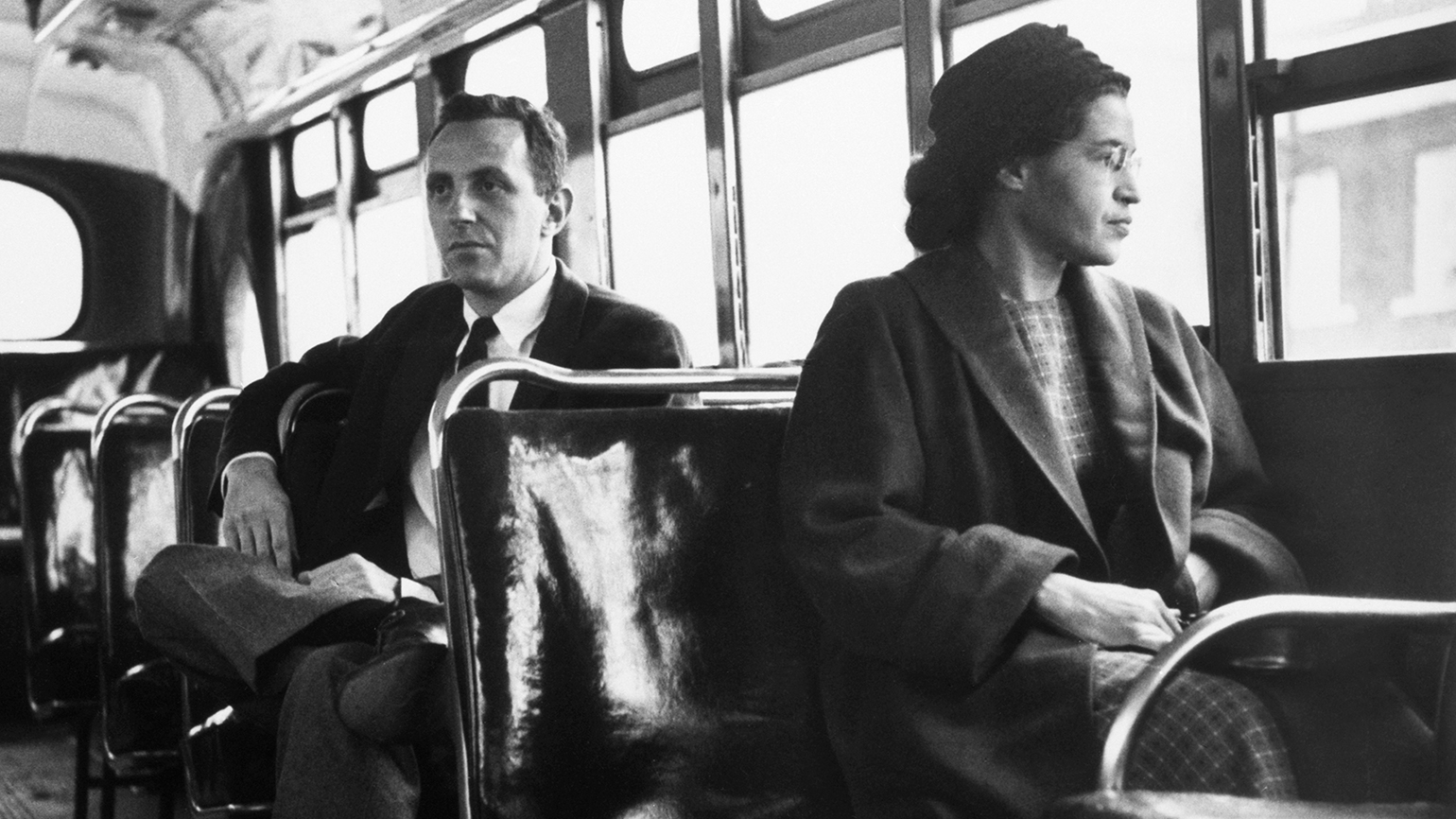
Courage is what an ordinary woman, Rosa Parks, displayed in 1955 in Montgomery, Alabama, when she refused to give up her bus seat to a white man. Her courage and subsequent arrest launched the Montgomery bus boycott and became an historical moment in the civil rights movement. While most of us might not find ourselves in a position like Rosa Parks—we can all be strong and courageous in the face of life’s pressing circumstances.
For example, I will never forget the courage of a young mother I prayed with in the hospital. She was battling terminal cancer and refused to give up for the sake of her small children. She fought hard until the end.
Or, at the peak of the Covid-19 pandemic in New York, my friend, a nurse who pushed through her fears to care for the infected. Every day she stepped into the danger zone where patients struggled to live.
And then there was the small business owner I knew who became depressed and had a hard time managing his business. But every day he found the courage to get up from his bed, pray and read his handwritten note listing all the good things in his life.
Author Mary Anne Rademacher writes, “Courage does not always roar. Sometimes courage is the quiet voice at the end of the day saying, ‘I will try again tomorrow.’”
When all is said and done, each of us can be a person of courage—now more than ever.
Ever have a premonition? One that wakes you up in the middle of the night? They don’t happen to me very often, but Monday morning I woke up at 4 a.m. in the pre-dawn darkness with a very clear premonition.
“Something is going to happen at the 48th Street subway station,” I thought. What it was I couldn’t tell. But I had a very clear vision of the station at Rockefeller Center and my presence there.
I don’t pass through that station on my way to work. Don’t normally take the subway lines that go that way. “Maybe I’m going to have to make an emergency visit to my cardiologist,” I thought.
He has an office near there on 50th Street. But I never see him at that address. He’s usually at the office at 168th Street.
My mind rushed to dark places–as it can do in pre-dawn hours. Would there be some sort of terrorist attack at 48th Street? Should I alert the authorities?
I tossed and turned, left it in God’s hands, and managed to fall back asleep. I woke up at my usual time, 6 a.m., sat on the sofa to pray. After the usual 20 minutes I got up, did my stretches and went for a short run.
The premonition was still there, although muted in the daylight. Something was going to happen involving me at the 48th Street station. Why would I be there? Our office was downtown, nowhere near.
I came back inside. Put my oatmeal on the stove. Had a square from a chocolate bar–my breakfast treat–and munched on a banana.
At once I felt something hard in my mouth. A big crown had come off one of my back molars and it was mixed in the banana. I spit it out and washed it off.
I called up my dentist’s office. A crown had fallen out. Could I come in right away? Yes, yes, they said. “We’ll see you at 9:45.”
I took my shower. Checked my emails. Dashed off. I took the A train as usual but then changed to the B train and headed to Rockefeller Center.
I got out at 48th Street and walked to the dentist’s office. He put my crown back in.
I found myself humming “Crown Him With Many Crowns.” All turned out fine. Yes, my premonition proved true, but not nearly as scary as I thought. “Crown Him with Many Crowns” seemed just the right song to sing. At 48th Street in the morning.
Lent is a season of spiritual growth and change. So it might help to look at it through God’s rainbow of colors. In particular, five hues are associated with this holy time of year on the liturgical calendar. The five Lent colors are:
Green
Purple
Blue
Yellow
Red
But what do these colors mean? How can we think about them as we move through our Lenten journey, and how can they help us better understand the meaning of Lent?
The very word “Lent” means spring and as the cool of winter fades, we look for all the green signs that the season of hope and redemption is at hand. The grass comes up, the leaves slowly burst forth on the trees. Bulbs that we planted in the fall, digging deep into the earth, push up and show their true colors. As you pray in Lent, you are looking to be fertilized and watered with God’s purifying love. You’re not green with envy; you’re green with new life. May it come.
Purple has always been the liturgical color associated with Lent, when ministers of God wear purple vestments and the altars where we worship are often decorated with purple cloth. Purple has long been the color linked with royalty and nobility. Why? Because it was especially expensive to produce, made from thousands of mollusk shells. Only the rich could afford it. If the kings could wear it, shouldn’t it be appropriate for the King of Kings?
God came down to Earth and was reborn in Jesus as we become reborn in Him. Purple then becomes a link to what God put in our reach. We all deserve the purple, crowning ourselves with God’s infinite love.
3. Blue: Reflection
Lent is a time of deep reflection. When we offer ourselves up to the Lord in contemplative prayer, it is common to tap into sorrow and sometimes painful memories. We see our dark side. We remember our losses. We can be smitten with unexpected sadness. We find ourselves singing “the blues,” literally. But that very process is a letting go. We feel God’s forgiveness. The very singing of the blues becomes a way of healing. The clouds disappear. The blue skies open up. The air shimmers. Blue becomes crystal clear vision.
We are nothing without the warmth and golden light of the sun, waking us up in the morning, following us through the day, dropping over the horizon at day’s end, God with us always. Yellow is that God-given hue that when mixed with blue forms green or mixed with red becomes orange. It is the very light within.
In our Lenten meditations we stop whatever we are doing at different times during the day and connect directly to God who is always there to connect to us. Like the sun. There’s nothing soft about yellow. It is strong, life-giving, life-sustaining. With Lent you see how each moment is golden, not to be missed.
Red is often the color associated with martyrs of the faith, those who gave their life over to the Lord. Red can symbolize the Passion of our Lord who gave His life for us and is often used on Palm Sunday. Later it invariably marks the feast day of Pentecost when the Holy Spirit came down and filled Jesus’s followers as it fills us, giving us the power and strength to do what we might never have thought we could do.
Red is the color of the stop sign or that red light that made you halt. Like you halted for the 40 days of Lent. But it was only to remember what was and is most important in life. True red-letter days. May each day bring you the colors of your true Self.
No matter how you celebrate this Lent—whether you are giving something up, growing closer to God through Lenten prayers, or making the time to celebrate Lent as a family—think about the meaning behind these Lent colors. As you see the trees bud with green, think about new life. When you see the purple vestments at church, pray about God’s love. As you gaze up to the blue, spring sky, reflect on your progress this Lenten season. Do your Lenten prayers or meditations under the yellow light of the morning sun. If you see the color red throughout you day, take a second to think about the most important things in your life. How can you include all the Lent colors in your celebrations and prayers?





 Much like Christmas, there are
  While Advent celebrations vary around the world, a common tradition includes the use of a wreath and candles. The wreath is evergreen—usually fir, holly, juniper, or spruce—to symbolize eternal life. The four candles are various colors, often three violet (symbolizing reflection and humility) and one rose-pink (symbolizing joy). The candles are lit each Sunday and sometimes a white candle is added and lit on Christmas Eve.
 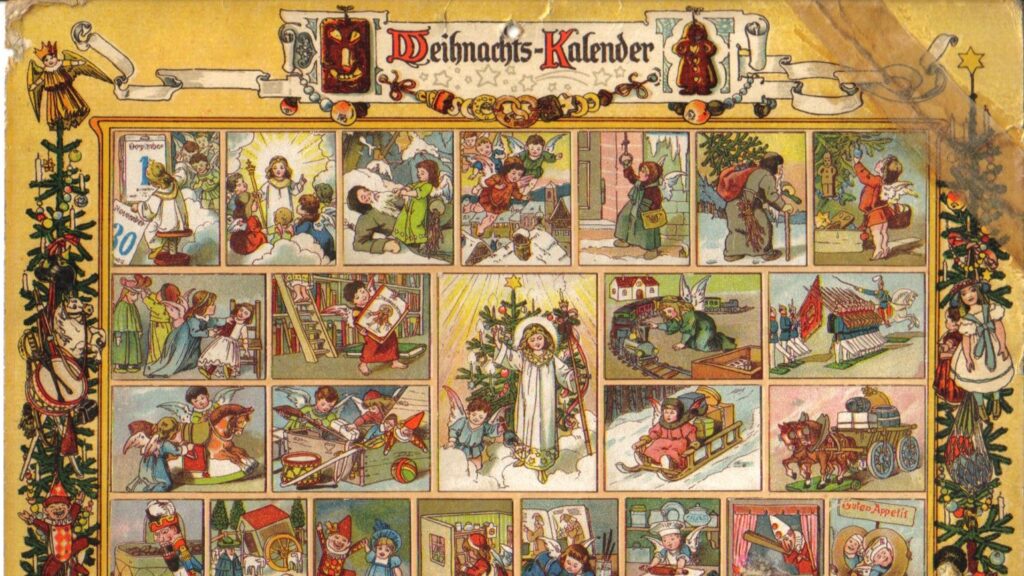 Much like Advent itself, there are differing accounts as to who invented the Advent calendar. Most agree that they began in Germany in the 19th century. Reichold & Lang was one of the earliest companies to create and sell Advent calendars. But in fact, Advent calendars are all thanks to Gerhard Lang’s mother. She created a calendar with treats behind it for Lang and his siblings to enjoy on the days leading up to Christmas. Through the years, others have put their own spin on the tradition, including putting pictures, chocolates, or