
Embrace God's truth with our new book, The Lies that Bind

Welcome to Oscar’s Place: A Donkey Adoption Center and Sanctuary

Media executive Ron King, who spent 20 years working for magazines like InStyle, Essence and Southern Living, didn’t expect to retire at 51. But the plight of donkeys captured his imagination and his heart. He read about the world’s donkey population declining due to the high demand for their hides. Then he moved out west and met a woman who was rescuing donkeys from slaughterhouses. It was a sign. That’s when he decided to end his publishing career and commit himself to saving these animals.

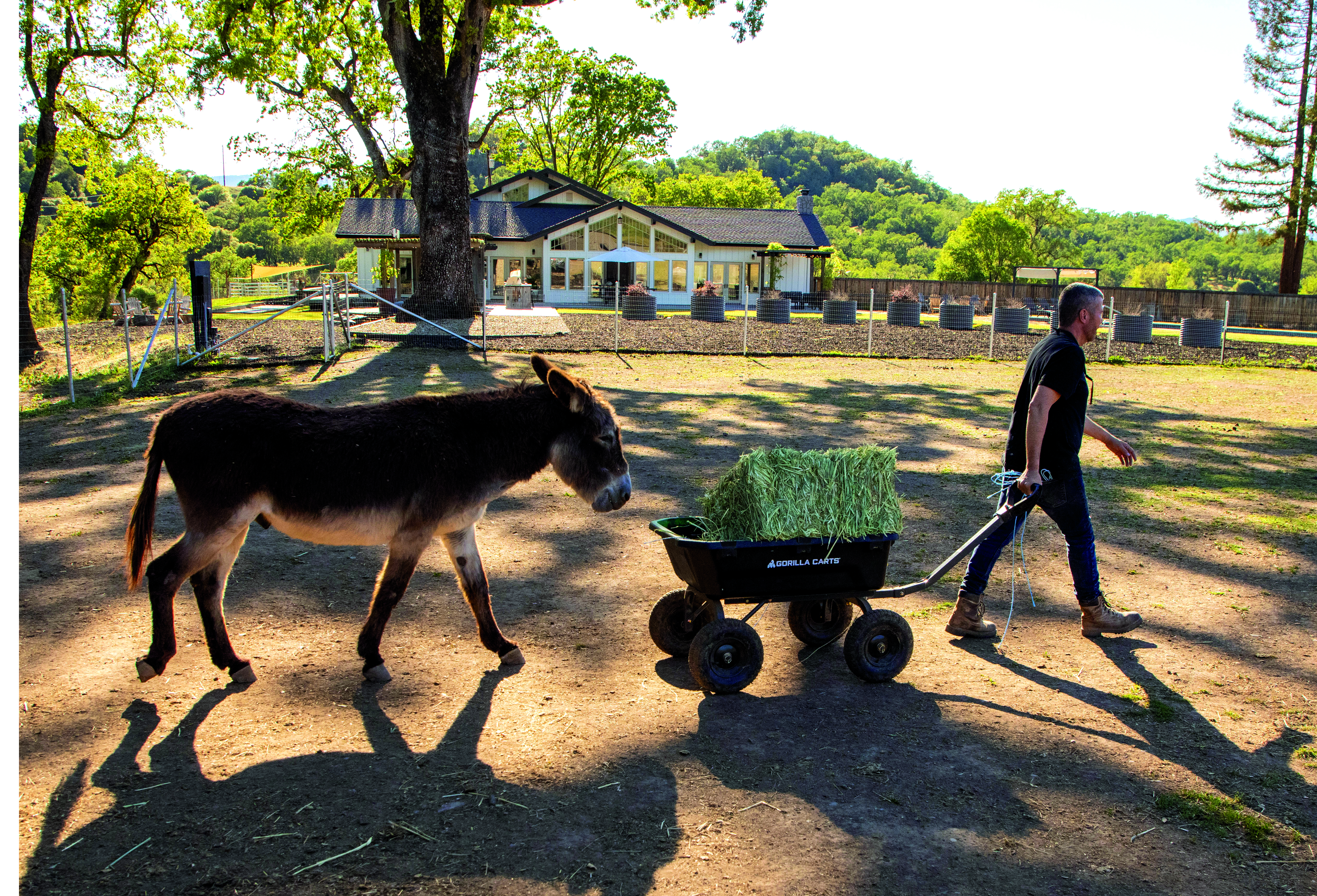
Ron teamed up with a long-time friend to open Oscar’s Place, a donkey adoption center and sanctuary in Hopland, California. The nonprofit foundation saves donkeys from auction houses and rehabilitates them physically, mentally and emotionally before helping them find forever homes. As for Ron, he’s found a home too and has never looked back.
How did Oscar’s Place come to be?

My friend Phil Selway, a pop art dealer and philanthropist who owns the property, had set up a philanthropic foundation designed for animal welfare but hadn’t yet activated it with any specific cause. I left my position as senior vice president at Time Inc. during the pandemic and moved to California, where I spent a lot of time thinking about the value of peace, serenity and joy.

I met a woman who was rescuing donkeys from slaughterhouses but had nowhere to take them. I wrote a business plan for Phil that detailed operating a sanctuary here, and he was more than happy to jump on board.

Our first five donkeys arrived from slaughterhouses on December 5, 2020. We officially launched as Oscar’s Place on January 1, 2021. Three days later, the next 25 donkeys arrived. We have another 30 that will be on their way after a month of quarantine with an equine rescue organization we now work with called All Seated in a Barn.

How did you come up with the name?

Phil had a cat that passed away a few years ago named Oscar that meant a lot to him. He knew that whatever foundation he would set up would be named after him. So we’re saving donkeys at a place named after a cat!
Why donkeys?

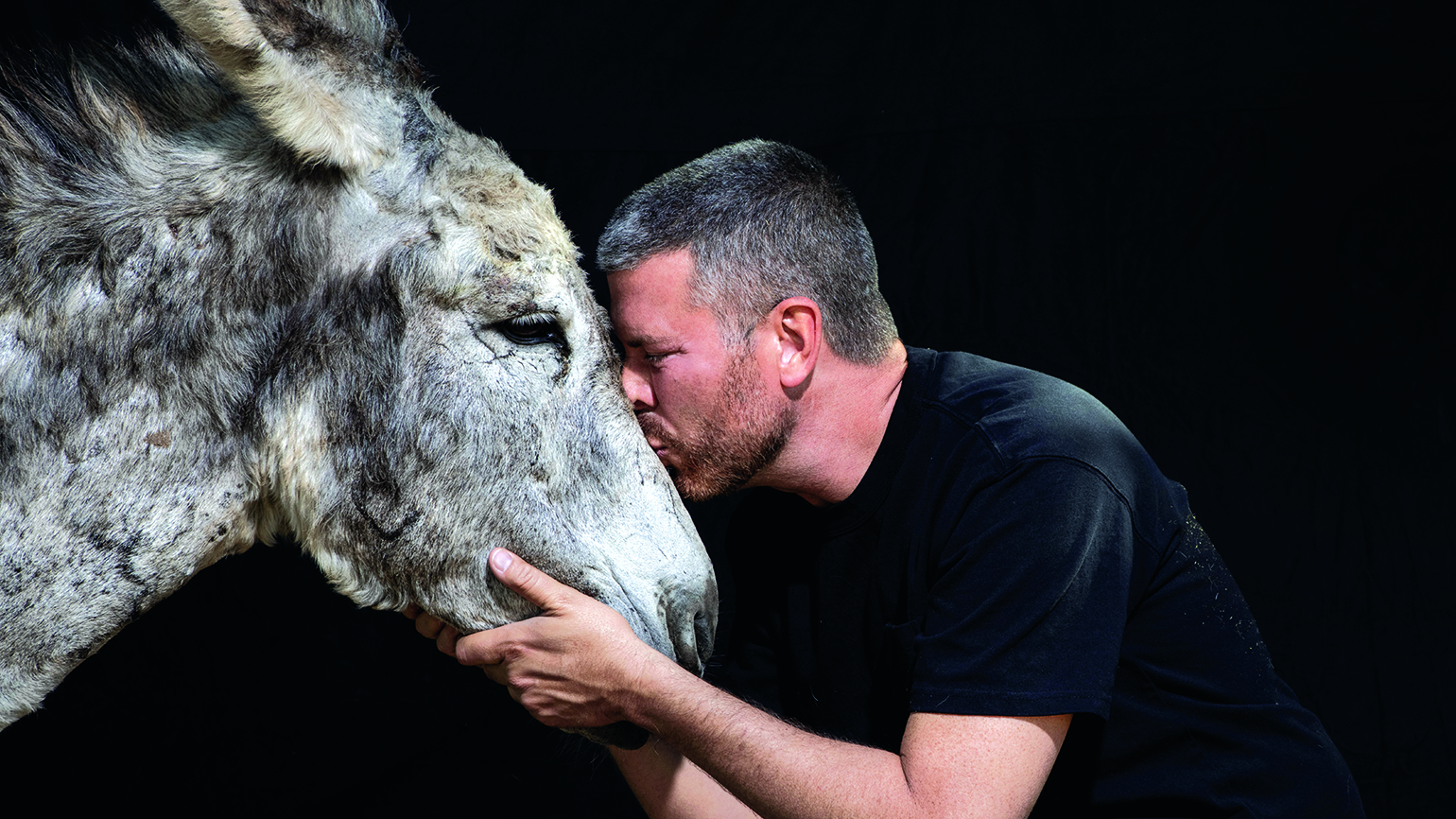
I read an article in The Guardian about the donkey population decreasing—they’re being rounded up and slaughtered—due to a popular traditional Chinese remedy for insomnia that requires donkey hide. There are so many misconceptions about donkeys. Although people think they’re small horses, donkeys are actually way more doglike than horselike. They’re very personable and intelligent. The emotional part of a donkey’s brain is the same size as the emotional part of a human’s brain, so they form very strong bonds with each other and with their human caretakers.

What does rehabilitation entail at Oscar’s Place?

The folks at All Seated in a Barn rescue the donkeys and properly quarantine them, providing them with veterinary care. Then they’re transferred to Oscar’s Place. Vets continue to treat any further medical needs at the sanctuary.

To improve the donkeys’ emotional well-being, all employees and volunteers spend 50 percent of their day being hands-on with them. Whether it’s grooming, halter training, walking or just sitting on a bench with them until they trust us enough to eat a carrot out of our hands, we’re showing the donkeys that, despite what they’ve been through, humans are on their side.

Who adopts the donkeys once they’re healed?

Donkeys are adopted out to people who have herds of animals such as cows, goats or sheep. Donkeys are great herd protectors thanks to their intelligence, loud bray and hips that allow them to kick sideways and backwards. Although they’re in high demand, we don’t adopt out donkeys to petting zoos.

We don’t adopt out donkeys until they’re ready. We have a thorough vetting process that includes site visits. When we find good applicants, we place them on our waiting list and once the donkeys are ready, we rehome them.

How long do donkeys stay at Oscar’s Place?

Four to six months is a good time frame to get to know them and bring them back to good health—emotionally and physically. We have some donkeys that have had very difficult lives and haven’t made a breakthrough yet. They’ll stay here as long as they need to.

Tell us about some donkeys that are currently at the sanctuary.

Curley, who was rescued from a slaughterhouse, has been here since January and would not let us touch him. We spent time with him every day, feeding him carrots, which he took reluctantly. One day, for the first time in four months, he didn’t run when I reached out to him. He made the decision to trust us after finally realizing that we weren’t here to hurt him. We’ll continue to work with him and eventually find him a home.

Felix, who is so loving, arrived with pneumonia and was hospitalized at UC Davis Veterinary Hospital for two weeks. We were told he wasn’t going to make it, but this dude fought his way through.
Why is Oscar’s Place so important to you?

My life has always been centered around having a positive impact—first on myself, then on my community and now on animals. All of these donkeys were destined for death. Given their rough start and the fact that they didn’t deserve it, I’m now dedicated to helping them live the best life possible.

How can people help donkeys?

They can support donkeys by becoming more educated on what products use donkey hide (and not buying them), providing financial assistance to a charity like Oscar’s Place or adopting donkeys if they have the facilities to do so.

What kind of impact has Oscar’s Place had on everyone involved?

The impact on both the people and the animals is unbelievable. The job that my team does is not easy, but it’s very clear how much they’re helping these donkeys. And it brings all of us so much joy. It doesn’t actually feel like work at all.

For daily animal devotions, subscribe to All God’s Creatures magazine.
Weekend Inspiration

How was your weekend? Mine was inspiring if busy.

Along with Rick Hamlin and Amy Wong, I was in Portland, Oregon, conducting one of our refresher workshops for graduates of our Writers Workshop program. The big workshop is held every other year in Rye, New York.

We choose 15 aspiring inspirational writers from thousands of entrants and teach them everything we know about writing inspirational stories. They then become part of what I call Guideposts workshop nation. There are scores of trained and talented workshoppers all over the country keeping their eyes and ears out for compelling and uplifting personal stories of hope, faith and inspiration.

Where do our stories come from? I am often asked. Well, a lot of them come from our incredibly dedicated workshoppers. So periodically we hold mini-workshops where each writer brings a story she is working on and we spend a day or so going over them and asking questions like, How does the narrator of the story change? What is the spiritual turnaround and takeaway? Where is the help for the reader?

I love talking about stories. Stories, especially inspirational stories, are how we reveal and define ourselves. Our stories are a record of our spiritual growth. They are the very essence of who we are, the legacy of our journey in life. So spending a weekend talking about stories and how to write them is exhilarating. I get so much energy from our workshoppers. They are an incredible group of people and I want you to know how much they contribute to the vitality of the magazines you love.

It wasn’t all work, though. I flew out to Portland early on Friday so I would have time for a long hike in the mountains above the Columbia River valley. I took a six-mile route through the woods that brought me past 10 waterfalls. It was an amazingly beautiful day. And I have to confess it is the reason I didn’t get my blog written until this morning. Sorry about that. But hey…

Some of you are probably wondering when the next Guideposts Writers Workshop contest is. We’ll be asking for entries in a little less than a year from now for the 2012 workshop in Rye. Watch for the announcement in Guideposts and Angels on Earth magazines. It’s not too early to start thinking about what your inspirational story is. As I’ve said so many times, everybody has a Guideposts story. What’s yours?

Watching the Hope of Spring Emerge

Springtime in the mountains of North Carolina is a delight. After a long and cold winter, those first few days of warmth just make a body feel good. I always know that spring is on its way when I see the first tender green shoots of the weeping willows in the meadow behind my home. That makes me smile because I know that in a week or two, I’ll see those long limbs of green swaying in the breeze like a grandmother’s shawl–fresh new life where bare branches were just weeks before.

Daffodils and tulips are usually the next to arrive, tiny bursts of color that are extra welcome after winter’s bleak landscape. Each morning I notice the changes from the day or week before—cheery yellow forsythia, pink azaleas and purple rhododendron blossoms. And when the dogwoods bloom, it looks as if the woods are filled with white lace. Oh my, God’s handiwork is spectacular!

Read More: Sharing Flowers with Those in Need

Besides bringing joy and color to our lives, spring is a beautiful example of how God begins a new work in us as well. Here’s what God says:

Behold, I will do a new thing, Now it shall spring forth; Shall you not know it? I will even make a road in the wilderness And rivers in the desert. (Isaiah 43:19)

Those who are planted in the house of the Lord Shall flourish in the courts of our God. (Psalm 92:13)

Behold, the former things have come to pass, and new things I now declare; before they spring forth I tell you of them. (Isaiah 42:9)

For as the earth brings forth its bud, As the garden causes the things that are sown in it to spring forth, So the Lord God will cause righteousness and praise to spring forth before all the nations. (Isaiah 61:11)

Pray this with me: Father, thank you for the new things you send that spring forth in my life. Help me to blossom into something of beauty for you. Amen.

Walking the Line: The Enduring Faith of Johnny Cash

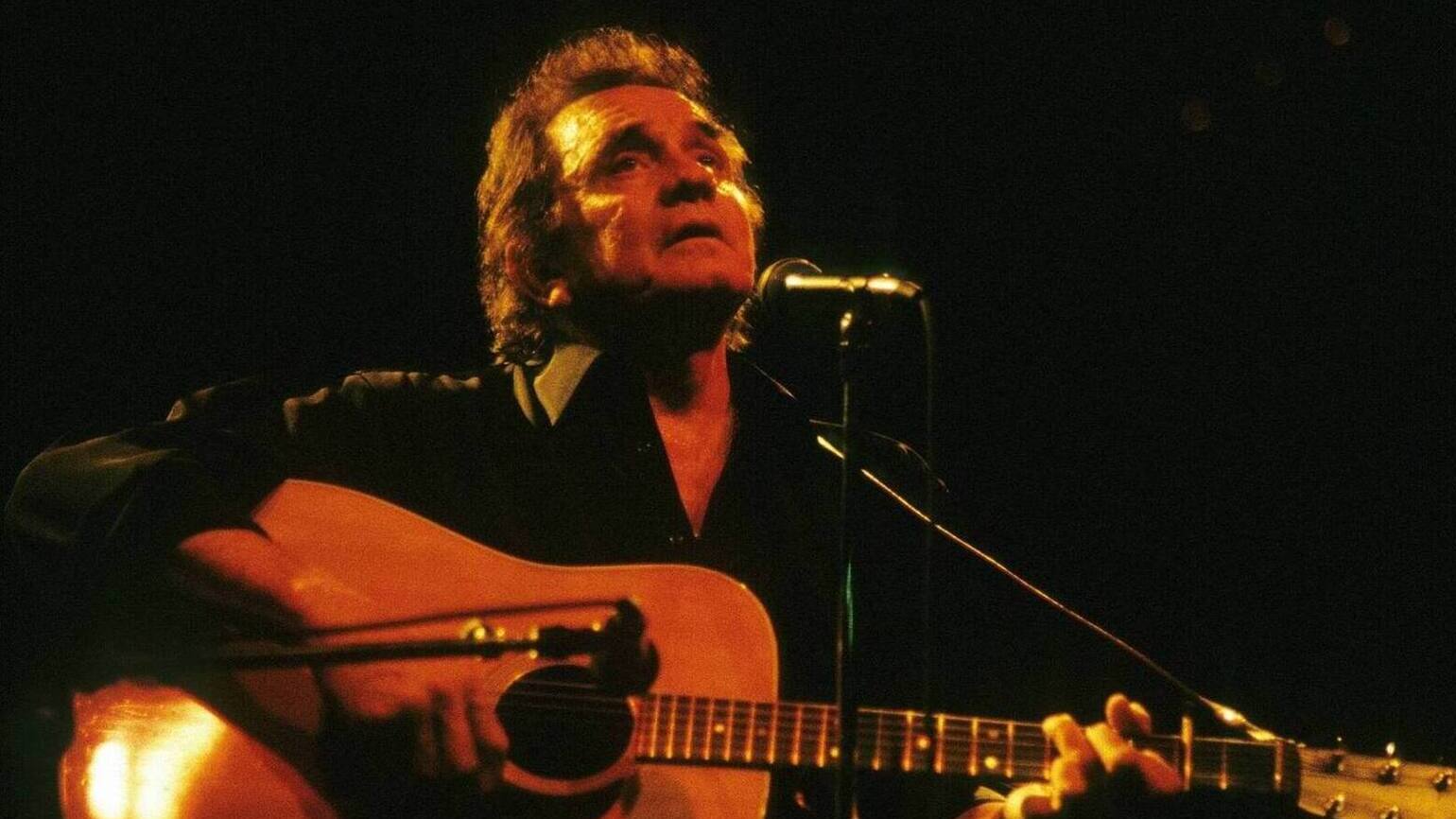
John Carter Cash is the only child of two country music icons— Johnny Cash and June Carter Cash. As a Grammy award-winning singer and songwriter in his own right, as well as a producer and author, Cash is committed to continuing and expanding his parent’s legacy. Christian publisher DaySpring, in partnership with The John R. Cash Revocable Trust, released Walking the Line, a new, 90-day devotional that highlights the inspiring faith of Johnny Cash.

Guideposts.org sat down with John Carter Cash to discuss what “walking the line” meant to his father and why his story of faith still resonates today.

Community Newsletter

Get More Inspiration Delivered to Your Inbox


GP: What role did faith play in your father’s life? 

John Carter Cash: For Dad, faith was essential. He was introduced to faith when he was a young man in church. He had a deep faith in God and a great love for the scriptures.

Life was tragic in many ways for him. His brother, Jack, died at age 14 when my father was only 12 years old. He dealt with a lot of physical infirmity later in his life. The loss of my mother [in 2003 at age 73] was something he never really overcame. Yet he would not hold anger towards God. For him, the very nature of faith was there to carry him through to the other side. Even if he lacked belief, even if he had fear. He learned to appreciate faith as something that endures, something that would not go away. He never gave up on the belief in something else, something further, something beautiful in life.

GP: What faith lessons did your father teach you? 

Cash: Dad showed me that once you establish salvation, it can never be taken away. It’s a gift that you are given based on grace. Faith is something that I go back to at different times in my life—whether I’m struggling or feeling positive about life—because I can rest in the safety of knowing that salvation is in place. It helps my faith to grow daily and gives me hope when there are struggles.

He also taught me the importance of being a good person. The kind of person that is there to support people. Faith is taking a step forward for somebody in their life.

GP: What are some of your most cherished memories with your father?

John Carter Cash headshot discussing his father Johnny Cash inspiring story of faith
John Carter Cash (photo by David McClister)

Cash: I remember the one-on-one time that we had, like the time that we spent outdoors. We fished a lot. I also remember the times that we were creative. We wrote two songs together and played onstage with each other. A lot of the time we spent together was on a tour bus, traveling city to city, town to town… 27 years of my life, I was working on the road with my parents. It’s the times of togetherness I remember most. I’m grateful for that, because you can’t miss out on those things.

GP: Can you remember moments in your life when you saw your father’s faith in action? 

Cash: I saw it in his music. I remember him being in the recording studio four days after my mother passed away. He was moving forward in his life and doing what he believed she would want him to do. It wasn’t about winning a Grammy or creating some highly respected work. It was about continuing to be creative because that was its own reward. If you don’t have faith, you don’t have drive. If you don’t have belief in something better to come, then you don’t have hope. And even though Dad may have felt hopeless some days, he still put into action his creativity.

GP: How do you feel music can strengthen our faith? And how did it strengthen your father’s faith? 

Cash: Music can be a reprieve from bearing our own weight. It can be a catharsis. Music can lift us in ways that we didn’t expect. It’s healing. It can be a tool to bring us back to a memory that we need to reexperience.

My father lost his eyesight toward the end of his life, but he still had the songs of his youth. When he couldn’t feel much else, when all he could feel was sadness after my mother passed away, he always went back to music. To Dad, music was hope.

GP: A big part of your father’s faith was speaking out against injustices. Why was this such an important aspect of his faith? 

Cash: Dad grew up in poverty. He worked in the cotton fields. Before he got into music, he was a Morse code interceptor in the Air Force. Dad knew what it was like to be looked down on. He had true empathy. He could put himself in the place of people who were going through hardships and be their brother, instead of a judge or a preacher. For him, it was about kinship.

That’s why he spoke out against injustices done to Native Americans. Dad saw the plight of the Native Americans in South Dakota and Pine Ridge Reservation in the 1960s. He listened to the words of Peter La Farge, a Native poet and songwriter. He took that on as his own banner. There are people no one is paying attention to, who aren’t being protected and defended, who need a champion. It’s not necessarily Johnny Cash, but there’s a lot to glean from the way that Dad helped people in need.

GP: “Walk the Line” is one of your father’s most famous songs. It is the inspiration for the title of the new devotional, Walking the Line. What did “walking the line” mean to your father? 

Cash: Dad wrote the song originally as a promise to his first wife when he was on the road. But later in his life, he redefined the song to himself. He said that “walking the line” was about his relationship with God. It’s about focusing on your path, looking toward your destination, and staying true to what you believe in. And if you fall short, a reminder to get back on the path.

Living the straight and narrow all the time is not something that we can do. My dad would be the first to say that he fell short many times. He had a devil on his back. As a human, sometimes he won, sometimes he struggled and failed. I saw him fall short in life, but I also saw him go back to it. “Walking the line” became a way for my dad to remember to get back on the path.

GP: Why do you think it is still so important to share your father’s story of faith? 

Cash: For me, it’s the 16-year-old kid that sends me an email saying, “I was at the end of my rope. If it wasn’t for your father and his music, I would be dead. His words saved my life.” I still see how important he is to people and that so many people out there have their own unique relationship with his music. People find connection with him because of his willingness to show his weakness. I hope they find a kindship with my father, a friendship— I want to be supportive of that. Dad has a lot more to say.

The devotional Walking the Line: 90 Devotions of Truth & Hope Based on the Faith of Johnny Cash is available through DaySpring.

This interview has been lightly edited for clarity and length. 

Walking in Grace—Personal Stories of Faith in Action

These past few weeks since my wife, Julee, passed I feel as if I have been walking in grace with the outpouring of your prayers and compassion. Each day I feel your empathy and your love lifting me up on this daily journey, a journey I know so many of you have walked. I feel as if you are helping me follow in your footsteps from darkness to light and acceptance by sharing your experience, strength and hope.

Isn’t that what walking in grace is all about? Sharing our daily journey in faith. For years we have produced a popular book of devotions, Daily Guideposts, 365 story-based devotions produced by a group of faithful writers many of you say have come to feel like family to you. As one of those longtime writers, I can attest to that feeling. You are more like a family than an audience.

After much discussion, research and prayer we have changed the title of Daily Guideposts to Walking in Grace. The title is the only thing that has changed. You will still enjoy the short personal stories of faith-in-action by a family of writers you have come to know and love. Each devotion starts with a Bible quote, just as before, and ends with a personal prayer that you can apply to your own life—an opportunity to dig deeper into the spiritual lesson of the devotion. As in everything we do, the devotions are story-driven so that you can better identify with the author’s problems, spiritual solutions and triumphs, so you can put yourself in the writer’s shoes and share their walk in grace.

When we launched Daily Guideposts some 47 years ago it was virtually the only other publication we had apart from Guideposts magazine. So, the title made sense. Today we have a several devotional books as well as our website and social media pages and apps. There are plenty of ways to engage with the content you love daily.

Years ago, I had to be talked into writing for Daily Guideposts. It’s a long story but eventually it was the embrace of you, the audience, that kept me writing even to this day. Writing devotions opened my eyes to God’s daily presence in my life, to His abiding and often unexpected grace in my walk of faith.

Order your copy of Walking in Grace today!

Viewing God’s Gifts in a Different Light

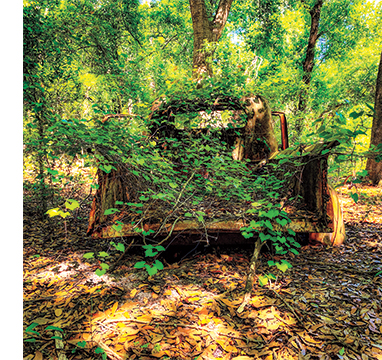
There was no mistaking the excitement in my father’s voice. “I saw an abandoned Studebaker in the woods where I grew up,” he told me over the phone. “It’s the same truck I rode in when I was a boy. I was hoping you could photograph it for me.”

I took a deep breath, hoping Dad wouldn’t sense my reluctance.

'Studebaker' by photographer Lisa Faire Graham
       “Studebaker” by Lisa Faire Graham

It had been more than a year since I’d had surgery to repair the detached retina in my left eye, but I still couldn’t see clearly. Things were fuzzy, indistinct, like what a nearsighted person sees without glasses. Not the sharp vision I needed to pursue my retirement dream of being an artistic photographer, the kind whose work gets published in photography magazines.

My passion was shooting high-definition, crystal-clear images that reveal the hidden beauty in everyday objects, the beauty I’d believed God wanted me to uncover. I knew both my parents wanted to encourage me, but no amount of encouragement was going to change the fact that even through my camera’s viewfinder, I couldn’t make out details well enough to focus and frame a shot properly. I hadn’t even wanted to pick up a camera lately.

Still, I didn’t have the heart to tell Dad no. “Sure, I’ll photograph the Studebaker,” I said. Maybe with a subject as big as a truck, I’d be able to pull off something. Was God giving me another chance? Or was he going to ask me to give up my dream?

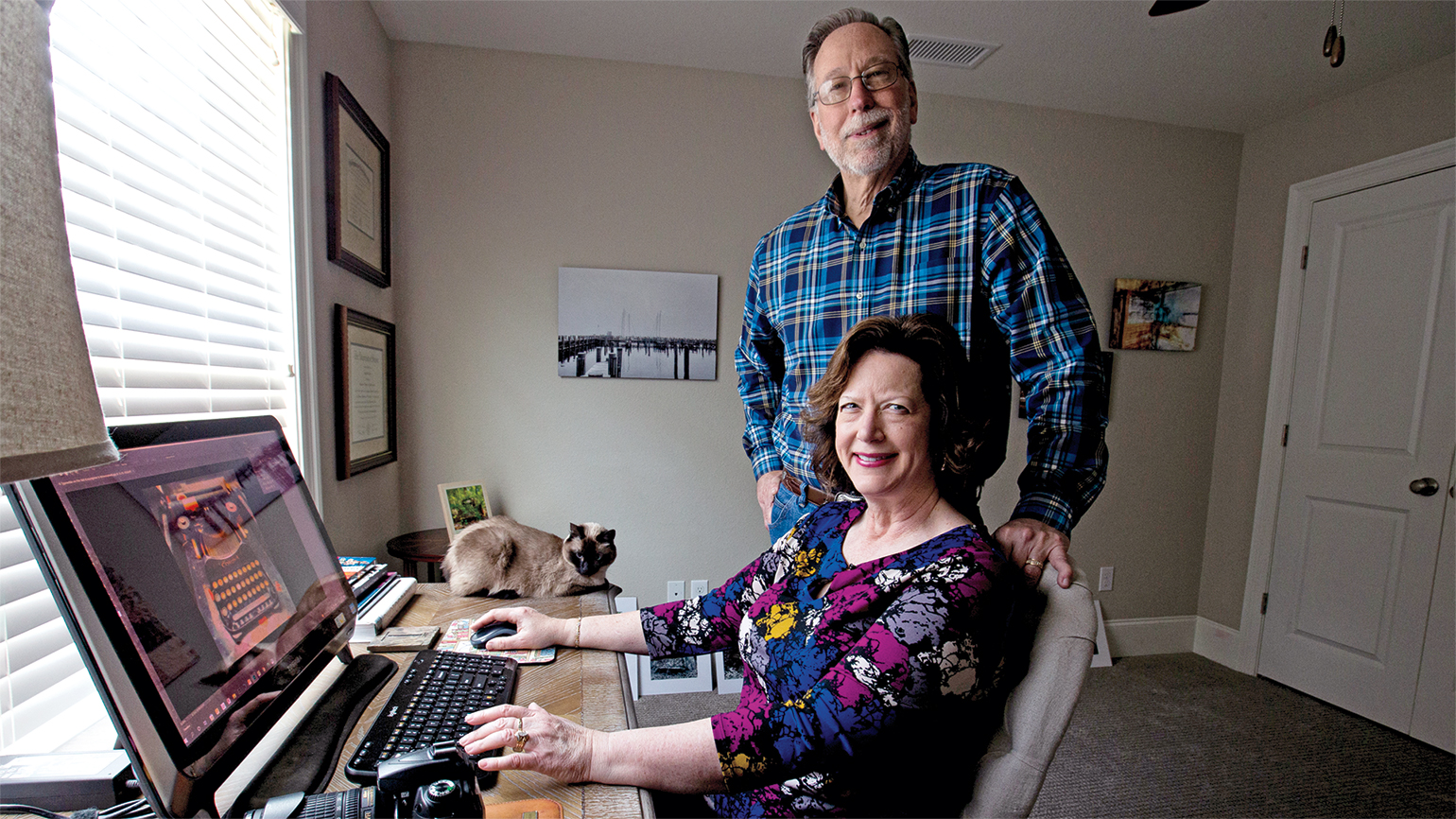
My problems had started in 2005, with a retinal detachment in my right eye. Even after surgery, my vision in that eye was limited. Fortunately, with my “good” left eye, I could still do my job in the defense industry and take photos for fun. I retired in 2012, excited at last to dive into photography in a big way. My husband, Bill, was thrilled for me.

I’d loved taking pictures since my parents gave me my first camera, an Instamatic, at age 10. When I was 14, my friend Sandi taught me to how to be a photographer. She owned a 35mm camera, and even as a teenager she had photographed weddings and special events in our small Florida hometown.

She loaned me her Pentax and gave me suggestions on composition, settings and technique while we walked around the neighborhood. One day, she directed me to take photos of an old fence post.

“I’m not wasting film on that,” I said to her.

“Shoot it,” she said. “It’s my camera.”

Only when the prints came back was I able to see what Sandi had seen. The weathered grooves in the wood, the climbing ivy, even the bugs crawling over the surface… The tiniest details jumped out at me. Amazing! It gave me the shivers in a good way, like learning in Sunday school that God delighted in every detail of our lives.

“You’ve passed that fence post hundreds of times,” Sandi said. “Photography is about having an eye for things most people miss.”

In retirement, I finally had time to devote to photography again. I subscribed to photography magazines and admired the artistry and crispness of the images. “I want to have a photo published in one of those magazines someday,” I said to Bill.

“Go for it!” he said.

Bill, my mom and I went on a 200-mile trek around the small towns of central Florida, where we’d grown up. Bill is a general contractor who’s great at noticing interesting details in the built environment. I spent days capturing images of handmade brick roads near Espanola, sand pines and palmettos in the Ocala National Forest, the orange groves heavy with fruit, the car ferry at the St. John’s River.

Sandi died in 2014. I spoke at her memorial service about how she’d inspired me to look for the beauty in the ordinary. Her death reminded me that life is precious and made me even more motivated in my photography.

Less than a year later, the retina in my left eye detached and I had emergency surgery. I was terrified that I would end up near blind. I begged God to save my vision.

When the eye patch came off and I could see, Bill and my parents rejoiced with me. But as several months passed and the fuzziness in my vision, both near and far, didn’t clear up, the joy leaked out of me. Mom reminded me the doctor had said healing could take up to six months.

I couldn’t wait that long. I had to try using my camera. Bill took me to one of my favorite spots, a beach on Lake Minneola. The late-afternoon sun was soft, highlighting the planks of the old dock. I tried to compensate for my blurry vision by adjusting my camera’s diopter. But when I uploaded the photos to my computer, I had to enlarge them 70 percent just to make out what I had shot. The images were a letdown—not crisp at all.

The same thing happened on subsequent shoots. I’d read in my magazines about editing software, how it could be used to deepen or lighten colors, remove shadows, change almost anything about a photo. Surely there was a way to make the images razor sharp. To give them exquisite detail that jumped off the pages. I’d used computers most of my career. I figured I could teach myself how to use the software.

It was harder than I’d imagined. After watching hours of instructional videos, I could do a passable job of “painting” a photo a new color, but sharpening the image? I wasn’t happy with anything I tried.

One day, I decided to work on a photo I’d shot years earlier of an antique typewriter. I hadn’t used a flash, and the lighting was poor. On my computer, I increased the brightness and added an oil paint effect.

“That’s so cool,” Bill said. “It looks like it’s on fire.”

“But it’s not photography!” I said, unable to contain my frustration. “I want to shoot photos that are sharp, like I used to. To document God’s hand at work.” I’d passed the six-month post-surgical mark by then, and my doctor had said my visual acuity was the best it was going to get.

Maybe God was telling me to be thankful for the healing I’d been granted and to move on. Maybe it was time for me to accept that my dream was dead. I didn’t touch the photo-editing program for months. My camera sat unused in its bag. Then came Dad’s call about the Studebaker.

The rusted-out truck, its oversize tire shields mired in mud, sat far back in the woods, covered in vines. I stomped around the tall swampy grass, swatting mosquitos, shooting from every angle imaginable. The deep shade made the lighting tricky, but it felt good to be doing something creative again.

I went home and reviewed the shoot on my computer. My heart sank. I’d taken 300 photos, and every single one had problems. Strange shadows. Images out of focus. Awkward angles. I’d made a total mess of it. That’s it, I thought. I’m finished.

When I told Bill about my disappointing results, he said, “What if you tried something like what you did with that typewriter photo? I bet that would look amazing!”

Bill just didn’t get it. I pointed to my stack of photography magazines. “I want to shoot crisp, clear photos, like the ones in those,” I said. “Out of 300 shots, I ought to be able to get one right.”

Bill gazed at me for a long moment. “Why are you trying to make your work look like someone else’s?” he said. “God has given you a chance to do something original, to express your creativity. Reframe your limitations. Look at this in a different light.”

Here was a message I could understand. Landscape photographers return to the same location numerous times because variations in light can give an image a completely different look and feel. There are countless ways to capture a single subject. Why had I thought there was only one way for me to be a photographer?

I went back to learning editing software, experimenting with different effects until it became second nature. Bill suggested I print the typewriter photo on metal instead of canvas, adding a whole new layer of expression to it. That photo won second place in a state competition.

I chose the photo of the Studebaker I liked most and enhanced it, adding more color, vibrancy and texture, playing with the light to bring out the green in the vines, while allowing the truck itself to stay in softer focus. The effect was dreamlike. Definitely one of a kind. And beautiful in a way I would never have seen or appreciated before. Dad loved it. It seemed as if everyone who saw it knew of another old car for me to photograph. Bill and I started going on photo treks again, working as a team. I’ve got the creative vision; Bill sees details I miss.

My photos have been displayed in galleries, prestigious art festivals, municipal buildings, even the Florida Museum of Photographic Arts. I’ve won competitions and seen my work published in magazines. More recognition than I’d ever expected.

For Father’s Day, I presented my dad with a photo of the Studebaker printed on wood. At the bottom of the image is a verse from Ephesians: “For we are his workmanship, created in Christ Jesus unto good works, which God hath before ordained that we should walk in them.” One of my favorite Scriptures because it explains how my dream has been fulfilled and then some. My vision may be limited, but God’s never is.

For more inspiring stories, subscribe to Guideposts magazine.

Toys for Ecuador: Humble Beginnings Inspired This Non-Profit Organization

In a small coastal community in Ecuador known as La Isla, I looked out at the children standing in a long line in their schoolyard. They’d gathered that Christmas morning in 2010, likely wearing the only decent clothes they owned. They were quiet, polite, eyes bright with excitement.

I had returned to La Isla, where my aunt lived, to hand out clothes and toys we’d collected through our nonprofit organization called Toys for Ecuador. I noticed one boy in particular, about nine years old, trying hard to contain his enthusiasm. When he reached the front of the line, I handed him a toy truck. He looked up at me in disbelief and ran to his mom, hugging his truck, crying as she hugged him.

Children with Christmas gifts given to them by Toys For Ecuador; Photo Courtesy Toys for Ecuador

He was the reason I was visiting La Isla and other poverty-stricken communities in my homeland. I got a shiver watching the scene play out, my mind flashing back to a day I’d never forget.

I was five years old that Christmas Eve in 1988, growing up in Biblián, Ecuador, with my parents and older sister. My father came into my bedroom, his hands behind his back. “I have something for you,” he said. I thought it might be a cookie or a piece of fruit. Instead he extended his hands to reveal a plastic figure like nothing I’d ever seen. A cowboy about 12 inches tall, his hat and pants painted brown, vest and boots black, shirt a clean white. Like the boy in La Isla, I’d never owned a real toy of any kind. My family didn’t have much. My mom stayed home, caring for my sister and me. My dad drove a food delivery truck and was on the road for days at a time.

“I hope you like your toy,” my father said. He knelt down and held me close. I felt the strength in his arms, the warmth of his body. As if in giving me this toy he was also giving me a part of himself. Even at age five, I realized that too had been a gift.

I didn’t play with my cowboy the way children in the United States would have. I never roughhoused with him. I kept my cowboy in a drawer where he wouldn’t get scratched or dirty. Often I’d just hold him in my hands, amazed that I could own such a treasure. For two months I enjoyed my cowboy in the familiar surroundings of Biblián.

Then I learned my family was moving to the U.S. I hardly understood what it meant. The night before we left, I put my cowboy atop my clothes in the suitcase. We were in America when I asked my mother where it was. She explained that we had overpacked, and she had to rearrange things at the last minute to save room. In the rush, my cowboy had been left behind.

Newark, New Jersey, was our home now. My lost cowboy soon became the least of my concerns. So much had changed, I had trouble adjusting. I barely spoke English. I had trouble making friends. I missed Ecuador terribly. But even in this new land, I looked forward to Christmas. And when it came, I was especially thankful for the love of the family I had around me. Christmas had not changed, even if almost everything else in my life had.

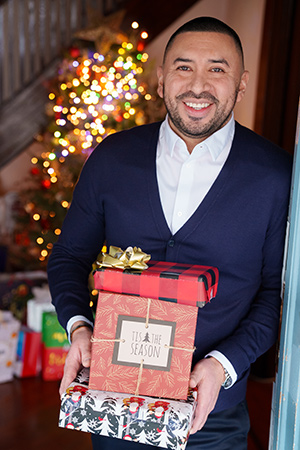
Byron holding Christmas gifts; Photo by Todd Plitt

By sixth grade I’d found my footing, and life got easier. I excelled in high school. Every good grade was a thank-you to my parents for all they’d done for me. Making the most of educational opportunities seemed like the least I could do. I went on to college, and in 2006, with my degree in hand, I became a pharmacist. I was finally able to buy nice gifts for my family, but I could never give in equal measure the love I’d felt from that first, unexpected gift I’d received as a boy in Ecuador. I wished every child could know that feeling.

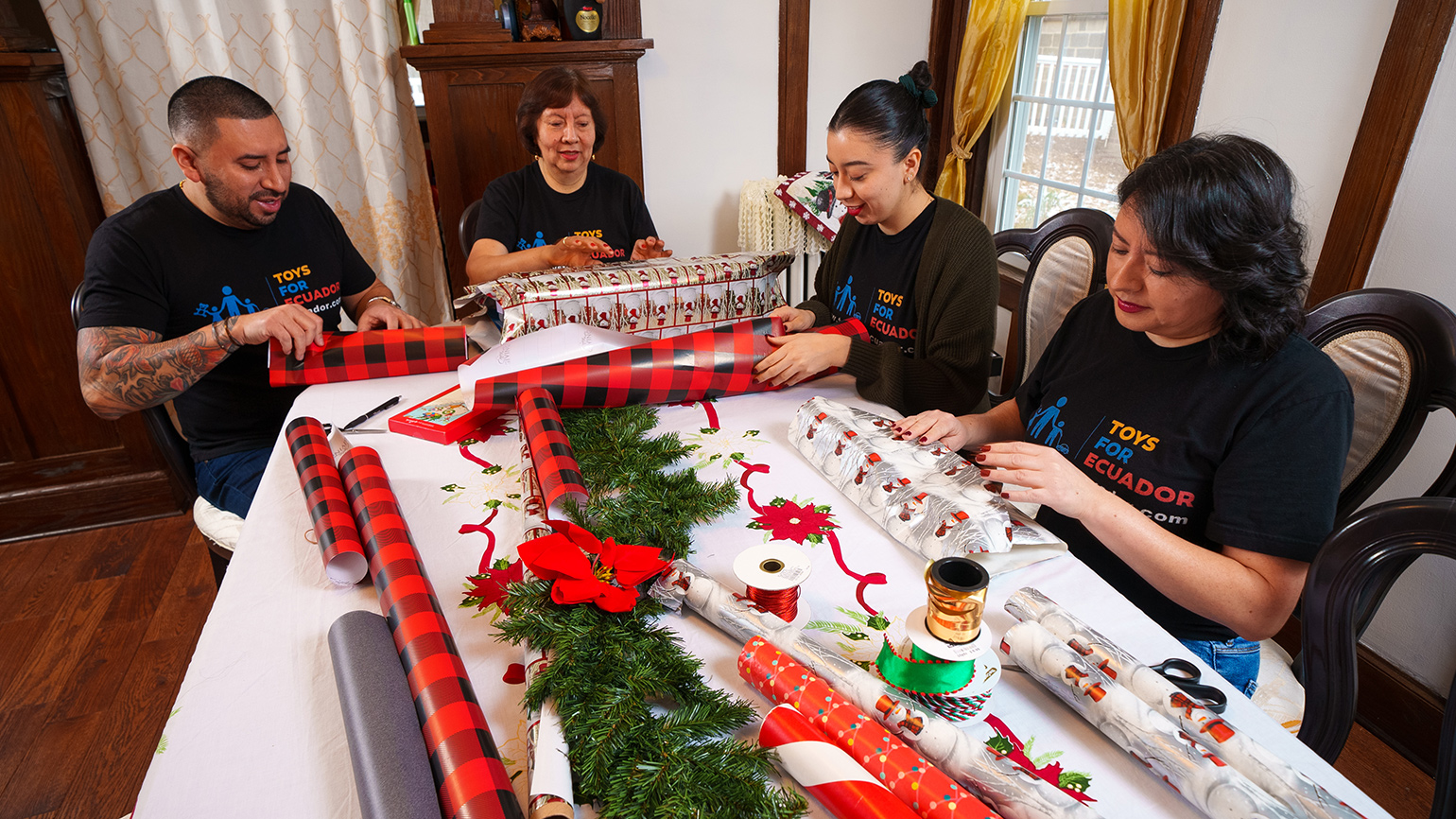
Two years into my career, I made my first trip to La Isla to visit my aunt for Christmas. She had a tradition of handing out goody bags to children, and I added simple toys to her offerings. The kids’ smiles filled my heart with so much joy, I had to find a way to keep it going. I returned to La Isla in 2010, this time with Toys for Ecuador up and running. My parents, and now two sisters and I traveled to towns all across rural Ecuador with sacks of Christmas presents for children and gift baskets for seniors. My father’s long-distance driving experience came in handy, and we’ve since added food and necessities to our deliveries.

Covid has limited our travels, but it hasn’t stopped the giving through Toys for Ecuador. Even when I can’t look into the wide eyes of a boy like the one in La Isla, who cried when he got his toy truck, I share in the excitement of all the children. Giving is the gift that keeps the memory of my long-lost cowboy and all he represented fresh in my mind always.

This Christmas Baking Tradition Became an Answered Prayer

My beloved grandmother, Nanny, has been gone now for 50 years, but she lives on in my heart. And never more so than at Christmastime, when we took part in a cherished tradition I was afraid we’d almost lost.

I was a senior in college that Christmas Day I visited her in the nursing home where she’d been living for three years. Her mind and body were failing her.

How I missed the warmth of her house, the overstuffed armchair I grew into over the years, the smells of each room, especially her kitchen at Christmastime, when we baked batches and batches of snickerdoodle cookies for neighbors, friends and family. That had all stopped when Nanny could no longer manage on her own, and it felt like the end of so much more than a simple Christmas tradition.

Today I wondered if Nanny would even know who I was. On the drive to the nursing home I’d prayed that God might awaken her spirit, just briefly, so I could see some spark of recognition in her eyes. I’d brought a plate of fresh-baked snickerdoodles, hoping the cookies would somehow prompt a memory.

We sat together in the visiting area, our silence awkward. I extended the plate.

“Have one, Nanny,” I said. She hesitated, appearing puzzled, then took a cookie, held it for a moment and took a bite. She put the cookie back on the plate.

“Good?” I asked. She nodded, but her expression remained blank.

I showed her some photos. There was one of me as a little girl sitting in her lap in the big armchair, a shot from a family reunion when I was older, another of us each holding a plate piled high with snickerdoodles at Christmas. One by one, I handed them to Nanny.

Nanny set the pictures on the little table between us. She didn’t understand. I took her hand in mine, and she smiled. Maybe her smile is miracle enough.

I stared at the plate of cookies and felt a rush of memories. No matter what day of the week December 18 fell on, Nanny and I went shopping for cookie-baking ingredients. The first Saturday after that, I ran to her house early. She met me at the door and wrapped me in a hug. Then, as if following a script, she gave me my apron and put her hands on her hips.

“Shall we bake cookies today?”

Her words sent a shiver of excitement through me. Standing as tall as I could, I sang out, “Absolutely!”

Nanny measured the ingredients and cracked the eggs. I stirred the bowl until my arms ached. We lined cookie sheets with parchment paper and rolled out the dough. We used Nanny’s cookie cutters to make stars and snowflakes, bells, Christmas trees and angels—and slid the full pans into the oven to bake. Meanwhile, Nanny set out colored icing and piping tips. I took charge of the sprinkles.

An intoxicating aroma filled the kitchen. The cookies came out to cool, and we talked and giggled like conspirators. Nanny told me about her childhood Christmases and how her grandmother had be-gun the cookie-baking tradition with her. In between stories, we decorated our snickerdoodles and divided them up for delivery. Friends and neighbors expected our “Merry Christmas!” at their doors.

Now Nanny and I sat in the visiting area in silence, the sweet aroma of fresh-baked cookies replaced by the smell of institutional food. “Let’s take a walk outside in the sun,” I said.

Nanny nodded absently, and I slipped on her coat. We walked the grounds a bit and sat in the gazebo near a pond. The daylight brought a glow to her wrinkled features. Nanny had yet to speak a word.

“How’s school?” she suddenly asked.

I was stunned. Every detail I could think of poured out of me. Courses I was taking, friends I’d made, even the guy I was dating…. I kept talking, not wanting to lose her, hoping God’s answer to my prayer could go on and on. Nanny listened until I finally paused to take a breath. Her eyes met mine, a look of quiet determination on her face, as if she was forcing something from her mind.

“Shall we bake cookies today?” she said, her voice clear and strong. I gasped and kissed her on her cheek. Then I stood, straightening up, hands on my hips. “Absolutely,” I said.

That Christmas visit was the last time my grandmother was able to speak to me or even recognize me. But to this day, on December 18, I gather the ingredients for a tradition that links generations and fills me with joy and awe, and the love of Nanny that will never die.

This Amazing Horse ‘Doctor’ Can Detect Cancer and Tumors

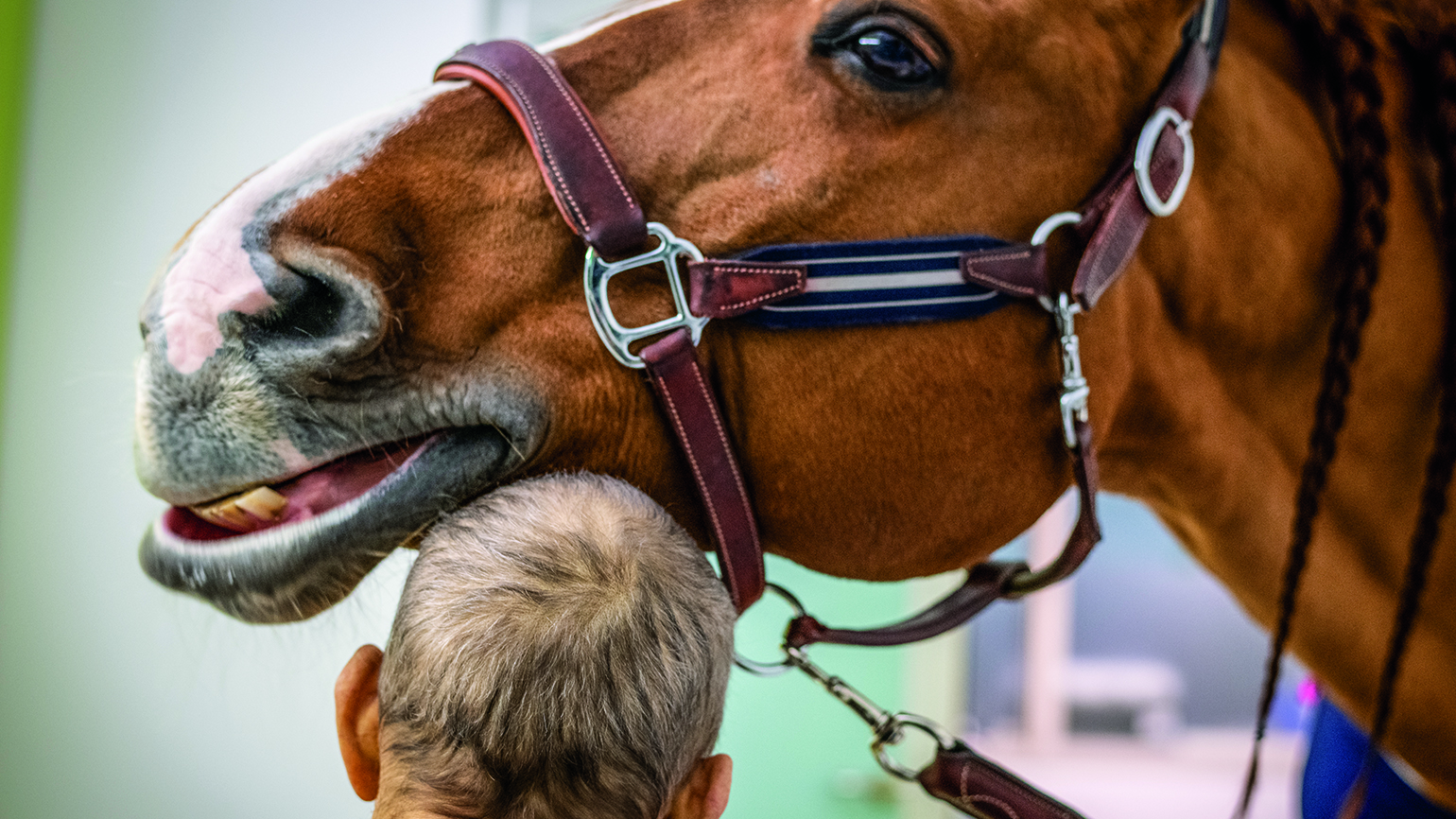
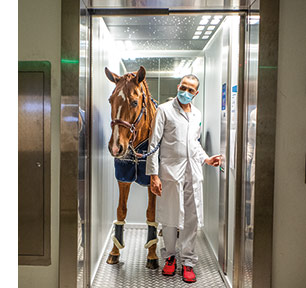
You expect to hear beeps, buzzes, even shrieks from machines and monitors in a hospital, but not clip-clop, clip-clop. And definitely not a neigh or a whinny. Yet those are common sounds in the hallways of Calais Hospital in northern France. Why? Because towering over the doctors and nurses in white coats and scrubs, you’ll find the sweet chestnut-brown face of Peyo the horse, accompanied by his owner and handler, Hassen Bouchakour.

Peyo, a Barb stallion, now 17 years old, didn’t always work under fluorescent lights, surrounded by the smell of antiseptics and those incessant machine alarms. He had a remarkable career in the show ring, where he was accustomed to the roar of applause and the flash of photographers’ bulbs. The competitions and exhibitions, known as dressage, require a symbiotic relationship between rider and horse as the horse performs a series of precise movements. After the shows, Peyo would, independently, approach certain people in the audience and remain by them. Over time, Hassen realized his show horse was not simply signaling that he wanted more human contact. Peyo was pointedly seeking out people who were physically or mentally fragile.

Peyo and Hassen; photo by Jeremy LempinIn 2011, researchers at Les Sabots du Coeur (Hooves of the Heart) began a study to determine if Hassen’s hunch was correct, and after four years, the team found that, indeed, Peyo’s brain is wired differently from most horses. Not only can the horse detect illness, but also he has the empathy and drive to help those in need. According to the Les Sabots du Coeur website, Peyo is the only horse out of the 500 they tested to be able to “detect cancer, tumors and support the end of life.” Even Peyo’s foals didn’t inherit his gift.

“It took me a while to accept it,” Hassen told The Guardian. “It put an end to my successful career as a sportsman, and as a showman. It was very complicated to no longer be the master, and to be forced to admit that when [Peyo] detects someone [is sick], I am no longer in control. When he decides, I cannot hold him back; it’s a need, it’s visceral, it is in him, he needs to go and cling onto the specific person he has chosen.”

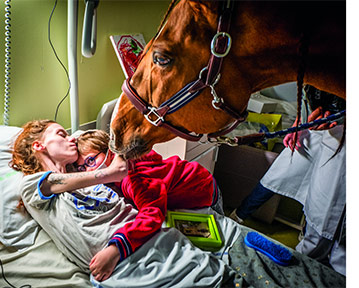
Hassen is referring not only to Peyo’s unique behavior from his days in the dressage arena, but also to what he has done since 2016, when he began making rounds in the palliative care unit of Calais Hospital. Peyo will indicate which patient they are to see next by approaching the door of the person’s room and lifting up his leg. Once he’s inside the room, he will connect with the patient, nuzzling and comforting them, letting them pet him. Sometimes he assumes a guarding stance to protect the infirm.

“What really pushed scientists to take an interest in him and open the health establishment doors to us was this [seeming] ability to greatly reduce [the patients’ dosage of] all hard drugs and thus allow a more peaceful departure,” Hassen told The Guardian.

Family members let Peyo visit; photo by Jeremy LempinDoctor Peyo, as he has been nicknamed by the medical team, has to scrub in before tending to the sick. Hassen, adhering to the hospital’s hygiene restrictions, spends about two hours preparing Peyo for each visit, using disinfectant wipes. As for bathroom time, Peyo knows to signal when he needs to go outside.

Whether it’s a child or an elderly person, a patient or their family members, Peyo brings delight and peace. The staff also looks forward to his visit; his presence reduces the stress of a difficult job. Each month, Hassen and Peyo visit about 20 people who are at the end of their life. They’ve supported well over 1,000 patients since the horse’s journey of compassion began.

Hassen reflects in The Guardian, “It is a unique experience to look after a person who is facing death, to stay with them and tell them: ‘Don’t worry, you can go in peace, you won’t be forgotten.’”

To support the work of Peyo and Hassen, visit lessabotsducoeur.org.

For daily animal devotions, subscribe to All God’s Creatures magazine.
The Warmth and Hope of Light at Hanukkah and Christmas

It’s no coincidence that two religious festivals that focus on light—Hanukkah and Christmas—take place at the darkest time of year.

In the case of Hanukkah, which is literally referred to as the Jewish Festival of Lights, light builds, day by day, from a single flicker into a sparkling blaze of a full Hanukkah menorah.

At Christmastime, the story is told of baby Jesus being born under the Star of Bethlehem, whose light guides the Magi to his side. And today, on trees, on mantles, and on the outside of many homes, twinkling lights are a bright and inviting symbol of Christmas.

I think a lot about light every December. I think about how warm and calm I feel in the presence of a beautiful holiday light display. I think about the fragility of a single light, like that small first candle on my Hanukkah menorah, and the collective power of a group of lights all illuminated together.

And I think about courage—the courage it takes to kindle a spark of light; the strength required to summon light when the short days beckon us to hibernate in the darkness; the bravery we need to keep our lights shining, day by day.

Do you feel the connection between holiday lights and the act of bravery you use to illuminate yours? Do you feel your inner light fueling the brightness you will put out into the world this holiday season? How can you build on the sparks that start your journey through this time of year?

The Top 10 Inspirational Stories of 2010

Everywhere you look the world is filled with inspiration, even a world full of problems.

AA cofounder Bill Wilson famously said the world is a problem place because it is filled with problem people. I think the same can be said for inspiration. The world is likewise an inspiring place because it is filled with inspiring people, many of whom appear in Guideposts magazine and on Guideposts.org. At the risk of sounding presumptuous, I believe we are the national experts on inspiration, a clearinghouse of hope. At least that’s what our readers and users say we mean to them.

What constitutes inspiration? To turn another well-known phrase on its head, I’m not sure but I know it when I see it.

Inspiration is a very personal, almost intimate experience. An inspirational story moves us in a way other stories don’t; they make us feel more than think, perhaps, and touch us deep in a place most experiences never reach. They can send a shiver down our spines and a ripple through our souls. They can swell our hearts with joy and reaffirm our faith in our fellow human beings (and animals, too). They can deepen our connection to God. Inspiration can motivate us, comfort us, even change us. It can make us laugh or cry…or both. But a great inspirational story never leaves us feeling the same.

Everybody loves end-of-year lists. This year the editors tried to pick the 10 most inspiring stories from the hundreds we’ve published in 2010. There was a lot of back and forth. Ten seemed like far too small a number but lists are supposed to be short. Somehow we all finally agreed on 10. What surprised me most was the number of celebrity stories that made the final cut. Yet who could forget actress Glenn Close’s brave and honest personal telling of her family’s struggle with mental illness.

I don’t have a favorite among these 10. I love them all. Take a look and see if you don’t agree.

Here’s to a truly inspiring 2011.

Which of these stories did you find most inspiring? Comment below!

Telling Stories of Hope
Find out why Ann Curry says journalism is an act of faith and how she finds stories of hope among all the suffering.

No More Secrets
Mental illness in actress Glenn Close’s family has inspired her to campaign for awareness and hope.

What Inspires Emily Procter
The CSI: Miami actress recounts the story of how she finally found happiness in Los Angeles, and who helped her get there.

A Super Dog
The inspiring story of a disabled dog whose zest for life can lift the spirits of everyone around him.

The Town That Saved Their Bakery
The French bakery had given their town hope. This inspiring story about a motivated community proves anything is possible if you try hard enough.

Operation Haiti
Meet a surgeon who found hope in the devastation of an earthquake.

Ike Ditzenberger, Not Your Average High School Football Player
The inspiring story of a high school football player’s shining moment.

Advice for Life: Repurpose!
Working in the town dump wasn’t inspiring, until one woman decided to change her thinking and “repurpose” her life.

“I Lost 600 Pounds”
One of the most motivational stories you’ll read about losing weight and finding faith.

Gram’s Faith
A desperate single mom returns to the home where she was fostered as a child, finding hope and strength again.

The Surprising Origin of Christmas in July

Growing up, I’d never heard of Christmas in July. My family always celebrated Christmas every December. There were the road trips down to North Carolina to visit family, cooking tasty Southern foods in my grandma’s kitchen, singing along to my all-time favorite Christmas carol, “Christmas Time is Here” from A Charlie Brown Christmas. I associated all things Christmas with the wintery months. Christmas in sweltering July didn’t make any sense to me. So, I decided to do some research. What was the origin of Christmas in July?

The term “Christmas in July” is believed to originate from a French opera written in 1892 called Werther. It then gained some popularity in 1940, with the release of the film Christmas in July, starring Dick Powell and Ellen Drew. Yet the idea of actually celebrating Christmas in July came from the South, in the very state where I spend my own Christmases: North Carolina.

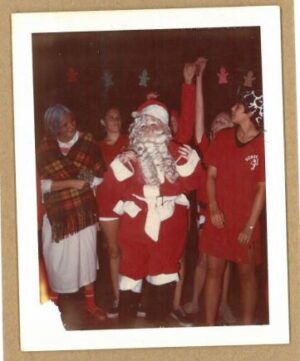
Keystone campers celebrate Christmas in July origin
Campers celebrate Christmas in July in 1970 (photo courtesy Keystone)

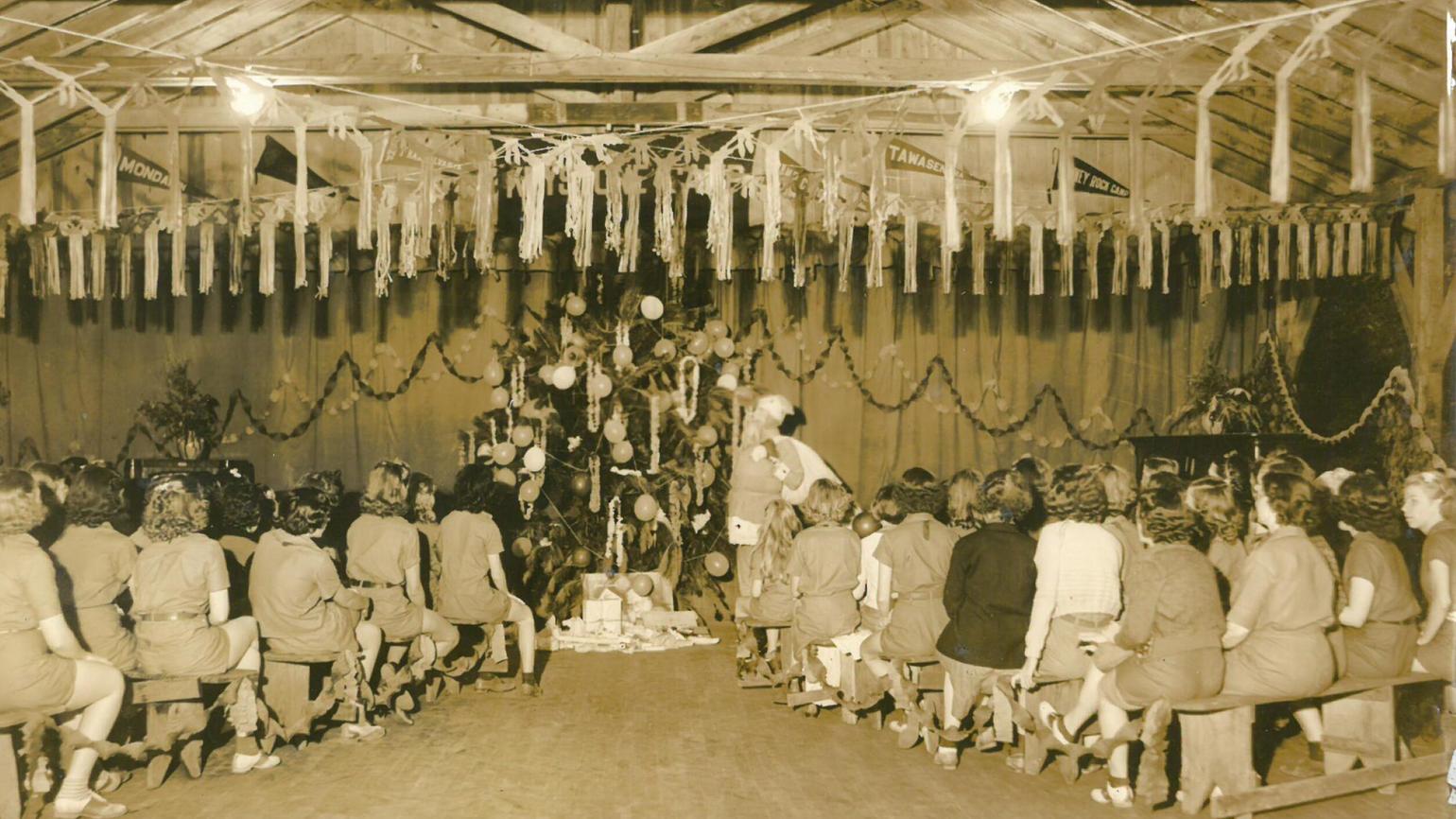
Keystone Camp in Brevard, North Carolina, has been around since 1916. Nestled in the Blue Ridge Mountains, the camp hosts young girls and teaches them everything from canoeing to horseback riding. In the summer of 1933, Keystone co-founder Miss Fannie Holt came up with the idea of having campers enjoy a little of the Christmas spirit during their stay.

“Fannie was known for always creating whimsy and magic at camp,” says Page Imes Lemel, the executive director of Keystone and a fourth-generation owner of the camp. Some of the whimsy Fannie made included Christmas traditions, both familiar and new. According to Lemel, campers would decorate a Christmas tree, host a secret Santa, and carol together. “Campers would put their laundry bag outside their cabin door and Santa would fill the bag with candy.”

Nowadays, Christmas in July is still very much celebrated at Keystone. Last year, Santa came down the camp’s big slide in a kayak. They now include a Hanukkah celebration, as well, with an electric menorah. Even if some of the activities change, the essence of the holiday season is always there. “You don’t mess with tradition!” says Lemel.

So I’d found the surprising origin of Christmas in July— so why keep celebrating it? For Keystone campers and staff, and people all over the world, Christmas in July is a chance for us to feel the Christmas spirit— that sense of wonder, togetherness, and giving— in a month that maybe otherwise wouldn’t have any of those things. I remembered my favorite Christmas carol and the words I sang to myself every December, and realized I had my answer as to why Christmas in July is important. Christmas time is here, families drawing near. Oh, that we could always see such spirit through the year.