Embrace God's truth with our new book, The Lies that Bind

Who’s Buried in Grant’s Tomb?

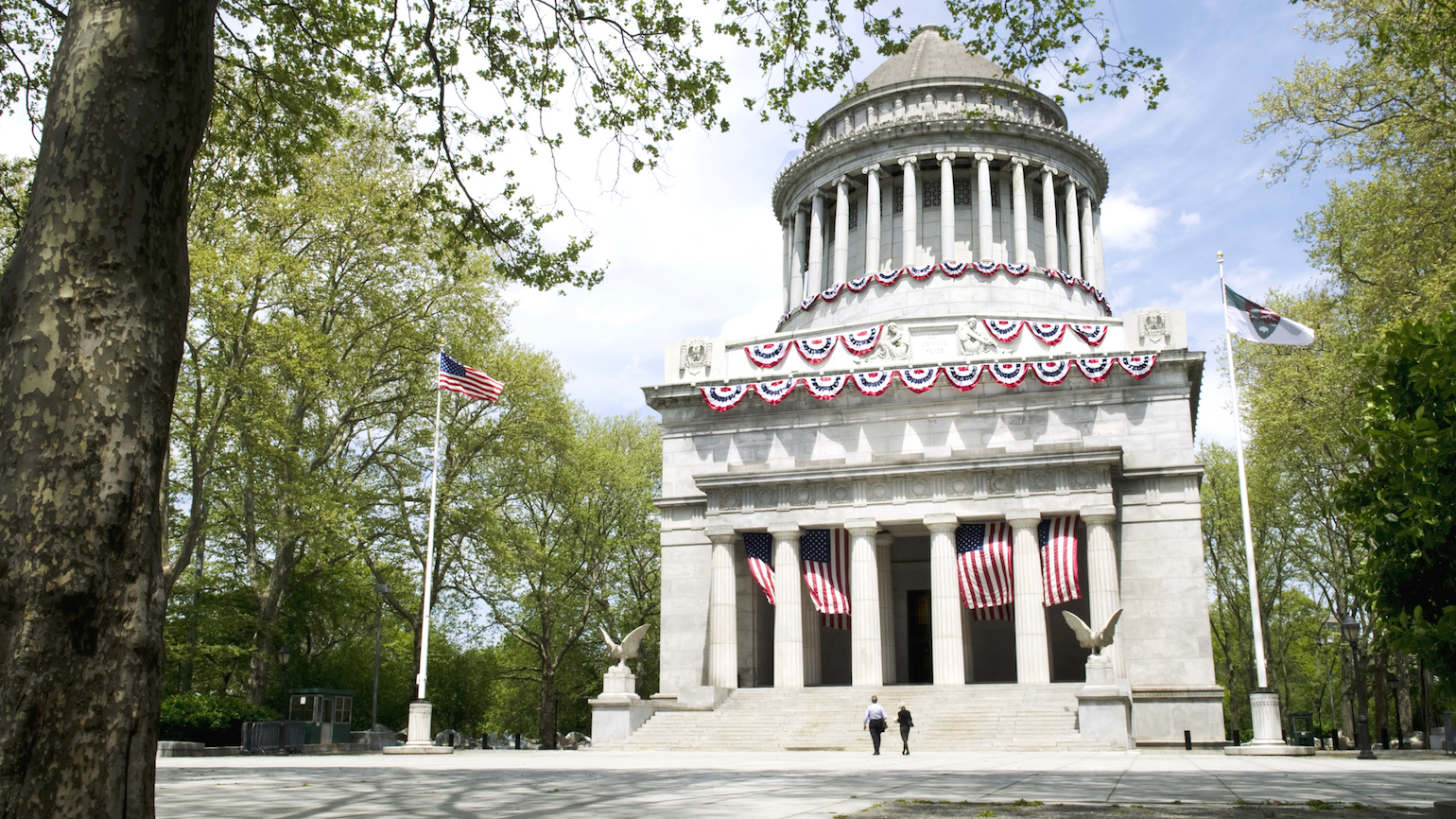
You probably remember that old riddle from school days, “Who’s buried in Grant’s Tomb?” The right answer would be Ulysses S. Grant and his widow Julia (and their dog apparently).

More particularly they’re not really buried there, they’re “entombed” as a friend of mine reminded me recently on Facebook. Above ground in matching sarcophagi, not buried.

Community Newsletter

Get More Inspiration Delivered to Your Inbox


Grant's TombBut the whole reason the memorial is on a hill overlooking the Hudson River has to do very much with the answer to that age-old question.

For years I’ve driven by it, but last Sunday as my wife Carol and I were walking from church to our favorite supermarket down by the river, we stopped and lingered.

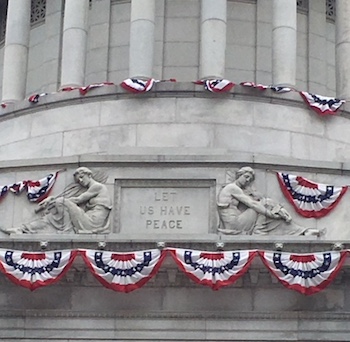
I was struck by the words on the exterior: “Let us have peace.” What a profound message for a nation still struggling to recover from the devastation of the Civil War. What a poignant message for our own time. “Let there be peace.”

Grant died in 1885. Almost immediately the mayor of New York advocated that his remains be housed in a memorial in the city. As you can imagine there were advocates who felt he should be elsewhere. Like Washington, D.C.

No, his wife Julia said. She preferred having him buried–or rather entombed–in New York, closer to her home. She wanted to be able to visit him regularly.

Julia’s wishes prevailed. On April 27, 1897, on what would have been Grant’s 75th birthday, the white-marble monument was opened to great fanfare. And it was for years a popular destination for the carriage trade.

Still the question remains: why wasn’t Grant buried in one of the nation’s military cemeteries? Wouldn’t that be more appropriate for a much-decorated hero, a West Point graduate, a former president?

Once again, go back to the riddle. Who’s buried in Grant’s tomb? The husband and wife. That was Grant’s dying wish that he rest in eternity next to his wife. Impossible in a military cemetery.

When Julia died in 1902 she was entombed next to him, Grant’s last wishes finally granted. And their message to the world? “Let there be peace.”

Where Is The Goodness of God on Good Friday?

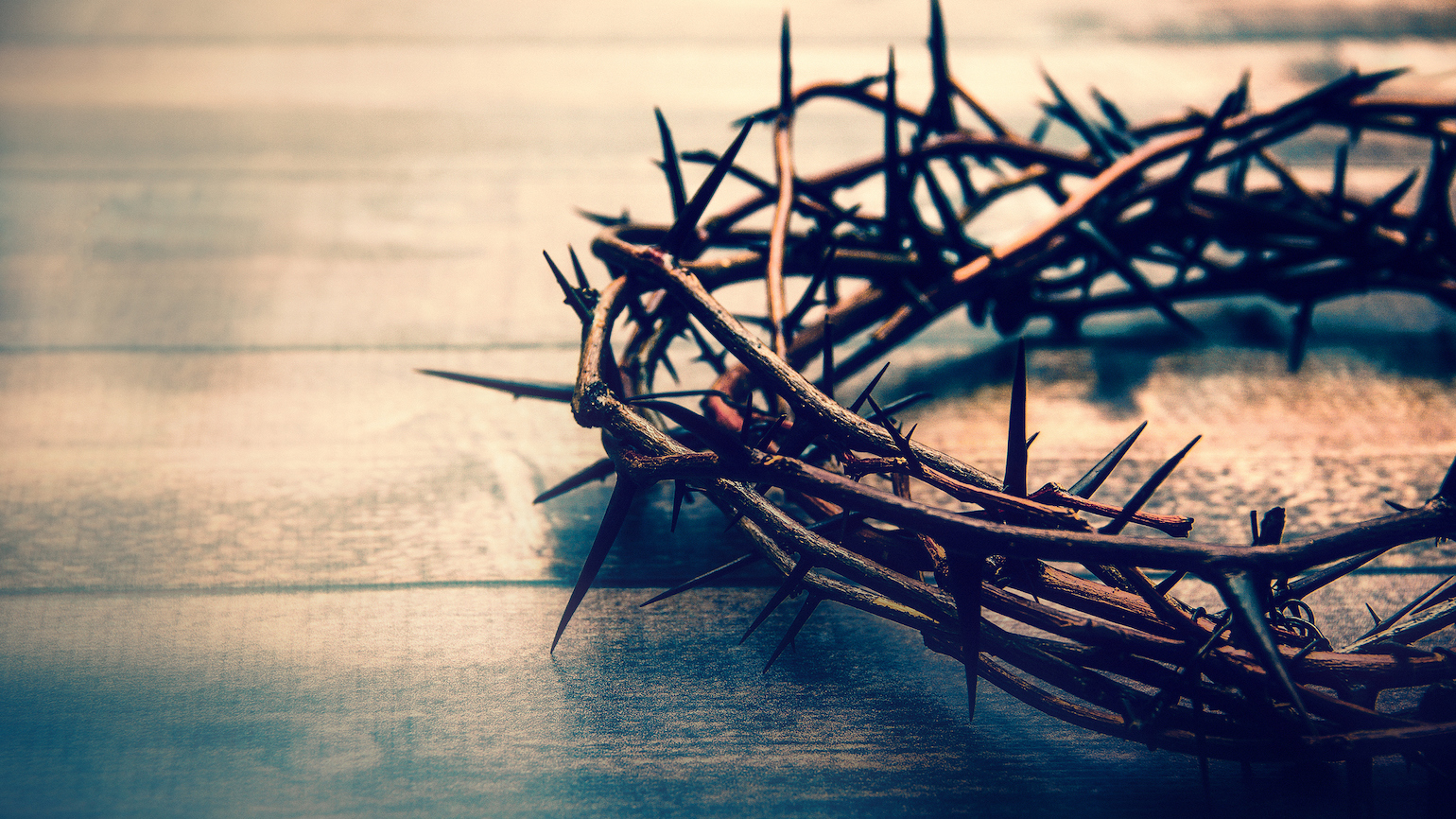
Sitting through a Good Friday Service and listening to the excruciating story of the crucifixion is difficult. The story of the cross is packed with drama, betrayal, injustice, pain and suffering. But if we look closely, we can still uncover the goodness of God.

Scripture teaches us that Jesus gave up His life long before anyone took it. Love was the motivating factor—nothing less or more. He said, “…no one takes it away from Me, but I lay it down on My own accord.” Our salvation is more important to Him than His own life; that is the goodness of God.

In this story, we also see the goodness of God in his choice to become human for us. Because of this choice, He can identify with our pain and suffering. When we turn to God with our own afflictions, our compassionate Lord understands our plight because of what He underwent on the cross. As we draw closer to the cross, we discover that the healing of our own hurts is linked to His wounds.

In the story of the cross, we also discover the message of hope. When one of the two men who hung next to Jesus comes to terms with his own guilt, he asks that Jesus remember him when He comes into His kingdom. Jesus offers these redeeming words, “Today you will be with Me in paradise.” This is the goodness of God in action. When we are spiritually at our lowest, we have a merciful and graceful God who wipes away all our sins, faults and mistakes to make us whole.

Lastly, the goodness of God is revealed when death does not constrain Him—He rises on the third day. There is no revitalization without Good Friday. Just like in our lives, there is no victory without struggle, no salvation without sacrifice and no resurrection without the cross. Let us bear witness to the goodness of God on Good Friday and every day.

When She Was Angry at God, She Remembered Her Mother’s Lesson

I sat in my parents’ den—in my mama’s old chair—watching my dad wrestling with my almost-two-year-old twins. He would playfully toss one away from him, and then the other would come around and attack him from behind, giggling. It was impossible not to smile. But I was still confused and angry about the string of events that had brought us here. God had some explaining to do!

Less than two years earlier, against my better judgment and without my doctor’s knowledge, I’d come down to Alabama, where my parents lived, to produce and direct a show that my production company had been commissioned to perform. I was 32 weeks pregnant with the twins, but one thing I’ve learned working in the theater is that when opportunity knocks, you answer.

My husband, Paul, and I already had two other kids, one-year-old Layna and five-year-old Ethan, and they came with us. We drove straight from our home in Columbus, Ohio. All the while, I was reassuring Paul that it would just be a short visit. I’d do the gig, Mama and Daddy would have a chance to bond with their grandkids, and then we’d go home.

I was in this very spot—in the den—when my water broke. Six hours later, the twins arrived for their surprise birthday. Immediately they were whisked off to the NICU, where they stayed for the next 14 days. Paul had to get back to work, and Ethan needed to get back to school. Even after being released from the hospital, the preemies were too fragile to handle the eight-hour drive to Ohio, so I stayed at my parents’ house with them and little Layna.

It was a rough separation. I was running on empty. Up all hours to feed the newborns while trying to maintain some sense of normalcy, making calls back and forth to Paul (“How was work?”) and Ethan (“How was school?”). At least my parents were able to lend a hand. Mama had been a third-grade teacher, and nobody was better with kids than she was. She never missed a chance at a teachable moment, passing along a life lesson, no matter how young you were.

Ultimately Paul and I decided to live permanently in Alabama. It seemed the best solution. There was the promise of good work for my production company, Paul would get a new job, and we’d stay with my parents for a month or two until we were able to find our own house.

I wish! Paul had to take a significant pay cut at his new job. The golden opportunity for my production company collapsed, and we didn’t have the means to buy a new house or even rent one. There we were—all six of us—stuck at my parents’ place. Where was God now?

Then Mama collapsed. She’d had heart problems, but nothing could have prepared us for what happened early one Tuesday morning. She woke up not feeling well. Daddy went out to warm up the car to take her to the hospital. He left her in the kitchen. The next thing I knew, he was calling to me. Mama was slumped over in a chair, unconscious. I called 911. The paramedics rushed in and worked on her, desperate to revive her. They thought they could hear a heartbeat, but it was just her pacemaker. She was gone.

I had to do all those things you do when a loved one dies: comfort my father, call my sister, let the church know, post something on social media, make the funeral arrangements, contact Mama’s friends, find musicians to play for the service, make sure it was a funeral that would have made Mama proud. I might have looked as if I had everything together, but inside I was a mess.

And angry. Angry at God, angry that we’d been uprooted, angry that our kids had to have a front-row seat to this tragedy. I couldn’t understand why so much of what we’d planned for our family had fallen apart: the move, the jobs, the loss. I’d often heard people quote the Bible and say, “All things work together for good to them that love God.” How was any of this working for anybody’s good?

I rehashed this for the hundredth time, sitting there in Mama’s chair and watching our toddlers play with my dad. And then all at once, I heard her say, “This is a dot, Danita.”

I flashed back to a particular afternoon in high school when I was upset—I’d been passed over for a part in a school play. I drove over to Mama’s school and found her in the classroom. I unloaded all my teenage angst. It wasn’t fair. I should have gotten the part. Why me?

“It’s just a dot, Danita,” she said.

“What do you mean?”

She pulled a sheet of paper out of her desk drawer, a worksheet with numbered dots all over it. “What is this?” she said, sounding just like the teacher she was.

“It’s dot-to-dot,” I said, wondering what she was getting at.

“What’s it a picture of?” she asked.

“I don’t know.” I couldn’t make sense of the dots. They seemed strewn all over the page in no apparent shape.

“That’s how life is,” she said. “God places things in our lives, and sometimes they seem confusing or out of order. Most of the time, we have no idea why things happen the way they do.”

“So…we’re the dots?”

“No, we’re the pencil,” my mother said, handing me one. “The pencil never knows what the dots make up—it just goes from one dot to the next. But God sees the big picture.”

I stood there and began to connect the dots. In no time at all, the lines had come together to reveal a fish. What I couldn’t see before had become clear.

Now, in my parents’ den, I reconsidered what we had been through. Maybe it did make sense. If I just connected the dots.

My water breaking here led to us being surrounded by family to help us take care of our premature twins, which convinced us to move back home, where I got to spend precious time with my mother during the last year of her life—and happened to be exactly where I was needed when she died. Dots, all of them. Everything that had seemed so random—even cruel—as it happened had come to create a larger picture, leading to this moment: my father laughing for the first time in weeks as he wrestled with his grandchildren, healing from his grief.

Right there in my mother’s chair, I stopped viewing all these events as blips of tragedy. I needed to trust God to reveal the beautiful bigger picture. All things could work together in our life for good, dot to dot.

For more inspiring stories, subscribe to Guideposts magazine.

When God Speaks to Us in Unexpected Ways

It was one of the first stories I ever worked on as an editor at Guideposts. A waitress walking home late at night hears someone following her. Thieves? Troublemakers? No matter how fast she went, she couldn’t outrun them. It was then she heard a voice: “Eat the chicken!”

What? Why? She had a bag of leftover chicken from that night’s serving. But why eat it now? She was running for her life. Still, she opened the sack and the smell of the meat attracted a pair of dogs who safely accompanied her home. Eat the chicken? It was just the right message.

Over the years we’ve featured countless stories that illustrate how God can speak to us in the most unexpected ways. Here are just a few examples.

Wherever you go, provisions will follow.
Marty Via and his wife and two kids lived in Ohio where he worked in construction until an accident halted his career. His pastor gave him a job helping out at a benevolence mission and suggested that maybe he had a calling to the ministry.

That didn’t seem right to Marty. But as he was praying, a town he’d never heard of came to him. Waycross, Georgia. His wife got the same message. His kids did too. As outlandish as it seemed, they emptied their house, rented a moving van and drove 18 hours straight to Waycross.

What on earth were they supposed to do there? It hardly seemed alluring, a smattering of empty storefronts and rundown houses. As hard as they looked, neither Marty nor his wife Dale could find jobs there. Nothing. Waycross? What was God thinking? It seemed like a dead end.

One sweltering summer night—no air conditioning in their cheap rental—Marty woke up at 3:00 and prayed for guidance. It came to him. He would start a benevolence mission here, providing food and clothes to the needy. The names of the local pastors and congregations came to him. He found a new purpose and calling. In a place he’d never heard of before. Waycross.

Look to Scripture for understanding.
Sue Likkel had such terrible pain in her foot she had to hobble around on crutches. Couldn’t run errands, couldn’t help out at home.

The doctor said it was a broken toe and then, even more worrisome, a nerve that ran from her spine down to her leg. Months went by. She felt so helpless she stopped praying, the fear of what was happening to her body taking over her life.

One night she cried out to God and the message came: “My child. Get up.” She got up from bed, puzzled. The next morning, she called the doctor’s office. The nurse who answered urged her to look for healing power in the Bible.

Sue turned to Scripture, and her eye landed on one verse: “Don’t be afraid. Just believe, and she will be healed” (Luke 8:50). The she glanced up the page saw the startling words, “My child, get up!” the message God had given her.

That was turnaround moment. At once the pain disappeared. The doctor was as startled as she was. She was healed.

Trust yourself.
God gave us all unique gifts. To use them we need to trust ourselves.

Coila Evans dreamed of being an artist. She loved to sketch and paint from the youngest age, but her dreams seemed dashed when the Dallas high school for visual arts didn’t grant her acceptance.

She became a hair colorist and massage therapist instead, work she greatly enjoyed. Still, there was that voice that she couldn’t ignore. She was meant to be an artist.

She picked up her brushes and began to paint again, selling a few things here and there. Then she read of an artist residency sponsored by a gallery in New York. She yearned to apply. If she could only get enough money to fly there and stay for a while.

“Paint 50 paints in 50 days.” That was the message and she followed it enthusiastically, rigorously day after day, selling her work, getting more attention.

Until she came to painting number 32. She was stuck. Was her dream silly? Did she have any talent at all? Had that voice just been a phantom calling? Was it time to quit?

No, because quitting on art would mean quitting on God. She finished the 50 paintings, sold them all and her dream trip came through.

Trust yourself. Give up your fears. Become who you were always meant to be. Even if you haven’t heard an unexpected voice.

When God Closes the Loop

Content provided by World Vision.

I walked into the kitchen one day to find my 3-year-old daughter, Lucy, intently “reading” a child picture folder from a recent Team World Vision race like she was reading the morning newspaper. My 8-year-old daughter, Sydney, walked in and started talking to her about one of our sponsored kids, and they began getting excited about sponsoring another child. We were sponsoring four already, and I thought, “Man, these kids are adding up!”

But God had another thought for me. He wanted to show me something about connections, how deep his love is for children around the world, and how ordinary folks, like my two young daughters, can be God’s answer to a farmer’s prayers in Kenya. So we said yes to yet another child and got a packet containing a photograph of a girl named Anita in Kenya. Sydney went crazy, writing her a long letter and drawing a portrait of Anita to send with it.

John Huddle at an ultra marathon in South Africa with Anita.Soon after that, I ran an ultramarathon in South Africa with Team World Vision. Following the race, I went to Kenya to meet Anita and her family. You never know what kind of connection you’re going to have or not have, but we pulled up to Anita’s house, and the whole village was there to welcome me. It was so special. They put this glittery sash around my neck and Anita’s neck.

I met Anita’s father, Abraham — a farmer barely making it. I love people — I love talking to them and hearing their stories. Abraham’s first question was, “Where does the sun sit in the sky over your city?” As a farmer, he was looking for a way to connect.

Then we walked his farm. I can recognize corn or soybeans, but I didn’t recognize millet, and I accidentally tore some up. When I asked if he took his crops into a market, he said, “No, I don’t take any food to market — that’s the food my family lives on.” It hit me: I had wasted food he depends on for his family. The amazing thing was that he didn’t get angry. He embraced me. His spirit that day was so awesome.

I went with them on their walk for water, which was downhill nearly two miles over rocky terrain. I couldn’t believe that their water source was a river — the water was filthy, filled with snakes and bugs. But Anita filled her jerry can and was chugging that water. Truthfully, I wouldn’t have even washed my car with that water. On the walk back, I carried a full jerry can. It took us over twice as long to get back, and I was drenched in sweat.

Abraham said to me, “It’s an answer to prayer for my family that you are our daughter’s sponsor.” I felt like God was closing the loop, saying to them, “You are loved.” I felt so connected to Abraham and Anita. But it was time to go. Three minutes before we left, Anita gave me a letter she’d written for my daughter. Just as Sydney had drawn Anita, Anita had now drawn a portrait of Sydney. When I got home, that letter was the last gift I handed to Sydney, and she wept because she was so excited.

We feel like our family needs to be making a difference in other people’s lives and filling them up with God’s love. I see in my family a desire to connect with other people. Globalization gives us cheaper labor, but maybe through it, God is also giving us a chance to use what he’s given us and connect families.

I’m pumped for my kids. There’s this temptation in our culture to create a bubble and protect kids from seeing poverty and hard things. I don’t want to do that. I want them to know the world and know real people with real faces in other areas of the world who are poor. We have the opportunity to make an impact on their lives, and they have an opportunity to make an impact on our lives, and it’s all possible through World Vision and our staff in the field.

John Huddle lives in California and is the West Coast director for Team World Vision. He and his wife have four children and five sponsored children. Team World Vision will host Anita and several other children at churches in the U.S. in November.

When Fear Became Faith

It started innocently enough. When news of the global coronavirus pandemic rocked my small-town West Virginia world, uncertainty began to choreograph everything. Prior to my retirement a few years before, I’d managed a hospital-wide infection prevention and control program, so I understood the threats to the world as we knew it.

Armed with a passion to “do something,” I stormed heaven. It didn’t matter if they were my loved ones or people I’d never met, I prayed the same head-to-toe infection prevention prayer over them that I once used for my patients. One night I stayed awake until 5:00 a.m., reminding God of the special vulnerabilities of certain family and friends. I finally drifted off to sleep, only to be awakened two hours later. In a dream, I’d been visiting a friend. Sitting six feet apart in her family room, we were both garbed in yellow isolation gowns, N95 masks, and protective gloves. As I pontificated every conceivable “what if,” my friend’s eyes grew wider and wilder.

Community Newsletter

Get More Inspiration Delivered to Your Inbox


I had told myself that I wasn’t a worrier; I was simply a “concerner.” But I was no different than the shoppers at Kroger who hoarded toilet paper. I’d called it prayer, but I’d managed my personal anxiety by trying to fix everyone in my path. My well-meaning petitions had escalated into unadulterated awfulizing.

Fear had me in its unrelenting grip. But things began to change when I happened upon a livestreamed sermon. With a diagnosis of cancer, the speaker had been in the battle of his life before news of a novel virus hit the media. This guy isn’t talking from a hammock with a glass of lemonade in his hand, I thought. These truths are from the trenches.

I found myself listening ever so closely. Here’s what I learned:

God is with us in the in-between places of life. Instead of hiding under a blanket in the confines of his bedroom, this guy, who had undergone chemo, as well as major surgery, and was likely immunocompromised, was holding out for hope. “The pandemic hasn’t taken God by surprise at all,” he said. “None of our troubles ever do.” His promise? God would be with every last one of us in the waiting.

Put your wisdom to work for you. I didn’t need to forget my years of nursing and infectious disease experience; that would be akin to tossing the baby out with the bathwater. Knowledge and wisdom come from God, the speaker said. And fear as well. The healthy form of fear would guide us in the precautionary measures we needed to take. “The key isn’t to not have fear,” he said. “But rather to not let fear have us.”

View even this pandemic as an adventure. Admittedly, this tactic seemed a bit far-fetched. But then I understood that he was referring to an adventure of the heart and spirit. It reminded me of when, as a pre-teen, I was diagnosed with a condition that threatened every area of my life. But my mother had refused to allow it to rule my days—or my dreams. Whether we were boarding a bus to a medical facility or waiting with a room of fellow sufferers, Mom smiled at strangers and celebrated life. She taught me the power of living in the moment, even when the future was hazy. Faith, hope and love guided us then. It would guide me now.

Reach out to others. I asked God to help me be a help in a new, better way. Instead of trying to control every possible outcome, I followed the advice of my friend, Wanda, who in an email prayer said, “Lord, right now we need people, less ‘to-dos,’ and You.” My first step was to tuck a message in the mailbox of a once estranged neighbor. Holed up in her home, this woman’s perceived wrong no longer stared me in the face every day. I began to see her with the eyes of my heart, and gave her the benefit of the doubt.

From the confines of my cabin, I also sent encouraging notes to overwhelmed healthcare workers I’d once worked with and to former patients living with chronic illnesses. With their newfound alone times, these long-ago friends craved connection every bit as much as I did. As I dispatched both emails and snail mail with the promise of God’s unfailing love, I learned something all but forgotten in the frenzy. A timeless truth from 1 John 4:18: “Perfect loves drives out fear.” Social distancing, yes. But never heart or spirit distancing!

Place your trust in a changeless God. The coronavirus pandemic has shown us all that there are times when we alone are simply not enough. That included me—despite all the letters after my name that christened me as a so-called expert. I needed the help and guidance of my caring, all-knowing Heavenly Father who would never leave or forsake me. Through the twists and turns of my whole life, I had never escaped His watchful care. I might not understand everything about the pandemic, but He is still by my side. Even in this. Yes, especially in this.

What Our Faith Calls Us To: Sam Collier

This interview is part of our What Our Faith Calls Us To series.

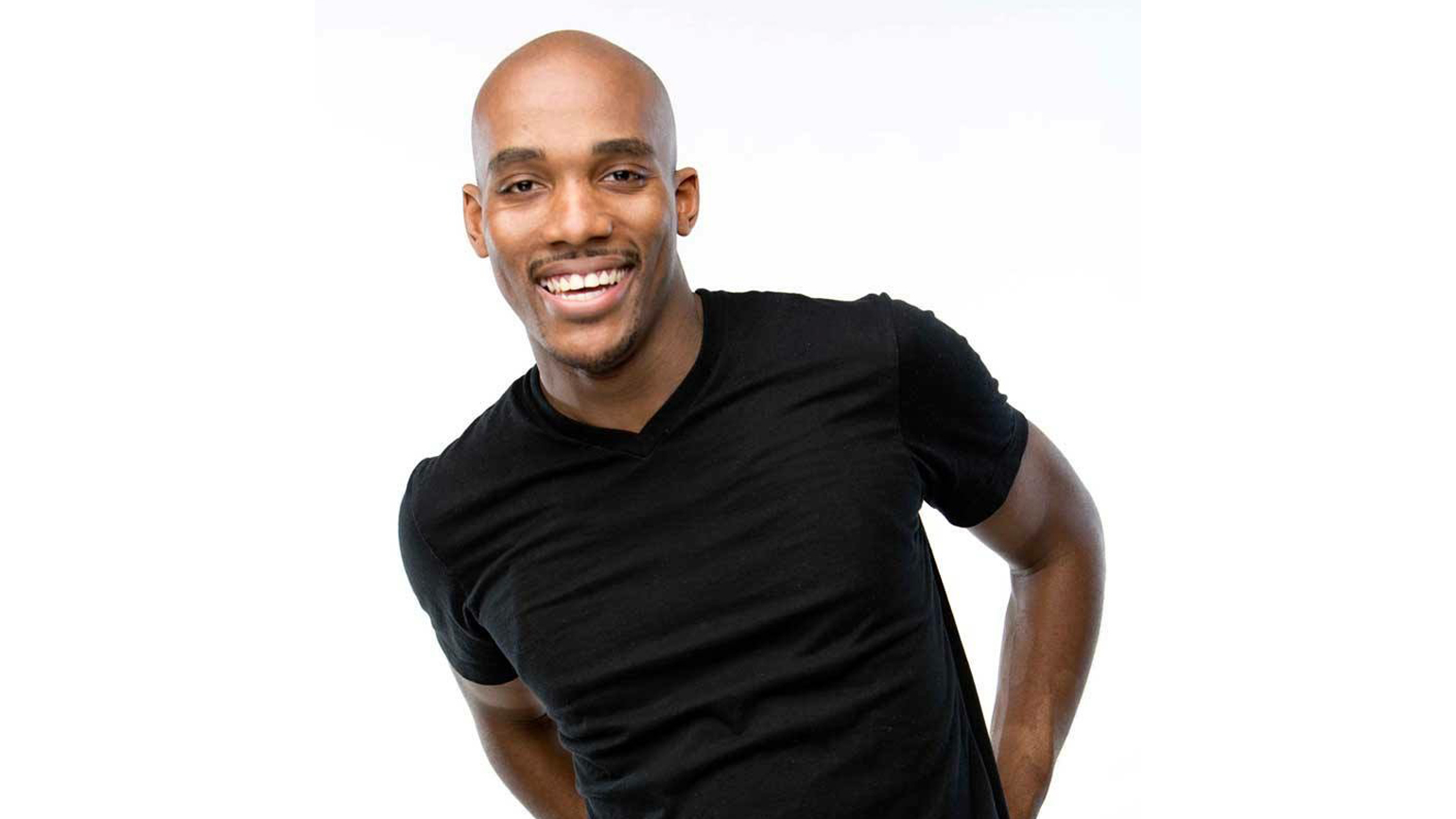
Sam Collier, a pastor, speaker, and author, has discussed race relations with some of the world’s most influential leaders, including Mark Zuckerberg and Sheryl Sandberg. He has counseled the family of Dr. Martin Luther King, Jr. and works with other faith-based leaders to get them thinking and talking about race. In his new book A Greater Story, Sam reflects on how his incredible life story—he and his twin sister were adopted from foster care and were later reunited with their birth mother on The Steve Harvey Show—shaped his faith and unique outlook on racial reconciliation. Collier, who lives in Atlanta, Georgia, with his wife and daughter, suggests ways we can all use our faith in the fight against racism.

GP: What was it like growing up the South?

SC: I grew up in Atlanta, the birthplace of the Civil Rights movement and a Black mecca in the U.S. My father owned a barber shop right across the street from where Martin Luther King, Jr. is buried. I remember walking down the street and seeing murals of great Black leaders like John Lewis. I even have a picture of myself sitting on John Lewis’ lap when I was six after my dad cut his hair.

For me, racism is like the weather. It’s a normal part of your routine, you build your wardrobe around it. You adapt to this environment. But when I would experience opposition, I would look up to those Black leaders. I would see that mural of John Lewis and know that he did it, so I could do it.

GP: What are you currently doing in your community to bridge the gap between races?

SC: I consult with a lot of faith-based leaders on the issue of race and diversity. I start conversations and try to be a voice of reason during this time of civil unrest. I’m also working with large predominately white churches to help them staff in a more diverse way and create a culture of diversity.

I’m working with a lot of organizations who are trying to respond to the Black Lives Matter movement. Organizations are recognizing there is a problem. They realize they haven’t taken the conversation seriously enough; I work to help with that.

GP: What inspired you to devote your life to this work?

SC: This is something I stumbled into. I grew up in all Black neighborhoods and environments. I didn’t have my first experience with a [predominately] white environment until I was 21 and a close friend invited me to join a white ministry. Growing up in a Black church and moving into that white space….it took me four years to become relevant there.

In ministry, everyone has different problems; you have to understand everyone’s plights. Being in that space, people started asking me, ‘How did you do this? How did you leave a Black church and move into a white ministry? That threw me into a lot of conversations about race. From there, with my unique perspective, it started opening doors for me. Doors to speaking about race. To consult. To have unique moments and opportunities and conversations. People asked for my perspective. I found that I had a specific disposition for it that allowed for me to succeed in this.

GP: You’ve had conversations with some of America’s most influential leaders regarding race relations. What are some of the biggest lessons you wanted to teach?

SC: The main thing I have seen is a lack of understanding, a lack of exposure, and a lack of relationship.

We’re constantly asking, why are we still facing this issue? There are good people on both sides. But the narrative for Black people has become that white people know— and don’t care. At the same time, white people don’t actually know our plight at the deepest level. That basic premise, while very simple, leads to massive tension and lack of systemic change. But when you get Black people to understand that the majority of whites don’t actually understand the struggles, and you get white people to believe that they didn’t know the whole story, you can change the conversation.

GP: You have provided counsel to Dr. Martin Luther King Jr’s family. What did you learn from this?

SC: They mentored me for four years; I still have holidays with them. I’ve had the opportunity to open doors for them in white spaces. Being able to bridge the gap there has taught me the power of proximity. The closer we get to something, the clearer it becomes. It is easier to make assumptions from afar, but our assumptions are flawed. When we get close to something, we can see what it is and how to approach.

GP: What do you feel is the connection between faith and racial justice?

SC: I think of the Parable of the Good Samaratin, which underscores the great commandment: love they neighbor as yourself. The man in the story asks Jesus, “Who is my neighbor?” He is trying to find a loophole because, historically, Samaritans and Jewish people were not supposed to associate with each other. But loving your neighbor, this requires us to put down what our culture says we should do. There is a wrong that needs to be made right. It always leads me back to this question: What does love require of me?

GP: What can people of faith do in their community to help support and educate each other?

SC: I think there’s a lot that can be done. First, we need to start at the foundation. Obviously, there’s systemic change that needs to happen on the economic and legal levels. But all of that starts by asking that question: what does love require of me?

I have found that for people of faith, we consistently put the cart before the horse. We want those in positions of power to change things. It’s the reason we keep hitting a brick wall. The only way to bring those in power into understanding is through relationships.

The heart of the Civil Rights movement was relationships. People saw the protesting, heard the songs, heard the speeches, but what is often left out are the conversations. It is during those one-on-one meetings that change happens. The protests, the songs, the social media posts, they are all important, but they need to lead us to that conversation, that relationship, that reaching down and picking up our neighbor. Otherwise we will keep doing the same thing.

We need to start those conversations. To actually schedule times to do them. There’s are fantastic groups, such as Be the Bridge, that offer structure and discussion guides for having these conversations.

If the pastors, the people in power, get every person in their church to care about this issue and to live their life with people different than them, they could easily change their community. Every leader has a sphere of influence that can create systemic change. Every person has influence that can create cultural change. What I have seen from my experience, is that when people get in real relationship with people who are different from them, they automatically begin to carry their burdens. Then, change is inevitable.

This interview has been lightly edited for clarity and length.

What Mary Did–And Didn’t Do

My friend Kelly came to town this week, and somehow as we walked down 42nd Street we ended talking about Mary, the mother of Jesus.

Kelly said that, as a mom herself, the most amazing aspect of Mary is that she didn’t run screaming into the road at Calvary, trying to change the outcome and save the day. Mary knew that her son’s life was His own, and she didn’t try to force Him down a different path. She tolerated her own distress–and His, too. This, in Kelly’s mind, was heroic. I thought so, as well.

“For me, what’s astonishing is that the angel Gabriel only came once,” I told Kelly in reply. “Mary got a single visit and had to hold onto that truth and message all those years.” There were no weekly reminders, no brush-up visits from heaven, no friends who were there when it happened and could reassure her it was real. All that not-knowing, and still she kept going, faithfully. Kelly nodded.

Later we headed up to the Metropolitan Museum of Art, and saw many paintings and statues depicting Mary holding her infant son and lamenting Him at the crucifixion. The limited range of circumstances in which she was shown reminded me there isn’t a whole lot that we know about what Mary did. Perhaps, then, it’s helpful to ponder what she didn’t do, too: She stayed faithful in difficult circumstances. That tells me something about what God wants of me, too.

We All Carry the Torch—and Can Pass It Along

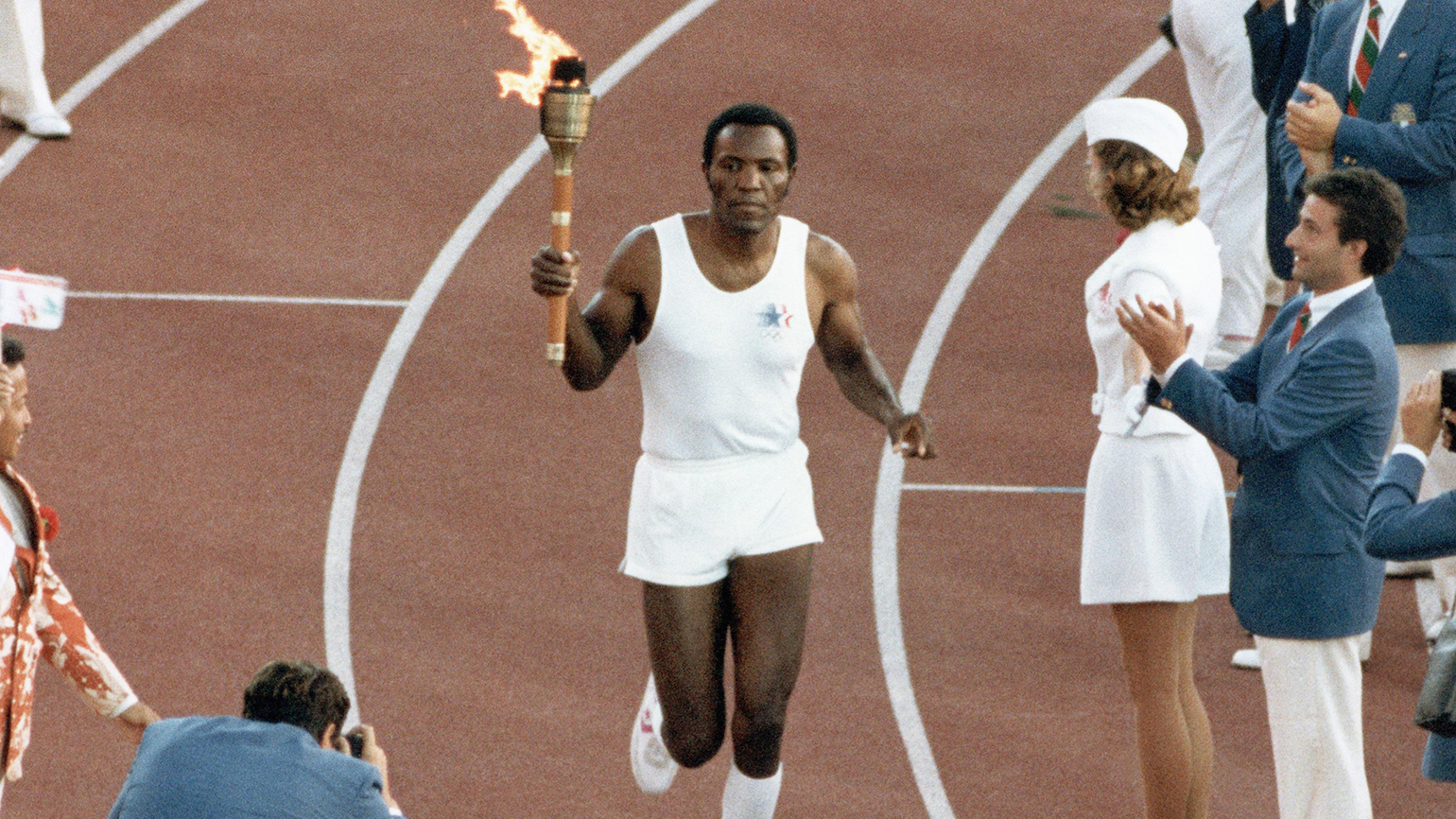
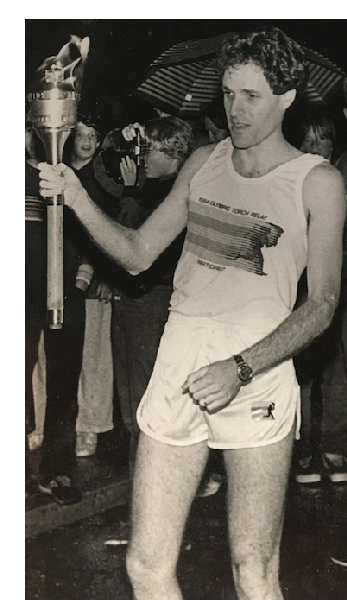
I carried the flame in 1984 in the torch relay as it made its way across the country to the Olympics in Los Angeles.

Wow. What an honor that was. I’m tempted to go into a thousand disclaimers: I wasn’t some budding Olympic athlete. I only carried it through a corner of Connecticut. My dad was working for the Olympics that year, and he thought it was something I would enjoy.

Rick carries the torchStill. It makes me realize that all sorts of honors can come our way unexpectedly. It’s for us to savor them, give thanks, make something of them. And then pass along that burning flame.

Let me go back to that May night in 1984. The flame had just begun its circuitous route across America, covering 15,000 kilometers. That first day it inched its way up the coast from New York, each runner carrying it for a kilometer.

Some of the runners were legendary. People like the grandson of athletic star Jim Thorpe and the granddaughter of gold-medaled Jesse Owen. Others were folk like me, pure amateurs. Supporters of the cause.

Mom and Dad had made a donation to the YMCA back home. I was sent a uniform, and the official aluminum torch. I held it as I stood waiting in the dusk for the flame to arrive.

Part of me wondered if it would even arrive. The plan seemed so ambitious. Would they ever find enough runners to cover that enormous distance? And who would really care? Other people were huddled in the dark on the sidewalk. What would they see?

All at once it happened. A runner appeared out of the gloom, lit my torch, and I was sent on my way. Jogging down the highway. If I had worried about finding my way in the dark, there was no question now. People lined the road, clapping and shouting as I passed.

Not for me. For the cause that I represented. The free expression of athletic prowess; the celebration of talent, dedication, discipline; the event that would be inaugurated at the end of July.

All too soon it was over. But not really over. I passed the flame on to the next runner, who would pass it along to the next and next until it finally reached gold medalist Rafer Johnson who would carry it into the L.A. Coliseum.

How lucky I was to play a part. Blessed. But like I say, I think we all have these opportunities to carry the torch. Of our faith. Our values. Our beliefs. “You are the light of the world,” Jesus said. We are.

We might feel unsure—like I did that night in 1984. We might wonder if what we have to do or say or show will even matter. We step out, illuminated by our faith. And meet the crowd that was waiting for us all along.

Let your light shine.

Was She Suited to Be a Pastor’s Wife?

I was 27 years old and living the life I always wanted…or thought I did.

I was married to a youth pastor. We had two daughters, and I was pregnant with our third baby girl. My husband, Daniel, was busy at church (very busy), and our family was beloved by the congregation.

We were like the youth group families I’d idolized growing up, with their stay-at-home moms, cheerful kids and involvement in church.

My own family was the opposite. My dad had walked out while my mom was pregnant with me. My mom worked long hours but couldn’t afford much beyond the necessities. I was a self-proclaimed Jesus freak, riding my bike miles every Sunday to attend church by myself, where I’d sit in a pew with my middle school friends and long to belong to one of the families around me.

For years, I’d prayed for the kind of family I had now.

Why was I so unhappy?

It wasn’t just that I was struggling emotionally with an exhausting third pregnancy or that I had recently been diagnosed with gestational diabetes.

I felt totally unsuited to being a pastor’s wife and stay-at-home mom. I’m not the most organized person, and my days at home with the kids did not remotely resemble the sprightly, creative families I saw on social media—let alone the relaxed, can-do moms I remembered from youth group.

I wanted to support Daniel’s ministry, but more and more I found myself resenting how much time his job required. Not to mention the master’s of divinity he was completing on the side. Much of his work happened during afternoons, evenings, weekends—exactly when my energies flagged and I yearned for Daniel’s help and companionship.

I’d studied communications when I was in college, and I hadn’t anticipated how much I would miss writing professionally after the kids arrived. The more my parenting duties expanded, the more I wished I could work part-time to supplement Daniel’s modest income.

Our family was God’s answer to my prayers. Why couldn’t I be grateful? What was wrong with me?

Everything came to a head when I got the diabetes diagnosis. A routine blood test came back showing elevated sugar levels. My doctor said I needed more tests right away.

Daniel was at church, overseeing a youth event. I called to tell him, but he couldn’t leave the kids at the event unsupervised.

It was nearing bedtime for Penny and Georgia, our four- and two-year-olds. I recruited one friend to stay with the girls while another, Lauren, took me to the hospital.

Lauren helped me into her car. I struggled to fasten the seat belt. “I wish Daniel were here,” I said. She squeezed my hand.

By the time I returned, late that night, Daniel still wasn’t home. I knew something had to change.

“Why couldn’t you at least come to the hospital?” I demanded when he arrived. “This isn’t what I thought our family would be like.”

Daniel held me and told me he was sorry. In his voice, I heard how torn he was between his obligations. I knew it was unfair to blame him. It wasn’t his fault that the life I’d always wanted was making me unhappy. I didn’t even know how to express what was wrong, and I was afraid of what might happen if I did.

Daniel would never walk out on me the way my own dad had. But would he be upset if I upended our family balance just so I could work? Would I be honoring God if I chose work over my family? Was that even a fair question to ask?

Mom told me my dad had never been particularly reliable. He wasn’t a doting husband even while my mom was pregnant. By the time I was born, it was just my mom and me.

Mom moved in with her parents for a while when I was born. I often spent weekends and time after school with my grandparents. Though Mom worked as a train station agent, often on evenings and weekends, money was tight. Everything felt precarious.

I found the security I craved at a church youth group. Mom signed me up for vacation Bible school. I kept going. I wished my family could be like those youth group families: two parents, mom at home, financially stable, involved in church. I asked God for a family like that.

A family like Daniel’s. He and I had met during college. Daniel’s father owned a business, and his mom stayed home, raising three kids and taking care of the household, where Daniel and his friends liked to hang out—looting the fridge and piling on the sofa to watch TV.

Daniel’s only rebellion was embracing a stricter version of Christianity than his parents had. For Daniel, an old-fashioned family felt like part of God’s call. For me, it felt like the safe harbor I’d always wanted.

Four months after we married, I learned I was pregnant with Penny. Our perfect family was on its way. It didn’t take long for my idealism to wane. As a new pastor, Daniel was paid little but expected to be available day and night. We lived in a basement apartment, barely affording groceries. I felt alone, constantly exhausted.

When Penny was five months old, we dressed her up as a puppy and took her to the church Halloween carnival.

“Where’s Daniel?” a friend asked. Her husband was holding their baby. My back ached from carrying Penny.

“Daniel’s here helping with the carnival,” I said. “I’m not sure where.”

Late that evening, Daniel and I were still at church while Penny slept in her car seat. I helped clean up the mess, long after other families had gone home and tucked their kids into bed. I kept thinking about my friend’s husband holding their baby.

Not long after Daniel got a job as a youth pastor at a different church, our second daughter, Georgia, was born. Daniel’s new job was even more demanding. The youth group was large, and Daniel had high hopes for the students he worked with. He left the house every morning and sometimes didn’t get home until late at night.

A restlessness built inside me. I’d assumed that a key part of the family I yearned for would be a mom who stayed home with the kids. But in my heart of hearts, I wanted to do more than parent. I wanted to be a freelance journalist, to have responsibilities outside the house, to contribute to the family income.

Making that desire a reality would require everyone to change. It felt risky. How could I pray to God for help when I was turning my back on what he’d already provided?

I made friends with a woman at church named Franchesca. She had two kids and was a graphic designer. I tried to convince her not to return to work after maternity leave. I couldn’t bear my days without her. Who would I meet for park dates and long walks?

Franchesca said she enjoyed working, and I had to admit her kids did fine in day care. I could tell by the way she talked about her job that she found something in her workplace that she didn’t at home.

“Why did we even decide that only you can work?” I asked Daniel one night while I loaded the dishwasher.

“Of course you can work,” he said. “It’s just that day care is so expensive.”

Daniel had encouraged me to write before, but this seemed like a more direct invitation. He and I worked out an arrangement. I would write while the kids took their naps. If I got paid, we could afford some child care. I sold a few articles and decided to put the girls in day care two days a week. It felt momentous. Then I got pregnant with Eloise. Was God trying to tell me to stop working?

I remembered my mom and how she would agonize over who would watch me while she worked. Eventually I told her it would be easier if I just looked after myself.

Though my mom and I were close, our relationship was complicated. It must have wounded her every time she heard me say that I wished I had a “normal” family.

I thought about all those afternoons by myself. Somehow things ended up working out. I found the youth group, went to college, married Daniel.

Maybe it wasn’t quite accurate to say that God had rescued me from a bad situation so I could become a stay-at-home mom.

I had learned to be resilient growing up. God had been present at each stage of my life, helping me move forward, loving me through the hard parts. The expectations I’d placed on myself were rooted more in fear than faith. I should have remembered: One of God’s favorite messages is “Do not be afraid.” What would happen if I listened to God without fear?

Eloise was born healthy. When she turned one, I enrolled her in a half-day child-care program and wrote every day. Gradually I was able to build a successful freelance career. The kids were fine, and my life began to look more like my friend Franchesca’s—busy and fulfilling.

Daniel was promoted to lead pastor of a new branch of our church. At one time, I might have taken that as a sign for me to step back and do everything to ensure he succeeded.

I told Daniel I was proud of him and wanted to support him. I also said, “I don’t want to feel pressured to be the perfect pastor’s wife.”

“I would never expect that of you,” Daniel said.

We’re still figuring out what it means to balance work, family and church in a clergy household. That task is so much more straightforward now that I no longer let fear guide my thinking.

It’s not the life I always thought I wanted. It’s better—the life God wants for us.

For more inspiring stories, subscribe to Guideposts magazine.

Waiting on the Lord

Wait for the LORD; be strong and take heart and wait for the LORD. (Psalm 27:14, NIV)

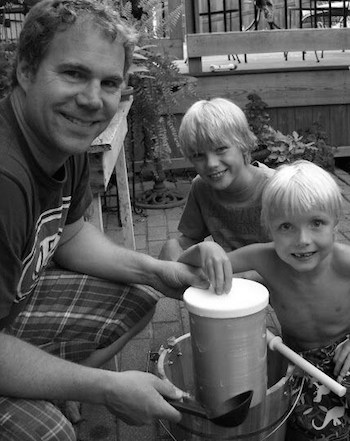
Several years ago, for Father’s Day, the boys and I bought Lonny an ice cream maker. It has a hand crank and an electric motor and the smaller boys turn the crank until their arms grow tired.

The ice cream machine has become the staple of many summer nights, and tonight we are on the patio, all of us gathered, waiting for it to deliver a good thing.

Blogger Shawnelle Eliasen's husband and sons waiting for ice cream“Is it almost done?” Isaiah asks. His eyes are wide and hopeful.

“Not quite,” Lonny says. “But it’s close. Want to toss the football while we wait?”

Isaiah shakes his head. The machine is turning slower. The motor is pulling. The ice cream is thicker, closer to being ready inside.

“It takes so long,” Gabe says. He looks to a bowl of berries, sliced and covered with plastic wrap. He’ll make a sundae, lean on the chocolate but heavy on the fruit.

“I know,” Logan says. “Not too much longer. But it is hard to wait.”

Gabe continues to watch the berries. Isaiah glances at the machine and then slides onto a brother’s lap. And I think about this moment–the desire, the not-quite-yet, the anticipation, and the hope of a good thing.

It’s like our spiritual lives.

In a household of many, the wants and needs are steep. One longs for a relationship. Another for the resolution of a tough project. Others wait for the opportunity to do something new. For physical mending. Emotional healing.

Waiting can even be as simple as longing for keys to the car or being a part of the “are we there yet?” backseat chorus on a long, family trip.

Waiting is hard.

But sometimes we’re called to wait.

It’s during these times, I believe, that the Lord molds our character. We learn to trust Him with our needs, desires, and futures. We learn a measure of self-control–leaning into His timing rather than reaching for things, prematurely, on our own. We learn to feel His presence, see His grace, and experience His compassionate care and provision while we wait.

And we’re refined. We’re molded deeper. We’re stretched and we grow closer to the likeness of His Son.

Samuel and Grant are growing restless. They pick up the football and move to the yard to play catch. The rest of us stay around the table. We listen. We wait.

And the machine whirs and churns.

It’s the sound of patience.

The sound of learning to wait.

A song of anticipation–the steady, gentle hum of good things to come.

Lord, help me when I’m in a season to trust, be still, and wait. Amen.

Visitations of Christ

Not long ago I got a letter from a woman who said she had always loved angels, always felt the angels hovering around her, surrounding her with love. But recently it was not angels but Jesus. She said that the presence of Christ felt entirely different, although she could not describe the sensation or difference. I sympathize.

Once Christ came to me. I had been praying with all my heart to see Him, to have a true relationship. It was Easter Sunday when I looked out the picture window of my little house and saw Jesus walking toward me across the lawn. He was dressed in a long white robe and sandals, and had a beard, just as in the pictures. He walked toward me, and he was shining with a joyous luminence.

I saw that He saw I saw Him. He smiled. I don’t remember if He slowly faded or vanished suddenly, but one moment He was there and the next gone, and I went back to my book, thinking, That was Jesus Christ.

What’s interesting: I didn’t fall to my knees in worship, or change my life—I just went on. But with a happy heart.

Another time I saw a ragged, long-haired hippie walking up my street in Washington. He was barefoot, and carrying a backpack. I couldn’t take my eyes off him. I crossed the street to catch up to him and as I passed, I offered him some money.

He waved it away.

“I don’t need it,” he said, or “No, thank you.” I remember only that he spoke. And then he passed on. I opened the door to my house, but I was quivering. Was he an angel? In my heart I thought, “I’ve just seen Christ.”

In a strange way, this encounter was more compelling than the vision on that Easter Sunday. To this day I wonder about it. What happened? Why was I so moved by this young man? Was it my imagination?

I wish I had more stories of present-day encounters with Jesus Christ. I wish I knew what usually happens and whether those to whom He comes are changed.

If you’ve encountered Christ, please comment below.

—–

Read more Inspirations and Angels!

Sophy Burnham is the author of 12 books. She is best known for her ground-breaking books on the spiritual dimension of life, including A Book of Angels, The Ecstatic Journey and The Path of Prayer. She is a frequent public speaker and gives workshops worldwide.

Find out more at SophyBurnham.com.