

Embrace God's truth with our new book, The Lies that Bind

The Friend He Never Forgot

Times were tough for my family that summer of 1928. My father was without work. But the morning sun was warm in our yard, and I pushed tin cans around in the dirt like trucks. What else could a nine-year-old do? Nothing that would make a difference, I figured.

My mother watched me from the front porch. Suddenly I heard: “Corn! Butter beans! Tomatoes!”

I jumped up and ran to the fence. An elderly black man in a broad-brimmed hat drove a mule cart loaded with vegetables. “Two cents an ear for corn!” he called out. “Four cents each tomatoes!”

“I’ll take some corn and three tomatoes, please,” my mother said. “You ask a decent price.” The man got down off his cart and gathered up the vegetables. He walked stiffly to the porch.

“Could I have a ride?” I blurted out.

“Sure enough,” the man said. “If your mama doesn’t mind.”

“I’d be thankful if it kept the boy busy for a while,” Mom said. She dropped some coins into his hand. He laughed and helped me into the wagon. “I’m King Brooks,” he said. “Let’s go, Maude.” The old mule started walking along.

Sitting up in that high wagon, I felt like a king myself. “I gotta get on with my work now,” said King when we got to the end of the street. “You run on home, you hear?”

“Can I ride with you again tomorrow?” I asked. “I could carry people’s groceries to them.”

King thought for a moment. “That would be a great help to me,” he said.

Next morning King picked me up at nine. We rode through the neighborhood. King called out prices and a lady called back her order. I gathered up fruits and vegetables from the back of the cart. My first customer!

“Thank you, young man,” she said when I handed her some butter beans and a watermelon.

I felt my face go hot. I looked down at the ground. “You’re welcome,” I mumbled. I turned and fled back to the cart. That was pretty much how it went all day.

In the afternoon King dropped me off back home with several ears of corn to give to my mother as payment. When I saw that corn on the dinner table that night my chest swelled with pride. I was making a difference.

I’d ride with King on Tuesdays, Thursdays and Saturdays. That first week I brought the customers’ money to King to make change. “Now, you watch,” he said to me. “This lady gave me 50 cents, and her order costs 39 cents. So that’s one penny plus two nickels she gets in return.”

I watched King closely—more closely than I’d ever paid attention to math in the fourth grade. By the end of the day I was making change myself.

“With you doing the leg work,” King said, “we’re doing twice as much business as usual.” That made me feel important, like a man instead of a child.

Now when a lady said, “Thank you, young man,” I looked her in the eye. “It’s a pleasure,” I’d reply.

King liked to tell stories as we rode along. “The Samaritans were considered real good-for-nothings,” King explained one day. “But when a man was hurt by the side of the road, only a Samaritan stopped to help him.”

King yanked the reins. “Whoa, Maude,” he said, pulling up in front of a water fountain.

“Why did everyone think the Samaritans were good for nothing?” I asked, climbing down off the cart to get a drink.

“Because they were different,” said my friend King.

“Oh,” I said, not really understanding. I climbed back onto the wagon. “Don’t you want a drink, King?”

“Can’t have one here,” he said. “It’s for white people.”

I looked back at the water fountain as we drove away. “Whites Only” the sign above it read. I’d seen that sign all my life. For the first time I questioned why it was there.

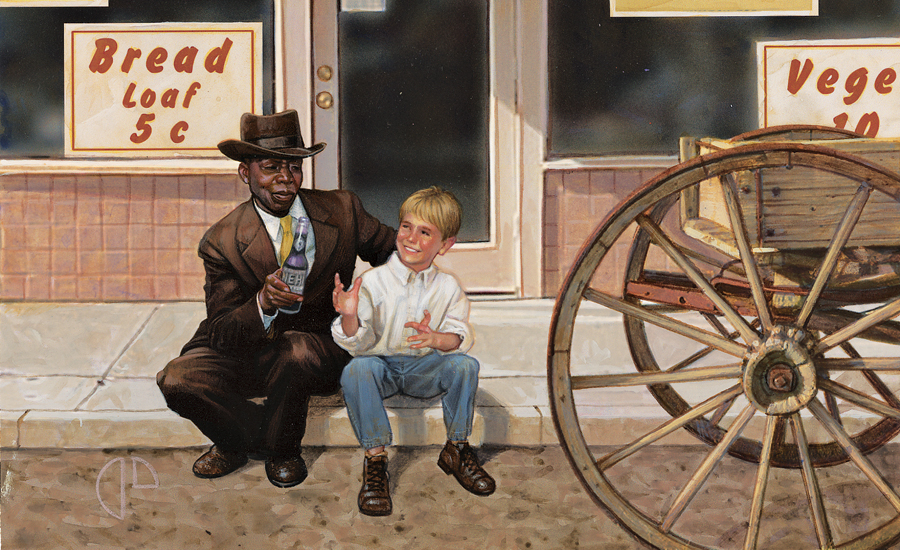
Half an hour later King and I pulled up in front of the grocery store—my favorite stop of the day. Once Maude was settled with her feedbag, King bought us some soda crackers, rat cheese and a bottle of grape Nehi.

We sat down on the steps with the bottle between us, talking and passing it back and forth. A couple of men walked by. I saw one of them stop and stare. He said something to his friend and walked on.

“What’s wrong with him?” I asked King, reaching again for the Nehi.

“Negroes and white people aren’t supposed to drink out of the same container,” he said. “It’s against the law.”

“But it doesn’t make any difference to God, does it?” I asked. “He loves Negroes just like he loved the Good Samaritan. And me.”

“That’s right,” said King. “Color doesn’t make no difference to God. It shouldn’t make a difference to people.”

“It doesn’t make any difference to me then,” I announced. I took a big swig of grape Nehi. Nothing tasted better on a hot day. Especially that hot day.

At the end of August my father got a job, and we had to move from Richmond to another part of Virginia. Soon as we got word, we had to pack up and go. I knew how important this was for Dad.

Thing was, all this came about on a Saturday. King wasn’t due back till Tuesday! I wished I could see him, but I didn’t even know where he lived. In a different part of town, no doubt, where white people didn’t go.

King made many trips to us in Barton Heights, but I never once thought about where he lived.

I grew up, joined the Navy and fought in World War II. But time seemed to be at a standstill, at least in Virginia. Home on furlough, I offered a young lady of color and her baby my seat on a crowded bus. The driver pulled over. “You know better than that,” he told me. “You want me to lose my job?”

The young woman got up and I took my seat again. “Why don’t you give me the baby?” I said. She handed her son to me. “Is there a law against this?” I challenged the driver. “Not that I know,” he muttered. He went back to driving the bus. I kept the baby on my lap.

After the war, I landed a good job, got married and settled back in Richmond. Things started to change. The Civil Rights Act was passed in 1964. “Whites Only” signs disappeared. Schools were integrated.

I never forgot my friend King. But in all my asking, no one could tell me anything about him. I tried to give my own children the self-respect I’d learned from that man, and teach them we are all equal in God’s eyes. Same with my grandchildren.

I’d come a long way from those days making change on the wagon. I’d had a successful career in business. Now it was time to relax, so I was told. But retirement just wasn’t for me. Nothing beat the satisfaction of an honest day’s work. King would have agreed.

At the age of 70, I took a job managing corporate functions for Colonial Downs racetrack. One afternoon I was leaving the building just as the FedEx truck pulled up outside.

I recognized our regular deliveryman and stopped to talk. For some reason I found myself telling him stories about my childhood all those years ago in Barton Heights.

“My father used to drive a truck around there selling vegetables,” he said. “Every once and a while I’d ride along with him and help.”

“I used to sell vegetables too!” I said. “In my day we did it with a mule and cart. Just me and a dear friend and mentor named King.”

“King?” he asked. “King Brooks was my great-uncle! My father’s father’s brother! I’m GeRald Brooks!”

GeRald and I threw our arms around each other. I thought King would always be just a memory, but here was his own flesh and blood standing right before my eyes. GeRald told me King had died in 1951. I admitted how awful I’d felt all these years that I never even knew where the man lived.

“You’ll see now,” GeRald promised. “And you’ve got to meet my family.”

A week later GeRald came through. King’s old house was empty, but I walked through the garden where he’d grown his vegetables.

“This land was part of a plantation,” GeRald told me. “After the Civil War the plantation owner sold it to the slaves who had worked it. King’s father was one of those slaves.”

GeRald took me to the church where King had been a deacon, then to the cemetery where he was buried. “I came back, King,” I said, putting a lily on his grave. “I never forgot you.” GeRald slipped an arm around my shoulders.

GeRald invited me over for Sunday dinner along with his four brothers and their wives and children. I could see a bit of King in all of them. Not just mannerisms or a laugh. They had that same quiet confidence I remembered in King.

“There were so many things Great-Uncle King couldn’t do in his lifetime,” GeRald said, shaking his head. “Buses he couldn’t sit on, water fountains he couldn’t drink from. But look what a difference he made in both our families.”

I thought back to that summer in 1928. King had taught me about self-respect even when society was not respecting him. He’d taught me that he and I were equal in God’s eyes.

What a blessing, to be the equal of such a man as King Brooks.

Did you enjoy this story? Subscribe to Angels on Earth magazine.

The Blessings of Sight

I almost cried in my eye doctor’s office this morning. I did cry when I got in the car, but they were tears of relief. I’m going to be honest, the last six or seven years have been scary for me. During a routine exam, I was diagnosed with a progressive eye disease and started using drops to try and control my eye pressure.

We went through all kinds of drops without any of them working. Since my cousin is blind in one eye and has lost part of his sight in the other one due to this disease, I knew it was vital to get the pressure down. After months of trial and error, we found a combination of drops that helped a little. The pressure wasn’t as low as my doctor would have liked, but it was some progress.

My right eye is the worst. When I close the left one and look at a page with just my right eye, it looks like I took a gray pencil and marked out areas on the page. The left eye helps to compensate for the loss of sight in the right eye, and I’m so grateful that I can still read and drive and be independent. So you can imagine how frightening it was when I had two retinal tears in that left eye last fall, leaving the sight in that one in jeopardy for several weeks.

I know we aren’t supposed to worry, and I’ve tried to trust God through all of this—but there’s something just really frightening when it comes to the prospect of losing your sight.

I had two more eye surgeries in June. Today’s appointment was to see if the surgeries worked. When the nurse checked the pressures in my eyes, they were the lowest they’ve been in several years. It makes me cry just to type those words. Lord, I thank You so much!

The disease isn’t gone. It’s something I’ll deal with for the rest of my life. But these surgeries bought me time—more days and months to see the precious faces of my grandbabies, to share the beauty of a sunset with my husband, to write and edit my book projects and articles, to drive and see where I’m going, and to read the labels on the cans in my pantry.

I don’t ever want to take any of that for granted. So, today, I just want to thank Him for doctors who go the extra mile to help their patients, for family and friends who pray, for answered prayers and for the precious-beyond-words blessing of the gift of sight.

The Blessing of Burnt Beans

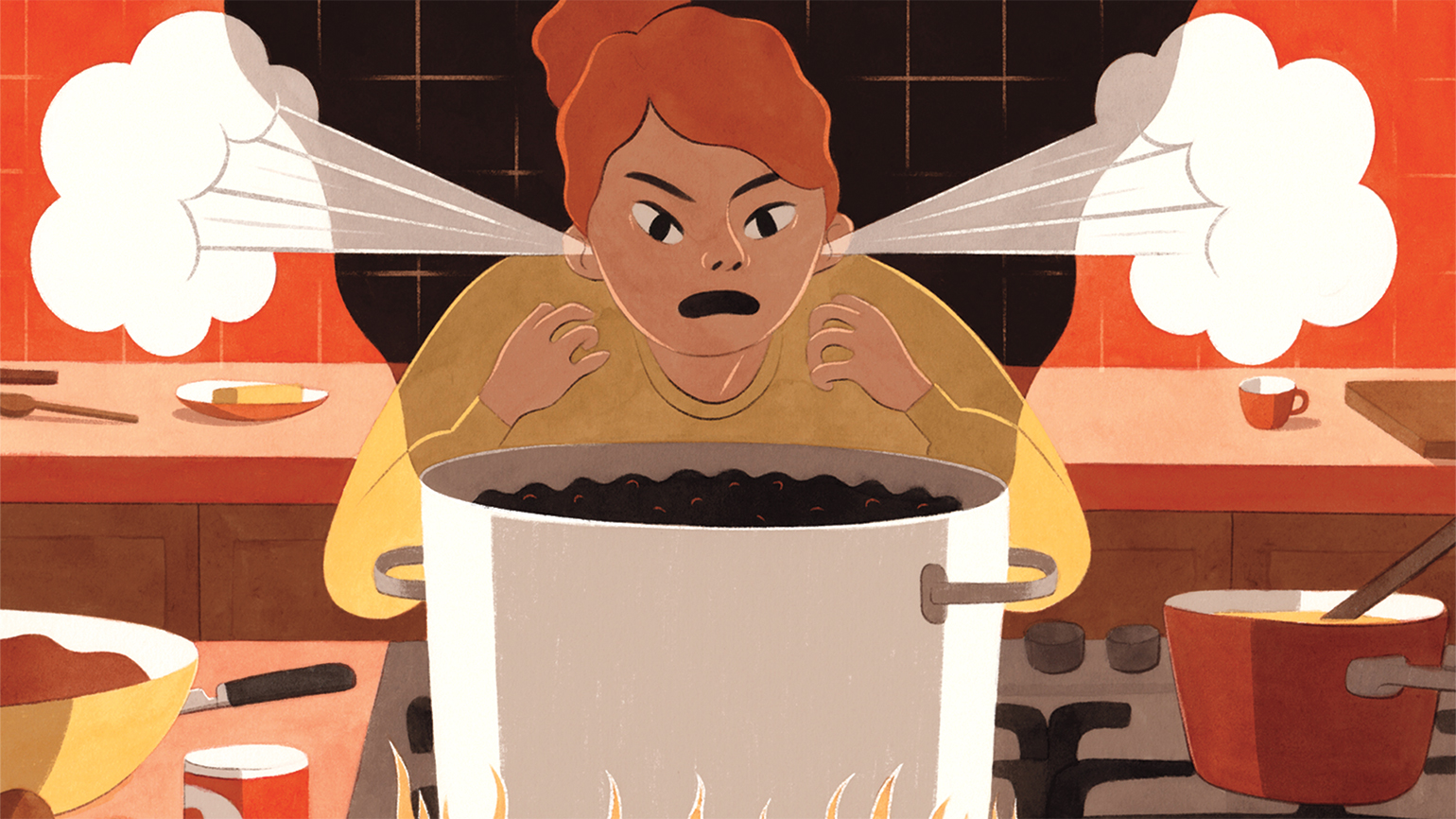
Living in faith every day isn’t easy. The more troubles rained down on me, the more I realized I didn’t understand how God reveals himself to us. So one evening, with my husband out on a driving job and some beans simmering in my favorite pot, I opened my Bible. I wanted to know God better, so I could serve him better.

“Make a joyful shout to the Lord,” I read in Psalms. “Serve the Lord with gladness; come before his presence with singing.”

Joy was not easy to come by these days. My husband and I had thought things were looking up when we were able to lease a house by the lake. But right after our costly move, his company cut his hours. Then the money order for rent was lost in the mail.

Our water was cut off because it was included in the rent. I had to fill bottles of water at my neighbor’s house. We put off getting new glasses and going to the dentist. Still, it was a struggle to feed the two of us as well as our pets.

No wonder I became engrossed in the Word of God that night. Make a joyful shout to the Lord!Come before his presence with singing.

That’s when I smelled it. Something burning. “Oh, no!” I shouted, jumping up. “I forgot about the beans!”

I ran to the kitchen. The beans I’d been looking forward to eating, not just tonight but for several nights, were ruined. And my favorite pot—a gift from a dear friend—along with them. Now, my neglect hadn’t been caused by falling asleep or drowning my sorrows. No, my beans had burnt while I was diligently attempting to deepen my spiritual understanding.

“Why didn’t you prompt me, Lord?” I demanded. “Not even a li’l hint! How could you allow precious food to burn?” Whine, cry, moan… Well, I could hardly praise God when he’d let my beans burn. “I was trying to learn more about you,” I said bitterly, looking at the scorched pot. “To serve you better! All for nothing!”

Is that how you really feel, Marsh?

Whoa, was God speaking right to my heart?

You were studying my Word, but what did you learn? Are you really going to let a burnt pot of beans ruin our time together?

The Lord’s question got me thinking. If I let this kitchen mishap send me into a spiral of self-pity, my faith wasn’t worth beans. I burst out laughing—and I could hear him laughing with me. A big, booming laugh that filled me with—what else?—joy.

I dumped the beans and went at the pot with a scrubber and baking soda. It took some elbow grease, but the pot wasn’t ruined after all. I chopped some more onions, garlic and salt pork and put them in the pot. I added beans and spice, all the while singing praises to God for filling not only my belly but my spirit too. It was the best pot of beans I ever ate.

Try Marsha’s Texican-Style Pinto Beans at home!

For more inspiring stories, subscribe to Guideposts magazine.

Students Launch ‘Peptoc Hotline’ to Spread Cheer and Encouragement

In need of some encouragement? Kind words? A smile? Try giving this number a call: 707-998-8410. It’s the phone number to “Peptoc,” a free hotline created by students at West Side Elementary in Healdsburg, California, offering advice and uplifting mantras. Teachers Jessica Martin and Asherah Weiss are behind the program, which was designed to offer positive and encouraging messages to those going through a difficult time.

“I thought, you know, with this world being as it is, we all really needed to hear from [the children]—their extraordinary advice and their continual joy,” Martin told NPR.

Martin and Weiss, both art teachers at West Side, spoke to their students, ages 6 to 11, about the idea and asked them to think of how they’ve stayed positive throughout the pandemic and during the spread of local wildfires in the area. They also asked them to recall moments when they received helpful advice. “So all of the responses are really coming from the kids and their own life experience, and the advice they’ve gleaned over their short years on this planet,” Martin told The Guardian. The teachers and their students also hung posters and fliers throughout town promoting positive messages. Martin’s 6-year-old son came up with the name after she had asked him to use special blocks to create the word “Peptalk” and mistakenly spelled it as “Peptoc.”

The hotline launched on February 26 and, in less than a week, went viral, receiving 500 calls per hour in just two days. It currently receives up to 9,000 calls per hour. After dialing, you’ll be prompted with a menu of options such as words for when you’re feeling mad, frustrated, or nervous, words of encouragement and life advice, a pep talk from kindergarteners, kids laughing with delight and encouragement in Spanish. Here are some of the uplifting tips, voiced by excited, optimistic children you can expect to be greeted with:

“The world is a better place with you in it.”

“Don’t give up – power through.”

“If you’re frustrated, you can always go to your bedroom, punch a pillow or cry on it and just go scream outside.”

“If you’re feeling up high and unbalanced, think of groundhogs.”

According to Martin, the children’s “creativity and resourcefulness is something that we need to emulate, because that level of joy and love and imagination is what’s going to save us in the end.”

Amy McWilliams, who has stage 4 malignant melanoma, says she’s called the hotline several times for encouragement and has even shared it with fellow cancer patients. “It’s joy, straight from the literal mouths of babes,” she told CNN. “We adults forget that spreading kindness and positive thinking can really be that simple.”

The hotline, which is funded by donations, will be updated with more messages in the coming months. Martin hopes to secure funding to keep the hotline operating indefinitely.

Yearning for Spring?

With the sidewalks coated with ice and dingy leftover snow piled beside the roads, I am already longing for spring. The department stores have begun putting out their spring stock with cute and colorful clothes for warmer temperatures and bling-decorated flip-flops that look way more stylish than my clunky winter snow boots. Gardening magazines are showing up in the mailbox, tempting me with the glorious blooms of the coming season. Vacation destinations have the nerve to start running TV commercials promising white sand and turquoise beaches.

All while I’m stuck in not-so-winter-wonderland.

But there’s something about a change of season that builds excitement in all of us. As spring nears, I will celebrate the jonquils peeking through the soil and welcome home the robins. But those new beginnings don’t just happen with the seasons. They’re also part of our faith and our lives. God says it best in His Word:

1) 2 Corinthians 5:17
“Therefore, if anyone is in Christ, he is a new creation; old things have passed away; behold, all things have become new.”

2) Isaiah 43:18-19
“Do not remember the former things, nor consider the things of old. Behold, I will do a new thing, now it shall spring forth; shall you not know it? I will even make a road in the wilderness and rivers in the desert.”

3) Lamentations 3:22-23
“Through the Lord’s mercies we are not consumed, because His compassions fail not. They are new every morning; Great is Your faithfulness.”

4) Revelation 21:5
“Then He who sat on the throne said, ‘Behold, I make all things new.’ And He said to me, ‘Write, for these words are true and faithful.’”

I’m so grateful that God doesn’t leave us in our old circumstances. I long for the new things He’ll bring into my life—the big dreams, tasks, blessings and things that will draw me closer to Him. When they arrive, I’ll greet them with the same enthusiasm that meets those first flowers each spring. I hope I will blossom just as beautifully for Him.

World War II Sweethearts Reunited After 75 Years

Songwriter Sammy Cahn once wrote, love is lovelier the second time around. He’d likely get no argument from 97-year-old World War II veteran K. T. Robbins.

K. T. and Jeannine
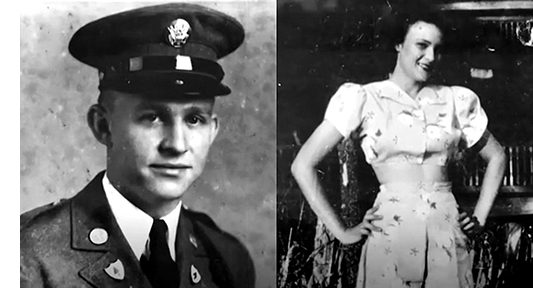
K. T. and Jeannine in 1944

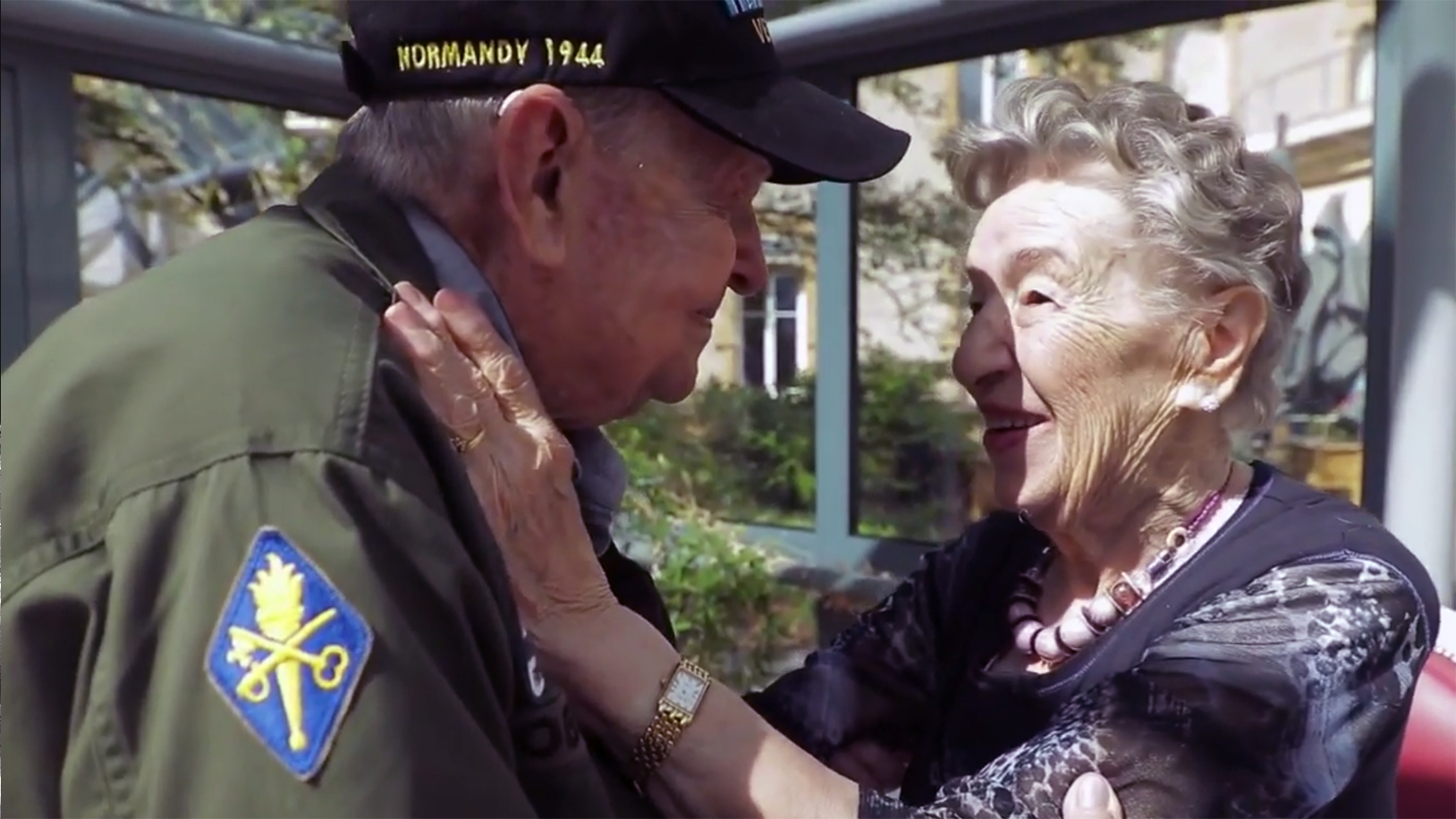
In June 2019, Robbins, who currently resides in Olive Branch, Mississippi, returned to France for the first time since the war to take part in the activities commemorating the 75th anniversary of D-Day. While there, he experienced a reunion he could never have expected.

In 1944, Robbins was stationed in the northeastern French village of Briey, where the 24-year-old staff sergeant was assigned to a mobile bakery unit that made 3,000 pounds of bread daily for the troops.

Robbins soon met a 18-year-old local girl named Jeannine Ganaye (now Jeannine Pierson), who lived near his Army installation. The young couple quickly fell in love, but just weeks later, Robbins was informed that he would be sent to the front lines on the Eastern Front. The night before he was to depart, Ganaye’s family had him to dinner, where they fed him eggs, sausage and toast.

Robbins told Maryse Burgot of the television network France 2 that when the sweethearts said their goodbyes, he told Ganaye, “Look, someday we’ll see each other; I hope we do.”

For her part, Ganaye began to teach herself English in hopes that she might have at least a basic command of the language if Robbins did come back for her. But it was not to be.

“I cried, of course, I was very sad,” Ganaye said, as she recalled watching Robbins depart. “I wish, after the war, he hadn’t returned to America.”

After the war, Robbins returned to the U.S. and met Lillian, who worked at a shirt factory with his uncle and had begun exchanging letters with Robbins in the waning months of the war. The pair, who were soon wed, operated a Memphis, Tennessee, hardware store together for 50 years. They had been married for 70 years when Lillian passed away at the age of 92 in 2015.

Ganaye married in 1949 and had five children before her husband died, but she never forgot her American soldier.

Though Robbins hadn’t returned to France, he retained a small photograph Ganaye had given him when they parted. After Lillian’s death, his thoughts returned to his wartime sweetheart and he searched his trunk to find the photograph, which captured Ganaye standing, hands on hips, smiling at the camera.

When he learned that he would be returning to France for the 75th anniversary of D-Day, Robbins, who assumed Ganaye was no longer living, expressed the wish to visit Briey in order “to find her family,” unaware that Ganaye was still alive and residing in a retirement home in Montigny-lès-Metz, Moselle, not far from Briey.

A reunion was arranged and it was almost as if the pair had never parted, as they embraced and kissed. “I always loved you,” Robbins said, as he showed her the photograph he’d kept all those years. “You never got out of my heart.”

“I always thought about him,” Ganaye told France 2, “thinking maybe he was out there, that maybe he’d come.”

The former sweethearts were able to spend a few hours together, catching up and reminiscing, before Robbins had to leave in order to make it to the D-Day celebrations in Normandy. But they agreed that they would meet again soon.

“He said he loves me,” Ganaye said. “I understood that much.”

Robbins said his parting words were, “‘I’d like to see you again. Why don’t y’all try to see me sometime?’ I told her son and daughter, ‘Why don’t you bring her over and stay a couple of weeks with me and I’ll take care of you.’”

Robbins ruled out marriage, saying, “It’s too late in the day. But to visit would be great. If they could come out and see me a while, that would be great.”

In the meantime, the pair hopes to communicate via email. Robbins has never used a computer, but a Parisian man, inspired by the press coverage of the reunion, has volunteered to serve as email translator for the two sweethearts in gratitude for what Robbins had done for France.

Informed they could even send pictures back and forth, The Daily Memphian reported that Robbins said, “That would be great. I’d love to do it.”

Workshop Blues?

I’ve had a very lonely week around here but I’ll get to that in a minute. First, tell me the truth: Have you ever dreamed of writing your own inspirational story and getting it published in GUIDEPOSTS? I know the answer is yes because people tell me all the time that they have a great GUIDEPOSTS story. Which is true. I think everyone has a GUIDEPOSTS story somewhere in his or her life.

On that theory we run a writers workshop contest every other year where we pick 15 people out of thousands of readers who enter to come for a week to a funky old mansion on the Long Island Sound in Rye, New York, and teach them everything we know about good inspirational storytelling and writing for GUIDEPOSTS.

Those that take to the process become part of our workshopper network, our eyes and ears around the country. If it weren’t for workshoppers tracking down stories for us month after month, we’d have a hard time publishing the magazine. And through the years we’ve even discovered a few notable writers: Sue Monk Kidd was a workshopper as was Marion Bond West and Jamie Buckingham.

So why am I lonely? This is the workshop week and most of the editors are up at Wainwright House in Rye, teaching the workshop—Rick, Amy, Colleen, Jim and others. I’m here in the office holding down the fort, so it’s been very quiet (generally I like company when I’m holding down forts) and I’ve been thinking about my own experience as a workshopper way back when.

Every editor who comes to GUIDEPOSTS is required to attend the workshop in order to be fully schooled in our approach to inspirational stories. It was my first week on the job, actually, a remarkably immersive week of learning before I even settled into my office, and I found myself both incredibly excited and at the same time wondering what I’d gotten myself into. But the intense amount of attention that was focused on the process of writing was amazing.

As were the teachers and speakers—Van Varner, John and Elizabeth Sherrill, Dick Schneider, Marjorie Holmes, Mary Ann O’Roark, Marion Bond West, Sue Monk Kidd—even Norman and Ruth Peale, who joined us for dinner one night. Before my time there was Arthur Gordon, Len LeSourd, and Catherine Marshall, going all the way back to 1967 (I was barely in middle school then) and the first workshop.

It’s not just that the workshop teaches people how to be good writers; it hands down storytelling traditions that have been at the heart of GUIDEPOSTS since its very beginning nearly 63 years ago. It is our legacy, and so many blessed and gifted people have contributed to it. Every two years the workshop helps propagate that legacy.

By the way, John and Tib Sherrill are still the stars of the week. Or should I say co-stars, since every writer who comes is a star.

I started out saying everyone has a GUIDEPOSTS story. That includes you. Why wait another two years till the next workshop to tell it to us? You can submit a story today. Hey, I could use a little company this week.

Edward Grinnan is Editor-in-Chief and Vice President of GUIDEPOSTS Publications.

Words of Wisdom from Eleanor Roosevelt

Therefore, as God’s chosen people, holy and dearly loved, clothe yourselves with compassion, kindness, humility, gentleness and patience. (Colossians 3:12, NIV)

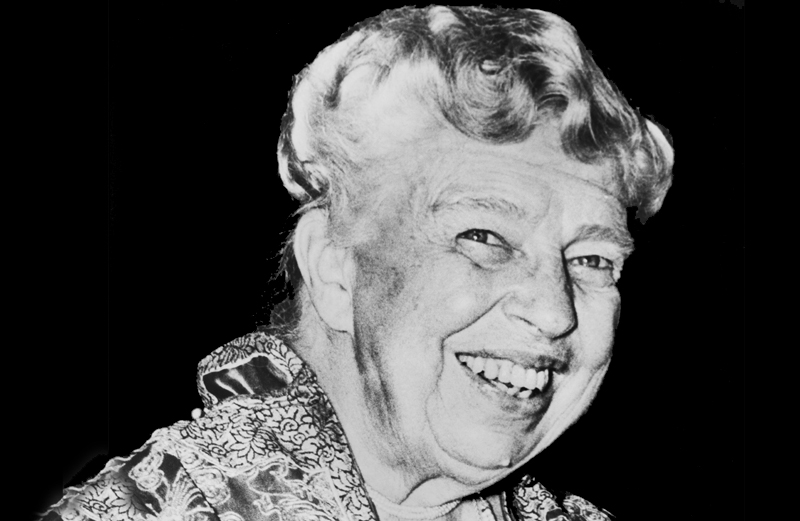
While researching for a book assignment about leadership, I spent several hours studying the life of Eleanor Roosevelt. Sure, I knew a bit about her from a history class in high school, but I had no idea just how amazing she was or how much her words would impact me.

It’s no wonder Eleanor Roosevelt has been called the most revered woman of her generation. She made a difference every place she ever dwelled. She not only gave birth to six children, but also served as a dynamic political helpmate to her husband Franklin Delano Roosevelt.

Eleanor Roosevelt literally transformed the role of First Lady, holding press conferences, traveling to all parts of the country, giving lectures and radio broadcasts and expressing her opinions in a daily syndicated newspaper column called, “My Day.” You might say, she was a spitfire, a woman on a mission, a servant to mankind, a loving wife and mother, and a role model for all women.

Knowing of her accomplishments, it was very interesting to discover Mrs. Roosevelt was a very shy, very plain and very awkward child. It wasn’t until she began attending a distinguished school in England that she developed self-confidence, realizing that her inner beauty and fortitude would make a way for her.

During that self-discovery phase, she wrote these words of wisdom: “…no matter how plain a woman may be if truth & loyalty are stamped upon her face, all will be attracted to her….”

If only we all understood that truth and actually believed it.

For years, society has told us that if we’re not beautiful–like the cover girls on magazines–then we will not be successful, and that we’ll never truly have a place in this world. Many women feel they don’t fit in simply because they don’t fit into a size 6 suit. Many of us have bought the lie, and some are still buying that lie.

In fact, just this week I noticed a new trend on Facebook called “The Beautiful Woman Challenge,” where someone challenges a friend to post five pictures that make her feel beautiful. Seems like an easy task, yet I’ve read comments from some who refuse to accept the challenge, such as one that absolutely broke my heart.

The woman wrote: “Sorry, I will not be participating in this challenge because I don’t feel beautiful in any photo.” Instead of posting a picture of herself on her wedding day, or when she was pregnant with her daughter, or at a family reunion surrounded by all of her loved ones, she chose to boycott the challenge because of “a lack of beauty.”

I so wanted to reach out to her and say, “You are beautiful. You are exactly who God created you to be. You are a wonderful wife and mother. You make a difference in your corner of the world.” I pray that maybe she’ll read this blog.

Ladies, it’s time we realize our worth, knowing that it’s not determined by a number on the bathroom scales or the amount of “likes” we receive on our new profile picture.

It’s time we focus on our assets and not our flaws. And, like Eleanor Roosevelt, it’s time we celebrate who we are, overcome our lack of confidence, and change our world.

It’s not what’s on the outside that makes us worthy, lovely and attractive. That kind of beauty is fleeting. It’s that loyalty, truth, and love on the inside that draws people to us. In other words, it’s the Jesus in us that makes us irresistible.

And, when we finally get to a place where we believe that we matter, that we’re valuable, that we’re beautiful in our own way, then we will be able to fulfill our divine destinies.

So, if you’re feeling plain, unworthy, unattractive and unnoticed–give yourself a makeover from the inside out. Ask God, the master makeover artist, to develop the fruits of the spirit within you, so that you might become so lovely on the inside that it spills out onto everyone you encounter.

Pretty soon, you’ll be confident and irresistible. And, like Eleanor Roosevelt, you’ll make a difference every place you go!

I leave you with this challenge. At least once every day, look at yourself in the mirror and boldly say, “You are beautiful. Girl, you glow from the inside out, and you are going to accomplish big things for God.”

Why You Shouldn’t Regret Missed Opportunities

When I look back over my life, I can see where I’ve missed out on some God-given opportunities. Maybe you are saying the same thing. If so, I want to encourage you: Don’t live in regret. Don’t let lost opportunities make you feel disappointed and discouraged. God is bigger than your lost opportunities. He can still get you where you need to go in life.

Have you ever used one of those GPS directional systems in your car? You set the location where you want to go, and the GPS calculates the best route. You can be driving along and get distracted and completely miss the street where the GPS instructed you to turn, but that doesn’t mean you’ll never reach your destination. That GPS system will instantly recalculate the route, based on your present location. God works in a similar way. He is constantly giving us direction, speaking to our hearts, leading us by granting peace or unrest in our spirit, but even when we miss His instructions—and we all do from time to time—He will recalculate our route and get us back where we need to be.

I love what the Apostle Paul said: “This one thing I do; forgetting those things which are behind, I reach forth to the things which are before me.” He was saying that we must turn our thoughts toward the present and future and keep looking for the new opportunities in our paths. Be prepared, because God is ready to fulfill the dreams and desires He’s placed within your heart. He loves to restore opportunities that once seemed lost forever. And sometimes He brings those opportunities back in ways we haven’t considered or weren’t looking for. It may not always be the way we thought; but if you’ll stay open, God will bless you beyond your wildest dreams.

One Christmas several years ago, I was longing to do something special for God. I began thinking of all the women in shelters and homes around the city and I felt a strong desire to make some Christmas baskets, filling them full of perfume and toiletries, and taking them to a women’s shelter. I was excited about my idea and I searched through the yellow pages to find a nearby shelter. When I dialed the number, a woman answered, and I immediately began sharing my heart, telling her what I wanted to do, and how I hoped to make the women at the shelter feel special. But rather than getting excited with me and giving me the information I needed, she began to grill me with questions. She said, “This is a private facility and the women need to remain anonymous.” Then she asked, “Have you been abused? Do you know somebody who has been abused? Do you need help, are you looking for help?”

“No,” I said. “I just want to brighten the day for some women.” She went on and on as though she hadn’t even heard me, apparently thinking that I was trying to disguise some abuse that I had suffered. Finally I ended the conversation and hung up the phone in frustration. I thought to myself, I’ll call back tomorrow and speak to someone else. But as life would have it, I became busy with family holiday projects, and before I knew it, the holidays were whizzing by and I had missed the opportunity.

A few days after the holidays had ended, I was praying when I thought about the Christmas baskets and the opportunity I had allowed to slip away. I told God that I felt I had lost my determination and had let those women down somehow. I asked Him to present another opportunity to me and I promised that this time I would see it through.

Several months went by, and then one day I received a telephone call from The Bridge, a women’s shelter in Houston similar to the one I had contacted. A woman named Jackie was on the other end of the phone line. “Hi, Victoria, I’m the director of The Bridge,” she told me, “and I attend Lakewood Church. I want to invite you to speak at my Women of Distinction Awards program. It’s a benefit for the women’s shelter.” She told me about the event and who would be there—city leaders, business leaders, and others. Clearly she was so happy and proud of this event. As she was speaking, I thought about those Christmas baskets I had wanted to make for the women’s shelter several months earlier, as well as the prayer. I was honored by her request, and I immediately said yes. When I hung up the phone, I thought, Oh, God, those Christmas baskets would have been so much easier! Couldn’t I have just started there? At the time I didn’t have experience speaking in front of large audiences. I had butterflies in my stomach just thinking about it! But, even though I was nervous about the speaking engagement, I felt this was the opportunity I had prayed for.

I worked so hard to prepare my presentation and rehearsed what I would say, practicing over and over in my mind. After the event, I felt I had done the best I could and I was happy about what I had accomplished and what I had experienced that day. Following my speech, I was elated when several of the attendees congratulated me, telling me how inspiring my talk had been to them. Later I was told that a professional athlete and his wife were so moved by my presentation that they made a large donation to the shelter. I was so encouraged.

It took faith and work, but it was marvelous to see how God brought back an opportunity I had missed.

I know God can do something similar for you. Everyone has missed opportunities to do something good, to help somebody, or even to go to the next level in our career. For one reason or another, we’ve allowed that opportunity to slip through our fingers. But let bygones be bygones; don’t get trapped in the past. Don’t allow yourself to focus on the things you’ve missed or could have done better. Allow Him to bring back any opportunities that you may have missed.

Joel’s sister, Lisa, and her husband, Kevin, tried for years to have children, but Lisa was not able to conceive. She went through all the fertility treatments and even several surgeries, but still no baby. Finally the doctor told Lisa there was nothing more he could do; they weren’t going to be able to have children. Lisa and Kevin were devastated. It looked like their dreams had died, but God always has a plan. One day out of the blue Lisa received a call from Nancy Alcorn of Mercy Ministries, a home for at-risk young women based in Nashville.

“Lisa, I normally wouldn’t do this,” Nancy said, “but we have a young woman who is about to give birth to twin girls, and we were wondering if you and Kevin might be interested in adopting them.”

Lisa and Kevin had not yet considered adoption since they were still hoping to have children naturally, but suddenly Lisa’s interest was piqued.

“There’s only one problem,” Nancy said. “I know you and Kevin have most of the qualifications that the birth mother wants for the adoptive parents, but she also has a stipulation that her babies should be placed in a family with twins in their background.”

Nancy had no idea that Kevin had a twin sister, and as soon as she said that, something inside Lisa’s heart confirmed this was a “God opportunity.” A few months later, Lisa and Kevin adopted those twin baby girls, and then three years later, they adopted another “Mercy” baby boy.

God gave Lisa and Kevin three children they could not have had naturally. Their hearts were open for what God wanted to do in their lives even though it wasn’t the way they first anticipated. God gave them another opportunity to be the parents they desired to be. They could have just as easily given up and closed their minds, but they didn’t. They remained open and God brought back that opportunity in a different way. Lisa will tell you, “These children came straight from my heart. I couldn’t have had better children!”

I believe God is saying to us today, “I can restore the years that you’ve lost.” Things may not have gone your way in the past and you think your dreams have died, but God has new opportunities in front of you. He wants the rest of your life to be better than ever.

Why She Talked About Her Father’s Past in the Miss America Pageant

I stood in front of a panel for my interview for a Miss Mississippi preliminary pageant, trying not to let my nervousness show. The judges were taking a long time to look over my paperwork. What kinds of questions would they ask?

Most people think that pageants are about beauty, and they are—but not just outer beauty. Each contestant also picks a platform: a cause to bring awareness to and volunteer for, to help her community.

My platform was about the importance of giving blood. I truly believed that blood donors were everyday heroes. I donated every 56 days, as often as you’re allowed, and was eager for an opportunity to encourage others to give blood.

I went over my platform points in my head, thinking about my father. He’d talked a lot about beauty—inner beauty—when I was little. If I had a bad attitude, Daddy would say, “Asya, God doesn’t like ugly. Pretty is as pretty does.” He told me that the best way to turn an ugly attitude into a beautiful one was by doing good.

I learned a lot about charity, compassion and community from my father. He’d been in the Army, and he was committed to serving others. When I was 10, he took in a friend’s troubled son, as well as a family struggling financially. It was as if our farm in Booneville became a haven for the down and out. Growing up as one of eight children, I was used to living with a crowd. Even with so many folks around, Daddy still made me feel special. Every day as I left for school, he called to me from our wraparound porch, “Have a good day, Asya! Love you!” And he was always there waiting for me when I got home.

I liked making Daddy happy, but we were both a little headstrong. I signed up for my first pageant when I was seven, and he tried to talk me out of it. He worried that pageants would teach me to seek gratification from others rather than God. But I was outgoing and loved any chance to shine. I put my foot down, and Daddy gave in. He couldn’t help but pamper me.

Still, he made sure that all of us kids knew what was important. He took us to Burning Bush Church of God in Christ whenever the doors were open. Daddy was big on quoting Scripture. One of his favorite verses was Galatians 6:10: Therefore, whenever we have the opportunity, we should do good to everyone— especially to those in the family of faith. Little did I know that trying to do good would be Daddy’s downfall.

“Asya,” said one of the judges, looking up from my paperwork, “it says here that your father is incarcerated. Can you tell us more about that?”

I flashed back to the day I came home from school and Daddy wasn’t waiting on the porch. Instead, our house was surrounded by strange cars—government vehicles. I was not quite 11 years old, and I was so scared. Where was Daddy? Later I learned that the boy who lived with us had robbed a woman. No one was hurt, but there were drugs involved. Daddy had tried to help him undo the crime and paid a heavy price.

Life since Daddy’s arrest hadn’t been easy. We missed him so much. After he went to prison, Mama did everything in her power to keep things normal. My older brothers and sisters had grown up and moved out. But my younger sisters, who were only five and two, kept asking why Daddy was gone and when he would come back. Frankly, we didn’t have many details to give them.

I was used to having slumber parties almost every weekend. Then my friends’ parents began making excuses for why their daughters couldn’t spend time with me. I was so naive, I didn’t understand what was happening.

Until one day, Mama said, “Asya, these girls’ parents aren’t going to let them come over.”

“Why not?” I asked.

“Because of your dad.”

“He’s not a bad person!” I said. “Why don’t people see that?”

The difficulties weren’t just emotional. After Daddy was convicted, the government seized his property. They took our tractor and farm equipment, his truck and the old cars that he used to work on. Everything in his name—gone. Without Daddy contributing, Mama lost our farmhouse. We sold everything we could and moved into a smaller place.

I struggled with my self-worth and closed myself off, praying for answers about why this happened. Maybe God is teaching me to be independent and grateful, I thought. My parents had given me everything I wanted when I was little. After Daddy’s incarceration, we couldn’t afford those extras anymore.

The one extra I allowed myself was pageants. I picked them up again in high school. Sometimes it meant wearing a used dress, doing my own hair or borrowing the entrance fee from my grandmother. I loved competing as much as I had when I was seven. It helped me forget everything I’d lost— my friends, my home, my daddy. Onstage none of that mattered. I was Asya Branch—a strong, confident young woman. And it was my chance to shine.

In private, I was still Daddy’s girl. I sent him letters and pictures. He loved hearing about my pageant experiences, and I wanted to make him proud.

I was out of practice with pageants, but to my surprise I started winning. In twelfth grade, I competed in local pageants, collecting titles that would later open the door to compete for Miss Mississippi. I wore dresses bought on major markdown because stores were getting rid of the last season’s inventory, and I had to work multiple jobs to pay for everything. It was worth it. I was finding my confidence again.

But there was always one item in the paperwork that gave me pause. How has the world you come from shaped your dreams and aspirations?

That was where I’d written that my father was incarcerated and, in a way, our whole family was serving a sentence. Now the judge was asking the question I’d dreaded: “Can you tell us about your dad?”

I felt my whole body tense up. “Yes, he’s in prison, but he’s a good man,” I said. “He leads a prayer group and Bible study. My father is connecting people to God and the Word. That’s something that a lot of people in prison need.” I told the panel that more than 50,000 children in Mississippi struggle with the incarceration of a parent. “I’m not the only one.” The judge, rather than recoil, gave me a gentle smile.

Right after the pageant winners were announced—I was one of them—that judge took me aside. “Don’t you see?” she said. “Helping children of incarcerated parents—that’s your platform.”

I was shocked. Did a pageant organization, a program that looks for the best of the best, really want me to speak publicly about something that most people tried to hide?

Then I thought about the section on platforms in the pageant rules. A contestant’s platform is supposed to be something she feels passionate about. Aside from God, nothing meant more to me than my family, my father.

I remembered that verse from Galatians Daddy liked to quote. Whenever we have the opportunity, we should do good to everyone. Maybe if I spoke about my experience openly, it would help other children of incarcerated parents feel less alone.

I decided to move forward with my new platform, Empowering Children of Incarcerated Parents. In June 2018, I became Miss Mississippi. What I’d worried would be a liability turned out to be a strength. Next I would compete in Miss America and share my story with the country.

I was hesitant to tell Daddy. He had often told me, “Asya, I’m so sorry for what I’ve put you through.” I didn’t want to make him feel worse by talking about our family’s struggles in such a public way.

A few weeks before Miss America, I went to see Daddy. The warden helped arrange a private visit. Daddy didn’t even know. I didn’t want every media outlet in the state taking photos of Miss Mississippi visiting her incarcerated father, using Daddy as a spectacle.

After Daddy got over the surprise of seeing me, he asked, “Are you ready?”

“I think so,” I said.

“You go knock ’em dead!”

“Are you sure you’re okay with my platform?” I asked. It’s not every day that a Miss America contestant has a father in prison, and I’d heard that some reporters had already tried to interview Daddy.

“Asya, I’m happy that you’re using your influence to better the lives of others,” he said. “Don’t worry about the media. I can hold my own.”

On the night of the Miss America pageant, the warden let Daddy watch. The other inmates were excited to cheer me on. They were more upset than I was when I didn’t win. Daddy was so proud, I might as well have won.

As Miss Mississippi, I’ve kept my promise to empower children of incarcerated parents. I work with a prison ministry program called Day1. Their initiative, Love Letters, allows mothers in jail to send weekly letters to their children. We supply the stationery and stamps, and have funded more than 300 letters between mothers and their children. I also write to each inmate’s child to encourage them. I tell them that I personally know how hard their circumstances are but that they can do anything they put their minds to.

Daddy is scheduled to be released in 2022. He has been incarcerated for half my life, and I mourn the time we’ve lost. But I remind myself that God is the Great Redeemer. Only he could have transformed the hardest thing I’ve ever been through into an opportunity to do good and let my inner beauty shine.

For more inspiring stories, subscribe to Guideposts magazine.

Why It’s Beautiful to Serve God Quietly

It is beautiful to serve the Lord in ways no one else sees.

I ran into a longtime friend recently, and asked about her new job. I rejoiced that she is doing amazing things for God. It pretty much made my day.

The next day I was kind of sad. I wasn’t sure why, so I sat with the feeling for a while, accepting it, before I probed further. Eventually I concluded that I kind of wished God asked me to do big things, too.

It’s okay that He doesn’t. I mean, I often struggle with small burdens. But still: I would like to do big things for God.

I pondered that for a while, knowing that feelings aren’t facts. I steered clear of judging myself, since I wasn’t sure how much of my feelings were yearning for God (good) or envy (bad). I prayed a bit. Then a small thought came to me, like a gift: I don’t know how big the things I do for the Lord are in His eyes. I only know how they appear in mine.

Most of us are needed—and in fact very needed!—to fight everyday battles and be witnesses to the everyday presence of Christ in the world. Most of us are asked to represent Jesus in the world without headlines or fanfare. We are asked to be His hands and His words and His love in innumerable quiet ways. We are to model thoughtfulness and generosity and forgiveness to such an extent that others think wish they had whatever it is we have.

That’s not a small task. It’s a vital one.

The truth is that it is a beautiful thing to serve the Lord as a professional who cares for others, and it is beautiful to serve the Lord in ways no one else sees. God knows what we do quietly, without fanfare. He sees that we honor Him even when no one is looking. In His eyes, it’s entirely possible that what we see as little may not be small at all.

Why Encouragement Matters So Much

A video of a tearful young man bursting with joy, pride and gratitude during his drive-thru high school graduation recently went viral. Dontrail Spencer of Nashville was filmed leaning out the passenger window, clutching his diploma and screaming out the names of his teachers and administrators who waved to him from the sidewalk and who had helped him along the way.

“I graduated!” he shouted exuberantly from the car as he slowly passed them. “I graduated!” Dontrail crossed the finished line of his high school education because he had people in his corner encouraging him to keep his eyes on the prize and to push through the hard days.

None of us can get through life without encouragement—especially from a parent, best friend, schoolteacher, counselor or spiritual leader. Their support keeps us going and believing in ourselves. When someone gives you encouragement, you are given the courage to do something important. You are made stronger.

Even pastors like myself need words of encouragement. Back in March, I was in my fifth week as the transitional pastor for a Florida church when the pandemic forced us to close the building for worship. With social distancing, it’s been difficult to build relationships with many of the church members.

I don’t remember meeting Grace, a member who had been very sick and in the hospital. But one morning I received an email from her:

Hi Pastor Pablo,
Thank you and all involved for keeping our church moving forward. It makes me sad that our building a relationship (even if it is interim) has been so limited. I truly do find you inspirational. And I enjoy your Wednesday prayers! I am thankful for my church family. I am grateful to be a child of God! Love, Grace

A few days later I received a call that she had gone home to be with the Lord. Grace was nearing the end of her life, but she took time to encourage me. Every time I read her email, I’m blessed by her words. When we encourage one another—everybody wins. Be generous in your encouragement. We all need it. Some now more than ever.