Embrace God's truth with our new book, The Lies that Bind

Sandi Patty Shares How She Found Her True Voice

Sandi Patty has been a name synonymous with Gospel music since she released her first album in 1979. She was dubbed “the voice” at an early age because of her singing ability.

Patty’s newest book, titled The Voice: Listening for God’s Voice and Finding Your Own, takes a deep dive into parts of her life she’s kept private for years. Surprisingly, The Voice is not primarily concerned with Patty’s singing voice. Patty was always a talented vocalist. However, she struggled to find her inner voice and speak up for herself.

“I was a shy kid. Words were hard for me,” Patty told Guideposts.org. “It was hard to learn how to speak up and share my thoughts. As the years rolled along it became more and more difficult to speak up.”

For example, Patty’s last name was misspelled on one of her early albums as “Patti.” Instead of correcting the spelling, she went by the name “Sandi Patti” for decades.

One of the reasons Patty found it so difficult to use her voice was because of a traumatic childhood experience. At age six, she was sexually assaulted by a female family friend, an experience she opens up about for the first time in the book.

“The message you get when you are sexually abused, especially at an early age, is that you don’t tell because no one is going to believe you and it’s your fault,” Patty said. “I was already a kid who had a shy personality and tended to second guess myself. That message became a lens through which I saw the rest of my life. In other situations, I would think that doesn’t feel right, but I’m not going to speak up because I’m probably wrong anyway.”

She’s sharing the story of her assault now in hopes that it will help other people feel less alone.

“[Feeling alone] is one of the things that keeps everybody silent about the tough times in our lives—we think we’re the only ones,” Patty said.

She writes in The Voice that she felt like it was “her job to make everyone feel better.”

“Especially for women, I think we feel this need to somehow personally make everyone’s lives fulfilling and better, which is not even possible!” Patty said. “The cost of that is we don’t speak up because speaking up causes conflict.”

Friendships were essential to helping Patty find the courage to speak up. They reminded her that she didn’t need to make others feel better because the people she loved didn’t doubt she cared for them.

“For me having a group of friends that I trusted, and who had lived a lot of life, boy I tell you, that was lifesaving and life changing for me,” she said.

Friends and family were crucial to help Patty confront another struggle she faced: shame. She felt plagued by insecurities about her weight, her divorce and her assault.

“I’ve heard it explained that guilt tells us we’ve done something wrong—shame says we are wrong,” Patty said. “Shame is probably the last piece we really have to figure out a way to let of—it’s like unwrapping yourself from a wet shower curtain. Counseling was a huge piece of that and continues to be a huge piece for me.”

Shame was a huge presence in Patty’s life—and one she freely admits is an ongoing battle. How does she fight it?

“I have to say, ‘God you have forgiven me, you have redeemed me and I don’t need to carry this shame any longer. I am going to lay it down,” Patty said. “And that’s a process and it’s hard but… it is so worth the battle.”

Patty hopes readers will be encouraged to find their voice after reading her story.

“I want [people] to know that their story and their voice matter,” Patty said. “We have to figure out a way to take our pain and put it where it needs to be, without letting it guide our lives. [Pain is] a part of our story. It describes us, but it doesn’t need to define us.”

The Voice is available wherever books are sold.

Revisiting a Beloved True Inspirational Story

When I was a kid growing up in the 1970s, I remember having a comic book based on the best seller The Cross and the Switchblade. Written by David Wilkerson, with John and Elizabeth Sherrill (who remain editors for Guideposts magazine), it’s the story of a country preacher from Phillipsburg, Pennsylvania, who felt God calling him to serve Latino teens in New York in the late 1950s-early 1960s.

On the small paperback copy that I have, the book is touted as “A True Story—The Best-Selling Inspirational Adventure of All Time!” I remember hearing about it and seeing it on the bookshelves in homes of family members and friends. Published in different editions and languages over the years, The Cross and the Switchblade not only became a comic book but also a movie and, according to Elizabeth Sherrill’s site, a dramatic adaptation for the stage.

Funny thing is, I never read the book. It’s almost as if I never felt the need to. I knew all I needed to know: It’s a testament to the astonishing things that can happen when you claim a bold faith, to not hold back when you sense God leading you to do something extraordinary.

But now I am, indeed, reading the book, and finding that after all these years, it holds up. The storytelling is compelling, Wilkerson is a remarkable person, and many of the events throughout the book are incredible.

I won’t go into all of that here, but I would like to touch briefly on one of the more quiet moments early in the book. Wilkerson takes a trip to see his grandfather, whom he describes as a dramatic Pentecostal preacher. It’s a formative moment for Wilkerson.

Below is the quote that sums it up for me. And I hope, even though you don’t have the whole context, you’ll find a little inspiration for your day. It’s about what happens when you take risks, try something new and step out in faith.

From Grandpap Wilkerson: “When you have power and life, you’re going to be robust, and when you’re robust, you’re probably going to make some noise, which is good for you, and you’re certainly going to get your boots dirty.”

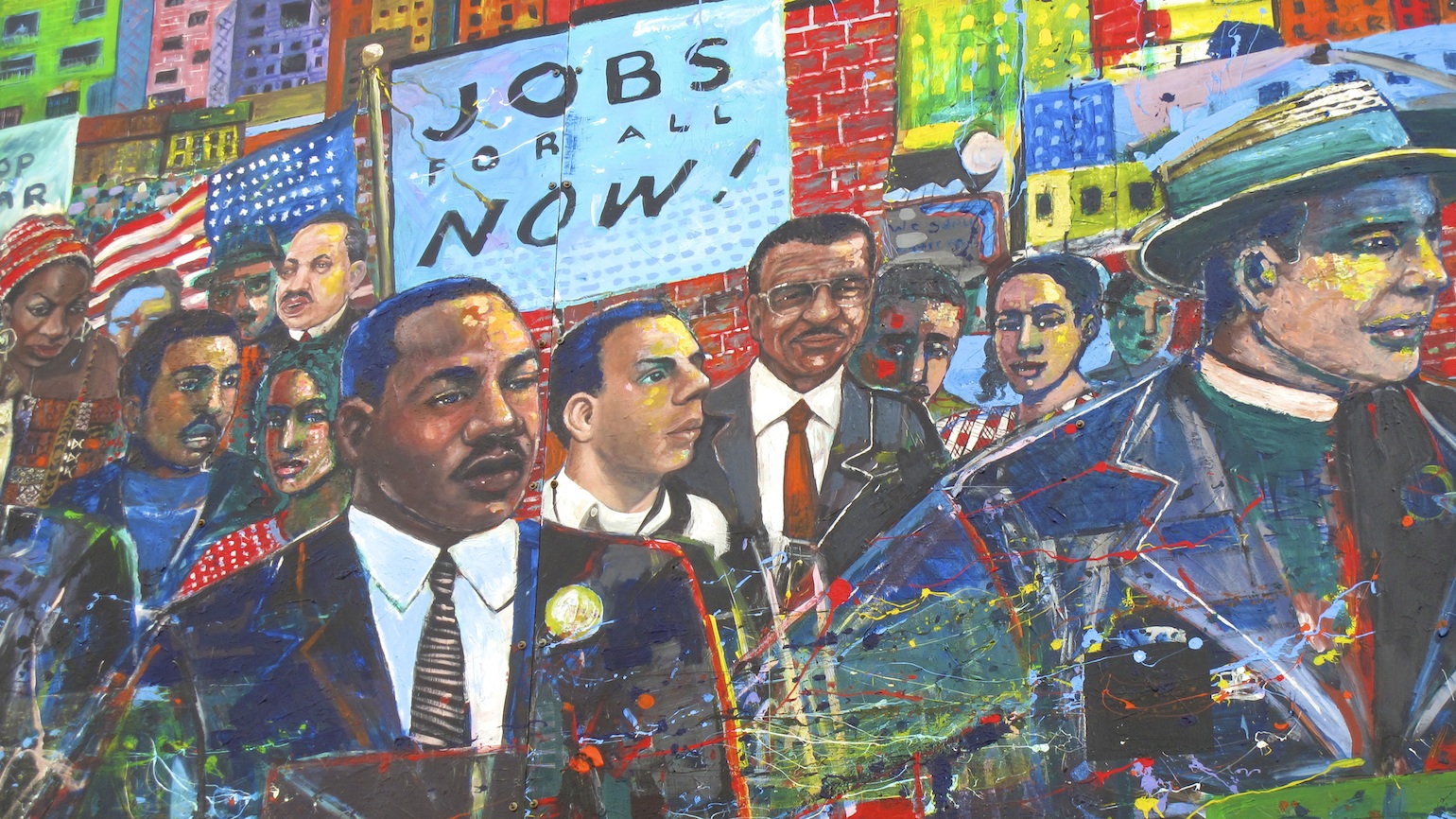
Remembering Dr. Martin Luther King Jr.

Howard Thurman’s life helped change history. But few people know of him.

Some say the signs were there from the beginning. From the very moment Thurman was born, on No­vember 18, 1899, in West Palm Beach, Florida. He came into the world with a caul—the membrane of the amniotic sac—covering his face. Folklore held that this rare oc­currence was both a blessing and a curse, granting the ability to foretell the future but at the cost of living with a heavy heart. His grandmother, who had been born into slavery, was an experienced midwife. She acted quickly, piercing the baby’s earlobes while removing the membrane. The only way, it was thought, to break the curse.

By the time Thurman was old enough to inquire about the holes in his ears, he was already having vi­sions. He’d see a face and know that something was about to happen to that person. He felt a deep connection to the natural world. While staring out at the ocean or taking walks in the woods, he’d feel an overwhelming sensation, as if gaining a depth of understanding about the universe he was incapable of knowing on his own. It was here, surrounded by nature, that he felt God’s presence.

He felt it too in the peculiar encounters with strangers that graced his life. As a teenager, Thurman felt called to be a minister. In Daytona Beach, where his family lived, there were no schools for African-Americans beyond the seventh grade. The closest black high school was in Jacksonville, a hundred miles away. Thurman applied and was accepted. He’d be able to live with a cousin and work pressing clothes to pay tuition.

So at 13, Thurman said goodbye to his family. A friend dropped him off at the train station. For the fare, his mother had borrowed money from an insurance policy. Thurman went to the ticket window with his battered trunk. It had no lock, no handles and was held together by rope.

That’s when he learned the railroad required all checked trunks to have handles. The only way to get his things to Jacksonville would be to pay extra and have the trunk shipped by “railroad express.” But that was money he didn’t have. Thurman sat on the steps of the station, head bent, tears streaming down his cheeks.

Then he saw them.

“I opened my eyes and saw before me a large pair of work shoes,” Thur­man would recall years later in his autobiography. His gaze traveled upward to find a Black man dressed in overalls and a denim cap.

“Boy, what are you cry­ing about?” the man said. Thurman related the trou­ble he was in.

“If you’re trying to get out of this town to get an education, the least I can do is to help you,” the man said. “Come with me.” The man paid for the trunk to be shipped and handed Thurman the receipt. Without saying another word, he turned and disappeared down the train tracks.

He was always grateful for his mysterious bene­factor. He began to think of everyone as being connected, in some un­seen fashion, like atoms bouncing off each other, setting off a series of chain reactions, not at all randomly, but part of a plan, a master blueprint.

Twenty years later, Thurman stood on the other side of the world, gazing into Afghanistan across the Khyber Pass, the fabled mountain trade route. The last place he could have ever imagined life taking him that day at the train station in Jacksonville. It was 1936, and Thur­man was an esteemed professor of religion at Howard University. He’d been invited to India, Ceylon and Burma on a months-long trip as part of an African-American delegation representing the YMCA and YWCA—a “Pilgrimage of Friendship.” Thur­man had resisted going. He didn’t think he was the right person for the job, even if it meant a chance to meet Mahatma Gandhi.

Now his eyes took in the seemingly endless path before him, twist­ing its way through the mountains. A place explorers and traders had ventured for hundreds of years. His mind suddenly became transfixed, shutting out everything around him until there was absolute stillness. Thoughts invaded his consciousness. Thoughts he knew were not his. He saw, in this illuminated state, a world not divided by nations’ borders, by money or power, race or religion. But a world as one. All were God’s chil­dren. Standing at the Khyber Pass, Thurman felt a deep call to action.

Weeks later, Thurman would at last meet Gandhi. But it was Thurman’s vision at the Khyber Pass that really stayed with him. When he returned home from his trip, he set in motion a plan to form his own congregation, the Church for the Fellowship of All Peoples in San Francisco. A place where people of all races would feel welcomed. He hoped it would spark a movement across the country. But he never attracted much of a following.

At Howard University, his sermons had drawn hundreds of worshipers. In San Francisco, Thurman was sometimes preaching to just 50 people. All his life, he’d felt God leading him. Had he some­how misunderstood God’s purpose for his life? Was his epiphany at the Khyber Pass an illusion?

In 1949, Thurman wrote Jesus and the Disinherited, calling for people to see beyond race. The book wasn’t a huge seller. But among the few who took notice was a 20-year-old divinity student from Georgia. A man who’d go on to lead a bus boycott protesting the arrest of Rosa Parks. He was a virtual unknown at the time, called on to address an over­flow crowd at the Holt Street Bap­tist Church in Montgomery, Alabama. There was no time to write a speech. He’d have to speak from his heart.

“We the disinherited of this land, we who have been oppressed so long are tired of going through the long night of captivity,” the young man said. “And now we are reaching out for the daybreak of freedom and justice and equality.”

It could have been Thurman just as easily saying those words as Mar­tin Luther King, Jr. Thurman went on to become a trusted advisor of the civil rights leader. In fact, King car­ried Thurman’s book with him wher­ever he went.

Thurman was surely honored but not surprised. To his way of thinking, the connection had been there from the day he was born.

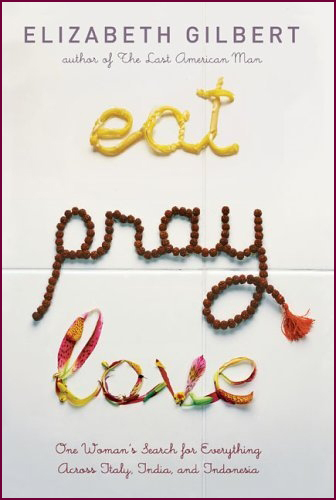
Reflections on Eat, Pray, Love: Why Do We Wait So Long to Change?

The success of Elizabeth Gilbert’s book Eat, Pray, Love is founded on the almost universal dream of completely changing our circumstances at some point: Leaving a spouse or finding one, landing a better job—or, for some, any job—losing weight and feeling attractive and alive again, taking the trip of a lifetime.

Gilbert’s journey got me thinking: When do we say, “Enough! I can’t stand my situation any longer, I’m going to change it!”?

Change is a choice. Crises may hit us and force some external re-arrangement of our lives, but even in those situations, we have to choose to change.

Liz Gilbert’s turning point came one night in her bathroom as she was on her knees, sobbing yet again. Then suddenly she found herself praying. The choice to change was in continuing that conversation. And while things didn’t change immediately in her life—in fact they got worse—the seed was planted and three years later she’s off on a world trip financed by a book advance.

AA suggests that before people can turn away from alcoholism they need to hit bottom. I know learning that I was officially “obese” was the “bottom” that provoked me to start making different food choices and lose 35 pounds. And a friend of a friend finally decided to leave her long, turbulent marriage the night their house caught on fire and her husband rushed to the window of their bedroom where the firemen had placed a ladder for their escape. He never checked to see if she was alright but scrambled to safety with nary a look back. That was her “bottom.”

Do we have to hit bottom before we change? Do we, like Liz Gilbert, have to cry out in pain from the well of despair before we turn our life around? And, most importantly, why do we wait so long?

Author, entrepreneur and motivational Robert Kiyosaki tackles this problem in a recent article in Success magazine. He talks about the period after we’ve decided to change, when we have to exert ourselves with no apparent gain. He calls it “the difficult period of maximum effort with minimal gains.” If we stick with our resolve, with our vision through this tough period, we’re on our way to success. If we backslide, we have to go back to “maximum effort with minimal gains” again.

But I ask you: Why do we make it so hard on ourselves? Why is it so hard to change our behaviors when most of the time, we know (we really know deep inside) that we need to change? I’d be interested in your thoughts, your experiences in this regard. Maybe it will help us “wake up” sooner without quite having to hit that very hard, rock bottom place.

Rachael Denhollander: Empowered by Her Faith

I opened my laptop to check my grocery list. My two older children were running around downstairs. My baby daughter was with me. My husband, Jacob, a carpenter and a Southern Seminary graduate student, had already left.

My gaze went to a Facebook trending story: “A Blind Eye to Sex Abuse: How USA Gymnastics Failed to Report Cases,” from The Indianapolis Star.

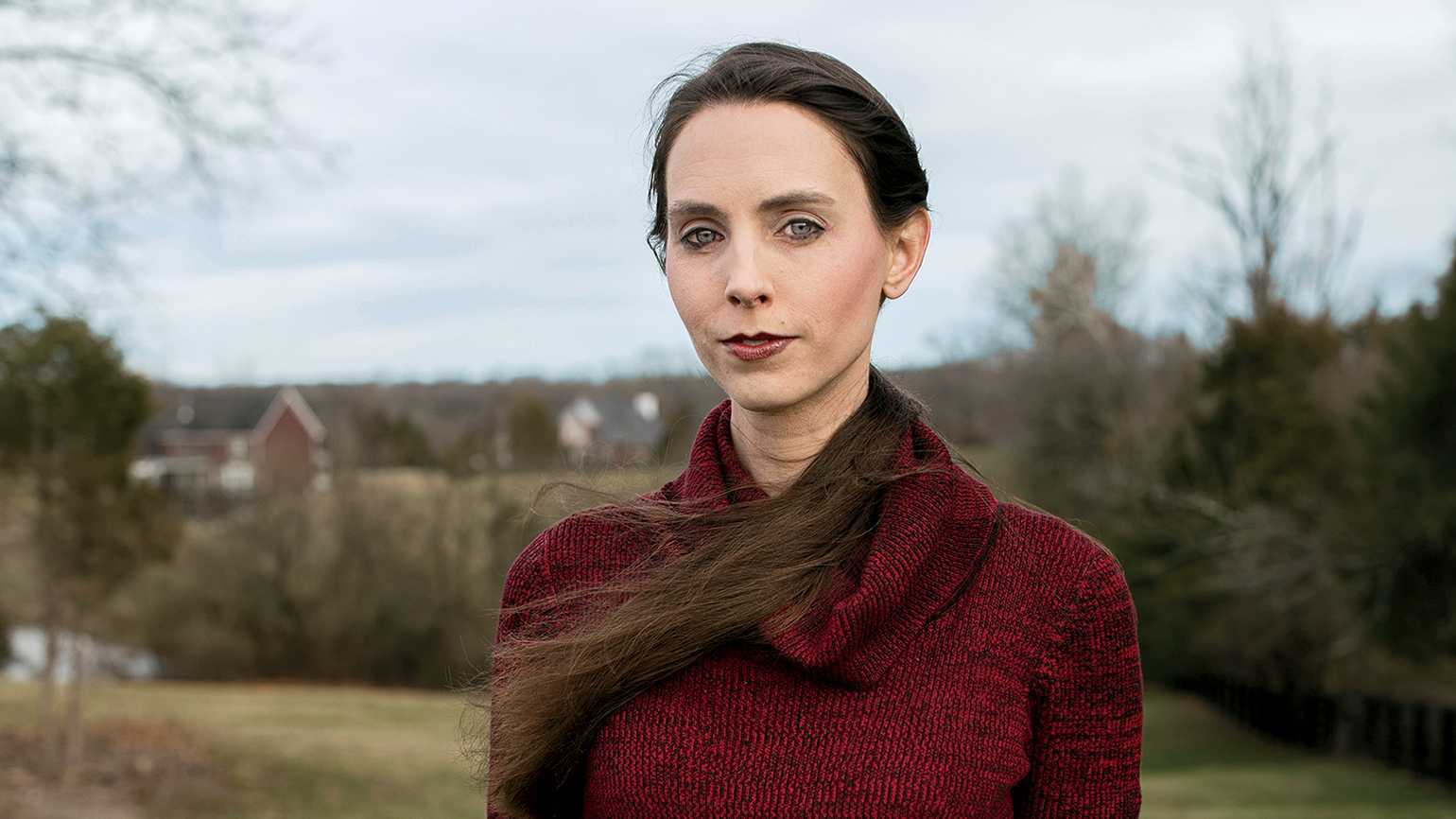
Rachael Denhollander on the cover of the April 2020 issue of Guideposts
As seen in the April 2020 issue of
Guideposts

No. The article outlined how USA Gymnastics had systematically buried reports of sexual misconduct in a filing cabinet—complaints about 54 member coaches over 10 years. I felt sick. An institution responsible for the mental and physical well-being of thousands of girls protected the coaches who had abused them. I thought of the human cost of such a betrayal, the darkness that would follow those little girls. I wanted to break down and sob.

I thought back to being 15 and sitting on the exam table in Dr. Larry Nassar’s Michigan State University office. I remembered his cheery demeanor. The way he called me kiddo. I’d trusted him because USA Gymnastics trusted him. Nobody would have believed me then, I thought. They protected their coaches, so they would have absolutely protected him. Mine would have been just another name buried in the filing cabinet.

Then it struck me. The Indianapolis Star had reported this story. That meant someone had blown the whistle on how USAG handled sex abuse and been believed. The public was paying attention. I steadied my breath. Was God calling me to come forward? Was this finally my chance?

It was a long shot. I’d been trained as a lawyer, so I had no misconceptions about how the situation could unravel. Would the Star even reply if I told them about Larry’s abuse? My assault has probably passed the statute of limitations, I thought. It had happened 16 years ago. But would my story compel someone with a live case to come forward? Even if that case went to court, would we get a good judge? A fair jury? The whole process could take years, and I would be scrutinized and vilified every step of the way. Was it worth it?

I clicked to compose a new e-mail. My hands hovered over the keys. I knew Larry was still working with patients. All those little girls. I remembered what it was like to be one of them. To love gymnastics. To give everything you had for the sport. I’d joined a gym at 11 years old. Too late for any hope of becoming a serious gymnast. But nine months after I first walked into the little gym in our Kalamazoo, Michigan, shopping mall, my coach took my mother and me aside. “I’d like to talk about Rachael joining the competitive team.”

Mom wanted to be supportive, but she had concerns. What if I got injured? Fell prey to body image issues, as many other gymnasts did? What if a coach touched my body inappropriately? My mother was a survivor of childhood sexual abuse, and I was too. There had been an incident at our church when I was seven. We were both very attuned to the risk of adults having power over children. We decided I could pursue gymnastics on one condition. “If your dad and I see anything that gives us a reason to be concerned for your health and safety,” my mom said, “you’ll be out faster than you can imagine.”

We were lucky. My coach was kind, dedicated, always encouraging. Not like the domineering coaches I saw on other teams. When I suffered back injuries and stress fractures as a teenager, my coach was worried. “You need to see a doctor.”

I went to the top sports medicine clinics in our area. The doctors weren’t very helpful. “Icing would be a good idea,” one said. I wanted to roll my eyes. Yes, of course icing is a good idea. Was he even listening to my concerns?

“Have you thought about taking Rachael to see Larry Nassar?” the gym receptionist asked my mother. I knew about him from watching the 1996 Olympics. As the USA team doctor, he’d rushed out to take care of Kerri Strug after her iconic vault led to a third-degree lateral sprain. He really cares about his gymnasts, I thought.

A few weeks later, my mom and I sat in Larry’s waiting room. I watched him walk girls to the door after their appointments. Most doctors I’d seen barely looked up as I left their office. A nurse led us to the exam room, and after a few minutes, Larry came in.

“Hey,” he said warmly. Then he pulled up my chart. “Looks like you’ve got a lot we need to deal with, kiddo!” After some discussion about my wrists and back, Larry tested my flexibility and core strength, putting me through a battery of movements and tests. “De Quervain’s tenosynovitis,” he said. “Don’t worry, kiddo. We’ll get you fixed up.”

Larry told my mom that he would adjust my pelvis and showed her a diagram of how he’d do it. “Okay,” she said.

Then he led me to the middle of the room and slid my feet about 12 inches apart. He knelt down and placed one hand firmly on my lower back, looked down at the floor as if concentrating, and wrapped his other hand around the inside of my leg, under my shorts. “Okay, I’m going to apply some pressure now,” he said.

His hand went inside my shorts. Inside my underwear. Inside me. Wait—what? I looked at him.

“Got it!” he said, removing his hands.

What just happened? Questions raced through my mind. I knew there was something called internal pelvic floor therapy, where a doctor adjusts muscles from inside a person’s body. My mom had told me about it a few weeks ago. Is that what Larry did? It had hurt and felt awkward, but my mom had been right there. Surely she would have said something if Larry had been out of line. He treated girls every day. This must be normal, I thought.

I kept seeing Larry. I didn’t like the treatments, but he was the only doctor who took my injuries seriously. It wasn’t until our second-to-last appointment, when he groped my breast, that I realized he wasn’t who I’d thought he was.

I didn’t tell my mom how Larry had assaulted me until a year later. “Rachael, do you want to go to the police?”

I remembered what had happened at church when I was seven. I’d been unable to articulate my abuse then, and I certainly hadn’t known how to prove it. My parents knew something was wrong, that I was acting differently, but some of our church friends thought they were overreacting. Friends stopped holding me, cuddling me, for fear of being accused. Those friendships dissolved, and we had to change churches. If I can’t prove Larry’s abuse, I thought, it will cost me everything.

It felt safer to stay silent, but the abuse haunted me. I had flashbacks. Nightmares. Burning questions. In 2003, when I was 19, I tried to journal through it, writing down everything Larry had done to me, all my thoughts and feelings, on loose-leaf paper. Save me, O God! I wrote on the first line of the first page. I held the pen steady. Did God care about my suffering? Did he care about what Larry had taken from me? It was never the hand in the dark. It was always the hand I held, I wrote later. The hand I’d trusted.

I struggled to separate the way I felt about God from the evil Larry had committed. Had God abandoned me? He had not, it dawned on me as I wrote. I couldn’t deny the goodness in the world, the strength and purpose of God’s love. With the help of my faith and my family, I was able to grow. The passion and drive I’d once put into gymnastics, I poured into law, debate and public policy. I put those journal pages away in a folder and moved on. I graduated law school, passed the bar and met Jacob.

As Jacob and I developed feelings for each other, I knew I needed to tell him my truth. We went for a walk near my parents’ house. I explained what had happened at church when I was seven and later as a teenager with Larry. I kept my eyes down, afraid of his response.

“Rachael,” he said, “I am so sorry this happened to you.”

We married in 2009. Now, in 2016, we were raising three wonderful children. We were happy and thriving, but memories of Larry still followed me.

I blinked myself back into focus in front of my computer, e-mail open. My mind circled back to the little girls Larry still saw through his medical practice.

Even if society doesn’t validate my coming forward, I thought, even if Larry is never held accountable, at least I’d have tried. If there was a chance that I could save those girls from sharing my fate and force Larry to face what he had done, I would come forward. I was safe in God’s love for me.

I began to type. I am e-mailing to report an incident…. I was not molested by my coach, but I was molested by Dr. Larry Nassar, the team doctor for USAG. I was 15 years old. I explained that I had medical records showing my treatment and that I did not come forward earlier because I did not think I would be believed. I have seen little hope that any light would be shed coming forward, so I have remained quiet. If there is a possibility of that changing, I will come forward as publicly as necessary. Then I hit send.

A few weeks later, I told my story to two journalists from The Indianapolis Star. Then I went to the police. I gave them my journal, those pages where I’d put down my deepest feelings, every detail of my sexual assault, things I had not shared with anyone. The statute of limitations had not expired, and I testified against Larry in court. At his sentencing, 156 of us survivors spoke, one by one. I spoke last. I asked the judge to consider the question that I had wrestled with since I was 15 years old, that God had answered with his love, and that everyone tuning in to the sentencing could never again ignore: How much is a little girl worth?

Book cover for What Is a Girl Worth?: My Story of Breaking the Silence and Exposing the Truth About Larry Nassar and USA Gymnastics Rachel Denhollander is the author of What Is a Girl Worth?: My Story of Breaking the Silence and Exposing the Truth About Larry Nassar and USA Gymnastics, available wherever books are sold.

For more inspiring stories, subscribe to Guideposts magazine.

Prayer on the Syllabus: Faith and Education Can Work Together

Worried about what happens to your kids’ faith when away at college? My youngest is back in school and I’m not fretting about his spiritual growth even if he is on an “anything goes” sort of campus that forgot its church affiliation years ago.

First of all, there’s always exam time. Face the experience of a really grueling final in something like orgo chemistry—for me it was economics—and you’ll discover prayer. Real fast.

I’m not completely joking. I was a confirmed atheist when I arrived on campus at one of those big Eastern Ivy League institutions. I left an intellectually curious, passionate Christian. What happened? Was it the dorm-room Bible studies? Was it my evangelical, physics major roommate? Was it the non-mandatory chapel services? Nope.

It was Dante and Shakespeare and Chaucer and maybe some Dostoyevsky. It was having professors—subversive Christians perhaps—who made me look at what great writers were saying. It was a lecture on the medieval cathedral. It was singing Bach’s St. Matthew Passion. It was reading the poetry of the King James Bible—I’m still a sucker for it.

I was interested to read an article by Paul Raushenbush, the current dean of religious life at my alma mater, Princeton, where he talks about the influence of a pluralistic campus on a student’s spiritual life. Sure, I remember going to my first Seder in college or hearing a friend, challenged on why he went to church, exclaim, “Actually I was born and raised a Hindu.” All those late-night gab sessions about what people believed made a difference, but even without them, God still crept onto the syllabus.

Not so long ago, my agnostic son called me with great enthusiasm. “Dad, we were reading the Gospel of Mark and I realized the whole point of faith is that you have to accept some things on faith.”

“Yeah, that’s right,” I said.

And why was he reading Mark? For a history class.

Let the kids learn. They’ll find faith. It might be a prayer during a test (by some miracle I passed Econ 101). But in a good liberal arts education, faith drops in. God has a way of showing up in the curriculum.

Praising God in Slush or in Sunshine

The sun emerged today, and the air warmed. It was a miracle of sorts. Suddenly life felt do-able in a different way. I reached the turning point in winter weeks ago, the time when a warm coat ceased to seem a blessing and shedding one a symbol of freedom.

Yes, I know a coat is a coat, and it’s always a blessing when the weather is bad. Still, I’m ready for spring.

I write this because as I stride happily along the streets of New York with the sun on my shoulders today, I know that what I want in the way of weather is largely irrelevant. It’s actually a good example of how the fact that God loves me has almost nothing to do with whether I am comfortable or not.

I can loathe February and yet know it is still beneficial to slog through, because the month forces me to find ways to praise the Lord on gray days and in the midst of gray feelings.

I can scowl through a 10-day cold snap, yet let it remind me there is a difference between what feels like an eternity on earth and the true eternity of heaven.

It’s even possible that I can gain insight into the reality that what I think I need—like a break from dreary winter—has little to do with what God knows I need. He almost certainly would prefer me to adjust my definition of perseverance than to complain, and He probably sees that my soul would benefit if I shifted my focus to something other than my personal comfort. He might be waiting patiently through these short days for the coldness of my heart to warm up with concern for those who suffer more.

Hence I suspect the weather is only “all about me” in one way: It opens up an infinite number of possibilities for what can happen in my soul. Can I learn to love God as much when I’m physically uncomfortable as when I’m comfortable? Can I praise him as deeply in slush as in sunshine? Can I grow closer to Him in all circumstances?

Yes, I can. And then I can be really thankful for the blessing of a warm day.

Pearl Harbor: Finding Forgiveness for Mitsuo Fuchida

As he entered the lobby of the Miyako Hotel in Kyoto, Japan, a small, erect man of 72, I felt myself stiffen. I had requested this interview because I wanted to hear for myself how it was that this one-time Shintoist had become a Christian. Walk over to him, I told myself. Hold out your hand. But my muscles had gone suddenly rigid.

This is the man, those tensed muscles told me, who led the Japanese planes over Pearl Harbor. Three young sailors from my hometown had died in that attack. It was now 1974, more than 30 years later. But in my emotions it was still December 7, 1941…

The awkwardness of refusing a handshake was averted as Mitsuo Fuchida stopped a few feet away and made a ceremonious little bow.

READ MORE: FDR’S LITTLE WHITE BOOK GAVE HIM COMFORT

I mouthed the introductory speech I had prepared and turned to the translator I’d hired. The man was staring at Mr. Fuchida with undisguised hostility. Next moment he walked away without a word.

Stunned, I asked the hotel for another interpreter. What could have been the man’s objection? Hadn’t Fuchida been Japan’s great hero?

With a new translator, we found seats in the nearly empty restuarant and I drew out my list of questions. Mitsuo Fuchida had agreed to the interview, I quoted from his letter, because of “love for America.” Surely a strange emotion in the man who had led the attack on us?

“Not strange,” he corrected me. “Impossible.”

That man, the man he had once been, had felt only hatred for Western nations: Britain, France, the United States, and the other colonial powers that dominated Asia. Hatred for the West was implicit in love for his country and its divine emperor. And above all, for Admiral Togo.

“I was almost four years old in 1905”—the translator kept pace with Mr. Fuchida’s staccato syllables—“when Japan won the war with Russia, the first time in history that an Eastern nation had defeated a European one. Everywhere people were praising a single hero. Togo!”

The admiral became the idol of Fuchida’s boyhood. When he learned to read he pored over accounts of Togo’s battles, especially the daring surprise attack with which he had bottled up the Russian fleet at Port Arthur, China. “Over my bed I kept Togo’s picture. I dreamed of becoming, like him, a naval officer.”

SHOP OUR SELECTION OF BIBLES AND BIBLE REFERENCE BOOKS

By 1939 Fuchida had done just that; he’d risen to the rank of flight commander in the Japanese Navy’s Yokosuka Air Corps. He had also married and started a family. And all the while the country armed for what every Japanese knew was their god-appointed task: to drive the Western powers out of the East.

In 1941 the Japanese were ready. Their army and navy were overwhelmingly the strongest in East Asia; the colonial nations were involved in a war in Europe. Only one force could stop them: the powerful U.S. Pacific Fleet, stationed at Pearl Harbor. As it had been for Admiral Togo, the answer was clearly a surprise attack—this time from the air. Thirty-nine-year-old Mitsuo Fuchida was chosen to guide the First Air Fleet planes to the target.

A kimono-clad waitress placed tea in handleless cups on the low table in front of us. Mr. Fuchida drank silently, then resumed. “On December seventh the sky was overcast…”

Six Japanese aircraft carriers were stationed about 200 miles north of the target. In those days Japanese airplanes had no radar, and so they depended on visual contact. All night from the deck of the lead carrier Fuchida scanned the starless sky.

At dawn, despite the weather, he led the first wave of 183 airplanes into the leaden sky. His little three-seater climbed through the cloud bank. As they burst above it the sun stood on the eastern horizon, rays streaming seaward in a pattern resembling that on the Japanese flag.

To Fuchida it was a sign from the gods. He slipped on his goggles and slid back the glass canopy to search below for the break in the clouds that he knew must come.

At last, using binoculars to peer through the tiniest rift in the clouds, he caught a glimpse of coastline. He bent over his charts. Oahu! “Then suddenly there it was below us, Pearl Harbor, under an open sky!” Beyond and behind, the cloud cover stretched unbroken, but directly over the base the gods had drawn the clouds aside. The fleet was there.

READ MORE: WAR HEROES PROVIDE ANSWER TO AUTHOR’S PRAYER

He turned to the radio operator behind him and sent out the signal to attack. For two hours, as the first wave of fighters and bombers, then the second, shrieked in beneath him, Fuchida directed the assault on the harbor and adjacent airfields. He returned to Japan on December 23 to find himself hailed as “the Admiral Togo of our day.”

For the next six months he led missions in the Solomon Islands, Java, the Indian Ocean: Each month the Rising Sun rode higher in the sky. Then one day in June 1942 he was on the deck of the aircraft carrier Akagi off a small island called Midway when American planes swooped from the sky. Several bombs hit the ship; there were fires and explosions.

One explosion left Fuchida with two shattered legs. From the Japanese light cruiser that rescued him he watched as his ship was scuttled and three other carriers sank. The Battle of Midway was Japan’s first defeat of the war.

Fuchida was hospitalized for months; then, on crutches, he was assigned to the war college. Classes were hurried: With less and less preparation, Japan’s young men were being rushed to the front. Still on crutches, Fuchida too returned to active duty.

During the summer of 1944 Japan was losing eight soldiers to every one lost by the Americans. “But though we knew the war was lost, no one spoke of surrender.” Until the atom bomb fell. Nine days later Japan surrendered, and a feeling of despair settled over Fuchida and millions of his countrymen.

Because of his family, Fuchida did not commit suicide as many officers did. Instead, he moved his wife and children to a farm owned by relatives and supported them by what he grew from the soil. It was a humbling comedown for a national hero.

Meanwhile, in Tokyo, war crimes trials had begun. Some of those on trial had been accused of mistreating prisoners of war. The knowledge that fellow officers had brought such shame upon the nation was another crushing blow for Fuchida.

Although he’d had no contact with the prison camps, he was often summoned from his farm as a character witness. He was walking dejectedly through the Tokyo train station on his way to the court one morning when someone shoved a little leaflet into his hand: “I Was a Prisoner of War.”

READ MORE: LOUIE ZAMPERINI—THE POWER OF FORGIVENESS

Something to do with the trials, he supposed; he put it into his pocket to read on the train going home. Sure enough, it was the account of an American soldier named Jacob DeShazer, who had spent nearly three and a half years in a Japanese concentration camp.

There it all was, the by-now hideously familiar story of kickings, beatings, starvation. And there was DeShazer’s very natural reaction: bitterness, hatred, helpless rage. Very much, Fuchida reflected to the click of the train wheels, like his own emotions since Hiroshima.

Now would come the part where DeShazer named his torturers and demanded revenge. But—what was this he was reading? DeShazer loved the Japanese? Rejoiced in the midst of suffering? The transformation had come about, DeShazer explained, through Jesus Christ. Fuchida recognized the name as one of the gods of the enemy. You could learn about Jesus, the leaflet went on, in a book called the Bible.

The next time he was called to testify, Fuchida went to a Tokyo bookstore and bought a Bible. And all alone in the little farmhouse he began to read. There was much he did not understand. But what he did understand, as the weeks went by, was that there were not many gods, siding with this nation or that, but one God who loved all nations. This God had come to earth not as an emperor, or a military hero, but as a humble workingman.

The more he read, the more Fuchida felt the horror of his past devotion—devotion to armaments, to war, to hatred of one race or another.

“Then,” Fuchida continued, “I came to the death of this carpenter, and read that He had prayed from the Cross, ‘Father, forgive them; for they know not what they do.’

“Why then … Jesus had prayed for me!”

READ MORE: AFTER PEARL HARBOR, CHRISTMAS ANGELS APPEAR

That night in the farmhouse, Mitsuo Fuchida, who did not know a single Christian, asked God to forgive him and became a Christian himself. And without knowing it, following the pattern of believers, he began to tell others. Told them he’d found the answer to despair and defeat. Told them God had not come to lead armies, but to lead men and women out of hatred into love.

Word of the conversion of the nation’s hero reached the media, and the torrent burst. Hate mail, abusive phone calls, threats to his wife and children. He had betrayed his country, turned to the foreigners’ God. Even old friends turned away from him on the street.

“That man here today—the first translator!” I broke in. “That was an example?”

“That was nothing,” Fuchida said. “He only walked away.

Others had done worse. A young ex-lieutenant, a flyer named Yamashita, had come to his home. The moment they were alone, the young flyer reached into his shirt and drew out an ornate knife, the sacred dagger given to every kamikaze pilot.

“He pressed the point against my throat. He was crying. ‘I looked up to you all my life,’ he said, ‘and now I must kill you.’”

“What did you do?” I exclaimed.

“I told him the story I have told you—with the knife pricking my throat the entire time.”

“And at the end?” I asked.

“At the end he lowered the knife. Today Yamashita is an elder of the church in Amagasaki.”

Today…

I saw myself today too. Like Fuchida, like Yamashita, forgiven by God—but holding back the hand of friendship because it was clinging to the hatreds of the past. “We have a custom when we make a new friend,” I said, reaching out my hand.

As our hands met, the love that flowed through Fuchida’s grasp was, I believe, the love that was born in a stable long ago.

For more inspiring stories, subscribe to Guideposts magazine.

Paralyzed Vet Finds a Way to Stand for Wedding Dance

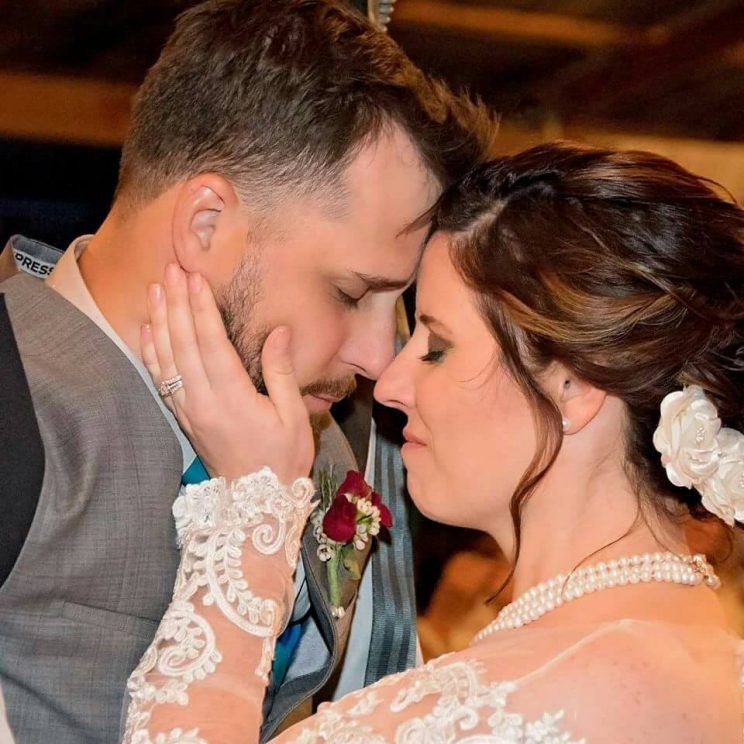
In 2008, Thomas Martineau, an Air Force veteran, became paralyzed from the waist down due to an untimely motorcycle accident. Doctors told him he probably wouldn’t walk again, but Martineau had a great motivator for getting back on his own two feet. The serviceman wanted to surprise his fiancé, Kiersten Downs, on the day of their wedding by dancing with her for their first dance as a married couple.

The pair told Yahoo! Style that they had no idea how they’d actually approach their first dance since Martineau had been in a wheelchair for years, but the clever groom had a plan in place.

While his fiancé was busy earning her PhD at the University of South Florida in Tampa, Martineau put his plan into action. The 34-year-old veteran consulted a close pal of his — the lead trainer of Stay in Step Spinal Cord Injury rehabilitation center, Steve Hill, for his surprise dance. Hill rigged a suspension system from the rafters of the old barn the couple held their reception in, one that would support Martineau on the dance floor.

While his new wife was getting ready to make her grand entrance with the bridal party in tow, Martineau slipped away so Hills could hook him up to the rig. Downs walked in to find her husband standing at her attention for their first dance and the emotional reveal was made even better by a f ast-thinking wedding guest who caught it all on tape.

Watching the touching moment below:

Mysterious Ways: Rising from the Ashes

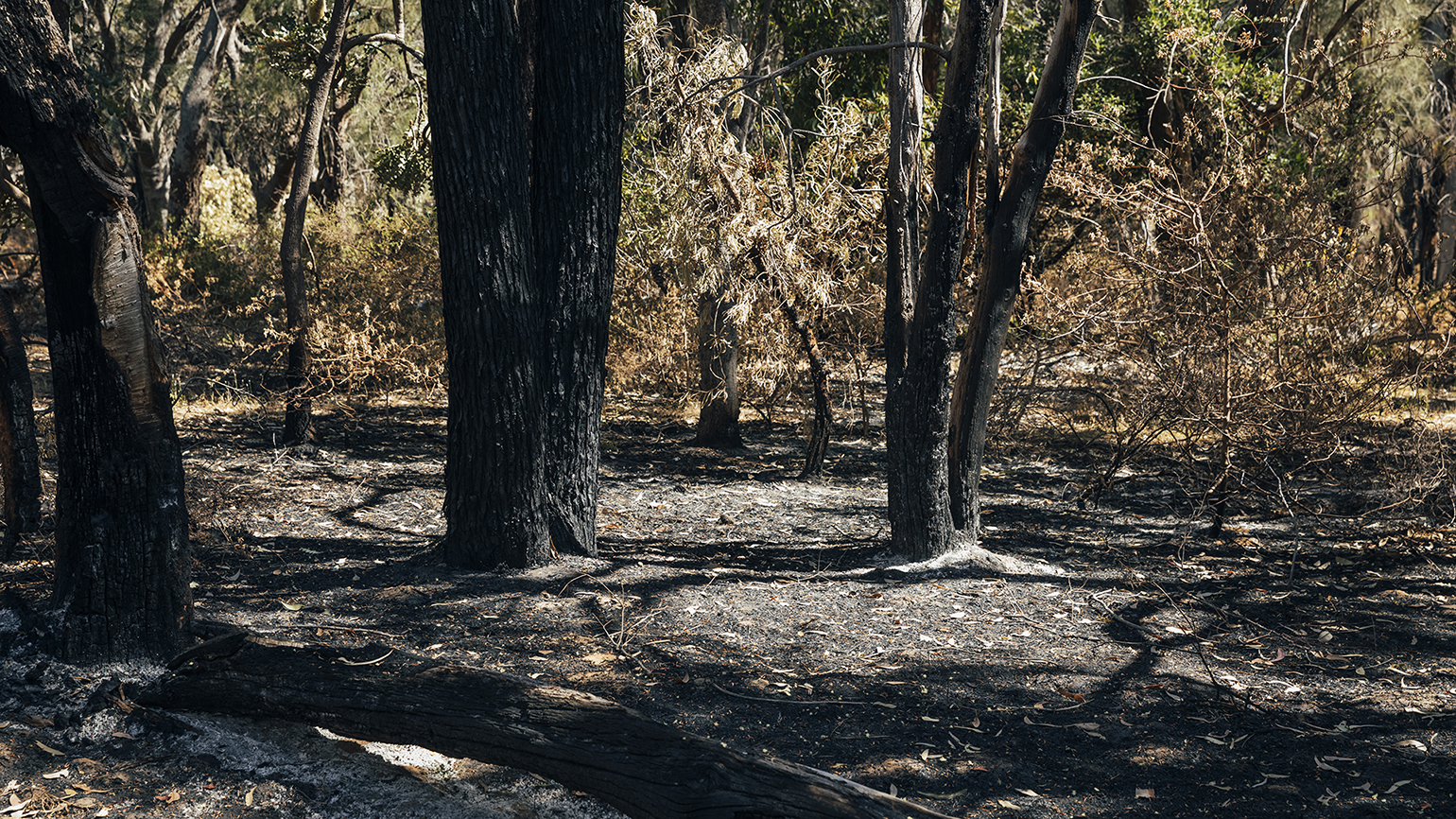
My husband, Russ, and I drove through our neighborhood, the place we’d called home for 28 years. The Sierra Nevada foothills, once thick with towering pines, were unrecognizable. The ground was covered with a heavy layer of ash. The trees that remained were charred stumps.

Two weeks earlier, we’d gotten an early-morning call telling us to evacuate immediately. The wildfire tearing through Northern California had spread and was headed our way.

We’d jumped in the car with our cats and a few belongings. For days, we’d bounced from hotel to hotel, desperate for news. What finally came wasn’t good. Our house had been right in the fire’s path.

Now we’d been given permission to return. Russ and I brought shovels, work boots, N95 masks and gloves. We’d salvage anything we could.

We drove slowly through the apocalyptic desolation, where chimneys marked where homes once stood. I wasn’t prepared for what awaited us. Our house was nothing but rubble. Mementos, photos, heirlooms, my precious collection of inspirational books—all gone.

I wiped away tears as we dug through the ash and debris. We uncovered a cast-iron coat tree that used to stand in our foyer. A decorative dish our son had given me, blackened but whole. Bits and pieces of our life.

Lord, how will we survive this? I wondered. How will we go on? It felt as if our lives had been wiped out.

We called it quits in late afternoon. Russ loaded what we’d found in the car. The breeze picked up, swirling ash in the air. “Let’s go,” he said.

I turned to get in the car. That’s when I noticed something stuck to my boot. A scrap of paper, smudged with soot. I picked it up. Its edges were singed, yet the words were surprisingly legible: “If life seems difficult, I pause and reflect on the blessing sometimes hidden within every circumstance. With renewed faith and courage, I begin again.”

Words that must have come from one of my books, a passage I couldn’t recall but now said everything I needed to hear. Words that rose from the ashes. I framed that scrap of paper. I kept it on the nightstand in every hotel and motel we stayed in over the coming months. It now sits in a place of honor in our new home, a reminder that we can begin again.

For more inspiring stories, subscribe to Guideposts magazine.

Morning Trails

I keep the most curious little book beside my desk. It’s no bigger than a notebook, 127 pages long. It appeared on the discard table here at Guideposts ages ago (the table where the vast majority of review book copies sent to us end up; you know what’s a great tragedy? the schlock quality of most Christian publishing in this country). I don’t even know how the book turned up here. It’s not new, not a review copy. It was published in 1974 by a woman no one’s heard of.

The book is called On Morning Trails by Ruth C. Ikerman. As far as I can tell it’s a compilation of short devotional writings by a woman who lived many years ago in Southern California and who once attended a Guideposts writers’ conference. Inside the front cover is a handwritten inscription from Ruth to Jim McDermott, a former Guideposts editor who retired before I came to work here. I suppose this book once belonged to Jim and he left it behind when he cleaned out his office.

I picked up the book for two reasons. First, the front cover is illustrated with an etching of what is clearly a California oak tree backlit by strong sun. Second, Ruth’s brief author biography inside the back cover says she lived in Redlands, a former hub of Southern California’s orange-growing Inland Empire now mostly swallowed by the subdivisions’ relentless march to the desert.

I’ll look at anything with California hovering about it, and I was especially drawn by the Redlands connection because Redlands is on the way from Los Angeles to the San Bernardino Mountains, where Kate and I climbed 12,000-foot Mt. San Gorgonio a few months before our daughter Frances was born. That was a magical trip, and Kate and I bought celebratory chocolate-banana milkshakes at a Baskin Robbins in Redlands on our way home. Such are the wisps of memory that inform seemingly random choices.

For months Ruth’s little book sat face-up on my bookshelf. I liked looking at that picture of the oak when I arrived at the office each morning. I thought briefly of Redlands, of the mountain, of milkshakes, of Kate, and then I got to work.

A few months ago, feeling terrible as I always do about my meager prayer life, I decided to try carving out 15 minutes each workday simply to sit in silence at my desk, either staring out my westward-facing window or with eyes closed. My goal was to listen. I realized most of my prayers are nonstop chatter—God, do this for me, God, make that trouble go away, God, God, God, me, me, me. What I didn’t do much of was listen. What would God say if I managed to shut my inner trap for once and be quiet?

That last question I can’t answer yet because I’ve only managed to pray like this about half the time and I’m still waiting to hear God’s unmistakable voice. Either God doesn’t think much of my experiment, or I’m not listening very well, or, most likely, God speaks more slowly than I’m accustomed to and in ways—in a language, really—I’m not yet adept at understanding.

However, these hard-won oases of prayer (hard-won because I have to fight my own laziness and inertia and achieve them) are delightful anyway, for one simple reason: Ruth C. Ikerman. Early on I decided I needed some sort of prompt at the start my prayer. On impulse I pulled Ruth’s book from the shelf and leafed through it. It appeared perfect, each devotional no more than one or two short pages long, preceded by a Bible verse, concluded with a prayer. No, the writing wasn’t scintillating. But the words held something else. They were heartfelt. And for some reason they were always exactly what I needed to hear.

Each devotional (Ruth calls them meditations) is structured around the daily morning walks Ruth took with her husband Larry in the foothills near their home. Some stray detail spied on the trail—a bird flying up to catch an insect, a lizard scuttling beneath a rock, a dusting of snow one cold California winter, mountain lion tracks—prompts a quiet but profound observation about God’s work in the world.

I’m lulled at first by the California imagery. By the end I’m usually convicted by Ruth’s tiny but unyielding lessons. To Ruth life is like these daily walks in the dry California foothills. We trod familiar paths each day. If we’re not careful we can be lulled into forgetting that God is present even in the barest patches of our brittle, barren lives. Look around, Ruth says, take notice. The birds, the trees, the dustings of snow, the changes in weather that seem so remote—it is through these commonplace things that God speaks in a subtle, powerful language.

Today’s meditation, called The Bird in the Yucca, ends with a simple injunction to follow God as faithfully and unerringly as birds who live by sharp, darting instinct. Of course these days I often think my problem is not so much following God as figuring out where God is leading. I’m willing to go anywhere but when I listen for orders I seem to hear nothing.

And yet perhaps Ruth has an answer here, too. Perhaps the search for God’s voice is itself the obedience God demands. Perhaps our souls—or mine anyway—are still too weak to bear the full burden of God’s plans all at once. Perhaps it’s a mercy God’s voice comes so softly and gradually. The book is called On Morning Trails. The day is just beginning. There is time—God’s slow, perfect time—to learn the answers we’re so impatient for now.

I wonder, readers, how do you discern God’s voice in all the clutter of daily life? Even in prayer, even reading Scripture, messages can seem contradictory or hard to understand. How do you sort through it all? Where’s your morning trail, and what do you find that’s true there?

Missy’s Book of Inspiration and Determination

“If we are worrying about tomorrow, we can’t live for today.”

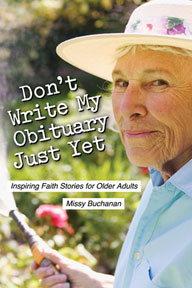
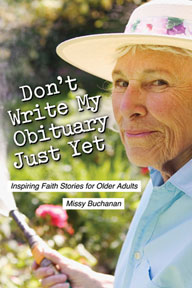
That’s 90-year-old Louise’s advice in Missy Buchanan’s book Don’t Write My Obituary Just Yet.

A wonderful collection of tales about 70- to 100-year-olds written for the same age group, these stories are little slices of life that encourage and inspire older adults.Don't Write My Obituary Just Yet

Missy told me what she’s learned from all the elders she spoke to. “God’s words comfort. Faith brings comfort in uncertainty. It refocuses our mind. It brings hope instead of fear.”

I loved that each person’s vignette ends with both a Bible passage and a prayer which sums up and enhances the person’s story.

Former second-grade teacher Ginny’s story is a great example. She has gone through years of medical problems and heartaches. But through it all, 81-year-old Ginny keeps praising God’s faithfulness.

“She is grateful for knowledgeable doctors and medical procedures that have saved her life. She delights in her granddaughter’s latest accomplishments. Every day she hugs other seniors and encourages them to count their blessings in spite of their afflictions.”

Attached to this particular story is a Bible passage about Job (James 5:11), that man of great endurance. His story is a perfect complement to Ginny’s. The prayer at the end is about perseverance through faith in God.

This book is formatted in such a delightful way. I loved experiencing each person’s remarkable overcoming of everyday problems, each with inspiring determination and faith. I think you will enjoy it too.