Embrace God's truth with our new book, The Lies that Bind

Praising God in Slush or in Sunshine

The sun emerged today, and the air warmed. It was a miracle of sorts. Suddenly life felt do-able in a different way. I reached the turning point in winter weeks ago, the time when a warm coat ceased to seem a blessing and shedding one a symbol of freedom.

Yes, I know a coat is a coat, and it’s always a blessing when the weather is bad. Still, I’m ready for spring.

I write this because as I stride happily along the streets of New York with the sun on my shoulders today, I know that what I want in the way of weather is largely irrelevant. It’s actually a good example of how the fact that God loves me has almost nothing to do with whether I am comfortable or not.

I can loathe February and yet know it is still beneficial to slog through, because the month forces me to find ways to praise the Lord on gray days and in the midst of gray feelings.

I can scowl through a 10-day cold snap, yet let it remind me there is a difference between what feels like an eternity on earth and the true eternity of heaven.

It’s even possible that I can gain insight into the reality that what I think I need—like a break from dreary winter—has little to do with what God knows I need. He almost certainly would prefer me to adjust my definition of perseverance than to complain, and He probably sees that my soul would benefit if I shifted my focus to something other than my personal comfort. He might be waiting patiently through these short days for the coldness of my heart to warm up with concern for those who suffer more.

Hence I suspect the weather is only “all about me” in one way: It opens up an infinite number of possibilities for what can happen in my soul. Can I learn to love God as much when I’m physically uncomfortable as when I’m comfortable? Can I praise him as deeply in slush as in sunshine? Can I grow closer to Him in all circumstances?

Yes, I can. And then I can be really thankful for the blessing of a warm day.

Pearl Harbor: Finding Forgiveness for Mitsuo Fuchida

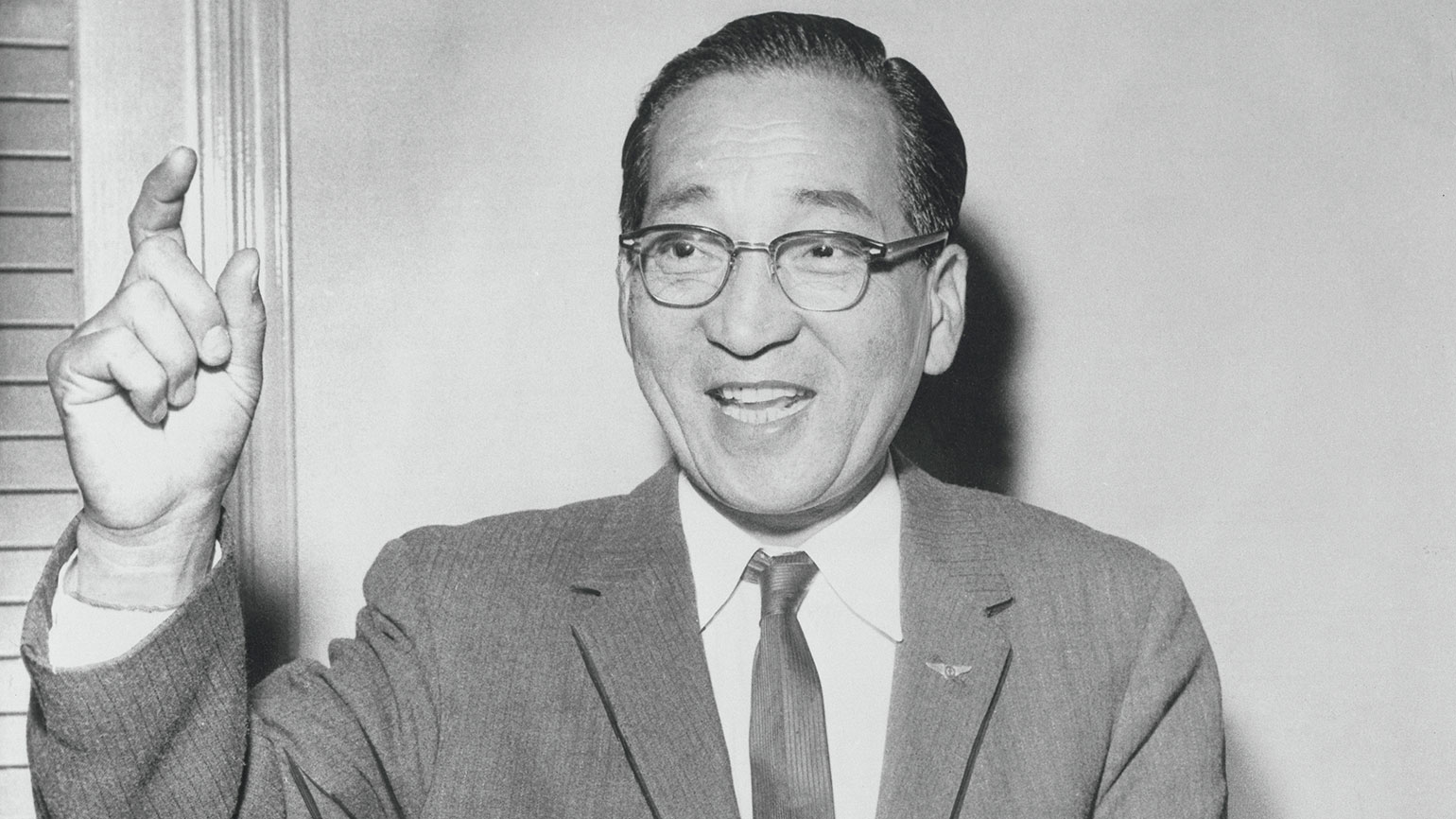
As he entered the lobby of the Miyako Hotel in Kyoto, Japan, a small, erect man of 72, I felt myself stiffen. I had requested this interview because I wanted to hear for myself how it was that this one-time Shintoist had become a Christian. Walk over to him, I told myself. Hold out your hand. But my muscles had gone suddenly rigid.

This is the man, those tensed muscles told me, who led the Japanese planes over Pearl Harbor. Three young sailors from my hometown had died in that attack. It was now 1974, more than 30 years later. But in my emotions it was still December 7, 1941…

The awkwardness of refusing a handshake was averted as Mitsuo Fuchida stopped a few feet away and made a ceremonious little bow.

READ MORE: FDR’S LITTLE WHITE BOOK GAVE HIM COMFORT

I mouthed the introductory speech I had prepared and turned to the translator I’d hired. The man was staring at Mr. Fuchida with undisguised hostility. Next moment he walked away without a word.

Stunned, I asked the hotel for another interpreter. What could have been the man’s objection? Hadn’t Fuchida been Japan’s great hero?

With a new translator, we found seats in the nearly empty restuarant and I drew out my list of questions. Mitsuo Fuchida had agreed to the interview, I quoted from his letter, because of “love for America.” Surely a strange emotion in the man who had led the attack on us?

“Not strange,” he corrected me. “Impossible.”

That man, the man he had once been, had felt only hatred for Western nations: Britain, France, the United States, and the other colonial powers that dominated Asia. Hatred for the West was implicit in love for his country and its divine emperor. And above all, for Admiral Togo.

“I was almost four years old in 1905”—the translator kept pace with Mr. Fuchida’s staccato syllables—“when Japan won the war with Russia, the first time in history that an Eastern nation had defeated a European one. Everywhere people were praising a single hero. Togo!”

The admiral became the idol of Fuchida’s boyhood. When he learned to read he pored over accounts of Togo’s battles, especially the daring surprise attack with which he had bottled up the Russian fleet at Port Arthur, China. “Over my bed I kept Togo’s picture. I dreamed of becoming, like him, a naval officer.”

SHOP OUR SELECTION OF BIBLES AND BIBLE REFERENCE BOOKS

By 1939 Fuchida had done just that; he’d risen to the rank of flight commander in the Japanese Navy’s Yokosuka Air Corps. He had also married and started a family. And all the while the country armed for what every Japanese knew was their god-appointed task: to drive the Western powers out of the East.

In 1941 the Japanese were ready. Their army and navy were overwhelmingly the strongest in East Asia; the colonial nations were involved in a war in Europe. Only one force could stop them: the powerful U.S. Pacific Fleet, stationed at Pearl Harbor. As it had been for Admiral Togo, the answer was clearly a surprise attack—this time from the air. Thirty-nine-year-old Mitsuo Fuchida was chosen to guide the First Air Fleet planes to the target.

A kimono-clad waitress placed tea in handleless cups on the low table in front of us. Mr. Fuchida drank silently, then resumed. “On December seventh the sky was overcast…”

Six Japanese aircraft carriers were stationed about 200 miles north of the target. In those days Japanese airplanes had no radar, and so they depended on visual contact. All night from the deck of the lead carrier Fuchida scanned the starless sky.

At dawn, despite the weather, he led the first wave of 183 airplanes into the leaden sky. His little three-seater climbed through the cloud bank. As they burst above it the sun stood on the eastern horizon, rays streaming seaward in a pattern resembling that on the Japanese flag.

To Fuchida it was a sign from the gods. He slipped on his goggles and slid back the glass canopy to search below for the break in the clouds that he knew must come.

At last, using binoculars to peer through the tiniest rift in the clouds, he caught a glimpse of coastline. He bent over his charts. Oahu! “Then suddenly there it was below us, Pearl Harbor, under an open sky!” Beyond and behind, the cloud cover stretched unbroken, but directly over the base the gods had drawn the clouds aside. The fleet was there.

READ MORE: WAR HEROES PROVIDE ANSWER TO AUTHOR’S PRAYER

He turned to the radio operator behind him and sent out the signal to attack. For two hours, as the first wave of fighters and bombers, then the second, shrieked in beneath him, Fuchida directed the assault on the harbor and adjacent airfields. He returned to Japan on December 23 to find himself hailed as “the Admiral Togo of our day.”

For the next six months he led missions in the Solomon Islands, Java, the Indian Ocean: Each month the Rising Sun rode higher in the sky. Then one day in June 1942 he was on the deck of the aircraft carrier Akagi off a small island called Midway when American planes swooped from the sky. Several bombs hit the ship; there were fires and explosions.

One explosion left Fuchida with two shattered legs. From the Japanese light cruiser that rescued him he watched as his ship was scuttled and three other carriers sank. The Battle of Midway was Japan’s first defeat of the war.

Fuchida was hospitalized for months; then, on crutches, he was assigned to the war college. Classes were hurried: With less and less preparation, Japan’s young men were being rushed to the front. Still on crutches, Fuchida too returned to active duty.

During the summer of 1944 Japan was losing eight soldiers to every one lost by the Americans. “But though we knew the war was lost, no one spoke of surrender.” Until the atom bomb fell. Nine days later Japan surrendered, and a feeling of despair settled over Fuchida and millions of his countrymen.

Because of his family, Fuchida did not commit suicide as many officers did. Instead, he moved his wife and children to a farm owned by relatives and supported them by what he grew from the soil. It was a humbling comedown for a national hero.

Meanwhile, in Tokyo, war crimes trials had begun. Some of those on trial had been accused of mistreating prisoners of war. The knowledge that fellow officers had brought such shame upon the nation was another crushing blow for Fuchida.

Although he’d had no contact with the prison camps, he was often summoned from his farm as a character witness. He was walking dejectedly through the Tokyo train station on his way to the court one morning when someone shoved a little leaflet into his hand: “I Was a Prisoner of War.”

READ MORE: LOUIE ZAMPERINI—THE POWER OF FORGIVENESS

Something to do with the trials, he supposed; he put it into his pocket to read on the train going home. Sure enough, it was the account of an American soldier named Jacob DeShazer, who had spent nearly three and a half years in a Japanese concentration camp.

There it all was, the by-now hideously familiar story of kickings, beatings, starvation. And there was DeShazer’s very natural reaction: bitterness, hatred, helpless rage. Very much, Fuchida reflected to the click of the train wheels, like his own emotions since Hiroshima.

Now would come the part where DeShazer named his torturers and demanded revenge. But—what was this he was reading? DeShazer loved the Japanese? Rejoiced in the midst of suffering? The transformation had come about, DeShazer explained, through Jesus Christ. Fuchida recognized the name as one of the gods of the enemy. You could learn about Jesus, the leaflet went on, in a book called the Bible.

The next time he was called to testify, Fuchida went to a Tokyo bookstore and bought a Bible. And all alone in the little farmhouse he began to read. There was much he did not understand. But what he did understand, as the weeks went by, was that there were not many gods, siding with this nation or that, but one God who loved all nations. This God had come to earth not as an emperor, or a military hero, but as a humble workingman.

The more he read, the more Fuchida felt the horror of his past devotion—devotion to armaments, to war, to hatred of one race or another.

“Then,” Fuchida continued, “I came to the death of this carpenter, and read that He had prayed from the Cross, ‘Father, forgive them; for they know not what they do.’

“Why then … Jesus had prayed for me!”

READ MORE: AFTER PEARL HARBOR, CHRISTMAS ANGELS APPEAR

That night in the farmhouse, Mitsuo Fuchida, who did not know a single Christian, asked God to forgive him and became a Christian himself. And without knowing it, following the pattern of believers, he began to tell others. Told them he’d found the answer to despair and defeat. Told them God had not come to lead armies, but to lead men and women out of hatred into love.

Word of the conversion of the nation’s hero reached the media, and the torrent burst. Hate mail, abusive phone calls, threats to his wife and children. He had betrayed his country, turned to the foreigners’ God. Even old friends turned away from him on the street.

“That man here today—the first translator!” I broke in. “That was an example?”

“That was nothing,” Fuchida said. “He only walked away.

Others had done worse. A young ex-lieutenant, a flyer named Yamashita, had come to his home. The moment they were alone, the young flyer reached into his shirt and drew out an ornate knife, the sacred dagger given to every kamikaze pilot.

“He pressed the point against my throat. He was crying. ‘I looked up to you all my life,’ he said, ‘and now I must kill you.’”

“What did you do?” I exclaimed.

“I told him the story I have told you—with the knife pricking my throat the entire time.”

“And at the end?” I asked.

“At the end he lowered the knife. Today Yamashita is an elder of the church in Amagasaki.”

Today…

I saw myself today too. Like Fuchida, like Yamashita, forgiven by God—but holding back the hand of friendship because it was clinging to the hatreds of the past. “We have a custom when we make a new friend,” I said, reaching out my hand.

As our hands met, the love that flowed through Fuchida’s grasp was, I believe, the love that was born in a stable long ago.

For more inspiring stories, subscribe to Guideposts magazine.

Paralyzed Vet Finds a Way to Stand for Wedding Dance

In 2008, Thomas Martineau, an Air Force veteran, became paralyzed from the waist down due to an untimely motorcycle accident. Doctors told him he probably wouldn’t walk again, but Martineau had a great motivator for getting back on his own two feet. The serviceman wanted to surprise his fiancé, Kiersten Downs, on the day of their wedding by dancing with her for their first dance as a married couple.

The pair told Yahoo! Style that they had no idea how they’d actually approach their first dance since Martineau had been in a wheelchair for years, but the clever groom had a plan in place.

While his fiancé was busy earning her PhD at the University of South Florida in Tampa, Martineau put his plan into action. The 34-year-old veteran consulted a close pal of his — the lead trainer of Stay in Step Spinal Cord Injury rehabilitation center, Steve Hill, for his surprise dance. Hill rigged a suspension system from the rafters of the old barn the couple held their reception in, one that would support Martineau on the dance floor.

While his new wife was getting ready to make her grand entrance with the bridal party in tow, Martineau slipped away so Hills could hook him up to the rig. Downs walked in to find her husband standing at her attention for their first dance and the emotional reveal was made even better by a f ast-thinking wedding guest who caught it all on tape.

Watching the touching moment below:

Mysterious Ways: Rising from the Ashes

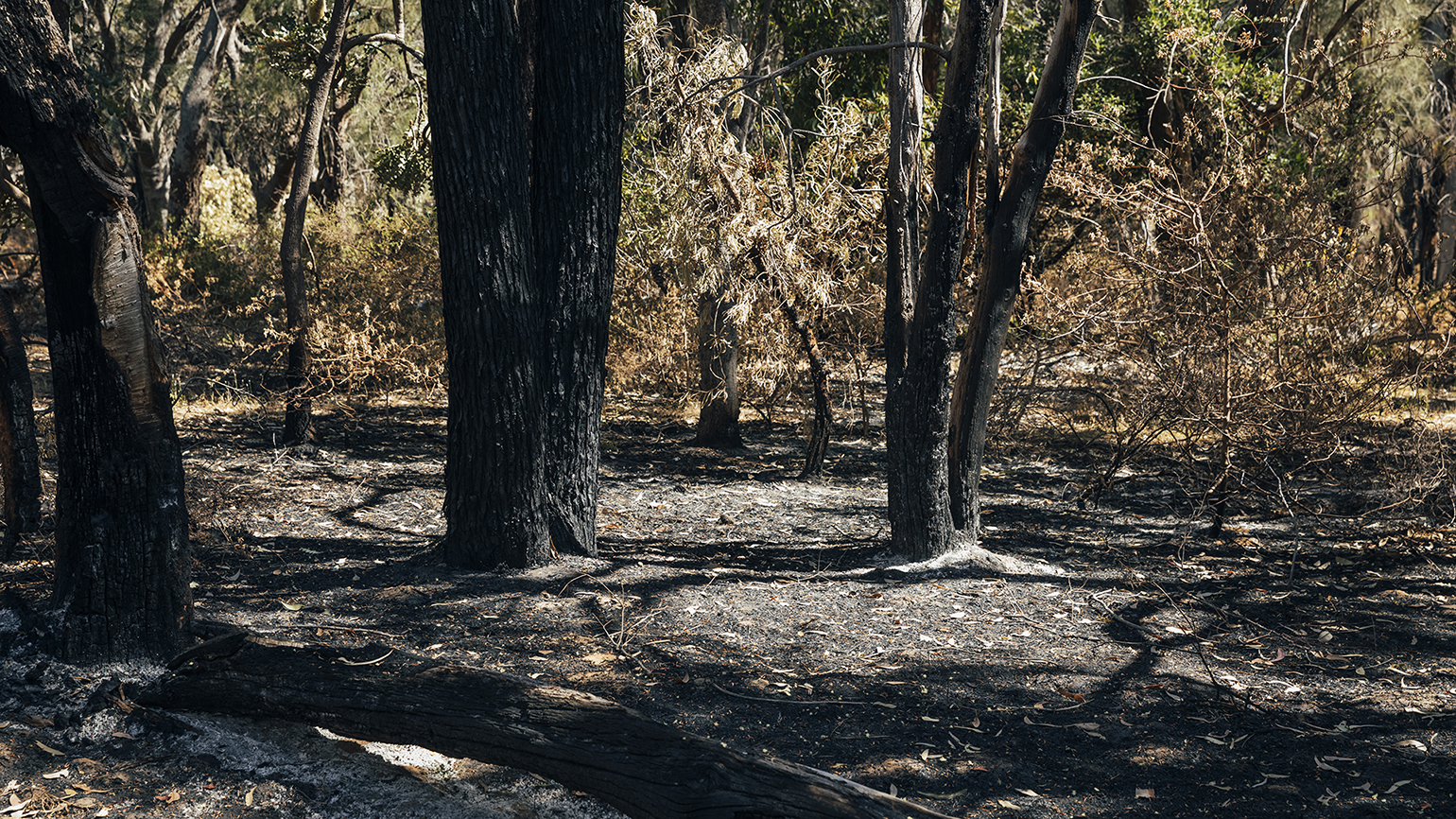
My husband, Russ, and I drove through our neighborhood, the place we’d called home for 28 years. The Sierra Nevada foothills, once thick with towering pines, were unrecognizable. The ground was covered with a heavy layer of ash. The trees that remained were charred stumps.

Two weeks earlier, we’d gotten an early-morning call telling us to evacuate immediately. The wildfire tearing through Northern California had spread and was headed our way.

We’d jumped in the car with our cats and a few belongings. For days, we’d bounced from hotel to hotel, desperate for news. What finally came wasn’t good. Our house had been right in the fire’s path.

Now we’d been given permission to return. Russ and I brought shovels, work boots, N95 masks and gloves. We’d salvage anything we could.

We drove slowly through the apocalyptic desolation, where chimneys marked where homes once stood. I wasn’t prepared for what awaited us. Our house was nothing but rubble. Mementos, photos, heirlooms, my precious collection of inspirational books—all gone.

I wiped away tears as we dug through the ash and debris. We uncovered a cast-iron coat tree that used to stand in our foyer. A decorative dish our son had given me, blackened but whole. Bits and pieces of our life.

Lord, how will we survive this? I wondered. How will we go on? It felt as if our lives had been wiped out.

We called it quits in late afternoon. Russ loaded what we’d found in the car. The breeze picked up, swirling ash in the air. “Let’s go,” he said.

I turned to get in the car. That’s when I noticed something stuck to my boot. A scrap of paper, smudged with soot. I picked it up. Its edges were singed, yet the words were surprisingly legible: “If life seems difficult, I pause and reflect on the blessing sometimes hidden within every circumstance. With renewed faith and courage, I begin again.”

Words that must have come from one of my books, a passage I couldn’t recall but now said everything I needed to hear. Words that rose from the ashes. I framed that scrap of paper. I kept it on the nightstand in every hotel and motel we stayed in over the coming months. It now sits in a place of honor in our new home, a reminder that we can begin again.

For more inspiring stories, subscribe to Guideposts magazine.

Morning Trails

I keep the most curious little book beside my desk. It’s no bigger than a notebook, 127 pages long. It appeared on the discard table here at Guideposts ages ago (the table where the vast majority of review book copies sent to us end up; you know what’s a great tragedy? the schlock quality of most Christian publishing in this country). I don’t even know how the book turned up here. It’s not new, not a review copy. It was published in 1974 by a woman no one’s heard of.

The book is called On Morning Trails by Ruth C. Ikerman. As far as I can tell it’s a compilation of short devotional writings by a woman who lived many years ago in Southern California and who once attended a Guideposts writers’ conference. Inside the front cover is a handwritten inscription from Ruth to Jim McDermott, a former Guideposts editor who retired before I came to work here. I suppose this book once belonged to Jim and he left it behind when he cleaned out his office.

I picked up the book for two reasons. First, the front cover is illustrated with an etching of what is clearly a California oak tree backlit by strong sun. Second, Ruth’s brief author biography inside the back cover says she lived in Redlands, a former hub of Southern California’s orange-growing Inland Empire now mostly swallowed by the subdivisions’ relentless march to the desert.

I’ll look at anything with California hovering about it, and I was especially drawn by the Redlands connection because Redlands is on the way from Los Angeles to the San Bernardino Mountains, where Kate and I climbed 12,000-foot Mt. San Gorgonio a few months before our daughter Frances was born. That was a magical trip, and Kate and I bought celebratory chocolate-banana milkshakes at a Baskin Robbins in Redlands on our way home. Such are the wisps of memory that inform seemingly random choices.

For months Ruth’s little book sat face-up on my bookshelf. I liked looking at that picture of the oak when I arrived at the office each morning. I thought briefly of Redlands, of the mountain, of milkshakes, of Kate, and then I got to work.

A few months ago, feeling terrible as I always do about my meager prayer life, I decided to try carving out 15 minutes each workday simply to sit in silence at my desk, either staring out my westward-facing window or with eyes closed. My goal was to listen. I realized most of my prayers are nonstop chatter—God, do this for me, God, make that trouble go away, God, God, God, me, me, me. What I didn’t do much of was listen. What would God say if I managed to shut my inner trap for once and be quiet?

That last question I can’t answer yet because I’ve only managed to pray like this about half the time and I’m still waiting to hear God’s unmistakable voice. Either God doesn’t think much of my experiment, or I’m not listening very well, or, most likely, God speaks more slowly than I’m accustomed to and in ways—in a language, really—I’m not yet adept at understanding.

However, these hard-won oases of prayer (hard-won because I have to fight my own laziness and inertia and achieve them) are delightful anyway, for one simple reason: Ruth C. Ikerman. Early on I decided I needed some sort of prompt at the start my prayer. On impulse I pulled Ruth’s book from the shelf and leafed through it. It appeared perfect, each devotional no more than one or two short pages long, preceded by a Bible verse, concluded with a prayer. No, the writing wasn’t scintillating. But the words held something else. They were heartfelt. And for some reason they were always exactly what I needed to hear.

Each devotional (Ruth calls them meditations) is structured around the daily morning walks Ruth took with her husband Larry in the foothills near their home. Some stray detail spied on the trail—a bird flying up to catch an insect, a lizard scuttling beneath a rock, a dusting of snow one cold California winter, mountain lion tracks—prompts a quiet but profound observation about God’s work in the world.

I’m lulled at first by the California imagery. By the end I’m usually convicted by Ruth’s tiny but unyielding lessons. To Ruth life is like these daily walks in the dry California foothills. We trod familiar paths each day. If we’re not careful we can be lulled into forgetting that God is present even in the barest patches of our brittle, barren lives. Look around, Ruth says, take notice. The birds, the trees, the dustings of snow, the changes in weather that seem so remote—it is through these commonplace things that God speaks in a subtle, powerful language.

Today’s meditation, called The Bird in the Yucca, ends with a simple injunction to follow God as faithfully and unerringly as birds who live by sharp, darting instinct. Of course these days I often think my problem is not so much following God as figuring out where God is leading. I’m willing to go anywhere but when I listen for orders I seem to hear nothing.

And yet perhaps Ruth has an answer here, too. Perhaps the search for God’s voice is itself the obedience God demands. Perhaps our souls—or mine anyway—are still too weak to bear the full burden of God’s plans all at once. Perhaps it’s a mercy God’s voice comes so softly and gradually. The book is called On Morning Trails. The day is just beginning. There is time—God’s slow, perfect time—to learn the answers we’re so impatient for now.

I wonder, readers, how do you discern God’s voice in all the clutter of daily life? Even in prayer, even reading Scripture, messages can seem contradictory or hard to understand. How do you sort through it all? Where’s your morning trail, and what do you find that’s true there?

Missy’s Book of Inspiration and Determination

“If we are worrying about tomorrow, we can’t live for today.”

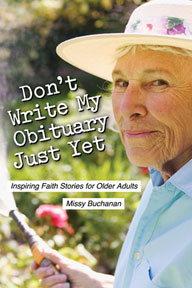
That’s 90-year-old Louise’s advice in Missy Buchanan’s book Don’t Write My Obituary Just Yet.

A wonderful collection of tales about 70- to 100-year-olds written for the same age group, these stories are little slices of life that encourage and inspire older adults.Don't Write My Obituary Just Yet

Missy told me what she’s learned from all the elders she spoke to. “God’s words comfort. Faith brings comfort in uncertainty. It refocuses our mind. It brings hope instead of fear.”

I loved that each person’s vignette ends with both a Bible passage and a prayer which sums up and enhances the person’s story.

Former second-grade teacher Ginny’s story is a great example. She has gone through years of medical problems and heartaches. But through it all, 81-year-old Ginny keeps praising God’s faithfulness.

“She is grateful for knowledgeable doctors and medical procedures that have saved her life. She delights in her granddaughter’s latest accomplishments. Every day she hugs other seniors and encourages them to count their blessings in spite of their afflictions.”

Attached to this particular story is a Bible passage about Job (James 5:11), that man of great endurance. His story is a perfect complement to Ginny’s. The prayer at the end is about perseverance through faith in God.

This book is formatted in such a delightful way. I loved experiencing each person’s remarkable overcoming of everyday problems, each with inspiring determination and faith. I think you will enjoy it too.

Meet the Beekeeping Couple Transforming Vacant Lots

Who they are: Detroit natives Timothy Paule and Nicole Lindsey founded Detroit Hives, a nonprofit that buys vacant properties in the city to transform into bee farms. (With more than 90,000 vacant lots, there’s a lot to work with!) The duo is focused on improving the Motor City’s “left behind” communities and educating people about apiology (the study of bees). Their motto: “Work hard, stay bumble!”

What they do: They transformed an abandoned lot into their first urban bee farm in 2017. “We hope that our work beautifies communities and cultivates and improves the environment as well,” Timothy says. They also educate the community about the importance of honeybees. One third of the food we eat depends on pollination.

Why they do it: Timothy got interested in honey and honeybees because of a cough he couldn’t shake. He was sick for months, until a store owner in nearby Ferndale recommended local raw honey for its medicinal properties. Soon Timothy’s cough was gone.

He researched beekeeping, and his partner, Nicole, suggested they bring it to Detroit. “We had wanted to do something with the vacant lots that would uplift the community,” says Timothy. Abandoned properties often become illegal dumping grounds, contributing to an overgrowth of allergens—not to mention urban blight.

How they do it: Timothy and Nicole took classes to become certified beekeepers. They bought their first vacant lot for $340, with the aid of the Detroit Land Bank Authority community partnership program. From there, they built three hives and vegetable garden plots. “Beekeeping has allowed me to understand that everything and everyone has a purpose in their environment,” Timothy says. “It’s taught me to be a good steward of our surroundings.”

In addition to making and selling honey, Detroit Hives spreads awareness about bees through public tours of the farm. For out-of-towners, they even offer a bee farm tour through Airbnb. “We have people from France, Canada—all over the world,” Timothy says. “They learn about honeybee hives and the medicinal value of local honey.”

He and Nicole also speak at schools. Some students are afraid of bees at first, but “we talk to them about how everyone has a place in the hive, from the queen to the worker bees and drone bees,” Timothy says. “The students find it intriguing that each honeybee has a unique job.”

How you can do it: Everyone can prevent urban blight and help save the bees. Post a no dumping sign in vacant lots in your neighborhood, and file a complaint with your municipality. Picking up the phone shows that you care. Some people even buy abandoned lots adjacent to their homes and repurpose them for gardens. Avoid using pesticides and herbicides, and plant bee-friendly flowers such as mint, sage and raspberries. These plants help bees thrive.

For more inspiring stories, subscribe to Guideposts magazine.

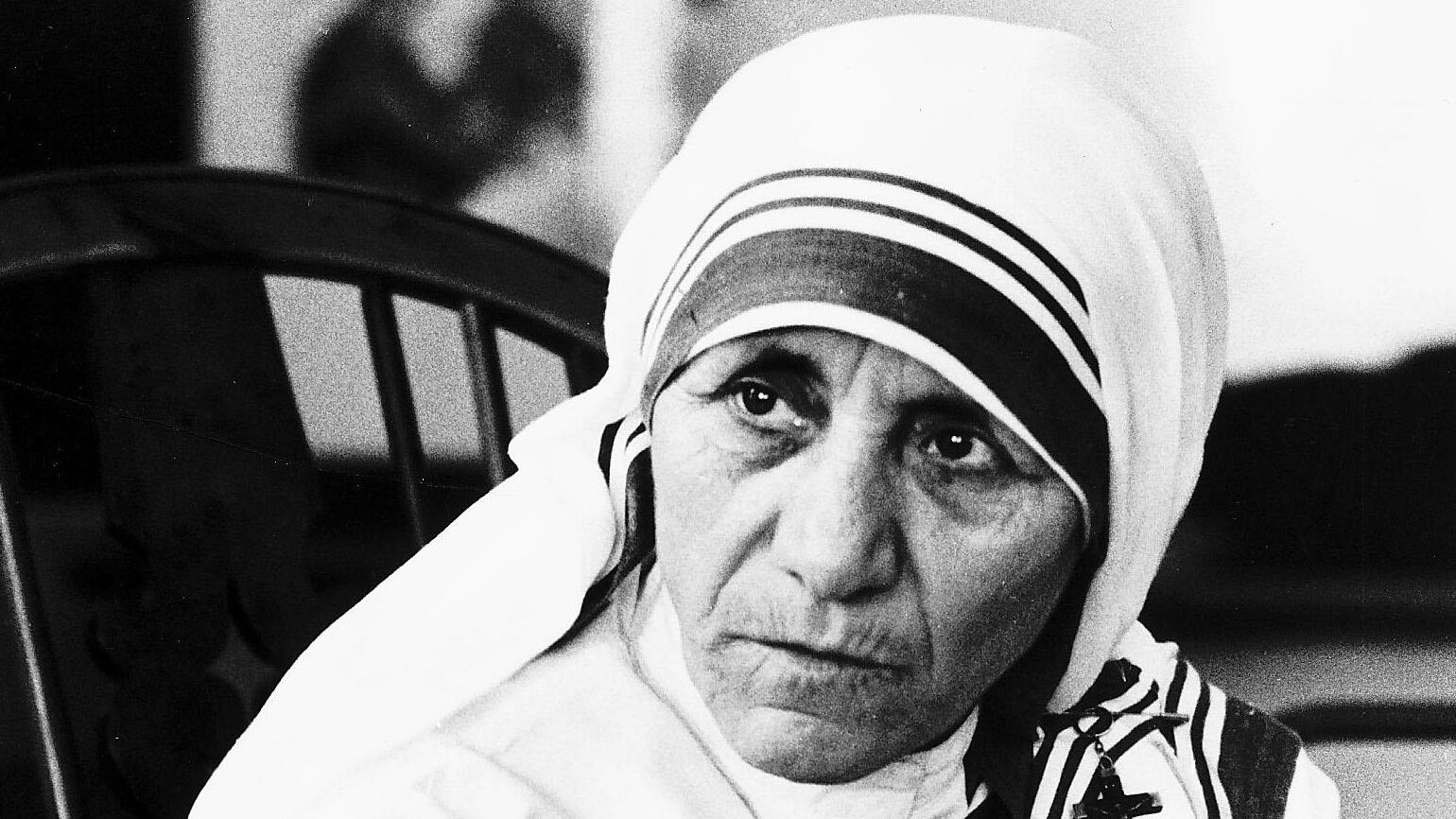
Meeting Mother Teresa Led Him to a Life of Service

In 1990, Hal Donaldson was 23 years old, fresh out of college and found himself in Calcutta, India, where he was ghost writing a book for a couple feeding hungry children. They told him there was someone they wanted him to interview. A friend who was helping them in their endeavors. It was Mother Teresa.

“She was so humble,” Donaldson says about the Roman Catholic saint famed for feeding the hungry in India. “She wasn’t wearing shoes and her ankles were swollen. She sat down with me and was very polite.”

After their interview, Mother Teresa had a question for him: “What are you doing to help the poor?” Says Donaldson: “It wasn’t accusative. She was just asking me a simple and fair question.” He told her the truth. He was young and had just gotten his degree in journalism. He wasn’t focused on helping others. With a smile on her face, Mother Teresa said, “Everyone can do something.”

Those words struck a deep chord with Donaldson. They forced him to face some hard truths about himself.

Donaldson grew up in the San Francisco Bay-area. When he was 12 years old, his parents were hit by a drunk driver; his father died, and his mother was seriously injured. To make ends meet, they went on welfare. “I experienced the shame of poverty,” Donaldson says. “I had holes in my shoes and clothes. When you’re teased in school for being poor or walking into supermarkets with food stamps, you feel less than. And you just try to escape that.”

He managed to do just that. Donaldson got into college, earned a degree, and turned his focus to making money for himself. “I went through a period where I was self-centered,” he said. “I was just trying to claw my way out of insignificance. The problem is, in trying to escape that life, it’s easy to neglect others along the way. I was the guy that would see a homeless person and cross the street, so I didn’t have to confront him. My focus was on climbing to the top instead of helping those trying to climb with me.”

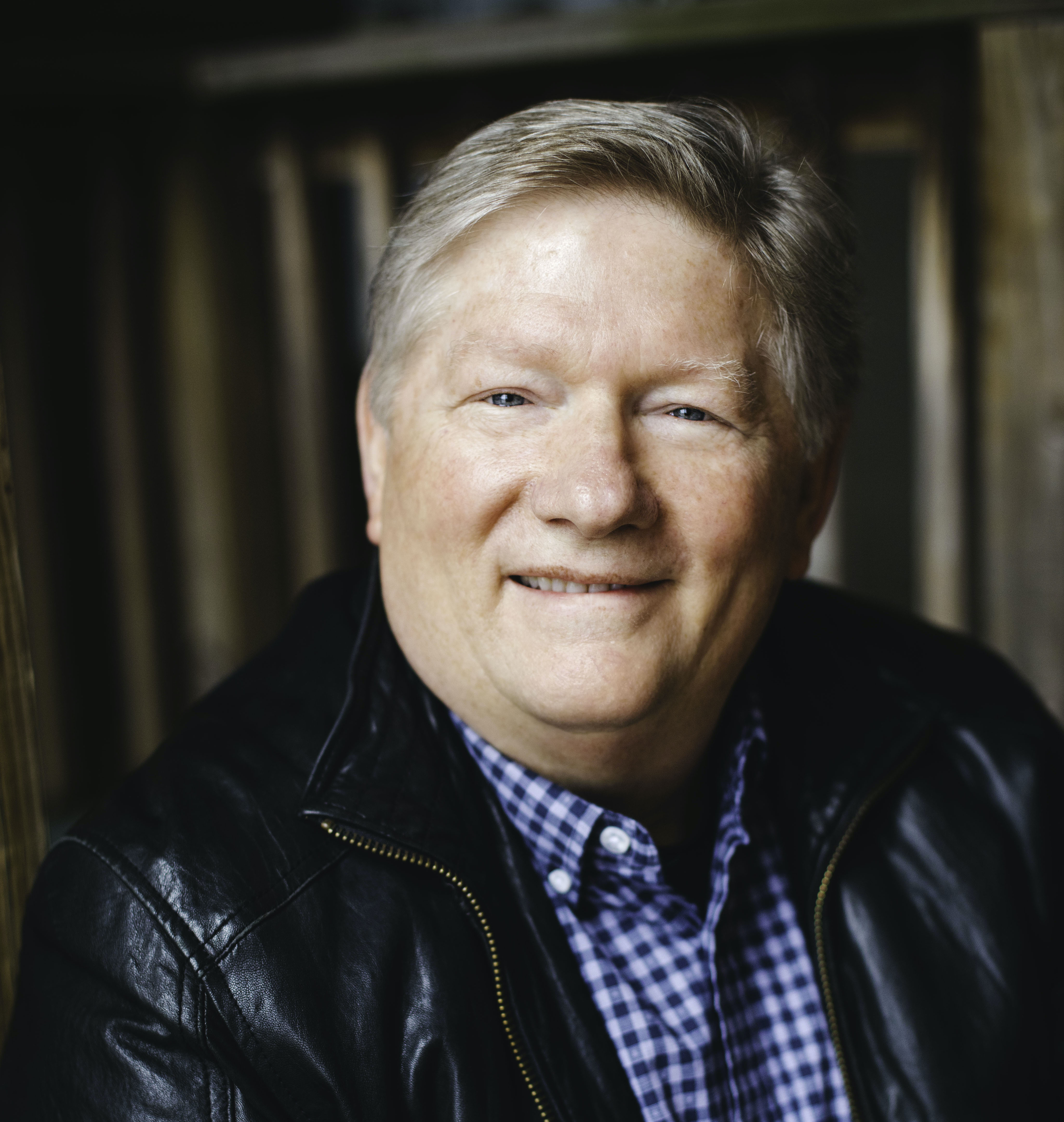
Hal Donaldson is changing lives with hope.

Donaldson returned home from India with a changed perspective. He knew he needed to do something to help his fellow man. But what? That’s when he says God gave him an idea. He packed up his car and hit the road. He traveled to eight cities in America and stayed on the streets for three nights in each of them. He spent that time talking with the people he encountered. People who were homeless, people who had turned to prostitution, those struggling with addiction. He listened to their stories. “My heart broke,” he says. “I knew I could no longer just live for myself.”

Inspired by Mother Teresa’s words and the stories he’d heard across America, Donaldson loaded a pick-up truck with $300 worth of groceries. He drove around Northern California handing them out to anyone who looked like they needed help. As word got around about his endeavors, his operation grew bigger. “It grew from a pick-up truck to a box truck to a semi-truck to warehouses,” he said. In 1994, Donaldson created the nonprofit organization, Convoy for Hope.

Today, Convoy of Hope works with communities across America and around the world—from India to South Africa, Bulgaria to Nicaragua. Their work focuses on feeding children, women’s empowerment, helping farmers and disaster services. The organization’s work has been vital during the Covid-19 pandemic. “We’d set a goal of delivering 10 million meals,” Donaldson says. “We were really astonished by the response. We passed that goal in a matter of weeks. As of now, we’ve passed out 200 million meals.”

Donaldson says the response from people helped by Convoy of Hope is powerful. “People said we’ve shown them there was still good,” he says. “That we’ve given them hope.” But perhaps even more profound was the response from people who joined their operation, driven by their need to help others. “People said they didn’t know what to do, but then they heard about us,” Donaldson says. “We underestimate what we can accomplish. I experienced poverty but I experienced kindness. It can transform lives. God wants to help the poor and He’s looking for people who are willing.”

To learn more about Hal Donaldson’s story, check out his two latest books: Disruptive Compassion: Becoming the Revolutionary You Were Born to Be and Your Next 24 Hours: One Day of Kindness Can Change Everything.

Max Lucado’s Lesson in Faith

I first noticed the tremor 10 years ago. My thumb started quivering. Insistently, nervously, mysteriously. As if my thumb lived on a caffeine drip. With a mind of its own. Almost immediately, I assumed the worst.

My father had died from amyotrophic lateral sclerosis, or ALS. Am I going to go like he did? I wondered. Is this the first symptom? I combed my hair, and my thumb quivered. When I was putting on the golf course, guess what couldn’t settle down? If I raised my left hand to make a point in a sermon, all I could see was a twitchy thumb.

Dad had been an oil field mechanic. He was used to depending on his hands. One day, he squeezed a screwdriver and noticed something shaky. He diagnosed himself and actually informed the doctor that he had ALS. A certain death sentence. He went into a long slow decline. At the time, I was about to serve as a minister in Brazil and worried sick about him. Dad didn’t want me to stay home. He sent a letter and underlined the key words: “I have no fear of death or eternity.”

You would think that I would have the same sort of confident faith. That I too would be able to lean on the promises of God. “The Lord is with you,” the book of Judges tells us. “In all things God works for the good,” Paul wrote in his letter to the Romans. “In this world, you will have trouble. But take heart! I have overcome the world,” Jesus says in the Gospel of John.

And yet I put off seeing a doctor about my thumb for a long time. The idea of going was just too scary.

Finally I made an appointment to meet with a neurologist. I entered his office full of dread. The doctor asked me to walk, checked my balance, tapped my knee with a hammer and hammered me with questions. After each one, I thought, This is it. He’s going to deliver the death sentence.

At last the doctor said, “No need to worry.”

“No treatment?”

“Nope.”

“There’s no need for a wheelchair?”

“Nope. The tremor in your thumb is nothing to worry about. I promise.”

I walked out of there and got in the car to drive home. While stopped at a traffic light, I noticed my left hand on the steering wheel. Can you guess what my thumb was doing? Shaking.

For the first time, I had the opportunity to look at the tremor differently. I could ponder the problem, or I could remember the promise. I could choose anxiety, or I could choose hope. I opted for hope. As corny as this might sound, I actually talked to my thumb.

“You’re not getting any more of my attention,” I said to it firmly. “The doctor made me a promise. You are harmless.” From that moment on, each time I noticed my thumb misbehaving, I thought of the promise that the doctor had made me.

My doctor’s promise is reliable. Fear has to take a hike. So it is with the promises of God. Unlike my thumb, those words are unshakable. His promises are better than a lifetime warranty. They will one day carry me into God’s presence.

I spent an hour recently in the office of a cemetery director, pondering over just what death will mean. I looked at a map of all the possible sites for a grave. All of a sudden, I had an idea. “You’ll think I’m crazy,” I said, “but is it possible to record a message for my tombstone? A sort of voice mail from the grave.”

“I’ll check,” he said.

He got back to me a couple of days later. “A recorded message can be encased in the grave marker. It can be played by pressing a button.”

I wrote something down, but I haven’t recorded it yet. Perhaps I can test it with you first. Engraved on the granite stone will be this invitation: “Press for a word from Max.” And then you’ll hear me say, “Thanks for coming by. Sorry you missed me. I’m not here. I’m home. Finally home.”

Shaky thumb and all.

For more inspiring stories, subscribe to Guideposts magazine.

Mary’s Home, Taken on Faith

Hello everyone from Rhodes, Greece, where we detoured because of the general strike gripping the country. We’ll double back to Athens tomorrow. I am trying to finish this before we leave the dock and move out of wireless range … and in time to get down to dinner with the wonderful Guideposts group. Did you know they like to feed you on cruise ships?

Guideposts group visit Grecian columns

Later I wandered the ancient quarter of Rhodes, where there are many churches and fortifications built by the Knights of St. John. So much history is interwoven here … the Greeks, the Romans, early and medieval Christians and the Ottomans. It is almost too staggering to take in.

But yesterday at Ephesus was even more amazing and inspiring. At first I was put off by the sheer number of visitors to the ancient site but then reminded myself that in its day Ephesus was a teeming city of a quarter million; only fifteen percent is currently excavated.

That status as a city is exactly why Paul journeyed here and preached, why he undertook the danger and rigors of such a quest. It was awe-inspiring to stand on the spot at the amphitheater where the Apostle himself stood to preach the Good News.

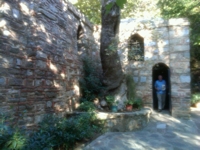
But perhaps the most moving of all was a visit to the house where Mary is believed to have spent her final days. A simple stone structure from the first century A.D. on a hillside overlooking olive groves and a whitewashed village below. A good and peaceful place, humble but lovely.

The home where Mary is believed to have spent her final days, in GreeceIt is not known for certain that this was Mary’s home. The only confirmation comes from the divine visions of a deeply devout paraplegic woman who described the site from the bed that she never left.
Unlike Ephesus, whose history is quite well-documented, Mary’s home has to be accepted by the heart and taken on faith. Which I think is as it should be. It is surely a place of serenity where one can quite easily believe that the mother of Christ would be at peace.

There’s the dinner bell. More from Athens, then Israel.

P.S. Want to see more of my photos from Rhodes and Ephesus? Take a look at this slide show.

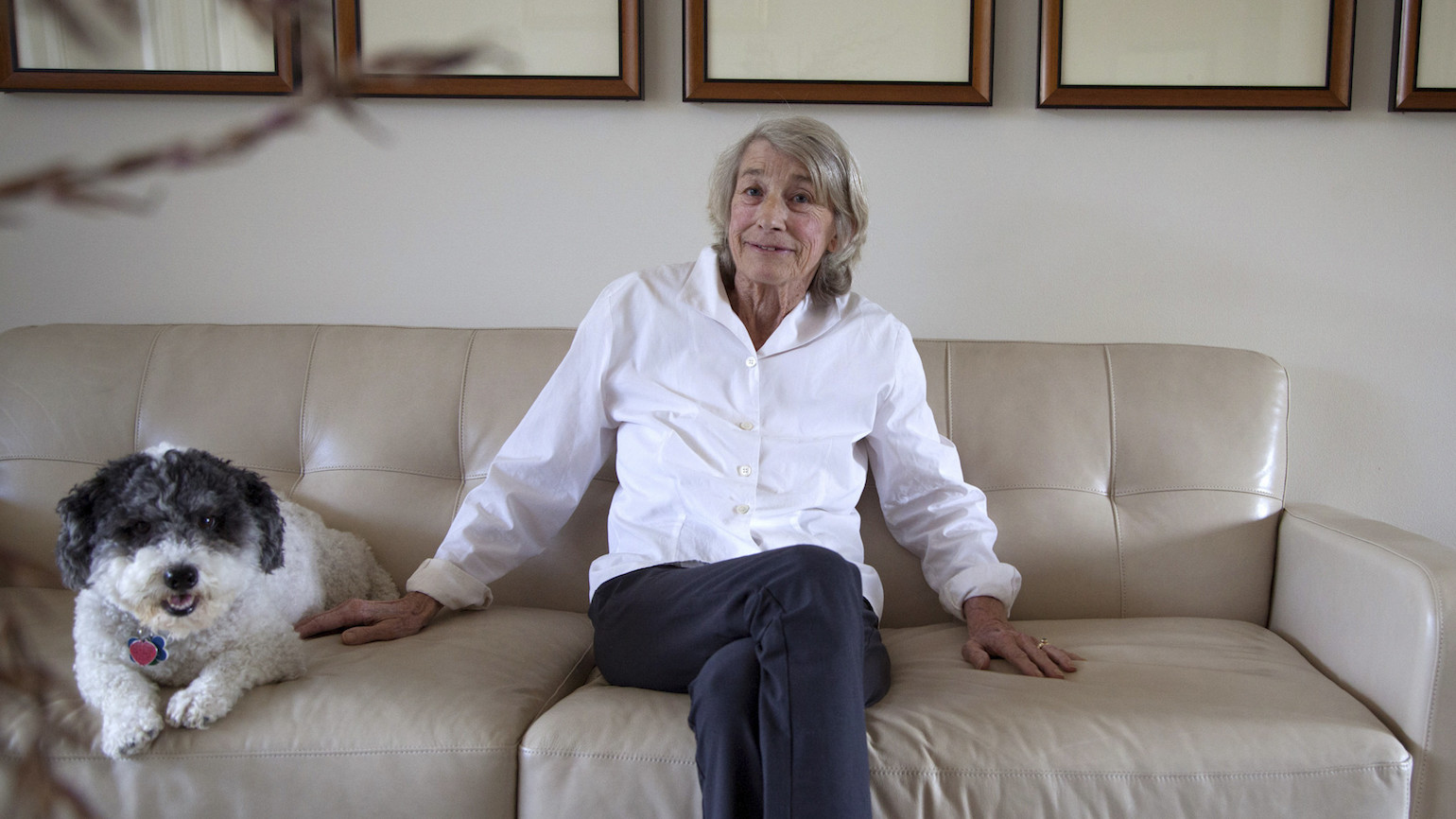
Mary Oliver’s Instructions for Living

Mary Oliver’s “instructions for living a life” were straightforward, if not simple. In one of her hallmark brief, stunning poems, she gave three directions: “Pay attention. Be astonished. Tell about it.”

The Pulitzer Prize-winning poet, who died January 17 at age 83, can certainly be said to have lived a life. She spent more than 40 years in the small town of Provincetown, Massachusetts, on outer Cape Cod, which is rich in both fishermen and artists. She found solace in the wild natural habitats that surround the hamlet, and her treasure trove of accessible, vibrant poems call us to follow her into the mysterious outdoors, equipped with her instructions for living a life.

Pay Attention
Oliver’s ability to notice the world around her with curiosity and awe is perhaps her most inspiring legacy. In her poem “Angels,” she writes:

“You might see an angel anytime
and anywhere. Of course you have
to open your eyes to a kind of
second level, but it’s not really
hard.”

For her, it wasn’t hard, and she seemed to abide on a sort of “second level.” Her ease with and cultivation of the skill of paying attention can inspire each of us profoundly. And it is a skill. As she writes in “The Moths:”

“If you notice anything,
It leads you to notice
more
and more.”

Be Astonished
In her poem, “When Death Comes,” Oliver writes:

“When it’s over, I want to say
all my life
I was a bride married to amazement.”

From her youngest years, Oliver was awed by nature, never able to learn enough, observe enough or be sufficiently overcome by its unending cycles of birth, death and renewal. This sense of astonishment vibrates throughout her body of work, perhaps most famously in the final lines of “Wild Geese:”

“Whoever you are, no matter how lonely,
the world offers itself to your imagination,
calls to you like the wild geese, harsh and exciting
over and over announcing your place
in the family of things.”

Tell About It
In her hundreds of poems, Oliver brought us into her world and then sent us back into our own, tasked with noticing it in all its stunning, complex detail. One of her most oft-quoted lines, from the poem, “A Summer Day,” asks:

“Tell me, what is it you plan to do
with your one wild and precious life?”

In her view, life was always awe-inspiring, but it was not always beautiful or easy. Nature often rescued her from her fears and anxieties—all of which she shared with us in her tellings.

My favorite Mary Oliver poem is, “I Worried.” Mourning her loss these past days, I’ve been imagining its final stanza as a fitting and beautiful description of her exit from this life:

“Finally I saw that worrying had come to nothing.
And gave it up. And took my old body
and went out into the morning,
and sang.”

Martin Luther King’s Favorite Hymn

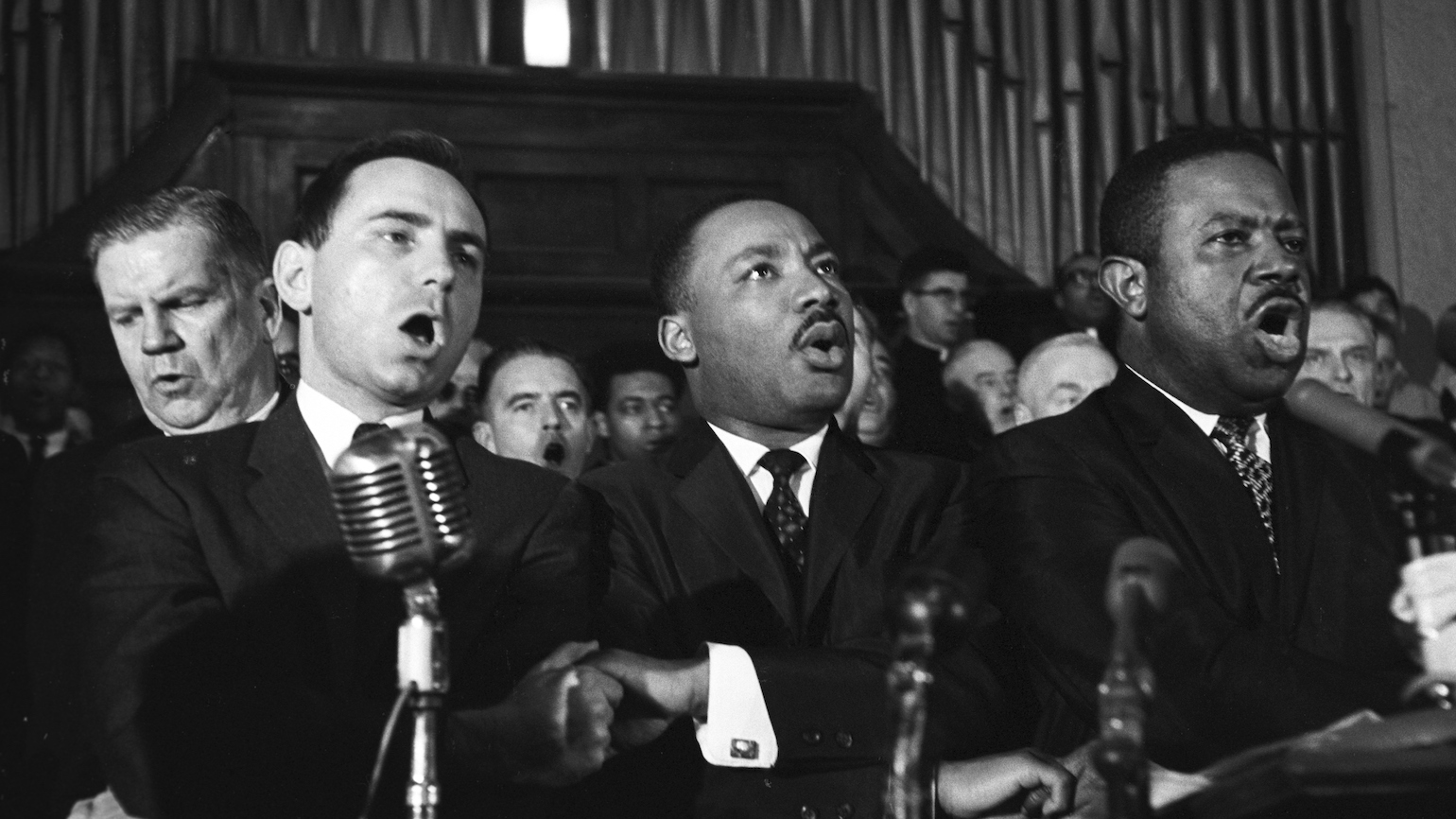
Ever prayed a song, letting the text and the music work through your soul? One of my favorites for that very purpose is the hymn that was evidently Martin Luther King Jr.’s favorite, “Precious Lord.”

People often talk about how important surrender is to the spiritual life, letting things go, trusting God. I find that hard to do just with words. Singing a prayer really helps.

Take a look at that first line, “Precious Lord, take my hand/Lead me on, let me stand/I’m tired, I’m weak, I’m worn…” The music helps me do just that, admitting that I can’t do it all on my own.

The inimitable Thomas A. Dorsey (no, not Tommy Dorsey of dance band fame) evidently wrote the song in 1932 after the death of his wife and child in childbirth. Talk about devastation. What could be worse?

I have never suffered like that, but at those times when I’ve felt very much alone, on the outs with myself, it has been such comfort to sing Dorsey’s tune.

Years ago Dorsey told about his inspiration for writing it in the documentary Say Amen, Somebody, a film I vividly remember seeing when it first came out, tears running down my wife’s cheeks as we listened to the music.

Martin Luther King suffered terribly—more than I can begin to imagine—in his all too brief life. And yet he never gave up. I don’t doubt his faith has helped me. I suspect that this song was one of his tools.

“Through the storm, through the night/Lead me on to the light/Take my hand, precious Lord, lead me home.” Let it be true.