My husband, Paul, and I attended the National Religious Broadcasters Convention (NRB) last week in Orlando. It’s a wonderful event with great sessions, keynote speakers, panelists and a large expo hall filled with interesting booths. One of the things I love most is that I always leave my time there with my spiritual batteries recharged. That’s priceless.
For me, NRB is like a big family reunion as I bump into friends and colleagues from the publishing, film, radio and television industries. It’s laughs over meals and short nights of sleep because I sit up late hanging out with dear friends.
On the afternoon of the third long day, we were so tired that we settled on a bench to rest for a while and to do a little people watching. We saw folks walk by, people whose names you’d recognize if I mentioned them.
We noticed executives from radio networks, musicians, actors and leaders from large ministries. We watched folks dressed as Bible characters and historical figures, their colorful costumes giving us a peek into those long-ago days.
And then I noticed something that touched my heart. Heroes of the faith walked by—men and women who have been serving God for decades, some of them for 40, 50 and even 60 years. Men and women whose teaching, writing and radio and television programs have touched my life from the time I was a little girl.
The years have caught up with many of them, as evidenced by their halting footsteps as they walked the long hallways of the convention area and expo.
It hurt me to see how feeble some have become. One lady was there who’d recently buried her husband of 60+ years. Others had visible health issues. Some used a cane or a motorized scooter. But what I loved was that they were still there, and still faithfully serving God.
I want to be like them someday—a woman who has faithfully served God, who didn’t give up when the hardships of life arrived, who kept on keeping on for the tasks which God’s given me to do.
Dear Father, even when my steps are feeble and my health is failing, help me to be faithful to serve You. Help me to use every scrap of the talents You’ve given me and to fulfill every task that You’ve put on my heart. Help me to serve You for the long haul. Amen.
Writing hasn’t always been my forte, so when I was asked to write a devotional for Daily Guideposts for the first time in 2005, I was honored and challenged by the task. Since then, it is something I look forward to doing each year.
Writing devotionals for Daily Guideposts allows me to share my story of faith, the struggles I’ve faced and the wisdom I’ve gained, with the hope that it helps others. I look at how the theme of each story will connect and resonate with readers. This process allows me to step back and re-live the experiences and lessons I’ve gained by looking through a writer’s lens. In doing so, I learn from these experiences and lessons all over again, sometimes gleaning new insights. Writing these devotionals is a lot like life—you never know what can happen.
Each time I receive an email, greeting card or letter from a reader about how a particular devotional has touched their life, I feel blessed. And when a friend or family member sees that they have been mentioned, their expression fills me with joy. Helping others by encouraging them through my devotionals is a blessing. I don’t consider myself a writer, but someone who helps others grow in their faith as I grow in mine.
Lord, thank You for the gifts You give us; help us to bless others with them.
Last weekend Kate, Frances and I rented a car and drove north to a farm run by nuns. Kate knows these nuns because she sometimes leads services at their house in New York, a few blocks from our church.
The farm is about an hour away in the semi-rural suburb of Putnam County. There several of the nuns raise chickens and ducks, grow all the food they eat and—this is why we rented the car—make maple syrup in early spring. Here’s something I didn’t know: Sap drips from trees with the consistency of water, tastes ever so slightly sweet and makes an astonishingly delicious cup of tea.
While we drove, for reasons that at first seemed random, Kate and I talked about an article we’d read in that day’s Times. The article discussed a book called Society Without God by Phil Zuckerman, a sociology professor at Pitzer College in California. The book is an extended study of religion—rather, lack of religion—in Scandinavia, which has one of the lowest church-attendance rates in the world.
Reviews touted the book as refutation of the idea that a faithless society would necessarily be morally unhinged. Presumably there are militantly religious people in the world who believe this. But I think most smart people understand that it’s a relatively dumb idea, given that even a cursory knowledge of history shows that both religious and non-religious societies are capable of great good and great evil (see: slavery in the United States; civil rights movement in same; quality of life in The Netherlands; discrimination against Muslims in same).
Still, regardless of whether the book flogs the wrong horse, Zuckerman said some interesting things when the Times’ Peter Steinfels called to interview him. This startled me: Most of his subjects, Zuckerman said, “balked at the label ‘atheist.’ An overwhelming majority had in fact been baptized, and many had been confirmed or married in church.”
Of course, most also disavowed Christian doctrine and displayed either total indifference or deep embarrassment when asked to state their thoughts on God and other religious questions.
Zuckerman took that as evidence of a society that had, in effect, moved beyond religion to a place where they could make moral decisions and live a happy life without reference to God—give or take a few purely ceremonial church weddings and baptisms.
I wonder. Could you not equally plausibly say that Scandinavians are reluctant to talk about God not because they don’t care or don’t know, but because their relationship with God—perhaps better to say, their way of living a godly life—is comprised of action, not statements and creeds?
A key element of American Protestantism is the idea that relationship with God begins with an affirmation of belief, then deepens with assent to a series of biblically-derived statements about God. The fruits of all that—abolishing slavery, say, or ensuring that no elderly person has to die alone in a nursing home—come later, if at all for some believers.
What if the Scandinavians do it in reverse? Or what if, having established a society that runs as much like the kingdom of God as imperfect human beings will ever achieve, they don’t need all those strenuous protestations of belief Americans cling to? What if such protestations are in fact sometimes a smokescreen, a way of avoiding engagement with the fruits of faith that God wants, indeed demands of us?
I thought about all of this when we got to the farm. There Frances emitted shrieks of delight as she fed the chickens (and even pet one that likes to be held, whom she christened “Mr. Cluck”), plucked eggs from the henhouse and watched Sister Catherine Grace prepare a great big bowl of sliced onions for that night’s meal.
The nuns drifted in and out of the kitchen on their way to various tasks—cleaning the house, sorting seeds for spring planting and, of course, prayer, study and worship. There was a groundedness to every one of those women, a settled ordinariness that transcended ordinariness into something almost unspeakably deep—the depth of relationship with God that comes when you let go your grasp on yourself and surrender to the often mundane (but no less beautiful for that) tasks that God sets for you.
The nuns were living the fruits of faith. Their talk about God would of course differ markedly from the average Scandinavian’s. But outwardly, minus their observance of the monastic hours, they run a pretty Scandinavian operation.
The language of doing, as opposed to the language of saying, or the language of believing. I think God speaks all of those languages, and God hears us when we speak them. Society Without God? That might be the one language God doesn’t speak.
Have you ever been a part of something that made no sense to you at the time but turned out to be an unforgettable life lesson? That Christmas I didn’t understand what was happening. I didn’t really put it all together for some time, but what I learned about myself—and Mr. P—is a lesson I’ll never forget.
My Christmas to-do list that year was overwhelming. Nailing down last-minute details threatened to draw all the holiday spirit out of me. Still, the one thing that always made the mad rush bearable was my shoe boxes.
It was a tradition I’d started in memory of a dear cousin, the very first recipient of one of those boxes. Each year I’d look for 10 people, folks who were in nursing homes or had lost a loved one or just seemed lonely or in need. I’d fill a shoe box with little gifts—lotion, deodorant, toothpaste, socks, lip balm, soap and tissues. I’d tape 20 one-dollar bills end to end and roll them up tightly into a tube and for fun, I’d throw in a windup dollar-store toy.
After wrapping each of the gifts in leftover wrapping paper, I’d put them in the box and top it off with a handwritten note, “Always remember, God loves you.” I never signed my name. That was part of the satisfaction. The hidden joy.
By Christmas Eve that year, I had only five boxes left to hand out. I knew exactly who would get them—five older members of St. Margaret’s. I rushed to the parish hall just before the 7:30 p.m. service. The holiday reception was winding down. I spotted four of my intended gift recipients in the hall. The fifth was nowhere to be seen. Maybe that person would show up soon.
I needed someone to be Santa’s helper. Right then, I spotted my friend Jim, our church’s senior warden and a former college football player. At his size, he can seem intimidating at first, but he’s really a gentle giant. I sidled up to him. “Can you keep a secret?” I asked.
“Sure,” he said. I explained what I wanted him to do. We went to the hallway, where I slipped him the four shoe boxes. I stashed the last in a corner. Then I made small talk with some friends and watched out of the corner of my eye while Jim made his way around the room. Each time he stopped, there’d be a look of surprise. “What? For me? Who’s it from?” “Why, Santa, of course,” Jim would say with a chuckle. Soon everyone was laughing and enjoying themselves.
Everyone except Mr. P.
I hate to say it, but Mr. P was one of the most difficult people I have ever met. Ornery and persnickety were some of the nicer words people used to describe him. He was sitting by himself at the refreshment table, dressed in a red flannel shirt and tan slacks with suspenders.
He’d done quite well in business—he drove a hard bargain, folks said—but he was much less adept when it came to relating to others. In small groups at church, if the leader wasn’t assertive enough, Mr. P would hijack the discussion, stringing sentences together on whatever interested him without seeming to pause for breath. If someone wrestled the conversation back to the proposed topic, he would interrupt and continue trying everybody’s patience.
I had little tolerance for him and was only too glad when he started going to the earlier Sunday service. I went to the late one. I didn’t have to see him. And I hadn’t. Not until now. There he was, sipping eggnog. People were polite, pausing to say hello, but nobody wanted to sit next to him and get sucked into a conversation.
The service would start soon. I went to pick up the last shoe box. It looked as if the person I had intended to give it to wouldn’t be showing up. What would I do with it? A voice inside my head had a suggestion: Give the box to Mr. P.
There were a thousand reasons why Mr. P did not deserve this present. He wasn’t needy or in a nursing home. He didn’t seem lonely. Not at all. To hear him tell it, he was never lonely because he was such good company for himself.
Give…the…shoe box…to…Mr. P, my inner voice insisted. No way! I responded emphatically. Giving him the box would be absurd. Finally I put the box away in the cloakroom along with my coat and went into the sanctuary for the service.
Everything was beautiful, with the scent of fresh pine boughs, candles flickering, the altar transformed by a sea of poinsettias. I took a seat in a pew near the middle, just before the choir processed in, singing carols. The feeling of Christmas seemed so near! All of the stress of the season faded in the tidings of joy. But I couldn’t stop looking at Mr. P, who was sitting several pews ahead of me. Though people were sitting on either side of him, he seemed so isolated, so utterly alone. Maybe my inner voice knew something I did not.
All right, I told myself. I’ll do it.
We reached the portion of the service where we stood and greeted one another in peace. I slipped out of my pew and asked Jim if he would agree to play Santa’s elf one more time. “I’d like to give that last box to Mr. P,” I whispered.
“No problem,” Jim said. “His son is coming to pick him up. I’ll give the gift to him when I walk him to the car.”
“Don’t you dare tell him who it came from,” I said. “Just say it was Santa.” Back in the cloakroom, I fetched the shoe box and handed it to Jim. I enjoyed the rest of the service and didn’t give Mr. P another thought.
Later that winter, I heard some news about Mr. P. His health had declined, forcing him to move in with his son. Soon he was telling anyone who would listen how unhappy he was with the arrangement. Another Christmas came and went, and then Mr. P and his son seemed to disappear. That spring, I learned that Mr. P had died in Florida, where his son had moved for a job.
The next Sunday, Jim and I talked about Mr. P. “You know I had to tell him that you were the one who gave him that box,” he admitted, somewhat sheepishly. “He wouldn’t accept any other answer. You know how he was.”
It took me a second to remember what Jim was talking about. “Of course,” I finally said. “The shoe box.”
“Mr. P wanted to thank you in person,” he continued, “but he never ran into you. He said no one had ever given him something without expecting anything in return. That’s the way it was in business and life. He kept asking, ‘Why did she do that for me? I need to know why.’ I didn’t know what to tell him.”
I struggled to come up with an answer, recalling that Christmas Eve night, the ill will I’d felt toward Mr. P.
“I didn’t want to give him the shoe box at first,” I said. “I thought he didn’t deserve it. I thought there must be someone worthier.”
Then it dawned on me. I hadn’t given the shoe box to Mr. P at all. God had, over my initial objections. I’d finally complied because I had to give the box to somebody. It was God who gave the gift to Mr. P. I just delivered it.
Mr. P has been gone for several years now, and strange as it might seem, I miss him. I often think of him when I assemble my Christmas shoe boxes. I’m reminded of how people can be like gaily wrapped presents; what’s inside can’t always be deciphered. Their hearts, their minds, their needs can be a mystery to us. But sometimes we’re given a glimpse of just what God sees, what we are blinded to. Sometimes God uses us to help him love the people we think are unlovable. Like Mr. P, who needed a gift that Christmas more than anyone.
I’d been driving for hours. From busy freeways near my home in Seattle suburbia, the thickly wooded landscape of mountain passes had given way to the vast fertile fields of the southeastern part of the state. With no tree in sight, there was a simple beauty to the open vista. Soon I would arrive in Pullman, a place I had never been. The city is home to farms, ranches and Washington State University. I hoped whoever attended my presentation would gain an appreciation of the religious icons I’d painted and carefully packed into tapestry suitcases for a symposium at the local Protestant church.
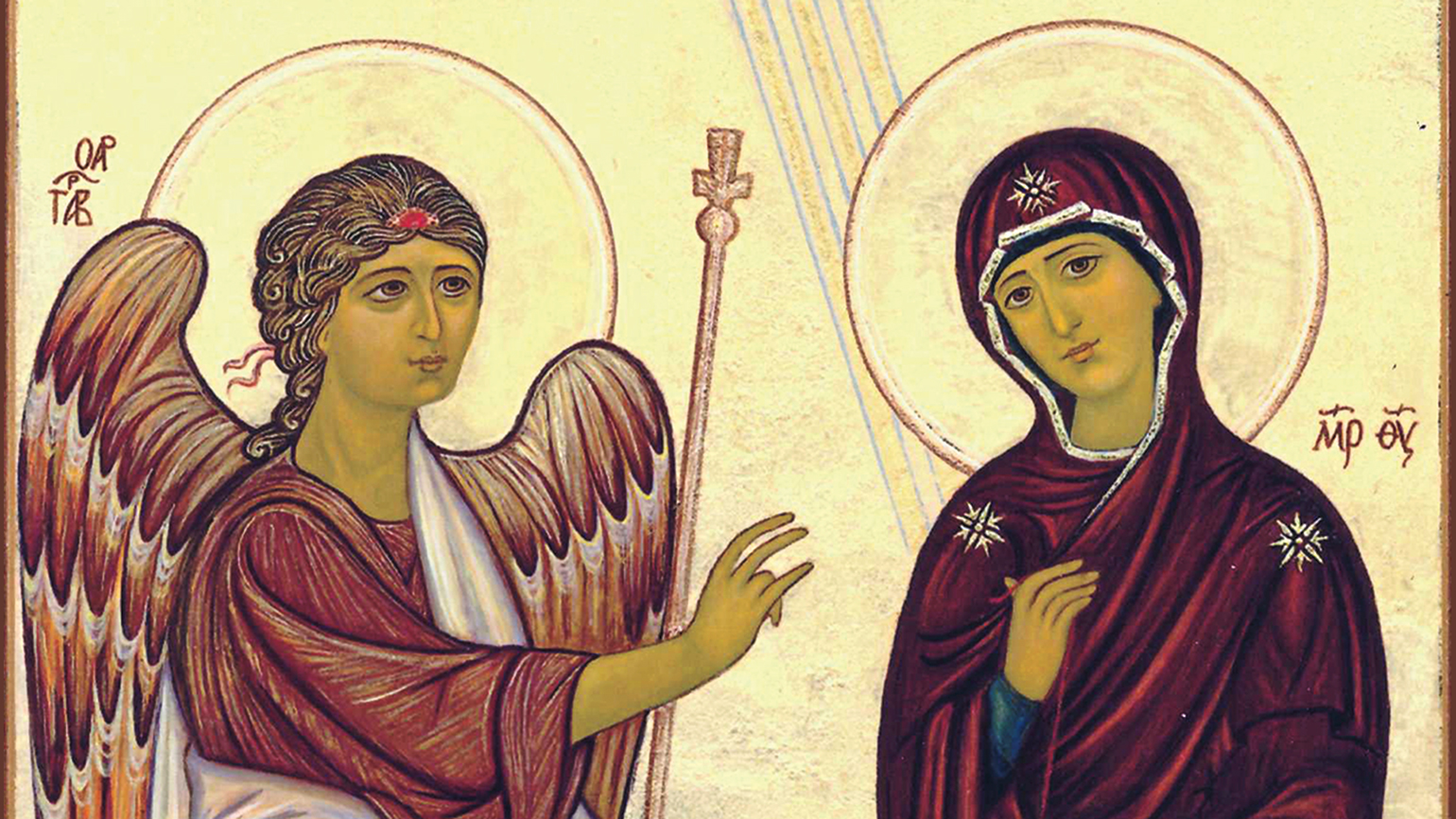
I was invited through a mutual friend of the church’s pastor to present my icons—my children, as I sometimes refer to the sacred images of saints and Christian historical events, such as the Annunciation and the Nativity. Icons are steeped in religious tradition and are often associated with the Orthodox Church.
As a Protestant with a convoluted spiritual history, I feel great joy sharing these windows into heaven with anyone who might be interested. This was the farthest I had ever traveled to present them, and I trusted that God was guiding me as I drove the open highways. Arriving at dusk, I pushed away anxiety and took a deep breath, praying the images would resonate. If even one person was touched by God’s story as portrayed in my icons, the six-hour trip would be worth it.
Iconography, which literally means “writing of images,” has existed in various traditions for centuries. That I’d devoted the past 20 years to sharing my faith through this art form is ironic, to say the least. I grew up in Ottawa, Canada, and while I had a stoic conservative Protestant father and an extroverted liberal Catholic mother, religion wasn’t openly valued in our family.
Church provided good child care when my father dropped me off to visit his mother, and I loved it, longing for a God who was bigger than denominations. But in my early teens I grew suspicious of religion. Deep down I remained a truth seeker, although I rejected the idea of a supernatural being who was interested in me personally. Instead I found a certain holiness in nature and sought solace there. When I married years later in a Unitarian church, I chose to omit God’s name from our vows.
I pulled up at my destination after hours of marveling at how God had brought me to this journey. The young, energetic pastor welcomed me warmly, and we got to work on my display. Mounted icon prints were hung on the walls, with accompanying prayers for meditation. I draped tables with maroon cloths and set my original icons on small stands, placing a candle in front of each one to enliven the gold leaf. We agreed to play music, some of my favorites from Valaam Monastery. At home while I paint, chant helps me enter into the spirit of the story I “write” into image.
I’d never forgotten the first icon I saw as a university student in Ottawa. I sat in my art history class, looking forward to learning more about some master of technique, like my favorite painter, Botticelli. Instead the professor put on the large screen an icon of Mary and the Christ Child from the Byzantine era.
Compared with Botticelli’s intriguing figures, such as those in his Birth of Venus, the icon looked like a child’s artwork, so simple, with nothing hidden or surprising. The image sunk into my subconscious, however, laying dormant for years. It took a move to Seattle many years later for that experience to bear fruit.
My spiritual rebirth as a Christian happened soon after I became a mother. My emotional shell seemed to crack open. I felt something in my spirit shift and reach out—no longer to the universe, but to a personal God that I now trusted was out there somewhere. I craved the scriptures— simple ones, like those I’d read in the illustrated Bible of my childhood. I joined a nondenominational “Bible church” and discovered an inclusive God who welcomes us home no matter how far we’ve wandered. Even me.
I was reintroduced to icons when I was invited to attend a weekly class at a Byzantine Catholic church in Seattle. Lonely and depressed after moving to a new city, I was drowning in home renovations, my aging mother’s decline back home in Canada, and frequent solo parenting when my husband traveled. I missed my old Bible church and the close friendships I’d developed there. I was hungry for spiritual energy. The class was a godsend.
I learned that iconography differs from other art in that it’s about the essence, not the form. Beauty is not its primary purpose. There are rules for painting icons—the work itself is considered a sacred calling rather than a platform for creative expression. Iconographers do not make up their own images; instead they use prototypes steeped in tradition; they do not sign the front of their paintings, but rather the back, beginning with the words by the hand of. Icons are conduits for sharing God’s love story with the world. Simply, God’s word in pictures.
Working on an icon of the Annunciation had been transformative for me. I prepared the plywood panel with layers of smoothly sanded gesso before tracing on the prototype. I wanted to capture that holy moment when Mary had a choice to make: to be God’s chosen vessel or not. As I worked on the image, the image worked on me; Mary’s eyes looked deeply into mine.
“What would you do?” she seemed to ask. Her story of love and loss as a human mother touched me deeply. I wanted to tell her to run away, that being highly favored wouldn’t equal a pain-free life. Hard times were ahead. Mary couldn’t see the big picture, but she trusted God, end of story. Or rather, the beginning.
Now, as I began to share the language of icons with the Protestant community in eastern Washington, I prayed exactly as I had on my drive over, to be effective and do my part. I hoped the icons would minister to others, as they had to me. Many people showed up, quietly considering the new images with gentle wonder.
Afterward a woman approached to speak with me, pausing to find her words. “I have Catholic relatives who I could never relate to,” she told me. “Now I feel like I finally understand them more.” Spiritual seekers of every stripe—the icons are “written” for us all.
For more angelic stories, subscribe to Angels on Earthmagazine.
I pulled into the Gold’s Gym parking lot, but I didn’t get out of the car. Michelle, a mom from my daughter’s middle school, had invited me to spin class. “Come as my guest,” she said. “Grab a bike. See if you like it.”
No big deal, right? Except I hadn’t been to a gym in more than 15 years and was terribly out of shape. It wasn’t that I didn’t want to exercise and take better care of my body. But every time I thought about it, something kept me from taking that first step. Something I couldn’t quite put my finger on.
A perky gal in her thirties sashayed past my car, wearing fluorescent purple leggings with a matching print top. She looked as if she’d stepped off the cover of Shape magazine. I slunk down in my seat and pulled my ball cap over my eyes. Scowled at my baggy gray sweatpants. She’s everything I’m not, I thought. Slender. Beautiful. Confident. Not to mention 20 years younger.
Everything in me wanted to throw the car in reverse and return to the comfort of my home. But Michelle had texted that she was on her way.
I’d actually been thinking about going to the gym ever since last Thanksgiving, when someone posted a photo of me on Facebook. I stared in disbelief at my thick waist and thighs. The extra folds around my jawline. Dear God, is that really what I look like? I quickly untagged myself from the post.
The truth was, I’d hated my body ever since I hit puberty. I was curvy when the models in all the magazines were flat-chested and Twiggy-thin. It didn’t help that appearances were everything to my father. He worked out regularly and was proud that he cut a fine figure with his narrow hips and broad, muscular upper body. When I was little, back before he and Mom divorced, Daddy liked to flex his arms like a weight lifter and bid my younger sister and me to hang from his biceps.
As a sales rep for a clothing line, Daddy went to fashion shows and rubbed shoulders with gorgeous models. He made no secret of the fact that I didn’t measure up. When I went away to college, he sent me notes pushing me to lose weight, telling me how unattractive it was to be a size 12. Once he even offered me $500 (a lot of money in 1980) if I lost 40 pounds. His note explaining the bribe ended with “Size 8 bottoms are best.”
Those words had made my heart ache. Here I was about to become the first person in my family to graduate from college, but he’d made it clear that wasn’t what mattered. I longed to have the kind of father my friends had, someone who loved and accepted me for who I was.
After college, I landed a job as a television news reporter. I managed to lose the weight Dad had wanted by practically starving myself. (Because the camera adds 10 pounds, I even took up smoking after a colleague confided that it was her secret to staying thin.) Still, Dad never once said he was proud of me. When I was named weekend anchor, I sent him a tape of my first broadcast. “Who watches the news on the weekends?” he said.
In the mid-1980s, someone gave me a copy of Jane Fonda’s workout videotape. I was hooked. I put on leg warmers and a headband and felt the burn with Jane. Later I joined an aerobics studio. I spent a decade working out. No matter how slim and in shape I was, I didn’t feel good enough. I desperately wanted love, but deep down I didn’t feel as if I’d find it.
It’s no wonder I went through some bad relationships. Until I found Michael, the kindest man I’d ever met. He loved me the way I’d always yearned to be loved—unconditionally. We married, and when I got pregnant at age 40, it was a good excuse not to work out.
I visited Dad’s house when I was five months along. “You’re getting fat,” he said. I wasn’t even wearing maternity clothes yet. I expected him to be thrilled that I was giving him his first grandchild. That was the last time we saw each other. He died three days later.
As I got older, I came to understand that Dad was an alcoholic with a traumatic childhood who was desperately unhappy and unable to show me love because he’d never experienced the unconditional love of a parent. Now, 15 years after his death, I couldn’t have been happier about my life—a strong marriage, a wonderful daughter, a fulfilling freelance writing career, the centrality of my faith—yet I still couldn’t be happy about the woman I saw when I looked in the mirror.
I saw the woman Dad saw. Not pretty enough. Not skinny enough. Not good enough, period. In other words, me.
So here I was in the parking lot at Gold’s Gym, hiding in my car. My eyes followed the gal in purple as she strode through the gym doors. Was this the closest I’d come to working out in so many years because I feared I’d never measure up to women like her?
Now that I thought about it, that attitude wasn’t just about going to the gym. In almost every situation, I compared myself to the women around me. And I always came up short. Most women were younger, prettier, more successful, more active at church, better mothers, kinder, more patient—you name it.
Michelle tapped on my window. “Ready to ride?”
I smiled weakly and followed her into the gym’s cycling studio. Two rows of bikes formed a semicircle facing a mirrored wall. Great, now everyone can judge me.
I threw my leg over the bike next to Michelle’s and pedaled slowly to warm up. I peeked at the mirror, cringing at my ungainly self. The instructor dimmed the lights. Woohoo! At least no one would be able to see me struggling. Sweat poured down my forehead. My legs burned. Pride kept me pedaling. I didn’t want Michelle to know how out of shape I really was. An hour later—spent, breathless—I hobbled off the bike. My thighs felt like noodles.
The next morning, I lay in bed, moaning, my muscles too sore to move. My phone buzzed. A text from Michelle. “You’re gonna love Donnie’s class today. I’ll save your bike.”
My bike? I’d planned on spending the day recovering. But I couldn’t have Michelle thinking I was a wimp. I made it through the class. Barely.
Three weeks in, I was still just making it through class. I was constantly sore. I hadn’t lost any sort of weight. I wasn’t experiencing any exercise high. I was going through the motions, wishing I were home already. If I missed more than a day, Michelle texted me, asking where I was.
My M.O. was to hop on my bike, get the class over with and get out. As if the workout were a punishment.
One morning, after I’d wiped down my bike and left the spin studio, I spied a familiar silhouette on the weightlifting floor. Narrow hips, broad upper body. Biceps big enough for kids to hang from. My breath caught.
Daddy?
The man turned. I saw his face in the floor-to-ceiling mirrors. Of course, it wasn’t my father. Dad had been dead for 15 years. His death was tragic: He had died in a fire, and because so many of his problems were unresolved, he never found peace. His alcoholism, his self-hatred, his emptiness, his struggle to love and be loved.
But I still carried him with me, didn’t I? His expectations. His disapproval. Then I caught my own reflection in the mirrors. That’s what kept me from working out for so many years—my negative body image. Dad was gone. It was time I let all those damaging remarks—that I needed to look a certain way to be accepted and loved—go too.
I stared at my reflection and imagined how God saw me. How he saw every one of us in the gym. He wasn’t judging us by our appearance. Our fitness level. Our career success. Not even our kindness or generosity. He loved each of us perfectly in our imperfections, not because of who we were but because of who he is.
On my way out of the gym, I passed the woman I’d seen on my first day, who’d seemed so intimidating in her confidence and color-coordinated outfit. I caught her eye and smiled. She smiled back. Both of us were there to stay healthy. We weren’t so different after all.
I’ve been a regular at the gym for three years now. I’ve taken up strength training and kickboxing too. I try to work out four times a week. Sometimes I miss a day or gain a few pounds. I don’t beat myself up. What matters is that I’m getting fit physically, mentally and spiritually, and learning to love the body God blessed me with. And that’s good enough.
For more inspiring stories, subscribe to Guidepostsmagazine.
Sandi Patty has been a name synonymous with Gospel music since she released her first album in 1979. She was dubbed “the voice” at an early age because of her singing ability.
Patty’s newest book, titled The Voice: Listening for God’s Voice and Finding Your Own, takes a deep dive into parts of her life she’s kept private for years. Surprisingly, The Voice is not primarily concerned with Patty’s singing voice. Patty was always a talented vocalist. However, she struggled to find her inner voice and speak up for herself.
Community Newsletter
Get More Inspiration Delivered to Your Inbox
“I was a shy kid. Words were hard for me,” Patty told Guideposts.org. “It was hard to learn how to speak up and share my thoughts. As the years rolled along it became more and more difficult to speak up.”
For example, Patty’s last name was misspelled on one of her early albums as “Patti.” Instead of correcting the spelling, she went by the name “Sandi Patti” for decades.
One of the reasons Patty found it so difficult to use her voice was because of a traumatic childhood experience. At age six, she was sexually assaulted by a female family friend, an experience she opens up about for the first time in the book.
“The message you get when you are sexually abused, especially at an early age, is that you don’t tell because no one is going to believe you and it’s your fault,” Patty said. “I was already a kid who had a shy personality and tended to second guess myself. That message became a lens through which I saw the rest of my life. In other situations, I would think that doesn’t feel right, but I’m not going to speak up because I’m probably wrong anyway.”
She’s sharing the story of her assault now in hopes that it will help other people feel less alone.
“[Feeling alone] is one of the things that keeps everybody silent about the tough times in our lives—we think we’re the only ones,” Patty said.
She writes in The Voice that she felt like it was “her job to make everyone feel better.”
“Especially for women, I think we feel this need to somehow personally make everyone’s lives fulfilling and better, which is not even possible!” Patty said. “The cost of that is we don’t speak up because speaking up causes conflict.”
Friendships were essential to helping Patty find the courage to speak up. They reminded her that she didn’t need to make others feel better because the people she loved didn’t doubt she cared for them.
“For me having a group of friends that I trusted, and who had lived a lot of life, boy I tell you, that was lifesaving and life changing for me,” she said.
Friends and family were crucial to help Patty confront another struggle she faced: shame. She felt plagued by insecurities about her weight, her divorce and her assault.
“I’ve heard it explained that guilt tells us we’ve done something wrong—shame says we are wrong,” Patty said. “Shame is probably the last piece we really have to figure out a way to let of—it’s like unwrapping yourself from a wet shower curtain. Counseling was a huge piece of that and continues to be a huge piece for me.”
Shame was a huge presence in Patty’s life—and one she freely admits is an ongoing battle. How does she fight it?
“I have to say, ‘God you have forgiven me, you have redeemed me and I don’t need to carry this shame any longer. I am going to lay it down,” Patty said. “And that’s a process and it’s hard but… it is so worth the battle.”
Patty hopes readers will be encouraged to find their voice after reading her story.
“I want [people] to know that their story and their voice matter,” Patty said. “We have to figure out a way to take our pain and put it where it needs to be, without letting it guide our lives. [Pain is] a part of our story. It describes us, but it doesn’t need to define us.”
When I was a kid growing up in the 1970s, I remember having a comic book based on the best seller The Cross and the Switchblade. Written by David Wilkerson, with John and Elizabeth Sherrill (who remain editors for Guideposts magazine), it’s the story of a country preacher from Phillipsburg, Pennsylvania, who felt God calling him to serve Latino teens in New York in the late 1950s-early 1960s.
On the small paperback copy that I have, the book is touted as “A True Story—The Best-Selling Inspirational Adventure of All Time!” I remember hearing about it and seeing it on the bookshelves in homes of family members and friends. Published in different editions and languages over the years, The Cross and the Switchblade not only became a comic book but also a movie and, according to Elizabeth Sherrill’s site, a dramatic adaptation for the stage.
Funny thing is, I never read the book. It’s almost as if I never felt the need to. I knew all I needed to know: It’s a testament to the astonishing things that can happen when you claim a bold faith, to not hold back when you sense God leading you to do something extraordinary.
But now I am, indeed, reading the book, and finding that after all these years, it holds up. The storytelling is compelling, Wilkerson is a remarkable person, and many of the events throughout the book are incredible.
I won’t go into all of that here, but I would like to touch briefly on one of the more quiet moments early in the book. Wilkerson takes a trip to see his grandfather, whom he describes as a dramatic Pentecostal preacher. It’s a formative moment for Wilkerson.
Below is the quote that sums it up for me. And I hope, even though you don’t have the whole context, you’ll find a little inspiration for your day. It’s about what happens when you take risks, try something new and step out in faith.
From Grandpap Wilkerson: “When you have power and life, you’re going to be robust, and when you’re robust, you’re probably going to make some noise, which is good for you, and you’re certainly going to get your boots dirty.”
Howard Thurman’s life helped change history. But few people know of him.
Some say the signs were there from the beginning. From the very moment Thurman was born, on November 18, 1899, in West Palm Beach, Florida. He came into the world with a caul—the membrane of the amniotic sac—covering his face. Folklore held that this rare occurrence was both a blessing and a curse, granting the ability to foretell the future but at the cost of living with a heavy heart. His grandmother, who had been born into slavery, was an experienced midwife. She acted quickly, piercing the baby’s earlobes while removing the membrane. The only way, it was thought, to break the curse.
By the time Thurman was old enough to inquire about the holes in his ears, he was already having visions. He’d see a face and know that something was about to happen to that person. He felt a deep connection to the natural world. While staring out at the ocean or taking walks in the woods, he’d feel an overwhelming sensation, as if gaining a depth of understanding about the universe he was incapable of knowing on his own. It was here, surrounded by nature, that he felt God’s presence.
He felt it too in the peculiar encounters with strangers that graced his life. As a teenager, Thurman felt called to be a minister. In Daytona Beach, where his family lived, there were no schools for African-Americans beyond the seventh grade. The closest black high school was in Jacksonville, a hundred miles away. Thurman applied and was accepted. He’d be able to live with a cousin and work pressing clothes to pay tuition.
So at 13, Thurman said goodbye to his family. A friend dropped him off at the train station. For the fare, his mother had borrowed money from an insurance policy. Thurman went to the ticket window with his battered trunk. It had no lock, no handles and was held together by rope.
That’s when he learned the railroad required all checked trunks to have handles. The only way to get his things to Jacksonville would be to pay extra and have the trunk shipped by “railroad express.” But that was money he didn’t have. Thurman sat on the steps of the station, head bent, tears streaming down his cheeks.
Then he saw them.
“I opened my eyes and saw before me a large pair of work shoes,” Thurman would recall years later in his autobiography. His gaze traveled upward to find a Black man dressed in overalls and a denim cap.
“Boy, what are you crying about?” the man said. Thurman related the trouble he was in.
“If you’re trying to get out of this town to get an education, the least I can do is to help you,” the man said. “Come with me.” The man paid for the trunk to be shipped and handed Thurman the receipt. Without saying another word, he turned and disappeared down the train tracks.
He was always grateful for his mysterious benefactor. He began to think of everyone as being connected, in some unseen fashion, like atoms bouncing off each other, setting off a series of chain reactions, not at all randomly, but part of a plan, a master blueprint.
Twenty years later, Thurman stood on the other side of the world, gazing into Afghanistan across the Khyber Pass, the fabled mountain trade route. The last place he could have ever imagined life taking him that day at the train station in Jacksonville. It was 1936, and Thurman was an esteemed professor of religion at Howard University. He’d been invited to India, Ceylon and Burma on a months-long trip as part of an African-American delegation representing the YMCA and YWCA—a “Pilgrimage of Friendship.” Thurman had resisted going. He didn’t think he was the right person for the job, even if it meant a chance to meet Mahatma Gandhi.
Now his eyes took in the seemingly endless path before him, twisting its way through the mountains. A place explorers and traders had ventured for hundreds of years. His mind suddenly became transfixed, shutting out everything around him until there was absolute stillness. Thoughts invaded his consciousness. Thoughts he knew were not his. He saw, in this illuminated state, a world not divided by nations’ borders, by money or power, race or religion. But a world as one. All were God’s children. Standing at the Khyber Pass, Thurman felt a deep call to action.
Weeks later, Thurman would at last meet Gandhi. But it was Thurman’s vision at the Khyber Pass that really stayed with him. When he returned home from his trip, he set in motion a plan to form his own congregation, the Church for the Fellowship of All Peoples in San Francisco. A place where people of all races would feel welcomed. He hoped it would spark a movement across the country. But he never attracted much of a following.
At Howard University, his sermons had drawn hundreds of worshipers. In San Francisco, Thurman was sometimes preaching to just 50 people. All his life, he’d felt God leading him. Had he somehow misunderstood God’s purpose for his life? Was his epiphany at the Khyber Pass an illusion?
In 1949, Thurman wrote Jesus and the Disinherited, calling for people to see beyond race. The book wasn’t a huge seller. But among the few who took notice was a 20-year-old divinity student from Georgia. A man who’d go on to lead a bus boycott protesting the arrest of Rosa Parks. He was a virtual unknown at the time, called on to address an overflow crowd at the Holt Street Baptist Church in Montgomery, Alabama. There was no time to write a speech. He’d have to speak from his heart.
“We the disinherited of this land, we who have been oppressed so long are tired of going through the long night of captivity,” the young man said. “And now we are reaching out for the daybreak of freedom and justice and equality.”
It could have been Thurman just as easily saying those words as Martin Luther King, Jr. Thurman went on to become a trusted advisor of the civil rights leader. In fact, King carried Thurman’s book with him wherever he went.
Thurman was surely honored but not surprised. To his way of thinking, the connection had been there from the day he was born.
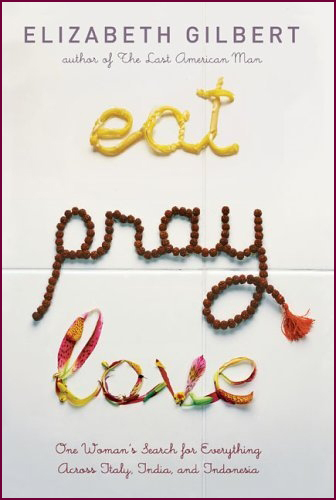
The success of Elizabeth Gilbert’s book Eat, Pray, Love is founded on the almost universal dream of completely changing our circumstances at some point: Leaving a spouse or finding one, landing a better job—or, for some, any job—losing weight and feeling attractive and alive again, taking the trip of a lifetime.
Gilbert’s journey got me thinking: When do we say, “Enough! I can’t stand my situation any longer, I’m going to change it!”?
Change is a choice. Crises may hit us and force some external re-arrangement of our lives, but even in those situations, we have to choose to change.
Liz Gilbert’s turning point came one night in her bathroom as she was on her knees, sobbing yet again. Then suddenly she found herself praying. The choice to change was in continuing that conversation. And while things didn’t change immediately in her life—in fact they got worse—the seed was planted and three years later she’s off on a world trip financed by a book advance.
AA suggests that before people can turn away from alcoholism they need to hit bottom. I know learning that I was officially “obese” was the “bottom” that provoked me to start making different food choices and lose 35 pounds. And a friend of a friend finally decided to leave her long, turbulent marriage the night their house caught on fire and her husband rushed to the window of their bedroom where the firemen had placed a ladder for their escape. He never checked to see if she was alright but scrambled to safety with nary a look back. That was her “bottom.”
Do we have to hit bottom before we change? Do we, like Liz Gilbert, have to cry out in pain from the well of despair before we turn our life around? And, most importantly, why do we wait so long?
Author, entrepreneur and motivational Robert Kiyosaki tackles this problem in a recent article in Success magazine. He talks about the period after we’ve decided to change, when we have to exert ourselves with no apparent gain. He calls it “the difficult period of maximum effort with minimal gains.” If we stick with our resolve, with our vision through this tough period, we’re on our way to success. If we backslide, we have to go back to “maximum effort with minimal gains” again.
But I ask you: Why do we make it so hard on ourselves? Why is it so hard to change our behaviors when most of the time, we know (we really know deep inside) that we need to change? I’d be interested in your thoughts, your experiences in this regard. Maybe it will help us “wake up” sooner without quite having to hit that very hard, rock bottom place.
I opened my laptop to check my grocery list. My two older children were running around downstairs. My baby daughter was with me. My husband, Jacob, a carpenter and a Southern Seminary graduate student, had already left.
My gaze went to a Facebook trending story: “A Blind Eye to Sex Abuse: How USA Gymnastics Failed to Report Cases,” from The Indianapolis Star.
As seen in the April 2020 issue of Guideposts
No. The article outlined how USA Gymnastics had systematically buried reports of sexual misconduct in a filing cabinet—complaints about 54 member coaches over 10 years. I felt sick. An institution responsible for the mental and physical well-being of thousands of girls protected the coaches who had abused them. I thought of the human cost of such a betrayal, the darkness that would follow those little girls. I wanted to break down and sob.
I thought back to being 15 and sitting on the exam table in Dr. Larry Nassar’s Michigan State University office. I remembered his cheery demeanor. The way he called me kiddo. I’d trusted him because USA Gymnastics trusted him. Nobody would have believed me then, I thought. They protected their coaches, so they would have absolutely protected him. Mine would have been just another name buried in the filing cabinet.
Then it struck me. The Indianapolis Star had reported this story. That meant someone had blown the whistle on how USAG handled sex abuse and been believed. The public was paying attention. I steadied my breath. Was God calling me to come forward? Was this finally my chance?
It was a long shot. I’d been trained as a lawyer, so I had no misconceptions about how the situation could unravel. Would the Star even reply if I told them about Larry’s abuse? My assault has probably passed the statute of limitations, I thought. It had happened 16 years ago. But would my story compel someone with a live case to come forward? Even if that case went to court, would we get a good judge? A fair jury? The whole process could take years, and I would be scrutinized and vilified every step of the way. Was it worth it?
I clicked to compose a new e-mail. My hands hovered over the keys. I knew Larry was still working with patients. All those little girls. I remembered what it was like to be one of them. To love gymnastics. To give everything you had for the sport. I’d joined a gym at 11 years old. Too late for any hope of becoming a serious gymnast. But nine months after I first walked into the little gym in our Kalamazoo, Michigan, shopping mall, my coach took my mother and me aside. “I’d like to talk about Rachael joining the competitive team.”
Mom wanted to be supportive, but she had concerns. What if I got injured? Fell prey to body image issues, as many other gymnasts did? What if a coach touched my body inappropriately? My mother was a survivor of childhood sexual abuse, and I was too. There had been an incident at our church when I was seven. We were both very attuned to the risk of adults having power over children. We decided I could pursue gymnastics on one condition. “If your dad and I see anything that gives us a reason to be concerned for your health and safety,” my mom said, “you’ll be out faster than you can imagine.”
We were lucky. My coach was kind, dedicated, always encouraging. Not like the domineering coaches I saw on other teams. When I suffered back injuries and stress fractures as a teenager, my coach was worried. “You need to see a doctor.”
I went to the top sports medicine clinics in our area. The doctors weren’t very helpful. “Icing would be a good idea,” one said. I wanted to roll my eyes. Yes, of course icing is a good idea. Was he even listening to my concerns?
“Have you thought about taking Rachael to see Larry Nassar?” the gym receptionist asked my mother. I knew about him from watching the 1996 Olympics. As the USA team doctor, he’d rushed out to take care of Kerri Strug after her iconic vault led to a third-degree lateral sprain. He really cares about his gymnasts, I thought.
A few weeks later, my mom and I sat in Larry’s waiting room. I watched him walk girls to the door after their appointments. Most doctors I’d seen barely looked up as I left their office. A nurse led us to the exam room, and after a few minutes, Larry came in.
“Hey,” he said warmly. Then he pulled up my chart. “Looks like you’ve got a lot we need to deal with, kiddo!” After some discussion about my wrists and back, Larry tested my flexibility and core strength, putting me through a battery of movements and tests. “De Quervain’s tenosynovitis,” he said. “Don’t worry, kiddo. We’ll get you fixed up.”
Larry told my mom that he would adjust my pelvis and showed her a diagram of how he’d do it. “Okay,” she said.
Then he led me to the middle of the room and slid my feet about 12 inches apart. He knelt down and placed one hand firmly on my lower back, looked down at the floor as if concentrating, and wrapped his other hand around the inside of my leg, under my shorts. “Okay, I’m going to apply some pressure now,” he said.
His hand went inside my shorts. Inside my underwear. Inside me. Wait—what? I looked at him.
“Got it!” he said, removing his hands.
What just happened? Questions raced through my mind. I knew there was something called internal pelvic floor therapy, where a doctor adjusts muscles from inside a person’s body. My mom had told me about it a few weeks ago. Is that what Larry did? It had hurt and felt awkward, but my mom had been right there. Surely she would have said something if Larry had been out of line. He treated girls every day. This must be normal, I thought.
I kept seeing Larry. I didn’t like the treatments, but he was the only doctor who took my injuries seriously. It wasn’t until our second-to-last appointment, when he groped my breast, that I realized he wasn’t who I’d thought he was.
I didn’t tell my mom how Larry had assaulted me until a year later. “Rachael, do you want to go to the police?”
I remembered what had happened at church when I was seven. I’d been unable to articulate my abuse then, and I certainly hadn’t known how to prove it. My parents knew something was wrong, that I was acting differently, but some of our church friends thought they were overreacting. Friends stopped holding me, cuddling me, for fear of being accused. Those friendships dissolved, and we had to change churches. If I can’t prove Larry’s abuse, I thought, it will cost me everything.
It felt safer to stay silent, but the abuse haunted me. I had flashbacks. Nightmares. Burning questions. In 2003, when I was 19, I tried to journal through it, writing down everything Larry had done to me, all my thoughts and feelings, on loose-leaf paper. Save me, O God! I wrote on the first line of the first page. I held the pen steady. Did God care about my suffering? Did he care about what Larry had taken from me? It was never the hand in the dark. It was always the hand I held, I wrote later. The hand I’d trusted.
I struggled to separate the way I felt about God from the evil Larry had committed. Had God abandoned me? He had not, it dawned on me as I wrote. I couldn’t deny the goodness in the world, the strength and purpose of God’s love. With the help of my faith and my family, I was able to grow. The passion and drive I’d once put into gymnastics, I poured into law, debate and public policy. I put those journal pages away in a folder and moved on. I graduated law school, passed the bar and met Jacob.
As Jacob and I developed feelings for each other, I knew I needed to tell him my truth. We went for a walk near my parents’ house. I explained what had happened at church when I was seven and later as a teenager with Larry. I kept my eyes down, afraid of his response.
“Rachael,” he said, “I am so sorry this happened to you.”
We married in 2009. Now, in 2016, we were raising three wonderful children. We were happy and thriving, but memories of Larry still followed me.
I blinked myself back into focus in front of my computer, e-mail open. My mind circled back to the little girls Larry still saw through his medical practice.
Even if society doesn’t validate my coming forward, I thought, even if Larry is never held accountable, at least I’d have tried. If there was a chance that I could save those girls from sharing my fate and force Larry to face what he had done, I would come forward. I was safe in God’s love for me.
I began to type. I am e-mailing to report an incident…. I was not molested by my coach, but I was molested by Dr. Larry Nassar, the team doctor for USAG. I was 15 years old. I explained that I had medical records showing my treatment and that I did not come forward earlier because I did not think I would be believed. I have seen little hope that any light would be shed coming forward, so I have remained quiet. If there is a possibility of that changing, I will come forward as publicly as necessary. Then I hit send.
A few weeks later, I told my story to two journalists from The Indianapolis Star. Then I went to the police. I gave them my journal, those pages where I’d put down my deepest feelings, every detail of my sexual assault, things I had not shared with anyone. The statute of limitations had not expired, and I testified against Larry in court. At his sentencing, 156 of us survivors spoke, one by one. I spoke last. I asked the judge to consider the question that I had wrestled with since I was 15 years old, that God had answered with his love, and that everyone tuning in to the sentencing could never again ignore: How much is a little girl worth?
Rachel Denhollander is the author of What Is a Girl Worth?: My Story of Breaking the Silence and Exposing the Truth About Larry Nassar and USA Gymnastics, available wherever books are sold.
For more inspiring stories, subscribe to Guidepostsmagazine.
Worried about what happens to your kids’ faith when away at college? My youngest is back in school and I’m not fretting about his spiritual growth even if he is on an “anything goes” sort of campus that forgot its church affiliation years ago.
First of all, there’s always exam time. Face the experience of a really grueling final in something like orgo chemistry—for me it was economics—and you’ll discover prayer. Real fast.
I’m not completely joking. I was a confirmed atheist when I arrived on campus at one of those big Eastern Ivy League institutions. I left an intellectually curious, passionate Christian. What happened? Was it the dorm-room Bible studies? Was it my evangelical, physics major roommate? Was it the non-mandatory chapel services? Nope.
It was Dante and Shakespeare and Chaucer and maybe some Dostoyevsky. It was having professors—subversive Christians perhaps—who made me look at what great writers were saying. It was a lecture on the medieval cathedral. It was singing Bach’s St. Matthew Passion. It was reading the poetry of the King James Bible—I’m still a sucker for it.
I was interested to read an article by Paul Raushenbush, the current dean of religious life at my alma mater, Princeton, where he talks about the influence of a pluralistic campus on a student’s spiritual life. Sure, I remember going to my first Seder in college or hearing a friend, challenged on why he went to church, exclaim, “Actually I was born and raised a Hindu.” All those late-night gab sessions about what people believed made a difference, but even without them, God still crept onto the syllabus.
Not so long ago, my agnostic son called me with great enthusiasm. “Dad, we were reading the Gospel of Mark and I realized the whole point of faith is that you have to accept some things on faith.”
“Yeah, that’s right,” I said.
And why was he reading Mark? For a history class.
Let the kids learn. They’ll find faith. It might be a prayer during a test (by some miracle I passed Econ 101). But in a good liberal arts education, faith drops in. God has a way of showing up in the curriculum.








 Gilbert’s journey got me thinking: When do we say, “Enough! I can’t stand my situation any longer, I’m going to change it!”?