

Embrace God's truth with our new book, The Lies that Bind

How One Bombing Survivor Overcame Injuries and Fear

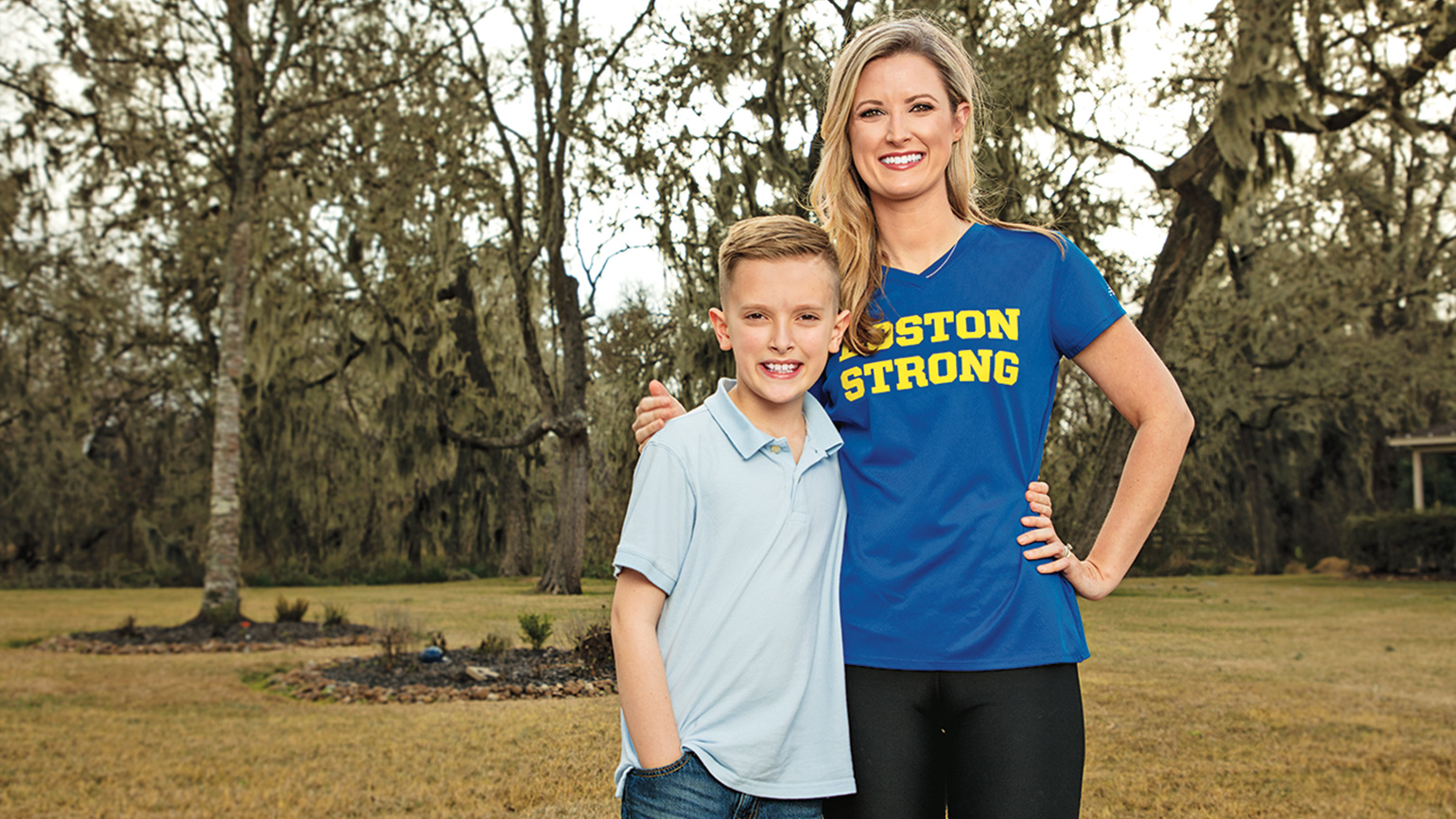
The van was waiting right outside the hospital doors. Mom and Dad lifted me from the wheelchair, careful not to jostle my left leg, and hoisted me into the backseat. I’d been hospitalized for 56 days, first in Boston, then here in Houston. Finally, I was ready to go home.

Rebekah Gregory on the cover of the April 2017 edition of GuidepostsBut the moment we pulled into traffic, cars all around us, I started to panic. My heart pounded. My mind raced. I was leaving the hospital, the teams of doctors and nurses and physical therapists…for what? I’d be confined to my bed, still unable to walk on my shattered legs, the left one needing to be kept elevated 24/7. Mom and Dad would hover, doing their best to care for me.

I didn’t want to be an invalid. I was only 26!

BROWSE OUR SELECTION OF POSITIVE THINKING BOOKS!

And my little man, Noah, my five-year-old son, needed a mom. A strong, active, fully functioning mom. I’d missed him so much. He too had been injured by the bombs that tore through the crowd at the finish line of the Boston Marathon that April.

We’d gone there to cheer on a friend running in the race. I’d been standing, with Noah sitting on the curb, leaning against me. My legs had shielded him from the worst of the blast. It was a miracle that his only physical injuries were a deep gash and some gastrointestinal bleeding. I worried about the emotional scars, though.

By the time we pulled into my parents’ driveway, I was a wreck. I looked to the house. Noah came bounding out, beaming with joy.

The van door opened. Mom and Dad prepared to lift me out. Noah wedged between them and wrapped his arms around me. “Don’t worry, Mom,” he whispered in my ear. “We’re never leaving this house again.”

I knew he meant to comfort me. But what I heard was his fear, an echo of my own. The fear that woke me at night in the hospital. The fear that life would never be normal again. The fear that it would have been better if I’d died. For me, so I wouldn’t have to endure this suffering any longer. And for Noah, who deserved a mom who could give him a full life.

Just two months earlier, I’d had a good job and my own place. I was a single mom proud to provide for my son. Now I was helpless, dependent on my parents for everything.

Mom and Dad carried me into the house, to the bedroom they’d set up for me. I got settled, elevating my left leg—still skeletal and visibly weakened—and pulled a blanket over it. I didn’t want Noah to be reminded that I was less than whole.

He came in and snuggled next to me. “I’m glad you’re home,” he said.

“Me too,” I said. He rested his head against my arm.

I remembered feeling that same warmth at the marathon, Noah sitting on the curb, his back pressed against my shins.

BOOM!

I was thrown forward like a rag doll. How did I end up sprawled on my back, unable to move?

“Noah!” I screamed. Where was he?

BOOM! A second blast, as close as the first.

All I could see was sky. God, if this is it for me, take me, but let me know my son is okay. Please.

I managed to lift my head, turn it slightly. There was Noah, a few yards behind me. I reached for him. That’s when I saw my left hand, skin shredded, bones sticking out.

A first responder picked Noah up. His leg was bleeding, but otherwise he seemed okay. Moments later I was loaded into an ambulance. “We’ve got an amputee,” I heard someone yell to the driver. Amputee? No! They couldn’t be talking about me!

At the hospital, I was rushed into surgery. When I woke, Mom was there. She’d come right away from Houston. My legs were a mess of torn and stapled flesh, but they were still there. Doctors said it would be months before they would know if my left leg could be saved.

Noah was at a different hospital. Dad brought him to see me after he was released, six days after the bombing. I hid my legs under a blanket. Noah fed me Jell-O from my tray. He signed his name, slowly tracing each letter, on the splint covering my hand. Too soon it was time for him to go home with my dad.

Mom stayed with me, through the surgeries and debriding, the slow painful removal of hundreds of shrapnel. My right leg grew stronger, my hand healed. But the bones in my left leg refused to knit.

Please fix my leg, I begged God over and over. Let me walk again. Let me be the mom Noah needs. There were times I wished they’d just cut it off. But my doctors urged me not to give up. Now, in my bed at my parents’ house, I held Noah tight. I wanted to reassure him that everything would be okay. That I’d always be there for him. But how could I say that when I couldn’t even take care of myself?

Every day after he got home from kindergarten, Noah would sit with me. We’d color, do puzzles, watch cartoons, play Go Fish. I savored every minute he and I were together. I could almost pretend that things were back to the way they were before the bombing.

Dad would have him help in the garage. Mom or my younger sister would bring him to the park. I was glad Noah had people to take him places. I didn’t want his life to be confined to one room like mine was.

After several months, I no longer had to keep my leg elevated. Instead it was fitted with a fixator, a steel frame with long screws that penetrated the flesh and continued into the bone. It looked like some kind of medieval torture device, but I had to wear it if there was going to be any chance of my leg healing.

Every month I went in for another surgery to try to help the bones and muscles in my leg reconnect and heal. I’d come home in agonizing pain. “Why do you have to go back to the hospital?” Noah would ask each time. “When are you going to be able to walk?”

Those questions cut me to my core. “The doctors are working on it” was all I was able to tell him.

That wasn’t the answer Noah was looking for. I’d show him pictures of amputees on my laptop, dancing, skateboarding, riding bicycles. I knew this might end up being my path too, if my leg didn’t heal. But Noah would look at the photos for no more than a few seconds before turning away.

Did he think that I would be less of a person, less of a mom if I lost my leg? I couldn’t bear that. So I held on to the hope my doctor had given me, the chance for a full recovery.

I wanted to be the one to take Noah to the park. To play catch with him. He was hurting too. He’d started asking more questions about the bombing. Whether I remembered the people standing next to us. The clothes they were wearing. What they were doing. It was his way of processing the event that had shattered our lives. What if my lack of progress was holding him back, keeping him from healing?

One day I got so frustrated at being stuck in bed that I couldn’t take it anymore. I was alone in the house. I was going to take a bath, I decided. I managed to get out of bed and slipped to the floor, scooting along on my posterior to the bathroom.

That’s when I realized there was no way for me to remove my pants over the fixator on my own. I sat there in the tub fully clothed for more than an hour waiting for my parents to come home. Sobbing. I’d never felt so humiliated. My only comfort was that Noah hadn’t been there to see me.

Finally, after more than a year, I was able to get around some on crutches. The fixator was removed. I rotated between crutches and a wheelchair to maneuver around the house. But basically I’d just traded my bed for the couch. I didn’t feel any more a part of Noah’s life.

Seventeen surgeries and my left leg barely had any function. No strength. Why did God let me try so hard to persevere, to push through the pain and frustration, for nothing? Why?

Noah was in first grade now. Afternoons I would help him with his homework. We’d read together, play cards. I’d watch him play cars on the floor. Occasionally I’d try to make him a snack. But just peeling and cutting up an apple was exhausting. I couldn’t stand for more than a few minutes.

There was one thing I looked forward to every day: driving Noah to school. It took everything I had to get into the car, but then I could drive with my right leg. Noah was usually in his own world, not saying much. But for those 20 minutes every day, I felt alive again. I felt like a functioning mom.

One morning we were in our car in the school’s drop-off line. I was thinking of the day awaiting me, hours of doing nothing, when Noah said, “Are you ever going to cut off your leg?”

I turned to look at him, not sure where he was going with this. Or even quite how to answer.

“I guess so,” I offered, then paused, wondering what his reaction would be.

He broke into a grin. “Cool,” he said. “I get to have a robot mom.”

I stared at him in disbelief. But all I saw in his eyes was acceptance. And love. He wouldn’t think any less of me without my leg. Would I?

I called my doctor when I got back to the house. “I want to take the leg off,” I said. I was ready to live life again, to be the mom Noah needed and the person God made me to be.

Things changed completely after that. Not that it was easy. It took months of physical therapy to recondition my muscles and learn how to balance and walk with a prosthesis. Running was even more challenging. But I did it and I keep moving forward. Nothing motivates me like hearing Noah say, “I’m proud of you, Mom.” With the love of my son and of God, I am whole again.

For more inspiring stories, subscribe to Guideposts magazine.
How Nelson Mandela Found Hope

How to find hope in the most hopeless of situations?

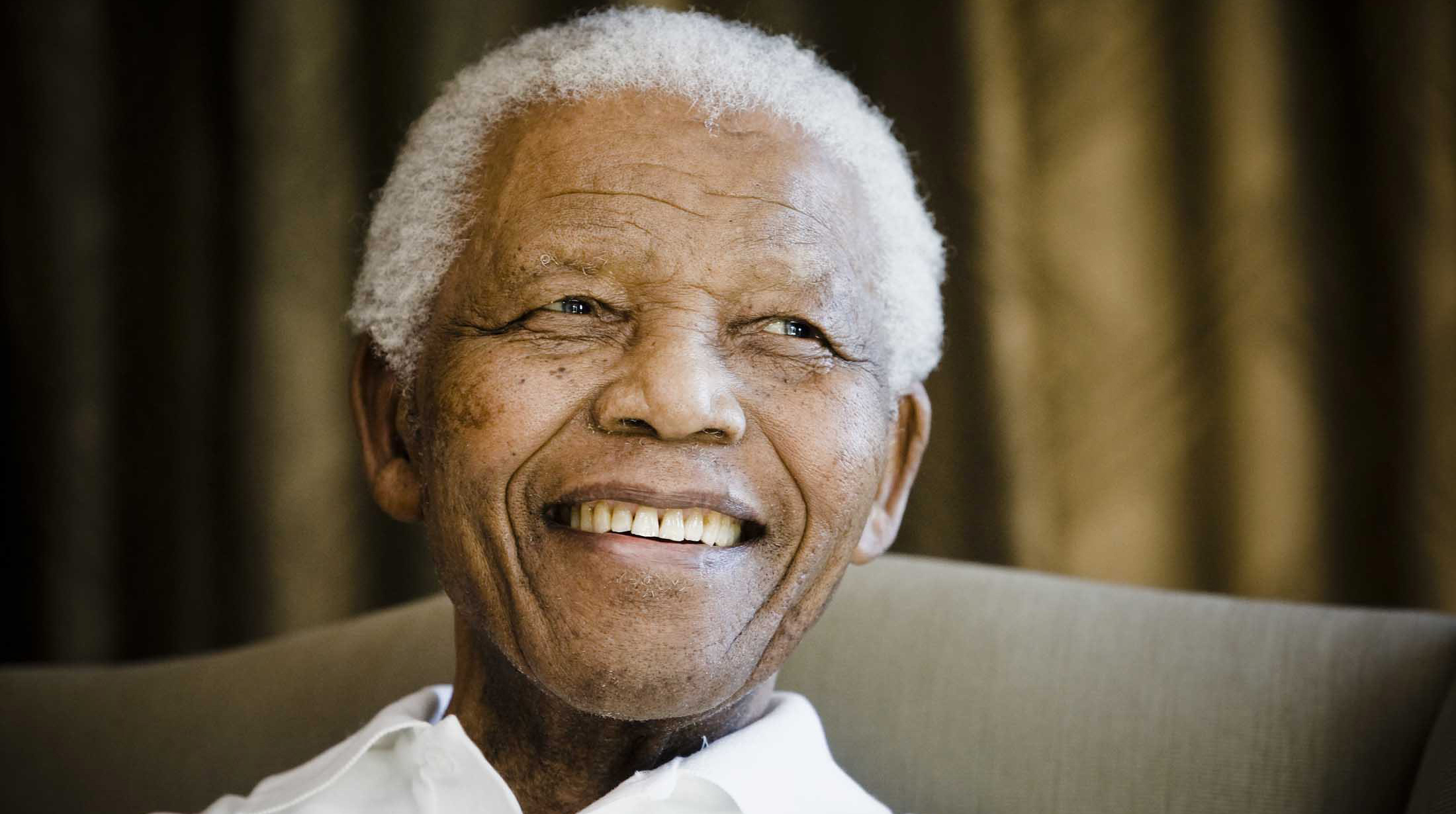
The letters that South African freedom fighter Nelson Mandela sent during his 27 years in prison have recently been published, and they offer extraordinary insights into the soul of a man who suffered in abysmal conditions as punishment for his revolutionary anti-apartheid activism.

How did he survive through all of it? Hope. He clearly clung to hope even when things looked most hopeless. When his mother died, and he was unable to go to the funeral. When his son was killed in a car accident, and he was not allowed to leave the prison. How do you keep hope then?

I visited the prison at Robben Island in South Africa not long ago and saw the place where Mandela spent the bulk of his prison years. The guides were former prisoners, and they showed us around the cramped, dank, concrete cells. We could see the lime quarry where prisoners were forced to work.

Mandela was not allowed to wear dark glasses and the glare of the hot South African sun on the white lime permanently damaged his eyesight. Worse was the constant harassment from guards.

And yet there in the letters you can hear him immersing himself in hope. Like a warm bath. It was especially touching to read that seven years into his imprisonment he read Guideposts founder Norman Vincent Peale’s The Power of Positive Thinking and commended it to his wife.

Mandela writes about Peale, “He makes the basic point that it is not so much the disability one suffers from that matters but one’s attitude to it. The man who says: I will conquer this illness and live a happy life is already halfway through to victory.”

Inspired by Peale, he goes on to say “Remember that hope is a powerful weapon even when all else is lost.”

In another letter he comments on the Scriptures, referring to the apostle Paul as a “perfect pest.” A pest by virtue of his insistence on what was right. No doubt Mandela empathized with a man who was writing from prison.

Nelson Mandela went on to describe those saints of biblical times: “They visualize a new world where there will be no wars, where famine, disease and racial intolerance will be no more, precisely the world for which I am fighting…”

It would be a long fight but Mandela never relinquished the values he believed. They stood him in good stead, through illness, suffering, loss and his eventual release from prison and return to public life when he became South Africa’s President.

A beacon of hope not only to his country but to the world. “Our cause is just,” he wrote from that prison. “It is a fight for human dignity and for an honorable life.”

How Her Faith Helped Her Face Up to Overwhelming Medical Debt

I sat cross-legged in the middle of my bed. A storm lashed the windows. I should have felt deliciously cozy on this antique four-poster, snug in my restored log cabin.

Instead, I was terrified.

A wicker tray on my lap held a stack of medical bills—43 of them. All from the past week. And more were coming. After two years of unexpected health problems and surgeries using out-of-network doctors and hospitals, I owed a staggering sum: more than $125,000. The number was so huge, I couldn’t wrap my head around it. I’d stopped opening the bills. I couldn’t face the fear. The shame.

I’d worked for decades as a nurse. I should have known better. I’d saved for retirement. I had health insurance. None of that mattered.

The past couple years had been a nightmare. My neurofibromatosis—a genetic condition causing benign tumors to grow all over my body, particularly in my head and mouth and on my face—had reared up again, requiring difficult surgeries. Then I’d tripped and fallen, bashing my face and necessitating more expensive care.

I had to travel out of state for several procedures. It seemed as if every doctor I saw ordered a new round of tests, even the ones I’d just gotten somewhere else.

“We like to use our own imaging equipment,” they said. I’d worked in health care long enough to know that’s how some hospitals make money in a for-profit system.

When you’re sick, though, you’re not in a position to bargain. I signed off on everything. Only later did I realize many of the procedures weren’t covered by my insurance.

When the bills began arriving—for radiologists, anesthesiologists, specialists I didn’t even remember—I thought someone had made a mistake. But, no, those were my hospital stays. I was on a lot of pain medication then. Not always thinking clearly.

I couldn’t pay those sums on my working-class income. I stacked the bills in my wicker tray and put them aside. The longer I waited, the more bills arrived, now with late fees.

A call from a collection agency jarred me out of my denial. The woman’s voice was harsh. “This is an attempt to collect a debt. Anything you say will be used for that purpose.” I stammered something about planning to pay soon, and she said she would call back in a week.

So now here I was, cowering on my bed on a rainy night, feeling totally helpless. Was it even worth praying about this? God couldn’t change the numbers on those bills. Besides, who could I blame but myself?

“The borrower is servant to the lender,” my father always said. He and Mother carried no debt, and Mother ran a tight household. She wasted nothing and made sure I was earning pocket money while I was still in elementary school.

I’d been a hard worker all my life. Thrifty too. Dealing with a lifelong illness, I’d set money aside for medical costs. I tried not to call in sick, and I always had a side gig going to help defray bills.

The past couple years had defeated all those efforts. Seven surgeries, multiple trips out of state, more scans and tests than I could count. I had to miss so much work that I ran out of sick days and took unpaid leave, further reducing my income.

I tried paying the first bills, putting more than half of each paycheck toward debt. I’d already taken a huge chunk out of my retirement savings years earlier to pay for a previous round of care. This time I couldn’t keep up. I grew self-conscious. I wanted to design a sweatshirt that said, “I didn’t get into this fix buying shoes and perfume.”

One day at work, a group of nurses were talking about upcoming vacations, a new handbag someone had bought. I kept quiet. What if they knew I was getting calls from a collection agency?

All my life, I had struggled with shame over my neurofibromatosis. My only consolation was that the condition wasn’t my fault. I was born with it. It was a cross to bear, and I had done my best to lean on God for help.

But this debt had come on so suddenly. I’d been so gullible and unthinking, agreeing to all those procedures. I was a nurse! Why didn’t I ask more questions?

I knew why. I’m at my weakest when it comes to my own medical needs. The thing about chronic illness is it wears you down. Makes you feel less worthy. Who was I to talk like a professional to those doctors and those business offices? I was just Roberta, with worse tumors than ever.

And now I was Roberta in debt. I knew intellectually that God does not abandon people. I felt abandoned anyway.

I couldn’t cower on my bed forever. By the next morning, the storm had passed. I sat by a sunny window and made a list of everything I owed on the left side of a notebook page. On the right, I listed my sources of income. They were way out of balance.

Was there anything I was missing? Anything else to add?

A small voice seemed to sound in my head: Me.

I didn’t hear anything else. God, is that you? But a hope leaped up that God would help me. I didn’t know how. But I did find myself thinking that maybe I wasn’t as helpless as I thought.

I remembered my years as a nurse for the Veterans Administration. One of my responsibilities was patient education. I ended up helping a lot of patients fill out forms that would enable them to pay for care or receive benefits.

“You need to make sure they know your story,” I would say to patients. Maybe the same advice applied to me. It was time to stop hiding and pick up the phone.

I found one of the smaller bills and dialed the number for the business office. Several years earlier, I’d been treated for a life-threatening pneumonia at that hospital. I’d worked out a monthly payment plan for the charges not covered by insurance but stopped paying amid the flurry of other bills.

A woman with a kind voice answered the phone. Mustering my courage, I told her about my horrible recent past and mountain of debt. “Whenever I drive by your hospital, I think of the great care I got there,” I said. “You people saved my life, and I want to resolve my bill.”

I held my breath.

“I understand,” the woman said. “To be honest, I talk to people in your situation all the time. Let’s see what we can work out.”

She offered to reduce my monthly payment and waive certain costs. I took the offer, oddly grateful to be reminded that I wasn’t the only one struggling to pay medical bills.

A Google search confirmed that a whopping 137 million Americans face financial hardship because of medical bills. That includes a full 20 percent of people who get insurance through their employer. More research taught me that hospitals often agree to reduce charges or work out payment plans. And a closer look at my paperwork showed that some hospitals had charged inflated prices or billed for procedures they never provided.

I wrote down everything in my notebook and devoted part of each day to phone calls.

Not every hospital was as friendly as that first one was. But I found that if I established a personal connection with the billing agent, even just asking about her day, I could at least have a civil, nonthreatening conversation. Hospitals are happy to hear from someone who wants to make progress on their bills.

Gradually I whittled down the total amount I owed and arranged payment plans for the rest. I even worked out a plan with that collection agency.

One bill I saved for last because it was so huge. To my surprise, the woman in the billing office promptly told me she was helping her own mother through a situation like mine.

“We have an economic hardship program,” she said. “You have to fill out a lot of forms, but it will save you money. I’ll e-mail you the application.”

The forms were daunting. They wanted to know everything about my finances, which meant documenting and reliving everything. I gritted my teeth and got to work. I needed those thousands of dollars in savings.

I rarely cry, but I could have for the person portrayed in those forms. So many medical problems. So much financial insecurity. Page after page of unanswered prayers. I was embarrassed to send the forms back to the business office.

“Take a little breather, Roberta,” the woman at the hospital said when I called her. “Look it over again and this time detach yourself, the way you might for one of your patients.”

I read through the forms again, making a few edits and tweaking my cover letter.

A new feeling came over me. This woman went through the wringer. And she survived!

I was still surviving. Years of chronic illness and financial struggle had worn me down, no doubt. But I had endured. Become more resilient. Resilience helped me stop hiding and confront my bills. God didn’t change the numbers. But he sure did change me.

A few weeks later, the billing office called to say my total amount owed had been reduced and my proposed payment plan had been approved. I was on track to pay off all my bills and, one day, become debt-free.

I already felt free.

I knew I would suffer more health setbacks. And I probably would have trouble paying for some of my expensive, specialized care. That’s just the health care system we have.

I’ll be more alert in the future, documenting my diagnoses, making sure procedures are truly needed and getting approval from my insurer before signing off on anything.

But my struggle with medical debt left a deeper lesson. There is no shame in struggling. Everyone struggles.

The key is remembering that God is there in the struggle. Turn to him. He’ll help you find your strength and give you the courage to face your problems head-on.

Read more: How to Cope with Medical Debt

For more inspiring stories, subscribe to Guideposts magazine.
How Ben Napier Spreads Christmas Cheer

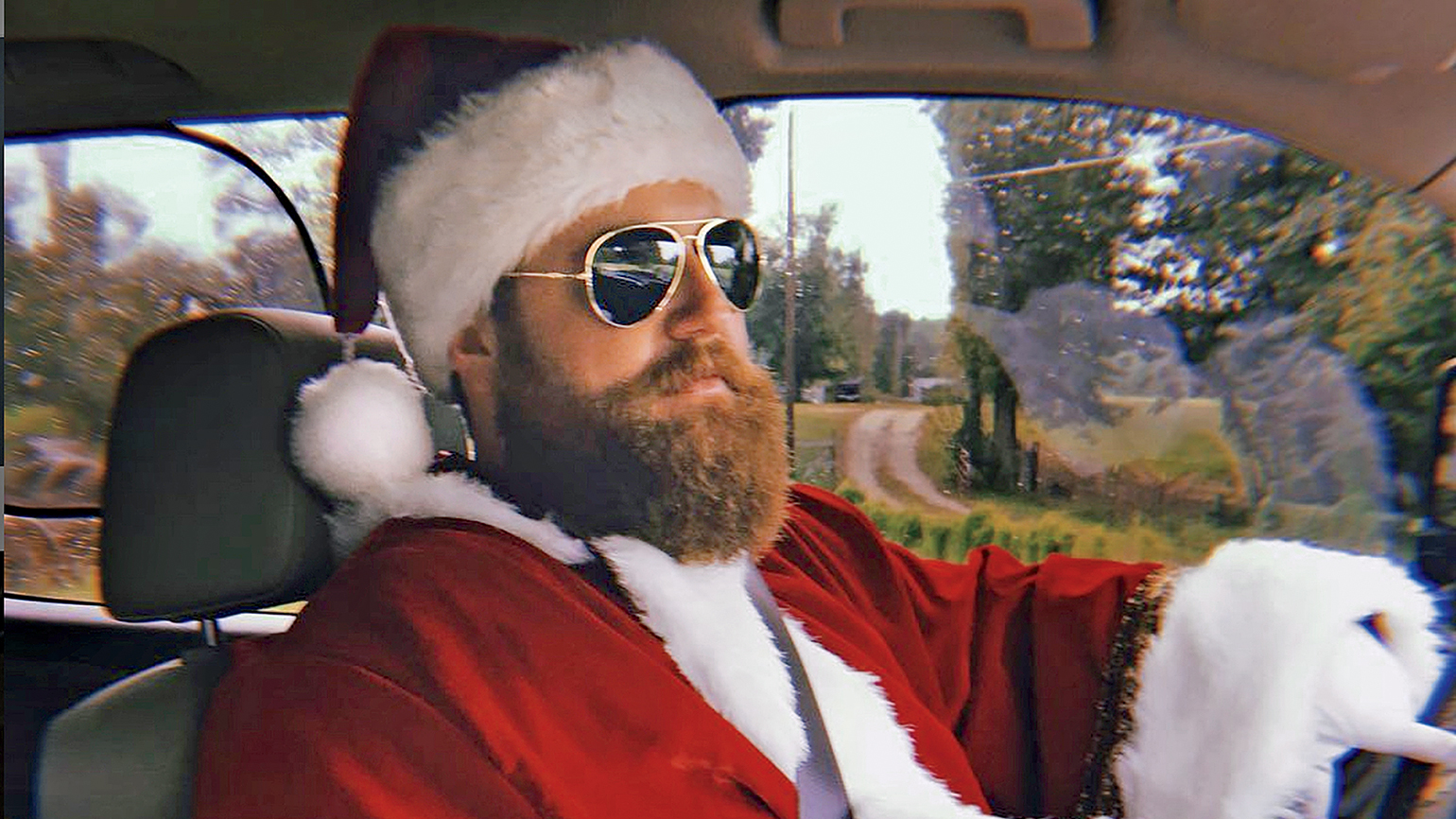
The big guy in the red suit and cap here in this photo?

That’s me, behind the wheel of my Chevy pickup on a scorching-hot August day (shades required, air condi­tioning on full blast). I’d just pulled out of the HGTV set last summer after a shoot. I couldn’t help my­self. Christmas is part of who I am. I was raised on it.

Mama and Daddy stretched the Christ­mas season out for weeks. In my family, it started on Thanksgiving morning with the Macy’s Thanksgiving Day Parade turned up loud on the TV. Then, on some random night soon after, my brothers and I were instructed to pile into the back seat of our Suburban to go see the wonderful Tech­nicolor Christmas cheer deep on the back roads of Mississippi.

There were three of us boys at first, stretching our skinny necks out the win­dow, sliding this way and that, depending on which side of the street the brightest houses (and bushes and broken-down Fords) sat. The best thing about country light displays is that if it’s immobile, it gets decked out in lights.

I was 10 years old when Mama told my brothers and me that we were going to have a new sibling. I heard her tell friends that this baby was a surprise. I wondered how that could be if we knew it was coming. Well, our baby brother arrived just as the holidays were beginning, and he was the most awesome gift. Could Christmas get any better?

Our parents sang in the church choir and took us along caroling. I was schooled in these songs long before I joined the choir of every church I grew up in. We moved to a new one every few years because Daddy was a Methodist minister. “Go Tell It on the Mountain,” “Silent Night,” “Away in a Man­ger,” “O Come, All Ye Faithful”—I love all of them. But a favorite? That’s like asking me to pick a favorite brother.

At Jones County Junior College, I lis­tened to Christmas music when the sum­mer heat became unbearable. When my roommates weren’t around, I’d put on a classic like “White Christmas.” Somehow I got up the nerve to admit my Christmas “thing” to the smart, beautiful design student I started dating in Decem­ber 2004. One of our first dates was to Ma­son Park in Laurel, Mississippi, to see the light display. I was as happy as that kid in the back of our old Suburban, craning my neck out the window.

Erin and I went on to the University of Mississippi and eventually got married. We settled down in Laurel. She started her own design company. I was a student minister turned woodworker. Our dream was to help revitalize this small town, to renovate all the old buildings and homes, one by one. With HGTV, we’re making that happen.

While I’m proud of our work in our com­munity, our best project together by a mile is our two-year-old, Helen. The only surprise there is that somehow I love her more each day, when loving her any more than I already do does not seem possible. My little girl has so much to look forward to.

For one thing, she can pretty much count on the fact that, even in August, one of the Home Alone movies is bound to be running on a cable TV station and her daddy won’t deprive her of it simply because the calen­dar suggests it’s off-season. With all of this holly jolly going on, you might imagine that I keep all of our Christmas decorations up year-round. That’s where we draw the line.

By the twelfth day of Christmas (on January 6), we’re packing the decorations away in the attic. It’s okay though, because now I have this suit. This glorious old-world Santa Claus suit that the HGTV folks gave me for the show’s holiday promo shoot last summer.

The deep red velvet coat is lined in satin and trimmed with gold embroidery and white faux fur. The brown boots have buck­les. Pretty snazzy. No heat wave can cramp my style. Funny thing is, people tell me I remind them of the jolly old elf himself even when I’m not wearing the getup.

Can’t say I disagree, even if my beard’s not white—yet. He makes toys; I make fur­niture. According to Erin, none of this is a coincidence. So on that August afternoon after the HGTV shoot wrapped, Erin and I jumped into my truck to pick up Helen. I wanted to surprise her with a hearty “Ho! Ho! Ho!”

Though she had no idea who Santa Claus was, she recognized me right away, and it seemed like it was the most normal thing in the world to her that I was dressed in a velvet outfit in the middle of the sum­mer. I guess you could say that she’s her father’s daughter. If I can pass on to her the joy Christmas brings me, my work will be done. Remember how I told you that Erin and I had our first date in December?

We always celebrate that week we fell in love by going back to that same light display in the park. Christmas only gets better as I get older. Little did I know at 10. Someone once asked me, “By the time actual Christmas rolls around, aren’t you tired of the carols, the movies, the good cheer?”

No, ma’am, not one bit. Same way I never get tired of spending time with my family or of going to church or of counting every surprise as a Christ­mas blessing.

How A Simple Gift Restored Her Christmas Spirit

I drove through downtown Athens, Georgia, searching for a parking place near the courthouse. I tried not to look at all the holiday decorations, the people hurrying by with their gifts. Christmas wasn’t happening this year. Not for me.

I was picking up my son Jeremy from his class at the courthouse. We spotted each other at the same time. I pulled over and he hopped in. He looked nice. White crewneck sweater over a red shirt and pressed khakis. Clean-shaven, fresh haircut. He was trying really hard, I could tell.

Jeremy was charming and funny, responsible and kind. But he’d stopped taking his medication for bipolar disorder a few months earlier. When he goes off his meds, he becomes a completely different person. Manic. Reckless. Getting high. He’d had three wrecks in three days. He was in his late forties. It wasn’t the first time he’d relapsed and gotten arrested.

He was charged with reckless driving. This time, instead of a regular trial and jail, he went into the Treatment and Accountability Court (TAC) program for people with mental illness. The judge ordered him to wear an ankle monitor and confined him to house arrest. Jeremy was only allowed out for work, church, life skills classes every Wednesday at the courthouse, addiction counseling and treatment.

And the Christmas party we were headed to, at the community center. Jeremy was required to attend, along with the others in TAC. He was clean, back on his meds and doing well in the program. I wanted to show my support.

His driver’s license had been revoked. Sometimes his friends would drive him to his appointments and classes, but mostly my husband, Gene, and I did. Gene and I were in our eighties and both of us struggled with chronic pain. We depended on Jeremy for a lot. Now he wasn’t even allowed to come to our house. He wouldn’t be able to put up our tree. For the first time ever, I didn’t plan on having a tree at all. I just didn’t have the energy for Christmas. Physically. Or spiritually.

The community center smelled of fried chicken, collard greens and corn bread. Jeremy led me over to a distinguished-looking gentleman in a dark suit. “Mom, this is Judge David Sweat, who directs TAC. Judge Sweat, this is my mother, Marion.”

I was deeply grateful that Jeremy had been given a second chance through the program, and I told the judge how I felt. We talked for a few minutes.

Jeremy said, “Mom, meet Vincent. He can draw really well. Even has a scholarship to art school, when he finishes TAC.” I shook the hand Vincent stuck out.

Then Jeremy and I moved through the food line and sat down in folding chairs at a long table. I set my purse on the floor. Vincent stood hesitantly with his tray. “Sit with us,” Jeremy said, pulling out a chair.

Vincent’s thin face showed years of hard living. Tattoos covered his neck, arms and hands. He leaned toward me, obviously wanting to talk. I concentrated on my chicken, even though I wasn’t hungry.

“You should see some of his drawings, Mom. He’s a great artist.” Vincent beamed. I let Jeremy keep the conversation going.

We started on the banana pudding. Vincent pulled a small rolled-up book with no cover from his back pocket and laid it open on the table. Then he plucked a pencil from his shirt pocket, bent over the book and began underlining busily.

“Mom,” Jeremy whispered, nudging me, “he wants you to notice.”

I made myself ask, “Whatcha reading?” Not that I was all that interested.

Vincent put down his pencil and slid the book across the table.

I picked it up, scanned a page. The topic and tone were dark. “This isn’t good reading,” I said. I felt Jeremy’s eyes on me.

“I can’t read regular books,” Vincent said. “I need glasses. I found this one. It’s large print, you see.”

“Mom probably has an extra pair.” Jeremy lifted my huge, messy purse off the floor. I fished around and pulled out a pair of drugstore reading glasses. I slid them across the table.

“Try ’em,” Jeremy said. Vincent put the glasses on. He grinned, revealing missing teeth. Then he took the glasses off.

“No, they’re for you. Keep them,” I said before Jeremy could.

“Thank you, Mrs. West.” Vincent looked at his pencil on the table and pushed it slowly toward me.

I sat frozen. “He wants you to have it, Mom,” Jeremy whispered.

“Thank you, Vincent,” I said. I picked up the pencil and studied it as if I’d never seen one before. It was shiny black, with a green and yellow metal band attaching the eraser.

I looked up at Vincent—a rough, hurting man. But when my gaze settled on his eyes, I saw a soft glow in them, like the light of the world making its way through a crack in a dilapidated barn.

And making its way into my heart again. “Vincent,” I told him, “I’m going to make sure Jeremy brings you a better book when y’all meet on Wednesday.”

“Really?” he asked. I nodded.

The party was over. Vincent and I hugged each other good-bye. “Merry Christmas, Mrs. West.”

“Merry Christmas, Vincent. So good to have met you.”

In the car, Jeremy asked, “Are you going to give him your latest book about prayer?”

“Yes. And I’m going to wrap it as beautifully as I can, in red, with a big bow.”

“Thank you for coming with me, Mom.”

“Thank you for inviting me. It was just the celebration I needed.”

How a Member of the Little Rock Nine Found Courage

It’s difficult to move to another state, another town, another school, especially for a teenager. As a 17-year-old, I was compelled to move—not just to another part of the country but to another family.

My life had changed two years earlier, when I became one of the Little Rock Nine, the teenagers who integrated all-white Central High School in Little Rock, Arkansas. When my teacher asked who would be interested in going to Central High, the pride of Little Rock, my hand shot up.

For as long as I could remember, I’d wanted to break free of the rules that defined—and confined—black people’s lives in the segregated South. It upset me to see my mother, a teacher working on her doctorate degree, kowtow to whites. It hurt to have to drink from “colored” water fountains and sit in the back of the bus.

The warnings from my parents and grandmother made it clear that white people were in charge and not to be disobeyed or confronted. At age five, I’d seen a man hanging from the rafters of our church, and fear of white people and their rules had consumed me ever since. I knew I could not live that way. At first, I was driven by the notion that attending Central would be my ticket to college and out of Little Rock. Just to get the nine of us inside the school’s front doors, President Eisenhower sent the 101st Airborne to escort us through an angry mob. Every day, white students hit, kicked and spit on me. When I went to the bathroom, they tossed burning strips of paper over the stall. I walked the halls in constant fear.

When I complained to Dr. Martin Luther King, Jr., about the treatment we received each day, he said, “Don’t be selfish, Melba. You are doing this for generations yet unborn.” He changed the direction of my commitment. “You can always call on the Lord,” Grandma told me. “He’s as close as your skin.” I’d never prayed harder than that year at Central. I focused on my studies and got good grades—the best revenge, Mother said. The next year, to avoid integration, the governor closed all the public high schools, opening a private school for whites only. Because of legal appeals, I couldn’t register at any school anywhere.

I stayed home, teaching myself with Grandma’s help. We used the many books at home and correspondence courses. In September 1958, Grandma was diagnosed with cancer. She passed on in October. I felt lost without her.

Central High was scheduled to reopen in the summer of 1959. But Mother found out that the KKK was offering a $10,000 bounty to kill any member of the “Nine.” “You can’t stay here,” she said. “The NAACP has a family in California you can live with for your senior year.”

I’d read about California in magazines like Ebony and Seventeen and had seen it on television. Movie stars. Mansions. The ocean. I fantasized on the long flight there that my foster family would have more money than my family and live in a lovely house.

At the San Francisco airport, I was startled to be met by white people who looked like folks back home who wanted to kill me. They said they were NAACP members and would drive me to the family hosting me.

The van crossed the Golden Gate Bridge. We drove far into the countryside. I fretted about whether I had been kidnapped by members of the KKK. Finally, the car turned into a gravel driveway and pulled up to a two-story farmhouse. The front door opened and out stepped a shaggy little dog, barking madly, and a petite, brown-haired… white woman. I gasped.

“I’m Kay McCabe,” she shouted over the barking. “This is Rags. He’s just excited. Welcome!”

“Mrs. McCabe?” I whispered. She extended a hand. I kept mine to my sides. Did she really want me touching her?

“Call me Kay,” she said, which only added to my discomfort. Back home no child dared call an adult by her name.

She greeted the other NAACP members and showed me a bedroom with three single beds where I could leave my things. After the others left, Kay sat me down at the kitchen table. “Come help me with dinner,” she said, handing me a knife and carrots to slice for the beef stew simmering on the stove. Next, she had me set the table. Was she thinking I was going to be her maid?

Minutes later came a deep voice. “I’m home.” Mr. McCabe was tall, dressed in brown tweed trousers, white shirt and plaid bow tie.

“George is a psychology professor at San Francisco State,” Kay said.

“So you’re the new kid?” he said. “How’s it going?”

Mother and Grandma never talked to me so casually. I barely had time to react before the McCabes’ teenage daughters, Judy and Joanie, burst through the door, and three-year-old Ricky woke from his nap. Everyone sat for dinner. No one said grace. That made me nervous. I said a silent prayer. “What day would you like on the chore chart?” Kay asked. “We all pitch in.” I didn’t understand. They weren’t expecting me to be the maid? I was already part of the family? I even shared a bedroom with Judy and Joanie.

That night I wrote in my diary: “Dear God, is this the family you want me to have? The McCabes are very sweet, but can’t you find me one that looks like me?”

The next day, I was astonished to once again be in an all-white school. I saw no other black students but was told there were four others. These white students were very different from those at Central. They smiled, helped me with my locker and offered to show me to my classes. The teachers were just as welcoming. Even so, I kept looking over my shoulder.

I was surprised to discover my classmates dated each other. I hadn’t been allowed to date in Little Rock. They all made plans to go places together. While friendly, students rarely invited me and I didn’t have the confidence to initiate a friendship. Every day I was reminded of how I didn’t fit in. The clothes I wore. The way I talked. I learned that it wasn’t only race that separated people. Only well-off people could afford to live in Santa Rosa.

One day, George took me to the city swimming pool. “She’s not allowed here,” the attendant said. I suddenly felt as though I were back in Little Rock.

“I’ll have your job!” George said.

“You’re violating my daughter’s civil rights.” I wasn’t sure what was more shocking, having this white man call me his daughter or his coming to my defense. George gathered friends from his college, and they marched on the pool continuously for a week. There was never a problem after that.

The McCabes were Quakers. They believed in hands-on helping people. Kay had helped found the Santa Rosa Quaker meeting and the local NAACP chapter. She had marched for voters’ rights and helped establish a preschool for minorities. Judy and Joanie treated me like a sister from Day One. We hung out together, caring for the pigs and cows on the farm. Still I missed Mother and my brother and the AME church I was raised in. The quiet, more contemplative Quaker worship wasn’t for me. I needed to feel the spirit and hear the choir. George drove me to a Methodist church on Sundays. But God didn’t feel close by, as he had in Little Rock.

In late fall, I caught the flu and spent many days in bed. George thought he knew what was ailing me. “You’re homesick,” he said. “It can be unsettling to be separated from everything that’s familiar. Why don’t you go back to Little Rock over Christmas? If you decide to come back, we’ll always have a place for you.” If I came back? It hadn’t occurred to me that I might not return.

In the Little Rock terminal, a white man bumped hard against my shoulder. “Watch where you’re going, you piece of trash,” he snarled. My stomach clenched, but I said nothing.

“Melba Joy!” Mother ran to me, my brother right behind her. On the drive home, she said, “I was thinking that if you told the newspapers you weren’t interested in integrating, maybe the KKK would leave us alone. Then you could come home for good.”

That night I couldn’t sleep. I imagined Grandma beside me, settling me like she used to when I was a girl. “You’re going to be just fine, Melba,” I heard her say. “Stop resisting this new path the Lord has chosen for you.”

But after only a few days back in Little Rock, I found the fear of white people and what they might do to me once again consuming me. At our family Christmas, my relatives talked about whites threatening them. How could you be your personal best if you were frightened all the time?

Finally, I understood. My true home wasn’t a particular place or even with particular people. It was with God. He gave me the vision to see beyond what segregated society dictated. He had given me the courage to raise my hand to enter Central. He would keep giving me the strength and support I needed to follow my own path.

After Christmas, I went back to Santa Rosa. The McCabes greeted me warmly. “What day do you want on the chore chart?” Kay asked my first night back.

A few weeks later, George asked if I’d be interested in leaving high school early and enrolling at San Francisco State College. “I know some people,” he said with a smile. “It’ll be a more diverse experience. I think you’d benefit.”

He went to the campus with me on my first day. “Melba, you can make your life into whatever you want it to be,” he said. “Kay and I are here if you need us. Remember, you’re never anything less than our daughter, never less than an important human being, a person who had strength to set this country on its ear and teach it a lesson in civil rights.”

Tears streamed down my face as I watched him walk away. Then I turned and followed the path the Lord set out for me, an incredible journey that has led me to be a wife, a mother, a TV news reporter, a writer, a university professor and a speaker, telling my story to audiences across the country about how I turn my fear into faith. Fifty-eight years later, I am still a member of the McCabe family, experiencing all the love and comfort they offered me from the very beginning.

How a Jigsaw Puzzle Renewed Their Faith

I stared at the hundreds of jigsaw puzzle pieces spread out on our dining room table. “This is going to take a while.”

“Isn’t that the point?” My 17-year-old daughter, Julia, said. “To keep us off the screens during the quarantine?”

“You’re right,” I said as I picked up a piece, tried unsuccessfully to find its spot, and then set it back down.

“Maybe this will take my mind off of everything I’ve lost,” Julia said. She was a senior in high school, missing the last weeks of school with her friends and teachers. A competition she’d worked for all school year was now cancelled. Her prom and graduation ceremony were in jeopardy.

Next week, she’d celebrate her 18th birthday at home, unable to see her friends. She was unable to work, as the restaurant where she worked was closed. But her biggest worry was for the college scholarship she’d applied for and should’ve heard from weeks ago. With the university closed, the decision had been delayed. She couldn’t choose which school to attend without knowing how much financial help she’d receive. Her whole future felt uncertain.

“I’m sorry, honey,” I said, picking up another puzzle piece. When I set it back down, I saw a drop of moisture on the table. I looked at Julia’s damp eyes and immediately put my arms around her. “Jules, it’s going to work out.”

“I feel like my whole life is like this puzzle,” she said. “All of the pieces are out of place and I may never get them back together.”

“I know it’s hard when we can’t see the future, but we have to trust God with it.”

She sighed. “If just one piece would go into place, I think I could handle the uncertainty of the rest. I don’t need to see everything at once. I just need a piece of it.”

I’d known since the quarantine started that Julia would struggle with it more than her siblings. Because of her age, but also because of her outgoing personality. She loved her job and she was involved in many activities at her school. Staying home would be the hardest for her.

I ramped up my prayers for her. “Lord, I know other people have bigger problems than we do. Be with the sick and those who have lost loved ones. They are the ones who are truly suffering through this. But help Julia too. Show her what her future looks like, so she can have peace.”

Over the next several days, our family worked on the puzzle a little bit at a time. We got the outside frame put together and then began working on the inside. Little by little, the big picture came together.

As each day went by, I prayed that Julia’s big picture would also come into view. But no scholarship offer arrived. No letter from her high school explaining the new plans for prom or graduation. Everything was still unclear.

Finally, we were down to the final few puzzle pieces. As Julia put one into place, she said, “Mom, when we started this puzzle, I asked God to show me how the pieces of my life would fit together. I still haven’t heard anything.”

I sighed. “We have to just keep praying. And keep trusting God.”

I knew my words weren’t what she wanted to hear, but I had nothing else to offer.

Two days after we completed our puzzle, we got the call. Julia had been awarded a generous scholarship to one of her top choices. As she spoke to the university representative, I hugged her from behind, thanking God through happy tears.

When she got off the phone, she threw herself into my arms. “Thank you, God,” she murmured.

That afternoon, she paid her enrollment fee to her chosen school and picked her dormitory. I could see how much lighter she felt.

At this moment, our jigsaw puzzle is finished. Julia’s future—and everyone else’s—is still unknown. But we know that God is working it out, fitting the pieces of our lives together for good.

How 80-Year-Old Hibiscus Seeds Reassured This Reluctant Retiree

One of the first things my wife, Peg, said when I retired was “Good news! Now you’ll have time to clean the garage!” Not exactly good news—it was the one task I’d been putting off. I pushed at the garage’s wooden doors, but they were as stubbornly stuck as I felt in this new stage of my life. This detached garage—along with our house—was more than a hundred years old. I finally got the doors open and stepped onto the wide plank floor.

Inside were gaps so big you could see all the way down to the ground. We’d even discovered a family of foxes denning underneath last spring. Not that it was safe for parking, but there was no way to squeeze a car inside anyway, with all the junk that had piled up over the 32 years since we’d moved here. Since I’d started my job.

I’d earned my degree in broadcast journalism at Syracuse University and gotten a job as the news director of a radio station north of New York City. After our first child was born, we moved farther north, to Albany, where we could be near family. I hosted radio and television programs with the state legislators.

I felt as if God had led me to a place where I could use my skills, helping lawmakers communicate with their constituents. I’d even worked my way up to director of the office. Then I developed some serious medical issues and, after 30 years’ service, knew it was time to retire. After decades of long hours and stringent deadlines, now what?

This musty garage didn’t seem like much compared to the marble halls of the state capitol. Sure, I would have more time to spend with my granddaughters, six-year-old Grace and four-year-old Lily, and to help out my mom, who was 90, but I worried I’d lose the sense of purpose and identity I had felt in my profession.

I picked my way past coolers, snow shovels and folded tarps. Here I was puttering, of all things. I raised my eyes to the rafters, where cobwebs hung like hazy film. God, is this what it’s come to? Do you still have a use for me? I pulled on work gloves, then hefted a crate of motor oil out of the way, intending to empty some shelves.

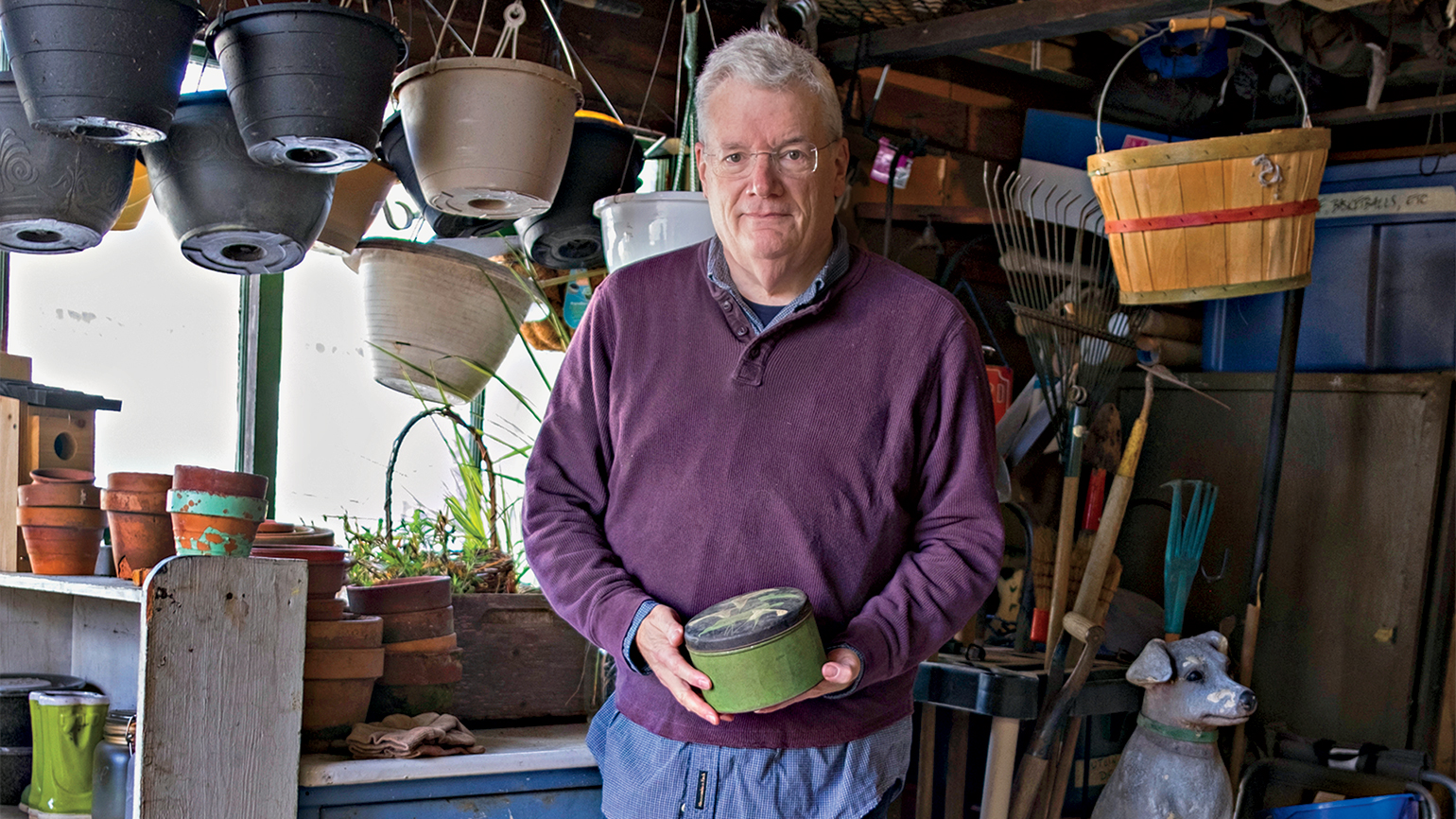
I reached all the way back to the wall, and my hand hit something hard. What could that be? I pulled out a grungy, round metal tin. With one finger, I wiped away a thick layer of dust on the lid to reveal a green background with white lilies.

I thought back to when I was a young boy, watching my father clean out my grandfather’s house after he’d died. Dad pulled out fistfuls of money that had been stashed everywhere— under the mattress, behind the Bible, even wrapped in foil and tucked in the freezer. Could this old tin hold a hidden fortune?

Little by little, I loosened the cover until it popped off and clanked to the ground. I held my breath. Inside were several yellowed envelopes. I opened one, and my heart sank.

Peg poked her head inside the garage door. “What’s that?”

“Seeds,” I said. Nothing but seeds.

Peg walked over to inspect the tin’s contents. “Look, here’s a letter.” She held up a faded envelope with a three-cent stamp and a postmark of May 13, 1940. Before I was born! The letter was addressed to the original owner of our house.

“‘I am sending you the seeds of the hibiscus you admired when you stopped at our tourist home last year,’” Peg read. “‘Plant when the ground becomes warm, and do not be alarmed if they do not come up for several weeks—they are slow to germinate.’”

“Huh,” I said. “Eighty years old. I wonder if they’ll still grow?” I had several hanging pots and a few flower beds, but I was no expert. I grabbed a plastic garden tray where I’d recently planted zinnia seeds, shook the hibiscus seeds out of the envelope, pushed them into the soil and set the tray on the patio table in the sun.

“What are my chances?” I asked my neighbor, an experienced gardener, about the octogenarian seeds. “Not very good,” he said, “but maybe… if they were packed right and kept dry and dark.”

Every day when I was out in the yard with our golden retrievers, Ernest and Petey, I checked the tray. Within a week, the zinnias were poking up. But not the hibiscus. “I guess they’re just too old to be any good,” I told Peg with a sigh. After I transplanted the zinnias into the ground, I checked again. Nothing. I picked up the tray to get rid of it, but something made me hesitate. I set it aside behind the garage.

In the meantime, I was keeping busy. I’d taken up running several years ago and had competed in a few 5Ks. Now I had the time to train for a marathon. I’d long been interested in photography, especially of dogs, and I bought several books on the subject to improve my skills. I taught Grace and Lily everything I knew about gardening and dogs, which turned out to be more than I’d thought.

Six weeks after I planted the old seeds, I was out in the yard playing with Ernest and Petey when I happened to notice the tray. There in the damp soil, a sprig of green had emerged. I toted the tray back to the patio table for a better look. Was it just grass? A stray zinnia? A weed? Or could it be…?

I found myself checking first thing every morning, until one day I saw leaves unfurled, leaves that looked just like the illustration of a hibiscus plant that I’d found online. I potted the seedling in a handsome terra-cotta pot and proudly showed off the broad, healthy leaves to Peg and our granddaughters.

“Look, girls, even something this old can still grow and be pretty cool, right? Just like your papa!”

Like the little hibiscus that could, with God’s help I would keep growing too.

For more inspiring stories, subscribe to Guideposts magazine.
Hoping Against Hope—Always Pray

In my encounter with others and in my own life there have been times when decisions seem so final that there is little need to pray about them. I can imagine how the disciples of Jesus felt when they found out that their teacher and friend was about to come face to face with death. He was about to die on a cross, and what could be more final?

There have been times in my life when it seemed that all hope was lost. The pain and loss of close relationships can feel as if there is nothing left that is good in life. However, I have learned that each day is new, and I must approach it with expectancy. Hope as described in the dictionary is an emotional state that promotes the belief in a positive outcome related to events and circumstances in one’s life. It is the opposite of despair. It is the feeling that what is wanted can be had or that events will turn out for the best. That sounds like expectancy wrapped up into one word called hope.

As a person of prayer, I have to also be a person of hope. When I pray, I am always expecting a good outcome. There may not necessarily be a change in my circumstance, but the more I pray, the more I am changed.

I know when I pray that God is at work. I may not see it immediately, but that is where faith has to be exercised. Abraham and Sarah were past the childbearing years with no possibility of having a child. They had to hope against hope.

When Mary and Martha met Jesus after the death of their brother Lazarus, they thought for sure that they would not see him again. They met Jesus and said to Him, “If you had been here my brother would not have died.” They spoke to Jesus out of their pain, but there seemed to still be a glimmer of hope.

The scripture teaches us in Acts 12:5 that Peter was in jail and the church was in constant prayer. That seemed like a hopeless situation, but those who were praying never gave up.

Over 2000 years ago, the day of Christ death seemed like a day to be without hope. In actuality, I now can see it as the most hopeful day of my life. It is a day that I know that God is for me. It is a day that I realize the love of God is greater than anything that I can imagine. I know it is a day that I can “hope against hope,” because I know that when I pray something will happen.

From experience I know that prayer will do one of two things. It will change my situation or it will change me. It has the power to do both. So, I pray with expectancy and I offer this as a prayer point. Pray constantly and with expectancy. Never give up. There is hope for each new day.

God Bless You!

Hope Springs

I’m staring out my office window at the skyline of Manhattan, which is draped in fog and drizzle. A few minutes ago the rain was coming down in torrents. Arguments about climate change aside, it is passing strange that we keep having these 60-degree days in January. It’s not supposed to work like that. This is more like April than the dead of winter, but without the extra sunlight. Warm and dark and dank.

I’m trying not to feel too gloomy, even though this weather has been hanging around since midweek. That can be trying when you have a golden retriever who has to go out on the leash several times a day. I’ll tell you a dirty little secret about goldens: They may be the dearest, sweetest, most beautiful dogs in all creation but boy, do they stink when they get wet, and Millie is no exception. Of course they have no idea they reek. They just want to be loved. Millie actually enjoys the rain. Every time we get back into the apartment I have to grab a couple of giant beach towels and dry her off, which always turns into a wrestling match and tug-of-war. I end up on the floor, soaking wet and out of breath, while Millie prances around displaying the captured towel like a battle trophy.

I need a break. And my dog needs a good shampooing (which she’ll get tomorrow).

For today, at least, conditions remain gloomy. But you know something? I don’t have to be. There’s an expression around Guideposts: Turn gloom into blooms. And it’s based on a biblical verse. We call these little sayings “Hope-isms.”

Have you met Hope? She is a charming and whimsical character with an emoticon for every occasion. She has a beautiful life story and an infectious positive attitude (which I need to contract today). We have an amazing array of uplifting products called Hope Springs, wonderfully and cleverly designed around Hope’s unbending faith, optimism and Hope-isms. Here’s another one: Love shared is love squared. That’s inspired by John 13:35.

You can get to know Hope by liking Hope Springs on Facebook or going to the Hope Springs website. By the way, this is not a line of products that was conceived for the likes of me, a middle-aged guy with a big wet dog. But you know something? I really like them (I actually own one of the mugs) and am not afraid to say so. So check it out, especially if it’s raining on your day.

Turn gloom into blooms, a perfect thought bubble on a day that’s filled with drizzle and fog and gray. I’m feeling better already. And by the way, can you guess on what verse this Hope-ism is based? Post below and I’ll tell you later.

Hope from the Wise Men for the New Year

Didn’t you expect that things would be different this year? That we would be over with the pandemic and could celebrate the new year? If you’re like me, trying to take in the news of this latest variant and then learning about some loved one who’s tested positive, I want to say to God, “I’m done with this. Enough already!”

God’s answer comes back: I’m never done with you. God isn’t done with any of us. I pause for a moment in my prayer, reflecting on the eternity of God’s love. Life changes, we change. God’s love never dies.

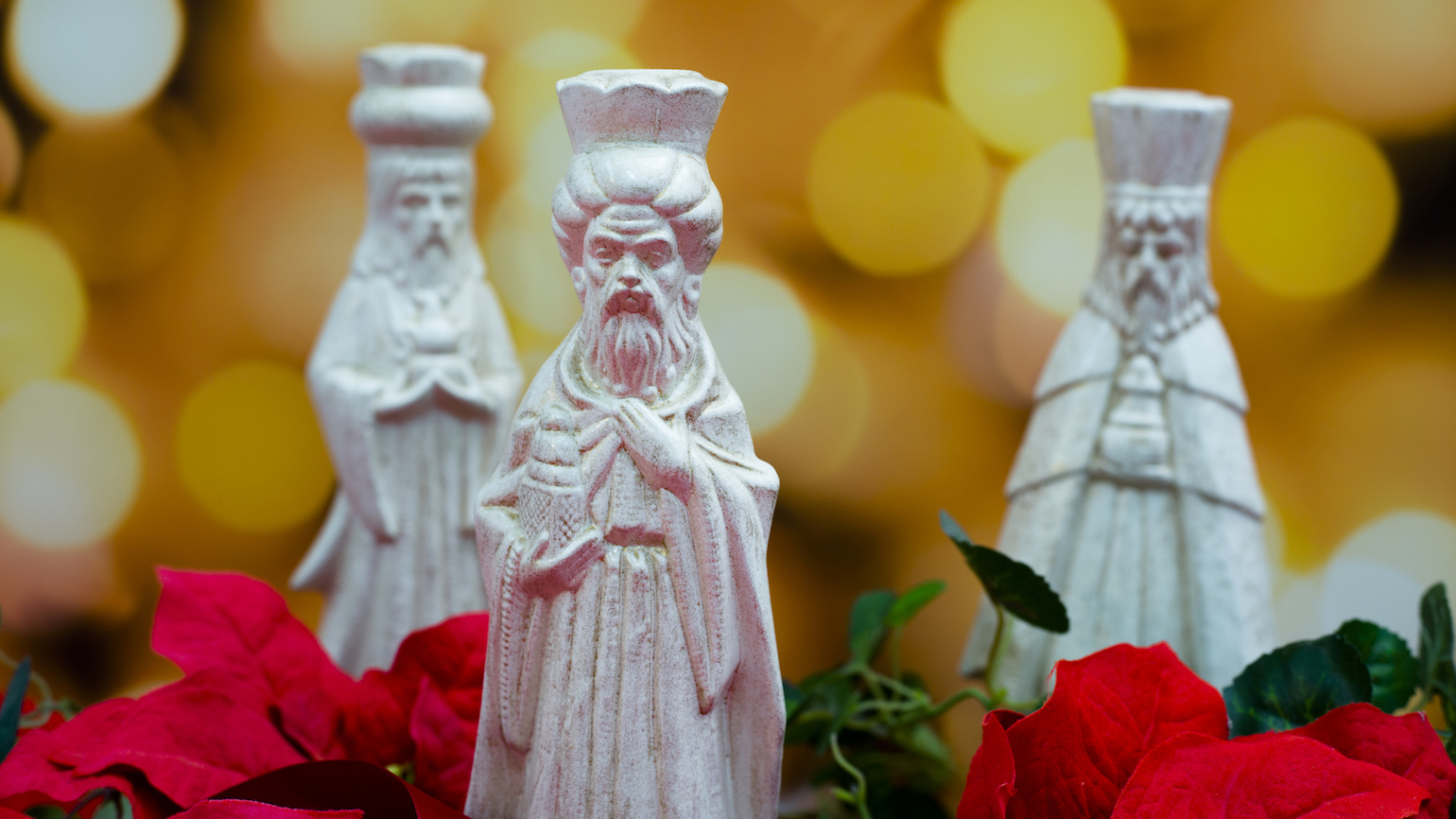
Think of the wise men. On January 6, we celebrate the Feast of the Epiphany, that moment in the calendar when we honor the wise men’s visit to the Christ Child.

Other characters in the Christmas story honored the tenets of Judaism, like Mary and Joseph. Not the wise men. They were foreigners. They didn’t live in the Holy Land. All we know from the Bible is that they “came from the East.”

There’s a lot of conjecture about what religion they might have followed, possibly Zoroastrianism, as they came from what we now know as Persia. The Bible doesn’t say—as it doesn’t actually say that there were three of them (that “three” comes from the number of gifts they gave: gold, frankincense and myrrh). It also doesn’t say they were kings.

Look at what they did though. They followed a star and a revelation that came to them, how following it would lead to this newborn king. With their fancy gifts, you wouldn’t expect them to discover that this royal figure was the son of a lowly carpenter.

I can imagine the thoughts that ran through their heads, why they shouldn’t have made the trip. What a wild goose chase. But they trusted. And didn’t give up. I find that’s exactly what I need to do now. Trust in God. Trust in God’s goodness. Trust in God’s love.

They also trusted in their dreams. Like men used to the ways of power, they visited King Herod as they followed the star and told him what they were searching for. Crafty King Herod pretended this was great news and that they should let him know what they found.

After paying homage to the Child, they were informed in a dream to avoid going back to Herod. After all, his violent jealousy would lead to the slaughter of those little children in and around Bethlehem who might usurp his power.

Thanks to the dream, “they left for their own country by another road.” (Matthew 2:12)

That’s what the promise of Christmas holds, no matter when you celebrate, no matter what dreams you’ve had. After you’ve worshipped the Christ Child, you can’t go home the old way. You take another road.

Whether you traveled or not this Christmas, hold on to that hope in the New Year. Honoring the Christ Child puts us all on a new road.

Hope and Faith from the Chilean Miner Rescue

It’s simply a marvel to be a witness to the story of the extraordinary survival and rescue of the Chilean miners in the last two days. What a tale of hope, perseverance, and joy. You can’t help but be moved by the video coming from Chile.

Except if you’ve noticed, there’s yet another story going on that’s also quite remarkable. Have you seen how much their story has captured our imagination?

Just about every news channel is glued to the event. You’ve heard an outpouring of support from everyday people and our own president. Yesterday at both the middle school and high school my daughters attend, teachers in classrooms had their computer screens fixed to the minute-by-minute updates as the miners emerged from the San Jose mine. Workers across America were likely tuned in too. How could you not?

The way this event has brought all our collective attention together has led me to wonder, Why has their plight inspired us so?

No doubt we’re all hungry for some good news. Times have been tough, and across America and the world we’ve not had much to celebrate together.

But let’s look even closer. What is it about this good news that compels us? For me, it’s the superhuman strength of the miners themselves and the unstoppable determination of those on the surface to rescue them. Those 33 miners didn’t give up on life, and neither did the Chileans, the geologists, engineers, psychologists and doctors, or even the experts from NASA.

Their example reminds me that God is like that. God doesn’t give up on us and will stop at nothing to keep after us. But we mustn’t quit either, and instead take that next step, remind ourselves we are loved, even if we can’t see, hear, taste or smell the source of that love.

So let’s celebrate. Let’s be happy for those miners. Let’s be inspired, and get back to our own lives with fresh hope and faith.