

Embrace God's truth with our new book, The Lies that Bind

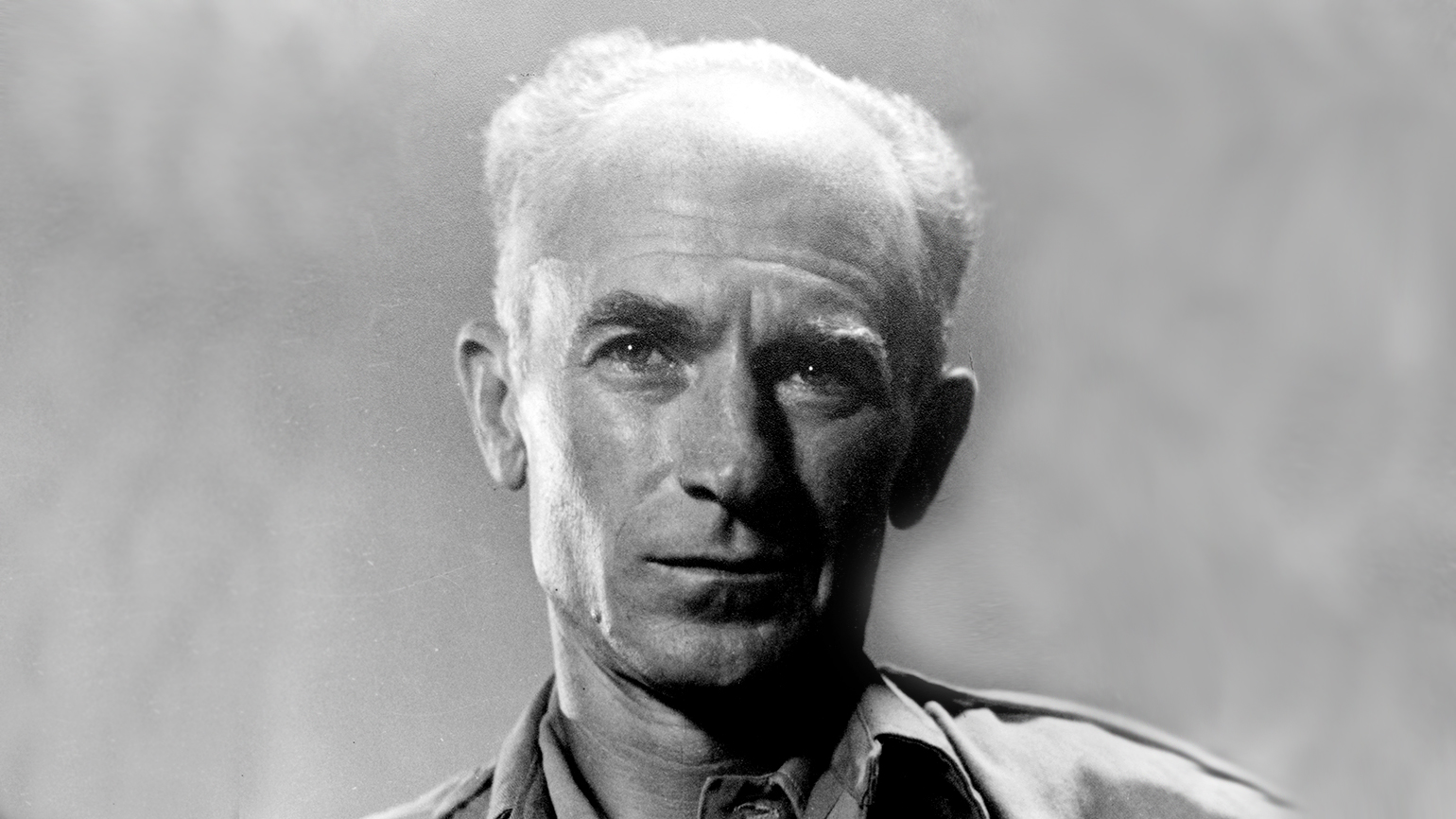
I Met Ernie Pyle in a Foxhole

This story originally appeared in the June 1985 issue of Guideposts.

I got my greetings from President Roosevelt in 1942, He invited me to join his fighting force. At the time I was a rodeo rider and cowboy. I gladly accepted Franklin D.’s invite, figuring that in his army I might get paid better,

I reported to Camp Roberts in California, where I went through 19 weeks of basic training and graduated as an Army rifleman. I was 31 years old.

Taking a “delayed route” to my next assignment, I hitched up to Oregon for one last rodeo, The rodeo announcer, the great Able Lefton, made a big deal out of me. “Here’s a genuine G.I. rodeo rider. What a patriot!” The whole crowd stood and cheered me. As I sat on a terrible bucking horse, a woman draped a U.S. flag over my shoulders. The gate opened and the horse flew out. A picture in next day’s paper showed me and the flag hitting terra firma. Bucked off. So much for the great rodeo soldier.

Next stop was Camp Meade in Maryland for more infantry training. Then to England, where I was assigned to Company K, 115th Battalion of the 29th Division. The 29th was an assault division, and every day we assaulted the southwest coast of England. Practicing. We lived in tents. Was it ever wet!

We knew we were about to open a Second Front, but we didn’t know when or where. Meanwhile German bombers and Stukas attacked us all the time.

I was scared, sure, but I also felt that my fate was out of my hands. It was in the hands of superiors. They ordered and instructed and disciplined me every minute of every day. As a cowboy I’d had to be self-reliant. That sounds nice, but it’s often a headache, For a change I had somebody else always telling me my next step. Part of me bristled, but a bigger part of me was relieved.

On the night of June 5th, 1944, I was handed real ammunition and real grenades for the first time. I knew the real thing was about to happen.

On the open deck of a troopship I rode in darkness, out into the English Channel. All I could think of was German submarines and mines. No one talked much. The sea was rough. Allied bombers droned back and forth from France.

My regiment wasn’t in the very first Normandy assault wave. During the morning of June 6th we sat at sea, while Navy destroyers fired thousands of shells at the mainland. A horrible racket. In the late morning I finally scurried down a rope ladder, then jumped into a heaving landing craft.

In the flat-bottomed L.C. we all kept tow. Many got sick. Rumor spread that the L.C. pilots were all from Father Flanagan’s Boys Town. I still don’t know if this rumor was true, but at the time it made me feel better.

When the L.C. ramp let down, the war really began for me. I jumped into the water expecting it to be shallow, but it came up to my chin. Thrashing to shore I lost my rifle and helmet.

By the time I was on the sand of Omaha Beach I’d lost my squad. I tried to burrow in, like a mole, thinking, Where’s Sergeant? Where’s Lieutenant?

Both of them were already killed, though I didn’t know it then. Just about witless, I grabbed the helmet and rifle of a guy lying dead beside me. Here on Omaha Beach there were already a thousand men killed.

Bunkered German 88 guns and machine guns poured fire on us. An American officer scampered by in a crouch, ordering me to “get going up that bluff, Private!”

I moved slowly ahead, and met up with a few guys from my squad. They were glad to see me. I was quite a bit older. And wiser … or so they thought. Crawling, I led them toward a German machine-gun nest.

By nightfall we were on the top of the bluff. The Germans had fallen back, though not far. Their rear artillery was still in place, blasting at us.

Chaos reigned all through the night. For the next few days, in fact, we couldn’t find a command post, although one officer did come along and promote me from buck private to buck sergeant.

Otherwise, my squad and I were on our own. We didn’t sleep for two or three weeks, didn’t bathe, lived on what German food we could find. The Normandy countryside was a nightmare: hedges, dikes, sunken roads and flooded fields. I never knew where the Germans would be and I got few specific orders. Find Germans and fight them. That was the basic idea.

I felt so alone. That was the worst thing. In England I’d felt part of a huge fighting force, presided over by all sorts of knowledgeable brass. But no more. Just ten of us pinned against a stone wall God knew where. No pillars of strength to lean on now. Where do you turn for strength so far from home?

I had no answer to this question. I kept fighting as hard as I could. By now we’d fought our way to the outskirts of St. Lô, France. It was early July and the summer heat had set in. One hot day, near the village of St. Claire, our company was pinned down in a flax field. My squad got awfully thirsty. I said I’d go for water. I ran underneath the fire, scrambled over a dike, and then was fairly safe.

Catching my breath below the dike, I saw a big old roan horse, just standing in the grass 20 feet away. I guessed he was a German draft horse, because the Germans still used horses to tow artillery.

I walked up to the horse. He was gentle and just looked at me. I made a bridle out of my G.I. belt and then mounted the old fellow. A ways on I found two five-gallon G.I. cans and with another belt slung them over the roan’s shoulders. I was glad to be on a horse again. I rode to a farmhouse, filled the cans from a well, gave the horse a drink.

On my way back, a grizzled guy ran up to me. He was wiry and short, wearing oversized fatigues and a helmet that dwarfed him. He carried no gun. All in all he looked a little looney to me.

“Hey, Tex.” he said. “I hear you’re a cowboy. Can I ask you a few questions?”

Questions? I looked for officer’s stripes. None. So I said, “Got no time for questions, mister. My men are thirsty.”

I left the man behind and got water to my squad. By now a smoky dusk had fallen and the artillery had let up. As our company set up defenses for the night a fellow infantryman said to me, “Did you hear that Ernie Pyle is here?”

“Who’s Ernie Pyle?” I asked.

“The famous war correspondent.”

“Never heard of him.”

“Well, you ought to. For us infantrymen he’s the best friend we’ve got”

With nightfall the German 88s let loose again, and our guns answered back. I took cover in a German-dug foxhole, crouching with my rifle. And out of the darkness I saw the grizzled guy running, this time carrying a box and a notebook. He jumped right into my foxhole.

“Hello again, Tex.” he said. “I’m Ernie Pyle, Got time for questions now?”

“I guess so. But it’s awful dangerous out here, mister.”

“Don’t worry about me, you should’ve seen Sicily,” he said gruffly. “So where’s your horse, the one you were on this afternoon?”

“On a boat for England if he’s got any sense.”

“Pretty wild here.”

“You bet it is.”

A tree stood above us, stripped bare by shellfire. Between rounds Ernie Pyle asked me about civilian life. I told about rodeo riding and wrangling. He wanted more specifics. I told about driving cattle down in winter storms. Hunting elk in the hills. Ernie jotted down my answers. He got to asking me about the war.

“I’m fighting hard, Mr. Pyle. but it’s hell out here. At times, when the big guns get whaling away, when snipers start poppin’ from the hedges, I just want to fold my tent.”

“You’re not alone. Tex. I’ve met guys all along the front who feel that way.”

“That may be true. but it ain’t very comforting.”

“But a lot of those boys fight off that pitiful feeling,” Ernie said. “When they get down, they think of home, but they don’t pine for comforts and safety and all that. They think of the trials they’ve endured … the values that’ve held them up. Take a West Virginia boy I saw yesterday, an infantryman like you. He always carries a little chunk of coal in his pocket. He’s a miner, from a family that’s always mined, and when he gets battle depression he reaches into his pocket and clenches that bit of coal. Then he says to himself, ‘If I can take the mines, I can take this.’

“War or no war, Tex, struggles never let up. You keep the good ones in mind. You’re a cowboy. Just think of what you’ve lived through.”

I mulled Ernie’s words. Ever since boyhood, growing up in a shack on the Colorado plain, I’d been tested by endless chores, bitter winters, and, later on, by the ornery animals and trail bosses of cowboy life. What got me through? My mother’s guiding hand, mainly. She’d planted faith and decent habits in me. Always said that you’d know strength and goodness as long as you heed God’s will. And now Ernie had taken my ma’s wisdom and turned it into a soldier’s lesson: To find strength in battle you take hold of strength you’ve known at home … and of the faith that underlies it.

Ernie and I kept talking. I wanted to pry more wisdom out of him, but just then a German shell landed nearly in our laps. Our bones rattled and a ton of dirt showered onto us. We struggled out of the foxhole. Ernie had lost his helmet. As we ran for better cover, he said. “Maybe I’ll see you again, Tex. And, hey, my typewriter is buried in that hole. If you ever dig it out, it’s yours.”

That’s the last time I saw Ernie. The next day I did dig out his field typewriter, but he’d left our area. I entrusted the typewriter to a guy in Ordnance and went back to battle.

I can’t say Ernie’s advice made me invincible. In fact, a week later I was badly wounded at St. Lô and was sent to England for six months. When I returned to the front, though, during the infamous Battle of the Bulge, I kept my nerves by keeping in mind those times when I’d struggled through some bad times. I’d think of a rugged ride I’d weathered, a bull I’d stayed on. I lasted the war and won two bronze stars for bravery in battle.

As you probably know, Ernie Pyle was killed on April 18, 1945, by Japanese gunfire in the Okinawa campaign. The end of the war was near and I thank God Ernie was around for most of the fight. He made us fighting men known to the folks back home, and he made us known to ourselves.

Gain strength by keeping in mind the strong things you’ve done—and where you got the strength in the first place. Ernie’s lesson is 41 years old for me, but I still live by it.

For more inspiring stories, subscribe to Guideposts magazine.
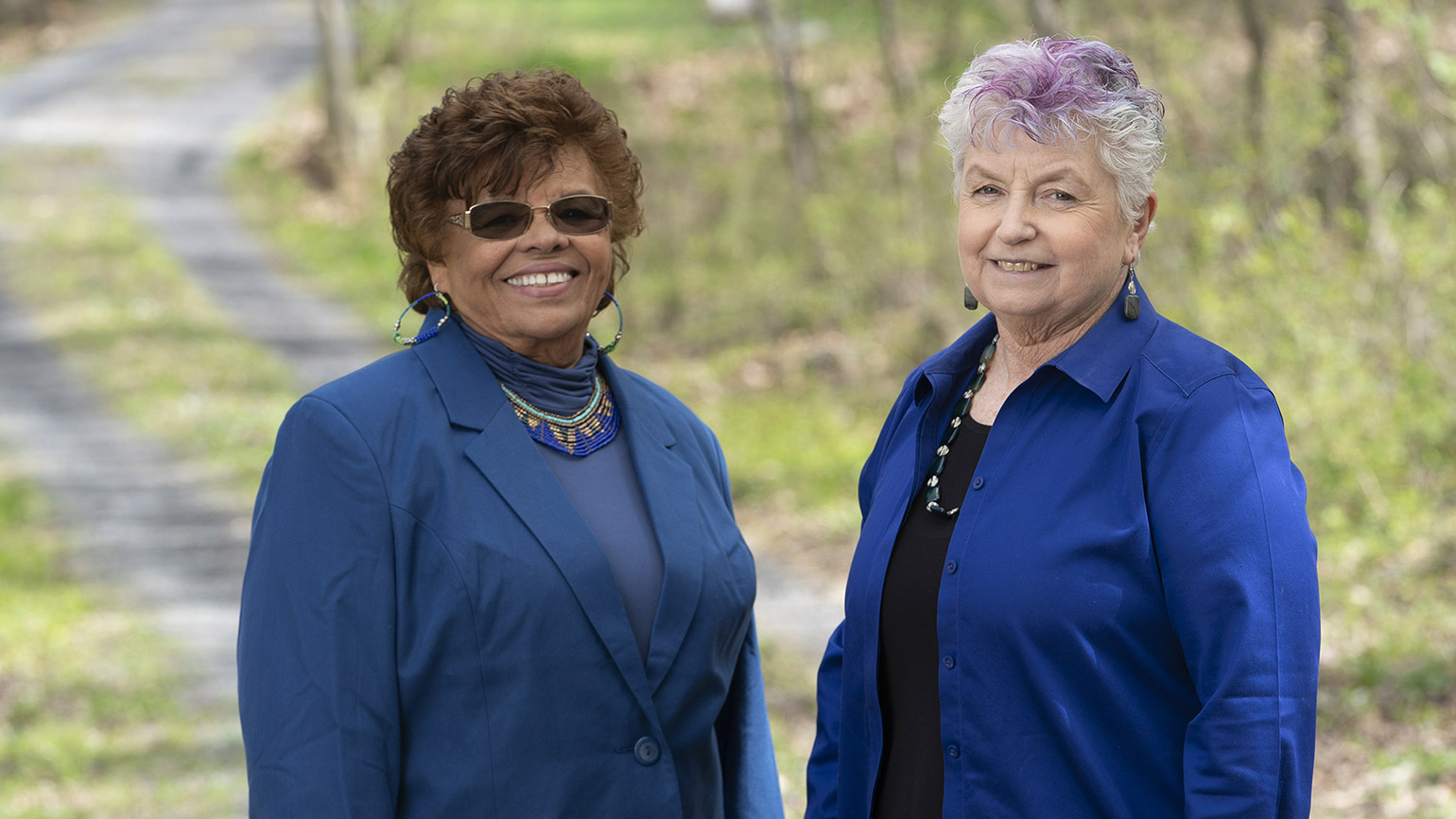
How Two Women Found Healing from Their Family’s Difficult Legacy of Slavery

Betty Kilby Fisher Baldwin
There I was, coming up on my sixty-second birthday. God had helped bring me to a good stage in my life. I’d retired from my career as an ex­ecutive. I had raised four children and was helping raise two of my nine grandchildren. And I thought I’d made peace with the past.

Then I received an e-mail from a stranger:

My name is Phoebe Kilby, and I am white. My father grew up in Rappahannock County, Virginia, near where your father grew up. I have been doing some research on my family. I suspect that our families had some kind of relationship in the past.

What did that mean?

There was a follow-up e-mail too. Phoebe—whose last name was the same as my maiden name—said she had been doing genealogical research and discovered that her ancestors might have enslaved my ancestors.

White slave owners often fathered children with the African-American women they owned. It was possible that Phoebe and I were not just con­nected but related.

“I feel shame that my family once owned slaves and by that very fact trau­matized and mistreated them,” she wrote. “Someone in the Kilby family needs to apologize for this injustice, and perhaps that person should be me.”

Those e-mails stirred the past up again, stirred up a storm of feelings inside me too.

Let me tell you my story. Maybe then you’ll understand why Phoebe’s words felt like a message from God.

Wind the clock back to 1958, the year my name appeared on a lawsuit filed by the NAACP against the school district of Warren County, Virginia. I was 13 years old and one of 22 African- American children seeking the right to attend the whites-only schools where I lived. At that time, Black students had to leave the county to get an edu­cation beyond seventh grade.

The school district and even the governor fought us. Finally a judge or­dered the district to comply with the landmark 1954 Supreme Court deci­sion outlawing school segregation.

The NAACP gave me and other stu­dents nonviolence training and told us we were soldiers in God’s army, fight­ing for justice. I was proud to be part of such a historic struggle for equality.

My faith began to erode in the face of vicious opposition from white stu­dents and their parents. Before we had even set foot in school, someone shot at the windows of my family’s house. The day we arrived, grown-ups lined the streets and threatened to kill us.

Other students called us despicable names. Threw spitballs at us. When I asked the teacher for help, I got in trouble.

My daddy, James Wilson Kilby, was a man of strong conviction and even stronger faith. He was a driving force behind the lawsuit. He also insisted that our family join hands and pray for our enemies each night before din­ner. “Jesus commanded us to pray for those who persecute us,” he told us.

I made sure never to sit next to Daddy. If I wasn’t holding his hand, he wouldn’t know I wasn’t praying for those white students.

Everything culminated one day in 1963, my senior year, when I gambled on taking a shortcut to class by walk­ing alone through the auditorium. We Black students had learned the hard way that it was always safer to travel in larger numbers.

A group of boys found me. They grabbed me, pinned me down and raped me.

I couldn’t tell Daddy because he’d go to the authorities, and then it would be the testimony of one Black girl versus a group of white boys. Our family would be destroyed.

I became cripplingly depressed. I stopped eating. I wound up in the hospital.

An orderly who went to our church came to offer comfort. I told him I wanted to die. He asked how long un­til I graduated. A few months, I said.

“God gave you a big job,” he said. “You did good. It’s almost over. The best part of your life is just ahead of you.”

For decades after that, my spiritual life ricocheted between those two ex­tremes: resisting Daddy’s prayer for the people who oppressed us and hold­ing on to those words spoken by that orderly, who was like an angel to me.

I graduated, went to college and found work in corporate America. I rose to become an executive at Ameri­can Airlines. I did everything with a determination to prove that I was bet­ter than the hateful names I had been called in school.

I wrote a book about my family’s civil rights struggle, entitled Wit, Will & Walls. I gave talks at schools and historical societies. My book was made into a short documentary.

Phoebe’s e-mail took me right back to my childhood dinner table. Here was a hand held out by a white per­son apologizing for injustice against people like me.

All my life, I believed God had helped me overcome challenges, succeed and become a voice speaking out against racism. Was I prepared to take this outstretched hand?

“I hope to hear that you are inter­ested in conversing with me,” Phoebe wrote.

Something told me I had to say yes.

Phoebe Kilby
My childhood was the opposite of Betty’s. I grew up in Baltimore. My father was a doctor, and our family was financially comfortable.

There is no other way to say this: My father was a racist. He had sepa­rate waiting rooms for whites and nonwhites, and he made frequent dis­paraging remarks about Black people. His mother said similar things. My mother’s side of the family was not like that, thank goodness. But my mother did not challenge my father’s attitudes. I didn’t either. I assumed what my father said was true.

Baltimore City public schools inte­grated in 1954, so when I was ready to go to school, my parents enrolled me in an all-white private school. That backfired because the teachers were broadminded and sympathetic to the civil rights movement. They assigned books by Black authors, which I had to hide at home to avoid trouble.

By the time I graduated, I knew my father’s attitudes and a lot of things were wrong. For a long time, I thought knowing that was enough.

I married, and my husband and I moved to the Shenandoah Valley in Virginia, near where ancestors on my father’s side had lived. I got a job at a small Christian college called Eastern Mennonite University. EMU had a program called Coming to the Table, which encourages descendants of en­slaved people and descendants of en­slavers to connect.

The program was started by a man named Will Hairston, whose ances­tors had been one of the largest slave-owning families in Virginia.

Inspired by Coming to the Table, I researched local archives and census records. I learned not only that my ancestors had owned slaves near War­ren County but that descendants of those enslaved people still lived in the area. That’s how I found Betty. Were she and I connected—maybe even re­lated—through the horrors of slavery?

“There’s only one way to find out,” Will Hairston said. “You are going to have to contact her.”

I wasn’t ready for that! I wrestled with my reluctance. Finally I ran out of excuses. On January 15, 2007—Martin Luther King Jr. Day—I e-mailed Betty.

There was no reply.

You’ve offended her, I told myself. Why would she want to talk to you?

With Will’s encouragement, I sent a follow-up e-mail explaining more about myself and my reasons for reaching out.

Betty’s reply came a few hours later. The subject line of her e-mail: “Hello Cousin.”

Betty I had been having computer trouble. By the time I saw Phoebe’s first e-mail, the second one was in my in-box too. I did not hesitate to reply.

The timing “could have only been God,” I wrote. “We are the key to healing. Meeting you today is so awe­some…. I have always known that my family were descendants of slaves, but I couldn’t open that door.”

My words expressed more certainty than I felt. I think God was guiding my fingers as I typed. In fact, opening that door—taking Phoebe’s outstretched hand—felt scary. Was I ready to con­front this issue I had worked so hard to put behind me?

I lived in Texas, but I was coming to Virginia for a screening of the docu­mentary about my book. I invited Phoebe to meet. “I thank God for bringing you into my life,” I wrote.

Phoebe Betty and I met at a restaurant in Front Royal, Virginia. Any fears I had evaporated when I met Betty. She is a positive, can-do person. She gave me a hug. She introduced me to other mem­bers of her family at the restaurant, in­cluding her two grown daughters.

At the documentary screening the next day at a church, Betty introduced me to the mostly African-American au­dience and quoted Martin Luther King Jr.’s dream that one day “the sons of former slaves and the sons of former slave owners will be able to sit down together at the table of brotherhood.”

The audience erupted in applause.

Encouraged, I invited Betty to a Coming to the Table workshop, where we could deepen our friendship and learn more about how our families were connected.

Betty Many of my fears also melted away when I met Phoebe. She had done her homework. She listened as much as she talked.

I agreed to attend the Coming to the Table workshop. Phoebe and I were among 15 participants. We learned about restorative justice and dis­cussed how it might overcome trauma and achieve reconciliation.

There was an activity called Break­ing Cycles of Violence—a series of steps designed to help people talk about traumatic incidents and move toward healing.

The minute the activity started, I knew I was in trouble. I had to talk about the horrible things that had happened to me as a child. Feelings I had spent a lifetime burying rose up and overwhelmed me. Suddenly I was weeping uncontrollably.

The Black members of our group surrounded me and held me. For a long time, I couldn’t stop crying.

At last, the room fell silent. I can’t say I miraculously gained a spirit of forgive­ness and reconciliation. But something inside me shifted. I knew God was with me, even in my worst experiences. I could take Phoebe’s hand and trust that God would be with both of us.

Phoebe Seeing Betty break down made me realize there is a difference between learning and experiencing. No amount of knowledge could take the place of Betty’s lived experience of racism.

I had benefited from racism. My father inherited wealth generated in part by the labor of enslaved people. He inherited racist attitudes that he passed on to me. I went to a school that excluded Black children and ben­efited from social networks and ad­vantages Betty never had.

It was up to me to turn my knowl­edge and feelings into action.

Betty and I committed to helping Coming to the Table expand its reach. I used some of my inheritance to set up a college scholarship fund for peo­ple like Betty, whose families had been scarred by slavery.

Though we live hundreds of miles apart, Betty and I talk on the phone, ap­pear together at events and try to meet as often as we can. We wrote a book together, published this year, entitled Cousins: Connected Through Slavery. Pro­ceeds go to the scholarship fund. I know the truth about myself and my family. Truth is the starting point for healing.

Betty I also grew up with hateful feel­ings in my heart, though for different reasons. Racism wounds everyone, perpetrators and victims.

I believe God brought Phoebe and me together. He knew the healing each of us needed. He knew that to­gether we could help others heal. That’s why we’re sharing our story.

For more inspiring stories, subscribe to Guideposts magazine.
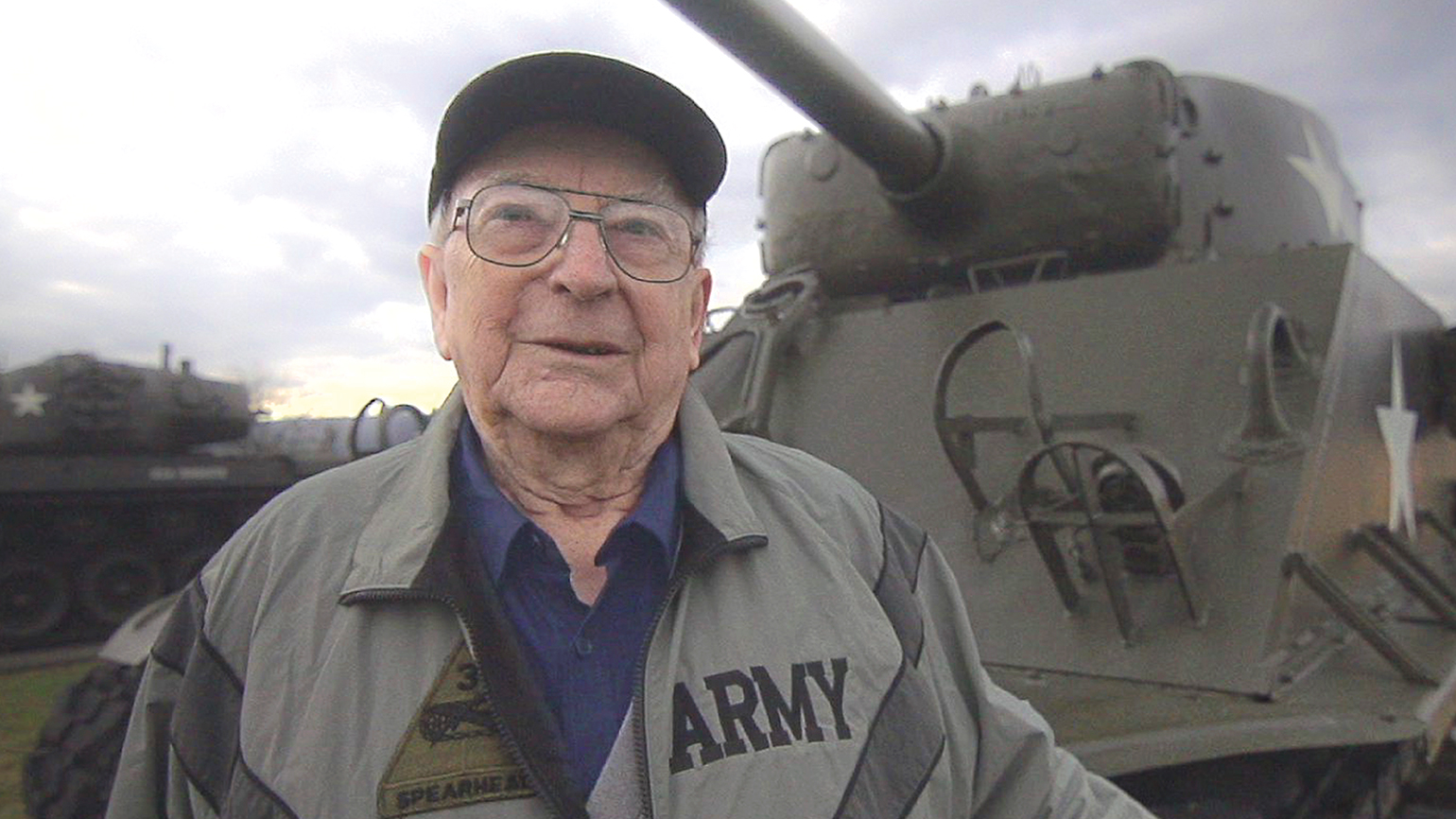
How Two Veterans, Once Enemies, Became Friends

It was March 2013. I’d come here to heal the wounds of a long-ago war, revisiting the city of my nightmares to meet Gustav Schaefer, hoping he might answer a question that haunted me still. I stood with my back to Cologne Cathedral, scanning the crowd for anyone old enough. I couldn’t find Gustav. Had he changed his mind?

Sixty-eight years before, in 1945, I was a tank gunner in the Third Armored Division when we rumbled into Cologne, a city spanning the Rhine. We were nicknamed Spearhead—a title we’d earned. My crew was among the first to battle its way into Germany. We froze our tails off during the Battle of the Bulge.

I suppose we handled ourselves well, which is why we got a Pershing tank, the U.S. Army’s answer to the more heavily armed and armored German Panther and Tiger. We had one of only 20 in the entire European Theater. It was presented to us like an award, but it was a curse. As the heaviest tank, we were always first in line, first around the corner, first over the hill. It skinned our nerves raw, but what could you do? Someone had to go first.

Cologne was particularly dangerous. American bombs had created a labyrinth of blocked streets and ambush points. We worried about German tanks and watched for bazooka teams in the buildings. People think tanks are safe, but that’s an illusion. If your tank gets penetrated, all that armor around you turns into shrapnel. The ammo and fuel you’re sitting on can erupt into a volcano of fire. We particularly feared the German Panzerfaust, a bazooka round that turned to boiling metal when it hit, burning through tank armor and spraying molten steel inside.

All you could do was shoot first and hope to get them before they got you. That and pray. I never really learned to pray. Instead, I just talked to God—asking that we make it through each city block, make it to nightfall. Touching the Bible in my breast pocket. As we neared the cathedral square that day in 1945, I knew German tanks were waiting. I would be meeting Gustav for the first time, though I didn’t know it was him, not then. All I saw was a German tank peeking out from behind a building. When we pulled up to the intersection, it spotted us and backed into an alley. Suddenly, a black blur crossed my gunner’s scope. It was low, with gray camouflage. An Opel sedan.

“Staff car!” my tank commander yelled, and I fired. Our officers had told us anything on wheels was German military. Orange machine gun tracers chased the car down the street. The Opel turned toward the hidden tank, and a stream of green tracers—the German tank’s machine gun—crossed our orange ones.

The Opel slowed to a stop. I dismissed it. My concern was the tank. I fired again and again into the building that sheltered it. The building leaned backward like a dazed boxer, then collapsed, burying the tank. We crossed the intersection and passed the Opel. I saw no camouflage, no official markings or insignia—just a black car covered with dust. Medics huddled around the exploded windows, treating someone beside the passenger door. I glimpsed curly brown hair. A woman. Who was she? A Nazi fanatic? We’d encountered those. Some general’s mistress? Whoever she was, we left her behind and continued patrolling the area.

An hour later, my crew and I outdueled another tank, a Panther, in the cathedral square. An Army cameraman who had been following us that afternoon got it on film and cut a newsreel, making us the most famous tank crew in the European Theater. I never saw the newsreel during the war. I’ve been told it was called the greatest tank duel in history. But not the greatest day in my life.

I went home, married and got a job managing a cinder block factory. I tried to forget that day, the worry that I’d fired on a civilian. We won, I told myself. That was the important thing.

But in 1996, when I was 72, Cologne came back. A war buddy told me he’d seen our duel with the Panther in a documentary called Scenes of War. I ordered a copy. After all those years, part of me was curious to relive the battle.

I slipped the VHS into the machine and hit play. There was the four-way intersection. I expected to see the confrontation with the Panther, but instead, the Opel swerved into view. I watched in horror as tracers from the Pershing’s machine gun—my machine gun—puffed dust from the car’s trunk, a sign of a hit. I didn’t see the driver, but medics clustered around a young woman who spilled from the passenger door. They pulled up her sweater, probed her wounds and gave up. They covered her with a jacket.

I prayed it wasn’t me who had fired the shot that had killed her. Yet I’d watched just that. I didn’t want her to die, but she did. On every viewing.

I searched for the woman’s identity. With the help of a German journalist friend, I discovered she wasn’t some officer’s mistress or a fanatic; she was Katharina Esser, a 26-year-old grocery employee. Friends called her Kathi. Her boss, Michael Delling, had offered to drive her to safety, and I found out he’d been killed as well.

I never imagined that in my eighties I would fear the dark, but now I lay awake, afraid to sleep. When I did, I dreamed of stumbling on Kathi’s body in the blighted streets of Cologne. During the day, I sat listless and depressed. I couldn’t share my terrible thoughts with my wife, Melba. She was in the grip of Alzheimer’s and, after 61 years of marriage, couldn’t remember my name. I’d promised Melba I would never put her in a nursing home, but her care consumed what little energy I had. To be there for her, I knew I had to fix myself somehow.

The VA psychiatrist had diagnosed my demons as post-traumatic stress disorder and prescribed antidepressants and anti-anxiety pills. The medications masked my pain but couldn’t erase my guilt. This wasn’t some dusty memory from 1945. This guilt was fresh, taking root the moment I’d seen Kathi’s face on my TV screen. It was a moral injury, an injury to my soul. I tried going to group therapy for veterans, but I was embarrassed at the idea of venting my sorrows to these younger men, mostly Vietnam vets, whose pain was so raw.

In a last-ditch attempt to find answers to the questions that tormented me, I acquired the original uncut footage from the National Archives. I played the film in slow motion, tracking the movements of the infantrymen from frame to frame, looking for clues to prove someone else fired the fatal shot. I remembered that stream of green tracers and hoped the German gunner—the one I’d brought the building down on—had seen what happened.

Had he even survived? My journalist friend unearthed evidence he was alive. I arranged a meeting, wondering if he was as haunted as I was about Kathi. Now here I was in Cologne, looking for my old enemy. At last, I saw him—a small man neatly dressed in a tie and black jacket, his nervous eyes sheltered behind transition lenses. I stretched out my hand and smiled. I leaned close and said, “The war is over. We can be friends now.”

Ja. Ja,” he replied.

We retired to a hotel and sipped beer, speaking through a translator. I’d never met a German soldier before, but Gustav had experience with Americans. After Cologne, he’d spent the rest of the war as a POW, serving food to GIs. Upon release, he returned to his childhood farm in Northern Germany and worked driving bulldozers. Retired and a widower, he enjoyed touring foreign cities on Google Earth. As the conversation eased, we found common ground—in humor.

“Did your tank have a bathroom?” I asked. “They forgot to put one in mine.”

“Yes, we did,” Gustav retorted. “Empty shells!”

He told me about his tight-knit farm family. How the Nazis took his Jewish neighbors and rampaged through his village. Gustav hadn’t wanted to be in Cologne any more than I had. After his tank got buried in bricks, he and one crewman surrendered. The others kept fighting; he never saw them again.

Finally, I found the courage to say it: “I still see her in my dreams…the woman in the car.” I didn’t have to explain. Gustav had seen the footage too. Ever since, he’d had nightmares in which he was trapped in his tank, watching Kathi bleed to death. He’d never talked about it either. “Who would understand?”

The next morning, we walked to the intersection. It was time to confront the past. New buildings made it difficult to get oriented, but when we arrived, we knew we were at the right spot. Standing there, I confessed. “It happened so fast, and I was afraid.”

Gustav nodded. That’s why he’d fired too, he admitted. He’d thought the car was American until the shattered vehicle stopped in front of him and he saw his doomed countrymen.

Stunned, I looked at the street. It had been crossfire. Could we both bear responsibility?

They never should have been there, Gustav continued. They drove right into a battle. If they’d holed up in a basement, they would have survived. “It’s war,” he said. “It’s in the nature of it. It can’t be undone.”

He was right. None of us should’ve been there. Not me, not Gustav, not Kathi Esser. Not any of the others who died in that terrible and terrifying war.

The graves lay nearby, at St. Gereon’s Basilica. First, Gustav and I each laid a yellow rose before a cross labeled MICHAEL JOHANNES DELLING, 1905–1945. Then we found a common plot marked THE UNKNOWN DEAD, where we’d been told Kathi Esser was buried because she’d been found without her ID papers. The vase at the foot of the triangular eave with the cross was empty. Gustav slid a yellow rose into the vase, but as I leaned forward to do the same, I teetered. My former enemy reached out and kept me from falling.

Instead of wishing to forget, we swore to remember…and something within me let go. By facing my fears, I found peace, there at my enemy’s side. By accepting my role in something I could not prevent, I found forgiveness. I still dream of Kathi, but dreams and nightmares are different things. I’ve since met her family—gracious people who offered forgiveness. Sleep comes more easily now. I talk to God. I feel the comfort only he can give.

Gustav became my war buddy—from the other side. We exchanged Christmas cards and spoke on Skype. There were times I saw him on my computer, this little man surrounded by atlases, and thought how I might have killed him. Thank God I didn’t. The first time we met, we were encased in steel, peering through our sights, seeing each other only as war machines. The second time, we met as ourselves, unarmored, as two human beings.

Gustav is gone now, but each year on March 6, the day we truly became friends, I arrange for two yellow roses to be placed on Kathi Esser’s grave, one from each of us. Last year, I put them there myself, and I plan to go again. Some things must be remembered.

For more inspiring stories, subscribe to Guideposts magazine.

How Two Blind Seals Gave Her the Hope She Needed

My husband and I wandered the lush tropical gardens of San Diego’s Bahia Resort Hotel. We came to a large pool. A wet nose popped out of the water and a harbor seal climbed up onto a rock to greet us. “Look!” I gasped, delighted.

“Her name is Gracie,” Dan said, reading a plaque by the fence that enclosed the pool. A moment later, another seal swam past, nudging Gracie’s hind flippers with his snout. “And that must be Billy,” he added.

Gracie dove back into the water and chased after Billy. We watched, entranced, as they raced around the pool, swishing and somersaulting.

Dan had come to San Diego on business. We lived in landlocked Idaho, and I’d tagged along to enjoy a week by the ocean.

The next day Dan went off to his meetings. I found myself back at the seals’ pool. Gracie and Billy were lounging on a large rock, napping in the morning sunshine. I snapped a few pictures, then read a sign that gave more information about the seals. I was surprised to learn that Gracie had a severe visual impairment and Billy was blind.

“Here Gracie, Gracie.” My head perked up at the sound of the soft voice. So did Gracie’s. It was breakfast time. Smelt, mackerel and squid were on the menu. “Come on, Gracie,” her attendant encouraged. She rolled off the rock, swam toward him and lifted her head to snatch the fish. But at the last second, she dove under and swam away. I laughed. She was playing! Finally, she could resist no longer. Billy joined in. I found a shady spot on the grass and spent hours watching them cavort in the pool, nosing large red and blue balls. They moved easily and gracefully, their lack of sight seeming to be no hindrance at all.

Over dinner that evening I couldn’t stop talking about Gracie and Billy.

Dan smiled. “You’re falling in love with them, aren’t you?” It was true. I’d always had a soft spot for animals, but I was drawn to these seals in some deeper way I didn’t quite understand. I visited them every day during our trip, captivated.

Even when we returned home to Idaho, I couldn’t stop thinking about the seals. I often looked at their photos on my phone. I went online to learn more. Gracie was believed to have been abandoned by her mother as a pup. She was found, frightened and hungry, drifting near the Southern California shore by a group of children. She was nursed back to health, but because of her near-blindness she could not be returned to the ocean. A special home was made for her at the resort.

Billy was thought to have suffered a head injury in stormy Alaska waters, which caused him to lose his sight. He too couldn’t return to the sea. He needed someone to teach him to catch fish and survive in a world of darkness. “Someone like Gracie,” I whispered to myself, marveling at how Gracie’s loss had become Billy’s lifeline. And now they were there for each other, a friendship only God could have orchestrated.

In time, I got caught up again in the busyness of my own life—writing children’s books, attending church, staying in touch with my three college-age children. Gracie and Billy slipped further back in my memory, their photos buried on my phone. Nearly two years went by.

In spring 2019, I started feeling achy, like I was coming down with the flu. Within days my vision deteriorated. One morning, when I looked at my daughter, her face appeared blurry. I went to an ophthalmologist who specialized in complex eye disorders. His diagnosis: A raging autoimmune reaction was causing severe inflammation throughout my body, damaging my eyes.

“I’ve never seen a case this severe, certainly not in both eyes,” he said. He monitored my eyes daily. I brought a packed bag to each appointment in case I needed to be flown to Salt Lake City for emergency treatment.

My eyes had to be kept dilated and protected from sunlight. I couldn’t go outside, other than to the doctor. I sat in my bedroom with the shades drawn, unable to read or even watch television. I was terrified. What if I lost my sight completely? How would I possibly manage? I didn’t know anyone who was blind.

Then I remembered. The seals.

Gracie and Billy lived in darkness. Yet they had adapted and were able to enjoy a beautiful life. I’d been puzzled by why I’d felt so drawn to these two creatures. I hadn’t understood why it felt like more than a chance encounter. Until now. Their lives showed me a way forward. I needed to trust that God would be there for me, just as he was for Gracie and Billy.

Focus on what you can do, I told myself. I remembered Billy’s enthusiasm as he barked for his breakfast and how Gracie had made a game out of eating her fish. When had I taken the time to truly enjoy what I ate? Rummaging in the pantry and fridge, I discovered I knew my kitchen pretty well with limited sight. I scrambled eggs, sliced cheese and toasted cinnamon bread. Comfort food. I savored the flavors, textures, smells.

What else? I thought of the seals diving and swimming around their pool. Exercise. That was something I could do. I climbed up and down the stairs and jogged laps around the living room every morning. Late in the evenings, after the sun had set, Dan guided me through the park near our home.

The cooking and exercise helped. Still, the days home alone were long, and I got bored and restless. Gracie and Billy had filled their hours with play. They had rings and balls. After I mentioned this to my daughter, a college sophomore, she brought me adult coloring books and markers. It didn’t matter that I colored outside the lines and had trouble distinguishing the hues. The simple activity filled a void and kept me occupied during that difficult summer.

I might not have been thriving, but I was adapting. My body was healing, my eyesight was gradually improving and I was starting to believe that I was going to be okay after all, just like the seals. Gracie and Billy had given me hope.

Eventually most of my eyesight was restored. I hope to return to San Diego someday so I can thank two inspiring friends that God put in my life long before I knew I would need them.

For daily animal devotions, subscribe to All God’s Creatures magazine.

How to Talk to Strangers about Your Faith

Few conversations are more daunting than sharing your faith with strangers.

People happily strike up conversations about their kids, their jobs, their vacations. But change the topic to religion? and Things get awkward fast.

Why is it so hard to talk about faith? Is there a way to approach this vital, intimate subject with honesty and integrity at a time when religion, like so much else, has become a cause of division in our nation?

Yes, says Neil Tomba, senior pastor of Northwest Bible Church in Dallas, Texas.

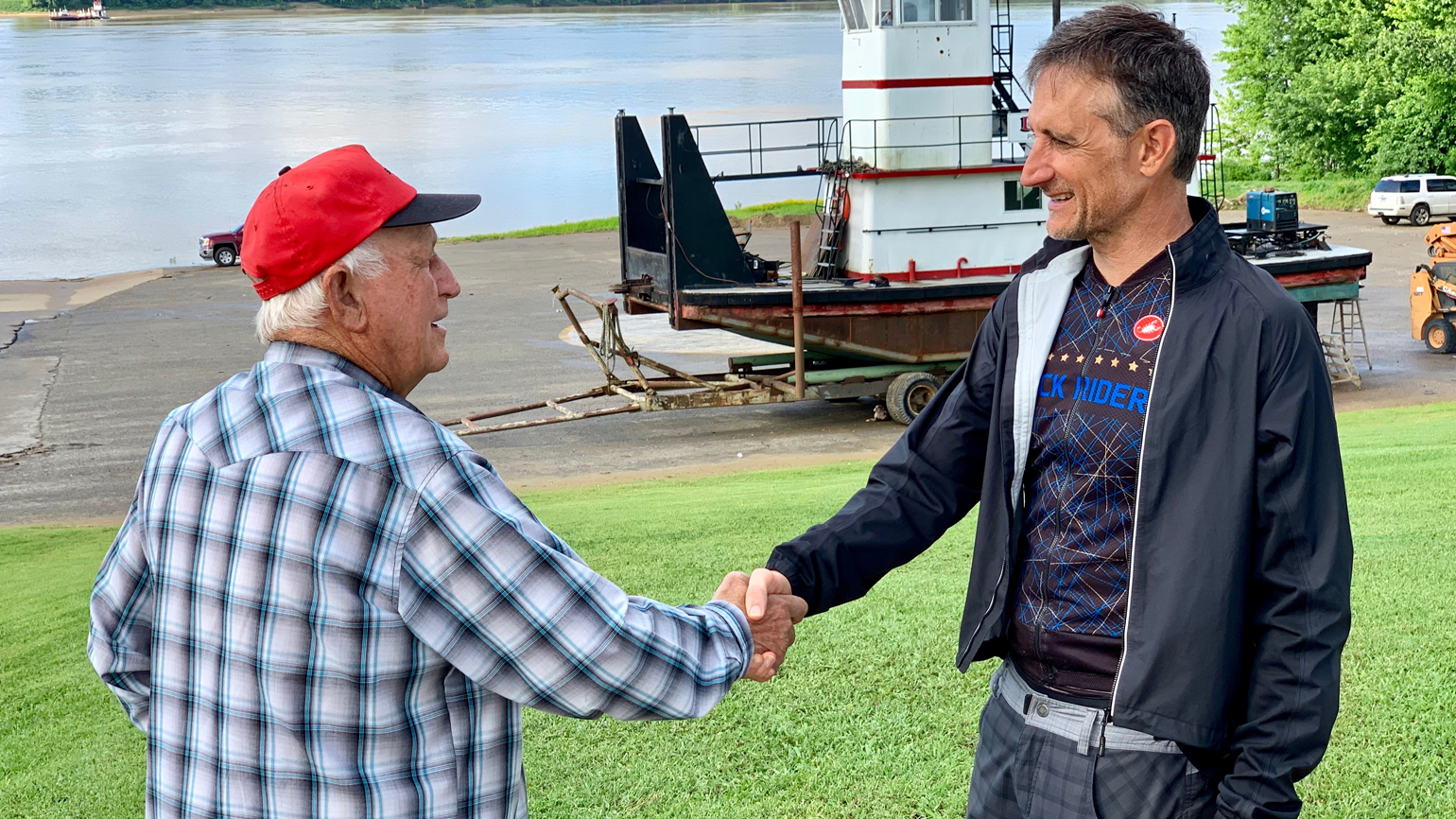
Tomba (above, right) should know. In 2019, he rode a bicycle across the United States from California to Maryland for the express purpose of talking about faith to as many strangers as possible about faith. An avid cyclist, Tomba had long dreamed of such a ride. He decided to make it happen after a survey at his church revealed that most members seldom talked to strangers about their faith. This year, Tomba published a book about the ride called The Listening Road: One Man’s Ride Across America to Start Conversations about God; the book outlines his life-changing experiences on the 33-day trip.

Whether in a city or on a farm, the first thing Tomba said to people he encountered on the road was: “I’m doing a cross-country bike tour and listening to people about what matters most.” Then he asked questions and listened for moments of common ground.

“I wanted to model something,” Tomba said.“I didn’t use the word evangelism,” Tomba said. “I’m not against it but people have so many stereotypes about what that is. My goal is to end a conversation [about faith with a stranger] knowing I could have a second conversation with that person.”

Tomba said that in an ideal world, people from all religious backgrounds would feel free to share their beliefs and hopes without fear of offending or being rejected. Christians feel particularly conflicted about this issue, he said, because Jesus commanded his followers to spread the good news—regardless of whether people want to hear it.

So, how do you share your faith in a polarized world?

Tomba’s counterintuitive answer: Stop talking.

“I never felt the need to make sure someone hears a three-point message they can agree with. I don’t think I have to seal the deal…It’s not about being right or having the answer but coming alongside someone.”

Humility and open-mindedness created opportunities to connect, Tomba said. “I would say to people, ‘We are here to be kind, curious and respectful.’ People would say, ‘I don’t have time.’ And then once they started talking, they would say, ‘Do you have time for one more story?’”

Stories inevitably led to deeper layers where religious questions no longer seemed out of place.

Chatting with a woman at a convenience store, Tomba said he noticed an edge in her voice when she mentioned that her grandfather was a preacher. Tomba asked how she felt about religious issues herself.

“You want the honest truth?” the woman said. “I’m angry at God. My son worked the late-night shift. He was coming home and a semi hit him and he died.”

Tomba realized that whatever the woman knew about religion, it wasn’t enough to help her with her grief. “I cried with her and prayed with her,” he said. Then he shared the story of Jesus at Lazarus’ tomb.

“There’s a part of that story that says Jesus wept and he was angry,” Tomba told the woman. “I stopped right there. Her eyes got really big and she said, ‘I never thought about that before.’ It was almost like she saw Jesus in a new way. Not plastic Jesus. You could see there was this comfort moment knowing Jesus cared about people dying.”

Talking to pair of grizzled motorcycle riders a few days after Memorial Day, Tomba learned that one of them had lost his father in a military plane crash. The rider suddenly said, “I want you to pray for my struggles in faith and for our safety today. Thanks for talking to me. This was a divine appointment.”

“Sometimes it’s enough just to point to God,” Tomba said. “You become fluent about the hope in your heart.”

Tomba’s emphasis on listening and looking for points of common ground is echoed by noted evangelist Dave Gibson, senior director of missions and evangelism at Grace Church in Minneapolis and director of the Go Movement, a worldwide evangelism initiative.

Gibson said Jesus himself models such an approach. “Jesus saw the multitudes and was moved to compassion. We need to enter into someone’s life,” Gibson said. “Be a good listener. People want to be listened to and want to know someone cares about them. The book of James says, ‘Be slow to speak, quick to listen.’ Talk in terms of other people’s interest. Build a bridge from your heart to another life.”

Gibson said he once talked to a man on an airplane who devoted much of the conversation to denouncing religious people as hypocrites who cause of most of the world’s problems.

Gibson’s response: “Jeff, I can’t totally disagree with you. You and Jesus have a lot in common.”

Gibson told the man that he too had grown up disillusioned with organized religion. “I said, ‘Jesus’ sharpest rebuke was to the Pharisees. He didn’t win a popularity contest with religious leaders. He came with love and compassion and healed people, fed the poor, cast out demons and died on the cross.”

Gibson said the man “looked at me and said, ‘Dave, I like you. Normally, if a person talks to me about religion, I punch them in the mouth. I guess I don’t have as much of a problem with Jesus as with organized religion.”

“That’s a great place to start,” Gibson said.

“We have to get over the idea that we have to totally agree with each other or we hate each other,” Gibson said, summing up his approach. “I don’t find arguing is a good point at all. I try to be winsome. Try to point it back to Jesus and be respectful…Words are necessary but not the first thing. Words fall on deaf ears if there isn’t that life to back it up.”

How to Make Your Hopes and Dreams Come True

Dreams rise out of the human spirit and imagination to meet a personal authentic need. Our dreams give us purpose and spiritual fulfillment to think the unthinkable and do the impossible.

Human progress has benefited greatly from ordinary people who dared to dream and be different. Yet many of us have shattered, deferred, abandoned and unfulfilled dreams—and we mistakenly believe that we are not capable, worthy or destined to live them out. We may think that we lack the resources, education and talent to follow through. This is when dreams can die.

Author and speaker Les Brown writes, “The graveyard is the richest place on earth because it is here that you will find all the hopes and dreams that were never fulfilled, the books that were never written, the songs that were never sung, the inventions that were never shared, the cures that were never discovered, all because someone was too afraid to take that first step, keep with the problem, or determined to carry out their dream.”

We have thousands of reasons for not living out our dreams, many of them real. But in the end, letting those dreams die only leads to regret.

I recently heard about a mother who was 28 years old when her husband walked out and never came back. She had five children ranging from ten to two years old. On that day she made herself a promise that her present condition would not determine her life, that one day she would travel the world. 

She took a can and began saving a dollar a day. With each day, difficult as it was, she deposited a dollar in that can, hidden in a closet. Once a can was filled with dollar bills, she got another one. For years the struggling mom saved until the youngest child graduated from high school. When all the children were out of the house, she took the money and bought herself a ticket on a ship and began sailing the world.

Ask yourself today, what dream big or small do I want to achieve? Start living it out, taking small steps. Your situation and circumstances may be unfavorable, but with consistent effort and determination, you can realize your dream.

How to Love Your Enemies

I don’t know of any commandment from Jesus that’s harder to follow than His command to love your enemies. How can I do that?

“You have heard that it was said, ‘You shall love your neighbor and hate your enemy.’ But I say to you, Love your enemies and pray for those who persecute you, so that you may be sons of your Father who is in heaven…” (Matthew 5:43).

I was recently reading a new book by the columnist Arthur C. Brooks, president of the American Enterprise Institute, with the title Love Your Enemies. It’s not the sort of book I usually go for. I figured it’d be drier than dust and as polemical as an op-ed.

In fact, Brooks offered a very helpful example of how to put Jesus’ words into practice. He described getting an email from someone who read one of his books. “Dear Professor Brooks,” it began, “you are a fraud.” And then went on for some 5000 words, “criticizing in vitriolic detail every chapter in the book and informing me of my numerous inadequacies as a researcher and person.”

Brooks was flummoxed for a moment. How to respond? There seemed to be three possibilities: Ignore the guy. Insult him. Or destroy him by picking out his own errors and throwing them back at him.

Brooks, to his credit, chose a fourth way, a way that impressed me. Of course he felt insulted and attacked. But somehow he also had to acknowledge that the man had actually read the whole book. And that made him grateful.

So instead of answering screed for screed he replied—in measured tone—that though the man had hated his book, it took Brooks a lot of time and work to write it, and therefore he appreciated the time and attention the man had given to it. (Note to self: he didn’t grovel or apologize.)

What came back 15 minutes later was an email that totally surprised him. Something very friendly in tone, cordial, even the suggestion that they get together sometime and talk over dinner. From enemy to friend in a matter of minutes.

How to love your enemies? Respond to them as real people. We can all disagree but we are indeed all God’s children. Loving your enemies means making an effort to understand them.

Why did Jesus ask us to do such a thing? Because it’s an avenue for growth. I have discovered that the people who get me all riled up aren’t necessarily across the world or country. They might be sitting in the next pew.

Who better to start praying for? If I desire to be understood, shouldn’t I try to understand them?

To buy a copy of Rick’s latest book, Prayer Works, click here.

How to Hold on to Hope When the Odds Are Against You

Who can forget the 1980 Winter Olympics in Lake Placid? The United States men’s hockey team, made up of unpaid college kids, beat the heavily favored Soviet Union’s team, made up of professionals labeled as amateurs, in a thrilling final 4-3.

Americans were glued to their seats, watching on TV and cheering the young men who were facing the greatest challenge of their playing careers. The win is still considered one of the biggest upsets in sports history and garnered the team a gold medal. It was called the “Miracle on Ice.”

Who doesn’t love an underdog? In some ways, it may remind us of ourselves. When we think of an underdog in the Bible, David against Goliath comes to mind. But another favorite is the four lepers. The Arameans, enemies of Israel, lay siege to the capital of Samaria, causing a famine. The people in the city had no food and no way out. But the four lepers were outcasts and had to live outside the city gates in accordance to the religious law.

As they sat at the entrance of the city, they decided to act in faith and walk with hope into the enemy camp where they would either be fed or killed. When the lepers arrived, no one was there. The Arameans mistakenly thought they had heard armies hired by the King of Israel coming to attack them. So they quickly fled, abandoning everything.

You can imagine the shock and surprise on the faces of the lepers. The men walked through the empty camp and began to eat, drink wine and take the silver and gold. But they realized the resources and good news weren’t just for them. So they returned to the city and told the king what had happened. Due to their faith and hope, others were also blessed.

Faith dares us to believe what we can’t easily see. It empowers us to trust that God will decide our outcome. Faith and hope together help us get through the most difficult circumstances and troubles in life. Bishop Michael Curry in his book, Love Is The Way: Holding on to Hope in Troubling Times, writes, “Hope comes along, and puts wind in our sails of faith. Hope is the energy that keeps us going when the gravity of reality would otherwise defeat us.”

When we face huge odds in life, doing nothing is not the answer. Why not let our faith and hope help us step into the unknown, trusting the outcome to God? This is what the four lepers did. When our backs are against the wall, we can either give up or act with courage. When we act with faith and hope, we discover God’s goodness on the other side. We learn that all along God was working on our behalf and making a way where we thought there was none.

How to Have Faith in the Midst of Fear

Several years ago, I was scheduled to be at an important event in Nashville, one that could have a major impact for the big dreams God’s placed on my heart.

To get there was a six-hour drive under the best of conditions, and this I-don’t-drive-in-the-snow gal was really stressing when the word “snow” appeared in our weather report.

I knew that part of my drive would lead me through the winding mountain roads of the gorge that sits between North Carolina and Tennessee. With numerous tractor-trailers, tight lanes and a concrete divider on that road, I always feel like I’m the filling on an Oreo cookie. I couldn’t imagine doing it in the snow.

It looked like I might make it before the storm hit. But that pipe dream burst the next morning as I heard that several inches of snow had fallen in a county not far from my travel route.

I prayed and asked God to give me peace about what to do. I knew I was supposed to go—but I was afraid. But I decided to make the drive.

READ MORE: ALLOW JESUS TO GUIDE YOUR LIFE

Snow started falling before I reached the gorge, a mountainous area far from civilization. I had that “What was I thinking?” conversation with myself, but it was too late. Then began a heartfelt, “God, please get me out of this mess!”

Thankfully, traffic was light. I guess other folks had more sense that day. But the situation got bad quickly. Despite the defroster, snow started to cover the windshield. I turned the wiper handle—and then I realized I had a big problem. The wipers were frozen in place.

I panicked as more and more of the windshield turned white. I couldn’t pull off because I’d get stuck in the ice on the side of the road, and I sure didn’t want to get stranded there.

By this time, there was only a small clearing on the windshield for me to see through. I knew I still had a way to go before I’d be through the gorge—and I knew that if that one place of visibility became covered, I’d be in big trouble.

Believe me when I tell you that I prayed my way through that day, claiming that verse from Psalm 56:3, “When I am afraid, I will trust in thee.”

I can’t tell you how relieved I was to mke it out of the gorge and on to the convention—where God had some divine appointments for me.

He stretched me out of my comfort zone that day. Way out of my comfort zone. But I learned two important things: He’s a trustworthy God, and when He calls you to do something, He will take care of the circumstances—even if it’s driving through a gorge on a snowy day.

Does God want to lead you out of your comfort zone today? You can trust the One who has called you to the task.

How the Women of West Point Inspired Her

It was a September morning in 2017. I sat in a rocking chair on our front porch in Nashville, working on the manuscript of my novel. I should have been focused on finishing my edits so my agent could send the book around to publishers. But what really held my attention was the stream of neighborhood children walking to school, holding tight to their parents’ hands. Seeing those children was a source of both joy and pain.

My husband, Patrick, and I got married in 2010. We dreamed of having a big family—I wanted four kids; he wanted five. For the past four years, we’d been trying to have a baby. Years of doctors’ visits, pregnancy tests and infertility treatments. Years of tears and prayers, so many prayers. But nothing helped. And now my novel seemed stuck too.

For as long as I could remember, I’d wanted to write a novel about West Point. My father was an active-duty Army officer who taught systems engineering at the Academy, and I was born on the campus, the youngest of three girls. We moved away when I was a year old, then back in time for me to attend middle school on campus at the Department of Defense school for children of faculty. We lived there until I was 16, and I still consider West Point my home, even though it’s basically a national monument.

Growing up at West Point was like growing up at Hogwarts. The school is perched high atop a hill overlooking the Hudson River, 50 miles north of New York City, and the gray stone buildings look like castles. The rousing sound of cadets singing cadences would wake me at 6 a.m. every day as they ran by my house in squads of 20, and dusk was announced by the firing of a single cannon.

West Point was a great place to be a kid—there were parades, pep rallies and bonfires, cadets jumping out of planes and blowing things up. Although the campus housed some 7,000 faculty, staff, family members and cadets, the community was tight-knit. My family had an open-door policy for cadets, and a group of five to 10 came over every weekend to hang out and watch TV and feel as if they were at home. My mom led the women’s basketball team’s Fellowship of Christian Athletes Bible study, and I loved listening to them tell funny stories of life at West Point. One cadet painted my face in camouflage and taught me to march with a broom for a weapon.

Even our Sunday school program was run by cadets. We attended church services in the beautiful Cadet Chapel. Though young, I took my faith seriously, often reading the Bible on my own, asking God to explain the Scriptures. The tragedy of 9/11 proved to be a double whammy for our family, as cadets we knew and loved would be going to war. One we’d hosted was killed in action in Iraq; another, in Afghanistan.

It was a privilege to have all those exemplary U.S. Military Academy students to look up to, especially the female cadets. Less than 25 percent of students at West Point are female, and the courageous young women who’d chosen this path of challenge and difficulty showed me that you’re capable of enduring and accomplishing much more than you can imagine. For me, however, there were other paths to success. I went to Furman University, moved to Nashville and got married in short order. I became a freelance writer for newspapers and magazines in part because it was a job I could see myself doing as a stay-at-home mom. Being a mother had always been a big part of my dreams—but so had being a writer.

I knew in my heart that I wanted to write a novel set at West Point, but I couldn’t see how. I’d never worn a uniform, gone through training or been deployed to war.

Then in 2013, an old friend named Dionna McPhatter called me out of the blue. I’d met Dionna when I was 13 and she was a cadet in my mom’s Bible study.

“Claire, would you like to hear my stories about West Point?” Would I! Dionna and I talked for hours, and she offered to connect me with other West Point women. I knew immediately that this was the novel I’d been waiting all my life to write. I recorded dozens of interviews, and soon I started writing, using the women’s stories as a springboard.

That was the same year Patrick and I started trying to have a baby. And failing. Hope is heavy. The Bible even calls it an anchor for your soul. But what happens when the anchor drags you down until you feel as if you’re drowning?

It was Dionna who helped me face our problems with a positive attitude. She had suffered an injury that kept her from getting commissioned as an Army officer, but she never lost her fearless energy. She channeled it into founding her own marketing agency. She told me to focus on the blessings I already had in my life—a loving husband, great friends and a fulfilling career—rather than on the baby I didn’t yet have.

I talked to another cadet, Jenny Jo Hartney, who had been our youth group leader. When I was in high school, I’d volunteered to participate in a practice run so upperclassmen could prepare for training incoming cadets. An upperclassman screamed in my face, and I was just about to run away when Jenny Jo came striding down the hallway. “Are you okay?” she asked. There she was, a senior getting ready to go to war, and yet she’d made the effort to check on me. She taught me that even in the midst of our own storms, we should look out for someone else who’s struggling, perhaps with a different heartache. With infertility, it’s easy to get myopic. When an acquaintance’s husband was diagnosed with cancer, I began regularly visiting her and cooking meals for her family. We talked openly about her husband’s illness. Comforting her comforted me.

By 2015, I’d been writing the book and facing infertility for two years. I got pregnant, only to have a miscarriage, and our beloved dog died. I was swimming in grief, and God seemed silent. In a Nashville coffee shop, I ran smack into Jen Wardynski, with whom I’d gone to school at West Point. She later became a cadet and served as a captain in the Army. Over cappuccinos, Jen and I caught up, and she told me about a friend who’d lost both legs in combat. “You can’t ignore loss,” she said. “You have to acknowledge it.” Unlike many friends who avoided asking about my miscarriage, Jen never backed away, and I realized that it was not only appropriate to talk about uncomfortable things but necessary.

I also interviewed West Point graduate Haley Uthlaut, whose husband, a West Point classmate, had been killed in combat in Iraq. “While my husband will always remain a part of me,” Haley said, “I didn’t let his death define my life. It’s okay to grieve and keep going.” She remarried and has four children. Haley showed me that when you fully grieve a loss, it allows you to open your heart for the next dream. I gave myself permission to grieve the “loss” of a biological family, and Patrick and I let that dream go. We opened ourselves to the idea of adoption and signed up with an agency. But nothing was working out so far.

There I was, sitting on our porch that September morning in 2017, trying to edit my manuscript but feeling as if the novel and my life were going nowhere.

And then the phone rang. It was the adoption agency. Patrick and I had been matched with a birth mother! I finished my manuscript, and in October, the book was sold. In November, our son, Sam, was born. The timing was uncanny, and I can only believe that God orchestrated everything. He connected me with these remarkable West Point women so that I could tell their stories and—through them—find the strength, faith and hope for the rigors of my own journey.

For more inspiring stories, subscribe to Guideposts magazine.
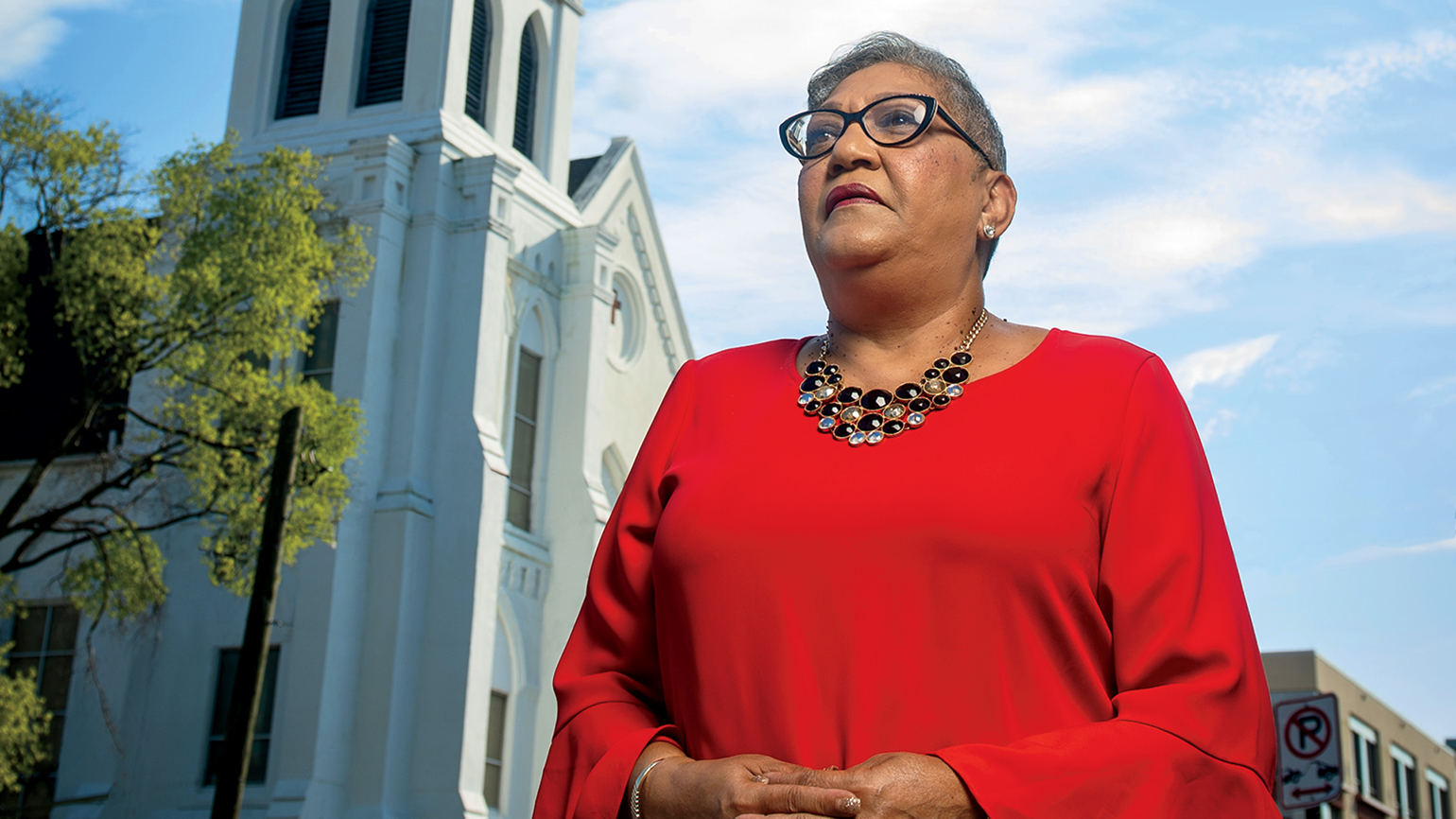
How She Found Healing After the Charleston Church Shooting

I made the trip from Charlotte to Charleston, South Carolina, full of dread. I didn’t want to be there, didn’t want to sit through the trial of the man who’d killed my mother at the church she loved, didn’t want to be in the same room with him. She’d gone to church for the Wednesday night Bible study, as always, and been gunned down along with eight other innocent souls. We’d waited a year and a half, and now, just before Christmas, the trial would begin. Justice would be served—or so I hoped. I’ve got to keep myself together, I told myself. For Momma.

The courtroom was small. There was room only for the victims’ immediate families. The prosecution team had talked to us beforehand, telling us what to expect, giving us a crash course in courtroom decorum. No outbursts. No running out mid-proceeding. But how could anything prepare me for what I knew I would have to see and hear, reliving those terrifying final moments of Momma’s life?

She was the last person shot, the last one to die that day, June 17, 2015, at Emanuel African Methodist Episcopal Church—or Mother Emanuel as we called it. She had witnessed all the violence, then been gunned down by the white supremacist killer. Anger surged through me at the thought of it.

A chaplain prayed with us. I didn’t envy his job. I’m a minister myself. I worked as a hospital chaplain, helping people deal with the trauma of illness, accidents, gun violence. Now the prayers would be for me. I didn’t want to be overcome by hate in the wake of a hate crime. I wanted to hold on to my faith, hold fast to God, but it was so hard. Especially now.

We sat in our seats, girding ourselves. The killer came in. He kept his head down, never looking at us. He sat, hardly moving, his posture erect. There was no sign of regret, no remorse. A shiver went through me. He was only 15 feet away, but it was impossible to bridge the gulf between us. I wanted to understand why he did what he’d done, what awful thing had motivated him, but there was no comprehending. I felt as if I were in the presence of pure evil.

The pastor of Mother Emanuel, Rev. Clementa Pinkney, had been one of those killed. His wife, Jennifer, was the first to testify. She’s soft-spoken, gracious. She told everyone how she had come into the fellowship hall earlier that evening to say hello to the folks at the Bible study. Then gone into the pastor’s office with their daughter.

That’s where she was when the gunfire began. How terrifying that must have been for her. She and her daughter moved to an adjoining office and locked the door. They crouched under a desk as shot after shot was fired. They heard the killer try to get in the locked office.

I thought I already knew a lot of the details about what had happened that day, but sitting through the court testimony was torturous. We were shown pictures of the crime scene, images of bloody, lifeless bodies. How would I ever get them out of my mind? Would I ever stop having nightmares about them? We watched a video of the killer talking to FBI agents the day after the shooting. He laughed when he admitted he’d shot those people. Pure evil.

The killer actually visited the church three times before the shooting, scouting it out. When he arrived at the Bible study that night, the people there invited him in. I could picture Momma giving him a warm welcome, reaching out, telling him to come and hear the word of God at the place it spoke to her.

He sat with the group for almost an hour. It was only when the members stood and bowed their heads to pray that he took out an .45 Glock semiautomatic and started shooting, stopping only to reload.

There were three survivors in that room. One of them was my cousin Felicia Sanders. Lying in her son’s blood, she survived by smearing blood all over her clothes and spreading herself over her 11-year-old granddaughter and playing dead. She saved them both.

The other one was Polly Sheppard. We listened to her heartbreaking testimony. After the killer had shot everybody, he turned to her as she wept and prayed aloud. “Shut up!” he said. This young man, so filled with hate, so filled with evil, told her he wouldn’t shoot her. “I’m going to leave you to tell the story.” He wanted her to be the lone witness.

Prosecutors shared Momma’s autopsy report. We had to hear about the many bullets that hit her; I could feel them as if they were hitting my own flesh. As we left the court, reporters surged around us. “Rev. Risher, can you give us a comment?” they said. “Just a few words.”

I wanted to get away, escape the images in my head. I found myself clinging to any detail that could offer a shred of comfort. Witnesses told how Momma’s cell phone had fallen out of her pocket and slid across the floor. It was the phone that Polly Sheppard used to call 911. Momma’s phone. A link to help even after her death.

We out-of-towners were put up at the Residence Inn. I was grateful to be able to bring my dog, Puff Daddy, to stay with me. I couldn’t have afforded to board him back home in Charlotte. Moreover, I needed his company, needed the excuse to rush back to the hotel and take him out for a walk. “Rev. Risher, give me a few minutes,” a reporter would say.

No, I had to be with my beloved dog.

The day came when I had to speak. I felt sick to my stomach, but I knew I had to do it. The shooting made me think hard about capital punishment for the first time in my life. Before Momma’s death, I would have said that a killer like hers, someone who had done something so heinous, deserved to die. But I’d been praying about it and reading about it. Killing this killer wouldn’t solve a thing. It wouldn’t kill the hate. It wouldn’t bring Momma back. She wouldn’t have wanted him to die.

I said all that for Momma.

On December 15, the jury went into deliberations. Two hours later, we were called back to hear the verdict: guilty on all counts. Family members hugged each other and cried. Part of me wanted to celebrate too, but I was so weary. And we still had to get through Christmas. Another Christmas without Momma.

In January, we were back in court for the sentencing. The prosecutors read from the journal that the killer had written in jail: “I would like to make it crystal clear. I do not regret what I did. I am not sorry. I have not shed a tear for the innocent people I killed.” No regret, no remorse.

Relatives of those innocent people were allowed to speak. My cousin Felicia held up her blood-smeared Bible from the night of the shooting. “It reminds me of the blood Jesus shed for me and you,” she said to the killer. “May God have mercy on your soul.” When it came my turn, I stared at him. He didn’t look back—I knew he couldn’t—but I knew he heard every word. “I pray,” I said, “that before your life is over, you will call on the name of Jesus for mercy.”

I also prayed for peace, for God’s guidance, and that whatever happened would be in God’s hands. The jury ultimately recommended the death penalty. It was over.

I returned to my new calling, what had come to me now: to speak out about gun violence. To tell how, when I was a youngster, Momma had called me down to Charleston’s County Hall to hear the Rev. Dr. Martin Luther King, Jr., speak powerful words of love and forgiveness, to know that I’d been called to speak too.

A couple weeks after the trial, I addressed a group at Limestone College in Gaffney, South Carolina, for their Martin Luther King, Jr., Day observance. I wore a green dress to the occasion because green was Momma’s favorite color. The deeper work, though, had to be internal. I’d heard a preacher once, on a roll, tell his congregation that forgiveness should be instant. We could all do it at the drop of a hat. I beg to differ. I’d been praying and working at it, but I also knew, as someone who has struggled with depression, that anger couldn’t just be buried. It was too dangerous. Momma’s death and all that had happened since, all that I’d felt during the trial, couldn’t just be swept aside. I wasn’t going to run away from it. I could move forward only with God’s help.

Then one day, in church, I felt this warmth spread over me and words as though God were whispering to me: “Okay, it’s time. You’ve done all the work. You’re ready to get past this, to get past all this anger, this hurt.”

A huge burden was lifted from me. I let go.

Hate is a fact of this world. But so is love. So is justice. Hate is a fire that feeds off its own flames. That night at Mother Emanuel, it erupted in the form of a racist gunman with a semiautomatic weapon who killed nine godly people, including my beloved mother. But her goodness and love did not die with her. It lives in me. It lives in all of us who turn to God. Love lives in the world, and it can save us from hate.

For more inspiring stories, subscribe to Guideposts magazine.
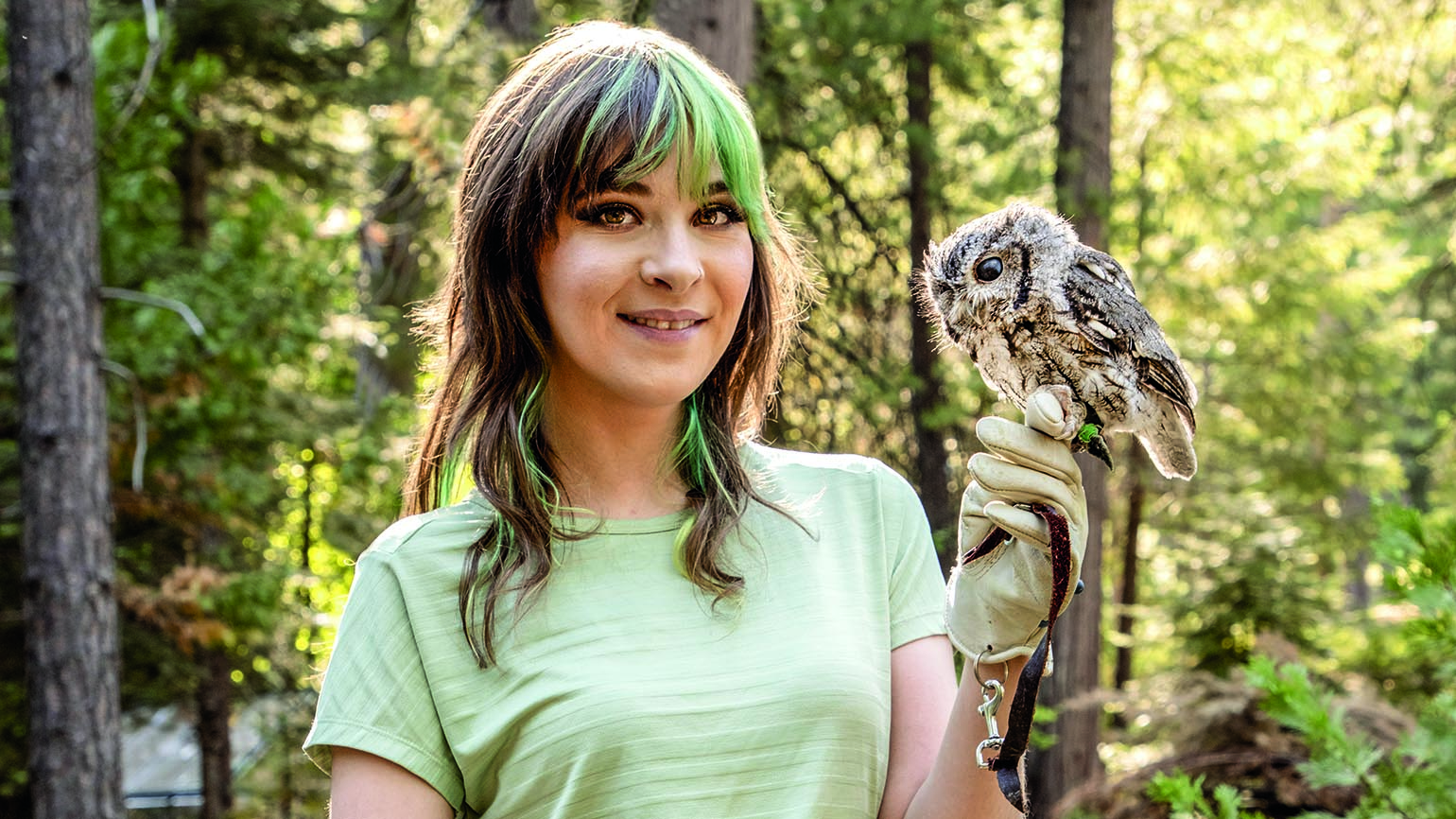
How Rehabbing Wild Animals Helped Her Cope with Debilitating Pain

Every time I hold a baby squirrel in my hands, I feel a sense of wonder and gratitude at what I’m being entrusted with, at what God is asking me to do. I’m 27 and I volunteer as the squirrel team leader for Tri-County Wildlife Care (TCWC), a nonprofit rescue that rehabilitates and cares for injured, orphaned or displaced squirrels, birds and other wildlife in northern California’s Amador, Calaveras and San Joaquin counties. During the past seven years, I’ve helped hundreds of “patients” heal and grow and, eventually, return to the wild.

It’s emotionally demanding work. Some days are hard, made harder by the fact that I have chronic intractable migraine disease. I live with disabling headache pain. So why do I pour so much of myself into taking care of baby squirrels? Because at the lowest point in my life, saving wildlife saved me too.

I have had migraines for as long as I can remember, since I was a toddler. Yet they didn’t keep me from enjoying school and my church youth group. Then, when I was 11 years old, I fell out of the recreation room window at our house in Castro Valley and suffered a serious head injury. The migraines intensified. Some days I could make it through school; on others I would have to put my head on my desk to keep the classroom from spinning. By high school, it was a struggle to keep up with my classes. I couldn’t go a week without needing to miss a day. My vision would become blurred with splotches of light, and I’d know it wouldn’t be long before I got so sick to my stomach I could barely walk.

“I can’t take this anymore!” I cried one day when my mom came to get me from the nurse’s office.

My parents and teachers agreed to let me finish high school at home. Academically, it was a good solution. I was able to work at my own pace and catch up with my classes. But the social isolation was soul-crushing. Kids my age were focused on the here and now. Since they didn’t understand my condition and I wasn’t well enough to hang out much, they soon forgot about me. My friends, even the ones from church, drifted away.

Thankfully, I had my parents in my corner, especially my mom. My dad worked long hours in architecture and construction management. Mom stayed home with me, and she did everything she could to make things better. There were mornings my head hurt so badly I couldn’t get out of bed. She would come into my room, singing, “This is the day, this is the day that the Lord has made. I will rejoice and be glad in it.” In those moments, hope peeked through the pain and desolation, like the first light of dawn on a winter morning. Even though I wasn’t quite up to rejoicing, I could lean on the promise of that psalm. And that’s what I tried to do as more tests were run, MRIs and CAT scans done, medications prescribed.

My migraines didn’t respond to medication, though, and most of the time, I felt broken. Useless. Disconnected from the rest of the world, from anything that mattered. Until one spring morning my junior year, when my mom glanced out the kitchen window and spotted a fallen nest and two baby California towhees, a species of sparrow, in our yard. A scrub jay was lingering around the downed nest and the towhees lay on the ground, defenseless. I ran outside and shooed the jay away, then crouched down beside the baby birds. Were they still alive? They were so young, their skin was almost transparent. I leaned closer.

“They’re breathing!” I called to my mom, who was looking out the kitchen window. She brought out a small box, and I set the babies inside. They were cold and covered in ants. I lined the box with a towel and spent hours carefully cleaning off the birds with cotton swabs.

“You’re going to be okay,” I said to them. “I promise.”

The next day my mom and I took the towhees to a wildlife rehabilitation center in the Bay Area. The rehabber told me I’d done the right thing for them. For the first time in a long time, I felt functional. Helpful instead of helpless. It was as if the baby birds’ need for me was stronger than my pain. Was God trying to tell me something?

I graduated high school on schedule. Then I took online courses at community college and earned my veterinary assistant certificate. I worked part-time, as my health allowed, in an animal hospital. But by 2014, my condition had worsened. Pollution and noise triggered my migraines, and I desperately needed to leave the city for cleaner air and a quieter environment. My parents and I moved to a house in the Sierra Nevada foothills. I wanted to find something meaningful to do to ground myself. I began volunteering for TCWC.

“I’ll help wherever I’m needed,” I told the directors. I started out with songbirds in the baby bird nursery. It turned out there were more baby squirrels than volunteers could keep up with so my TCWC mentor taught me how to care for them. I actually became a full-time staffer for a while, but the head pain prevailed, and I returned to volunteer status in 2019.

I now do wildlife rehab at my home, where I can rest as needed. At first, I nursed squirrels in my laundry room, but as more animals came in, we built a squirrel barn on the property. There are neonatal, quarantine and young adult rooms; an office; and an exam area. Tunnels and large outdoor cages allow my patients to wander and exercise as they get stronger. Sometimes there are close to 40 squirrels in the barn. I can’t help falling in love with their personalities and behaviors. It brings me so much joy to be able to give these orphaned and injured babies a second chance at being free in the wild and living a happy and fulfilled life.

I manage 10 volunteers remotely—colleagues I’m proud to call friends—and help answer the 24/7 TCWC hotline when I’m able. And then there’s Marbles, a blind screech owl and the rescue’s ambassador, who lives with me and accompanies me to schools when I talk to students about wildlife and environmental stewardship.

The unpredictability of my migraines makes it challenging for me to balance my responsibilities. The pain never completely goes away, but I have found methods that ease it—meditation, yoga, qigong, herbal tea, ice packs, heating pads. On the most difficult days, I look at these animals that are depending on me, and I know God is calling me—just as he was when I discovered those baby birds. Now I understand it’s not so much that these creatures’ need is more powerful than my pain but that God is.

Recently, I brought another patient into the squirrel barn. The western gray was six weeks old and had suffered a concussion after the tree she lived in was felled. I could feel her rapid heartbeat through my gloved hands. She was anxious.

“Poppy,” I said, rubbing my fingers gently over her body. “That’s what we will call you.” She chirped and tried to squirm out of my hands.

“You’re going to be okay,” I reassured her. “I promise.”

I drew warm rehydration fluid into a syringe equipped with a nipple. She clenched it between her tiny paws and drank until it was empty. Then she crawled from my hands back into the fleece nest in her crate. I started a chart for her and recorded everything, as we volunteers do for all the creatures under our care. Poppy curled up and fell asleep. I hope she knows that I’m in her corner, I thought.

I went back to the house. Marbles greeted me from her perch, cooing softly. My headache was a dull throb, manageable. I dropped a chamomile mint tea bag in my favorite cup and put a kettle of water on the stove, singing, “This is the day that the Lord has made. I will rejoice and be glad in it.”

For daily animal devotions, subscribe to All God’s Creatures magazine.