Embrace God's truth with our new book, The Lies that Bind

Hope Springs

I’m staring out my office window at the skyline of Manhattan, which is draped in fog and drizzle. A few minutes ago the rain was coming down in torrents. Arguments about climate change aside, it is passing strange that we keep having these 60-degree days in January. It’s not supposed to work like that. This is more like April than the dead of winter, but without the extra sunlight. Warm and dark and dank.

I’m trying not to feel too gloomy, even though this weather has been hanging around since midweek. That can be trying when you have a golden retriever who has to go out on the leash several times a day. I’ll tell you a dirty little secret about goldens: They may be the dearest, sweetest, most beautiful dogs in all creation but boy, do they stink when they get wet, and Millie is no exception. Of course they have no idea they reek. They just want to be loved. Millie actually enjoys the rain. Every time we get back into the apartment I have to grab a couple of giant beach towels and dry her off, which always turns into a wrestling match and tug-of-war. I end up on the floor, soaking wet and out of breath, while Millie prances around displaying the captured towel like a battle trophy.

I need a break. And my dog needs a good shampooing (which she’ll get tomorrow).

For today, at least, conditions remain gloomy. But you know something? I don’t have to be. There’s an expression around Guideposts: Turn gloom into blooms. And it’s based on a biblical verse. We call these little sayings “Hope-isms.”

Have you met Hope? She is a charming and whimsical character with an emoticon for every occasion. She has a beautiful life story and an infectious positive attitude (which I need to contract today). We have an amazing array of uplifting products called Hope Springs, wonderfully and cleverly designed around Hope’s unbending faith, optimism and Hope-isms. Here’s another one: Love shared is love squared. That’s inspired by John 13:35.

You can get to know Hope by liking Hope Springs on Facebook or going to the Hope Springs website. By the way, this is not a line of products that was conceived for the likes of me, a middle-aged guy with a big wet dog. But you know something? I really like them (I actually own one of the mugs) and am not afraid to say so. So check it out, especially if it’s raining on your day.

Turn gloom into blooms, a perfect thought bubble on a day that’s filled with drizzle and fog and gray. I’m feeling better already. And by the way, can you guess on what verse this Hope-ism is based? Post below and I’ll tell you later.

Hope from the Wise Men for the New Year

Didn’t you expect that things would be different this year? That we would be over with the pandemic and could celebrate the new year? If you’re like me, trying to take in the news of this latest variant and then learning about some loved one who’s tested positive, I want to say to God, “I’m done with this. Enough already!”

God’s answer comes back: I’m never done with you. God isn’t done with any of us. I pause for a moment in my prayer, reflecting on the eternity of God’s love. Life changes, we change. God’s love never dies.

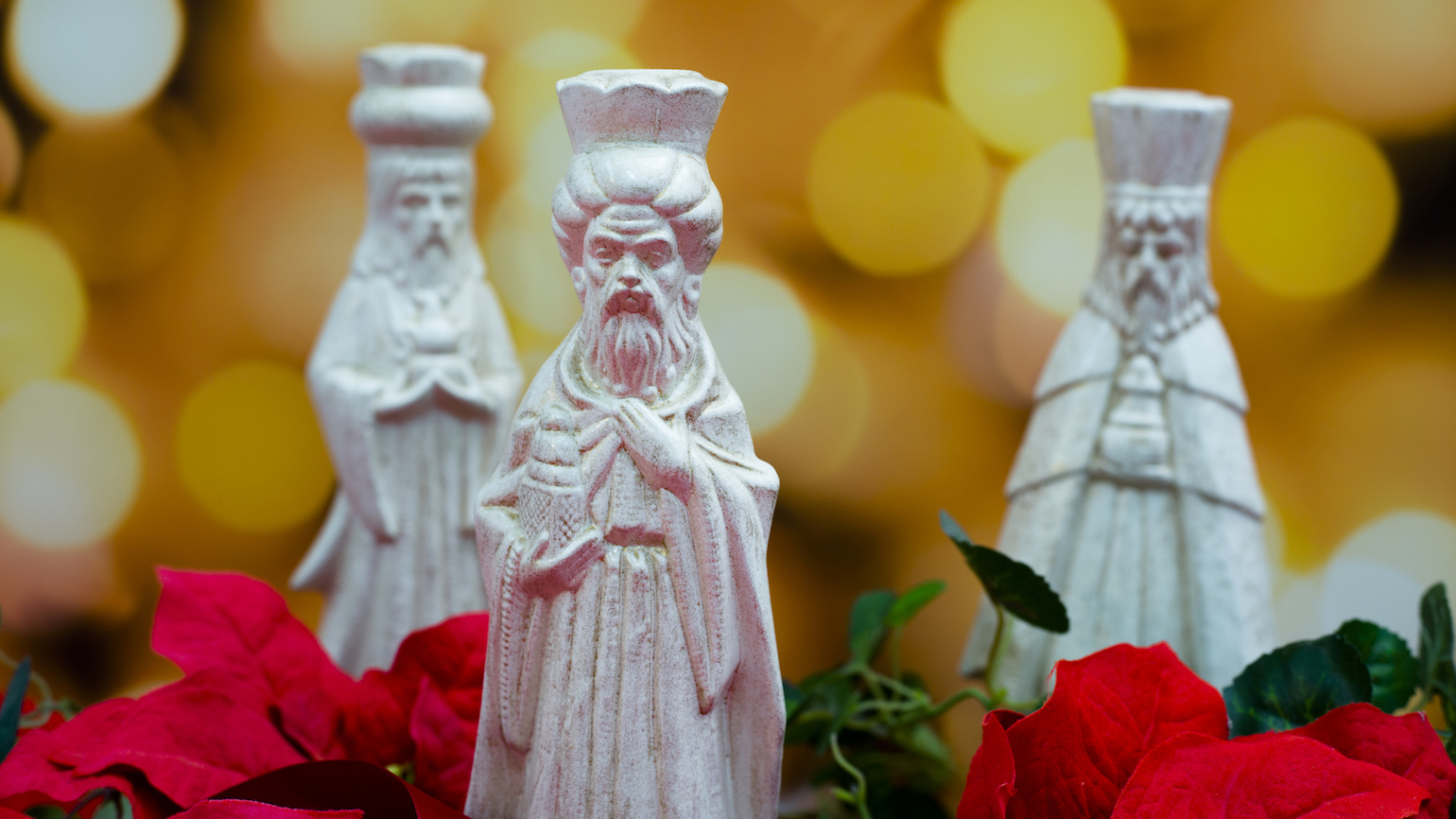
Think of the wise men. On January 6, we celebrate the Feast of the Epiphany, that moment in the calendar when we honor the wise men’s visit to the Christ Child.

Other characters in the Christmas story honored the tenets of Judaism, like Mary and Joseph. Not the wise men. They were foreigners. They didn’t live in the Holy Land. All we know from the Bible is that they “came from the East.”

There’s a lot of conjecture about what religion they might have followed, possibly Zoroastrianism, as they came from what we now know as Persia. The Bible doesn’t say—as it doesn’t actually say that there were three of them (that “three” comes from the number of gifts they gave: gold, frankincense and myrrh). It also doesn’t say they were kings.

Look at what they did though. They followed a star and a revelation that came to them, how following it would lead to this newborn king. With their fancy gifts, you wouldn’t expect them to discover that this royal figure was the son of a lowly carpenter.

I can imagine the thoughts that ran through their heads, why they shouldn’t have made the trip. What a wild goose chase. But they trusted. And didn’t give up. I find that’s exactly what I need to do now. Trust in God. Trust in God’s goodness. Trust in God’s love.

They also trusted in their dreams. Like men used to the ways of power, they visited King Herod as they followed the star and told him what they were searching for. Crafty King Herod pretended this was great news and that they should let him know what they found.

After paying homage to the Child, they were informed in a dream to avoid going back to Herod. After all, his violent jealousy would lead to the slaughter of those little children in and around Bethlehem who might usurp his power.

Thanks to the dream, “they left for their own country by another road.” (Matthew 2:12)

That’s what the promise of Christmas holds, no matter when you celebrate, no matter what dreams you’ve had. After you’ve worshipped the Christ Child, you can’t go home the old way. You take another road.

Whether you traveled or not this Christmas, hold on to that hope in the New Year. Honoring the Christ Child puts us all on a new road.

Hope and Faith from the Chilean Miner Rescue

It’s simply a marvel to be a witness to the story of the extraordinary survival and rescue of the Chilean miners in the last two days. What a tale of hope, perseverance, and joy. You can’t help but be moved by the video coming from Chile.

Except if you’ve noticed, there’s yet another story going on that’s also quite remarkable. Have you seen how much their story has captured our imagination?

Just about every news channel is glued to the event. You’ve heard an outpouring of support from everyday people and our own president. Yesterday at both the middle school and high school my daughters attend, teachers in classrooms had their computer screens fixed to the minute-by-minute updates as the miners emerged from the San Jose mine. Workers across America were likely tuned in too. How could you not?

The way this event has brought all our collective attention together has led me to wonder, Why has their plight inspired us so?

No doubt we’re all hungry for some good news. Times have been tough, and across America and the world we’ve not had much to celebrate together.

But let’s look even closer. What is it about this good news that compels us? For me, it’s the superhuman strength of the miners themselves and the unstoppable determination of those on the surface to rescue them. Those 33 miners didn’t give up on life, and neither did the Chileans, the geologists, engineers, psychologists and doctors, or even the experts from NASA.

Their example reminds me that God is like that. God doesn’t give up on us and will stop at nothing to keep after us. But we mustn’t quit either, and instead take that next step, remind ourselves we are loved, even if we can’t see, hear, taste or smell the source of that love.

So let’s celebrate. Let’s be happy for those miners. Let’s be inspired, and get back to our own lives with fresh hope and faith.

His Grandmother Held Fast to Her Faith and Her Family

I pulled my cell phone from my pocket, steeling myself to call my grandma in a nursing home some 500 miles away in Ohio. Why is this so hard? Before Covid, I looked forward to these calls. I thought of them as doing my part to help care for her. Now I wondered if I was making any difference in the face of a deadly pandemic, especially one that was hitting care facilities so hard.

Quickly I reviewed the list of things I’d come up with to tell her, the latest games my three-year-old, Amelia, was into: baking cakes for stuffed animals and dancing to Baby Shark with her brother. The word combinations, Jack, now two, was saying: “Doggie, woof. Daddy, bye bye.” Silly stuff Grandma delighted in hearing.

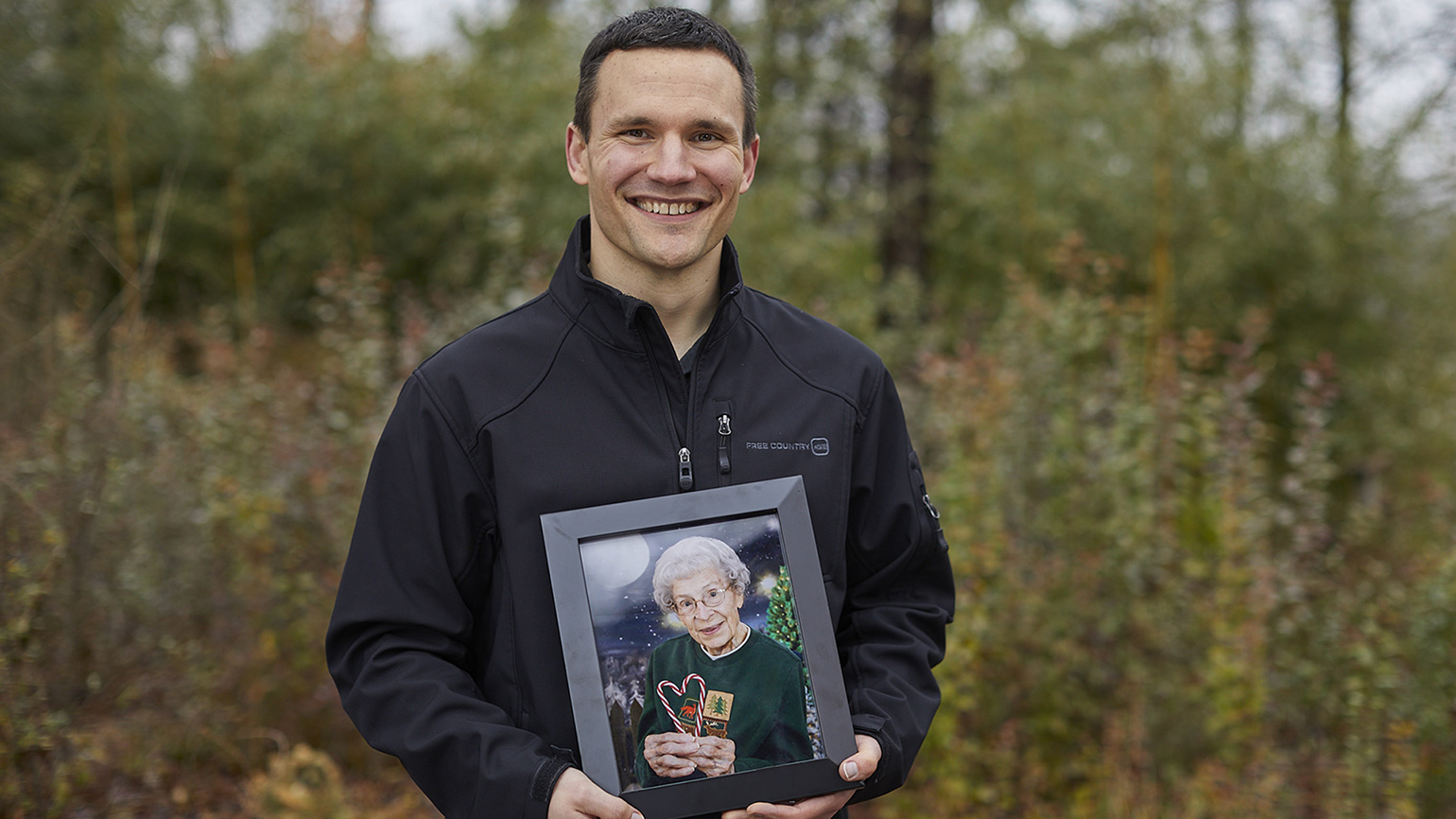
Grandma was more than a grandma to me. I was 12 when I went to live with her while my parents split up. She’d supported my dream of going into the Air Force and so many other things. I wanted to be there for her now if only over the phone. Ordinarily I’d make time to visit, but her facility was in lockdown.

Those restrictions should have reassured me that she was safe. Instead, it felt as if she were living on the moon. I couldn’t imagine what Grandma was going through in such isolation. She was 98. Macular degeneration made it impossible for her to read. Or even watch TV. I understood the need for isolation, but separation carried its own health risks.

Maybe it was me who was the problem. I got tongue-tied when I tried to say anything deeper than the usual updates about the kids. I couldn’t spout Scripture the way others could. Wasn’t comfortable speaking for God, period. Not that I was out of touch with my feelings. I just didn’t have a firm enough grasp on them to talk openly, to offer hope and reassurance and comfort.

In the military, we used to say, “Hope for the best, plan for the worst.” These days I found myself mostly doing the latter. I worked as a consultant, helping businesses manage change. I’d seen too much to pretend that everything always turned out for the best.

Enough stalling. It had been two weeks since my last call. I tapped in the number. I waited for her answering machine to pick up so I could announce myself. “Hi, John!” Grandma’s voice sang out. “So good to hear from you!”

“Wow, Grandma, you sound great. How are things going up there?”

Without missing a beat, she launched into a detailed report on the family happenings. “Your mom called yesterday and said she was doing yardwork and rummage sale stuff at church. Uncle Chris came out of retirement to help coach the Mount Gilead football team.”

She breezed through updates on all four of her kids, nine grandkids and 10 great-grandkids, throwing in colorful commentary along the way. Almost all of it was news to me. Still, she hadn’t said one word about life in lockdown. Was she in denial?

“So…how are you doing?” I asked.

“I’m good,” she said. “There’s no place I need to be, no schedules. My only complaint is the chef.”

“Oh, no,” I said. “Is the food not good there?”

“It’s too good,” Grandma said, laughing. “She’s trying to make us all fat.” I laughed with Grandma, comforted that, despite everything going on, her sense of humor, like the rest of her, was razor-sharp. Relieved that she was doing so well.

“I just want you to know how much I love you,” I said. “Take care and we’ll talk soon.” I hung up the phone. It felt as if a load had been lifted from me, though I wasn’t sure I’d done anything for Grandma.

A few days later, I heard the news I dreaded. Someone had tested positive in Grandma’s facility, my mom told me. It seemed only a matter of time before the virus was everywhere there, like a ticking bomb. I thought about calling Grandma, but other than saying I was scared for her, what did I have to share? I didn’t have any actual news.

I didn’t want to alarm her. So I waited, and with every day we didn’t talk my fears grew. Grandma had led a life rooted in purpose. I remembered her telling me about growing up in the Great Depression. How her parents, who’d never been able to buy her a bike, had still managed to find ways to help those even less fortunate.

Grandma had enrolled in nursing school, then had to withdraw to care for her ailing mother. When the dean had urged her to put her career first, she’d told her, “This is my family. I owe them everything!”

With the country’s entry into World War II, the nursing program experienced a surge of applications. Grandma had to wait another semester to enroll, months she spent working in a factory building relays for submarines. Eventually she went on to nurse injured soldiers.

Grandma’s service inspired me to enter the Air Force Academy after terrorists attacked our country on 9/11, during my senior year of high school. The academy was so much tougher than I’d ever imagined. Maybe I wouldn’t make it through basic. Grandma urged me to persevere.

“This too shall pass,” she said. “Lean on God. He’ll see you through.” Her whole life had been a testimony to her faith. Surely it would see her through now.

When I called Grandma next, however, she sounded down. “I guess you heard someone here tested positive,” she said. “It’s getting bad.”

I struggled with what to say. Reflexively I asked about family. She barely engaged. “I bet you saw some difficult things as a nurse,” I said, hoping to remind her of the strength I’d always seen in her.

For the longest time, the phone was silent. Oh, no, had I said something wrong? Should I have stuck to small talk? Finally Grandma spoke. “After the war, there was the polio epidemic,” she said slowly, summoning the memory. “The hospital was lined wall to wall with kids in bed, suffering. I felt helpless.”

She paused. I’d never heard her sound this vulnerable. “But you know what?” she continued, her voice rising. “We prayed and prayed and loved on those kids, and then the vaccine came out and it was a miracle. God can do amazing things.”

He surely can, I thought. We talked a little while longer. Finally it was time to say goodbye.

“I’ve lived a good life, and when the Lord calls me home, I’ll be ready,” Grandma said.

“I want you to stick around a little longer,” I said. “At least make it to 100.” I hung up feeling positive, comforted, as I always did after talking with her. Had I been a help to her?

Soon I got another dreaded call, this time from my uncle. “Grandma had a mini-stroke,” he said. “Her vision is much worse. The doctor says she’s legally blind. For now, she’s still in the same facility, but she’ll likely need more care.”

The news was a punch to the gut. God, how much more can she bear? This time I called immediately.

“Hi, John!” she answered, her voice bubbling with life. “I’m so happy you called!” I wondered again if she was in some kind of denial.

“I was sorry to hear about your mini-stroke,” I said. “But you sound good. Great, actually. I don’t know how you do it.”

“John, I grew up in the Depression,” Grandma said. “My parents taught me that you can always try harder even when you think you can’t, pray harder when you think you can’t. I try to stay positive, no matter what. And what helps me most is talking to you kids. It means the world to me. I feel…cared for. I’m so proud of all of you. I have so much to be grateful for, even stuck in this facility. My life feels fuller hearing about everything you guys are doing. Keep the calls coming! They’re an answer to prayer.”

Suddenly the phone in my hand felt like a lifeline—one that reached both ways. In the midst of all the tumult and uncertainty of Covid, I was help­ing Grandma stay positive and she was helping me.

The only thing she was in denial of was negativity. I could be that way too. Hope for the best and pray. And don’t forget to call your grandma.

For more inspiring stories, subscribe to Guideposts magazine.

Her Husband Died Before Finishing Her Dream Christmas Cabin

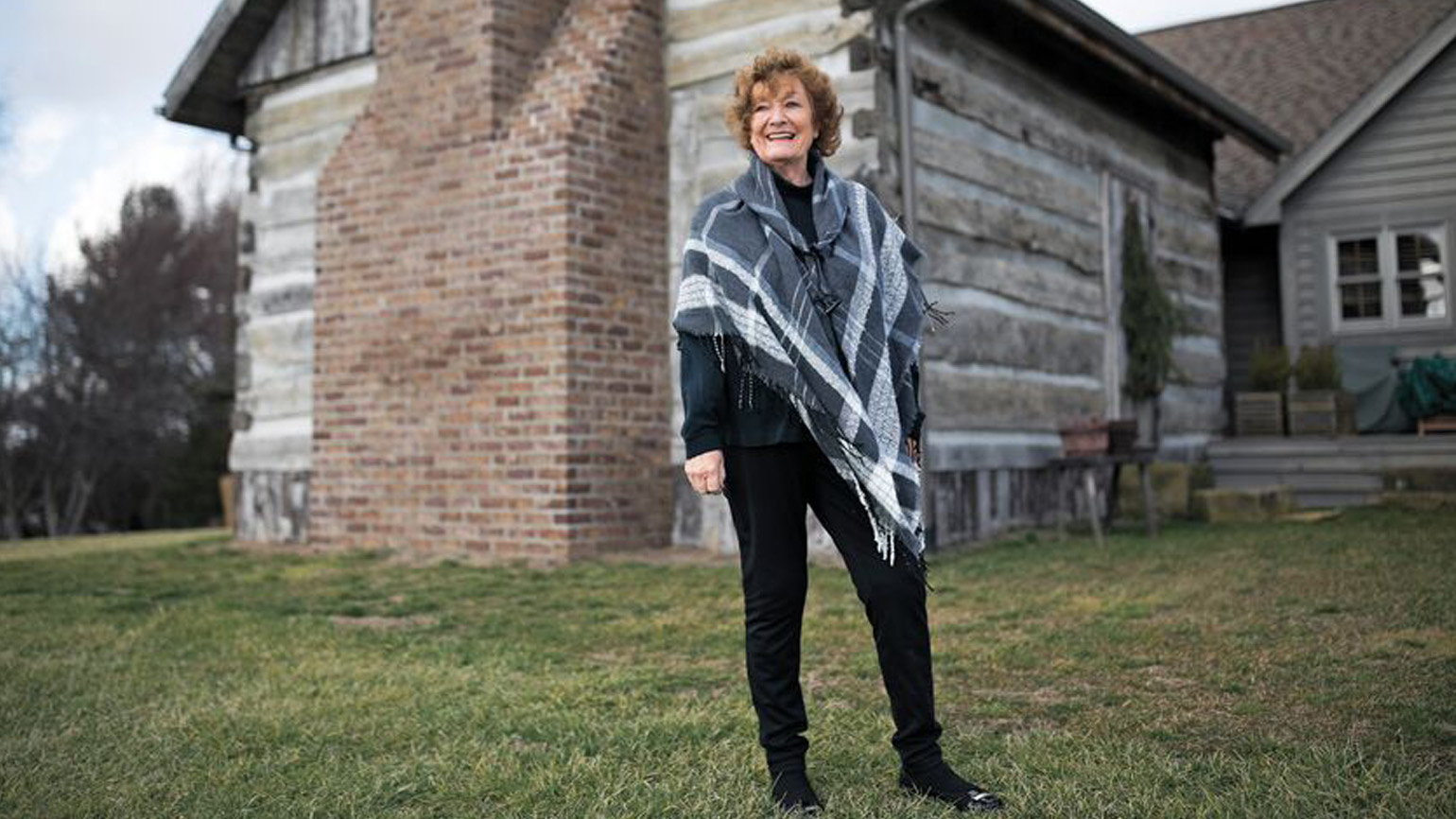
Before heading to the hospital, I gazed out the living room window at the property surrounding our home in Ohio. With its 10 acres of farmland, gardens and pioneer cabins, folks called it a “primitive wonderland.”

Bill and I had rebuilt our lives here after a fire burned our former home to the ground.

For 20 years we’d welcomed visitors interested in the early American way of life. We scoured New England for authentic log cabins, and Bill rebuilt them on the property to house things we offered for sale at Curry’s Antiques, such as crafts and linens.

Now Bill lay in a hospital bed at the Ohio State University Wexner Medical Center, his body ravaged by leukemia.

I walked into his room, struggling to accept the inevitable.

“Oh, Ginny,” Bill said in that gentle way he had, “I promised you I’d finish your cabin. Your Christmas cabin.”

We both knew he wouldn’t see another Christmas. Having him by my side was something I cherished more than any cabin he could have built.

I kissed Bill’s frail hand.

My cabin was a prized pioneer settler’s homestead Bill had found in Mineral Wells, West Virginia, two years before. Built around 1810, it was the cabin to end all cabins.

Bill had been so proud when he’d located it for me. Normally with a cabin so old, you just got the logs, but this one still had the original chimney, stone fireplace, stairs, flooring and beams. He’d painstakingly taken it apart, numbered the logs and transported it to our property. One day he would add it onto the main house.

“This cabin is one of a kind,” he’d said, “like you. We’ll get it done little by little.”

We’d dreamed of filling it with eighteenth- and nineteenth-century American country furnishings. Early paintings, step-back and jelly cupboards, dry sinks, a spinning wheel and other antiques we’d collected. We couldn’t wait for the day when we could share the fruits of our labors with friends at our annual Christmas gathering. I could picture the natural holiday greenery accenting the logs, a fresh pine wreath on the front door and candlelight giving the original furnishings a glow.

Bill was a man of his word. He didn’t just say he’d do something, he’d do it. He set the logs up and built a walk-in fireplace just like the early log cabins had. But then the leukemia changed everything.

Through sheer determination, Bill managed to finish the foundation and decking on my log cabin addition. He worked until he could barely pick up a hammer.

He died on our thirty-sixth wedding anniversary, only three months after he had been diagnosed.

After Bill passed away, friends, neighbors and longtime customers surrounded me. The log cabin sat unfinished.

One day two of our friends, Butch and Keith, came for a visit.

“We know what you need more than anything, Ginny,” Butch said. “And we’re going to take care of it for you.”

“We’re going to make good on Bill’s promise to you and finish that cabin,” Keith said. “We’ll get it done just the way Bill had it laid out.” God, is that possible? I wondered.

The guys came over every other weekend and worked meticulously on the cabin, vowing to complete it down to the last detail. To keep myself busy, I pitched in with some of the chinking.

But when we got to the dogtrot that would connect the cabin to the main house, I realized we’d need to use old wood to give it that authentic early American look. And we would need a lot of it.

Barn siding would have been perfect, but it was hard to come by—people usually aren’t willing to tear down old barns. I called farmers in the area looking for wood from unused barns, but there was none to be found. I hung up with the last farmer on my list, feeling helpless.

That night I crawled into bed and said a prayer. We can’t finish this by ourselves. We need Bill. He would know what to do.

I awoke the next morn­ing startled. Had I heard Bill? I looked around, expecting to see him. I rubbed my eyes.

Of course Bill was no longer with me. I’d been having a dream. But it had been so real. Except Bill had kind of raised his voice to me, which was to­tally unlike him.

“Use the fence, Ginny,” he said. “You’re not paying attention: Use the fence!”

Use the fence?

I threw on my robe and walked out back to look at the wooden fence Bill had built around the pasture.

The wood was old, but still in good condition. It had been bleached gray from the weather.

Then it hit me. The 10-inch-wide fencing boards were the perfect material for making the siding for the dogtrot!

On a mission, Butch and Keith and I tore the fence down. We framed the dogtrot and then had enough left over for the windows and ceil­ing. It was as if Bill was back with us, col­laborating on the promised project from heaven. I could feel Bill’s presence and pas­sion as though he was right there beside me.

Last year I hosted a long-awaited Christ­mas open house and shared it with those who had loved Bill too.

Today, I put every bit of fervor I can into this “primitive wonderland.”

Each effort is an offering of gratitude to the man who kept his promises and the God who made that possible.

Photo gallery: Her Husband’s Last Promise: A Christmas Cabin to Call Her Own

Her Grandmother’s Love of Candles Inspired Her to Launch a Business

The candles we make at Wax Buffalo are imperfect—“beautifully imperfect,” as we like to say. Each one is unique, hand-poured with unbleached cotton wicks and pure soy wax. It’s a small business I started, and everyone who works here comes into the studio at odd hours, whatever works best for them—some at 5 a.m., some at midnight—so they can be home with their kids, spouses, cats, dogs at prime times.

I first fell in love with candles on visits to my grandmother Ferne’s house in Lincoln. At night, candlelight flickered off the book-lined walls, the place smelling of cinnamon, no matter the season. During the day, she’d take me to a café in the historic Haymarket district and we’d sip tea out of china cups and eat cucumber sandwiches, like characters in an English novel. Then we would buy handmade candles at her favorite shop.

I poured my first candle at the age of 14, using the candlemaking kit that Ferne had given me, watching the wax harden as the candle cooled, the sweet fragrance filling the air. I gave the finished product to my grandmother for Christmas. She loved Christmas, and she loved that candle I’d made for her.

That first candle was imperfect. Beautifully imperfect, though I didn’t see the beauty in imperfection then. For years, I strove for perfection in all I did, working for perfect grades in school, getting the perfect job, posting the perfect photos on social media, moving into the perfect home, all the while maintaining a perfect relationship with God.

I married Jon—who seemed pretty close to ideal—and we bought a lovely house outside Lincoln with stunning lake views. I ended up hosting a documentary television show, traveling all over the world to find just the right shots, just the right cuts of a film to air. Jon worked for the same program. When I became pregnant with our first child, I could imagine how I would announce her birth, posting pictures of her on Facebook and Instagram and writing a blog about how beautiful the experience had been.

That summer of 2011, I remember driving through the cornfields on our way home and saying to Jon, “Could our lives be any more spectacular?” We had everything we wanted.

Our daughter, Navy, came into this world at 10:59 on an early August night. The nurses handed her to me, crying, and she snuggled close to my heart, falling asleep in my arms. It was love at first sight. But I saw the tear in her upper lip, as if it had been split in half. She was born with an extreme unilateral cleft lip and palate.

Most expectant parents know beforehand if their child has a cleft lip or palate. It usually shows up on an ultrasound, but it didn’t with Navy. We didn’t know it was coming. Somehow I blamed myself, as if it were my fault, something I had done wrong during the pregnancy. Had I already failed as a new mother?

Navy was admitted to the NICU that night. Jon and I were alone in that little hospital room, shocked and too scared to pray. The next morning, Ferne was one of the first people to visit, a light in our darkness. She loved Navy instantly, as Jon and I did, and was one of the first people to hold her, rocking her gently as she snored her tiny cleft palate snore. I wondered where God was in all of this, but Ferne had no doubt.

“Honey,” she said, wrapping me in a hug. “You did nothing wrong. God is with you.”

Ferne knew something about struggle. She’d taken care of her blind and bedridden husband for more than 19 years, lovingly tending him day and night. She’d had two bouts with breast cancer. That second time around, Jon and I had been living in Chicago and we moved to Lincoln to help care for her while she underwent treatments. We figured we’d cook for her, clean her gutters, take care of the house, then go back to Chicago when she was feeling better. Instead, we decided to stay.

The doctors said we had to wait four months before they could perform surgery on our baby. During that time, we needed to stretch Navy’s lips and nose with our hands, massaging them to lessen the gap in the cleft palate, giving the surgeon more flesh to work with. Four months of waiting, coaxing Navy to sleep, trying to get her to eat. Four months of doctors’ and hospital visits, more scans, more doubts.

We did not post pictures of Navy during those first few days. I didn’t know how to tell her story, how to explain what our precious daughter was going through. We asked for prayers, of course, but Jon and I were at our wits’ end. To make matters worse, the documentary television show we both worked for lost its funding and was canceled. I lost my job, Jon lost his job and we all lost our health insurance. He and I were weighted down with worry, and our marriage suffered.

The surgery for Navy was scheduled right before Christmas. It was as though we’d been going through our own version of Advent, waiting for months, seeking some glimmer of hope in our winterlike gloom.

That day in December, we drove to the hospital and I lifted Navy out of her car seat and held her close, afraid to give her up to the doctors’ and nurses’ care. I knew they would do their best, but she was so young, so tiny, so fragile.

After four hours of surgery, they brought us our baby, her cleft lip and palate repaired. She had new pouty lips, like every other little child. We were so grateful.

Our lives resumed their course. Jon got a new job. Our marriage righted, and we had another child—a boy, Satchel. I was up to my ears in diapers and baby food and strollers and picture books and silly songs and cartoons on TV. But my faith was shakier because of what we’d been through—the unpredictability of it made me feel as though the ax could fall at any moment. My posts on social media weren’t as exuberant as they’d once been. Nor was my joy in life. I leaned on my grandmother even more, wanting some of that bedrock faith of hers.

Then in the summer of 2014, life took a dark turn for my grandmother—though she adamantly refused to see it that way. The breast cancer came back. This time, though, Ferne refused treatment. “I’m ready,” she said. “Ready to go home.”

I resisted that prospect. I didn’t want to lose Ferne, the light of my life. I took the kids to be with her every Monday, and we’d have a picnic in her cinnamon-scented house, eating fried chicken and potato salad, laughing and telling old stories. Then one Monday, she wasn’t making a lot of sense, repeating herself and getting confused, this from a woman who was always sharp and sassy. The cancer, we later learned, had moved to her brain.

She went fast after that. Very fast. The funeral came all too soon, two days after Navy’s third birthday. My sweet Ferne’s light was spent. Gone forever.

Or was it? I found myself thinking about the candlemaking kit she had given me as a 14-year-old kid, the joy it had brought me. Exactly one month after I kissed Ferne goodbye, I began pouring candles again. The first one I made was cinnamon scented. I poured more, making them for friends. Because of Navy’s health, I’d become especially attuned to natural products, things that were safe for my children to be around. I used locally sourced soy wax and natural scents. Was there a way I could make candles for people beyond my group of friends? Could this be a new business for me, one that didn’t take me on the road for long periods, as my previous career had?

I did research and talked to friends and to people who were looking for work that would fit in around the demands of child-rearing. I found a space to rent, a light-filled studio that reminded me of the warehouse district my grandmother and I used to visit when I was young. Navy was old enough by then to be a help, putting stickers on jars and drawing pictures of candles when I visited clients. I felt confident in asking other moms to join us, knowing I could promise them a flexible work environment.

And so, Christmas of that year, Wax Buffalo was launched (Buffalo in tribute to the Midwest). Little by little, the business grew as we found more people who wanted our candles, more stores to offer them. We now have six people working for us, and our candles are sold in more than 60 boutiques across the country. I like to think they light up homes and spread their delicious fragrance from town to town, city to city.

I say to Jon now, as we drive through the snow-covered cornfields, “Aren’t we blessed? Isn’t life wonderful?”

Indeed, it is—beautifully imperfect. But it hasn’t turned out at all how I’d have predicted. It’s no script I would have written or produced. But then, it didn’t come from me at all. I think that’s what Ferne wanted me to understand. To trust the light of God, to bask in its glow, to know that it can transform a person from within.

For more inspiring stories, subscribe to Guideposts magazine.

“Heaven Is for Real”

Last week I dropped off my daughter at her dance studio and noticed on the table in the waiting area a book that’s climbed the bestseller lists in recent months: Heaven Is for Real, by Todd Burpo.

The book recounts the story of his son, Colton, who, due to a misdiagnosed medical condition, had a near death experience. In the days that followed, Colton claimed that during the experience he saw deceased relatives, reporting back information about them he couldn’t have previously known, and that he saw angels, even Jesus.

It’s a remarkable story, and you can view a special Guideposts video interview with the author and his son here. Yet when we at Guideposts Books surveyed our readers to see whether it’s a book we should offer in our publishing program, we received some interesting responses. Although some had already heard of the book and perhaps even read it, others relayed that they couldn’t really believe the story. It was too “out there” for them.

I can understand that less-than-enthusiastic response. I once heard someone say that all the time you spend wondering about heaven is time spent worrying about yourself. A more worthwhile pursuit would instead be to aspire to make a difference helping others in the everyday world. That’s a fair point, and yet you can’t help but be curious about experiences that for others are so real, so moving, it becomes a matter not just of belief, but of transformation.

How are we changed by reading a story that seems to lift the veil of our everyday world and let us glimpse something we can’t really understand or explain? Are we changed for good? Does a vision of a heavenly future bring us hope to live out our faith in the present?

Good questions are sometimes more important than answers, and I’m not going to venture any answers here, other than to say that it encourages me that people are curious to read the Burpos’ story, and to seek hope and faith.

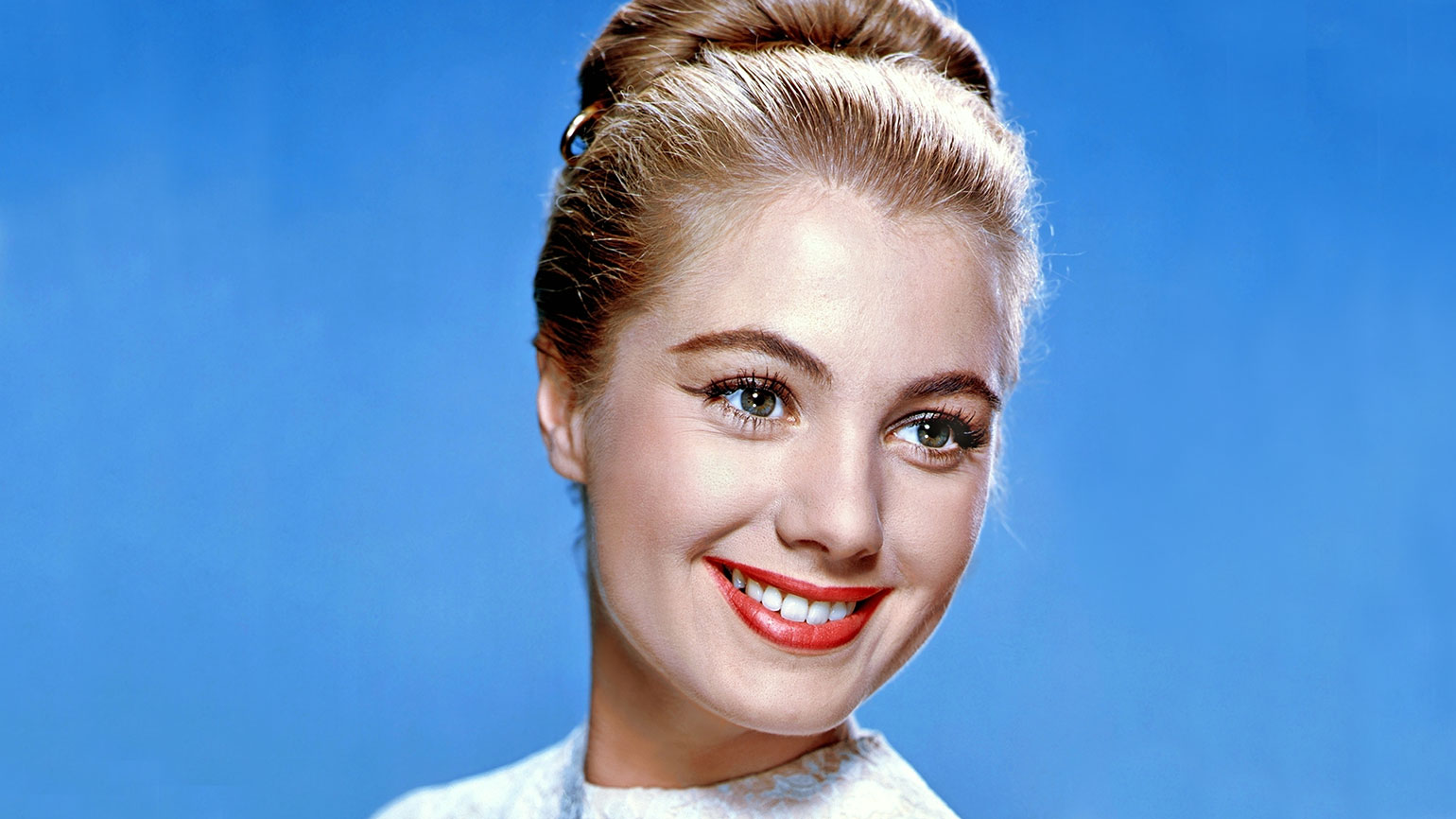
Guideposts Classics: Shirley Jones on Fatherly Love

Probably each of us can remember a time when our faith had to grow up. Let me tell you about one of those growing times that meant a lot to me.

I was a young actress, married and eight months pregnant with my first child. My husband, Jack, and I were at home in California when a call came from my parents in Pennsylvania. The doctor had found a spot on my father’s lung that would require surgery.

That was bad news, of course, but things seemed under control. Then after Dad got off the phone, my mother said softly, “Shirley, your father is terrified.” Those words did something to me. When I hung up, I realized that for the first time in my life I too was afraid, and I wondered why.

ENJOY THESE GUIDEPOSTS BOOKS FOR FATHERS

As a little girl growing up in the town of Smithton, Pennsylvania, I was a tomboy. There wasn’t a tree too tail for me to climb or a fish clever enough to escape my line. On sunbaked days, my friends and I would scamper two miles down country lanes to the swimming hole at Jacobs Creek, daring each other to be the first one to dive from the rocks into the chilly water. I wasn’t afraid of the dark, or even of walking through the woods all by myself.

My mother was just the opposite. She was afraid of almost everything, and she was sure worried about me. When I was nine years old, she went to talk to our minister, a kind, wise woman in her sixties. “I’m worried about Shirley Mae,” Mother confessed. “She isn’t scared of anything. She is too adventuresome. I’m worried that something will happen to her.”

“Marjorie,” the minister answered firmly, “you can see in Shirley’s face that God is with her. It shines out of her eyes. He’s with her all the time and she knows it.”

When I heard that, I knew it was true. God was as constant a presence as my own father was, and my own father was pretty special. Paul Jones was the most confident, look-you-in-the-eye gentleman I’d ever known. He was a tail man with brown curly hair stylishly slicked down. A dapper dresser, he was never without a hat, even when we drove to Pittsburgh in his cherry-red Chevy to watch the Pirates play.

His weekday outfit was a pressed and tailored work suit. The Jones family was involved in a number of businesses in Smithton; my grandparents built the first hotel. Dad helped run the family businesses, but on summer days he always had time to take me—barefoot and pinafored—to Kraus’s Drugstore for a chocolate cone or a chocolate root-beer float.

READ MORE: PATTY DUKE ON TRUSTING IN GOD

But best of all were Saturdays. Smithton had only one little movie theater and it was open only on weekends. Each week it played a different picture. Mom didn’t especially like to go—which was odd, since she’d named me for Shirley Temple—but Dad took me each week, or made sure I had a quarter to go with my friends.

I always tried to stay for both showings of the film. My favorites were Judy Garland musicals, and I dreamed of singing in the movies like Judy did.

Music was my favorite thing of all. I’d sing at any opportunity—for family Christmas parties or around the fire at girls’ camp. When I was six years old, I became the youngest soloist in the church choir. I was never nervous about singing, never had any stage fright.

When I was 12, Rodgers and Hammerstein came out with a new musical called Carousel, and one of the songs from it, “You’ll Never Walk Alone,” became popular on the radio. It was my father’s favorite. Any time I was singing, he’d ask me to do that one. When I sang it in our white clapboard church, I saw Dad smiling in the pew.

That reaffirmed what I already knew: There really wasn’t anything for me to be afraid of. Both Dad and God were at my side.

The only other time I ever knew Daddy to be afraid was when I was 18 years old—and then he wasn’t afraid for himself; he was afraid for me. After high school I’d planned to go to college to become a veterinarian. But when I got a scholarship to the Pittsburgh Playhouse, my plans changed. I wanted so badly to be a singer and an actress that I knew I had to give it a try. I told my parents I was going to New York City.

Oddly enough, my mother was calmer about it than my father was. It was my father who worried about what would happen to a country girl in New York. One of the greatest gifts he ever gave me was to swallow that fear.

One autumn day, Mom and Dad drove to the Barbizon Hotel for Women in New York City and dropped me off. Even then I wasn’t afraid. My parents were 400 miles away, but I knew I wasn’t walking alone. I felt their caring, supporting presence as strongly as if they were there in person. This became representative to me of how God’s presence surrounded me, although He was unseen as well.

One of the first auditions I went to was an open call for chorus replacements for South Pacific. Richard Rodgers was there, and he asked me to sing for his partner, Oscar Hammerstein. Before I knew it, I was on stage as a nurse in South Pacific.

Then I had a small part in Me and Juliet. When that show started its national tour, Rodgers and Hammerstein gave me the lead. While we were touring, they arranged for me to fly to Los Angeles to screen test for the role of Laurey in the film version of Oklahoma! Although many of Hollywood’s biggest stars tested for the part, they gave it to a virtual unknown—me! The Saturday dreams of that little girl from Smithton were all coming true.

My growing up inevitably meant having my own life away from my parents and that safe family nest in Pennsylvania. I met and married actor Jack Cassidy, and we made our home in California. Within a few years I was expecting our first child, and I was thrilled.

But now, after the phone call from my parents, my emotions were all mixed up. Why did my father’s fear have such an effect on me? And what could I do?

Dad’s condition was safe enough that the doctor said he could enter the hospital after the baby was born. Jack and I were scheduled to tour shortly after the birth, and we made sure that one of our first dates was in Pittsburgh.

Daddy was so proud of our little son, Shaun. I was an only child, and a grandson was about the greatest thing that could have happened to him.

Yet as happy as that time was, we were all aware of something that was never spoken: It was obvious that Dad was afraid. Not of surgery, not even of his illness. He was only 49 years old and otherwise in good health. No, he was afraid of hospitals. He would practically pass out just walking down the hall to visit someone. The thought of checking in himself was overwhelming.

All too soon the visit was over. Jack and I were expected in Florida. As our plane taxied out of the Pittsburgh airport, I closed my eyes, trying to think of what I could do to help. Dad had always been there, giving me strength and courage. It was time for the tables to turn.

On the way to Florida I wrote my father a long letter. I told him how frightened I’d been before the cesearean section for Shaun’s birth—the first time I’d had surgery. I thanked him for the courage he’d always given me.

I had planned to write a short note, but it turned into a five-page letter, remembering all the special times we’d shared, and telling him how much he meant to me and how thankful I was to feel the constant love and support of a father like him.

The next time Mom called, she said my letter had fulfilled its purpose. When Dad got it, his fear left him and he was able to enter the hospital in peace.

Dad’s operation was successful, and the people in Florida were as warm as the weather. Things once again were on an even keel. Fear was the farthest thing from my mind—until a few days later when I answered the phone.

It was my mother. She was crying. “Your father is dead,” she said. It was sudden, unexpected. His lungs had filled with fluid and no one had detected it.

I was in shock. I managed to say we’d fly home the next day.

Here was the biggest crisis of my life—and my old bedrock, my father, wasn’t here to see me through it. His comforting presence would never be with me again. How could I make it?

One of the hardest things I’ve ever done was to perform that night, but I knew it was what Dad would have wanted. As often happens, singing comforted me. Until the last song.

I always closed with “You’ll Never Walk Alone.” That night of all nights I didn’t know if I could do it. But the music started and there was nothing I could do but start to sing Dad’s favorite song.

As I sang, it all came back to me. The root-beer floats, the red Chevy, Dad’s face as he sat in church listening to me sing this same song. I remembered our silver-haired minister with the little glasses sitting precariously on her nose—and I remembered what she had said about God being with us always.

It’s hard to explain, but something happened as I sang those words. I knew for a fact that the faith I’d had as a child was true. There is eternal life. My father had passed from this life, but he was very much alive. Even though he was no longer with me, caring for me, Dad had given me into the hands of a Father who was with me always. That was where my true courage had come from all along.

“You’ll never walk alone…”

As the song ended, I knew it was true. And I was no longer afraid.

For more inspiring stories, subscribe to Guideposts magazine.

Guideposts Classics: Mary Astor on the Gift of Faith

The most glorious experience of my life was finding Faith. That was almost 20 years ago. But the greatest triumph of my life was discovering that Faith all over again, after I thought I had lost it. This is the story I want to tell here—the story of what you might call “a backslider.”

By the late 1930’s I had been in the movies for almost 20 years. I knew what it was like to live the “glamourous” life of a Hollywood actress, to be married three times, and to have two children.

Celebrating Guideposts' 75th Anniversary

I knew too the inner deadness that comes from a life lived without purpose other than self-pleasure and indulgence. For years I yearned for contentment, for the security of someone to lean on and take care of me. Then, I found a Faith and a Father.

He came into my life slowly, without my suspecting that He was coming. Idle curiosity had set me reading books on religion and as I became increasingly interested in the subject, I started asking questions, all very objectively, never thinking that I myself would become involved.

READ MORE: SHIRLEY TEMPLE’S HAPPIEST MOMENT

And then, one morning, in one blinding moment of illumination, I discovered that I had within me the Gift of Faith. A sentence in a book I was reading suddenly transfixed me. It was a sentence that I had heard and read countless times but whose meaning I had not perceived before in all its ramifications: “Jesus Christ was God.”

That moment, of course, was the culmination of many months of study, but nonetheless, those four words were a revelation which made me slip to my knees in prayer. They were a key that seemed to unlock the great mysteries, to make everything in my world fall into place. If Christ were God, and lived on this earth, then anything could happen. Even my tangled life could be untangled.

From that start, I studied and prayed and, with deep love, turned myself over to Christ.

For a year I lived on a pink cloud. I luxuriated in the warmth of having a loving Father, one who would protect me. Not only was I happy within, but the world outside contributed handsomely; my home functioned well, my children were eager with affection, my career was in high gear with good pictures and a popular radio show of my own.

In another year, however, the pink cloud had turned to gray and each succeeding year it grew blacker. A divorce; a remarriage; unemployment; sickness; sleeping pills, drinking; end of the marriage; loneliness; efforts to work and pray and find myself once more, yet wishing fervently that I could be released from the sheer confusion of living; up, down; down, up …

What had happened?

Where was the loving Father who would take care of me? Throughout the years of wretchedness, my faith itself had remained intact; the great Truths were still true. Why then, was it not enough?

Only three years ago did I begin to learn the answers. By then, lonely and bewildered, mentally and spiritually exhausted, I had reached rock-bottom.

READ MORE: IRENE DUNNE ON HER FAITH JOURNEY

It was during this desperate period that an impulse sent me seeking a new form of help. Upon a recommendation, I went to see a priest-psychologist, the Reverend Peter Ciklic, Ph.D., and together we began working at understanding me.

Month in, month out, in the quiet of his study, I revealed to Father Ciklic the mistakes and misfortunes of my life and slowly, through our discussions, the ignorance I had of myself was stripped away. I began to see the habit patterns I had lived by and how they had led me astray.

With new insights in mind, I went back and applied them to the period after my first discovery of Faith. One of my first realizations was that my faith had not failed me but that I had failed it.

When God came into my life, I was still yearning for someone to love me, someone on whom I could lean for decisions and direction. At first, in the emotional cloud of my baptism, I was confident that that Person was God.

I was so happy in finding a Father Whom I could love and Who could love me that I felt protected from the troubles of the world. I did not grasp the fact that all of us, with or without God, are up to our necks in reality, that problems will besiege us daily.

But perhaps the greatest error I made was my failure to understand the true meaning of “The Gift of Faith.” The power to believe is truly a gift from God, just as much as life itself is a gift. Faith cannot be earned or bargained for, it is simply given to us in the same fashion that God endows us with health or talent or beauty.

A good pianist is said to be “gifted”, but of what value is this special gift unless he works to develop it? The same is true of Faith; once we have received it, it is up to us to decide whether we shall use it—or waste it.

READ MORE: ROSALIND RUSSELL ON FAITH AND HEROISM

Somehow, in the joy of receiving this great gift, I did not realize that there was a choice that I would have to make. I didn’t see that Faith imposes a personal responsibility. “Go and walk alone with God” I had been told, and with those words I assumed that I would go forth safely. I didn’t understand that I myself would have to do the walking; God would show me the way, but He would not carry me.

Walking takes individual initiative and often courage and struggle, but I was not prepared to struggle. All I wanted was someone to lean on; so I leaned, and I fell.

Had I known enough about myself then, I would have seen that I was the same human being, throbbing with life and desire, as I had been before. I would have recognized how easy a prey I was to temptation, to flattery, to a drink thrust into my hand, and I would have guarded against it.

When God gave us life, He also gave us free will, the power to choose and decide. Formal religion defines what is right and what is wrong and with our consciences, as well, in play, we should be able to discern the pitfalls.

But we humans have a habit of rationalizing things so that when we want to do something that our conscience says “no” to, we convince ourselves that it is right or that it is the only possible thing for us to do. This is a form of dishonesty, and at that I was an expert.

For instance, I knew that I had a problem with drinking and I sincerely thought I wanted help. I remember attending a meeting of a fellowship of men and women who share the common problem of alcoholism, but I came away saying, “That’s for alcoholics, not for me.” I was not able to be honest with myself, to give up something I desired.

Years later, in the depths, I found out for myself and had to admit to myself, that I was an alcoholic and learned that that incurable disease could only be arrested through total abstinence, which I have now achieved with the wonderful help of the fellowship I had rejected formerly.

READ MORE: ANN BLYTH ON PERSONAL FAITH

The strongest remedy that I have found for my spiritual ills is vigilance—constant vigilance. I have evolved a three-point program for myself: (1) my relations to God, (2) to myself, (3) to others. I try sincerely and hard to show God my love and to render Him the obedience which I consider is His for giving me life.

In church and in my prayers I am walking with Him now and I have disciplined each day to include Him.

I place myself second in this plan only because, through honesty and careful, reasoned living, I have come to esteem myself; I have learned that only by liking oneself can one love others. And in the delicate process of helping others, I have discovered that it is not a question of what or how much I give, or how much time I devote to them that is important.

By facing people as equals, hiding nothing, expecting nothing, I find that I can communicate more freely. I can learn who they really are, what their problems might be, why they function as they do. This kind of communication brings understanding and understanding can be the most powerful human help in the world.

In my early maturity I suppose I thought that if I had Faith, I would be happy. But happiness doesn’t drop out of heaven that easily, and people who expect happiness to “happen” are fooling themselves. It comes only by loving and learning and working and it cannot be a goal in itself.

Recently I read that there was no Hebrew word for “learned”—as in “a wise or learned man.” The word for that is “learning.” Though I know I cannot claim to be a wise woman, I still like to think Of myself as a learning one. Daily I am learning from the mistakes of my backsliding. Each day I am working and praying that I may stay as strong as my faith.

For more inspiring stories, subscribe to Guideposts magazine.

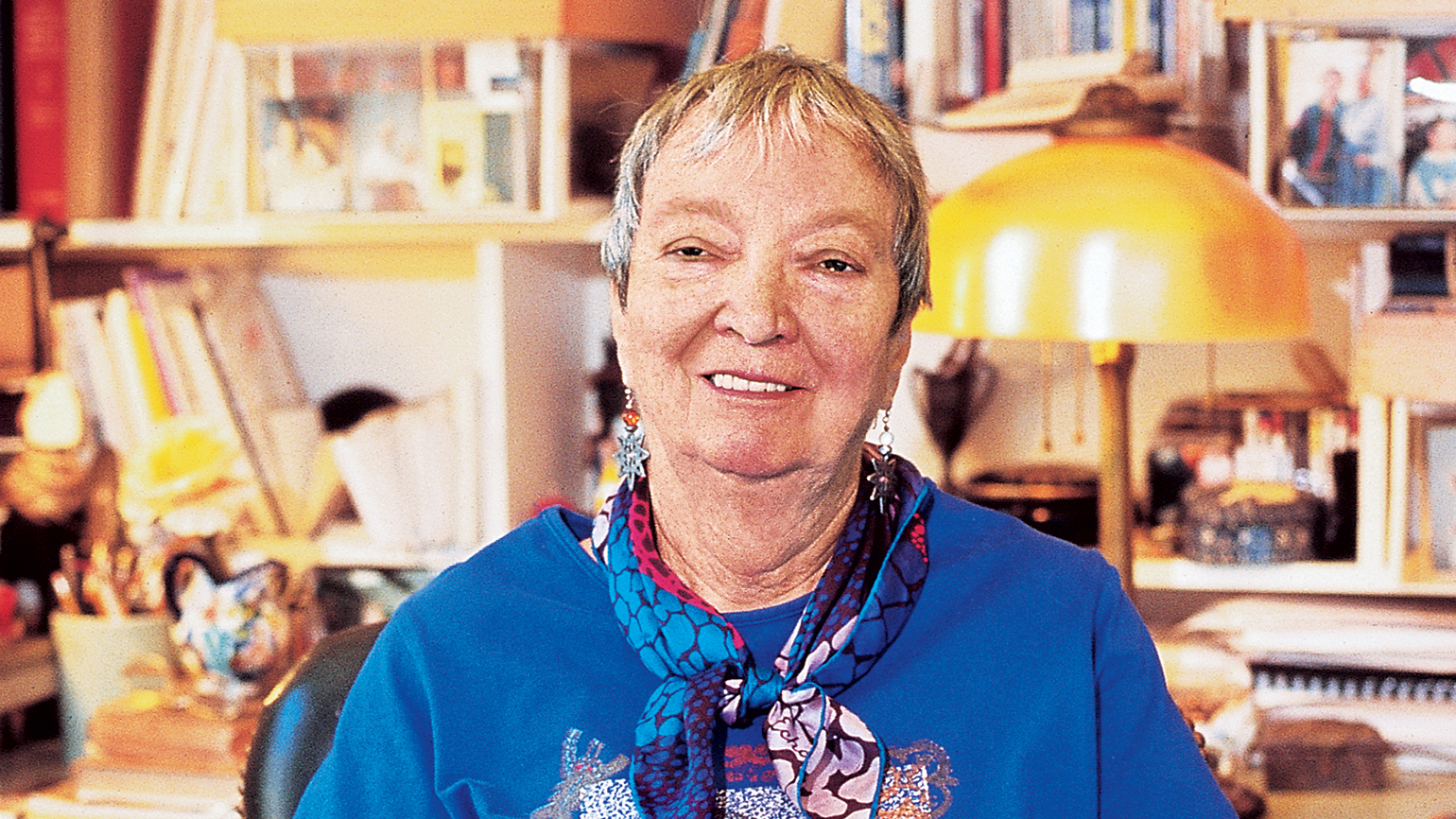
Guideposts Classics: Madeleine L’Engle on Trusting That God Is with Us

A little girl, a piano, a Christmas tree. What could be more ordinary, more normal, more safe? But it wasn’t safe that Christmas. It might have been ordinary and normal, because what happened to us happens to many people, but it wasn’t safe.

This little girl, our first child, was looking wistfully at the tree, and her usual expression was vital, mischievous, full of life. But that Christmas she was wilted, like a flower left too long without water. She sat with her toy telephone and had long conversations with her lion (“You can never talk while the lion is busy,” she would explain). She didn’t run when we took her to the park. She was not hungry. I bathed her and felt her body, and there were swollen glands in her groin, her armpits.

We took her to the doctor. He looked over our heads and used big medical words. I stopped him. “What you are saying is that you think she has leukemia, isn’t it?” Suddenly he looked us in the eye. When he knew that we knew what he feared, he treated us with compassion and concern. We knew the symptoms because the child of a friend of ours had died of leukemia. We knew.

We took our girl to the hospital for tests, and she was so brave that her gallantry brought tears to my eyes. We went home to our small apartment and sat and told stories. We knew that we would have several days’ wait for the test results because of the holidays.

My husband was an actor. I am a writer. Like most artists, we had vivid imaginations. We tried hard not to project into the unknown future, to live right where we were, in a small apartment on Tenth Street in New York City. We loved our apartment, where we slept on a couch in the living room. To get to the bedroom we had to walk through the kitchen and then the bathroom. We were happy. My husband was playing on Broadway. I had had two books published and was working on a third. We had a beautiful child.

And suddenly the foundation rocked beneath us. We understood tragedy and that no one is immune. We remembered a church in New England where, carved in the wood of the lintel, were the words: REMEMBER, NO IS AN ANSWER.

My mother grew up in a world of Bible stories, and I thought of the marvelous story of Shadrach, Meshach and Abednego. Those three young men refused to bow down to an idol, and King Nebuchadnezzar was so furious that he ordered them to be thrown into a furnace so hot that the soldiers who threw them in were killed by the heat.

But Shadrach, Meshach and Abednego stood there in the flames, unhurt, and sang a song of praise of all creation.

King Nebuchadnezzar was astonished and asked, “Did we not cast three men bound into the fire?” They answered, “True, O King.” He replied, “But I see four men loose, walking in the midst of the fire, and they are not hurt, and the appearance of the fourth is like the Son of God.”

And that, perhaps, is the most astounding part of the whole story. God did not take Shadrach, Meshach and Abednego out of the fiery furnace. God was in the flames with them.

Yes, it is a marvelous story, but I thought, I am not Shadrach, Meshach or Abednego, and the flames burn.

I rocked my child and told her stories and prayed incoherent prayers. We turned on the lights of the Christmas tree, lit a fire in our fireplace, turned out all the other lights, and I managed to sing lullabies without letting my tears flow. When my husband got home we put our daughter to bed, and we held each other. We knew that the promise has never been safety, or that bad things would not happen if we were good and virtuous. The promise is only that God is in it with us, no matter what it is.

Even before the test results came from the hospital our little girl began to revive, to laugh, to wriggle as we sat together on the piano bench to sing carols. Our hearts began to lift as we saw life returning to her, and the tests when they were returned indicated that she had had an infection. It was not leukemia. She was going to be all right.

She is a beautiful woman with children of her own, and she has gone through her own terror when her eldest child was almost killed. I suspect most parents know these times. I know the outcome is not always the one we pray for.

In my own life there have been times when the answer has indeed been no. My husband died, and I will miss him forever. When a car I was in was hit by a truck, I was almost killed. I still wonder by what miracle my life was saved, and for what purpose. Certainly everything became more poignant. Were the autumn leaves that year more radiant than usual? What about the tiny new moon I saw one night? And my family and my friends: Have I ever loved them as much as I love them now?

I think back to that Christmas when my husband and I did not know whether our little girl would live to grow up. Between that Christmas and this there have been many times when I have been in the fiery furnace, but I am beginning to understand who is in there with me. It is then, when I need it, that I am given courage I never knew I could have. Every day is a miracle, and I hope that is something I will never forget.

For more inspiring stories, subscribe to Guideposts magazine.

Adapted from Miracle on 10th Street by Madeleine L’engle. Copyright © 1991 by Madeleine L’engle.

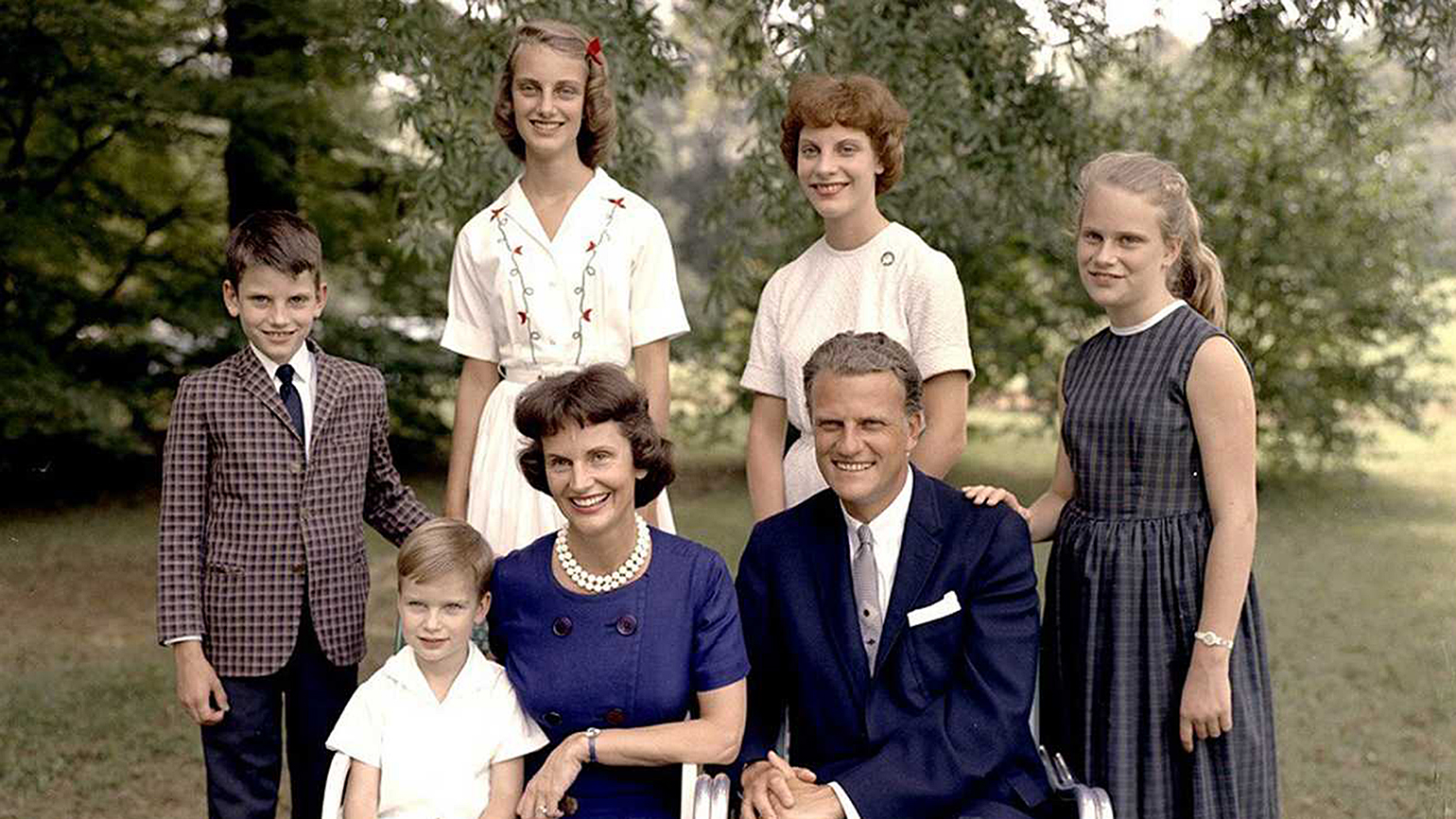
Guideposts Classics: Ruth Bell Graham on Faith and Family

One of the peculiar things about living in a preacher’s family is the way strangers expect to see halos shining from all our heads. I say strangers. Our friends know better. They’ve seen little Franklin bite his sisters; they’ve seen Virginia and Anne and Ruth shouting or perhaps scrapping out on the front lawn.

Our friends are fully aware that, for all our striving to make God the center of our home, life in the Billy Graham household is not a matter of uninterrupted sweetness and light. And it’s not just the children. Our friends might very well have heard me moan to my husband, Bill, about how I can never muster enthusiasm for doing dishes three times a day for a family of six.

I love being a wife, mother, and homemaker. To me it is the nicest, most rewarding job in the world, second in importance to none, not even preaching. But I don’t like washing dishes. To me there is no future in doing the dishes, nothing creative. And they are always there after each meal.

Discover Billy Graham’s Wisdom on Aging Well in His Book, Nearing Home

I’ve even tried placing a little motto on the window sill above my sink. It’s a motto I’ve had ever since high school, and it says: Praise and Pray and Peg Away. I made my dissatisfaction with the dishes a definite prayer concern and still I couldn’t seem to dig up much enthusiasm. But, as so often happens, my prayers were answered in an unusual way.

I took sick at Christmas time. It was Bill, then, who had to take over and do the dishes. What did Bill give me for Christmas? An electric dish washer. That’s not the end of the story. When Dr. James Stewart of Edinburgh was in Montreat this summer, we were discussing housekeeping as a divinely appointed task, and he told of visiting a Scottish kitchen.

Over the sink were these words: “Divine service will be conducted here three times daily.” Bill and I do try to make our daily duties a divine service. Take, for instance, the job of disciplining the children. We try whenever possible to deal with our children’s waywardness in terms of the Bible. I remember one time when Virginia, our oldest, who is nine, had to be disciplined.

I’ve forgotten what the trouble was now. But that day I took heed of the proverb: Spare the rod and spoil the child.* Virginia was sweet as sugar for three days after that, and then she came to me and asked: “Mother, why’d God ever create the devil and make me bad?” It was a good question, although actually it’s not too hard to answer.

We talked about temptation. We talked about how if there were no devil, there’d be no test of our love for God. And we talked about the best ways to fight back, with prayer and with long talks with Christ. The question of our relation to Christ is, of course, a very serious one in our house.

When I say serious, I don’t mean long-faced. You aren’t long-faced when you talk over a problem with a good friend. But from the time they were first able to talk, we have tried very hard to teach our children that Christ is their personal Friend as well as their Savior. And then, having prepared the soil, we let them grow in their own relationship to Him.

We try to start this relationship with the children’s first nightly prayers. One time Franklin, who is three, was disciplined for continuing to pick the cat up by its tail, and that night he said in his prayers: “Please help Mommy to be a good Mommy and not shut me in my room any more.” These first prayers aren’t ridiculous in the sight of a child, nor in the sight of the Lord.

They are a fine beginning. In time, we try to show our children, by our own example, the different ways to live close to God throughout the day. With four small children, the unexpected is always happening, like the time I heard little Ruth, who is four, break into a scream outside. I ran to see what the matter was and found her older sister smacking her first on one side of the face and then on the other.

“What on earth’s going on?” I asked the older child. “I’m just teaching her the Bible, Mommy, to turn the other cheek when she gets slapped.” It took quite some time to straighten that out. Nothing is ever rigid around our house. For one thing, Bill’s away so much of the time. Then, we always seem to be having visitors, both expected and unexpected. We even have a small zoo to keep track of.

We don’t count the temporary boarders like minnows and frogs and lame birds. As permanent guests we have a canary and a “budgie”; two patient and long-suffering cats, one of whom is so ugly we call her Moldy; and a dog, an enormous Great Pyrenees called Belshazzar. Because he eats so much he reminds us of Belshazzar’s Feast in the Old Testament.

Anyhow, with the four children and the animals, with guests coming and going, with travel, Bill’s work, and just the normal household emergencies, a regularly scheduled time for worship is a bit difficult. Of course, we try hard to have morning family devotions and evening prayers, and always we have grace before meals.

But I’ve long wished for a regularly scheduled private devotion period that makes a person feel he is living in the presence of God. For years now I’ve found two substitutes: One is day-long Bible reading which seems as natural to the kids as my preparing meals. The Bible stays open in the kitchen or around the house all day, and whenever there is a spare moment, I enjoy a few minutes with it.

When Bill is away and there is a problem, I find a lot of help in Proverbs. Proverbs has more practical help in it than any ten child psychology books put together. The 31 chapters in Proverbs and the 31 days of the month fit hand-in-glove. Then there is prayer.

Since we can’t always seem to find one set-aside time, both Bill and I have learned what Paul meant when he wrote: Pray without ceasing. *I THESSALONIANS 5:17 I heard of a lady once who had six children and a very small home. She had no place for privacy. Whenever life got too hectic, she just pulled her apron over her head and the children knew she was praying and quieted down.

I don’t do that myself, although I think it’s a fine idea. Instead, as I’m busy around the house, dusting, making beds, cooking, sewing — whatever has to be done—I think of Christ as standing beside me. I talk to Him as to a visible friend. This is part and parcel of our daily lives so that keeping close to God becomes as much a part of our children’s training as keeping clean.

Sunday, we feel, should be a day set apart. It is a family day for us, but even more it’s a day when we try to learn to know God better. It can be the most interesting experience in a child’s life. We don’t allow our children to play with their other playmates on Sunday, preferring it to be a family day. But we do have story books and coloring books, puzzles and games, all about the Bible.

And we have special treats, like candy and soda, which they’re not allowed to have on the other days. And we go up to our mountain cabin for the afternoon and sometimes for the night. All in all, we have a wonderful time with no one but the family around, and somehow on Sunday there is a minimum of bedeviling and a maximum of very enjoyable companionship.

It seems to Bill and me that the word “enjoyable” would somehow be missing if we tried to go too fast with the spiritual growth of our children, with their halo-growing as it were. We believe spiritual growth can’t be forced without raising a brood of little hypocrites. We prepare the soil and plant the seed, and water and weed and tend the plant faithfully.

But it is “God that giveth the increase.” *I CORINTHIANS 3:7 We’re willing to take our time and let growth come from the inside, through Christ; not merely from the outside, through our puny efforts. Yet, even if the motto I have out in the kitchen doesn’t apply too well to dishes, it does apply to children and the problem of growing halos.

Maybe the best thing, after all, is to Praise and Pray and Peg Away. The halos will take care of themselves.

Did you enjoy this story? Subscribe to Guideposts magazine.
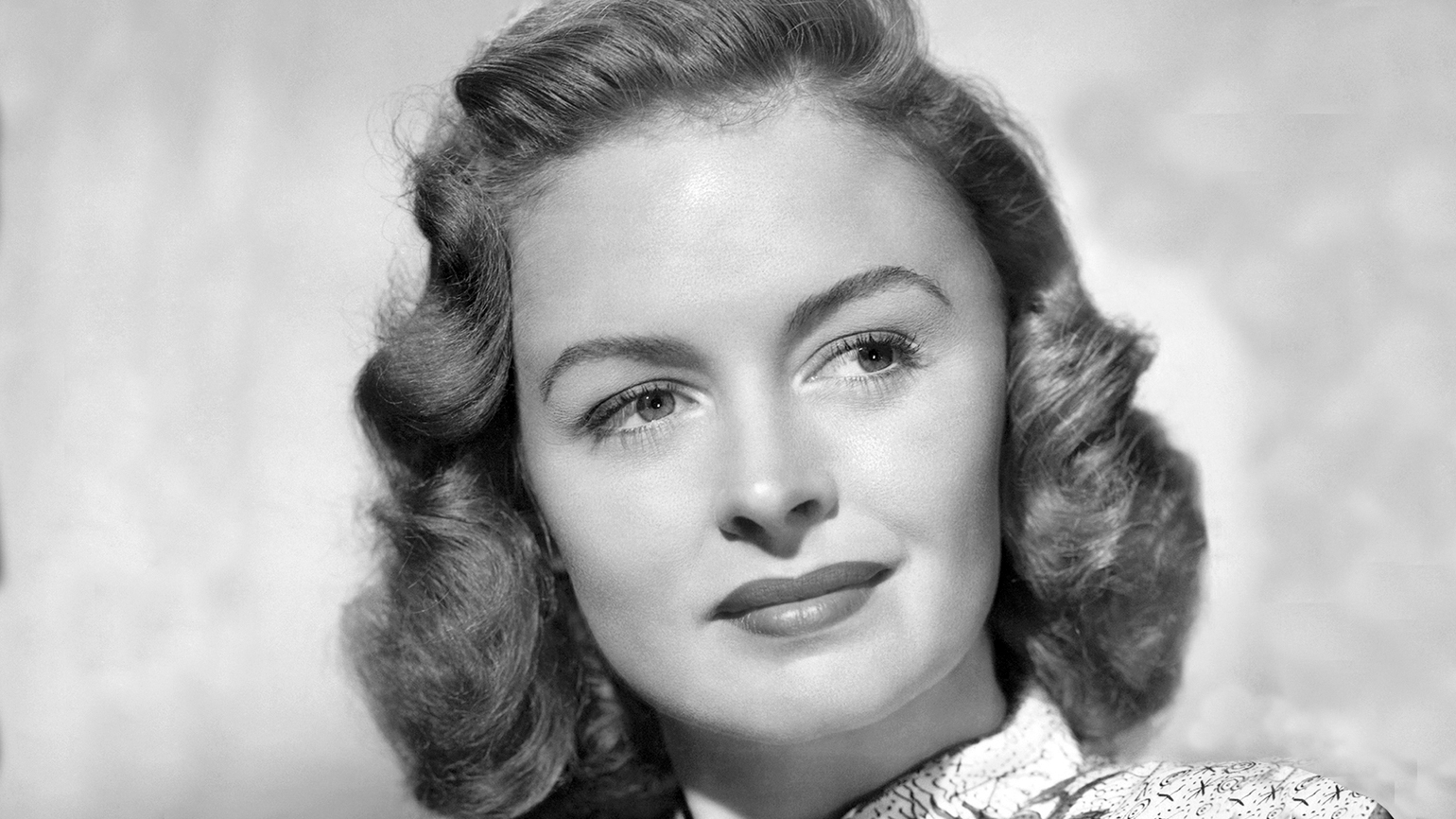
Guideposts Classics: Donna Reed on Faith in Hard Times

Not long ago my younger son Timothy—he’s 12 now—came in to me with his homework assignment. Timmie had to read and try to understand all the stories on the front page of our newspaper.

“Oh dear!” I gasped out loud.

“What’s the matter, Mom?” Timmie asked, surprised, and I hastened to cover up the momentary despair I felt. There, splashed baldly across the page, were frightening headlines about many of the things that are wrong with our world today.

There were reports about a hydrogen bomb explosion, about a murder, a car crash, a divorce. Oh Timmie, I thought to myself, must you learn about all of these things? What a world to bring you up in!

Timmie had provided that moment of pause that must come often to parents who try to be responsible and knowledgeable citizens and yet, who want to give their atom-age children a sense of security.

It is easy to believe that our children don’t think much beyond baseball or when-they’ll-be-allowed-to-wear-lipstick or what’s-for-dessert? Actually, however, children are but small adults; they, too, worry about the terrors of atomic war; they, too, can see the dark shadows with which our days are edged.

Again and again my husband Tony Owen and I have discussed this problem. We have not wanted to keep the realities of the world from our two boys and two girls, but for a long time we have had a sense of failure about finding the formula for what we call the courage to face today.

Then, recently, Penny Jane, our older daughter, now 15, asked a question that eventually gave us our answers.

We were talking about the world today, when Penny Jane said, “Mom, what did you have to worry about in your day?”

Children have a way of making you feel not old, but ancient, as though your youth and usefulness were centuries behind. I had to laugh at her question. “Well,” I said, and then my mind began to go back and all of a sudden it did begin to seem like a long time since my girlhood.

Sitting there in the comfort of our lovely Beverly Hills home I began to talk about how I, too, was one of four children and how we lived on a farm near Denison, Iowa.

READ MORE: ANDY GRIFFITH ON GOD’S GRACE

My family on both sides had pioneered in that state before I was born. As children all of us had chores to perform. I could and did milk the cows and drive the tractor, bring in water from the pump and coal and wood for the stove; to this day I can bake my own bread.

The most obvious difference between my childhood and our children’s is not that I lived on a farm, but that back in Iowa during the terrible pressure of the Depression years we were quite poor.

I doubt that any people in America suffered more than some of the Midwestern farmers of the early ’30s. These people, our friends and neighbors, were struck with a series of Job-like afflictions.

Times were bad everywhere, of course, and there was little money, but on top of this came the drought that withered crops and parched the earth only to be followed by the wind that swept the dry topsoil into great, dark choking dust storms. Family after family loaded their belongings into rickety automobiles and left…

Poverty, need, these are awful things to have happen to you, but worse, I think, to watch in others. I remember the sounds of our animals crying for food and water.

I remember how a little girl from a nearby farm came to say that she would not be playing with me any more because her family was going away. She didn’t know where they were going; they were simply leaving, giving up.

When I think back to those harsh days, I think mainly in terms of my parents, and the anguish I felt inside as I saw them up early and late to bed, day after day, laboring hard with no returns.

As children we had few toys and I always yearned for a bicycle which I never got, but I can’t recall these things as having been very important to me when I knew so well the inescapable realities of our situation. We might have left the farm, too, if it had not been for Dad.

His name is William Mullenger and he is a stubborn man. He would not give up. One by one we had to sell our livestock. One by one our neighbors deserted their farms and each time my father would say to us calmly but with undeniable vigor shored up by his faith:

“It will not always be this way.”

READ MORE: DONNA DOUGLAS ON GIVING HER BEST

I used to wonder how Dad could be so sure when so many others were not. And then, on Sundays, I’d get a glimpse of the answer. On Sundays Dad would pile Mom and the four kids into that old car we drove for 15 years and we’d rattle to the Methodist church in Denison.

You could get strength just from sitting next to Dad in church. When the minister would read from the Bible, Dad would lean forward a little, as though this especially he had to hear.

Watching his face, we children could see that the ancient words were food to his spirit, strength to get him through one more week.

Our minister used to read a lot from those Books of the Bible that rang with hope. Only recently I searched through the Bible to see if I couldn’t find some of the familiar passages and there, in Isaiah, I came across some verses which brought back the whole experience of parched farms and poverty as clearly as though I were there again, sitting in the pew next to Dad.

Just listen to these words from Isaiah 41:17-18:

When the poor and needy seek water, and there is none, and their tongue faileth for thirst, I the Lord will hear them… I will make the wilderness a pool of water, and the dry land springs of water.

These are the things which my father heard and believed.

Dad was a family man, a real family man. “If there is family strength,” he used to say, “that old Depression’s not going to get us.” And the Depression did pass and it did not get us.

READ MORE: THE BOOK DICK VAN DYKE LIVES BY

Eventually I graduated from high school and with $60 in my purse I left Denison for Los Angeles where I could live with my aunt and go to college.

When I explained to Penny Jane that we had our worries, too, in the far, far days of my youth, and when later I went delving into the old prophet Isaiah, I was well on the way to discovering how we parents in 1962 can prepare our children to cope with the atomic age.

I came to the root of the matter when I began to think about faith, the faith that our family now was renewing in church on Sundays. In essence it was the same as when our family went to church in Denison: the knowledge that God still lives and rules and can handle our problems whatever they may be–if we let Him.

I do not believe that the world changes as much as we choose to think. In my father’s day there was the Depression; the suffering then was real and affected millions of people. Before my father’s time my forebears in Iowa faced the rigors of nature.

All of our ancestors in distant ages have known plague and destruction in one form or another. Yet, centuries before my children, even centuries before Christ, Isaiah spoke about God’s power extending beyond Israel to all other nations and unto all generations.

In words not surpassed anywhere in the Old Testament, Isaiah spoke of hope and the kingdom of God on earth. And that’s the way it happens: faith and courage are like torches passed from old to young.

Today represents new times, yes, new problems, new fears, but one basic and beautiful thing links us with the past and with the future. That thing is faith, our belief in God and His adequacy.

Dad had that faith when he said about our poverty, “It will not always be this way.” With Him we know that if we fail today, tomorrow offers its triumphs.

For more inspiring stories, subscribe to Guideposts magazine.