Embrace God's truth with our new book, The Lies that Bind

There’s an ‘Ear’ in Your Heart

I will listen to what God the Lord will say. (Psalm 85:8, NIV)

It’s time for spring cleaning, right?

Recently as I was cleaning up my office and going through old journals, I came across a quote from one of my favorite Bible teachers, Billye Brim. One sentence seemed to jump off my journal’s pages. Billye said, “There’s an ‘ear’ in the middle of your heart.”

That’s good, isn’t it?

As Christians we need to hear with more than just our ears–we also need to hear with our hearts–and that’s not always easy to do.

Especially in the midst of life’s craziness. Because in order to hear with your heart, you have to purposely seek God and His voice. And, you have to consciously block out all other voices in order to tune into your Heavenly Father and make that heart connection.

He has all the answers. He knows the future. He has all the wisdom you’ll ever need. He may even have an assignment for you on a particular day! So, tune out the world and tune into Him. And, don’t just listen with your ears, listen with the “ear” in your heart. That’s where you’ll hear that still small voice.

READ MORE: MISPLACED PRIORITIES

Jesus says in the Scriptures: “My sheep know my voice.” (John 10:27) Well, if we’re born again, we’re His sheep. So, we should know His voice. And, here’s the best part. Once you start spending more time in the Word and taking time to pray every day, you’ll begin to hear His voice all throughout the day.

No, He won’t sound like Charlton Heston or Morgan Freeman, but your heart will know His voice when He is speaking to you. And, you’ll get better at identifying His voice as you listen and obey.

I remember when I was first learning to hear from God, I’d always think, “Now was that God, or was that just me thinking that thought?”

During that season of second-guessing the “ear” in my heart, I suddenly had a craving for a Diet Coke with lime, so I pulled into our local Sonic in Lake Worth, Texas. As the waitress skated over to me, I thought I heard the Lord speak to my heart concerning this young woman.

Give her a $20 tip and tell her that I told you to give it to her because I heard her prayer.

I thought, “Lord, I’m not going to say that. She’ll think I’m nuts!”

My heart was pounding so hard that I was sure she could hear it. I didn’t want to miss an opportunity of hearing God and obeying, but I kept thinking, “What if this is just me and not God?”

READ MORE: A LEAP OF FAITH

She took my order and skated away while I sat in my SUV, wondering what to do. Feeling so nervous, I called my Mom and told her what I thought God had spoken to my heart and then I said, “But Mom, what if God didn’t tell me to do this and I just thought this up on my own, and then I say it, and she thinks I’m crazy?”

My wise and wonderful Mother said something I’ll never forget.

“Honey,” she said, “Either way you get to be a blessing, so just be one.”

Somehow, that took all of the pressure off and when that young woman handed me my Route 44 Diet Coke with lime, I said “thank you,” handed her what I owed her, and then I gave her a $20 bill.

“Let me get you some change,” she said.

“No, it’s all for you,” I answered. “God wanted you to have it. He said that He’d heard your prayer.”

She looked at me like a cow looks at a new gate, and then she said, “I can’t believe it…I didn’t have enough gas to drive home tonight, and I prayed that God would give me enough to fill up my tank…that’ll do it.”

I breathed a sigh of relief and rejoiced with her. You’d have thought somebody had just given me $20 I was so happy! I realized that afternoon that I had actually heard from God and been brave enough to do what He had asked me to do.

Walking with God is fun, isn’t it?

Hearing from your Heavenly Father is such a blessing, so if you haven’t been using the “ear” in your heart to hear from Him, why not start today?

I’d love for you to share some instances when you’ve heard from the Father. Please share below! Your testimonies are encouraging to us all.

The Power of Paying a Compliment

I’ve never met anyone who got mad when I gave them a compliment. Have you? So why are we sometimes so stingy with our words? I know we’ve all noticed folks who looked beautiful or who had an outfit that was striking. Or we’ve encountered people who were exceptional at their jobs or who had an extra sweet spirit about them.

I’ve been guilty of thinking nice things about people without saying those things to them, and I suspect you have been as well. Maybe it’s shyness about talking to a stranger or wondering what they will think if we give them a compliment.

I learned a valuable lesson about that many years ago. I was standing in a long line at a department store right before a holiday waiting to have my packages wrapped. Ahead of me was a lovely elderly lady. Her soft white curls were charming, her make-up applied perfectly, her outfit adorable. And to top it off, there was such sweetness etched into her face.

Before I could talk myself out of it, I blurted, “Excuse me, ma’am.” She turned around and I said, “You are so beautiful. Your outfit is adorable, and I love your hair. I’d give anything to look like you when I’m your age.”

She was stunned. And then with tears in her eyes she said, “Nobody’s called me beautiful in years. Oh my goodness, thank you!”

And then other people spoke up, “I was just standing here thinking the same thing.”

“You have such a classic beauty.”

“I agree! You’re cute as you can be.”

I literally watched her blossom, and when she turned to leave, she said, “Thank you all so much. You made my day.” Such a simple thing. Words that I almost didn’t say. An opportunity to bless someone, and I almost missed it.

That was a life-changing moment, and I decided that I’d always verbalize it when I thought something nice about somebody. And just as important—because compliments are often paid when the person isn’t around—that I’d try to repeat anything nice that I heard.

Compliments are easy to give, and they’re often remembered for a lifetime. Who can you compliment today? After watching someone’s face light up when they hear nice words, you might become addicted to the practice. And our world will become a far better place.

PS: Just so you’ll know, I think you’re the best readers in the world!

The Peale Legacy of Bringing Comfort and Joy to Others

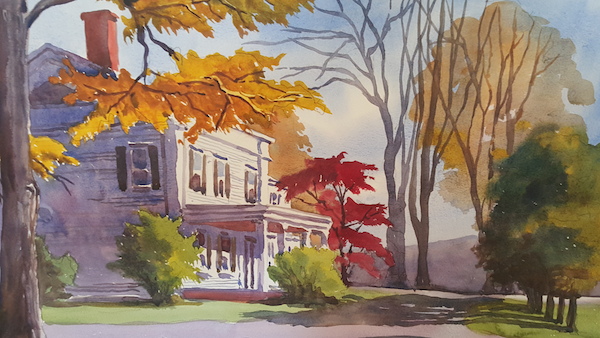
I am ever grateful for life’s unexpected moments. Last Monday, my friend and colleague Ned Reade handed me a large wrapped package. The shape and size of the package, and the fact that he is a watercolorist, led me to anticipate that it was a painting. He asked me to open it at home, which I did.

The painting is of my Grandpa and Grandma Peale’s former home, The Hill Farm, on Quaker Hill in Pawling, New York. Ned knows how special this place is to our family. “I just wanted you to have this watercolor and enjoy the many memories in that wonderful home,” he said. Not for a second was I expecting this gift on a Monday morning in March. And I cannot tell you how much I appreciate his thoughtfulness in creating this treasure for me.

It is a bit overwhelming, albeit a joyfully overwhelming, when someone does something so selflessly kind. It gives us an opportunity to pause in that joy and “allow ourselves to recognize how good things really are,” as author Marianne Williamson wrote.

I cannot help but think about all that Guideposts does to bring the gift of joy and comfort to millions of people each day—through Grandpa Peale’s books; the inspirational booklets distributed to our servicemen and women or to people in hospitals, nursing homes and doctors’ offices around the country and the OurPrayer ministry.

So many people count on these outreaches by Guideposts and still more receive or experience these resources, unexpectedly, through the kindness of others.

To all of you who support Guideposts Outreach Programs, thank you for giving millions of people around the world that much-appreciated gift of joy and comfort. I wouldn’t be surprised to find that giving has brought you joy as well. As Maya Angelou noted, “I have found that among its other benefits, giving liberates the soul of the giver.”

I look forward to hanging Ned’s gift of this watercolor in our home. Not only will it remind me of the multitude of memories created at The Hill Farm, it will also remind me of the simple and genuine gift of giving and the myriad of ways I too can be a giver.

Read More: Positive Thoughts from Norman Vincent Peale

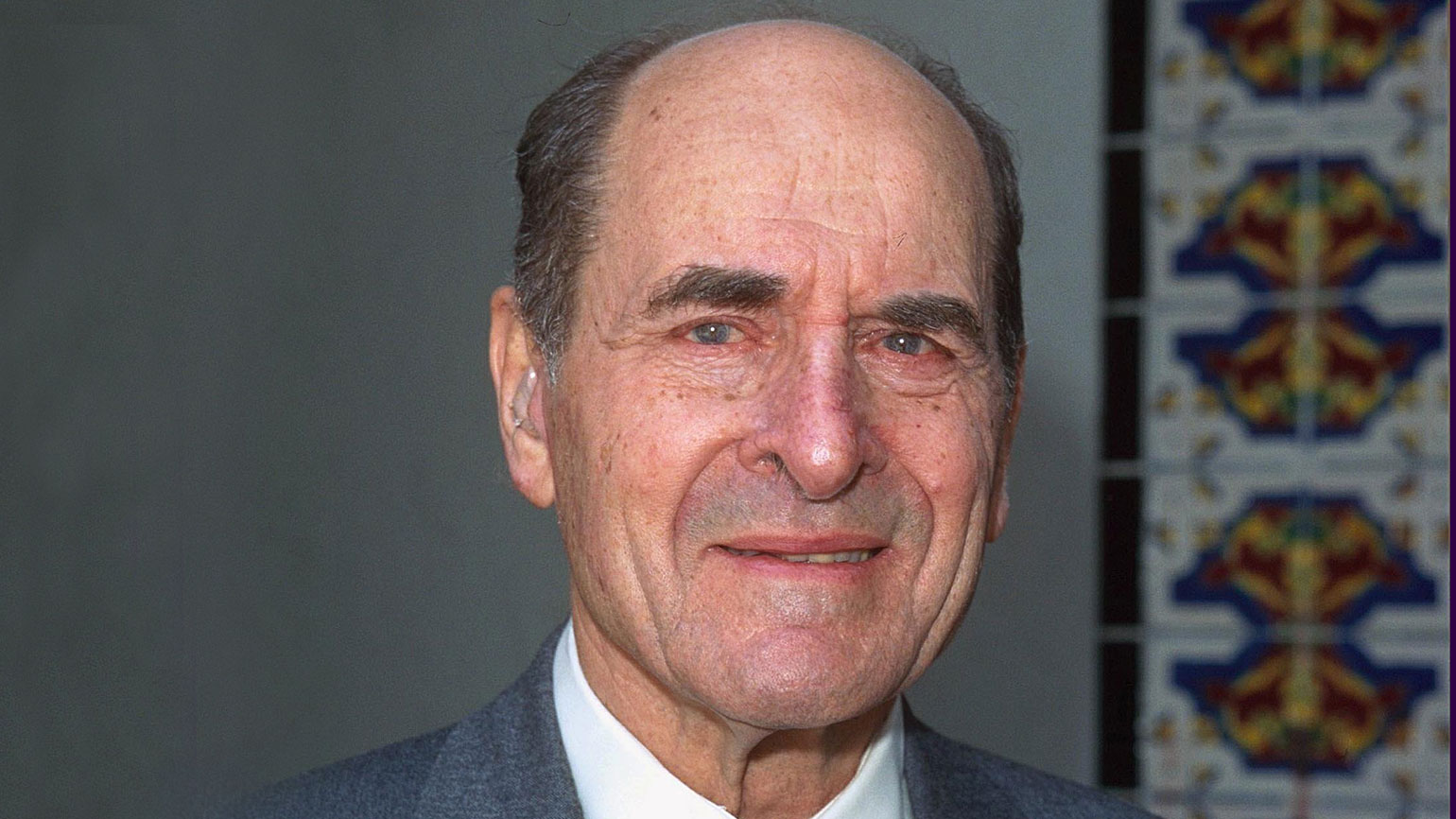
The Man Who Created the Heimlich Maneuver

Today in restaurants diners see something that is almost as universal as a menu: a set of emergency instructions on how to clear the airway of a choking victim. It’s called the Heimlich maneuver, named after me for the work I did developing this simple technique that enables virtually anyone to save another person’s life using only one’s hands.

On a quiet Sunday afternoon in 1972 I was at home in Cincinnati reading The New York Times Magazine when I came across a startling article stating that the sixth leading cause of accidental death in the U.S. was people choking on food or other objects. I was appalled at the toll—as many as 3,000 deaths a year, a large number of them children, and many of them, I suspected, preventable. How could this be?

My question was answered when I looked into the standard first-aid recommendations: a slap on the back and a finger down the throat. No wonder so many were dying! I am a surgeon who specializes in problems with the esophagus and swallowing (people choke when something accidentally goes into the windpipe instead of the esophagus); from experience I knew these measures would only lodge the obstruction farther down the windpipe.

READ MORE: A DOCTOR’S LEAP OF FAITH

Time was also critical. A choking victim loses consciousness in three minutes and dies after four. I made a vow right then to help find a way to save these lives. The method had to be so simple that anyone could perform it.

Though it seemed like a solvable problem, I could not know what difficulties lay ahead. But even if I had, I don’t think I’d have been surprised. I have run into challenges most of my professional life.

I remember as a young Navy surgeon in World War II, I was assigned to a covert unit of 12 sailors and marines, code-named “The Apostles,” working behind enemy lines with Chinese guerrilla fighters in the Gobi Desert. The local peasants, suspicious of modern medicine, shied away from our mud-hut headquarters. I felt frustrated as I watched people suffering from treatable infections and diseases.

Then one afternoon a desperate father rushed in carrying his 18-year-old daughter. She was barely conscious, and her abdomen was terribly swollen. I knew that if I treated her and she died, our unit would lose face and our mission might be undermined. Yet I knew I could not turn this patient away, especially since her father had overcome his apprehension and brought her to us.

I had had the local coffin maker craft me a wooden operating table that thus far stood unused. Now I gave my patient fluids through a subcutaneous needle and lifted her onto the table. After a spinal anesthetic, I set to work.

As my scalpel lanced her abdomen, the pent-up infection burst free. I shouted with joy because I saw that with proper drainage of the infected area, there was still hope. The daughter survived, and from then on lines of local folk waited at our mud hut for treatment.

One day the father approached me leading a cow, a token of his appreciation. His livelihood, I knew, required the cow for milk and plowing. Yet custom demanded that he make this gesture. To refuse his gift would disgrace him, so, after thanking him profusely, I asked, “Now, would you help me? I don’t know anything about cows. Could you take care of her? I will be much indebted to you.”

He readily agreed. My dilemma was solved and the father’s pride spared. It is the most rewarding fee I ever collected.

READ MORE: A DOCTOR’S PRAYER

What I discovered 30 years later was that finding broad-based approval of a single, standard method for treating choking victims was almost as challenging and as frustrating as convincing primitive people of modern medicine’s benefits.

First came perfecting the technique. There is always air remaining in the lungs even after we breathe out. Could the lungs be compressed to force that residual air up through the windpipe to expel an obstruction—the way air pressure inside a bottle pops the cork?

The best way to do this would be by applying quick upward pressure just below the diaphragm and rib cage. This would lift the diaphragm, compress the lower part of the lungs, and force the air up and out, like a bellows.

The most practical way to apply that pressure would be for the rescuer to stand behind the choking victim, wrap his arms around the victim’s waist and make a fist. Then he would place the thumb side of the fist against the victim’s abdomen, between the rib cage and navel, grasp the fist with the other hand and press into the abdomen with a quick inward and upward thrust, repeating until the obstructing object was expelled.

If the victim was alone, he could do this with his own hands, or push his upper abdomen against a solid horizontal object, like the back of a chair.

After testing this maneuver I sent an explanatory paper to Arthur Snider, science editor of the Chicago Daily News, and he wrote about it in his column, which was syndicated in hundreds of newspapers nationally.One week after the column appeared, a physician friend sent me a letter enclosing a front-page story from the Seattle Times about a 70-year-old man whose neighbor ran from his house screaming for help.

The elderly man dashed next door and saw the wife unconscious next to a plate of food. He had read Snider’s column and quickly performed the maneuver. A piece of chicken that had lodged in her windpipe popped out and she regained consciousness. The technique had saved its first life!

Reports started coming in from around the country. The most gratifying thing about it all was that often the rescuer was a person with no training in emergency medical procedures. This was something ordinary people could do. The Journal of the American Medical Association called my method the Heimlich maneuver.

Not all the reaction was good. A national organization and highly respected authority on first aid would not, at first, endorse the maneuver. Their officials finally advocated the Heimlich maneuver after four back slaps.

Alarmed by the potentially deadly slaps, I refused to allow my name to be used. Instead the organization used the phrase “abdominal thrust,” a dangerous description because it implied pressing anywhere on the abdomen, which can injure internal organs, especially in children.

I persisted in advocating the maneuver. It was a long, hard struggle, but gradually people became familiar with it. In 1985, then U.S. Surgeon General Dr. C. Everett Koop called it the best rescue technique for choking, and urged that it be used to the exclusion of all other methods.

READ MORE: HER DREAM LED TO THE RIGHT DOCTOR

The Heimlich maneuver has since become standard with first-aid authorities throughout the world. It is also recommended for drowning victims, since it forces water out of the lungs. Reports of drowning victims being saved by the Heimlich maneuver now appear regularly.

Since 1975 the maneuver has saved at least 50,000 lives, among them President Ronald Reagan, former New York City Mayor Ed Koch, and actress Elizabeth Taylor. A few years ago I read of a five-year-old boy in Massachusetts who saved a playmate’s life after having seen the maneuver performed on television. That made all of the obstacles getting the maneuver accepted well worth the struggle.

I have discovered that teaching one lifesaving method to millions of people saves more lives than a lifetime in the operating room. Does God put challenges before us in life? Yes, and unexpected rewards too. How else can I explain the course my life as a physician has taken? Or that I once owned title to a cow in the Gobi desert?

Did you enjoy this story? Subscribe to Guideposts magazine.

The Little Green F.R.O.G.

They call me the frog lady.

An expert on amphibians I’m not. But it’s a nickname I’m proud of. Let me tell you why.

Four years ago I was living in Florida when Hurricane Wilma tore through. The damage the storm caused to my church was so severe that we had to hold service and Sunday school classes in the fellowship hall.

One muggy afternoon 80 of us crowded into the small hot room for class, and sat side by side on folding chairs. It wasn’t very comfortable…or inspiring.

“How many of you know what the letters F.R.O.G. stand for?” the Sunday school teacher asked.

People shouted out lots of different answers. Where on earth is she going with this? I wondered.

Then our teacher pointed heavenward. Perched atop her index finger was a bright green rubber frog with big googly eyes and spindly legs. It was about the cutest thing I’d ever seen!

“F.R.O.G. stands for Fully Rely on God, and that’s what we need to do, especially now,” she said. Everyone clapped. The message was just what we needed.

All at once, it hit me. Maybe other folks would be inspired by these frogs too.

With some help from the teacher, I ordered several dozen frogs. I wrote, “F.R.O.G., Fully Rely on God,” on small slips of paper, attached each one to a frog then tucked some into my purse. I figured I would hand them out to people who might need a lift.

But what if they thought I was crazy? What if they thought I was some kind of frog lady?

I tested the idea out first on my son, Joseph, a dentist, by mailing him a frog. He was concerned about relocating his business.

He loved the frog! “I wear it in my lab-coat pocket every day,” he told me. “That silly little face and knowing what it stands for always encourages me.”

That gave me encouragement too. Pulling into the gas station one afternoon, I couldn’t help but notice the woman standing at the pump next to mine. She just seemed so sad about something.

I reached into my bag. “I have something for you,” I said, handing over a frog. “I know it doesn’t say much, but I think it says it all. It will bring you a blessing today.”

She didn’t say a word, just stared at the little green frog.

Uh-oh, she thinks I’m crazy, I thought. I turned to walk away.

The woman touched my arm. “You just made my day,” she said. She hopped into her car and drove off with a smile. Right then I knew I had to pass frogs on to more people.

So when I moved from Florida to Virginia, one of the first places I visited was the Veterans’ Care Center. I handed out more than 200 frogs there, thanking those brave men and women for faithfully serving our country.

A little while later I was packing up to leave when I felt a tap on my shoulder. It was Lester, a veteran I had chatted with earlier.

“I just wanted to tell you again how much I needed this,” he told me. “It’s hard for me to get out to church anymore, and this little green frog makes me feel closer to God.”

The folks in my retirement community get a kick out of the frogs too. And if you should find yourself at one of Roanoke’s drugstores, you might just spy one sitting atop the pharmacist’s pen.

I’ve handed out more than 4,000 frogs, to everyone from teachers to bus drivers to grocers, even the governor of Virginia and President Obama and his family.

Yes, they call me the frog lady, and I don’t mind a bit. But I’m not the one who deserves credit for the big impact these little frogs have. That goes to the One the F.R.O.G. message is all about. The One I fully rely on.

You can order a frog from Oriental Trading:

Vinyl Frog Finger Puppet, Item 39/121

Call: 1-800-228-2269 or visit their website.

The Joy of Helping Others

“The capacity to care is the thing which gives life its deepest significance.” –Pablo Casals, cellist

Have you ever thought about when caring begins to mean something to us? When do we start to understand that being able to care brings a sense of gratification and fulfillment to us, not to mention what our caring does for others? Developmentally, it is not until early adulthood that we are equipped to fully empathize, and that might be a generous statement. We learn to empathize through shared experiences with others, allowing us to move beyond sympathy, or having concern for the suffering of others, to feeling their pain, sorrow, hardship and hurt ourselves.

Read More: America’s Angels–The Moe, the Merrier!

But what about simple caring—acts, outreaches, gestures—that we offer to others? This begins at a very early age. Picture a baby in a high chair reaching out to you, offering one of his precious Cheerios? Or a second grader who reaches out her hand to help a friend up from the carpet after story-time? Or an adolescent who comes to an adult because he is concerned about the negative choices his friend is making? Caring has its own significance in every one of these acts, even though the baby is not aware of what caring means.

I saw an Apple commercial last week that struck me. Perhaps you have seen it too. A version of Frankenstein decides to come down from his isolated mountaintop home to the village below to be amongst the people during the Christmas season. He brings with him a recording of a Christmas song (recorded on his iPhone, of course) and two Christmas light bulbs, one red and one green. He screws the bulbs into the two bolts in his neck and they light up.

He begins singing along with his recorded carol as a crowd gathers around him, in intent observation. To his dismay, the green bulb goes out. A little girl breaks from the crowd and motions for him to come to her. He leans down and she tightens the bulb and the bulb lights again. She then begins to sing with him and the rest of the crowd joins in. The message of this ad is: “Open your heart to everyone this holiday season.”

Read More: How You Can Make a Lasting Difference in the Lives of Millions

We all matter. We all have value. We all have the ability to care for others. And we all have this ability every day of the year. Yet, in the spirit of the gift God gives us at Christmastime, we see and hear many more messages of caring and giving during the December holidays.

I will do my best to recognize my capacity to care this Christmastime. I will keep my eyes open to opportunities to offer caring in old, new and creative ways. I invite you to join me in being that subtle voice that helps others in need, all the while keeping in mind Pablo Casals’s message that “the capacity to care is the thing which gives life its deepest significance,” every day of the year.

The Heart of Maundy Thursday

Throughout the gospels, Jesus stresses again and again the importance of servanthood. “Many who are first will be last,” He said “and many who are last will be first,” a pronouncement that surely must have had the disciples scratching their heads.

On Maundy Thursday He did something that made it visually clear.

First of all that word, Maundy, probably comes from the Latin Mandatum, the first word in the Biblical text for the day, “I give you a new commandment: Love each other. Just as I have loved you, so you also must love each other.” (John 13:34)

On that Holy Thursday, Christ gathered with the disciples in the upper room, broke bread, blessed it and gave it to them, saying, “This is My body, which is given for you. Do this in remembrance of Me.”

Strengthen Your Faith with Free eBooks on Prayer, Bible Study and More

He took the cup of wine after the meal and shared it with them, saying, “This cup is the new covenant by My blood, which is poured out for you.” This ritual sharing is something we honor when we celebrate Communion throughout the year.

But according to the Gospel of John, He also did something that night that many churches reenact on Maundy Thursday. He washed the disciples’ feet.

Think about how dirty feet would have gotten in that era before asphalt roads, concrete sidewalks, underground sewers and lace-up sneakers. To wash someone’s sandaled feet would be to know exactly where they had walked. To see it and smell it.

What’s more, Jesus was their leader, their Teacher, their King, their Messiah. That He would wash feet was a complete reversal of roles. It made Peter uncomfortable enough that he exclaimed, “No! You will never wash my feet.”

Over the years our pastor has always washed feet on Maundy Thursday and quite frankly, I’ve felt a little like Peter.

No thanks, not my feet. To take off your shoes and socks in the middle of service? With my luck, I’d probably find I’m wearing a pair of old socks with holes in them.

Last year, though, I caved and let my feet be washed. Yes, it was a little awkward–untying double-knotted laces in a folding chair at the front of the church–but it was also humbling. Allowing myself to be served.

And then I discovered, once you get your feet washed and dried (there is always someone at hand with a clean towel), you kneel and wash and dry someone else’s feet.

I got to wash and dry my friend John’s feet. I don’t remember any holes in his socks, but I do remember being grateful to show him, in this holy way, how thankful I was for all that he did as a dad, a husband, a fellow church member. He deserved first-rate service.

“If I, your Lord and Teacher, have washed your feet, you too must wash each other’s feet,” Jesus said.

Isn’t that what it is to love each other, to be willing to do the dirty work, to take on the servant’s role? To know what someone’s life is like because you have seen and smelled their struggles at the level of their shoes?

“Unless I wash you, you won’t have a place with Me,” Jesus told Peter.

“Lord, not only my feet but also my hands and my head!” Peter said. What a way to prepare for Easter.

Special Prayer Event!

Draw upon the holiest of seasons! Send your prayer request for Good Friday Day of Prayer.

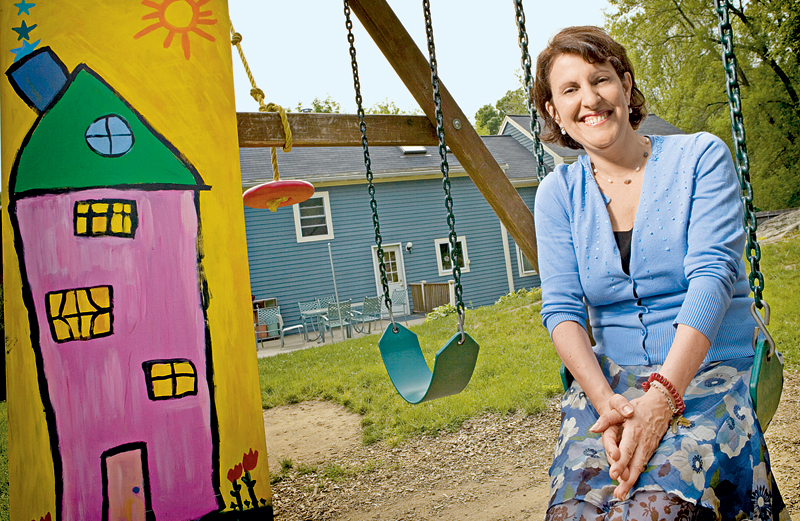
The Healing Home of Her Dreams

Brightly colored oil sticks lay ready on my desk next to a big blank sheet of paper. I hadn’t painted since I was a child.

I never expected to be doing it in graduate school–until I signed up for a class called Art Therapy and Dreams. I was studying at Lesley University to become an expressive therapist for kids who had a hard time talking about their feelings, usually kids who had been emotionally or physically abused.

The different art forms–drawing and painting, dance and drama–gave them ways to communicate and process their experiences. In order to really understand how this therapy worked, I had to try it myself. I stared at the blank paper. Drawing didn’t come naturally to me.

“Don’t judge yourself,” the instructor said. “Just start scribbling!”

I picked up a green oil stick and streaked it across the paper. I made loops and circles with green and red. I grabbed a new sheet and started again. Bright green and purple covered the page, and I added a little blue house up in the corner.

I stopped drawing. Where had I seen a blue house like that before?

In a dream! The memory came back in a rush. I was five. My mother had just been diagnosed with multiple sclerosis. She told me not to worry, but I did. Was Mom going to die?

Then one night I had a dream. I was walking down our driveway. An angel waited for me at the end. He scooped me up in his enormous wings. He was glorious!

He cradled me in his strong arms as we flew into the sky. Up, up, past the moon and the clouds until we came to a little blue house amid the stars.

Suddenly I was inside it! And I was no longer afraid. The walls protected me just like the strong arms of the angel. Inside my star house I felt loved and cared for, completely and forever. I felt strong.

That dream became my refuge. No matter how I worried during the day, at night I found comfort in my star house. Finally, I could see that Mom was going to be okay; her disease was under control.

I forgot all about my star house–until that day in my art therapy class when it popped out in my painting. I felt a rush of comfort and strength, just like in my dreams as a child.

“Now you can see the power of art and dreams,” the instructor said when I explained my picture.

The star house became an important part of my master’s thesis. Now that it was back in my life, I didn’t want to let go of the feeling it gave me–even after all these years. I hoped it would help me teach other children how to find such strength within themselves.

After graduating I had a chance to put my skills to work with children on psychiatric wards. We celebrated when a child healed enough to leave the hospital.

We also knew the harsh reality. For too many the struggle was far from over. It was a big step going from a safe, structured environment into an unpredictable world.

“It’s so frustrating,” I said to another therapist one day. “These kids need a place where they can transition at their own pace.” The words had barely left my mouth when a thought came to me: Why don’t you make a place for them?

That night I lay in bed thinking about my star house. Every child deserved what it had given me: a feeling of being loved and protected. But I had had an angel to carry me there on his wings. I didn’t have wings. Could I help other children anyway?

God, I thought, I felt your loving protection in my dream. I want these children to know that feeling too. Help me find a way.

The next day I called a friend who was the director of a group home in Beverly, Massachusetts, which was not far from where I lived. “That’s quite an undertaking,” he said when I told him the idea.

“But if you do it here in Beverly, I could introduce you to locals who could help.”

My friend made good on his promise. We formed a dedicated board of directors, wrote a mission statement with program policies, and developed a business plan. Star House became a nonprofit corporation.

Then the Office of Community Development gave us a grant to buy ourselves a house. I began hunting with a real estate agent. Months went by. I saw house after house with no luck. The few times we did bid, we lost. “It’s hopeless,” I told the agent after another afternoon of searching.

“We’ll find your house,” the agent said. “Don’t worry.” I remembered trying not to worry when my mom first got sick. When I was only five and didn’t know how to keep my worries at bay, God had given me my dream.

But now I was all grown up. I would be strong and put all my worries about finding a house in his hands. Perhaps he would give me this dream too.

“Okay,” I told the agent. “We’ll just keep on looking.”

A few days later we were driving up a narrow driveway. I looked out the car window at a cheerful blue colonial house, much like the one I had drawn with my oil stick. I opened the car door and got out slowly. Could this be the house for us? I stepped onto the sidewalk.

An inviting path led from the front door right to my feet–and what was that on the ground where I stood? A bright blue star drawn in colored chalk.

The homeowner came out and introduced himself. “My daughter drew that star today,” he explained. “She’s been practicing, and that’s the very first star she got just right!”

Not only just right. More like just perfect. Could there be any doubt we had found our house? After a quick tour inside, we sealed the deal.

Today Star House has six children in residence, ages 5 to 12. They go to school, play games, have picnics, make friends and get the intensive therapy they need. When they’re strong enough they will move on to live with families of their own.

But even after they move on, I hope they carry Star House with them, just as I have for so many years. Star House isn’t four walls and a roof, or the furniture or toys donated by the community. The real Star House is a safe place where everyone feels God’s love and protection.

I thought my angel had built it just for me, but God made the house. All children are welcome there.

Download your free ebook, Angel Sightings: 7 Inspirational Stories About Heavenly Angels and Everyday Angels on Earth.

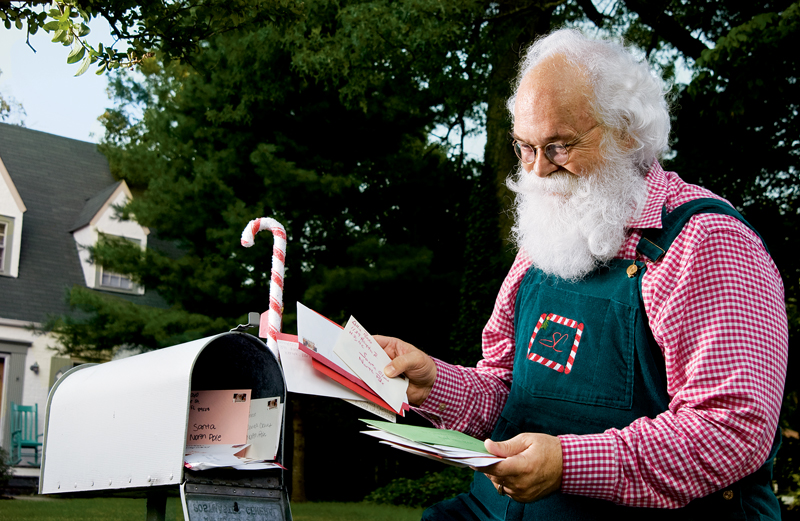
The Good Book Santa

Christmas begins early for me.

In the fall I take my red suits out of storage and get them cleaned. Then I start lifting weights and doing crunches. I need to get strong so I can lift kids up on my lap.

By November I bleach the roots in my beard and hair. My hair is a natural gray–what’s left of it, anyway–but to really get it that straight-from-the-North-Pole snowy white, I need a little help.

I get out the little leather-bound book I use for writing down children’s names. But the book, the beard, the fur-trimmed suits, they’re not what make me a real Santa. That comes from something I discovered years ago.

I grew up right here in High Point. I was a shy, overweight kid, the third-string tackle on the football team and third-chair violinist in the orchestra. The kind of guy who was content to stay in the background.

My social life consisted of pizza parties and bowling nights with the church youth group, where I never said much. The one person I really talked to was my father.

Dad was a kind, gentle man who ran the print shop in town. He’d never learned to drive, so he walked everywhere, and some mornings he even walked me to school.

Those mornings were magical. We talked about everything–sports, school, his business, the family. I didn’t need to be Mr. Popular, surrounded by friends, when I had the best friend I could ever dream of–my dad.

Then one Labor Day weekend he rode with my uncle to Camp Lejeune to pick up my cousins who were being discharged from the service. They were hit by an oncoming car. Dad was killed instantly.

I was 15 and determined to be brave and strong for my mother and younger brother. You’ve got to take care of them now, I told myself.

At the funeral service, I held back my tears. It was tough. Afterward, I went back to my routine–football practice, orchestra rehearsal, pizza parties with the Methodist Youth Fellowship.

But I knew life would never be the same. How could it be, without my best friend? Those walks to school were so lonely now, every step a reminder that Dad was no longer at my side.

That December everyone in my youth group was excited about the Christmas party we were putting on for the children at the local mission. The other kids in the group set to making construction paper chains and wrapping presents, but I just sat at the table, not feeling like celebrating.

Our youth leader cornered me. “Cliff, we’ve got a special job for you at the party.” What would I have to do? Lead a game of musical chairs? Play my violin? I didn’t want to be the center of attention when I was barely keeping it together. “We want you to be our Santa this year,” he said.

I couldn’t muster the energy to argue, so I said okay. Maybe our youth leader figured I’d be honored. But I was sure he picked me because I was the fattest kid in the group. Very little padding necessary.

The day of the party I put on the rented red suit and hat, the wig and the fake cotton beard. I pulled the black belt tight around my waist and took a look in the mirror. I could hardly believe what I saw. The awkward 15-year-old was gone.

In his place stood a jolly, smiling, kindly man. A man who reminded me of my father. I tried a quiet, “Ho, ho, ho,” then hoisted the bag of toys onto my shoulder. I was Santa.

It was so easy at the party. I didn’t have to go up to anyone and start a conversation. I sat in front of the Christmas tree, and the kids came to me. My shyness melted away. I felt confident and friendly, like I’d always wished I could be.

After a child told me about what he wanted for Christmas, I said a prayer for him. And with each prayer, each smile I got from a child, my grief receded a little more and Christmas felt more real. Thank you, Lord, for having our youth leader choose me.

Almost every year after that I made sure to be Santa: college parties, my mother-in-law’s Christmas get-together. I went into the printing business, just like Dad, and played Santa at our holiday party. Still, I wondered if there was something more I could do. I wanted to be a great Santa.

Some other Santas told me about the Charles W. Howard Santa Claus School in Midland, Michigan. A Santa school? Who would have thought?

The school was rigorous–only accepting 10 students per year. Classes on proper costumes and makeup and the history of Santa, starting with the real-life Saint Nicholas, who was known for his generosity. Seminars on how to answer children’s questions.

There was even a sleigh with a full team of reindeer so that Santas could practice waving to a crowd at a parade. “I want to go to this school,” I told my wife, Janie.

“Go,” Janie said. “It’s important to you.”

At first I was intimidated. The other student Santas were so convincing with their beards, jolly voices, twinkling eyes. They were naturals. “I’m not sure I’m cut out to do this,” I said to Tom Valent, the dean of the school.

“Cliff,” he said, “here’s the secret. When you get back to your hometown, you are Santa. Just be the best Santa you can be.” Soon enough I’d earned my degree.

Now that I’d learned so much about the figure of Santa, I was able to take my portrayal to the next level. Santa first appears in Clement Clarke Moore’s 1823 poem The Night Before Christmas, but there he’s a “right jolly old elf” in brown and covered in soot.

The big man with the white beard and red suit showed up later, in Civil War-era cartoons by the artist Thomas Nast. I found a Nast sketch of Santa in red-and-white striped pants handing out presents to the Union troops.

I took that picture to a seamstress and had her design a costume just like it. I even got wool fabric from a Gettysburg weaver who made uniforms for Civil War re-enactors.

I designed other costumes too. One in burgundy velvet with reindeer buttons, another with brass buttons with the letters “S.C.” For cold weather I had a couple of capes made, a green one with trim and another made from an old quilt of my grandmother’s (I call it the cape of many colors).

I grew out my beard and discovered that if I bleached it every once in a while, it really did look convincing.

One evening Janie and I were having dinner out when I noticed a little girl staring at me. Finally she came over to our table. “Excuse me, sir, but are you Santa’s brother?” she asked.

“Why, Jessica?” I said. “Do you think I look like Santa?”

Her eyes grew wide. “See,” she said to her parents. “He is Santa! He knows my name.” What neither her parents nor I reminded her was that her name was printed on her hairband.

Every year I play Santa 50 times in a two-month period. I’ve been in parades, shopping malls, photographers’ studios. I listen to hundreds of children tell me what they want for Christmas, their hopes and dreams.

Sometimes they’re shy. “Would you like to be in my book of Good Boys and Girls?” I ask.

I dig in my pocket–I had my seamstress sew it special–and pull out my little leather-bound book. The children come closer and peer at its pages. If their name isn’t there, I write it down in perfect Santa script.

The book isn’t just for them. It’s also for me, because I pray for every child who visits me. That’s the one thing I can give them.

I remember what it’s like to be a kid–how you sometimes feel awkward and lonely. Once I noticed a boy who looked to be about eight, waiting in the back of a crowd until the others had finished. Then he walked up and whispered, “Santa, all I want is for everyone to quit calling me names on the bus.”

I looked at him and could see the boy I’d once been. “I know exactly what you’re going through,” I told him. “What I’m going to do is write your name in my book and when I get home tonight, I’m going to say a prayer for you and ask God to help those children be as nice as you are.”

Sometimes people will tell me, “You know, Jesus is the real reason for the season.” I totally agree. We celebrate the miraculous birth of our savior.

But Santa represents the spirit of giving, and that’s important too, even miraculous sometimes. Because, as I discovered at that youth group Christmas party so many years ago, bringing joy to others brings out the best in you.

The Gift of Joyous Giving

This time of year offers many opportunities to experience the joys of giving. Giving doesn’t have to be a burden or an obligation; instead, it should be an expression of our love, humanity and purpose. The best gift we can give ourselves is the joy we receive when helping and giving to others. Make this season one of giving in small and big ways.

One way to make giving a joyous experience is to be prayerful about it. I think when we pause to pray about how we can give to others, our church and favorite charity, our heart is prepared to give what we can.

As we come to the end of the year, many organizations knock at our doors seeking our support. Joy comes to me when I give to the causes that touch my heart but more importantly, impact others. Look within yourself and ask, what are you passionate about? Which organizations are working with integrity and getting results that you can support?

Giving fills us with great joy when we do it out of love for people we know or don’t know. Giving out of love makes us think about the person, who they are, what their needs are and how best to help them.

The gift can be monetary but it doesn’t have to be. We can cook a meal for an elderly couple, give a book or a small toy to a child, a restaurant gift certificate to a young couple, flowers from your backyard and much more. As Mother Teresa said, “We can do no great things; only small things with great love.”

We all have the opportunity this season and year round to experience the joy and gift of giving when we let love be our guide. Make this season joyous through giving in small ways with great love. What is it about giving that brings you joy? Please share with us.

Lord, thank you for the joy of giving.

The Gift of Giving

Such as I have give I thee… —ACTS 3:6

When I was a girl, I earned extra money by helping my neighbor Alice with her household chores. All year long there was a table in her living room that was never to be disturbed; it held her gifts in progress.

What impressed me most was the way Alice tailored her gifts to the recipients. For a friend who was a sewing teacher, Alice wrapped a book on making doll clothes in gingham fabric. She used a yellow measuring tape in lieu of ribbon and a fat tomato pincushion for the bow.

Years later, when Alice moved to a nursing home a hundred miles away, what troubled me most was the thought that her wonderful gifts would stop. Her home had been sold to pay for her medical expenses, so she had no money of her own. But to my astonishment, when I arrived in Alice’s tiny room on Christmas Eve, gaily wrapped packages were piled high on her bedside table and at the foot of her bed.

Alice couldn’t wait for me to open my gift. She’d cushioned a rose-patterned cup and saucer with a square of clean gauze and packed it in a box that had once held latex gloves. The piece de resistance was a bow she’d crafted from the twill tape the nurses used to secure her tracheotomy tube.

“Where did you ever find this exquisite china?” I asked. I turned it over, looking for clues to its origin. “Oh my goodness, it’s antique Limoges!”

Alice’s face lit up. “Won it at bingo,” she said. “I’ve hooked up with one of the evening nurses, honey. She never fails to pick a winning card.”

As it turned out, all the Christmas gifts Alice had won were donated by local people. Alice had recycled them and put her personal stamp on each one. And she taught me something I would forever carry with me: A generous heart will find a way to give . . . always.

Dear Lord, teach me to give wherever life takes me.

The Four Chaplains

On a frigid February night in 1943, the U.S. troop ship Dorchester surged through rough North Atlantic seas about 150 miles off the coast of Greenland.

Down in the old converted cruise ship’s stifling hold, four U.S. Army chaplains circulated among the frightened young men, some lying wide-eyed in their bunks, others nervously playing cards or shooting dice.

Chatting with the troops, the chaplains eased tensions, calmed fears and passed out soda crackers to alleviate seasickness.

The troops anxiously looked forward to reaching Greenland the next day. They knew that U-boats prowled their ship’s course.

They did not know that by morning nearly three fourths of them would be dead, and that the rest would have their lives changed forever. Nor did they know the magnificent way in which these four chaplains would minister to them.

Father John Washington was from a big Irish Catholic immigrant family in New Jersey. At age 12, near death from a throat infection, he was given last rites. Miraculously he recovered. He told his sister: “God must have something special for me to do.”

Alexander Goode came from a long line of rabbis. He remembered standing in Arlington National Cemetery at age 10 watching through tear-filled eyes the Unknown Soldier being laid to rest. After Pearl Harbor he left his temple in York, Pennsylvania, requesting overseas duty.

Clark Poling, a minister in the Dutch Reformed Church, had turned down a law career to carry on his family’s seven-generation heritage of religious service. “Don’t pray for my safe return,” he told his father before embarking on the Dorchester. “Pray that I do my duty.”

“Old man” of the four was George Fox, who had received the Silver Star, Purple Heart and France’s Croix de Guerre in World War I. On returning home, he entered seminary. Ordained a Methodist minister, he served a circuit of small Vermont churches until December 7, 1941.

“I must go,” he told his wife. “I know what these boys are facing.”

Empathy with the troops came naturally to the four chaplains. They became highly popular, mixing easily with all faiths, counseling, organizing entertainment and praying.

On February 3 the chaplains were still up at 12:55 a.m. when the torpedo struck. The tremendous explosion threw soldiers from bunks; the lights went out and the stricken ship listed to starboard, sinking fast.

Those not trapped below rushed topside. Amid the shriek of escaping steam and frantic blasts of the ship’s whistle, dazed men stumbled about the dark, crowded decks. Some gripped the rails, too horror-struck to head toward the lifeboats.

The four chaplains quickly moved among the bewildered men, calming them, directing them to life rafts, urging them to escape the doomed ship.

Many had forgotten their life jackets. The chaplains located a supply in a deck locker and passed them out. When the bin was empty, they pulled off their own and made others put them on.

Only two of the 14 lifeboats were successfully used in abandoning ship. Soldiers leaped into the icy sea. They clutched the gunwales of the two overloaded lifeboats, clung to doughnut-like rafts or floated alone.

The four chaplains remained on the ship’s slanted aft deck, standing together, arms linked, heads bowed in prayer, as the Dorchester slipped beneath the waves.

Of the 902 men aboard, 230 were rescued by two Coast Guard cutters. A British report had stated that survival would be impossible after one-half hour in such cold waters, but some men, insulated by the ship’s thick fuel-oil which coated them, had floated in life jackets for eight hours.

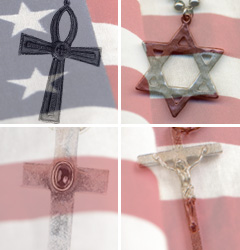
The heroic Four Chaplains have become legend. Memorials to their “Three Faiths, One God” sprang up around the nation to promote brotherhood, fight bigotry and encourage interfaith and interracial unity. So many years later, we at Guideposts wondered about the survivors. What has happened to them?

Thanks to Colonel Archie Roberts, chaplain of the Chapel of Four Chaplains in Valley Forge, Pennsylvania, I was put in touch with a number of survivors.

No one has been able to find any of the four men to whom the chaplains gave their own life jackets. In the mass confusion, those receiving them might not have realized theirs came off a chaplain’s back.

We do know that when John Mahoney started to rush below for his gloves, Rabbi Goode stopped him and gave him his own. Those gloves helped save Mahoney’s life, enabling him to cling to a lifeboat through the night.

It was exciting to talk with the survivors. All say they’ll never forget the Four Chaplains. Some saw them going down with the ship. Others learned of their heroic acts after being rescued.

Most are now in their 70s, retired from active careers. Practically all suffer from numbed limbs and walking difficulties as a result of exposure. They keep in touch with one another through reunions and newsletters.

With high expectations, I asked each survivor: “Has the memory of the Four Chaplains had any effect on your life?”

“Not really,” was the usual answer. But as we continued talking, I began to see that this initial response was one of modesty. For as we discussed their lives, evidence emerged that the men had been affected significantly: In one way or another they had been giving of themselves to help others.

Henry Arnett, of Newport, Arkansas, visits local hospital patients every day. Despite bad legs, he often drives the 180-mile round-trip to Little Rock to cheer patients there.

Thanks to Charles Macli, who now lives in Peekskill, New York, a lot of youngsters in the Bronx, New York, have learned to box in a wholesome gym atmosphere, with some advancing to the Golden Gloves.

In helping keep the Four Chaplains’ memory alive, Walter Miller of Bristol, Connecticut, has written widely distributed poems that honor all those lost in our country’s wars.

And Anthony Naydyhor of Hellertown, Pennsylvania, has devoted the past 12 years to caring for his wife, who is on kidney dialysis. When I suggested that he was showing real selflessness, he shrugged it off. “No,” he said, “it’s a privilege.”

Compassion for others seems to be a guiding factor in these men’s lives.

Edward Dionne of Lake Placid, Florida, volunteers to help blind and needy children. And there’s Daniel O’Keeffe of Sebring, Florida, who helped found a local YMCA; he is a March of Dimes chairman, works with disenfranchised youngsters, and speaks on Judeo-Christian ethics.

The survivors’ spirituality was deepened in different ways. James Ward of Cincinnati says he had little interest in religion before the sinking, but the memory of the chaplains drew him to the church in which he’s active today.

The same goes for Robert Blakely of Alpine, California, who is a lecturer for his Catholic church and, as a Eucharistic minister, serves Communion to housebound parishioners.

But probably what all of the survivors remember most is the example of brotherhood demonstrated by the Four Chaplains. Because of this, Benjamin Epstein of Delray Beach, Florida, lectures on building bridges of understanding between people of all faiths. James McAtamney of Newport News, Virginia, backs him up.

“I was raised in a neighborhood where Jews didn’t speak to Catholics and neither Catholics nor Jews spoke to Baptists. I was amazed to see that these chaplains had so much in common. To see them enjoying one another’s company was a lesson to me in ecumenism long before that word became popular.”

Today “Mac” gives his time to Civitan International, a worldwide community-service club aimed at helping the mentally retarded. Civitan also sponsors Clergy Appreciation Week, celebrated in February to honor ministers of all faiths.

And several—like Walter Boeck-Holt of Algona, Iowa, Charles Ciccia of Manalapan, New Jersey, Dr. Roland Phillips of Abington, Massachusetts, and Michael Warish of Taunton, Massachussets—have written accounts of the sinking, which help keep the memory of the Four Chaplains alive.

Other survivors speak publicly about that terrible night. For many, this is difficult. But the men of the Dorchester feel it is a privilege to honor their comrades and the Four Chaplains so that others will be inspired by their selfless gift.