Embrace God's truth with our new book, The Lies that Bind

Reflecting on the 80th Anniversary of Kristallnacht

Jewish theology is rich with images of brokenness and repair. A foundational one is a mystical story I’ve always found inspiring, and I’m thinking of it in particular on this 80th anniversary of Kristallnach, or the Night of Broken Glass that occurred in Germany in 1938.

First, the mystical Jewish story: during creation, God’s divine light is believed to have been contained in vessels as the world formed around it. At some point, the vessels shattered, exploding God’s light into shards and sparks that settled across creation. Though most of the sparks returned to God, many remained scattered and separated from the divine, hidden among us.

For Jews, this story is an impetus and an inspiration to do good deeds, pursue justice and perform acts of kindness. When we do, we “gather the sparks” of divine light, urging the world toward wholeness and unity. A familiar term in Jewish communities is the Hebrew phrase tikkun olam, which means, “repair of the world.”

This notion is on my mind as I reflect on the violent anti-Jewish demonstrations that took place across Germany 80 years ago on November 9, 1938. As the U.S. Holocaust Memorial Museum recounts, synagogues were destroyed, religious artifacts were burned, and 7,500 Jewish-owned business, homes and schools were plundered by Gestapo troops as police officers looked on. Ninety-one Jews were murdered, and 30,000 Jewish men were arrested and sent to concentration camps. Because of the shattered windows whose shards coated the streets of each town, this tragic event became known as Kristallnacht—a name the Nazis themselves gave it—German for “The Night of Broken Glass.”

The Holocaust’s hateful history unfolded from there, and its losses represent a shattering of lives, faith and security that can perhaps never be fully repaired. But as people committed to repairing the world, we must continue our pursuit of justice, kindness and unity. We must, and somehow we will.

Which brings me to another image of brokenness in Jewish tradition—the joyful moment when a groom stomps on a glass at a wedding, shattering it to congratulatory shouts of “mazel tov!” There are myriad meanings assigned to this tradition, but my favorite is the wish that the couple should be happily married for as long as it would take to reassemble the crushed glass into a whole vessel again.

Such a task would take a long time. Repairing broken things takes a very long time. But even in joy or sorrow, when we are in search of divine light or human justice, we are strongest when we focus our attention on gathering sparks, one by one, each of us doing our part to build a more righteous future.

Why Giving Matters

During the holiday season, many people receive numerous requests from organizations seeking monetary gifts to help them fulfill their mission: helping veterans, providing food for the poor, shelter for the homeless, care for abused animals and more.

Giving selflessly is the right thing to do, though many of us are challenged by the task. Whether or not we have much money to spare, it isn’t always easy to give away what we have worked so hard for, especially when we have set financial goals—saving for retirement, a vacation or a rainy day.

Even with so many reasons to be reluctant, the pros of giving outweigh them all. When we give to those in need, either directly to a person or through an organization, we make a positive difference in the lives of others and in our own.

As Scripture reminds us, giving ensures that we are not bound by material things, but free through the abundance of faith. Author and preacher, Charles H. Spurgeon, said, “We have all things and abound; not because I have a good store of money in the bank, not because I have skill and wit with which to win bread, but because the Lord is my shepherd.” May we excel in the grace of giving from what we have received from the Lord.

Who Is Your Neighbor?

Looking back, I always laugh when I recall one of my most embarrassing but funniest memories. When young men, my cousin and I traveled uptown in Manhattan to Radio City Music Hall to purchase tickets for a double date.

After buying the tickets, we realized we didn’t have enough money for our train ride home. We stood in the station, for what seemed like an eternity, asking strangers for help with our fare.

That day made me question what compels a person to assist a stranger? The Good Samaritan parable told by Jesus, provides biblical framework for being a good neighbor to others. In the story, Jesus is asked by an expert of law, “Who is my neighbor?”

As a response to this question, Jesus tells the story of a man traveling from Jerusalem to Jericho who was robbed, beaten and left for dead. Even when a priest crossed the street in an effort to avoid helping this man, a Samaritan saw his condition and felt the compassion to care for him.

He lifted the man onto his donkey and brought him to an inn nearby where he covered all expenses. When Jesus finished telling the story, he asked, “of these three, who was a neighbor to the man?” The expert in law replied, “The one who had mercy on him.” Then Jesus said, “Go and do likewise.”

Over 40 years have passed since my cousin and I looked to others for our train fare home, yet the lesson we learned that day remains just as strong. A Good Samaritan is a compassionate individual who unselfishly helps others, especially strangers in need.

Those who spared us some change that day acted as our neighbors. And as I move forward in life, I look back to that day when I see others in need as a reminder to be a good neighbor. As Martin Luther King Jr. once said, “The time is always right to do what is right.”

Who is your neighbor? Has a stranger generously helped you in a time of need? If so, please share.

Lord, help me see my neighbor. Teach me to look at the need and not the person, to love and be compassionate as You are with us and have taught us to be.

When Natural Disasters Strike, Chef José Andrés Works Culinary Miracles for the Hungry

My wife, Patricia, knows. I always have my Orvis fishing vest and two back­packs at the ready. I took them with me to Haiti after the earth­quake in 2010, to New York when Hur­ricane Sandy struck in 2012. Last year, I went to Houston in Harvey’s wake. Two weeks later, Hurricane Maria ripped through Puerto Rico. I needed to go.

I am a cook. I came to the United States from Spain and opened a res­taurant, Jaleo, which just turned 25 years old. I now have more than 30 res­taurants, from fast casual to Michelin-starred. My team and I feed the few, but I also believe in feeding the many. That’s why I volunteer at places like DC Central Kitchen, learning about the world outside professional kitchens. I have also learned about the spiritual world: I’ve twice walked the Camino de Santiago in Spain, a route walked by thousands of pilgrims each year. While food will restore us physically, churches restore us spiritually.

When I arrived in Puerto Rico, the island was in trouble like I’ve never seen before. Flying into San Juan five days after Maria, I could see that the destruction: roofs ripped off, homes peeled open like tin cans, toppled trees stripped of every leaf. And when I landed, I saw that people were hungry. There was no electricity, no fuel. The entire island was shut down. I knew I needed to get involved.

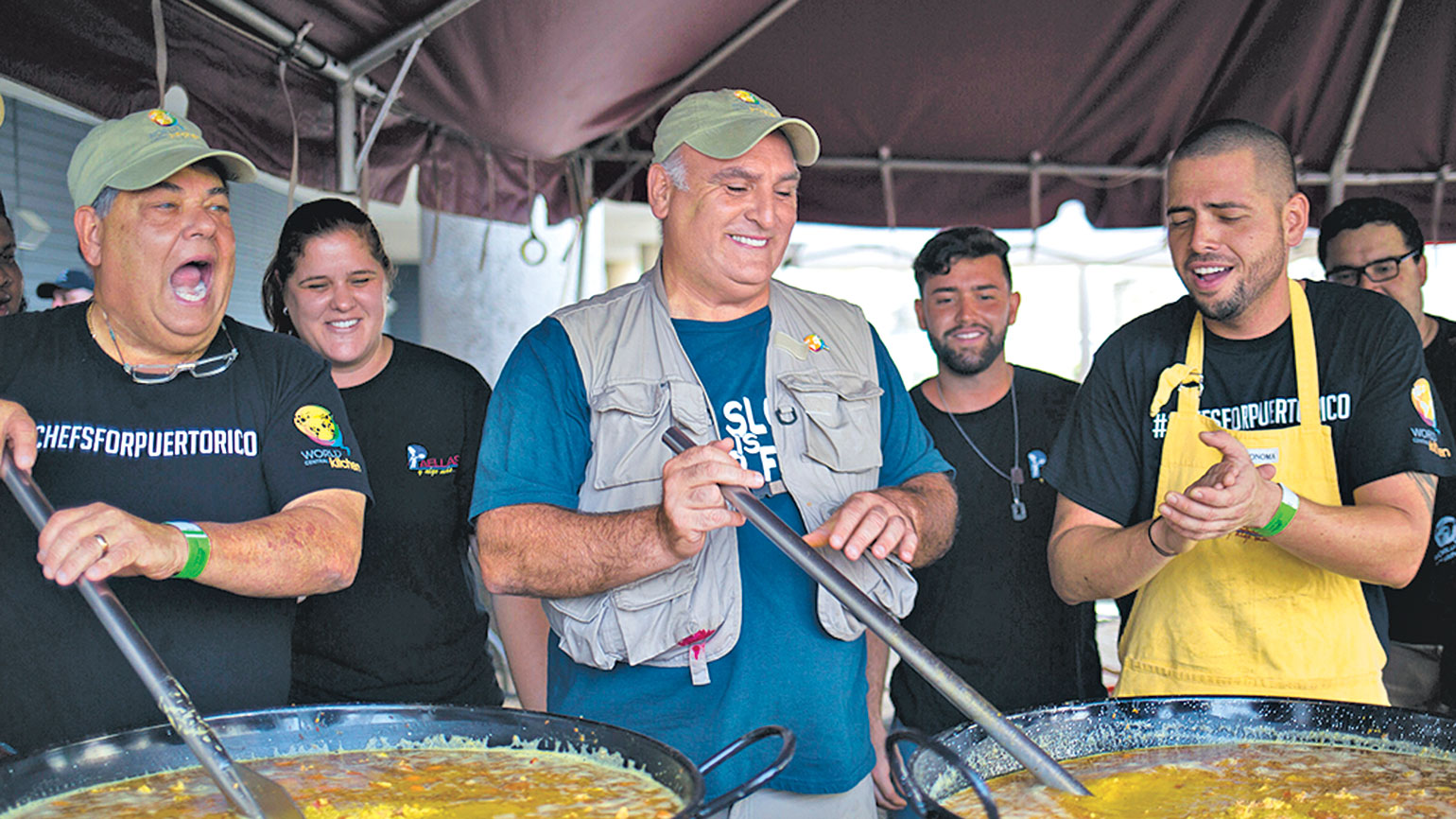
I had already established a nonprofit, World Central Kitchen, where profes­sional chefs could come together to feed the hungry. Before going to Puerto Rico, we went to REI and bought solar lamps, water purification pills and ba­sic survival items. I took out as much cash as I could from the ATM—no tell­ing when banks on the island would reopen. In San Juan, we rented a four-wheel drive. Driving was a test of nerves. No traffic lights. Downed phone and power lines everywhere. I thought we could set up at the Coliseum, or El Choli as it’s called, San Juan’s biggest sports arena. But as I’ve seen time and again, red tape was our biggest enemy. We were told that the kitchen could be used to feed only the people working there. One hundred and fifty of them. When millions were in peril of starving!

Where next? We needed a loaves-and-fishes miracle. When people tell me something can’t be done, I am even more determined. I knew a lot of chefs on the island. We headed to my friend José Enrique’s place in historic San­turce, a neighborhood usually crowded with tourists. Everything was dark, but José’s generator was working overtime. “Bienvenido,” he said, giving me a hug.

He’d been feeding the hungry with his sancocho stew. The lines were huge. “We run out early every day,” he said.

“We can help,” I told him. José’s place became our center of operations. We’d serve sancocho outside. Inside we set up a sandwich-making assembly line run mostly by volunteers. What we needed were supplies, literally tons of them.

I served two years in the Spanish Navy, sailing on the tall ship Juan Sebastián de Elcano. I’ll never forget coming into New York Harbor on July Fourth and seeing Lady Liberty and hundreds of boats flying the American flag, a symbol of all that’s good about this country. I became a U.S. citizen in 2013, alongside my wife. I knew that citizenship came with an obligation to make a positive difference, to improve the lives of my fellow Americans.

The biggest food supplier in San Juan was José Santiago. We drove to his place. We needed bread, cheese, vegeta­bles, plates and uten­sils. We’d have to buy on credit. The cash in my backpack wouldn’t go far. As we talked, I was amazed to see a picture of the Juan Sebastián de Elcano on his wall. “That’s the boat I sailed on in the Navy,” I said. He asked where my family was from. “Asturias,” I said. His people had come from Asturias too. That did it. We shook hands on a deal and filled up the four-wheel drive.

The loaves-and-fishes miracle was becoming a reality.

Back at José Enrique’s place, we gathered our team, a growing group of chefs. I sketched out our needs on a flip chart. ENERGIA—gasoline, natural gas and diesel. ALIMENTOS—dry goods and fresh goods, especially water. COMUNICACIÓN—social media to get the word out. VOLUNTARIADO—volunteers. When I helped out in the Rockaways in New York after Hurricane Sandy, I saw what a group of very orga­nized church volunteers could do. The Southern Baptists were everywhere, dishing out mashed potatoes, chicken tenders and gravy. Their mission: to be “the hands and feet of Jesus to people seeking hope during a time of crisis.”

We could do the same. We could learn from them.

We branded ourselves #ChefsForPuertoRico and set up a WhatsApp group. Phone calls and e-mails were unpredictable, but WhatsApp worked. I insisted on preparing hot meals and sandwiches. In a moment of crisis, a simple sandwich looks like heaven. And if you feed the people, you are creating an army of first responders. They in turn help others.

We found food trucks, drivers. We fed the local police, and they donated diesel in return. We kept doubling our output. From 500 sandwiches to 1,000, from 2,000 hot meals to 4,000. Soon we were doing 10,000 meals a day. Could we do more? More than the government?

I often thought of something my father told me. We would cook pa­ella over an open fire on weekends. I, of course, wanted to help. “Build the fire,” my father said. Gathering wood, building the fire—these didn’t seem as important as being the chef, stirring the paella. One day, I complained. My father replied, “The fire is everything. If you don’t control the fire, nothing else matters.”

The fire for us was building this network of helpers. Anybody and ev­erybody. We reached out to corporate donors: Goya Foods sent supplies, UPS sent bottled water, Chili’s restaurants donated thousands of pounds of chick­en. A restaurateur friend was abroad when Maria hit, but he sent me a mes­sage: “Take everything out of my re­frigerator and anything in storage.”

I went back to the Coliseum. This time my efforts were successful. Soon El Choli was a buzzing scene inside and out, generators humming, the scrap­ing of huge paella pans, cooks heaping mountains of rice in stock. So many amazing volunteers came to help.

Sometimes a priest would lead us in prayer. But those weren’t the only prayers. One cook said “God bless Puer­to Rico” every time she poured oil into a pan of rice. The blessing was the exact amount of time for the oil she needed.

I felt like I was living two lives. I’d hear from our R&D department in Washington, the general manager at our new Zaytinya in Texas, the chef at our new restaurant in Beverly Hills. Then I’d talk to the cooks and volun­teers about the sandwiches they were making. “More mayonnaise,” I said. “The sandwich has got to have fat, cal­ories, to be moist. And it has to taste good.” A plate of food is more than food. It sends a message that someone cares about you, that you are not on your own.

We fed the National Guard and Homeland Security. Partnered with the Salvation Army and the Red Cross. We partnered with FEMA—eventually. But this network of restaurants and chefs made it happen. We even had a pastor in the hills, Eliomar Santana, who in­sisted on using his church’s kitchen to feed his community. We sent meals to the elderly, the homebound, hospitals.

Both of my parents were nurses, so I understand the stress that the hospital workers were under. Air conditioning, ventilators, operating rooms barely functioning with old, unreliable gen­erators. This is what they were facing while working to save lives every day.

Still, we overcame blocked roads and collapsed bridges, red tape, supply bottlenecks, lack of electricity. To date, we have served over 3.5 million meals with 20,000 volunteers working across 25 kitchens. It has been hot, sweaty, ex­hausting work. But it has also been life-changing. My friend Robert Egger once said, “Too often charity is about the re­demption of the giver, not the liberation of the receiver.” Our food was liberating.

I went back at Thanksgiving with Patricia and our three daughters, and we cooked to thank all those who had helped after the storm, especially the chefs. Chefs understand how to create order out of chaos, just as they know how to control the fire. There were times when we didn’t know what to do. But we kept cooking. And the fire kept burning.

Sadly, there is always another natu­ral disaster around the corner. While most of our team was in Puerto Rico, we watched from afar as wildfires dev­astated Sonoma and Napa counties in California. My friend Guy Fieri began cooking thousands of meals for evacu­ees and first responders, saying we were his inspiration. “If this guy is able to go to a city with no power or running water and is able to feed thousands, we’ve got to figure this out,” he said.

How to make a loaves-and-fishes mir­acle? You can’t possibly plan everything in advance. You show up. You spread the word. You pray. And help comes.

We needed a restaurant; we got one. We needed chefs; they came. We need­ed food trucks; we got them. We didn’t have gasoline, so we traded it for food. We needed more space and found it. We needed volunteers, and they came. Twenty thousand of them, making one plate at a time, feeding the many.

I’m back home now, but Patricia knows my vest is ready. Those well-traveled backpacks are ready. World Central Kitchen is working to increase resiliency in Puerto Rico so it can bet­ter withstand the next hurricane. We are working toward new solutions to combat hunger, new responses to emergency, new pragmatic approaches to disaster relief. And when the next hurricane strikes, we will be there, always working to change the world through the power of food.


When Disaster Struck, Volunteers of America Found an Innovative Way to Help

The reference desk staff at Baton Rouge, Louisiana’s public libraries pride themselves on answering their patrons’ questions. The best recipe for jambalaya. The history of zydeco. The number of times the LSU Tigers football team has been to the Cotton Bowl (that would be five). Even in this age of Google and Siri, there’s no shortage of queries.

“We’re in the information business,” says Patricia Husband, assistant branch library director.

Then came the catastrophic flooding of 2016. Suddenly the questions became more urgent. People wanting to know how to contact FEMA for assistance. Where to get help paying utility bills. Even where to find a homeless shelter. Some visitors seemed to need much more than what the library’s reference sources could give them. They needed someone who could spend more time with them, counsel them on whom to call for assistance and what documents and information they’d need.

The library turned to Volunteers of America Greater Baton Rouge (VOAGBR), a faith-based nonprofit it had worked with in the past.

At VOAGBR, they’re all about addressing the very concerns people were asking about—assistance with affordable housing, a drop-in center for the homeless, therapists who work with families in crisis, programs for seniors and veterans. They were committed to helping those whom Jesus called “the least of these.” A 90-day pilot program was launched in the spring of 2017. Three evenings a week, VOAGBR would send caseworkers to three library branches.

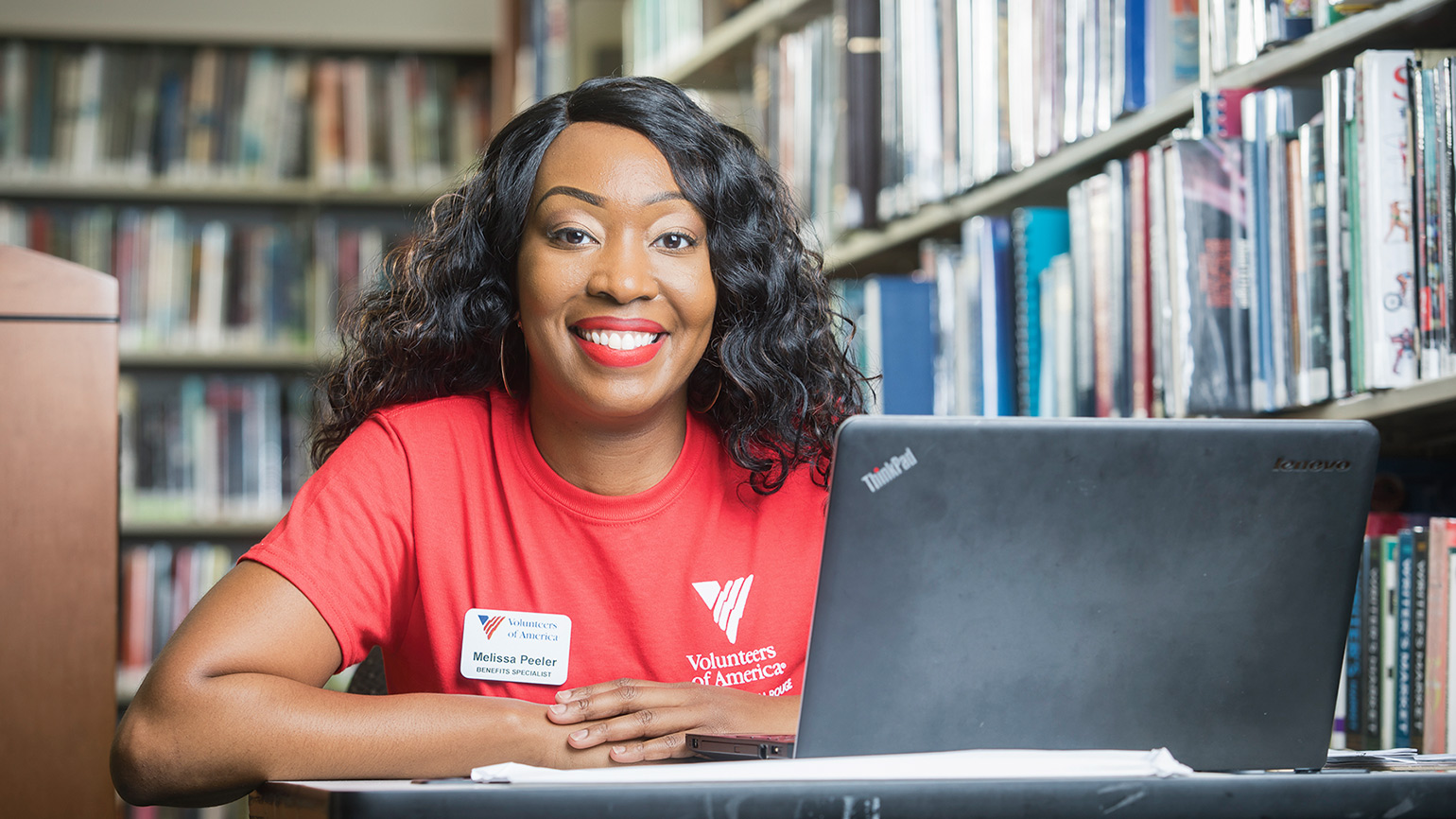
Melissa Peeler, a benefits specialist at VOAGBR, taped her sign—with its red, white and blue Volunteers of America logo—up in the reference section. But other than a disheveled man in the corner, no one made eye contact all evening. She started to wonder if the library was the best place to find the people VOAGBR serves.

Finally, the man came over to Melissa and asked her what she was doing.

“I’m here to talk to folks who need social service help,” she said. “Is there something I can do for you?”

“Do you have housing assistance?” the man asked.

“Definitely,” Melissa said. She explained how VOAGBR helps people find affordable housing. “We know a lot of landlords,” she told him. “But you need to be able to pay the first and last month’s rent and have proof of income.”

The man’s shoulders sagged. “I don’t have any of that,” he said. “I just need a place to sleep.”

Melissa gave him a list of shelters. “VOAGBR runs the Drop-in Center near this shelter,” she said, pointing to an address. “There are showers. And phones and computers you can use. You can even get a photo ID.”

“Really? Never knew that,” the man said. “Thanks! I’m glad you’re here.”

Word got out. People began to take notice of Melissa and come to her with questions that the research librarians weren’t generally equipped to handle. Like how to find a job or get donated school uniforms and supplies. “Thank you!” one woman said. “Before I talked to you, I didn’t know what to do.”

Most people had never heard of VOAGBR. But one day, a man came in and, seeing Melissa’s sign, made a beeline for her. “Hey, I’m with you guys,” the man said, proudly pulling out an ID with the VOAGBR logo he’d gotten at the Drop-in Center. “I don’t know what I would have done without you!”

The pilot program was renewed for an entire year. In its first six months at the library branches, VOAGBR helped 248 people it might not have otherwise reached. Melissa talks about programs like Ask a Lawyer, where an attorney gives free legal advice once a month. Patrons now count on her being there.

There are a lot of books in Baton Rouge’s libraries—full of information, guidance, wisdom and entertainment—but the help that VOAGBR offers there is right out of the Good Book.

For more inspiring stories, subscribe to Guideposts magazine.

What Love Built

When Susan and John Chalkias moved into their house in Cherry Ridge Estates, a subdivision outside Mission, British Columbia, they found many of their neighbors busy getting gardens planted, pictures hung, and boxes unpacked.

“It was easy to get to know people,” Susan remembers. “Everyone was new.” Soon the three Chalkias children were out riding their bikes, and Susan was looking into swimming and piano lessons for her kids.

Then one day in 1995, her neighbor Faith Black came over to share a letter she’d just received from her friend Avis Rideout, a missionary who lived in Thailand. Avis described a visit to an overcrowded Thai orphanage for children born with AIDS.

The place was extremely understaffed and the children in desperate need of care. Avis was particularly taken with a little girl she called Nikki. The infant was so sick doctors said she wouldn’t last six months. “Let me take her home with me,” Avis pleaded, and she eventually adopted the child.

Embraced by Avis’s family, Nikki thrived. “Seeing what’s happened to Nikki, I have made a promise to God and to myself,” Avis wrote in her letter to Faith. “I am going to open an orphanage here for other babies with AIDS.”

“How much would something like that cost?” Susan asked her neighbor.

“Avis says she could start one for $17,000,” Faith replied.

Susan knew next to nothing about AIDS, orphanages or Thailand, but she didn’t hesitate one moment. “Let’s help!” she exclaimed.

People always raise money for basketball teams and school bands, Susan figured. Why couldn’t she and her neighbors build an orphanage in Thailand?

And so they went to work. Their first project was a bottle drive. Susan and Faith went door-to-door in Cherry Ridge Estates with their children, collecting soda bottles and cans. Other families joined the effort and soon the Chalkias garage was filled.

But all the aluminum and plastic didn’t add up to many dollars and cents.

“After we turned everything in, we only netted $70,” Susan recalls.

Next she called the local Save-On and they gave her permission to sell hot dogs in front of the drugstore. That event brought in a bit more money. Then someone suggested baking homemade apple pies and selling them, so one day the neighbors took over the Chalkias kitchen.

Susan had forgotten to mention the pie bake to her husband before he left for his job operating a forklift at the Neptune Foods warehouse in Vancouver.

“When John came home he found huge piles of apple peels in the garbage, flour dusting the kitchen floor and seven women baking,” Susan remembers. “He just sat down and started peeling!”

With a new commuter train station opening in the area, the neighbors saw another fund-raising opportunity. On the weekend that the West Coast Express was launched, they set up a food stand at the station.

“We called it the deal of the day,” says Susan. “For only $4.50, people could buy a hamburger, a slice of pie and a pop.” At day’s end, the neighbors had grossed a total of $2,000 toward their cause. “I thought to myself, ‘We’re over a 10th of the way there!’”

By then the neighbors had named themselves Nikki’s Seed Society and registered as a charitable organization. When a Thai jewelry company heard of what Nikki’s Seed Society was doing, they donated $15,000 worth of jewelry—beautiful, hand-painted pins and enameled bracelets and earrings.

“We mounted them on velvet and carried them in tackle boxes to sell,” Susan says. “We had jewelry parties like Tupperware parties. They were a great success.”

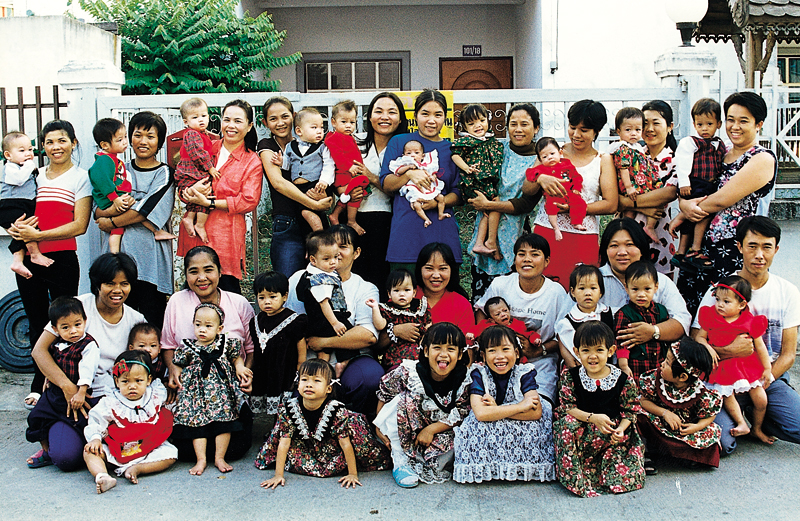
A year from the date they started, the group had raised $24,629—far surpassing their goal. Avis Rideout was able to start her orphanage, Agape Home. Soon she was sending photos of the children to Susan. “I pored over those pictures every day,” Susan says, “praying for the children and wishing I could meet them.”

Finally in 1997 Susan and John went to Thailand with their kids, Brydan, Karalee and P.J., to work at Agape Home. They returned again a year later to act as interim directors for six months. And that’s when they adopted Prem, an 18-month-old boy.

The work of Nikki’s Seed Society continues under Susan’s leadership. The days of bottle drives, hot dog sales and pie bakes are gone. Today Susan sends out hundreds of brochures, seeking people to sponsor the children.

Her can-do spirit infuses the organization, whether it’s supporting Agape Home or starting a new orphanage in Zambia, Africa, where AIDS affects tens of thousands of babies. “I think it, I dream it, I talk it, I work at it,” she says. “It’s a part of me.”

It all started when Susan thought, We raise money for basketball teams and school bands. Why not for a missionary who wants to start an orphanage in Thailand? Why not?

Trouble at the Inn

For years now, whenever Christmas pageants are talked about in a certain little town in the Midwest, someone is sure to mention the name of Wallace Purling.

Wally’s performance in one annual production of the Nativity play has slipped into the realm of legend. But the old-timers who were in the audience that night never tire of recalling exactly what happened.

Wally was nine that year and in the second grade, though he should have been in the fourth. Most people in town knew that he had difficulty keeping up. He was big and awkward, slow in movement and mind.

Still, Wally was well liked by the other children in his class, all of whom were smaller than he, though the boys had trouble hiding their irritation when Wally would ask to play ball with them or any game, for that matter, in which winning was important.

They’d find a way to keep him out, but Wally would hang around anyway—not sulking, just hoping. He was a helpful boy, always willing and smiling, and the protector, paradoxically, of the underdog. If the older boys chased the younger ones away, it would be Wally who’d say, “Can’t they stay? They’re no bother.”

Wally fancied the idea of being a shepherd in the Christmas pageant, but the play’s director, Miss Lumbard, assigned him a more important role. After all, she reasoned, the innkeeper did not have too many lines, and Wally’s size would make his refusal of lodging to Joseph more forceful.

And so it happened that the usual large, partisan audience gathered for the town’s yearly extravaganza of crooks and creches, of beards, crowns, halos and a whole stageful of squeaky voices.

No one on stage or off was more caught up in the magic of the night than Wallace Purling. They said later that he stood in the wings and watched the performance with such fascination that Miss Lumbard had to make sure he didn’t wander onstage before his cue.

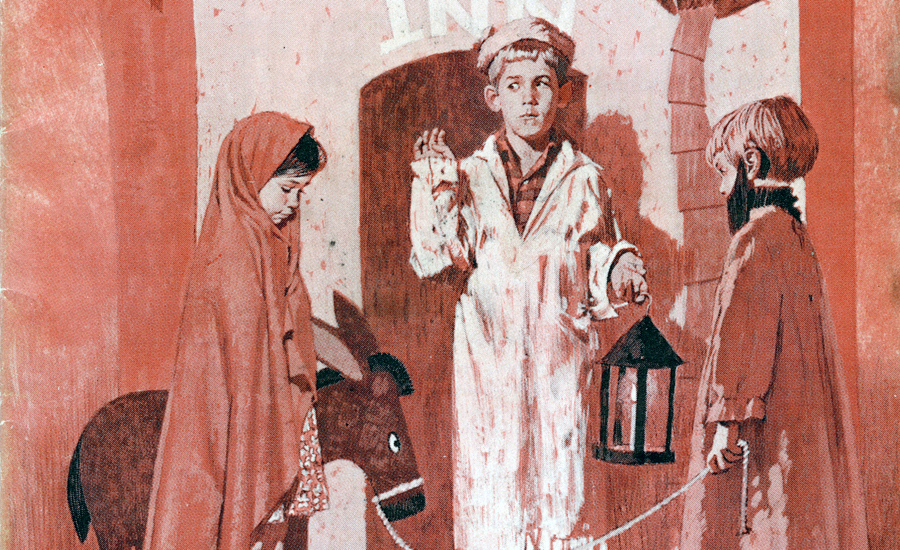
Then the time came when Joseph appeared, slowly, tenderly guiding Mary to the door of the inn. Joseph knocked hard on the wooden door set into the painted backdrop. Wally the innkeeper was there, waiting.

“What do you want?” Wally said, swinging the door open with a brusque gesture.

“We seek lodging.”

“Seek it elsewhere.” Wally spoke vigorously. “The inn is filled.”

“Sir, we have asked everywhere in vain. We have traveled far and are very weary.”

“There is no room in this inn for you.” Wally looked properly stern.

“Please, good innkeeper, this is my wife, Mary. She is heavy with child and needs a place to rest. Surely you must have some small corner for her. She is so tired.”

Now, for the first time, the innkeeper relaxed his stiff stance and looked down at Mary. With that, there was a long pause, long enough to make the audience a bit tense with embarrassment.

“No! Begone!” the prompter whispered.

“No!” Wally repeated automatically. “Begone!”

Joseph sadly placed his arm around Mary and Mary laid her head upon her husband’s shoulder and the two of them started to move away. The innkeeper did not return inside his inn, however. Wally stood there in the doorway, watching the forlorn couple. His mouth was open, his brow creased with concern, his eyes filling unmistakably with tears.

And suddenly this Christmas pageant became different from all others.

“Don’t go, Joseph,” Wally called out. “Bring Mary back.” And Wallace Purling’s face grew into a bright smile. “You can have my room.”

Some people in town thought that the pageant had been ruined. Yet there were others—many, many others—who considered it the most Christmas of all Christmas pageants they had ever seen.

Did you enjoy this story? Subscribe to Guideposts magazine.

This Sex Abuse Survivor Has Dedicated Her Life to Helping Other Victims

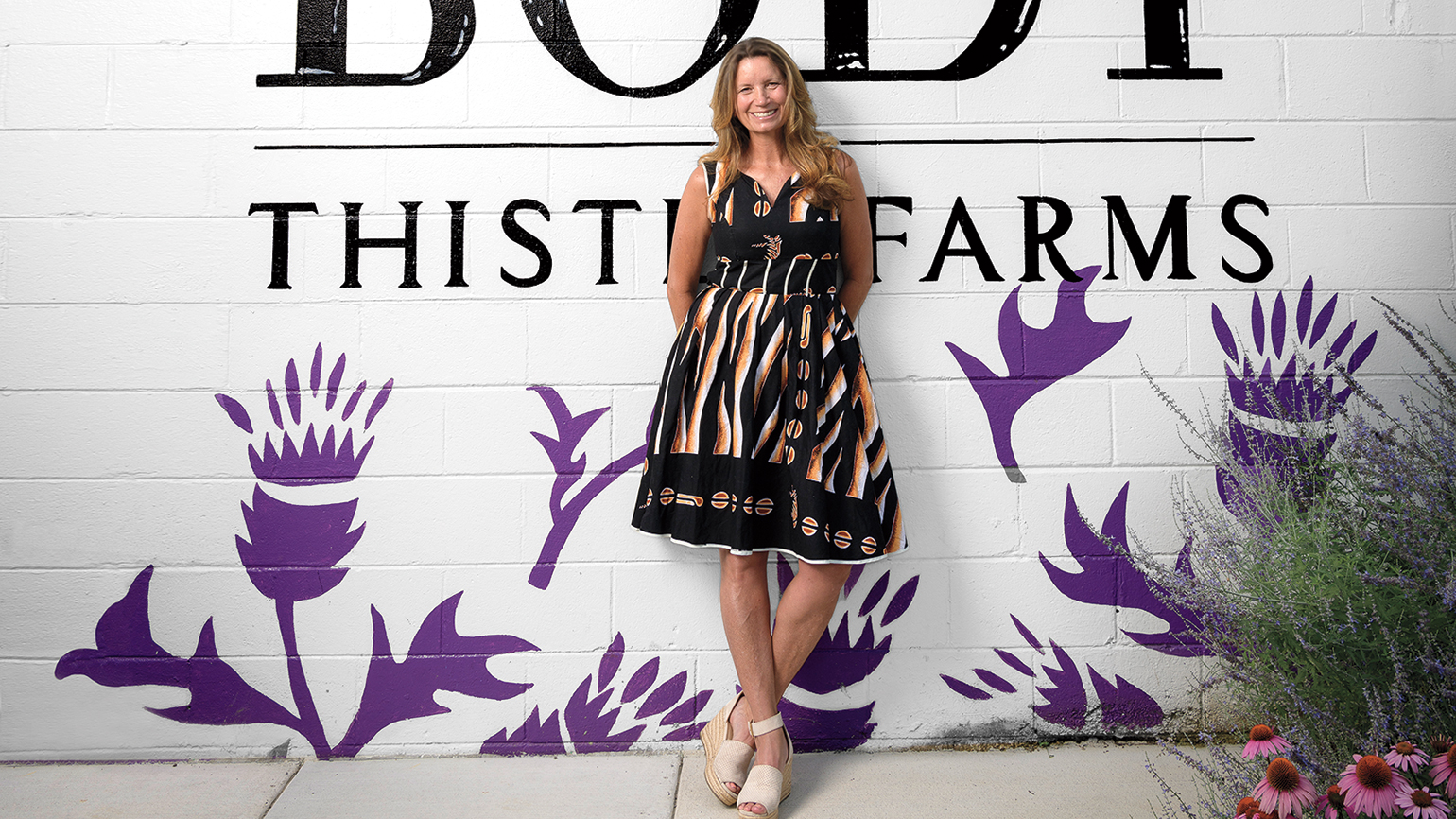
I’m the founder and president of Thistle Farms, a nonprofit organization headquartered in Nashville that helps women heal from sex trafficking and drug and alcohol addiction. Thistle Farms owns five houses in Nashville where women seeking freedom from the sex trade, prison and addiction live rent-free for up to two years with access to free medical care, counseling, education and job training. More than two thirds of residents have remained clean and sober for at least two and a half years after moving in. We have helped open more than 30 similar homes around the country.

Thistle Farms also operates several social justice enterprises that make and sell clothes and all-natural home and body-care products, run a cafe, operate a retail store and manage more than 25 global partners in a shared trade network since our inception 17 years ago. The businesses brought in more than three million dollars last year, and more than 65 percent of the staff are women who have escaped the sex trade and other forms of abuse and punishment.

One of our newest employees said that this was the first time in her life she sat down for dinner with a group of people who talked about their day. For her, going to work, coming home to dinner and getting up in the morning to a daily meditation were brand-new experiences.

I’ve been an ordained priest in the Episcopal Church for 27 years. But I didn’t start the residential community of Thistle Farms for a church. For a long time, I didn’t even know why I felt so compelled to reach out to help struggling women.

I’ve come to learn that healing is never a one-way street. I started Thistle Farms because I needed to. The women who live in the homes and work together consider this organization a refuge. I’ve come to see it’s mine too.

No one knows how many women and children are involved in sex trafficking in the United States. Many sex crimes go unreported. Women and teens are lured into prostitution by pimps and gangs. Most have experienced childhood trauma and abuse, grown up in the violence and vulnerability of poverty and dysfunction and known the injustices inherent in many of our systems. They’re threatened if they try to run away. Many become addicted to drugs and alcohol. They feel shame, get prison records and find themselves trapped, unable to rejoin society.

On the surface, my life has been totally different from the lives of the women I serve. I’ve never lived on the streets. I’ve never sold my body. I’ve never been addicted to drugs or alcohol. I grew up the daughter of an Episcopal priest, went to college, met my husband at divinity school and am raising three happy, healthy children.

My dad worked at a church in New Haven, Connecticut, home to Yale University. My mom stayed home to raise my four siblings and me. When I was five, Dad answered a call to establish a new mission church in Nashville. Though Mom was ambivalent about the move—she’d never lived so far from upstate New York, where she’d been raised—she and Dad took their faith seriously and she never considered standing in the way of the church.

This was in 1968, the year Martin Luther King, Jr., was assassinated in Memphis, a couple hundred miles from Dad’s new church. My parents felt a sense of urgency about their ministry.

Dad never got to bring that ministry to fruition. Less than a year after we arrived in Nashville, Dad was driving home from a parishioner’s house when he was struck and killed by a drunk driver. Mom got the news from another parishioner, who’d seen the accident.

Life turned upside down. The church sold us the rectory, so we wouldn’t have to move. But Mom suddenly had to support five children without her husband’s income. She collected Dad’s Social Security, did childcare for neighborhood kids and eventually got a job at a local social service center, where she later became director.

Our house filled with people. Parishioners. Church officials. Strange kids. Mom did her best not to break down in front of my siblings and me. But she was changed by Dad’s death. We all were. I didn’t understand at first that death meant forever. At last it began to sink in that I no longer had a father. It was for that very reason—my distress and loss of parental supervision—that I was targeted by an older man at the church who’d been friendly with my dad.

He spent lots of time with my family, offering to help. The first time he sexually abused me was in the church fellowship hall during a spaghetti dinner. He was strong and held me down. The abuse lasted for more than two years. I told no one. I was scared and confused, afraid of what might happen if anyone found out. The last time he abused me, I fixed him with a hard stare, and I think that startled him. He never touched me again.

I tried to pretend it never happened. Sometimes I wondered if I’d imagined it. I grew up, went to college and started work at a Christian international aid agency in Washington, D.C. I never warmed to Dad’s Nashville church—part of me blamed it for his death—but I never lost my faith. I wanted to be like my parents, whose faith was oriented toward serving the poor.

It was in D.C. that I first volunteered at a women’s shelter. It needed people to stay the night, and I signed up for a shift. The women’s situations—battered, abused, addicted, selling their bodies—shocked me but filled me with a powerful conviction. I wanted to help these women the way Mom and Dad had helped people—with God’s love.

Without even knowing what would come of it, I applied to divinity school in Nashville. There I met Marcus, an aspiring musician taking divinity classes on the side. On our first date, I asked him to help me move furniture at a women’s transitional home where I worked. He never complained, and we married a year later.

I was ordained and got a job as a university chaplain because it gave me time to do the work I really wanted to do—minister to women in distress.

I still had no idea why I felt compelled to do such work. Then, not long after our second child was born, I started breaking down. I was spending a lot of time at the transitional home and, at the same time, trying to put together a home of my own, one that would give struggling women not only shelter but many of the other things they lacked—love, health, friends, mentors, job training, self-sufficiency and dignity.

Our first child was four years old, close to the age I was when Dad died and my abuse began. I became unbearably anxious. I broke out in hives daily. I misplaced keys, even sermons.

With Marcus’s support, I went to see a therapist. To my own shock, the story of my abuse was one of the first things that poured out. About a year earlier, I’d run into the abuser at a wedding ceremony. He tried to hug me as if nothing had happened.

Through conversations with my therapist, I decided to confront my abuser.

I picked out a day and prepared myself. Marcus and I prayed. It wasn’t my goal to go through the court system. I just wanted the abuser to be held accountable by the communities he worked in. I wrote down a list of therapists and other resources he could turn to for help. He still attended the church my dad had started. Mom still had his number. I called and told his wife I wanted to visit because I had something to tell them. She sounded startled to hear from me. Marcus offered to come, but I told him I needed to do this on my own. What I didn’t know was what I’d do if the abuser denied it.

When I arrived, he and his wife answered the door and invited me in. We sat for a moment in awkward silence.

“I have a story to tell you,” I said. “Your husband abused me when I was a child.” I gave his wife details. In the middle of them, she went to the bathroom to be sick. He rubbed his thigh nervously.

“Who else have you told?” he asked when his wife left the room.

I knew in that instant I hadn’t made up any of it. It was all true. “Anyone I wanted to,” I said. “It’s not my secret.”

His wife came back in, and he admitted his guilt. “I’ve wanted to talk to you about it for a long time, but I didn’t know how.” His wife looked as if she might be sick again.

I handed them the prepared list of resources and said I would pray for them.

“Please don’t talk to me again,” I said. “I need you to leave me alone so I can live the rest of my life.”

The minute I stepped outside, I felt free. Freer than I’d felt for decades. Yes, I had been sexually abused. But it was not my fault, and it did not define me. In a way, my wound was a gift. Now I knew exactly why I felt compelled to reach out to women who had been abused. I could offer them the most valuable thing I had—myself, a child of God broken and redeemed.

Two years later, I opened the first residential community for women survivors, Magdalene House, which later grew into Thistle Farms.

I have so many stories to tell about the women I have met through Thistle Farms. Stories of pain, suffering, healing and triumph. Those stories have made all of us stronger. Together, we’ve built an enterprise so large, we hired a CEO three years ago to run it.

I hope you will visit the Thistle Farms website and get to know some of those stories and try the healing products. Most of all, I hope you will see a bit of your own story in the lives of people who suffer and seek healing. In God, all of our stories are part of one big story. A story about redemption so powerful that no force—not even sexual abuse—can withstand it.

For more inspiring stories, subscribe to Guideposts magazine.

This Domestic Violence Survivor Created ‘Bolt Bag’ to Help Others

Beverly T. Gooden is a nationally recognized social activist and advocate for domestic violence survivors. A survivor herself, Gooden has been a guest on Dr. Phil, CNN, NBC Nightly News and more, educating the masses on domestic violence and how to better support survivors.

But just a few years ago, no one knew Gooden’s survival story. In fact, she only felt empowered to share her story for the first time on Twitter in September 2014. Footage had just been released of then-Baltimore Ravens football star Ray Rice in an elevator, punching his then-fiancée Janay in the face, knocking her unconscious, and dragging her out of the elevator. The response in the media and on Twitter to the footage and to Janay marrying Rice soon after the assault was disheartening for Gooden.

Download our FREE e-book ‘Overcoming Fear and Anxiety’ by Guideposts Founder Norman Vincent Peale

“On Twitter, the conversation was why would [Janay] stay with him,” Gooden tells Guideposts.org. “Almost no one was asking, ‘Why would he hit her?’” The framing of the conversation put the burden on Janay Rice to not be a victim of domestic violence instead of on Ray Rice to not be an abuser. The victim-blaming stirred Gooden to action. “I remembered an article I read years ago that spoke about how 70% of women experience violence once they leave [an abusive relationship]. I searched for that article and tweeted it with the hashtag #WhyIStayed.”

Within hours, #WhyIStayed went viral on Twitter with thousands of abuse survivors sharing their complicated stories about why they didn’t leave abusive relationships. Gooden shared her reasons, as well. From needing their husband’s health insurance to treat a chronic illness to needing their abusive spouse in order to legally remain in the country, the reasons the hashtag participants provided showed the world it’s not so simple just to get up and leave.

“I didn’t have anything of my own,” Gooden says of why she stayed. “When the violence started, it was almost like I couldn’t figure out how to leave.” She says she shared a joint bank account with her husband, had no credit and no transportation of her own and was totally financially dependent on him. After talking to a counselor at a domestic violence shelter on the phone, she created a safety plan, making copies of her driver’s license and bank account information and keeping clothes, deodorant, toothpaste, and other toiletries in a bag she put together by saving a few dollars out of the money her husband would give her for groceries or gas. She stored her purchases over a 2-month period in closets and in a small storage unit she was renting.

Finally, in 2010, she escaped, staying at a domestic violence shelter for a week and relying on the kindness of a landlord who let her pay once she got her first check from a new job two weeks later.

Though she was grateful to escape her situation without further harm, Gooden’s story isn’t every survivor’s story.

“You leave and then what?” she asked the critics of domestic violence survivors. According to the National Coalition Against Domestic Violence, 1 in 3 women and 1 in 7 men are survivors of intimate partner violence, and the majority of survivors are young women ages 18-24. Without resources, family support and protection, leaving an abusive relationship can be very challenging, physically and psychologically.

“The victim shouldn’t have to defend their actions; they’re the victim,” Gooden says. “They had a crime committed against them, not the other way around.” The hashtag she created started a social movement, giving these survivors a feeling of safety in numbers to push back against the narrative that they were in anyway responsible for the abuse they suffered. TIME magazine named #WhyIStayed one of the top 10 Twitter hashtags that started a conversation in 2014 and HLN named it one of 8 hashtags that changed the world.

But Gooden wasn’t done making a difference just yet. In October 2014, her non-profit foundation for survivors, the Ella Mae Foundation, started producing a product called the Bolt Bag. She hopes this bag, full of clothes, toiletries and necessities a survivor would need should they have to leave an abusive situation quickly, can make leaving an abuser a little bit more feasible.

“The hardest part [of leaving] was making this bag,” Gooden says, fearing being caught with an escape bag, having to acknowledge that she was in a situation she needed to escape and acknowledging all the little things like clothes and toiletries that a survivor wouldn’t think to pack when they’re trying to get to safety. “If I could make this bag [for other survivors], you can remove this one worry, one obstacle.”

At first, Gooden was using her own money to the put the bags together, and saving her toiletries from hotel stays. Then, a year later, Investigation Discovery and Glamour magazine honored her as their 2015 Inspire a Difference: Everyday Hero with a $5,000 grant and 500 pre-made Bolt Bags to support her cause. Her bags went viral and Gooden and her mother have now made and shipped out nearly 1,000 bags to survivors across the country.

“I want people to know that…no matter who you are, you can get a Bolt Bag,” Gooden says. “I don’t ask for identifying information. You can give me a fake name and a PO Box, I’ll send it to you, or a friend’s address. You can be a woman, a man, trans, an immigrant–it doesn’t matter. I’ll send you a Bolt Bag, no questions asked.”

This Blind and Deaf Soccer Fan Experiences the World Cup with a Friend’s Help

The 2018 World Cup is currently underway in Russia and while most soccer fans are enjoying the action from home, this pair of Colombia national football team supporters are gaining attention for how they take in the game.

A video of Cesar Daza celebrating Colombia’s victory over Poland with his friend Jose Richard Gallego has gone viral. Gallego lost both his vision and his hearing when he was just nine years old. According to the Daily Mail, he suffers from Usher Syndrome, a genetic condition that affects vision, hearing, and balance. The disease is rare but often leads to total loss of sight and hearing, as it did with Gallego.

Fortunately for the avid soccer fan, he has a friend like Daza. The two men met a few years ago and instantly bonded over their love of the sport. Both avid Colombia supporters, the began attending matches together. Daza taught himself sign language and the two developed a series of hand gestures so that Daza could communicate with Gallego during games.

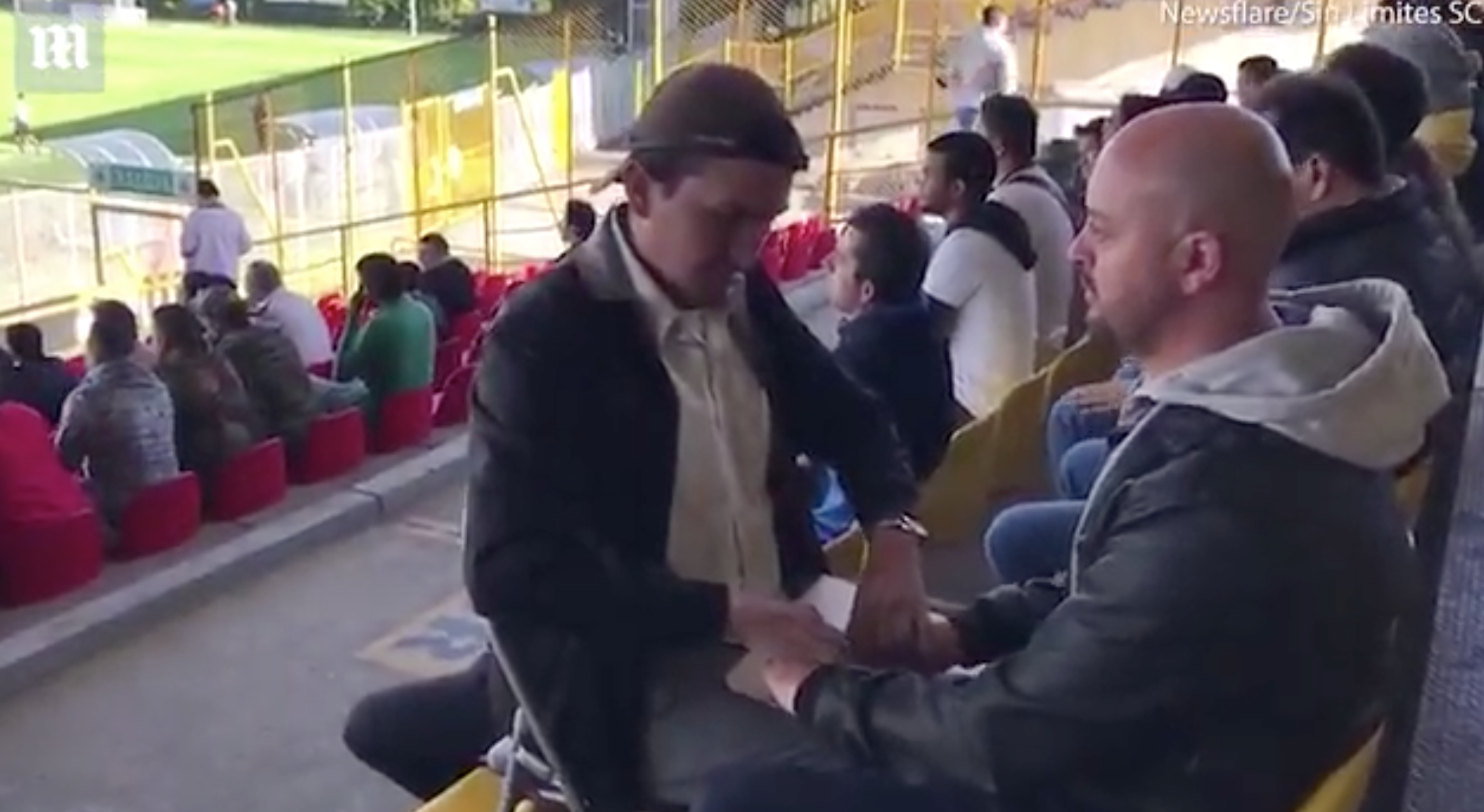
Eventually, Daza created a board that mimics the layout of a soccer field. With signals for things like “offside” calls, fouls, red cards, and penalty kicks, Daza crafted a way for Gallego to follow along with the field of play by moving the man’s hands across the soccer board.

The two gained media attention last year when they attended a match together and Daza used the board to help Gallego watch the game, but a more recent video of the pair rooting for their home team in a group stage match against Poland at the World Cup has officially gone viral.

In the video, Daza can be seen motioning commentary on the game to Gallego and guiding his hands across the soccer board as the action plays out on the field in a crowded bar in Bogota, Colombia. As the team notches their first of what would be three goals during the match, Daza quickly guides Gallego’s hands across the soccer board, stopping when he reaches the opposing team’s net. From there, the celebration begins and though Gallego can’t see or hear the commotion around him, a hug from his friend and the energy from the crowd seem to be enough for him to realize his team is on their way to victory.

Currently, Colombia is still in contention, advancing to the knockout stage of the World Cup and looking to face an untested England side in the next few days. We’re sure Daza and Gallego will be watching together come game time.

They Matched Abandoned Photos with Those Who Posed for Them

I’m an architect. One of the services I perform is helping clients move into new office space. It’s a pretty routine assignment. I’ve gone into all kinds of spaces: shuttered restaurants, creaky old houses, shiny new office buildings.

Last year, a client was moving into a storefront at an outdoor mall. The space had formerly been occupied by a photography studio. Tenants vacating a rental don’t always do the best job cleaning up. I’ve seen some big messes, and usually a cleaning crew deals with it after I’m gone.

This studio looked as if it had been abruptly abandoned. All the photo-processing equipment was still there.

Piled against one wall was a huge stack of portraits wrapped in plastic. I picked up one. It was a beautiful family portrait printed on high-quality canvas. The packet included alternate takes and smaller prints. The entire order probably cost several hundred dollars.

Some of the photos had strips of tape with names, maybe a phone number. Employees must have been in the middle of processing those orders when the studio shut down. I looked around for paperwork, but there was none. What had happened here?

I gazed at the photo. A family, all dressed up, smiling. They’d put on their best clothes, come here to the studio, sat for the photos. A moment in time captured. A moment of life. There must be a hundred of these photos stacked against the walls.

I set the photo down. It was late. I wanted to get home to my wife, Dawn, and our four kids. I was here just to measure the space. The cleaning crew would toss out the photos along with everything else.

I stood there, picturing all those smiling faces crammed into a dumpster. The next moment, I was pulling out my phone and calling Dawn. What I was about to do would change our family’s life and the lives of so many people in those photos.

What I didn’t realize is that God had a lot more change in mind. Way more.

Two days later, after I got permission from the landlord, Dawn and the kids and I drove two minivans to the abandoned studio. We loaded armful after armful of photos into the vans.

“Daddy, there are a lot of photos!” said my 10-year-old son, Ephrem. He and his younger sisters—Amberleigh, Clora and Ivana—helped carry the photos and scampered around the store.

We had to fold down the back seats to fit everything.

“It’s more than I expected,” Dawn said when we got home. “We’ll have to put them in the basement. I wonder why the company just left them there.” “The landlord said the company had gone bankrupt and shut all its stores around the country,” I said.

We hauled the photos into the basement and stacked them against a wall. They looked even more daunting like that. How many had names and numbers? How many didn’t? And why had I decided this was such a great idea?

I looked up the company, a national chain. It had closed abruptly after a bankruptcy proceeding. The CEO vanished. There were news stories about customers around the country losing their portraits, calling phone numbers that no longer worked. How horrible!

I imagined what it would feel like to lose a treasured family portrait like the ones now in my basement. It wasn’t a life-altering problem. But I knew all about the power of small gestures to give someone a welcome shot of hope.

It had been nine years since I’d lost my previous architectural job during the recession. The firm I worked for did multiple rounds of layoffs before going out of business. Ephrem and Amberleigh were babies back then. Dawn and I had just bought our house.

The Bononis had been hard workers and good providers ever since my great-grandparents had immigrated from Italy and opened a grocery store in St. Louis.

My dad still ran that store. Was I going to be the first Bononi to fail his family?

For nearly four years, I scrambled. I took temporary architectural assignments, helped my parents at the store, worked in a warehouse, designed T-shirt logos.

I collected unemployment and did weekend shifts with the National Guard to get health insurance. I never missed a mortgage payment, but we had to go to food pantries. Many nights, I went to bed ashamed and frightened.

It was during one of our food pantry visits that I realized I had been ignoring God ever since the layoff. My wounded pride had stifled my prayers. Was it shameful to go to a food pantry? I thought so.

Yet the pantry was a provision from God. By no means his only provision. Looking back, I could see that every time a temporary assignment ended, I made a connection that led to more work.

Those nudges from God added up. I decided I wanted to be someone who helped make such moments happen.

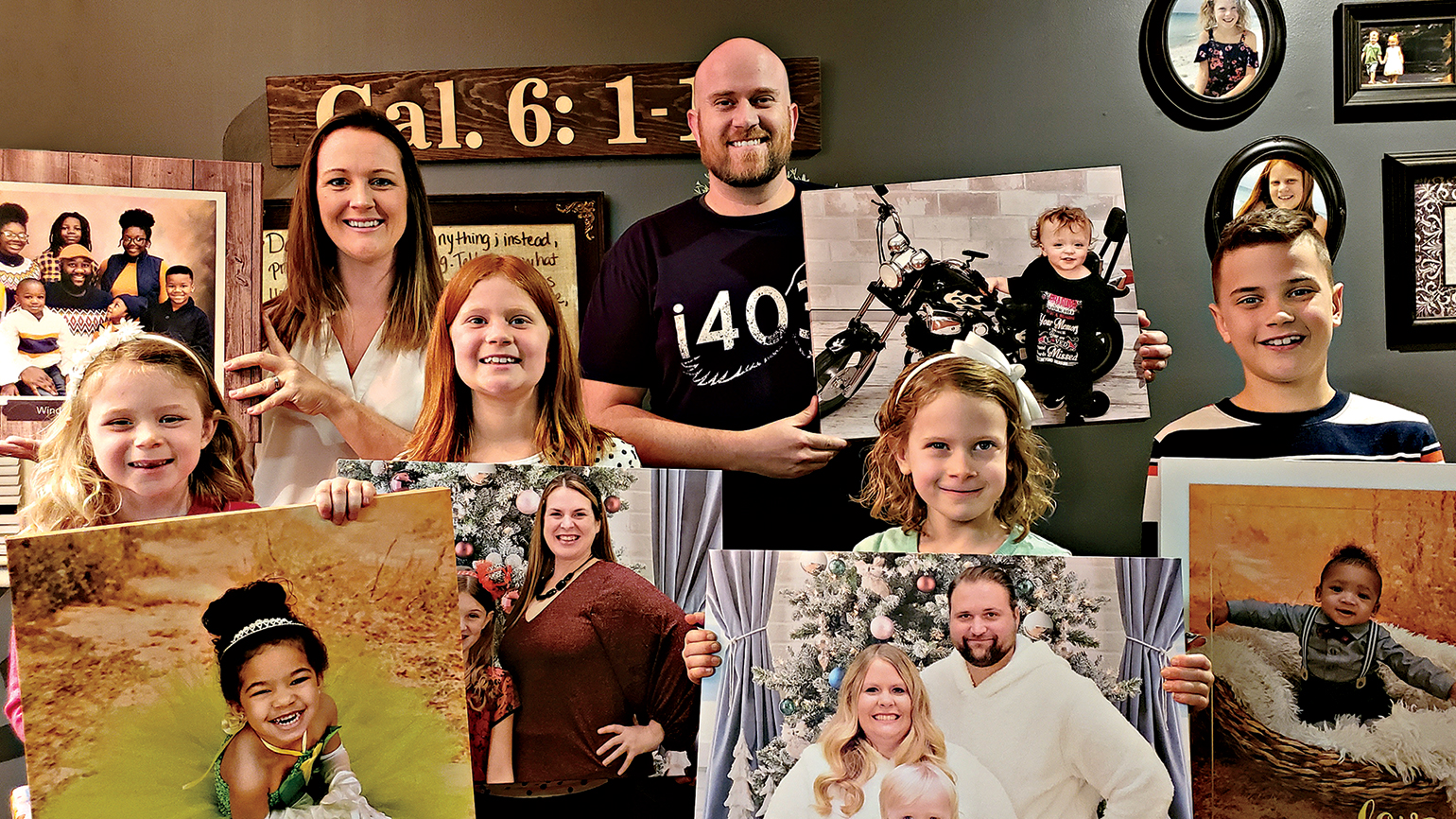
The kids helped me sort and alphabetize the photos. There were 105, plus some printed mugs and albums. We made a spreadsheet of names and whatever contact information we could find.

We sent a group text message explaining who we were and how we had found the photos, inviting people to set up a time to collect them. The kids made sure I added, “This is not a scam!”

People began arriving at the house. The kids would race each other to the door to hand over the portraits. There were smiles, waves, looks of happy puzzlement. But it was only a few people.

I had sent the message through a Google service that disguised my phone number to avoid spreading my personal information. Google thought I was sending spam and shut down the text message before it reached everyone. Other people probably did think it was a scam.

“Try social media,” said the kids.

I posted a message to a community board on Facebook with my name, email address and phone number. No way around giving out my personal information.

The phone rang. And rang. E-mails poured in. Something about seeing my name and my picture on Facebook must have convinced people this was for real. The post was shared 209 times.

Local TV news stations sent camera crews. The story aired that night, and even more people called and e-mailed.

We scheduled an open house. Clora and Ivana were our welcome crew, bouncing up and down with excited “hellos!” to everyone. Ephrem and Amberleigh were couriers, running down to the basement to retrieve photos.

People shared their stories. One woman told us her photos contained the first portrait of her family with a newly adopted child. “We were devastated when the store closed. We’d given up. I can’t thank you enough.”

A woman named Laurice Martin broke down in tears when she saw the portrait of her big extended family. Nearly two dozen relatives had gathered for the picture, a tribute to one of Laurice’s daughters, who was about to start chemotherapy.

“Do you know how hard it was to get us all together and how much it meant to my daughter to see everyone all dressed up? Oh, you have blessed my family today!”

Somehow ABC World News Tonight heard about our project, then did a follow-up segment when they heard about Laurice. After that, I couldn’t keep up with the flood of e-mails and letters.

People from all over the nation wrote to thank me for what I’d done. “Just hearing about this brightened my whole day.” “I’m struggling right now, but hearing about this confirmed what I know from the Bible. God is good. Thank you.”

Dawn and the kids and I were overwhelmed. Our efforts were so small and ordinary, but they had become a symbol of hope for people we would never meet.

The coronavirus pandemic temporarily halted our project. When lockdown eased, we resumed reuniting people with photos, doing socially distanced handoffs. We were able to return more than 60 of the 105 photos.

I’m not discouraged. Recently, I made what I called a “coincidence chart,” a diagram of all the chance encounters, friendships, mentors and unexpected connections that have helped me in my life, even when I was laid off.

I should have called it the “God at work” chart. God gives a small gesture the power to change someone’s life.

For more inspiring stories, subscribe to Guideposts magazine.

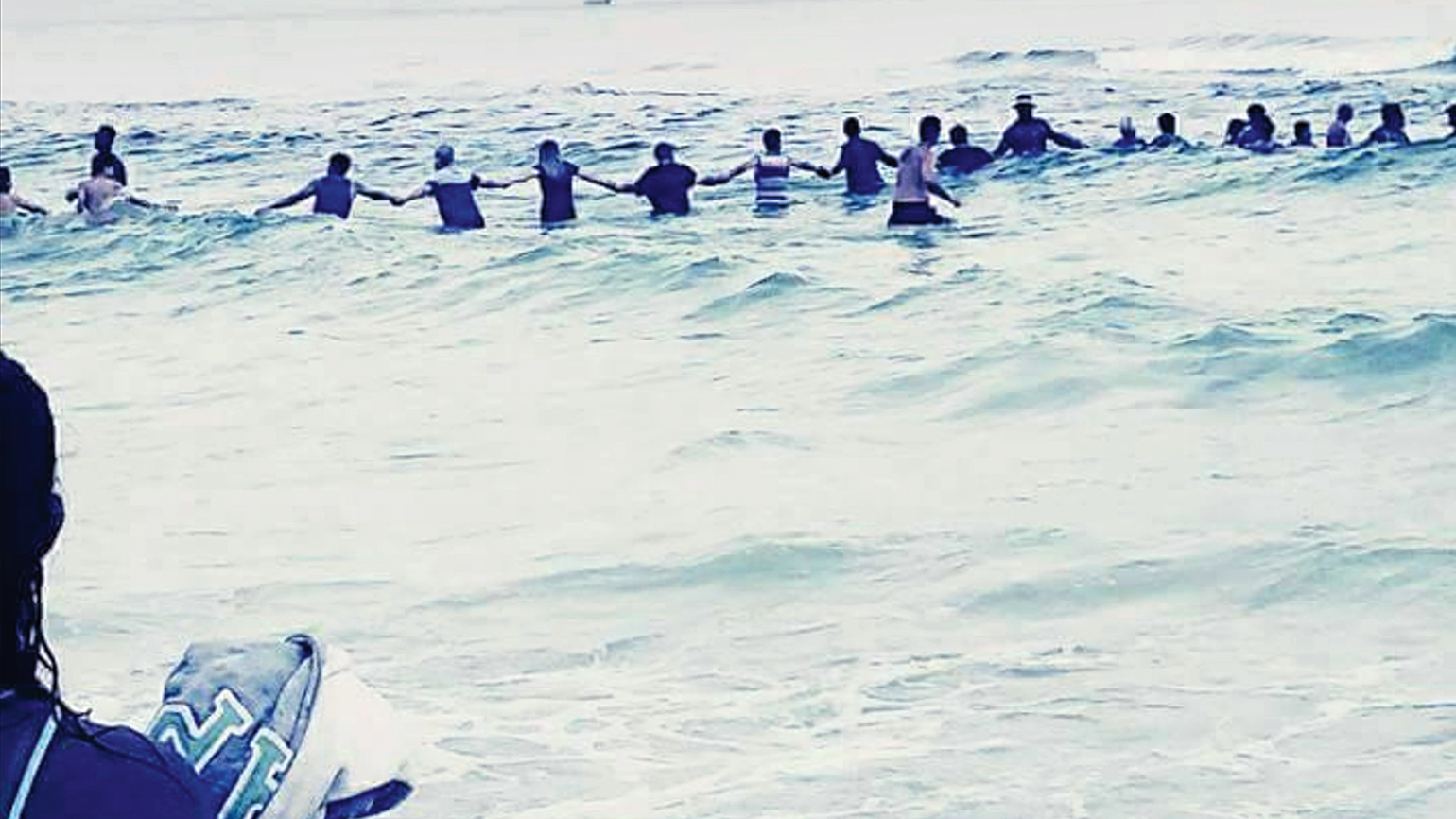
They Formed a Human Chain and Saved Nine People from Drowning

My husband sprang the idea on me at the last minute that Saturday evening, July 8, 2017. I didn’t even have a chance to go into mission mode. That’s our name for how I like to tackle things, from big projects like moving to everyday stuff like grocery shopping. I go into mission mode—I assess the situation, figure out what needs to be done, then do it.

“Let’s have dinner on the beach,” Derek said.

He must have seen me hesitate, because he added, “A farewell picnic.”

It was his family’s last day with us before they went home to Alabama—his mom and dad, three teenage nieces and a teenage boyfriend. Derek and I don’t have kids, and we loved playing parents for several weeks every summer. I worked at a hotel and cleaned houses on the side while taking business management classes online at the University of Alabama. I hoped to run a business someday centered around helping animals. Derek managed a team that set up voting stations for federal, state and local elections. A busy life. But making memories with the kids was our priority. We all love the water, and we’d taken them to water parks, the beach and kayaking.

“A picnic on the beach sounds perfect,” I said. “We can watch the sunset.”

We packed up the food, loaded everyone into cars and drove to Miller County Pier in Panama City Beach. The coastline here is known for its two sandbars—the first about 20 feet from shore, the second 30 feet out. The trough between the sandbars makes a nice lane to swim in on calm days, but when it’s choppy, look out. The waves can shift the sandbars and create rip currents.

It was after 6 p.m. The lifeguards had left for the day. A yellow flag by the lifeguard tower meant moderate waves and currents. Pretty typical for the Gulf of Mexico. I wasn’t too concerned. I’d swum in pools and lakes and rivers since I was a toddler. I was a strong swimmer. I could keep the kids safe. We went out to the first sandbar, where the water was knee-deep, so they could look for sand dollars.

I looked up from the hunt and noticed a bunch of people gathered on the beach. They were all pointing toward the water. “Let’s get out,” I said. “Must be a shark.”

“I’ll see what’s going on,” Derek said. He jogged over to the crowd as the kids and I made our way to shore.

Derek waved me over. “There are people drowning!”

Not a shark. A riptide!

There were maybe 30 people or so in the water. I couldn’t tell which ones were in trouble.

A police officer at the water’s edge was telling everyone it was too dangerous to go after those swimmers. Emergency lifeguards had been called.

I asked two girls to show me who was drowning. “Over there,” one said, pointing past the sandbars. If you’re caught in a riptide, you’re supposed to swim parallel to the shore. These folks weren’t moving. They were trapped.

A man waded out to mid-waist. “It’s too rough,” he called back. “The tide’s trying to suck me in. I can’t reach them.”

We couldn’t just let these people drown! I knew what suddenly losing someone you love could do to a person. I’d lost my first husband five years earlier. Matt had been in great shape, never sick, until a bad case of what we were told was bronchitis. It turned out to be sepsis. Matt just stopped breathing. I looked down at his lifeless body in the hospital bed in a state of shock.

Coming home to an empty house afterward nearly destroyed me. I was only 23. I’d expected to grow old with Matt.

What sustained me was our community. People reached out to me every single day. One of Matt’s coworkers phoned me every morning to make sure I got out of bed. His two best friends took turns calling after work to ask about my day. My girlfriends came over to clean my house without being asked. The first Christmas without Matt, our friend Derek—now my husband—came over and put up a beautiful tree. I felt so loved. God put these people in my path. Their human chain saved me from drowning in my grief.

A human chain, I thought. That’s what we need.

It was as if Derek read my mind. “Don’t just stand there!” he shouted to the crowd. “Let’s make a chain!”

People plunged into the water and linked arms. Five people. Ten. Derek directed them. He was used to managing teams. Our nieces and the boyfriend jumped in to help. We put them in the shallows, with taller adults farther out. Some folks didn’t even know how to swim. But they put themselves in the line, relying on the ones beside them to keep them afloat. All these people who didn’t know each other were working together.

The chain grew to 40 people, 50, 60, more. But still not enough to reach the drowning swimmers. I grabbed two boogie boards off the beach and swam to the last man in line. He was in water up to his neck.

“Can you bring those folks to me?” he asked. “Are you a good swimmer?” I could see them now, 20 feet away. Two little boys. Their mom, dad, grandmother. A young man. A young woman. A couple. Nine people total.

“I’m really good,” I said. “We’ll get them out.” I went into mission mode. I kicked hard, cutting through the churning water. The mom was on her back, trying desperately to hold up her sons. “Save my boys!” she gasped. The boys were crying. I gave them the boogie boards and pushed them to the end of the human chain. They got passed along to shore superfast.

I took one of the boards and went for their mom next. “I’m so tired,” she said.

“You can do it,” I said to her. “Just keep kicking.”

The last man in line grabbed her and shot her down the chain to safety.

I got the boogie board back, swam to the grandmother. She was in bad shape. The young man, the first woman’s nephew, was holding her head above water. I tried to help her onto the boogie board. Once, twice. Six times. She kept falling off. Each time, the nephew dove down and brought her back up, but he was weakening. The grandmother’s eyes rolled back in her head.

I was not about to let this lady die!

A surfer had paddled out, and the couple were draped on his board. “Can we put this woman on there?” I asked. The couple slid off the board and held on to the sides. But we couldn’t get the grandmother up there. That’s when Derek swam up beside me. He threw the grandmother onto the surfboard. The nephew curled his arm around her to keep her there. Then we waited for a wave to push the board to the end of the chain.

I swam back out for the last two people: the boys’ father and the young woman. She’d floated out of the riptide. Two emergency lifeguards had arrived. They reached her and used the human chain to send her to shore.

I headed for the father. He was a big man, twice my size. Too big to tow.

“I can touch the ground now,” he said. He walked slowly to shore.

I went back to Derek and the kids. The human chain unraveled. An ambulance arrived. EMTs took the grandmother, who’d had a heart attack, and the young woman, who’d taken in too much water, to the hospital. But both would be all right.

Derek’s last-minute picnic didn’t give me time to go into mission mode. That’s because God had a bigger mission in mind for everyone on the beach that day. Together we saved nine people from drowning. Just as it had for me six years earlier, a human chain made all the difference.

For more inspiring stories, subscribe to Guideposts magazine.