


Embrace God's truth with our new book, The Lies that Bind

Guideposts Classics: Neil Armstrong’s Mother on Her Son’s Love of Flying

Most people think Neil Armstrong took the most important step in his life when he set foot on the moon. But as his mother, I remember an even greater step taken in our old home on Pearl Street in Wapakoneta, Ohio, on another July day—23 years earlier.

The story begins when Neil was two and his father and I lived in Cleveland, not far from the airport. Like many families during the depression days of the early 30s, one of our inexpensive Sunday-afternoon pastimes was airplane watching. Neil stood between us, his little face pressed so intently against the fence that it often left red marks. We were always ready to leave long before he was, and his plea was always the same: “Can’t we see just one more airplane?”

I was often uneasy about Neil’s obvious fascination with planes. And I had to admit to myself that this child, our firstborn, was very special to me. After Stephen and I married, I was haunted by the fear that maybe I couldn’t conceive. I had been an only child and often thought, What if I can’t have even one baby?

Then finally the day came when our doctor assured me I was pregnant. The minute I got home I went down on my knees and thanked God for His blessing to us and, in the fullness of my heart, I dedicated this child-to-be to Him. In the months that followed, I prayed steadily that this child would be given a thirst for knowledge and the capacity for learning which someday would accomplish noble deeds—hopefully to serve the work of the Lord.

One Sunday morning, when Neil was five or six, he and my husband left for Sunday school. When they returned, both had peculiar expressions on their faces. Stephen was a bit white-faced, but Neil was beaming from ear to ear.

“What is wrong with you two?” I asked. There was utter silence.

Suddenly a thought came to me. “Did you go up in that airplane I read about in the paper!”

Now they looked relieved. Yes, that is exactly what they had done. A pilot was barnstorming in town, and Stephen said rates were cheaper in the morning. He had not really enjoyed the flight, but little Neil had loved every minute of it.

One morning Neil and I were walking down the cluttered aisles of a dime store looking for cereal bowls. My husband and I now had a wonderful family of three active children who consumed vast quantities of cereal. Somehow the bowls were always getting chipped or broken. I was selecting five shiny new ones when I felt a tug at my arm. “Mom, will you buy this for me?” Neil held up a gaily colored box.

“What is it?” I asked cautiously.

“It’s a model-airplane kit.” The eagerness in his voice betrayed his excitement. “Mom, this way I could learn how to make airplanes. It’s twenty cents.”

Quickly I thought how 20 cents would buy two cereal bowls, but how could I resist the urgency and enthusiasm in my son’s voice?

“Honey,” I said gently, “could you find a kit for ten cents?”

“Sure, Mom!” His face radiant, he raced back to the toy counter.

Read More: When Buzz Aldrin Took Communion on the Moon

Although Neil was then only eight years old, that was the beginning of two important occupations in his life. The first was his meticulous assembly line for many model airplanes. We put a table in one corner of the living room, and it was never moved—even when company came.

The second occupation made the first one possible. Beginning with his first model plane, Neil was never without a job, no matter how small. First he cut grass in a cemetery for 10 cents an hour. Later he cleaned out the bread mixer at Neumeister’s Bakery every night. After we moved to Wapakoneta, Neil delivered orders for the neighborhood grocery, swept out the hardware store and opened cartons at Rhine and Brading’s Pharmacy.

When Neil wasn’t working or studying, he rode his bicycle three miles north on a gravel road to the Wapak Flying Service Airport. Today this field isn’t used, but in 1944 it bustled with activity. A young instructor, Charles Finkenbine, kept three light airplanes busy as trainers. Budding pilots came from surrounding counties to learn to fly, and Neil at 14 was a familiar figure sitting on the sidelines, his eyes glued to every takeoff and landing. One afternoon I was making grape jelly when the screen door banged as he rushed into the kitchen.

“Mom,” he shouted, “Mr. Finkenbine let me touch one of the airplanes!”

“That’s fine, son,” I said.

“He says from now on I can be a grease monkey and one of these days he’ll teach me to fly!”

“Are you sure you’re old enough, Neil?” I tried to hide the anxiety in my voice.

He flashed his wide, confident grin. “Don’t worry. I’ll be careful.”

The screen door banged again, and he was gone. I’m afraid his assurance did little to comfort me. By now I was beginning to wonder how the Lord could be served by a youngster so completely captivated by airplanes.

From then on every penny Neil earned went for flying lessons. At 40 cents an hour at the pharmacy it took him between 22 and 23 hours of work to pay for one nine-dollar lesson. But both Dick Brading and Charles Finkenbine were generous men: The first often let Neil off early to go to the airport, the latter managed free flying time for our son in exchange for odd jobs around the hangar. Neil’s goal was to get his flying license as soon as he reached his 16th birthday in August.

In July our two boys, Neil and Dean, with their father as scoutmaster, attended Boy Scout camp in Defiance, Ohio. The evening they were due back I planned a special homecoming supper. They thought they’d be home at five o’clock, so I peeled potatoes and put them on to boil at 4:30, then started to set the table.

At 5:15 I picked up my darning basket and started to mend some of Dean’s socks. An hour dragged by. I finished the socks and walked to the window. They were more than an hour overdue, and I knew something was wrong.

Then looking through the grape arbor, I saw our car drive into the garage. My husband appeared in the doorway, his face pale and drawn. Fear clutched my throat.

“What’s wrong, Stephen? Has something happened to the boys?”

“No, they’re all right. Dean is here with me, and Neil will be along soon. But there has been an accident.”

“What do you mean?”

“Viola, come into the living room, and I’ll tell you all about it.” He put his arm around me, and together we walked to the sofa.

“We were on our way home this afternoon,” he continued, “when we noticed an airplane flying parallel to us. Neil recognized it immediately as one of the trainers from the Wapak Flying Service. Some student was practicing takeoffs and landings in a field near the road. Then he must have dipped too low over the telephone wires, because suddenly the airplane was in trouble.”

“Oh no!” I whispered.

“It nosedived into the field, and at the same time Neil yelled, ‘Stop the car!’ and before I knew it, he had climbed over the fence and was running toward the plane. Then we all got out and ran over to help too. Neil was lifting a young fellow out of the cockpit, and just as we got there he died in Neil’s arms.”

“Oh Stephen, how awful! That poor boy and his family.” Then a terrifying new thought seared my brain. “It might have been Neil.”

“Yes, Viola, it could have been.” My husband’s voice roughened with emotion. “Instead it was a young man from Lima whom Neil knew. Neil is staying with him until the ambulance comes.”

A car door slammed, and I heard slow footsteps coming up the front-porch steps. Then suddenly Neil and I were in each other’s arms, tears streaming down our faces.

“He was my friend, Mom. And he was only twenty!” I could hardly bear the anguish in his voice.

“I know, honey.” I released him, with a mother’s sudden awareness that her son was no longer a boy. I forced my voice to sound cheerful. “Do you want some supper?”

“No, thanks. I’m going up to my room.” He stopped on the landing and tried to smile. “Don’t worry, Mom. I’ll be all right.”

“I know you will, Neil.” I watched him walk up the stairs and quietly close the door as dry sobs tore through me.

Stephen and I both thought it best to let him alone for a while. But we could not help wondering if Neil would want to keep on flying. Both of us agreed he must fight this battle himself.

The next two days were the hardest of my life. As all mothers know, whatever hurts your children hurts you twice as much. And yet I knew he had to make this decision himself. Had our closeness with the Creator and the nightly prayers through the years prepared him to find the help he needed so desperately now? At this stage, it was out of my hands. All I could do was wait.

I tried to carry on a normal family life, but my heart and mind were always in that back bedroom with the iron bed, yellow wallpaper, the single overhead light fixture and the bureau covered with model airplanes. What was he thinking? What would he decide?

Finally, near dusk on the second day, I couldn’t stand the silence and separation any longer. I baked oatmeal and raisin cookies and took a plate of them and a glass of cold milk upstairs.

“Neil, may I come in, please? Here are some cookies still warm from the oven.”

He opened the door, and I walked into the stuffy little room and put the cookies on the bureau. What I saw made my heart leap. Next to a model airplane was an old Sunday-school notebook with a picture of Jesus on the cover. It was now turned to the page where years before Neil had written in his large childish hand, “The Character of Jesus,” and had listed ten qualities of His. Among those that caught my eye were: He was sinless, He was humble, He championed the poor, He was unselfish. But the one which struck me the most was number eight—He was close to God.

Suddenly I felt like singing hosanna. “Honey, what have you decided about flying?” I asked him.

Neil’s eyes held mine in a steady gaze, then he said firmly, “Mom, I hope you and Dad will understand, but with God’s help, I must go on flying.”

For a minute I was jolted as I thought of that other mother only a few miles away in Lima, brokenhearted and perhaps standing in her son’s empty room at this very minute. I asked God for strength and the right words, and He gave them to me.

“All right, son. Dad and I will go along with your decision.” My heart was pounding. “And, Neil,” I said, “when you get your license in a few weeks, may I be your first passenger?”

Read More: When Buzz Aldrin Took Communion on the Moon

For more inspiring stories, subscribe to Guideposts magazine.

God’s Words Are Just for You

Greeting cards are what I call “universally personal.” They fit everyone in the universe, but when given from one person to another, they become a personal message.

I felt impressed to post a message on my Facebook timeline recently, “I don’t know who this is meant for this morning, but I just felt like I was supposed to post it. God is going to be ‘enough’ for whatever you’re facing today. He will be on time, and His resources are limitless. You can trust the God with a perfect track record. After all, He loved YOU so much that He gave His life for you!”

Comments began popping up with friends saying, “This was for me.” Or “I needed this.” Or “I can use that today.” I know many of the circumstances behind their replies. Some of these folks just lost a loved one. Others were facing scary medical times or had a spouse in the hospital. Some had lost jobs. It brought tears to my eyes as I was reminded once again how God’s Word is universally personal—and how it’s always on time when we need it.

The words tucked inside the covers of our Bibles are meant for all of us, but oh how precious it is when God shines a spotlight on some of them and whispers, “This was for you today.”

A greeting card from the One who loves us, just when we need it.

So since He says it best, I thought I’d share some of those universally personal messages from Him with you today:

In Psalm 56:3, it says, “What time I am afraid, I will trust in thee.”

Isaiah 41:10 shares, “Fear not, for I am with you; Be not dismayed, for I am your God. I will strengthen you, Yes, I will help you, I will uphold you with My righteous right hand.’”

Matthew 6:31-32 says, “Therefore do not be anxious, saying, ‘What shall we eat?’ or ‘What shall we drink?’ or ‘What shall we wear?’ For … your heavenly Father knows that you need them all.”

Jeremiah 29:11 shares, “For I know the plans I have for you, declares the Lord, plans for welfare and not for evil, to give you a future and a hope.”

Friends, I don’t know what you’re facing today, but I can promise you that He will be “enough” and that He has a personal message hidden in His Word that’s just for you.

God Opened Her Eyes to the Blessings of Living in a Texas Oil Town

“I’ve always heard that people cry when they move to Midland and cry when they move away,” my sister-in-law Eileen said.

She was trying to make me feel better. It didn’t work.

I was crying, all right. My husband, Jacob; our infant daughter, Cora; and I were about to move to Midland—the hot, dusty hub of Texas’s sprawling oil and natural gas industries.

Jacob works in industrial automation. He had interviewed for jobs in Colorado, Oregon—and, much to my dismay, with an engineering firm in the West Texas Permian Basin.

He got the Texas job.

I’d grown up in the Texas Panhandle. Even as a child, I yearned to break free from that flat, featureless landscape. In my bedtime prayers, I thanked God for the few trees near our house. I dreamed of moving to “God’s country,” as Papa, my paternal grandfather, called his home state of Washington.

Midland was not God’s country.

It was a skyline of pumpjacks and drilling rigs. Ovenlike summer heat and spring dust storms. The opposite of the cool, green, cosmopolitan place I had always envisioned for myself.

Most concerning, Midland was a five-hour drive from my parents’ house, which was five hours too close.

After a childhood tarnished by alcoholism and untreated mental illness, I remained wary of my dad’s potential for erratic behavior. Picturing him showing up unannounced on our porch reinforced my desire to be as far away as possible.

I did not want to raise my family in West Texas. I thought I’d already escaped it! Jacob and I fell in love in our small Texas hometown, married after college and worked for a few years in an orphanage in China before returning to the United States to raise a family. I wanted my children to grow up someplace beautiful. I wanted them to be exposed to the world, to different cultures. I couldn’t see how Midland checked any of these boxes.

Driving into Midland did nothing to lessen my resentment toward God. I found the landscape of the Permian Basin to be even uglier than my childhood home. At least the Panhandle has prairie grass.

Clouds of gravelly sand whipped up by the wind buffeted our car. The only living thing seemed to be spiny mesquite shrubs lining the road. Pumpjacks bobbed up and down, pulling oil from the earth. Everywhere I looked, I saw dirt and shades of brown.

We rented an apartment, and I did my best to settle in. At least being a new mom in a new town with a husband working a busy new job left me little time to ponder my misfortune.

Slowly, I made friends. A childhood friend of Jacob’s named Summer lived in Midland, and she invited me to a Bible study.

“We felt the same way when we moved here,” the women in the group said when I voiced some of my complaints. Summer jokingly quoted Psalm 22: “God, God…my God! Why did you dump me miles from nowhere?”

Everyone laughed, giving the impression they all actually enjoyed living here now. I found that hard to believe. Still, I was grateful for their advice on local pediatricians and how they got their babies through teething.

A woman I met at a farmers market invited Jacob and me to her Presbyterian church. It didn’t take long for me to form close relationships with some of the women there. I came to think of them as my “Midland Mamas,” and they helped fill the parental void in my life by offering mothering advice, attending Cora’s preschool performances and looking after her when I needed a break.

Our apartment neighbors, with whom we traded date-night babysitting, were from Russia, my first sign that Midland was more diverse than I had assumed.

I learned that multinational oil and gas companies bring employees to the Permian Basin from all over the world. Midland is home to sizable communities from Asia and the Middle East, including Chin refugees from Myanmar. And, of course, as is typical for Texas, there is a large and well-established Latino community.

I got to know some of the women from Myanmar. My brother and his family moved to town, and now I had relatives here too.

When Cora was almost three, Jacob and I decided to adopt a 17-month-old girl from China named Alea. Someone from church heard about our plans and placed a folded piece of paper in my hand, saying, “We’re excited for you and want to help!”

It was a check for $10,000, more than a third of what we needed to pay for the adoption. Months later, I was at a playground, doing my best to corral Cora while tending to baby Alea and feeling overwhelmed by life. A woman in a headscarf approached, eager to talk.

I was distracted by my children, but the woman persisted. When we finally introduced ourselves, I learned that Heba was from Egypt. She had two daughters around my girls’ ages and lived in Midland because of her husband’s job in the oil and gas industry.

Heba invited me over to her house for tea. I accepted, intrigued partly because I had never had a Muslim friend before.

“Just out of curiosity, why did you make such an effort to talk to me?” I asked her. “I was so busy with my girls, I think I was rude.”

“I knew that if you had adopted a child from another country, you must be kindhearted and open-minded,” Heba said. “I’d been praying for a new friend, and God brought you to me.”

Heba and I had a lot in common. Not just kids but also an interest in other cultures and misgivings about moving to Midland.

“We’re not the only ones here who need a friend,” Heba said. “Other women I know feel lonely too.”

We decided to do something about it. We both invited friends, a mixture of international women and native Texans who loved other cultures, and soon were having dinner parties featuring Midland’s global cuisines. Eventually, we formed a women’s group that grew into a Facebook community of more than 400. We meet up monthly and share recipes, local recommendations, stories from our childhoods and parenting tips. At one gathering, we had people from 19 different countries.

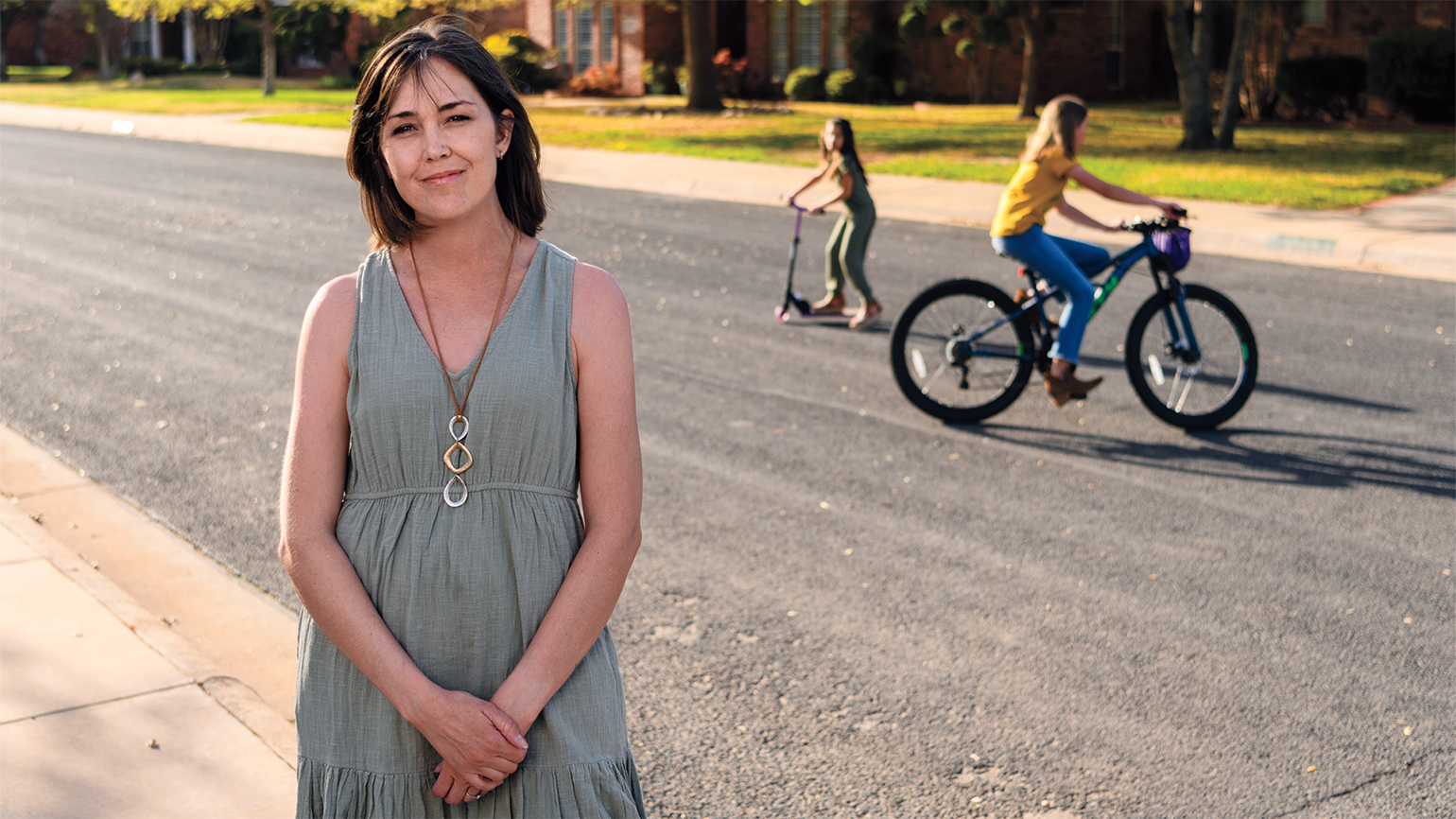
A year after arriving in Midland, Jacob and I bought a small house on a block that was full of families with young kids. I saw the house as a temporary stop on our way to someplace better, but it didn’t take long for our next-door neighbors to become some of our closest friends. In the fall of 2019, we moved to a different neighborhood, where yet again the kids made friends and soon were playing outside every day, riding bikes in the street and running in and out of neighbors’ houses.

I grew to appreciate our simple, ordinary life. Jacob’s commute took 10 minutes. He was home for dinner every evening, and we had weekends free for barbecues or afternoons at the community pool. Once, the neighborhood kids staged an outdoor production of the movie Frozen 2. Some nights, when the sky was a particular iridescent hue of pink, I made my whole family run to the end of the cul-de-sac so we could catch a glimpse of an extraordinary West Texas sunset.

When the Covid pandemic arrived in the spring of 2020, we hoped that our strong community spirit would help see us through. We stayed home, sewed face masks, shared eggs and toilet paper with our neighbors and chalked the sidewalk with declarations of solidarity.

It wasn’t until April that the true danger to Midland became apparent.

The world’s economy stalled, and the price of oil plummeted. Everything in Midland revolves around oil and natural gas. When oil doesn’t sell, employees get laid off, local businesses falter, “for sale” signs start to sprout up and lines lengthen at food banks.

Jacob’s company was already struggling before the pandemic began. Layoffs accelerated, and it seemed as if it would only be a matter of time before he lost his job.

“We might have to move,” Jacob said. My husband is thoughtful and pragmatic. He prioritizes stability for our family. I knew what he was thinking: It might be better to get out before things got even worse.

There was just one problem.

I didn’t want to leave.

“We can make a new home in a new place,” Jacob said, maybe not grasping the irony of my feelings.

“I don’t want a new life,” I said. And then, words I never thought I’d hear myself say: “I want the life we have right here in Midland.”

The girls were riding bikes in the street with their friends. Laughter drifted in through the bedroom window.

I thought of the day we’d arrived here. How little Cora had been then. How much I’d hated this new place.

The girls were growing up now. They had learned to walk, read, swim and ride bikes. We all had grown up. I had learned how to be a mom. Our family had learned how to belong to a community.

Everything I had told God that I wanted—love, stability, friendship, exposure to the world—could be found right here. Midland was a divine gift, and I had been too blinded by my own attitude to see it.

“God, please help us stay,” I whispered. Just as my sister-in-law Eileen had predicted, tears came to my eyes. I thanked God for everything and asked him to forgive my shortsightedness. God had even kept us sheltered from my parents, who never did turn up unannounced.

“Everything you feared, everything you wanted to escape—I have made it good,” God seemed to say. “See, I am always with you.”

As it turns out, before layoffs reached him, Jacob was offered a job at a different company, this one less exposed to the boom-and-bust cycle.

Not long ago, my daughter Cora sighed and said, “You know, some people live in places where there are mountains. Some live where there are trees. Aunt Janie even lives by the ocean. We live in the dirt.”

I had to smile. I knew where she was coming from. But I also knew what she would come to appreciate as she grew older.

Yes, Midland is hot, dusty and easy for a newcomer to dismiss. But it is so much more. It is God’s country.

For more inspiring stories, subscribe to Guideposts magazine.
Go Behind the Scenes with an Editor from Guideposts Books

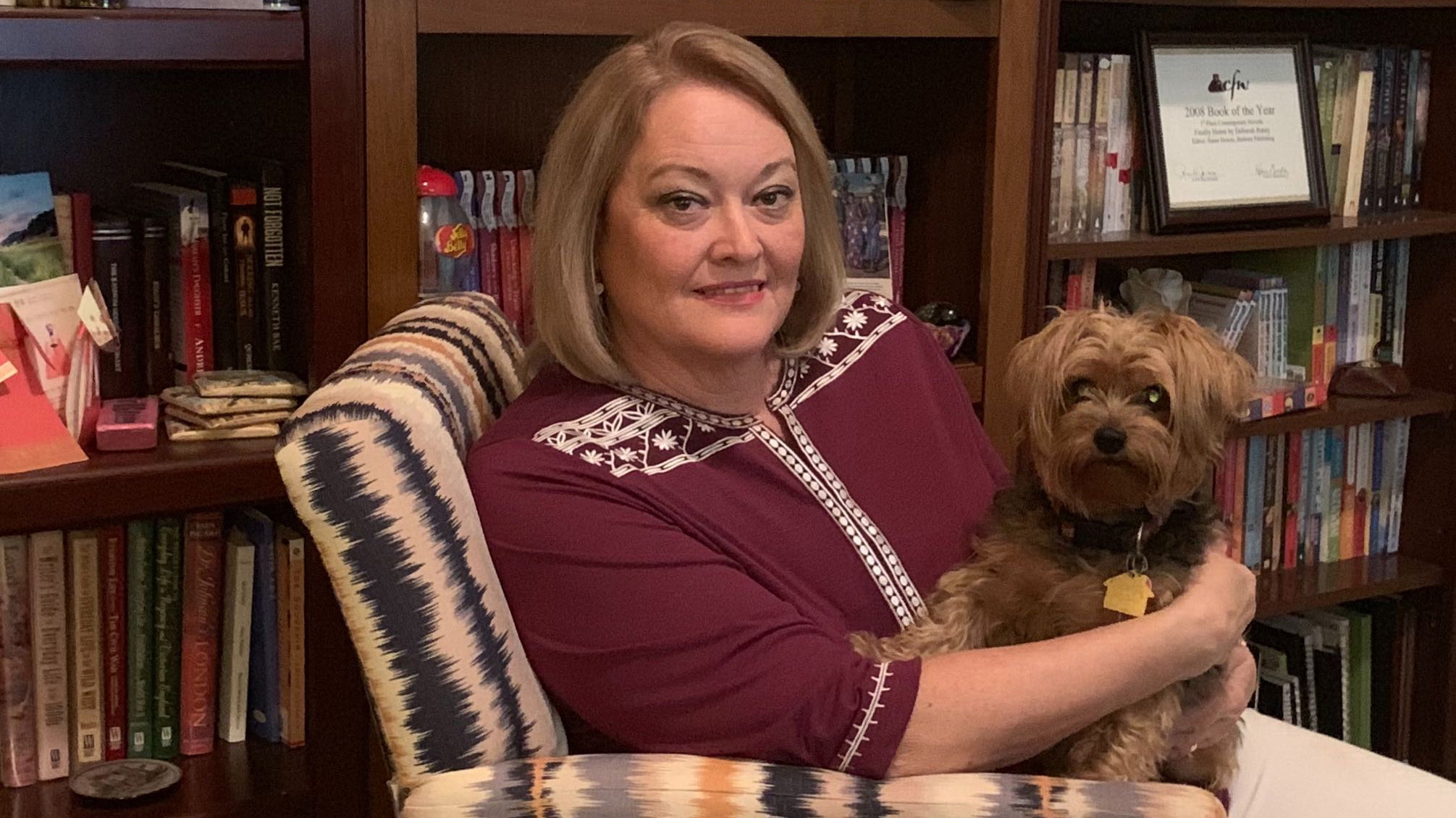
Susan Downs is Senior Editor of Fiction and Continuities at Guideposts Books. She has been with Guideposts for nearly a decade, having spent most of her life as an editor in some capacity or another. She took her first editorial job as a proofreader at age 9, for the family-owned weekly newspaper in Yukon, Oklahoma. Her publisher-father boss paid her a nickel for every typo she could find before they sent the small-town paper to press each week. She didn’t get rich on the job, but it kept her sufficiently supplied in coin to spend on candy at Frank’s Variety Store next door. Susan and her minister husband of 47 years have five children and five grandchildren.

Downs took time out of her busy editing schedule to email us and share what’s going on with fiction at Guideposts Books.

Guideposts.org: I know that your team is actively producing several series at this time. What are you most excited to bring to readers?

Susan Downs: Surely, you aren’t going to make me pick just one, are you? We have a stellar line-up of exciting fiction series in various stages of production right now. Our newest series to launch is the Mysteries of Lancaster County, set in the heart of Pennsylvania’s Amish Country. This series follows the exploits of the three Classen sisters, who return to their family homestead following the death of their mother to manage the gift-and-thrift shop, Secondhand Blessings, which has been in their family for generations. Hidden amid the gems they consign to sell are a host of mysteries needing to be solved and secrets waiting to be revealed.

Coming this fall [of 2019], we are bringing scripture to life in the Ordinary Women of the Bible series. Each fiction story will feature a little-known woman of the Bible, such as Samson’s mother, or the woman with the bleeding disorder who touched the hem of Jesus’s garment and was healed. These stories explore what their lives might have been like, and include a nonfiction supplement in each book that provides biblical and historical background information to enrich each armchair journey back in time.

In the spring of 2020, we’ll see the series launch of Savannah Secrets, set amid the southern charms of Savannah, Georgia, which follows the exploits of two life-long friends who join forces to become the city’s newest private investigators when Meredith Bellefontaine decides to reopen her late husband’s detective agency, Magnolia Investigations.

Of course, we also have a number of other series in full swing, including Secrets of Wayfarers Inn, set in Marietta, Ohio, where three retired schoolteachers turn a historic building that once served as a stop on the Underground Railroad, into a popular inn. Each book features a story-within-a-story as we see glimpses of the past through the diary entries of Prudence Willard, a conductor on the Underground Railroad who helped many escape to freedom. Mysteries of Martha’s Vineyard follows the exploits of a widow from a Kansas farm who inherits a lighthouse on the Massachusetts coastline and finds mystery and adventure at every turn in her new surroundings. The much-loved Sugarcreek Amish Mysteries series explores Sugarcreek, Ohio, along with Cheryl Cooper, a newly arrived Englischer, and her Amish friend Naomi Miller as they lend a helping hand to their neighbors and untangle the mysteries of Sugarcreek. Then, there’s Tearoom Mysteries, Mysteries of Silver Peak, Secrets of Blue Hill Library, Secrets of Mary’s Bookshop, Grace Chapel Innand, very likely, a few more that I’m forgetting at the moment!

GP: Who is your favorite character in these series and why? How about your favorite villain?

SD: This is like asking a mother which of their children they love most! But, shh…promise you won’t tell? I have a little insider secret to share with you. When we are first crafting the characters in a new series, I like to give the main characters some of the unique details and characteristics of people who are nearest and dearest to my own heart. For example, the Classen sisters in the new Mysteries of Lancaster County series share the same last name as my own mother’s maiden name. (My grandkids’ names and personalities can be found sprinkled amid the secondary characters as well.) Of course, all the main characters in our fiction series share my same intense love of mystery!

Now, as for the villains… I can’t say I really have any favorites among the truly bad guys, but I do have a soft spot for those chief suspects who turn out to be good guys who simply happen to be in the wrong place at the wrong time. And I love it when the villain turns out to be someone I never suspected until I read the big reveal at the end of a good mystery!

GP: How do you and your team keep all the continuity details straight? If a character has blonde, curly hair in book 2 of the series, how does the writer in book 14 know it?

SD: This can be tricky business, let me tell you! When we are working with a team of eight or so authors, with several writing their sequential stories in a series at about the same time, getting the details right is a challenge. Each series incorporates a series editor on the editorial team. The series editor does the first review of all incoming manuscripts. Every new detail that is presented in that story is added to an ever-changing series guide, whether it be a new grandbaby that just arrived on the scene, or a store we’ve not yet visited until this latest volume. The updated series guide is then shared with all the authors and editors who are working on a series. We also create a private Facebook page for the authors and editors of each individual series, through which we can interact, ask questions, and share interesting tidbits about the series settings that we come across in our research. This interaction builds a great sense of comradery amongst our cozy little band.

GP: What is the most important element in cozy mystery series? Pace and plot? Character development? A rich setting?

SD: All of these things are necessary in creating a world that beckons the reader to enter into that special place of story and immerses them in that fiction realm. As a reader myself, I want to escape in the pages of a good book, to relate to the characters, and find myself caught up in the heart-stopping adventure of it all. Take me to that happy place by any and every means available!

GP: What is your relationship with deadlines?

SD: I like the comfort of knowing how much time I have to devote to something…but it’s also unsettling to know there are never enough hours in a day to do all that needs to be done!

GP: What advice can you give authors to help them include authentic faith elements into their writing?

SD: Spiritual insight and wisdom springs from the overflow of an author’s soul. So, first and foremost, an author should speak from her own spiritual experience when she shares matters of the heart and soul through story. We write what we know. Conversely, we can’t write what we don’t know. Therefore, faith elements in a story must first be faith elements experienced within.

Finding God in Unexpected Places

This summer I have been reading Finding God in Unexpected Places by Philip Yancey after coming across it in a Goodwill store—the last place I expected to buy such a book. As a pastor, I have many conversations with people about their encounters with God and their faith journeys. And many think that God lives primarily within the walls of a church. But God’s footprints are everywhere and in places we never thought to look.

Yancey writes:

“Jesus himself looked for God not among the pious at the synagogue, but in a widow who had two pennies left to her name and in a tax collector who knew no formal prayers; he found his spiritual lessons in sparrows sold at a market, and in the wheat fields and wedding banquets, and yes, even in the observation of a mixed-race foreigner who had five failed marriages. Jesus was a mastermind at finding God in unexpected places.”

This prompted me to think about my personal experience of finding God in unexpected places and people. Once as a zealous young street preacher, I was stopped by a homeless man asking for money. I decided to preach a long sermon before giving him the only coins I had. While I thought my message was what he needed, it was me who needed to see God in him. When I finally stopped talking and gave him the coins, his eyes locked with mine. He said, “Keep your money.” In other words, that was a lot of preaching for so little.

His look, words, broken body and spirit from living on the streets pierced my soul. At that moment, I saw God in the homeless and realized my method was not the way of the Gospel, best preached with love and actions—and words if needed.

Another experience that has stayed with me took place four days after the 9/11 attacks in New York City in 2001. Along with other pastors, I went to Ground Zero where the World Trade Center had once stood to offer spiritual support to first responders.

In the midst of the smoke and smells, the twisted metal and mountain of debris were signs of God’s presence. Along with the fear, anger and sadness of that day, I remember first responder teams working together in hopes of finding someone alive or even a body. Religious leaders from different faiths united there in one spirit and faith as we prayed together. God was in that soaring wreckage with the living and the dead.

Yes, God can be found in the great cathedrals of Europe with its magnificent art and architecture, or in a modest church building. But His footprints are also elsewhere, waiting to be discovered. Where have you unexpectedly found God?

Faith in Action: A Hospital Chaplain Gives Grace

I walked into my office at the VA Medical Center in Marion, Indiana, that August morning at 7:30 a.m. and glanced at the sticky note on my desk with my current prayer list. I always took a few minutes for solitary prayer before I began my rounds to check in with patients—my congregants.

I went through the list, then finished with the same prayer that I said every morning.

Lord, let me see you work in one small way today.

It was breakfast time, so I walked through the dining rooms on a couple of the wards, greeting my long-term patients by first name or nickname. They responded with their usual friendly banter.

“Hey, Padre, what are you doing up so early?”

“Pastor, do you want my yogurt?”

“Chaplain, I woke up on the wrong side of the bed.”

I chatted with them and noticed that some of my congregants were not in the dining room. I headed to the hospice ward.

My first stop was Steve’s room. He was a long-term resident in his seventies who had been seriously ill for almost a week. I squirted on some hand sanitizer and walked in, calling out, “Good morning, Steve! It’s Chaplain David.” Steve lay in bed breathing slowly, his face blank. He didn’t respond to my greeting.

I’d met Steve three years earlier, and we’d become fast friends. He was mostly paralyzed and struggled with moral injury, the deep psychological and spiritual distress that can arise when a person faces situations that go against their values or beliefs. He had served in Vietnam and carried a lot of guilt and shame over what he’d done and seen in the war. He said he relied on God just to make it through each day.

I would push his wheelchair to the hospital store—the canteen, as the residents called it—where he’d always buy a Dr Pepper. We would sit outside together, sometimes talking, sometimes just enjoying the sunshine.

Now there were long pauses between Steve’s breaths. I knew he didn’t have much time left. I sat by his side and took his hand. I sang “Amazing Grace” to him. Then I closed my eyes and prayed aloud. “Jesus, thank you for Steve’s life. Will you wrap your arms around his spirit now and carry him to an eternity with you?” When I opened my eyes, Steve was gone.

The nurse and doctor confirmed he had died. I headed back to my office. I needed to be alone. I cried over the loss of a man who had become so much more than a hospital patient to me.

I knew I could go to one of my good friends, a fellow chaplain on the ward, to talk if I needed it. We leaned on each other during times like these. Learning to process grief was a part of working in hospice.

I talked to another hospice patient, then went to visit a man who had just been admitted to the acute mental health ward. I made sure to meet with new arrivals to see if they had any spiritual needs or just to chat and get to know them. This gentleman told me he had been drinking and having suicidal thoughts. When I asked him to tell me more, he got up and walked away. Visit over.

His reaction made me think of another patient, one of the first ones I’d met when I started working here. He too had walked away. He’d even yelled at me. A rough start, but after I told him I was a veteran as well, that I’d served with both the Army and Air National Guard, he opened up. Perhaps it would be the same with this new patient once we got to know each other.

Next was the long-term geriatric psychiatry unit. I entered one room with my usual greeting. “Good morning! It’s Chaplain David. How are you doing today?”

“I don’t want to talk to you,” the man in bed shouted. “Get out of here!”

Most of our residents were receptive to a chaplain visit, but some weren’t.

This patient was grouchy and kicked me out on most days. I left his room, reminding myself that he and the other men in the unit dealt with serious mental health issues. It wouldn’t be helpful to take their words personally. They needed grace. There were days when that grouchy gentleman did want to talk. I’d try again next week.

I visited some residents in the dayroom. One man asked me to pray with him. I talked with him for a while, then decided to take a break. It had been quite a morning.

After lunch, I heard a knock on my office door. It was Chris, a patient from our drug and alcohol rehab program. I’d become the lead chaplain for the program at my supervisor’s suggestion.

Chris was one of our younger veterans, in his mid-thirties. He wanted to talk one-on-one after hearing me speak to his rehab group about moral injury. Chris had served as an Army mechanic. He told me he harbored a lot of bitterness toward the military for making him fix airplanes that went out on missions that resulted in civilian casualties. He felt he had played a part in harming people who didn’t deserve it, which violated the moral code he lived by. He hadn’t been raised religious, but he was curious whether the Bible could shed some light on his situation.

“Have you ever heard the story of the prodigal son?” I asked.

Chris shook his head. As I told him about the prodigal son seeking and finding forgiveness from his father, his eyes went wide. “You can’t hear this story and not be moved!” he said.

“Who do you need to forgive?” I asked him.

“I need to forgive myself,” he said.

“Who else?” I asked.

Chris thought for a minute, then realized that he also needed to forgive the pilots, his commanders and the military leadership. We talked a little longer about forgiveness and then prayed together. “You’ve given me a lot to think about,” he told me before he left. “Thank you, Chaplain David.”

As I typed up notes on the spiritual care I’d provided, I recalled why my supervisor had suggested I take on work with the rehab patients. He’d hoped it would balance out my hospice work—endings and new beginnings. Today I had sat with Steve, a struggling older veteran, as he found peace in his final moments. And I’d sat with Chris, a younger veteran starting his journey of healing from his own moral injury.

In my morning prayer, I had asked to see God work in one small way today. I never see less, but some days I see much more than one small work of God.

For more inspiring stories, subscribe to Guideposts magazine.
Everyday Greatness: Little Dresses for Africa

Who She Is

In 2005, Rachel O’Neill, of Rockwood, Michigan, was working full-time as an executive assistant for an engineering firm. While active in her church, she’d never done any global volunteering. But after a safari in Africa for her fiftieth birthday, followed by a mission trip to Malawi, “I felt God calling me to do something more.”

She was struck by the backbreaking labor done by girls to support their families. “I wanted a way to honor them,” she says. Her idea? Persuading a few women at her church to make 1,000 simple dresses from pillowcases, requiring no sewing, to be donated to girls in Malawi.

What She Does

Rachel and her friends met their goal that first year. As word spread, donations poured in. “Dresses started coming every day from all over the country!” Rachel says. In 2008, with zero prior experience, she started a nonprofit called Little Dresses for Africa, with a mission of getting simple homemade dresses to girls (and pants to boys) in impoverished communities.

To date, more than 10 million dresses have been donated to children in 97 countries, including the United States, though Africa remains a focus. Volunteers make 100 percent of the clothing, as well as manage almost all the logistics of shipping clothes from Rockwood and collection points in nine other countries.

Why She Does It

Rachel had hoped the dresses would boost girls’ self-esteem. She soon learned they were helping in ways she could never have imagined. For example, they offer protection from human traffickers and sexual assault. “Attackers assume girls in nice clothing are being watched over,” she says. “And so many children still go without clothes. We’re answering a critical need. We’re not just sending dresses—we’re sending hope.”

How She Does It

The nonprofit runs a distribution center in Malawi and works directly with community leaders there to distribute donated dresses and pants and washable menstrual pads, which have proven key to keeping adolescent girls in school. In other countries, Little Dresses networks with established charities, such as Samaritan’s Purse. Rachel works with 30 to 40 volunteers in Rockwood to sort and box clothing for shipments, sending thousands every week. “When I started, I didn’t know what a shipping container even was, but I’ve learned on the job,” she says.

How You Can Do It

“Nearly half of Malawi’s population is under age 14,” Rachel says. “We are nowhere close to meeting need.” For dress patterns and shipping information, go to littledressesforafrica.org/printables. Rachel emphasizes that opportunities exist for people who sew and those who don’t. “We only ask people to use high-quality, colorful material,” she said. “If you wouldn’t give it to your child or grandchild, we don’t want it for our children.”

She also asks for money to cover shipping costs, estimated at $2 a dress. Generous donations have allowed Little Dresses to address other needs, including building more than 85 wells and two primary schools. “I couldn’t have done any of this on my own,” Rachel says. “But when you step out in faith, God works miracles.”

For more inspiring stories, subscribe to Guideposts magazine.

Everyday Blessings: Anchor of Faith

I was unpacking groceries that fall day when my husband, Tony, told me the devastating news: His sister, who hadn’t been well, was in intensive care. As I tried to make sense of the situation, I mechanically put away the things I’d bought—the milk in the fridge, the chips in the top cabinet. Tony said he needed a long walk and headed out. I kept right on organizing and cleaning. The kitchen might have been spotless, but I was a mess of confusion and despair.

I took a deep breath and went to the dining room, where I dusted the framed photos of my grandparents and their parents and my husband’s parents. I picked up each portrait, studying our family’s faces.

In 1911, my great-grandmother came to America by herself from Hungary. She was only 14. For a long time, I thought this story was embellished family lore. Then I did some research and found the ship’s manifest. It confirmed that my great-grandmother truly had traveled alone, a four-foot-ten-inch girl with exactly nine dollars in her pocket and a scrap of paper that had the name and address of a distant relative who would house her. I tried to imagine what that voyage must have been like: Faith was the only companion to guide my great-grandmother toward an uncertain horizon.

So often I forget how strong we are. The incredible hardships and courageous journeys we all have in our histories, like sailing across a sea of unknowns or coping with the anguish of a loved one’s failing health.

I went outside and sat on the porch steps in the sun. I took in the striking hues of fall—the beauty of our autumn blaze maple in all its glory, the trill of a sparrow’s song in the distance—and I felt better. No matter the outcome, we would find our way through this rough time. Organizing the house couldn’t cure the restless worry in my spirit. Only the blessing of a beautiful day and the anchor of my faith could do that.

Excerpted from Guideposts magazine.

Ernie Pyle Courageously Chronicled the Soldier’s Experience

Heroes come in all shapes and sizes, though a diminutive newspaper reporter from the Midwest might seem an unlikely candidate for that status. But Pulitzer Prize–winning journalist Ernest Taylor “Ernie” Pyle was indeed a hero to millions of Americans who appreciated his bravery in reporting the experiences of the common soldier, sailor and airman during World War II.

Pulitzer Prize-winning journalist Ernie Pyle in 1945; photograph by Milton J. PikePyle was born on a farm near Dana, Indiana, on August 3, 1900. At age 17, he joined the United States Navy Reserve during World War I, serving three months of active duty until the war came to an end. He then finished his tour of duty in the reserves and was honorably discharged with the rank of Petty Officer Third Class.

Pyle attended Indiana University where he served as the editor of the student newspaper, The Indiana Daily. With just one semester remaining before graduation, however, he quit school to accept a position at a newspaper in LaPorte, Indiana.

After three months on the job, Pyle relocated to Washington, D.C., where he worked for The Washington Daily News, a tabloid daily with an unusually young editorial staff. He was hired as a reporter, but in 1922, he was named managing editor. He held that job for three years, growing increasingly frustrated that he wasn’t doing any writing, so in 1926, Pyle resigned so that he and his new bride, Jerry, whom he wed in 1925, could travel.

Over the next two years, the Pyles traveled the United States in a Ford roadster before returning to D.C., where Pyle became the country’s most prominent aviation columnist. No less an authority than Amelia Earhart once said, “Any aviator who didn’t know Pyle was a nobody.”

By 1932, Pyle was again served as managing editor of The Washington Daily News, but after a sojourn in California, meant to allow him time to recover after a severe case of the flu, Pyle was asked to fill in for the prominent columnist Heywood Hale Broun, who was on vacation. He wrote 11 essays about his stay in California and the residents of that state whom he’d encountered during his stay.

The columns were very well received, and not just with readers. G. B. Parker, the editor-in-chief of the Scripps-Howard newspaper chain, wrote that Pyle’s work had “a Mark Twain quality that knocked my eye out.” Parker made Pyle an offer, which was quickly accepted, to undertake a daily column for Scripps-Howard that would send Pyle motoring along the back roads and byways of the United States, as he and Jerry had done some years before, and writing a daily column about his experiences—the places he saw, the people he met.

With Jerry frequently at his side—”that girl who rides with me,” as he referred to her in his column, Pyle traveled over 200,000 miles, crossing the United State some 30 times “by practically all forms of locomotion, including piggyback.”

“We have stayed in more than eight hundred hotels,” Pyle wrote, “flown in sixty-six different airplanes, ridden on twenty different boats, walked two hundred miles, gone through five sets of tires and put out approximately $2,500 in tips.” And Pyle and Jerry didn’t limit their travels to the U.S.; they traveled to every country (save two) in the Western Hemisphere. Any and every experience along the way was potential material for his column, and Pyle’s readers were grateful for the chance to vicariously share in his adventures.

SHOW YOUR SUPPORT: MAKE A CONTRIBUTION TO GUIDEPOSTS MILITARY OUTREACH

Pyle’s accessible, intimate prose appealed to average Americans, and the travel column proved to be very popular, indeed. It continued from 1935 until the United States entered World War II. By then, Pyle felt the call of a greater purpose.

In 1940, Pyle reported on the Battle of Britain from London, and his first-person account of the bombing onslaught England was undergoing and the impact it had on the lives of average Brits gave Americans insight into the war in Europe that other war reporting couldn’t achieve.

The “little fellow,” as Pyle often referred to himself (“I weigh 108 pounds, eat left-handed, am 28 inches around the waist, and still have a little hair left,” he once wrote) was uniquely positioned to give Americans and people around the world a glimpse of what those living through the war—both the soldiers fighting it and the civilians who had their lives disrupted by it—were experiencing, and after the United States entered the war on December 8, 1941, those on the home front relied on Pyle for insights and information about what their sons and daughters serving overseas were experiencing.

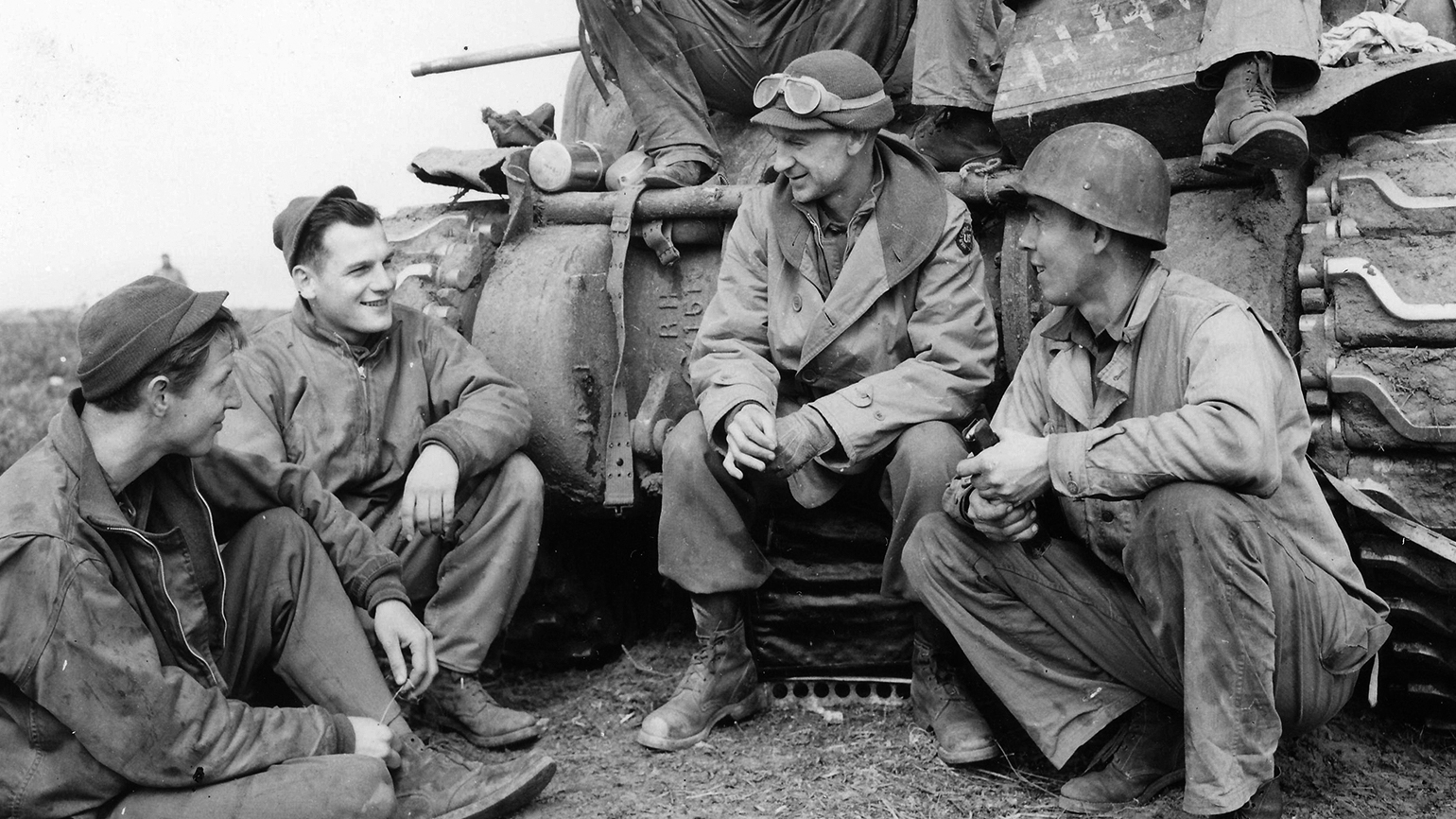
Pyle was arguably the first embedded reporter, a recent term that describes as well as any other his approach to war reportage. Pyle’s was not a macro approach, but a micro one. His intention was not to relate the success and failings of military campaigns or to profile generals, admirals and others among the top brass. He spent his time with the common soldiers and related what they were going through. His reports appeared in more than 300 newspapers, so his audience was vast and his readers avidly scoured every report he filed so that they might have a greater sense of what their sons and daughters were experiencing.

In 2004, Bill Damico, a retired Marine, told the military newspaper Stars and Stripes, “Ernie Pyle was a man who was down with the troops, down in the trenches with the guys. He wrote simply, for the common man, so you could understand him and what the troops were going through.”

When Pyle’s columns were collected in book form, in four volumes entitled Ernie Pyle In England, Here Is Your War, Brave Men and Last Chapter, they were instant bestsellers. The rights to Pyle’s war reports were even purchased by Hollywood and adapted for the 1945 motion picture The Story of G.I. Joe, directed by William Wellman and starring Burgess Meredith and Robert Mitchum.

When American troops first began to arrive in Europe, Pyle was there. He later accompanied the troops during the North Africa campaign and during the invasions of Sicily and Italy. He arrived at Normandy on June 7, 1944, the day after D-Day, reporting on the tremendous sacrifices the Allied troops had made there.

In July, Pyle was nearly killed during an accidental bombing by the Army Air Forces during Operation Cobra near Saint-Lô in Normandy. In August, he was on hand to witness firsthand the liberation of Paris.

That same year, Pyle wrote a column calling for combat pay for members of the infantry, much as airmen were paid “flight pay.” Before long, Congress approved an increase in pay of $10 a month for combat infantrymen. The law was entitled “The Ernie Pyle Bill.” Pyle was awarded the Pulitzer Prize for Correspondence that year, for “distinguished war correspondence during the year 1943.”

With the tide having turned in Europe, Pyle turned his sights to the Pacific. In preparing to change his base of operations, he had a run-in with the Navy, which forbade the use of sailors’ names by reporters, a policy which very much ran counter to Pyle’s approach to reporting. After butting heads with Navy brass for a while, Pyle claimed a partial victory: The ban was lifted, but for him only.

Celebrating Ernie Pyle Day
In 1940, Ernie and Jerry built a home in Albuquerque in which they resided when they weren’t on the road. Following Ernie’s death in 1945, the New Mexico legislature declared August 3rd to be Ernie Pyle Day in that state, and on December 20, 2017, the United States Senate approved a resolution establishing August 3, 2018, as National Ernie Pyle Day.

Jerry Maschino, a board member with the Ernie Pyle Legacy Foundation, told the Albuquerque Journal in 2016, “A lot of people, if you ask them, ‘Do you know Ernie Pyle?’ will answer yes, but if you ask about specifics, they usually don’t know any, other than he was a war correspondent. But there’s a lot more to Ernie Pyle than that.

“Our mission is simple: Ensure the legacy of Ernie Pyle.”

Pyle had mixed feelings about going to the Pacific. He was understandably fatigued, both physically and emotionally, after covering the war in Europe for several years, and his ongoing battle with clinical depression was taking a toll on him. He was even experiencing premonitions of death.

“I feel that I’ve used up all my chances, and I hate it,” Pyle said. “I don’t want to be killed.” But he pushed forward across the Pacific because, as he put it, “there’s a war on and I’m part of it…. I’ve got to go, and I hate it.”

Pyle was with the Marines when they landed at Okinawa, and on April 18, 1945, while with the Army’s 305th Infantry Regiment of the 77th “Liberty Patch” Division on the island of Iejima, he was riding in a Jeep toward the front lines when he was struck in the left temple by a Japanese machine-gun bullet. He died instantly.

It speaks to the deep respect and gratitude those in the United States military felt toward Pyle that his tragic death was announced the next day by Secretary of the Navy James V. Forrestal. Pyle was buried with his helmet on alongside other battle casualties. The men of the 305th erected a monument at the site of his death. That monument still stands; its inscription reads, “At this spot the 77th Infantry Division lost a buddy. Ernie Pyle, 18 April 1945.” The site, owned by American Legion Post 28, is today maintained by the U.S. Marines assigned to the island.

Pyle was mourned by millions of Americans, who felt they had lost a close friend, someone who had, in his unique way, paid tribute to the sacrifices of their sons and daughters as they served their country in the most difficult and dangerous of times.

Harry Truman, sworn in as President of the United States just six days prior to Pyle’s passing, said of him, “No man in this war has so well told the story of the American fighting man as American fighting men wanted it told. He deserves the gratitude of all his countrymen.”

Eleanor Roosevelt, who often quoted Pyle’s dispatches in her own newspaper column, wrote of Pyle on the day after his death, “I shall never forget how much I enjoyed meeting him here in the White House last year, and how much I admired this frail and modest man who could endure hardships because he loved his job and our men.”

But it was author John Steinbeck who may perhaps have explained better than anyone what made Pyle special when he told a reporter for Time magazine, “There are really two wars and they haven’t much to do with each other. There is the war of maps and logistics, of campaigns, of ballistics, armies, divisions and regiments—and that is General [George] Marshall’s war.

“Then there is the war of the homesick, weary, funny, violent, common men who wash their socks in their helmets, complain about the food, whistle at the Arab girls, or any girls for that matter, and bring themselves through as dirty a business as the world has ever seen and do it with humor and dignity and courage—and that is Ernie Pyle’s war.”

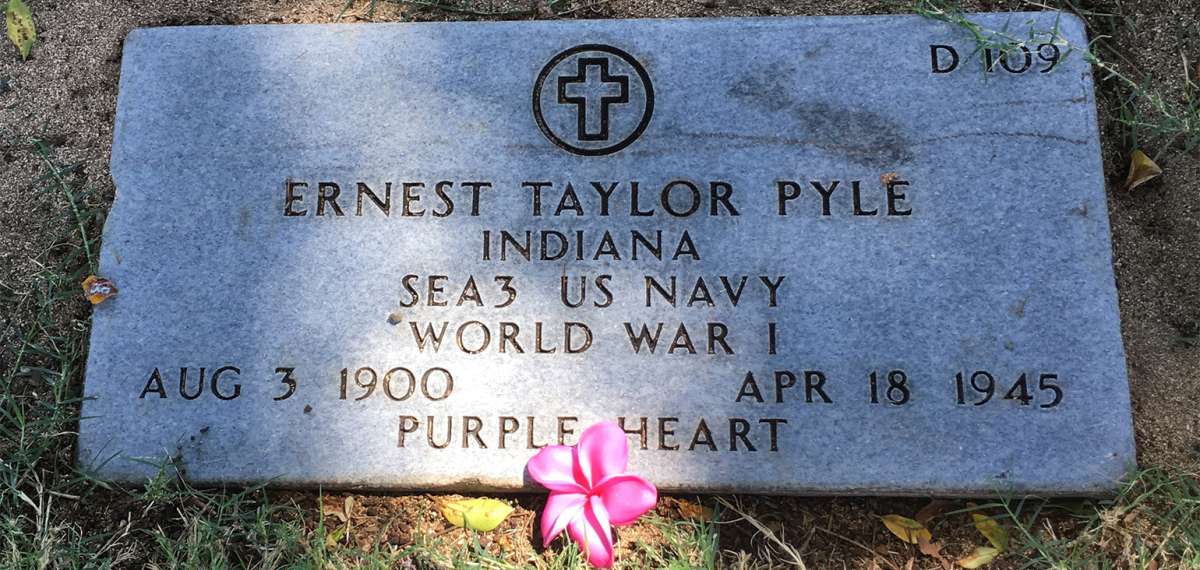
On July 19, 1949, Ernie Pyle was reinterred at the National Memorial Cemetery of the Pacific in Honolulu, with a crowd of 2,000 mourners in attendance, and there he rests today, alongside 31,000 other American casualties of the Second World War. In 1983, Pyle was awarded the Purple Heart, a rare honor for civilians. Though he did not serve as a soldier in World War II, that Purple Heart affirms Pyle’s status as a genuine hero, one who served his fellow Americans, both military and civilian, with distinction, courage and compassion and made the ultimate sacrifice in doing so.

Ernie Pyle's final resting place at the National Memorial Cemetery of the Pacific in Honolulu, Hawaii

Elizabeth Sherrill: Remembering a Guideposts Legend

Elizabeth Sherrill (February 14, 1928—May 20, 2023), affectionately known as Tib or Tibby, recently passed away at the age 95.  What a remarkable woman she was and a profound influence on the Guideposts stories and devotionals we know today. She was after all a brilliant storyteller.

It seems appropriate that she was born on Valentine’s Day because she exuded love. For her family, for her colleagues, for the subjects of the countless stories she wrote and edited, for Guideposts readers, for her faith community, for God’s beautiful world and the people in it.

A founding contributor, it’s hard to imagine how Guideposts would have ever happened without her; because of her contributions, it became a much-loved venue for true personal stories of faith in action. She was the embodiment of hope and inspiration. Those of us who have worked for the organization and written for it all learned from Tib. In fact, she was not only a model of a compassionate storyteller but a wonderful teacher of writing.

A Natural Gift of Writing

Back in 1951, when Guideposts was a fledgling publication, her husband, John, was hired as an editor. A natural at chasing down true first-person inspirational stories, he naturally shared with his wife what he was doing and discovered in the process what insights she had to offer, along with hr natural gift for writing.

Of course, she would never have put it that way. Modest in the extreme, self-effacing and glad to cede the limelight to others, she found a perfect calling at this little magazine in coaxing stories out of others and then helping them share their highly personal accounts of God at work in their lives for an audience of millions. She brought empathy and spiritual depth to what otherwise might have remained commonplace testimony. She never forgot the needs of the reader.

She and John met shortly after the war, in which he had served bravely with the American forces in Europe. They had both, independently, decided to go to university in Switzerland in those bleak post-war years, and they met aboard the ship en route. Clearly it was love at mere glance because the two students were soon to be husband and wife.

Meeting Eleanor Roosevelt

Former First Lady Eleanor Roosevelt happened to be in Geneva at the same time—working, as always, on the peace between nations—and wanted to meet some young Americans. She was introduced to Tibby.

It’s a scene I can easily picture, the two soulful women sharing their views for hours, both of them with extraordinary gifts of listening. Both slated to fill deeper roles as women than the culture would have ascribed to them.

John would bring home stories, and Tibby—the writer, not just the ‘50s housewife—would polish them up. First quietly and then not so secretively, the two becoming a dedicated team. Len LeSourd, then editor of Guideposts, soon realized he had two fine writer-editors in one husband-and-wife team. Couldn’t they do more? And indeed, they did. So much more.

From Stories to Books

Not only were they writing for Guideposts, their stories often expanded beyond the magazine. There was David Wilkerson, a dynamic young preacher in New York reaching out to the gangs of the city; his story, with the Sherills’ help, became The Cross and the Switchblade. There was Corrie ten Boom, a Dutch woman who had shielded Jews and Dutch resistance workers during the Nazi occupation; her story became the best-selling The Hiding Place, co-written with John and Elizabeth Sherrill.

There was God’s Smuggler by Brother Andrew with the Sherrills and They Speak with Other Tongues, John’s own coming-to-faith story. The two were spiritual pilgrims, endlessly curious wanderers who visited virtually every continent on earth and always brought home stories.

Tibby was at her most profound and her most deeply personal in the hundreds of devotions she wrote for Daily Guideposts, now Walking in Grace. The spiritual insights she fearlessly shared with devoted readers over five decades reverberate to this day. Indeed, she set the standard for Guideposts devotions and for the writers who followed in her footsteps.

The Consummate Writing Teacher

In 1967, when Guideposts launched its first Writers Workshop, bringing the winning aspiring writers to New York for a week of intensive training, the magazine staff turned to Tibby. Would she help as a teacher? I can imagine her saying modestly, “Well, I’ll try.”

Not only did she try but she succeeded in extraordinary ways and for the next few decades she would be the guiding light of those workshops, not only for the winners but for all of us who’d come to Guideposts to work on staff. Her toughness as an editor was belied by her soft voice. After you spent a week learning from Tibby, you couldn’t sit down and write without her words and guidance swirling in your head. It was true for workshopper Sue Monk Kidd. For Marion Bond West. For Roberta Messner.

Editor-in-Chief Edward Grinnan, who came to the workshop shortly after he was hired at Guideposts in 1986 as an assistant editor, had a master’s degree and awards in writing from top-notch schools, and as he’d tell you today, he learned more from Tibby in that one week—more useful, practical advice—than he had in years of writing programs. “She was by far the best writing teacher I ever had.”

Tibby and John, Together in Heaven

Tibby and John moved to a retirement community in 2009 and John died in 2017, an insuperable loss for Tibby. She missed him every day. When I would call her up, we often spent much time talking about him and typically, she asked about me and about the Guideposts staff.

I can picture the two of them together now, inseparable in death as in life. Their timeless Guideposts stories, their memorable books, their children and grandchildren and great-grandchildren survive them. For those of us blessed to know Tib professionally, her voice will be with us forever, in our hearts and our work.

More Elizabeth Sherrill Stories You May Enjoy 

Does God Speak to You in Your Dreams?

Do you ever wonder what your dreams are saying? Do you feel like God is speaking to you? If so, why does it seem like a foreign language? The book Dreams: God’s Forgotten Language written by a priest and Jungian analyst, John Sanford, has helped me decode some of what’s happening. Here’s what Sanford says:

1) All dreams have meaning.
It’s so easy to dismiss a dream by saying it was because of a weird TV show I watched or something I ate. Sanford writes that this may not always be the case. God communicates to us in our dreams, he says, as God did in biblical times. We need to pay attention.

2) The dreamer should talk about the dream.
Talk to a friend, talk to your pastor, talk to your spouse, talk to yourself. “It is, after all, the dreamer’s dream,” says Sanford, “so it is reasonable to assume that the dreamer might hold the clues to the dream’s meaning.” In the Bible, dreamers often talked to God about their dreams. No reason we can’t do the same.

3) Dreams speak to us through symbols.
The symbols come from two places: our personal experience and a universal language. The other night I had a dream about crawling down a tunnel to the subway. That made sense: I take the train every day. It’s part of my personal experience. But the symbolic meaning was also found in the probing nature of a tunnel.

4) Ask yourself how the dream made you feel.
The best rule for interpreting a dream is on the basis of your feelings. “Whether or not an interpretation is true can be judged by the extent to which the dreamer feels it to be meaningful,” writes Sanford. I’ve had dreams that seemed bizarre, but the end result was reassuring. Trust those feelings.

5) Dreams take us to places we wouldn’t normally go.
Look where Jacob’s ladder took him. Think of how dreams changed the course of Joseph’s life. In our busyness we are unlikely to notice those epiphanies. No surprise that a dream is meant to catch our attention.

6) Write your dreams down.
Jotting things down on a pad of paper in the middle of the night has never worked for me. Instead, first thing in the morning, I write whatever I remember on my cell phone. I’m not likely to remember the dream later in the day. But there it is on memo.

7) Dreams are ahead of us.
Not long ago I had a dream about the composer Leonard Bernstein. I hadn’t been thinking of him that day or listening to his music. But there it was. I wrote the dream down. A couple of hours later I got an email from our choir director asking if I’d sing a Bernstein song at church.

Did my unconscious know this? Was God given me a preview of coming attractions? You be the judge!

Could She Let Go of the House She Loved?

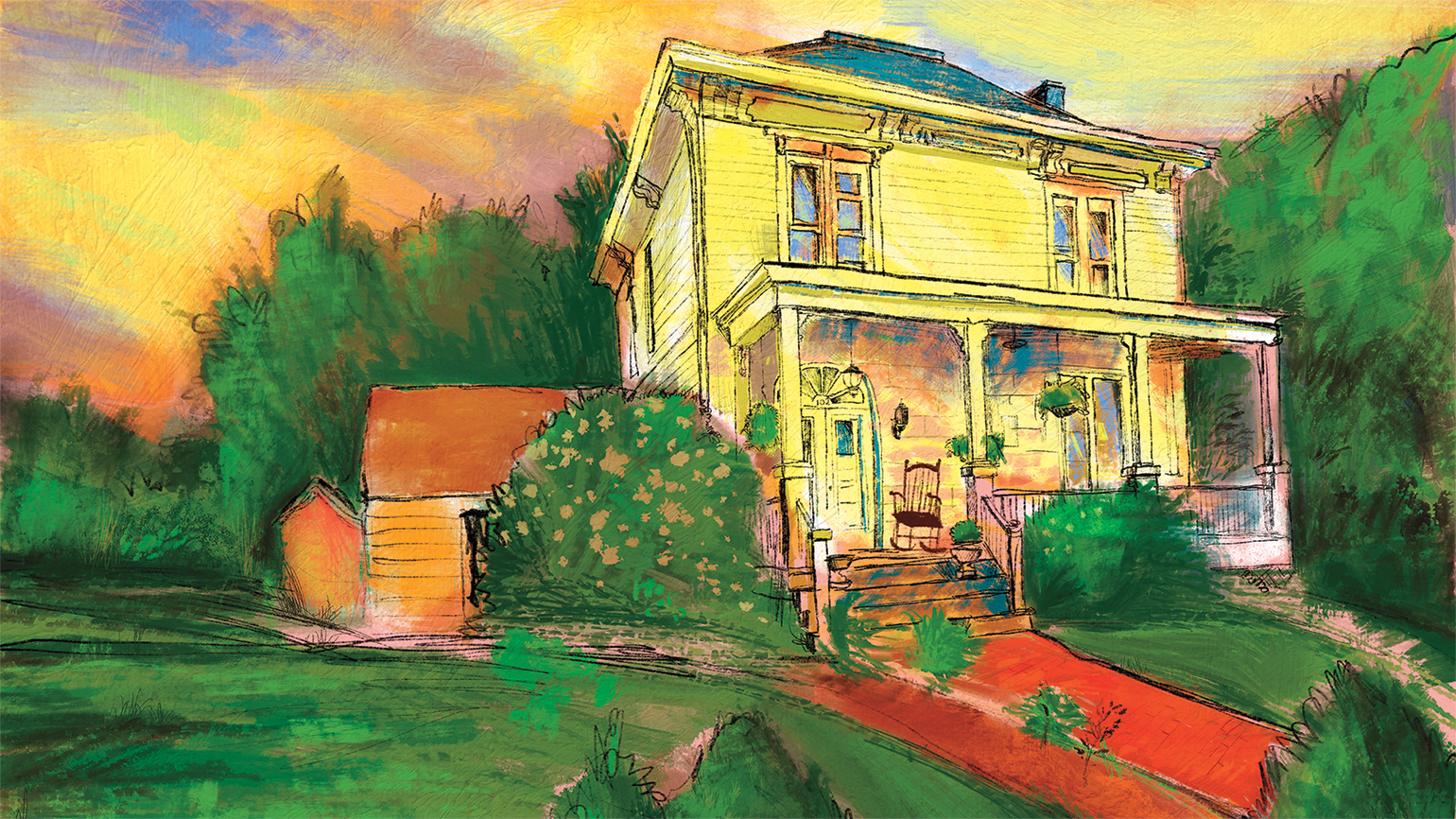
My husband, Lonny, and I sat in our car, gazing at the house we’d called home for 16 years. The Victorian looked more beautiful than ever—stately, inviting, the kind of house they don’t build anymore.

In half an hour, the sale would be final and the keys turned over to the new owners. It felt as if we were saying goodbye to a beloved family member.

“It’s hard to believe she won’t be ours after this morning,” I said. “Every room is special to me. I know which floorboards tilt. How the wind howls under the front door in the winter. Where the sunshine streams in.” Lonny and I even had a name for how the light seemed drawn to our Victorian. We called it Magic Hour, a moment in the late afternoon when sunlight would pour through the house like a river of gold.

Lonny took my hand. “I know this is hard for you,” he said. “How everything’s changing. How the boys are growing older and we don’t need that big of a place anymore.”

Letting go. I’d struggled with it my whole life, struggled to accept the end of one stage, while trying to embrace the next. It had helped that with a big family—we had five boys—there was always another child coming up through the ranks. But now our two oldest were on their own. Our middle son had left for college two weeks earlier, and his younger brothers were close behind.

It felt as if just yesterday they were all running around this big yard together. Climbing the trees with branches that reached like arms to hold them. Playing pirates with red bandanas on their heads.

I wanted to believe God was as much in the new as he was in the old, but why did everything feel so unsettled? No wonder selling a house is considered one of life’s biggest stressors.

The crazy part was, we’d actually moved away two and a half years earlier. We now lived in Iowa, across the Mississippi River from where we’d raised our family in Illinois. After years of my homeschooling the boys, we’d decided to enroll the three youngest in public high school, and the schools in LeClaire, Iowa, were a better fit.

Our new home was only three years old, designed in an Arts and Crafts style—spare, simple, the very opposite of our ornate 1864 Victorian. There was an open floor plan and a modern fireplace. Lights flickered on automatically when you walked in a room. Though beautiful, it still didn’t feel like home.

The boys were often at after-school activities or swimming and baseball practice, all the opportunities we’d wanted for them. But that meant I was usually puttering around the house alone, without even memories to keep me company.

Old homes need constant work, and we made repairs the entire time ours was listed. We visited weekly, sometimes more. Lonny and the boys rebuilt the front porch. We pruned some bushes and replaced others. After our work was done, we’d swim in the pool. Some days I made the drive on my own, just to sit on the porch swing.

For a couple of years, there was hardly any interest. The third winter approached. We planned to take the Victorian off the market and list both homes in the spring, knowing the new house would sell fast.

That’s when the offer came.

After the initial negotiations, the buyer had complications and the sale fell through two days before closing. We negotiated more, and the contract was extended. For another two and a half months, things were uncertain. I’d lie awake at night asking God to help me feel settled with the outcome.

One night, he spoke to me through the promises of the Psalms. I will be your dwelling place. I’ll go before you. You don’t have to be afraid. I thought that meant we’d go back home to our beloved Victorian. But then things came together for the buyer, and I knew that this time there was no turning back.

Our lawyer was at the closing. Soon the new owners would have the keys.

“Can we drive over and say goodbye to her one last time?” I’d asked Lonny just after breakfast. Now that we were here, sitting in the car wasn’t enough.

“I need to go inside,” I said.

“Shawnelle,” Lonny said. “You’re making this harder. Why?”

I didn’t know what to say.

Lonny relented. “Okay,” he said. “Just a quick walk-through.”

The sun porch door whined its familiar greeting as I pulled it open. Lonny twisted the knob of the door leading to the kitchen, the one we’d always left unlocked, and we stepped inside. I thought of all the baking I’d done here. I could almost smell chocolate chip cookies hot from the oven.

To the left was the schoolroom, with its many windows, some with panes of leaded glass, that looked out over the yard.

I turned toward the dining room. There was the arch where we had taped a battered Happy Birthday banner year after year. Past the living room was the grand staircase. Those stairs sang a different song to the footfalls of each son. A soundtrack that had felt like a joyful reminder of who I was, a mom, nurturer to these young boys. Without all this, Lord, I’m not sure who I am. Lonny was right. I was only tormenting myself.

My hand slipped inside my purse. The day before, my oldest son had come to visit, knowing how difficult the sale would be for me. After he’d gone back to his place, I discovered a gift he’d left for me, a vintage coin purse. Inside was a handwritten note: “Mom, I filled this with sunshine from Magic Hour.”

Now I slid my fingers over the tiny gold beads hand-sewn onto the fabric, wishing I could hold on to everything wonderful about this house and our life here.

Outside, a car door clipped shut. “Shawnelle!” Lonny said. “That could be the new owners. We have to get out of here.” I nodded, and we hustled to the kitchen.

“I’m going to turn on the schoolroom fireplace for them,” Lonny said. “It gets so cold back there.”

I followed. The room looked so barren without the worktable, the bookcases. The walls—once filled with maps and a Wright brothers poster that said Work, Work, Work…Fly!—now bare. Even the floor had been littered with projects, puzzles, block towers, robots.

I stood, staring at the emptiness. Everything that had meaning for me in this room was already gone.

My eyes followed a ray of morning sun streaming through the window, across the floor to…a rainbow created by a prism of leaded glass. Reds, greens, blues, yellows spilling everywhere, forming smaller rainbows. A symphony of colors. Different from Magic Hour yet no less beautiful.

In all the years I’d spent in this room, I’d never seen this before, not with the boys’ things blocking the view. All those projects and toys I hadn’t wanted to let go of. It was only by saying goodbye to them—letting go—that something new and beautiful had been revealed.

Maybe I just needed to look at things differently. Focusing less on the past I was afraid of losing and more on the brand-new life that awaited me, bright with God’s promises. He would be my dwelling place. He would go before me. I didn’t need to be afraid.

“Lonny, look,” I said, pointing at the rainbows.

He pulled me close.

“Are you going to be okay?”

“Absolutely. Let’s go home.”

For more inspiring stories, subscribe to Guideposts magazine.