Embrace God's truth with our new book, The Lies that Bind

Check Out the New Digital Guideposts

I have a very tough job to do today but first I wanted to share some cool, exciting news.

Sixty-five years ago Guideposts began as an eight-page booklet distributed to a few thousand subscribers from an office in Pawling, New York, published and edited by Norman Vincent Peale and his wife, Ruth. Norman Peale became world famous eight years later when he wrote a book called The Power of Positive Thinking that would go on to sell 30 million copies worldwide and change the lives of countless people even to this day. The circulation of Guideposts has grown to over two million with a monthly readership of more than seven million people, making it one of the most popular magazines in the world.

Dr. Peale used more than just books and magazines to spread his inspiring message and share inspirational stories of everyday people facing their lives with hope, faith and the power of prayer. He was a pioneer in the use of radio and TV, reaching huge and loyal audiences across North America with these new media platforms. If Norman were alive today I’m sure he’d be on Twitter and Facebook. Ruth definitely would be.

Following in the innovative footsteps of our founders, we have tried to keep Guideposts at the forefront in a rapidly changing media landscape. Obviously if you are reading this blog you are a user of digital technology. You are either seeing it on Facebook or at Guideposts.com. We are extremely grateful to our digital customers which is why I’m excited to tell you that you can now get Guideposts magazine in a variety of digital formats: find us at the Zinio newsstand, on the Barnes and Noble nook (a digital reader) or download the newest issue of the magazine to your iPad or iPhone.

In addition to the complete print magazine you will enjoy add-ons such as slideshows, video, author interviews and much more content that we can’t fit in the print version of the magazine, where paper and postal costs constrain us. I was so blown away by the iPad version of Guideposts that I immediately went out and got an iPad.

So now on to my onerous task for the day: Millie needs a bath…not that she would agree with me. There is no high-tech solution to wrestling a 95-pound Golden Retriever in the basement bathtub and scrubbing her down while she looks miserable, put-upon and attempts an escape every time she senses I’ve let my guard down, occasionally succeeding causing me to chase her around the basement until I can tackle her and drag her back to the tub.

It will be an ordeal that will eventually find me lying exhausted and drenched facedown on the basement floor while Millie prances around, shaking the towel I use to dry her with like it was all the towel’s fault. When it’s over we’ll both feel better, though. And fortunately she is a very forgiving dog. Tomorrow we’ll go for a nice long hike early in the morning.

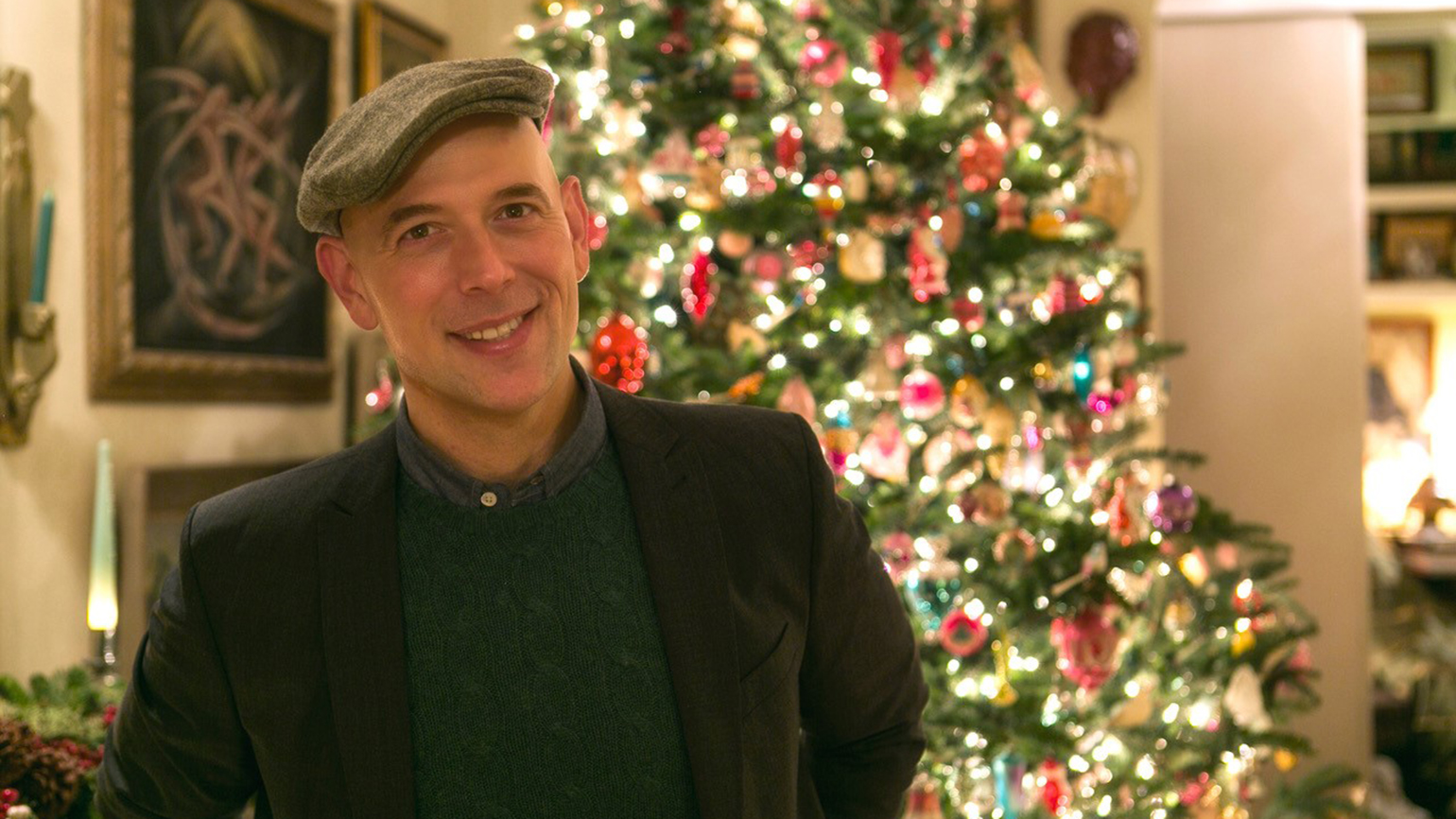
Bob Richter on the Healing Power of Christmas Decorations

Vintage expert Bob Richter remembers the Christmas when his big brother Johnny came home from New York. He’d traveled for two hours to the family’s home in Allentown, Pennsylvania, arms full of presents and handmade Christmas stockings for each family member. Johnny created each stocking with festive fabrics, like plaid wool, buffalo check and one with a ruffle for his mom.

It turned out it would be the last Christmas with his brother. Johnny died the following October. As Christmas neared, Bob and his family didn’t think they would be able to do any kind of holiday celebration. But they remembered those stockings Johnny made.

“When we saw the stockings, I think it was just the trigger,” Bob said. “Putting them up would actually be honoring Johnny’s memory and love of Christmas, and it would actually be wrong of us not to put them out.”

It was one of the first steps of healing for Bob, who at the time was fifteen, and his family. “Johnny was my biggest cheerleader,” Bob said. “He loved Christmas and he loved that I loved Christmas.” The family celebrated that first Chistmas in his honor and memory.

The vintage expert features those stockings (his mom gave them to him when he got his first home of his own) along his staircase and displays other Christmas vintage décor items on tables, shelves and walls throughout his home with his many other vintage objects, all connected to memories of the past.

“Christmas is such a magical time. Sometimes life’s hardships like loss make me feel like joy is no longer a part of my life or that it’s gone forever. Christmas is a perfect time to find what still is there,” he said. “The holidays are a great time to reconnect to that joy.”

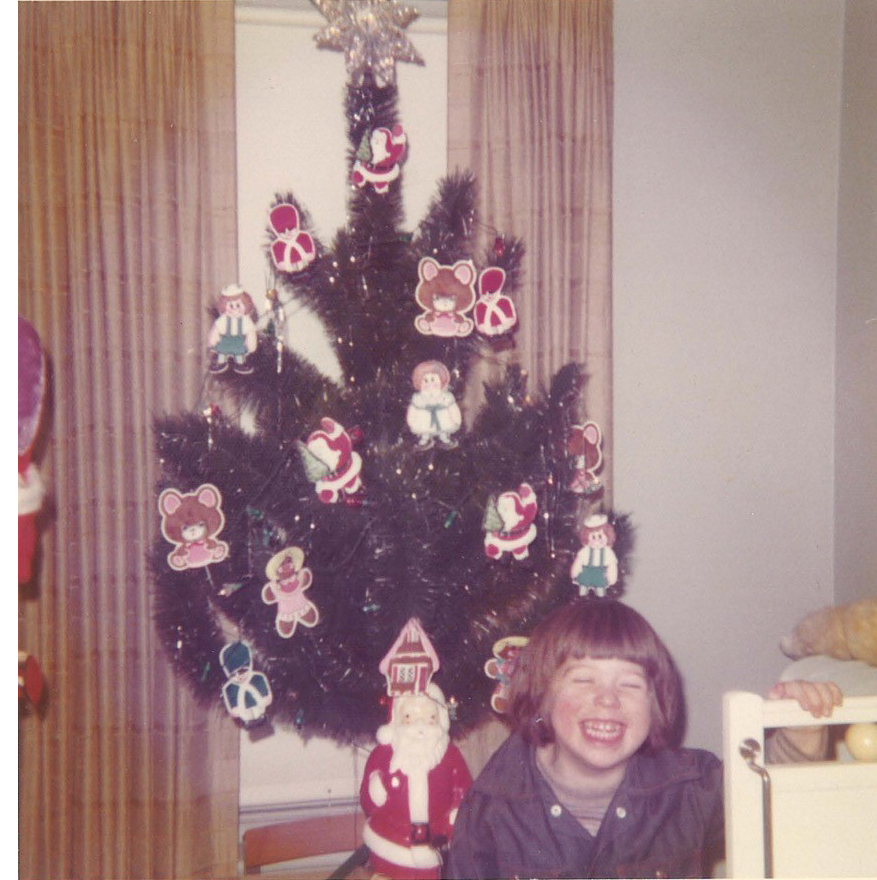
Bob, age 4, with the tree his brother,
Johnny, decorated just for him.

Bob says some Christmas objects that evoke memories of loved ones might find a place in your home all year long. He remembers coming home, one December afternoon, to find a fully decorated Christmas tree in his bedroom. Johnny, who loved vintage objects and Christmas, had put it there. There’s a photo of Bob as a little boy in front of that tree smiling ear-to-ear. “When I look at that picture I see the love that went into decorating that tree. I still have the Santa Claus that was underneath the tree and use it as a nightlight. It’s the one Christmas item I keep up all year long.”

For Bob it’s a connection to his inner child, which is something so many try to channel during the holidays. “When I was in Vacation Bible School my favorite song was ‘I’ve Got the Joy, Joy, Joy/Down in My Heart’ and so I feel like that’s part of my DNA—that joy. And ‘This Little Light of Mine.’ It’s our choice if we want to shine it or not. We always have that opportunity and I think that Christmas is the time that many people struggle the most with loss. It’s like I can’t possibly celebrate. I can’t possibly decorate because of this great loss. I think that it’s actually an opportunity for healing.”

Bob, who shares his vintage décor on Instagram, said he’s heard from many folks who have difficulty using Christmas decorations that a loved one once cherished. “One woman I know can’t bring herself to decorate a tree with her mother’s ornaments so she keeps them in a bowl on a sideboard,” he said. “Just passing them in her vestibule makes her happy.”

Today, Bob ties up Johnny’s stockings to the balusters on the staircase display among the other vintage objects he loves, like an old RCA television set he got rigged up to play classic Christmas movies, his 20 Christmas trees donned with vintage ornaments (“each has its own story,” he says) and three little choirboy candles, the only decoration his grandmother could afford one year.

That’s another aspect of Christmas decorating Bob is passionate about: Giving away some of the things you love to friends and family now as his grandmother did when she was still alive. “She gave them to me saying, ‘These were so important to me. I’m sure you remember them from the sideboard. I’d like for you to have them,’” Bob said. “I use them every year and remember her in a joyful happy way. I think it’s easier for me to do that because they weren’t things I found in an attic or basement, but rather something that she gave me while she was still alive so she could see me find joy in them in my home.”

For Bob, Johnny’s stockings will always hold a special place in his heart because of their shared love of vintage items as well as Christmas.

“Sometimes people don’t understand. They ask, ‘why do you want this old stuff?’ It’s because this has magic in it. This has come through connection. It has continuity. And it brings comfort. It connects me to everyone I love whether or not they’re still on this earth,” he said. “Every time my hand is on something vintage Johnny’s hand is there too.”

Bob Richter's A Very Vintage Christmas

Bob Richter is the author of A Very Vintage Christmas: Holiday Collecting, Decorating and Celebrating.

Blessed by a Glimpse of the Father She Barely Knew

“My oldest son, Solomon, is nearing 20. Though he excels at everything musical, practicing guitar and trumpet for hours at a time, he never got around to learning how to cook. So when my mom offered to teach him, one meal at a time, one day a week, I thought it was a great idea.

“What should we make first?” Mom asked. “Potato leek soup? Lasagna?”

“How about starting with something easy, like a grilled cheese?” I said.

“That’s too easy, Sabra. Can we at least put bacon on it?”

“Bacon it is,” I said.

That first cooking session, Solomon spent the afternoon mastering the perfect grilled cheese. He came home with a smile and explained in detail how my mom had taught him to flip a sandwich without a spatula, using a sponge to practice.

Later that afternoon, I talked to Mom. “It was a wonderful day!” she said. “He told me all about a book he’s reading for college. Chapter by chapter with dialogue. It’s as if I read it myself. Just like your father.”

“Really?” I asked. “Dad was like that?”

My parents had divorced when I was very young, and my dad had moved to another country, leaving me with only a handful of memories of him. After he died a few years ago, I let go of any hope that I might know him better.

“Your father was exactly like that, a great storyteller,” Mom said. “This cooking together is a good thing. I have to think about what Solomon and I should make next!”

I thought about the two of them cooking together and making memories that will become stories worth retelling. Not just strengthening the bonds of today and tomorrow but—miraculously—giving me a peace that I never thought I might have, the blessing of glimpsing my father through my son.

For more inspiring stories, subscribe to Guideposts magazine.

A World War II Hero Taught This Nurse How to Care for Veterans

My first assignment as a VA nurse is as vivid in memory as if it were yesterday. I was 23 years old, with a mere four years of experience under my starched cap. Those on my watch included veterans of five wars: Spanish-American, World War I, World War II, Korea, and the recently-ended Vietnam. I was positively terrified.

My experience with war was limited to the little I remembered from history class and the occasional teen-aged soldier in the Army-green uniform I’d see at the airport. I mostly took for granted the freedoms and comforts I enjoyed.

Eight hours on March 1, 1978, changed all that.

The medical ward was abuzz that night with call lights to answer and never-ending tasks. One patient needed a dressing change on his agonizingly-painful hip. World War II had ended over three decades before, but the bone infection from his shrapnel wound continued to ooze. At the same time, a decorated Korean veteran from rural Kentucky called out for a sedative. “Hasn’t slept one night since he came home,” his wife said. I tallied the time in my head. Twenty-five long years.

Heading down the hall to administer a tube feeding, I watched a double-amputee steer his wheelchair toward the room where comrades gathered during restless nights. I stood outside the doorway, listening for a snatch of conversation to help me understand my new patients.

“A vet gave a talk at the Legion the other evening,” a guy sputtered between coughs. “Name was Woody. Said freedom wasn’t free.”

After a long moment of silence, another voice added: “Don’t. That. Just. Say. It. All?”

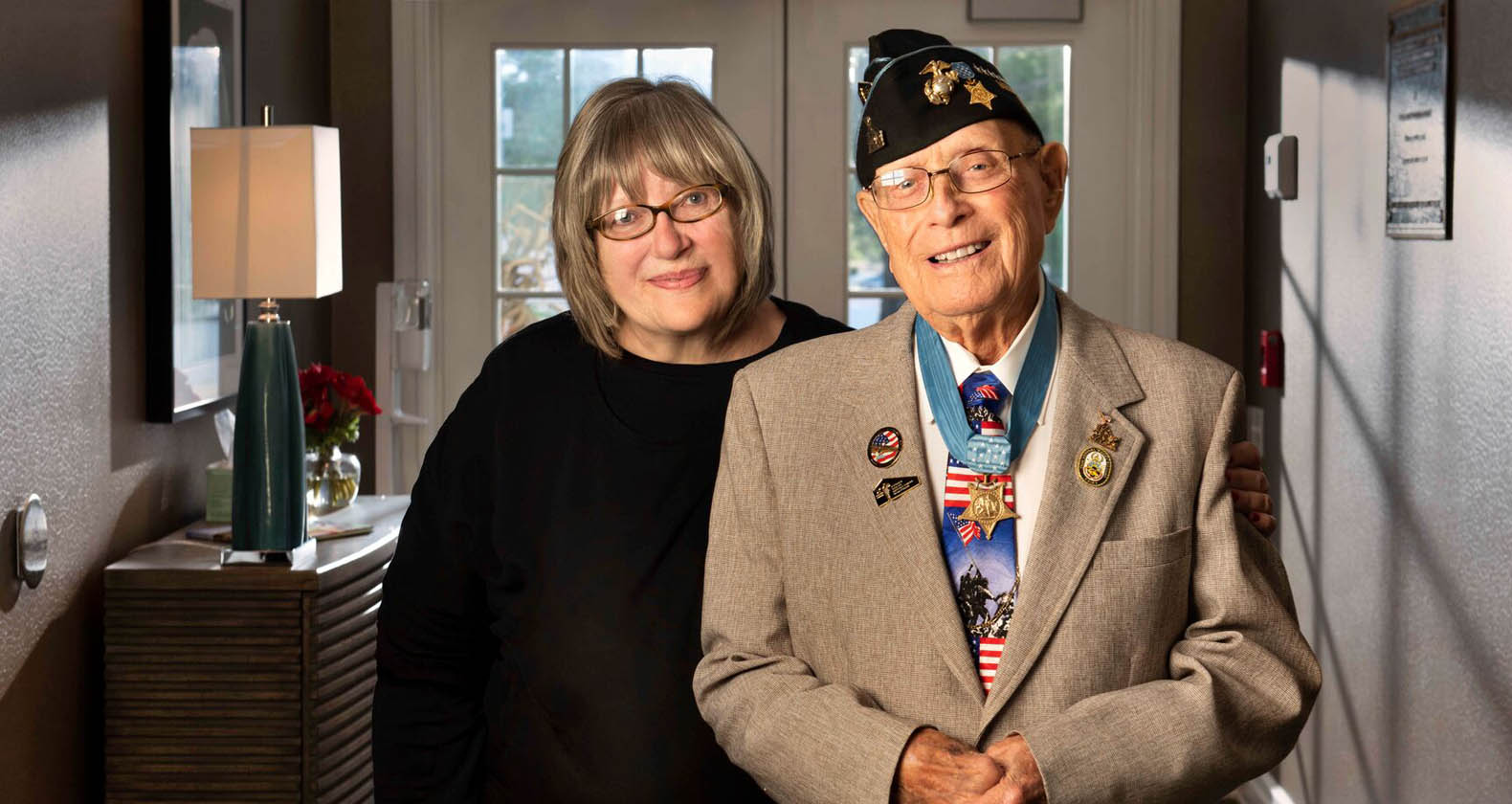
I came to learn a lot about this veteran named Woody, a valiant American residing in my small city of Huntington, West Virginia. And then I came to learn a lot from him. Hershel “Woody” Williams had received the U.S. military’s highest decoration for valor, the Medal of Honor, for heroism above and beyond the call of duty during the Battle of Iwo Jima in World War II.

But as I came to know Woody through the years, it became clear that his real heroism was displayed in the decades after he returned from the war. Woody eventually went on to dedicate his life to helping thousands of veterans live productive lives. Today, the Hershel “Woody” Williams Medal of Honor Foundation provides scholarships to Gold Star children and helps to establish Gold Star Family Memorial Monuments across the country.

The quiet influence of this humble patriot, America’s only living Medal of Honor recipient from World War II, was to shape my care of veterans over my 38-year VA nursing career. I’m honored to call him my teacher. His lessons on veterans—and living—are as timeless as the man himself. Here they are:

The best ability is availability. My first night on the job, I felt woefully inadequate to care for all of those who had served our great country. Yet as I listened to my veterans’ stories, I was stunned to discover that courage was sometimes simply fear that had said its prayers. Putting one combat boot in front of the other and answering “Yes” to the task at hand. It fascinated me that when Woody Williams first tried to join the service, the Marines didn’t take him. At five-foot-six, he was an inch shy of the height requirement. The kid from the dairy farm in Fairmont, West Virginia, who weighed only 3 ½ pounds at birth, and wasn’t expected to even live, was undeterred. The second time he declared his availability, the requirement had been changed. Whether defending our country on foreign soil, or serving veterans on the home front, his response to challenges remains the same: “I’ll try. I’ll be there. I’m available for whatever is needed.”

Our past doesn’t have to define us. When Woody Williams returned home to West Virginia after the war, his mind, heart and spirit were burdened with the unspeakable horrors of war. Nightmares plagued him, and he turned to alcohol to numb the pain. At times it seemed that his war wounds would win. But then Woody began to share his experiences at the local VFW, DAV, American Legion, and community groups. Each time he told what he’d been through, his load got a little lighter. It was then he learned the power of sharing one’s personal story. He ended up serving veterans for 33 years as a Department of Veterans Affairs service officer, connecting with individual veteran stories to tap into the resources and help they needed. Today, at the age of 98, he still travels over 200 days a year to inspire folks all over America.

Nobody can do it alone. On Easter Sunday of 1962, Woody turned his life over to Jesus. This, as I’ve heard him say countless times, was what finally gave him the strength to overcome his wartime demons, to no longer rely on alcohol to numb his pain and to dedicate himself to a lifetime of serving other veterans. Simply put, his pain was transformed into a divine purpose. We all have our own struggles—at times I didn’t see how I could make it through my nursing shift due to chronic pain. .But then I would think about Woody’s approach to serving veterans and rely on God to transform my weakness by his strength. I learned I didn’t have to tackle the whole shift at once. If I took care of the moments, in God’s power—not mine—the hours would take care of themselves.

The highest expression of love is the sacrifice of human life. One of the most harrowing effects of the war on Woody was the realization that two fellow Marines were killed in action while protecting him from enemy fire. I’ve frequently heard Woody referred to as a hero. But as much as he appreciates the honor, he is quick to counter that claim. “The real heroes of war are the ones who didn’t get to come home,” he often says. One evening I overheard Woody addressing a group of people. “This medal does not belong to me,” I heard him say. “It belongs to them. I wear it in their honor.” That statement had a profound impact on me. I studied the diplomas on my office wall. An accolade is only as meaningful as those it helps you serve, Roberta, they seemed to say. As Veterans Day approached, I replaced my wall of diplomas and awards with my collection of framed vintage prints of soldiers going off to war. My Wall of Honor had such a positive effect on connecting with my patients; I learned that making veterans the center of their care reaps rewards beyond measure.

Caring for veterans is often in the interruptions. One of my fondest memories of Woody was observing him from the sidelines as he prepared to participate in a local Memorial Day parade. In the crowd was the wife of one of my patients who’d recently passed away. When she tugged on the sleeve of his uniform, Woody stopped to take her hand. “I’m so sorry for your loss,” I heard him say with eyes that looked into the brokenness of her heart. That gesture, so typical of his big, little moments, spoke volumes to me. No matter how busy it gets, Roberta, always pause what you’re doing for what matters. When teaching staff on the front lines of veteran care, I often recounted it. The parade of life could go on without us. Those not-to-be-duplicated moments would never be ours again.

A Hearing Heart trumps everything. I recently had the opportunity to meet up with Woody at a diner in Milton, West Virginia. The hostess couldn’t wait to show me their “Woody Wall.” But when we eventually found a moment to connect, Woody immediately wanted to hear my veteran stories. I reminded him of one of my patients who had wrestled with post-traumatic stress. “You really listened to him,” I said. In my mind’s eye, I could still see that Veteran, those chapped fingers raking his curly brown beard as he recounted the hero who gave him all the time he needed. Another time, I caught a glimpse of Woody talking with a weary veteran waiting for her number to be called for a lab test. I knew of her long battle with leukemia and that she lived alone. But someone had stopped and showed her she was seen and known, filling her face with a pride no medical diagnosis could take away. “That man sees the price of freedom on every face here, Roberta,” she told me. VA nursing was never the same for me after that. When I grasped the gift of a hearing heart, the care—and the caring—of veterans amazingly fell into place.

At 100, He’s Still Skiing…and Even Racing!

One of the greatest things about growing up in Western New York was the skiing, because there was snow most of the year!

Senior skier Lou Lou Batori

When I was a child, I remember my father taking us to lessons. I took to the sport immediately. I loved it! My dad, on the other hand, found himself falling on the ground more than staying upright. I asked him why he was having trouble and he said “Son, when you’re an adult, you don’t pick up sports and languages quite as easily as when you’re a kid.” Now that I am an adult, I find that to be so true.

But maybe that’s not true for everybody. Lou Batori of Michigan is a downhill competition racer in the 70-Plus Ski Club in Northern Michigan who started racing competitively when he was 80! He also competes in NASTAR-sanctioned ski races — and, at 100 years old, he is NASTAR’s oldest skier. Ever!

Over the past 20 years, he has broken his ankle, wrist, ribs, knees, leg and tibia, but he just keeps on skiing. He loves it too much to stop due to any pesky injury.

Lou says, “I have often been asked what ski school I attended. My answer is always, ‘What flight school did the Wright brothers attend?’

“I’m always careful, except on Sunday mornings when I’m the only one [skiing]. Sanity goes out the window and you just point the tips and let them run.”

What an inspiration! He makes me miss my childhood, growing up slaloming down the steep hills outside of Buffalo. When I am 80, I will definitely make a point of taking up skiing again, thanks to Lou.

You can find out more about Lou from this CBS piece.

A Stunningly Beautiful Gesture in Church

Every Sunday they are last in line for communion. The middle-age woman patiently pushes her mother in a wheelchair, in no hurry. The older woman wears dark glasses, and I suspect her vision is impaired. She sits very still.

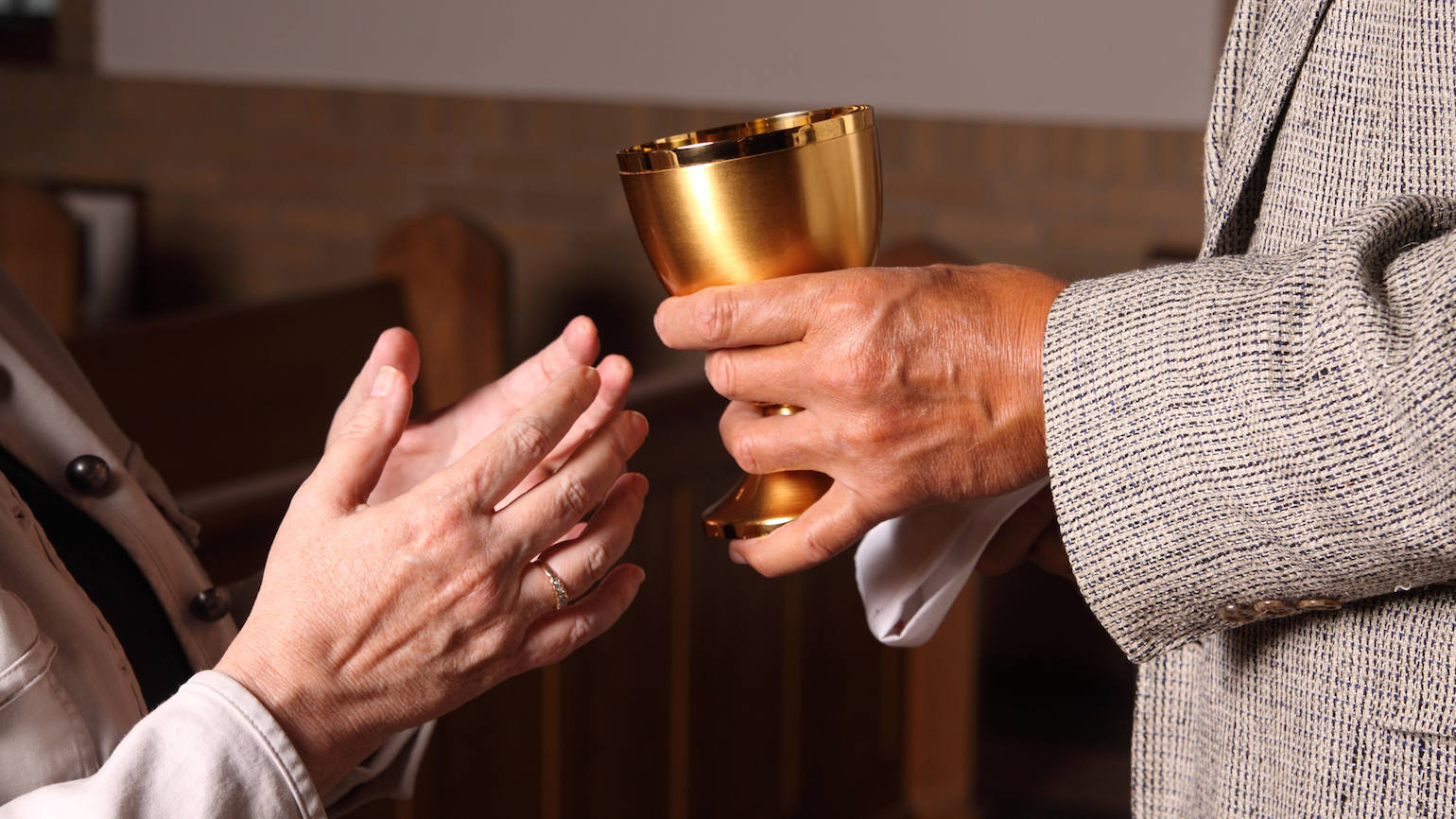
I watch this pair every week, because every week it moves my heart. When they reach the front of the church the daughter steps quietly to the side and very gently lifts her mother’s hand so the host can be placed in it.

It is stunningly beautiful, a gesture of love and respect. The daughter could, after all, let her mom put her hand out randomly, without being able to see where the priest is. She could take the host and put it in her mother’s hand herself, or even in her mouth. That would be more efficient, and would get the job done. But instead she guides her mom’s hand to the right location, and lets her mother do the rest. The word for that, I think, is support: to help just as much as the other person needs, and no more.

Then the daughter receives communion herself. She maneuvers the wheelchair to return to wherever they sit. I lean back in my seat and say a prayer of thanks: for the sensitivity of one human being to another, for the dedication needed to bring an invalid to church, for the eucharist itself.

An Incarcerated Man’s Answered Prayer for a God-Given Life

Twenty-three and one—that was the rule in the intake unit at El Dorado Correctional Facility, a state prison 170 miles away from Leavenworth, Kansas, the city where I grew up. You were locked down in your cell 23 hours a day, with one hour out for supervised recreation, while the staff did an assessment to determine what programs you were eligible for and where you would serve out your sentence.

I landed in that intake unit in March 2008. I was addicted to ecstasy, and I was selling cocaine. I got caught with drugs in my car and was sentenced to three years for possession. Once I detoxed from the ecstasy, my mind cleared and the reality of my situation hit me. I’d already served four years in juvenile corrections. Here I was, 18 months later, back behind bars. Was this how I wanted to spend my life?

Being on lockdown 23 hours a day gave me a lot of time to think. I paced my cell, sometimes talking out loud to myself, looking back at everything that had led me here.

Maybe it was predictable that I ended up in prison. Where I grew up, resources were few; violence, crime and drug activity were common. My parents were poor. My mom had four kids—I was the baby—by the time she was 21. My parents separated for a time. I thought it was because they fought and Mom kicked Dad out. I didn’t know then that the fights were about his addiction and incarcerations. My mom and siblings shielded me.

To me, my dad was a protector and provider, and I was hungry for his love and approval. But even when he was physically present, he wasn’t there emotionally. I’d see other kids with their fathers—playing ball, getting hugs—and I’d feel lonely because I didn’t have that kind of dad.

I felt lonely at school too. We moved for various reasons, including an eviction. I’d have to start over at a new school and try to make friends. It didn’t help that I was so short that everyone called me Too Short—I’m 5 foot 2 as a grown man. I was picked last for every game, even four square.

Then I discovered a way to get the acceptance and approval I craved. When I was 12, I broke into a house with my older brother. My brother grabbed the stereo. I went to the fridge and made myself a bologna sandwich. Someone called the cops, and we got arrested. I was taken to the county juvenile detention center. Because I was so young and it was my first offense, they let my mom take me home.

She was hopping mad. “You’re acting just like your dad!” she said. I didn’t understand what she meant until my older cousins told me: My dad was an addict who’d done time. It broke my heart to find out my hero was not so heroic, that my mom had been covering for him.

At school, people heard about the break-in and my arrest. For the first time, they treated me with respect. I wanted more of it. Drug dealers became my role models. They had money, fancy cars, street cred.

My mom started going to church. She convinced my dad to go too. He got clean and found steady work. They made us kids go to church with them. It was too late for me. Like my brother, I’d been seduced by the street life.

At 15, I got busted for robbery and was sentenced to two years in juvenile corrections. I tried to escape and got another two years. I was sent to facilities in other parts of the state, where I didn’t know anyone. The other guys seemed a lot tougher than me. I can’t be soft, I thought. I joined a gang and started fighting and dealing drugs to prove myself. “What are you doing?” my mom asked when she came to visit. “This isn’t you.”

I broke down and cried. “Mom, it’s hard in here. I just want to survive.”

I managed to earn my high school diploma and was told I’d be eligible for release six months early. Thirty days before I was to go home, I found out my paperwork got messed up. “Leavenworth doesn’t want you back,” the corrections staff said. “You have to complete your sentence.”

That really hardened my heart toward my hometown. When I get out, I’m going to become the biggest drug dealer in the city, I thought. I’m going to live it up and make up for this time that Leavenworth took away from me.

Sure enough, upon release, I went back to my old neighborhood and my old ways. I got back together with Jessica, my girlfriend from before I went away, and we had a son.

Eight-month-old Jermaine Jr. haunted me as I paced between my bunk and the other end of my cell. The last time I’d seen him, he was fussing. He crawled across the floor toward me and raised his arms. “He wants you to pick him up,” Jessica said.

But I was high, and the sound of his crying annoyed me. “I’ve got stuff to do,” I said. “I can hold him later.” I walked out the door and took off in my car, not realizing the police were waiting. They pulled me over and found drugs in my car.

“Now I’m 20 and locked up again,” I muttered. “Another statistic. A failure.”

I pictured little Jermaine Jr., looking to me, reaching out for me. “Is this the life I want for my son?” I asked. My question echoed off the brick walls.

If something didn’t change, my baby boy would end up like me, my brother and my dad. I had to break the cycle.

In El Dorado, I asked the corrections staff if there was a program that could help me. “I want to be a better man,” I said. They all recommended Prison Fellowship Academy, which teaches life skills from a biblical perspective. The aim was to replace criminal thinking and behaviors with new purpose and positive values. I wrote the director of the program and got accepted, and ended up in cell 507 in C2 cell house in Lansing Correctional Facility, right outside Leavenworth.

I was wary of the spiritual principles in the yearlong program, but I knew I needed to learn how to think and act in a new way. The other men welcomed me warmly. “We’re here to support you, however you need,” they said. I was used to reading people but could sense no ulterior motive, not like on the streets. No judgment. I felt accepted right away.

The program was intense. Weekly classes on life skills such as anger management, conflict resolution, accountability, goal setting, parenting. Group meetings where we had to be honest with each other and ourselves. Talks with coaches. It wasn’t easy to unlearn my negative habits. The other men helped me stay accountable.

Once in the program, I started getting visits from my family, including my parents, Jessica and Jermaine Jr. But after a few months, the visits from Jessica and Jermaine Jr. ceased. One day six months in, I was in my cell, missing Jessica and my son hard. My last few calls home had gone unanswered. I’d been writing letters to Jessica, asking about her and Jermaine Jr., but she hadn’t written back. Had I lost everyone who mattered to me? I felt so alone.

The next thing I knew, I was kneeling on the cold concrete floor. “I give up. I can’t do this on my own,” I said. “Please, God, come into my life and help me be a better man. A better dad.”

Something enveloped me there in cell 507, a loving warmth that I knew had to come from the Lord, almost as if he was holding me.

Not long after, a Prison Fellowship volunteer led us men outside for a special exercise. It was a revival weekend, and we got in a big circle around a metal barrel with a fire in it. The instructor handed out pieces of paper and said, “I want you to write down the names of everyone you’ve harmed. Then write down those who have harmed you.”

Everyone I’d harmed? The list was long. I wrote down the people I’d sold drugs to, stolen from. My parents. My girlfriend. Most of all, my son. Then I wrote down who’d hurt me. Dad. Mom. Jessica. The city of Leavenworth.

By the time I finished, I was crying. I wasn’t the only one. I asked God to let the people on the first list forgive me. And I asked him to help me forgive. “Lord, I need to let go of all this,” I said. “I’m turning it over to you.” Then I put my papers in the barrel and watched them burn to ash. My hurt and anger went with them, and at last I felt free.

The next time my parents visited, I told them about the fire exercise and asked for their forgiveness. “Dad, I’m sorry about the mistakes I’ve made,” I said. “I want to move on with my life and leave the past in the past.”

Dad looked at me in a new way, as if really seeing me. He explained what his upbringing was like, the struggles and challenges he’d faced. It was the first time I’d ever heard him talk about his past. Hearing the hurt he experienced helped me heal as a man. “We all have to take ownership of our actions,” he said. “Keep God in your life and you will make it in life. I’m here for you every step of the way now.”

His words started to fill the hole my lonely childhood had left in my heart.

I kept writing to Jessica, even though she never responded. At Christmastime, I was able to send a letter and a gift to Jermaine Jr. through Prison Fellowship Angel Tree. One Sunday, I asked God if I should keep trying to get my little family back together. “Show me if this relationship is meant to be,” I prayed.

Just then, I heard my name called over the intercom by an officer. “Wilson 91082, you’ve got a visitor.”

My parents had come the day before, so I thought it must be a mistake. But when I got to the visitation room, there was Jessica, with our son on her lap. “I got your letters about how you found Jesus,” she said. “I felt so hopeless with you in here. I started going to church, and I accepted Christ too. I want us to have a relationship with God at the center.”

I took her and Jermaine Jr. in my arms. “I’m so sorry for not being home with you,” I said. “Things will be different when I get out.” I promised Jessica I would use the remaining time on my sentence to become the man she and our son needed me to be.

Jessica brought Jermaine Jr. to visit me often. I read to him, sang songs with him and made sure to hug him, feeling grateful every time that my son was getting to know my love.

I was released in December 2010 and moved in with Jessica. We found a church community. But I had trouble finding a job because of my record. I did whatever legitimate work I could to support us—laundry, house cleaning, lawn care. My pastor saw my work ethic and hired me as a janitor at the church.

In 2011, he married Jessica and me.

Eventually I got a government job, but I couldn’t move up with my felony record. I saved up money to hire a lawyer and, in 2015, had my record expunged. A fresh start.

“What’s next?” I asked God.

I was volunteering as a youth teacher at church and a mentor at the juvenile detention center. The kids were afraid of law enforcement, and the Lord urged me to do something to build trust. I organized Unity in the Community, an event with free food and a basketball game, the teenagers versus the police department. By the end, the kids and officers were high-fiving and taking selfies together. The energy was so positive.

People encouraged me to get involved in local politics. In 2017, I ran for city commissioner. Other candidates went door-to-door. That just wasn’t me. I set up my grill in the parking lot of the dollar store and offered barbecue chicken to people. While they ate, I told them my story. “My name is Jermaine, and I want to change this community the way God changed me.”

I was elected to the city commission. In Leavenworth, the commissioner who receives the most votes is given the title of mayor. That’s how I became mayor of Leavenworth, Kansas, in 2019. On my second day as mayor, I worked with the county prosecutor to waive fees for criminal record expungement so finances wouldn’t be a barrier to other people getting their second chance.

I served two terms as mayor and am still on the city commission. Now I work as mission ambassador for Prison Fellowship. I go to events across the country to talk about our ministry and encourage churches to partner with Prison Fellowship Angel Tree.

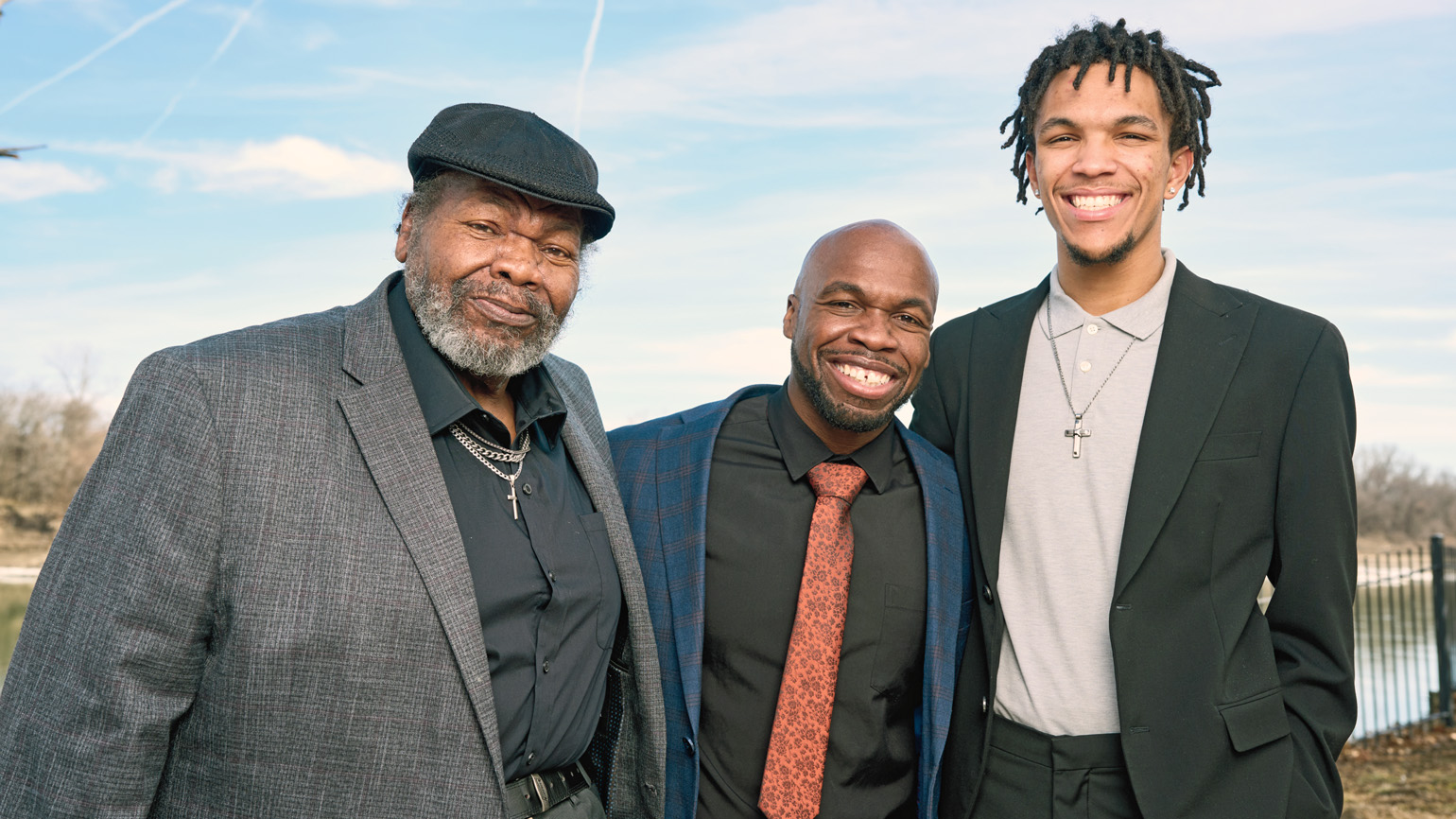
I love my job. I love my family even more. Jessica and I have five kids. We’re open with them about the past. Jermaine Jr. is 17, a high school graduate. I recently had the privilege of baptizing him. My parents are a big part of our lives. My dad is the best grandpa. He doesn’t hold back on showing his feelings anymore. We hug every time we see each other. He calls me every single day, and if I can’t pick up, he’ll leave a voicemail. “Hey, son, I know God is going to use you to do something important today,” he’ll say. “I’m proud of you.”

There’s so much love in my life now, and it all starts with God, who loved me even before I knew him and showed me how to be a better man, the man he created me to be.

For more inspiring stories, subscribe to Guideposts magazine.

A Miracle Brings Much-Needed Comfort

This is a peculiar little story I’m about to tell you. Yet, it is true.

My father-in-law died on September 10, a sudden death at the age of 60. He was a devout Christian and a church deacon. But something about the untimeliness of his death left my mother-in-law without much comfort.

She bravely carried her grief through winter’s bleakness, through all those barren, dead weeks. Even as spring came and waked the world, her burden seemed locked within her. The jonquils pushed up like tiny breaths of life from beneath the earth. And the lone dogwood tree in Mom’s front yard burst into new life. It opened its delicate pink buds, crowning the yard like an Easter bonnet. Mom watched the little tree from the window; it had always been a favorite of hers, as well as my father-in-law’s.

Summer withered away, children walked back to school and a leaf or two drifted off the trees in the yard. Still, Mom’s grief lingered. On September 10 it became quietly intense. But something almost magical was about to happen.

As she wandered to the mailbox that day, her eyes lighted on the dogwood tree in a moment of wonder. For there in the center of the browning yard, under a golden, almost autumn sun, the little tree had burst into bloom. It shimmered in new pink blossoms. Spring blossoms right there on the doorstep of autumn. And for Mom there was no doubt. The reality of resurrection was written in the petals that had come back to life on that day, of all days.

Later that day as I stared in bewilderment at the flowering tree, I felt drawn into the tiny miracle, too. For through a dogwood, God had sent a message of comfort in His own special handwriting: “Let not your heart be troubled, for he who believes in Me, though he die, yet shall he live.”

Thank You for the promise of resurrection Lord, that keeps popping up everywhere around me, like the bulbs of springtime.

A God Who Clears the Path Before Us

I had a doctor’s appointment this morning, and since I got out just around lunchtime, I zipped across town to meet my husband for lunch. He’s been my favorite lunch date for the past 43 years! We had a nice meal and sat there and talked for a while, and then we headed out for our afternoon tasks.

Paul left the parking lot a few minutes before I did. About 10 minutes later, he called. “Honey, weren’t you headed out near the mall?” I replied that I was and he said, “Well, I’m ahead of you a ways and there’s a bad wreck up here. It’s just happened recently and traffic is starting to back up, so you should probably get off at the ramp that’s before the mall exit so you won’t get stuck there.”

I appreciated the heads-up, but then it was as if God whispered to my heart, “That’s what I do for you. I go before you in every situation. I know what lies ahead, and if you’ll listen to Me, I’ll tell you what to do or what to avoid.” Here are some of His heads-up promises for us:

In Deuteronomy 31:8, He says, “The LORD is the one who goes ahead of you; He will be with you He will not fail you or forsake you. Do not fear or be dismayed.” He promises to be with us so we don’t need to be afraid.

Exodus 13:21 states, “The LORD was going before them in a pillar of cloud by day to lead them on the way, and in a pillar of fire by night to give them light, that they might travel by day and by night.” He traveled with the children of Israel, giving them direction and shade in the day and light at night. He will do the same for us and will direct us in every circumstance.

Read More: A Divinely Timed Lesson

In Isaiah 45:2, He promises, “I will go before you and make the rough places smooth.” How precious to know that God can take those rough places in our lives and smooth them out for us.

Deuteronomy 1:30 says, “The LORD your God who goes before you will Himself fight on your behalf.” What a comfort to know that we don’t have to fight our battles alone. God will fight for us.

I’m so grateful for a God who goes before us. How about you?

A Football Comeback Taught Her the Importance of Not Giving Up

I turned my grocery cart out of the produce aisle and pulled out the phone buzzing in my purse. It was Julia, my 19-year-old daughter, calling from college.

“Mom, I’m so stressed,” she said without even a hello.

“Business class?” I guessed. Julia had been struggling with the course all semester.

“I’m afraid I’m going to flunk the test tomorrow,” she said. “I pay attention in class, I take notes, I study, but I have zero confidence. Maybe I should change my major.”

“You don’t have to decide that right away,” I said, quickly grabbing the last grocery item on my list. This wasn’t the best place for a serious conversation, and I needed to figure out what to say. “I’ll call you back after I load the car.”

I walked toward the checkout counter, having no idea how to help Julia feel less discouraged. Was changing her major the practical thing to do?

I got in line behind a family decked out in Indiana Colts gear. Giving parental advice was easier when the kids were little. “You like the Colts, huh?” I asked the little boy. He looked about seven.

“I’m a huuuge fan,” he declared. “Peyton Manning’s my favorite player.”

“Really?” I said. “But he’s retired. You’re too young to even remember him playing.”

The boy’s mom jumped in. “He watches videos of Peyton on YouTube. Constantly.”

“My favorite game is the comeback against Tampa Bay,” the boy said. “They call it the Monday Night Miracle. Did you ever see that one?”

I knew it well. I had seen it—well, most of it—live, when it aired back in October 2003. Julia was a toddler then; her brother was in preschool. Their father and I had gone to a friend’s house to watch the game. When the Colts were down 35-14 with only five minutes left in the game, I insisted we head home. “The game is clearly over,” I’d said.

On my way to work the next morning, I learned that the game had been far from over. After we left, the Colts scored 21 points in only four minutes, tying the game and sending it into overtime. They won by a field goal. We’d missed one of the best comebacks of all time.

Years later, I finally caught those four miracle minutes on TV. By that time, I was a single mom living in a tiny rental house with the kids. Flipping channels late at night to distract me from my worries, I watched a replay of the whole game. The Colts fell further and further behind. Peyton threw an interception with five minutes and nine seconds left in the game. Tampa ran it back for a touchdown, making a comeback virtually impossible. The Colts were going to lose their first game of the season. I watched Peyton collapse onto the bench.

I knew how he felt at the moment, because a comeback didn’t seem likely in my life either at that point. The financial struggles, worries about being a good mom, trying to help my kids adjust to the divorce. It was too much too handle. The camera zoomed in on Peyton’s face, full of despair. From his perspective on that bench, failure was inevitable.

But Peyton got his comeback, I thought, adding my groceries to the conveyer belt. And I got mine too. Right after I watched the end of the game that night, I checked my email and found a suggestion from an online dating site I was using. “We think we found a match,” the message read. “Let us know if you’d like to meet him.” I met him, a single dad, and now we were married.

The boy was wheeling the cart off with his mom. “The Monday Night Miracle is my favorite game too,” I called after him. “I’m glad you reminded me of it. Today, especially.”

I hit redial to Julia as soon as I loaded the car. “Don’t give up,” I said. “Keep doing your best, and you just might be surprised.”

Julia got a B on her test the next day and found a classmate to study with in the future. Whatever miracles God sends her way, she’s ready to make the most of them. Like Peyton Manning and me.

For more angelic stories, subscribe to Angels on Earth magazine.

A First-Year Teacher Learns an Important Lesson

With my degree in education and an internship in a high school under my belt, I felt ready for my first real job teaching fourth graders. I prepared clear lesson objectives and plans for how to meet them. I broke down complicated ideas into concepts kids at this level could understand. Then I got into the classroom, and it all fell apart. Why isn’t this working? I thought at the end of another discouraging day.

Many of my students were living in poverty, which could make every aspect of their lives more difficult. I knew that going in, but I thought I had the tools to reach any child. I didn’t. I failed to keep the class focused. Students ran around, sometimes got into fights, then flew out the door the second the bell rang.

One child in particular really concerned me. I pushed in the chair at his empty desk. He barely paid attention and sometimes fell asleep on his books. I suspected he wasn’t getting enough to eat at home. Other children made fun of his dirty clothes. How could I begin to make a difference?

It was tempting to think my job was impossible, but I knew that wasn’t true. I had proof right across the hall, in Marcia’s classroom. Marcia taught third grade. She was a bundle of energy, a ray of sunshine in her kids’ lives. The children ran up to her in the hall, gave her hugs. My kids don’t even like me, I thought, turning out the lights in my room.

“See you tomorrow!” Marcia called as I passed her door.

Tomorrow, I thought. Is there something I could do differently? I’d already tried every prompt and technique I’d learned in school. Maybe I had more to learn from the best teacher I knew: Marcia.

The next day, while my children were at gym class, I asked Marcia if I could observe her for a while. What a contrast. “How about a song,” she said, taking out a guitar. “A song about verbs!” The children cheered.

Who had time for singing? How would Marcia ever get through her lessons? I spent my whole day watching the clock, watching the minutes slip away without progress. Marcia seemed to have all the time in the world—not just for singing, but for each child. When one even looked a bit lost, she walked over to the student’s desk and dropped to her knees to give up-close attention. And that was just the beginning. Her students were engaged, always interested in the lesson. The only difference between our classrooms was Marcia herself.

I couldn’t wait to put some of the things I’d learned into practice. It wasn’t easy at first, ignoring my lesson plans. But I discovered I enjoyed walking from desk to desk, talking to my students one-on-one, getting to know them as individuals. They responded in kind. Following Marcia’s lead, I broke them into small groups to work together, and moved desks around in clusters for special projects.

Marcia liked what she saw when she came to my room at the end of the week. But even with all my new skills, it wasn’t enough to reach the student I was most worried about. “He just can’t focus, won’t do his homework,” I told her in private.

“Friend,” Marcia said seriously, “this might not be easy for you to hear. But if he’s not learning, you’re not teaching.”

“What more can I do? I fear he won’t pass the state test at the end of the year. I don’t know how to make the lessons any simpler—”

“You’re not teaching a lesson,” said Marcia, cutting me off. “You’re teaching a child. The child comes first, every time. He’s more important than reading or writing or any state test. You have to give him whatever he needs to learn.”

“But how?”

“We start with his physical needs,” Marcia said. “Then we get to know him.”

“I have his records from last year…” I said.

“Don’t bother with that. He needs a fresh start. On Monday, I want you to come to school with a loaf of bread, peanut butter and jelly. Set up a special place for him—that closet is a good spot, if you move your supplies. Bring a bar of soap and a washcloth for him to use at the sink. Collect some clean clothes for him.” Marcia gave me a wink. “That’s your homework.”

I was prepared on Monday. At recess, I asked the young man to stay inside with me. “I have a surprise,” I said. I led him to the sink and offered him the washcloth for his hands and face. Then came the difficult part. “Your momma needs your help,” I told him. “I’m going to help you help her by teaching you how to stay clean and make a sandwich. Do you think you can do that?”

He nodded. I showed him where I’d set up a desk, a place where he could go if he wanted to take a break or even a nap, or to change into the fresh clothes I’d brought. “This is your spot whenever you need it,” I explained to him.

The other children noticed him in his special place when they returned, but they understood he wasn’t in trouble. Later on, I sent him to the office with a note so I could talk to the class about how bad it feels to be made fun of. Once the children imagined how they would feel in his place, they didn’t want to tease him anymore. There would be no state test on compassion, but I couldn’t think of a more important lesson for anyone.

Marcia’s advice wasn’t just for students in dire circumstances. Every student had things going on in their life that affected their progress. I started paying attention to expressions and body language. If I saw frustration, we’d all gather on the floor for a story or a snack. Most times, the kids returned to their lesson rejuvenated.

I began to look forward to work each day. I arrived early, but never before Marcia. One morning, I noticed her standing by one of her students’ desks.

“What are you doing?” I asked.

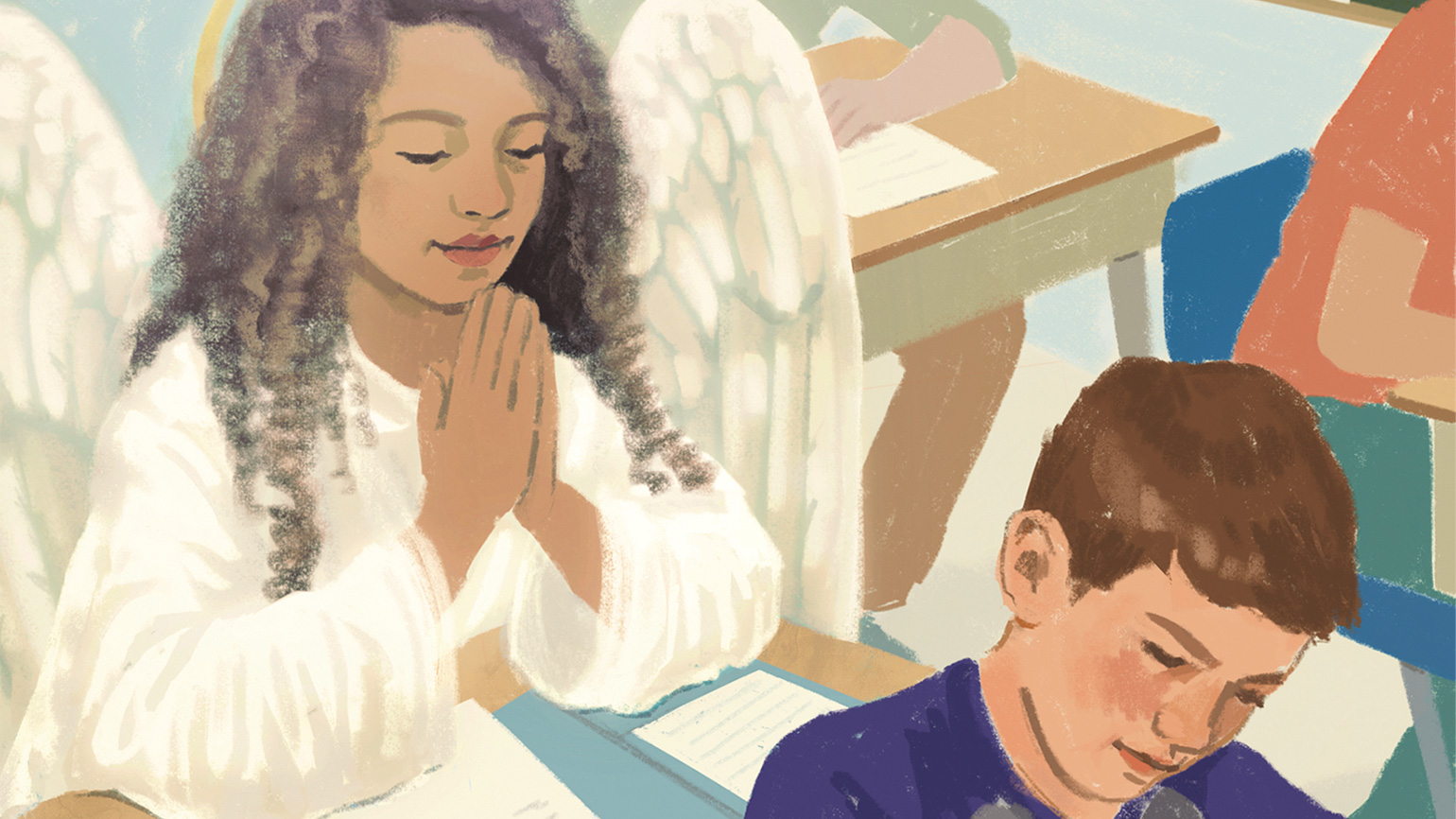
“Every morning I stop by each desk to pray for the student who sits there,” she said. Leave it to Marcia to have one more lesson to teach me, perhaps the most important one of all.

Marcia left our school at the end of the year, but her legacy lived on in the students she prepared for the world, and also in me. She inspired me every day of my 40-year career, as I thanked God for giving me the chance to teach each child, and for sending Marcia to teach me.

For more angelic stories, subscribe to Angels on Earth magazine.

Advent Symbols: What Do They Mean?

Advent is a season in which people around the world prepare for the miraculous birth of Jesus. Most often, this period is a time of anticipation and beloved traditions. For many of us, our fondest Advent memories go back to our childhood when we had eagerly counted down the 25 days to Christmas with a special Advent calendar. But wreaths, candles and nativity scenes are also important symbols of Advent. But what do they actually represent? Each symbol has a rich history and holds a special meaning. Families often pass down Advent traditions but if you’re celebrating Christmas for the first time, or have just started a family, you may be looking to learn more about Advent. Celebrate the season and create traditions of your own with these important Advent symbols.

Wreaths

The Advent wreath, a circular garland made of evergreen branches, symbolizes eternity; Its circular shape represents God’s eternal life and love. Advent candles are often nestled in the wreath along with other decorations, like berries. One way to make the Advent wreath more special is to create one yourself—and place it on your table as a centerpiece! Make this crafty project a fun one for your children by letting them add additional decorations. Another option is to allow them to create a decorative base for the wreath.

Nativity Scene

The Nativity scene, or Creche, is used to commemorate the birth of Christ. Families all around the world create beautiful Nativity scenes at home to honor Mary, Jesus and Joseph at the manger; often, angels, wise men, children and animals are added, too. Some people prefer to keep the manger empty until Christmas Eve and then add the baby Jesus to celebrate the day of his arrival. Many churches put together an outdoor display or host live nativity scenes with church members and live animals. If you want to make your Nativity scene more interactive, have each family member add a piece or character to it each week throughout Advent.

Candles

Advent candles, which are often set in the wreath, are lit on the four Sundays leading up to Christmas, with each candle representing something different. Three candles are purple, symbolizing hope, love and peace, while the third one is pink to symbolize joy. A more recent tradition adds a white candle to be placed in the center of the wreath and lit on Christmas Eve. Called the “Christ Candle,” it represents the pure and sinless Christ. Advent candle lighting is a perfect hands-on tradition for children as well as a great way to build anticipation during the Holiday season for something other than Christmas presents. It’s also a great opportunity to enjoy a peaceful moment with family in the midst of busy errands and everyday activities.

Advent Calendar

Thought to date back to 1850s Germany, the Advent calendar is a fun way for kids and families to count down the days until Christmas. Traditional calendars with windows or doors—revealing an item or gift—are meant to be opened every day leading up to December 25. Whether you’re a newlywed looking to start new traditions with your spouse or a parent looking for ways to make Advent season exciting for your children, the Advent calendar is a great way to honor the season with your loved ones.