
Embrace God's truth with our new book, The Lies that Bind

These Martial Arts Angels Support a Competitor in Need

This was getting ugly. Inside a massive ballroom at the MGM Grand in Las Vegas, my 14-year-old son, Andrew, was competing in his first match at the Taekwondo Nationals and getting pummeled. It was hard to watch.

He took a hard kick to the chest, stumbling backward. A second kick threw him to the mat. He struggled to stand, the air knocked out of him. I felt helpless from my seat near the edge of the mat. I wasn’t overly concerned about him getting physically hurt. The competitors wore padded vests and head gear. It was Andrew’s pride, his enthusiasm for this sport he loved, I worried might never recover.

“C’mon, Andrew,” I cheered under my breath. Spectators weren’t supposed to make noise so the contestants could hear their coaches. But I couldn’t just sit there and do nothing. “You can do this!” I called out to him. I looked at the score. 20-0. My wife, Angie, was back in Michigan eagerly awaiting my text of the results. God, help my son out here, I prayed. He’s worked so hard for this.

He’d started Taekwondo when he was only 10 and taken to it immediately. It was the emphasis on kicking that attracted him, the athleticism. To him it was a way to express himself, like a dancer. Andrew chose a school that focused on personal achievement—mastering the increasingly more difficult moves and positions—rather than competition. It became his passion. He loved the emphasis on discipline and respect, the history of the sport and the work required to master each level. In four years he’d earned his black belt. I was so proud of him. Most of all I liked seeing his confidence and self-esteem grow as he progressed. Traits that would serve him well as he grew into a young man.

Shortly after he’d earned his black belt we moved to a new town and enrolled Andrew in a new Taekwondo school. This one focused on competition. Andrew was excited about the challenge. He was obviously talented. How different could it be?

The answer was playing out in front of me. Disoriented and desperate to slow the flurry of kicks, Andrew was clutching his opponent, a violation of the rules. The referee assessed a foul.

Andrew again wrapped his arms around his competitor, drawing another foul. Ten fouls and he’d be disqualified. He was already up to six.

Competition seemed like an entirely different sport from the one Andrew had trained for. The intricacies of mastering the ideal kick in isolation barely mattered. Strategy was key. Reacting. Everything happened at lightning speed. I saw now that experience was key.

Maybe I should have asked more questions before agreeing to let Andrew come to Nationals, a prestigious tournament that for top competitors can provide connections to elite coaches, sponsorships, even a pipeline to the Olympics. When his new coach told us about the possibility of competing at Nationals, Andrew was jazzed, despite having been in only one previous match.

The coach explained that with the number of entrants down due to Covid, the tournament wasn’t requiring competitors to have won a qualifying match this year. “It will be a great experience,” he said. “You’ll learn so much.”

“I feel like I have to do this,” Andrew told Angie and me. “I’ve worked so hard to get to this level. This could be huge for me.”

How could we say no? We’d encouraged all of our three children in their passions. I knew Andrew had trained hard and given it his best. And I had to admit I was excited about seeing him compete on such a grand stage.

Now I worried he was being humiliated. His dreams crushed. I’m a typical guy, a problem solver. With Andrew’s fouls mounting, I started thinking of ways I could boost his spirits after this was all over. Maybe take in a show? Go out for sushi, his favorite meal?

My mind raced for an answer as Andrew recorded his tenth foul. The match was over in only the second round. The final score: 42-2. Andrew shuffled off the mat, shoulders slumped, head bowed. His coach gave him a hug and so did I. “It’s just one match,” I said. “You’ll do better next time.” Andrew shrugged, refusing to make eye contact. It seemed there was nothing I could say or do to make him feel any better. I helped him remove his gear, a crush of bodies around us as the next competitors prepared to take the mat. Andrew pulled away.

“I just want to be alone,” he said. I understood, but my heart ached for him. He slunk away from the crowd.

I texted Angie to ask for advice: “Andrew lost bad. I don’t know what to do for him.”

Angie texted back: “Just tell him you love him. I’ll say a prayer.”

Honestly, I was hoping for something more. I went to Andrew and convinced him to go get a bite to eat. We went to the hotel’s massive food court, the lines of people stretching on forever. Just getting a view of the menu boards was a challenge. It didn’t help that two hulky, bodybuilder types were nearly pressing up against us, just inches away. Give us some space, I wanted to tell them, but thought better of it.

“Can we just go get some sushi?” Andrew said.

“Absolutely,” I said. “Great idea.” The sushi restaurant was in an entirely different wing of the hotel, at least a half mile away. Andrew barely said a word on our walk over.

We sat at the sushi bar and ordered. We stared at our phones, the minutes seeming like hours. Until our food came. Andrew looked to his left and my eyes followed his. The two hulky men from the food court were sitting next to Andrew. They seemed to have come out of nowhere.

I looked at them closer. They looked like models, chiseled, toned physiques. Well over six feet tall. Massive biceps that seemed they might burst through the T-shirts they were wearing. Their hair was stylishly cut. I couldn’t help but stare. Were they following us?

“Dude, did you fight today?” the man sitting closest to Andrew asked.

“What?” Andrew said, surprised at the question. He was wearing his street clothes, with no hint of him even being interested in Taekwondo.

“Did you fight in the tournament?” the man repeated, but with more intensity, as if he was seriously interested in the answer.

“Yeah,” Andrew said glumly. “I got whooped.”

“But was it fun?” the man asked, his eyes peering into Andrew’s.

I watched in amazement as Andrew’s face went from dejected to almost gleeful. “Kinda!” Andrew said, his whole body becoming animated now.

“What happened? No, let me guess,” the man said. “You got on the mat and everything started spinning. You couldn’t hear anything. Could barely see the guy you were fighting.”

“That’s exactly what happened,” Andrew said. “How did you know?”

“Dude, it happens to all of us,” he said. “It’s so disorienting the first few times. You just have to keep at it until you get comfortable.”

Andrew was fully engaged now. “Are you two fighters?” he asked.

Now the second man responded. “We train with UFC mixed martial arts fighters. We practice Jiu-Jitsu. Our coach is in a big match tomorrow so we’re here to cheer him on.”

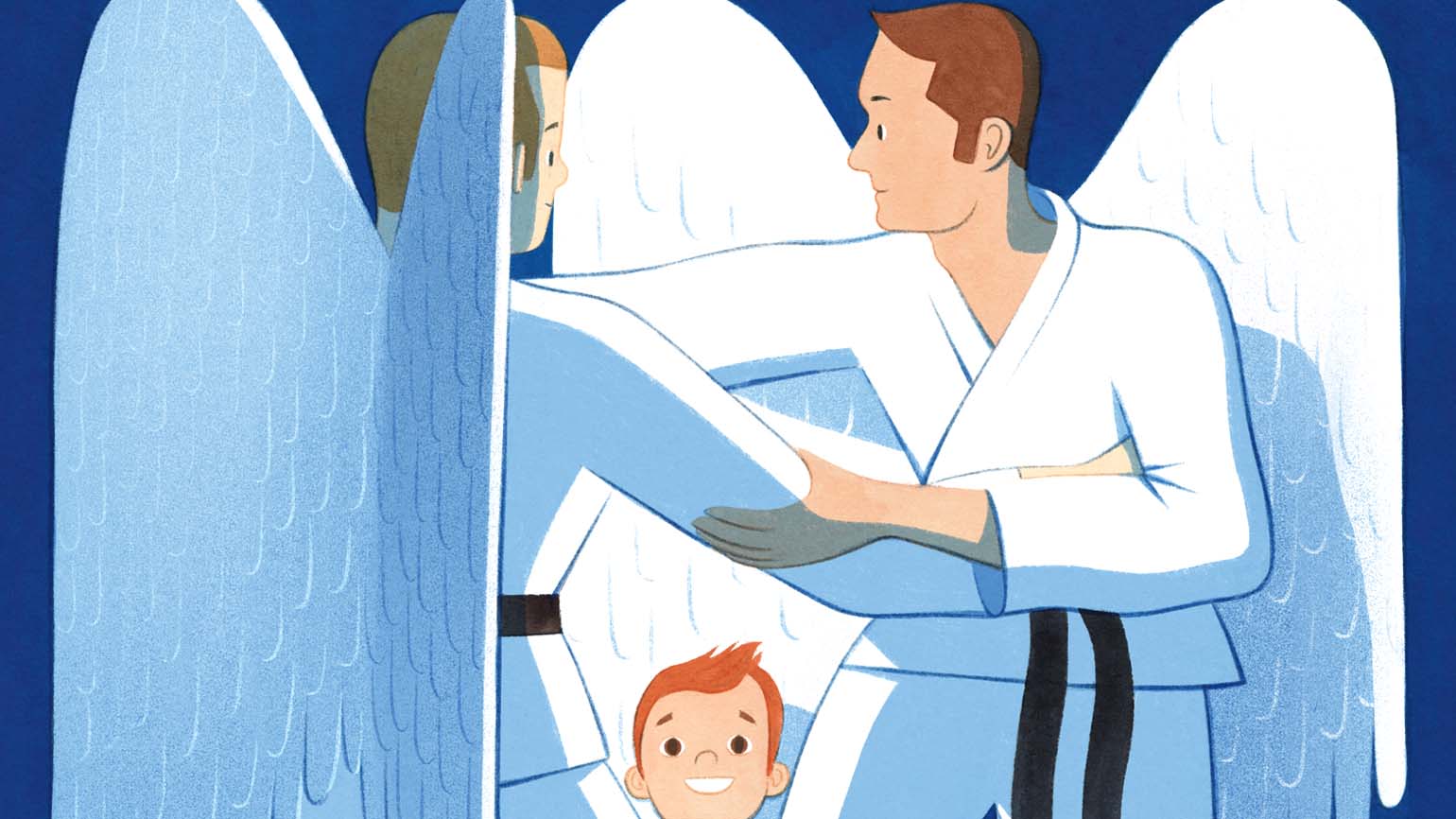
They took out their phones and showed Andrew pictures of their worldwide travels, their training and matches, victories and defeats. They were totally focused on Andrew. They treated him like he was an equal. They were there for him in a way I couldn’t possibly be. Like angels on a divine mission.

“Here’s the thing,” the man closest to Andrew said. “It’s okay to lose, even badly. You learn far more in losing than in winning. The most important thing is to have fun.”

Andrew focused on every word. We’d long finished eating. People were waiting for our seats. We thanked the men and got up to leave. “You two are godsends,” I said. “You have no idea.”

I texted Angie on the way back to our hotel room. Andrew’s feet barely touched the carpeted floors. “I can’t wait to start training for my next match,” he said.

This time I knew exactly what to say. “Now we know you’ve definitely got some big guys in your corner.”

For more angelic stories, subscribe to Angels on Earth magazine.
The Promise of Hope

You may have heard that I’ve written a book called The Promise of Hope: How True Stories of Hope and Inspiration Saved My Life and How They Can Transform Yours.

It’s available to Guideposts readers starting this month and will be on sale in bookstores May 1. I can’t tell you how thrilled I am to say that. Like most books, this one was a long time in the making. And it didn’t end up being the book I started out to write. But I’m not the same person I was when I started the book either.

A little background: We’d been talking about me doing a book for the Guideposts audience for some time, one where I shared what I had learned from my experiences editing and writing Guideposts stories, how people grew in the face of challenges and adversity and discovered or deepened their faith. I would take some of my favorite stories and retell them, trying to uncover universal truths about personal change, a topic I know you readers care about. In fact, every Guideposts story is about change. It’s the first thing we editors ask ourselves when evaluating a manuscript: How does the narrator change?

Plus, I was going to include some people and stories that had never been in the magazine, just to keep it fresh. Little did I know that my own story would be one of them.

Not that I had any desire to tell my story. Virtually no one at Guideposts knew it, and certainly I’d never dreamed of going public with it, except perhaps for the occasional guarded reference in one of my devotionals for Daily Guideposts. That part of my life was behind me. Buried. Silent. Forgotten.

Yet there are things we never bury or forget, no matter how hard we try, and there are always people who want to help us see the truth about ourselves. In my case that would be Julee, my wife.

We were up at our little getaway cabin in the Berkshire Hills on a raw, blustery late afternoon in early spring, the sylvan light throwing long shadows across the yard. It was hard to tell if the distant howling came from the wind raking the budding trees or from a pack of starving coyotes on the hill behind our place, up beyond the Appalachian Trail that borders the property.

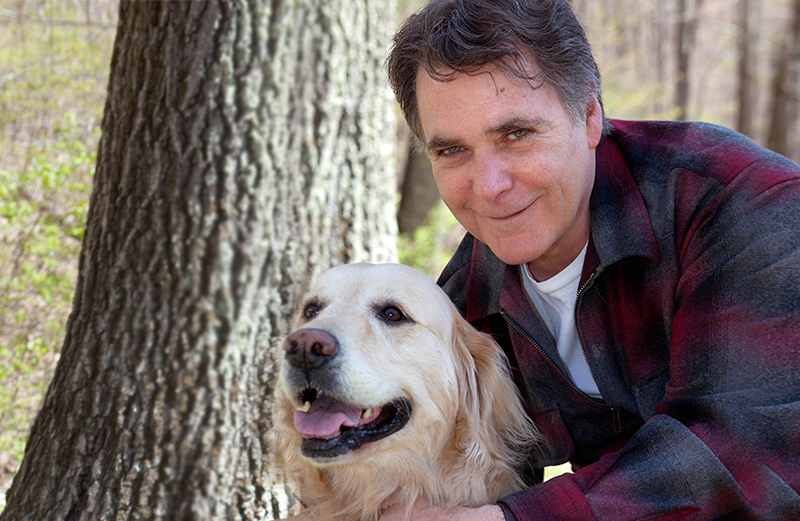
The air still held the insinuation of winter, as if it might not be done with us yet. Early spring is tough on the coyotes and bears, and we had our young golden retriever, Millie, who was not even two yet. I’d have to keep an eye on her.

I brought in some wood for the stove. Julee was looking curiously at a sheaf of papers with a lot of small type strewn across the dining room table. It was a book contract I was about to sign.

“Millie in?” she asked.

“Yep.”

“You can’t leave her out with that bear around.”

“I never do.”

“A bear would make short work of her. You saw what it did to our trash bins—crushed them like soda cans. Those coyotes too. They’re not as big as she is, but they hunt in packs and they’re hungry.”

“She’s in.”

I dumped the wood in the holder and hung up my coat. Millie wagged her tail in expectation of a treat, a request I’m trained to obey. Julee was looking at the papers again.

“So,” she said, “what’s this book about?”

“It’s about the power of personal change, discovering faith, spiritual growth and what I’ve learned about people and their stories in my time at Guideposts. A little like a self-help book but more like a not-by-yourself help book. But mostly it’s about the stories. The stuff people go through is amazing. Look at some of the stuff we’ve been through, Jules.”

She was silent and all at once I sensed she was hoping I’d actually heard what I’d said. Finally she said, “You’re going to tell your own story, aren’t you, Edward?”

“I thought I might touch on it,” I replied noncommittally.

Julee tended to the fire in the woodstove a little more vigorously than was strictly necessary. “Touch on it?” she asked. “How do you just touch on a story like yours?”

I didn’t have an answer.

“Look, Edward, you’ve helped all kinds of people tell their personal stories for Guideposts. But nobody knows yours, not in all these years. Maybe it’s time to try your own medicine. Your story will help people. That’s what Guideposts stories are supposed to do. And you have a Guideposts story. Big time.”

This was the perfect opportunity to take Millie for a walk, I decided. I grabbed her leash and headed back outside to mull the question over. My heart was racing.

I flopped down in an old log chair, leaned back and looked up through the denuded branches at the graying sky, where streaks of sunset were already appearing. Millie settled at my feet.

Julee was right. For years I’d been getting people to tell their stories, helping them to discover the spiritual and emotional truths of their experiences and bare their souls to millions of readers. These stories had transformed me from the person I was when I first stumbled into the Guideposts offices, knowing nothing about the organization but desperately needing a job…needing a life, really. Needing something. These stories—your stories—changed my life; they saved it, in fact.

Our stories are the road maps of our lives. They reveal and define us. People have been telling stories since they could carve on cave walls, and probably earlier. So why was I so afraid of telling mine?

You never bury yourself completely. You never silence the past altogether. Your story is always a part of you. It had been years since I’d thought deeply about the past, about my family, and how at one time I had been such a hopeless case, basically homeless, utterly lost, practically dead. I was absolutely the last person in the world anyone would have predicted might become the editor-in-chief of the country’s most beloved inspirational magazine.

Then came that day when I wandered into Guideposts and for reasons I still don’t totally understand was offered a job and just as amazingly accepted.

I heard Millie whine demurely, a pitiful sound coming from a 90-pound dog. But she was hungry for dinner. That was her story.

Back inside Julee had stoked a fire that would have made Hephaestus proud, and the cabin was quite warm.

“I see you’re literally turning up the heat on me, Jules.”

She thrust a pen toward me. “If you are going to sign that agreement, sign it to write an honest book, because I don’t think I want to spend a year never seeing you while you put together something about other people’s stories and what lessons you learned from them. They’re great stories, Edward, with powerful lessons. Just put yours in there too. All of it. It will help people, I promise. Don’t you know that your story is why I married you?”

Writing autobiographically is a little like performing surgery on yourself without anesthesia, and I discovered that honesty is the true north of my spiritual compass. Yes, I yielded to Julee (gratefully, as it turns out) and wove my own personal story through the other stories I tell, trying to connect them all into a larger narrative mosaic.

I was able to distill from these stories nine basic elements of faith-filled personal growth: Honesty, Willingness, Imagination, Commitment, Faith, Forgiveness, Acceptance, Resilience, Love. These nine themes constitute the chapters of the book and help you apply the lessons of the stories to your own life. Or you can just sit back and be inspired! Colleagues have said it’s a pretty good read no matter how you approach it.

The first time I heard the name Guideposts I thought it might be a travel magazine, and if you substitute the word journey for travel you wouldn’t be wrong. Writing this book was a journey, one where I was able to see my life today as part of a larger story.

I saw a journey that started in hopelessness and ended in faith. I saw my family and the love that held my parents together after the tragedy of my brother’s death. I saw myself wander far off the lighted path and into the deepest darkness, only to emerge into a greater and more sublime light.

And I saw at last the reason I wandered into Guideposts that day—the promise of hope that I was to find in your stories.

Download your FREE ebook, True Inspirational Stories: 9 Real Life Stories of Hope & Faith

The Italian City That Keeps Love Alive

Verona, Italy, is my hometown. Not only did I grow up here, but my parents ran a bed-and-breakfast that catered to tourists from all over the world who came to see our Roman amphitheatre, medieval Castelvecchio, the gardens of the Giardino Giusti.

They often asked us for suggestions on what else to see. I thought I knew all of Verona’s secrets.

So I was surprised one evening a couple of years ago when I was chatting with a couple from the United States. I loved hearing what foreigners thought of our city–plus, it was a good chance to practice my English. “We just loved Juliet’s House,” the woman told me.

A lot of people knew Verona as the setting for one of the world’s most famous love stories: William Shakespeare’s Romeo and Juliet. Shakespeare probably never set foot in Verona himself, but he imagined the city so vividly people still came to see it for themselves hundreds of years later.

In 1936 an enterprising Veronian built a balcony on a house off the Piazza delle Erbe and declared it the Casa di Giulietta. Its courtyard is often crowded with people who take turns posing on the balcony.

That wasn’t the only spot where pilgrims might feel a kinship with the tender, angelic Juliet. For centuries people with romantic troubles had written letters to Shakespeare’s heroine. At first they left their letters at the San Francesco al Corso Monastery, which was said to be the place of Juliet’s tomb.

Later, when mail service improved, they sent letters addressed simply to Juliet Capulet, Verona, Italy. Some tucked notes between the bricks in the wall at Casa di Giulietta, or wrote their messages right on the bricks themselves.

Eventually the house put up panels that could be replaced twice a year–once on September 16, Juliet’s birthday, and next on–when else?–Valentine’s Day.

“The Juliet Club has its work cut out,” the American woman said.

“The Juliet Club?” I asked. “Is that something you have in the USA?”

“No, it’s right here in Verona,” she said. “The club receives Juliet’s mail and responds to every single letter by hand. More than six thousand a year.”

How could such a thing be going on right here in Verona without me knowing about it? I had to learn more. For the first time in my life, the tourists were directing me somewhere!

I found the Juliet Club housed in a small building on the outskirts of the city. It was founded in 1993 by a baker, Giulio Tamassia, who remains president. I spoke to one of the volunteers, Giovanna. “We are Juliet’s secretaries,” she said.

She showed me piles of mail in a dozen languages: Italian, German, English, Spanish, Japanese… “Dear Juliet,” one letter began, “I’m writing to you because you’re the only person who can understand how I feel.”

“So many letters start like that,” said Giovanna.

People who were lonely, or were too young and shy to open their hearts to family or friends, turned to Juliet, a girl who sacrificed everything for love. The girl who said, “My bounty is as boundless as the sea,/My love as deep; the more I give to thee,/The more I have, for both are infinite.”

Angels carried prayers to God and brought divine comfort. Juliet’s secretaries brought a different kind of comfort. The comfort that comes from another human being who says, “I understand.”

When I saw the archive of answered letters and imagined all those people reaching out for support, I knew I wanted to contribute. I became a volunteer. My training was rigorous, and I was under constant supervision.

Happy love, sad love, lost love, unrequited love–with the help of more experienced volunteers, I learned to really think about what each letter-writer needed.

“What they all need most is someone who listens, like a friend,” Giovanna explained. “You don’t expect a friend to solve your problems. You just need her or him to be there for you. To love you, no matter what.”

Today I’m an official secretary of Juliet. Every week I take a stack of letters home to answer, choosing just the right words. When I come across a scenario unfamiliar to me, I pass it to a secretary with different life experiences.

Our ages span from 20 to 55 years old. Some are single like me, some are married, some divorced. Some are women, some are men. Among us we can always find just the right way to let the letter-writer know we care.

When Juliet dies at the end of Shakespeare’s play, we’re told that her “immortal part with angels lives.” But we at the Juliet Club help keep her alive on earth too. Right here in her–and my–hometown.

Download your FREE ebook, Angel Sightings: 7 Inspirational Stories About Heavenly Angels and Everyday Angels on Earth

The Book That Changed Her Life

December 1974. The road ahead was dark and winding, lined by pine trees. I was 18, on my way home to Wisconsin for the holidays after my first semester at college in Minnesota. Legally I was an adult. Yet thinking of the future I felt like a lost child. Did God have a plan for me?

Six months earlier, in a tiny hospital chapel, I’d felt his presence in a way I never had before. A feeling that didn’t go away. But in a busy world of classes, friends, and a career path to figure out, sometimes it was hard to hear his voice. I wanted to be sure I was headed in the right direction.

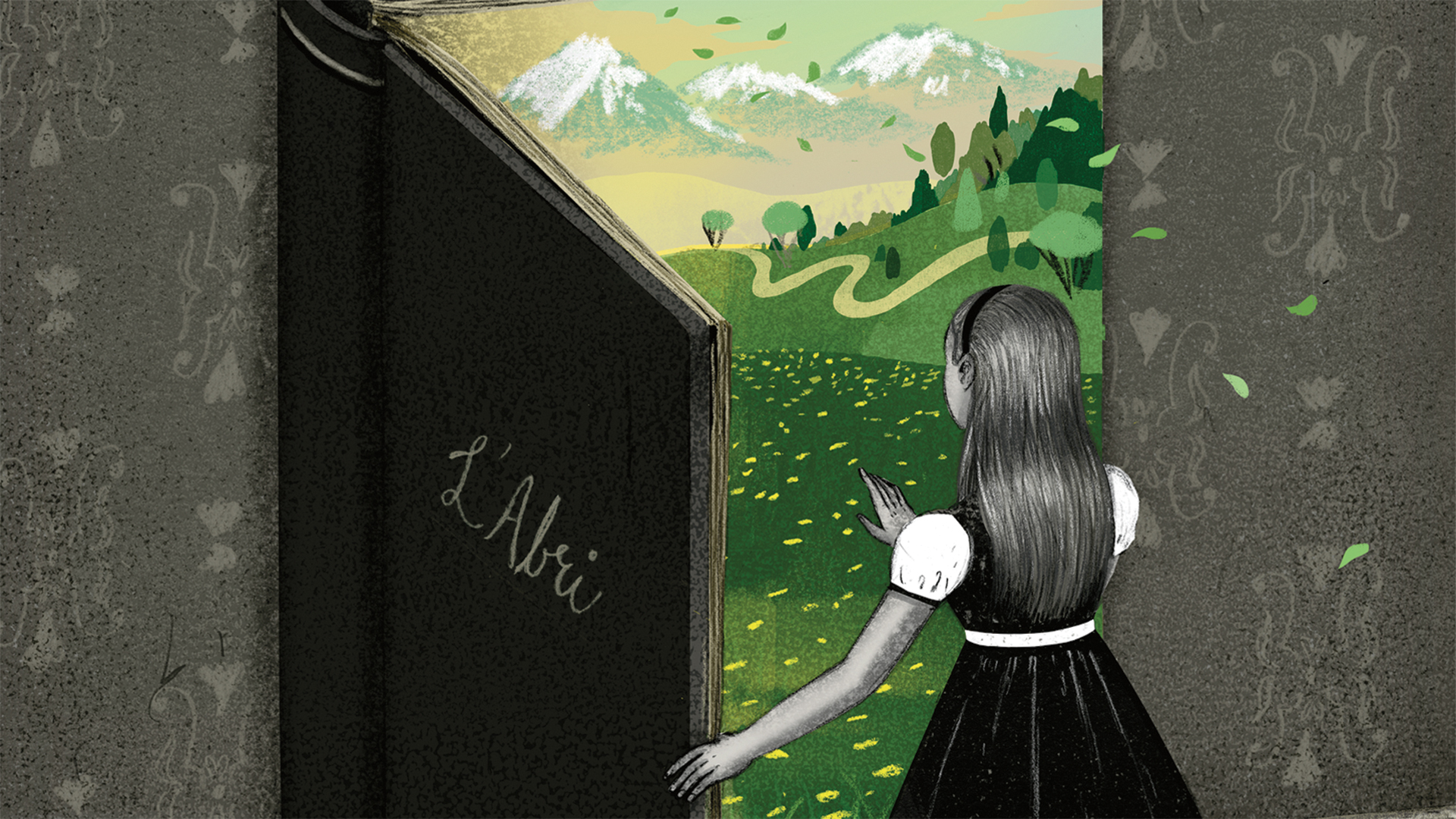
Christmas morning, Mom handed me a book, wrapped with just a thin strip of paper concealing the title. Books were treasured in my family and Mom had a knack for choosing exactly the right ones for me. The cover of this one, by someone named Edith Schaeffer, was illustrat­ed with a collage of photographs: mountains, a chapel, red flowers, a woman in prayer. I read the title.

L’Abri? What’s that?”

“It’s a Christian retreat center in Switzerland,” Mom said. “They welcome young people from all over the world. I think you’ll see your own journey in its pages.”

I opened to the title page, where Mom always wrote an inscription. “Dear Phoebe, May you grow forever in God. He will keep you on course. Mom. Christmas, 1974.”

I took my time reading, savoring every page. It wasn’t just the words that made the book special. It was the idea of this community created for people like me, young people overwhelmed by the pressures of life who needed a quiet space to figure out what God had planned. L’abri means “shelter” in French, and that’s what the book was for me.

I was only halfway through by the time I returned to school. Then classwork took over and I had no time to read anything else. L’Abri stayed tucked away on the shelf.

One day my roommate Debbie asked to borrow it. “I’ve heard great things about this place,” she said. “I even have some friends who are going over there for the summer.”

“Sure,” I said. “I don’t have time to finish it anyway.”

Freshman year ended. The book disappeared. Maybe it got mixed up with Debbie’s things. Or somebody else picked it up. I wasn’t sure. The only thing I knew was that I’d never see the book again.

Summer 1978. The path ahead was sunny and peaceful, surrounded by meadows and mountains. I was in Switzerland, on my way to L’Abri with a backpack and a few good friends. Though I hadn’t finished the book, the dream of L’Abri had stayed with me.

For three weeks I lived at the retreat nestled in the Alps. I hiked in the mountains I’d seen on the cover of the book, prayed in the little chapel, spoke with other people searching for their way in life. It didn’t matter that I’d lost the book. Now I found myself living in its pages.

Summer 2004. I was at a new cross­road. I was 48 years old, married 26 years. Since my husband’s job as a cardiac surgeon kept him so busy, I’d put aside my own aspirations to stay home with our three kids. Now that they were growing up, I had more time for myself. My youngest would be finishing high school soon. He’d leave home to pursue dreams of his own. I felt as if I were back in college, unsure about my future, driving that winding road home for Christmas.

I’d helped lead a few retreats at my church and was interested in doing more, perhaps with a focus on prayer or creativity. Could I really pull it off? My friend Cynthia had offered to help me. She dropped by one day to plan. “Even if you didn’t get paid for it, you’ve done a lot of work volunteering and organizing at church and in the community,” she reminded me. “That’s valuable experience.”

I knew I could count on Cynthia for support. We’d been friends for al­most 20 years, since our sons met in Sunday school. We’d hit it off right away, especially when I found out she and her husband had worked at L’Abri, about a year after the sum­mer I visited. We both understood what a special place it was.

I made some tea and we sat down on the couch. Cynthia pulled a book out of her bag. “When I was thinking about what we might do with our re­treat this book kept coming to mind,” she said. “I feel like there’s something in it that will help with our planning.” I immediately recognized the collage on the cover: mountains, a chapel, red flowers, a woman praying. “L’Abri, by Edith Schaeffer,” I said, without having to read the author’s name.

I ran my hand over the cover, faded with age. So funny, I thought, how this book has been such a guiding force in my life, and I never actually finished reading it.

“I got this copy secondhand at a sidewalk sale on Cape Cod in the early eighties,” Cynthia said. “It was sitting in a dollar box. I already had a copy, but for that price I figured I could use an extra. Here’s the funny thing. I’ve owned it for longer than I’ve known you, but I only yesterday noticed there’s an inscription in it—to some­one named Phoebe.” I opened to the title page. “Dear Phoebe, May you grow forever in God. He will keep you on course. Mom. Christmas, 1974.”

Today. My path has taken me further than I could have dreamed. In the years since the book found me again I’ve gone to graduate school and gotten a degree in pastoral studies. I’ve worked as a pastor and a spiritual director. I’ve enjoyed hosting retreats, many focused on women making midlife transitions just as I did.

Before sitting down to begin work for the day, I open my copy of L’Abri. It now has two inscriptions, the one from Mom and a new one, from Cynthia: “Faithful is he who calls you, and he also will bring it to pass.”

Read more: L’Abri: The Shelter of Serenity

For more inspiring stories, subscribe to Mysterious Ways magazine.

The Bible Verse Text That Gave Her Strength

I was at a Native American reservation in California, two hours from the nearest big city. A desert landscape of scrub brush and rocky slopes extended in all directions.

I was here to run. And I was pretty intimidated.

It was November 2019, and I had just arrived at the Ragnar Los Coyotes trail relay race. The annual race is a grueling multiday relay through the rugged beauty of Los Coyotes Indian Reservation in San Diego County.

More than 200 runners were here, camped out in a small city of tents. I knew no one. Everyone looked way younger—and fitter—than I was.

My husband, Tom, thought I was nuts when I signed up.

“Let me get this straight,” he said. “You’re going to fly from North Carolina to California, meet up with total strangers, drive two hours into the mountains where cell phones don’t work and there’s no running water. Then you’re going to camp with those strangers while competing in a multiday relay race?”

Now I was asking myself the very same question. I gazed at the sleek, toned athletes setting up their tents and chatting about past trail races they’d run.

I was 58, a former teacher and stay-at-home mom of two grown kids. I’d been a recreational runner for years; I’d even competed in races. But I’d never run a trail race in my life.

Nothing like this. Some runners travel around the world to compete in big-name marathons or off road races in spectacular locations. Not me. Family came first.

The previous year, Kate, our The younger daughter, had gone off to college. Suddenly I was free to try a bigger adventure. When an online moms’ running group advertised this rugged race on the other side of the country, I jumped at it.

My training would be considered a joke by the elite runners here. There are no big hills in my North Carolina town. If I wanted to run up a hill, I’d have to go to a parking garage.

Neighbors watched and wondered as I slogged through two runs a day in the August heat. One pulled up beside me in her car and asked if I wanted to sign up for a text message group she hosted that sent daily Bible verses to members’ phones.

“Sure!” I said. I needed all the encouragement I could get.

Like right now. I felt alone in this remote landscape. I couldn’t even call Tom or the girls. There was no cell service.

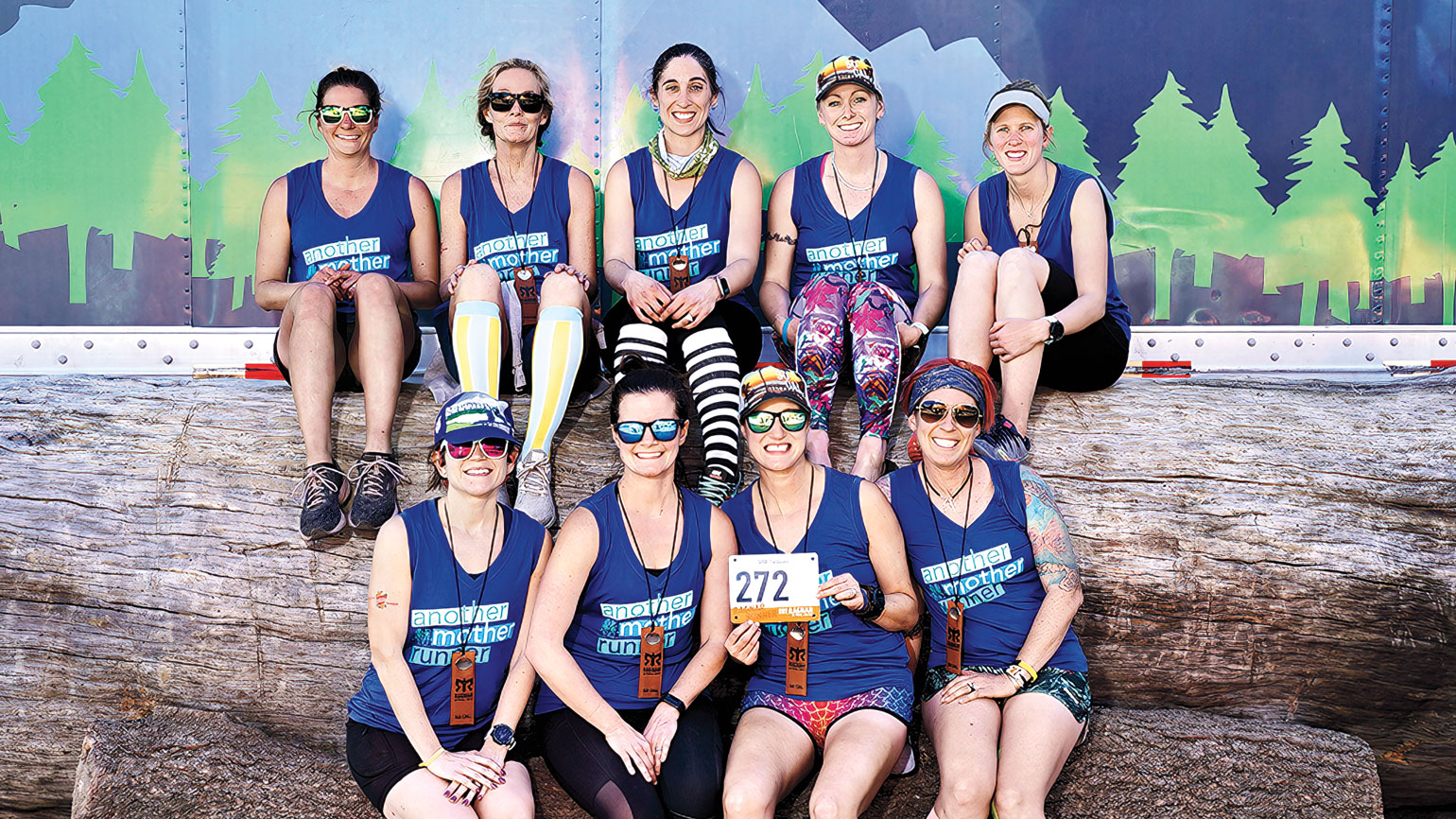
I joined my relay team. We were eight women from around the United States selected by the moms’ running group. I was the oldest by far.

We gathered around the tent where we’d sleep during the race. We talked about the course, three loops of increasing difficulty with a total elevation change of nearly 4,000 feet.

Each member of the team had to take turns running each loop. It would take more than 24 hours for everyone to complete the entire course.

Ping!

We looked around. The sound came from my cell phone.

“Did you just get a text?” one of my teammates asked.

“I did,” I said, puzzled.

I was even more puzzled when I read the message. It was a Bible verse. From Isaiah, chapter 41: “So do not fear, for I am with you; do not be dismayed, for I am your God. I be will strengthen you and help you; I will uphold you with my righteous right hand.

”It was my neighbor’s Bible verse group text. How did it show up on my phone? It was evening; she usually sent the texts in the morning. And there was no reception here.

“It’s a Bible verse,” I said.“said.

“Let’s hear it,” someone said.

I read the words aloud.

“Now that is something to think about,” another teammate said.

“Five minutes to start!” our team leader cried. The discussion ended, and we scrambled to gather our things and head to the starting line.

I was runner number five on the team. It was getting dark when I began laboring up the rocky trails of the first loop. I had to walk and grab tree branches to haul myself up the steepest slopes. What if I fell? My headlamp slipped. I kept running.

First loop.

Second loop.

I tried to nap in the tent until the final, toughest loop. Day was breaking as I set out. Oh boy, the first two loops had been a warm-up by comparison. Almost immediately I had to walk, too discouraged to run up trails that seemed almost vertical.

Runners passed on either side. My lungs burned. I wanted to stop.

“Left foot, right foot,” a runner chanted as he zipped by.

I stopped and caught my breath. The verse from Isaiah sounded in my head: I will strengthen you and help you. I wasn’t alone; God was with me. I can do this, I told myself. All I had to do was move my left foot, then my right foot.

I got going again and picked up speed. I pushed onward. All of a sudden, I heard cheering ahead. My teammates were hooting and clapping as I crossed the finish line.

We waited for three more runners on our team to finish. As the last one approached, we ran onto the course and joined her across the finish line.

We hugged each other, our dusty faces streaked with tears. We took photos with our medals, packed up our campsite and headed for San Diego.

As soon as my team members and I got back in cell range, all of our phones started buzzing. Mine lit up with multiple texts from Tom and the girls, asking how the race was going and sending me encouragement.

None of those texts had made it through.

Only one did. The one I’d needed the most.

The Best of the Mysterious Ways Blog 2011

Last week, you voted on the best Mysterious Ways story to appear in Guideposts this year. With 25% of the vote, Sheri Bull’s story, “Miracle at the Front Door,” was the clear favorite. Maybe it was such a clear favorite because Sheri’s story showed that even the most vulnerable among us—a mother home alone with her children in the dead of winter—are being cared for, whether we’re aware of it or not.

Throughout 2011 on the Mysterious Ways blog, we’ve shared even more incredible stories from the news and from our Guideposts family. Now it’s time to decide which story touched you the most. We’ve chosen 10 stories we believe reveal that something more than luck or coincidence is at work in our lives. Was there a story you thought was so incredible you just had to share it with friends? Click the links below to read the stories, then come back and vote for the most spine-tingling, most wonder-filled story from around the world this year.

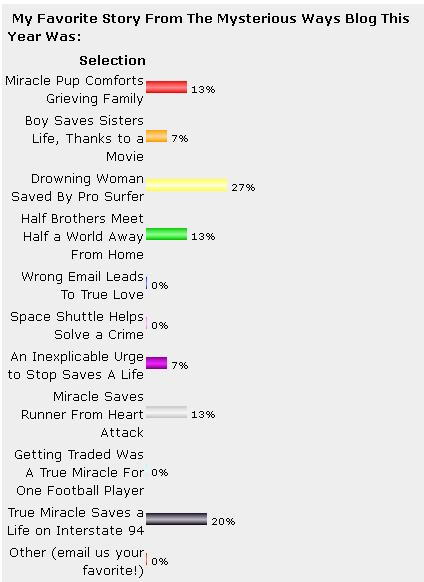
My Favorite Story from the Mysterious Ways Blog This Year Was:
Miracle Pup Comforts Grieving Family
Boy Saves Sister’s Life, Thanks to a Movie
Drowning Woman Saved by Pro Surfer
Half Brothers Meet Half a World Away from Home
Wrong Email Leads to True Love
Space Shuttle Helps Solve a Crime
An Inexplicable Urge to Stop Saves a Life
Miracle Saves Runner from Fatal Heart Attack
Getting Traded Was a True Miracle for One Football Player
True Miracle Saves a Life on Interstate 94
Other (email us your favorite)
The poll is now closed. See below for the winner!

We’ll report the winner next Thursday! In the meantime, keep sending your Mysterious Ways stories. Maybe your true story will be voted the best next year!

[Update] And the results are in:

Poll Results

According to Guideposts readers, the most compelling Mysterious Ways story from the headlines this year was the story of James Pribram and Maira Khan in Laguna Beach, California. It’s a perfect example of the right person being delivered to the right place at just the right time. Check it out if you haven’t already.

The Bear Claw That Brought Her Comfort

Sunday breakfast was my time with Dad when I was growing up. We would read the comics and share a sweet pastry. Bear claws were our favorite. Dad would split one right down the middle. “Take your half,” he’d tell me, and we’d enjoy every bite. Even after I grew up and moved out, Dad would still save half of his weekly bear claw and give it to me the next time I came over for dinner.

One day, we went out for coffee to talk about our trip to New York City, which was coming up in a couple weeks. Dad, a proud New Yorker, was so excited to show me his favorite spots. “I want to take you to this diner I used to go to every morning before work,” he said. “I would always get a cup of coffee and a snail.” I couldn’t help but laugh. Like a bear claw, a snail was such a funny name for a pastry. “I can’t wait to share a snail in the city,” I said.

We never got the chance. Just a week later, Dad died of a stroke. I was overcome by grief. I couldn’t even bring myself to find comfort in a bear claw. The thought of eating one without Dad taking the other half made me too sad.

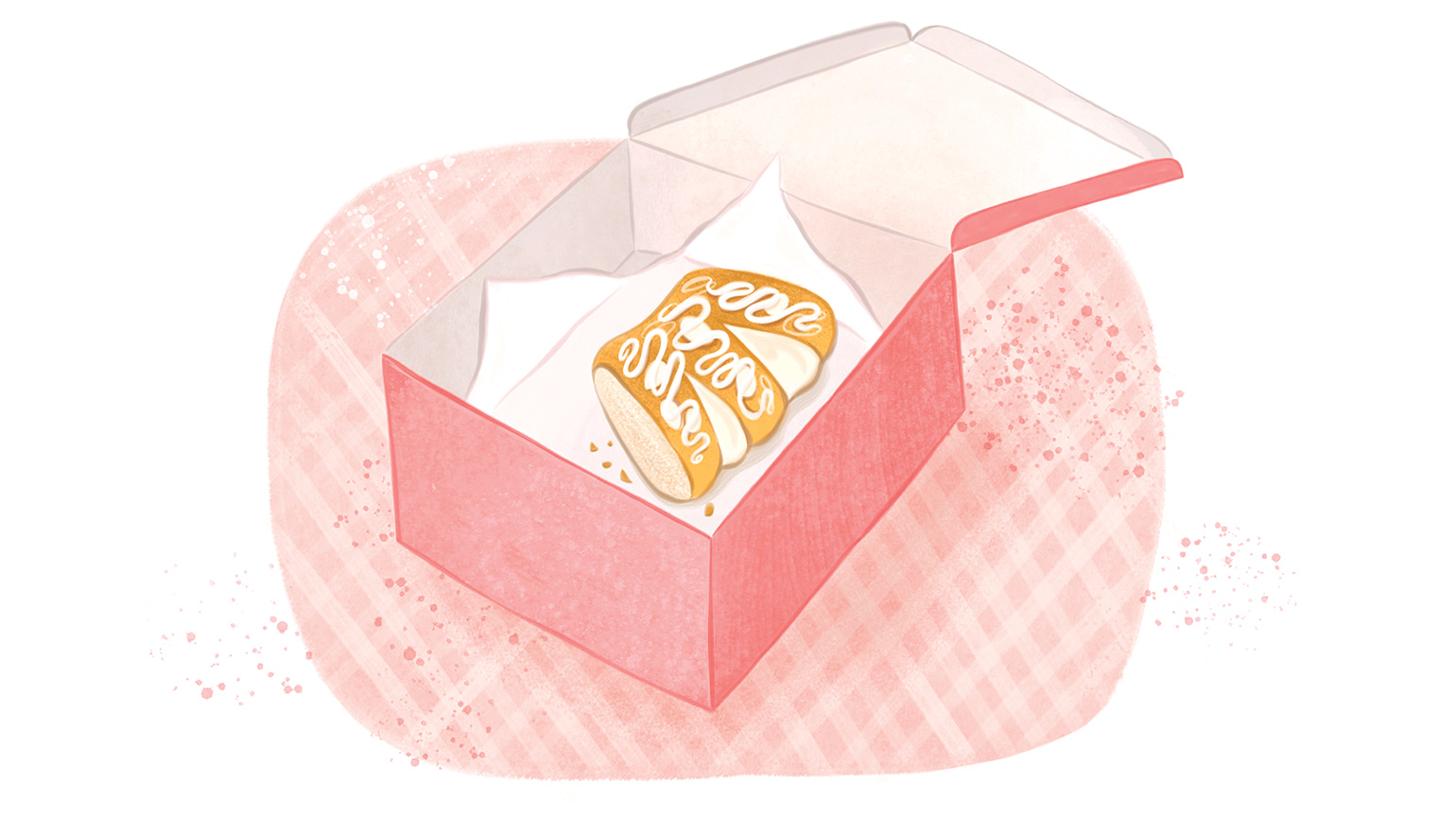
A few months later, I was at the office and went to the kitchen for a cup of coffee. On the counter was a pink bakery box. Out of curiosity more than hunger, I peeked inside. Only a few pastries were left—including a bear claw, cut perfectly down the middle. And next to it was a snail. “Take your half,” I could almost hear Dad say. I did, and I enjoyed every bite.

For more inspiring stories, subscribe to Guideposts magazine.

Soccer Is Boring

I’ve tried to like it. I’ve pretended to like it.

I’ve watched “football,” i.e. soccer, in a London pub full of howling, pint-swilling die-hard fans. I’ve seen big, live national matches in packed stadiums in Ecuador and Colombia, where the most compelling element was the ever-present threat of violence and mayhem in the stands, fans smashing beer bottles over one another’s heads. I’ve watched the World Cup, which is presently being held in Brazil. There could be no more sacrosanct moment for me to make this admission–I just can’t get into soccer.

Which is unprecedented. Usually I can be instantly sucked in by any activity where a score is kept. Julee claims I will watch anything competitive, and I totally do. Except soccer.

It isn’t just that the game is slow-paced and low-scoring. Similar slander can be leveled (wrongly, I believe) against baseball. And as we approach the Major League All-Star Break, that incomparable midsummer night, maybe the very nature of baseball is useful by way of comparison to today’s modern sports, including soccer.

Our putative national pastime is really a nineteenth-century pastoral activity, a Victorian-era invention with overtones of Romanticism. It is one of the few sports (and alone among modern sports) where time is not the enemy, the second foe. There is no clock. There is no overtime, or–heaven forbid–sudden death, just extra innings. In theory a baseball game can last until Judgment Day. Football, basketball, hockey–all are desperate, mechanistic battles against the relentless game clock. When time “expires,” you’re either a winner or a loser. Time is the ultimate conqueror.

Nor does baseball have penalties. A football game’s outcome often turns on the judgment of a single official declaring that a violation of the rules has occurred and must be punished (though the other team can show mercy if it is to their advantage to do so). I find the frequency of penalties in basketball so maddening that it makes most contests unbearable and reveals how imperfectly conceived basketball is if a game cannot progress more than a minute without a blaring horn announcing that yet another foul has been committed. In hockey there is actually a provision for incarcerating the offending player. Punishment is a key to the game. The closest thing to a penalty in baseball is an error, and that is more a penalty against oneself rather than a transgression, a “miscue” rather than a violation.

Soccer has a kaleidoscope of infractions, replete with colored “penalty cards.” Plus “extra time” to compensate for the time wasted distributing said cards. Maybe that’s why I haven’t fallen in love with soccer, the way I’ve been told I’m supposed to if I don’t want to be seen as some Yankee yokel. Nothing much happens outside people faking victimhood and trying to con a ref into calling a penalty. An entire nation’s sense of pride can pivot on such a moment. Riots and looting break out.

Once again this World Cup I have tried to get excited about soccer (don’t call it football) and have ended up preferring to watch paint dry. “I don’t know, Jules,” I said to my wife the other day. “I just can’t get interested in it no matter how hard I try.”

“Maybe,” she said slyly, “this is God’s way of telling you you watch too much sports.”

Ha! Score one for Julee.

Silas: A Miraculous Connection from A Biblical Namesake

When my son and his wife named our first grandson Silas, after the biblical character, I went back to the text with renewed interest. There it was, in the book of Acts, chapter 16. Silas and the apostle Paul were in prison. There was no possibility of escape. They were in the innermost cell, their feet fastened into stocks.

Sometime around midnight, Silas and Paul were singing hymns and praying, the other prisoners curious as to how they could be praising God at a time like this. And what was the result? A powerful earthquake that rocked the earth and flung the prison doors wide open. The chains came loose.

Singing…an earthquake…and a miraculous answer to prayer. Why did that bring back to memory something that had once happened to me?

As a kid, I loved to sing. (Still do.) In sophomore year at my suburban California high school, I yearned to be in the spring musical. But not just as a member of the chorus, as I’d done in my freshman year. I wanted to play one of the leads. To sing a solo. To have a starring role. The show selected was Brigadoon. We’d do four performances in May, rehearsing for months.

Auditions began in February. I knew the musical well, having grown up listening to the record over and over, learning all the songs. That was another impressive thing about being in the musical. The school recorded the whole thing on an LP. It would be like hearing myself on one of those original Broadway cast albums I treasured.

I auditioned for the second male lead, Charlie Dalrymple. As the tenor, Charlie sang the upbeat “I’ll Go Home with Bonnie Jean” and the lyrical “Come to Me, Bend to Me.” He even got to get married on stage. A dream role in my eyes.

Brigadoon, if you don’t know it, has , a magical, mystical plot. An American tourist, Tommy, stumbles upon a Scottish town, the so-named Brigadoon. The town appears out of the Scottish mist once every 100 years—and for only 24 hours—because a towns person had prayed it would be hidden to keep it safe from evil. On that magical day of the town’s appearance in the twentieth century, all of Brigadoon is celebrating the wedding of their own Charlie and Bonnie Jean. Meanwhile, the American Tommy falls madly in love with Fiona, one of the residents of Brigadoon. What will be the couple’s fate when Brigadoon recedes, with Fiona, into the fog for another 100 years?

I’d done well enough in my audition to make it to the callbacks, but there my nerves got the best of me. My voice seemed to get lost in a fog of its own. The director, our drama of teacher, went into a snit fit, something he was famous for doing. He declared that the show couldn’t go on. It was impossible under the circumstances. We didn’t have the talent, he said. We had no male leads good enough to play the parts.

I went to bed that night feeling utterly disheartened and said a few prayers of my own. I didn’t have the problems of the imprisoned Silas, but this dejected high schooler saw no way out of his situation. All seemed hopeless. Would I ever get my big chance on stage? My surfer brother in the next bed wouldn’t have understood, so I kept my disappointment between God and me.

Shortly before dawn, I woke to the earth’s tremble. My bed shook. I sat up and watched a tennis shoe bounce into the air. My brother sat up just as the other shoe took flight. “Cool!” he shouted. “An earthquake!” Which was as exciting to him as catching a monster wave.

The tremor lasted about a minute, at which point my mom poked her head into our room. “Did you feel the earthquake?”

Yes, Mom, we did. As it turned out, we weren’t far from the epicenter.

School was canceled that day. Fortunately, there was no apparent damage in our town, but it was certainly a reminder of how fragile life could be. Some of my drama friends and I gathered at the coffee shop for lunch, all of us in dismay about the show. We wanted to do it.

Back at school, the director surprised us. He was willing to give us another try. Maybe the earthquake had put things into perspective for him, softened him a bit. This time I sang my heart out, quelling my fears and giving the performance my all. In the end, I was cast as Charlie, a lead role in my sophomore year!

In the play, Charlie and Bonnie Jean’s isn’t the only love story. Everything works out for Tommy and Fiona, his one true love of Brigadoon. The town schoolmaster gives the final message: “When ye love someone deeply, anythin’ is possible. Even miracles.”

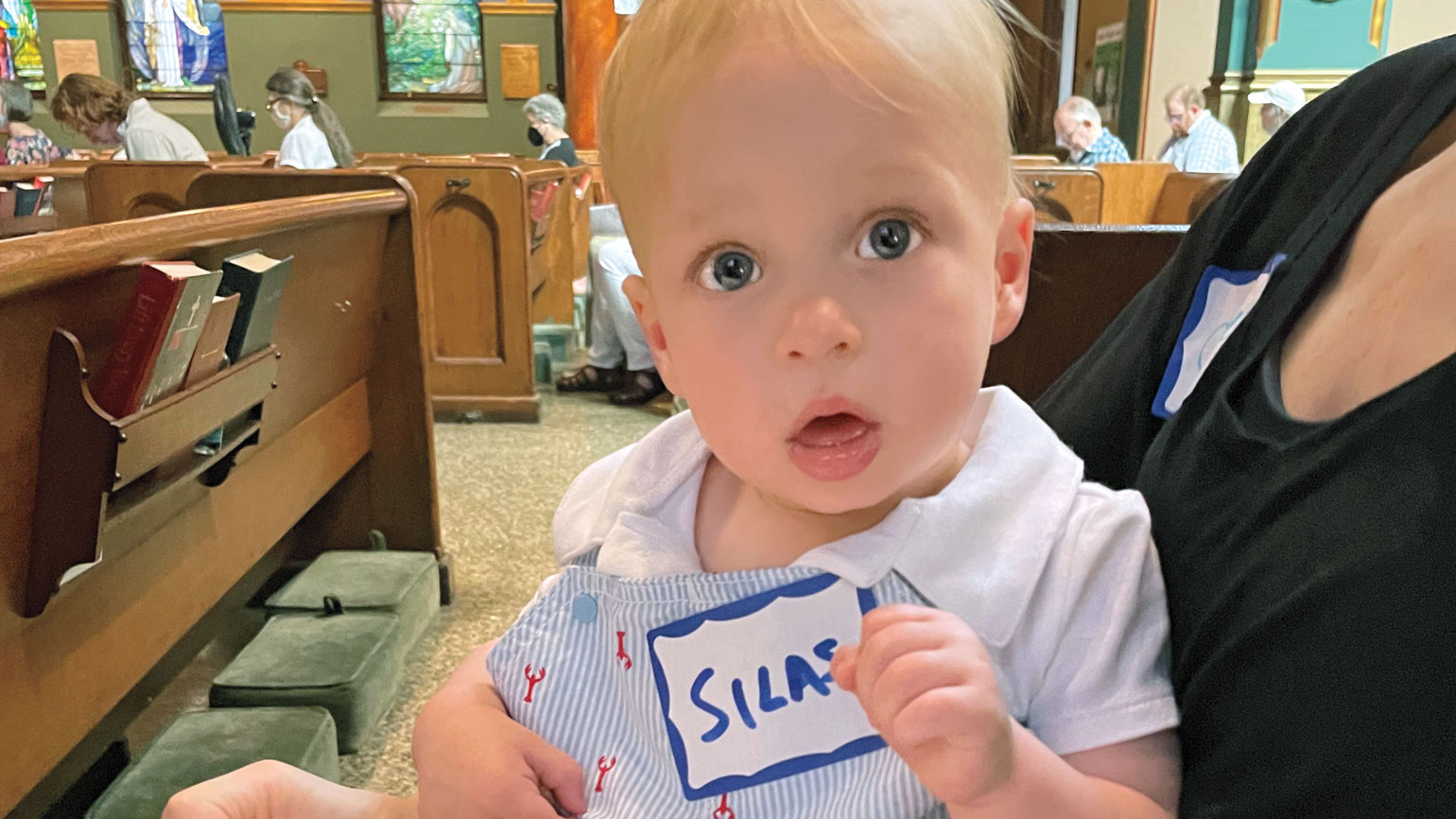
Someday I’ll sit and watch Brigadoon with Silas, and maybe he’ll even sing along. Silas was quiet during the hymn singing when we took him to church on his first birthday. He was mesmerized by the stained-glass windows, staring at the worshippers who were enchanted by him. But soon he’ll be ready to talk about miracles, like the big earthquake that freed his biblical namesake and the little earthquake that led me to my breakout role on the high school stage.

She Turned Her Crocheting Hobby Into a Gift of Love

With work almost finished for the day, I was looking forward to getting home and relaxing. Maybe crocheting some rows on the afghan I was making. Funny, I still don’t know who it’s for, I thought, turning to one of my last tasks for the company where I worked as a programmer.

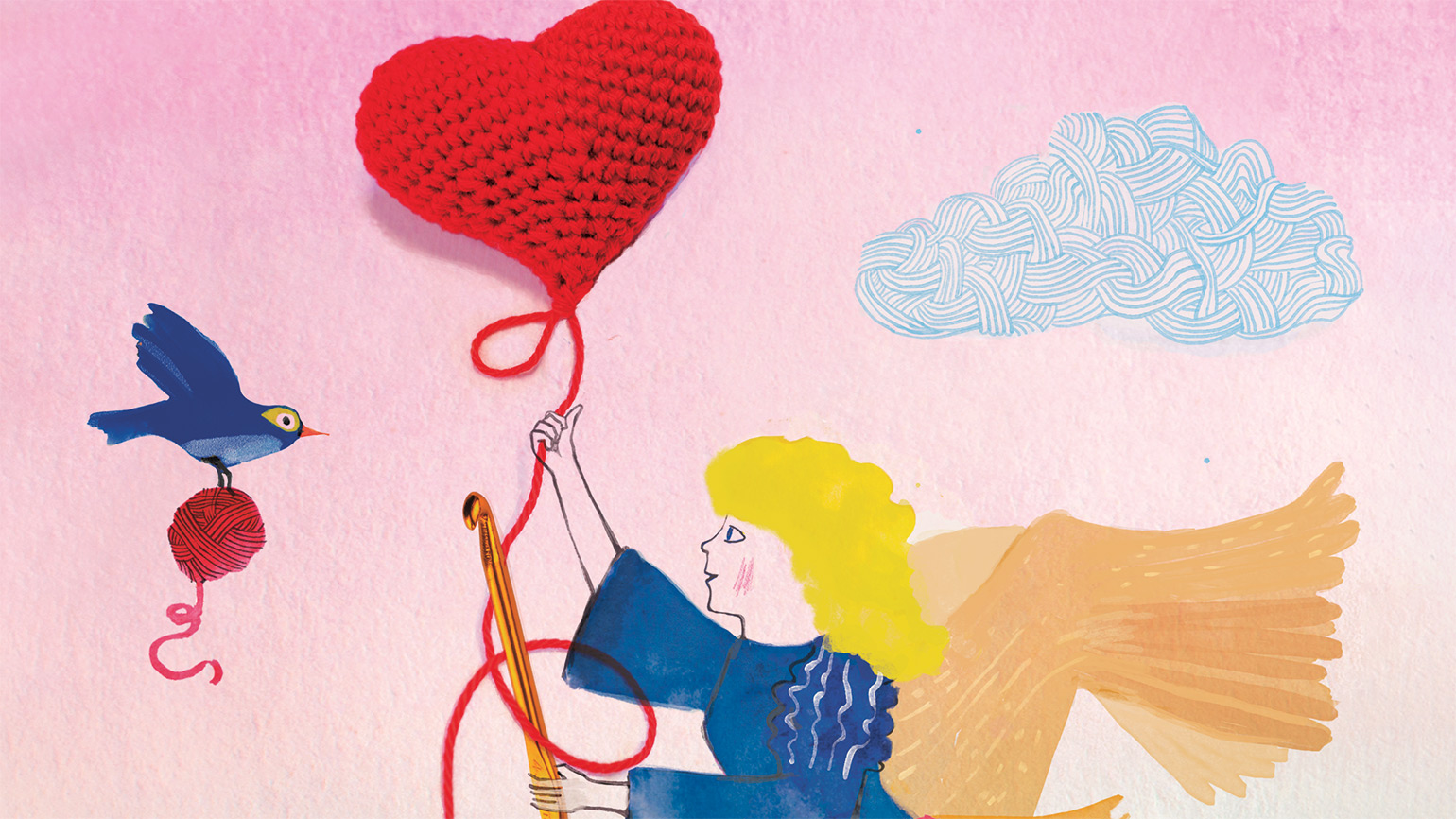
I’d been making afghans for a few years and giving them away as gifts. I rarely knew who the recipient would be when I started a new one. But eventually, while rhythmically poking my hook in and out of the yarn, a name would pop into my head. I’d given one of my afghans to a coworker with a difficult pregnancy. One to a friend entering rehab. My dad got one when he started dialysis. Usually, God was prompt about telling me who needed comfort. But I hadn’t yet gotten an inkling of who should receive the afghan I was near finishing.

“Did you hear about Susan?” I turned from my computer. My friend Lori, one of the directors of our company, had stopped by my desk. We’d collaborated with Susan from the county health department on a project recently, but I only saw her in meetings. We’d never had a private conversation. Susan was way above my rank, so to speak. I just worked with the data her department provided.

“Is she okay?” I asked.

“She’s in the hospital for a double mastectomy,” Lori said. “What a difficult thing for her and her family to be going through.”

There’s my name, I thought. The afghan was for Susan.

But sending something personally seemed presumptuous. Wouldn’t she think it weird to receive a gift from a random programmer? A handmade gift at that. Susan was an important person, and I…was not. Besides, Lori mentioned that the office would send something from all of us.

That night, I prayed about it while putting the last stitches on the afghan in my lap. I hoped God would give me a different name, but none came.

Reluctantly, I looked up the website of the hospital where Susan was having her surgery. There were patient pages, where people could leave good wishes. Susan’s page was full of messages. Friends and family were visiting, bringing her gourmet chocolates, dropping off meals for her family. Susan has a great support network, Lord. Surely the afghan ought to go to someone else? I don’t even have her address….

I clicked a link on Susan’s page. Her home address popped up. I just can’t, Lord. I can’t send this gift from me.

A voice seemed to come from deep inside me. Vicki, it said, it isn’t from you.

“Yes, Lord,” I prayed, “I hear you.” I wrapped up the afghan in a pretty gift bag, put it in a box, addressed it and wrote a little note: “I hope this brings you comfort.” I signed my name, unsure if Susan would even recognize it.

Susan sent me a nice thank-you note in return. If she’d thought the gesture was odd, she hid it well. Still feeling awkward, I didn’t mention it to anyone at the office. Not even Lori. So I was surprised to learn that Susan had told her about the afghan herself. “She took it back to the hospital with her when she went in for reconstructive surgery,” Lori said. “She won’t even let her husband wash it for fear he’ll ruin it.”

“Oh, my afghans aren’t anything so special,” I said, feeling embarrassed.

“It’s not just about your handiwork, Vicki,” Lori said. “Your gift meant much more.”

I’d worried I was being inappropriate, thinking I was the wrong person to reach out. But God can choose anyone to deliver his love. A voice had told me so.

For more angelic stories, subscribe to Angels on Earth magazine.
Mysterious Ways: Grateful for a Mechanic’s Mistake

We’ve got a problem here, folks,” our mechanic said over the phone.

“What is it?” I asked. My husband, Matthew, and I had dropped off our truck for an oil change a couple hours earlier. We’d made an appointment with our usual mechanic, Randy, and decided on using synthetic oil, which requires a change every 5,000 miles, as opposed to 3,000 miles for regular oil. Though synthetic oil was the more expensive option, it seemed like a good investment considering how much we traveled.

“One of my guys put in the wrong oil,” Randy explained. He’d been out of the garage for a test drive and left our oil change to one of his employees. The other mechanic had put in the usual oil—the standard blend. “Now you have a choice,” Randy said. “We can drain the engine and put in the synthetic blend. Or you can leave it as is. You won’t be charged since it was our mistake.”

Matthew and I decided to leave things alone. Draining the engine seemed like a waste. We could always get the synthetic oil blend the next time around. But we did insist on paying for the work—it had been an honest mistake after all.

Matthew and I didn’t think about the oil change until a few months later. We were making plans to drive from South Carolina, up through the mountains of West Virginia, to visit my uncle in Maryland. It was a long trip, and we’d already put 2,650 miles on the truck since our last oil change, so we wanted Randy to change the oil early.

We dropped off the truck before lunch and asked Randy to check things over for us, just to make sure we were good to go on our trip.

We’d barely sat down to eat when my phone rang. It was Randy. “Your brakes are completely shot,” he said. “I’m surprised they lasted the drive over here. You’ll need to replace them immediately.” Luckily, he had the parts on hand. We gave him the go-ahead and hung up.

Matthew and I stared at each other in disbelief. If the correct oil had been put in a few months ago, we wouldn’t have gone back to the mechanic so soon. We wouldn’t have known the brakes were bad. Who knows what could have happened, especially on those mountain roads? Well, someone did. Someone who was looking out for us.

My Sister’s Last Christmas Gift

The salesclerk removed the pair of chandelier earrings from the glass case and dropped them in my waiting hands. They felt real, but I still had trouble believing it. Thin, hand-forged hoops and dangling, delicate chains, all in shimmering gold. I was mesmerized. Time seemed to stop. The department-store clatter faded into the background. Enraptured, I held one up to my ear and looked in the mirror. “A terrific Christmas gift,” the clerk said, cheerily. “For your mother, maybe?”

The spell was broken. The crowd clustered by the shoes and handbags grew loud again. Out of the corner of my eye, I saw my mother walking over from the perfume counter. “They’re…they’re not for anybody,” I murmured to the clerk. How could I explain to her when I couldn’t even explain it myself? I hadn’t told anybody about the dream, not even my mother.

It was the strangest dream I’d ever had, on the strangest, most terrible night. One month ago, close to midnight, I’d just returned home from a party when the phone rang. My mom was on the other end of the line, breathless, panicky. I held the receiver close to my ear, straining to make out her words.

“It’s your sister,” she said. “She had a brain aneurysm.”

“I’m on my way,” I said, reaching for my keys. It was snowing and the hospital was more than two hours away, but I had to see her. “There’s no point risking the drive at this hour,” my mother said. “The doctor says she’s not going to wake up. Come in the morning.”

Find Hope, Inspiration, and More in our Free eBooks

I sat on the edge of my bed long after we hung up, desperate for sleep but scared of waking to a world without Jan. She was only 43. Never again would I hear her voice. Or sit at her kitchen table, eating home-baked treats from her little cookie tin. I crawled under my comforter. I wanted to talk to my sister again, but I wouldn’t get the chance. Instead I spoke into the darkness: “Forgive me, Jan, if I’ve ever hurt you. I love you dearly.”

Sleep came in fits and starts, one odd image breaking into my consciousness. A human ear—shaking, vibrating almost violently. The ear was pierced, and dangling from it was a beautiful gold earring, smooth, perfectly round hoops and fine, tightly linked chains. Was this Jan’s way of letting me know she had heard me? The thought was as confusing as it was comforting.

Jan died five days later, never waking up. In those hard days that followed, it was the vision—strange as it was—that I held on to. I played the dream over and over in my head. The shaking ear and the dangly gold earring that adorned it.

Exactly like the pair of earrings the salesclerk had put in my hand. What did it mean?

“Find anything?” my mother said, joining me by the jewelry counter.

“These earrings,” I said. I lifted them up so she could get a better look. “I…I had a dream about them. The night that Jan…”

Mom gasped and covered her face with her hands. She was so upset, I put my arm around her. “I’m sorry…” I began to say.

“Judith, you don’t understand,” my mother said. “I have those earrings at home. Jan bought them to give you for Christmas.”

READ MORE: CHRISTMAS IN THE PARKING LOT