Embrace God's truth with our new book, The Lies that Bind

Moving Closer to God Through Needle and Thread, Butter and Flour

January is creativity month and so we featured a number of stories and videos on DIY projects.

We asked our Facebook fans what creative projects they’re working on. And we also recently released two new ebooks, Angel Gifts: Inspiring Stories and Angel Crafts to Nurture Your Creativity and Creativity and Personal Growth: 7 Inspiring Stories on How Crafts Can Change Your Life, both of which help us see how creative acts connect us to others, lift our spirit and strengthen our relationship to God.

How can sewing a quilt, you ask, deepen my relationship with God? Because if God is the Creator of all things then when we play an instrument, tell a story or crochet an afghan, we are emulating him. Madeleine L’Engle, author of the much beloved A Wrinkle in Time, sees it a bit differently: “To paint a picture or to write a story or to compose a song is an incarnational activity…. In a very real sense the artist should be like Mary who, when the angel told her that she was to bear the Messiah, was obedient to the command.”

“I believe,” L’Engle continues, “that each work of art, whether it is a work of great genius, or something very small, comes to the artist and says, ‘Here I am. Enflesh me. Give birth to me.’”

Of course, we may not be Frida Kahlo or Georgia O’Keefe, but we are all artists. Our tools may just happen to be needle and thread or flour and butter; our masterpieces, quilts and cakes. What a wonderful thought: I’m sewing, dancing, painting, baking, scrapbooking, crocheting and singing myself closer to God!

Miss Cindi’s Banana-Chocolate Chip Muffins

You can modify this recipe using half the amount of chocolate chips and sugar and still get the same yummy taste in a healthier muffin.

Ingredients

¼ cup sour cream

1 teaspoon baking soda

½ cup butter, softened

¾ cup sugar

1 egg

1½ cups flour

¼ cup wheat germ (optional)

salt

1 cup mashed bananas

1 cup semi-sweet chocolate chips

1 teaspoon vanilla

Preparation

1. Preheat oven to 350°F. Stir sour cream and soda together. Set aside.

2. Cream butter with sugar until light and fluffy. Add egg, beating well. Beat in sour cream mixture. Stir in remaining ingredients. Don’t over-mix.

3. Spoon into greased muffin pans and bake for about 18 minutes. Let cool before removing from pan.

“You’re Going to Be Okay”

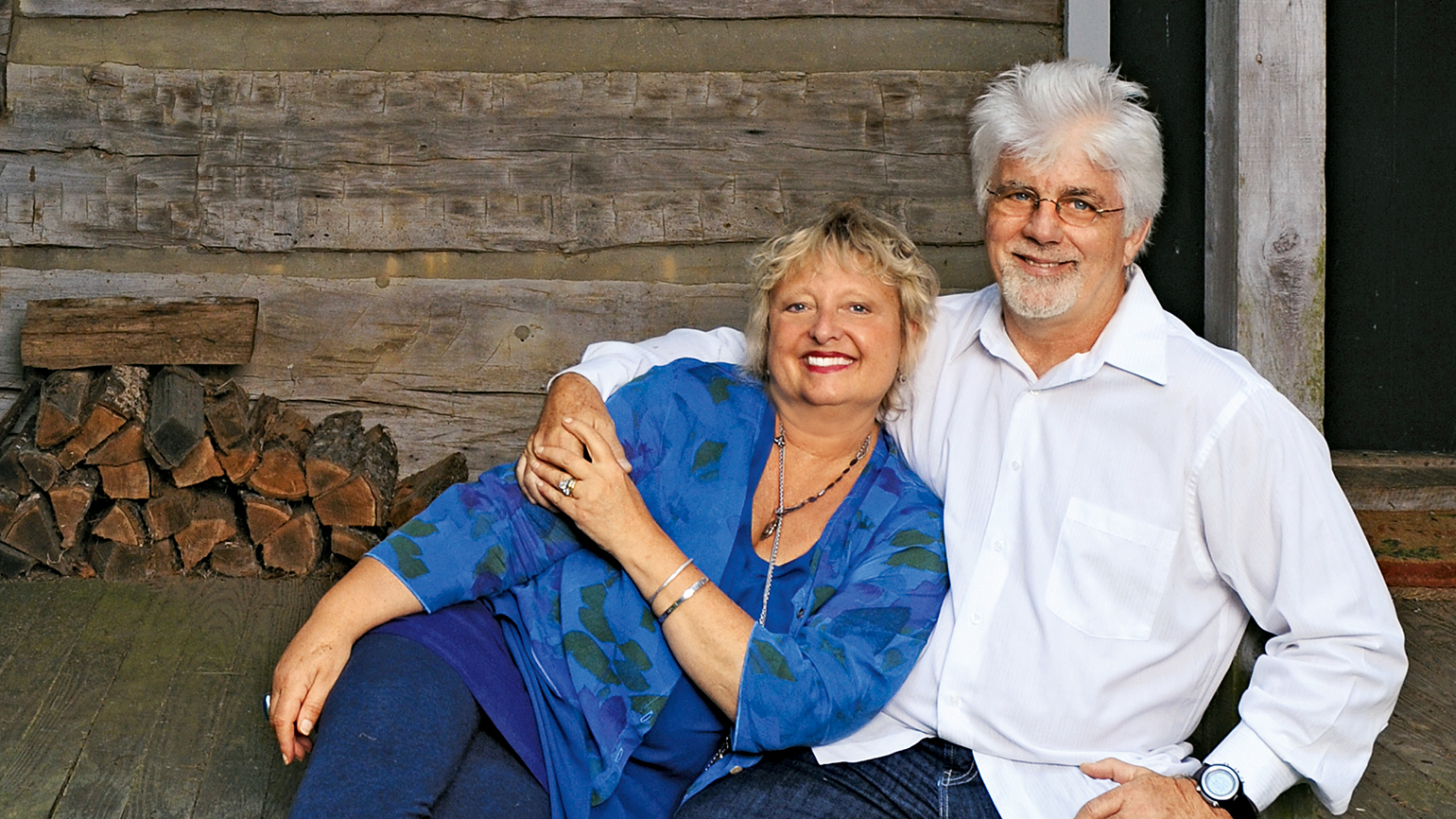
Not long before the terrible visit to my doctor, my husband, Michael, and I bought a farm.

The farm was in Tennessee, 2,000 miles from Los Angeles and a world away from the music industry Michael and I had spent most of our lives in.

We’d lived the proverbial rock ’n’ roll lifestyle, the endless cycle of touring, recording, more touring. But we longed to settle down.

We had two kids, Dylan and Scarlett, and Michael, who practically lived on the road, was doing an album in Nashville, easy driving distance from our 100 acres of rolling hills, grazing cows and horses.

It was family time, time for hayrides and camping by the creeks and fishing in the pond. We began remodeling the farmhouse, filling it with antiques and, hopefully, memories.

Then one day in spring I planted some flowers around a playhouse we’d built for Scarlett. The guys working on the remodel had turned off the water, so I went to fetch some from the pond.

I lugged several buckets, getting the flowers good and drenched. The next day my bucket-carrying arm really hurt, especially underneath.

A couple months before, I’d found a small lump near that spot, but the doctor had said it was probably harmless.

This time the lump seemed bigger and the pain centered right on it. I tried to remind myself that I was only 41 and in great health. But the pain was sharp enough, and I was worried enough, to get it checked out.

Michael came with me to the appointment. I was glad he was there, but I figured we would be in and out pretty quickly, like most mammograms. The doctor, though, said I needed to stay for a sonogram.

“We saw something,” he said. That was all. Something.

We went to another room and I did the sonogram. I watched the doctor’s brow furrow with concern as he looked at the image. He turned to me. “Ms. McDonald,” he said, “you need to see a surgeon here at the hospital. Today. As soon as possible. We’ll call and get you an appointment. It’s very important.”

I walked out of that office in a daze. I know Michael had his arm around me, but I could barely feel it.

Weirdly, what I kept thinking about was that 1970s movie Love Story with Ryan O’Neal and Ali MacGraw. Was I going to be like Ali MacGraw’s character, I wondered, diagnosed with a terminal illness?

Michael and I slowly made our way to the hospital cafeteria to wait for the appointment with the surgeon. I sat there for a minute, then suddenly put my head down and sobbed. Fear overwhelmed me.

I saw everything that I cared most about—Michael, our son and daughter, our new life just beginning. Was I about to lose it all? Why? And why now? Michael and I had finally put everything together. I wasn’t ready to die!

The surgeon put my X rays against a backlit screen. “I’m going to be direct with you, Ms. McDonald,” he said. “When I see pictures like this, ninety-nine percent of the time it’s cancer. I think we need to schedule surgery, and we need to do it soon. As in tomorrow.”

His words came at me like blows. I sat immobile, unable to think. Somehow I went through the mechanics of scheduling the surgery. Then I collapsed against Michael and he helped me to our car.

That evening at home I was in a terrible state. I couldn’t look anywhere without seeing something I was about to lose. Cancer! Where had that come from? What had I done?

Michael and I had been trying to make good choices. And life was good. Years before, I’d put my own music career on hold to raise our kids and create a stable family. Michael was a committed father and husband.

Now we were reaping the fruits of those choices. Dylan and Scarlett were happy and healthy here at the farm. Michael was fully involved in our lives and as happy as I’d ever seen him.

The minute we got home from the hospital he called the studio to let them know he’d have to suspend recording. We had a rich circle of friends, who all called us that evening—I have no idea how they found out. Michael, probably. They were so comforting, so supportive.

But everyone I talked to felt like another potential loss, another reminder of cancer’s malicious timing.

The next morning doctors removed a tumor from my breast and 14 lymph nodes from my arm—they feared the cancer might have spread. Three days later I was back on the farm, recovering, when the phone rang. Michael was out on a tractor. It was the doctor.

“The news isn’t good,” he said. “Eleven of the fourteen nodes are cancerous. At this point we don’t know how far it has spread. You need to come in tomorrow for a full-body scan.”

I hung up and stared ahead. The news seemed impossibly bleak. I didn’t just have breast cancer. I had cancer—maybe everywhere. I looked down at myself. How much cancer was in there? I wondered. How much of me had it already eaten away?

I desperately wanted Michael to come in, to take me in his arms and tell me that everything was going to be all right. But the fear kept saying, It won’t be all right.

In the morning we again made the drive I’d gotten to know so well, past the green hills and picturesque farms outside Nashville. The rows of crops flashed by, cows grazing, horses with their sleek necks bent to the earth.

The early light was so pretty, making everything seem somehow deeper, more real. I kept my eyes fixed out the window, just taking it all in.

Suddenly I heard a voice. Not Michael’s, not any voice I recognized. You’re going to be okay. Just those five words, sounding simply and clearly inside me. Then silence.

The message was totally counterintuitive. I mean, I was on my way to find out whether my entire body was riddled with cancer! But somehow that didn’t matter. Comfort immediately flowed through me.

My fears, which had once seemed so overpowering, shrank until I could get my hands around them and shove them down. They didn’t go away. I just got stronger. I’d spent the past days feeling like a helpless victim. All at once I became a fighter.

I went through the scan and was stunned and relieved to hear the doctor say they had found no more cancer. Breast and lymph nodes—that was it. Still a lot, requiring extensive treatment. But suddenly I had a chance. I had hope.

And as the days, then weeks, then years of recovery unfolded, I began to see just how true those five words I’d heard on the highway really were. They weren’t just telling me I was going to be okay. They were reminding me I was already okay.

I’d cried out to God, Why now? Those words were the answer: Because now is when you can handle this. All those things I’d feared losing to cancer—the kids, a solid marriage to Michael, our new settled life, our beautiful home—they were precisely what gave me the strength I needed to beat cancer. Without them to rely on I might have died.

It’s been 14 years since that terrifying day when the doctor looked up from my mammogram results and told me he’d found something. I sure wish I could say it’s been 14 years of trouble-free recovery and recaptured health. It hasn’t.

I underwent a form of chemotherapy so powerful it kills a small percentage of people treated with it. My body changed profoundly. I went through early menopause, had both hips replaced and struggled with depression.

And yet I’ve never really doubted the truth of those five words I heard. That’s because every time I’ve confronted some new challenge I felt sure would break me, I’ve found God supplying—sometimes just reminding me about—resources I never knew I had.

Nowhere is that truer than in my marriage to Michael. We thought we were close when we moved to Nashville. Now, after endless rounds of chemo—Michael accompanied me to every session—and my draining emotional ups and downs, we truly know what it means to be partners for better and for worse.

A couple years ago, with the kids in their late teens, I returned to the studio and recorded an album. The album’s called The Journey to Miracle River, and there’s a lyric in the title track that I think sums up what I’ve learned from my battle with cancer.

It goes like this: “When you finally reach your destination, fall down on your knees and thank your maker for all the crosses and the blessings on the journey to Miracle River.”

Crosses and blessings. Yes, there are crosses in this life, always. But for every cross there’s a blessing. And for every hopeless moment there’s a God who provides.

You’re going to be okay, he says.

Read about how Michael McDonald let go of the past.

Find more info on amyhollandmcdonald.com.

For more inspiring stories, subscribe to Guideposts magazine.

Yes, Miracles Really Do Happen Every Day

Four years ago, in the dreary lull that comes with the New Year, I was battling a familiar foe: depression. I’d gone into town to run a few errands, but the looming gray hills only added to my gloom. I bought beer and put gas in the car. Squeezing the metal handle of the nozzle, I tried not to dwell on the parallel between a car’s need for fuel and my dependency on alcohol.

Depression and alcoholism ran in my family. Knowing that my feelings were inherited did little to make them more bearable. It was worse, in fact, to think that I was powerless over how I felt, especially at this time of year when people are supposed to feel hopeful about what’s to come. What did the new year hold for me but more unhappiness?

The pump shut itself off with a thunk, stirring me from my half-attentive state. I screwed the cap on the gas tank, got in my car and started the engine, not really wanting to go back to my empty house and the couch where I found myself sitting and drinking so often that it almost seemed a physical part of me.

Next to the gas station was a country store that catered to tourists. The sign outside proclaimed big markdowns on Christmas items. I pulled into the parking lot.

The store was like most rural tourist stops, crowded with candle holders, quilts, handpainted signs. There were two tables of ornaments. My attention was drawn to several angel figures, about eight inches high, with clay heads, hands and wings. Their robes were of papier-mâché. One in particular, with flowing auburn hair like my own, seemed to call to me. I reached out and picked her up. All of a sudden the strangest feeling welled up, a feeling of peacefulness and reassurance that momentarily overrode my depression. I glanced at her price tag—too much even at 20 percent off. Putting her back, I started to walk away when the thought struck me, No. That angel is meant for you.

I returned to the table and picked up the figure again. Turning her over, I noticed that inside her skirt were the initials KB, same as mine. None of the other angels had any writing on them. “This must be for me, after all,” I muttered, pulling out my credit card to pay.

Back home, after putting away the groceries and beer, I decided to place the angel on my living room mantel. I cleared a spot and set her down carefully. At that instant, a powerful thought formed in my mind, completely unbidden: Please help me stop drinking.

What was I thinking? I had no concept of myself as someone who did not drink, and the notion of facing my feelings without the buffer of alcohol was completely unnerving. Almost in defiance of the thought, I cracked open another beer and flopped on the couch, staring up at the angel while I drank.

And I kept drinking as the weeks passed, most nights until I nodded off on the couch or stumbled to bed in a depressive fog. I’d go to work in the morning, alcohol still coursing through my system. I did my work well despite the gruesome daily hangover, but relations with my colleagues deteriorated. “Karen,” my boss told me during one confrontation, “it’s not your work that’s the problem, it’s you.”

I didn’t want to hear it, even though it was looking like this would be another job lost, my fourth in as many years. With my family far away, and no friends to speak of, work was about the only place I interacted with anyone at all. Now that was about to fall apart, and I really didn’t care. I couldn’t care. About anything.

Lying on the living room couch, I’d sometimes find myself staring up at the angel on the mantelpiece. Why did I bring her here? What was that mystifying calmness I’d felt the first time I held her in my hands? Was God trying to tell me he cared about me or was it just a trick of the mind?

By summer I knew I was losing control. I’d always looked at my drinking through a prism of rationalization. I told myself that if I held a job and owned a home, my drinking couldn’t be that bad. But now, as bills and job woes mounted and the drinking took a greater physical toll, I finally admitted that the alcohol I had used for so many years to take the edge off my depression was making it worse.

One night after work, I was sitting in my usual spot on the couch fighting the feelings of shame and worthlessness that lately seemed to be on the verge of smothering me, when I broke down in deep, spasmodic sobs. I didn’t even try to stop. I don’t know how long I cried, but at some point I heard myself say, “Please, God, destroy my desire to drink!” Yet the very next night I was back on the couch drinking more desperately than ever.

My prayer seemed to open the floodgates wide. Almost at once my drinking became completely reckless. I abandoned the couch and became careless about drinking and driving. And that was what set the stage for my miracle.

The flashing lights of the state trooper’s patrol car were a blue blaze in my rearview mirror that night. I was smart enough, at least, to pull off the road and submit to arrest for drunk driving. The trooper took me to the county jail, where I was given a Breathalyzer test, fingerprinted, photographed and locked in a cell for six hours to sober up. As clarity returned, the true state of my life was laid bare for me. I realized I was killing myself. I wanted to go home. I wanted to see the angel on my mantel. I wanted to sit on my couch and look at her and think.

I had to give the cab driver a hundred dollars in advance to take me the 50 miles home. I walked in the door, sat down on the couch and looked up at the angel figurine. I’d thought of her all the way home. Now I simply stared and stared until I felt something inside me give. The tears came again, but they were tears of relief. Another one of those powerful thoughts I’d been having since the first of the year took hold, and it was as sure as anything I knew: Thank God I don’t have to drink anymore.

In that instant, my life changed, and only the word miracle can describe it. I came to the end of a long maze after years of being lost within it. Yet staring at my angel, I understood fully that a higher power had guided me through.

Recovery has been a bumpy road, but my life is full of rewards. Quitting alcohol was just the first step in a series of steps I’ve taken in the last four years. My job is more satisfying, my health is strong, I have friends. My last performance review at work included “good relations with coworkers” as a strength. One big amazing step I took recently was with a man I met at a hiking club. I felt the same strange powerful draw to him that I had felt in the country store. Now the angel on the mantelpiece has two people to watch over, my husband and me.

God has used many ways to show he loves me, that he’s always loved me. But it was a clay figurine with auburn hair, on sale for 20 percent off, that he used to save my life.

This story first appeared in the January 2001 issue of Angels on Earth magazine.

With God’s Help and a Caregiver at His Side, He Was Given a Second Chance at Life

Faith inspired the name of the Alpha and Omega Care Center in Pretoria, South Africa—the first and last letters of the Greek alphabet representing the Lord and his son. That appealed to 22-year-old Virna van der Walt.

When she went to work there, in April of 1998, Virna had studied nursing and assisted at a homeopathic practice. Now she was ready for a challenge, providing day care to young people with crippling disabilities. Other institutions had turned these patients away. Alpha and Omega was their last hope.

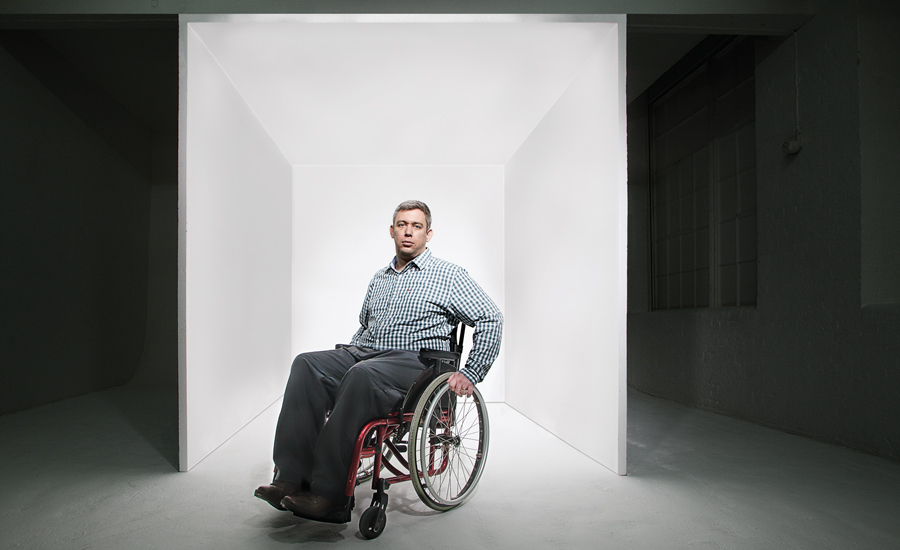
“Who’s he?” Virna asked the head caregiver her first day, pointing to an older boy with cropped hair, slumped in a wheelchair in front of a television set. Barney the purple dinosaur danced on the screen.

READ MORE: CHRISTIAN PRAYERS BRING MIRACLE HEALING

“Don’t mind Martin,” the woman said. “He’s been here almost ten years. No higher brain function.”

MARTIN: That awful Barney. His dopey voice and shrill theme song. I wasn’t a kid. I was 22! Had I liked this stuff when I was younger? I couldn’t remember. I couldn’t remember a lot of things. I also couldn’t move. I could only shift my eyes, jerk my head or contort my lips into a half smile. They said my gestures were involuntary muscle spasms.

Martin’s father dropped him off at the center every weekday morning at seven and picked him up after work. Virna introduced herself one day. “Tell me about your son,” she said.

“He was such a bright boy,” his fa­ther said with a sigh. “He could take apart our home computer and put it back together with his eyes closed. His younger brother and sister, David and Kim, were always trying to play with his elaborate LEGO creations.”

Martin was 12 when he got sick in 1988. Everyone thought it was the flu, but Martin spent months in bed. He grew disoriented and didn’t rec­ognize anyone. Over time, he be­came completely unresponsive.

Doctors believed Martin had a neurological disorder. Tuberculosis of the brain? Cryptococcal meningi­tis? There was no answer and nothing medicine could do.

MARTIN: I gazed out the car window, watched the city whiz by. People walk­ing down the tree-lined streets, young and old. Would I ever get to live like that? Dad toggled the radio to a news program. I listened to the places and names: Cape Town. Nelson Mandela. Apartheid. Things I only dimly under­stood.

For the past six years I’d been conscious of my surroundings, slowly piecing things together by listening. Like when Dad said I was a bright boy. I wanted to hug him. But I couldn’t help noticing he spoke in the past tense.

There was only one thing I was sure I had known forever: God. I didn’t remember church, or the Bible. But I knew God. I felt him. I wasn’t the only one who knew I was still inside my frozen body. God knew. I prayed he’d find a way to let someone else know too.

One Monday morning, Virna mas­saged mandarin oil into Martin’s skin. “Can you smell the oranges?” she asked. Aromatherapy was something she’d picked up from her last job—how different scents could engage the mind. A month into her position at Alpha and Omega, she’d volun­teered to start a weekly aromathera­py massage program.

“My girlfriends and I watched a movie last weekend. You’d like this one, it’s called Star Wars.

She thought she caught a tiny flicker in his eyes. Had she imagined it?

MARTIN: Virna was different. I drank in the citrus scent and raised my eyes. She was blonde. Around my age. Smiled a lot. I wanted to know more about that Star Wars movie. Was it that one about space my brother talked about? What was it like to have friends and watch movies together? I wanted to talk to her. But our time was up. I couldn’t wait for the following Monday.

Visiting another care center, Virna and her colleagues learned about new devices that let people communicate using slight movements—blinks, nods, twitches. Virna mentioned the flicker in Martin’s eyes to the other caregivers. “You’re so naïve,” one said.

MARTIN: Virna came in for our usual session. I was distracted. My brother had been sick over the weekend. Coughing a lot. Bronchitis. I wasn’t sure what that was, but I worried. Hadn’t my condition started with the flu?

Virna talked like always. But she was pausing, looking me in the eyes.

“Is everything okay, Martin?” Martin’s eyes looked down. “Are you sick?” No response. “Is someone in your family sick?” Martin’s lips formed a half smile. Did that mean yes?

READ MORE: SPIRITUAL HEALING

“Is it your father?” No response. “Your mother?” Nothing. “Your broth­er?” Martin gave another half smile.

“So it’s your brother,” Virna said. “Does he have a cold?”

Martin jerked his head. A no?

She touched her ear, nose, forehead. She tapped her chest. “Pneumonia?” she asked.

Martin’s head jerked to the side.

“Is it bronchitis?”

Martin looked her straight in the eye. Another half smile.

MARTIN: I wanted to tell her everything, about all the time I’d felt alone, about that stupid Barney. I felt elated. Tran­scendent. Like…like stepping into a warm bath after being out in the cold for years. What it must have felt like when I was a child, held by my mother and father. Love, that was the word I was searching for. The way only God had made me feel. Loved. I had a friend.

“Martin understands,” Virna told the others. They scoffed. Even his parents were skeptical. They’d been assured their son’s movements were only the spasms of a damaged brain.

Virna kept telling Martin about her life. She asked him questions and deciphered his answers by his system of smiles and nods. Finally she persuaded her superiors to recommend him for an assess­ment at the Centre for Augmentative and Alternative Communication at the University of Pretoria.

MARTIN: The doctors held up different cards with pictures. “Do you like hamburgers?” I saw a cup of tea, a sun, and a juicy burger. Eyes to the burger. Success! Next card.

Everyone saw I was alive inside. Eventually I regained use of my hands so I could type. Mom and Dad got me a computer that read the words out loud. Finally I had a voice again! I went on to earn a degree in computer science and started my own web development business. I even met a friend of my sister who enjoyed watching Star Wars with me…though that wasn’t the reason we fell in love. Today, Joanna and I are married and live in London.

Doctors never did diagnose my illness or explain my recovery. That doesn’t bother me, the things I don’t know. What I do know is that without Virna, I might have been lost forever. And I know Who brought Virna to Alpha and Omega.

Miracles book coverMartin Pistorius is the author of Ghost Boy: The Miraculous Escape of a Misdiagnosed Boy Trapped Inside His Own Body (Thomas Nelson, 2013).

Did you enjoy this story? Subscribe to Mysterious Ways magazine.

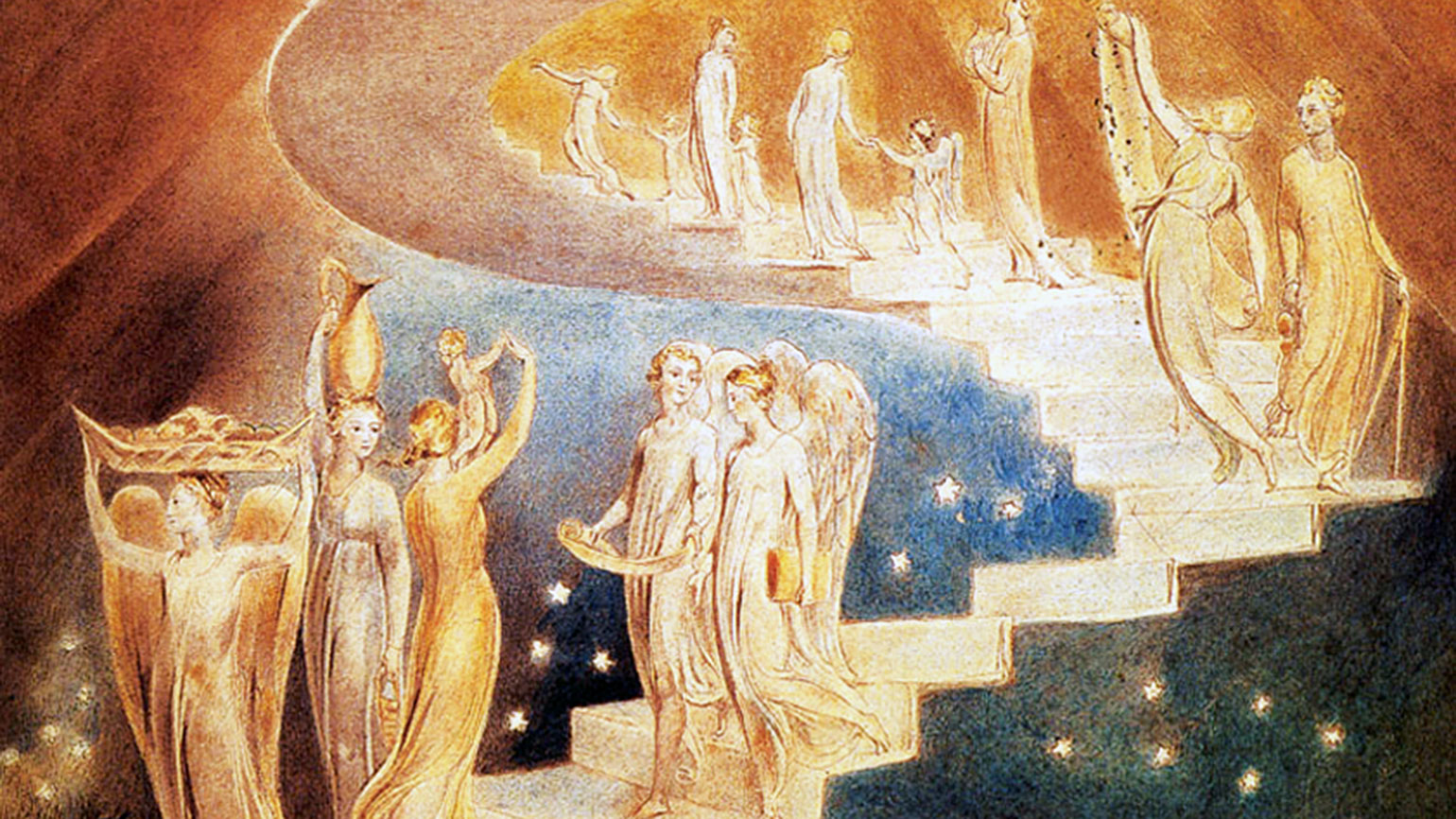
William Blake’s Doors of Perception

In a past issue of Mysterious Ways, I wrote about one of the “thin places” in the world, the Italian town of Assisi, where the membrane between heaven and earth seems diaphanous. When we published that story, some of us asked, was it possible that some people might have the same capacity, seeing visions of the spiritual universe as though it were the everyday?

We didn’t have to look far, for there on the magazine’s back cover was a quote from William Blake, the mystical British poet and artist of the late eighteenth and early nineteenth centuries: “If the doors of perception were cleansed every thing would appear to man as it is, infinite. For man has closed himself up, till he sees all things thro’ narrow chinks of his cavern.”

Narrow chinks of a cavern versus doors thrown wide open to the infinite. No doubt about it, Blake’s brilliantly colored paintings and profound poems reveal the sensibility of an artist engrossed in the world beyond: angels, demons, prophets, Jesus, God. His doors of perception were flung open. He always claimed he painted and drew what he did because that’s exactly what he saw. It was his reality. And those unearthly poems? Sometimes they came so fast to his pen because he was simply transcribing what a heavenly voice whispered in his ear. But he was also grounded in the real world, working hard as a printer and engraver.

Born in London to a working-class family, he lived almost his entire life in the teeming, pestilential city. For him it shimmered with the possibilities of a new Jerusalem. The most important book in the Blake household was the Bible, and the stories of the Bible, especially its imagery of cherubim, trumpets, prophets, stars and spears, lions and lambs, crowded his imagination. He would have heard that “Our God is a consuming fire” (Hebrews 12:29), so that when—as he later explained—at age four he saw God peering in his second-floor window, he did the only natural thing: He screamed in terror.

He loved to wander through the wooded hills on the outskirts of town. On a boyhood jaunt through an open area called Peckham Rye, he saw a vision of angels in a tree, their wings fluttering in the boughs. Incapable of keeping such an apparition to himself, he rushed home and told his parents. His father threatened to throttle him for lying, or indulging in some fantasy, but his mother was quite convinced of her son’s honesty and moved by his innocence. Later he baffled his contemporaries with his visionary talk, but he never felt constrained to edit himself. If he had seen God or angels or the prophet Ezekiel under a tree, as he once did, it should be reported. Why keep such glories a secret?

The great tragedy of his life was the loss of his younger brother, Robert, who died at age 19 from consumption. Blake had hardly left his brother’s bedside, nursing him, devastated at the anticipated loss. How could he go on without his beloved Robert? And yet, at the very end he observed Robert’s soul leaving its body and “clapping its hands for joy.” The moment confirmed for Blake that death was not an end in itself but a journey to another world, one that he felt he could reach out and touch.

Even after Robert’s death, Blake felt his brother close by. “With his spirit I converse daily and hourly in the spirit & see him in my remembrance,” Blake wrote. “I hear his advice & even now write from his dictate.” That phrase “in the spirit” is important. Blake was not claiming to see a ghost but was receiving messages from a loved one in God’s realm. The sort of comforting presence that countless others have found in grief, except heightened by a man who kept his doors of perception wide open.

Once when he was struggling with a perplexing problem in the engraving business, wondering how he could print a poem with a colored image cheaply, he received a vision of Robert taking on the task. With great thoroughness Robert performed all the steps, revealed the ink to use, the method. Was a vision ever more practical? Blake sent his wife out with half a crown to buy the necessary materials. The method, as described, worked perfectly.

As he grew older and his poetry and art grew more idiosyncratic—and more superb—Blake faced criticism and became increasingly remote from the world. “I am in God’s presence night & day,” he scrawled on a notebook page. In his late sixties his health began to fail, but he worked till the end, illustrating the Bible and Dante, working continually on a big painting of the Last Judgment. Among the last things he bought was a new pencil.

A friend of his observed, “Just before he died, his countenance became fair. His eyes brighten’d and he burst out into singing of the things he saw in Heaven.”

Today Blake’s prints, sketches and paintings of those visions are in the world’s finest museums. His poems are included in countless anthologies. He is a widely accepted mystic—and regarded by some as mad. But he was never institutionalized like his contemporary the poet William Cowper (who coined the phase mysterious ways), nor did he indulge in drugs, like Samuel Coleridge. His doors of perception were ones he felt all of us could open. If we let ourselves see what he saw, our world could be transformed too.

Why Me, God? The Mystery of Suffering

Why, God, why? Why me?

That’s a mystery I’ve been wrestling with since I was 14 years old. I had just undergone brain surgery to remove a benign cyst sitting on my optic nerve. I woke up sick every morning for nearly a year from taking the medications I would now be on for life. My hair wouldn’t grow back the same. I felt like an outsider at school. I turned to my parents and to my twin sisters for support. Still, it took a long time for me to recover.

Then, at age 24, when life finally seemed to be getting back to normal, another blow. Multiple sclerosis. Just like that, my life became a series of MRIs, daily injections that left painful welts and even more unan­swered questions. Would I lose my ability to walk one day? Would I be able to endure a life of pain and the loneliness that comes with it? Pain is like a prison. It isolates us, cutting us off from others. After all, only we can feel our pain.

BROWSE OUR SELECTION OF BOOKS ABOUT MIRACLES

I’ve read many things on the mys­tery of suffering. I’ve considered all the explanations. How we live in a fallen world where suffering is the price of sin. How some suffer more because they’re being tested, as if it’s some sort of gift. None of those reasons answered that question in my mind. If God exists and God is good, why do we suffer? Where is God when we do?

I decided to seek answers by talk­ing with those who confront these questions every day: religious lead­ers and writers who possess intimate knowledge of suffering—mental and spiritual suffering as well as physical.

My journey started with Rabbi Avraham Lapine, codirector of Chabad at the University of Missouri. Lapine was only five years old when he came home from school one after­noon to find groceries abandoned on his doorstep. The front door was locked. No one answered the door­bell. Later he would learn the horrify­ing truth: His mother had been murdered by an intruder. It was a tragedy that led Lapine to become a rabbi, his way of honoring his late mother’s life.

“Did you ever ask God, ‘Why?’” I asked him.

“Of course,” he said. “There’s no real answer for that because no one really knows the mysteries and se­crets of what’s in God’s mind. What­ever you come up with is not going to be good enough.”

There are some hints, though, in the Bible, Lapine said, specifically in the story of Moses and the burning bush. According to one Jewish com­mentary, Moses approached the thornbush and asked God why the Jewish people were suffering. “God didn’t answer the question,” Lapine said. “God said, ‘I am who I am,’ which translated in the Jewish com­mentary means, ‘I am with them in their sorrow.’ We don’t understand why God allows suffering, but he’s with each individual going through it.”

There’s another way of interpreting the story. God tells Moses to take off his shoes because he’s on holy ground. “That could be God’s an­swer to Moses’ question about suf­fering,” Lapine said. “God is saying that when it comes to tragedy, that’s very holy ground.” I came away from our conversation wondering if suffer­ing could be sacred, an opportunity to get closer to God.

Still contemplating Rabbi Lapine’s words, I called Philip Yancey, the best-selling Christian author of Where Is God When It Hurts? His father died of polio when Yancey was just a baby. He grew up wondering why God didn’t answer the many prayers people had made to heal his dad. We may never know why we suffer, Yancey told me, but we do know how God feels about it.

READ MORE: PHILIP YANCEY—THE TRIUMPH OVER SUFFERING

“All you have to do is follow Jesus around to see how he handles people going through suffering—a widow who lost her only son, a person with leprosy, a woman with a very shame­ful condition, a blind person,” Yancey said. “He was always on the side of the one who suffers, and he respond­ed with compassion and healing. That is the brightest clue we have as to how God feels about us when we go through pain.”

There’s also a practical purpose of pain that’s important to remember—it highlights areas in our lives that need attention. Yancey pointed out how the inability of lepro­sy patients to feel pain can actually put them in grave danger. Because of their disease, they can’t tell when they’ve had a serious burn or injury. Similarly, suffering helps us focus on what’s important.

“I would say pain is like a hearing aid,” Yancey said. “When it happens, it’s up to us to tune in and use our suffering as an opportunity for growth, for helping others, for any way to redeem it.”

Why do some seem to suffer more than others? To answer that ques­tion, I visited with Reverend Katharine Flexer, rector at St. Michael’s Church in Manhattan. She knows the pain of watching someone you love suffer, both professionally as a pastor and personally. Flexer’s older sister battled leukemia as a child. As a three-year-old, Flexer donated the bone marrow that would save her sister’s life. More than 35 years later, though, Flexer’s sister lost her battle with breast cancer.

“There are four kids in our family—how come my sister ended up with every health problem?” Flexer said. “I don’t know.” She theorized that God doesn’t have an answer we would be able to understand. Maybe the meaning of suffering can’t be ex­plained by the logic of this world. I asked Flexer if she’d ever noticed something else seemingly illogical by earthly standards—an inexplicable closeness to God while in the depths of despair. Something I’ve experi­enced intensely.

“I know something of that,” Flexer told me. “In that dark ‘I can’t cry any more tears’ time, you get this sense that you’re actually being held….”

“That’s exactly what it is!” I said.

Flexer recalled it happening the night her sister died. She compared it to the way she comforts her 7-year-old son when he’s upset. “I hold him in a particular way, and I can tell he feels enveloped,” she said. “I’m hurt­ing for him, but I also have the bigger picture. That’s what God is doing with us. He’s aching with our pain, but he also knows what we can’t see around and ahead of us.”

Perhaps that’s what Rabbi Lapine would call the holy ground of suffer­ing. It’s when our defenses are down and we get a clear glimpse of how close God truly is, even if he appears to be silent.

Jesus knew something of that too. “He went through that very long night in Gethsemane before he ever got to the place of being able to say, ‘Thy will be done,’” Flexer said. “He also had to go through that total abandonment to realize God’s pres­ence with him.” Indeed, it is difficult to imagine any agony worse than Christ’s. It is one of the great lessons of the cross, a symbol of both suffer­ing and salvation.

There’s another “crack of light” that breaks through the darkness of suffering, according to Sharon Salz­berg, a leading meditation teacher and author of Faith: Trusting Your Own Deepest Experience. Salzberg was nine when her mother died and eleven when her father overdosed on sleeping pills. Years later, in college, Salzberg discovered Buddhism, which says suffering is inevitable. That belief opened her eyes to suffering as being a normal part of life. One that doesn’t have to break you.

“Suffering itself doesn’t make you noble,” Salzberg told me. “There are plenty of people who suffer and grow really bitter and angry. Then there are other people who use suffering as the springboard to greater compas­sion for others.”

Can suffering really deepen our humanity? I talked to Roberta Mess­ner, a retired nurse and longtime contributor to Guideposts and Myste­rious Ways. She has suffered to the point of contemplating suicide, due to a neurological disorder called neu­rofibromatosis, which causes large, noncancerous tumors to grow all over her body. Roberta has had the condition since adolescence and, despite the near-constant pain she endures, is one of the kindest souls you’ll ever meet.

“Even though it has been a life of suffering, I wouldn’t trade it,” she told me. “That sounds so crazy. But I just feel so at one with people. I feel their suffering intensely. And I’m so vulnerable when I suffer that it makes me more open to the mysterious.”

She recalled how she was divinely healed from cancer seven years ago. Despite that miracle, the stories Roberta writes about her incurable illness are the ones that most reso­nate with readers. Like her first surgery to remove a brain tumor at 15, and the physical and emotional scars it left behind. How she felt like an outsider. How she often turns to her twin sisters and loved ones for support and to writing to heal. The more we talked, the less alone I felt. I was connected to something greater.

“What I ask God,” Roberta said, “is how I can use my suffering to help others.”

I thought of Rabbi Lapine, Phillip Yancey, Reverend Flexer and Sharon Salzberg. Like Roberta, they had ex­perienced suffering at a young age, for reasons maybe too mysterious to ever comprehend. It led each of them on different paths, but they all follow paths of compassion. They made something of their pain. Could I do the same?

Why, God, why? Maybe I’ve been asking the wrong question.

Why Is God Calling Me to Ireland?

By the time you read this, I’ll be on vacation in Ireland and Scotland, on the lookout for wonder. How did I pick those spots? Well, it’s kind of a funny story…

It all started this past summer. In June, my sister, Kristin, and I were throwing around ideas for our fall “sisters vacation.” We had our hearts set on Portugal, possibly Spain. Anywhere warm. But, on the train ride home from the beach one afternoon, Kristin proposed another idea. “What if we went to Ireland?”

She had this strange smile on her face. We laughed about her idea. Ireland was such a random choice, especially since Kristin despises cold, rainy weather. But I couldn’t get it out of my head. Confused, I asked God to lead us to the right destination.

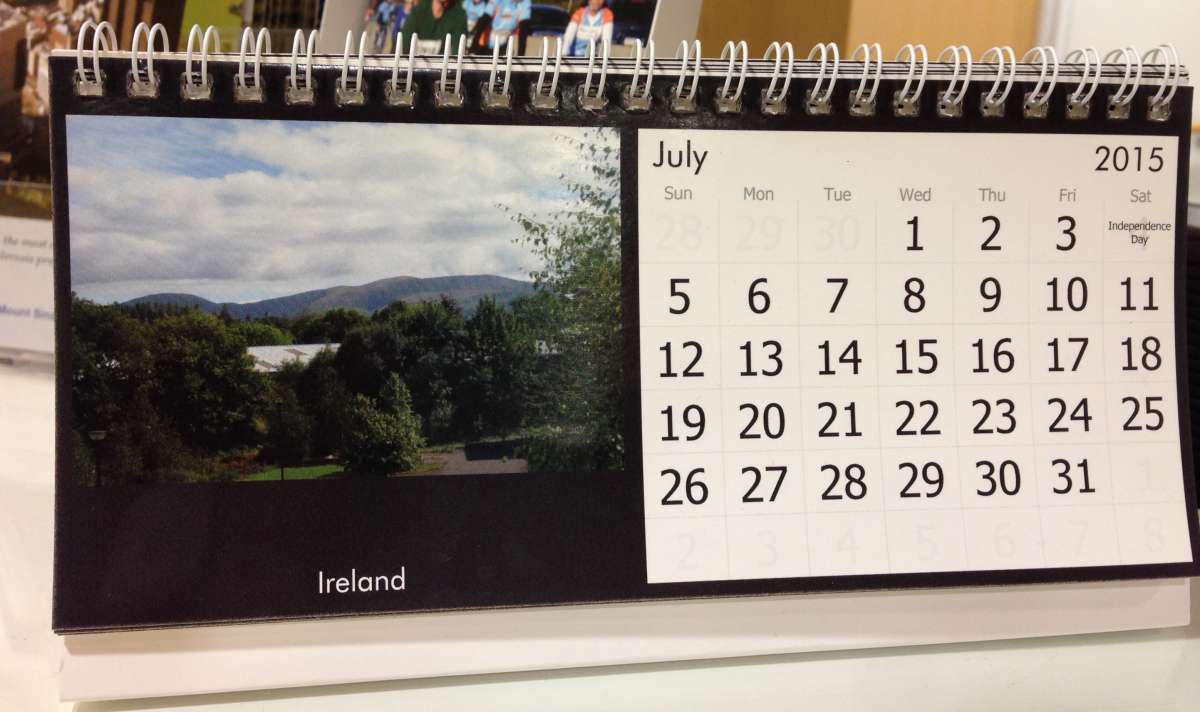
Then things got weird. At the end of June, I headed uptown for a doctor appointment. As I handed the receptionist my insurance card, I glanced at her desk calendar. It was already flipped to July. Underneath a scenic photograph, in white type, was one word: Ireland.

Why is God calling me to Ireland? The calendar.

It happened again when I exited the beach one weekend. I passed a vendor on the boardwalk selling posters. There, positioned directly at me, was a poster of a familiar place…Ireland.

I also got signs at work. At our Guideposts Prayer Fellowship meeting, Rick Hamlin brought in a stack of handwritten prayer requests. He pulled one letter from the towering stack and read it aloud–a prayer request for Northern Ireland. Even weirder, I was assigned to edit a story for Mysterious Ways magazine about a woman whose plane crashes off the coast of Ireland.

Another morning, I opened up the Guideposts homepage and found myself staring at Ireland again–this time, an article with the headline, “Explore Ireland’s Ancient East Region and Christian History.” Later, an ad popped up on a video I was watching. It proclaimed, “This is the year to visit Ireland.”

Kristin wasn’t convinced, though. She just didn’t want to spend a whole week in rain boots. God, if you want us to go to Ireland, I prayed, give Kristin a sign. In the meantime, we put Portugal and Spain back on the table. And yet… we couldn’t seem to make any progress with our plans.

Finally Kristin came clean. For whatever reason, she felt uneasy about Spain. But Ireland? It just felt right. Even if it would be cold and rainy. So we booked our tickets, and somehow convinced our other sister, Priscilla, to tag along.

Why is God calling me to Ireland? The newspaper and catalog.The signs haven’t stopped. Just the other day, Kristin texted me the front page of a newspaper she found inside the subway terminal. The headline? “Fall for the Warmth and Wonder of Ireland.”
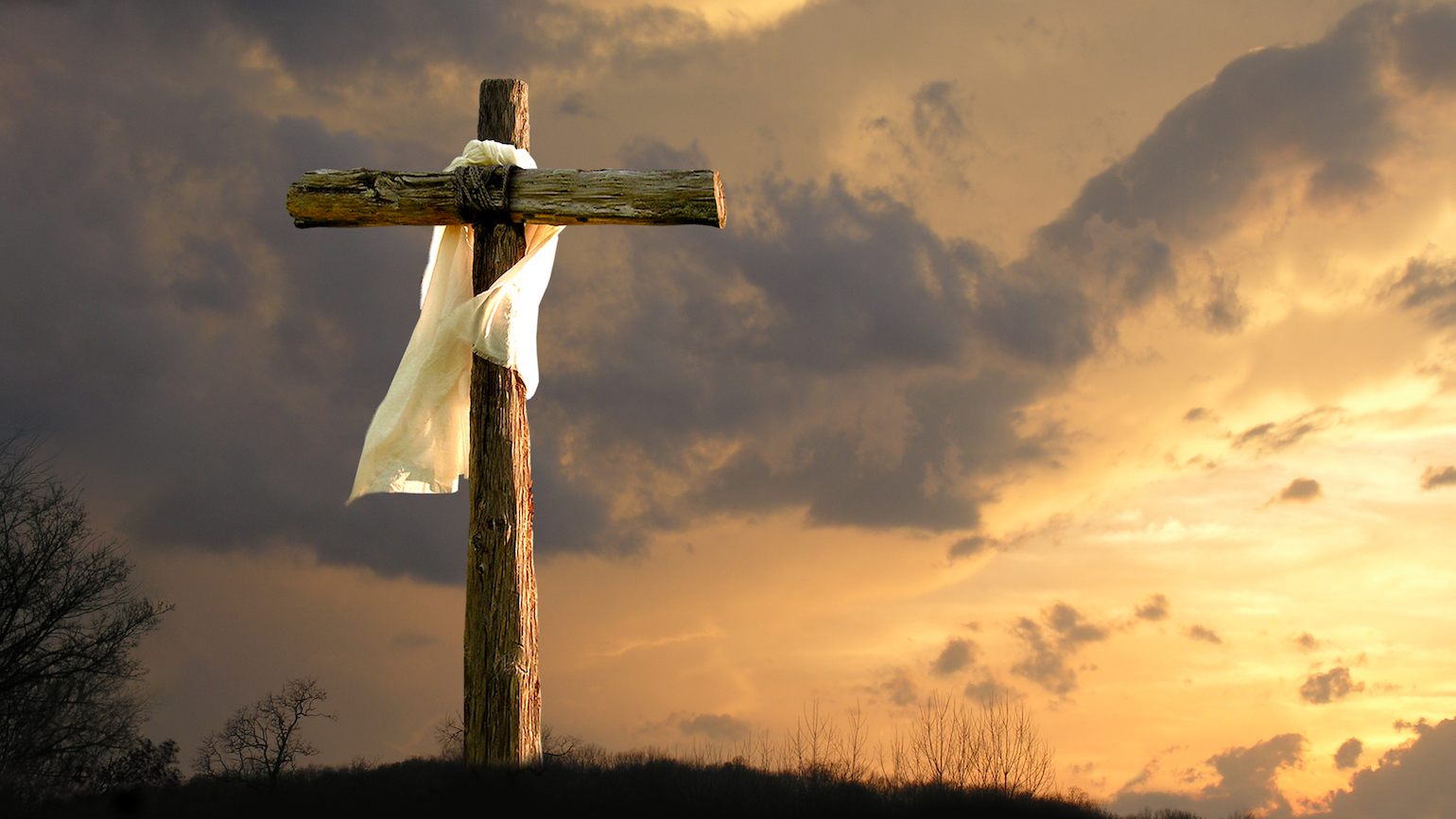


Of course, there may be some logical explanation for all this. Maybe Ireland is really, really good at marketing. Maybe they even send miniature calendars to doctor’s offices throughout the tri-state area in efforts to lure American sisters to their emerald hills.

But it’s clear to me that I’m being called to Ireland. So are my sisters. My only question…why? What do you think? Share your theories below!

Why Good Friday Is So Important

“Were you there when they crucified my Lord?” That’s the haunting African-American spiritual we sing at Holy Week, asking ourselves: Were we there? Did we stick with Jesus to the bitter end? Did we really take it in?

There’s no telling what any of us would do, but fear might have easily overwhelmed me. Like Peter, I could have denied Him three times. I could have pretended I didn’t even know Jesus.

“Sometimes, it causes me to tremble, tremble, tremble…” go the lyrics. It does make me tremble. Even if I had heard—like the disciples—of the promise of Resurrection. It must have been hard to believe Jesus’ return was possible after witnessing the gruesome torture of death on the cross.

Sometimes I’d prefer to skip it. Skip the Good Friday service, skip Maundy Thursday. Forget it all until Easter.

Then I remember why Good Friday is so important. It led to the Resurrection of Jesus. Without it, we would be be unable to receive the joy of Easter.

I remind myself of something our pastor once said. She observed that at the Resurrection, Jesus showed Himself first to those who stuck with Him at the last.

“There were also many women there, looking on from afar…” goes the Gospel of Matthew, “among whom were Mary Magdalene and Mary the mother of James and Joseph…”

Only a couple verses later we read that “toward dawn of the first day of the week, Mary Magdalene and the other Mary went to see the sepulcher.” They were there. To discover the empty tomb.

They rush to tell the disciples, but even before they reach them, Jesus appears to the two women. They were there at the worst. They are here now to experience the amazing, stunning good news first hand.

Sometimes we have to stick through the bad times, face our own sorrow and suffering without running away, to have the greater truth revealed.

Remember the importance of Good Friday and stick with it. Easter is right around the corner.

To buy a copy of Rick’s latest book, Prayer Works, click here.

READ MORE ABOUT GOOD FRIDAY AND HOLY WEEK:

Why Do We Call It Lent?


Lent is the 40 days leading up to Easter, historically a time of fasting and prayer, getting ready for the celebration of the Resurrection. It is a time to give something up and draw closer to God. For many people, it is a yearly spiritual practice they’ve done since they were young. For some, it’s a new practice, perhaps to try something different or learn about the spiritual benefits of fasting. No matter your history with Lent, there’s always a chance to learn something new about it. Like, why is it called Lent?

READ MORE: What is Lent? Answers to Your Biggest Questions

Hands holding up palm fronds during lent

Why Is It Called Lent?

The word “Lent” comes from the old English “lencten,” which means spring. This is the early spring—and if your area is anything like mine, the crocuses are pushing up through the earth, a sure sign that spring is on the way.

The early Christians celebrated baptism at Easter and so they would dedicate the weeks beforehand as a time to prepare, to be reconciled to God by a period of penitence and fasting.

At first it was just a few weeks and then it became the 40 days that we know today—and remember that’s 40 not counting the Sundays which are technically feast days and not fast days.

So Lent was a description of the time of year this was all happening, spring coming to the earth as renewal was making its way to us.

READ MORE: Is Lent in the Bible?

Woman in yellow sweater reading her bible about why is it called lent

A Deeper Meaning for the Word “Lent”

But let me try out another felicitous way of thinking of the word “Lent.”  Lent, as in lending something to someone, letting them have it because it’s yours to loan.

Sometimes you’ll hear the phrase, “borrowed time,” as in “He’s living on borrowed time.” But recently I read how in the 18th century a different expression was used. They would say “lent time.”

“Borrowed time” focuses on us and our notion of controlling our future. “Lent time” puts the emphasis back on God.

It’s a switch in emphasis. “Borrowed time” focuses on us and our notion of controlling our future. “Lent time” puts the emphasis back on God. Every moment is precious, every moment is lent by the divine.

Think of these precious days as something to be celebrated because they have been lent to us by the greatest of all. The Bible says, “You are dust and to dust you shall return” (Genesis 3:19), a phrase that we repeat at Lent, a reminder of our mortality.

We are lent to the earth, to a life of joy and sorrow, to a life of love because we are loved by God.

READ MORE ABOUT THE LENTEN SEASON:

Why a Sense of Wonder Is Important

Is it really possible to regain your childlike sense of wonder? That’s a question Dr. Anthony T. DeBenedet has made his goal to investigate. As a board-certified physician, Dr. DeBenedet spent his career focused on keeping his patients healthy, all while finding himself increasingly stressed.

Frustrated and exhausted, he set out to find a better way to live. The journey ultimately led to his book Playful Intelligence: The Power of Living Lightly in a Serious World. He talked to Mysterious Ways about his research and how to maintain your wonder throughout life.

What led you to investigate wonder? I’m a gastroenterologist and behavioral science enthusiast. A few years ago, my life was spiraling out of control. I was headed toward burnout, personally and professionally. I was a young father of three, working long hours. There was also the looming issue of my mother’s health, which was declining. Generally, I’m a happy-go-lucky guy. But I found myself becoming very irritable at home and at work.

I started talking to patients and people who’d experienced trauma and difficult circumstances yet still managed to stay positive and actually thrive. What I found was that those people, often without knowing it, exhibited five playful behaviors that helped them live their best lives: imagination, sociability, humor, spontaneity and wonder. The most interesting of those to me is wonder. In many ways, it’s an antidote to the intensity that surrounds most people’s lives.

Define wonder. From a neuroscience perspective, wonder is an emotion. Technically speaking, you feel it when a sensory stimulus provides new and expansive challenges to the limbic circuits in the brain. It’s a very playful quality, one that makes us pause in meaningful, lighthearted ways.

You often experience it in the presence of some-thing greater than yourself. Something that causes you to marvel at the big or small workings of the world. Wonder gives us a warm, positive feeling and usually makes us feel as if time is slowing down. It’s really the only emotion that urges inaction rather than action.

How does wonder relate to spirituality? Wonder makes you feel smaller. Not insignificant but smaller, in the sense that you are a piece of a greater whole. In that way, spirituality and wonder have similar functions. Meditating, encountering the divine or experiencing the miraculous can often make you feel smaller in that wonderful way. You realize that you’re part of a greater symphony of things. You have a greater place and purpose in the world.

Do you have to experience a miracle to feel wonder? Definitely not. A great example of someone who lived a wonder-filled life was John Muir, father of the National Park Service. He found wonder in nature, marveling at God’s creation. But Muir’s message wasn’t about what you experience, but rather how you experience it.

You can stumble upon something amazing in nature and miss it completely if your eyes aren’t open to it. That’s a critical point. And it’s why wonder is a really, really hard place to get to as an adult. When you’re a kid, wonder is a rocket ship, launching you into the orbits of curiosity, where everything is an opportunity to learn. In adulthood, wonder is a grounding force.

Can adults ever regain their sense of wonder? Researchers usually suggest that there are two ways to have more wonder in our lives. First, simply slow down, whether it’s in your thinking or even in your physical movements. Really stop and look around. That opens you up to more wondrous experiences. The second tip is to experience new things—seek out the novel in your life. Take up a new hobby or even drive a different route home.

When you’re experiencing something new, you’re more likely to have the wonder circuits in your brain activated. There’s a caveat, though, to both of those things. All of us have individual wonder thresholds— i.e., what it takes for you to experience wonder or awe. In my research, I found that our wonder threshold as adults is really high.

So what do you do about it? Just as we have rehabilitation when we have a physical injury, you have to go to “wonder rehab” to lower your wonder threshold. Find mini moments in your day when you’re seeing some type of positive interaction between people. It could be an act of kindness or just two people hugging. You can also recalibrate your threshold by recalling a childhood memory.

For me, it’s how I felt as a kid when the ice cream truck came down my street. When you take yourself back, it reminds you what it’s like to have a low threshold for wonder. The last thing is to take a hint from the kids in your life. Watch the children around you and see how wonder is such a big part of their lives.

As a doctor, have you found that wonder is rare among patients? It’s actually the opposite. I see wonder more often in times of need, when things aren’t going well for my patients. It’s during those times that people often dig deep to find the good around them. Those are moments when you’re grounded in the present. Disease and illness are overwhelming. Wonder often gives you a break from that stress. It’s a way people remind themselves about what’s really important.

It can also improve your health. A 2015 study led by psychology researcher Jennifer E. Stellar found that people who reported feeling awe on a regular basis tended to have lower markers of inflammation. Research suggests that having a mind at peace helps the body in a lot of different ways, whether it’s lowering stress and cortisol levels or incidences of cancer and cardiovascular diseases.

How has your life changed since studying wonder? I find myself noticing the beauty in the world around me much more. Usually it happens in two ways. Through nature. And I’m not talking about standing on a glacier. More often, it’s something simple, such as taking a walk around my block or watching ants at work.

The other way is through my three daughters. Seeing awe on a child’s face can erase everything that’s been hard about a day. I’m a work in progress and still trying to make sense of this trek of life we are on. But my journey into the depths of playfulness has given me more arrows in my quiver to pull when the stress of adulthood is getting the best of me.

Who Was the Mystery Woman in His Childhood Dreams?

Ever have a weird dream you just can’t shake? I’m a college student and intern at Mysterious Ways, and despite taking numerous psych classes, I’d never given my dreams much thought. Until a brown envelope landed on my desk one afternoon.

The envelope appeared last summer. One of my job responsibilities is looking through manuscripts sent in from readers across the country. This particular envelope caught my eye because it was lumpy and not the typical manila color. A compact disc and folded letter fell out. Something was written on the face of the CD in black marker:

Charles Edward Carver
Date: 7/08/2017

People still use CDs? I thought to myself. I unfolded the accompanying letter. The CD had been recorded at a cancer center in Winston-Salem, North Carolina, where Charles was a patient. “I’m sending you my true life story,” he wrote. “I pray that it will give hope and inspiration to others.…”

I debated whether to listen to the CD right away. I had a lot of envelopes to open plus the online submissions to go through. In the end, curiosity got the better of me. I popped the CD into my computer. First, I heard a woman’s voice. A nurse, I assumed. “We’re going to talk about your story today,” she said.

“Yes,” a deeper voice with a soft Southern accent broke in. Charles, presumably.

“I was born in Holden, West Virginia,” he said. “My mother lived in a coal mining camp with my father. My father was a veteran of World War II. He was plagued by a lot of problems….”

Charles’s voice was weary. He paused every now and then, as if to catch his breath and collect his thoughts. It was clear cancer had taken its toll. The recording was 24 minutes, 58 seconds long. I didn’t think I could listen to the whole thing. But two minutes in, I was hooked. Charles talked about his dad, a coal miner in Appalachia and an alcoholic. Charles’s mother, Helen, gave birth to four children, then had two miscarriages. Eventually Charles’s aunt took Helen to see a specialist at a hospital in Huntington. That’s when Helen learned two things. One, she had cervical cancer. Two, she was three months pregnant with Charles.

“My aunt, who relayed this story to me later in my life, said a glow came over my mother when she heard the news,” Charles said. “My mother smiled and said, ‘God is going to allow me to have this child.’”

Against her doctor’s orders, Helen refused treatment until after delivery. The cancer went into remission, and Charles was born healthy. Less than two years later, though, Helen’s cancer returned and she died. Charles would never know her. Or most of his family. His father was unable to care for the five young children. They went into foster care. When Charles was eight, he was adopted, along with his sister, by another miner named Mr. Carver.

“Mr. Carver was more like a grandfather, being 57 years of age,” Charles said on the CD. “He was loving and caring.” His wife, though, was a different story. She was verbally and physically abusive.

“Growing up, knowing they weren’t my parents, it was hard,” Charles went on. “But something amazing happened when Mrs. Carver would go on her tangents. When I went to sleep, I would dream of a lady who never touched the ground, dressed in a flowing chiffon gown.…”

Charles talked more about his childhood, then his career as a truck driver and his diagnosis of Stage 4 prostate cancer at the age of 49, six years before. The CD stopped. I stared at my computer, longing for more. What happened to Charles at Mr. Carver’s? What about the woman who never touched the ground? I left work that day and tried to put the story out of my mind. But at home or in class, I couldn’t stop thinking about Charles Carver’s CD and his dream of the woman in the chiffon gown. I had to know what happened. At work the following week, I listened to the CD again. Then I dialed the phone number listed on Charles’s letter. After a few rings, a man picked up. The same deep, weary voice.

“This is Charles Edward Carver,” he said.

“Hi, Mr. Carver,” I said. “I’m calling about your story.”

Charles chatted away like we were old friends catching up. He told me all about growing up in the coal camps of West Virginia. “Everybody knew who did what and who worked for whom,” Charles said with a chuckle. “One time when I was a teenager, I was in love with this girl. It took less than a day for someone to tell her parents!”

I asked Charles to fill in some of the holes in the story. “Mr. Carver was a loving man—he never raised his hand or voice in anger,” he told me.

“What about the dream?” I said.

The dreams were vivid, he said, like sensory overload. They always took place amid lush, green hills. A soothing tune would drift through the dream, like a movie soundtrack. And, there before him, Charles would see a woman in a chiffon gown. Her smile made her glow. With her arms outstretched, she’d call for him: “Eddy!” A nickname only a few people knew.

“The woman had curly brown hair and deep blue eyes,” Charles said. “I felt like I knew her voice too.”

Charles would go toward the woman. But he always woke up before they reached each other. By the time he was 11 or 12, the dreams stopped. Whenever life got hard, though, Charles would think back to the dream. And the woman in the chiffon gown, whose feet never touched the ground.

“I always wondered who she was,” Charles said. He paused a moment. “Well, one day, when I was 16 years old, busing tables at a steakhouse in Madison, West Virginia, in walked my brother Roger.”

Charles and Roger had been split up after their mother’s death. Roger, eight years older, stayed in foster care until he was 18, then went to work in the coal mines. He knew the Carvers had adopted his younger siblings and would pass by their house on his way to work to wave to Charles. But they’d never spoken. Not until that day at the steakhouse.

“I’m going to trim up the family cemetery for Memorial Day,” Roger told Charles. “I could use your help.”

Eager for a connection to his past and to his big brother, Charles agreed. They traveled to the family cemetery in Hell’s Creek, a place Charles had never been. They mowed the lawn, then Roger pointed to a gravesite. “That’s where your mother is buried,” he told Charles. The grave had a granite headstone, engraved with Helen’s dates of birth and death.

“At the top of the stone was an oval case,” Charles told me. “It opened to reveal a picture inside. My mother as a young lady.”

I could make out the muffled sound of Charles crying on the other end of the line. He had never seen a photo of Helen before, he told me. Never known she had curly brown hair. Or deep blue eyes.

“I don’t know how long I stood at the grave that day,” Charles said. “But I couldn’t stop looking at the photo. She was the woman. The woman who came to me in my dreams when I was just a boy. The woman in the chiffon gown.”

Charles went on to tell me about his wife, to whom he’d been married for more than 30 years. How they had never had kids of their own but were parents themselves to eight foster kids. How his siblings, with whom he’d eventually reconnected, had all died of cancer. How he didn’t have much longer to live himself. He had only one story left to share with the world.

“That day in the cemetery was God’s way of giving me peace,” Charles said. “Cancer robs, it steals. But there’s so much in this life that’s beautiful. The love a mother has for her child? That, it seems to me, is everything.”