

Embrace God's truth with our new book, The Lies that Bind

The Near-Death Experiences of Children

Flowers that stretched as far as the eye could see. Light, ethereal and embracing. Peacefulness unlike anything imaginable.

Decades later, the survivors remember every detail. Memories so vivid, their day-to-day lives seem muted. Less real than what they saw when, as children, they were transported somewhere beyond our world. A place where time and space don’t exist. For Ingrid Honkala, it happened when she was nearly three and drowned in a water tank. For Alma Blazquez, it was at age four, suffocated at the hands of an abusive family member. And for Teresa McLean, it was at age three, after accidentally overdosing on aspirin.

They all died and came back. But not before seeing heaven.

The International Association for Near Death Studies (IANDS) estimates that nearly 85 percent of children who undergo cardiac arrest have a near-death experience (NDE). A rate more than twice as high as that for adults—thousands every year. The experiences are not limited by age. There are even reports of infant NDEs, recounted once the child is old enough to articulate their experience. With medical advances, more children on the edge of death are being saved. And stories of their experiences are becoming more common and accepted.

Psychiatrist Dr. Raymond Moody first coined the term near-death experience in his 1975 landmark best seller Life After Life. Dr. Moody, a self-described skeptic, interviewed hundreds of people while researching his book. “The stories are mind-boggling,” he says. “There’s not a medical explanation that holds water.” And yet he gives extra credibility to the accounts of people who experienced NDEs as children. Without preconceptions of the afterlife, their glimpse is as true of a glimpse as you can get.

“When you talk to these children, they have a maturity way beyond their age,” Dr. Moody says. “It’s astonishing what they come back feeling and knowing.”

Children such as Ingrid Honkala, who grew up in the mountains of Colombia. The country was war-torn in the early 1970s. Her young, working parents struggled to get by. Ingrid was small, sickly. One morning, as she and her older sister were playing catch over a large water tank, Ingrid reached for the ball and plunged headfirst into the tank. The water inside was freezing cold from the morning air, and she sank to the bottom. She struggled but soon found herself surrounded by flowers of breathtaking beauty that went on forever. They seemed to lift her upward. Her aching, sickly body was freed of pain. From her vantage point above, she could see the maid in charge blissfully listening to the radio inside the house. She could see her mother walking to work.

Ingrid felt separate from any sort of body. Her spirit was now one with an all-consuming radiance that felt like her one true home. A kind of spiritual womb. She never wanted to leave it. “I went from a place of absolute horror to absolute joy,” Ingrid says. The feeling of joy has never left her.

Alma Blazquez also encountered an otherworldly light at age four in her Chicago home. A relative in a drunken rampage had suffocated her. Suddenly, Alma felt no more pain, only peace. As she reentered her body, she sensed another presence with her. A tall, muscular, all-powerful being who assured her that he was there to protect her. That he would never leave her.

For three-year-old Teresa McLean, there was no soothing presence or light. She left her body inside a German hospital. Her frantic mother had taken her there after Teresa had accidentally eaten two bottles of chewable baby aspirin. In her NDE, Teresa saw two scenes before her, as if on a split screen. On one, doctors and nurses worked tirelessly to revive her. On the other, her mother sat in the waiting room, sobbing. Teresa felt her mother’s emotions—her pain and fear—as if they were her own. It was terrifying.

Then the scene changed. She saw her mother many years into the future. It wasn’t a vision or a dream. No, these images were more real than real. In the future, her parents had divorced. Her mother was overcome with grief, struggling to survive without her daughter. Teresa knew she had to come back. She couldn’t leave her mother. In the next instant, she returned to her body.

Returning to a world that seems diminished is inevitably jarring and disorienting to children. They barely have words to describe what they’re feeling. And trying to make sense of it all can be isolating.

“Not everyone wants to be back,” says Jeffrey Long, M.D., a radiation oncologist and one of the leading researchers of NDEs. “They feel as if they’ve been where they most belong.” Dr. Long is the founder of the Near-Death Experience Research Foundation and author of God and the Afterlife. His organization has recorded more than 4,000 detailed accounts of people who’ve experienced NDEs, both as children and adults.

“The intensity of what the children are experiencing is much greater than what would be normal at their age,” he says. “And the experience generally grows in importance as they get older—whereas it would be natural to expect childhood memories to fade over time. Ninety-five percent of NDE children say the experience was definitely real, meaning not a dream or hallucination.”

Compared to those of adults, child NDEs “tend to be more concrete and less complex,” according to IANDS; there may not be features we typically associate with a NDE, such as a life review. Children are, however, more likely to see deceased loved ones and pets—even relatives they’ve never met. Talking about a NDE, though, can be traumatic. “Many children tend to withdraw,” Dr. Long says. “They find they literally can’t share what happened with anyone.”

Such was the case with Ingrid, Alma and Teresa. Their parents took them to doctors and psychiatrists, desperate to find out what was wrong with them. At an age when most children are content to play outside, Ingrid felt as if she could no longer relate to her family. She stopped eating. She didn’t want to live. “Don’t call me Ingrid,” she told her mother. “I don’t have a name. I don’t need a name.”

Alma stopped talking. She refused to utter a word until age five, when she started school. “My mother told me I was crazy,” she says.

They couldn’t relate to other children. Things that interested other kids, like playing with dolls, seemed babyish. “I was much more interested in adult conversation,” Ingrid says. “Even as a young girl, I suddenly understood everything they were saying.”

All three excelled in school. Ingrid remembers doing difficult math problems and solving complex puzzles easily. Books on philosophy and religion fascinated her. But most of all, the three girls returned with great compassion and love. For people. For animals. For the earth. And for their families. They sensed other people’s suffering and hurts intuitively, as if they were their own struggles. Their experience didn’t always feel like a gift. Alma and Teresa have had frequent premonitions, warning them of tragedies for family and friends. Their otherworldly journey was anything but a once-in-a-lifetime experience; it seemed to open a door to the metaphysical.

“It’s as if they take a piece of heaven with them,” Dr. Long says. “Where the people around them have doubts about God and heaven, they feel a direct connection that grows stronger as they grow older.”

At five, Alma was visited by the same strong, tall man who had comforted her in her NDE. A man she now knew, from church, to be Jesus. “I am with you,” Jesus told her. “I have always been with you and will always be with you.”

Ingrid was visited often by beings of light. They spoke to her and comforted her and made her want to go on living. “Why does no one understand the things about love and life after death that I try to tell them?” she asked them once.

“Because you are special,” the beings told her. “Everyone is special. In time, they will know it too.”

Like many children who experience NDEs, Ingrid, Alma and Teresa all found meaningful careers. Ingrid, who drowned in a water tank, visited the ocean as a girl and felt instantly drawn to it. “I’m going to be an oceanographer,” she told her parents. For a poor girl from Colombia, the very idea was absurd. Especially from someone going on about dreams and fantasies all the time. When Ingrid was older, she had a vision of two large buildings in a campus setting. Buildings she recognized years later when she became an oceanographer at the John Stennis Space Center in Mississippi, studying the effects of climate change.

Teresa, meanwhile, came back for her mother and then devoted her life to helping others struggling with otherworldly experiences. She tells them her story. It’s given her meaning and purpose. In 2012, her mother was dying of esophageal cancer. Teresa sat at her bedside. Her mother, weak, turned to her and said, “I’m staying here because you chose to stay with me.” Her mother, against all odds, lived another three years.

Alma, who met Jesus during and after her NDE, earned a doctorate and worked with an international organization helping children and adults with learning disabilities. She loved running and bicycling, up to 10 miles a day. One day, her bike was struck by a car. Her spine was badly injured. Then an autoimmune disorder set in: lupus. And arthritis. For years, Alma was miserable, barely able to move. The comfort that had always been there was now gone. In 2012, she had a seizure. In the hospital, she again left her body. She was met by an orb of light, its rays powerful and healing.

“You are here because you have come here often,” a voice said. She saw hundreds of people lined up before a stone wall of breathtaking beauty. She wanted to go where they were going. Instead, she saw scene after scene of people she’d helped and with whom she’d shared God’s love. Alma returned to her body, her pain as intense as ever. But she knew, just as she had as a kid, that she wasn’t alone. Within the year, she was completely healed. Today she is able to walk and even teaches advanced yoga.

“We’re all here to love each other,” Alma says. “It gives life meaning.” Ingrid agrees. “Everything is connected,” she says. “We’re all one—that’s what I’ve come to understand.”


The “Mysterious Ways” Magazine Is Finally Here!

Visit our Mysterious Ways Facebook page this afternoon, and you may notice a new tab at the top, just below our banner: Order MW Today! That’s right. We’re now taking orders for the first ever issue of Mysterious Ways magazine.

It’s been a long time coming. When we first began developing this magazine more than two years ago, we had no idea what form it would take, what stories we would include and most importantly, how a full-size, stand-alone publication could translate that feeling of awe and wonder that the Mysterious Ways section of Guideposts has delivered to readers for so long. I’m proud to say that when you finally hold this magazine in your hands, I believe your eyes will be opened even wider than before.
In Guideposts, we help readers achieve their maximum personal and spiritual potential. In Angels on Earth, we share stories about heavenly angels and humans who have played angelic roles from day to day. Mysterious Ways is about something different—the unexpected and wondrous experiences that reveal a hidden hand at work in our lives.

You’ll read about the strange series of coincidences that helped catch a car thief; the unlikely events that led to a daring rescue from a flooded creek; how an errant golf shot saved a woman’s life; and how a fish that fell from the sky—yes, you read that right, the sky—answered a woman’s prayer. Those are only a few of the odd, surprising, yet incredibly true tales that we’ve prepared exclusively for our premiere issue.

I’m excited to hear what you think. Order your free first issue today, and don’t hesitate to send us an email with your thoughts.

Of course, our new magazine also means new opportunities to share your own Mysterious Ways stories. We love to read them!

The Mysterious Voice That Saved a Soldier

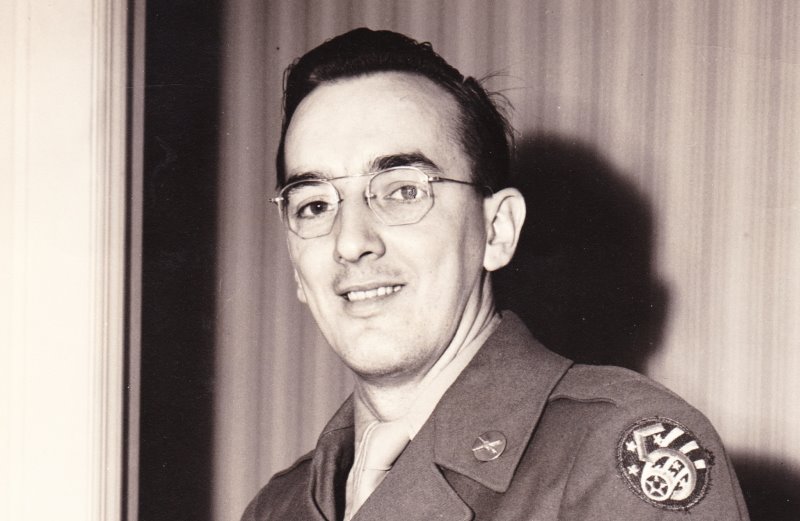
My dad never talked much about his days as an Army private during World War II. The only time he really opened up was when we visited my grandparents. Then Dad and Grandpop would chat on the living room couch, while I played with my dolls on the floor. There was one tale they retold often. One of a strange miracle that changed the course of our family’s history completely.

It happened back in 1944 when Dad was just 20 years old, stationed in the South Pacific. Meanwhile, thousands of miles away in Baltimore, Grandpop was sitting by Grandmom’s hospital bed. She had breast cancer and was recovering from surgery, drifting in and out of consciousness. Grandpop wished there was something he could do to ease her pain. It didn’t help that both their sons were fighting a war halfway across the world—my uncle Harry in England and my dad, James, in New Guinea. Grandmom prayed for their safe return morning, noon and night, even while she was fighting her own battles.

Grandpop was flipping through the newspaper that day, skimming the war headlines, when Grandmom suddenly sat up in bed, her eyes wild.

“Sweetheart, what’s wrong?” Grandpop said, taking her hand.

“Duck, James!” she bellowed. With that, she fell back on her pillow, fast asleep again. Duck, James? What did that mean?

When Grandmom woke up an hour later, Grandpop questioned her about it. But she had no recollection of saying anything. They decided she’d probably just had a bad dream.

Several weeks later, Grandpop received a letter postmarked from the U.S. Army with my dad’s neat script on the envelope. He tore it open.

Dearest Mom and Pop, the letter read. The strangest thing has happened…

His unit had been on high alert after reports of enemy troops nearby. Dad was preparing his equipment for the nighttime attack when he heard a woman’s voice piercing through the silence of the jungle, clear as a bell. At the sound of it, Dad ducked. Just as a bullet whizzed past his head, skimming the top of his helmet.

You saved me, Mom, my dad wrote. All thanks to your words that came out of nowhere – “Duck, James.”

The Mysterious Story Behind “Mysterious Ways”

We’re hard at work on the first issue of Mysterious Ways magazine, a new bimonthly publication dedicated solely to those stories you love so much, those mysterious glimpses of God’s grace and God’s love at work in our lives.

(We’re not taking orders just yet, but if you “Like” us on Facebook, you’ll be among the first to be notified when we are.)

For the past two weeks, we’ve been introducing our staff and teasing stories from the inaugural issue on our Mysterious Ways Facebook page. Today, I shared one great little historical tidbit I found while researching an article about the poet who first penned the words, “God moves in a mysterious way …”

The English poet William Cowper struggled with depressionand his faithall his life. In a book about famous hymns, editor George D. Pyper wrote about the poet’s childhood, “He was a delicate child, sensitive and shy, sheltered and protected by a doting mother.”

But when Cowper was six years old, his mother died. His father placed him in a nearby school. It was there that he attracted the unwanted attention of the school bully, a boy five years older who delighted in tormenting him. In his own memoirs, Cowper wrote that he was so afraid to look the bully in the eye that he knew him “by his shoe-buckles better than any other part of his dress.”

The treatment was almost too much to bear. Until …

According to Pyper, “During one of these persecutions [Cowper] found a line in the Bible that gave him temporary comfort. It was, ‘I fear nothing that man can do unto me.’ This resulted in a spiritual exaltation that saved him from total collapse.”

Not long after, the bully was expelled.

How did the young William Cowper happen upon that line (Psalm 118:6) in his moment of distress, of all the words in the Bible? Perhaps if he hadn’t, he wouldn’t have become the man who went on to write such beautiful and lasting hymns of faith.

It may have been the first time Cowper found himself comforted by God, but it wouldn’t be the last. You’ll learn more about the strange experiences that saved his life—and the life of his mentorin our first issue of Mysterious Ways.

Have you stumbled upon comforting words in a moment you needed them most? Share your story with us. It could be featured in a future issue of Mysterious Ways!

The Mysterious Power of Stories

The other day I came across a story in The New York Times Magazine about Google’s mission to build better teams in the workplace. Google found that the best teams aren’t necessarily formed when great minds come together. But rather when co-workers feel “psychologically safe” with one another.

That’s something Google manager Matt Sakaguchi discovered first-hand after a survey showed not all of his employees felt fulfilled at work. Matt met with his team outside the office to go over the survey results. He asked his employees to open up by sharing something personal and kicked things off with a revelation of his own.

“I think one of the things most people don’t know about me is that I have Stage 4 cancer,’’ he said.

His team was stunned. Apparently Matt had been undergoing treatment for quite some time. They had no idea. Matt’s story turned out to be a lightning-bolt moment. Others on the team shared deeply personal stories too. By the end of the outing, they could discuss their work grievances with greater ease, hopefully solving some of the issues that the survey uncovered.

Read more amazing stories! Click here to subscribe to Mysterious Ways

There’s a scientific reason that Matt’s team responded so positively to his story. Did you know that stories can actually affect your brain’s activity? Dr. Uri Hasson, a neuroscientist at Princeton University, has studied the impact of storytelling on the brain using functional MRIs. He found that when people listen to stories, their brain actually “synchs up” with the storyteller’s brain. In other words, the listener and storyteller feel the same things. Heartache, surprise, joy. It’s called “neural coupling.” No wonder Guideposts stories so often move readers to tears!

“Stories alter brain chemistry that in turn triggers empathy in your audience,” writes Carmine Gallo, author of The Storyteller’s Secret, in a recent Business Insider article. “When the brain hears a compelling personal story, it triggers a rush of chemicals including dopamine, cortisol and oxytocin, the ‘love molecule’ that makes us feel empathy for another person.”

I’ve seen countless times just what storytelling can do—whenever I work with an author on a Guideposts or Mysterious Ways story. To have someone truly understand what you’re going through, so much so that their brain synchs up with your own? That’s powerful stuff. Yet another tool God’s given us to connect with one another.

So keep on telling your stories. They just might help you heal or inspire someone else. And that’s a wondrous thing.

The Mysterious Path That Led Her to the Wizard of Oz

It was a sunny Saturday morning, the start of Memorial Day weekend. I was in Brooklyn’s Green-Wood Cemetery with my son’s Cub Scout pack. Their mission: to put an American flag by all the graves of World War I soldiers in a specific section. It was easy to match the enthusiasm of the Lion Cubs, little kindergartners. The cemetery is huge—478 acres—and that day, we were walking in a part of it that I’d never visited before.

We’d found the first grave pretty easily. Numbers two and three were harder to find. Number four was missing altogether. We combed the area marked on the map but could find no headstone. A little sad, we planted the flag about where we thought the grave should be and went in search of the fifth.

We followed the curve of a road, enjoying the peace of the day. The den leader carrying our map suddenly pointed down the road to the left.

“I think our next soldier is down there.”

“What’s the name?”

Another parent carried a printout of the soldiers’ names and burial plot numbers. “Carlos Siegert Wuppermann,” she said.

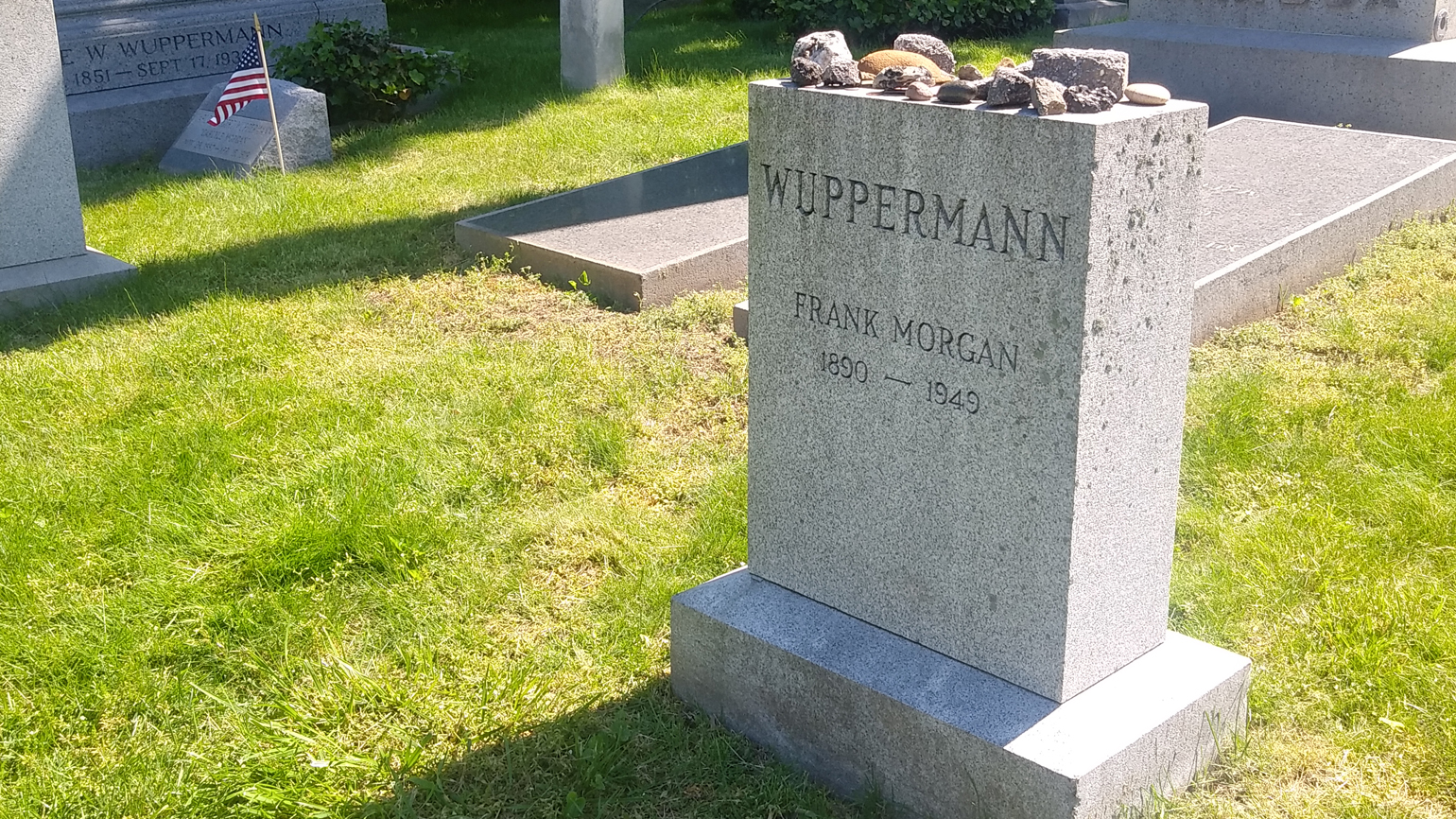
A few yards ahead, we found his grave. Below the name on the headstone was a nickname: “Carlyle Morgan.” Out of the corner of my eye, I noticed another headstone. It was larger than Carlos’s and covered with pebbles and other trinkets. That person must have a big family, I thought.

I shielded my eyes and read the name on that stone. “Frank Morgan Wupperman.” The name reminded me of a story I was working on for the August/September issue of Mysterious Ways magazine. A story about Frank Morgan, the actor who portrayed the Wizard in The Wizard of Oz. As the copy chief, I read every article in the magazine several times. It was strange to see a name so similar to that of someone we’d recently written about.

Then I noticed some of the other items on the stone. Was that a Screen Actors Guild card? I pulled out my phone, and, squinting in the sun, typed the name from the headstone into Google. I could hardly believe the result.

Without a yellow brick road in sight, I had stumbled on Carlos’s little brother—the Wizard of Oz!

The Mysterious Girl He Saw

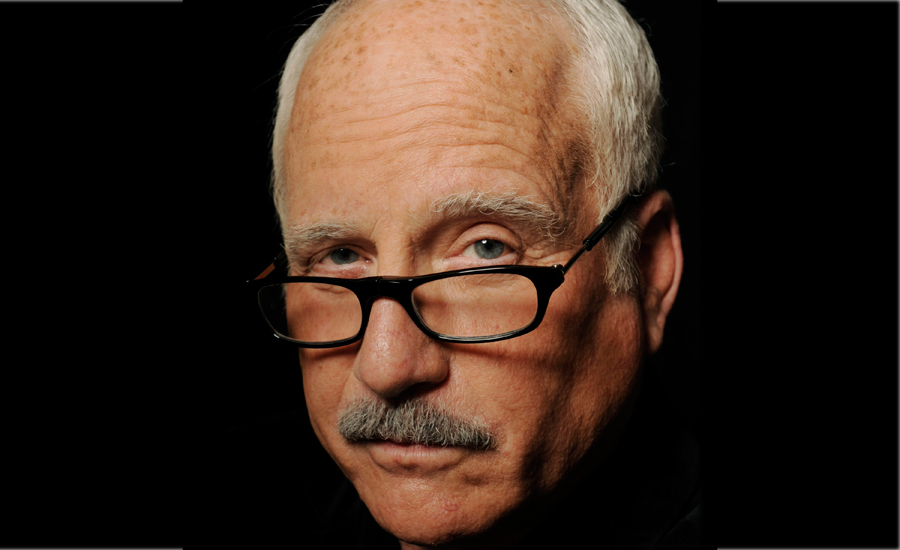
American Graffiti. Jaws. Close Encounters of the Third Kind. Who hasn’t seen at least one of those great Richard Dreyfuss movies? By the late 1970s, fresh off an Academy Award for The Goodbye Girl, Richard was at the top of Hollywood’s A-list.

But he hid a dark side, a secret that was becoming public. Drugs and alcohol were Richard’s way of self-medicating his undiagnosed bipolar disorder, he says in the book Moments of Clarity. He was so far gone he couldn’t even remember filming the movie Whose Life Is It Anyway?, in which he played a painter paralyzed in a car accident.

Not long after, leaving a friend’s house drunk and high on cocaine, he experienced a real crash—he wrapped his Mercedes around a palm tree.

READ MORE: MATT DAMON’S MYSTERIOUS MATCHMAKER

Richard was taken to the hospital with minor injuries. People came and went from his room: producers, stars, directors. One visitor was different. A girl, about eight years old, in a pink-and-white dress and horn-rimmed glasses. No one else seemed to notice her.

Richard left the hospital. His downward spiral continued. He went to recovery meetings stoned. And that little girl haunted him. One night, at a drug-fueled party, Richard couldn’t ignore her anymore. The image of innocence tugged at his heart.

READ MORE: ANTHONY HOPKINS—BY THE BOOK

“There was no little girl in my life. I wasn’t married, I had no kids,” Richard recalls. But he knew, in that moment, that she was the girl he would kill if he continued his destructive behavior. He went home, threw out all his booze and pills, and the next day attended his first recovery meeting sober.

Years later, he learned the little girl’s true identity: “I sobered up on November 19, 1982. My daughter was born November 19, 1983. My daughter wears horn-rimmed glasses. She wouldn’t be caught dead in a pink dress, but it was my daughter, and the older she gets the more I see it.”

The Miraculous Easter Dinner

I love everything about making Easter dinner except the Saturday shopping. That day, the supermarket can be as crowded as a department store at Christmas. And this Easter, on top of my regular checklist, I had to buy the ingredients for a delicious new recipe I’d discovered: sliced ham and turkey layered with Swiss cheese and spinach, all wrapped in pastry dough.

Trouble was, my work schedule had left me no time to shop earlier in the week. I’ll get up extra early and take care of everything Saturday morning, I thought, as I drove to the office Friday. But that morning Yola, one of my co-workers, asked if my husband, Robert, and I would help her move the next day. “I really don’t have anybody else to ask,” she apologized.

“Sure,” I told her, soft touch that I am. Bright and early Saturday morning, Robert, my 15-year-old son Ben, and I drove our pickup to her old apartment. Oh, the piles of furniture and boxes! It took us till late afternoon to get her settled in her new place.

By the time we returned home, I was spent. I don’t know how I’m going to go shopping now, let alone cook Easter dinner, I thought. The only ingredient I had at home was the spinach.

On the kitchen counter were two shopping bags of food Yola had sent home with us – her thanks for helping her move. She was leaving on a trip the next day, and didn’t want the food to go to waste.

I reached into the first bag and pulled out a package of sliced ham. Well, that’s lucky, I thought. At least I can cross one thing off my list.

Then I pulled out a package of sliced turkey, and another of Swiss cheese. That’s odd, I thought. There’s no way Yola knew my Easter dinner plans. I reached back into the grocery bag, thinking of the Easter miracle. All of sudden, the strangest feeling came over me. My hand closed around a package near the bottom of the bag. I lifted it out. It was a box of pastry dough – the final ingredient I needed for my recipe.

The Miraculous Answer to a Farmer’s Prayer

In July 1973, when I was 17, a drought struck my family’s farm in Burnsville, Minnesota. It began with several days without rain. Normal for summertime. But the hot, dry days stretched into weeks. Our farm was our livelihood. We counted on the profits from the corn crop to get us through the year, and the corn was dying before our eyes.

My father was a man of faith. He prayed before every meal and firmly believed God would look out for our family. Each day, Mom and I would get up, hoping for rain. Each day, Dad would expect it, even though there wasn’t so much as a wisp of a cloud in the harsh blue sky.

Around the one-month mark without rain, Mom, Dad and I sat down to lunch one day and bowed our heads in silent prayer, as usual. Mom and I looked up, ready to eat. But Dad didn’t move. We waited so long that I asked if he’d fallen asleep. “Hold on,” he said. “I’m not done yet.” I looked at his hands, calloused and cracked from years of farm work, his nails permanently stained by dirt. They were clasped together so tightly that his knuckles were white. I’d never seen Dad pray so fervently. I knew it was about the drought.

After lunch, Dad returned to the fields, wandering through the yellowing stalks, doing what he could to try to save the corn, which was only a couple of weeks away from being ripe enough to harvest. He stayed out there while Mom and I had dinner. I finished my chores, wiping the sweat off my brow, desperate for a break from the stifling heat. I opened every window in the house, hoping to coax a cross breeze. The air was stagnant, save an occasional hot, weak puff. I sat in our living room, fanning myself and thinking about Dad, a man at the end of his rope.

I needed something to distract myself. I looked at my wristwatch: 7:55 P.M. I was expecting a call from my older sister, Celeste, who lived on her own. She’d promised to call for an update on the crops after she got home from her church choir rehearsal, which ended at 8:00. Hearing her voice would be a comfort.

Boom!

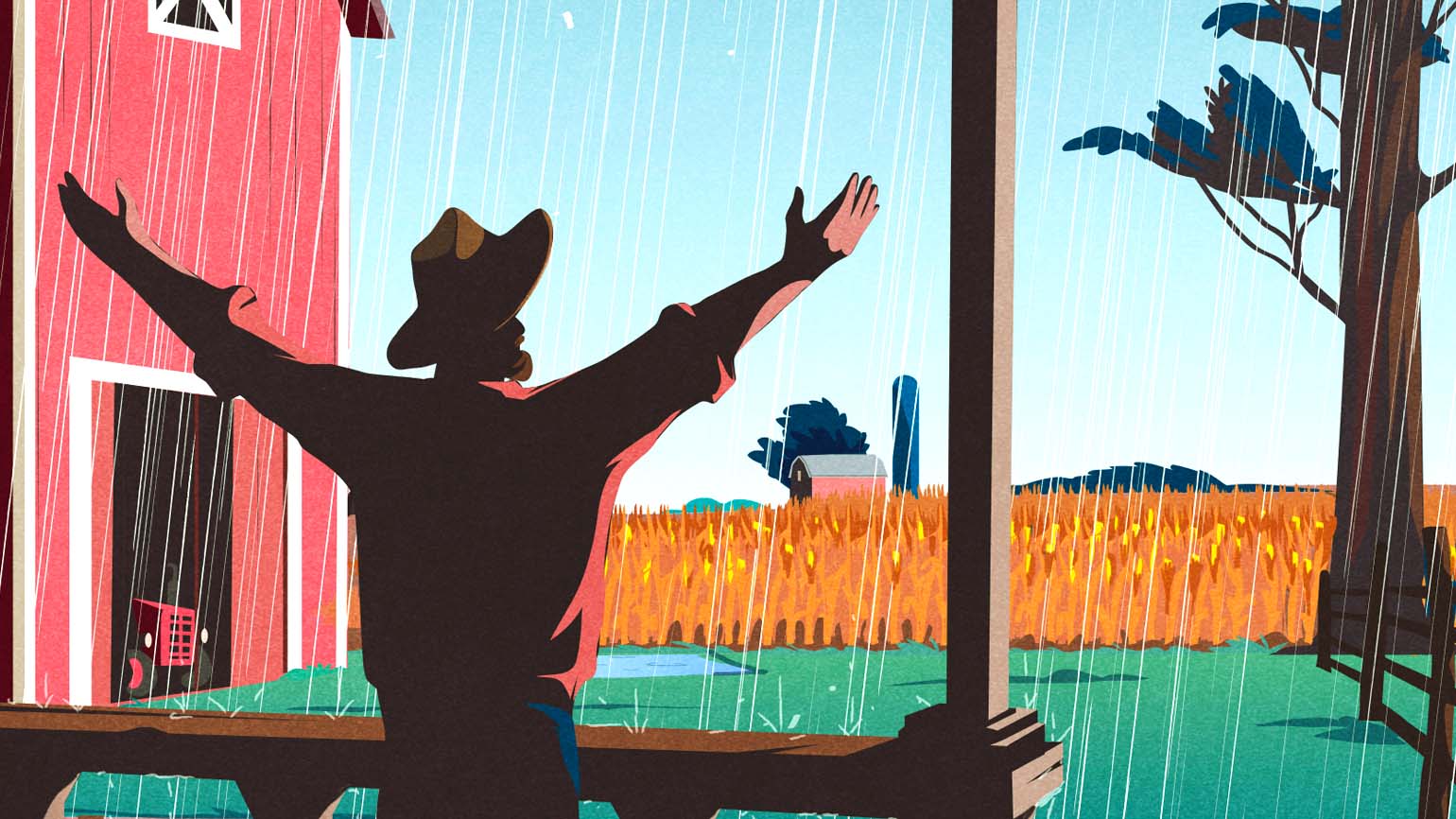
The noise startled me. The house shook. I jumped up and ran to the window. I stared in disbelief. It was pouring rain! My mom and I ran around the house, closing all the windows. Dad came running in, his shirt soaked, his boots caked with mud, beaming from ear to ear.

“Look!” he said, pointing out the front door. “There’s no rain anywhere but on our farm!” He was right. In the distance, on all sides of our property, the skies were clear. There was a rainstorm only over our crops. Eventually, the rain let up. But not before the corn was saved. Dad said the stalks would be healthy by morning.

Celeste called as promised, and we told her about the miracle rainstorm. “You’re not going to believe this,” she said. “We finished choir class a few minutes early. The director asked if anyone had a request for a song we could all sing in praise together. I asked if we could sing ‘There Shall Be Showers of Blessing.’”

I knew the song well. “There shall be showers of blessing / Precious reviving again / Over the hills and the valleys / Sound of abundance of rain.”

They were singing right when the rain started. Years later, the events of that day remain my strongest reminder of the power of faith. Dad’s dedicated prayer was followed up with a whole choir, and God answered with showers of blessing.

The Miracle Water That Healed Her Cat

On the mountainside of Mount Sainte-Odile in Alsace, France, I stopped to catch my breath. My three kids and I had planned to meet here—but they were nowhere in sight. I guess they’d changed their minds and decided to stay back at the abbey. Oh well, I thought. Perhaps expecting teens to be excited about a religious relic was a little ambitious.

It was our last full day in France, and I’d wanted to share this special place with them. I’d learned about Odile, the patron saint of good eyesight and Alsace, when studying abroad in nearby Strasbourg as a teenager. The people who lived there loved telling me the story of how Odile had come across a blind beggar in the wilderness, on this very spot. Tapping a rock, she made water gush forth that restored the beggar’s eyesight.

“You can see the actual spring!” I’d told my kids on the way over. But I could gather now that they hadn’t been as invested as I was in visiting it.

I stepped into the clearing where the spring was. A sense of calm washed over me. Something profound happened here, I thought. I found a spot next to the mossy pool and enjoyed a moment of silence, listening to the water flow. I really wished I could’ve shared this moment with my kids. They’d been excited about seeing the abbey but perhaps not committed enough to visit the spring itself. I didn’t want to be too pushy while encouraging them to delve deeper into their faith. We were Catholic, but I was definitely the most devout in the family. I hoped as they grew older that they’d lean more into their faith.

Lord, please let my children feel your presence.

I uncapped my water bottle and dipped it into the pool, filling it with some of the spring water to take as a souvenir.

When we’d returned home to South Carolina, I carefully unpacked the bottles with the miracle water. I wanted to transfer it to a special container for safekeeping. What about the hand-painted jar my grandparents had given us as a gift years ago?

I walked into the living room, uncorked the jar and poured in as much of the water as it would hold. Hmm, still a bit left. I couldn’t just get rid of it. That would be disrespectful. I looked out onto the back porch and saw that our outdoor cat Martin’s water bowl was empty.

We’d found Martin at a playground one day, lost and alone, a little kitten with gunky eyes. We’d started feeding and taking care of him.

To our delight, Martin survived and thrived as a happy outdoor cat who wandered the neighborhood as he pleased. I took him to the vet, who cleared him for a clean bill of health, save for his gunky eyes. After a few tries with eye drops, we let it go. Martin’s eyes didn’t seem to be bothering him.

I poured the remaining water into his bowl. Why not? He deserved a blessing, and this way, the water wouldn’t go to waste. I got on with the rest of my chores and forgot all about it.

After a week went by, I noticed something strange. Martin’s eyes seemed to be clearing up. No gunk at all. I’d never seen them like this before. How was it possible?

With each passing day that his eyes remained clear, it became more obvious that I’d witnessed something special. Maybe even divine. Still, I doubted the moment stuck with the rest of my family. Two years passed, and Martin’s eyes stayed totally gunk-free. Meanwhile, I noticed our other cat, Mr. Purrkins, whose fur had always been patchy, was getting worse. We took him to the vet. Tried changing his food. Nothing worked.

“What about using some of Saint Odile’s miracle water that you’ve kept in the jar?” my daughter Anna asked one day. “If it worked on Martin, why can’t it work on Mr. Purrkins?”

I couldn’t help but smile. I’d witnessed a miracle, all right. Not as much Martin’s eyes as an answer to the prayer I’d said at the spring years before. Here was one of my kids, feeling God’s presence in her life, just as I’d asked.

The Miracle That Woke Me Up to God

Katie Mahon is a miracle expert. She’s coauthor of the book The Miracle Chase and writes regularly about her hunt for God’s wonder in the world. She wasn’t always that way, though. For many years, Katie was a self-described miracle skeptic!

When she was a teenager, she escaped the clutches of a serial killer in the most unbelievable of ways. But she had trouble labeling that incredible incident as miraculous.

Here Katie tells the story of that encounter. And how one morning, 15 years later, she finally woke up to that miracle from God.

I was 19 years old and window-shopping in San Francisco when this man approached me. He was very clean cut, maybe in his 30s. White button-down shirt, khaki pants. The kind of guy you would take home to your parents for dinner. He said that he was a visitor in town and needed some help. He’d had eye surgery and couldn’t find the address to the house of his best friend’s parents.

I let him finish his spiel and said, “Sorry, I can’t help. I really have to go.” But he followed me. He repeated his story and walked with me across the street. He was very engaging, very persistent, very believable. He said he was staying at a hotel up the street and that there was a payphone we could use there. I decided to be a Good Samaritan and help him out.

We get on the elevator at the hotel and he pushed the mezzanine level. The door opened and I expected it to be crowded. But it was deserted. Not a soul on the floor. We walked down a hallway and into a conference room. Sure enough, at the back of the conference room was a payphone with a phone book below it. I opened it up to look up the address. My back was to this man. Maybe it was logic finally catching up with me, but I felt this wave of terror come over me. I realized it was a trap. I’d been lured into this room. I turned around. He knew that I knew–he was waiting for that moment. He walked slowly toward me. His eyes were so dark, so cold. Evil incarnate. I couldn’t move. I was stuck in this box of terror, all alone. No one would hear my screams in this remote corner of the hotel. My life was over.

Just then, though, a scrawny bellman entered the room. He looked right at me and said, “Don’t you think you should be going now?” I rushed toward the bellman and he escorted me down the hallway, leaving my captor behind. We got to the lobby and I was shaking. I turned around to thank the bellman for saving me. But he was nowhere to be found.

Fifteen years went by. I refused to admit there was anything miraculous about this incident, though I never forgot those cold, cruel eyes. I would wake up, heart pounding in the middle of the night thinking about them.

One morning, my husband, Jim, turned to me and said, “Oh, my God, Katie, I think this is your guy.” He handed me the front page of the newspaper, and there was a photo of murderer Ted Bundy, who’d been executed the day before in Florida. I’d recognize those eyes anywhere. It was the same guy who’d lured me into the hotel.

There’s a quote from author Leif Enger that really resonates with me: “People fear miracles because they fear being changed…” I did fear changing, opening myself up to God. So I ignored the miracle of the bellman swooping in to save me. I wasn’t willing to see it until all those years later. In some weird way, it had to have been Ted Bundy in order for me to acknowledge God working in my life. That day, my spiritual metamorphosis began.

We all respond to different languages, different nudges from God. For me, it took a 2×4 over the head to wake me up.

Have you ever received a 2×4 over the head from God? Share your experience below!

Read more about Katie’s journey in “The Miracle Chasers” or by visiting her Facebook and Twitter pages.

The Miracle That Saved Me

In today’s guest post, author Margaret Terry writes about the allure of God’s miracles and the one that saved her life many years ago…

Ever since I can remember, I have loved magic. As a little girl, I ooohed and ahhhed the loudest when a magician would dig deep into his top hat and pull out miles of vibrant silk scarves.

How did he fit so many scarves in his tall black hat? How did he tie all those knots with me watching him so closely? I loved the mystery of it all!

Margaret TerryOver the years I’ve learned to catch the sleight of hand when a magician palms a red spongy ball, and more than once I’ve caught him slipping the gold coin into his heavily starched cuff.

It feeds my ego to catch the trick, but it also makes me sad to lose the mystery that delighted me as a young girl.

Thank God for miracles! Miracles are unexplainable, and no one can ever catch their trick–miracles seem natural, yet they contradict nature as we know it. Maybe that’s why so many people have a hard time believing what they see and instead choose doubt over awe.

Not me. I’ve seen an eagle with his beady amber eyes soar a hundred feet above a spring-fed lake and swoop down to catch a pickerel minding his own business a foot under the surface of the darkest waters.

I’ve seen tiny crocus buds with lavender petals soft as a baby’s eyelash birth their way through wet, crusty snow. Miracles both.

Perhaps miracles are supposed to tickle the child in us to remind us that mystery is magic. What greater mystery than making a blind man see? Or feeding 5000 hungry people with only five loaves of bread?

Today when I read the stories of Jesus’ miracles, I don’t ask how he did it, and I don’t search for a logical explanation like I did with those illusion makers of my childhood. My faith tells me Jesus did it because he is God.

Mystery? Yes. But as Einstein said, the most beautiful thing we can experience is the mysterious.

Miracles are also one of God’s ways of getting our attention. I know he got mine. It’s a miracle I’m here.

Two people have tried to kill me. The first person was my mother. When she discovered at 18 years old she was pregnant with me, the shame for a good Catholic girl was crushing.

She felt her only option was to throw herself down a flight of concrete stairs to kill the baby. Mom was battered and bruised, but my teeny heart continued to beat.

The second person who tried to end my life was me. Twenty-seven years later, I was in the same situation as Mom. Different circumstances, but still felt like I was out of options.

On a rainy Sunday night, I made a plan to drive my car off a mountain pass. I pushed the accelerator to the floor and sped down the pass until I reached the opening where I’d decided to steer my little Volkswagen through the guardrail into the black void.

When I tried to turn the wheel, I couldn’t. The steering wheel had locked. I yanked it with both arms and every bit of strength I had, but it wouldn’t budge. I don’t remember how, but my little car managed to steer itself home.

Miracle. The word conjures up images of being healed, of being saved. Miracle. Gifts from heaven made in heaven. I used to believe there were big miracles and little miracles. But I’m not so sure God measures miracles.

Whether helping a blind man see or designing eagle eyes, I think every miracle is God talking to us. Open your eyes. See this. Here I am.

Thirty years ago on a dark rainy night when life made me feel I had no options, a miracle showed me I did.

This miracle was excerpted from Margaret’s book Dear Deb: A Woman With Cancer, A Friend With Secrets, And The Letters That Became Their Miracle published by Thomas Nelson. You can check it out here.

Plus, don’t forget to share your own miracle stories below!