

Embrace God's truth with our new book, The Lies that Bind

The Miracle That Saved His Son from Death

“I’ve got a really good story for you,” my editor told me the other day in the office kitchen.

I was a newspaper journalist for 25 years before coming to Guideposts. There’s not a whole lot that surprises me. But this, she assured me, wasn’t the usual fare. “This guy’s done a video,” she said. “Watch it. You’ll see what I mean.”

It had been shared to the Mysterious Ways Facebook page by Karen Byerley Knutsen. A cell phone video of her father, Kenneth Byerley. I pulled it up online. Ken was an older, affable-looking man in a faded yellow T-shirt that read Clowning to Children. He sat in a brown arm­chair with a sheaf of papers in front of him. This guy…a video star? Curious, I hit Play.

“I’m going to talk about the love of God,” Ken said slowly. “And when God talks to us, we better listen.” Then he launched into a story about a vision, both fascinating and perplex­ing. I saw what my editor had meant. I had to know more about Ken and his startling experience.

I gave Ken a call. I recognized his voice from the video at once. Engaging, full of Midwestern charm. He laughed easily, and yet there was a certain shyness to him. It was impossible not to like him.

“How are things in Clinton, Wis­consin?” I asked. Clinton’s a small town an hour south of Madison. Population: 2,100. A place of neatly trimmed lawns, where $4.65 will get you a meat loaf sandwich at the Sun Down Café. Ken’s lived in Clinton most his life. “Since my family moved here in ’45,” he told me. And he’s become a local celebrity of late.

“People will stop me on the street, saying, ‘I saw your video,’” he said. “Or they’ll ask ‘When’s your next vid­eo coming out?’”

In the background, I could hear his daughter Karen chuckling over the speakerphone. She’s one of Ken’s eight kids. She looks after him and films his videos recounting the various miracles in his life. The story I’m interested in happened back in 1987. Ken’s been talking about it ever since. But only recently has it gained a wider audience.

“Tell me what happened,” I said. “The day you had…the vision.”

“Well, let’s see,” Ken said, matter-of-factly. “It was Friday, a payday, and I was on my way to the bank….”

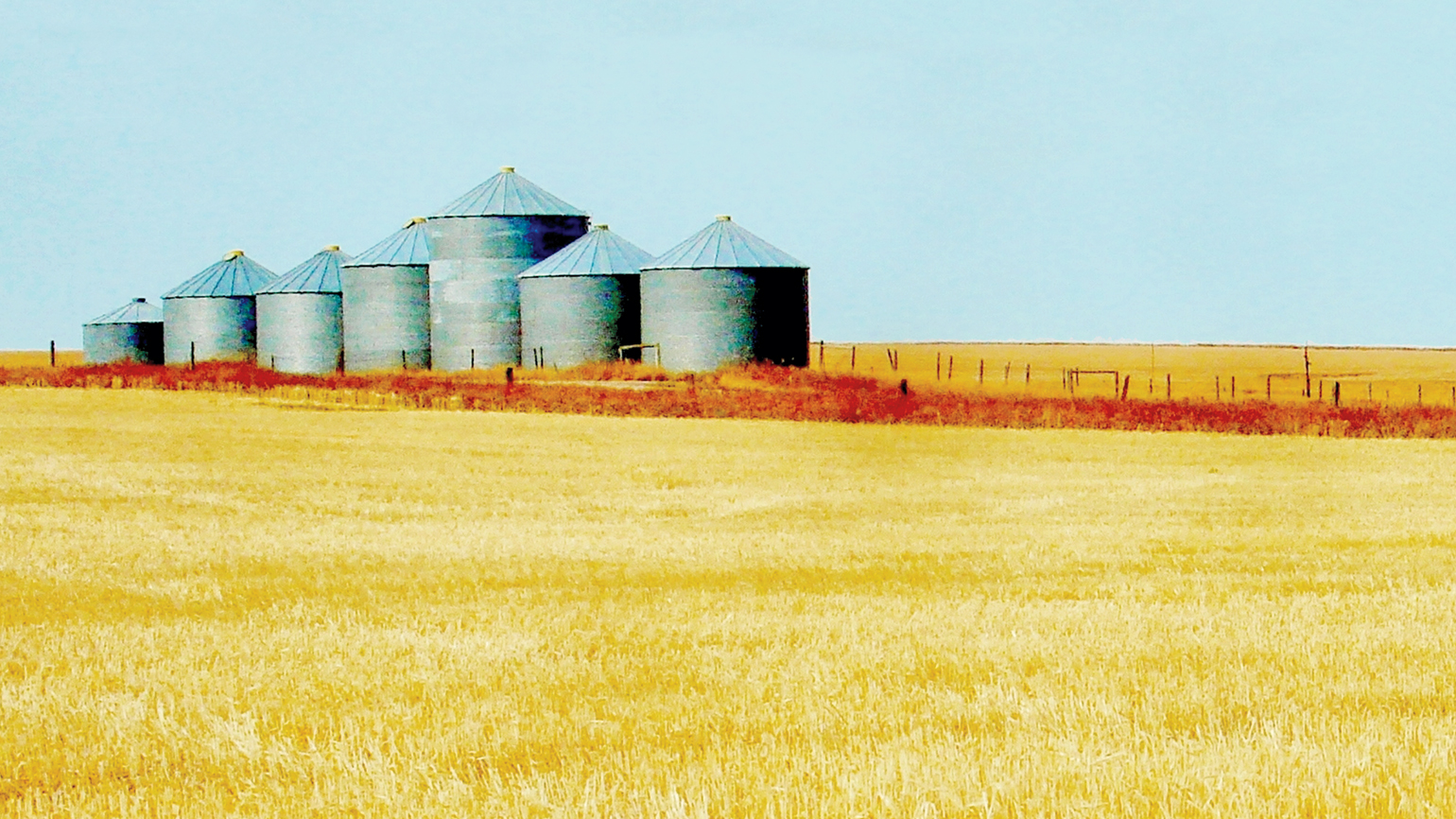
At the time, Ken was a welder at the Chrysler plant, just across the Illinois line. He’d worked there almost 10 years. Past two o’clock in the afternoon, the lanes at the bank were backed up with cars. Just as Ken reached the teller window, he spotted someone familiar pull up beside him in the adjoining bank lane. It was Bo, his son David’s boss. David, then 21, had been working the past year for the local grain dealer, whose massive corn silos constituted the Clinton skyline.

Bo gave Ken a friendly wave, and the two of them went on with their business. Ken deposited his pay­check. The second before he pulled away from the window, though, something very strange happened. He saw Bo again in the lane next to him. This time, though, his car window was rolled down. His expression, sorrowful. “I’m sorry about David,” Bo said.

“David?” Ken said, startled. “What about David?”

“He was up on one of our silos,” Bo said. “He fell off the top, 40 feet to the ground. He got killed. I’m sorry.”

In the next instant, Ken snapped back to reality. He looked up to see Bo’s pickup pulling away from the bank. The conversation had never happened. And yet…it felt so real. Ken shook his head, chastising him­self. What in the world am I doing, thinking such a bad thing? he won­dered. He tried to brush the vision, whatever it was, aside.

“Wait a minute,” I interrupted Ken on the phone. “You have this odd vision about your son and you just dismiss it?”

“Well,” Ken said, a bit sheepishly. “I try to be a positive person.”

“Okay,” I said. “What happened after that?”

Ken pulled out of the bank just before three o’clock and headed home. His route took him past Bo’s massive corn silos. As he drove by, something else happened.

“I heard a voice,” Ken told me.

“A voice?” I asked him. “What kind of voice?”

A small voice,” Ken said. “It said, ‘Pray for David.’ I thought, Why do I need to do that? David’s fine!”

Ken put the thought out of his mind. First he was seeing things. Now he was hearing them too. Maybe he was just tired after a long day at the Chrysler plant. He still had to cut the lawn when he got home. He couldn’t be worried about things that weren’t real.

But the voice came back, even more insistent. Pray for David! This time, it was even clearer—direct and commanding.

“I thought, Okay, I’m supposed to do this,” Ken told me. So he said a short prayer, asking God to watch over his son. But even then, it wasn’t a deeply felt plea. More like a grudg­ing response. “I said, ‘Lord, you know what this is all about,’” Ken remembered. All these years later, I could sense him still shaking his head at the memory.

Ken arrived home, mowed the lawn and didn’t think too much more about the vision and the voice. Until that evening, when his son walked through the door.

“Dad,” David said. “I almost didn’t make it home today.”

“Why? What happened?” Ken said.

There’d been a lot of chaff on top of the silos. So David had been asked to go up and hose it off. He climbed to the top of one silo, start­ed the hose and—

WHOOSH!

The water pressure sent David flying back. The force blew him straight to the edge of the silo. But he didn’t fall off.

“I felt something—someone—firmly pushing on my back,” David said. “It kept me in place long enough to collect my wits and shut off the hose.”

Ken couldn’t believe it. “David,” he said. “What time did that happen?”

David paused. “Guess it was about three,” he said. “Why?”

Ken told David about the vision, about the voice.

“Dad, you must’ve saved my life,” David said.

That wasn’t how Ken saw it. Not then. Not now. “God did what he had to do to save you,” Ken told David. “Not me.”

I got goose bumps at those words. And yet there was a question I couldn’t help but ask him. The journalist in me still needed to make sense of things.

“What was the point?” I asked Ken. “Why did you have to pray for David? God surely would have saved him either way, right?”

Silence. Finally Karen piped up. “I think it was about his faith,” she said. “God told him to pray and he did.” Unlike me, Ken wasn’t bothered by the question of why. It was enough to know it happened.

Ken told the story of the silos so often, it became part of family lore. It got so no one thought much about it. Other miracles happened. Like the time Ken accidentally got hit in the head with a hammer. “One inch over and the doctor said I’d be dead.” Not to mention when God told his son Randy to duck out of the way of a flying piece of metal.

In 2015, Ken had a stroke. He thought God was calling him home. His family felt helpless to comfort him. Then an idea came to his daughter Peggy. “Dad,” she said to Ken, “tell me about the day you had the vision.…”

She recorded the story on her phone and posted it to Facebook. More than 200 people liked it. It was the spark Ken needed. He pulled through. Except, he didn’t have the strength he once did. He couldn’t drive. For years, he’d been active in a clown ministry, dressing up and visiting the hospital once a month. Now he couldn’t even do that. Karen and her family moved in to help care for him. She noticed her dad feeling down. His one favorite activi­ty? Watching pastor Charles Stanley on the television.

“One day I heard him say, ‘Every­one who knows God’s love needs to share their testimony,’” Ken said. “I told Karen, ‘Why don’t we post more videos to Facebook?’”

They’ve been posting them regu­larly ever since—the miracles of Ken’s life—at Ken’s Ministry on Facebook. People in Clinton can’t get enough. The whole thing has given Ken a new lease on life.

“What do you take from all this?” I asked Karen. This time she an­swered right away.

“I know God is real,” she said. “I don’t have any doubt at all.”

And maybe that’s the point.
The Miracles That Didn’t Happen

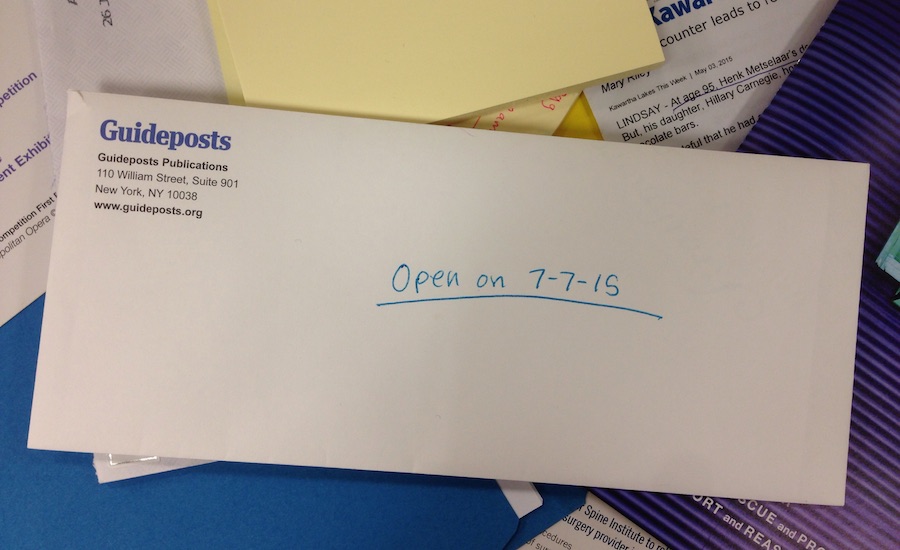
Every time I open my desk drawer, I see it. A plain white envelope with instructions written across the front: “Open on 7-7-15.” A year ago, on July 7, I made a “miracles list” along with my colleagues Dan and Danielle. A list of 12 things I hoped God would accomplish in my life. I sealed it in an envelope with extra tape (hey, you can never be too careful!) and tucked it away to be opened in a year.

Well, last week, the time finally came to take inventory of my miracles. I couldn’t remember what I’d written exactly. I tore that envelope open like a kid on Christmas morning. I got through the layers of tape, scanned the 12 items and…

Oh noooo. Of the 12 items, none had come true! Not completely, anyway. Find true love… see the world… be fearless… write a book… The closest I’d come was reading a book. According to this list, my year was a complete waste! I tossed the letter aside, disappointed.

It didn’t make sense. So much had happened over the past year. I discovered a new hobby in improv. Wrote and edited some pretty cool stories. Connected with fabulous readers across the country. Signed up for hip-hop dance classes–after picking a hobby at random at the start of the year–and had a blast. I hadn’t seen every corner of the world, like I’d hoped. But I traveled to Hawaii and discovered a peaceful home away from home in Florida, where my parents moved for half the year.

All marvelous, wondrous things. All things that never appeared on my list.

Maybe that was the point. The things I didn’t write down turned out to be miracles. Experiences I could’ve never predicted a year ago.

God knew the miracles waiting for me, though, all along. Isn’t it just like him to turn my plans upside down and wow me with his greater ones?

I’m not giving up on those 12 miracles from last year. God’s working on them behind the scenes. In the meantime, I’m going to make a new list to open in 2016. Not to measure my progress. But so I can see how God surprises me!

Last year, many of you joined me in writing a “12 Miracles List.” How did your list turn out? Share your miracle progress reports below!

The Miracle Pyramid

It’s Day 3 of the “Miracle Chase Takeover Week”! Today, the Miracle Chasers–authors Joan, Katie and Meb–break down different types of miracles using a “Miracle Pyramid.”

In the physical world, mathematics has its proofs, science its theories and psychology its personality types. But how can we make sense out of miracles? In our research for our book, The Miracle Chase, we found miracles in cultures and religions across the globe.

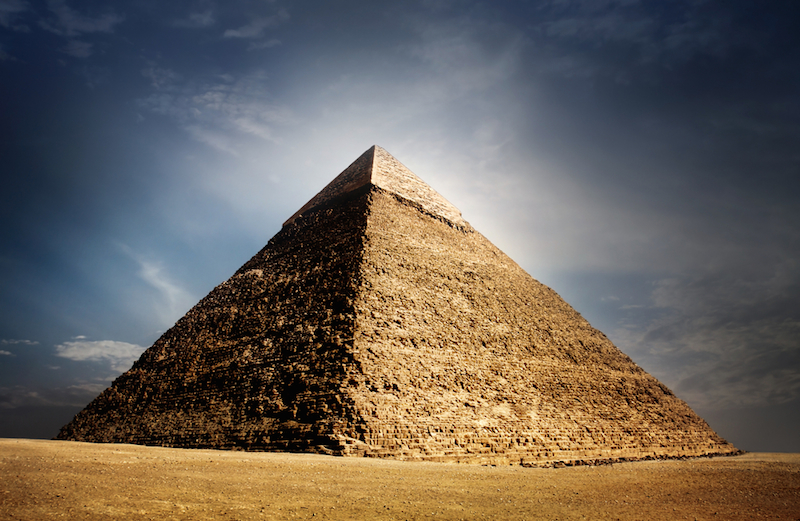
The miraculous Great Pyramid at Giza. Photo by Mikael Damkier, Shutterstock.As we contemplated their inherent wonder, we were drawn to another, more concrete, one: The Great Pyramid at Giza, which became the perfect visual for the types and frequency of the miracles we uncovered.

Today’s blog has us traversing the walls of this “Miracle Pyramid.” Each part of the pyramid, from the base and up, sheds light on the wonders that exist all around us.

1. At the broad base of the pyramid, we find those everyday miracles we all recognize. Some have used the word coincidence or synchronicity to explain these small wonders.

Whether it’s finding a long lost treasure or the remarkable series of events that conspire to save a life, these miracles tend to be very personal and God’s way of working anonymously.

2. The next step up the pyramid takes us to the world of advanced math, where the multiplication of inanimate objects seems to occur at warp speed. Whether it is loaves and fishes on a mountainside or manna from heaven in the desert, miracles of sustenance in time of need transcend the centuries.

3. In the middle, we arrive at miracles of rescue. These occur in the nick of time to save a life and we marvel at the good fortune that results, instead of certain demise.

Sometimes it's the sudden appearance of a mysterious stranger, as with Katie’s encounter with a serial killer, a serendipitous phone call that allows time to escape or maybe the avoidance of a fatal accident.

4. Next we find the miracles of healing that often make us sit up and take notice. "Please save…,” is the most common miracle request and while some are healed physically, others find peace, not in the physical miracle they asked for, but in the miracle of acceptance.

The extreme of these healing miracles are the Near Death Experiences (NDEs)–ordinary people with remarkable visions not only of their unexpected survival, but their vivid description of where they were before returning to earthly life.

5. At the top of our pyramid, the 360-degree view is spectacular. It is here we find thunderbolt miracles (you know, the ones some people need before they acknowledge that a miracle has occurred). Whether it is the sea parting for the escaping Israelites or the resurrection of Christ, these miracles alter the world in some way.

Back outside the “Miracle Pyramid,” taking in all that it contains, it is good to be reminded that there are plenty of miracles to go around and that what matters most is that we are the only true judge of our miracle experience, no matter where it falls.

While we are aware that not all miracles are thunderbolts, we take with us the truth of Cardinal John Henry Newman’s words that, “It is far incomparably more difficult to believe the Divine Being should do one miracle and no more, than that He would do a thousand.”

Have you experienced any of the miracles on the “Miracle Pyramid”? Share your story below!

Plus, you can follow the Miracle Chasers on Twitter and Facebook, or check out their book, The Miracle Chase.

The Miracle of the Sunflowers

I turned the corner onto our street and braced myself. I had to talk rebuilding plans with our contractor, but just the thought of seeing that empty lot–where my family’s house had burned to the ground seven months earlier–made me feel sick.

That night still haunted me. Waking up to the blaring of smoke alarms. Bolting out of bed with my husband, Keith, and grabbing our two young daughters from their rooms. Huddling outside in our pajamas, shivering, before seeking refuge with a neighbor.

We lost everything but the clothes on our backs and a jumble of items a friend salvaged from the rubble. I knew I should be grateful my family had escaped unharmed. But I couldn’t help wondering why God left us nothing to start over with but dirt….

Sunflowers? I stopped the car and rubbed my eyes in disbelief. Instead of a bare dirt lot, there was a field of cheerful yellow sunflowers–hundreds of them–growing exactly where our house once stood.

We’d never grown sunflowers. None of our neighbors did, either. The contractor said they’d started springing up in our lot–and only ours–over the past few weeks. I stared at the vibrant flowers. Surely they were a sign from God, a promise: Life will blossom here again.

I snapped some photos and showed them to Keith.

“Sorry to burst your bubble,” he said, “but there’s a perfectly logical explanation. I had a baggie of sunflower seeds in the garage. The bulldozer razing our house probably plowed them into the dirt.”

So much for God’s promise.

The contractor finished our new house, and we moved in. Our lives really did blossom again. Still, weeks passed before I could bring myself to sort through the box of things recovered by our friend.

Keith and I dragged the box over by the trash can and tossed out one charred item after another. I felt like crying. Then Keith gasped.

“Barb, look at this,” he said. He held up the baggie of sunflower seeds he’d kept in the garage–still tightly sealed, with all the seeds inside.

Download your FREE ebook, Mysterious Ways: 9 Inspiring Stories that Show Evidence of God's Love and God's Grace.

The Miracle of the Last-Minute Menorah

It was the first night of Chanukah, and all throughout the world as darkness fell, Jewish families were lighting the candles on the menorah, remembering the miracle witnessed by their ancestors. But as I hurried out of the Guideposts office after work, it didn’t seem like I’d be able to join the celebration. At least not the way I was supposed to.

“Still no luck,” I said to my fiancée on the phone. “I don’t know where we’ll find one last minute.”

All day I’d been looking for a menorah. My fiancée and I had received a beautiful one as an engagement gift—but we’d forgotten it at her parents’ home in New Jersey. New York has the largest population of Jews in America, but on the isle of Manhattan, on the day before Chanukah would begin, it was impossible to find a place remotely near my office where I could purchase one. I’d searched before work, on my lunch break. “We had a few but they sold out last night,” one shopkeeper told me. I even Googled “Menorahs in NYC” and walked to the address of the first store that popped up. It was now a 24-hour gym. No menorahs, just muscleheads.

“Don’t worry,” my fiancée said, though she sounded disappointed. “We can light some tea candles. It’ll sort of be the same thing.”

Dejected, I walked towards the subway. Well, God, I tried to celebrate the right way, I thought.

About a block away, a golden glimmer caught my eye. Soft, flickering light coming from the windows of the first floor of a large, tall building. I’d passed the building hundreds of times throughout my years at Guideposts, and I knew it housed a Jewish women’s college. Only now, though, did I pay it any attention.

Through the windows I could see tables and tables filled with lit menorahs, their warm glow emanating out into the street. I paused for a second to look.

“Happy Chanukah,” a young girl said to me.

“Thank you. Happy Chanukah to you too.”

I was about to walk on, but something stopped me. “You don’t know where I could get a menorah at this late hour, do you?” I asked.

The girl’s eyes lit up almost as bright as the Chanukah candles. “We have a lot, but they’re all lit now. Let me check and see.” She ran inside. A minute later, she came out again. “We don’t have any more. But someone told me they sell them at the pharmacy on the corner.”

I thanked her and ran to the corner. Inside, I saw a display of Christmas wreaths, candy canes and Santa stockings. No menorahs.

Then the girl walked in. She approached one of the stock boys. “Do you carry menorahs for Chanukah?” she asked.

“The Jewish Christmas tree thing? Aisle ten,” the stock boy answered.

The girl turned and saw me. “I was looking for you. Thought you still might need some help.”

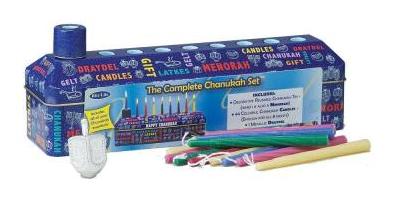
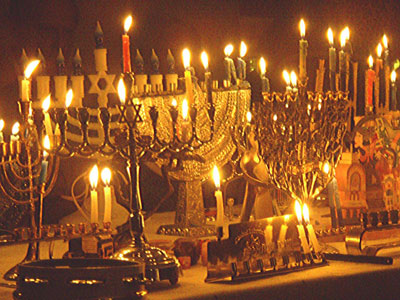
Help she did. On the bottom shelf in the back of the store, I found one, solitary menorah. A tin box with candle holders. The very last one left:

My fiancée and I were able to celebrate Chanukah the way we were supposed to after all. A little miracle, to help us celebrate a big one.

Did you receive any unexpected help this holiday season? Keep an eye out this Christmas for little miracles that may have made your celebration, like mine, a brighter one. Send your stories to mw@guideposts.org.

Happy Chanukah, Merry Christmas, and may everyone have a blessed New Year!

The Miracle of the Kiddush Cup

Michael Bornstein was born in Żarki, Poland into the chaos of WWII. At just four years old, he was sent—along with his entire family—to Auschwitz, the notorious Nazi death camp in Poland.

Thirty-four hundred Jews lived and worked in Michael’s hometown before the war. Less than 30 returned, almost all of them Michael’s family members—an incredible story that Michael documented in his stirring memoir, Survivors Club, cowritten with his daughter Debbie. In it, Michael details the horrors of his experience during the Holocaust, but also the many miracles he witnessed as one of the tragedy’s youngest survivors.

Below is an edited and condensed excerpt from Survivors Club about one such miracle—the survival of a small, silver Kiddush cup that ended up becoming a symbol of hope, faith and perseverance for Michael in the aftermath of one of the darkest events of human history.

–Hilary Ribons

Something to Return For

It was October 1939, and German soldiers were coming to my family’s red-brick house on Sosnawa Street in Żarki, Poland. It was the day the soldiers began taking “contributions,” and Papa was determined to protect what we had.

“If you’re so set on doing this, at least remember the cup!” Mamishu called softly, her eyes still trained through the living room window on the armed German soldiers taking valuables from their neighbors’ homes.

“I’ve already got it,” Papa said, ducking out into the backyard as soldiers’ voices grew louder and louder.

From the back door, he counted his steps. He stopped at a soft spot in the soil and dug with his hands, like he was gardening. I guess you could say my father was planting, burying our family’s seeds of hope.

Within a minute, a hidden cavity appeared. He dropped in the sack of all our valuables—including one small, unadorned silver cup, called a Kiddush cup, which is used on the Sabbath. That’s a holy day celebrated every week in Jewish homes from sundown Friday to sundown Saturday. It’s marked by prayer, wine, and song. Shabbat is intended to be a time of rest and the most peaceful day of the week. The Kiddush cup is raised in gratitude.

Back inside, two Nazi soldiers burst through the front door. My mother prayed that my father would return. He materialized in the living room door just in time, his expression giving no hint of panic. His hands, soiled from digging in the dirt, were now just as clean and unsuspicious as his expression. Papa had gotten the job done.

After the War

In the spring of 1945, Mamishu raced back to her old house. It didn’t even look like her house anymore. It had been taken over by a Polish woman after our family was sent away. Her heart was racing, but she had no intention of turning around until she found what she had come for. When her husband first buried the family’s stash of money and jewels, it had been pretty easy to spot its location, if you knew where to look. Five years later, with Papa gone, Mamishu had to rely on rough measurements.

Did Israel say thirteen steps, or was it fourteen?

Mamishu was second-guessing herself. She paced out her steps several times before finally dropping to her knees to dig. She dug into the earth with just her hands.

My mother knew that Papa had left enough zlotys in the bag to get set up in a new city. Surely the valuables in the sack would net a nice amount of money for my schooling and some proper clothes.

She kept digging, and eventually wrestled the bag free from the ground.

Why does the bag feel so light?

Mamishu’s face flushed. She knew without opening the bag that she had been robbed again. Her safety net was gone, along with every last physical memory of her old life with my papa. Her heart felt utterly broken. She was about to toss the sack to the ground and leave, defeated, when she noticed something. There was still some small weight inside the bag. She reached into the bottom of the sack and grabbed something cool and curved. She pulled out our family’s silver Kiddush cup.

To Mamishu, this was the greatest treasure of all. Hitler’s army had killed millions of Jews, but it was abundantly clear on that night: you can’t destroy faith.

With memories of Shabbat dinners and laughter swirling in her mind, Mamishu returned the cup to the bag and clutched it to her heart as she started back to the side of house with a victorious smile on her face. The money could be replaced. The family Kiddush cup, though, was irreplaceable.

New Beginnings in New York

It was May of 1953, and Mamishu was late to my bar mitzvah.

I knew she’d be along soon, but the rabbi told me we couldn’t wait any longer—services had to begin. Just as I stepped onto the bimah—the holy stage—the big wooden doors at the back of the room swung open and my mother came racing to the front row.

Antshuldigt!” she mouthed to me in Yiddish. Sorry! She was wearing a bright honey-colored dress and all her best jewelry. She blew a kiss at me from her seat. I couldn’t stay mad at her.

During my bar mitzvah ceremony, the rabbi raised a tiny silver Kiddush cup I had brought to the temple with me that morning. He loudly chanted the prayer over the wine. The cup had one small ding on its side, but to every family member in the crowd it looked perfect.

Not Just Surviving, But Thriving

I’m a grandfather now. I recently retired from a long career in pharmaceutical research. My wife and I share days filled with grandchildren’s soccer games and family birthday parties—and an unyielding supply of indescribable joy.

Two generations after the Holocaust, from one survivor, there are four children and 12 grandchildren. There are hundreds of thousands more from other survivors and escapees. Today, our sense of identity is stronger than ever.

At our children’s weddings and for our grandbabies’ bris or baby naming, we have raised one very precious silver Kiddush cup in gratitude and celebration. That family heirloom, once buried in my parents’ backyard in Żarki, now stands as a symbol of a faith that can’t be broken, no matter how great the test.

Edited and condensed from Survivors Club: The True Story of a Very Young Prisoner of Auschwitz. Copyright 2017 by Michael Bornstein. Copyright 2017 by Debbie Bornstein Holinstat. Adapted by permission of Farrar, Straus, Giroux Books for Young Readers. All Rights Reserved.

Read Michael’s inspiring story from the April-May 2018 issue of Mysterious Ways magazine.

The Miracle of Protection

I just watched the most mind-boggling news segment. An officer stopped a car and a few minutes later, he was under fire. Amazingly, the bullet was stopped by his badge. I sat there in awe as I thought about all the “what ifs” that could have happened. What if his badge had been higher, lower, or more to the right? What if the bullet had gone one or two inches either way?

But God protected him in a miraculous manner.

Someday when we get to heaven, I think it will be fascinating to see all the ways God protected us—many times when we didn’t even realize we were in danger.

There was the time my contractor husband was working on a job and he almost fell through the floor when some boards gave way on the second story. Paul was bruised and scratched, but God spared his life.

Looking back through my motherhood years with the beauty of hindsight, I see time after time where God protected my three active sons—from serious injuries while playing (yes, they were all boy!), car crashes when they started driving, and other occasions where there was no explanation for why they weren’t hurt.

I worried about them, but there was a sweet comfort in knowing that wherever they were, that God was with them, and that nothing could happen to them unless it came through Him first.

I’m so grateful for God’s protection, for his precious promises to us, and the peace that they bring, so I thought I’d share some for you to claim today:

The angel of the Lord encamps all around those who fear Him, And delivers them. Psalm 34:7

Fear not, for I am with you; be not dismayed, for I am your God; I will strengthen you, I will help you, I will uphold you with my righteous right hand. Isaiah 41:10

The LORD will keep you from all evil; he will keep your life. The LORD will keep your going out and your coming in from this time forth and forevermore. Psalm 121:7-8

The Miracle of Pentecost Delivers a Powerful Reminder

Pentecost SundayJune 9 this yearmarks the birthday of the church so here’s a Happy Birthday to you and your community. (When it comes to how Pentecost got its name, it all goes back to 50 days after that first Easter—50 days if you count both Easter and Pentecost. In fact, Pentecost means the 50th day.)

On the first Pentecost, recorded in the Book of Acts, Jesus’s followers were filled with the Holy Spirit, and they began to speak in other languages. More importantly they were understood in other languages.

I thought of that not long ago when I visited the church that my son, Tim, attends in Los Angeles—Saint Mary of Mariposa. It was founded over a hundred years ago by Japanese-Americans in a neighborhood that was largely Japanese-American.

To buy a copy of Rick’s latest book, Prayer Works, click here.

In 1943, after the bombing of Pearl Harbor, the congregation was herded off to internment camps and the church had to shut down.

But at war’s end, they returned to their beloved church and rebuilt their lives. Over the years they moved out of the old neighborhood and other families moved in. Today the neighborhood is largely composed of Mexicans from the area of Oaxaca.

And today the church is one of many tongues.

Even as the original Japanese-American families moved away from their church, they returned to it for worship. And over time they welcomed the church’s new neighbors.

So there we were on a Sunday morning, and we sang a hymn in Japanese and English and Spanish, acknowledging the languages of all of the worshippers.

“Look, aren’t all the people who are speaking Galileans, every one of them? How then can each of us hear them speaking in our native language?” the crowd asked at that first Pentecost.

It was the miracle of the Holy Spirit, a miracle that still goes on, no matter what your language.

God speaks the language of love, and it can be heard and understood in every tongue.

The Miracle of Block 11

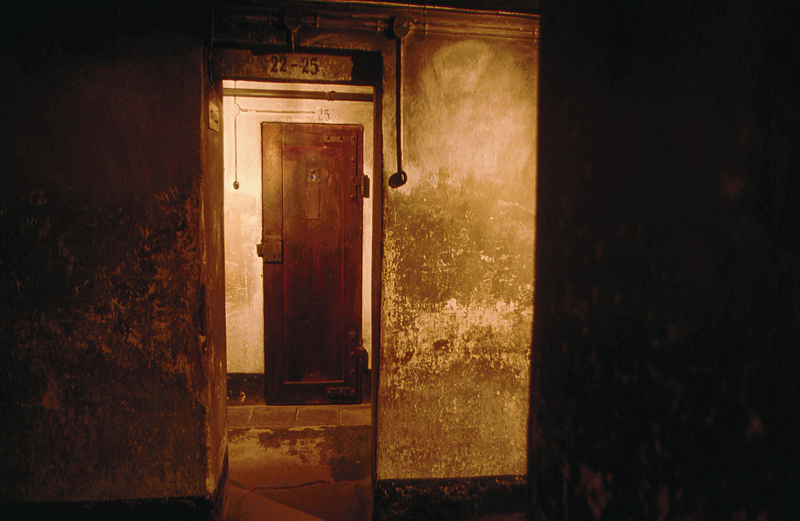
October 1943. Auschwitz-Birkenau concentration camp. Three gaunt men huddled together inside a pitchblack, airless cell in Block 11. Narrow concrete walls, scuffed with the desperate scratches of previous prisoners, seemed to close in around them.

In hushed tones they discussed the only thing that mattered now—escape. But even if they found a way out, their fate was unclear. One thing was certain: The executioner would come for them.

Menachem Rosensaft sat in his office on the Upper East Side in New York City on a brisk January afternoon and stared at the book he held in his trembling hands. Tehomot u-shehakim read the Hebrew title, From the Depths of the Skies—the biography of an Auschwitz survivor named Zeev “Yumek” Londner.

Menachem’s stomach clenched as he imagined that dark, cramped cell, yet he could not get the image out of his head. A week earlier, he had never heard of Zeev’s biography. Now it was a precious key to his past: Zeev had been one of the three prisoners in the cell. Another was Menachem’s father.

Block 11, a stark brick building at Auschwitz, was known as the Death Block, where defiant prisoners were brought to be tortured and killed. According to camp records, Josef Rosensaft entered on September 30, 1943, and exited five days later. This much Menachem had known for most of his life.

But what happened during those five days? How did his father manage to escape?

From a young age, Menachem had overheard his parents and their friends, many of whom were also Holocaust survivors, sit around the dinner table and discuss their experiences during the Shoah, absorbing the adult conversation even when he couldn’t understand every word. Concentration camp. Unterkapo. Block 11.

When Menachem was old enough, his father sat him down and told him some of the stories. Vivid, gripping accounts that seemed to come from another world.

Like the story of Josef’s first escape. He was 32 years old in 1943, when the SS gathered his family and other Jews from the Bedzin ghetto in Poland and crammed them into a train bound for Auschwitz. He waited for an opportunity to flee.

When the guards weren’t looking, Josef slipped through an open window in the train compartment and dove into the freezing Vistula River. Swimming for his life, he was hit three times by German bullets, but somehow escaped and walked, bleeding and barefoot, back to Bedzin.

Only later did he discover that virtually all the Jews on that train had been sent directly to the gas chambers. Not long after his return to Bedzin, the SS liquidated the ghetto entirely, and once again, Josef was sent to Auschwitz. That time he couldn’t break away, though he certainly tried.

“Never forget,” Josef told his son, as if Menachem had lived through the Shoah himself. Remember the evil, so it shouldn’t rise again. Remember the strength that overcame it, and never let it wither. Remember the faith that sustained the Jewish people.

Menachem always thought he would have more time with his father, more chances to ask about the past and fill in the details. But in September 1975, at age 64, one year younger than Menachem was now, Josef Rosensaft died from a sudden stroke.

With his father’s words in mind, Menachem told the stories to his daughter, and hoped to share them with his grandchildren someday too.

He had grown up to become general counsel to the World Jewish Congress, an organization protecting the rights of Jews worldwide, and taught law-school courses on the topics of genocide and war crimes.

He had just begun editing a manuscript, a collection of essays by the children and grandchildren of Holocaust survivors, another way to honor his parents’ legacy.

He was born 103 years ago this month, Menachem thought, a few days before his father’s birthday, sitting at his desk, sorting through the stories he’d collected. The gripping narratives told of courage in the face of unfathomable terror.

He opened up his e-mail and found a new message from an old friend, Hannah, who was living in Israel. “I came across something you’d like to read, a book written in Hebrew and only available here. It has to do with Block 11 and your father. I’m sending you a copy!”

Block 11? Menachem could hardly believe it. After all these years, would this book finally shed light on the missing story? Within a week, Menachem received his copy. He sat in his office and flipped to the page Hannah had marked for him.

Rosensaft did not stop thinking about escaping, Menachem read. His father. He leaned back in his chair and turned to the beginning of the chapter.

Zeev Londner and his brother were only in their twenties when they found themselves in Auschwitz, in September 1943. They made close friends there with an older man—Josef Rosensaft.

Menachem’s heart raced. Josef was not just a brief mention in the chapter—he was the chapter. And in typical Josef Rosensaft fashion, he had crafted a plan to escape.

In October of that year, he told the brothers he knew a German doctor in Katowice, a city near Bedzin, a non-Jew who had offered to hide him before. The three of them would duck away from their work detail, hide in a deserted tunnel until the Germans stopped looking for them, and then make their way to the doctor’s house.

But the wrong person overheard Josef’s plan: an unterkapo, one of the Jewish inmates coerced by the Nazis—through a perverse system of threats and incentives—to supervise and spy on fellow prisoners.

He brought the three men to the camp’s officials, exposed their plan to escape, and shared the address in Katowice that they had been planning to flee to. A young SS officer named Otto Klaus seized Josef and the Londner brothers.

Josef knew that the punishment for plotting to escape was death. The three Jews would be sent to Block 11, Officer Klaus explained, while the authorities decided whether they would be shot or hanged.

Since it was a Thursday, and executions took place on Mondays, the men would spend the Sabbath in Block 11. They were jammed into the cramped cell with two other prisoners and awaited their fate.

On Monday morning, they could hear other prisoners being dragged from their cells, followed by gunshots. Josef bade his friends goodbye. “May we meet again in the next world,” he said. A minute crawled by. Then an hour. Still no one came for them.

Finally the officer in charge of Block 11 appeared at their cell. “Nothing will happen to you, not today,” he said. He unlocked the cell door and had them taken back to their barracks.

Menachem’s eyes flew over the Hebrew writing. According to the book, questions about what had happened—what saved the three men—stayed with Zeev long after he, his brother and Josef were separated and sent to different camps.

He finally learned the truth two years after liberation, in a displaced-persons camp in Germany, when Josef located him and told him the rest of the story.

Menachem held his breath as he turned the page, closer to the answer he had sought for so many years.

Josef weighed hardly more than 75 pounds when he was liberated from the notorious Nazi death camp in April 1945. When he was strong enough, one of the first things he did was track down his doctor friend from Katowice.

He told the doctor about his foiled attempt to escape from Auschwitz with the two brothers and their inexplicable release from Block 11.

“I know what happened,” the doctor responded. That October, he’d received an unexpected visitor at his door. SS officer Otto Klaus.

Armed with the address in Katowice, Officer Klaus had ridden his motorcycle to the Polish town, planning to expose and arrest the traitor who was willing to harbor three runaway Jews. But when the door opened, he stared at the doctor in disbelief.

He knew the man.

More than 25 years earlier, during World War I, the doctor had saved the officer’s father’s life. In fact, the two families had remained friends. Officer Klaus had a decision to make. Take the doctor into custody and turn him in, or cover up the incident.

That day, Officer Klaus returned to the camp and made his report: His investigation had not revealed any scheme to escape, he said. He vouched for Josef and the brothers and said they should be let go.

On Monday, the three men returned to camp. Their ordeal was far from over, but they would live another day.

Menachem finished the chapter and closed the book, feeling as though he had just been given a miraculous gift, as if he himself had been liberated somehow.

He was sitting at the dining-room table again, listening to another of his father’s stories. Given a new lesson he was meant to remember and pass on to his daughter and future generations.

In the middle of the deepest horror mankind had ever known, a spark of humanity had survived, powerful enough to move the heart of a Nazi officer, and to deliver Josef Rosensaft from a dark prison cell back into the light.

Download your FREE ebook, Mysterious Ways: 9 Inspiring Stories that Show Evidence of God's Love and God's Grace.

The Miracle Collector

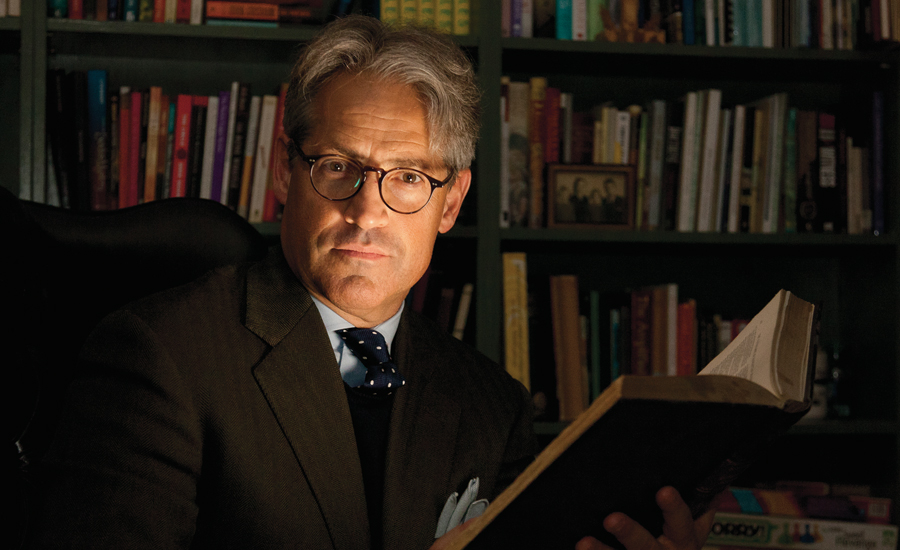
“In Science we have been reading only the notes to a poem; in Christianity we find the poem itself.” So wrote C. S. Lewis in his 1947 book Miracles, which influenced generations of Christian writers. One of them is Eric Metaxas, who is best known for his biographies of the English abolitionist William Wilberforce and the anti-Nazi martyr Dietrich Bonhoeffer. His newest book—also titled Miracles—follows in Lewis’s footsteps.

Why did you write this book?
I’m somebody who has experienced miracles. I told an editor about one. He pursued me to write a book about them. I could see two ways the subject could be handled badly. One was to make it too religious. Is there something beyond this world? This is a question everyone has. And then I thought, there are books like The Secret, where there is sloppiness theologically. That does a disservice to the subject of miracles as well.

What were your own experiences with the miraculous?
I grew up more as a Greek than Greek Orthodox. You eat the foods, perform the rituals and go to church. But it was not something that I took particularly seriously. In college at Yale, I bought into secular thinking. Afterward, I was confused in life. I took a job proofreading chemical manuals at Union Carbide. It was there that I met a guy who was serious about his faith. He discussed God with me in a very sensitive way. I still wasn’t buying it, but it began a dialogue.

READ MORE: 5 THINGS YOU NEED TO KNOW ABOUT MIRACLES

Then my uncle died, around my twenty-fifth birthday. I had this dream. I was ice fishing on Candlewood Lake, where I’d spent a lot of time growing up. A golden fish poked through the ice. Not a goldfish, a fish made of gold. I held him up and felt this overwhelming peace. I recognized the fish as a symbol of Christ. Never in my life had I had a dream like that. In it, Jesus basically revealed himself to me. The only other time I had a dream like that was 20 years later.

Before you wrote Bonhoeffer
I was in my forties. I had a very specific dream of my extended family gathering for a photo in the German village where my mother grew up. I saw myself at five years old, desperately wanting to get in the picture, even though I knew that in real life, I hadn’t been to my mother’s village at that age. Then I woke up. It was strange. I almost never thought about my German roots.

I couldn’t reach my mother, so I called my aunt. She told me that the night before, some relatives had e-mailed her a photo. She sent it to me. Everyone looked exactly as they had in my dream. Did I know the meaning of it? No! Later I came to the conclusion that God really wanted me to write about Germany. That led me to Bonhoeffer.

Not every miracle is like parting the Red Sea.…
Miracles are not just random great things that happen. A miracle is a communication from God. He’s trying to speak to us, to draw us to look at him. He doesn’t want us in the moment we experience the miracle to say, “Oh, that’s great,” and then move on. He wants us to look deeper, to get to know him personally. He’s not a vending machine, where you put in your prayer and out comes the answer.

He’s more like a parent. Your parents love you, even when they deny you what you’re asking for. Sometimes they deny what you’re asking for because they love you.

These stories in Miracles, they’re all about people you know?
It allows me to vouch for their credibility. These are not just stories I read on the Internet. My friend Joni dove from a raft into the Chesapeake and fractured her vertebrae. She was drowning, and no one saw her. Then, I kid you not, a crab bit her sister’s toe. Her sister turned and saw Joni in time to rescue her. Joni’s life was saved, miraculously. Yet she was paralyzed and she’s been paralyzed for 45 years.

Miracles are not always entirely happy. We have to face the big questions. It’s okay to wonder how God could part the Red Sea but doesn’t cure a kid dying of cancer. You shouldn’t be afraid to think about that. When you take in the whole of all he has done, God still comes out looking pretty great.

READ MORE: MIRACLE CHASERS

In the book, you write that life may be more outrageous than the Virgin Birth.…
We shouldn’t be here. The more you look at the tremendous fine-tuning required for a planet to exist that might support life, it’s kind of frightening. Look at what a cosmologist says about the four fundamental forces: gravity, electromagnetism, the weak nuclear force, the strong nuclear force—if any one of them had been slightly different, there’d be no universe. All the things that science says needed to happen in order for life to emerge makes the Virgin Birth and the Resurrection seem like, “What’s the big deal?”

You say that miracles are always “in character” for God.
God is not a trickster, throwing riddles at us. He’s not going to do stuff to play with your head. This is standard biblical theology. Everyone needs to ask themselves, who is the God of the Bible? He is one of grace, mercy. There are some people who believe religion tells them to kill others. There are people who want to create God in their own image. In my Bonhoeffer book, I wrote about how Hitler believed he was on God’s side. That’s not God. He doesn’t work that way. You are either following the devil or your own foolish inclinations.

Can a miracle happen to someone of any faith, or of no faith at all?
The idea that anybody “deserves” a miracle is a fundamental misunderstanding. The Bible says we are all broken. If you think that you are better than anyone you are already in trouble. Unless you have humility you can’t begin to understand God. A bad guy can be changed by a miracle and turn to God. That’s the point. Miracles are not reserved for special people, they’re something that, again, gives us a clue to who God is. He’s merciful and loving because he really does want to reach everybody.

Is there one miracle that you included in this book that you found the most powerful, the most compelling?
There isn’t really one. It’s like asking someone to choose from their children. I really found that what I loved is there are so many kinds of different miracles. Miracles of tremendous healings and people hearing from God. People seeing angels vividly, specifically. People experiencing being saved by what had to be an angel in some dramatic situation.

One friend heard the voice of God and her life was saved on 9/11. That’s astounding. Some of these stories are funny, some are very moving. I just think the breadth of the stories is what makes the book compelling.

Can science do anything to prove or disprove miracles?
We live in a culture that puts out this narrative that faith is either at odds with reason or it’s something that is apart from reason. I say not only is that not true, but it’s a preposterous untruth. I wrote an article about that called, “Science Leading Us to God,” and shared that with The Wall Street Journal and they changed the titled to “Science Increasingly Makes the Case for God.”

There was a firestorm of crazy criticism all over the map and then another wave of people defending my article against the criticism. It became this lightning rod on the debate of the existence of God and everything. People of great faith gave us science. That is a historical fact, because they believed there was a universe designed with order. It’s fascinating.

Can one be more “in tune” with the miraculous? How can someone open themselves up to wonder?
I would say that everyone should just pray to God throughout our days, asking him to speak with us in whatever way he wants to speak to us. God wants us to enter a conversation with him, a dialogue with him, a relationship. We’re not praying to the Ten Commandments, we are praying to the God behind the Ten Commandments. A person, who loves us, who wants to communicate with us.

Some people, as I expressed in the book, hear from God in amazing ways. On some level we all do. I do think that God can lead us in prayer. He can lead us to pray for this or that. I’ve experienced that myself where I feel like God is even guiding my prayers. But you can’t steer a parked car, you have to be praying for God to steer and guide your prayers.

When you pray, you spend time in God’s presence, and you are allowing yourself to see things from his perspective. Which is changing you, even if it doesn’t change your circumstances. Prayer is something that I think is absolutely vital.

Is any miracle too small, too silly? What are we to make of the people who see God’s handiwork in the humdrum of everyday life?
God is everywhere and in everything, so he is as much in the tiniest, most mundane things as he is in the largest things like the parting of the Red Sea and the creation of the world. Nothing is too big for God—and nothing is too small for God either.

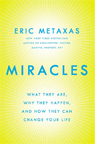
Miracles book cover​Eric Metaxas is the author of Miracles: What They Are, Why They Happen, and How They Can Change Your Life (Dutton, 2014). For more about Eric Metaxas and information about his book, please visit his website.

Did you enjoy this story? Subscribe to Mysterious Ways magazine.

The Message That Saved His Life

In the winter of 1944 during World War II, I was in France, a platoon sergeant in the Yankee Division under General Patton. About mid-December I received a letter from my mother back in the States.

“Can you remember,” she asked, “where you were on Thanksgiving Day?”

Could I remember? How could I forget the odd thing that happened that day. At dawn I was sent to check out a crossroads where an enemy strongpoint was suspected. Normally I would have had my men fan out so that they could move with the cover of the trees. But just before we started out that Thanksgiving morning, I stopped. I stood stark still, arguing with myself about what I should do.

Then, going strictly against the book, I walked my men right down the middle of a road in an exposed column. No one fired at us; there was no evidence of the enemy. We found the crossroads unoccupied and turned to walk back.

There, on the backside of the trees where only the German soldiers would have seen, were signs cautioning minen. The woods were mined. We could have been blown to bits!

Mother’s letter continued. She told me how she awakened after midnight on Thanksgiving Eve when it would have been daylight in France:

“I had a strong feeling that you were in great danger,” she wrote. “When I opened my Bible, a phrase in Second Chronicles [20:17] gleamed on the page: ‘Stand ye still and see the salvation of the Lord with you…’”

Stand ye still. Stark still.

The Light of God’s Grace

My wife, Linda, and I planned to drive through the night from New Orleans to South Carolina to visit our parents for Christmas. Linda worried about our car. My Mercury was 11 years old, with no hubcaps and an exterior dinged up worse than a boxer. I insisted it was in good running condition, though. “Just missing a spare tire, that’s all.”

Two in the morning, somewhere in Alabama, I heard a loud bang, followed by a flapping sound. It was just our luck—a tire had blown out.

There’d been no open service station for miles. “What can we do?” Linda asked.

I pulled over and tried to think. My eyes scanned the heavily wooded area around us. A soft orange glow caught my eye. The light shone from the doorway of a small shanty in the woods just off the road. An elderly man emerged with a kerosene lantern. I cracked the window as he approached my car.

“What seems to be the problem, captain?” he asked.

“Blowout,” I said.

He lowered his lantern to take a look. “I got a tire that’ll fit that,” he said.

No way, old man. Didn’t he know not all tires fit all cars?

But the tire fit like a glove. I tried to offer him money, but he refused payment. “Merry Christmas,” he said.

On our way back, we tried to find the man’s cabin. But it must have been too well hidden by the trees and shrubs. Or maybe…

Read more Mysterious Ways.