

Embrace God's truth with our new book, The Lies that Bind

Survival Mode

Swim to my voice. The words washed over me like the waves I was hopelessly fighting, salt water spraying my face. My legs were cramping from the exertion of staying afloat. But I kept moving. I had to.

I was stranded in the Gulf of Mexico. What would happen if I stopped fighting the terrible current? Would I be swept out further into the gulf, my body never even found?

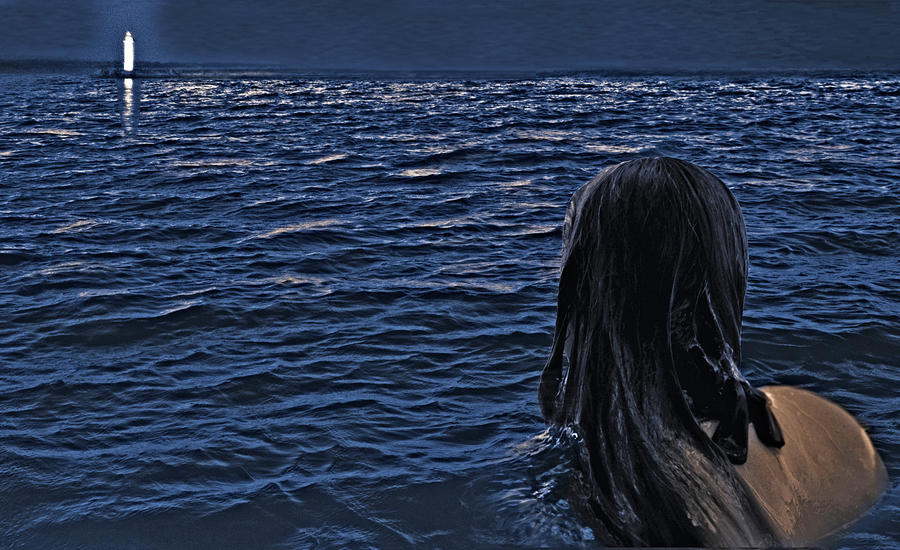
I was miles from shore. It was dark. I scanned the horizon, looking for a sign that help was on the way. All I saw were the blinking red lights of a cell tower and the faint beam of a lighthouse, both miles farther than I could swim.

I bobbed up and down with the waves, kicking my legs and struggling to get a steady flow of air. I’m a nurse, so I’m no stranger to crisis situations. I’m used to do-or-die, life-or-death scenarios. It’s my job to keep a level head. But I’d never been the one in danger before. Not till now. Not like this.

I’d been adrift since sunset. It had been a wonderful day. I’d met my friend Rusty for dinner in Tampa. We had plans to go to a restaurant in town, but Rusty had an impulse. “Let’s take my boat out and watch the sunset from the water first.” It was a warm summer evening and the smooth, sparkling surface of Tampa Bay looked so peaceful, so tempting.

We left from the St. Petersburg marina and sailed toward the gulf under the Skyway Bridge and then stopped south of Fort De Soto Park, the last spit of land before it’s nothing but open water. We watched the clouds turn orange and pink. The faint scent of fish lingered in the air.

Our stomachs growled. The sky darkened. Time to head back to land.

“I’m going to cool off in the water first,” I said. I lowered myself halfway down the ladder on the side of the boat and let my legs dangle. All at once, a swell surged up and knocked me into the bay.

“Hey!” I yelled, waving at Rusty up above me. “I fell overboard! Throw me a line!”

Rusty tossed a rope over the side, but the current was surprisingly fast. It whisked me away from the boat. I swam as hard as I could. Then I heard a splash. I craned my neck to see…Rusty?

“What are you doing?” I yelled, my limbs already tiring from fighting the current. “You should stay with the boat!” Too late. We were both good swimmers—I’d been a certified diver for more than 20 years—but the tide was going out. Within seconds, the boat was little more than a tiny dot in the distance.

Clare, don’t panic, I thought. I’d learned that panic was the deadliest factor in any emergency. But how could I be calm now? My muscles ached, it was almost dark, we were rapidly being carried out into the gulf. And nobody knew where we were.

“We have to keep our eyes on the Egmont Key lighthouse,” Rusty shouted over the waves, pointing to a white light south of us. “Once we get past it, we need to swim toward the cell tower at Fort De Soto Park.”

I looked at the flickering lights in the distance, one white, one red, both seemingly as far away as the stars beginning to twinkle in the sky above. “I don’t know if I can make it,” I gasped.

“Clare, you have to,” Rusty said. “Don’t give up.”

I wanted to berate him. Why had he played the hero and jumped off the boat in the first place? Why hadn’t he simply stayed on board and navigated toward me? He knew better! But I couldn’t waste energy dwelling on it—I had to stay calm. Focused. My survival depended on it.

My head dipped underwater and for a moment I lost sight of Rusty. The current pulled us slowly apart. “Where are you?” I yelled. “I’m scared!”

“I’m right here, Clare. Swim to my voice.”

He sounded so far off! I couldn’t see him. His voice became fainter and fainter, till I heard nothing at all.

I jerked. Something slimy brushed against my leg. The gulf was full of tarpon at this time of year, and tarpon was one of the bull shark’s favorite prey. I tried to swim away, tried not to panic. Thunder rumbled in the distance, and storm clouds suddenly obscured the stars. Swim to my voice, Rusty had said. But I had nothing to guide me now. I was alone.

Not totally alone. I took a deep breath. God, I prayed, it’s you and me now. I’ll fight with everything I have to get back to shore, but I need you to keep me safe. I can’t do it on my own. I need to hear your voice.

I’d never prayed like that before. My girlfriend and I had laughed at a singles meeting at church just a week earlier when the group leader asked us to share our testimony. Testimony?

I’d balked. I was a regular churchgoer and faith was important to me, but I was the practical one in the family. If something needed to be done, I didn’t just pray about it. I made sure it got done.

Now I was desperate. I was in survival mode. The prayer had come so naturally to me, with such conviction, like an inner voice, and for the first time since I’d drifted from the boat, I felt at ease. As I moved, a piece of slippery seaweed got tangled up in my hands. That’s the culprit, I thought. Not a hungry shark after all.

I swam with all the energy I could muster, listening for that inner voice. But my muscles cramped, and I knew that without liquids, the cramping would only get worse. I could experience kidney failure. I looked up at the sky, a hazy moon now hanging almost directly overhead. It must be nearly midnight.

A flash of lightning lit the sky. All at once, the storm clouds let loose a torrent of rain. The winds picked up. Two-foot waves churned and crashed over my head. Raindrops stung my face like a hundred needles. I fought to stay afloat as the salt water flooded into my mouth.

Lord, is this the end?

My leg muscles clenched. I kicked my feet and stayed above the surface, but I couldn’t hold on much longer. I’d never felt so exhausted in my life. I’d promised to keep fighting. But what if I stopped? Would God still help me? Or would I die in the silent waters of the gulf?

I didn’t know what to do but let go. I had no more strength. Wherever the current took me, that’s where I’d go. I felt the tide pulling me out. I stopped kicking. I bobbed up and down in the waves like a piece of driftwood.

The rain stopped. The waves went down. The water became calm. I floated on my back, just drifting, letting go. The moon was bright and full, and the brilliance of the stars enthralled me. I had never felt so peaceful.

My foot brushed against something solid. Sand! I pressed down with both feet. I’d found a sandbar. I’m only five foot two, so I had to work to stay on. But it meant land must be very near. I bobbed in the current and peered into the dark around me. Off in the distance, I saw two faint white lights. The lights moved closer. A car’s headlights!

“Help!” I screamed. I waved my arms. The lights kept moving. “Over here!” I yelled. But the lights disappeared. Had the driver even heard me? Was I just hallucinating?

Then, as if in a dream, the lights returned. They were pointed right at me. “I see you!” a man’s voice called out. “Swim to me.”

“I can’t!” I shouted. “I can’t see anything!”

“Swim to my voice!” he shouted back. Swim to my voice. I gathered all my strength and pushed off the sandbar. I was back in the open water, swimming with all I had left.

The man’s arms wrapped around me. He’d walked out into the water chest-deep and pulled me to shore. He guided me to his truck and wrapped me in a blanket.

“You have no idea how lucky you are,” he said. Rusty had made it to shore and called 911 a half hour earlier. The Coast Guard had sent out an alert that I was missing, and my rescuer, a park ranger asleep at home, had heard the call on his radio and started looking for me. It was 3:15 a.m.—I’d been in the bay almost seven hours, an amount of time verging on unsurvivable in open water.

“You really hung on, didn’t you?” the ranger said. I just nodded. I couldn’t explain that my survival wasn’t dependent on hanging on but letting go.

Download your FREE ebook, A Prayer for Every Need, by Dr. Norman Vincent Peale.

Survey Reveals How God Speaks to Us

If someone told you they sometimes hear voices, you might think he or she was nuts. And yet, how many of us have heard a voice that came out of the blue, seemingly outside ourselves, that we chose to either listen to or ignore?

It’s a phenomenon we’ve observed in the stories told to us by the readers and contributors of Mysterious Ways, and we were curious to find out just how common it is.

To do so, we commissioned the first survey of its kind to determine how many believe that these mysterious thoughts, urges, and sounds represent the voice of God. How would they describe it? Do these experiences have certain themes in common? More than 3,000 people responded to our multiple-choice “Have You Heard the Voice?” survey in the October/November 2016 issue of Mysterious Ways, both by mail and online. After weeks of tabulation, we’re happy to finally share the results!

READ MORE: WHEN GOD SPEAKS…

Fascinatingly, 68% of respondents are certain that what they’ve heard is from God (22% were unsure). Two-fifths described it as “a thought or idea that I wouldn’t have had on my own,” while nearly a third heard “an audible voice.” And when “God speaks,” 64% do what he says immediately.

Click through our slideshow below, or go here to view the full breakdown of responses.

Many readers also sent in their personal stories. Click here to read our favorites, which reveal the variety of ways those with faith believe God reached out with a message they needed to hear. You can share your own experiences with us here.

Subtle Signs

Recognizing miracles just takes practice.

I once read of a primitive tribe in Africa who sends each teenager out to live in the jungle alone for a certain time period.

While there, the kids’ main purpose is to commune with tribal spirits, and then to bring back advice and perspectives to the elders. The clan expects this interaction, and it happens.

In our more “sophisticated” society, such events as angel sightings or miracles aren’t as readily expected. I think we miss a lot of signs from heaven not because they aren’t there, but because we aren’t conditioned to watch for them. We expect miracles in epic proportions.

But I think miracles are more often very subtle. They’re intimate signals from God that happen every day to people of all faiths, small touches that often go unnoticed. We would more readily recognize these glimmers if we were aware of their possibility.

During this week, it might be fun to take note of how many times we ask God for little things: a parking place, healing a child’s cough, that the milk lasts through dinner—and see how many are quietly addressed.

These marvels won’t be covered by the press. It’ll be you, communing with the Spirit.

—–

Find more blogs and articles by Joan Wester Anderson.

Stuck on the Elevator

Last Friday, I got stuck in the elevator in my apartment building for 20 long minutes.

That probably doesn’t sound so terrible. But I started freaking out the second the elevator froze mid-ride somewhere around the 16th floor. Not only was I all alone in a wood-paneled box, but I have a bit of an overactive imagination…which is really just a nice way to say that I’m really, really good at panicking!

I pressed the elevator alarm button. Nothing. I jabbed it. Nothing. I tried a button labeled “CALL CANCEL” next to a friendly illustration of a fireman’s hat. Surely that would alert the five closest fire departments. I pictured a team of firefighters pulling me out on a rope from the top of the elevator. But nothing happened.

Out of options, I called the front desk on my cell phone.

“Hi, I’m in the elevator and it’s stuck,” I said.

Oh, you’re the one who’s been calling us from the elevator,” the doorman said. “We’ll get you out, just stay put.”

Stay put? Where in the world was I going to go? To the other side of the elevator where there were better views and more natural light?

Five minutes later, the elevator still hadn’t moved an inch. That didn’t stop me from picturing it free falling to the ground floor, like that Tower of Terror Disney ride. Just then the mysterious “CALL CANCEL” button buzzed loudly. Was that some sort of signal for me?

I pressed the button, hoping it’d activate a sophisticated conference call system. Once again, nothing. I called the front desk. “There’s a buzzing noise!” I said.

“Don’t worry,” the doorman said. “You’re gonna be okay. Just sit tight.”

He sounded calm. Too calm? Oh. My. Goodness. I’m going to be stuck in here forever!

I slowly moved to the back of the elevator and leaned against the wall, hoping my delicate movements wouldn’t cause the elevator car to lurch wildly on whatever threadbare cables were holding it in place.

Time to take inventory of the supplies I had on me. I was wearing a very puffy winter coat that could act as a sleeping bag or, if necessary, a floatation device. In my handbag there were five clementines, a bottle of diet Snapple, lip balm and hand sanitizer.

Well, that would get me through to at least the afternoon…but what about after that? I’d left an hour early for the office that morning so I could work on a story that was due at noon.

I could just picture the newspaper headline the following morning: Woman Stuck in Elevator 19 Hours! Survives on Small Oranges…But Misses Work Deadline.

The elevator lights flickered. Then went out completely. Then came back on. I could hear the other elevator cars whizzing by, taunting me. A voice came over the elevator–ha! I knew there was a speaker system–but I couldn’t understand what it was saying.

And then, like it was no big deal at all, the elevator moved up and opened on the 16th floor. I rushed out, hopped on another elevator and rode down to the lobby. I was shaken up, but free!

“Are you okay?” the doorman said.

“Yes,” I said. “But I was so scared in there!”

“You never know,” he said, “that may have saved you from something else out there…”

I was taken aback at his cryptic words. In all my stages of panicking, I’d never thought of that. I’d prayed to God. I’d worried about my story deadline. And whether or not I was about to meet my maker.

But never had it crossed my mind that God was keeping me on that elevator for a set amount of time for a very specific reason. Whoa!

What do you think? Just 20 minutes stuck on an elevator…or a miracle in disguise?

Share your thoughts–and your own miraculous elevator stories–below!

Strangers Sharing Faith…at the Beach

I just returned from a week-long vacation in Florida, and I’m feeling rested, relaxed and ready for more miracles! My trip was filled with so much beauty–a rainbow peeking out of the clouds, a turtle crossing the road and even a star residing among the seashells. But one wondrous moment, in particular, sticks out.

On Saturday, my parents, sisters and I went to Siesta Key Beach, known for its powdery shortbread-like sand. In the afternoon, my sister Kristin and I went into the water with our boogie boards and drifted far from our beach chairs and umbrellas.

After about an hour, we started to make our way back and floated past a man and woman talking in the midst of the waves. I overheard a snippet of their conversation, something that stopped me in my tracks.

“He can still save me, you know,” the man said matter-of-factly. “He can take this cancer right out of me.”

“Yup,” the woman agreed. “You just have to pray to our Father.”

They continued to chat, and the man assured the woman he’d be okay, thanks to his church support system and Jesus.

“You have a journey after this journey,” the woman reminded him.

When Kristin and I made it to shore, we marveled at what we’d witnessed. From what we could gather, the man and woman didn’t know each other–they were just strangers sharing their faith in the water, like it was the most natural thing to do.

I can’t really explain how Kristin and I managed to float by just in time to catch their conversation. Or how those two found each other in the middle of the Gulf of Mexico, of all places.

But it’s amazing to think how God works, placing us all exactly where we need to be, even on vacation. I don’t think I’ll ever forget that man’s quiet faith or that woman’s powerful words of encouragement–words I’ve carried with me, all the way back home.

Have you ever stumbled upon wonder while on vacation near or far? Share your story below!

St. Patrick’s Miraculous Life Journey

I thought I knew about Saint Patrick. The guy who banished snakes from Ireland, then converted everyone to Christianity by noting that the three-leaf clover was a perfect symbol of the Trinity. He performed many miracles. Because of that, there’s a big parade down New York’s Fifth Avenue on March 17, and all the bars serve green beer, right?

Well, not quite.

The real Saint Patrick—or Patricius, to use his given name—proved far more interesting. I learned about him in my friend Tom Cahill’s bestselling book How the Irish Saved Civilization. Contrary to myth, Patrick did not rid Ireland of snakes—the Emerald Isle never had any—and though he might have used the three-leaf clover in a sermon, the greatest miracle he ever performed is what God made of his life.

READ MORE: St. Patrick’s Day Activities for Families

Patricius wasn’t even Irish by birth. He was born into a British Christian family sometime in the late fourth century (though it is hard to know when). It was in England that he learned his rudimentary Latin and, during the waning Roman Empire, lived in prosperity and security. Then as a teenager, he was kidnapped, whisked off to Ireland and sold as a slave to a chieftain there, who made him a sheepherder. He lived in the cold, unforgiving, damp climate with little more than the skin on his back.

Young Patricius turned to prayer to sustain himself, as he later recounted in his memoir, Confession. He forged a deep relationship with God while tending the flock. “In one day,” as he later wrote, “I would say as many as a hundred prayers and after dark nearly as many again, even while I remained in the woods or on the mountain. I would wake and pray before daybreak—through snow, frost, rain.”

For six years, Patrick persisted in his prayers and his work. Then one day, a mysterious voice spoke. “Your hungers are rewarded. You are going home.” Home—back to Britain. “Look, your ship is ready.”

Patrick was inland, nowhere near the sea. Where would he find a ship? Yet he trusted the words that he’d heard. He immediately set out by foot on a journey of some 200 miles, an escaped slave in unknown territory. It was a miracle he knew where to go and was not caught. He arrived at an inlet to find a ship—his ship?—full of sailors traveling to Gaul, a region in present-day Western Europe. They were transporting Irish hounds to sell there.

The captain eyed Patricius suspiciously. “You’re wasting your time asking to sail with us,” he said. What would Patrick do? There was no place to hide. It was only a matter of time before he’d be caught. All he could do was pray. Soon enough, the sailors called him back. “Come on board—we’ll take you on trust.”

Trust, faith, following God’s lead without knowing where it will take you and, most of all, a love for one’s fellow beings—all these qualities continue to make Saint Patrick resonate today, so many centuries later. In a time when Christianity was still defining itself, with monks retreating to the desert in self-denial, Patrick offered a different model for the faithful: goodness sustained by prayer and love.

When Patricius and the sailors landed in Gaul, they were surprised to find a desolate landscape—the result perhaps of the Germans wreaking havoc on the usually fertile terrain. His men starving and hopeless, the captain asked this Christian why he didn’t just call on his so-called God for help. Without hesitation, Patrick turned to the sailors and said, “From the bottom of your heart, turn trustingly to the Lord my God, for nothing is impossible to him.”

They did and, soon enough, spotted a herd of pigs coming in their direction—the most substantial food the hungry crew could hope for.

Patrick eventually returned to Britain and was reunited with his family. But once there, he realized he was not quite at home. He’d become a man without a country. He’d spent a lot of time with the people of Ireland and grown to love them—astounding considering his enslavement by them. One night, he had a vision. A man he knew from Ireland named Victoricus appeared to him, holding a stack of letters. He handed one to Patrick. Its heading read, in Latin, vox hiberionacum, or “the voice of the Irish.” Then Patrick heard the voice of the multitude, crying, “We beg you to come and walk among us once more.”

Patrick would heed the call—and return to Ireland. But first, he wanted to learn more about the faith that had sustained him in Ireland so that he could better help the people once arrived. Like someone today whose call for ministry leads to seminary, he headed to southern France, most likely to a monastery off the coast, where he underwent grueling studies and was eventually ordained a bishop. I wonder if he was tempted to stay there—there would certainly have been plenty of opportunities for him. But he’d been called to Ireland.

Patricius’s journey was the first example of a mission to people outside Greek, Christian or Roman civilizations. “In truth, even Paul, the great missionary apostle,” as Tom writes, “never himself ventured beyond the Greco-Roman Ecumene.”

Aware of the dangers, Patrick headed for Ireland. “Every day I am ready to be murdered, betrayed, enslaved—whatever may come my way. But I am not afraid of any of these things because of the promises of heaven,” he wrote. He stayed in Ireland for the next 30 years, baptizing, preaching, ordaining and teaching.

Notably, Saint Patrick was the first person in history to resolutely condemn slavery. When some of his new converts were stolen by British pirates and sold, he hurled invectives against the horrors of enslavement, a state he knew all too well. It would be more than a thousand years before anyone else spoke out so forcefully against it.

Patricius’s influence on Ireland was transformational. In time, the petty warring stopped and monasteries were established—places where Scriptures would be saved, preserved and copied. As the Roman Empire disintegrated and the Dark Ages descended, chaos disappeared from the Emerald Isle, a land changed by the work of one man.

Theories on who Saint Patrick really was abound. Some say there must have been two Patricks—it’s impossible to ascribe so much to one man. Never mind. What’s important is his legacy: lessons in the power of love, goodness, courage and indomitable faith.

READ MORE ABOUT ST. PATRICK’S DAY:

Six Fateful Photos That Foretold True Love

At my parents’ house in New Jersey, there’s a videotape, a VHS from the mid-90s of a summer my sister spent at Camp Saginaw in Pennsylvania. My sister is doing something embarrassing in a talent show, if I remember correctly. But that’s not what’s remarkable.

What’s amazing is my wife is on that same tape–more than a decade before we met. She went to the same summer camp, the same year, just a different session. We grew up 40 miles from each other, but on that VHS, my wife and my sister are just a few minutes apart.

I thought of the videotape when I saw this story in the Daily Telegraph: “Photo of Couple: 11 Years Before They Met.”

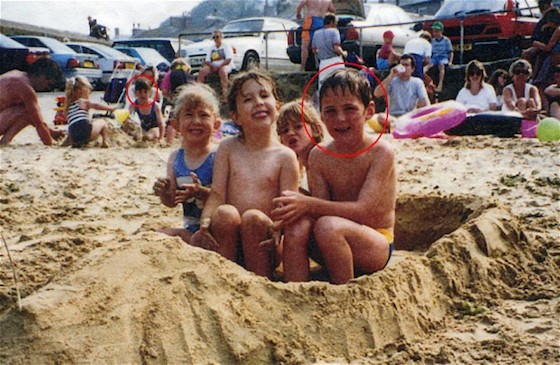
A British couple, Aimee Maiden and Nick Wheeler, were looking through old albums when they discovered a photograph of young Nick and his family creating a boat out of sand on the beach. In the background, to the left, was a little girl, building a sandcastle. Five-year-old Aimee.

“Nick and his family didn’t even live in Cornwall at the time,” Aimee told the Telegraph. “He and his family were down on holiday.”

Nick and Aimee took their wedding pictures on the same beach, 20 years later.

It’s not the first time an old photo has revealed two lovebirds were meant to be.

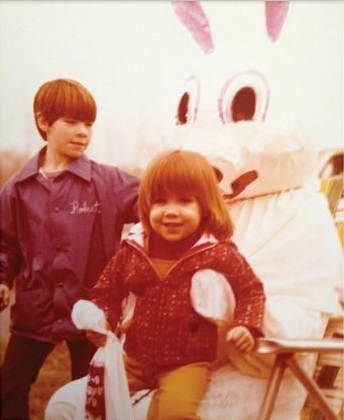
Nicole and Rob Woessner shared this photo with the Easter Bunny (Rob’s mom), in 1981, years before they met:

A young Nick and Aimee with the Easter Bunny.

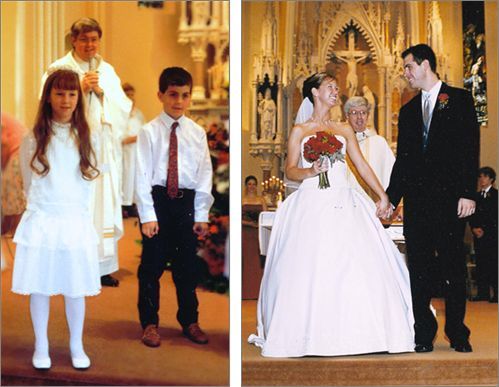
Evan and Bryan were strangers when they celebrated their first communion… not anymore:

Evan and Bryan at their first communion and years later, at their wedding.

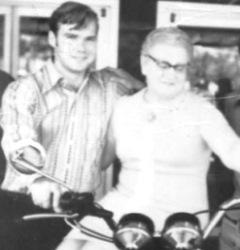
Rosemary couldn’t wait to introduce her fiancée, Robert, to her mom… but it turned out he was already a familiar face:

Robert with Rosemary's mom.

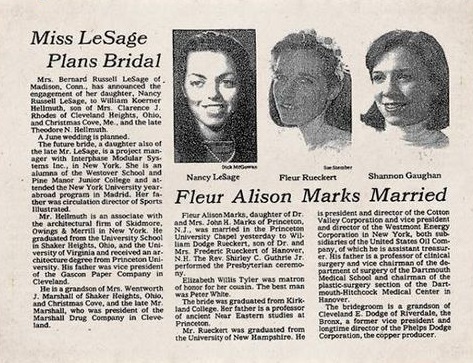
Grayson and Cleveland Hellmuth discovered their mothers had shared the same New York Times wedding announcement 22 years earlier:

Wedding announcements in the New York Times.

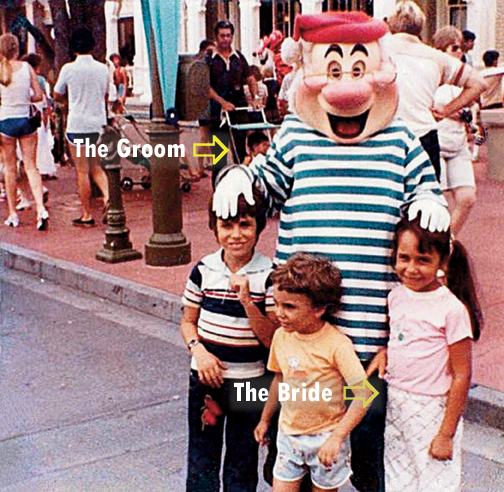
Alex and Donna Voutsinas first crossed paths at The Magic Kingdom:

Alex and Donna, years earlier, at The Magic Kingdom.

Do you have a fateful photo of your own? Share your picture and your story with us!

Sister Faustina Healed Her Leg

The pain wasn’t the first thing I thought of as I woke up that morning in my hotel room in Vilnius, Lithuania. But when I sat and swung my legs out of the hotel bed, I was quickly reminded. I winced as my feet hit the floor. A sharp burn shot up through my legs. I had hoped it would have subsided by now. No such luck.

When I’d agreed to tag along with my sister-in-law’s choral group on an Eastern European tour, I hadn’t expected to be in pain the whole time.

It was a nine-day trip with performances in Estonia, Latvia and Lithuania. I’d never been there before. I bought a stack of travel guides and mapped out everything I wanted to see. I was so excited.

But a few days before we left, my feet started to hurt. The pain quickly radiated up my legs and stayed, hot and throbbing. It could be plantar fasciitis, my doctor said and suggested that I get plenty of rest, stretching and icing my feet if the pain got too bad. As I pictured the winding cobbled streets I’d seen in my guidebooks, I winced just thinking about them.

I’d listened to the doctor’s advice, but nothing worked. Now, two days into the trip, the pain was worse than ever. I hobbled around the hotel room, getting ready. I didn’t think a day of trekking around the city was in the cards for me, but I’d try to rally. We had just arrived in Vilnius the night before, and I hadn’t yet had a chance to explore. I was having a coffee downstairs when I spotted Mary. She took a seat across from me. Like me, Mary wasn’t a member of the chorus, so we spent a lot of the trip together while the group rehearsed. When she asked if I wanted to go on an adventure with her, I was game.

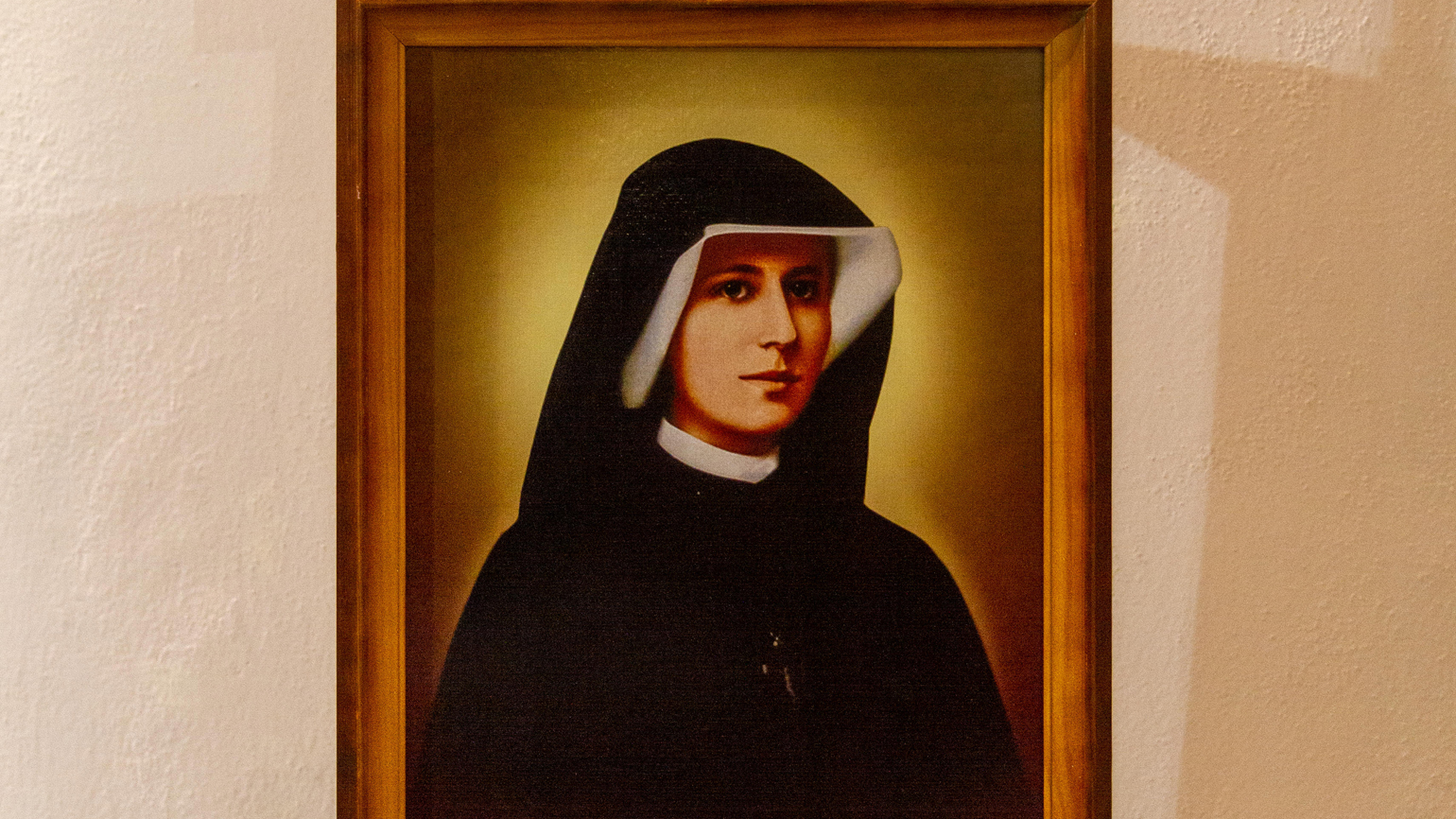
Mary explained that just outside of the city was the onetime home of Sister Faustina, a famous Polish nun. This nun held a dear place in Mary’s mother’s heart. “I can’t be this close to her house and not go!” said Mary. “I’d love to get my mom a little something—a book or a souvenir.”

I’m Catholic, but I’d never heard of this Sister Faustina before. In any case, a taxi ride out to the countryside sounded a lot nicer than wandering around on my aching feet.

The drive wasn’t long. We’d barely left the narrow city streets when we were surrounded by trees and rolling hills. The house was a quaint, single-story structure made of dark wood. It was simple but elegant, with beautiful eaves that arched overhead as we entered.

I was struck by a sense of peace as soon as we went inside. The interior was minimalistic as well—plain white walls and bare wood floors. A few photos and important relics hung on the walls. The atmosphere was heavy with the importance of most sacred spaces. Mary and I browsed the collection, scanning the informational plaques.

I learned that Sister Faustina had been born in Poland in 1905. As a teenager, she reported having visions of Jesus and conversations with him. At age 22, she took her vows. In 1933, she transferred to this convent in Lithuania. This house hadn’t been a convent for years. Now it was a memorial to her life and works.

One room was a shrine to Sister Faustina. As soon as I stepped into it, I was flooded with a tingling warmth. It stopped me in my tracks. It was as if a presence had entered my body. I’d never felt anything like it.

“Are you all right?” Mary asked.

“Yeah,” I said, my voice shaking slightly. “I just…felt something…”

As the bizarre warmth faded, I felt different. My heart leaped. My pain wasn’t as bad! It was the most relief I’d felt in days. I toured the rest of the house warily, half expecting it to return with a vengeance…but it didn’t. I felt great as Mary purchased a biography about Sister Faustina from the little gift shop and we returned to the hotel.

The pain didn’t disappear immediately. It gradually faded over several days. Then it was gone. I couldn’t believe it; I couldn’t explain it. Was I going crazy? I just kept returning to that moment at Sister Faustina’s house. It couldn’t have been something I just imagined.

When I confided in Mary, she was slack-jawed. “Amy,” she said, “you know, Sister Faustina was a saint—the patron saint of mercy. I’ve been reading the book I got for Mom, and one of the miracles ascribed to Sister Faustina was healing a woman with leg pain…”

I researched it myself. In 1981, an American named Maureen Digan was suffering from lymphedema. It became so severe, she had to have her right leg amputated. She heard about Sister Faustina and traveled to her tomb in Poland. There she prayed for a cure…and the pain and swelling in her left leg went away.

Her doctors couldn’t explain what happened. Just as I can’t exactly explain what I felt during my visit to Sister Faustina’s home. All I know is, in the four years since, the pain has never returned. No one can tell me why. But I believe that on my visit there the patron saint of mercy took mercy on me.

She Was the Last One Rescued from the World Trade Center

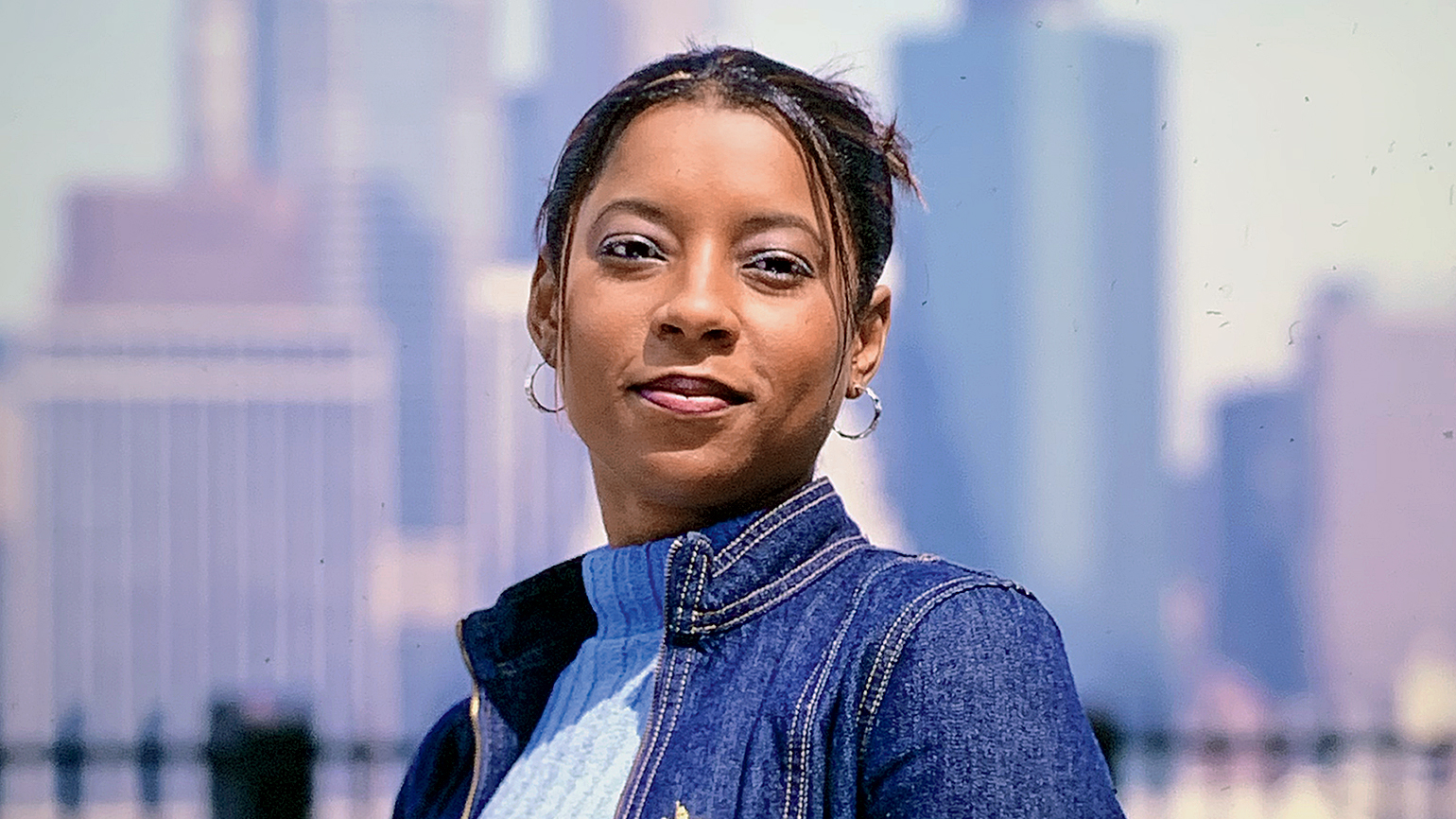
My friend Rosa and I talked about the week­end as I settled into work in the Port Authority offices on the sixty-fourth floor of Tower One of the World Trade Center. Rosa was the same age as me, 31, and we loved catching each other up on our lives. My boyfriend, Roger, and I planned to get married…someday. But there would be plenty of time for that.

I was born and raised in Trinidad and had come to New York to make a bet­ter life for myself and my loved ones. If things like marriage had to wait, so be it. I left behind a lot of my old ways of thinking in Trinidad, especially when it came to God. “God” was something I’d always said I believed in—more to make my mother happy than anything else.

Was God more than that? Maybe. But when Mom died of cancer in 1999, I wondered where God was. He was cer­tainly nothing I could see or touch—nothing that had anything real to do with my life or my feelings.

All that was about to change. As Rosa and I talked, there was a mas­sive explosion somewhere above us. The entire building rocked from side to side. “What was that?” Rosa asked. “An earthquake?” We rushed to join a group of people over by the windows. Papers and bits of debris drifted down from above, like a weird kind of con­fetti.

An announcement came over the PA telling us to stay put, not to panic. But most of the people ignored it. They rushed toward the elevators. In minutes, the office was empty except for 15 of us who had decided to heed the announcement and stay. We assembled around the television in the conference room and stared in disbelief at the pic­ture of thick, black smoke coming from the top of our building.

The news people were saying “terror­ist attack.” The PA came on again. Same message. Stay put. Help will come. I called Roger. “Get out of there,” he said. Too late. The elevators had stopped.

Then came the second explosion. Tow­er Two had been hit. All 15 of us started down the stairs. Rosa grabbed my hand and held it tight. “Genelle, I don’t think we’re going to make it out of here,” she said, her voice wavering. I’d never heard my friend sound so frightened.

“It’s going to be okay,” I said. My own voice sounded surprisingly calm. Inside, I felt anything but. The stair­well was clogged with firemen working their way up. I was afraid to stop.

Rosa and I counted each floor as we passed—47, 46, 40, 35. I thought we might be out of danger. My feet ached. When we reached the landing on the thirteenth floor, I let go of Rosa’s hand to yank off my heels. As I did, there was another loud explosion. The force of it knocked us backward. We heard a rum­bling noise that grew louder and loud­er. Suddenly, everything went dark.

The floor buckled. Pieces of the walls and ceiling rained down. Dust was ev­erywhere. Rosa struggled to her feet. I tried to get up. Something hit me on my back, hard. I fell down flat on my face. In a flash, the deafening rumble gave way to silence as eerie and terrible in its own way as the roar had been. I was still lying facedown. It felt as if the en­tire building had fallen on me. I could hear my breath. I was alive. Was any­one else?

“Rosa? Hello! Can anyone hear me?”

No answer. Finally, I heard a man call out faintly from somewhere nearby. “Help. Help.” Then there was silence. The voice was gone.  Get up, I told myself. Try. You’ll die if you just keep lying here. But I couldn’t budge. I wasn’t able to move my head. I tried to raise my hand to my temple, and it bumped against what felt like two massive concrete pillars. My head was sandwiched between them.

My right leg was buried up to the thigh in rubble. My toes were numb and the rest of the leg felt as if it were on fire. How long could I stay alive like this, pinned like an animal in a trap? An hour passed, maybe more.

I began to panic about not being able to move my head. I’ve got to get free. Bracing against the pain I knew would come, I wrenched my neck as hard as I could. I heard the hair ripping out of my scalp. My head broke free. I could feel blood streaming from where my head had scraped against the concrete.

Trapped in the darkness, buried in pulverized cement and glass, I wondered what was happening out­side. Was help coming? Had the whole city been hit? The country? I drifted off, snapped awake, then fell asleep. When I woke, I tried to get a handle on my situation. Things seemed unimaginably hopeless.

I found myself missing my mom from a place deep inside. She would have known how to comfort me. What would she have done? Prayed. Mom would have prayed, not as a last resort but as the first. Closing my eyes, i focused hard on my prayer. Lord, I know you are there. I haven’t always trusted you. I blamed you. Now I am asking you to help me. That’s what Mom would have prayed for.

When I opened my eyes, I could see that the dust raised by the collapse was finally settling. A thin ray of light drifted down through the wreckage and darkness surrounding me. Some­where up there, not so far away, was daylight.

But I could hear no sounds—no indi­cation that anyone was up there. Had the building truly collapsed? I couldn’t imagine what the scene above must look like. How would anyone find me?

The little ray of light faded. It was getting dark. Lord, be near me. Stay by my side. I talked to God the way Mom talked to him, as if he were right there with me and knew what it was like to be alone and afraid and hurting. Fi­nally I slept. The return of that faint ray of light told me it was morning. All feeling in my right leg was gone by then. Without food or water, I knew I wouldn’t be able to stay alive much longer.

Lord, I might not get out of here. Not without a miracle. But I have found you, and that’s the only miracle that matters. Thy will be done.

At that instant, I heard a noise.

“Hello?” I shouted, my voice so hoarse from dust and lack of water that I didn’t recognize it.

“Hello!” A voice called back. “Is someone down there?”

“My leg is caught,” I shouted as best I could. “I can’t move.”

Other voices came. “I’m shining a light down,” one of them said. “Do you see it?” It sounded as if he were right above me, but still all I could see was that one little ray of daylight that had kept me company for so long. I stretched my hand out into it.

“I can’t see your light,” I yelled. “Can you see my hand?”

“No.”

Once more, I stretched my hand out into that ray of light, just as I’d stretched out my hand to God in prayer.

As I reached out, I felt a hand close around mine, the grip strong and sure, and I heard a man’s voice. “Don’t wor­ry,” he told me. “My name is Paul. Just hang on. They’re going to get you out of there.”

Paul kept talking to me as the res­cue team methodically broke through the wreckage. Every few minutes, fear would surge through me that there would be another collapse. But each time Paul squeezed my hand, I felt peace return. Soon they dug the mass of fallen debris away from my right leg. They climbed down and worked until they got me out.

I was put on a stretcher and threaded through an unbelievable mass of devas­tation, and a crowd of clearly joyous but shocked rescue workers. In all the con­fusion, I lost track of Paul. It had been 27 hours since the towers collapsed. No one knew it then, but I would be the last person pulled out alive.

During the weeks I was in the hospital, Roger and my sisters were constantly at my side. The whole time, one thing was clear in my mind: I had reached out to God in my moment of need, and he answered me by reaching back—first as a presence, then in flesh and blood, in the person of Paul, the rescue worker who had held my hand.

My friend Rosa and others I knew had died in the collapse. I could have died too, but I was rescued, thanks to Paul. I wanted to thank him personally. When a news crew came to interview me about my ordeal, they reunited me with some members of the rescue crew who had pulled me out from the rubble. Paul wasn’t there, and I asked why he hadn’t come along with them.

One of the men looked puzzled. “There’s definitely no one on our team named Paul,” he said.

By Thanksgiving, and after four surgeries, my leg was strong enough for me to walk out of the hospital. As soon as I got settled at home, I spoke to a friend about what had happened. That hand reaching out to grab mine, I asked her, Paul’s voice promising they were going to get me out, had they been a dream?

“Genelle, do you really think it was a dream?” my friend asked. I know it was not. I felt that strong grip on my hand; it was the touch of God’s hand on my life. Since September 11, that touch, that hand, has never left me.

Read Genelle’s inspiring story written 10 years after 9/11

*  *  *

Life After Survival

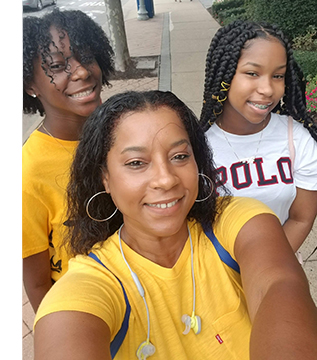
Genelle with her daughters
      Genelle Guzman-McMillan and
daughters Kaydi (left) and Kellie

“I wake up thankful every day,” says Genelle Guzman-McMillan, 19 years after her rescue from the rubble at Ground Zero. Genelle married Roger McMil­lan in November 2001. “He was by my side in the hospital each day,” she says. “When I got out, he proposed. Even though I was still on crutches, we went to City Hall.”

Roger and Genelle now have two teenage daughters, Kaydi and Kellie. Genelle still works for the Port Authority—she’s the office supervisor at LaGuardia Airport. She also volun­teers for the Red Cross. “They gave me so much support during my recovery. I saw how caring they were. I want to help others the way they helped me.”

Anniversaries of 9/11 are days of reflection. “I take it as my personal holiday,” Genelle says. “Roger stays home with me. Sometimes I watch the memorial on TV and wait to hear my friend Rosa’s name; other times it’s too emotional.” Her family has a tradition of forming a circle and holding hands and saying a prayer at the time the towers fell.

This past March, Roger contracted Covid-19. Genelle took care of him at home. “He told me, ‘I know you’re a praying woman, but don’t be stubborn. You have to take care of yourself. Go quarantine.’” But Genelle didn’t leave his side for three weeks until he recovered.

“9/11 will be with me forever. But I can’t stay sad. I have to lift myself and other people up,” Genelle says. “I’m not going around scared. It’s the Holy Spirit in me. I have peace. I love people. I’m grateful. We have to live accord­ing to God’s will. I do his will and try to keep on a righteous path to inspire others.”

—Celeste McCauley, Senior Editor
For more inspiring stories, subscribe to Guideposts magazine.

She Was Desperate to Escape Her Abuser. Did She See an Angel?

I stood on the window ledge trying to gather courage. In front of me was a two-story drop down to the street. If I jumped, I risked hitting one of the wrought-iron fence spikes. But the alternative was even worse.

My ex-boyfriend had somehow found my rented apartment. He’d burst inside, reeking of alcohol. I thought I had finally gotten free of him. I was trying to get my life back on track, trying to start fresh. But I felt damaged. Like no one would ever really love me. Like I didn’t deserve a normal relationship.

He staggered around the room, his body off-balance, attempting desperately to stay upright. His big, menacing figure lunged toward me on the ledge.

“Come back here!” He had a knife! He wielded it like a sword. He’s going to stab me, I thought desperately. He’d hit me before.

“You can’t run from me,” he slurred as I ducked.

Maybe he was right. Maybe I could never run far enough away from him. His arms swung wildly, the knife slicing the air near my head. I was trapped.

I looked down. It seemed so far. I can’t ever get away from him, I thought. He’ll always find me, no matter what I do. I had to make my decision. If I jumped, I’d have a chance, but if not, I didn’t have a chance against him and that knife.

I closed my eyes and jumped.

I landed hard on the concrete, narrowly missing the fence. I clutched my wrist in pain. Picking myself up, I ran to neighboring doors, calling for help. Couldn’t anybody hear me? I ran across the street, cradling my arm to my chest. “Please! Please help me!” I screamed, pounding on a locked door.

Finally, a woman cautiously cracked the door open, her eyes wide. For all I knew the monster was right behind me with his knife. I didn’t turn around to check. The woman pulled me inside and shut the door.

The police arrived. Then a fire truck. Across the way, my room was on fire. As I left for the hospital, I saw a curtain of flames surrounding a figure in the window. He would stop at nothing. I was no match for his strength and resolve. I was powerless, hopeless.

At the hospital, the doctor told me my wrist was broken, but I was fine otherwise. Fine? I burst into tears, recalling why I was there in the first place. The doctor excused himself, and I turned to the wall. How could anyone understand what I was going through?

“It’s going to be okay,” someone said. “It really will be okay.”

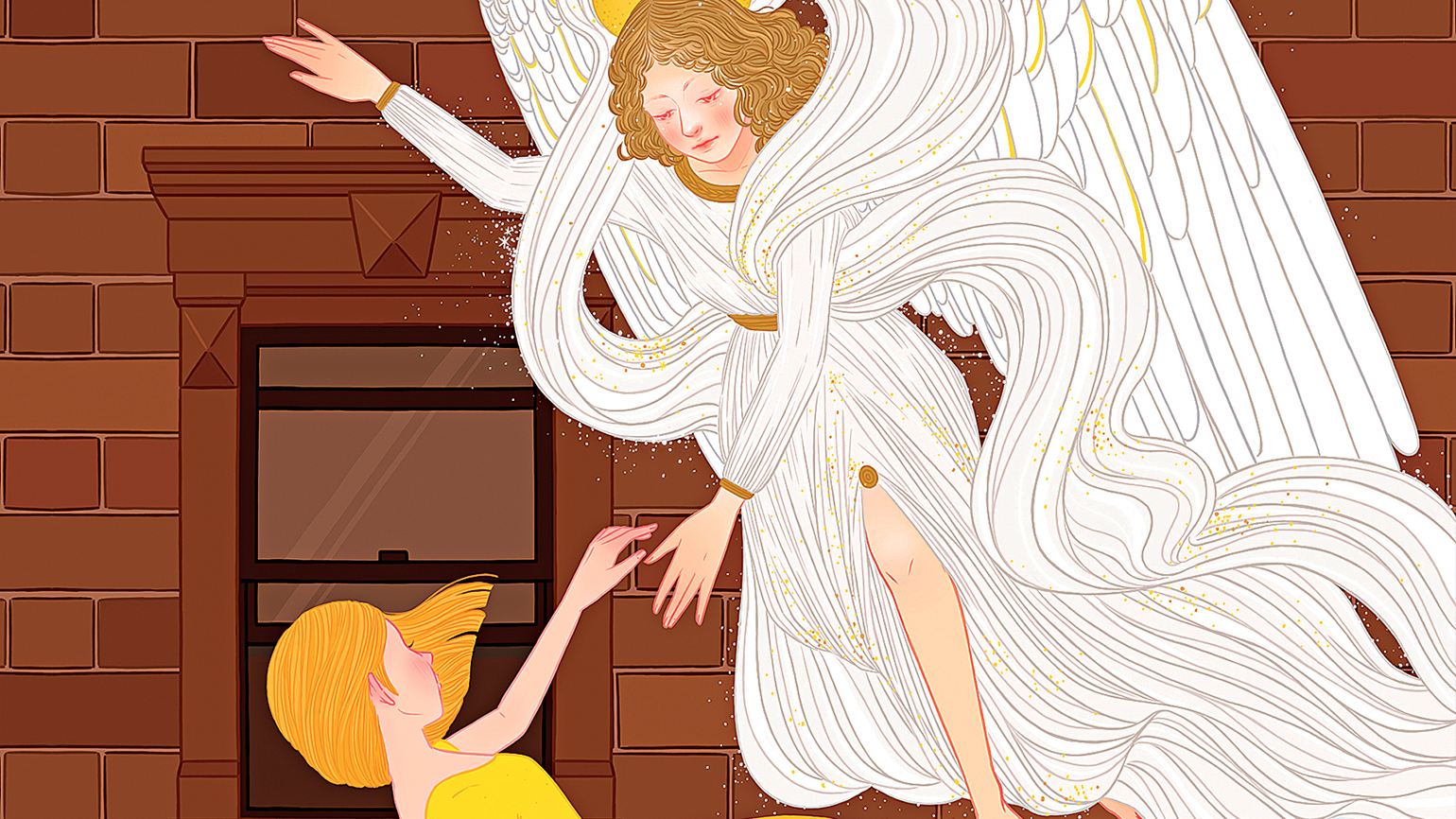
I turned. A woman stood at my bedside. She had long, light brown hair, bright eyes and a warm smile. “I was once in your shoes,” she told me. “I thought that I would never get away from the man who abused me. But I did. And you can too. God is watching over you.”

I started to cry. The woman put a reassuring hand on my shoulder. “Be strong,” she said. “I’ll see you in the morning.” That was the last thing I heard before drifting off to sleep.

In the morning, the doctor came in with the police officers who wanted to interview me.

“Where is that nurse?” I asked. “The one who visited me last night?”

“No one visited your room last night,” the doctor said. “We made sure you weren’t disturbed.” But I knew someone had been there. Someone who gave me hope that I could be free—and maybe even loved one day. I had seen her, heard her voice, felt her touch.

Though I never encountered the mysterious woman again, whenever I feel hopeless I remember that gentle hand on my shoulder. And her promise that I would be okay because God was watching over me. He kept me safe when I jumped out that window, and keeps me safe to this day.

For more angelic stories, subscribe to Angels on Earth magazine.

She Discovered Her Calling for Caregiving in a Dream

I sat in my car, overlooking a shimmering intercoastal waterway, the night sky studded with stars. Everything around me had a vibrant, otherworldly glow. This is West Palm Beach, I realized. My family and I used to live here. But we’d moved away about a year ago…

I was aware of someone sitting next to me in the driver’s seat. Someone else sat behind me. I couldn’t tell who they were, but their presence was comforting. I felt so at peace here. As if everything made sense.

“This is why you’re here,” the presence behind me said. “This is why you were born, Janis.”

I woke up in my bed in Illinois. It was early morning, and my husband was snoring softly beside me. What a strange dream that was, I thought, heading to the kitchen to make myself some coffee.

Waiting for the coffee to brew, I tried to decipher the message. It wasn’t the first time I’d had a dream like this—vivid, meaningful—feeling almost real. I’d once dreamed of a man with scars on his face, whose skin regenerated before my eyes. Another time, I dreamed of touching the hand of a woman with no fingers and watching, awestruck, as they grew back. And now with this dream, I received a message. I felt it was connected to healing people. But what could it possibly mean?

I was the last person in the world to do any kind of healing or care work. I’d never been comfortable with the idea of being responsible for someone’s welfare. My life was full enough. I had a husband, four daughters and a house to keep. I was content with what I had. Busy but happy.

The only time I’d done anything resembling caregiving was helping out an elderly couple in our neighborhood back in Florida. The husband had Alzheimer’s, and his wife’s health was failing. She needed someone to check in on her. I helped out with her husband, straightened up the house a bit and kept her company.

Not long after my dream, I was visiting a friend I’d made since moving to Illinois. She was showing me how to plant a flower garden, something I’d been excited to try out. After all, someday my girls would be grown. I was trying to start projects that would keep me busy after I became an empty nester. As we worked, my friend and I talked about our families. We got on the subject of her mother-in-law.

“She has Alzheimer’s, and we need to find a full-time caregiver for her,” my friend said. “I would do it, but my husband needs help on the farm and we just don’t have the time. I would love to find someone.”

I stopped what I was doing, a handful of seeds clutched in my right palm. I thought about the dream. The voice. It all made sense. The words flew from my mouth, almost before I’d finished my thought. “I can care for her,” I said.

For a year, I did. The fears I’d had? They completely disappeared. I fed her, helped her brush her teeth, took her on walks, had conversations with her, danced with her. Even on the rough days, when the work was hard, I still found caring for her to be deeply rewarding.

The time came to move my friend’s mother-in-law to the assisted living home. The facility actually reached out to me. “You’ve obviously got a knack for this,” they said. “We’d like to refer you.”

I went on to work in the caregiving industry for 20 years. My daughters grew up and moved away, but my life remained full. Caregiving helped fill a void I didn’t even know I’d have. Though I never sought out care work, it always seemed to find me—showing me time and again that I was doing exactly what I was meant to do.

She Adopted the Girl from Her Dreams

Was this a church? The high, vaulted ceilings made it seem like one—almost but not exactly. That’s the way things often are in dreams, and I was dreaming now. Deeply. A woman entered the room. With her was a small child, a girl in soft, lavender footie pajamas. She was barely a toddler, still a baby in many ways. Her brown hair was braided and her big, dark eyes were beautiful. But it wasn’t their beauty that struck me so much as the quiet courage I saw reflected in them as the child took a tentative step forward.

I sank to my knees, putting myself at her level. Don’t be afraid, I thought. The girl hesitated a moment, clinging shyly to the woman. Then, as if making a decision, she opened her arms and toddled toward me. My own arms were open and waiting to catch her. Her little body was soft and warm and right in my embrace. As if she belonged with me. “You’re fine,” I said as I rocked her gently. “Everything’s going to be just fine.”

I opened my eyes to the sound of my alarm clock. Beside me, my husband, Val, rolled over and got up. Elsewhere in the house, I could hear our sons, Dash, 16, and Phineas, 6, stirring. I climbed out of bed. By the time the kids had left for school and I started the breakfast dishes, I barely remembered the details of my dream.

It was no surprise I was dreaming about children. After a lot of discussion, Val and I had decided to adopt a child. A little girl, we’d agreed when we filled out the application. A little older than Phineas, so she would be in between the two boys in age.

Dash was already the best big brother anyone could ever ask for, and Phineas the friendliest, silliest kindergartner. We did laundry and yard work together, came up with family projects—we even had regular “family art days” in our craft room where Dash made duct tape wallets, Val sketched, and Phineas and I painted. There was plenty of room for one more in our family. We filled out piles of paperwork, underwent background checks, took classes on how to care for a child from foster care who’d potentially been hurt in the past. Neglected, surely.

I soaped up the dishes and thought about our daughter. I had never met her. I’d only seen her in a photo, a grainy photocopy that barely captured her features. She was 18 months old, younger than we had planned.

“Can we handle a baby?” Val asked when the caseworker first told us about Dari. “Diapers? Middle-of-the-night feedings?”

He was right, but we decided to go to the interview anyway. “She’s been without parents since birth,” the caseworker explained when we got to her office. “She’s in foster care now. But she needs a forever home.”

Despite our misgivings, we applied to adopt Dari. Now we just had to wait. I dried the dishes and went upstairs to the nursery we’d fixed up for her. We refinished furniture, hung new curtains. Val painted a mural on the wall. I was excited to think about her coming to live here—but nervous too. Once the agency decided to move Dari out of foster care, we’d have a transitional period. We would meet Dari, get to know her slowly. She’d spend the night with us occasionally until she felt at home. I mean, there were four of us and only one of her. We’ll need that transition as much as she will, I thought. As eager as we were to welcome Dari, it was scary too! With all my mixed emotions, I was thankful for the wait and the process. I wanted everything to be perfect for Dari.

The phone rang. It was Dari’s caseworker. “There won’t be time for transition,” she said. “Your family is getting your baby today.”

Today? We weren’t ready! How could Dari be ready?

“The agency’s decided to take her out of foster care immediately,” the caseworker said. “For her own safety. I’m going to pick her up now. We’ll be there in about an hour.” The situation must have been dire.

I hung up with the caseworker and called Val. “I’ll come home,” he said. “Should I pick up the boys?”

“No time for that,” I said. Val’s commute was a long one. I called Dash on his cell. “I’ll get Phineas at school and be right home,” he said. “Don’t worry, Mom. I got this.”

How can he be so calm? My heart pounded in my chest. My hands shook. I wanted to hide under the bed. I wasn’t ready to meet my new daughter! What if she didn’t like me? What if she didn’t like her room? What if we were the wrong parents for her? What if she belonged in another family instead? God, I need to know we’re doing the right thing!

I ran around the house in a panic until the boys came home. Dash was grinning ear-to-ear. Phineas jumped with excitement. Five minutes later, Val arrived. “Is she here yet?” he asked breathlessly.

“You made it just in time.”

The four of us gathered together in the foyer. “Everybody, be calm,” said Val. “We don’t want to scare her.”

He was talking to the boys, but I was the one who needed calming. Then came the knock on the door. Phineas pulled it open. The caseworker carried the girl with dark braided hair into the living room. Her brothers introduced themselves gently. I took a seat on the floor. Dari looked around at us all, blinking her dark brown eyes. She seemed to make a decision. She crawled off the caseworker’s lap, the feet of her lavender footie pajamas landing softly on the floor. Her eyes met mine. With a jolt, I recognized the courage within them. The girl from my dream!

I opened my arms. Dari toddled right to me in her familiar footie pajamas. Before I realized it I was holding her, feeling how right this baby felt in my arms. A feeling that wasn’t new to me at all. “You are fine,” I heard myself whisper to her. “Everything’s going to be just fine.”

They were the same words from my dream. The ones God had spoken to reassure me. I knew Dari was just where she belonged. All of us were. Because, ready or not, we were a family.