

Embrace God's truth with our new book, The Lies that Bind

Jen Bricker’s Miraculous Family Reunion

Eight-year-old Jen Bricker was glued to the television. It was 1996 and the second-grader and her parents were in their living room, not wanting to miss a single minute of the Summer Olympics, broad­casting live from Atlanta.

Her eyes widened as 14-year-old gymnast Dominique Moceanu soared, flipped and twisted through the air, becoming the youngest American athlete ever to win a gold medal. It was Dominique’s appear­ance, however—her caramel-tinted skin and big, dark eyes; her small, powerful frame—that was transfixing. No one in tiny Hardinville, Illinois, had that look. No one except Jen. She felt as if she were watching herself.

“I was infatuated with her, practically obsessed,” Jen recalls today. “Not only did she look like me, but she had the same fiery personality and we both loved gymnastics.”

BROWSE OUR COLLECTION OF BOOKS ABOUT MIRACLES AND ANGELS

Dominique’s parents had been born in Romania, the same country Jen’s birth parents had emigrated from before she was put up for adop­tion at three months old. That sum­mer evening, Jen set her sights on following in Dominique’s footsteps. The gold medalist would become her role model. Jen would do whatever it took to excel in gymnastics. A dream she was so intent on achieving that she ignored the most obvious differ­ence between her and her idol.

Jen had been born without legs.

From the moment Sharon and Gerald Bricker brought Jen home, they were determined their infant daughter could accomplish anything she set her mind to. “They didn’t see me as different,” Jen says. “They raised me to be strong and confident. That’s how I always saw myself.” Sharon and Gerald had desperately wanted a baby girl to add to their family of three boys. But a hysterectomy ended Sharon’s dream of having another baby. She asked God for a miracle.

Not long after, a friend who was looking to adopt told her about a baby being cared for by a foster family an hour away. The infant was as cute as a button, but her legs had never formed in the womb. The friend didn’t feel able to raise a child with such challenges—no doubt the same reason the baby had been put up for adoption in the first place. But the story touched Sharon. When the Brickers met the baby, all they saw was her smile. “My mom knew right then that I had to be their daughter,” Jen says.

At Jen’s first well-baby checkup the doctor suggested she would nev­er be able to sit up or crawl. She would need to be carried everywhere. Sharon and Gerald sought a second opinion. They took Jen to a specialist at Shriners Hospitals for Children in St. Louis, Missouri. “Mr. and Mrs. Bricker, this little girl is going to do things you never imagined possible,” the doctor told them.

Soon Jen was into everything, like any toddler, crawling around as fast as her arms could carry her. Her mom affectionately nicknamed her “Mouse.” By the time Jen reached second grade, Sharon had enrolled her in beginner gymnastics classes.

She excelled at the sport. Even more so after those ’96 Olympics, when the Magnificent Seven, as the U.S. gymnastics squad was known, became the first American women gymnasts to win gold as a team. For Jen it was an Olympics she would never forget.

Two years later, Jen placed fourth at the Junior Olympics in the all-around. Trophies and medals accu­mulated in her bedroom. She didn’t think a lot about her birth parents or the circumstances that had led them to give her up. “I was always meant to be a part of the Bricker family, my mom told me,” Jen says. “God just chose another way to bring me to them.”

READ MORE: JEN BRICKER—FLIPPING THE WORLD UPSIDE DOWN

That was always enough for Jen, until just before she turned 16. A friend who had also been adopted found out the names of her birth parents. Jen couldn’t help but grow curious about her own.

Sharon was folding laundry one day when Jen came home from school and blurted out what was on her mind: “Mom, do know who my birth parents are?”

Sharon hesitated. She wasn’t sup­posed to know, but she did. In fact, she’d kept it a secret for more than eight years, ever since that night in ’96, when she sat beside her daugh­ter watching those Olympic Games. She’d been as transfixed by the gym­nastics competition as her young daughter—though for an entirely dif­ferent reason.

Legally, Jen’s birth records should have been closed, but once the adop­tion was finalized, Sharon reviewed all the paperwork she’d received and noticed a document with Jen’s birth parents’ signatures. A clerk had mis­takenly included it. At the time, Sha­ron simply filed it away, knowing that one day Jen would likely ask about her birth family, and the answers would begin there.

At the gymnasts’ introductions, Sharon’s heart skipped a beat. The TV cameras focused on a couple cheering on their daughter from the stands. Their names flashed on screen. Names that sparked a mem­ory of the signed document. After she tucked Jen into bed, Sharon went to check. The document con­firmed her suspicions.

Jen’s birth parents were Dmitry and Camelia Moceanu. Dominique Moceanu, the young gold medalist, was Jen’s sister.

“I was like, ‘Wow! This is crazy! Full-on crazy…’” Jen says. For years she’d marveled at her likeness to her idol. Now it all made sense. Jen learned that the Moceanus had moved to the United States before Dominique was born. She had a younger sister too—Christina.

Jen wanted to connect, but how? An uncle who worked as a private investigator located her birth father. Dmitry wasn’t ready to meet her, and he was fiercely protective of his other daughters. They hadn’t been told they had another sister.

Finally, when Jen was 20 years old, she decided to write a letter to Domi­nique directly, hoping that she would want to know.

“Ever since I was six years old, I’ve been obsessed with gymnastics and I always watched you on TV. You have been my idol my whole life. I feel that I have one chance to prove to you that I’m not some crazy person.…”

Along with a photo, she enclosed copies of her adoption papers and the document with the Moceanus’ signatures. She sent the letter by registered mail, grilling the postmas­ter to make sure only Dominique would be able to sign for it.

Two weeks passed. No response. Then a Christmas card arrived with a letter inside. D. Moceanu, the return address read.

Jen devoured every word, but one sentence jumped out: “You’re going to be an auntie!” Dominique was expecting a baby. “Auntie”—with that single word, Jen was welcomed into the family.

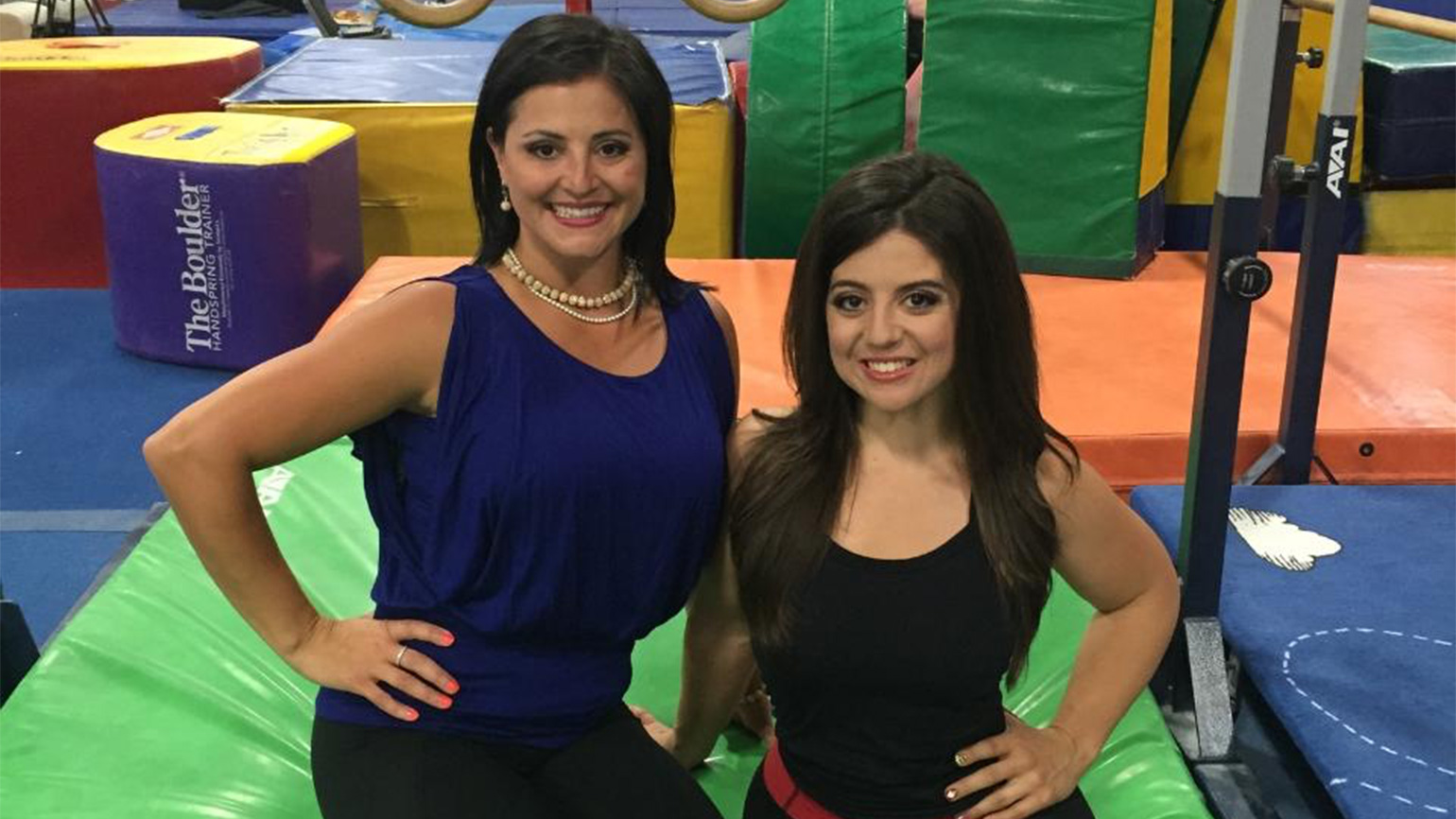
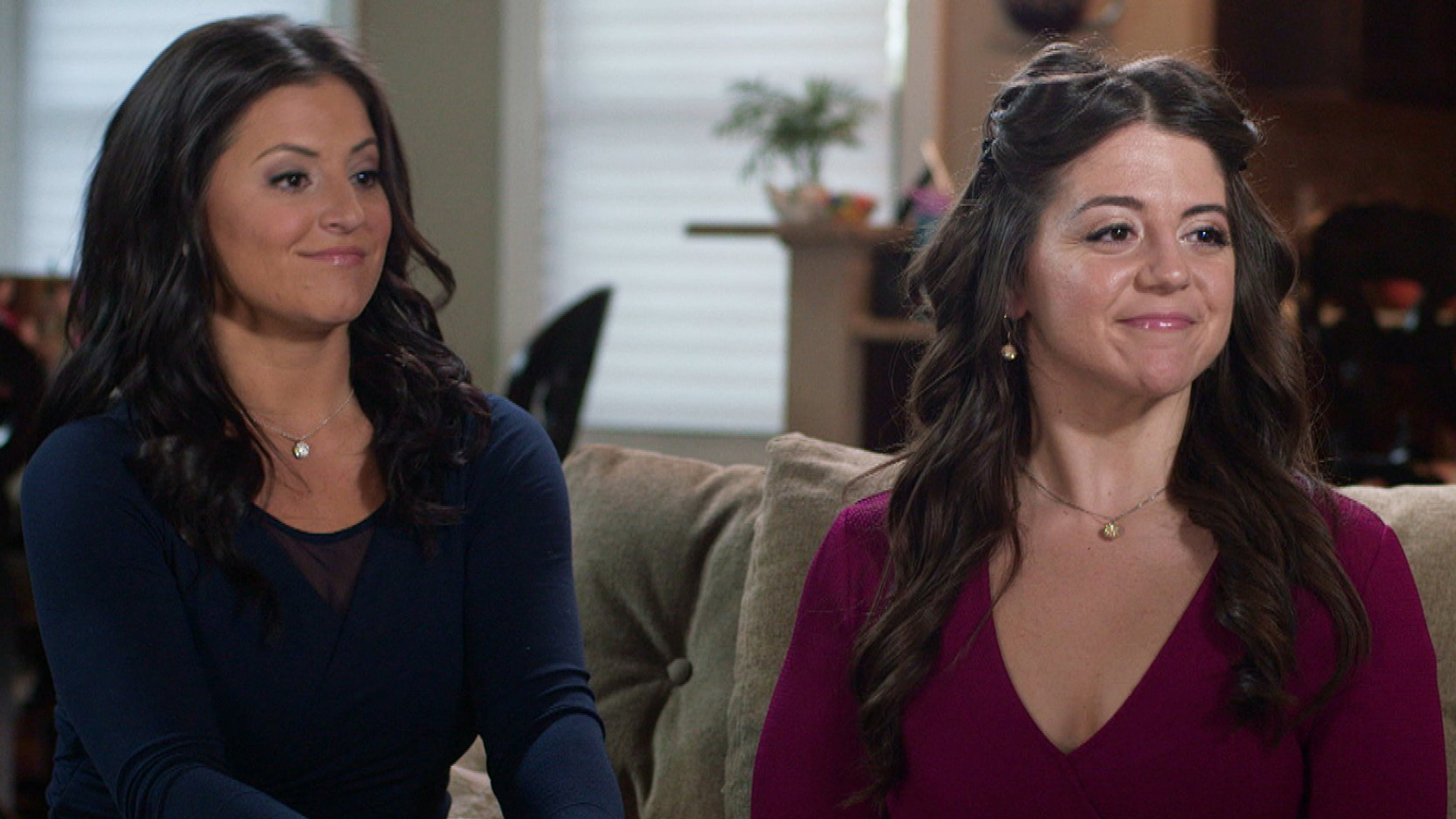
Jen, Dominique, and Christina final­ly met at Dominique’s home in May 2008. “Instantly, from when we met, everything felt effortless,” Jen says. She was identical to her sisters in nearly every way—all three of them even had a butterfly tattoo.

The one big difference wasn’t so much of a difference after all. The older sister who had once held eight-year-old Jen spellbound was just as enthralled by the sister she never knew. A girl who despite her “disability” had es­tablished a remarkable career of her own, performing as an acrobat and aerialist on tour with Britney Spears and on stages worldwide, from Las Vegas to Dubai.

Jen’s birth father died of cancer before they could meet, but Jen did meet her birth mother. “She was proud of all the great things happen­ing in my life…. She knew she could never have given me any of them,” Jen says. “She couldn’t forgive herself for giving me up. I assured her that I was fine, that my life was happy and I was healthy…. This was always part of God’s plan.”
Jen Bricker: Flipping the World Upside Down

In the April/May issue of Mysterious Ways, we told you the incredible story of world-renowned aerialist and acrobat Jen Bricker, who was born without legs and put up for adoption as a baby. Only as a teenager did she discover—through a miraculous series of events—that she already knew her birth family.

Contributing Editor Ginger Rue spoke to Jen about her bestselling book, Everything Is Possible, and the young woman’s inspiring journey to achieve her dreams and discover her surprising roots.

In your book, you give a lot of credit for your confidence and enthusiasm to the way your parents brought you up. Can you tell us about how they did it?

It wasn’t like they said, “Even though you don’t have legs, we’re going to raise you this way.” It wasn’t put that way; it was just how it was. I was Jen. I was strong. I was confident. That’s what they told me. That’s what they believed. And that’s just how it was. They didn’t see me as different, and it was just, period….it was just normal.

BROWSE OUR SELECTION OF POSITIVE THINKING BOOKS

Were your parents always open with you about the fact that you were adopted?

Yes. One day, when I was little, I asked, “Mommy, do you think my parents gave me up because I didn’t have legs?” And her answer made perfect sense to me and still does. She said, “Jennifer, Mommy’s tummy was broken, and God found you a really nice lady with a nice tummy so she could hold you until I could get to you.”

How did you become interested in gymnastics?

I started beginner classes in second grade. My mom talked to the teacher, and the teacher said, “Well, of course I’ve never had a student without legs, but I’ll try,” and she did. And we did all the work. I had a couple of coaches, and everyone worked really well together, and they were such champs and took it all in stride. We had such good collaboration.

And your passion for gymnastics led you to take an interest in the 1996 Olympics when you were eight years old?

We’d always watched the Olympics as a family. We loved it, all of us. And so the gymnastics competition was on television, so we were watching it, and everyone in my family was excited about it. I already loved gymnastics, so I was especially interested. But then when I saw Dominique Moceanu, it felt like a light bulb went off in my head. I was just drawn to her.

Since my parents had always been so open about my adoption, I already knew that I was Romanian, like Dominique. I had always been so proud of the fact that I was Romanian because I grew up in a town with very little diversity. I had a dark tan and big dark eyes, so I didn’t look like most people in my town…but I looked like this gymnast at the Olympics!

She was so tiny, and so am I. We both had that small frame. When I saw how alike we were, it was exciting to see someone who looked like me. I was really infatuated with her and excited that we looked alike. Also, she had the same fiery personality, and we both loved gymnastics.

READ MORE: JEN BRICKER’S MIRACULOUS FAMILY REUNION

How did your mom figure out that Dominique was a lot more than just your role model?

Legally, my adoption was supposed to have been a closed adoption. I wasn’t supposed to know who my birth parents were. But God was working overtime. He made sure that the social worker made a clerical error and gave my parents all that information.

After seeing Dominique’s parents on television at the Olympics, my mom went back and looked at the adoption papers and looked at their last name and the fact that I had a sibling six years older.

How did you react when your mom finally told you—Dominique was your biological sister?

I was, like, “Wow! This is crazy! Full on crazy and amazing!” I asked my parents, “How did you guys keep it a secret? It must’ve been so hard for you!” I understood why she didn’t tell me right away. I was so young…I mean, what was I going to do with that at, like, eight years old? It wouldn’t have made any sense to me.

Also, Dominique went through public emancipation from our biological parents, so my parents knew that all the way around, for everybody, it wasn’t the right timing to tell me everything. My parents said that when I was growing up and would talk about Dominique and they knew she was my sister, they would just look at each other across the room and kind of shake their heads.

I respect them for keeping that information until I was ready to learn it because that was not easy, but in this instance, it was really the right thing to do. But when they told me, I went to Dominique’s website and discovered that I had a younger sister, too…Christina. And so I was, like, “Oh, my gosh! I have two sisters and I want them to know about me.”

Once you knew Dominique was your sister, how’d you proceed?

It wasn’t as easy as picking up a phone. It took four years and several failed attempts. My uncle Gary, a former private investigator, reached out to my biological parents. My biological father wasn’t very receptive, but he did admit that he and his wife gave up a child for adoption. But he made it clear he wanted to keep the secret and he wasn’t going to help me contact my biological sisters.

So I switched my game plan and planned to contact Dominique instead. My uncle tracked down Dominique’s address in Ohio for me. I wrote her a letter. I was very careful and methodical and put a lot of thought into what to say and how long the letter was going to be.

I just wanted Dominique and Christina to know I was serious and authentic, so I included the adoption papers in the letter so they could see the signatures of our biological parents, and I also sent pictures. I just wanted to cover all my bases. I was serious and just very direct, and just like, “You know, I found out, and I just want you to know that I’m legit, and here’s my number, and I’ll even take a DNA test.”

I kept the letter just over one page: I wanted to make sure it wasn’t too long. I included everything I had for proof in the package, so it was undeniable.

How long did it take to hear back?

At the end of two weeks, I thought, “I’m going to have to prepare mentally for them not responding.” It felt like an eternity to get a letter back from Dominique, but she sent me a Christmas card with a letter inside. In the middle of the letter, Dominique had written, “You’re about to be an auntie!” She was finishing up college and getting ready to have her first baby. And the next day, she and Christina sent me flowers. It was amazing.

READ MORE: HOW A HEARTBREAKING STORY INSPIRED HOPE

In the letter you wrote Dominique, you didn’t mention not having legs. Why not?

I thought maybe that would be a bit much to find out at the same time she was learning she had a long-lost sister. When we talked on the phone after exchanging letters, I told her. I could tell she was trying to process and respond in an appropriate way. She said, “Oh, oh…wow, no, I really didn’t know that.” Then she asked when the three of us could meet.

Were you nervous about meeting your sisters in person?

When I sent the letter, I did think, “What if she and Christina reject me? What if they don’t want anything to do with me?” But after we’d exchanged letters and talked, I didn’t think she would reject me. I was, like, “Man, I wonder if she will think this is weird?” when I went out to meet her and Christina.

I was in Florida, and Christina was in Texas, and we were both flying in to Ohio where Dominique was. So I was flying to her, and I was the outsider coming in, and they were going to have to put my wheelchair in the car and all that. I just didn’t want that to be awkward for her.

I don’t know why I thought it would be, but it wasn’t at all. Instantly, from when we met, everything felt effortless. My not having legs was the last of anyone’s worries.

How is your relationship now with your sisters?

Of course, it’s an evolution, and it just keeps growing. It’s something where…you really have to work at a relationship. Domi and Christina had a rough childhood during which they learned to rely on each other. As a result, they’re always going to be closer, and I have to be okay with that.

I’ll admit I was a little jealous at first. They had inside jokes. They had memories. They were raised totally differently than I was raised. Then we came into each other’s lives as adults. For example, I was the baby of three brothers. I was the baby with my adoptive family, but with my biological sisters, I was the middle child.

So there’s a totally different dynamic in every single way, and they already had their own dynamic before I came into the picture. You just don’t know until you’re in it, and you have to work through it. You have to put in the time just like in any relationship. I’m traveling like a maniac, they both have kids, we are spread out across the U.S. It just takes work.

How do you feel about your biological father now?

When all three of us sisters met for the first time at Dominique’s home, our father, Dmitry, was still alive. But he died of cancer later that year. He knew the three of us were meeting, and I wondered how he felt about that. I was told that at the end of his life, he made amends with his whole family and even told my sisters he wanted to meet me. Unfortunately, he died before that ever happened.

READ MORE: PERFECT STRANGERS, DESTINED TO BE FRIENDS

When they all found out about me, he was the first person to say, “I really want to meet her.” To me, that is so profound. I really just think, as crazy as it sounds, that we would’ve gotten along really well because by the time I would’ve met him, he would’ve been a different person. I think we would’ve gotten along.

It makes me smile, but I can’t help it—that’s how I feel. You can’t hold onto the past and something someone did twenty years ago, and obviously, I was supposed to be adopted, so let’s move on and not dwell on that. My parents set that tone when I was a kid: not having bitterness towards my biological family.

How are things with your biological mom?

I met her for the first time in 2009 at Dominique’s home in Ohio. I showed her videos of me performing with Britney Spears and pictures of my acrobatic and aerial routines. She was proud of all the great things happening in my life. She told me she knew she never could have given me any of them.

I sensed a great deal of sadness even when she smiled. No matter how much I assured her that I was fine, that my life was happy and I was healthy and everything was good, she couldn’t forgive herself. But she’s a woman of faith and that will get her through. She believes in God, and He’ll help her realize she’s not to blame and this was always part of His plan for me.

How has this whole experience of finding out about and connecting with your biological family changed you?

I think it’s a process; it’s not done. It’s a forever process. Experiencing a family that’s totally different than your own, you’re going to learn things. I just had never been around families that operated or thought so opposite of mine.

I was raised with a mindset of open doors, the more the merrier, and they were raised with closed doors, nobody comes in. So it was hard to understand them, and the same for them understanding me. So I think, coming from different ends of the spectrum, you’re going to experience new things.

How has all of this impacted your faith?

I think my faith grew more before I actually met my sisters, because it took a lot of trust for me to believe that I was going to meet them one day, and it took four years. So I had to have faith that one day it would actually happen. It taught me perseverance.

Having something take four years—especially I was younger and completely one hundred percent impatient—I mean, patience has never been a strong quality of mine! Now it’s like, OK, having something take years? I can deal with that. It makes more sense to me now that something can take years. Of course I still want things quickly, but I’ve been through this, so now I know how to be in something for the long haul.

What’s next for you?

I’ve been performing as an aerialist and acrobat for almost nine years, traveling the world, and also traveling the world as a speaker. My book made The New York Times bestseller list on October 1st, which was my birthday, so that was pretty amazing! I plan to do more books, and I’d also like to get into the beauty and health industry. Getting into beauty would be an untapped world for someone like me.

I’d like to be on the cover of magazines; I think that would be groundbreaking and powerful, and I think people are ready for it now. It’s been on my heart for several years but people weren’t ready before now. No one like me has been on the cover of fashion and beauty magazines, but I’m ready to shake things up and flip them upside down!

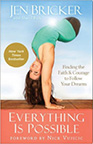
Book cover for Everything Is PossibleJen Brooker is the bestselling author of Everything Is Possible: Finding the Faith and Courage to Follow Your Dreams, published by Baker Books, 2016.

It’s Time to “Fall Back,” and Move On

One of my favorite observances of the year is almost upon us. Halloween is over, Thanksgiving is right around the corner, and Christmas and Chanukah are on the horizon, but I’m not talking about those. I’m talking about going back in time.

That’s right. At the wee hour of 2 a.m. on Sunday morning, we’ll all experience a taste of what Marty McFly did in Back to the Future. We’ll turn back the clock one hour and get to live it all over again.

Except for Hawaii and Arizona. If you reside there, you don’t get to jump in the time machine.

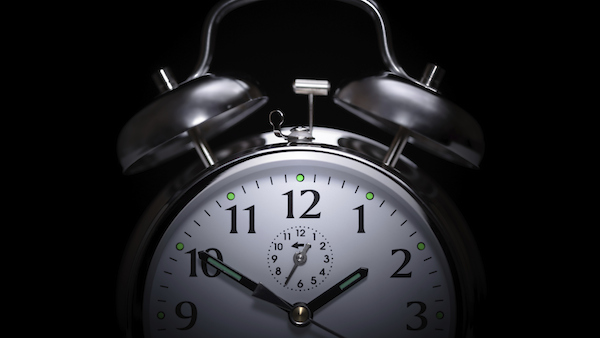
Of course, in reality, all most of us get from switching daylight savings time to standard time is an extra hour of sleep before we wake up for church or football the next morning. But when Sandee Jackson from Burlington, North Carolina tried to turn her clocks back, she encountered something quite unexpected. Something incredible. Something she desperately needed in that moment. You can read her story here: Hands of Time.

For me, Sandee’s story makes me wonder whether there’s a bit more to “falling back” than just getting more sunlight in our winter afternoons. Maybe it’s an occasion we should use to remind ourselves about how precious the hours of our days are, and while we can’t really live any of them over again, we can live each new one to its fullest.

Italy’s Cathedral of Trees

I’m amazed by all of God’s wonders around the world, but I’ve always been especially drawn to trees. I’ve written before about a weeping beech that captured my heart while I was in college.

And, when I’m out and about, I love taking photos of trees. I even draw them! In fact, if you took a look at my desk, you’d find sticky note after sticky note with doodles of branches and roots. There’s just something amazingly beautiful and spiritual about trees, don’t you think?

So I was practically jumping out of my seat when I stumbled upon this very unique cathedral in northern Italy. It’s called the Tree Cathedral and, yup, it’s made entirely of trees!

“Cattedrale Vegetale” was designed by artist Giuliano Mauri. And, spoiler alert, it’s completely breathtaking. It has 42 “tree columns” constructed from more than 2,000 branches and poles that were woven together.

Over time, the trees will form the more-finished structure of a five-aisle basilica, one to rival the most stunning churches of Rome and Florence. The BBC calls it “an evolving structure”:

“Since these man-made columns will eventually deteriorate, a single beech tree has been planted inside each column. After several years, the trees will eventually outgrow the structure, creating a completely natural wall and roof.”

I think the reason I love trees so much is because I see myself in them. The way their branches stretch out towards Heaven, like arms reaching for God. And I certainly can see myself in the Tree Cathedral.

I too am ever-evolving. God is constantly at work on me, building in me a sturdy structure. One that can’t be shaken by the elements. He’s not done with me yet. But when his work is complete?

Maybe it’ll be as beautiful as a cathedral made entirely of trees.

What about you? Which of God’s natural wonders have captured your heart? Share your wonders and photos below!

Is It Possible to Feel Sympathy Pains?

I was frustrated. I’d been angry and irritable all day, but I couldn’t figure out why. It was my first semester of college in Massachusetts. Classes were going well. I was making friends. Still I couldn’t get out of my dark mood. I retreated to my dorm room and contemplated calling my mother in California. Before I could, the phone rang. It was Mom. “I’m having the worst day,” she said. She was frustrated, angry, irritable. And it hit me. I wasn’t upset because of anything in my life. I’d been feeling my mom’s feelings…from 3,000 miles away!

That experience fascinated me. But I labeled it a bizarre mother-daughter moment. Recently, however, I came across a story sent in by Mysterious Ways reader Diana McCulloch. “I believe I have a God-given ability to discern when something is wrong with one of my sons,” she wrote. Intrigued, I gave Diana a call. She recounted a story about her youngest son. She was watching television one night with her husband. Around 11 o’clock, she doubled over in pain. Stomach cramps. Strange because she hadn’t eaten anything out of the ordinary. The next morning, Diana called to check on her son, who was in recovery from drug addiction. That’s when she discovered he’d had a relapse the night before and ended up in the hospital. His stomach had been pumped. At 11 p.m.

“I knew, without any question,” Diana told me, “that I’d felt his pain.”

I got off the phone with Diana, stunned. Sure, sharing in the suffering of others is a hallmark of many of the world’s religious traditions. So it’s not completely surprising that many spiritual people are also empathetic. But is it really possible to experience another’s pain as if it’s your own? And if “sympathy pains” actually exist, what’s the point?

Most of the evidence for sympathy pain is anecdotal. Its most famous expression, couvade syndrome (i.e., husbands who pick up the pregnancy pains of their wives), is widely scoffed at. Then there’s the religious phenomenon of stigmata, or bearing Christ’s crucifixion marks on one’s body. Many saints have reportedly experienced them. Padre Pio, an Italian friar, most famously. A vision in a chapel left him with nail wounds in his hands and feet. The markings, which never healed, left him better able to understand Jesus’ pain, as well as that of others.

While cases like Padre Pio’s are rare, research from the University of Birmingham indicates it is possible to feel another’s pain beyond just sympathy. In 2009, psychologist Stuart Derbyshire had 123 undergraduates look at videos and photographs of people in pain. All the participants reported an emotional response to what they saw. About 30 percent, though, also felt physical symptoms, like stabbing sensations. MRIs confirmed they weren’t just imagining it—the images actually triggered the parts of the brain that process physical pain.

So could it be that some of us have a special ability to take on the suffering of others? Or do we all have the capacity to feel another’s pain? I took my questions to Dr. Joel Salinas, a neurologist at Harvard Medical School and the Massachusetts General Hospital and author of Mirror Touch. Synesthesia is a neurological condition that causes senses to get mixed and matched in the brain. Dr. Salinas has many forms of the condition, including mirror-touch synesthesia—he feels sensations he observes but in mirror opposites. “If I saw someone hit their right thumb, I would feel it in my left thumb,” he says. While scientists are still studying mirror-touch synesthesia, evidence suggests that empathy may be at the root of it.

“When those of us with mirror-touch synesthesia perceive touch or pain in someone else, our brains automatically try to recreate it vividly—based on past experience and context—as if it were literally happening in our own bodies,” Dr. Salinas says. “Our perceptions of our bodies and theirs might overlap. The boundary between self and other becomes blurred. That ‘shared body perception’ is thought to be tied to the same parts of the nervous system that are responsible for empathy.”

Although mirror-touch synesthesia affects just two out of every 100 people, “the brain’s mirroring system linked to empathy is present in everyone,” he says.

“People with mirror-touch synesthesia fall on the extreme end of the spectrum—they can pick up on information that’s hard to notice yet still perceivable,” Dr. Salinas says. “But we all have the hardware and software for that extreme type of empathy.”

That might explain how even complete strangers are able to pick up on each other’s pain. Take the experience of my Mysterious Ways colleague Kathi Rota. Years ago, Kathi visited an ashram in India. There she met a married couple. The husband was talkative. The wife was withdrawn, distracted. As they chatted, Kathi felt a sharp pain in her lower back. It disappeared the moment the couple walked away. The next day, Kathi learned the woman was battling pancreatic cancer.

But how are people able to experience one another’s distress across long distances? “We have 100 billion neurons and 100 trillion connections in our brain, constantly taking in information often below our conscious awareness,” Dr. Salinas says. “There’s always a possibility that there’s something going on outside the realm of what science can explore.”

That’s something Dr. Larry Dossey contemplates in his book One Mind. Dr. Dossey argues there’s a higher consciousness, or One Mind, that we are all able to tap into. He points to the story of identical twins Marta and Sylvia Landa. In 1976, Marta burned her hand on an iron and got a blister. At the same time, miles away, Sylvia also developed a blister—in the same shape and spot on her hand as Marta’s.

Dr. Dossey refers to these episodes of extreme sympathy pain as “telesomatic experiences.” He hypothesizes they’re a necessary part of the human experience, often driven by deep emotional bonds. They reveal we’re connected in ways that transcend physical barriers, even distance and time. “The common pathway in all One Mind moments is the experience of a hyperreal level of awareness, connection, intimacy and communion with a greater whole, however conceived…all of which is marinated in an experience of intense love,” Dr. Dossey writes.

That love appears to be at the heart of sympathy pain. Caterina Mako, the director of spiritual care and pastoral education at Catholic Health Services of New York, agrees that there’s a deeper spiritual dimension at work.

“There seems to be an intense love and connectedness within the relationship of those experiencing it,” she says. “The intensity of that connection is an example of God’s love for us.”

I thought back to Diana’s experience with her son, Kathi’s with a stranger and my own with my mom. Perhaps they weren’t moments of mere intuition or empathy, but a reflection of a greater love running through humanity. A glimpse at how connected we all truly are.

Is Insomnia Trying to Tell Us Something?

Having trouble getting a good night’s sleep? Download Abide for Christian sleep meditations that use calming techniques and Scripture verses framed in calming stories to lull you into a peaceful slumber.

It’s in the health news a lot these days:  Sleep is a major problem for Americans. We don’t get enough. We don’t take enough naps. We don’t have enough time to wind-down before going to bed.

Much of what happens during sleep remains a mystery. Dreams, for example. Some scientists and psychologists dismiss them as meaningless. Others, in the tradition of Sigmund Freud (like Dr. Judith Orloff of our recent Dream Chat), believe they shed great meaning on our waking lives.

I struggle a lot with sleep. Some nights, I do everything “right”–wind-down, meditate, dim the lights, read, etc.–but still, it escapes me.

So I’m trying to change how I think about insomnia. What if, instead of being stressed about not sleeping, I could see those fitful, waking hours as restorative and meaningful as eight hours of uninterrupted bliss? Could occasional insomnia be good for the soul?

Click here to subscribe to Mysterious Ways

In the Huffington Post, sleep physician David Cunnington of the Melbourne Sleep Disorders Center says that before the advent of artificial light, such late night awakenings were viewed as normal and healthy:

“Historically if you read about how human sleep has been described over thousands of years, it has been described as three to four hours of deeper sleep after the sun goes down followed by a period of being awake. That period of being awake in fact could last a couple of hours and was then followed by dozing through the remainder of the night until the sun came up.”

For Robert Moss, author of The Secret History of Dreaming, this ancient way of sleeping helped with creativity and imagination–and what I would call spiritual life:

“The interval between first sleep and second sleep is characterized by elevated levels of prolactin, a pituitary hormone best known for helping hens to brood contentedly above their eggs for long periods… the night watch can produce benign states of altered consciousness not unlike meditation.”

The French called this period dorveille, “widely regarded as an excellent time to birth new ideas,” Moss continues.

I’m not going to radically reinvent my sleep schedule–I’d end up falling asleep at my desk. But I do want to change how I think about those moments of interrupted slumber.

Our readers send us stories all the time about receiving divine inspiration or messages in the middle of the night (Ralph Ackley and Patricia Joseph-Lyle come to mind).

Maybe insomnia is due to more than just anxiety. Maybe something or someone is trying to break through and reach us.

What kind of message or inspiration have you felt in the middle of the night?

Intuition, an Act of Faith

I am not a scientist, but I am convinced that the greater your empathy and the higher your spiritual development, the more intuitive experiences you will have, until such things become so ordinary that you hardly notice them anymore. No longer rare and dramatic, they fall like soft rain into our lives, brushing aside all logical consciousness.

Yet for many people, our intuitions and precognitions are anything but normal. They usually concern danger either to us or to those we love. Your daughter is in trouble, and you wake up, having seen it in a dream! Your husband has been shot in a distant war, and you feel the bullet enter your own body. You needn’t wait for the confirming telegram. We are hooked into life by the mystery of love, as we ourselves are love, our very atoms formed of love, and why should it be otherwise when our very thoughts would merge in love?

Once, while working quietly at my desk, I felt my heart jump, torn by a pain so searing I thought it had split in two. I almost fainted. A moment later, I was able to breathe again. Had I had a heart attack? I seemed all right. Should I see a doctor? Reaching out mentally, searching, I came to a man I loved who lived on another continent. Had he been hurt? When I managed to reach him a few days later, I discovered he’d had a heart attack at that time. So intimately were we connected that I think I simultaneously experienced his pain.

….

We are islands joined beneath the sea, but the wind is also ruffling the shimmering green tips of the trees that rise up high above our loamy shore, making it hard sometimes to read the signals at our roots.

Watch Sophy’s videos on the book!

Read Sophy’s Guideposts.org blog!

In the Midst of Dementia, A Miraculous Moment of Clarity

I sat across from my 84-year-old mother at the Mexican restaurant we often went to after her doctor appointments, watching her try to hide her confusion as she looked at the menu.

“Mama, you always get the chicken quesadilla,” I said. “Why don’t you order that?”

“Yes, I was just thinking that, honey,” she said, trying her best to sound decisive.

My heart broke for her. My well-read, intelligent mother, who worked crossword puzzles upside down and conquered cryptoquotes, could no longer understand a menu she’d read countless times before.

I’d worked in a nursing home so I knew all too well the ravages of dementia. But nothing could have prepared me to see my mother go through it. One day, Mama might forget where she kept her silverware; the next, a little piece of who she was would be lost.

I felt like I’d lost myself too. I couldn’t remember the last time I’d taken a nap, read a book or gone on a date with my husband, Chris, without interruption. From the moment I woke up until I drifted off to sleep, I walked a tightrope of work, home and attending to every aspect of Mama’s life. I juggled the grocery shopping, the bill paying and the caregivers who came to her home. I set up her meds and took her to doctor appointments. It was hard work, made harder with the knowledge that with each passing day, she was slipping further from me and there was nothing I could do about it.

One afternoon, I brought Mama some groceries. She sat in her living room armchair, staring bleakly into space. “I can’t hear God’s voice in my heart anymore,” she said. “He’s forgotten all about me.”

Her words, so unlike her, stopped me in my tracks. Mama had devoted her whole life to God. She’d visited missionaries overseas and had been deeply involved in church. Whenever someone in our community was going through something, they’d ask her to pray for them. And, of course, she prayed for me, often out loud. I missed Mama’s prayers so much!

“That’s not true, Mama,” I told her. “You might forget things, but God would never forget you.”

If only I could convince myself. As Mama’s dementia progressed, I wondered how God could allow a faithful follower to go through such suffering. Her speech became garbled; she forgot more words than she remembered. Eventually, she could no longer put together a coherent sentence.

Where was God’s presence in all this? His comfort and reassurance that Mama—and I—had always depended on? Was Mama right? Had God forgotten her?

Stephanie and her mother

One evening, Chris and I stopped by Mama’s house before going out to a rare dinner. One of her caregivers was there. Mama’s face was radiant. When her caregiver went to another room, she approached me confidently. “I want to have a conversation with you,” she said. “Just the two of us.” She took my hand and led me to her room. I thought I might be dreaming. We sat down on the bed. She told me I’d been a wonderful daughter, and I told her she’d been a wonderful mother. We talked about her life and her countless blessings. Our conversation went on for about 15 minutes. Mama’s speech was coherent, and her old mannerisms, like moving her hands when she spoke, had returned. There was something profoundly renewed about her. She flowed from one sentence to another with ease, completely present. This was no dream! Finally, she bowed her head and said a prayer out loud for me. Then she stared into my eyes for a moment before she spoke.

“God’s been with me this whole time, honey,” she said. “He’s been present, even in this. He’s going to come soon and take me home to heaven. No one should worry about me, because I’ll be at peace.”

“I’ve missed you so much!” I told her, giving in to my tears.

“I’ve missed me too,” she said before taking me in her arms. We hugged for what seemed like forever.

Mama never spoke coherently again. Still, that miraculous moment of clarity bolstered me through three more years of caring for Mama until she passed. For in that moment, I understood in the deepest reaches of my soul that God never forgets us.

Inspired to Found Garden of Angels

I’ve always thought that people who play the lotto are wasting their money. I mean, there are so many worthy causes where that money could be better spent. The Garden of Angels charity that I started in 1996, for instance, which provide abandoned infants who don’t survive with a proper and respectful burial.

For eight years I’d barely kept it going by having car washes, bake sales and other fund-raisers. Even then I couldn’t always cover the expenses.

At any rate, I couldn’t help raising an eyebrow when my husband, Steve, handed me a $20 bill at his office one day last fall and asked me to buy some lottery tickets. Of course I protested. We could put that money toward Garden of Angels.

ENJOYING THIS STORY? SUBSCRIBE TO GUIDEPOSTS MAGAZINE!

“Please, Hon, I have this feeling,” Steve pleaded. Steve didn’t normally play the lotto. I stopped at a convenience store and bought the tickets, then went home and tossed them on the dresser. I didn’t think much of the purchase. Money was pretty tight for us.

Still, I was grateful for all God had given me. Eight years earlier I had been seeking a new direction in my life and praying for guidance. I wanted to help people.

I was considering volunteering at the local hospital. They needed people to rock newborns. The greatest moments of my life were holding each of my three children after their births.

Then one evening I heard a shocking story on the news. A duffel bag had been hurled from a speeding car on the freeway. Inside was a baby boy—a nameless child who had died on impact just hours after birth.

Lord, what kind of society have we become that someone could throw a baby out the window like a cigarette butt. What would happen to that child? Would society discard him the way his parents had?

The next morning I called the police and was eventually connected to a woman named Gilda at the coroner’s office. “We wait to see if anyone claims the body. If no one comes forward, he’ll be cremated and his ashes stored for three years.” Gilda sighed. “After that, he’ll be buried in a mass grave in the county cemetery.”

I couldn’t bear the thought of that baby lying forgotten somewhere, having never known any tenderness. “If no one claims this child, I would like to. He didn’t deserve what happened to him in life. He deserves some dignity in death.”

Gilda told me I’d have to wait until the investigation was completed in 30 days. But two weeks later she told me about another abandoned infant, strangled by its own umbilical cord. “How often does this happen?” I asked Gilda.

“In this county we get about 10 cases a year,” she said. Just in this one county? I agreed to take the second infant as well.

The 30 days ended and Gilda called to say I could claim the babies. “You know, we’ve had a two-year-old girl here for some time whose body washed up on a beach. She’s about to be cremated. I was wonderin … would you care for her too?”

“Can I call you back?” I put the phone down and stood there in the sunlight, my heart pounding. I was alone in the house, yet I felt as if a presence were standing there with me, asking, “Would you care for these children?” I don’t know if I can do this, Lord. It breaks my heart just thinking about these babies. I will need your help.

I called Gilda. “I’ll take them. All of them. And, please, call me if there are more.”

I went to the Desert Lawn cemetery and picked out a set of plots. In August 1996 we buried the first three children at the Garden of Angels. Today there are more than 70 children resting there, both a good and a terrible thing. Good that they are at peace, terrible that they died before having a chance to really live.

I wrap each child in a handmade quilt and place stuffed animals in the casket. But before that, I rock each baby in my arms and pray.

The hardest child for me to lay in the garden was Jacob. On January 1, 2001, California passed a law called Safe Arms for Newborns, which allows a mother to leave a baby up to three days old at designated spots like hospitals or firehouses, without fear of prosecution.

I’d helped get the law on the books, thinking it would mean babies wouldn’t be left to die. I was wrong. Many desperate mothers didn’t know about the law. I stood over Jacob’s grave, grief-stricken, asking God if there would be an end to the sadness.

A few weeks later I received a letter from a woman who had adopted a boy whose mother had left him at a safe haven. He’d been born the same day Jacob was buried. I knew then God was still with the Garden of Angels. I will always trust you, I promised.

Strange sometimes how God works. Remember those lotto tickets? Well, I never did check them. Good thing Steve did. I was shopping when he called. “Honey, our lives are about to change.” The $27 million dollars we won ($9 million after taxes) has changed my life.

The Garden of Angels will continue for years to come—though I pray there is no longer a need for it. We plan to give away college scholarships in honor of each child in the garden. That way their legacies will continue long beyond their too-short lives.

Yes, God has helped me care for these children. But it also feels, in a way, like they have cared for me.

Did you enjoy this story? Subscribe to Guideposts magazine.

Inspired by God’s Canvas

Today’s guest blogger is Mysterious Ways assistant editor Daniel Kessel.

Four days into the month and February has already shown itself to be just as chilly and snowy as January. Each morning I strap on my gloves and dream of a return trip to sunny San Diego–or at least a dry city sidewalk.

Last week, though, a photograph on the Mysterious Ways Instagram feed warmed me up. Someone had posted a vivid red-orange sky over a sun-drenched beach–exactly the kind of picture I needed to see. As I glanced at the photo’s comments, one of the hashtags jumped out at me: #godscanvas.

“God’s canvas?” I had to know more. I clicked on the tag, and a grid of stunning photographs filled my screen. Photos of the sun and the colorful morning sky. Fascinating cloud patterns, like the one we later shared on Facebook. Each photo was tagged with #godscanvas, and each one, to my eye, a kind of miracle.

So far, more than 12,000 photographs carry the #godscanvas hashtag on Instagram. When was the last time you looked up and marveled at the sky? Maybe you don’t live near a tropical beach. Maybe it’s foggy outside or, yes, snowing. But you never know what you’ll see when you take a moment to look up.

Why not take a #godscanvas photo of your own today? Share your finds with Mysterious Ways! We’d love to see #godscanvas from your perspective.

Inexplicable Encounters Led to Oscar-Nominated “War Horse”

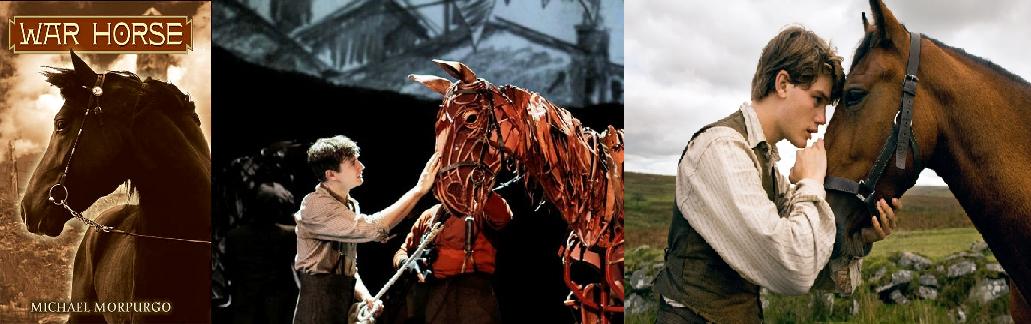
Oscar nominations were announced this week, and one of the nods for Best Picture went to War Horse, a movie based on the book written by British author Michael Morpurgo. Michael’s story behind the story of War Horse was featured in the December 2011 issue of Guideposts.

Michael’s tale is definitely a case of incredible timing resulting in a most fortunate outcome. Hopelessly stuck on finding a way to make an old World War I veteran’s story come to life, Michael witnessed a wonderful moment between a shy boy and one of the horses on his farm in Devon. That moment inspired Michael as he wrote the book.

Community Newsletter

Get More Inspiration Delivered to Your Inbox


“The book came out of a chance encounter. Everything about this story of War Horse did,” Michael says. “Initially it was that chance encounter. But then the book was out there and it didn’t do well. Then, 30 years later, the National Theater in London was looking to make a play using the genius of some puppets they had discovered called Handspring Puppets, from South Africa. They wanted the puppets to be center stage, so they needed a story in which an animal had the main part. The director, Tom Morris, searched for a couple years and couldn’t find anything at all. When he came home one weekend, his mother says to him, ‘Tom, you should read this book I just read called War Horse, it’s a story of a horse in the first World War.’ So he read it. Two weeks later I’m up in London meeting with him about the play they’re going to make.”

The play, staged first in London and then at Lincoln Center in New York, took home the Tony Award for Best Play in 2011.

“The lovely thing is, my father, who was an actor, in 1966 acted on the very same stage in Lincoln Center. His name was Tony. I feel his spirit must be walking the boards every night,” Michael says.

War Horse

War Horse is a story about the horrors of war and its devastating effects on the innocent. That’s a story that needs to be told, and it seems to me that Michael got a little help telling it—through a series of extraordinary “chance” encounters.

I interviewed Michael and edited his story for Guideposts, and he’s a great guy. His Farms for City Children program touches on two things he cares deeply about: the welfare of children and the humane treatment of animals. That’s why I’m definitely pulling for War Horse to win the Academy Award.

Hmm … does Michael have an uncle named Oscar?

Do you have a Mysterious Ways story to share? We can’t give you a golden statuette, but the best stories may be published in Guideposts magazine and on our website. Send your stories to mw@guideposts.org.

Inexplicable Coincidence on a Hawaiian Beach

“They were in the right place at the right time”… how often do we hear about the incredible ways two people’s lives intersect—resulting in extraordinary rescues, star-crossed romances or unexpected reunions?

An article I recently read in The Boston Globe showed me yet again that despite astronomical odds, the most wonderful connections are happening in our world everyday. In the tropical paradise of Hawaii, a family vacation and a surfing lesson led to an astonishing meeting between two men who shared a common bond…

Waikiki Beach wasn’t on their vacation itinerary, but Rick Hill, his fiancée, Maureen, and their three children—in Hawaii for a sunny week away from their Lunenburg, Massachusetts, home—decided to make a quick stop.

Joe Parker, who grew up in Leominster, Massachusetts, but moved to Hawaii years ago to escape a troubled past, wasn’t supposed to be on the beach that day, either. He was an event planner for a resort and was arranging a last-minute surfing lesson for a client.

Maureen was about to take a photo of Rick and the kids when Joe happened by. He kindly offered to take a picture of the entire family.

As Joe lined up the shot, he listened to the family speak to one another. Joe was certain he recognized their accent—a distinctive derivative of the Bostonian “pah-ked the cah in Hah-vahd yahd” drawl spoken in his old neighborhood.

Instead of saying, “Say cheese,” Joe smiled and said, “Say Leominster!”

Leominster was the next town over from Lunenburg. The family and Joe got to talking. A few names were thrown around. “You know a Dickie Halligan?” Joe asked.

“Know him? That’s my father!” Rick said.

Joe lowered his sunglasses and squinted at Rick, stunned. “He’s my father too.”

According to The Globe, Joe had grown up in foster care and had a painful childhood, running away from home at age 15. He had been told as a child that Dickie Halligan was his uncle. He only discovered the truth when he was 21, after responding to an ad Dickie had placed in the local paper searching for him.

Dickie revealed then that Joe had a half-brother. But Joe and Rick never met.

Until now, on a Hawaiian beach, 6,000 miles away from where they grew up.

Joe and Rick spent the rest of the week together. Joe turned 38 on Easter Sunday and celebrated with his long-lost family.

“We lost 38 years of each other, which is a shame,” Joe told The Globe. “But we are both grateful that this happened and that we get this chance in life to bond.”

What unlikely reunions have you been led to? Let us know in the comments below or by sending your story to mw@guideposts.org.