

Embrace God's truth with our new book, The Lies that Bind

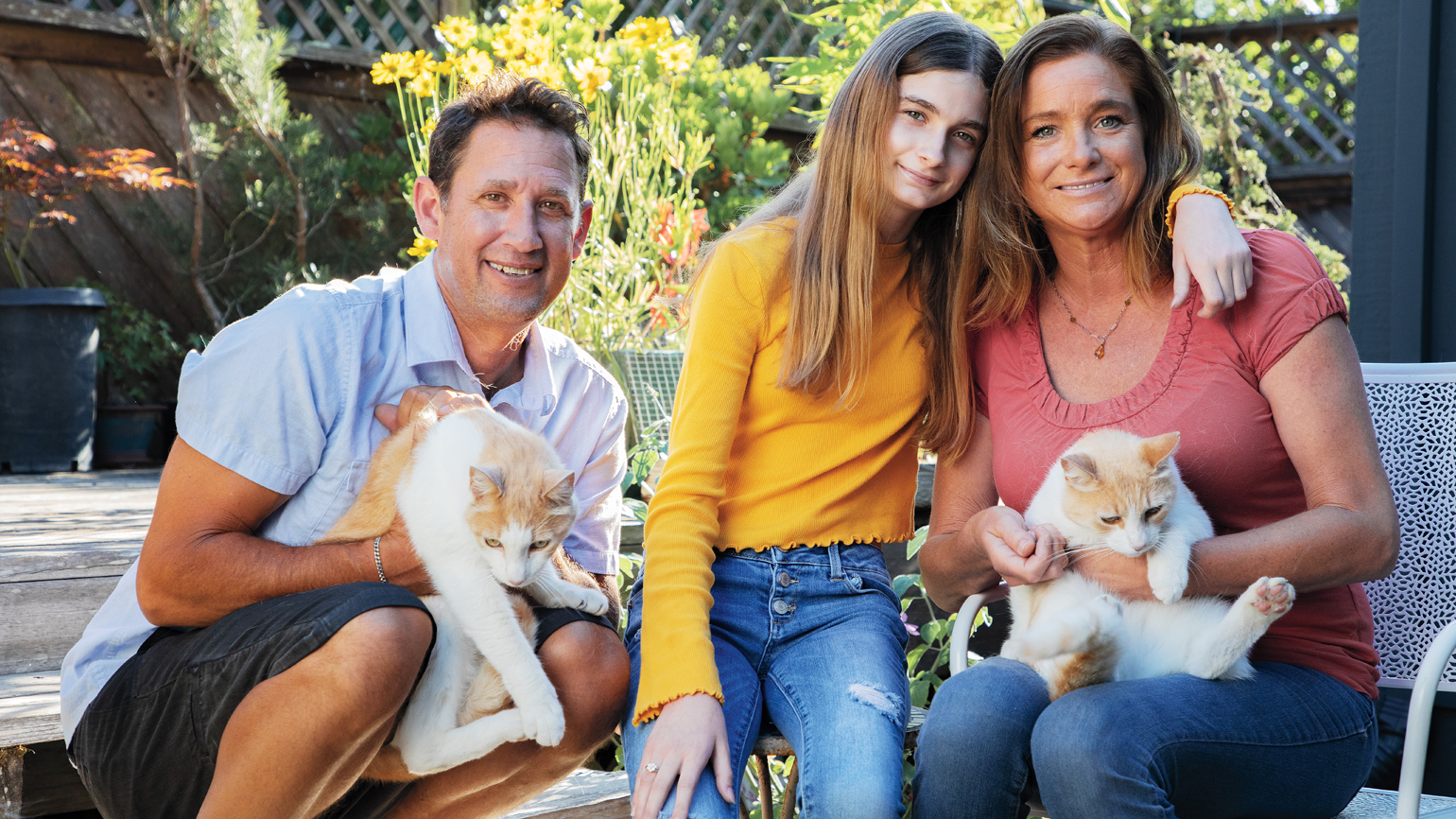
How God Divinely Provided for Her Adopted Children

I sat at our small kitchen table, working on a list of the things we’d need for the adoption of four children from the Philippines. Our family was about to double in size. Prioritize! I told myself.

A larger kitchen table was definitely a priority. Unless we were planning to eat in shifts, we’d need to find seating for eight. I penciled that in, under my note for the extra freezer we’d need to store the massive amounts of food we somehow had to buy. We needed bunk beds, a minivan so we could fit the whole family in one car. The list seemed endless. How would we ever manage?

I’d started praying about adoption almost three years earlier, after a miscarriage. Our children, Amy and Matthew, were 10 and 7. I couldn’t shake the feeling that Jeff and I were meant to bring another child into our family. And finally, earlier this year, I felt a conviction that now was the time. I’d written in my journal the letters “p.a.” for pursue adoption, because adopting even one child seemed so overwhelming that I couldn’t bring myself to write out the actual words. But I did tell a few friends what was on my heart.

One friend had recently been to the Philippines to visit her sister, who was working in an orphanage.

“There is a wonderful little girl there who is up for adoption,” she told me. “Her name is Annabel.”

Perfect, a little girl! I thought.

“And she has three older brothers,” she added.

“Four kids! We can’t adopt four kids.”

“They’re so sweet,” she said. “Their mother died when Annabel was just a year old. Their father was disabled and felt they’d be best cared for at the orphanage.” She showed me a newsletter that had photos of the children. As I stared at the photo, time seemed to stand still. I knew that God meant for these children to join our family.

How exactly we were going to make that happen was unclear. My husband, Jeff , worked as a youth minister and was studying at seminary at night. Our family budget was stretched to the max. Plus, how would the family dynamic change? Could we meet the needs of not just one child who’d lost their birth parents but four? How would Amy and Matthew adjust?

That night, I told Jeff about the four siblings in the Philippines who needed a home. No, not just a home. A family. We discussed it over the weekend. He was having the same concerns I was. But that Monday night, he returned home from school with confidence.

“I was praying about the adoption,” he said. “And I heard God speak to me. He said: ‘Haven’t I always provided?’ I think we should do this.”

We dove right in. First, we told our kids, who were thrilled. We applied for the adoption and filled out reams of forms required by the state of Minnesota and the Philippine government. Jeff and I were fingerprinted for a background check, and we scheduled a home visit to be interviewed. We attended a seminar on parenting adopted children. We talked about how we’d organize the kids’ bedrooms: one for the boys, one for the girls.

Now, seven months after we started the process, we’d just been approved! It was September, and we’d be going to the Philippines in November to bring our four new additions home. I was over the moon—and completely overwhelmed.

I stared at the too-small kitchen table again. It had been in Jeff’s family since he was a kid. But it would fit only six at the most. It just wouldn’t work. To me, it symbolized this whole crazy notion. I wanted to trust in those words that God had told Jeff, but with this unfinished list in front of me, I was finding that difficult.

A few days later, my mother called. “The neighbors are selling their freezer. I’ll buy it for you if you want.”

“Yes, that is one thing I’ve been praying for,” I said. I was grateful, but I didn’t think too much about it, until the next call. A mother I knew.

“Do you like beef?”

“Sure we do,” I said. It seemed like such an odd question.

“Do you have a big freezer?”

“Well,” I said, “we will soon.”

“Oh good,” she said. “Because I felt led to buy you 250 pounds of beef.”

Haven’t I always provided? The words echoed in my mind. I had wanted a freezer. But the meat to fill it? That wasn’t even on my list.

A day later, my phone rang again. A friend I’d worked with years before. “Do you need a big table? My husband found one at an estate sale, but it’s too big for our dining room.”

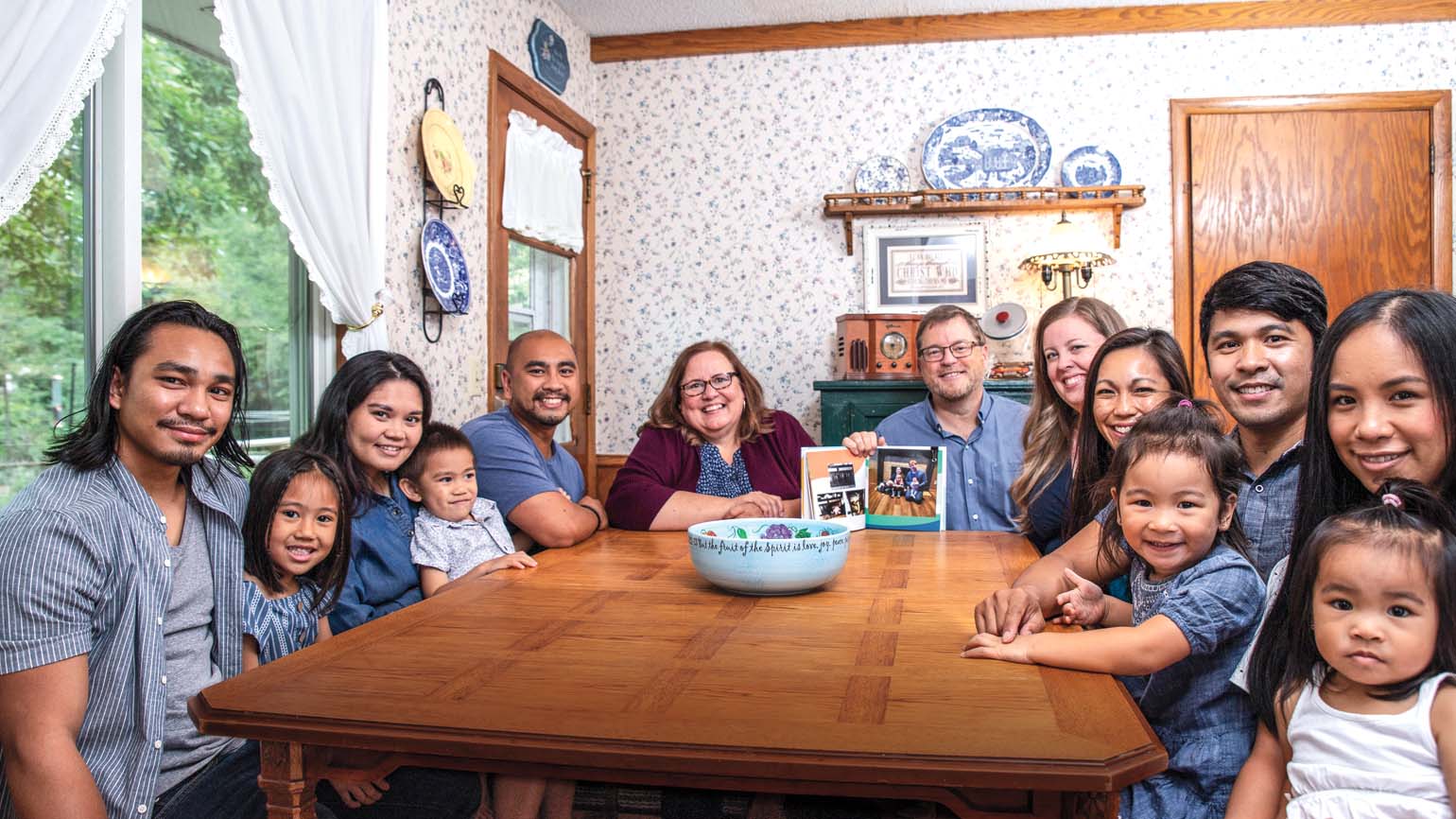
Calls and offers kept coming in. An older minivan we could afford. Three sets of bunk beds. By November, every item on my list was accounted for. We flew to the Philippines and after four days came home to frigid Minnesota, a family of eight.

The first night back, we sat down at the table big enough for all of us. The kids talked and laughed over pizza. I glanced at Jeff and squeezed his hand. It was clear. This was going to work out just fine. God always provides.
How Florence Nightingale Changed the World

How many historic figures made positive impacts because they answered God’s call? Perhaps a call they’d heard during a mysterious experience such as having a vision or dream or hearing a voice?

We might never know for sure. But Florence Nightingale (1820–1910), also known as the mother of modern nursing, was definitely one of them. Her revolutionary practices saved countless lives and paved the way for other women to pursue medicine.

And it might not have happened had Florence not heeded God’s call.

Florence came from a well-off English family, with a learned dilettante of a father and a socially ambitious mother. No one had to work for a living. They were free to read, to ride, to entertain and to travel.

From the start, Florence’s native intelligence shone. She read voraciously, learned several foreign languages and had a good head for numbers, noting as early as age seven what dose of a certain popular medicine people should take: “16 grains for an old woman, 11 for a young woman and 7 for a child.”

Florence was an empathetic caretaker from a young age, nursing the ill back to health, beginning with four-legged creatures. When a nest of newborn mice was discovered in a mattress, 12-year-old Florence came to the rescue, feeding them with drops of milk and keeping them warm by the fire. Florence sprang into action once again when a sheepdog named Cap was attacked by ruffians and injured so badly it couldn’t put weight on its leg. Had Florence not offered to heal the dog’s injury with a warm compress and a bandage, the dog’s owner, a shepherd, would have had no choice but to put down the poor animal—it would’ve been a drain on his meager income.

Even back then, she boiled the water before using it to soak the bandage, ridding it of germs—decades before anyone knew what germs were or how they spread. Was it a penchant for cleanliness or a mystical prescience? However you look at it, Florence Nightingale was ahead of her time.

It’s easy to read stories like these about her life and think, Of course, she’s going to become a nurse. It was destiny. What else would she have done? There’s account after account of her dashing off to care for some ailing relative or injured creature. Yet the circumstances into which she was born made it highly unlikely. It was considered unseemly for a woman of her stature to work—let alone in such a disreputable profession as nursing.

According to the mores of Victorian England, Florence would forgo a career, marry a suitable husband, settle in a country house somewhere and produce a large batch of children. She might very well have done so—if not for God’s intervention.

On February 7, 1837, before she was to be presented to society as a debutante, Florence heard God speak to her. The day that changed the course of her life has been marked in history. The key word that she heard that day from God was service. She knew she was called to serve.

Florence was conflicted. If this were indeed God’s calling, wasn’t she also called to obey her father and mother? She found herself caught in one of those guilt-inducing struggles that give a bad name to the Victorian era, torturing herself miserably at times. An opportunity for service would open, she would be eager to follow it—after all, wasn’t it God’s will?—only to face fierce opposition from her mother, provoking dreadful scenes.

It became easier to avoid disappointing her mother and instead just say no to all of the suitors who came calling instead. By all accounts—and early photos—Florence was beautiful, charming and quick. Men did come, flirting, pursuing and even boldly asking, “Will you marry me?” No, she said. Adamantly, no. Her heart was already claimed by God’s call to service.

Over the years, however, socializing in Victorian society paid off. She made some important friendships. Among her dearest friends was Sidney Herbert, a bright, passionate politician. He was Secretary at War in 1854, when England was caught in the Crimean War. The British were fighting the Russian Army on the Crimean peninsula, and a shocking number of soldiers were dying in barrack hospitals. Perhaps Florence could help.

By then, in that era, she would have been considered an old maid, 34 years of age and unmarried. Still, God had been insistent in his call, once telling her during a trip to Egypt to “do good for him alone without the reputation.” Perhaps for want of people to nurse, she’d rescued other animals, including an owl she named Athena and kept in her pocket. She even took it to Germany, leaving Athena with her sister Parthe while Florence studied nursing there. She had pursued her calling against all odds.

In 1853, she’d been given charge of what we would think of as a private clinic. It was situated on London’s fabled Harley Street, known for its doctors. But Florence had no ambition to be a doctor, only a nurse.

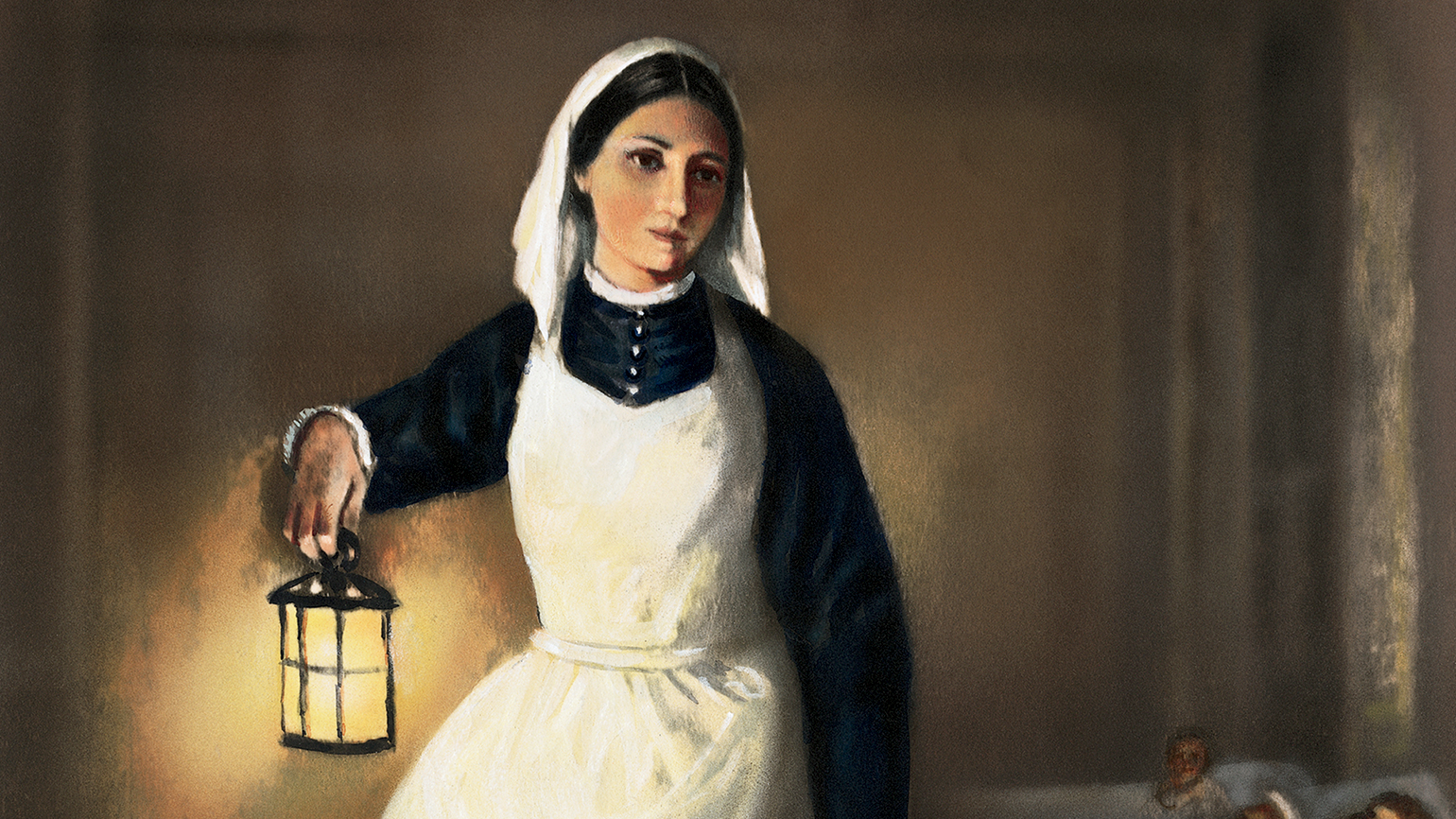
At Herbert’s request, she gathered a coterie of other nurses and went to Turkey, where the injured soldiers had been transported. There her reputation was burnished. She became famous as the Lady With the Lamp, going from bed to bed, nursing the wounded soldiers into the late hours.

She discovered the soldiers had been dying in droves from preventable ailments. Linens had gone unchanged, meals unserved. Chamber pots overflowed, and the hospital was filthy, resembling more a putrid charnel house than a place of healing. Florence immediately created a basic standard of care. Using some of her own funds, she bought supplies, established practices of sanitation and dealt with a military bureaucracy that opposed her at every turn, hoping she’d go away.

Along the way, Florence continued to be touched by mystical experiences. In Turkey during the war, she had a vision of her beloved pet owl, who’d died shortly before she left England. She was walking home from the hospital one night “when Athena came along the cliff quite to my feet, rose upon her tiptoes, bowed several times, made her long melancholy cry and fled away.” Far from home and up against incredible odds, Florence found the vision was a great comfort to her. It was a reassurance that she was still on her God-given path.

Florence stayed in Turkey through the end of the war, remaining until the last wounded man left. Then, avoiding any furor, she made her way secretly back to England, as though to reaffirm that what she had done was for God alone.

Upon her return, Florence plummeted into depression and nearly died. She was understandably exhausted from undertaking such a long stretch of 18- to 20-hour days. She was also suffering from a mysterious illness that historians have only recently diagnosed as severe chronic brucellosis, which comes from drinking infected goat or sheep’s milk. The water in Turkey would have been undrinkable, and Florence wouldn’t have turned to beer, wine or spirits as most of the other doctors and nurses did. (Drunkenness was a serious issue for some of them.)

For the next 52 years, she lived in England as a recluse, but her work was far from over. In fact, you could say that her greatest impact came during this time. She spent her days haranguing the powers that be with letters and tracts, prompting them to set new standards of medical care that we have come to expect as normal: clean beds, clean sheets, clean rooms and caring nurses.

Florence died at the age of 90, after saving countless lives and changing the world for the better. She’d done what she’d been meant to do. She’d heard God’s call—and answered it.

How Faith Helped Her Find Her Lost Cat

It was Christmas Eve morning, and I awoke with a mission: to find my lost cat, Baby-Girl. As I got ready, I could hear icy rain pelting the windows. I said a quick prayer for Baby-Girl. She was out there somewhere in the storm, I could just feel it. Sure, it had been six months since she’d gone missing, but I still had faith. It was the season for miracles, after all.

That summer, my sweet kitty had disappeared from my parents’ house in Indiana. Baby-Girl had been staying with them while I was between apartments. I’m a nun and Catholic school teacher. At the time, I lived and worked in Washington, D.C. I was staying with friends until I signed my lease on a new place. Baby-Girl had gotten out of my parents’ house three days before I was set to fly back home to pick her up.

My dad and I spent that entire visit searching for her. Dad was the family’s resident “realist,” which meant he spent a whole lot of time trying to prepare me for the worst. “She’s either been hit by a car or been taken in by someone who found her,” he said. I rolled my eyes. Dad always supported me, but he could be so skeptical. He could do with a little more faith!

Besides, though I couldn’t explain it, I knew I’d see Baby-Girl again. She’d been a stray when I found her. A scrappy little tabby that had survived all on her own. If any cat could do the impossible, it was my Baby-Girl. Even after I returned to D.C. without her and the weeks stretched into months, deep down I had this feeling that we’d be reunited.

Now, home again for the holidays, I was determined to pick up my search right where I left off. I grabbed Baby-Girl’s cat carrier and loaded it into the car, then asked my dad to drive me to the shelter, hoping she’d been found.

“Sharon, you have to be realistic,” my dad said as we headed to the garage. “She’s been gone too long. You’re not going to find her.”

“Well, I just have a feeling,” I said.

Dad raised an eyebrow as he climbed into the driver’s seat.

“Don’t you believe in Christmas miracles?” I asked.

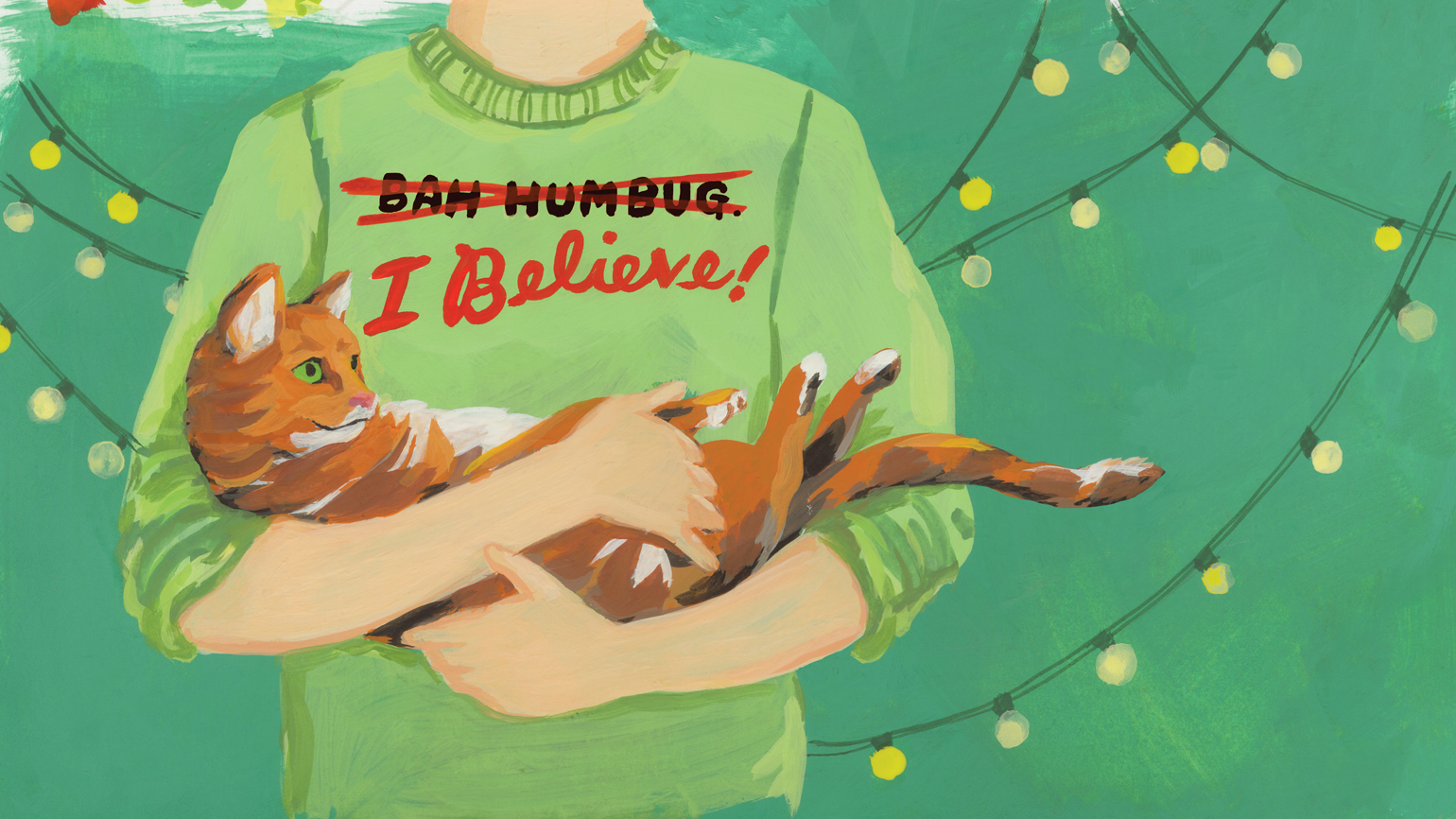
“Bah humbug,” he said, lightening the mood. It was his favorite Christmas saying and an inside joke in our family. He even had a shirt with the phrase emblazoned across the front, which he wore every Christmas morning. I threw my hands up in mock despair.

At the shelter, the woman at the front desk greeted my dad warmly. “Good to see you again, Mr. Dillon! Still looking for your cat?”

Ah, I thought, maybe he’s not such a pessimist after all.

A staff member took us to see the cats. “When did she go missing?” the woman asked.

“Six months ago.”

“And was she chipped?” No, I had to admit, Baby-Girl was not. The staffer noticeably winced at the words. “When we get unchipped cats, they’re put up for adoption after three days,” she explained. “Even if your cat was brought in, she’s probably gone by now.”

We walked through rows of cages. My eyes scanned cats of all shapes and sizes. None of them was my Baby-Girl. Then I noticed a room farther back. I pushed ahead. “Sweetheart, that’s where they keep the cats that just came in,” Dad said. “Your cat wouldn’t be in there.”

“It doesn’t hurt to look!” I said.

I stepped in the room and heard a familiar meow. My eyes zeroed in on a little tabby cat with big green eyes. She was skinnier than I remembered, but it was Baby-Girl all right! My eyes welled up with tears. I opened the cage door. Baby-Girl practically jumped into my arms. I held her close as Dad looked on, mouth agape.

“Dad! It’s Baby-Girl!” I cried.

“There’s just no way….” he mumbled to himself.

I returned to the front desk to let them know I’d found my cat. The shelter staff was skeptical. I pointed out that this cat matched Baby-Girl’s description perfectly—right down to her hind left white paw. Still they looked uncertain.

“Wait here! I can prove she’s my cat,” I said, excusing myself to grab the carrier. I’d trained Baby-Girl to walk inside the carrier when I opened its door. Sure enough, when she was let down in the middle of the room, she made a beeline for the carrier and scooted right inside.

“That’s definitely your cat,” a staffer laughed. “I’ve never seen any cat do that willingly.”

I asked when she’d been brought in. She’d arrived during the ice storm—likely about the same time I’d prayed.

Back home, the rest of the family welcomed Baby-Girl. She purred like a motorboat, rubbing up against everyone’s legs. She seemed completely at home. Dad remained stubbornly skeptical.

“It just cannot be her,” he said. “Not after all this time.”

I rolled my eyes. Eventually, Baby-Girl made her way down to the basement, where her litter box was kept.

“See? How would she know that the box was there if she hadn’t been here before?” I said to Dad.

“Fine,” he said. “I’m 40 percent convinced it’s her.”

“What would it take to change your mind?” I asked.

He considered for a moment. “If she sits in her favorite spot in the hearth, I’ll believe it’s her.”

Baby-Girl loved to sit curled up inside my parents’ decorative fireplace. And that’s exactly what she did as soon as dinner was done.

“Okay, maybe it’s her,” Dad admitted. “I’m about 60 percent sure.”

We all groaned. Dad took to his armchair to read as we wound down for the evening. All of the sudden, he burst out laughing.

“What’s so funny, Bill?” Mom asked him.

“My book,” he said. “It says: ‘Baby-Girl, I have lost you. Now I have found you. I will never lose you again!’”

We all roared with laughter. “Is that enough, Dad? Or does the Holy Spirit himself have to appear and tell you?” I asked.

“Okay! Ninety percent!” Dad said. “But only because the Baby-Girl in the story is a lost dog, not a cat.”

We were all almost in tears from laughing so hard. My heart was filled with gratitude—I was surrounded by family and, against all odds, my cat was home again, six months after going missing.

It turned out, Baby-Girl’s return wasn’t the only Christmas miracle that year. The next day, when Dad came downstairs for Christmas morning, he was wearing a new holiday shirt. It read: I Believe!

Did you enjoy this story? Subscribe to Mysterious Ways magazine.

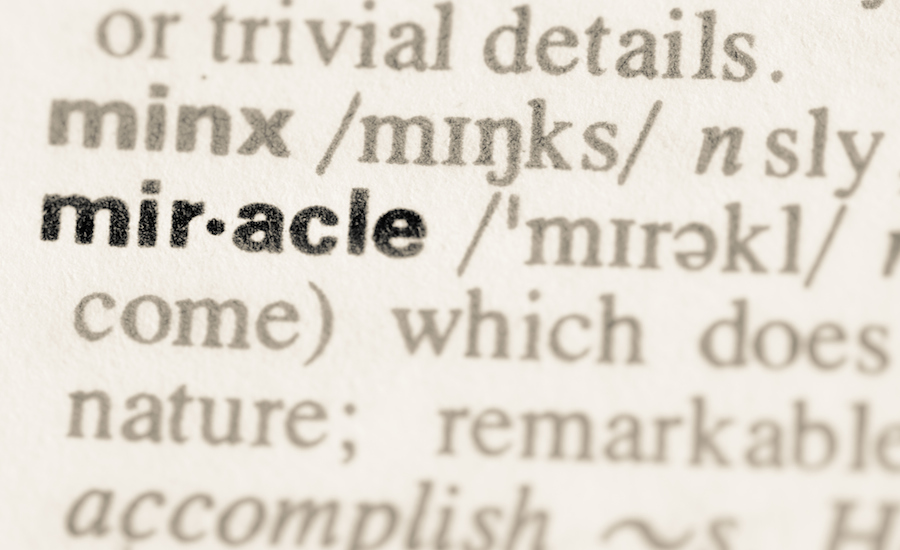
How Do You Define a Miracle?

How do you define a miracle?

It seems like a simple enough question. But I’ve come to find that just about everyone has a different answer!

For example, here’s how Merriam-Webster defines a miracle: “An unusual or wonderful event that is believed to be caused by the power of God.”

Frederick Buechner puts it a little differently: “A miracle is when the whole is greater than the sum of its parts. A miracle is when one plus one equals a thousand.”

Then there’s one of my favorite miracle definitions of all time from Lemony Snicket’s The Lump of Coal: “Miracles are like pimples, because once you start looking for them you find more than you ever dreamed you’d see.”

My fellow miracle aficionados, Joan, Katie and Meb–miracle experts and authors of The Miracle Chase–view a miracle as “a sign of divine intervention in the world that creates an unfolding and beneficial connection between God and humankind.”

And my mom–my go-to source for wisdom!–has this definition: “It’s not just visions or lightning in the sky. It’s seeing God’s handiwork everywhere in your life.”

There’s really no correct definition, of course. Just like everyone has a different relationship with God, we each have our own understanding of miracles.

With that in mind, I thought it’d be fun–and illuminating–to collect definitions of the miraculous from you, the Guideposts family. That way we can see where we agree and disagree, and better understand God’s wonder.

Here’s my rough definition to get us started. A miracle is: God’s way of talking to us in ways both big and small. (Any act that involves God is inherently miraculous in my book, regardless of magnitude.)

Now it’s your turn. Share your definition of a miracle in the Comments below or on Facebook. I’ll feature the definitions in an upcoming blog post. Stay tuned!

How Does God Hear All Our Prayers at Once?

On a typical day, if someone asked me, “What are you doing right at this moment?” I would have one or two answers. (Well, as a mom who has honed the art of multitasking, I might have three or four!)

But the easy answer to the question would cover only the things I was consciously and intentionally doing at the time. It would not include my arteries pumping blood throughout my body to distribute oxygen to my cells. Or the mitochondria in those cells metabolizing carbohydrates and fatty acids to generate energy. Or the dendrites of my brain’s neurons receiving the electrical messages that together translate into to all my thoughts and motions.

The fact is that, at any given moment, our answers to the simple question, “What are you doing right now?” should be, “Millions and millions of things.” So, I believe, it is the same with the way God hears and responds to the prayers of any and all.

I don’t see God as a Superhuman Switchboard Operator who has to take the calls of thousands of desperate callers jamming the switchboard with their simultaneous prayers. Our prayers are not outside of God any more than your mitochondria are outside of you (even if you have no idea what a mitochondrion is!).

Rather, I see God as Ultimate Consciousness: an eternal, all-knowing, pure-loving reality that birthed and continues to sustain the universe. I see the universe itself as the physical manifestation of this consciousness. God’s ultimate consciousness permeates the cosmos. It infuses every proton, neutron and electron, and it comprises the spaces and forces between them. The cosmos is word made flesh, love burst forth into matter—Christ Consciousness.

And so, our prayers—our desires, hopes and needs as they bubble up into our own consciousness and intention—are already in God. They are part of the fabric of this awesome universe. Perhaps, when we make our humble efforts to bring our limited human consciousness into sync with Ultimate Consciousness by praying, we open ourselves up to God’s order. We let ourselves be moved by this loving consciousness that permeates all, rather than acting out of a sense that we have all the answers.

The simultaneous prayers offered up to God by countless people throughout the world are like a “sound check” between humanity and our Creator. The miracle of it all is not only that God hears our prayers through this sound check. But that, collectively, we open the human spirit to God’s frequency through prayer. We hear God.

Here’s how other theologians, writers and scholarsboth past and presenthave answered the question, “How does God hear all our prayers at once?”

“God is timeless and has ‘all the time in the world’—literally. Saint Augustine first proposed that concept, and Einstein’s theory of relativity demonstrated how. A being as big as the universe would experience all time in history at the same moment. So attending to seven billion prayers at once would be no problem for such a God!”—Philip Yancey, author of Prayer: Does It Make Any Difference?

“We can sometimes fall into the trap of thinking of God as an old man in the sky having to juggle millions of telephones constantly ringing. But God is in us, and we are in God. That mutual indwelling means that our prayers are not even our prayers: They are God’s, and God is praying within us with ‘sighs too deep for words,’ as Paul said. And so there is no gap between the prayer and the hearing of that prayer.”—Brother Aidan Owen, Benedictine monk

“‘Am I a God who is only close at hand?’ says the Lord….‘Can anyone hide from me in a secret place? Am I not everywhere in all the heavens and earth?’”—Jeremiah 23:23–24

“Far too many people think of God as a sort of divine vending machine. But God is infinite, and prayer is not a transaction. Prayer is the way we human beings hear the heartbeat of creation and connect with the sacredness of life. If we understand that God is the animating love of all that is, then how can God not hear our prayers?”—Dr. Diana Butler Bass, scholar and author of Grounded: Finding God in the World

“Almost certainly God is not in Time. His life does not consist of moments following one another. If a million people are praying to Him at ten-thirty tonight, He need not listen to them all in that one little snippet which we call ten-thirty. Ten-thirty—and every other moment from the beginning of the world—is always the Present for Him.”—C.S. Lewis, author of Mere Christianity

“God, being omnipotent and all-powerful, not only hears all of our prayers at once but knows them even before we ask them. He knows each and every one of us, inside out. Not just because we’re made in the image of him, but because he is our divine creator.”—Jarrid Wilson, pastor and author of Love Is Oxygen

“God is not bound by the same rules of nature that we are. He exists outside the limits of time and space. Beyond that, I do not know how he hears each of us separately. But what I do know is that he hears me individually because he speaks back to me daily.”—Carlos Whittaker, motivational speaker and author of Moment Maker

Got a Big Question? E-mail it to us at MW@Guideposts.org—it could be featured in our next issue!

How Booth Saved Lincoln

History is full of mysteries, the fates of nations pivoting on an unexpected and seemingly random turn of events. One extraordinary moment in American history happened on a train platform in Jersey City, New Jersey, in the darkest days of the Civil War. Abraham Lincoln’s oldest son, Robert, a 20-year-old Harvard student, was waiting for a train when a rowdy crowd put him in mortal danger.

“There was a narrow space between the platform and the train car,” Robert later recalled. “There was some crowding, and I happened to be pressed by it. The train began to move and I was twisted off my feet, and dropped, with feet downward, into the open space, and was personally helpless…”

President Lincoln and his wife, Mary, had already endured much tragedy. They lost their son Eddie when Honest Abe was still a rising Springfield lawyer, and Willie, a much-doted-upon 11-year-old, had recently died of typhoid fever, throwing the president and the First Lady into a deep depression. Their youngest son, Tad, was often sickly (he’d end up surviving his father by only six years).

Is it any wonder that Mary was so protective of her eldest, Robert? She protested against his enlisting, much to his dismay. But that evening in Jersey City, it seemed Robert was destined to become another tragic death in the saga of the Lincoln family.

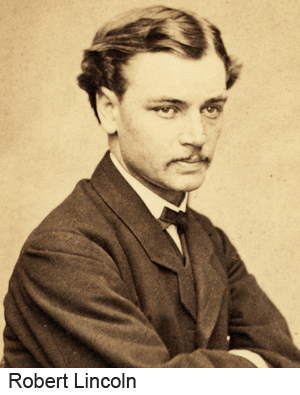
Robert Lincoln, Abraham Lincoln's sonThe train lurched, coming close to crushing Robert, when he felt someone tug his coat—“vigorously seized” it, as he later wrote—jerking him back up onto the platform and out of harm’s way. Robert’s rescuer had no idea whose life he’d just saved, how important a role he’d play in the course of both a family and a nation. But Robert never forgot that man. How could he?


Robert went on to have a distinguished career. He managed to enter the Union Army late in the war, serving as a captain under Ulysses S. Grant, and was an eyewitness to Robert E. Lee’s surrender.

On April 14, 1865, he was in Washington, D.C., but decided not to join his parents at Our American Cousin at Ford’s Theatre that terrible night, when John Wilkes Booth emerged from the shadows and took President Lincoln’s life. Robert later served as secretary of war in one administration and minister to England in another. He was often recommended as a presidential candidate.

The sole heir to the Lincoln name, he corresponded with his father’s biographers, providing tremendous insight into the Lincoln presidency. He died at the age of 82.

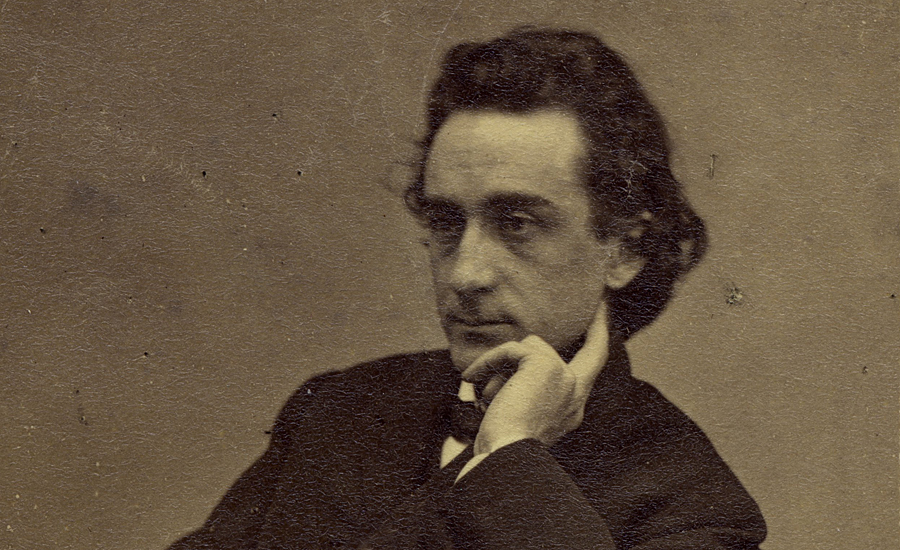
Robert was forever grateful to his rescuer. While the man hadn’t recognized him, Robert had known exactly who the man was: one of the greatest Shakespearean actors of his day. An adamant Unionist, who had proudly voted for Lincoln, the actor was devastated when the news of the president’s assassination reached him.

For a time, he retired from the stage, refusing to perform, until a letter from a friend, who’d heard the story from Robert, told him the identity of the young man he’d rescued. The truth helped inspire the actor’s return to the stage.

While John Wilkes Booth would forever be known as a notorious assassin, his brother Edwin Booth is remembered today for defining Shakespearean characters for American audiences, founding his own theater, donating his home as a club for actors and artists…and saving Abraham Lincoln’s only surviving son.

How Billy Graham Changed My Life

I’ve been to the Billy Graham Conference Center at the Cove outside Asheville, NC, many times. One of the things I’m always struck by is that the moment I drive through the gates, I feel God’s presence. Each visit has an emotional element because as a 6-year-old child, I met Jesus as a result of Billy Graham’s ministry, and my life was changed. So going to the Cove is a celebration of my spiritual roots.

Read More: Inspiring Billy Graham Quotes

Several years ago, I also visited the Billy Graham Library in Charlotte, NC. That day was Billy Graham’s 93rd birthday, and reporters were there to shoot segments for their evening news programs.

I chatted with one of them and was asked, “We’ve watched millions of people leave their seats at Dr. Graham’s crusades to make a decision for Christ. Do you think those decisions last?”

I replied, “I can’t answer for anyone else, but when I was a 6-year-old girl, I was one of those people who made that decision, and it changed me forever. As a teenager, it kept me from making unwise choices that would impact my life permanently. Being in church affected my life as I met my husband there. As a young mom, it impacted how I raised my children. And now God has allowed me the privilege to write and speak for Him.”

I continued, “But that’s not the end of the story. You see, God gave me the opportunity to pray with each of my three sons as they made a decision to follow Christ. Two of them are now preaching the Gospel and the third is active in music ministry at his church.”

And Dr. Graham’s heritage of faith doesn’t stop there for our family. It’s being passed down to my grandchildren and to the children, teens and adults impacted by my sons and their ministries. None of this would have happened if a man named Billy Graham hadn’t been faithful to serve God.

As we celebrate this season of thankfulness, I’d like to say how very thankful I am that Dr. Graham chose to follow the calling God placed on him. I lead a life that was changed because of that.

How a Singing Fish Gave Her Comfort

Just a quick Google search and there it was—an eBay listing for a Big Mouth Billy Bass, available to the highest bidder. I matched the asking price and crossed my fingers. It looked exactly like the one my ex-husband had brought home all those years ago, back in 1999.

It was a gag gift. A rubber fish mounted on a plastic plaque. At first glance, it could have passed for a real fishing trophy—until it started to sing. The battery-powered fish would spring to life whenever someone walked by. It would swing its head around, shake its tail fin and move its mouth along to the music blasting from its speakers. The fish performed two songs: “Take Me to the River,” by Al Green, and “Don’t Worry, Be Happy,” by Bobby McFerrin.

We hung it up in the living room. It was hilarious! …The first hundred times, that is. Then we grew sick of the thing. But our three-year-old son, Kevin, loved it. He’d activate it again and again, shrieking and dancing along. Almost a year later, when the batteries finally died, we didn’t replace them. The Billy Bass was banished to Kevin’s toy box in the corner of the living room.

I didn’t miss hearing the same two songs on a loop, but I did miss the easy laughter the Billy Bass sparked. My husband and I were going through a tough time in our marriage, and it became harder and harder to smile.

We’d fought before but not like this. It didn’t feel like something we could fix. I wasn’t sure how much more either of us could take. I was having trouble sleeping. When the house was dark and my husband and son were asleep, I’d wander from room to room, haunting my own house like a ghost. I prayed then, asking God for guidance and strength. But I still felt so alone.

One day, the crushing weight I’d been carrying became too much. It was early afternoon. My husband was still at work. I could hear Kevin playing outside in the yard. I was in the living room, straightening up a little. The misery that overtook me was sudden, like a blow. I could barely breathe.

I sank to the floor in front of the couch. I couldn’t stop crying. Not wanting Kevin to hear me sobbing, I leaned forward, burying my face in the cushions.

“Lord,” I whispered, “please help me. I’m so sad.… I’m just so sad, Lord.”

“Don’t worry, be happy!” music blared. “Dooooo, dooo, dooo, dooooooo!”

My head whipped up. Had Kevin wandered back inside and started singing? No, the room was empty; no one was with me. As I listened closer, I could hear the mechanical whir of the Billy Bass from the corner of the room. I got to my feet.

Sure enough, in Kevin’s toy box, the Billy Bass was singing, mouth flapping and body wriggling. “Don’t Worry, Be Happy” played. I watched, stunned. The song finished. Only then did I pick up the animatronic fish.

The Billy Bass had three modes: on, off and motion detecting. Had my husband replaced the batteries at some point? Had Kevin left it on motion detecting? I pressed the button. Nothing. I flipped it over. The Billy Bass was switched on. I pressed the button again.

Nothing. Of course. The batteries were dead.

My tears turned to laughter. I stood there in the living room laughing for quite some time. I felt better than I had in weeks. It was as if the weight of my troubles had been lifted—all because of a silly, singing fish! And yet the relief I felt was real.

Don’t worry, be happy!

Those words became my mantra. Through the ups and downs—through my eventual divorce—whenever I felt low, I’d simply remember that singing fish. How God had used it to show me that I wasn’t alone. That he was always with me.

Over the years, we moved several times, and Billy Bass eventually got lost in the shuffle. But when Kevin, now 22 and living on his own, called to tell me he’d been having a difficult time lately, I knew just what to do.

The new Billy Bass arrived a few days after I placed the order. I wrapped it, ready to give to Kevin the next time I saw him. He knew the story of what had happened to me all those years ago. I included a note. “Pray and trust the Lord for everything,” it read. “When the Lord is involved, expect the unexpected. No batteries needed.”

How a Series of Mysterious Dreams Saved Her Life

A figure loomed in the corner of my bedroom, a shadowy specter the size and shape of a man. It was faceless, yet I could feel its burning gaze on me. As soon as I registered it, the specter was upon me, embracing me with its shadow arms, enveloping me in darkness. I was pinned, paralyzed and helpless.

I woke up to the sound of my own screams, my heart pounding until I realized I was awake. I was safe. Even though the event had felt acute and urgent, it wasn’t real. Just a terrible nightmare. I wasn’t used to having them and usually slept soundly through the night, especially after putting in long days as a nurse.

Eventually, I settled down, telling myself it was an odd, one time occurrence. I went back to sleep.

But the next night, it happened again. I’d drifted off to sleep, only to find myself in my bedroom. Everything looked the same but felt different. There was an inescapable menacing feeling in the air. The hair on the back of my neck stood up. I turned my head to the left, toward the window. The shadow figure had returned. It was on the outside of the glass, staring in. It reached its dark, misty hand toward me. The glass didn’t shatter. Instead, it bent around the smoky fingers in a grotesque, bubbling shape as I squirmed out of its reach. I woke up in a cold sweat, the morning sun lighting the room.

The nightmares continued. They all started with the figure in my bedroom. It would overtake me in darkness and lead me into one terrifying scene or another. Most often, it chased me through my home. No matter which way I turned, I couldn’t escape it.

I dreaded going to sleep at night, struggling to stay awake as long as possible. I knew that as soon as I closed my eyes, the shadow man would be there, waiting.

Then, one night, months into the nightmares, something changed. My dream self reacted differently. When the shadowy specter appeared, my body relaxed into it instead of resisting. Suddenly, I was somewhere else, a place very familiar to me. I was in a hospital ward. Specifically, the cancer ward. And I wasn’t alone. I was in a room with a patient. A woman.

She was small and frail, propped up on pillows, hooked up to machines and an IV. When we locked eyes, I could tell that she was sad. Somehow I knew that this was the end for her. I didn’t know what to do, how to help. I’d never worked in oncology, and I was out of my depth. She stared at me until her eyes closed and she flatlined. I tried calling for help, but I couldn’t. I had no voice. The patient was dead.

I stumbled into the hall, feeling like I couldn’t breathe. Out of nowhere, a nurse appeared at my side, laying a gentle hand on my shoulder.

“There’s another patient who needs you,” she said. “Go help her.” I protested, but the nurse insisted. “There’s nothing to be scared of,” she said, guiding me back toward the same room.

When I re-entered, the dead woman was gone. In her place was the new patient. I recognized her instantly. It was me.

I woke up, tears streaming down my face. It was still dark out, and I was petrified. I couldn’t shake the sense that these were no ordinary nightmares. The scene I’d just witnessed in my dream—actually seeing myself, knowing the fate of the first patient—made all the other dreams seem like a warning that I could no longer ignore. Was my health at risk? Was I headed for the oncology ward?

I was 42 years old. Cancer didn’t run in my family. And what could I do until morning? There was only one thing I could think of. I got up and went into the bathroom to do a self-exam. I flicked on the light, faced the mirror, raised my right arm. My fingers grazed something in my breast. Chills ran down my spine. Was that a lump? Or was I imagining things? Regular mammograms weren’t recommended until age 50 in the UK, but first thing the next morning, I made an appointment to get one.

Thankfully, the nightmares stopped while I waited for my appointment.

The mammogram results appeared to be clear, but I couldn’t shake the feeling that something was wrong. I insisted on following up with an ultrasound, though I was told it was unnecessary. The ultrasound and a subsequent biopsy revealed that I had Stage II breast cancer, on the verge of becoming Stage III. I’d need immediate surgery, followed by chemo. The results surprised everyone but me. I’d been forewarned.

Now, 10 years later, my cancer is in remission. I haven’t had a dream about the shadowy figure since I acted on those mysterious messages and pursued a diagnosis. Even though the dreams were terrifying, I believe they were sent to me with love. Because they got my attention. And ultimately, they would save my life.

How a Pair of Kittens Reunited After 2 Years

“You can get a kitten,” I promised my seven-year-old daughter, Cali. “As soon as we get settled in our new apartment.” Her life had been uprooted when her father and I divorced, and I wanted to give her something to look forward to. So one Saturday morning, shortly after we unpacked the last box, we headed to North Bay Animal Services to pick out her new pet.

There were plenty of cats to choose from, but Cali had her heart set on an orange-and-white kitten. “Actually, we’ve got two of those,” the attendant told us. “Brothers from the same litter, in fact. A bonded pair. We call them Caramel and Butter.”

She brought the kittens to a private room where Cali and I could meet them. For more than an hour, we tried to choose between them.

“Can’t we just take them both?” Cali asked.

“We have to follow the rules of our new apartment,” I said. “Only one cat, remember?”

“I know,” Cali said with a sigh. “But look how much they love each other.”

I couldn’t deny it. They played like the best of friends. When they tired out, they curled around each other, their identical markings creating what looked like a heart. Still, the landlord had been clear about the rules. One cat only. And as long as both kittens got a good home, they would be fine.

After a long deliberation and a lot of tears from Cali, we decided to bring Caramel home. Cali renamed him Ozzy. That night I watched Ozzy and Cali fall asleep together, telling myself, They’ll forget about the other kitten in no time.

How wrong I was. Ozzy really did seem lonely without his twin. No matter how Cali and I tried to distract him over the next few days, he wandered around the apartment, crying, as if looking for his brother.

I told Cali to give it time, but after two weeks of his mournful howls and Cali’s tears, I broke down. I drove back to the shelter with Cali. I was betting on the kittens looking so much alike that our new landlord wouldn’t even realize that there were two of them.

“I remember you,” the shelter attendant said. “But I’m afraid the other kitten isn’t here anymore. He was adopted four days ago.”

Cali was inconsolable, and I was desperate to calm her down. So desperate that, when I opened my mouth, something foolish came out. “We’ll find Ozzy’s brother,” I said. “One day, we’ll adopt him too.”

“Promise?” Cali said.

“Promise,” I said.

What are you doing? I asked myself. I knew I’d never be able to fulfill that promise. But it was the only thing that seemed to bring my daughter some peace.

With time, Ozzy got used to being on his own. And Cali, thank goodness, stopped asking about the other kitten. Our new life was working out just as I’d hoped. I even started dating again. One guy, Brian, seemed promising. I’d met him online and talked to him for months before we planned a date for a night when Cali would be at a friend’s house for a sleepover. Brian was a widower with a daughter, Ruby, just a year older than Cali.

When we finally met in person, Brian and I really clicked. We had a nice Italian dinner, did some dancing, talked about our kids and the many places we’ve lived. Turns out, we’d spent most of our lives within a mile of each other but never met.

After dinner, we swung by Brian’s house. “Ruby’s visiting her grandmother so I can stay out late,” he said. He gave me a short tour of his home, then led me out into the yard. Out of the corner of my eye, I saw a flash of orange and white. Ozzy? I thought, shocked.

How had he gotten here? Had I just shared pasta with a guy who’d stolen my cat? There were plenty of orange-and-white cats in the world, but not with the exact color patterns as Ozzy. I’d recognize him anywhere, and right now he was strolling across Brian’s backyard.

“That’s my cat!” I blurted out.

“That’s my cat,” Brian said. “Well, Ruby’s cat really. My wife picked him out herself shortly before she died. She knew he would help Ruby when she was gone. Butter’s a part of the family.”

Butter? Could it be? Had I found Ozzy’s long-lost brother at last? Brian and I compared shelter adoption papers. Sure enough, Butter was Ozzy’s twin! Eventually, Brian brought Butter over to reintroduce him to his brother.

“They might not even remember each other after two years,” Brian said. “We should be prepared for a little hissing.”

But there was no hissing. Ozzy and Butter nuzzled each other with enthusiasm, as if to say, “I know you! Where have you been?”

Today Ozzy and his brother are inseparable. As are Brian and I. He and I married last August and are raising our girls together. And that impossible promise of mine to Cali? Somehow it was one I managed to keep.

How an Owl Thanked a Hero

GiGi, a great horned owl, was brought to Wild at Heart Rescue –a wildlife rehabilitation center–in Vancleave, Mississippi, with a massive head trauma back in May. She was in such bad condition that she wasn’t expected to make it.

Luckily, though, Douglas Pojeky, president of the center, stepped in to care for GiGi. Apparently, he has a way with birds. “In all my years of working with birds of prey, I have never seen someone with such a bond with these magnificent birds,” Missy Dubuisson, founder of Wild at Heart Rescue, told The Dodo, a website devoted to animals. “It literally brings tears to my eyes to watch him interact with these birds. They absolutely know him and trust him.”

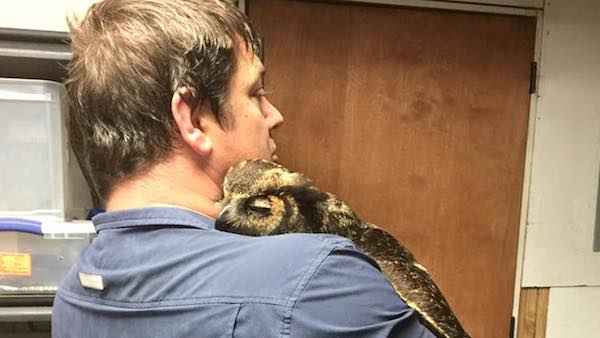
Well, GiGi found a way to thank Pojeky for all his hard work. After he returned to the center from vacation, GiGi “threw both wings around him and gave him an owl hug,” says Wild at Heart Rescue’s Facebook page.

Read More: How a Therapy Horse Helped a Veteran

It’s amazing enough that a bird of prey would hug like a human. But the moment was particularly moving for Pojeky.

According to The Dodo, “Growing up, a great horned owl used to perch on the top of Pojeky’s family barn. While Pojeky’s father often saw the owl, Pojeky and the rest of his family rarely did. However, on the morning of his father’s death, the owl was spotted overlooking the farm house, where Pojeky’s father had passed away, before flying off into the woods.”

It’s no wonder GiGi’s embrace was so meaningful. “For some reason when that bird was hugging me,” Pojeky said, “all I could think of was my dad.”

How a Near-Death Experience Changed Her Perspective

I collapsed onto my bed and closed my eyes. Fifteen family members would be arriving at our house any minute for my husband Tom’s birthday party. I should’ve been greeting our guests. Instead, I was in our room. I was just so tired. If I wanted to make it to the dessert portion of the evening, I’d need to lie down. So I’d snuck off to my bedroom for 10 minutes—15 max—of rest.

Served me right for pushing myself too hard. I’d been in full-blown hostess mode since 4 a.m. First, I’d scrubbed every corner of the house until it was nearly spotless. Then Tom and I put up the Christmas decorations. It was only November 30, but I was so busy these days with my job as spiritual director and retreat leader that now seemed as good a time as any to get the house ready for the holidays. Tom and I hung wreaths on every door and strung lights on the tree. Around 6 p.m., I put the finishing touches on dinner: salad to start, then salmon and broccoli with sweet potatoes, followed by birthday cake and ice cream. I set the table with the good linen napkins, folded elegantly, and put a timer on the food in the oven.

I wanted everything to go smoothly. Better than smoothly—I wanted things to be perfect. I had a lot riding on the evening. Tom’s children and grandchildren were coming. My relationship with them had always been a little awkward. I’d been close to their mom, Betty, be-fore she passed away 12 years earlier. She’d fought a long battle with cancer. I’d acted as her hospice chaplain through it all. After Betty died, Tom and I stayed in touch. Years later, we fell in love and got married.

I knew it was hard for Tom’s kids to see him with someone who wasn’t their mother. His youngest daughter, Denise, especially, seemed to have trouble with it. She was always polite, but holidays and family get-togethers were strained. I wanted us to be a family, and this dinner was an opportunity to make that happen.

I tried to get comfortable in bed. I twisted and turned. I threw the covers on, then off. It felt as if the air were being squeezed out of my lungs. As if I were trapped inside a giant accordion. Perhaps all the stress was getting to me.

The bedroom door creaked open. Tom’s head popped through.

“You okay, Kathleen?” he said. “You got a migraine?”

“No,” I said. “But could you bring me an aspirin anyway?”

Tom returned with the pill. And with his daughter Debby and daughter-in-law Barbara, both nurses, to check on me. I could feel sweat coating my face. My pulse quickened. After a brief discussion, we came to the conclusion that it could be low blood sugar or dehydration. Still, they said, “Kathleen, you don’t look so good. Let’s get you to the hospital.”

Their faces swirled in front of me, going in and out of focus.

“Hospital?” I said, protesting. “No…the party…”

Tom and the girls didn’t listen. They helped me out of bed and into the car.

“Take the salmon out of oven at 7:15….” I struggled to say to the gathered family, then collapsed in the passenger seat.

The next several minutes were a blur. The slamming of car doors. Traffic lights. Unknown hands putting me in a wheelchair, then on a gurney. Beige hospital walls zooming past. Florescent lights flashing above. The sound of beeping everywhere.

This is a nightmare, I thought.

“Oh no, this is very real,” a voice answered. Neither male nor female. Gentle yet firm. “But you will wake up, Kathleen. And you will be just fine….” Then everything went black.

When I came to, I was in another all-white space. This one was filled with light. So blindingly white, it put the hospital’s fluorescents to shame. Where was I?

The space was empty except for clouds. Dozens of them. Large, billowing and towering above me. They were dense yet warm and welcoming. Like a thousand down comforters. I was alone, yet I sensed I wasn’t really.

The clouds swirled around me until I was surrounded. They gathered beneath me. Lifting me higher and higher. I should’ve been terrified. But I was filled with peace, mesmerized by the cloud tower.

“What is this?” I said. My voice echoed in the silence.

“This,” a voice said, “is all the love and prayer being offered up for you.” I knew that voice! The same one from the hospital.

Love and prayer? I thought. For me? But these clouds were huge. As tall as a skyscraper and getting taller by the minute. Just then, faces came to me. All the people who were praying for me at that very moment. Tom. My family. My friends. Tom’s kids. Denise. Yes, even her.

Before I could ask questions, the voice spoke again.

“You can ride this cloud to the other side,” it said. “Or you can go back. The choice is yours.”

I wanted to reach the other side more than anything. But…what about Tom? What about our family? Suddenly my mind felt clear, clearer than it had in a long time. On this cloud of prayer, my worldly concerns seemed so small. The Christmas decorations. The table settings. My worries about Tom’s children. I thought about Tom and the life we’d built together. Had I even wished him a happy birthday that morning?

“Tom isn’t going to lose a second wife,” I said. Just like that, the cloud tower vanished. The next thing I knew, I was in a hospital bed, hooked up to a zillion tubes.

Only later did I learn what had happened. I’d had a heart attack. And not just any kind—a widow-maker. During the time I spent in the clouds, I’d had quadruple bypass surgery. Afterward, I’d bled internally and been rushed back to the OR. I’d coded several times that night before doctors stabilized me.

Tom and his kids took turns at my bedside and never left me alone.

“Kathleen, I don’t know what Dad would’ve done if we’d lost you,” Denise said to me. “I don’t know what our family would’ve done.”

She described the scene in the waiting room, where all our friends and family had gathered the night of Tom’s birthday dinner.

“I prayed every prayer I knew,” she told me. “We all did.”

I squeezed her hand. “I know, sweetheart. I think I saw them.”

The rest of Tom’s children had flown in from all over to be with their dad and with me. Tom’s oldest daughter, Teri, and Denise stayed at our home for 40 days and 40 nights after I was discharged, to care for me. Between bandage changes and shared meals, we all grew close, especially Denise and me. I didn’t try to be perfect in front of her. I didn’t have to. Our relationship was built on something much stronger—a cloud of love.