Embrace God's truth with our new book, The Lies that Bind

How An Artist Found Her Purpose Through This Divine Encounter

It was the summer of 1994, and my husband, Mick, and I were being shown around the French convent of Saint-Georges-des-Gardes by Sister Jean de la Croix. Mick was a photographer specializing in garden and architectural photography, and he was working on a new book, Monastic Gardens. This convent in western France was one of many we’d visited in the past weeks, so Mick could take photos of the grounds.

I was admiring Saint-Georges-des-Gardes’ stark and unassuming beauty—the bare walls, the simple arrangements of fresh wildflowers on a table in the hallway, the polished, dark gray stone floors—when Sister Jean pulled me aside.

“Your husband tells me you’re an artist from New York,” she said, a glimmer in her eye.

“Yes,” I said. “I’m a painter.”

Even as I said the words, they felt hollow. When I had first picked up a paintbrush as a child, it felt as if I was channeling something bigger than myself onto the canvas. I’d chased that feeling all the way through art school. Then it vanished. I’d hit a creative rut. I’d painted everything under the sun, from landscapes to abstract shapes, trying to snap myself out of it, but none of it spoke to me. I was beginning to think it was time to give up painting.

I’d even started attending graduate school for art therapy in an attempt to shift careers, but so far I still felt I was just going through the motions. I missed that profound and purposeful feeling I’d felt when I started painting. Somehow I’d lost it along the way, and I was left yearning for it.

“If you’re an artist, then you must see Sister Myriam,” the nun said decisively, bringing my attention back to the present. “She is our resident iconographer. She’ll want to meet with you.”

An iconographer? I wasn’t sure what that meant. I vaguely remembered studying icons in art school. The traditional portraits of saints and other religious figures were painted using a technique with ancient origins. I’d certainly never heard of a contemporary iconographer. But I didn’t want to seem impolite after Sister Jean’s hospitality, so I agreed to come back the next day to meet with Sister Myriam.

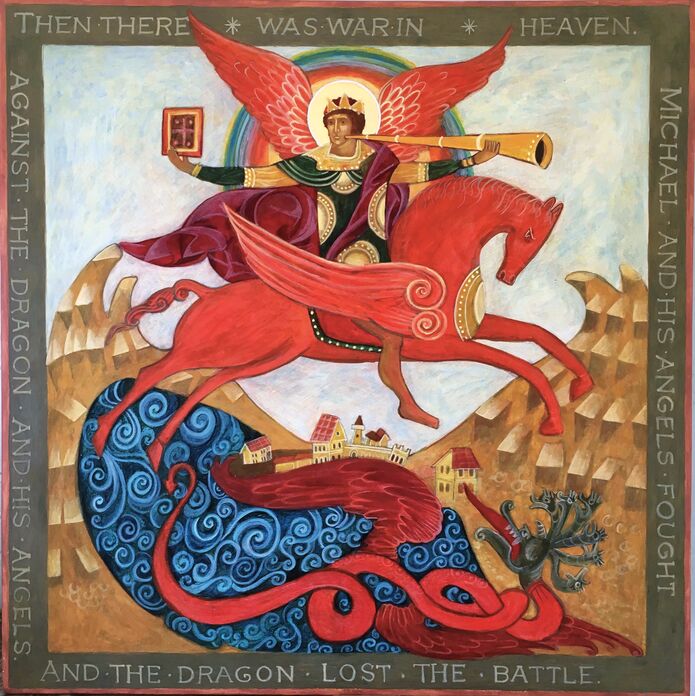
Saint Michael and The Dragon by
Christine Hales

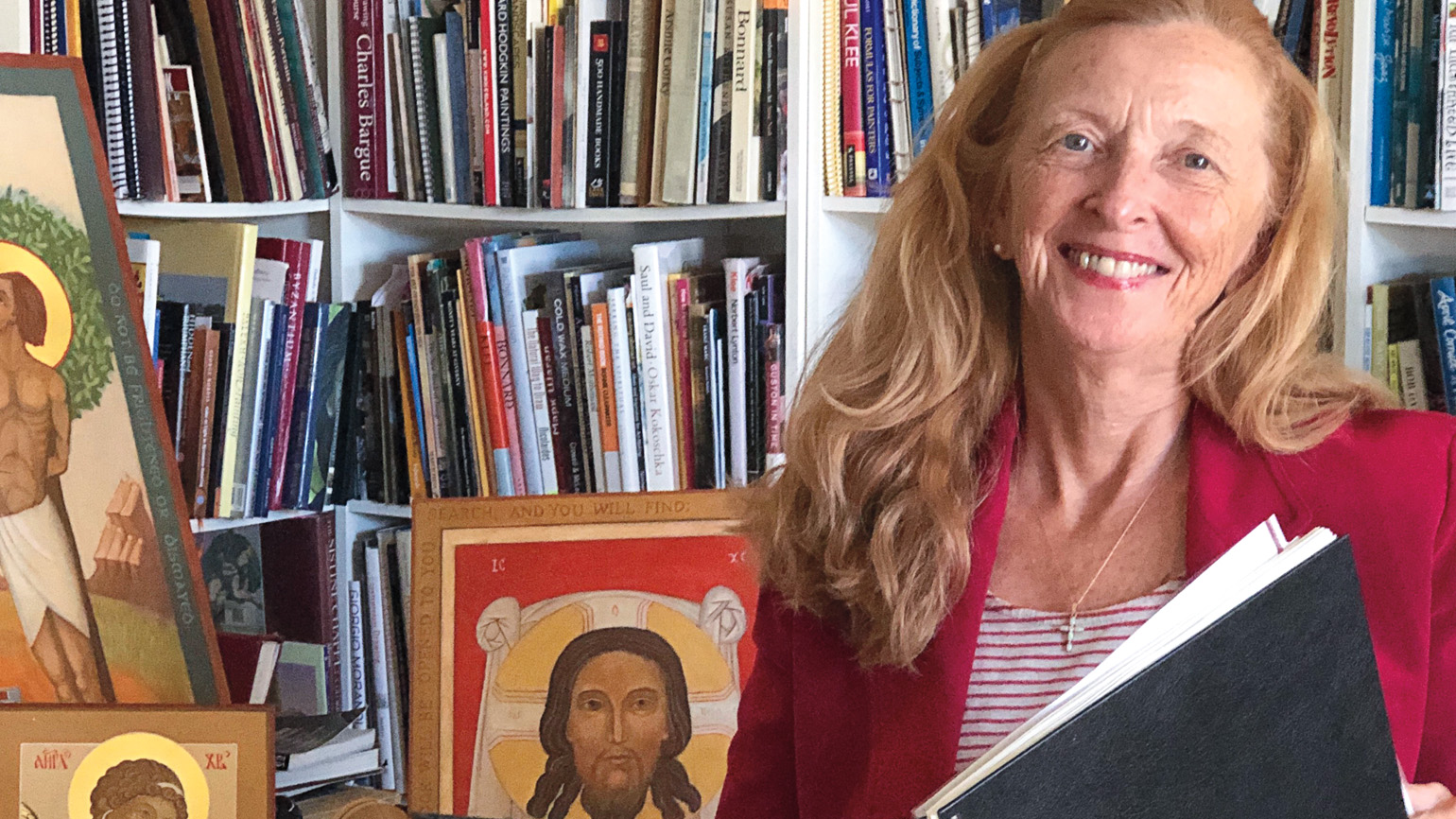
Her studio was a small room in the basement of the convent. Sister Myriam was a tiny, hunched old woman. She beckoned me inside. As I looked around, she pulled out a shoebox. She sat at a wooden table and motioned for me to sit next to her, and I did.

Inside the box were hand-painted postcards, each featuring a different icon. They were absolutely stunning, vibrantly colored and filled with intricate details despite their diminutive size. She took them out one by one, gently passing them to me and describing the painting and her artistic process. She didn’t speak English, and I didn’t speak much French. Yet incredibly, somehow, we were able to communicate. She told me that prayer was a key part of the iconography process, that each icon took hours to create and that the artist spent that time communing with God, reflecting on his inspiration. As she spoke, a feeling overcame me. I’m not sure how to describe it, other than that I felt God’s presence in the room, nudging me toward a realization that this was what I’d been searching for. These icons were everything I’d been reaching for as an artist up to this point. They required the utmost technique, skill, symbolism, meaning. It was a way to capture the spiritual—the ephemeral—in an image. It was faith made tangible.

I spent almost four hours in that studio. I emerged a different person. My husband even noticed it when I returned to our hotel room.

“What happened?” Mick asked.

“What do you mean?”

“I don’t know—you look different.”

I felt different.

When the trip was over and we returned to the States, I immediately met with my graduate advisor to change my focus of study. I was going to be an iconographer.

Over the past three decades, I’ve studied the Russian style of icon painting, along with the Greek, English, Italian and Coptic styles. I’ve learned from them all and used the lessons they’ve taught me to inform my own style. My work has been commissioned by churches and individuals and displayed across the world. I feel a deep sense of satisfaction, knowing that my icons help keep this sacred art form alive for others to experience.

For me, being an iconographer is all about using the knowledge of the past masters to bring that spirit—that faith—into the modern era. Hopefully, my art will inspire others to reconnect with God, the ultimate source of creativity, and affirm their true purpose. Just like my timely encounter with Sister Myriam and her icons did for me.

How an Adopted Cat Saved His New Owner’s Life

Amy Jung of Sturgeon Bay, Wisconsin, didn’t plan on adopting a cat. She only went to the Door County Humane Society on February 8 with her son, Ethan, to play with the animals.

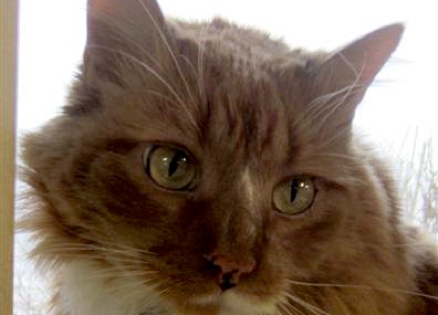
But one feline caught her eye. A hefty orange-and-white furball, lying on a counter. Amy asked an employee about the cat. Pudding was 8 1/2 years old and had two previous owners, a family who gave him up because their son was allergic and an older woman who had passed away.

Pudding instantly bonded with Amy and Ethan. Amy couldn’t explain it. She just felt a strong connection. That day, Amy decided Pudding had to come home with them.

Pudding didn’t act skittish at all when he entered his new home. It was like he belonged there.

Amy went to bed that evening around 9:30. A little more than an hour later, she awoke with a start.

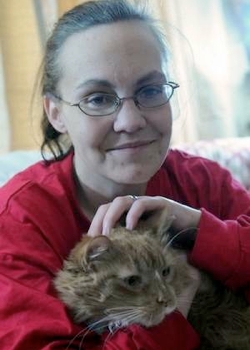
She felt pressure on her chest. Pudding was on top of her. He was swatting at Amy’s face, nipping at her nose. Amy tried to move but couldn’t. She realized that her arms and legs were shaking uncontrollably. A diabetic since the age of four, Amy instantly knew what was happening. She was in the middle of a diabetic seizure.

Pudding was helping her come out of it.

Amy called for help and Pudding leapt off her chest, running out of the bedroom. He ran to Ethan’s room and jumped on the boy’s bed. Ethan woke up and heard his mother’s call for help.

If there had been any type of delay in getting Amy the glucose shot she needed, she could have gone into a coma. Amy’s doctor said Pudding’s quick actions saved Amy’s life.

At her doctor’s suggestion, Amy had Pudding registered as a therapy animal. An official title to go with the one most people are applying to Pudding: Hero.

We know that animals have the incredible ability to detect when something is wrong. Is it something biological? Just instinct? Perhaps. But why did Amy feel so drawn to Pudding at the shelter? Why did she bring her home that day? That’s something to wonder about.

Keep sending your Mysterious Ways stories to mw@guideposts.org. We always love to hear them, and we’ll publish the best on our website and in our Guideposts publications.

How a Mysterious Hospital Visitor Led Her to Believe in Near-Death Experiences

Laurin Bellg has practiced medicine for more than 20 years, specializing in critical care. While working in intensive care units, she has encountered several patients who’ve had near-death experiences (NDEs). Her book, Near Death in the ICU, focuses on the importance of doctors listening to their patients’ mysterious experiences. Her interest in the value of these stories started with two inexplicable experiences: that of one of her first patients—and her own.

The little girl looked familiar. She sat in the corner of my hospital room, staring out the window. She wasn’t looking at me or saying anything. She seemed serene. I found her presence uplifting after a harrowing week of being severely ill. But who was she? And what was she doing here in my hospital room?

I’d been admitted to the hospital a few days before, diagnosed with septic shock from a urinary tract infection. I was in my mid-twenties and too focused on my job in viral research to pay attention to my symptoms. It didn’t occur to me that I had an infection that moved to my kidneys until I became sick. Really sick. My husband, J.C., came home from work to find me barely conscious, with a fever of 105°. I don’t even remember going to the hospital.

The doctors immediately started me on antibiotics and monitored my condition closely. Those first few days, I was improving but still pretty out of it, drifting in and out. One afternoon, I was awake and lying on my side, facing the window. I was hooked up to an IV, the medicine slowly infusing into my veins, the heart monitor making steady beeps. J.C. sat nearby. That’s when I noticed the little girl.

She was about 10 years old. Her short red hair was parted on the side and pulled back with a plastic barrette. She wore a simple cotton dress, cardigan and white ankle socks with Mary Jane shoes. It was similar to outfits I’d worn as a child, growing up in the 1960s.

“Who is that?” I asked my husband.

“Who?” he asked, looking up from his magazine.

“The girl in the corner.”

J.C. glanced over, then looked concerned. “There’s no one there.”

Was I hallucinating? I could see her; he couldn’t. It didn’t make sense. I’m a fairly logical person. It’s what prompted me to go into research, what made me want to be a doctor. I’d just been accepted into medical school at the University of Tennessee. I’d been waiting for the first semester to start when I got sick.

When the doctors heard I was seeing things that weren’t there, they performed various tests and mental health assessments on me. They double-checked my medication to make sure none of it caused hallucinations as a side effect. Nothing appeared to be wrong.

“We’re not sure what could be causing her to see this,” I heard them tell J.C.

The little girl appeared a few more times during my stay at the hospital. Sometimes she’d be sitting at the window. Sometimes she was standing nearby, looking at me, a subtle smile on her face. Even though I didn’t understand what I was seeing, even though it should’ve terrified me, it didn’t. I let go of the need for a logical explanation.

The little girl’s presence actually became a source of comfort. Because I was the only one who could see her, I felt as if she were there just for me. As if she’d been sent to keep me calm and to reassure me in the midst of this scary illness. It got to the point that I would look for her. But why a little girl? And who or what had sent her? Whatever the answers, her presence there just made sense somehow.

Judging by everyone else’s reactions, though, I decided to keep her recurring visits to myself. When the doctors asked how I was doing, I didn’t mention her. Still, it felt as if an important part of my healing process was being ignored.

After about a week, I was released from the hospital. J.C. and I stopped at a diner on the way home. While enjoying my first nonhospital meal in a while, I suddenly saw the girl. She sat curled up alone in the booth across from us, with that same soft smile on her face. I felt a familiar calmness wash over me and couldn’t stop staring at her.

“Everything okay?” J.C. asked.

“Yeah,” I said, returning to my meal. We left the diner for home, and I never saw the girl again.

Memories of my hospital stay and the little girl faded. For the next four years, medical school consumed me. It was grueling and intense. Countless hours of study. Sleepless nights with lots of coffee. A packed class schedule, rigorous exams and shifts in busy hospital wards.

Before I knew it, I’d graduated and was walking into my first day of residency training in internal medicine. It would be my first time taking care of patients outside medical school. Though I was still working under supervision, as a resident I’d be taking on a new level of responsibility. When patients were ill and afraid, when they needed attentive care and their families needed reassurance, I’d be one of the first people they’d see. The encounters were going to be emotional and sometimes messy. But I was excited to help heal people.

One of my first patients was a friendly elderly man named Samuel, who came in with a serious abdominal condition. He needed surgery. As a resident, it was my job to prep him and get his consent. I explained the specifics of the procedure.  Samuel, usually lively and talkative, grew suddenly quiet.

“Sorry, doc,” he said. “Can’t do it.”

Maybe I wasn’t being clear enough. I explained again that the surgery was necessary to save his life. Samuel shook his head.

“If you don’t have this surgery, Samuel,” I said, “it’s likely that you’re going to die.”

He took a deep breath. “I’ll never have surgery again,” he said.

“Why not?” I asked.

“Because the last time I had surgery, I could see the whole thing. I saw them cut into me. I saw it all from up above my body, looking down. I won’t do it again.”

I’d never even heard of anything like that. I’d seen on his chart that he’d had abdominal surgery years before. From what I’d read in the report, everything had gone fine. Had his anesthesia somehow worn off?

“Were you in pain?” I asked.

“No,” he said. “I was floating above my body. I couldn’t tell them to stop. I won’t do it again. I can’t.”

Tears rolled down his cheeks. I sat down with him and patted his arm, comforting him until he calmed down. I didn’t know what to say. I didn’t know how to help him. I felt useless. Why hadn’t my years of medical training prepared me for something like this?

I jumped at my pager going off.

The surgical team was ready. When I told my supervising resident what Samuel had said, he advised me to write that Samuel had refused surgery. “I wouldn’t mention the other stuff,” he said. That’s when I learned it wasn’t safe to talk about such things in medicine.

Samuel remained resolute in his decision not to get the surgery. He died a few days later, his family by his side. Afterward, his wife came to speak to me.

“You know why he refused to have the surgery?” she asked.

“Yes,” I said. “I am so sorry for your loss.”

She nodded. “Have you ever heard of anything like that before? Like what happened to him?”

“No,” I admitted. “But just because I haven’t heard of it doesn’t mean it’s not real.”

“Now that you know, maybe…” she said. “Maybe you can help someone else.”

I pored over Samuel’s medical charts, trying to understand what had happened. But nothing in the file or my medical books gave me any indication of what it could’ve been. I thought back to when Samuel had said no, how scared he had been. He’d had a profound experience, something he couldn’t fully describe. And there was no one to talk to about it. I couldn’t imagine how isolating that felt.

Except, in fact, I could. It all came flooding back. My hospitalization four years before. The little girl with the red hair and Mary Jane shoes. How she’d been there to comfort me as I recovered. And how I’d felt unable to share her repeated visits, isolated from those who could not see her.

Maybe I couldn’t explain what happened to Samuel with my medical knowledge. But if there’s anything I learned from my own experience, it was that maybe I didn’t need to. I’d been steeped in an atmosphere of medical logic for so long that I’d forgotten how to respond when faced with an unexplainable experience.

After all, when I kept seeing that little girl, I had to keep her a secret, afraid of being deemed mentally unstable. And yet she’d been such an important part of my recovery. I wondered if being able to discuss Samuel’s experience with him in a more in-depth way would have changed the outcome for him. I decided that if I wanted my life’s work to be helping people heal, I had to be open to their spiritual process as well.

Over the past 20 years, I’ve listened to many patients’ stories. I’ve seen how acknowledging their experience can be a profound part of helping them heal, not just physically and psychologically but emotionally and spiritually as well. It’s an important part of good patient care. Sometimes my logical self still struggles to make sense of their experiences.

But I don’t have to understand it to acknowledge its importance. I still wonder about my own experience. Who was that little girl in my hospital room all those years ago? I may never know. But I’m forever grateful for her and the lesson she taught me: There’s space for mystery in healing.

Did you enjoy this story? Subscribe to Mysterious Ways magazine.

How a Mysterious Dream Became a Divine Warning

At the end of my first semester of college, my dad and two of my high school friends drove from our hometown in Ashtabula, Ohio, to my school in Richmond, Indiana, to pick me up and drive me back home for winter break.

When I saw Dad’s car pull into the dorm’s parking lot, I felt a flicker of fear. Don’t worry about the dream, I told myself. Dad will be driving for sure. The car was Dad’s pride and joy. It was the first new car he’d ever bought and only three years old. I grabbed my bags and walked down to meet them. My friends jumped out and gave me big bear hugs, joking around and laughing. Dad was the last to greet me with a solid handshake and a tired smile.

“Why don’t you drive?” Dad said. “I woke up early. You’ll be fresher than me.”

I stared back at him dumbly.

“Something wrong?” he said.

“No, I’m fine,” I assured him.

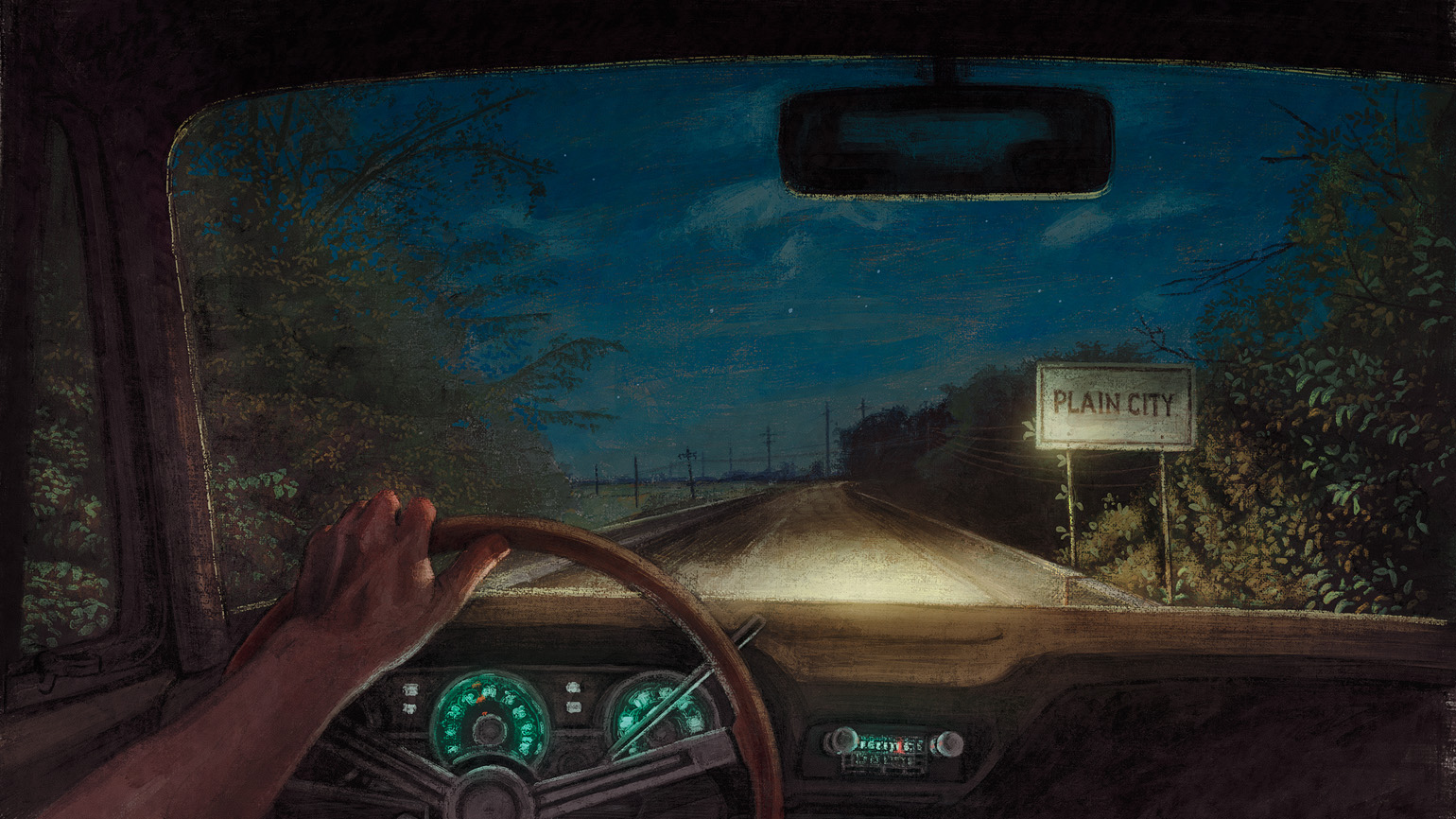
But my hand trembled as he handed me the keys, the dream from the night before still fresh in my mind. I’d been driving this very car. Dad was in the passenger seat, and my two friends had been in the back. It was early evening, and I was on a two-lane road, not the interstate that I typically took home. Rising out of the darkness was a white sign with black lettering that read, “Plain City.” The road curved right onto a large steel bridge, and two cars passed by in the oncoming lane, preceding an approaching tractor-trailer truck.

I steered the car into the turn, but with a sickly thud, the right front and back tires slipped off the road and onto a steep gravel berm. I panicked, turning the steering wheel hard to the left, jerking the car out of the berm and into oncoming traffic. The tractor-trailer was now veering toward me. I felt fear and impending doom. I waited for impact—

I woke with my heart pounding. It had felt so real. Was Plain City a real place? If it was, I’d never heard of it. I calmed down a bit, relieved that it had all been a dream.

“Ready?” Dad said, bringing me back to the present. I nodded, started the car, and pulled out of the parking lot to begin the five-hour drive. I was determined to drive cautiously and responsibly behind the wheel of Dad’s prized vehicle.

We crossed the Ohio state line. We’d been on Interstate 70 for about an hour when Dad said, “Take this exit on the highway. That way, we’ll bypass Columbus and rush hour traffic.”

“Okay,” I said. It was getting dark. I switched on the headlights and exited onto Route 42, a two-lane road. My friends and I shared old stories from our high school football days, and I was feeling more relaxed than I’d been at the beginning of the trip. I drove for about another 20 minutes, miles from any city. The sky was pitch dark. Ahead, I saw that we were approaching a small town. My headlights illuminated a road sign. It was white with black letters: Plain City.

My stomach dropped as the road curved to the right over a steel bridge. Two cars rounded the bend, and I began to turn, then—thud! The right wheels of Dad’s car veered off the road and onto a steep berm, spinning in the gravel.

As if by muscle memory, I didn’t try to correct the car. I knew what to do. I kept the wheel straight, driving partly onto the berm. A tractor-trailer rounded the bend and whizzed past.

After it went by, I methodically steered the car back onto the road and continued over the bridge.

“Wow, it’s good you didn’t overcorrect,” Dad said. “You might’ve hit that truck.”

Finally, it all made sense. That dream. It wasn’t just some sleep-addled craziness. It was a warning, meant just for me.

How a Mysterious Cardinal Became a Divine Reminder

Tap. Tap. Tap.

What is that? I turned to face the glass door in my bedroom.

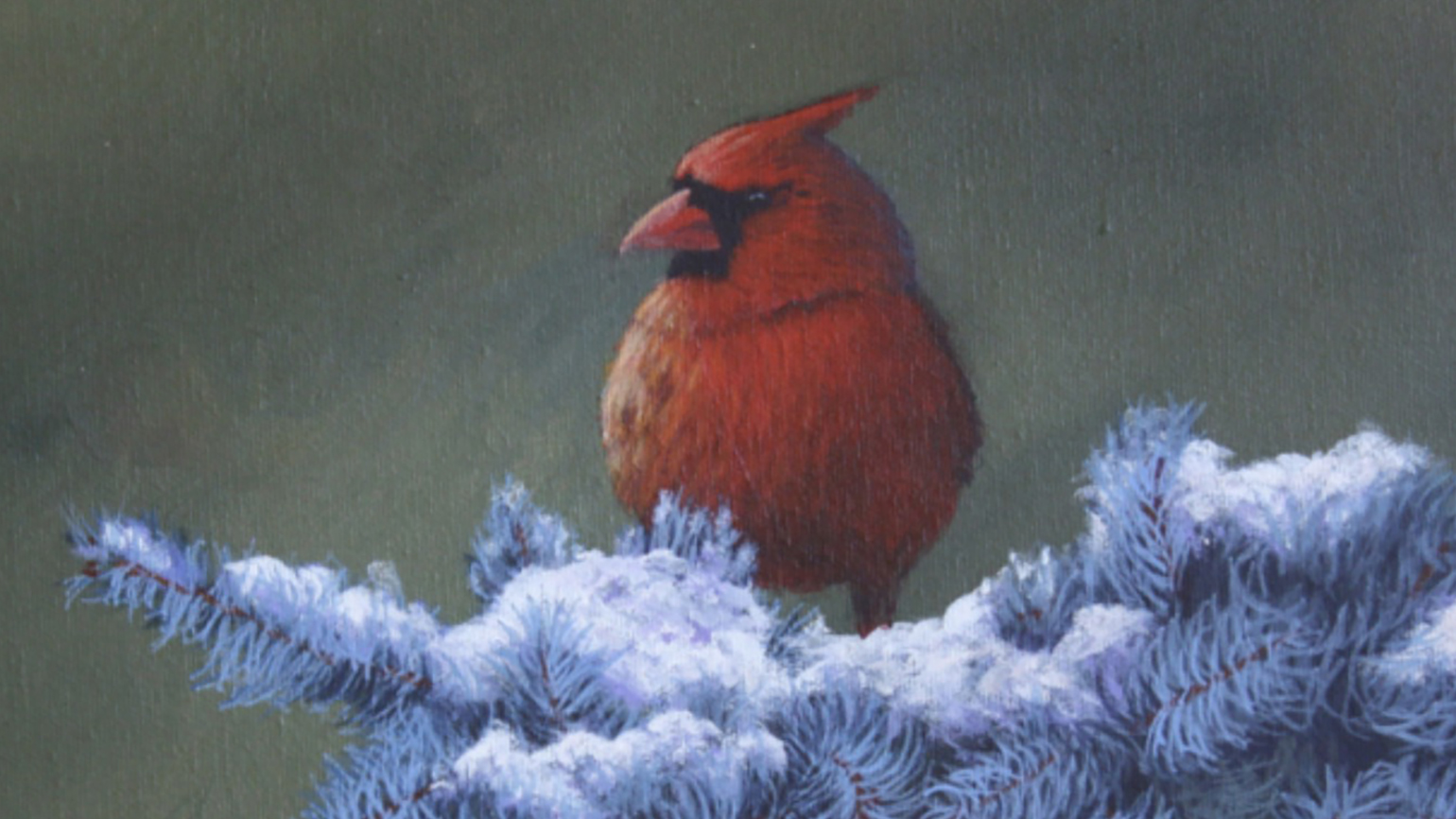
A cardinal, perched on the planter outside, flew up to the glass, bumping its body against it as if trying to get my attention. I’d seen cardinals in the yard before. They were my favorite birds. But in the 25 years I’d lived here, I’d never seen one this close to the house.

My morning visitor was a welcome distraction. For the first time in months, I woke up feeling something besides grief. Exactly two months before, I’d lost Dave, my husband of 40 years, to cancer. We’d married young, and he’d always been my rock. My children and grandchildren supported me the best way they could, but I didn’t know how to face life without Dave by my side.

The little cardinal in the window gave me the first sense of peace I’d had since Dave’s death. It gave me the strength to run some errands. Dave would’ve known how much joy that bird would bring me, I thought as I paid for my groceries at the store.

Dave knew cardinals were my favorite bird. He always used to point them out to me in the yard. An artist, he had even painted some beautiful cardinal portraits for me. I was almost tempted to believe Dave had something to do with it. But it was probably just wishful thinking.

I got home and put away my groceries. When I walked into the bedroom, I heard it again. Tap. Tap. Tap.

The cardinal was back! He cocked his head, his black eyes peering into mine. Could there be something more going on?

For the rest of the week, he woke me up in the mornings from his spot on the planter and appeared again at dusk, as if to say good night. He popped up in various other places throughout the day, usually just when I needed some encouragement.

When thunder shook my house, the cardinal sat out in the rain to comfort me through the whole storm.

One Sunday, when I came back from church, I dreaded walking in the front door. The house always felt so lonely at the end of the weekend, the time Dave and I used to set aside to spend together. But my spirits soared when I noticed the bright red bird waiting for me.

Of course, I told my family all about my new friend. My grandchildren especially wanted to see him for themselves. “I can’t say for sure when he’ll come,” I warned them when they came for a visit. “Don’t be disappointed if he doesn’t happen to be around while you’re here.”

I shouldn’t have worried. The cardinal stayed close by the grandkids throughout the day, as if he wanted to visit.

This was just the beginning. For the next three years, the cardinal continued to make regular appearances. He seemed to know just when my grief would hit me, and would show up when I most needed to be uplifted.

One summer evening, I was taking a walk around my property. I was heading up my gravel driveway when I spotted the cardinal on a power line. He didn’t usually accompany me on my evening walks, but by now, I knew he might appear anywhere, anytime. I wonder why he’s come to me here now, I thought.

The cardinal flew a few feet before landing back on the line. Again and again he flew a few feet and stopped, as if trying to keep just ahead of me. Suddenly, he dove off the power line, swooping down and landing on the dark gravel. He was about 15 feet in front of me and—I gasped when I saw it—one foot away from a snake. I would have walked right into it if the cardinal hadn’t warned me.

I froze in place. So did the cardinal. It didn’t move until the snake had finished crossing my gravel driveway. The cardinal looked back at me, making sure that I was safe, and then, mission completed, flew off into the trees. If there was any doubt about the purpose of the cardinal’s visits to me, they disappeared that warm summer evening.

I smiled, watching him disappear among the leaves. The message was clear. God understood my pain and wanted me to feel his presence in a real and tangible way. Although Dave could no longer be by my side, God always would be.

How a Mislabeled Can of Corn Saved the Day

In just over two hours, I was expecting 100 people at my house for my father-in-law Larry’s seventieth birthday. I was right on schedule, putting the finishing touches on my corn casserole, when I froze. Where was the can of corn? I ran to my pantry, thinking I might have left it there. No luck.

Did I buy frozen corn instead? I rushed to my freezer and rummaged through bags of icy vegetables. Nothing.

Larry’s health wasn’t great, and I really wanted to make this party special for him. I’d planned meticulously, making a list of ingredients I’d need to whip up big batches of Larry’s favorite foods—such as this corn casserole. The original recipe called for peas, but my kids hate them, so I always substituted corn. The finished product is cheesy noodles with chicken and corn, melted to perfection in the oven. I’d made it for dinner dozens of times, and since my in-laws live across the street, they often enjoyed it with us. As I stood there, staring into my corn-less freezer, I could hear Larry’s compliments about the dish. “This is delicious, and the corn really sets it off,” he would say every time. “It gives it just the right texture. It wouldn’t be the same without it!”

I glanced at the clock. No time to run to the store. I considered asking my husband, Eric, to go, but he was setting up all the folding tables and chairs. I scanned my shopping list. I hadn’t even written it down. How could I have forgotten?

I’ll just have to make it without the corn, I thought.

I hated admitting that the party would no longer be absolutely perfect, but I needed to get these casseroles in the oven and move on to the next dish.

As I mixed the cheese and the chicken into the cooked noodles, my five-year-old, Nathan, wandered into the kitchen. “What are you making?” he asked.

“My corn casserole, except I can’t find the corn,” I said. “Would you be a good boy and help me look for a can of it in the pantry?”

To be honest, asking him was more just to keep him occupied and out of the way than anything else. Nathan dragged a step stool in front of the pantry, stood on it and started digging around.

“I don’t see any corn, Mommy. But what’s this?” he asked, holding up a can of fruit cocktail I’d gotten as a gift for helping with my church’s Vacation Bible School. The theme the previous summer had been “the fruit of the spirit,” from Galatians 5, and the can’s label was covered by a decorative paper sleeve listing them: love, joy, goodness, kindness, peace, patience, gentleness, faithfulness and self-control.

“It’s a can of fruit from church,” I said. “Remember VBS last year? When we learned about fruit of the spirit? The folks at VBS gave us real fruit to remind us of that.”

“Can I eat it?”

“No, you’ll spoil your dinner.”

“Pleeeeeaaasse?”

“Fine, I don’t care,” I said, balancing a casserole as I inched toward the oven.

Nathan jumped off the step stool and ran to get the can opener. Moments later, I heard him gasp. “Mom, come here!”

“Nate, I’m really busy.”

“It’s corn.”

What? Nathan showed me the can’s contents. No fruit cocktail. Corn! Apparently, I was the lucky beneficiary of a mistake made by the person in charge of wrapping the VBS cans. She must have accidentally grabbed a can of corn along with all the fruit. Relieved, I poured the corn into the second casserole, then set aside the empty can to show Eric later. I would make sure Larry’s serving came from the second pan at the birthday party. No one else would notice the difference.

The temporarily missing corn was the only mishap of the day. The party went well, and Larry had a wonderful time. More than once, he mentioned how delicious the corn casserole was.

After the guests had all left, I was cleaning up the kitchen and remembered the mystery can. I picked it up from where I’d stashed it and pulled back the decorative sleeve, revealing the manufacturer’s label underneath. I stopped short. Clearly, it was far more than luck that had brought me what I needed that night. In bold red letters, the can was labeled Fruit Cocktail.

How a Heartbreaking Story Inspired Hope

On the surface, it was a simple, miraculous story that arrived in my mailbox this time last year. A little boy had fallen from a second floor window onto the concrete driveway below; his parents prayed by his hospital bed, told by doctors to prepare for the worst. Then the boy rose, mysteriously unbroken, despite x-rays taken moments earlier which had indicated otherwise. It was a miracle that happened decades ago, but one that Wes, the boy’s father, would never forget. Which is why he sent it to Mysterious Ways.

There’s a lot of behind-the-scenes work that goes into preparing every story for publication. The first thing we do is call up the authors and get the information they may have left out—those little details that provide context and help the reader better understand what the author experienced. I called Wes, and after we spoke for a while, I asked if I could speak with his son, Paul. The other editors and I wanted to include his perspective on what had happened to him when he was just a boy, hoping it could add a different point-of-view to the narrative.

That wasn’t possible, Wes said. I could hear the pain in his voice; he was reluctant to go on. Finally, he revealed what was missing from the story he sent us. He hadn’t spoken to Paul in years. His son struggled with alcoholism and had been in and out of Alcoholics Anonymous. Wes now helped raise Paul’s young daughter. He wasn’t even sure where his son was.

Read More: A Father’s Prayer for His Alcoholic Son

Yet, with all of his son’s struggles, Wes still held out hope that Paul could find healing. He’d seen it once before, against all odds, in that hospital room.

That became the story we told in Mysterious Ways. And it was the story that so deeply moved one of our readers, 77-year-old Sara Thomas of Alpharetta, Georgia.

Sara lives in an assisted living facility. To pass the time, she’s an avid scrapbooker and cross-stitcher—and a reader of Mysterious Ways. Sara had been “drowning in negativity” when she picked up the June/July 2016 issue. Then she read Wes’s story. His experience and outlook resonated with her.

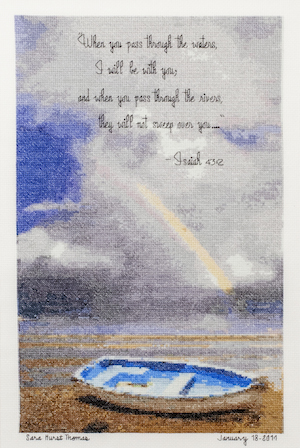
Turning the page, she saw the image we’d chosen for our “Comfort & Reassurance” section, a boat on a beach beneath a stormy sky, with a rainbow in the background. Inspiration struck—she was determined to do a cross-stitch that combined Wes’s favorite Bible verse, Isaiah 43:2, and the photo. She called to ask permission. “The storm clouds reminded me that into each life some rain must fall,” Sara said. The grains of sand made her think of the sands of time. “Like the patch of bright blue, better days are right behind the bad ones.”

Four and half months—and 63,000 stitches later—Sara sent us her masterpiece, which we forwarded to Wes.

“I read the letter from Sara and decided to give her a call and we spoke for awhile on the phone,” Wes wrote to us. “Isn’t it amazing how God works? He inspires a lady in Georgia, after reading my story, to create a cross-stitch just for me.” He hopes his story continues to touch others, including his son.

“Perhaps someone who subscribes to Mysterious Ways may read the story, show it to Paul—and who knows from that point, what God would choose to do in his life, once again.”

It’s not the first time our spirits have been lifted by the way our readers have responded to a story in our pages. We love to hear from you.

How a Dream Reunited Two Cousins After Decades Apart

Is that you, Lynn? I blinked awake. I was lying in bed in my Texas home. Another dream. For months, I’d been plagued by vivid dreams—wood splitting, things coming apart, visions of my parents and now my cousin Lynn. She’d appeared to me in a flash, like a cameo in a TV sitcom. A beautiful teenager, how she looked when I last saw her. She smiled at me. Then I woke up.

Things had been hard since my husband left, and I knew some dreams were God’s way of helping me heal. But the dream about Lynn was puzzling. I hadn’t seen her in decades, and we’d never been particularly close. Her parents divorced when we were both in grade school. She’d moved from Ohio, where I lived, to California with her mother. As teens, we saw each other only at family gatherings.

Our lives had gone in different directions. I went off to college. Lynn got married a week after graduating high school. She was a mother of two before I even walked down the aisle. For years, everything I knew about my cousin had come from my mother and grandmother.

One morning, in my late twenties, I was watching my daughters play when the phone rang. It was Mom.

“It’s Lynn,” she said. “She’s been in a car accident. She’s in the hospital. They think she’ll live, but she’ll probably never walk again.”

My breath caught in my throat. I was living in Ohio with my husband and children. Our lives were peaceful. How awful that Lynn’s life had been upended in an instant!

That was the last major update I got about Lynn. Life got busy. I raised my children, got a job teaching, earned a master’s degree, wrote a book. Decades flew by. Our family relocated, eventually landing in Texas. Our daughters grew up, moved out and started families of their own. I was blessed with six grandchildren. I was ready to enjoy my golden years with my husband.

Then came a shock. My husband filed for divorce. Worse, after we’d signed the papers, I learned he’d been seeing somebody else.

I started having those vivid dreams as soon as he left. Though I couldn’t understand why, I felt like this vision of Lynn was calling me to reconnect with her. But where to start? I wasn’t sure what last name she was using now or where she lived. My parents and grandmother—my only connections to Lynn and her family—had long since passed.

Later that week, while rearranging some books in the den, I stumbled across an old school directory. I didn’t realize I still had this.

Lynn’s brother had gone to the same high school I did. When their parents got divorced and Lynn moved to California with their mom, he lived in Ohio with their dad. Was it possible he still lived at the address listed? I wrote him a letter. He called back with Lynn’s e-mail.

Dear Lynn, I typed. It’s been years, but I hope you’re doing well. I’ve been thinking a lot about you lately.

Lynn e-mailed me back. Hi Kathy, it’s great to hear from you. Mom and I are up in Michigan.…

It turned out that Lynn’s husband had divorced her after the accident, taking the children with him. She had lost the use of her legs and had minimal control over her arms. But she was so positive in the face of such hardship. She asked what I’d been up to, and I told her about my recent divorce.

Lynn and I e-mailed back and forth, filling each other in on the details of our lives. Eventually we talked on the phone.

“I work from home for an office that handles disability claims,” she said. “And thanks to the internet, I have friends from around the world.”

“Wow, that’s amazing, Lynn!”

My cousin was way ahead of me in the healing department. Her life hadn’t ended after her accident and divorce. She’d gone on to earn a master’s degree, regain custody of her children and make new friends. Was it possible that I too had something to look forward to?

I flew to Michigan to visit Lynn and her mother. Lynn and my aunt were full of stories about my parents when they were young. It was wonderful being around people who’d known me before I’d met my ex-husband and started my adult life. I felt so much less alone in the world.

I’m so happy I paid attention to that dream. Lynn and I remained good friends until her death a few years later. She was a remarkable woman. If I ever find myself discouraged, I picture Lynn and her grace and strength. And that vision gives me hope.

Did you enjoy this story? Subscribe to Mysterious Ways magazine.

How a Divine Voice Offered Guidance and Strength

“Mom, can we go down to the beach now?”

My 13-year-old son, Jesse, was holding his beach supplies. His 10-year-old twin sisters, Elizabeth and Emily, stood next to him, their eyes expectant. We were staying at a beach house that we vacationed at every summer. I didn’t feel up to going down to the beach. The weather was nice, and the kids weren’t going to go in the water. Jesse was old enough to chaperone. I decided I’d stay behind and sit by the window overlooking the shore to watch them.

“Stick together and be safe,” I told them. Smiling, they ran for the door.

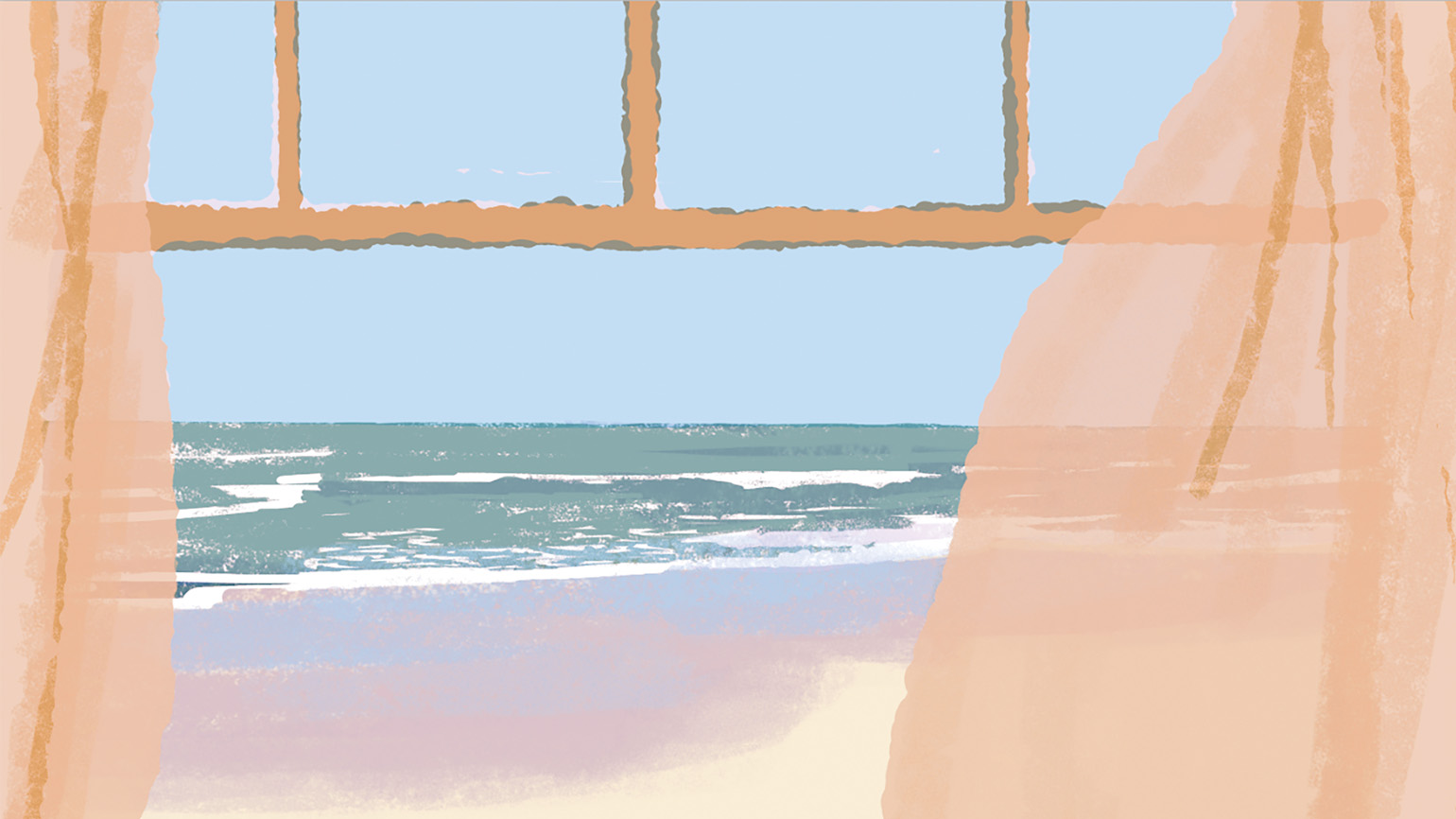
With everyone gone, the house was quiet. I took a seat by the open window and watched the waves rolling up onto the beach and my children walking along the shore.

I tried to find some peace in the moment, to forget my troubles, but it was difficult. I was a single parent, recently divorced. I was overwhelmed with work, the kids, bills and errands. I felt like I was stretched thin, constantly playing catch-up and not living up to my full potential as a mom.

A light breeze made the curtains billow inward softly. The kids sat in the sand, soaking up the warm rays. God, am I strong enough to handle all of this? I wondered.

The sun washed over my face. I closed my eyes for what felt like a split second. Then I heard something. A voice, clear and loud.

“Where are your children?”

I sat right up in my chair, my heart pounding. The voice was audible, but it wasn’t male or female. Its tone was urgent, demanding.

“Where are your children?” the voice repeated.

I jumped up and looked out the window. I couldn’t see them, but that didn’t mean they were in any danger. They were probably just playing out of view behind the rocks. Still, I felt as if I had to go to the beach immediately.

I ran out of the house, down to the sand and over to the rocks, which were at the base of a cliff. I searched the area all over. No sign of them, not even their beach supplies.

Perhaps we’d just missed each other. It was possible they’d taken a different route back to the beach house, down a footpath between the houses that was out of view of the window where I’d been sitting. I turned to head back home when something caught my eye. A little boy, no more than eight years old, came out from behind the rocks, his face filled with fear.

“Please, can you help my friend?” he shouted.

The voice had told me I needed to find my kids, but how could I ignore this distressed little boy in front of me? I told him to lead the way. He took me back into the rocky area, closer to the cliff , and pointed up. I gasped in horror. Another little boy was clinging to the cliff face, at least 20 feet off the ground. He was stuck.

“Don’t move!” I called to him. I climbed up some of the rocks at the base of the cliff and got a little closer to him. His little arms were shaking under the strain of holding himself up. I positioned myself under him and held my arms out.

“Let go,” I shouted. “I’ll catch you.” The boy shook his head, his eyes closed. He was terrified. I wasn’t even certain I could do this. Would I be able to catch him and keep my footing without injuring us both? I didn’t have any other choice.

The boy’s foot slipped. His grasp on the cliff broke. He was falling. I braced for impact. Somehow my footing remained stable as he fell right into my arms. He was safe and completely unharmed, and so was I.

I dropped the two boys off at their beach house. I watched as they both ran inside, hopefully with a lesson learned about climbing in dangerous areas. With those kids safe, my mind immediately returned to my own—and the strange voice that had called out to me to find them. I was confused about what it all meant. Had it actually been real? Were my children okay? I hurried home to see if they’d returned.

I burst in the front door of the beach house and was welcomed by the familiar sound of my kids laughing in the living room. They all jumped up to greet me.

“There you are!” Jesse teased like a worried parent. “We took the foot-path back home, and you were gone. Where in the world have you been?”

I laughed and pulled him into a hug. My children had been safe all along, but that voice knew exactly where I needed to be and how to get me there fast. God reminded me that I was a good mom by trusting me to save a child in danger and, in doing so, showed me that I was stronger than I’d thought.

How a Divine Calling Brings Life Purpose

Have you ever felt called to a purpose? I remember the exact moment I knew I was meant to be a writer. I was in my fifth-grade computer lab. A friend and I had finished our assignment early. “Let’s write a story,” my friend said. It was as if a light had switched on. Not over my head. In my heart. I just knew this was what I was meant to do with my life. For years, I sensed there was something special about this moment. It was an inflection point. Recently I wondered—could what I experienced have been the tug of a divine calling?

Examples abound in the Bible. Time and again, God calls upon people to take action. As when God called on Jonah to travel to Nineveh.

Or how David was destined to become king. Or Esther being called to save the Jewish people. We can even find divine challenges in our history books. Florence Nightingale felt called by God to become a nurse. Sojourner Truth claimed a holy vision inspired her fight for abolition and women’s rights. These callings are more than messages from God. They are profound moments in which God shows us what we were put on this earth to do.

But are divine callings reserved for people destined for greatness—biblical figures, historical movers and shakers, visionaries and prophets—or are they something that normal people, people like me, can experience? Experts on the topic insist that divine callings are accessible to all of us. Gregg Levoy, author of Callings: Finding and Following an Authentic Life, says the first thing we need to understand is the difference between a calling and a job. “We often mix up these ideas,” he says. Though our job can be our calling—and is for many people—a calling can also be different. In his book, Levoy shares the story of a man who runs a coffee company but whose calling is abstract painting. The man continues his job and follows his calling simultaneously. For most of us, a career is a vital part of our life, but figuring out our divine calling is often different. “The big question we should be asking ourselves isn’t ‘What should I do?’” Levoy says. “We should be asking, ‘Who am I?’”

A divine calling can be experienced in many ways. It can come in the form of a sign, a dream, a vision, a message, a feeling or a combination of these things. The biggest indicator that you’ve experienced a divine calling is that it makes itself known. It is insistent, the way only God can be insistent, and will keep coming up if we ignore it. This is something that Levoy discovered in hundreds of interviews with people who had found their callings. “Callings will get our attention through different channels,” Levoy says. “They’ll pop up in our day-to-day, in a book we’re reading, in our conversations, even in our dreams. True callings won’t be ignored.” More than anything, though, Levoy’s interview subjects reported a feeling of certainty, of knowing. Their calling was something that felt right to them on a deep and intrinsic level.

Just as I felt that day in the computer lab. I couldn’t explain it. It was like an otherworldly awareness. This was also the case for Stephanie Wellington, a physician I spoke to, who works in the neonatal intensive care unit at North Central Bronx Hospital in New York, caring for premature and severely ill newborns. “It can be a hard place to work,” Dr. Wellington says, “but I simply couldn’t imagine being anything else. I just remembered a knowing.” In other words, her calling was a fact of her life.

However, just because a divine calling feels right doesn’t mean that heeding it comes without struggle. In fact, Levoy says, doubt and even fear are a natural part of the process. “If a call feels safe and easy, it might not be true,” Levoy says. “If it scares you, you might be getting close to something vital.” True callings can be overwhelming, inconvenient and difficult. They pull us out of our comfort zones and demand sacrifices. Levoy says a calling isn’t meant to lead you to your most comfortable and secure life. The process is meant to help you discover the deepest sense of who you are. “In following a calling, you must hold the tension between doubt and faith at the same time,” Levoy says. “Callings ask us to leave the familiar, but faith gives us the courage to do this.”

This balance between doubt and faith is a dynamic Dr. Wellington has experienced. Working in a hospital’s NICU can be draining, even to the point of emotional and spiritual exhaustion. Taking time to pray and meditate helps. “I will spend time to pray, to ask if this is what I’m supposed to be doing,” she says. “And I’m able to tap back into that energy, that higher feeling of doing what I’m supposed to do.”

Spiritually checking in also helped me. Becoming a writer required me to quit a stable job, move to a new state and start my life over. There were many lonely nights I spent in a new city, lying in bed in a tiny apartment, wondering if I was really doing the right thing. In those moments, when things were hard and I wanted nothing more than to call it quits, I’d reflect on that day in fifth grade. That intense feeling of knowing. It still resonated with me. I knew I had to continue.

Faith in God’s plan is especially important when the path to achieving a divine calling is long and indirect. Or when the calling doesn’t seem to make sense in the moment. Take Adam Peacocke, a preacher from Santa Rosa, California. After 15 years of preaching to the same congregation, Adam sensed he was being called away from the pulpit. “I felt what I can only call a burning in my heart,” he says. “And then God gave me a succinct and direct message. ‘Adam, I have a change for you.’” It seemed crazy. How could he better serve God than preaching? The call was so strong, though, he could not ignore it. “I knew God was asking me to take a risk,” Adam says. “And over the years, I’ve tried to learn to discern God’s will.” He resigned and turned his energies toward founding a nonprofit intended to facilitate communication and connection between all the churches in Sonoma County. It was hard work, and many of the pastors involved weren’t sure it could be sustainable; Adam had doubts too. Then the Sonoma County wildfires broke out. Using his resources and contacts, Adam brought together local pastors. Out of this grew a massive project to help those who had been displaced. Because of the work Adam had done before the wildfires, the community was prepared. “The initial journey felt messy, but I understand what God was saying to me now,” he says.

The fullness of God’s plan took a while to unfold for another pastor I spoke with, Pastor Dion Todd of Conway, South Carolina. During his twenties, Dion felt called to a life in ministry. After he completed Bible college and became ordained, however, he couldn’t secure a job in the field. Disappointed, he went into computers. Not exactly a calling. Still, he enjoyed it. Seventeen years in, his computer business went bust. His desire to work in ministry had never gone away; it just hadn’t felt like the right time to pursue it—until that moment, as if God were tapping him on the shoulder. He began the job search and found a posting for a creative arts pastor right in his town. They needed someone ordained who also had experience with computers. Dion now runs an online ministry through the church that connects with people who are homebound or have disabilities. “There’s no way I could do what we do today without the time I spent working in technology,” Dion says.

Having the courage and the faith to say yes to a divine calling doesn’t just help us—it helps the people around us as well. Dion’s calling brought him to a place where he could spiritually connect people through technology. Adam’s calling helped him aid his community during and after a devastating fire. Dr. Wellington’s calling has led her to care for many patients and their families. And my calling led me here, to tell their stories.

“At the end of the day, all callings really are service calls,” Levoy says. “They will expand your whole frame of reference in the world.” That’s because heeding a divine calling brings us to our life’s purpose and shows us that we are all a part of a bigger plan.

How a Devotional Brought Comfort after a Sudden Death

We’re working on our fourth issue of Mysterious Ways right now, and we’ve been encouraged by the great feedback we’ve received from our readers. It’s an awesome feeling to know our work is making a difference in people’s lives.

Planning an issue is tough. What stories do we choose? We make our best judgments based on our desire to provide variety and give our readers stories that speak to them. It’s that same way with Guideposts, Angels on Earth and our books, like Daily Guideposts and our new “Spirit Lifters” e-books.

An email I read this week from Maryanne Gaffney of Flanders, New Jersey, reminds me that while our Guideposts staff focuses on crafting the perfect issue, the perfect book, the perfect video to inspire our readers, there is always someone looking over our shoulder, gently guiding us—and it’s not just our editor-in-chief. Sometimes, what we publish is truly part of a greater plan:

“Every morning I read aloud to my husband the entry for the day from Daily Guideposts,” Maryanne wrote us. “But on Saturday, August 11, 2012, the morning didn’t progress as usual… My brother Billy, only 54, had a heart attack and there was nothing the paramedics and hospital staff could do. We lost him.

“Billy had been going through some tough years, tough times. We all hoped that things would start looking up for him. Instead, we all gathered at the hospital to say goodbye to our dear brother, father, son, uncle. Why?

“After a very long, emotional day we returned home. I asked my husband to please read the day’s Daily Guideposts entry to me before we headed to bed, if I could even sleep. He opened to the page and his eyes widened. The Bible verse for the day was: ‘This brother of yours was dead and is alive again; he was lost and is found.’ (Luke 15:32)

“I guess the good Lord took Billy into his arms and has bigger plans for him than we can imagine. That brought me such comfort, and I was even able to sleep a bit that night knowing he is safe and sound with no more worries.

“We have to keep loving even though our hearts are broken. We have to keep believing even though we don’t understand why these things happen. Billy, we love you, we miss you… until we meet again.”

Maryanne’s email isn’t the only time we’ve heard about a story that was read at just the right moment. I’m currently editing an article for our February Guideposts by Nancy Seymour, wife of the late Notre Dame college football star Jim Seymour. She also found a source of comfort after her husband’s death—inspired by a story she read in Guideposts.

Has a story in Mysterious Ways—or one of our other publications—seemed to speak directly to you just at the perfect moment? We’d love to hear about it. Share your experience with us.

How a Church Cat Brought Happiness and Comfort

It was noon on a Tuesday, and I was in church for the first time in a decade. A friend of mine was sick with cancer, and I wanted to pray for him. But as a lapsed Catholic, I felt self-conscious and out of place praying in the midst of other parishioners. So I’d waited until off-hours, when the church was bound to be empty. Now I was sitting alone in a pew, the rays of sunlight streaming through the stained glass windows. I bowed my head, closed my eyes and made the sign of the cross.

God, I know it’s been a while, God, but my friend is sick. If you could help him…

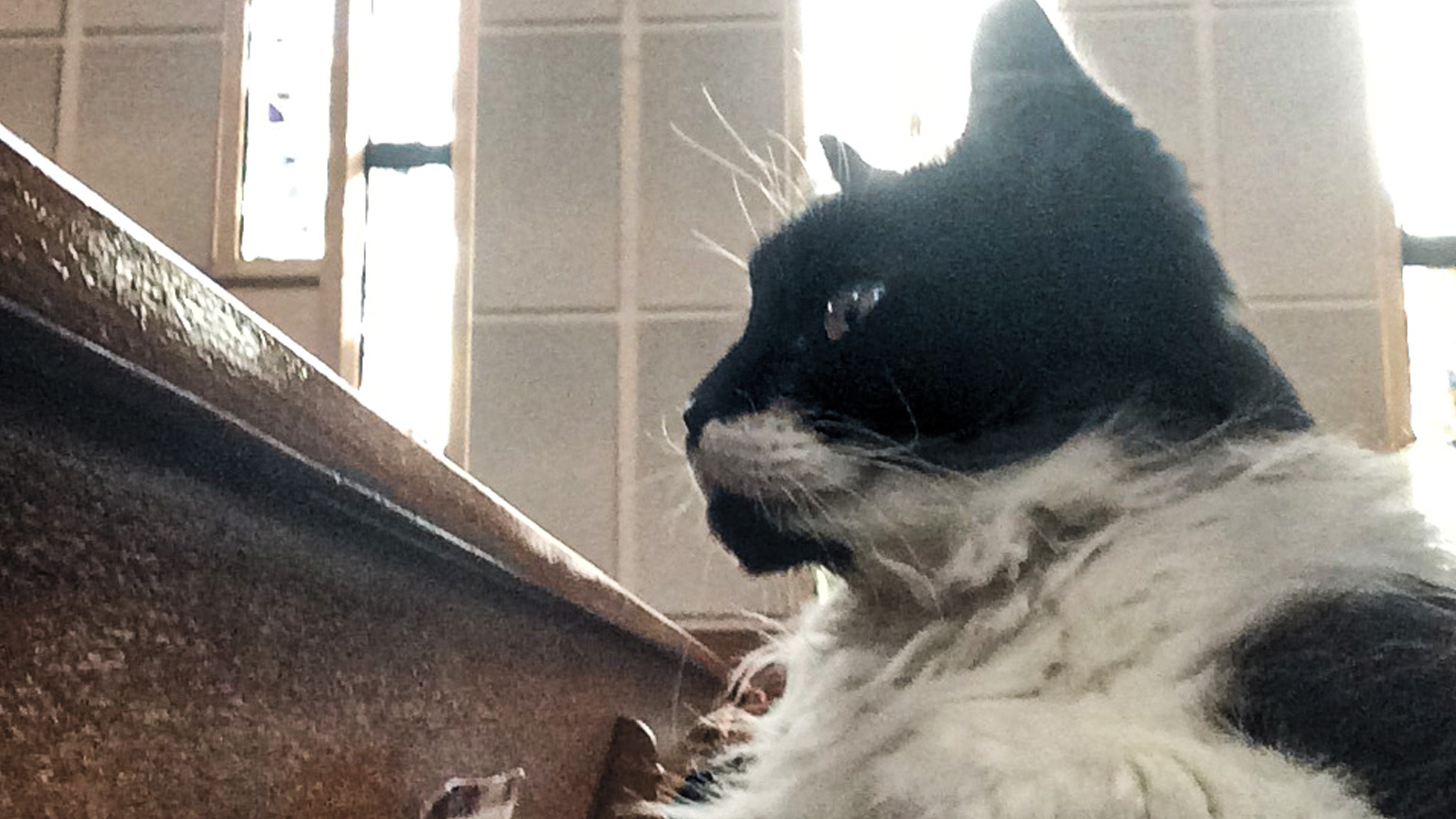
I felt something brush against my ankle. My eyes flew open. I looked down to see a flash of black and white disappear under the pew in front of me. A cat! She popped up several pews ahead of me and sprawled out in the main aisle, a patch of sunlight illuminating her fluffy fur.

Intrigued, I walked up to the cat and reached out my hand. She looked up at me with large green eyes and leaned into my touch, purring. She let me pet her for a few minutes. Then, as suddenly as she’d appeared, she got up and sauntered away, disappearing into the church’s shadows.

On my way out, I stopped by the rectory’s office. “There was a cat,” I said. “I don’t know how she got in…”

“Oh, that’s just Gracie,” said the secretary. “She belongs to the church. Helps keep mice out of the food pantry. She’s been here eight years now.”

I loved animals, but I lived in a cramped studio apartment that didn’t allow pets. So the next morning, I got up early and came back to pray, eager to visit with Gracie again. I sat down, and she hopped up on the pew beside me, purring. She made me feel at ease. As if I belonged here.

Over the next few months, Gracie and I forged a lovely prayer partnership. She would approach and politely wait to be invited into my pew and then onto my lap. She took naps while I prayed. Eventually, my friend’s condition improved and I didn’t need to go to church. But I kept it up.

As I sat and prayed with Gracie on my lap, the church regulars would stop and chat with me. They told me stories about Gracie. How she had been spotted during the holidays, curled up in the manger next to the Baby Jesus. How she sometimes drank holy water out of the baptismal font, as if it were her own giant water dish. Gracie made regular appearances during Mass and sat with various parishioners. She had many admirers.

There was a sweet man named Rob, who always talked about his cats, and an elderly woman I often saw praying by herself with Gracie curled up beside her. Her name was Peg.

One day, I walked into the church as usual and was approached by the custodian. “Just so you know, today is Gracie’s last day here at the church,” he said. “Her new owner’s coming to get her soon.”

There had been complaints from some of the parishioners with allergies, and the church thought it best to rehome Gracie. I was heartbroken…until I saw Peg walk through the door, cat carrier in hand. I was so relieved.

“Please stop by and see her whenever you’d like,” Peg told me, giving me her phone number and address. “I’d love the company too.”

I made a habit of dropping by Peg’s apartment every few weeks for lunch and to catch up with Gracie. I soon learned that Peg didn’t have any other friends or family. I was the only one who visited.

After a while, I could tell that Peg wasn’t doing well. Her apartment became increasingly dirty and cluttered. She grew confused and forgetful. I started checking in on her more often. I bought her groceries and drove her to doctor appointments. As she continued to decline, I called around to care facilities to check on availability. I suggested perhaps she should move into one, but Peg was adamant that she was fine.

I hoped she was right, but I gave her building manager my number just in case. A few months later, I got a call. Peg had fallen and broken her arm. After being assessed in the hospital, she was told by her doctors that she would no longer be able to live on her own. She was going to be appointed a public guardian and placed in an assisted care facility. The landlord would clean out her place, but someone had to adopt Gracie.

Immediately, I thought of Rob. Every time I saw him, he asked after Gracie. He missed her terribly, especially since he was grieving the recent death of one of his own cats. When I told Rob my concerns about Peg, we hatched a plan.

We met at Peg’s apartment. If I’d had any doubts about Peg being moved to a care home, they were quelled as soon as we stepped inside. The place was worse than I’d ever seen it, piled high with trash and debris. There was barely enough room for Gracie.

It took quite a bit of convincing to coax her into her carrier, but soon she was in Rob’s car, on the way to her new home.

The first time I went to visit Peg in the nursing home, I was pleasantly surprised to find that she was not only adjusting well but wearing makeup and making friends. Peg had been suffering from dementia and a mood disorder. Now, with the appropriate medications, she was like a whole new person.

Gracie was also thriving. Rob said she was as loving as ever. He sent me plenty of photos. She looked great—her coat was shining, her green eyes bright.

I still keep in touch with Peg and Rob. Recently, I called Peg to chat with her. The nurse informed me she was busy playing cards with friends and would have to get back to me. As I hung up, I couldn’t help but smile.

Peg was in good hands, happier than she’d been in years; I was back on my path with God; and Rob’s grief was soothed—all thanks to a sweet church cat named Gracie.