Embrace God's truth with our new book, The Lies that Bind

Blessed with a New Outlook

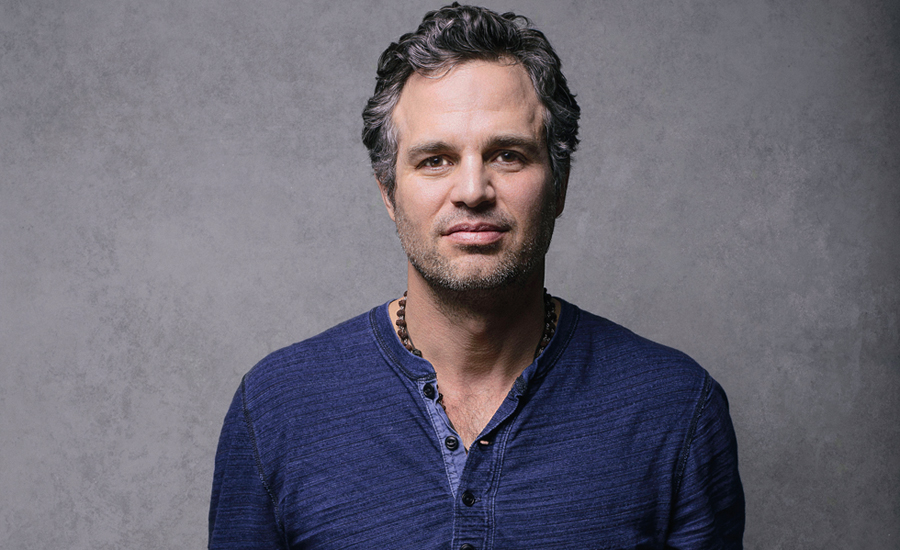
Have you ever had a dream that seemed more vivid than reality? Actor Mark Ruffalo did, in 2001. A dream that something was growing inside his head, slowly killing him. He awoke in tears. He’d had no headaches, blurred vision or other suspicious symptoms. Yet the dream convinced him he had a brain tumor.

After years of scraping by in Hollywood, he’d landed a plum role in a movie. The New York Times had lauded his performance. He and his wife, Sunrise, had just had their first child, Keen. Mark was shooting his current movie with his idol, Robert Redford. At age 34, how could he have a brain tumor?

READ MORE: RICHARD DREYFUSS’ MYSTERIOUS VISITOR

Mark told the set doctor about his disturbing dream. She was predictably skeptical, but sent him for a CAT scan to humor him. Incredibly, it revealed a benign mass on his facial nerve. Surgery was unavoidable, with a substantial risk that the left side of his face could be permanently paralyzed.

Mark began to plead with God. Don’t take my face, don’t take my life. I need to support my family.

The operation removed the tumor—but facial paralysis did set in. Mark withdrew to rural Upstate New York with his wife and newborn, fearful his acting days were over. It was there that God reached out again. Mark was on a solitary walk when he heard a voice whisper, Keep moving.

READ MORE: MATT DAMON’S MYSTERIOUS MATCHMAKER

Those words became his mantra as he focused on his future—as a husband and father. He laughed when Keen imitated his half-frozen smile. His relationship with Sunrise deepened.

Months later, he looked in the mirror and saw a twitch on the left side of his face. Before long, he had fully recovered. “Everything that seemed a curse was really the best possible thing, even my tumor,” Mark told Parade magazine. “I had a whole year with my son and wife, every waking hour. I wouldn’t give any of it back.”

Mark’s friends call it “getting Ruffaloed”—when a setback is a leap forward in disguise. We call it Mysterious Ways.

Balloons from Heaven Bring Unexpected Blessings

Today’s guest blogger is Mysterious Ways assistant editor Daniel Kessel.

A few weeks ago, three children in Moreno Valley, California, released a trio of colorful, helium-filled Mylar balloons into the sky. Attached to each was a handwritten, heartbreaking letter.

“Hi Mom, I miss you,” one letter read. “I hope you come and visit me soon because I have questions to ask, like why you had to leave…”

Each of the letters carried a small expression of the children’s grief. Their mother, 42-year-old Renee Finney, had recently lost a two-year battle with cancer. She’d passed away five days before Mother’s Day.

The children, ages 16, 18 and 25, had spent Mother’s Day weekend trying to raise the funds to give their mom a proper funeral. But even with a bake sale and car wash, they raised only a fraction of what they needed. The balloons were just a simple sendoff, but the best they could do to honor their beloved mom.

The next morning, 35 miles away in Murrieta, California, Yvette Melton was leaving for work when she discovered the shriveled balloons on her front lawn. She noticed the letters, untied them from the strings, and started reading.

Yvette’s heart ached at the messages. She Googled the names of the children who had signed the letters, and found Renee Finney’s obituary. I have to get in touch with them, tell them how much these letters moved me, Yvette thought. She called the funeral home. That’s when she learned they’d been having trouble affording the funeral expenses.

Not if Yvette had anything to do with it. That day at work, Yvette showed the letters to her boss and coworkers. Everyone felt the same way: They had to help. Within hours, they’d pooled enough money to match the Finney family’s fundraising efforts. That afternoon, Yvette created a donation page on the crowd-funding site GoFundMe. By the next day, enough money had been collected to cover the funeral costs completely, and then some.

The Finneys were astonished that the letters had such an impact. “I knew my mom probably wasn’t going to read them or reach her in heaven,” Karries Finney, the eldest daughter, told ABC News. “But honestly, now I know my mom was in heaven blowing those balloons right back down and put them on that porch.”

It isn’t the first time we’ve heard a story like this. Donna Teti of West Chester, Pennsylvania, also released balloons with letters after her twin sister passed away. Like the Finneys, she soon received comfort in the most surprising way. And Don Palmer of Jefferson, New York, didn’t release any balloons himself but was deeply affected by one that landed on his property at just the right moment.

Have you ever let go of something you never expected to hear about again, only for it to return unexpected blessings? If you’ve got a story of your own, send it to us. We’d love to share it with our readers!

A Valentine’s Day “Coincidence”

Father’s Day morning and I was up at the crack of dawn, on the hunt for antiques at a crowded flea market in Long Beach, California. I’m not a morning person. But my 70-year-old dad specifically requested we go there. Back in Delaware, he ran an antiques business with Mom. He’d heard about the Long Beach flea market from one of his antiquing buddies. “We have to get there early,” he told me. “Before all the good stuff is gone.”

I had moved to Los Angeles seven years before to pursue acting and writing. I’m an only child. My parents visited often. I knew they wished I lived closer. Still, they were always so supportive of my challenging career choice. I wanted to do something special for Dad that Father’s Day. I’d planned a weekend full of activities, culminating in dinner and a show at an invitation-only club in Hollywood. But Dad only wanted one thing: to go antiquing.

I trailed behind him sleepily, feeling as if I were at the Grand Bazaar in Istanbul. The market was in a huge parking lot with tents as far as the eye could see. Vendors hawked their wares—furniture, glass, china, jewelry, books, hats, you name it. Dad schmoozed with the vendors, snapping up good buys. I browsed a table of kitchen knickknacks. A pretty peach teapot. Some 1950s canisters like the ones Mom had.

On the edge of another table, something else caught my eye. A tiny tin with a logo of strawberries. And two words at the bottom: Dover, Del.

Dover, Delaware. A city 30 minutes from my hometown. How funny to see such a familiar name on a tin can some 3,000 miles away. I examined it closely. Above the city and state, it said Richardson & Robbins.

“Hey, Dad,” I said. “Look at this. Do you know anything about Richardson & Robbins?”

Dad turned the tin over in his hands. “Seems like an old cannery,” he said. “Probably closed a long time ago. Imagine finding this tin all the way out here on the West Coast.” He paused and looked at me, a twinkle in his bright blue eyes.

“Maybe it means you’re meant to be in Delaware!” he said.

I had to laugh. Dad was always teasing me about moving home. We got the tin, Dad’s treat. A few days later my parents headed back east. I put the tin in my china cabinet. I’d occasionally find my eyes drawn to it, especially during tough times. A reminder of Dad. That I wasn’t alone.

The tin sat there for three years, until Mom’s health took a turn for the worse. I moved back East to be closer, the tin from Dover tucked safely in my suitcase. It was difficult to put my career on hold, but it turned out to be a good decision. Nine months later, Dad died of a heart attack. Mom couldn’t bear the idea of living alone. We bought a house in northern Delaware and moved in together. The tin from Dover went up on our bookshelf.

In 2005, Mom passed away. I found myself at a crossroads. I didn’t know what to do next. Move back to California? Stay in Delaware? Pursue acting? Maybe writing? I felt so lost and alone without Mom and Dad.

That’s when my life took a turn. By a series of unbelievable coincidences, I got back in touch with my high school boyfriend, Kenny. I’d always wondered if he was the true love of my life. We hadn’t seen each other in 35 years. And then, one night, we ended up on the phone for hours. He asked me to meet him for lunch. I was over the moon. Nervous too. Was this a sign of what God wanted next for me? Was I even supposed to stay in Delaware? I couldn’t be sure. Until Kenny called to discuss the details of our date.

“How about we meet at my office?” Kenny said.

“Sounds great,” I said. “Where do you work?”

“Dover,” he said. “In the old Richardson & Robbins building. Do you know it?”

I met Kenny in the building’s lobby for our lunch date. The date that told me I wouldn’t be alone anymore, that my life was headed in a wonderful new direction. One I could’ve never imagined. Though, maybe Dad had sensed it all along.

A True Story of God’s Guidance

Through their 60-plus years of writing for Guideposts, John and Elizabeth Sherrill have encountered some incredibly inspiring stories, and shared them with us.

Now as they look back on their amazing journey of life and faith, the Sherrills are revisiting some of their favorites—survival stories, real life love stories, angel sightings and more—so that we can be inspired by them all over again.

My wife, Elizabeth, and I are often asked, “How do you find your stories?”

The answer is that, many times, we don’t find them; they find us. We’ll be on a trip somewhere, not even looking for a story, when all of a sudden there it is. A conversation overheard in a restaurant, an item in the local newspaper.

The first time I remember this happening was back in 1955. Elizabeth and I had gone from our home in New York to stay with a friend in Boston when a headline in the Boston Globe on our friend’s table caught our eye: “Man Buried Alive.”

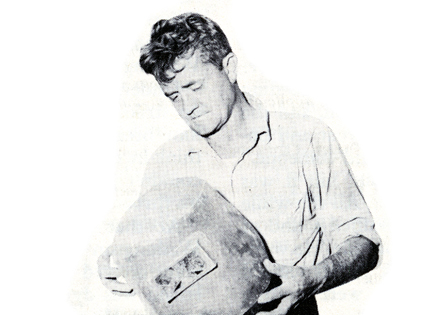
The article reported that a welder had been working late and alone in a deep trench that ran through the center of West Roxbury, a nearby suburb, when the trench collapsed on him. It gave his name, Jack Sullivan, and the name of the hospital where he’d been taken. That was enough. We visited Jack in the hospital room, met his brother and talked to the man who’d found Jack just minutes before he would have suffocated.

A story had found us. And what a story it was; to this day it is one of the most astonishing experiences of God’s guidance we have ever encountered.

John worked with Jack’s brother, a fellow welder, to piece together the amazing sequence of events. To read about them, click here.

Download your FREE ebook, Mysterious Ways: 9 Inspiring Stories that Show Evidence of God’s Love and God’s Grace

A Teachable Inspiration

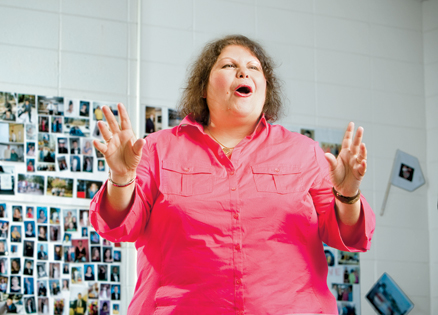
I grabbed a stack of envelopes off my desk and stood at the front of my classroom.

It was a perfect May day and I’d planned a fun activity for my sophomore English students—one that would get them engaged and excited. At least I hoped it would.

I had become a teacher to inspire kids, to help them reach their full potential. But I’d been at the high school here in Darien, Georgia, for three years now and no matter what I did, I didn’t feel like I was getting through to my students. Was I making any difference at all?

Rural Georgia was a long way away from bustling Cincinnati, Ohio, my hometown. I thought I would live there my whole life—near my family, my friends and everything familiar. After college I even spent a couple of years substitute teaching at the high school where I had graduated. But full-time teaching jobs were scarce in the Midwest, and when a job recruiter told me about a position in Georgia, I had to consider it carefully.

I always turn to God for guidance (I like to say I have him on speed dial), so that night I asked, Lord, should I apply for this job? Please show me where you want me to be.

A few days later I got an overwhelming urge to call the school. The principal practically hired me on the spot.

Boy, was it hard being a new teacher and an outsider! Cincinnati was a fairly large city. Darien didn’t have even a single stoplight. Back home in Ohio, my students were motivated and planned on going to college. Here, most of them barely paid attention during class and talked openly about dropping out.

About three years after I moved to Georgia I met and married my husband, John. My rock. Whenever I got down on myself, he would tell me that what I was doing was important. That it mattered. I wasn’t so sure. Each class I taught seemed more apathetic than the one before.

Is it I, Lord? I asked over and over.

Today, I hoped, would be different. “We’re going to try something new,” I said to my sophomores, and passed out the envelopes.

“What’s this for?” Stacy in the front row asked.

“I’m going to ask you three questions about your life and your goals. You’ll answer them in the form of a letter to yourself,” I explained. “Then you’ll seal that letter inside the envelope. In two years, after you graduate, I will mail it back to you so that you can see if you’re on track. The first question is: Where have you been?”

“I’ve been to Atlanta!” Stacy shouted. Everyone cracked up.

“Not a city,” I said. “I mean, what have you experienced? Talk about your highs and lows. The second and third questions are: Where are you going? and How will you get there?”
Silence.

“C’mon, guys, you can do this.”

“Who’s going to read these? You?” a student finally scoffed.

“No,” I said. “I’m going to put all of your envelopes into this manila folder. Then I’ll put it away until I have to mail them back to each of you. No peeking. I promise.”

They picked up their pens. Some, like Stacy, hurried along. Others, like Allison, Dawn and Amy, three friends who were my best students, took their time.

At home that night I put the manila folder on the top shelf of my bedroom closet and prayed for the best. And that’s where the envelope sat, for a year and a half.

In that time new batches of students had come and gone through my classroom. I continued to assign the letter project, but I still wondered whether I was making any impact on the kids.

A few days before Christmas break, my class walked in, talking, but their voices sounded more serious than usual. “I can’t believe it!” one girl said. “Think she’ll be okay?” asked another.

I listened as they described a horrific accident involving a senior named Dawn. She’d lost control of her car and was in a coma. Her family was praying for a miracle.

Dawn? A senior? Oh my gosh! She had been one of my best students. She had written a letter!

That night I pulled down the manila folder from my closet shelf and sorted through the envelopes. Midway through, I recognized Dawn’s distinctive script. I collapsed in the chair by my bed and cried.

What was I supposed to do with her letter? Destroy it? Give it to her parents? But what if it upset them?

For three days I prayed about what to do. Then I thought of Dawn’s brother. He was a freshman. I looked up his schedule, met him in the hallway after one of his classes and introduced myself. “Dawn wrote this,” I said, handing him the letter. “It’s from one of my class projects and I would like your parents to have it. Do you think you could pass it along to them?”

He nodded.

I didn’t hear anything more about Dawn until school reopened in January. Her friends Amy and Allison told me she had responded to her parents’ voices, squeezing their hands when they spoke to her.

One February morning Amy found me on hall duty. “Mrs. Durham! Guess what?” she said. “Dawn woke up last night! She asked for her mom. Isn’t that awesome?”

“That’s amazing! What great news!”

“But that’s not all,” she continued. “Dawn asked for you too.”

Me?

During my break I called John and told him I needed to see Dawn at the hospital, but I didn’t want to go alone.

“I’ll be right there,” he said.

I hardly noticed the route John took. My mind was racing. Why did Dawn ask for me? If I just woke from a coma, I sure wouldn’t want to see a teacher.

By the time we arrived at the hospital I was a nervous wreck. “I’m sure there’s a very good reason your student wants to see you,” John said reassuringly. He squeezed my hand then took a seat in the lobby. “I’ll wait right here for you.”

I got Dawn’s room number from the nurse at the reception desk and walked slowly down the hall. But when I got to her room, it was empty. Oh, no! I thought.

I backed out of the doorway. When I turned around a woman strode toward me. Dawn’s mother.

“If you’re looking for Dawn, she’s in the recreation room,” she said.

“Yes, actually, I am. I’m…Lori Durham,” I stammered. “Dawn’s sophomore English teacher. Amy told me Dawn woke up. She asked for me?”

“Durham?” she paused. “You’re the one who sent us the letter?”

“Yes,” I said.

Her eyes pooled with tears. “I can’t thank you enough,” she said. “We’ve read that letter to Dawn every day. It has brought her back to life. Have you read it?”

“No, ma’am, I haven’t,” I said.

She reached into her purse, pulled it out and handed it to me.

I unfolded the letter. “Where have you been?” Dawn had answered that first question by examining her life at school, at home and at church. She wrote of her strong faith and the tremendous love she had for her family. “Where are you going?” She was determined to go to college, she wrote, then law school, and she longed to be a wife and mother. Finally, she considered “How will you get there?” by taking her studies seriously.

Dawn’s answers were thoughtful but nothing out of the ordinary. Then my eyes went to the last paragraph: “I pray to God that if something should come between me and my goals, he will get this letter to me in time to make a difference. Thanks, Durham!”

I stared at Dawn’s words, my hands trembling. To think that I had considered destroying this letter!

“We’re going to have it framed,” Dawn’s mother said.

I looked up at her, speechless.

“Why don’t you come on down to the rec room with me,” she offered. “I know Dawn would love to see you.”

I practically sprinted there. Dawn was there, sitting in the back of the room, laughing with her family. She looked so vibrant, so alive. Our eyes met.

“Durham!” she shouted.

“Dawn!” I ran over and threw my arms around her. She hugged me tight. Tears streamed down my cheeks.

“Thank you, Durham. Thank you for everything,” she said.

Me? Make a difference? I didn’t have to wonder anymore.

Download your FREE ebook, Paths to Happiness: 7 Real Life Stories of Personal Growth, Self-Improvement and Positive Change


A Surprise Encounter at the Airport Brings Her Comfort

I was going to miss my flight.

I was at Myrtle Beach International Airport in South Carolina, waiting to fly out to Michigan and then New York, where two days earlier my 44-year-old daughter, Laurie, had died of a heroin overdose. I had lost my 45-year-old son to the same drug a year and a half earlier. Shock and heartbreak couldn’t begin to describe what I was feeling.

I already had my boarding pass when I got to the airport, but something nudged me to go to the ticket counter to check on my flight before I went through security. The agent told me my connecting flight to Michigan was delayed three hours, my flight to New York by another two hours.

“Please,” I told the ticket agent. “I just want to get to my family in New York. Is there anything you can do?”

“I have one seat left on a direct flight to LaGuardia Airport in New York City,” she said. “But it leaves in five minutes. Hurry!”

I raced through security. But in my haste, I completely forgot the gate number the ticket agent had told me. Now I stood frozen in place, staring at the departures board, feeling so lost and overwhelmed that I burst into tears. What else could possibly go wrong?

Just then, I felt a pair of arms wrap around me in a huge bear hug. What on earth? I turned around to find a man who was about my kids’ ages. He was beaming at me. “Hi, Mary-Ann!” he said.

He looked familiar, but I couldn’t place him.

“It’s me, Eric,” he said. “From the prayer group?”

Eric. I vaguely remembered him from a prayer group I belonged to, though we’d never really talked much. I certainly didn’t have time for chitchat now!

“I’m sorry, I have to go,” I said. “I’m going to miss my flight—I have to get to LaGuardia!”

“Wait,” Eric said. “That’s my flight too. Come with me.”

He led me to the gate, and we boarded just in time. We didn’t get a chance to talk much more, though. He was seated in a different part of the plane.

When we arrived at LaGuardia, I had to wait for my ride—I hadn’t had time before the flight to notify my family about the change in plans.

“I’m on my way to Texas for work,” Eric said. “Want to quickly grab some coffee while I wait for my connecting flight?”

We sat on a bench. I told Eric why I was in New York. How my daughter Laurie had died, just as my son had less than two years before. Eric’s face fell. He grew quiet.

“I never got to tell you this,” he said, “but I knew your son. We were in a recovery group together. I’ve been sober from drugs for 20 years, but I still go to meetings. That’s where I met your son. He always talked about his daughter, how much he loved her.”

Both my kids had been so loving and kind, good souls beneath their terrible addictions. It felt good to remember that.

“May I pray with you?” Eric asked. I nodded weakly. Together we prayed for Laurie and for me to be strong in the coming days.

I got up to go. “I’m so glad you were here,” I said.

“Funny you should say that,” Eric said. “When I booked this flight, I was so irritated that I had to go through New York just to get to Texas from South Carolina. Typical airlines, I thought. But obviously there was a reason….”

The airlines might have been delayed that day, but God’s timing was perfect.

A Surfer’s Divine Warning

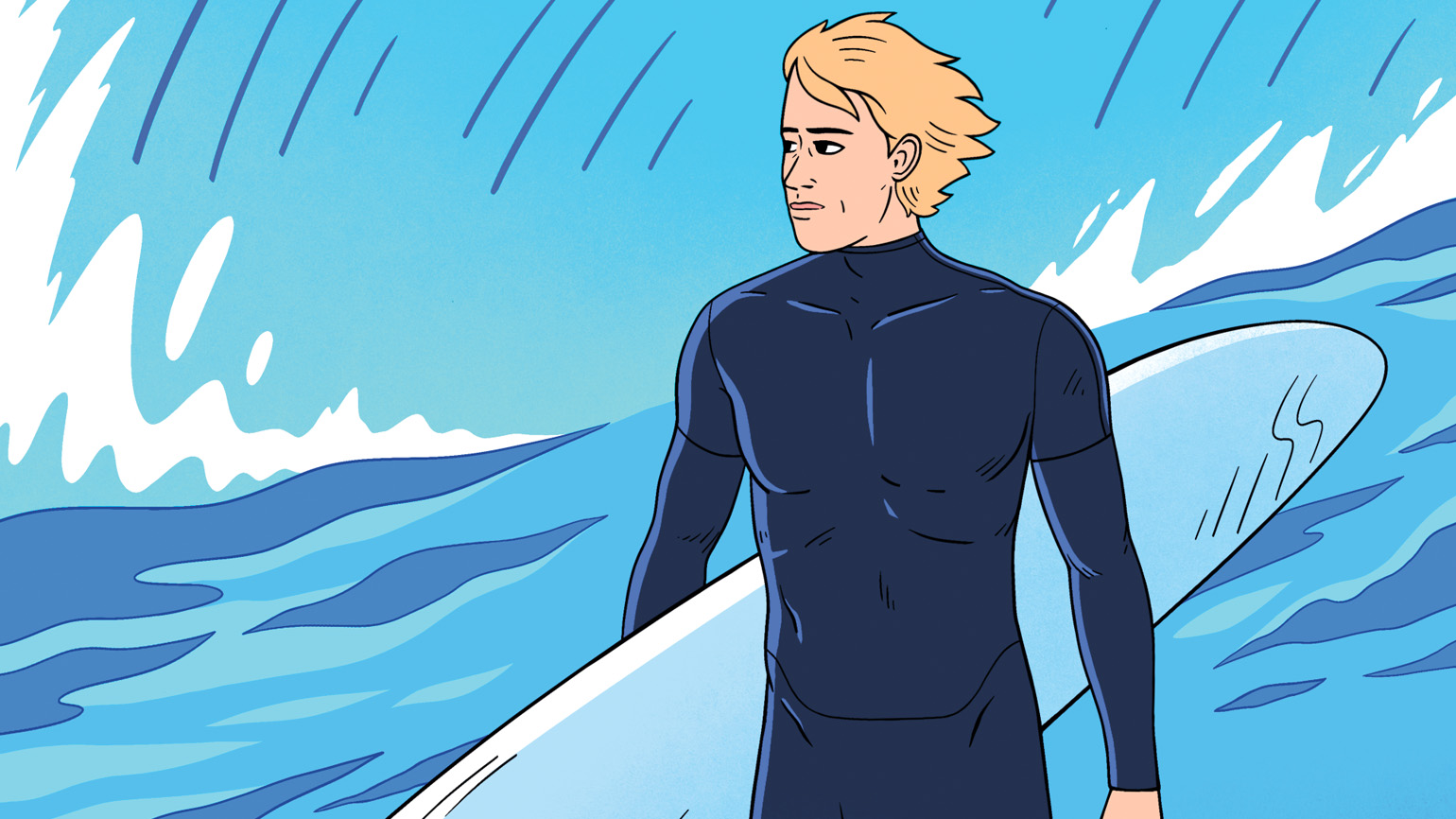
I drove north on California’s Pacific Coast Highway after attending a work conference in Santa Cruz. It was roughly three hours away from where I lived in Pismo Beach, and I’d decided to make the most of the trip by hitting a new beach to surf. I was an avid surfer, and I was excited to try out a different spot.

It was a miserably gray day with intermittent rain showers, but the waves looked fun. I pulled into the parking lot to search the stretch of cliff-lined coast. My truck was the only vehicle. The beach was empty.

Surfboard under my arm, I headed down a flight of stairs to the beach. With the sand between my toes. I watched the water for a moment, taking in the waves. I was anxious to get out there.

Then I felt it. An inner conviction. Don’t paddle out. I’d never felt anything like it before, this urge. It cut through my thoughts as if it originated from somewhere else. It was strong. I wasn’t sure where it came from or what to make of it. But the waves looked so promising, and I felt young and invincible. So I quickly brushed aside the feeling and pulled on my wetsuit.

As I neared the water’s edge, I felt it again. Don’t paddle out. This time, almost pleading with me. I ignored it and dove into the surf, swimming quickly until I was out past the break.

I sat up on my board, bobbing in the water, and looked around, waiting to catch a wave. To my dismay, almost as soon as I’d paddled out, the waves turned to garbage. There was an incessant current that kept me paddling the whole time to stay in place. I was only in the water for roughly 30 minutes when, out of frustration, I decided I was leaving.

I caught one final wave and made my way to shore. Because of the current, I was a few hundred yards away from where I’d parked my car. I had to walk along the edge of the cliff-lined shore back to my truck. The tide was on the rise, leaving a small strip of beach next to the cliff face to walk on.

The edges of the waves gently lapped my feet as I made my way toward my truck. I rounded a small bend in the rocks. The water receded. And kept receding…

With terror, I realized that the water was about to surge, and I’d reached the mouth of a deep cave, with nowhere to go.

I braced for the wave’s impact. “God, help me!” I cried out. Then I was swept under the water. Everything went black.

When I came to, I was pinned to the back of the cave. The water was up to my neck. My surfboard had spun around behind me, protecting my head from the rocky wall. But I wasn’t out of danger yet. I had to get out of the cave before another wave came, before the tide rose even higher. I felt the water start to pull out to sea. I swam with everything in me, clearing the cave’s mouth. I didn’t stop until I reached a safe stretch of beach past the cliff face. I flopped onto the sand, panting, my heart pounding.

Lying there, I realized that God had tried to warn me. In his ultimate mercy, even though I’d ignored him, he’d protected me. I had only a few small bumps and bruises. I hadn’t inhaled any water. Sure, I was shaken up, but I was otherwise pretty much unharmed. It was a hard-learned lesson, and one I’ll never forget.

It’s been 22 years since that day. I still surf, but now I listen carefully for warnings before I head out. And if I get one, I heed it.

Astronaut Story Musgrave Speaks on Spirituality and Space

Mysterious Ways: Tell me about the first time you were in space. What surprised you about it?

Musgrave: A lot of funny things happen because you’re not evolved to sense it, our system is not built to function in that particular environment. The first thing that hit me when I looked out the window at our planet was the geography, like “Where am I?”

I flew early enough that the really immersive photographs of Earth had not really been out yet, and we’re used to looking at a geography book or a globe of the world and now I was seeing the real world. That’s pretty impressive, it’s quite beautiful.

Mysterious Ways: How different did the stars look from that vantage point?

ENJOYING THIS STORY? SUBSCRIBE TO MYSTERIOUS WAYS MAGAZINE

Musgrave: If you were inside your house and if you wanted to see the stars at night you’d walk outside, but you can’t walk outside of the international space station, so you need to have it totally dark. Some of the kids who flew with me never got to see the stars, the heavens, from space line because the commander didn’t allow lights to be turned off. But I had a lot of night passes, permission to turn the lights off.

Of course, the stars are much brighter and they don’t twinkle. And you see so many you navigate differently. You don’t navigate through the constellations; you navigate through the Milky Way. The Milky Way is so bright it becomes your orienter, it’s so totally dominant in your view. The stars, there are just so many more of them, but of course you do see the total sky, not all the time, but you do see the sun across.

Mysterious Ways: You’ve said that one of the feelings you’ve had about being in space was the feeling that you were face to face with God. What did you mean by that?

Musgrave: You get to understand that your world is due to the fact that the earth is tilted 23.5 degrees and it goes around the sun once a year. That dictates a lot for us. When you get up there you find out, see what is going on. I guess your view of the heavens is a little wider too. You’re seeing more of the cosmos so in those terms you’re seeing more of God, and to me that’s sacred.

READ MORE: BUZZ ALDRIN ON COMMUNION IN SPACE

It’s the same feeling I got when I was a three-year-old in the forest at night, staring up at the stars. A three-year-old alone in the forest late at night is just as close to the heavens than anything related to space flight. It was just an immersion and accumulation of the cosmos, just more and more of it. And it goes on.

I have flown with 27 people, I’ve flown with 17 rookies and I know about 400 astronauts. I know what space did to them and it was epiphantic. I know who they were before they went and who they were once they came back.

Mysterious Ways: One of the things you talk about in your book is that when you were in space, you attempted to leave yourself open to receive messages from the universe, possibly alien life.

Musgrave: It’s a very far out idea. But if you don’t try it’s not gonna happen. I just resort to prayer, like “Hey, I know that I’m here and I know you’re there; I do acknowledge your existence.” So it’s a prayer that says, I acknowledge your existence. As opposed to saying, “I’m an arrogant human being who thinks I’m the only living creature in the universe.” And we’re not.

In that sense, we’re still hung up on the Copernican idea that we’re the center of the universe. We’re not. The egocentric error, which still exists today. Imagine there are 10 to the 29th power stars. I have no idea what 10 to the 29th is. I can count 29 zeros, but how big that is, I have no idea.

If the thing is 10 to the 29th galaxies and a galaxy got 100 billion stars, my God, how many are we talking about? It gets big! And then you say we’re the only smart living thing? It’s too egocentric.

Mysterious Ways: What are the big questions you ponder about space?

Musgrave: I know we can’t know the answers to big questions. Life is a journey. The journey presents itself to me. And so I’m not met by the questions, I’m met by the exploration in being in the game. About finding out what the questions are and what I can do. You can say many things but then on your gravestone you’ll say “What was that all about that I didn’t have the answers?”

But it could be offensive to have all the answers. You go through life and grab on to certain things and say, those are the things that are. But you got to understand how you gravitate to that, how you were led to that. Who indoctrinated you and why? All countries and cultures have their own beliefs, but the same thing applies.

You just live mindful and never stop exploring. You keep pushing through the journey in a mindful way, but you’re not going to get to any destination. I accept not knowing. There’s no finish line. I don’t know where I’m going, I just keep moving. I’m just an explorer. That’s who I am.

READ MORE: A HEARTWARMING DISCOVERY ON PLUTO

Mysterious Ways: I read in your book that you believe the universe has no beginning and it will have no end.

Musgrave: That’s definitely something I believe. The scientists are not pursuing anything earlier than the big bang. They have assumed and accepted the big bang as the beginning. It came from somewhere. The universe is expanding. For me there is no beginning or end. But some people then ask, “So when did God begin?” They believe that God did not begin and God will not end. God is.

In that same way, I refuse to believe the big bang theory. My universe did not begin, it always was. The acceptance of the multiverse, an alternative to the big bang, is growing.

Mysterious Ways: How does your scientific background influence your faith?

Musgrave: I’m not an atheist because an atheist knows the answers. I also don’t want to project or assign gender to entities. I’m not going to project myself onto the divine or the whole universe. I’m part of the journey and this whole thing, but I’m not going to project my ignorance.

I’ll try to learn. I’m in pursuit. I’m massively spiritual and transcendent. But I do understand that there are spiritual and scientific things that are bigger than me.

A Spiritual Message on the Caller ID

“They’ll hire some young college grad,” Dave told me. “Not an old guy like me.” I’d never seen my husband so discouraged. He’d been doing great work as a field applicator for a farming co-op for 10 years, but when a higher position opened up, the company said they were looking to make an outside hire.

After a few weeks of searching they finally let him take a skill test to be considered. Dave felt sure he’d passed, but didn’t think it would change their minds.

“If it’s meant to be, God will open the door,” I told him. “All we can do is pray.”

The next day, we came home from running errands to the sound of the phone ringing. I was wrestling off my wet boots, so I asked Dave to get it. He usually lets calls go to voice mail, but I’d been expecting a call from the phone company and I didn’t want to miss it. Unfortunately, Dave didn’t pick up in time.

“Who was it?” I asked.

“Fervent Prayer,” Dave answered.

“Fervent what?”

“The caller ID says Fervent Prayer!”

That’s crazy, I thought, and took a look. Dave wasn’t kidding. Fervent Prayer, clear as day on the tiny caller-ID screen.

I dialed the phone company. They had just called. The woman couldn’t explain the message on our caller ID. It didn’t pop up when she called again later.

“How often do you answer the phone?” I asked Dave. “Maybe God’s trying to tell you something.”

The next few days, we prayed fervently, all right, every second we got, just like the caller ID said. And two weeks later, Dave’s boss offered him the promotion.


A Spelling Bee M-I-R-A-C-L-E

“Mom, can I bring two chicken legs for lunch?” my 6-year-old son AJ asked, smiling sweetly at me. I sighed. My son always made me proud—he’d recently been selected as one of two first graders to compete against two second grade students in the school’s spelling bee—but I wished he wasn’t such a picky eater. After all the delicious, healthy lunches I made for him came back to me uneaten, I’d finally given in and packed one of his favorite foods—a fried chicken leg. I was hoping he’d tire of it quickly—now he wanted two?

“Are you really going to eat two chicken legs?” I asked.

“One’s for Kyle,” he explained. His lunch buddy. Kyle usually bought lunch from the school cafeteria. How nice of my son to think of someone else! For the rest of the week, I packed him two chicken legs, impressed by his generosity.

Kyle’s mom called that weekend to thank me for AJ’s kind gesture. We got to talking about the spelling bee. “Does AJ know how to spell ‘beautiful’?” Kyle’s mom asked.

Beautiful? I had no idea. Why that word? Did she have some inside information? “No, nothing like that,” Kyle’s mom said. “It just popped in my head.” Amused, I called AJ over and asked him to spell it. B-E-U-T-I-F-U-L… he missed the silent “a.”

In the days leading up to the spelling bee, I drilled AJ on his words. I made a point to throw “beautiful” into the rotation. He kept getting it wrong. If AJ couldn’t spell that word, did he have much of a shot at winning the bee?

The big day arrived. My husband and I took our seats in the school auditorium. I felt as nervous as AJ looked up on the stage. He spelled his first word correctly, then his second and third. His opponent had one word left to spell.

“The word is… ‘beautiful,’” the announcer said.

I held my breath. AJ’s eyes grew wide. Even wider when his opponent fumbled over the word and misspelled it. My son couldn’t stop smiling as he finally nailed the word he’d been practicing all week.

All thanks to a chicken leg. One B-E-A-U-T-I-F-U-L act of kindness.

A Soldier’s Widow Finds Comfort After Catastrophe

All along the Northeastern seaboard, Hurricane Sandy left a trail of destruction. So many families are struggling to rebuild; entire neighborhoods have been all but lost. Yet today I read a fascinating story that reminds me that nothing is ever truly gone forever.

Donna Gugger was in Sandy Hook, New Jersey, helping members of the Sandy Hook Bay Catamaran Club clean up the debris from the hurricane. As she sifted through pieces of broken furniture, shards of metal and soiled clothes, she noticed one item of clothing that was unique: a gray, military-style dress jacket with big brass buttons. While wet and dirty, it didn’t seem to be damaged otherwise.

According to the Associated Press, Donna thought it was an elaborate Halloween costume. She took the garment home, shook out the sand and cleaned it. It was then that she saw, in faint lettering on the inside, the words “West Point” and “issued to deGavre.”

She contacted West Point’s Association of Graduates, hoping they could track down the owner. That’s when she learned that the jacket was 80 years old. It belonged to a 1933 graduate of West Point, Chester deGavre.

Chester had passed away, but his widow, 98-year-old Tita deGavre, was still alive, living in Virginia Beach, hundreds of miles away from where the jacket was found. Chester’s parents once lived in Red Bank, 10 miles away from Sandy Hook, but the house had changed hands many times since. There was no way the jacket had come from there. Tita didn’t know the jacket still existed. She had no idea how it could have ended up on the Sandy Hook beach, in such good condition.

“I found it most impossible to believe,” Tita told the AP, after Donna made the five-hour drive to bring her the jacket. “Where could it have been all this time?”

Tita plans to display the jacket along with her late husband’s other military items at the Deep Creek Plantation on the Virginia coast—a place where she found her husband’s lost West Point ring years ago. “It’s all a big mystery,” she says, “but I’m happy about it.”

It may not seem much, a jacket that gave an elderly widow comfort. Especially with so much damage left by the storm. But the very fact that such an unlikely, comforting moment can come from such catastrophe should give us all the eyes to look for hope where it seems unlikely to be found. Even in a pile of wreckage.

Have you been hit by a storm—either literally or figuratively? What unexpected thing did you find that gave you hope? Share your story in the comments below or send it to us for possible publication in Mysterious Ways.

A Snowmobile and a Prayer

Opening the blinds early that morning, I wondered if I’d be able to catch a glimpse of Mount Baker 40 miles away. The 10,000-foot peak dominates the Nooksack River Valley. At least it does on the days when you can see it. Western Washington isn’t known for its clear skies. Even in late May, clouds can sometimes shroud the landscape for weeks at a time. But that morning, the view looked postcard-perfect.

All spring Chad Gruizenga, a part-time employee at my company, Pacific Pumping, had been after me to join him for a snowmobile run on Mount Baker. “I know you’ve got the world on your shoulders, Marv,” he’d say with a smile. “But you need to put it all down for a day and just have some fun.”

Chad had a point. But I had a company to run, plus my wife, Rachelle, and our three kids to worry about. Keeping things operating smoothly at work and at home took most of my time. I didn’t resent my responsibilities. I liked being in charge, but I barely had time for church on Sunday, so I really didn’t have time to go out and play.

Finally, though, I’d given in to Chad. That day we bundled up and hit the range of glaciers that make up much of Mount Baker. By 10 o’clock, we unloaded a pair of Ski-Doo High Marks—large, powerful snowmobiles that can go as fast as 80 miles per hour—from my pickup truck just south of the mountain. We fired them up and tore down the trail like a couple of kids set loose from school on a snow day.

Halfway to the glaciers I started sweating profusely in my helmet and ski jacket. It was getting really uncomfortable. I motioned to Chad to stop.

“This sun is hot. I think I’m gonna stow some of this gear.”

“Good idea,” said Chad. “We can pick it up on the way back.”

Chad and I tucked our gloves and helmets away behind a big hummock of snow that would be easy to locate on our return trip. I was about to ditch my jacket too, but at the last moment stuck it under my seat instead. The compartment there was empty except for a can of Mountain Dew, and the ride home later might get chilly. Soon we hit the glaciers and started to climb. Far above us, we could see wisps of steam rising from Sherman Crater. The crater was several miles up, but in the dazzling white terrain it looked just a stone’s throw away.

Not many snowmobilers venture all the way up to the crater. Too dangerous. The higher you go, the greater the threat of crevasses—deep cracks in the ice that can swallow a snowmobile and rider whole. Crevasses are especially hazardous when they get covered by a thin crust of snow. To travel that high on the mountain meant risking an encounter with one of these camouflaged traps—and that kind of foolhardiness definitely wasn’t my style.

Yet as I squinted at that distant column of steam, I couldn’t help thinking how much fun it would be to see it up close. After all, this was a day for cutting loose.

“Hey, Chad,” I yelled. “Come on. Let’s make a run for the crater.”

Chad grinned. “You read my mind.”

Engines roaring, we charged side by side up the glacier. My ears popped as we climbed the slope into the thin mountain air. After 20 minutes of hard riding, Chad waved for me to stop.

“I think we need to turn back,” he said. “It’s too far, and I’m getting nervous about crevasses.”

Chad was the daredevil. As his boss and his senior by more than a decade, my role was to be the sensible one. But not today. I looked him right in the eye. “Hey, I thought we were gonna have some fun.”

Chad rose to the challenge without hesitation. “Now you’re talking. Let’s do it.”

Chad shot off and I revved up to follow. As my treads bit into the snow, I felt the sled sink a few inches. That was no big deal. A sled this heavy often dug in a little before grabbing. I revved again and sank farther. What the . . .

The engine screamed. Bluish ice walls flashed by. I let go of the handlebars and started free falling. Then I smashed onto something rock hard.

Stunned from the impact, I lay totally still. I’m in a crevasse! I must’ve stopped right on top of one.

I’d landed on a narrow ledge of ice. To my left the crevasse continued down—seemingly forever. About 15 feet above me my snowmobile was jammed lengthwise between the narrow walls.

If that thing breaks loose, it’ll take me with it. I’ve got to get out of the way.

The second I budged, my shoulders exploded with pain. But I had to move from under that sled. Inch by inch I worked my way along the narrow shelf of ice. In a few minutes I was clear.

Now what? Sheer walls stretched up to a small chink of blue sky—maybe 60 feet above. The surface is too rough for Chad to trace my tracks. He’ll never see the spot where I fell in.

“Help! Help!” I screamed, my voice echoing weirdly in the vast icy chasm. Then I stopped, realizing just how pointless it was. Crevasses are known to play tricks with sound. My voice would travel straight up, then die when it hit the surface. Even if Chad got help, someone could be standing 10 feet from the opening and not hear me.

I’m going to die down here! I panicked. They’ll search for a few days, but eventually they’ll have to give up. I imagined the mountain patrol coming to our house and Rachelle answering the door. “We’re doing everything we can, ma’am. But you have to understand, people who fall into crevasses are rarely found….”

I was supposed to be the one in charge, the one who took care of things. But now I was trapped. And I had all the time in the world to think about the pain my disappearance would cause.

Lord, I know I’m probably done for. I realize I brought this on myself, but I can’t bear to think of what my family is going to go through.

As I prayed, I kept my eyes on that tiny patch of sky far above me. It looked no bigger than a postage stamp, but it seemed to hold the whole world—my job, my friends and most of all, my family. As long as that hole is open, there’s hope. But the snow’s going to cover it over before long.

Slowly, the little window of sky took on the deep blue of afternoon, and the walls of my ice chamber grew dimmer. My mind slowed. I’d been shivering uncontrollably for a long time, and hypothermia was probably setting in.

I looked up at my snowmobile, still wedged between the walls of ice. I remembered my jacket and the can of Mountain Dew under the seat. With the warmth from the jacket and the calories from the soda, I knew that I could keep going a little longer.

I’ve got to make it to the sled. I’ve got to try to stay alive!

My shoulders still throbbed, and the ice walls were sheer and slick. If only there were some footholds. I slipped my folding knife from its case on my belt and chipped away at the ice in front of me. A few minutes later I had a hole big enough for my toe.

In half an hour I’d managed to chisel and climb my way all the way up to the sled. I threw my weight against it. It was solidly wedged, so I climbed on. The seat compartment was jammed shut. I sliced open the vinyl and reached inside. Moments later I had my coat on and was gulping down the Mountain Dew. I felt a little strength returning.

I looked up at the patch of sky. I had scarcely gotten any closer to it, and from there on upward the walls were too far apart for me to climb.

This is it, Lord. Soon it’ll be night, and the hole will close over. I’ll be sealed here forever. There’s nothing more I can do. You’re completely in charge.

As I prayed those words, a funny thing happened. The terrible feeling of powerlessness that had tormented me all afternoon suddenly vanished. I knew that no matter what happened to me, Rachelle and the kids would be okay.

God was with them, as he was with me. If it was his will that I get out of there, then I would. God had always been the one in charge, not me. I’d somehow just allowed myself to forget it. With that realization, an incredible sense of peace overcame me.

I closed my eyes and quickly slipped into a deep sleep.

I awakened to absolute darkness. The hole must have closed over. But as my vision slowly adjusted, I began to make out something up there above me. Stars! It’s still open.

“Marv? Marv, are you down there?”

Flashlight beams began playing along the walls of the crevasse.

“Yeah! I’m here—I’m here!” I croaked feebly. Exhaustion and dehydration had done a number on my vocal cords. What if they couldn’t hear me?

“Here, here!” Again, all I could manage was a pathetic half-whisper.

Then came three indescribably wonderful words: “We hear you!”

A rescue worker with a flashlight lowered himself by a rope into the hole and rappelled down to me. In a moment we were face to face. “You are very lucky, my friend,” he said.

“No,” I said, “I’m very blessed.”

A sling was fastened beneath my arms, and I felt myself rising from the icy pit I had thought would be my tomb. Soon I’d be back to my old life, but with a difference. I’d never again forget who, at every moment, is really in charge.