Embrace God's truth with our new book, The Lies that Bind

Dale Earnhardt Jr.’s Miraculous Survival Story

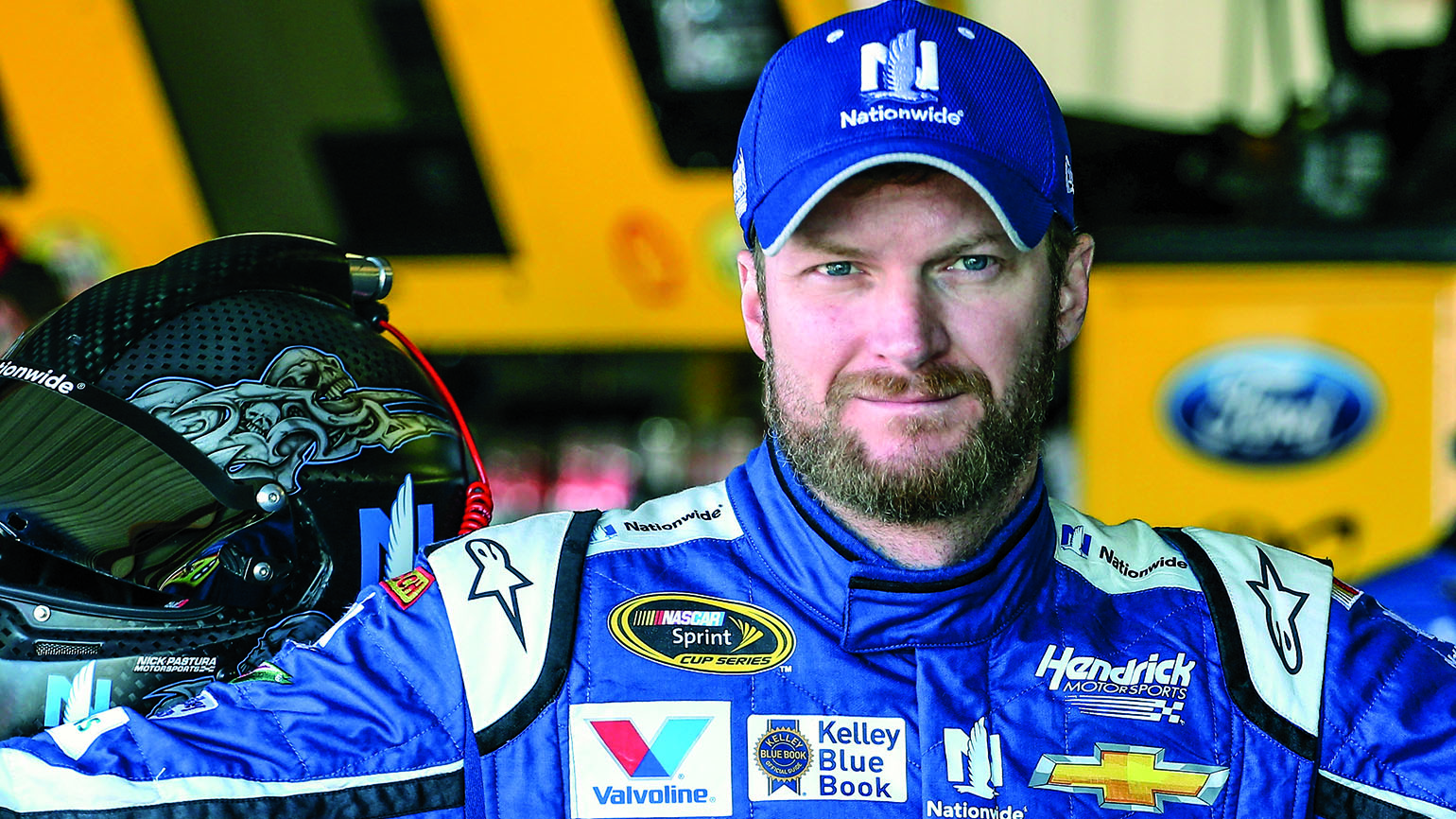
It happened in the blink of an eye. It was 2004. A normal day for professional race car driver Dale Earnhardt Jr. He was at California’s Sonoma Raceway, practicing for the American Le Mans Series race later that day. No one saw the accident coming.

Dale miscalculated and took a turn too quickly. The Corvette he was driving spun out of control, clipping the wall and catching fire. It was later determined that the car’s fuel line had ruptured, leaking gasoline everywhere. All that was needed was a spark. As cars continued to drive past, the car burst into flames.

For Dale, the next few moments were a haze of smoke and confusion. He managed to unbuckle his seatbelt, but couldn’t see a way out. His mind went blank. Until someone pulled him from the driver’s seat.

“I thought that it was a corner worker because I felt somebody put their hands under my armpits and pull me out of the car,” Dale said in an episode of his podcast, The Dale Jr. Download. “I didn’t get out. I don’t have any memory of myself climbing out of the car.”

Emergency crews acted quickly. Dale was airlifted to University of California–Davis Medical Center and treated for second-degree burns to his face and legs. Dale knew he was lucky to be alive. His own father, race car driver Dale Earnhardt Sr., had been killed in a similar accident three years prior.

When Dale woke up in the hospital twelve hours later, he wanted to know who had saved him. He wanted to thank them. But when he asked for the person’s name, he was told he’d gotten out of the car on his own.

He couldn’t believe it, but photos of the crash confirmed eyewitness accounts. “There’s pictures of me lying on the ground next to the car,” said Dale. “And there was nobody there.”

While his injuries forced him to miss his next two races, Dale soon healed up and headed right back to the track. Despite the setback, that fall, Dale became the first driver to sweep the weekend at the Bristol Motor Speedway in Tennessee, winning both the Busch and Cup races.

It’s been years since the accident, but, according to Dale, just thinking about it still gives him chills. Now retired from racing and working as a NASCAR commentator, he still has no idea how he escaped that wreck. But one thing’s for certain: Someone was looking out for him that day.

Did you enjoy this story? Subscribe to Mysterious Ways magazine.

Curtain Call

Sitting up in my hospital bed, I stared at the night sky, unable to sleep. A few days earlier I’d fallen and fractured my left hip on the sidewalk outside my Manhattan apartment.

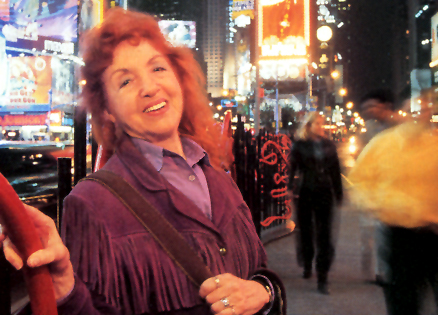
But my surgery had been a success, and I was ready to go home. Tomorrow! I thought. I can have my hair done! As a professional entertainer since I was 18, I know the value of looking your best, especially in New York City. A producer might spot you just walking your dog on Broadway!

I glanced at the ugly aluminum walker parked in a corner of the room. “Waiting for me, are you?” I said disdainfully. I’d already taken it for a trial run around the corridors. It made me feel like an old lady. Definitely not my style.

“I’m a performer!” I announced to the stars beyond my window, feeling free to express myself since no one shared my room that night. I wished I could belt a song at the top of my lungs, and blast a few notes on a trumpet as I had when I played Mazeppa in the Broadway show Gypsy with Ethel Merman.

I wanted to throw off my blankets and dance, just like my character Princess Ticklefeather on the Wonderama and Bozo the Clown TV series. Movie roles flashed through my mind, and I could picture myself playing scenes for Woody Allen in Radio Days. It seemed as if he’d directed me only yesterday. He sure won’t cast me if I’m hobbling around with a walker. Were memories all I had left of my career?

Doctors had inserted four pins in my hip to help it heal. Many weeks of rest and recovery were necessary, they’d told me. And I wasn’t a teenager anymore, even though working made me feel like one. My partner, Nino Tello, and I performed everything from pop songs to opera, singing and dancing in clubs and theaters from New York to Las Vegas.

Between engagements we rehearsed and chose new material and costumes. Being an entertainer was more than a living, it was my life. I couldn’t imagine myself doing anything else. I loved performing, giving audiences happiness to take home.

I could still see individual faces lit up: an entire front row in Chicago, a young woman laughing in Poughkeepsie, children in Florida clapping in time with the music. I closed my eyes, trying to shut out that walker in the corner. Will I ever be able to perform again?

There was noise in the hall, and the door opened. “You have company,” said a nurse. She pushed a wheelchair into the room, then helped a patient into the bed next to mine.

The woman was crying and wringing her hands. Her pale face was taut with pain. “Doesn’t speak English, I’m afraid,” the nurse said just before leaving.

The new patient appeared to be in her 70s. She continued to cry, mumbling to herself. I recognized her language was Russian, but I also heard Yiddish words from songs I’d learned when I was a girl. I didn’t know nearly enough to make sense of what she was saying. I wanted to help her, but how?

My roommate had calmed down some the next morning as I waited in a wheelchair for Nino to take me home. When she looked in my direction, I decided to try something.

“Yiddish?” I asked. There was a flicker in her eyes, and she nodded. Then I used words I remembered, telling her she was a shayna madel, which means a nice young girl. She smiled, and nodded again. I figured we were about the same age, so in Yiddish I said, “You’re a nice young girl, and I’m a nice young girl too!”

The woman’s face brightened—one of those I’d always remember, I was sure—and I suddenly recalled a Russian song I’d sung on the radio years ago. I’d learned it by rote, barely understanding the words. But there was an expectant expression on the woman’s face, something I’d seen hundreds of times in the theater. I decided to give it my all.

Sitting up as straight as I could, I brushed back my hair, thrust out my arms and began to sing.

The woman’s eyes sparkled. She started singing along with me. Soon the pain disappeared from her face. We sang together, smiling and clapping in rhythm, louder and louder, till we ended with a spirited “Ya!” Then the woman continued clapping, raising her hands in applause. I bent forward in my chair and took a bow.

Outside I felt embarrassed about what I’d done. Nino helped me struggle with my horrid walker, trying to maneuver me into the front seat of the car without damaging my hip. “I just made a fool of myself,” I told him, explaining how I’d sung for my Russian roommate. “But it seemed to make her feel better.”

“You find an audience wherever you are, don’t you, Doris?” Nino said.

“Very funny,” I said. The sound of the woman’s applause now rang hollow. You really got carried away, I told myself. I’d never perform again. I’d just have to accept it. I settled into the seat and Nino stowed the walker in the trunk. “Look what’s become of me,” I sighed.

“You’re beautiful,” Nino responded with a wink. “And younger than ever.”

“Flatterer,” I muttered, closing my eyes. But as we started on our way I realized I felt strong, filled with energy. I flipped down the sun visor to look in the mirror. I was startled to see fresh color in my face, and a sparkle in my eyes just like the Russian woman’s.

Thinking of her again, I turned to glance at the hospital, and the most amazing vision greeted me floating above the backseat of the car—an astonishing figure, a blond woman in a flowing gown, lovelier than anyone I’d ever seen. Her face emanated warmth, and her arms reached toward me in appreciation and love.

“You’re wonderful,” she seemed to be saying. She made me feel fulfilled, the way I felt after being applauded in the theater. Doris, I realized, you’ve just given a performance! It wasn’t over for me at all. Nino had been right: I’d been onstage, even while recovering in a hospital. I was still an entertainer!

After the first few weeks of physical therapy I got rid of that walker. I tied a ribbon on a cane and was soon strutting around the house. Nino and I are now booking new engagements, and I’m walking down Broadway in style. My lovely vision lasted only a moment, but God had raised the curtain. The show will go on.

Could She Reconnect with a Long-Lost Friend?

It hit me in the middle of the checkout line at Marshall’s. I was thirsty. As thirsty as a camel. I couldn’t wait another minute to get something to drink. But four days before Christmas, the place was packed. The line? Moving like molasses. Just ahead, though, I saw something by the registers, like a mirage in the desert. A refrigerator of drinks. I abandoned my cart and headed straight to it, only one thought on my mind—getting an ice-cold Coca-Cola.

I needed the pick-me-up. And not just because of thirst. It hadn’t been the easiest holiday season. My neurofibromatosis—a condition that causes benign tumors to grow all over my body—had resurfaced with a vengeance. I’d had seven surgeries in the past year alone to remove tumors from my face and mouth. Each operation left me slightly disfigured and even more self-conscious. Alone. Just as I’d felt as a teenager, when I was first diagnosed. Now both my parents were gone. I’d been divorced for almost as long. I didn’t have kids or grandkids. And I didn’t want to overburden my sisters and brother with all I was going through. Leave it to Christmastime to make you feel as lonely and grumpy as Scrooge.

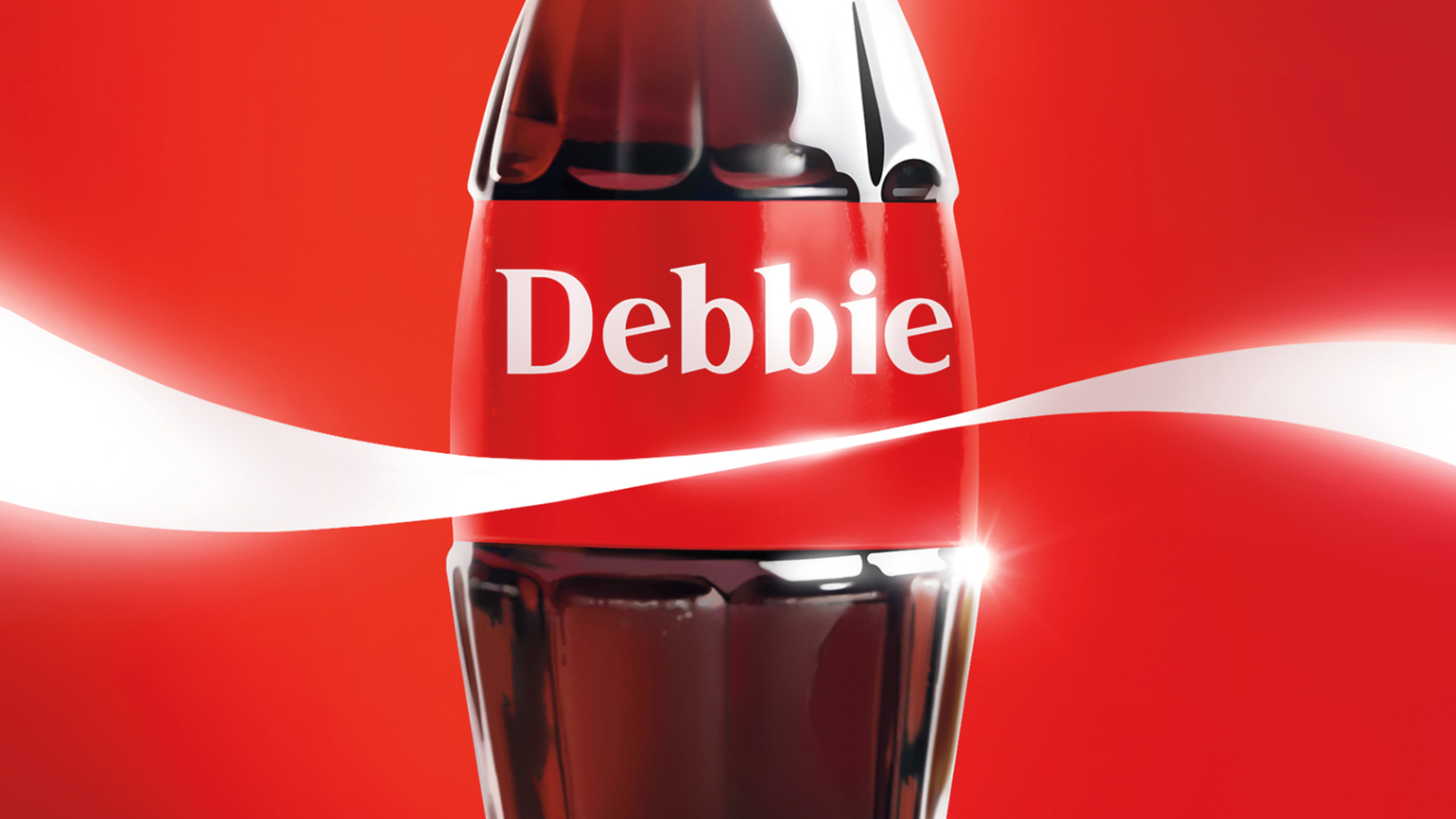
I opened the refrigerator and reached for a Coke. I took a sip, then looked to see if the bottle was one with a person’s name printed on it in big letters. I’d taken to praying for anyone I knew with the same name. I turned the bottle and—

Debbie.

I knew a Debbie, all right. My childhood best friend. I’d adored her from the moment we met. June of 1963. She was 10. I was 8. Her mom had just married my uncle Pat, my mom’s brother. It was a second marriage for Debbie’s mom.

“Meet your new cousin,” Uncle Pat told me the day he arrived from Cleveland to introduce his new wife and her children to my family. We lived in a small town in West Virginia. Uncle Pat worked for General Motors and always drove a flashy car. Everything about him and his beautiful family radiated big-city glamour.

Especially Debbie. I’d never seen anyone quite like her. She was petite with thick blonde hair cut above her shoulders. And just about the most winsome smile ever. “Do you like dolls?” she said. We went straight to my room to play. She knew about fancy foods like Swiss cheese and asparagus. She listed her favorite Motown tunes and taught me how to harmonize. Debbie genuinely seemed to want to be friends. Even though I was an awkward, ungainly child, already experiencing the initial symptoms of neurofibromatosis.

We weren’t technically cousins, even if she went by Uncle Pat’s last name. She wasn’t a Murphy by blood. For a while, though, I pretended we were just like Patty Lane and her “identical cousin” Cathy on The Patty Duke Show. After Debbie and her family returned to Cleveland, I vowed to walk, talk and act the way she did. No more West Virginia hillbilly twang for me. I wanted to be just like Debbie.

Five years after we first met, I got a chance to see Debbie in her element. My neurofibromatosis became acute, covering my face and skull in tumors. Just about the worst thing that could happen to a 13-year-old. Doctors in our area lacked the resources to treat me. My parents put me on a train to Cleveland so I could undergo surgery at the Cleveland Clinic. I’d stay at Uncle Pat’s while I recovered.

I assumed Debbie would want nothing to do with me now that she was 15, that she’d be wrapped up in her friends and probably dating some cool older boy. I would’ve been content to study her from afar. But she was overjoyed to see me. She insisted I move into her room to recuperate post-surgery. She made sure the kitchen was stocked with all my favorite foods— Swiss cheese and asparagus!—and helped me cover my scars with makeup and a wig.

We vowed to stay best friends forever. If only we had.

Debbie and I saw each other on and off after high school. Despite her generosity, I remained self-conscious about my illness, embarrassed by my looks. The worse it got, the more I pulled away. Part of me never believed Debbie wanted to be friends in the first place. What could I possibly offer her?

Then my mom died. There was a misunderstanding about a combination of things. Debbie and I lost contact. Years passed, then decades.

I stared at the Coke bottle now, emotions swirling inside me. What could I ask God to do for Debbie all these years later?

Please, Lord, take care of Debbie. Thank you for all she meant to me. How I’d love to see her again….

Next in line to pay, I reached into my shopping cart. That’s when I heard a voice from within, speaking straight to my heart.

Write Debbie a letter right away and tell her exactly how you feel, Roberta. Don’t leave anything out. Trust me to handle the rest….

Wait. Write to Debbie? What an idea—I couldn’t just write to a long-lost relative who wasn’t really my relative. I didn’t have her address. She’d married ages ago. She was no longer a Murphy, even in name. Besides, what would I say?

I pushed the crazy thought out of my head and paid for my purchases. Next stop on my to-do list: HomeGoods. I was comparing items in the decorations aisle when an announcement came over the PA.

“Debbie Murphy, please report to customer service. Debbie Murphy…”

I nearly fell into a rack of wreaths. There was no way my Debbie was actually in this store. Still, I got the message loud and clear. I drove home and mailed a letter to the last address I had for Debbie’s mother. Uncle Pat had died, but hopefully her mom would pass along my note.

Christmas came and went. Days later, the phone rang.

“Roberta?” That big-city accent.

“Debbie?” I said.

Before I knew it, we were talking over each other, apologizing, saying how much we’d missed each other. That misunderstanding after Mom died? In the past.

“I thought you were upset,” Debbie said.

“I thought you were!” I said. “Did your mom give you my letter?”

Debbie went silent. “Roberta, my mom passed away,” she said. “My brother is living in her house, and he’s the one who passed along the letter. It’s been a hard Christmas. You have no idea how well-timed your letter was. I’ve missed you so much. I don’t know if you realized how much you meant to me, growing up. You were so brave, so beautiful, so kind. I always wished I were more like you.”

Debbie wanted to be more like me? I filled her in on what’d been going on in my life, my continued health problems. It felt so nice to talk to someone who understood all I’d gone through back in the day.

“I’m here whenever you need me,” Debbie said. “Just promise we won’t lose touch again.”

She gave me her new name and address. I got off the phone, smiling. Then I felt another prompting in my spirit: Design some pretty address labels for Debbie as a belated Christmas gift…

Why not? With the Christmas rush over, I got right to work. Her address fit the space perfectly, and I had room to include Murphy too.

A few days after I sent off the package, Debbie called. “Roberta, I’m so thrilled I can hardly breathe,” she said. “The labels are beautiful. But I have to confess, the Murphy stopped me cold.”

Oh great! I’d made a mistake! So much for our renewed friendship. While I was choosing the right words for my apology, Debbie continued.

“I didn’t get a chance to tell you the other day,” she said. “I completely forgot in all the excitement.”

“What?” I said.

“Well, before my mother died, she shared a secret with me,” Debbie said. “Your uncle Pat was my biological father, Roberta. Naturally, it was a shock. But you know what that means, right? For you and me?”

Honest-to-God cousins. Best friends. Reunited when we needed each other most.

Comfort from a Message in a Bottle

Yesterday I got two emails from colleagues about my blog: Senior Editor Celeste McCauley wrote, “Maybe something for MW online…” and provided a link to a news story. Editor Nikki Notare simply said, “Maybe something for your blog?” with a link.

To the same story. Great minds really do think alike.

The story was about a note, a scrap of paper, rolled tightly and sealed in a green bottle, the type that had once held ginger ale. “Be excellent to yourself, dude,” it said, written clearly but with random capital letters and a slight shakiness: the still-developing penmanship of a child. In the bottom left corner, in smaller print, the author had written, “If you get this, call,” and left a telephone number.

It was the Thanksgiving after Superstorm Sandy, and all day, workers from the town of Patchogue on the south shore of Long Island had been clearing the beach of storm debris. Among the splintered wood of ruined docks, tangled fishing lines, tattered boating gear and heaps of trash, the bottle hadn’t stood out. Until one of the clean-up crew noticed something was inside.

Brian Waldron, a Patchogue parks department employee, called the number on the note and left a message. He soon received a call from Mimi Fery; upon hearing the note’s contents, she broke down in tears.

She recognized the line, “Be excellent,” from her daughter Sidonie’s favorite movie, Bill & Ted’s Excellent Adventure. A creative, artistic girl who loved to write poetry, Sidonie had tossed the note into the bay while visiting friends 12 years earlier, when she was just 10 years old. But in 2010, tragedy struck the Fery family. While at boarding school in Switzerland, Sidonie fell to her death from a cliff during a mountainside hike.

Brian delivered the note to Mimi, who was overjoyed to receive it. “I told her I felt like her daughter was looking down from heaven and wanted me to give her a call,” he told the Associated Press.

Now the note is kept in a bottle by Sidonie’s picture, a continuing comfort to her grieving family.

My colleagues aren’t the only ones I count on to find these kinds of stories. Have you heard or read about an incredible circumstance that defies the odds? Send the story to us!

Comfort at His Darkest Moment

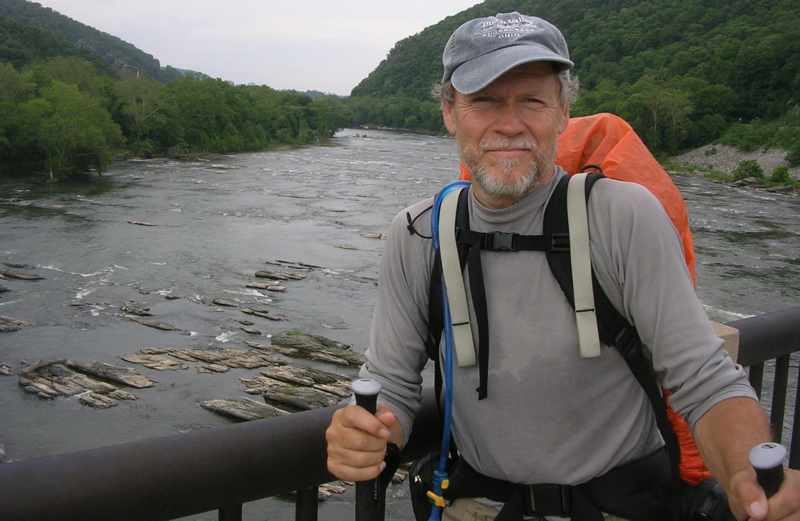
When I got off the phone with author, adventurer and wanderer Paul Stutzman, I was so inspired that I actually considered trading in my city flats for hiking boots!

Paul’s wife, Mary, passed away from breast cancer in 2006, prompting him to quit his job and hike 2,176 miles on the Appalachian Trail. That incredible journey of rediscovering God is chronicled in his book Hiking Through. Paul has also kayaked the Mississippi River and biked across America, all the way from the top of Washington State to the tip of Florida. Through it all, he’s encountered quite a bit of God’s wonder.

But there was one experience that took his breath away. The most dramatic of all the miracles in his life. Something that happened in his deepest, darkest valley. Here’s what Paul had to say.

After my wife passed away, my pastor said, “You need to look for signs because God’s going to give you signs that are just for you.”

My wife loved monarch butterflies. They’re known as wanderers because they travel around the world. Every fall, she would collect these little chrysalises and bring them home so she could watch them spin and hatch. She’d call our three kids together and say, “Watch this miracle, this butterfly emerging.” Then she’d take the butterflies out on the front porch and release them. Well, I never got her fascination. I was never excited about it. It never made sense to me. Until she passed away.

The day of her funeral, someone brought me a bouquet of flowers and I noticed there was a little chrysalis attached. When I got home, I was emotionally exhausted and, for the first time in years, completely alone. I didn’t want to go to bed, so I reclined in my chair in deep contemplation of my situation and fell asleep. At 2 o’clock in the morning, I woke up to a rustling noise. Right above my head, near the light and flying in circles, was a monarch butterfly! It had hatched.

I’ve now got a butterfly in my house. So I turned the light off in my living room, turned the light on in the kitchen. And this butterfly just followed the light. Turned the light off in the kitchen, turned the foyer light on. It went to the foyer. Turned the foyer light off, turned the outside porch light on. And this beautiful butterfly winged out into the night.

After I closed the door, it hit me. My wife had done the same thing. She followed the light and she was free now from all the chemo, pain and suffering. For that to have happened the night my wife was buried… that was a miracle right there. That was a miracle from God.

Before going back to sleep that night, I fell to my knees and asked God what he wanted me to do. That is when the idea of quitting my job and hiking the Appalachian Trail entered my mind. A little over a year later, I did just that.

Check out Paul’s books!

Do you have a great miracle you just have to share? Email me for a chance to be featured on this blog! And be sure to read more about Paul’s amazing adventures with God.

Coincidences—or Blessings?

Each week, I scan the news to find those little “twists of fate,” those “mysterious moments,” those “strange coincidences” that have changed people’s lives. Are all of these instances of a greater force at work? Maybe, maybe not. You decide.

1. Mike Barth, an information-technology worker in upstate New York, was waiting in line to buy a lottery ticket for himself and six coworkers when a rude man cut in front of him. Mike debated saying something, but decided against a confrontation.

The man in front chose a “quick pick,” where the lottery machine chooses the numbers randomly, as did Mike.

The man who cut in front wasn’t a lucky winner. But Mike? He and his coworkers won one of the largest lottery jackpots in U.S. history.

Now, I’d say God has better things to do with his time than pick lottery winners.

But then again, Mike is from a little town in upstate New York called…Bethlehem.

Let’s hope the winners do something good with that money.

You can read the full story here.

2. There stands a gravestone in Oak Burr Cemetery, located just outside the city of Chicago. It reads: “John Wesley Donaldson, legendary left-handed pitcher in Negro League Baseball.”

The grave didn’t exist a few years ago. It was an unmarked plot for a forgotten man. Satchel Paige was the legendary lefty in the Negro League. Most people had heard of him. John Wesley Donaldson? Who was he?

Peter Gorton, a Minneapolis lawyer, had never heard of him either. His former social-studies teacher was writing a book about African-Americans in baseball and asked Peter to help out with some research. Peter found his way to the historical society in the small town of Bertha, where he inquired about Negro League ballplayers. The curator showed John a framed old newspaper with a big story about John Donaldson and his legendary exploits. But looking closer, Peter recognized someone.

Himself.

Right below the picture of Donaldson was an article about the 1987-’88 District 24 Champion Staples Fighting Cardinals High School basketball team. Peter was in the team photo.

Amazed at the coincidence, Peter vowed to find out everything he could about Donaldson. What he found astounded him even more. Once he dug up the old box scores from decades-old microfilm and musty, yellowed books, Peter added them together and found that Donaldson’s stats rivaled those of Paige—and every other great pitcher.

On his quest for knowledge, Peter found Donaldson’s death records and located the legendary lefty’s final resting place. Given a row number and lot number, he visited the spot. There was no marker. Nothing to remember that such an accomplished man was buried there.

Now there is, thanks largely to Peter’s efforts. And an improbably placed photograph.

You can read the full story here.

3. Stefani Germanotta was embarking on a promising music career, something she’d dreamed about her whole life. But the name Germanotta just didn’t sound like one that would sell records. She and her producer struggled to come up with a catchy stage name.

Stefani loved the music of Queen, especially one song, which she and her producer listened to before many of their recording sessions. One day, the producer sent her a text message referencing the song.

Only he made a spelling error. And the phone’s predictive text produced a different word than the producer intended. Too late. The message had already been sent. Queen’s “Radio Gaga” became “Lady Gaga.”

And so did Stefani.

Her music (and her outfits) may not be for everyone, but there’s no denying that the name Lady Gaga helped propel her to stardom.

You can read the full story here.

Maybe these moments weren’t entirely God’s work, but in each of these cases, they nudged people on a slightly different path, creating enormous rewards.

Have you had a similar experience? A rude encounter that you’re eternally grateful for? A chance discovery that set you on a new path, or helped you right a wrong? A blundered email, text or phone call that turned out to be the best mistake you ever made? Tell us your story in the comments below, or email us at mw@guideposts.org.

Church Bells Ring

Mrs. Webb was blind and frail and her health had been declining for many months. She and her husband lived in the shadow of our church, Headland First Baptist.

On New Year’s Eve she went to bed early as usual while Mr. Webb watched TV. Then unexpectedly at 10:30, she came into the living room and announced, “Honey, I think we should stay up until midnight and hear the church bells ring.”

In all the years they had lived in town, Mr. Webb could not remember hearing church bells at midnight on New Year’s Eve. As far as he could recall, the bell at First Baptist had not been rung in over 17 years. Nevertheless Mr. Webb replied, “Of course, dear, come and sit beside me. We’ll see the new year in together.”

And so they sat and talked, waiting. Midnight came and with it the unmistakable sound of a church bell. “There it is,” Mrs. Webb said, and indeed, the bell high in the steeple at First Baptist was ringing.

That was to be the last night that this old married couple was to spend together, for in the morning Mrs. Webb died peacefully in her sleep.

Mr. Webb did not know that the bell at First Baptist had only recently been fixed. Nor did he know that a youth group was spending the night in the church in a “lock in,” or that on the spur of the moment the young people would decide to ring in the new year.

His wife knew none of these things either, but somehow she knew the bell would toll.

Car Trouble and a Blessing in Disguise

Last weekend, while parallel parking on 5th Street in the East Village, my tire briefly went up on the curb and then rolled back off, slamming my car down with a loud bang. I got out to survey the damage and saw that my front bumper was hanging off. It was a Sunday, and I called all the garages I could find, but no one was open anywhere near my New York neighborhood. I left the car parked overnight until I could bring it to a garage on Monday.

When I returned after work the next day, I was struck by a sad sight. From front hood to rear tail lights, my black, shiny car was completely covered in icky white bird droppings. With the bumper hanging off and the polka dot paint job left by the feathered culprits, my poor car looked like it had narrowly escaped some apocalyptic disaster.

My mom and her cousin were in the city Monday evening to visit an elderly relative, so I met up with them for dinner. It was the first time my mom’s cousin had been back to the East Village since her father, my great uncle Moe (who grew up in the area), passed away earlier this year. We got to talking, and she mentioned wanting to see the garage where her father worked as a mechanic for so many years. On East 5th Street. Right across from where I was parked.

I hadn’t realized until then. What a coincidence, that my car should run into trouble right across from where my great uncle once plied his trade.

I brought the car to a mechanic that evening. Thankfully, he didn’t laugh at my car’s sorry state. His English was heavily accented, and as he worked, I could almost picture my Uncle Moe, who had a thick Yiddish accent, screwing the bumper back on. It was fixed in less than 10 minutes, and cost $20. I had no time, though, before Yom Kippur, to get the car washed.

On the Day of Atonement, parked at my in-laws’ house, my wife’s 89-year-old grandmother took one look at the car in the driveway and laughed. “I know, I know,” I said. “It’s gross.”

“No, this is good,” she said with a smile. “Don’t you know? It’s a sign of good luck and blessings. And you got a lot of them! It means you’ll have a good new year.”

I hadn’t heard that before about bird droppings, but I’m not one to argue with the matriarch of the family. It did make me think though. Uncle Moe had a great sense of humor… if he was going to reach out, this was certainly a funny way to do it.

I suppose if you’re like me, and you look for Mysterious Ways every day, you’ll start to see them everywhere. But I don’t see it as some silly delusion. Maybe a fender-bender is simply that. Maybe a flock of birds isn’t delivering a message. But if a small everyday experience can get me to think about God, and what lies just beyond what we can see, then I don’t think that’s such a bad thing.

Have you had an everyday experience—something annoying, something embarrassing, something frustrating—only to see it later in a completely different light? Did the experience move you in a powerful way? Send your story to us or share in the comments below.

Bubba’s Miraculous Encounter with God

Another Sunday evening. I sat in front of the TV, watching football and eating what I called a tuna special—tuna with whatever hap­pened to be in the fridge. I wasn’t much of a cook. I’d eaten a lot of tuna specials since my wife and I separated a year earlier. Our marriage just couldn’t withstand the grief we’d endured since losing two of our kids. Our son James was born prematurely and lived only 10 days. His older brother, Robert, died six years later at 18 of kidney disease. Not a day passed that I didn’t think of them.

I worked as a landscaper. I had a lot of time to myself as I tended gar­dens and mowed lawns. My hobby was metal detecting. I’d found all sorts of old and rare coins. That was something I did alone too. My brother, who owned the landscaping company I worked for, told me I needed to get out more. I knew he was right. I just couldn’t bring myself to do anything about it. I guess I could have gone to church. I believed in God, though I constantly wrestled with the question—if God was so holy and peaceful, why was there so much pain and violence in the world? Even in the Bible? I didn’t blame God for what happened to my sons. Still, sometimes I wondered where he’d been then. Had he even noticed?

Some tuna specials were better than others. This one was giving me indigestion. Maybe a walk would help. I lived on a rural road and it was pitch-dark, but I knew my way.

Outside was a cold, moonless November night. I turned right toward town, as I usually did. Up ahead, I saw some rowdy guys by the side of the road—they appeared drunk. I didn’t need them ruining my evening. I turned the other way. No streetlights there, but I didn’t mind. It was just the road and the woods. I wasn’t planning on going far.

I walked a while, then turned around for home. I saw what looked like headlights coming down the road. I stepped onto the shoulder to get out of the way. The ground was oddly soft. I felt myself slip on some wet leaves. Suddenly the earth gave way. I was falling! Plunging headfirst into nothingness. I landed hard. There was a bright flash and a sharp pain in my head. My ribs cracked. My spine twisted. Then I lost consciousness.

When I came to, I was on my back. Through the gloom I could make out a culvert—a large, rectangular open drain of sorts. I must have stepped off the edge of it in the darkness. I was splayed out on jagged rocks beneath it, where water flowed when it rained. Concrete walls on either side of the culvert obstructed my view—I couldn’t see the road above.

I felt massive pressure in my chest. I tried to call for help, but the only sound was a barely audible wheeze. Something trickled down my face. I reached up, and my fingers brushed a massive gash on my head.

You’re in bad shape, Bubba…. You’ve gotta think!

No one knew I was here. No one could even see down here from the road. I had to get up there somehow and hope a passing car saw me. Could I move?

I tried to sit up. Pain seared through my whole body, especially my back. My left arm didn’t work too well. Just move, I told myself. I managed to get on all fours and crawl toward the embankment that led up from the culvert. Every inch was agony.

I reached the embankment and struggled through tangled undergrowth, pulling myself up with branches and tree trunks. It felt like climbing Mount Everest. In my heart, I knew I’d never survive. My only thought was to get up the embankment, so my body would be easier to find later.

My hand bumped into something large and smooth, lying on the ground. A fallen log, probably stripped smooth from age. It was near the road—I could see that. I wrapped an arm around it and hauled myself partly over it, resting on its surface. I put my head on the smooth wood. A good place to die…

Just as I was closing my eyes, the darkness around me seemed to lighten. Was it morning? It couldn’t be. I hadn’t been down there for more than an hour. The brightness intensified. For a moment, it was like I was back in my childhood bedroom and my parents had come in to wake me early for a trip. The light grew and grew until it was almost blinding.

I squinted. The brightness was so powerful, so dazzling, that I could see everything in the wooded area around me with crystal clarity. The log I clung to, I realized, was old indeed, weathered smooth by time and somewhat hollowed out at the ends, home to insects and other creatures. A universe unto itself.

Wind swirled the leaves and tossed the branches above. I glanced up. A man was walking toward me. Someone else out for a stroll? The figure stood just a few feet away. At his arrival, my pain subsided. He had a kind, weathered face and a long beard. He wore a robe. The man was not alone. Two children were with him. One, a teenager. The other, a baby.

I gasped. James and Robert! My sons! How? How was it possible?

I looked at the figure again, desperate for answers. The air around him sparkled with iridescence. The questions faded from my mind. And I knew without a doubt. I was staring into the face of God.

The wind quieted. The woods became utterly still.

“I’m ready to come to you, God!” I cried out.

A voice spoke inside me. “It’s not your time, Jim. There are things left for you to do for me.”

“Me?” I said, breathless. “I’m no one special. I don’t go to church. I don’t even read the Bible!”

“You are special because you are my child. You don’t have to know the Bible to know me. My blessing is in everything. Learn to see those blessings and treasure them. Then tell everyone about me….”

It felt as if we talked for a long time. But I never spoke to my sons. I didn’t have to. I knew they were with God, that they were cared for. For the first time in my life, I was filled with indescribable peace. I wanted the feeling to go on and on. I wanted to lie on that log forever!

But the light began to fade. The figure receded. My sons too. The wind moved again, rustling the trees. The dark night returned. And, with it, agonizing pain.

This time, though, I didn’t mind. I knew now there was nothing to fear. I had things I needed to do for God. I couldn’t waste time. I had to get up. I pulled myself to my feet. How, ex­actly, I couldn’t say.

I wasn’t able to stand up straight—my back hurt too much and my legs barely worked. But somehow I hobbled across the road to the nearest house. I knocked on the door. It creaked open.

“Help,” I wheezed.

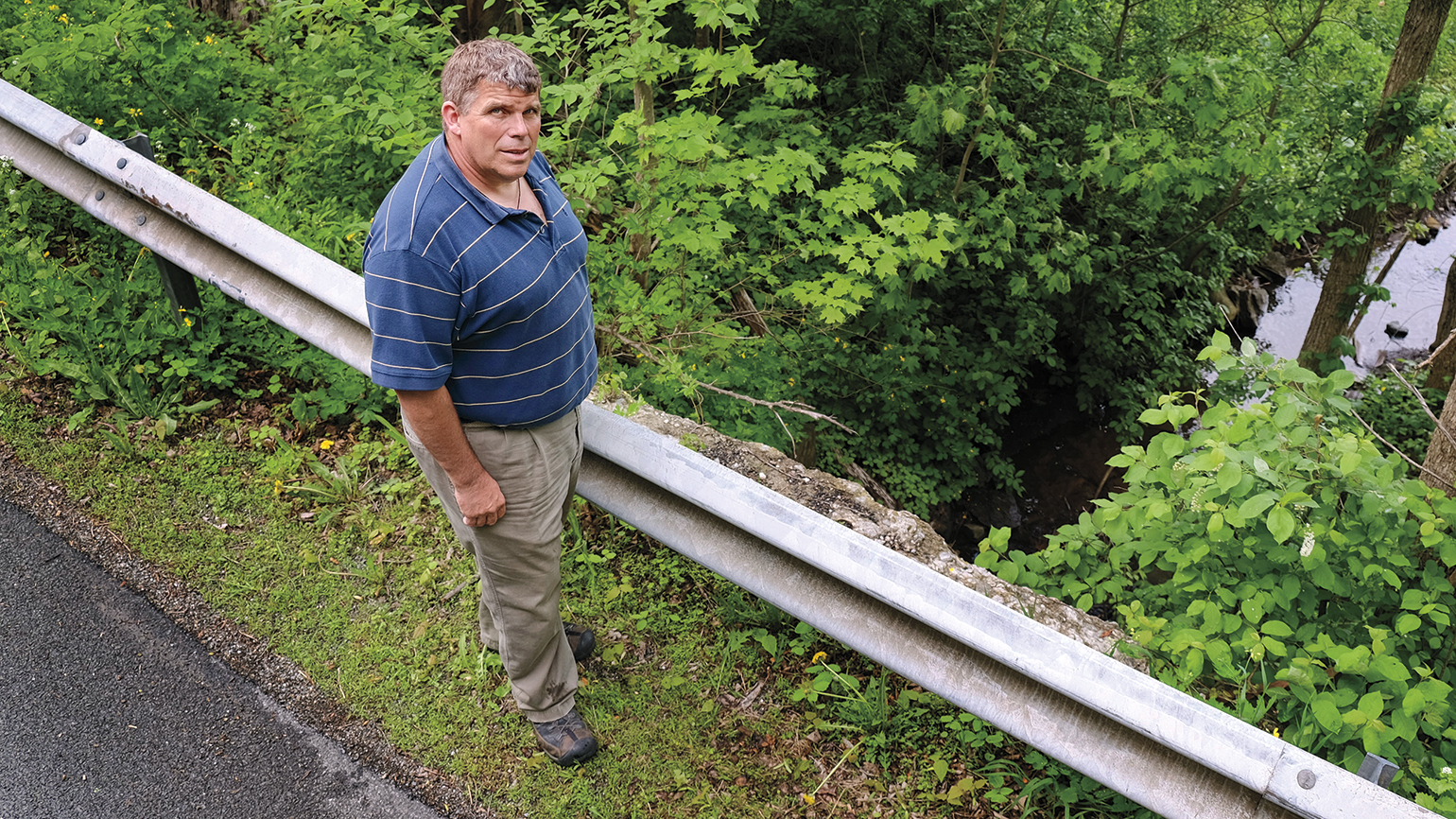
When I woke up in the hospital, I learned I’d been in a coma for seven days. My skull was cracked. My shoulder blade, 11 ribs and 10 vertebrae were broken. Turned out, a guardrail above the culvert had washed out years ago and I’d stepped right off the edge. I’d fallen 14 feet.

My brother came to visit. I knew I had to talk about what happened. But part of me wasn’t sure if I’d imagined it all. I’d suffered a head injury, after all. Maybe I’d made up that whole part about the log. Did it even exist? Had I been hallucinating?

“Bubba, how did you crawl back up to the road?” my brother asked me.

I opened my mouth to tell him about seeing God…and hesitated. “I think,” I finally said, “I think I saw God.”

My brother looked skeptical. “You were in pretty bad shape,” he said.

I told him about the log. The light. Seeing my kids.

My brother’s face changed. “A smooth log?” he said. “You’re sure? How were you able to see it in the darkness?”

“I saw every inch of it,” I said. “The light was so bright!”

I couldn’t tell if he thought I was nuts. Maybe I was. But later, when I was transferred to rehab, he took me to the computer room and pulled up a photo. “I took this the morning after you fell,” he said, showing me an image of the area around the culvert. “You can’t see it, but there was blood everywhere.”

And there, near the top of the embankment by the side of the road, was an old log. The same one I’d described to my brother, straight out of a coma.

It was not just another Sunday evening.

Breaking Down the Mystery of Speaking in Tongues

The controversial practice of speaking in tongues—glossolalia—is a puzzle to me. Not just that I don’t do it. But I also wonder how on earth others do. My preferred way of praying is to sit silently on the New York subway in the morning, my eyes closed.

I remember walking by a storefront church once with a friend and hearing what sounded like cacophony. “They’re praying in tongues,” my friend told me. Really?

I can accept talking in tongues in its historical context. Back in the first century, the disciples gathered in Jerusalem after Jesus’ resurrection and the Holy Spirit descended on them—veritable “flames of fire.” The apostles began to speak in different tongues, languages they had no knowledge of. More importantly, they were heard in the languages they spoke.

The great poet W.H. Auden once observed that what happened at Pentecost was more a gift of hearing than of speaking. That settled it for me. Under the right circumstances, believers could call on heavenly power to communicate. But what I heard coming out of that storefront church? That was something else. Ecstatic utterances, people raising their hands, eyes closed. Fervent requests voiced in what frankly sounded like utter gibberish. I was tempted to react more like some of the bystanders did that first Pentecost—they figured the disciples were drunk. The Holy Spirit? More like liquid spirits!

And yet, the phenomenon is well-documented and has persisted since the early days of the church. In America, its widespread practice dates back to the Azusa Street Revival in Los Angeles in 1906. The Holy Spirit descended, miracles occurred and Pentecostalism began its worldwide spread. Still, I never really knew anyone who actually spoke in tongues. It just seemed so outlandish. Imagine my surprise, then, when in the offices of Guideposts, my first boss and much beloved editor Van Varner said, “You know John speaks in tongues.” John? John Sherrill? John and his wife, Elizabeth – Tibby, as she’s known – were hallowed editors at Guideposts. The journalistic talent behind such classics as David Wilkerson’s The Cross and the Switchblade and Corrie Ten Boom’s The Hiding Place.

John was a World War II veteran and a wise, gregarious, generous man. He and Tibby met in college in Switzerland after the war. For years, he and Tibby had been members in the famously staid Episcopal Church, the same faith tradition my wife and I followed. I considered them dear colleagues and friends. But speaking in tongues? John? I labeled it as a quirk of his and paid it no more attention. Until recently. A year ago, John died at the age of 94. I attended his funeral. Much was said about his passion for prayer but nothing about…praying in tongues. As if it was some kind of family secret.

Then, a few months after the funeral, I was at work and noticed a book of John’s sitting on my shelf, They Speak in Other Tongues. A best-seller since its release in 1964. But I had never opened it. The one book of John’s I’d never read. Maybe the topic embarrassed me. Maybe I was just resistant. But, then, I’ve learned that resistance can be a sign that I’m avoiding something that needs my attention—now. With some trepidation, I turned to the book. John certainly did his research. He presented case after case of eyewitness accounts. Like the scholar of ancient Arabic who recognized someone speaking an esoteric language. A language she knew well but the speaker had no knowledge of. Or a Jewish man at a religious service.

He looked over his shoulder to see who was praying for him in Hebrew, only to find an Irishman who had never spoken a word of Hebrew in his life. These are instances of what some scholars call xenoglossy. John also made recordings of people speaking in unknown tongues and asked a few linguists to listen to them. The experts didn’t recognize any specific language. But, at the same time, they could tell a recording of Tibby pretending to talk in tongues was a fake, mere gibberish. (So much for my dismissal of talking in tongues as gibberish!)

John even invited a woman who had the gift of tongues to come to his office at Guideposts. She asked if he had any special concerns. He mentioned how Tibby had been fretting over a story she was writing, near tears, the deadline looming. The woman placed her hands on John’s head and prayed for Tibby, first in English and then in tongues. John didn’t understand a word of it. But, as the woman spoke, he claimed he felt a wave of warmth pass from her hands into his head and swiftly down through his arms and chest. Later at home, he asked Tibby, innocently enough, how the manuscript was going. Done, she said with relief. She’d just mailed it in. The story seemed to write itself.

And then John had his own personal experience over 50 years ago in an Atlantic City hotel, at a religious convention he’d attended to investigate the phenomenon. A small group of ministers and social workers had gathered in one of the guest rooms to speak about their needs and concerns. Someone suggested they pray. John bowed his head. He listened to the voices around him and heard them dissolve into tongues. In all other instances he’d been the reporter, looking in from the outside. But now his defenses came down. A man’s voice said, “I believe John wants the baptism in the Spirit.” And then the group formed a circle around him. “Now the tongues swelled to a crescendo,” John recalled in his book. “I opened my mouth, wondering if I too could join in, but nothing happened.”

He sensed that he needed to look up. More than that, he needed to lift his hands and cry out. It was just the sort of gesture he’d always rejected as showy, but now felt compelled to do. He raised his hands and heard himself say, “Praise the Lord.” Soon he too was talking and praying in tongues. As he would on occasion for the rest of his life. The key to his turnaround—this is what really hit me—was that he acknowledged that journalistic objectivity could only take you so far. Only when John lifted his head and raised his hands heavenward did he experience something new and powerful. I closed John’s book. I’d heard him once say that praying in tongues was a way to say what was sometimes beyond words. And now I understood.

That loosening up, getting in touch, being “a fool for Christ.” Or, to quote Paul again, “We don’t know what we should pray but the Spirit itself prays for us with unexpressed groans.” I still don’t pray in tongues. But I am certainly more understanding of the phenomenon. What I am sure about prayer is that there are times when we don’t know what words to say—what we could possibly ask for, what we could possibly want. What a gift to have the prayer provided in words beyond understanding, knowing that they are heard by the One who understands all.

Bolstered by the Faith of Strangers

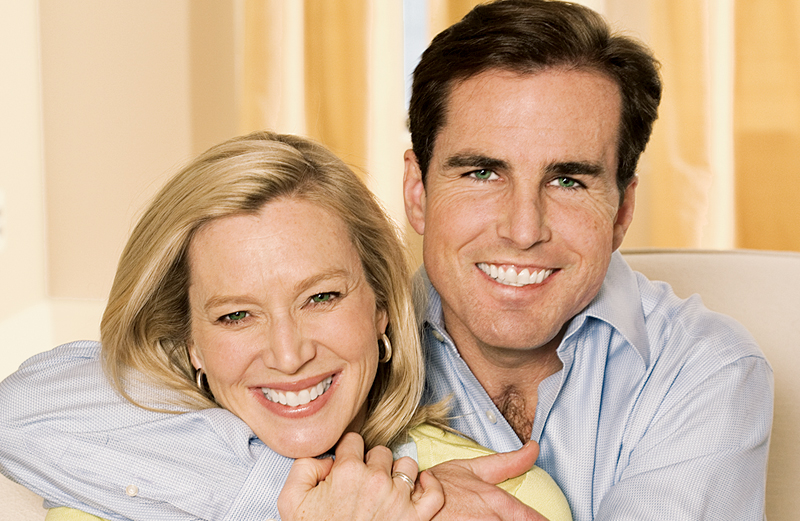
It was Bob’s fifth trip to Iraq, his first since becoming coanchor of ABC World News Tonight, and when I kissed him goodbye that morning last year, I was thinking about the exercise class I wanted to go to later that day and the logistics of taking our four kids to Disney World.

Obviously a national news anchor like Bob travels a lot, so I was used to handling things by myself. I didn’t usually worry about him. In fact, this time I didn’t really want to think of the danger he was facing at all. Better to block it all out of my mind.

Sunday morning, January 29, the call woke me up at the hotel in Disney World. It was the president of ABC News. “Lee, Bob has been wounded in Iraq,” he said, choosing his words carefully. “He’s alive but he may have taken shrapnel to the brain.”

I had to get out of that room—to think, to pray, to make some calls.

The kids were still asleep. I slipped on some clothes, grabbed my cell phone and dashed outside, my heart racing. There was a small lake outside the hotel and I set off around it at a fast pace. Part of me wanted to shout out at God, “Why us?”

Bob and I had had some tough moments in our marriage, including a time when I plunged into depression after a miscarriage. My faith had pulled me through and I was a stronger person for it.

Would the same faith sustain me now, even if the news got worse? I simply couldn’t imagine what life would be without my husband.

Cathryn, our 12-year-old, was awake when I got back inside. So was 14-year-old Mack. Mercifully the five-year-old twins were still asleep on the pullout couch.

“Guys,” I said, “Dad has been hurt in Iraq.” I told them what I’d learned, that Bob was riding in a tank with the army and something blew up, injuring him. “We don’t have a lot of information, but I know he’s getting great medical care.”

“He’s alive?” Cathryn asked, a quiver in her voice.

“Yes. They’re doing all they can for him.” Bob was being airlifted to Germany. I would go there immediately to see him. When he was stabilized, he’d come back to National Naval Medical Center in Bethesda. First we had to fly home to Westchester, outside of New York City.

I have to remain strong for our children, I told myself over and over. On the plane I fought to hide my tears. One thing at a time, I told myself. Just get everybody settled at home.

A big gray SUV pulled up in the driveway behind us when we drove in. Out stepped a friend. She already knew—and knew I had to go to Germany. She handed me a goodie bag for the plane with magazines, candy, gum, aspirin and a toothbrush. Then jumped into her car and drove away. Just like that.

It was the first indication of the huge network of friends and family that I would come to rely on over the next few months. They made Costco runs, took my children for playdates, drove them to soccer practices and confirmation classes and dropped off endless meals.

Bob’s brothers, my sisters, our parents all came and stayed with our children at various points, making it possible for me to be with Bob.

Bob was in intensive care when I got to Germany. The worst was true: The roadside IED had driven shrapnel into Bob’s head. They’d already removed half his skull to let his brain swell without crushing against the inside of the cranium and destroying brain function.

The doctors were guarded. Bob was young and in good shape, they said. He could recover. But for the first time I heard a phrase that would be repeated again and again: “It takes a long time for the brain to heal. Remember this is a marathon, not a sprint.”

Finally, I was allowed to see him. Nothing could have prepared me. He was unconscious. His head was swollen to the size of a rugby ball, deformed at the top where a piece of his skull was missing.

A ventilator tube had been inserted down his throat and all sorts of other tubes were coming out of his body, octopus-like. There were cuts and stitches on his cheeks, forehead and neck. His lips were swollen, his left eye looked like a dead fish.

I tried to convince myself that he didn’t look that bad, that this was the worst and he’d only get better from here. Then I leaned over and ever so gently kissed him through the hospital mask I wore. I spoke to him in a deliberate way that would continue for the next 35 days, hoping somehow he heard.

“I love you, sweetie. You’ve had an accident, but you’re going to be all right.”

Yet the shock of seeing my husband in that state was devastating. That roadside bomb in Iraq had ripped through all our lives. At least he’s alive, I kept telling myself. It’s a miracle that he’s alive.

I couldn’t fly with him to Bethesda, but he was given a quilt sewn by volunteers, the Heirloom Quilters Guild in West Jefferson, Ohio, signed by all the hospital staff.

Coming through customs, I had my first inkling of how fast our story had spread. I handed my passport through the Plexiglas window to the agent. She looked at it and her face softened. She squeezed my hand when she handed it back. “The nation’s thoughts and prayers are with you, Mrs. Woodruff,” she said.

What a powerful thing to hear! And how much I would need those prayers in the days and months ahead.

The routine began. At 6:30 every morning I would head over to the ICU at Bethesda from my friend’s home and check on Bob. He still hadn’t regained consciousness, though sometimes he opened his eyes.

In that overly cheery voice that a mother uses with her baby I would talk to him. I let him know about the kids. I told him stories about us, how we met and where we had lived, some of our best memories together. I brought music and had home movies for Bob to hear.

Friends had huge photos of the kids blown up and mounted them on the walls for Bob to see. His eyes were blank, but I told myself, Somewhere there’s a brain in there, healing.

Early mornings I swam at the nearby YMCA. It was like a kind of meditation, and I talked to God as I did my laps, talked to him as if he were right there in the water with me. Would I be all right? Would the kids? Could I handle whatever came next? What would Bob be like when he woke up?

“Prepare yourself, Mrs. Woodruff,” warned one doctor. “Bob will have to learn things all over again. Think of him as a baby learning to speak, then read and write….” I thought of my husband as a giant Baby Huey and was horrified.

The doctors said he might be violent, that sometimes people recovering from brain trauma hit their loved ones. They said he probably wouldn’t ever be able to do his job again. Please, God, I prayed in the waters of that pool, I want my husband back.

The e-mails, the notes, the cards kept coming. Someone sent a cross that he could hold in his hand—the clinging cross, she called it, shaped so it could be squeezed. Others sent homemade angels made out of paper clips.

They all told us they were praying for Bob, prayers made in synagogues, churches, mosques, community centers, living rooms and YMCAs. I read the notes to Bob and hung some of the cards up on the wall. When sometimes my own faith became hard to find, I felt myself draw on the faith of so many others.

There were hopeful moments, like the day Cathryn visited and kissed him. I looked at Bob’s face and saw a tear rolling down from the corner of his good eye. “He’s crying!” I shouted. He must have known his daughter was near.

One day I was sitting next to him and telling him, “I love you, I’m with you. You’re safe in a hospital in D.C.” All at once it was as if he came alive. He opened his eyes and mouth, trying to talk to me through the tracheotomy.

He pulled my hand toward him and I could swear I saw him mouth the words, “I love you, sweetie.” He became so agitated that the trache tube came out and the nurse had to give him a shot to calm him down, but I clung to that image of him trying to speak as much as I clung to the prayers on the walls around us.

In the fourth week they took out the trache tube and moved him to another ward. I had tried so hard to be strong, but I could feel my energy sagging.

On the first weekend of March, the children came to visit and when they spoke to their dad he gave no indication that he heard them. He had grown so thin and was fragile and pale, not like the daddy they remembered at all.

I missed being with them and couldn’t bear to see them go back to New York. How much longer could we go on?

Two days later I went for an early swim, as usual, then headed to Bob’s hospital room. I was thinking of the children back home, just getting up for school. I loved that moment when they just woke up from their dreams.

I pushed open the door to Bob’s room. I froze. He was sitting up in bed, a huge smile on his face. He saw me and lifted his hands in the air. “Hey, sweetie,” he said, “where have you been?”

I tried to speak but no words came out. This was so much more than I’d wanted and prayed for, that I couldn’t really believe it. My husband was back and he was calling me.

Half of me wanted to shout in relief and gratitude and half of me wanted to explain everything, how I’d been there day after day for five weeks. I dropped my coat and my swim bag to the floor and ran to him.

There were many months of therapy ahead. Bob came back to New York and spent his days as an inpatient at Columbia University Medical Center.

Sometimes he still struggled to find a word and we got really good at playing charades, but when he came up with a word like “unsettling” all on his own, I knew he was well on his way.

In May he had to have surgery—an acrylic skull plate was fused to bone where his skull was missing, to protect his brain—and he was free to go outdoors without a helmet. The old Bob was back.

Or was he? No person, no couple, no family goes through something like that without being changed and learning something about themselves they may never have learned otherwise.

Bob was fortunate. He had the best medical treatment possible, and we were blessed with the finest doctors and therapists. But the most important thing turned out to be all those prayers that held us close. I found that my faith was deepened by that fact, and that gave me strength, a greater strength than I’d ever known.

A White Light—Bob Woodruff

People ask me what I remember of the explosion. Very little.

We were filming a segment from the tank hatch. Because of the roar of the diesel engine it was hard to hear, but Doug, my cameraman, and I decided to give it a try.

We were coming to a stand of trees where insurgents were waiting. They say you never hear the bomb that hits you, and I didn’t. But I recall something even more profound. I found myself enveloped by a pure white light. It was peaceful.

My body fell back into the tank, but I floated above it in a place where there was no pain. I don’t think I even knew I’d been hit. The white light felt so good, like soft welcoming arms. Then it disappeared and I was awake on the floor of the tank.

I looked up and saw Doug arcross from me. I remember spitting blood and someone touching my head. But it’s the memory of that white light that’s clearest. I saw what I think must’ve been heaven. I can still feel its peacefulness.

Because of it, I have no fear of death now. Of course, I’d hate to leave my family, but I’m comforted by the thought of what will come next.

Download your FREE ebook, A Prayer for Every Need, by Dr. Norman Vincent Peale

Blind Woman’s Restored Sight a True Miracle

“The restoration of Mary Ann Franco’s vision is a true miracle. I don’t have a scientific explanation for it.”

You don’t expect those words to come from a neurosurgeon. But according to Dr. John Ashfar of Stuart, Florida, what he witnessed at Martin Memorial hospital was something beyond what his medical training taught him to expect.

The story was unearthed by ABC News affiliate WPBF of West Palm Beach. Twenty years ago, Mary Ann survived a car accident, but her injuries left her legally blind. Until recently, when she fell in her Okeechobee home and injured her spine.

Read more amazing stories! Click here to subscribe to Mysterious Ways

Mary Ann underwent surgery at the hospital to fix the damage… but the surgeon fixed more than he knew. She awoke and asked a nurse for pain medication—and realized she could actually see the nurse!

Doctors have offered plausible theories for how she could have regained her sight from a totally unrelated surgery, but none of them explain another oddity—before the accident, Mary Ann was colorblind. Now she’s not.

She’s seen her grandchildren for the first time, and her beloved cat and dog. She’s experiencing life anew, a gift she says, that can only be described as an “act of God.”

“In the mornings I get up and I look out and the sun is coming through the trees and the beams are coming down,” Mary Ann told WPBF. “Oh God, it’s so wonderful to see.”

One of our Guideposts readers on Facebook reminded us of another story of an accident that provided unexpected healing. In a classic Christmastime true story from the early ’80s, a partially-deaf child ran into an electric fence and was fortunate to survive. As the boy’s mother told us, what happened next was “strange and wonderful,” a gift her family would never forget. You can check it out here: An Exchange of Gifts.

Has an accident provided unexpected healing for you? Has a news story caught your eye that would be perfect to share in Mysterious Ways? Send your stories and discoveries to us!