

Embrace God's truth with our new book, The Lies that Bind

Astronaut Story Musgrave Speaks on Spirituality and Space

Mysterious Ways: Tell me about the first time you were in space. What surprised you about it?

Musgrave: A lot of funny things happen because you’re not evolved to sense it, our system is not built to function in that particular environment. The first thing that hit me when I looked out the window at our planet was the geography, like “Where am I?”

I flew early enough that the really immersive photographs of Earth had not really been out yet, and we’re used to looking at a geography book or a globe of the world and now I was seeing the real world. That’s pretty impressive, it’s quite beautiful.

Mysterious Ways: How different did the stars look from that vantage point?

ENJOYING THIS STORY? SUBSCRIBE TO MYSTERIOUS WAYS MAGAZINE

Musgrave: If you were inside your house and if you wanted to see the stars at night you’d walk outside, but you can’t walk outside of the international space station, so you need to have it totally dark. Some of the kids who flew with me never got to see the stars, the heavens, from space line because the commander didn’t allow lights to be turned off. But I had a lot of night passes, permission to turn the lights off.

Of course, the stars are much brighter and they don’t twinkle. And you see so many you navigate differently. You don’t navigate through the constellations; you navigate through the Milky Way. The Milky Way is so bright it becomes your orienter, it’s so totally dominant in your view. The stars, there are just so many more of them, but of course you do see the total sky, not all the time, but you do see the sun across.

Mysterious Ways: You’ve said that one of the feelings you’ve had about being in space was the feeling that you were face to face with God. What did you mean by that?

Musgrave: You get to understand that your world is due to the fact that the earth is tilted 23.5 degrees and it goes around the sun once a year. That dictates a lot for us. When you get up there you find out, see what is going on. I guess your view of the heavens is a little wider too. You’re seeing more of the cosmos so in those terms you’re seeing more of God, and to me that’s sacred.

READ MORE: BUZZ ALDRIN ON COMMUNION IN SPACE

It’s the same feeling I got when I was a three-year-old in the forest at night, staring up at the stars. A three-year-old alone in the forest late at night is just as close to the heavens than anything related to space flight. It was just an immersion and accumulation of the cosmos, just more and more of it. And it goes on.

I have flown with 27 people, I’ve flown with 17 rookies and I know about 400 astronauts. I know what space did to them and it was epiphantic. I know who they were before they went and who they were once they came back.

Mysterious Ways: One of the things you talk about in your book is that when you were in space, you attempted to leave yourself open to receive messages from the universe, possibly alien life.

Musgrave: It’s a very far out idea. But if you don’t try it’s not gonna happen. I just resort to prayer, like “Hey, I know that I’m here and I know you’re there; I do acknowledge your existence.” So it’s a prayer that says, I acknowledge your existence. As opposed to saying, “I’m an arrogant human being who thinks I’m the only living creature in the universe.” And we’re not.

In that sense, we’re still hung up on the Copernican idea that we’re the center of the universe. We’re not. The egocentric error, which still exists today. Imagine there are 10 to the 29th power stars. I have no idea what 10 to the 29th is. I can count 29 zeros, but how big that is, I have no idea.

If the thing is 10 to the 29th galaxies and a galaxy got 100 billion stars, my God, how many are we talking about? It gets big! And then you say we’re the only smart living thing? It’s too egocentric.

Mysterious Ways: What are the big questions you ponder about space?

Musgrave: I know we can’t know the answers to big questions. Life is a journey. The journey presents itself to me. And so I’m not met by the questions, I’m met by the exploration in being in the game. About finding out what the questions are and what I can do. You can say many things but then on your gravestone you’ll say “What was that all about that I didn’t have the answers?”

But it could be offensive to have all the answers. You go through life and grab on to certain things and say, those are the things that are. But you got to understand how you gravitate to that, how you were led to that. Who indoctrinated you and why? All countries and cultures have their own beliefs, but the same thing applies.

You just live mindful and never stop exploring. You keep pushing through the journey in a mindful way, but you’re not going to get to any destination. I accept not knowing. There’s no finish line. I don’t know where I’m going, I just keep moving. I’m just an explorer. That’s who I am.

READ MORE: A HEARTWARMING DISCOVERY ON PLUTO

Mysterious Ways: I read in your book that you believe the universe has no beginning and it will have no end.

Musgrave: That’s definitely something I believe. The scientists are not pursuing anything earlier than the big bang. They have assumed and accepted the big bang as the beginning. It came from somewhere. The universe is expanding. For me there is no beginning or end. But some people then ask, “So when did God begin?” They believe that God did not begin and God will not end. God is.

In that same way, I refuse to believe the big bang theory. My universe did not begin, it always was. The acceptance of the multiverse, an alternative to the big bang, is growing.

Mysterious Ways: How does your scientific background influence your faith?

Musgrave: I’m not an atheist because an atheist knows the answers. I also don’t want to project or assign gender to entities. I’m not going to project myself onto the divine or the whole universe. I’m part of the journey and this whole thing, but I’m not going to project my ignorance.

I’ll try to learn. I’m in pursuit. I’m massively spiritual and transcendent. But I do understand that there are spiritual and scientific things that are bigger than me.

A Spiritual Message on the Caller ID

“They’ll hire some young college grad,” Dave told me. “Not an old guy like me.” I’d never seen my husband so discouraged. He’d been doing great work as a field applicator for a farming co-op for 10 years, but when a higher position opened up, the company said they were looking to make an outside hire.

After a few weeks of searching they finally let him take a skill test to be considered. Dave felt sure he’d passed, but didn’t think it would change their minds.

Community Newsletter

Get More Inspiration Delivered to Your Inbox


“If it’s meant to be, God will open the door,” I told him. “All we can do is pray.”

The next day, we came home from running errands to the sound of the phone ringing. I was wrestling off my wet boots, so I asked Dave to get it. He usually lets calls go to voice mail, but I’d been expecting a call from the phone company and I didn’t want to miss it. Unfortunately, Dave didn’t pick up in time.

READ MORE: DIVINE DIALING

“Who was it?” I asked.

“Fervent Prayer,” Dave answered.

“Fervent what?”

“The caller ID says Fervent Prayer!”

That’s crazy, I thought, and took a look. Dave wasn’t kidding. Fervent Prayer, clear as day on the tiny caller-ID screen.

I dialed the phone company. They had just called. The woman couldn’t explain the message on our caller ID. It didn’t pop up when she called again later.

“How often do you answer the phone?” I asked Dave. “Maybe God’s trying to tell you something.”

The next few days, we prayed fervently, all right, every second we got, just like the caller ID said. And two weeks later, Dave’s boss offered him the promotion.

READ MORE: A CRY FOR HELP

A Spelling Bee M-I-R-A-C-L-E

“Mom, can I bring two chicken legs for lunch?” my 6-year-old son AJ asked, smiling sweetly at me. I sighed. My son always made me proud—he’d recently been selected as one of two first graders to compete against two second grade students in the school’s spelling bee—but I wished he wasn’t such a picky eater. After all the delicious, healthy lunches I made for him came back to me uneaten, I’d finally given in and packed one of his favorite foods—a fried chicken leg. I was hoping he’d tire of it quickly—now he wanted two?

“Are you really going to eat two chicken legs?” I asked.

“One’s for Kyle,” he explained. His lunch buddy. Kyle usually bought lunch from the school cafeteria. How nice of my son to think of someone else! For the rest of the week, I packed him two chicken legs, impressed by his generosity.

Kyle’s mom called that weekend to thank me for AJ’s kind gesture. We got to talking about the spelling bee. “Does AJ know how to spell ‘beautiful’?” Kyle’s mom asked.

Beautiful? I had no idea. Why that word? Did she have some inside information? “No, nothing like that,” Kyle’s mom said. “It just popped in my head.” Amused, I called AJ over and asked him to spell it. B-E-U-T-I-F-U-L… he missed the silent “a.”

In the days leading up to the spelling bee, I drilled AJ on his words. I made a point to throw “beautiful” into the rotation. He kept getting it wrong. If AJ couldn’t spell that word, did he have much of a shot at winning the bee?

The big day arrived. My husband and I took our seats in the school auditorium. I felt as nervous as AJ looked up on the stage. He spelled his first word correctly, then his second and third. His opponent had one word left to spell.

“The word is… ‘beautiful,’” the announcer said.

I held my breath. AJ’s eyes grew wide. Even wider when his opponent fumbled over the word and misspelled it. My son couldn’t stop smiling as he finally nailed the word he’d been practicing all week.

All thanks to a chicken leg. One B-E-A-U-T-I-F-U-L act of kindness.

A Soldier’s Widow Finds Comfort After Catastrophe

All along the Northeastern seaboard, Hurricane Sandy left a trail of destruction. So many families are struggling to rebuild; entire neighborhoods have been all but lost. Yet today I read a fascinating story that reminds me that nothing is ever truly gone forever.

Donna Gugger was in Sandy Hook, New Jersey, helping members of the Sandy Hook Bay Catamaran Club clean up the debris from the hurricane. As she sifted through pieces of broken furniture, shards of metal and soiled clothes, she noticed one item of clothing that was unique: a gray, military-style dress jacket with big brass buttons. While wet and dirty, it didn’t seem to be damaged otherwise.

According to the Associated Press, Donna thought it was an elaborate Halloween costume. She took the garment home, shook out the sand and cleaned it. It was then that she saw, in faint lettering on the inside, the words “West Point” and “issued to deGavre.”

She contacted West Point’s Association of Graduates, hoping they could track down the owner. That’s when she learned that the jacket was 80 years old. It belonged to a 1933 graduate of West Point, Chester deGavre.

Chester had passed away, but his widow, 98-year-old Tita deGavre, was still alive, living in Virginia Beach, hundreds of miles away from where the jacket was found. Chester’s parents once lived in Red Bank, 10 miles away from Sandy Hook, but the house had changed hands many times since. There was no way the jacket had come from there. Tita didn’t know the jacket still existed. She had no idea how it could have ended up on the Sandy Hook beach, in such good condition.

“I found it most impossible to believe,” Tita told the AP, after Donna made the five-hour drive to bring her the jacket. “Where could it have been all this time?”

Tita plans to display the jacket along with her late husband’s other military items at the Deep Creek Plantation on the Virginia coast—a place where she found her husband’s lost West Point ring years ago. “It’s all a big mystery,” she says, “but I’m happy about it.”

It may not seem much, a jacket that gave an elderly widow comfort. Especially with so much damage left by the storm. But the very fact that such an unlikely, comforting moment can come from such catastrophe should give us all the eyes to look for hope where it seems unlikely to be found. Even in a pile of wreckage.

Have you been hit by a storm—either literally or figuratively? What unexpected thing did you find that gave you hope? Share your story in the comments below or send it to us for possible publication in Mysterious Ways.

A Snowmobile and a Prayer

Opening the blinds early that morning, I wondered if I’d be able to catch a glimpse of Mount Baker 40 miles away. The 10,000-foot peak dominates the Nooksack River Valley. At least it does on the days when you can see it. Western Washington isn’t known for its clear skies. Even in late May, clouds can sometimes shroud the landscape for weeks at a time. But that morning, the view looked postcard-perfect.

All spring Chad Gruizenga, a part-time employee at my company, Pacific Pumping, had been after me to join him for a snowmobile run on Mount Baker. “I know you’ve got the world on your shoulders, Marv,” he’d say with a smile. “But you need to put it all down for a day and just have some fun.”

Chad had a point. But I had a company to run, plus my wife, Rachelle, and our three kids to worry about. Keeping things operating smoothly at work and at home took most of my time. I didn’t resent my responsibilities. I liked being in charge, but I barely had time for church on Sunday, so I really didn’t have time to go out and play.

Finally, though, I’d given in to Chad. That day we bundled up and hit the range of glaciers that make up much of Mount Baker. By 10 o’clock, we unloaded a pair of Ski-Doo High Marks—large, powerful snowmobiles that can go as fast as 80 miles per hour—from my pickup truck just south of the mountain. We fired them up and tore down the trail like a couple of kids set loose from school on a snow day.

Halfway to the glaciers I started sweating profusely in my helmet and ski jacket. It was getting really uncomfortable. I motioned to Chad to stop.

“This sun is hot. I think I’m gonna stow some of this gear.”

“Good idea,” said Chad. “We can pick it up on the way back.”

Chad and I tucked our gloves and helmets away behind a big hummock of snow that would be easy to locate on our return trip. I was about to ditch my jacket too, but at the last moment stuck it under my seat instead. The compartment there was empty except for a can of Mountain Dew, and the ride home later might get chilly. Soon we hit the glaciers and started to climb. Far above us, we could see wisps of steam rising from Sherman Crater. The crater was several miles up, but in the dazzling white terrain it looked just a stone’s throw away.

Not many snowmobilers venture all the way up to the crater. Too dangerous. The higher you go, the greater the threat of crevasses—deep cracks in the ice that can swallow a snowmobile and rider whole. Crevasses are especially hazardous when they get covered by a thin crust of snow. To travel that high on the mountain meant risking an encounter with one of these camouflaged traps—and that kind of foolhardiness definitely wasn’t my style.

Yet as I squinted at that distant column of steam, I couldn’t help thinking how much fun it would be to see it up close. After all, this was a day for cutting loose.

“Hey, Chad,” I yelled. “Come on. Let’s make a run for the crater.”

Chad grinned. “You read my mind.”

Engines roaring, we charged side by side up the glacier. My ears popped as we climbed the slope into the thin mountain air. After 20 minutes of hard riding, Chad waved for me to stop.

“I think we need to turn back,” he said. “It’s too far, and I’m getting nervous about crevasses.”

Chad was the daredevil. As his boss and his senior by more than a decade, my role was to be the sensible one. But not today. I looked him right in the eye. “Hey, I thought we were gonna have some fun.”

Chad rose to the challenge without hesitation. “Now you’re talking. Let’s do it.”

Chad shot off and I revved up to follow. As my treads bit into the snow, I felt the sled sink a few inches. That was no big deal. A sled this heavy often dug in a little before grabbing. I revved again and sank farther. What the . . .

The engine screamed. Bluish ice walls flashed by. I let go of the handlebars and started free falling. Then I smashed onto something rock hard.

Stunned from the impact, I lay totally still. I’m in a crevasse! I must’ve stopped right on top of one.

I’d landed on a narrow ledge of ice. To my left the crevasse continued down—seemingly forever. About 15 feet above me my snowmobile was jammed lengthwise between the narrow walls.

If that thing breaks loose, it’ll take me with it. I’ve got to get out of the way.

The second I budged, my shoulders exploded with pain. But I had to move from under that sled. Inch by inch I worked my way along the narrow shelf of ice. In a few minutes I was clear.

Now what? Sheer walls stretched up to a small chink of blue sky—maybe 60 feet above. The surface is too rough for Chad to trace my tracks. He’ll never see the spot where I fell in.

“Help! Help!” I screamed, my voice echoing weirdly in the vast icy chasm. Then I stopped, realizing just how pointless it was. Crevasses are known to play tricks with sound. My voice would travel straight up, then die when it hit the surface. Even if Chad got help, someone could be standing 10 feet from the opening and not hear me.

I’m going to die down here! I panicked. They’ll search for a few days, but eventually they’ll have to give up. I imagined the mountain patrol coming to our house and Rachelle answering the door. “We’re doing everything we can, ma’am. But you have to understand, people who fall into crevasses are rarely found….”

I was supposed to be the one in charge, the one who took care of things. But now I was trapped. And I had all the time in the world to think about the pain my disappearance would cause.

Lord, I know I’m probably done for. I realize I brought this on myself, but I can’t bear to think of what my family is going to go through.

As I prayed, I kept my eyes on that tiny patch of sky far above me. It looked no bigger than a postage stamp, but it seemed to hold the whole world—my job, my friends and most of all, my family. As long as that hole is open, there’s hope. But the snow’s going to cover it over before long.

Slowly, the little window of sky took on the deep blue of afternoon, and the walls of my ice chamber grew dimmer. My mind slowed. I’d been shivering uncontrollably for a long time, and hypothermia was probably setting in.

I looked up at my snowmobile, still wedged between the walls of ice. I remembered my jacket and the can of Mountain Dew under the seat. With the warmth from the jacket and the calories from the soda, I knew that I could keep going a little longer.

I’ve got to make it to the sled. I’ve got to try to stay alive!

My shoulders still throbbed, and the ice walls were sheer and slick. If only there were some footholds. I slipped my folding knife from its case on my belt and chipped away at the ice in front of me. A few minutes later I had a hole big enough for my toe.

In half an hour I’d managed to chisel and climb my way all the way up to the sled. I threw my weight against it. It was solidly wedged, so I climbed on. The seat compartment was jammed shut. I sliced open the vinyl and reached inside. Moments later I had my coat on and was gulping down the Mountain Dew. I felt a little strength returning.

I looked up at the patch of sky. I had scarcely gotten any closer to it, and from there on upward the walls were too far apart for me to climb.

This is it, Lord. Soon it’ll be night, and the hole will close over. I’ll be sealed here forever. There’s nothing more I can do. You’re completely in charge.

As I prayed those words, a funny thing happened. The terrible feeling of powerlessness that had tormented me all afternoon suddenly vanished. I knew that no matter what happened to me, Rachelle and the kids would be okay.

God was with them, as he was with me. If it was his will that I get out of there, then I would. God had always been the one in charge, not me. I’d somehow just allowed myself to forget it. With that realization, an incredible sense of peace overcame me.

I closed my eyes and quickly slipped into a deep sleep.

I awakened to absolute darkness. The hole must have closed over. But as my vision slowly adjusted, I began to make out something up there above me. Stars! It’s still open.

“Marv? Marv, are you down there?”

Flashlight beams began playing along the walls of the crevasse.

“Yeah! I’m here—I’m here!” I croaked feebly. Exhaustion and dehydration had done a number on my vocal cords. What if they couldn’t hear me?

“Here, here!” Again, all I could manage was a pathetic half-whisper.

Then came three indescribably wonderful words: “We hear you!”

A rescue worker with a flashlight lowered himself by a rope into the hole and rappelled down to me. In a moment we were face to face. “You are very lucky, my friend,” he said.

“No,” I said, “I’m very blessed.”

A sling was fastened beneath my arms, and I felt myself rising from the icy pit I had thought would be my tomb. Soon I’d be back to my old life, but with a difference. I’d never again forget who, at every moment, is really in charge.

A Skeptic’s Encounter with Mysterious Ways

Know your competitors–it’s a rule when launching any new product. Especially a new magazine, in a world where the audience for the printed word seems to be shrinking by the day.

As managing editor for Mysterious Ways, I familiarize myself with other publications that deal with these kinds of stories, and in the course of my search, I stumbled upon Skeptic magazine.

Now, as you can probably tell from the title, Skeptic is a publication that takes a critical eye to the type of story our magazine shares. Our contributors often believe that the incredibly unlikely and powerful events they experienced were the work of a higher power–but Skeptic seeks other explanations.

According to the magazine’s publisher, Michael Shermer, “We investigate claims that are testable or examinable. If someone says he believes in God and he can prove it through rational arguments or empirical evidence… we say ‘show me.’

“If in the process of learning how to think scientifically and critically,” he continues, “someone comes to the conclusion that there is no God, so be it–but it is not our goal to convert believers into nonbelievers.”

Thankfully, Skeptic wouldn’t be stealing away our readers. It did, however, make me think about Mysterious Ways. I’d always viewed these stories as evidence of a hidden hand at work in our lives. But we’re not talking about something you can weigh on a scale or examine under a microscope.

Our evidence doesn’t add up to an airtight case for God–faith doesn’t work that way. What these stories do is shake up our assumptions of what is “rational.” When that happens, we see room for something that science can never fully explore.

That’s something that happened to, of all people, Michael Shermer, on his wedding day.

One special person was missing from the celebration. His bride’s grandfather, Walter, the closest thing she had to a dad growing up. She was 16 when he died, but when she imagined her wedding, it was her grandfather who gave her away.

He’d been on her mind a lot lately. When she shipped her things to Michael’s house, several of her grandfather’s heirlooms were lost or damaged. One item arrived intact: his 1978 Philips 070 transistor radio. It hadn’t worked in decades. Michael tried everything to fix it, but to no avail.

After exchanging rings in a home ceremony, Michael and his wife snuck into a back room for a moment alone. That’s when they heard music. They searched for somebody’s iPhone, even opened the back door to check if it was coming from the neighbors…

“At that moment Jennifer shot me a look,” Michael recalls. “She opened the desk drawer and pulled out her grandfather’s transistor radio, out of which a romantic love song wafted. We sat in stunned silence for minutes.”

Michael’s daughter reported hearing the music play just as the wedding ceremony began. The newlyweds went to sleep with the music playing, but by morning, the radio was silent again. It hasn’t worked since.

“Had it happened to someone else I might suggest a chance electrical anomaly and the law of large numbers as an explanation,” Michael writes. “Yet the eerie conjunction of these deeply evocative events gave Jennifer the distinct feeling that her grandfather was there and that the music was his gift of approval.

“I have to admit,” he said, “it rocked me back on my heels and shook my skepticism to its core as well. I savored the experience more than the explanation.”

However we choose to explain these moments–it’s clear they have a powerful impact. Enough to make even the publisher of Skeptic magazine wonder…

Got your own story to share? Send them to us at Mysterious Ways–not our competitors.

A Sign on Christmas Eve

Have you ever received a sign from above during Christmastime?

That’s what happened to author and blogger Bruce Ham. He was preparing for his first Christmas without his wife, Lisa, when he stumbled upon something in his bedroom closet. A small miracle that brightened up the holidays for Bruce and his three daughters.

Here’s his story…

Four years ago, my wife, Lisa, died of colon cancer. She was only 39. I have three young daughters; it’s been a long journey.

As much as we’ve struggled, as many times as I’ve doubted, I have been privy to some pretty special signs that she’s okay. These small miracles give me hope–hope that one day we’ll be reunited.

Two months before Lisa died, we took a December trip to Disney World. Lisa loved the “Happiest Place on Earth;” we’d been a dozen or more times before. She planned a trip to see the mouse with the same vigor one might put into planning the Winter Olympics!

This adventure was no different. In fact, I think she knew this might be her last visit. Although she was sick, she mustered up all of her strength, riding everything in sight.

She even convinced all three of our daughters to join us on Expedition Everest, the newest roller coaster in the park. They were hesitant, but loved it. We rode four times! It was a wonderful last family vacation.

A little over a year after our trip–and ten months after my Lisa’s death–I found myself alone in my bedroom on Christmas Eve afternoon.

It had been a tough buildup to what I knew would be an extremely hard holiday. The girls missed their mom and so did I. She took care of the lion’s share of the Christmas shopping. I was at a loss.

I plundered through presents in the bottom of my bedroom closet, a good size walk-in that I had shared with Lisa. As I worked to organize the gifts, I happened to look up at the top shelf, a place I’d glanced at least 100 times since her funeral.

There were a number of bags up there with Lisa’s stuff in them–clothes and ordinary odds and ends. I had not been compelled to open them, avoiding going through her stuff. But that afternoon, one in particular caught my eye. For some reason, I reached up.

Mr. and Mrs. Mickey Mouse. Photo by Bruce Ham.When I opened it, I saw a Mickey Mouse dressed in a Santa suit. I smiled remembering our family vacation trip the prior December.

My daughter had purchased a Minnie dressed as Mrs. Santa and Lisa said, “I hate to have a Minnie without a matching Mickey.”

My response was, “We don’t need any more stinkin’ stuffed animals!” I then left the store and went outside to wrangle the kids.

Unbeknownst to me, she purchased Santa Mickey to give to one of our daughters at a later date so we’d have Minnie’s match. I wrapped him and gave him to all three of our girls–their final Christmas gift from their mother.

If ever there is a doubting Thomas, it is me. I like to touch, see, feel and smell before I trust or believe. I can almost hear Lisa defending me up in heaven. “He really didn’t mean that. I know, I know, God. But he really is a good guy. Let me go down there and give him a sign; maybe that’ll rattle him. You’re gonna let him in aren’t you?”

I think that the signs are all around, sent to give hope and faith. Sometimes I’m just too stubborn to see them.

You can read more about Bruce’s journey as a father in his book Laughter, Tears and Braids or on his blog The Real Full House.

A Sign in the Heavens

I’d turned on the car radio for the long drive home that afternoon last November. My favorite preacher was on, but I wasn’t really paying attention. My mind was on my father. I’d just visited him at the nursing facility where he’d been for the past few months, his health failing.

He was 86. His spirit remained strong but the light in his eyes had dimmed and I had to wonder if this was the last time we’d see each other. My dad, the motivational speaker Zig Ziglar, was known the world over for his energy, optimism and faith. The interesting thing is, he came to that faith in his mid-forties.

It was the night of July 4, 1972, not long after he left a successful career as a salesman to pursue public speaking full time. He’d grown up in a church-going family but he had more doubts than belief.

That night he was out in his swimming pool when he was struck by the urge to pray, as his friend Sister Jessie had been encouraging him to do. Was God real? he asked. Was he truly present in our day-to-day lives? Dad lay back in the water and stared up into the heavens.

All at once a shooting star streaked across the sky. He was startled and elated. A warmth filled him, like the light from the star. He knew with the utmost certainty the answers to his questions. And he knew that he needed to share not just his energy and optimism in his speeches but his faith.

Dad often talked about the sign he saw. Maybe that’s why I looked up myself that afternoon, driving home from visiting him. Clouds were skimming across the Texas sky. Then I saw it, a cloud in the unmistakable shape of a Z.

Z for Ziglar.

I pulled over, grabbed my cell phone and took a picture. It wasn’t till later that I realized the camera function must have been set to video. I showed the recording to my brother and sister when we were keeping vigil in Dad’s hospital room. He’d been rushed there on Thanksgiving with pneumonia.

“We’re sorry, but there’s no hope,” the doctors told us. Dad would have argued that meeting his savior was more than hope enough. My prayers were for his time on earth to end peacefully. That was how he died six days later, in his sleep.

The family met to plan the funeral. Dad had spelled out exactly what he wanted for the “big church memorial,” as he called it—down to which Bible passages to read and which songs to sing. But for the private graveside service that would come first, he gave free rein to his pastor, Jack Graham.

Someone suggested that we get a better quality image of the Z cloud for the memorial program. I found the video on my phone and pressed “play.” Who was talking in the background? I hadn’t noticed it before.

I turned up the volume—it was the preacher from the car radio. He was quoting from I Thessalonians 4:13–18: “Brothers and sisters, we do not want you to be uninformed about those who sleep in death, so that you do not grieve like the rest of mankind, who have no hope…”

Hope. That was what Dad was all about. “Hey, y’all, listen to this,” I said to my family and played the video again. We’d have to tell Pastor Graham about this after the graveside service. He would be as moved as we were.

The next morning we gathered at the cemetery. “Years ago I committed to memory certain Bible verses,” Pastor Graham began. “Verses that I believe God wants me to share with you today.” He started quoting the Scripture.

My brother and I looked at each other, stunned. Then we said quietly along with Pastor Graham, “…that you do not grieve like the rest of mankind, who have no hope. For we believe that Jesus died and rose again, and so we believe that God will bring with Jesus those who have fallen asleep in him.”

Dad was in his eternal home, and like Dad, I had looked to the heavens and had seen a sign telling me with the utmost certainty that I would see him again.

Download your free eBook, Let These Bible Verses Help You: 12 Psalms and Bible Passages to Deepen Your Joy, Happiness, Hope and Faith.

A Sign from Heaven Comforted Her During Her Illness

“Please help, Mom,” I whispered. “Show me that everything’s going to be okay.” It was a quiet Wednesday night, and I was in bed, trying to fall asleep. My husband, PJ, was already asleep beside me. The past three months had been hard for us. It all started when a terrible flu triggered a mysterious pain in my right side. It continued to worsen by the day. Is this the beginning of the end? I wondered. Am I going to meet the same fate as my mother?

I’d lost my mom, Anita, to ALS when I was 24 years old. Her diagnosis came out of nowhere. Her decline was rapid and brutal. She went from fine one day to slurring her words the next. Coughing, choking, muscle weakness and weight loss quickly followed. I’d watched my strong, selfless mother—a pillar of our church community—wither away. Now I feared some illness would take me away from my own children, just as ALS had taken her from me. My son, Brent, was only 15. And Carleigh was barely eight. How would they and PJ get along without me?

I rubbed my aching abdomen and thought about the countless doctor visits, scans and ultrasounds I’d undergone over the past few months. No one could tell us what was wrong. I had yet another test—a gallbladder scan—scheduled with a gastroenterologist the following morning. I hoped it would give us some kind of clue. Emotionally exhausted, I drifted off to sleep with Mom on my mind and a prayer in my heart.

The next morning, I kissed PJ goodbye and promised to let him know how the appointment went. He came with me when he could but had to go into the office that day. Halfway through the scan, I asked if anything looked abnormal.

“We aren’t allowed to say,” the tech said. “You’ll have to ask your doctor.”

Probably just another inconclusive test, I thought.

Walking to my car, I was frustrated. I was in too much pain for all of this to be nothing. Even if the news was bad, I wanted to know what was going on so my family could prepare our next steps.

On the drive home, a sign caught my eye: GARAGE SALE TODAY. On a Thursday? I love garage sales and flea markets. You never know what you’ll find. I’ll stop by for a few minutes, I thought. Maybe it’ll help me get my mind off all of this.

I pulled up to three tables covered in treasures. “Hello,” I said to the man out front. “You don’t usually see garage sales in the middle of the week!”

He shrugged. “I was cleaning the garage and decided to put out a sign.”

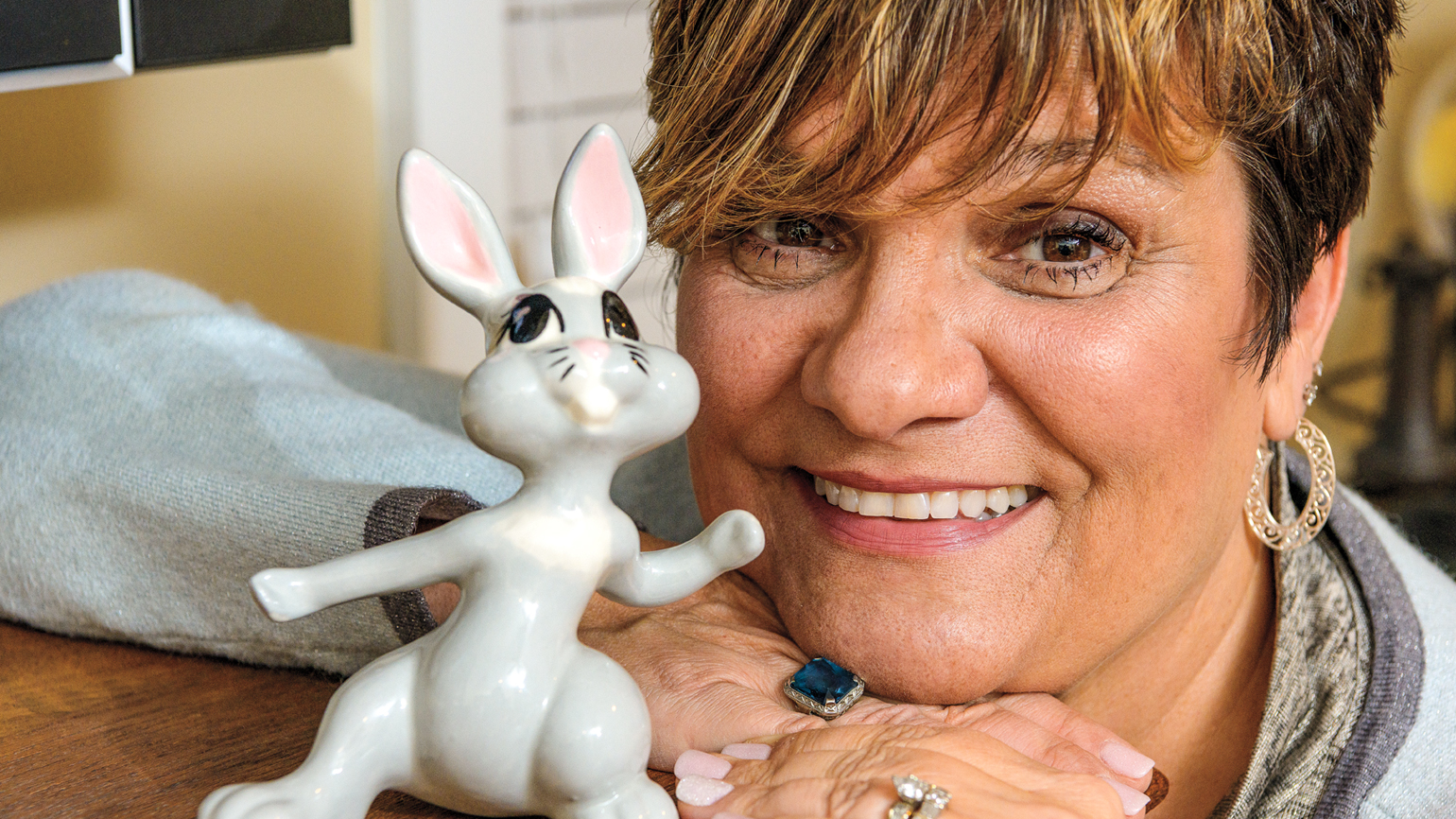
I looked across the spread of items—glass, lamps, old holiday decorations. A ceramic bunny with big eyes caught my attention. I picked her up and smiled. “This reminds me of my mother,” I told the man. Mom had gone to ceramics classes for years and loved it. She was always making and painting gifts like this for friends and neighbors. “How much?”

“One dollar.”

I paid him and began walking back to my car. Easter was just weeks away, and this little guy would look great on our mantel. I’m so glad I decided to stop, I thought. The sale had cheered me up a bit. I turned the bunny over in my hands, spotting a signature. My heart stopped. Was I seeing things? It couldn’t be! But there it was, scrawled on the underside of the bunny in my mother’s neat script: Anita 74. I stumbled, falling to my knees.

“Are you all right?” The man came running down the driveway toward me. “What’s wrong?”

I was in shock. “Where…where did you get this bunny?”

The man looked bewildered. “It belonged to my mother-in-law. She got it as a gift from a friend one Easter.”

As we talked, we realized that his in-laws had been my neighbors when I was growing up. This little bunny had been a neighborly gift from Mom some 30 years ago. I held myself together just long enough to get back to the car. Then I shut the door and started sobbing, the bunny clasped in my hand. I’d been given the perfect gift. Finding this bunny felt as if Mom were comforting me from heaven. A sense of peace filled me, and I knew that no matter what happened it was going to be okay.

Thankfully, that last test showed the problem was with my gallbladder. I had it removed and was soon back to normal. The ceramic bunny now has a permanent spot in our living room. When I’m curled up on the sofa sometimes, I glance at the bunny and smile, knowing Mom’s spirit is with me, sent by God to comfort me in my most difficult moment.

Did you enjoy this story? Subscribe to Mysterious Ways magazine.

A Shiny Sign from Heaven Calmed Her as a Tornado Raged

“Did you understand anything they said?” I asked.

Behind the wheel of our van, my husband, Nick, shook his head. “Something about…beekeeping?”

It was a Saturday afternoon, April 13, 2019. We were on our way home from a seminar in Jacksonville, Texas. The lecturers had spoken on ways to reduce our ecological footprint—a cause our son Michael is passionate about. He’s always reminding us of our duty to preserve the earth. We recycled, took monastic showers, tried organic farming and attended seminars like this one. We liked to think of ourselves as well-informed. But the Jacksonville seminar had been too much.

We wanted to be good stewards of the earth. Installing solar panels, switching to a mostly plant-based diet and reducing plastic and water waste could be overwhelming, though. Did that make us ungrateful and unworthy of the task God had given us? As we stood to leave, the host took the stage once more. “Take care out there,” he said. “There’s a tornado warning near Alto.”

Nick and I shrugged. This was northeast Texas, part of Tornado Alley. Still, we had to pass through Alto on our way back to Houston. Best to be careful.

We drove slowly on Highway 69 South toward Alto, following the signals of local people who were helping the police direct traffic. I breathed a sigh of relief. Phew, the tornado already hit. We’d missed it. Then Alto came into view. There were downed utility poles everywhere. Sparks danced dangerously in the air. How awful, I thought as we passed fallen trees, demolished houses and schools with major structural damage. Lord, protect these people. The words came to mind easily, but doubt crept up in my stomach. Was God even listening?

I’d been feeling distant from God for years now, ever since 2003, when my father passed away from Alzheimer’s. It had been agonizing to watch him decline over the course of 10 years. First came the memory lapses, then the struggles to find the right word. Eventually Dad lost everything that made him who he was—he couldn’t enjoy baseball anymore (in his younger days, he had played in the New York Yankees organization) or even recognize the people he loved and devoted his life to. Mom, his wife of more than six decades. His children and grandchildren. I tried to comfort myself by thinking of “Pennies From Heaven,” the song Dad used to sing to me when I was a child. So when you hear it thunder, don’t run under a tree. / There’ll be pennies from heaven for you and me.

“Whenever life throws you a curve ball, I’ll be there for you,” he’d say at the kitchen table. “No matter what.”

Dad had held on to that promise for as long as he could, but I wasn’t so sure about God’s promises anymore. Not after what he’d let happen to a good man like my father.

Nick and I now headed west on Highway 21. I saw signs for a festival at the Caddo Mounds State Historic Site, a former Native American settlement just outside Alto. There were 50 or so cars in the parking lot. Like Nick and me, those people had been lucky to escape the tornado. Some of the cars behind us turned into the lot after we passed. They must be going to the festival, I thought.

Beep, beep, beep. My phone made a noise from my pocket. Not a regular text. An emergency alert. I pulled it out and read, “Take shelter immediately.”

I was just about to relay the warning to Nick when an enormous tree fell right on our windshield, slamming the van to a stop in the only grove for miles. Too late to take shelter!

Darkness spread across the sky like spilled paint. The wind howled. Three more trees fell on top of us. Before I could brace myself, the wind spun our van counterclockwise into a red dirt embankment, wedging us in deep. Was it just my imagination, or were the trees using their limbs to bury the end of the van into the dirt, holding us in place?

The tornado raged on, trying to yank us into the air. Our van was like an unbalanced washing machine, rocking back and forth, up and down. Yet I didn’t scream. Or gasp. Or say a word. I felt oddly calm. I looked out my side window. The glass had been sucked out. Anything could come flying in and knock us out, I thought. Nick and I tried to get as low as we could, forcing ourselves down onto the floorboards, straining our seatbelts to the limit.

I glanced up. The dashboard—it was gone! Ripped away by the wind. Only wires left, blue and red, dangling. I felt Nick’s hand close over mine. I squeezed back, hoping he would sense what I did—that somehow we were being sheltered from the storm.

Then I saw it. A flash of copper on the floor under the dashboard wires. A penny! How had it not been sucked into the tornado?

In my mid-fifties, after my father was deep in his battle with dementia, I’d gone back to school to get a master’s degree in French at the University of North Texas. School is hard for everyone, but for someone my age? Exhausting. But every time I thought I’d give up and quit, every time I felt as if nobody cared whether I passed or not, I’d find a shiny penny. On the ground, by the water fountain, on top of a pile of books in the library. Everywhere and anywhere. As if Dad were somehow reaching out to say, I’m watching over you. It had become a running joke in our family—Dad’s messages to Linda.

Now, as the tornado held our van under siege, Nick’s eyes found mine. Neither of us had to say anything. We knew what the penny meant.

The wind continued howling, the rain pelting. We ducked our heads and held on tight. Then light began filtering in through the cracked windshield, breaking through the ominous dark. Was this just a pause in the mayhem? Was a third twister bearing down on us? No. It was over. We’d made it! I pulled myself up and looked out the side window. A tree stripped of all its bark and branches leaned precariously over the van, but it hadn’t fallen. It could’ve crushed me.

Nick and I pushed our way out through the door on my side, which was easier to open because it had been nearly ripped clean off. “I’m going to start digging us out,” Nick said and began pulling up clumps of mud with his bare hands. I walked around the van to survey the damage. The front end was totally caved in. Someone had indeed protected us. Thanks, Dad, I thought.

I punched 911 on my phone. The call went through, but the dispatcher on the other end couldn’t hear me. Not with all the electrical interference from the storm. I tried calling my sister, Sandy, in Houston. No luck—she couldn’t hear me either. But a second later, I got an incoming call from her husband, John.

“Everything okay?” John said, concerned. “Sandy says she couldn’t hear you on her phone.”

Linda displays the penny that calmed her
Linda displays the penny that
reassured her

I told John about the tornado hitting us. He called the Cherokee County Sheriff’s Department. Nick phoned a friend one town over to come get us. Officers pulled up. The sheriff took one look at our van and asked, “Lady, are you all right?” Yes, I was fine. So was Nick. We were lucky to be alive. More rescue workers soon arrived—three helicopters and four police cars. By then, other folks were making their way to the grove. People from the festival who had seen what happened, families from nearby neighborhoods. An elderly woman and her husband walked over and asked, “Would you and your husband like to stay at our house tonight?”

“Thank you,” I said. “But our friend is on his way.”

It felt as if everybody wanted to help us: police, rescue workers and regular folks. I’d heard people call East Texas God’s country, and that day I really understood why.

I stared into the grove, trying to put the events in order in my mind. Leaving the seminar and driving through Alto, passing the festival, the tree falling on our van and stopping us. I knew the insurance people would ask us a million questions. I wanted to be prepared, but I was still too stunned to process what had happened.

It wasn’t until weeks later, sitting at our kitchen table and thinking about it some more, that I realized in our utter helplessness in the middle of the tornado, I had reached instinctively for God. Not with words but with my heart. And that breached the distance I’d felt from him. God was the one who pinned our van to the ground and protected us, sending us a sign that I, especially, would immediately understand. Who reminded me, through the wind and the rain and the darkness, “I am watching over you.”

For more inspiring stories, subscribe to Guideposts magazine.

A Second Chance to Thank Him

“She’s a good kid, and it’s only for a few months,” my friend said, pleading for me to let her cousin’s daughter from Washington live with me and my husband, Mark, while the girl attended her first semester at Oregon State. Normally I would have said yes, but it hadn’t been long since Mark’s heart attack, and we needed some peace and quiet. “I’ll think about it,” I said, hoping the girl would find other arrangements.

Mark’s heart attack had been quite an ordeal. I still shuddered every time I thought about receiving the call that my husband had collapsed at the airport on his way back from a business trip. A paramedic had kept his heart beating with CPR for several minutes until a medical team arrived with paddles. I couldn’t imagine life without Mark. I was so grateful to that medic. I only wished I had been in the state of mind to thank him when I briefly met him at the hospital.

Now that things were finally getting back to normal, would a roomer, even for just a few months, be too disruptive? My friend repeated her request. Her cousin’s daughter was desperate.

A twinge of guilt nagged at me. “Fine,” I said. I made plans to meet with my friend’s cousin, her husband and their daughter. Mark had to work, so he couldn’t make it.

On a sunny afternoon I greeted the three of them at my front door. We had milk and cookies and chatted about the daughter’s college plans. I began to feel at ease when I noticed there was something familiar about the father. We kept talking and in the back of my mind I was already making plans for the daughter to stay in our spare bedroom. Then I turned to the father. “What do you do for a living?” I asked.

“I’m a paramedic,” he said.

All at once, I knew. And when I pointed out Mark’s picture to him, so did he.

At last I could thank him for saving my husband’s life.

A Scandal-Plagued Sports Star’s Heroic Redemption

The Jewish holiday of Rosh Hashanah is coming up–the beginning of a 10-day period in which we repent for our sins of the last year, and do our best to redeem ourselves before God judges us.

Seems like a lot of our sports heroes could use a time of reflection and repentance right now. You can’t turn on the news these days without finding out another star athlete was revealed to be… well, less than role model material.

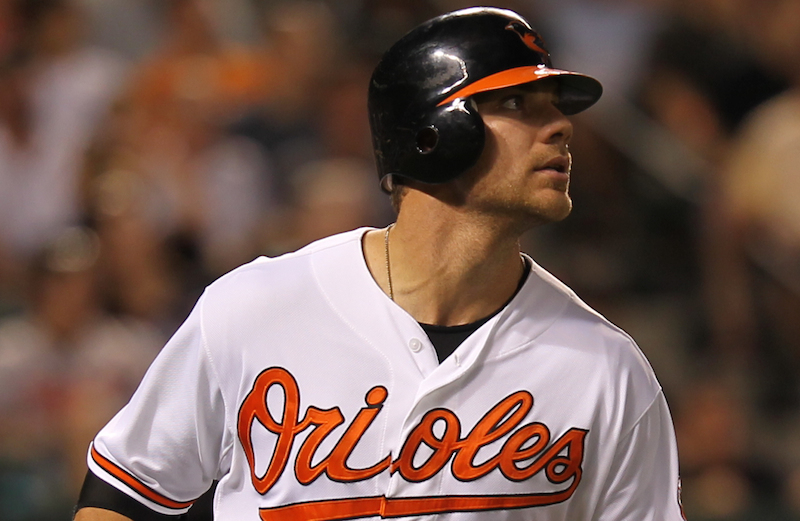
Baltimore Orioles slugger Chris DavisBaltimore Orioles slugger Chris Davis was one of the more recent stars to fall from grace.

An MVP candidate last year, this season he’s hit an embarrassingly-low .186 for the American League East champs… then came a positive drug test for amphetamines, from taking the prescription drug Adderall without the permission of a doctor.

About the best you could say was, “at least it wasn’t steroids,” but athletes often use the attention-enhancing drug to gain an edge on the field of play.

While Chris apologized for the lapse in judgment, many were quick to lump him in with the growing list of this year’s sports scandals.

As ESPN’s Jayson Stark pointed out, “If you’re under the impression Adderall is a substance Davis tried to get away with taking once, then just got caught, you’re wrong… he tested positive previously, knew he tested positive, knew he was going to be tested at least eight more times in the next year and… Kept taking it anyway.”

Then came Monday afternoon. Orioles fan Mike Soukup was driving home on Interstate 295 when he came upon an accident. He shared what happened next with sports reporter Roch Kubatko:

“I saw the brake lights as I was heading around a slight right-hand bend under the train tracks … and a massive cloud of dust. I was about five to six cars back. I did not see what happened, but instantly saw the truck laying on its driver’s side…

“I pulled past the wreck and over to the right-hand pull-off, and I saw that there were still two men in the truck and that one of them was trapped halfway out the window. He was pinned underneath… bleeding pretty badly and gasoline was dripping out of the truck.

“The first man waved me over, and he, and I, and a woman started trying to lift the truck off of the pinned man. It was too heavy for the three of us–it was an old, large model pick-up and was VERY heavy. However, within a half-a-minute, another five to six folks had jumped out and started helping.

“We were able to pick the truck back up onto its wheels–unpinning the man.

“When I turned to look at the first man, I instantly noticed a VERY strong resemblance to Chris Davis. He didn’t have any Orioles gear on… except his tennis shoes were black and orange. We glanced at each other with a ‘good job’ look and I said, ‘Chris?’ He said, ‘Yeah?’”

It was the slugger, all right. Chris had been on his way to the airport to pick up friends when the truck in front of him had a tire blow out, and the vehicle flipped. Chris was the first to pull over and help the men trapped inside, waving others over to join him.

If he hadn’t been suspended, he’d likely be getting ready for the evening’s game against the Toronto Blue Jays. Instead, he was in the right place at the right time to perform a rescue.

No one is perfect. All of us have done something we’re ashamed of in our lives. But if there’s anything Chris’s story reveals, it’s that God provides us opportunities to become heroes once again.

How did God grant you a second chance? In what unexpected way were you given an opportunity to prove yourself worthy of forgiveness? Share your story with us.