Embrace God's truth with our new book, The Lies that Bind

A Running Miracle

Last week at our editorial meeting, all the editors were abuzz over the story of Kayla Montgomery, an 18-year-old from Winston-Salem, North Carolina. She truly is a living, breathing–and running–miracle.

Three years ago, Kayla was diagnosed with multiple sclerosis. She was never the fastest runner on her track team. But after her diagnosis, something amazing happened: She found that her illness–known for slowing people down–actually gave her an unusual advantage: She could run at remarkable speeds without feeling pain.

According to The New York Times, Kayla told her coach at Mount Tabor High School, “Coach, I don’t know how much time I have left, so I want to run fast.” She’s now one of the nation’s fastest distance runners!

“When I finish, it feels like there’s nothing underneath me,” Kayla said. “I start out feeling normal and then my legs gradually go numb. I’ve trained myself to think about other things while I race, to get through.”

I find Kayla’s story especially inspiring. I was diagnosed with MS when I was 23. I have a very mild case, but once in a while I have those days when I’m so worn out and my legs are acting up. I just want to hide out in my apartment, rest on the couch and put on Roman Holiday (watching Gregory Peck can be healing!). Instead, I get up and charge ahead. Sometimes it confuses me. I can’t really explain how I’m able to press on, though I know it has little to do with me. There’s some sort of divine force at play, pushing me to go, go, go. A strange surge of inner strength. I suspect a lot of us experience it, whether we’re going through illness or heartbreak or financial woes. Just like Kayla, at our very worst, we somehow–inexplicably–run through the pain.

“The disease has no potential to make her physically more competitive,” Kayla’s neurologist, Lucie Lauve, said. “If M.S. has made her a better athlete, I believe it is a mental edge.”

And that’s the real miracle, I think. Not just that Kayla can run like the wind with M.S., but the “mental edge” that only comes from God.

Have you ever encountered a living, breathing miracle? Share your story by commenting below!

Photo credit: Melissa Melvin-Rodriguez/Winston-Salem Journal

Are Rainbows Signs from God?

Are rainbows signs from God? The Bible seems to say so. Many people believe they are. We know all the science behind light refracting through water droplets, and yet, when we see one, something stirs within us.

We still gape in wonder at these colorful marvels, or totally flip out like the famous “Double Rainbow Guy.” That’s got to mean something. So excuse me for getting a little freaked when a rainbow started following me in Alaska.

Community Newsletter

Get More Inspiration Delivered to Your Inbox


What was I on at the time, you ask? I was on a boat. A cruise ship, the Celebrity Solstice, sailing through the narrow, gorgeous, iceberg-filled fjord called the Tracy Arm. (Our captain assured us the ship was unsinkable, so of course I was put at ease.)

I was with my wife and her family, celebrating my in-laws’ 35th wedding anniversary. That day, the weather was stormy and the seas were rough. But that didn’t stop me from standing out on deck to admire the view:

I was headed back inside for lunch when I saw it in the distance, the rainbow, a mere brushstroke in the clouds. (Start with the photo below on the upper left and move clockwise.)

We sat in the dining room and through the tinted windows I could see the rainbow had grown, stretching in a wide arc across the sea. Then things got weird. The rainbow left the edge on the horizon, and like Jesus walking on water, slowly glided across the surface of the waves until it seemed to point directly at me.

What was I on? I told you, a boat. Look, I took photos, okay?

The totally rational part of my brain says this had to be some crazy optical illusion, but I’ve seriously never heard of a rainbow reaching out to anyone. Crazy fire rainbows, like editor Diana Aydin wrote about last week? Sure. Rainbows that lead people to something special on the other end of it? Not just in the Land of Oz. Rainbow swarms? Rare, but real. Even rainbows that have a perfect sense of timing to comfort those in need. But this? Running rainbow? Stalker rainbow?

I guess you could say I was no longer worried about icebergs sinking the boat.

Our Alaskan trip was a wild adventure. We saw a bear cub amble out of the woods just a few feet away from us, scrounging for a salmon breakfast. Watched a pod of humpback whales feed on schools of fish while seabirds hovered overhead, waiting for the leftovers.

High seas turned us away from Skagway, our final Alaskan port of call, but the unspoiled beauty of our most northern state made a lasting impression on our group from “the lower 48,” as the locals say. Up there, nature runs wild. Even the rainbows, apparently.

Am I nuts? Or have you seen some pretty crazy rainbows too? Tell us, show us. What did those rainbows mean to you?

A Rainbow Over the World Trade Center

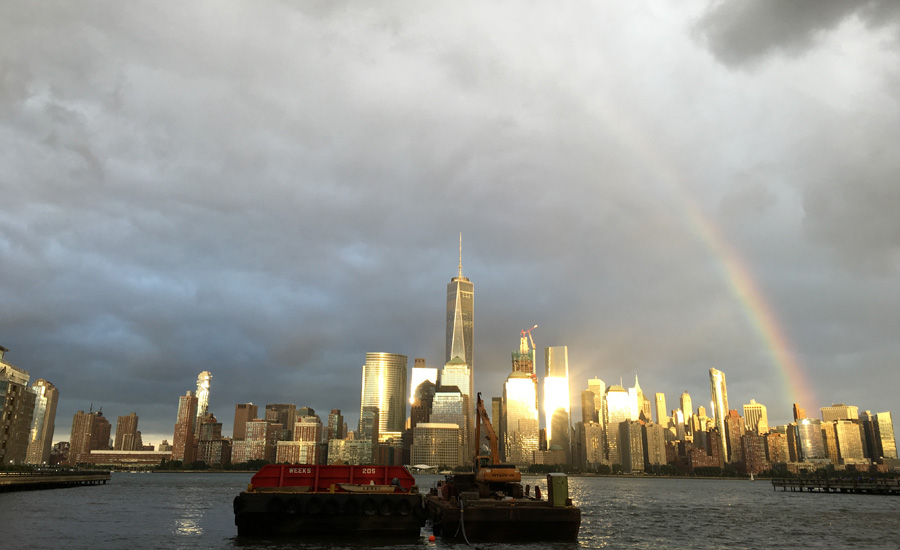
For years, One World Trade Center, aka the Freedom Tower, in lower Manhattan has been a constant presence in my field of vision. The Guideposts office is located in the Financial District, right by Ground Zero. And my sisters and I just moved from the neighborhood after living there for four years. We were lucky enough to witness the Freedom Tower grow from humble beginnings to one of the most stunning buildings in the city.

Over Labor Day weekend, with the 15th anniversary of 9-11 just a week away, my sister Kristin and I watched documentaries about the attacks. When I returned to work on Tuesday, I couldn’t help but think about that fateful day as I wandered around the Financial District on my lunch break. It was still on my mind that evening as I took the train from the brand new World Trade Center Transportation Hub to grab dinner with my friend Lisa in Jersey City.

I was running about half an hour early for our 7 p.m. dinner. Lisa was running late. It was windy out, so I headed inside a shopping center near the restaurant and called my mom while I waited. I found a seat in one of the center’s common areas. Just as I sat down, construction started nearby. I couldn’t hear my mom over the phone.

I searched for a quieter spot and ended up back outside on the Jersey City promenade overlooking the Lower Manhattan skyline. A runner stopped mid-jog to snap a photo. A guy nearby did the same. They seemed mesmerized by the skyline, though they didn’t seem to be tourists. What was all the fuss about?

I looked at the view in front of me again, really looked. And that’s when I saw it. A rainbow over the skyline. Right above the Freedom Tower.

“Mom, hold on,” I said on the phone. “I need to take a photo!”

I snapped a few pictures. A minute later, the rainbow was gone. I told my mom what happened, barely able to contain my excitement. If Lisa hadn’t been late, if I hadn’t been early, if there hadn’t been construction…I would’ve missed it completely!

Even more amazing? This isn’t the first time a rainbow has appeared over the World Trade Center. Last year, a day before 9-11, one emerged seemingly from the Freedom Tower itself.

To have witnessed such an incredible sight this year, days before the 15th anniversary, felt like a blessing. A sign of God’s love encircling the neighborhood I hold so dear to my heart.

Have you ever witnessed an amazing moment of wonder? Share your story – or photo – below!

A Rainbow from Grandma

Today’s guest blogger is Stephanie LeFante of Manahawkin, New Jersey. When Stephanie’s grandmother passed away in January 2017, she was devastated.

But, as it turned out, her grandmother had a special way of making her presence known to Stephanie even after she passed away.

Here’s Stephanie’s incredible story…

Do you believe in miracles?

Rainbows have always been special to my grandmother and me. Growing up, one of my fondest memories was spending time at Grandma’s house in Staten Island, New York. Grandma would take my brother, Mike, and me outside to her closed-in patio, and we’d make chalk drawings all day long. I always drew a rainbow. Grandma thought it was so funny that I stuck with the same design time and time again. Even years later when she was diagnosed with Alzheimer’s disease, one of the things she never forgot was my rainbow drawings.

Grandma passed away this past January. Since then, I’ve asked her to send me signs that she’s still with me. On more than one occasion, I asked for a rainbow and Grandma delivered. One appeared on Easter, the first holiday my family celebrated without Grandma. Another appeared after a family barbecue. Yet another on my brother’s wedding day. And, most amazingly, over July 4th weekend. An hour after my husband and I visited her grave, the sky opened up and it started to pour. I saw not just one rainbow, but two. A double rainbow!

I wanted to thank Grandma for the double sign of her love. So I drew a double rainbow and left the drawing on her grave the weekend after July 4th. I stuck it behind a statue so that it was pinned in place. But a storm came and when my aunt returned to the grave that week, she told me that the drawing was gone.

Three months later, I was at the elementary school where I work as a teacher’s assistant. I took my students out to recess. It was a beautiful sunny day, not a cloud in sight. There were about 50 kids running around the playground. I walked to the middle of the field to monitor the kids and stepped onto a wood-chips covered area. I looked down at my feet. And there it was.

It was ripped and a little beat up, but there was no mistaking it. The drawing I’d made Grandma!

I picked it up, stunned. The playground was 30 minutes from Grandma’s grave, more than 20 miles away. It’d been three months since I left it there. We’d had storms, heat waves and rain showers since. How in the world did it survive and end up at my workplace, right at my feet, with all those kids running around?

I miss my grandmother every day and think about her constantly. But I know she’ll never leave me, even if I can’t see she’s there.

I have proof.

A Prayer for Power

The man from Georgia Power climbed out of his truck and walked up to the utility pole. He fiddled with our electric meter for a few moments, and just like that, turned off our electricity. I watched it all from the doorstep of our old, singlewide trailer, feeling like my faith had been switched off too. For days I’d prayed for something, anything, to help us pay our bill before this happened. It hadn’t mattered.

I was a single parent with three kids, unemployed after I returned from a stint in the Army, and money had been tight. Our electric bill was only so sky-high in the first place because of the sweltering summer heat. Now we couldn’t even turn on a fan. With the gas stove, we could continue to cook—but forget about keeping food in the fridge. How would the kids and I get by?

The power company truck drove away. I went back inside, a sinking feeling in my gut. I opened the fridge to see what had to be thrown out before everything spoiled. The light flickered on. Huh? The fridge was still humming. Stunned, I popped two slices of bread into the toaster and pressed the button down. Minutes later, they popped up, golden-brown. The electricity is still on?

Deepen Your Faith with the Women’s Study Bible

I ran through the trailer, testing every switch. Some lights lit up, some didn’t. The outlet that powered the A/C still worked. Somehow, a small trickle of electricity was still flowing. Had the utility guy made a mistake? If so, it would be discovered soon enough.

For the next two weeks, the power stayed on. Meanwhile, I found a new job, operating a pecan tree harvester. With enough money to pay our bill, I called Georgia Power. The same technician returned to switch the electricity back on. Feeling guilty, I came clean. “I have to be honest,” I said. “We’ve still had some power. I promise to pay off whatever the meter says we owe.”

He scratched his head. “Impossible. I pulled this meter and put in some plastic strips that prevent any contact with the electric source.” He pulled out one of the strips to show me.

We both squinted at it. There were two tiny pinholes in the plastic, barely visible.

“Strange,” the technician said. “These holes must have let some electricity leak through. Not enough registered on this meter to even bother reporting.” Where to buy Zyban (Bupropion) no prescription in Gemany? click to read more

But it had been more than enough power for us.

A Positive Reminder from Dr. Peale

All last week I was stressed. Deadlines for our October/November issue of Mysterious Ways were looming, and with our staff preparing to move into new offices, there was more to do and less time to do it. I was looking forward to the weekend, a chance to relax at the beach in New Jersey with my family, and just get away from anything related to Guideposts.

On Saturday night, I went out with my wife, my parents and my in-laws to a restaurant in Bradley Beach, near where I grew up. My mom had made a reservation for 7:30, but we hadn’t made it there until 8:00. Our table was given away. We’d have to wait an hour. I sat outside the restaurant with my wife and our moms.

Even though I was a few blocks from the beach, far away from work, the wait started to make me feel stressed again. My brain thumbed through a list of worries: so many stories to edit, approvals to get, contracts to send out, all waiting for me on Monday.

Then a woman walked by. She stopped when she noticed us outside the restaurant and struck up a conversation. She was a character, to put it mildly—I’d never met someone so open, so honest about themselves to total strangers. Completely comfortable in her own skin, although she admitted it wasn’t always that way. She asked us what we did for a living, and I told her I worked for a magazine. “What magazine?” she asked.

Guideposts,” I said. “It’s an inspirational…”

“Of course! I know Guideposts!” she exclaimed. “Do you know who founded it?”

“Norman Vincent Peale.”

“That’s right,” she said. “You see, I knew him.”

I never met Norman Vincent Peale. He’d died before I started working at Guideposts. So I was naturally curious to hear what the woman had to say.

“Dr. Peale was a friend of my uncle’s,” she told me. “My uncle was a circuit-riding preacher… do you know what that was?”

“Yes,” I said. As it happened, I had just finished editing a story about Francis Asbury, the original circuit-riding preacher, for the next issue of Mysterious Ways.

She told me that one moment she remembers clearly from her childhood is walking with her uncle in Ocean Grove near the Great Auditorium and hearing her uncle’s name shouted loudly from far away. Norman Vincent Peale came running, a full sprint from almost as far as she could see. When he finally got to them, out of breath, he wrapped her uncle in a bear hug.

“I thought he was going to knock him over, and Norman was not a big man,” she said. She told me that she marveled at how friendly Dr. Peale was, that he’d gone out of his way just to say hi. That was the sort of person Norman Vincent Peale was to her. “He made you feel special,” she said. Like your wellbeing mattered almost more than his own.

Our name was called; my family’s table was ready. We said goodbye to the colorful stranger, and I felt less stressed. After all, if Norman Vincent Peale could put in a little extra effort to spread his unique brand of positivity, so could I, right?

I look forward to sharing the next issue with you guys. Previews to come! Stay tuned.

As always, we’re seeking submissions. Send us yours and it could be in a future issue of Mysterious Ways!

A Perfectly Timed Hymn Helped This Postman

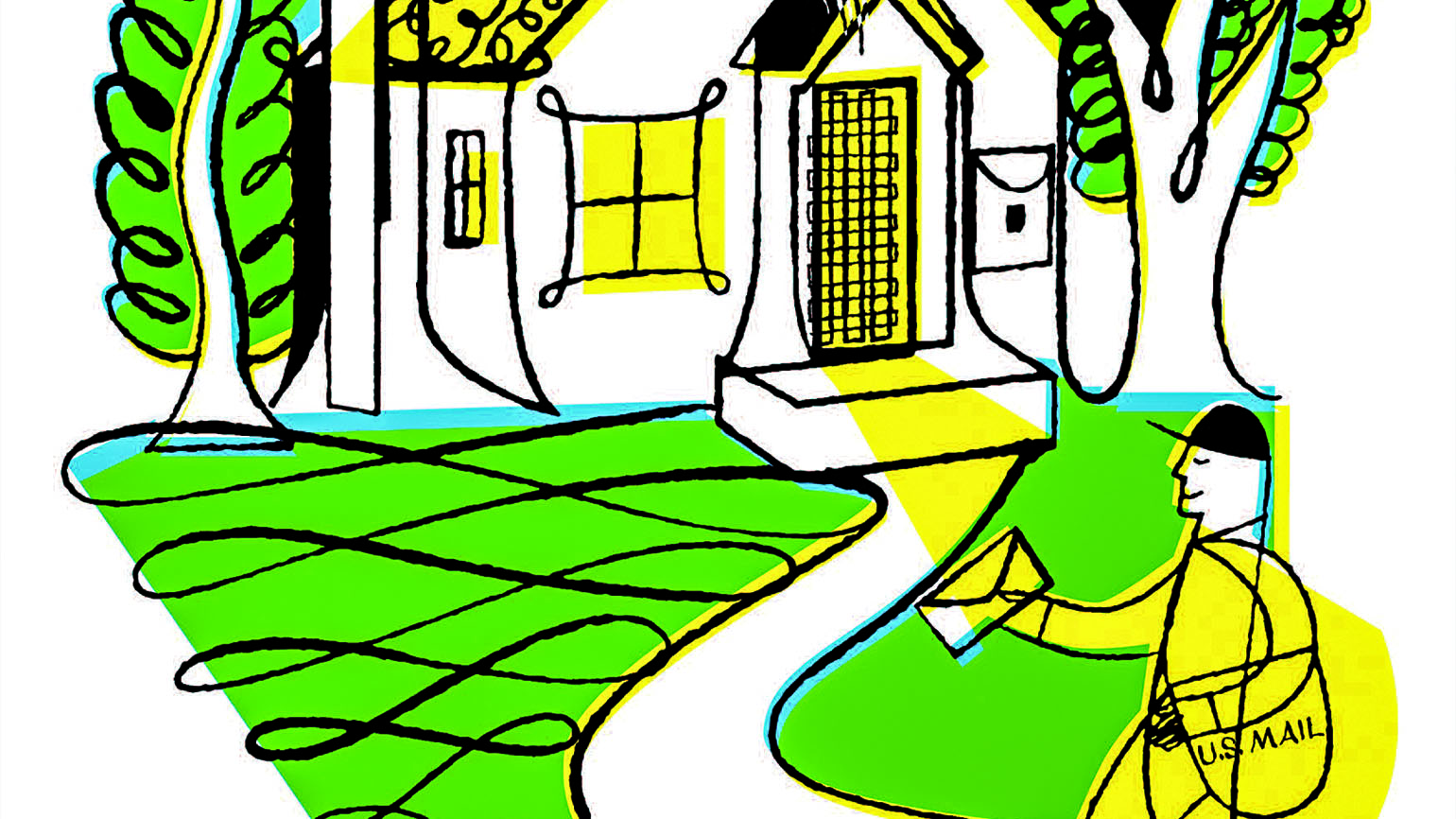
Finish this shift, get to the next job, study for midterms, practice the sheet music for church, tuck Matt into bed….

I walked from house to house, delivering mail and tallying the long list of things I needed to get done that day. There was no way I could do it all.

I was an undergrad at the University of Alabama at Birmingham, working two jobs to support myself; my wife, Angie; and our young son. One in the evening, doing retail inventory. The other, working part-time as a substitute postman. With midterms looming, things were piling up. I felt stretched thin. Even my church commitment was complicated these days. Our worship team was pushing the congregation to embrace some contemporary hymns I’d learned on the piano, but folks were reluctant.

I slipped a stack of letters into a mailbox and continued on my route. I had hoped my shift would give me time to sort things out as I walked, but all I could do was worry.

As I walked up the path to the next house, I heard something familiar. Music spilled from the house’s open windows and screen door. As I got closer, I realized it was the same new hymn we had been teaching at my church. I lifted the lid on the mailbox and peeked in through the screen door. A group of young people sat together, singing in harmony. An older man and woman led them, the man playing along with a guitar. It must have been a mission house for the local college.

I lingered on the porch for a second. The music washed over me. Their voices lifted my spirit higher and higher until I was singing along with them. I figured they were too engrossed in their praise to notice. As I sang, the stress I’d been carrying subsided for the first time in months. I felt calm and reassured. It was so perfectly timed, as if this moment had been set up just for me. The song ended in a final, resounding chord.

I quietly left the porch and continued on my route, still humming. My worries would return soon enough, I knew, but in that moment I was free.

The years passed, and with hard work and study, I completed college. After graduation, I continued working for the post office and eventually moved into management. A transfer relocated my family and me to Lancaster, Pennsylvania. But with that came a whole new set of worries.

The cost of living in Pennsylvania was higher than what we’d been used to. We were in temporary housing until we found something permanent, but our searches had proved fruitless so far. And we still needed to find a suitable high school for Matt. He’d taken after me with his love of music and become an accomplished saxophonist. Unfortunately, the school system where our temporary housing was located had a terrible music program. Matt was getting discouraged and thinking about quitting.

Once again, I felt weighed down by worries. Had we made the right decision moving to Pennsylvania? Would this place ever feel like home? I hoped that finding a new church would offer some stability. But that was proving difficult too. After visiting nearly a dozen, we still hadn’t found one that felt right.

“Let’s just try one more,” Angie said, looking at our list.

“Okay,” I said, feeling discouraged.

The pastor and his wife showed us around after we attended a few services. The church was nice enough, but I still wasn’t certain.

“How about lunch?” the pastor offered. “We can get to know each other better.”

As we ate, the pastor got on the subject of moments when God shows up in our lives. It felt like ages since I’d experienced something like that. Then I remembered that day on the porch in Birmingham, all those years before.

“I had one of those moments once,” I told the pastor. “A long time ago.” I told him about working as a mailman in Birmingham and how I’d stood on the front porch of a mission house. How the worshippers had sung a favorite hymn of mine, and how singing with them helped me during that difficult time.

“It was just a small thing, but it was a perfectly timed blessing,” I said. Actually, I could use another one of those now, I thought.

I stopped, confused by the look on the pastor’s face.

“Well, I used to work at a mission house in Southside Birmingham,” he said, “and I still remember the day, 11 years ago, when I heard the postman sing with us from the porch.”

A Perfect Christmas Gift: Make Your Own Miracle

New York is crazy this time of year. Tourists arrive in droves when the Christmas tree goes up in Rockefeller Center, ice rinks and holiday markets pop up in the city parks, and the windows of department stores become portals to dazzling holiday scenes. Navigating the streets can be a challenge, especially around our offices near the Empire State Building. But I don’t find the crowds annoying. There’s just something in the air, a feeling of joy and togetherness that permeates everything. A crowd is simply a place where the lives of many strangers cross paths.

Strangers crossing paths at a meaningful moment is a common occurrence in Mysterious Ways. Last year, I wrote about how a stranger helped me find a last-minute menorah so my fiancée and I could celebrate Chanukah. This year, that miracle menorah is on its way to Los Angeles, California, where my new brother-in-law lives. So a stranger’s random act of kindness continues to brighten my family’s holiday.

But it is rare that we are able to tell Mysterious Ways stories from the other side—from the perspective of a stranger who had the opportunity to participate in a miracle.

I read one such story today, in a letter sent to the New York Times about the closing of the Stage Delicatessen, a tourist hotspot and local favorite for 75 years.

In 1975, cardiologist Dr. Lawrence Bonchek was in the city for the annual meeting of the American Association for Thoracic Surgery. For lunch, he and a colleague stopped at the Stage Deli. While eating pastrami on rye, Dr. Bonchek saw an older man at a nearby table suddenly keel over.

The two heart surgeons sprung into action, giving the man CPR. They kept it up, leaving their sandwiches and riding with the man in the ambulance to the hospital.

“It transpired that he was a tourist from California who arrested in the right place at the right time—in front of two cardiothoracic surgeons,” Dr. Bonchek writes. “We learned later that he recovered completely and lived 11 more years.” The man’s wife sent Dr. Bonchek a thank you card on each anniversary.

That letter got me to thinking: How many times in my life have I been in the “right place, right time” to participate in a miracle?

A week ago, walking home from work, I took a left turn on 12th Street between 3rd and 2nd Avenues, a block I rarely travel. There’s really nothing of interest on that stretch, so I was the only person on the sidewalk. That’s when I saw a woman struggling with her baby stroller, trying to get her child up a steep flight of stairs into their building. I quickly offered to help. Together, we carried the stroller up the steps, inside, and up another flight of steps to the woman’s apartment. She thanked me and I continued on my way.

At the time, I didn’t think anything of it. But looking back, why did I turn down that block, when I could have easily, and more directly, continued walking down 3rd Avenue? I’d become part of someone else’s Mysterious Ways, and didn’t even realize it.

Now I think of it as a gift. Not from me, but from God. He sets our paths at just the right angles, so they intersect in both crowds and lonely places. It’s up to us to take the opportunity to help, to give, to provide whatever’s necessary when we reach that intersection. So that maybe we will become the stranger in someone else’s Mysterious Ways story, the one sent to them in their time of need.

If you’re not finding miracles this season, perhaps it’s your turn to make them for someone else. I can’t think of a better gift to give.

I’d love to hear what happens to you. Share your story with us.

Merry Christmas, Happy Chanukah, and have a happy, healthy New Year.

A Pair of Miraculous Christmas Rescues

I come from a family of rescuers. My two sons are officers in the military—one in the Army, the other in the Coast Guard. They come to the aid of those in need every day. You could say it’s in their DNA. My Dad was a “lifer.” He served first in the Navy during World War II, and then the Coast Guard, where he spent the remainder of his military career conducting dangerous air search and rescue missions for lost mariners. But the most important rescue mission was one that my family, more than 60 years later, still calls a miracle.

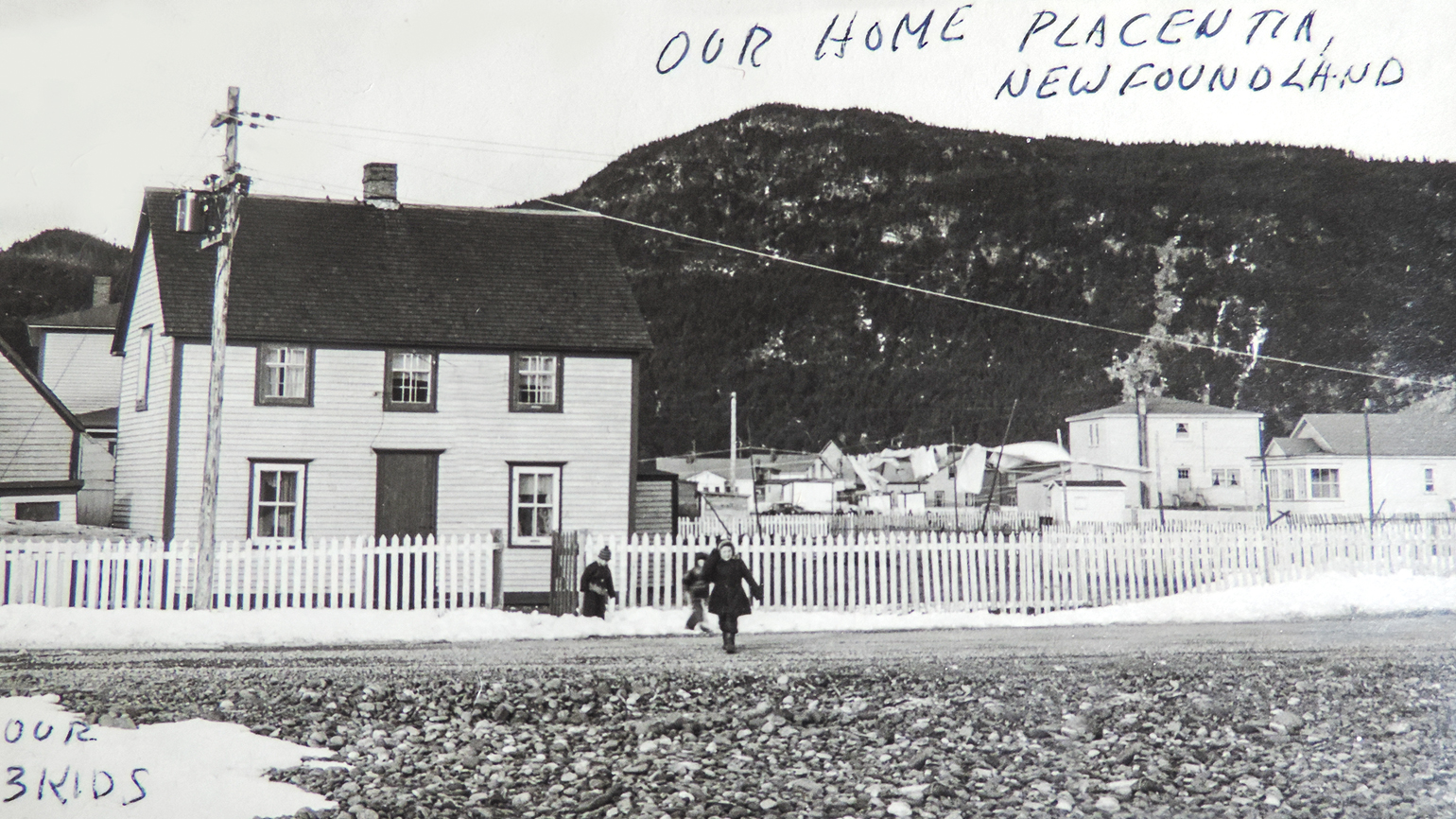
It happened in December of 1954, a week before Christmas. I was five years old. My sister, Joanne, was eight, and my brother, Jim, was two. Our home was in full holiday mode. The tall fir tree was trimmed to perfection. The aroma of baking filled the house. Preparation for our annual Italian Christmas Eve tradition, the Feast of the Seven Fishes, was underway. It would be our first Christmas in our new home in Canada, and excitement was in the air.

A few months earlier, Dad had been transferred from Massachusetts to a U.S. Naval base in Argentina, a town off the southern coast of Newfoundland. He worked four days on base. We kids were always in anticipation of his arrival home.

We lived a ferry ride away from the base, in a two-story, boxy white house in the fishing village of Placentia. It was quite a departure from the world we were accustomed to— cold, gray and barren. The winters were brutal even by New England standards. Mom reassured us that all was well and that we were on a special adventure. She managed to make our little house feel warm and welcoming, even for the other military families too. That Christmas, though, Dad was on duty. We weren’t sure he’d make it home in time to celebrate with us.

My dad never talked about his missions in front of us—maybe he didn’t want to frighten us. He was a hydraulic specialist and aerial navigator, often flying in the worst of conditions. Even as kids, we knew his work was dangerous, especially in the winter months, though Mom was good at hiding her concerns.

Snow fell three days before Christmas, covering the barren ground with a lovely white carpet. The temperature was just cold enough to freeze all the nearby ponds. School had let out early that day, and Joanne was home by noon. She told Mom that all her friends from school were going ice-skating. She wished she had some skates, so she could join them. At those words, Mom pulled a present from under the tree and handed it to my sister. An early Christmas gift— skates! Joanne wasted no time. “Can I go skating now?” she asked excitedly. “Yes,” Mom said, “but be careful and be home for supper.”

Bundled in her heavy winter coat, hat and mittens, Joanne flew out the door. She headed toward a popular skating pond close by, where her friends had already gathered to spend the afternoon. It was a perfect day for skating, chilly and clear. The sun reflected off the ice like diamonds. Joanne worked hard to steady herself on the skates. Undaunted by her multiple tumbles, she finally made it from one side of the pond to the other. She was having so much fun mastering her new skill that she lost track of time, not realizing that all her friends had gone home. It was getting dark, and Joanne knew she had better head back fast or she’d be in trouble. She reached a remote part of the pond, not noticing the fissures in the ice until it was too late. Then— CRACK! The ice gave way. Joanne’s tiny feet slid out from under her and she plunged into the water.

Surrounded by melting ice, she had nothing to grab. “Help!” she screamed. Her mouth filled with water. Again she tried calling out. It was no use. The pond was deserted. Pure panic set in as the weight of her skates pulled her deeper and deeper. Her body trembled uncontrollably, the freezing water seeping into her heavy coat and the pores of her skin. And then she was gone.

Joanne doesn’t recall how long she was underwater. But suddenly she felt something pulling her out of the icy depths. As she would later describe it, “a great big hand gripped at the back of my coat.” The next thing Joanne knew, she was sitting on the ground by the road that led back home.

She was still wearing her skates. But her boots stood neatly beside her, as if they’d been carefully placed there. She hurriedly changed into them, scarcely able to comprehend what had just happened. Her coat was as dry as a bone. So were her ice skates. Had she imagined falling into the water? Her mittens told the truth, though, as the icy pond water dripped from them. The dark walk home would have been threatening any other time. But that night, it was as if a warmth were surrounding and guiding Joanne.

Mom questioned Joanne as she came in the door, more grateful than cross. “Where on earth have you been?” she said.

“Sorry, Mom, lost track of time,” Joanne said. She took off her coat and scrambled to the dinner table, as if everything were fine. She was torn between sharing her near-drowning and rescue or keeping quiet. What if no one believed her?

The next two days passed by in a blur of holiday activities. The long-awaited Christmas Eve celebration finally arrived. We were all bundles of nerves that afternoon, not knowing if Dad would walk through the door. As we kept vigil by the window, we had one eye on the lookout for him and the other on the gifts. Around five o’clock, we got the best gift of all. Dad walked through the door accompanied by two members of his crew, who would’ve been alone that night had Dad not insisted they join us.

We all gathered around the dinner table as Mom served each of the seven courses. Dad beamed, clearly happy to be home with his family. After dinner, we settled in the living room. Joanne and I sat on Dad’s lap, and he began to tell us an extraordinary story.

“A couple of days ago,” he said, “we were called out to rescue the crew of a Russian ship that was taking on water in the middle of the ocean.”

The room drew to a hush. We’d rarely ever heard him say more than a few sentences about his duties. We were all fascinated.

“Their ship was four hours north of us,” he said, “and it was storming something fierce. We knew the vessel was sinking and that time was of the essence. By the time our plane got to the general vicinity, though, a heavy fog had settled over the sea, making it impossible for us to see anything below.”

The plane’s fuel was getting low, and Dad knew that if they didn’t see the sailors soon, they’d have to go back or risk being in trouble too.

“We have to turn around,” the pilot told Dad with some urgency.

“We’re their only hope,” Dad said. “Let’s give it a few more minutes.”

“Five more minutes,” said the pilot. “But then we’ll have no choice but to turn back.”

Dad paused in his story. “Just as we were about to turn back,” he said, “I asked the Lord to please help us find the sailors. In that moment, it was as if a curtain were being suddenly drawn back. The fog lifted. We could see several men on the ship’s bow, waving flags. The pilot flew the plane overhead, and I lowered the harnesses. As each man ascended to the plane, I reached down and pulled him to safety. Just as the last man climbed aboard, the vessel sank.”

I stared at Dad’s strong hands, picturing him reaching out for those men, bringing them to safety. The strength and courage it must’ve taken took my breath away. Just then, Joanne said in a soft, almost inaudible voice, “I had a miracle too, Daddy.”

She told the room how another pair of powerful hands, just like Dad’s, had plucked her from those icy waters. Hugs and kisses followed.

Was there a connection between Dad’s rescue of those sailors that night and the rescue of his own little girl? Perhaps we’ll never know for sure. But all these years later, when I sit to pray for my sons, inspired into service by their grandfather, I’m not afraid. For I know that whatever they face, they are never really alone. Protected, always, by a father’s hands.

Judy Zwirblis is the author of Treasured Tales of Homeschool: An Inspiration for Parents.

An Unlikely Path to Success

A few words, scribbled on a crumpled sheet of note­book paper. Words that would change my uncle’s life.

One night in 1966, Uncle Jack was driving home through Paramus, New Jersey, after another incredibly long day. A storm had hit just before midnight and the town was blan­keted in snow; hail danced on the windshield of his beat-up old Pontiac.

He gripped the steering wheel and forced his eyes open, exhausted from back-to-back finance classes at Fairleigh Dickinson University and a grueling eight-hour shift at a paper factory. He could still taste the bitter residue of the chemicals in the machines. A little like sour lime.

He’d come to the United States three years earlier from Turkey, eager to study hard, find a job on Wall Street and make his father, a pastor, proud. His younger brother–my dad–moved in with him. Together they barely had enough for groceries.

They’d camped out in their car one month to save on rent. Worked graveyard shifts. Ate candy bars for dinner.

Uncle Jack rolled past Cape Cod-style houses with dainty blue shutters and manicured lawns. One day, he might live in a house like that. Yeah, right, he thought.

The hail started really coming down. He could hardly make out the road. His tires hit a patch of ice. The car spun to the left. Uncle Jack wrestled the wheel, but skidded straight toward one of those blue-shuttered houses. Oh God, no!

Something stopped his slide. Uncle Jack steadied him­self and jumped out of the car to investigate. He’d plowed through a tidy row of shrubs and torn up the lawn under the snow, stopping just short of the house.

There was no way he could foot this family’s landscap­ing bill. Maybe they’d think he’d been drinking. The streets were deserted. The lights in the house were off–the own­ers were probably asleep. He got back in the car. How easy it would be to drive away.

His father’s voice filled his head–You can’t hide from God. My uncle reached into his statis­tics notebook, tore out a sheet of paper and started writing.

He rang the doorbell. A light came on and a man appeared in a striped nightshirt. “Sir, I’m very sorry,” Uncle Jack stam­mered, handing the groggy man his note. “I ruined your lawn. Here’s my name and number. I’ll pay. Call me….I’ll pay….”

Days passed, then weeks. Every time Uncle Jack drove down that road, his stomach churned. Any moment, the man in the nightshirt would call, demanding he pay up. Hundreds of dollars he didn’t have. Only the man never did.

Two years later, now working on his MBA, Uncle Jack was searching for an office job. His one prospect was at an accounting firm not far from campus. But who would take a chance on an immigrant with no experience and a thick accent?

At the interview, he fidgeted in the shiny poly­ester suit he’d borrowed from a much taller friend.

“No accounting experience, then?” the interviewer said, scanning the handwritten résumé. “I see. What about…” The man paused and peered over his glasses. “Wait, your name is Jack Aydin? Hold on.”

He disappeared from the room, then returned and handed my uncle a note on a crum­pled sheet of paper. “That you?” he asked.

Uncle Jack gulped. He hadn’t recognized the man. “Yes, that’s me,” he admitted.

“You know, I’ve kept this note in my desk all this time,” the interviewer said. “I’d never seen someone as scared as you were that night. Yet you still rang my doorbell.”

“Sir, I promised I’d pay. I’m so sorry about the bushes.”

“Don’t be,” the man interrupted. “You’re hired.”

Uncle Jack retired this year, after more than four decades as an executive and expert in the energy field. A man whom clients and colleagues always valued for his integrity. A ca­reer that began with an icy road and the right decision.

Watch a visual interpretation of this story!

Download your FREE ebook, Mysterious Ways: 9 Inspiring Stories that Show Evidence of God’s Love and God’s Grace.

An Unexpected Message from God

“Teddy’s gone!” I cried.

My husband, Gus, pulled me into a hug. We stood, surrounded by shattered glass from our back door. While we were at the gym, someone had broken into our house. We’d searched all of the rooms. The only things missing were our wedding bands and some other jewelry—and our seven-year-old toy poodle, Teddy Pooh Bear.

Gus and I didn’t have children, so Teddy was our baby, our little girl. We usually took her everywhere, even to church. But that night, we’d left Teddy at home for just an hour while we went to work out. And now she was gone. Either she’d been scared by the break-in and run off, or she’d been stolen. I didn’t know which was worse. I hated thinking of her out there alone in the dark. Or with criminals who had goodness knows what plans for her. Tears poured down my cheeks.

The police arrived and made their report. After they left, I shut myself in our room. I just couldn’t bear to see anyone. Over the next few days, a reward for Teddy’s safe return was set up by a local detective who’d seen our story on the news. While our friends and family searched the streets and put up flyers, I stayed in bed, crying my eyes out.

Three days after Teddy’s disappearance, my mother called.

“Mija, you can’t just lock yourself away,” she said. “Maybe this is a sign. Maybe God is telling you it’s time for a two-legged baby instead of just a four-legged one.”

Although Gus and I had agreed that we would discuss alternative options if we didn’t get pregnant by the time I turned 40—a fast-approaching deadline—I wasn’t so sure. Truth be told, I worried what becoming parents would do to our dynamic. We were happy now, but our relationship hadn’t always been this strong. Raising the tiny poodle puppy, a gift from Gus, had helped us reconnect.

Now, coming up on our twentieth wedding anniversary, Gus and I were stronger than we’d ever been. We were comfortable, just the three of us, and I wasn’t sure what a life with children would look like. Still, Mom’s words stuck with me. What if she was right?

On Sunday, when Gus and I were at church, one of the other parishioners approached me. She said she’d heard about Teddy and was praying for her safe return, then added, “But this could be God’s way of telling you it’s time for a two-legged baby instead of just a four-legged one.”

I practically gasped. The same message my mother had told me—down to the very words!

After someone at my office said the exact same thing on Monday, I was reeling. Three different people. One message. I called Gus from work and told him that I wanted to start fostering children. He agreed. We signed up for certification classes the same day.

Five weeks passed. Then, the night before we were due to com­plete our training to become foster parents, our doorbell rang. Gus answered. I heard some muffled conversation, then: “Anna!”

I hurried to the door. Two women were standing there—they recog­nized us from around the neighbor­hood. And in Gus’s arms was a small, gray bundle. Though her hair was shorter and dirtier, and the fur on her ears and tail had been dyed pink, I’d know that sweet little face anywhere.

“Teddy!” I cried, scooping her into my arms.

The women explained that they’d found Teddy a few blocks away and recognized her from the posters.

Teddy definitely needed some TLC, but after being bathed and fed and getting a quick checkup at the vet, her tail started wagging. By the time we all went to bed, she was back to her old self. As I drifted off to sleep that night, I said a prayer of thanks. Deep down, I had already begun to fear we would never get our little Teddy back.

That night, something became crystal clear—I didn’t need to worry about us becoming parents. Raising Teddy had brought us closer as a couple. And we had so much love for this little dog and still more to give. If anything, our time as par­ents of a fur baby had shown us how ready we were to become parents. Was that the lesson God wanted us to learn?

It’s been a little over three years since then. Gus and I adopted two wonderful children, who have brought more joy to our lives than I ever could have imagined. Journey, who’s now three years old, came to us just a few months after Teddy returned home. Recently, he was joined by a little sister, one-year-old Destiny.

Teddy has taken surprisingly well to her role as “big sister.” At 10 years old, she might be a little slower than she once was, but when the kids take out a toy to play fetch, she be­comes a puppy again. Seeing all three of them playing in our yard, I can’t help but think—if Teddy hadn’t gone missing when she did, Gus and I would’ve continued as we al­ways had, unaware of the incredible happiness awaiting us. I believe briefly losing Teddy helped us find the rest of our family.

A Not-So-Random Call

“Thank you very much for your help. Your opinion counts. Have a good day!”

For the umpteenth time that afternoon, I delivered my canned lines, hung up the phone and sighed. Such a monotonous job. I worked for a market research company, calling people all around the country for their opinions about products they’d used—today it was a line of air fresheners. After following the same script for hours, I dialed the next number from my list and looked at my watch. 1:30 PM. Just a few more hours until I could get back home and pour myself a glass of gin.

I knew, deep down, that I had a problem with alcohol. I just couldn’t admit it. In the past year, I’d gone from having a few drinks before dinner to drinking all the way up until bedtime. My husband and teenage daughter worried about me. I was 41 going on 42, but the way the drinking had ravaged my body, I felt much older. “Mommy, you’re hurting yourself,” my daughter said. “I’m scared.” I’d tried going to AA meetings, but I always kept drinking.

Just two days earlier, I’d asked my prayer group at church for help. Yet, immediately after I asked, I backtracked. “Actually, don’t pray for me,” I blurted. “It’s not that big a deal, I’m not even sure if I need to quit.”  If God wanted me to get sober, he’d have to speak louder.

I quit thinking about that gin when a woman answered the phone. I introduced myself, read through my script, and ran through the survey questions. “Thank you very much for your help,” I repeated at the end. “Your opinion counts. Have a good day!”

“You have a good day too, sweetheart,” the woman said. “And don’t pull an Elvis on me.”

“What?” I asked.

“Don’t die on me,” she said.

The line went silent, but her words echoed. A teenager in the 50s, I knew all about Elvis Presley, and his sudden death due to substance abuse… at the age of 42, the age I was about to be. Why would a total stranger make a point of saying that to me? Did she know, somehow, I was headed down the same road?

I came home that afternoon to my bottle of gin and poured it down the sink. It’s been many years, and I haven’t touched another drop.