Embrace God's truth with our new book, The Lies that Bind

A Healer’s Vision from God

Editor’s Note: Nigel Mumford has had near-death experiences and seen visions. Each has influenced his life’s work as an Episcopal priest and a healer. Here, he describes his vision of Christ on the cross.

Climbing the Cross

Greenville, South Carolina September, 2009

I was preparing to speak to a large audience at the First Presbyterian Church. In an office above the gathering, I was on my knees in prayer.

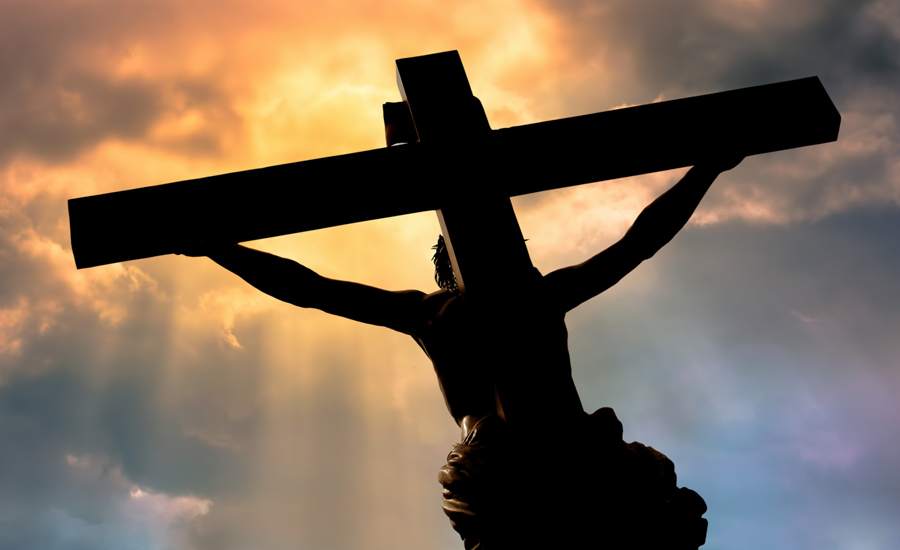
Immediately, I saw a vision of Christ on the Cross, His head lowered, His eyes fixed on me. It was as if He was telling me to pick up the ladder lying a few feet from the Cross. I told Him that the guards would stop me. He told me they would not. I did as I was asked, placing the top of the ladder just behind His left shoulder at the intersection of the two beams. Slowly, I climbed the ladder, wondering what I would experience—the flies, the smell, the blood? Here I was, worried about myself in the presence of Christ on the Cross. He was looking at me all the way up the ladder. I got level with His face. Jesus told me to put my right shoulder into His left shoulder. He told me in a whisper of gasping breath to lift him up. “I need to breathe,” He said.

Gently I pushed Him up, my face almost touching His. He then looked out from the Cross and said in my right ear, “I want you to see what I see.” I looked intently at the view from the Cross. I looked at the topography, I looked at the land.

Most paintings of the Lord on the Cross are focused on Him. I didn’t recall any painting of what the Lord would have seen.

As fast as the vision had started, it stopped. I was still on my knees in the pastor’s office. Someone came to tell me that the program was about to begin downstairs. I was escorted to a large room filled with people. The “happy-clappy” music of praise and worship began. It was beautiful.

Good worship music is so important during a healing conference. Like a large classical orchestra tuning up before a concert, we tune into God as the body of Christ. The music ended, and I was introduced. I said a prayer, walked away from the podium, and began to describe what had happened while I was praying in the pastor’s office.

When I got to the part when Jesus said, “I want you to see what I see,” I understood that He didn’t mean the landscape. He wanted me to see the raw pain of the human condition in each person. His sentence was unfinished. If I were to fill in the rest of those powerful words it would be, “I want you to see what I see in everyone I look at. I want you to see the fear, anxiety, worry, the pain, the hurt, the dis-ease, the rejection, the generational issues, the brokenness, the broken heart, the doubt, the faith, the love, the joy; I want you to see each person you look at with your soul. See the issue that person is carrying. As you see it, help them unpack it.” I stood in silence as the revelation hit me, right in front of all those people. There was a long period of silence as I looked at each person with that intent to see. To really see what He sees. The power of the presence of the Holy Spirit alighted upon us all. It was a very powerful day of healing.

Later, Kathy DeLair, an artist friend, painted what I saw. My right shoulder was under the Lord’s. She painted Christ upon the Cross as if my head were right next to His, in monochromatic stillness, with one drop of red blood falling from His forehead, His hair blowing forward in the storm, and the last vapor of the last breath coming from His mouth.

Looking back on this vision, I understood its full meaning. I saw that I/we must look at everyone through His eyes to fully understand the plight of the human condition.

For more stories like this, subscribe to Mysterious Ways magazine.

A Head Injury Sustained During WWII Changed His Relationship with God

My father-in-law, Jim Matis, was a natural storyteller. He loved regaling his friends with tales, drawing them in with quick jokes and easy conversation.

His favorite stories were about his time in World War II. Like so many young men of his generation, he’d enlisted in the Army after the attack on Pearl Harbor and shipped out to Europe. He spoke of adventure, camaraderie and bravery.

I myself experienced the devastation that had engulfed Europe. My family was living in the Sathmar region of Romania when the war broke out. We spent the next few years struggling to survive. Looking back, it is incredible to think that my future father-in-law was a part of the Allied forces, fighting not 30 miles from where my family sat huddled in a refugee camp. Eventually we would make it to America.

At family gatherings, however, Jim’s war stories were few and far between. His wife—my mother-in-law—hated hearing anything about the war. It brought back painful memories of a time when she worried he wouldn’t make it home alive. Jim respected his wife’s wishes. He never mentioned the war when my mother-in-law was in earshot. We didn’t hear much about his WWII service until after she passed away.

On Jim’s eightieth birthday, we planned a big celebration for him, just as he’d wanted. We rented out a banquet hall and hired caterers. Toward the end of the evening, Jim gathered us all to make a toast. And to tell us a story.

Jim’s unit—the 92nd Signal Battalion—was part of General Omar Bradley’s First Army. They were the ones who stormed the beaches of Normandy, France, on June 6, 1944. D-day. The success of that mission was a miracle. And though Jim hadn’t been a part of that initial wave, he experienced a miracle of his own in Normandy.

Jim was attached to the Battalion Headquarters Company, which had been assigned to set up long-range communications. They landed on the beach, where so many had died mere days before, then traveled inland, picking their way through the infamous, sloping hedgerows of the French countryside.

They were just preparing to set up a radio tower when they came under enemy fire.

“Hit the dirt!” a commanding officer shouted. “We’ve arrived at the party!”

The men dropped to the ground. There was a ditch nearby. Some soldiers ran to it; others crawled. Anything to take cover from the attack. Bullets whizzed past, splattering mud as they went. Jim’s unit hadn’t been too far behind the battlefront, but they hadn’t expected to encounter enemy troops so soon. There were shouts. Cries of pain.

They say you never see the shot that takes you down. But Jim saw it. A bullet, speeding toward him. He closed his eyes and ducked. Not fast enough. White-hot pain exploded in the back of his head. The force of it rattled his teeth.

This is it, he thought. I’ve been hit.

The sounds of the battle muted. Time stopped. Swimming before his eyes was the image of his wife and baby daughter, Frances. They were back home, waiting for him.

In that moment, Jim prayed. He prayed harder and more earnestly than he’d ever prayed in his life. I can’t die here, he told God. I need to see them again.

Jim continued to pray until the gunfire died down and the all clear was given. The pain was still pulsing at the back of his head. He was afraid to remove his helmet, scared that it was the only thing still holding his skull together. But he needed to know how bad the wound was. Bracing himself, Jim sat up and took the helmet off.

There was no blood. Jim placed a tentative hand to the part of his head where the pain bloomed sharpest. He could feel something protruding from the skin. Jim thought he was going to be sick—then the thing started to move.

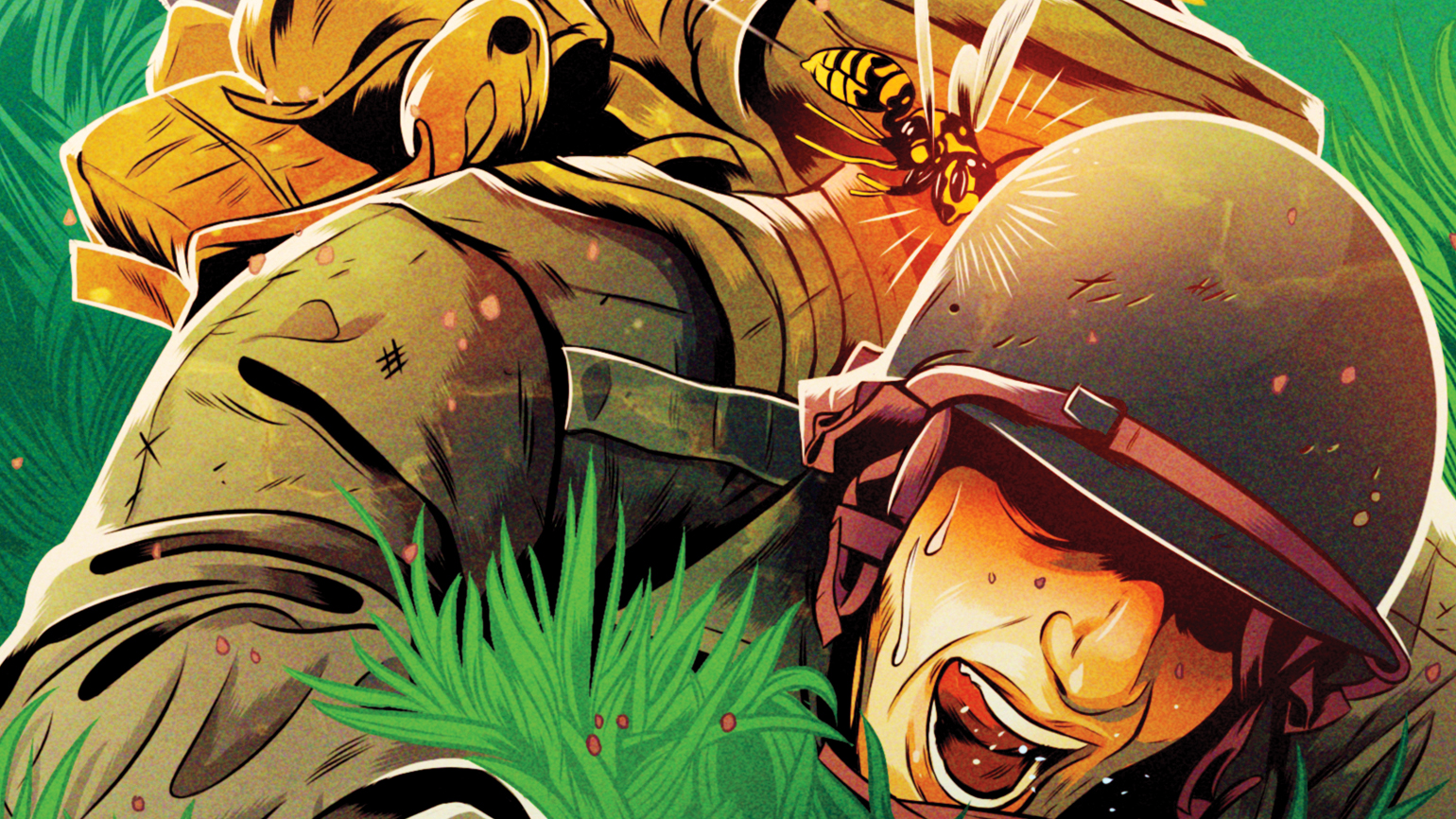
In a blind panic, Jim yanked it free. He blinked at it, confused. Because there, between his fingers, was a bug. No—not just a bug—a huge yellow jacket. It was dead but not before it had stung him in the back of the head.

Jim didn’t receive medical attention right away. There were many others who were badly wounded, and the field hospital was swamped. It wasn’t until two days later that Jim was finally seen by a doctor. In that time, his face had swollen so much, he could barely swallow. The wasp’s stinger was buried deep in the skin and needed to be cut out.

“I still have the scar,” Jim said to the hushed party, all those decades later. “It’s the only thing I have to prove it happened. Because I can’t explain it. I know people will say that it was just a bee sting, that I was never shot, but I disagree. I know that God was with me that day. That he heard my prayer. And somehow he transformed that bullet into a bee.”

Jim has since passed, but this story has stuck with me. He was never able to prove that what he experienced did happen, but that didn’t really matter, because it was real and transformative to him. It changed his relationship with God.

And as for me, his story showed how easily things could have wound up different. That everything turned out the way they did—that a little boy who was in a WWII refugee camp grew up, moved to the United States and fell in love with the daughter of an Allied soldier who maybe almost didn’t make it home—that’s a miracle all its own.

A Halloween Mystery

In honor of Halloween, I have a tale of mystery and intrigue to share! It involves a pumpkin and a 173-foot tower.

Back in October 1997, someone at Cornell University–my alma mater–snuck a pumpkin on top of the spire of McGraw Tower, the bell tower at the center of campus. Students and faculty members on the Ithaca, New York, campus were left scratching their heads. How in the world did that pumpkin get there?

Community Newsletter

Get More Inspiration Delivered to Your Inbox


A pumpkin mysteriously appeared on top of McGraw Tower of Cornell University in 1997. Photo from Cornell University Alumni Twitter feed.Seemingly overnight, Cornell found itself in the middle of a real Halloween mystery. One that even garnered media attention. Many offered theories explaining the pumpkin’s precarious placement. Stealth rock climbers! A secret trap door at the top of the tower! Pumpkin-wielding helicopter! But, in the end, nobody came forward to take credit for the prank.

The situation only got more mysterious. The pumpkin stayed on top of the tower for a staggering five months! In March 1998, the university tried to remove the pumpkin, and it was accidentally knocked over by a crane. Even then, the pumpkin miraculously remained in one piece–it’d been frozen solid by that infamous Ithaca winter.

By the time I arrived on campus, a few years later, the pumpkin was the stuff of university legend. I passed by McGraw Tower almost daily, but I never gave much thought to the story. I was too busy stressing about papers, exams and, of course, my historical crush on James Madison. (What? I was a history major! It’s completely normal.)

Looking back now, though, I’m sort of delighted by that pumpkin. Universities are celebrated for providing solutions, answers to pretty much everything. And yet nobody could figure this one out.

There’s a lesson in that too, one that’s just as important as what you might learn in a history or biology class. So much of life is unknowable. We can’t figure everything out. It’s okay not to have all the answers.

And so…the mystery lives on!

Any guesses as to how that pumpkin got on top of McGraw Tower? Share your theories below!

After a Farm Accident: Did this Town’s Prayers Lead to a Miracle?

Zach Short: Harvest time. That’s when it gets crazy busy for farmers. We work from first light until dark, not stopping for anything. All that matters is getting the crop in. My family’s been farming for four generations here in Kansas, and I can tell you, it’s not just a job. It’s a life. It’s in your blood, your soul.

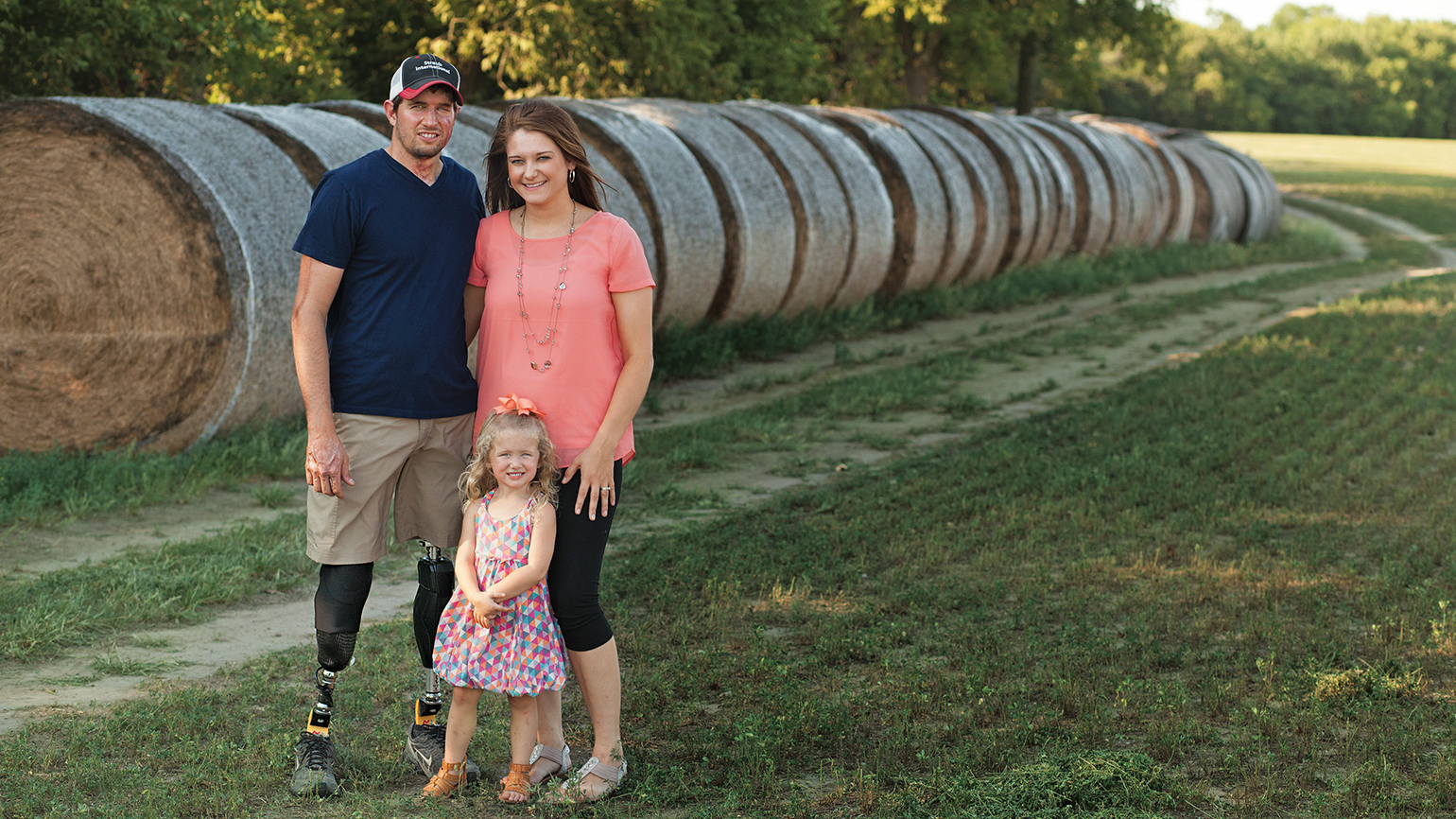
Zach, Jodi and Brynlee Short on the cover of the June 2017 GuidepostsWe raise milo, corn, soybeans, wheat and hay. We also run a shop where we rebuild combines, and we use our equipment to harvest crops for other farmers. On that day, October 25, 2014, we’d been hired to cut soybeans. Our friend John Tinkler was in a tractor hitched to a grain cart, unloading the beans into a semi via a tall metal auger.

I was in my combine. Our shop mechanic, Les Ferm, was cutting across the way, when I heard John over the radio. “Tractor’s on fire. Anyone got an extinguisher?”

CHECK OUR SELECTION OF BOOKS ABOUT PRAYER

Jodi Short: It was a little past noon. I’d put our one-year-old daughter, Brynlee, down for a nap, glad to have a moment to myself. I wasn’t used to the pace of harvest yet. I hadn’t grown up on a farm. I met Zach in college. On school breaks, he worked. To see him, I’d have to ride with him in some piece of farm equipment. That’s where we fell in love—in a combine.

I loved Zach’s quiet confidence, his faith that he’d been called to be a farmer. I knew he was the one God made for me. We got married and moved into the family farmhouse, just outside Assaria. Zach’s parents moved into town. A year after our wedding, we had Brynlee. Farm life seemed pretty close to perfect.

Zach: I jumped out of my combine, got in a service truck and drove over to the grain cart. The tractor’s left back tire was on fire. But where was it coming from? John looked underneath the tractor. I went around to check the other side. I grabbed the grain cart ladder with my left hand to high-step the hitch. ZZZZAP! A massive electrical shock. The current pinned me to the cart. There was a flash of white light. Then everything went dark.

Les FermLes Ferm: I pulled up right behind Zach. My eyes went to the auger. It was pressing against a power line. “Zach! Don’t touch—” I yelled. Too late. There was snapping, crackling. Flames shot out of Zach’s head and feet.

I had to get him off that cart, but I couldn’t touch him without getting shocked myself. I checked the service truck. The bed was full of tools. Metal—useless. There. A small plastic shovel with a wooden handle. A friend had found it in the road a few days earlier. Zach didn’t think it was ours, but I’d tossed it in the truck anyway.

I grabbed the shovel, hooked its scoop on his shoulder and yanked. Zach tumbled to the ground and lay there. Motionless. Not breathing. I’d worked for the Shorts for 16 years. I’d known Zach since he was a kid. How was I going to tell his mom and dad he was dead? Then I heard something. A shallow breath.

Jodi Short: The phone rang. Zach’s mom. “Zach’s been in an accident,” she said. “I’m coming to pick you up.” A friend stayed with Brynlee. We rushed to the hospital in Salina. A doctor told us that Zach had suffered a 7,200-volt shock. He’d been conscious and talking with the paramedics. But his burns were so severe, he’d been put in a medically induced coma. “Is he going to live?” I asked.

“I don’t know,” the doctor said. “You can see him for a few minutes. We’ve got to airlift him to the burn center in Wichita.”

Zach was zipped up in a protective bag. Only his face was visible, burned so badly that I barely recognized him. “Hang on, Zach,” I whispered to him. “I love you.”

Zach’s mom drove me home to pack a bag and get Brynlee. In the car, I took out my phone and posted on Facebook: “Please pray for my husband. He’s been in a bad farming accident.”

Justin KnopfJustin Knopf: I was harvesting when I felt my phone buzz around 3:00 p.m. It was a neighbor texting: “Zach Short’s been injured.” I live in Gypsum, about 12 miles from the Shorts. They’re the kind of folks who are always helping others. Now they needed help. I thought of the scripture “Where two or three of you are gathered in my name, there am I among them.” So I radioed the guys working with me. We climbed down from our combines and prayed together.

I wished there was something more I could do. Later it came to me: What if every day a few of us stopped what we were doing and prayed for Zach at 10:00 a.m. and 4:00 p.m.? As in 10-4, understood. A radio code every farmer knows. A way to think of Zach in the middle of the harvest. I texted a few friends and put something on Facebook.

Jodi: Three days after the accident, Zach was still comatose, clinging to life at the burn center. I was with family in the waiting room when a nurse rushed in. “You need to come with me,” she said. “Run!” We raced to Zach’s room in the ICU. “He’s coding,” the nurse said. A doctor was doing chest compressions on him. I screamed. Nine torturous minutes passed. Finally, the doctor said, “I’ve got a pulse!”

A nurse led me back to the waiting room. Gulping tears, I told everyone what had happened. I wrote on Facebook: “Zach needs prayers. Now!”

Lori BlakeLori Blake: I was the HR manager at a nonprofit. I was in a meeting with 15 coworkers, including Zach’s sister, Kelsie. Our phones buzzed at the same time. “Stop what you’re doing and pray for Zach!” Jodi had posted.

I’d known Zach since he was little, when I worked at the town gas station. I remembered him, his brother and sister coming in for Cokes. Such great kids. The meeting came to a halt. All of us bowed our heads and prayed.

Jodi: That night the doctor told us Zach had only hours to live. His kidneys were failing, his lungs full of fluid. “We’ve done all we can,” the doctor said. “If he codes again, how do you want to proceed?”

I made the decision to stop forcing air into his lungs, and we put Zach in God’s hands. The chaplain came, a Catholic priest who administered last rites. Family and friends packed the hallway, praying. I sat beside Zach, Brynlee in my arms. “Daddy’s going to heaven,” I tried to explain. The doctor had told me his vital signs would drop slowly and he would pass away. I watched his monitors, waiting.

The hours passed and his numbers didn’t drop. They inched up. Could it be? He wasn’t dying! He was rallying!

By morning Zach’s lungs were clearing. His kidneys were working. “This isn’t anything I’ve done,” the doctor said. “This is God.” I knew we would need many more miracles. More than half of Zach’s body had been severely burned.

On November 6, the doctor asked me to sign a form authorizing the amputation of Zach’s legs. “They’re badly burned and infected,” he said.

How could Zach be a farmer without his legs? I wanted to talk to him about such a weighty decision.

“We can’t wait,” the doctor said. “If the infection spreads, it will kill him.”

I took a deep breath and signed.

Justin: Combines all over the county were stopping at 10:00 and 4:00. Folks in town were praying at the same times. Someone put up a sign at the Assaria city limits asking people to pray for Zach. As a week passed, then two, I found myself lingering longer each time I bowed my head. The harvest could wait.

Jodi: It had been 20 days since the accident. I spent my days at Zach’s bedside, watching for his eyes to open, a finger to twitch. At night I would crawl into bed at a relative’s house. One morning the phone startled me as it rang at 6:00 a.m. I was almost too scared to answer it.

“Zach’s awake!” the doctor on the line told me. “He’s asking for you.”

I got to the hospital as fast as I could. But I didn’t know what to tell Zach. “Jodi, why are you acting so weird?” he asked.

“You’ve been in a bad accident,” I said. “I was worried you wouldn’t even know who I was.”

“I would never forget you,” he said. “Or Brynlee.”

Lori: The day Zach came out of his coma, God’s praises were sung and many people found ways to help. Jodi’s sister started a GoFundMe page and donations poured in. A bucket was passed at home football games. I’d volunteered to help with a spaghetti dinner and auction. Farmers donated equipment and services for the auction—things folks here really value, like a cattle guard and hay grinding. Jordy Nelson, a star receiver with the Green Bay Packers, who grew up an hour away from here, donated a signed jersey. Jordy Nelson!

Zach: Two days after I woke from the coma, Jodi still seemed nervous about something. “They had to take your legs,” she told me. “You would have died otherwise. They say you’ll be able to get prosthetics.”

I looked down at the bed sheet. It lay flat where my legs should have been. That didn’t seem real. Not as real as the pain. My body felt like it was on fire. Not just on the outside, but inside my muscles and bones.

Jodi: I was so relieved he wasn’t devastated about losing his legs. I couldn’t bring myself to tell him the doctor was talking about amputating the arm he’d grabbed the grain cart ladder with. The electricity had ripped through his arm and shoulder, burning him from the inside out.

“Can you try to move your left arm?” I asked. Zach grimaced, gritting his teeth. Ever so slightly his arm moved. I wanted to scream for joy.

Zach: That tiny movement was the start of a long journey. Next I went to Barnes Jewish Hospital in St. Louis. Surgeons there operated on me more than 20 times, removing damaged tissue, then reconstructing tendons and muscles, grafting skin.

I found myself growing depressed. My limitations were becoming all too real. What good would I be, hobbling around the fields on prosthetics? Trying to climb up into a combine and falling?

Alex Weller​Alex Weller: Zach and I were roommates freshman year in college. I was a lot less motivated than he was. He made me go to class. I never would have passed without him. Never would have gone on to become the owner of Exit 14 Restaurant in Gypsum. As soon I heard about the spaghetti dinner and auction, I signed up to supply all the food. Helped organize everything that went into it. We served more than 700 meals and raised $70,000 for Zach. Volunteers wore T-shirts that I designed. “Nothing short of a miracle,” they read. It really felt that way. We’d all been part of something life-changing.

Jodi: From Barnes, Zach went to University of Kansas Medical Center for five weeks of rehabilitation. On Valentine’s Day, we finally headed home. We exited I-35 at Assaria. At the end of the ramp, a police car was waiting to escort us. Cars and people were lining every inch of the overpass. Along the main drag, we saw even more folks. “What have you been up to?” Zach asked me.

“It wasn’t my idea,” I said. “Everyone wanted to welcome you home.”

Now I understood what it meant to be part of a farm community. People had been there for us every step of the way, making sure our fields got harvested, supporting us financially and in prayer. I knew they’d be with us through whatever challenges lay ahead.

Zach: Seeing friends and neighbors, even strangers, cheering for me, waving “Welcome Home” and “We Love You” signs… I didn’t make it a block before the tears hit. I’ve carried everyone’s love and prayers with me ever since, through months of physical and occupational therapy, adjusting to life as a farmer with prosthetic legs, even operating a combine again. Absolutely, I get discouraged—but never for long. My family, friends and neighbors always lift me back up. That’s what farmers do—we help each other.

For more inspiring stories, subscribe to Guideposts magazine.

A Fluttering Sign from Heaven

Every family has its own folklore and superstitions. In our big Italian Catholic family, it’s said that the souls of the dead come back to visit us in the form of a moth. Crazy, huh? “That could be Aunt Ray!” Mom would say when one flew inside, and my younger brother, Charles, and I would laugh.

We were 12 years apart, but close. He always wore black and white. I teased him that they were the only colors he knew how to match. At 23, Charles passed away suddenly in his sleep. Part of my world died too. I yearned for a sign that Charles was at peace. I finally understood my family’s strange belief.

Three days after Charles died, Dad called. “Get over here!” he said, his voice urgent. I drove to my parents’ house and found my family crowded by the front door. “Look!” my sister Natalie whispered. It was perched on the door handle. A moth with black-and-white-speckled wings. . . . exactly like the pattern on the tie Charles had worn at our cousin’s wedding, the last time we had seen him alive.

We watched the moth until it vanished into the house. Dad found it the next morning on Charles’s pillow. The very spot where he’d drawn his last breath. It stayed there for 12 hours, then flew away.

READ MORE: A REDHEADED SIGN FROM HEAVEN

A year later, the entire family gathered at the cemetery for the anniversary of Charles’s death. Natalie and I made a moth-shaped wreath out of white carnations and roses we’d dyed black. I laid it on his headstone. Afterward, we sat on the deck at my parents’ house sharing “Charles stories.” I tried to join in, but it was all too much. I got up from the table with my sister Connie and wandered over to the memorial garden that Dad had planted in the backyard for Charles. “I miss him so much,” I told Connie. She put her arm around me.

Just then I spotted something fluttering by the edge of the garden. I knelt down to take a closer look. A white moth! I pointed—and it leaped onto my finger. That’s when I saw the white-and-black stripes on its legs. “You guys gotta see this!” I called to the rest of the family. They formed a circle around me, all wanting to “pet” the moth.

It was the oddest thing. The moth wasn’t afraid at all. Connie squatted next to me and it moved right onto her knee! There was a 14-year age difference between Connie and Charles, but they had always been as thick as thieves. Especially after Connie’s divorce. Charles would stop by her house to check up on her kids and make sure they weren’t falling behind in school. On the weekends, he’d take Connie on mini road trips to keep her from feeling lonely.

The moth flew to my three-year-old niece, Ava, next. She squealed in delight. Charles had been close to all the kids in the family. But Ava—the baby of the bunch—was his favorite. She was spunky and mischievous, like him. He even had her photo as the background image on his phone. Ava was too young to understand the tragedy of his death, but she asked about her uncle Charlie and prayed for him every night before bed.

“Can I see?” my 10-year-old, Victoria, asked and the moth hopped over onto her index finger. The rest of us looked on in awe. This little creature was so friendly! Charles had been like a big brother to my three kids. A rock star who could do no wrong. They would hear his car pulling into our driveway and rush outside to greet him. Whenever he babysat for us, my husband and I would come home to find the house a mess, candy and toys everywhere.

Next the moth visited Fran, Charles’s childhood friend. She was his first love—his girlfriend from middle school to junior high. Even after they broke up, they remained close. In the months after his death, we all became friends with Fran. She’d check in on my parents, shovel the snow in front of their house, and call my sisters and me just to chat. She became like another sister. It made sense the moth wouldn’t leave her out.

I loved the black-and-white stripes on the moth’s legs. Totally Charles’s style. He’d probably laugh at us all going crazy over a moth. But then again. . . . Charles always made me smile. I couldn’t think of any better way to lift our spirits than a visit from the object of family folklore. By the end of the evening, the moth had landed on every one of us. It flitted back to me and rested on my dress.

READ MORE: A SIGN FROM HEAVEN ON HER WEDDING DAY

It was time to go home, but the moth wouldn’t say goodbye. “Take it with you,” Mom said, as if that were the most natural thing in the world. So that’s what I did. I climbed into the car with the moth still on my shoulder. It stayed there the entire drive home. When it was time to get ready for bed I carefully changed out of my dress and hung it up. The moth didn’t budge.

I was disappointed the next morning to find that the moth had finally flown off. I sat on the edge of my bed, a little teary-eyed. Just as I was about to leave the bedroom, though, I saw a flutter of white wings. I held out my hand and the moth landed on me again. It accompanied me downstairs for breakfast, much to the delight of my kids, who couldn’t stop snapping pictures of the two of us.

The moth didn’t stay forever. But the wonder and comfort of its visit lingers with me and my family. And so does the message that one day we will see Charles again, a message delivered in a way that only God could have done.

A Fearful Night in Honduras

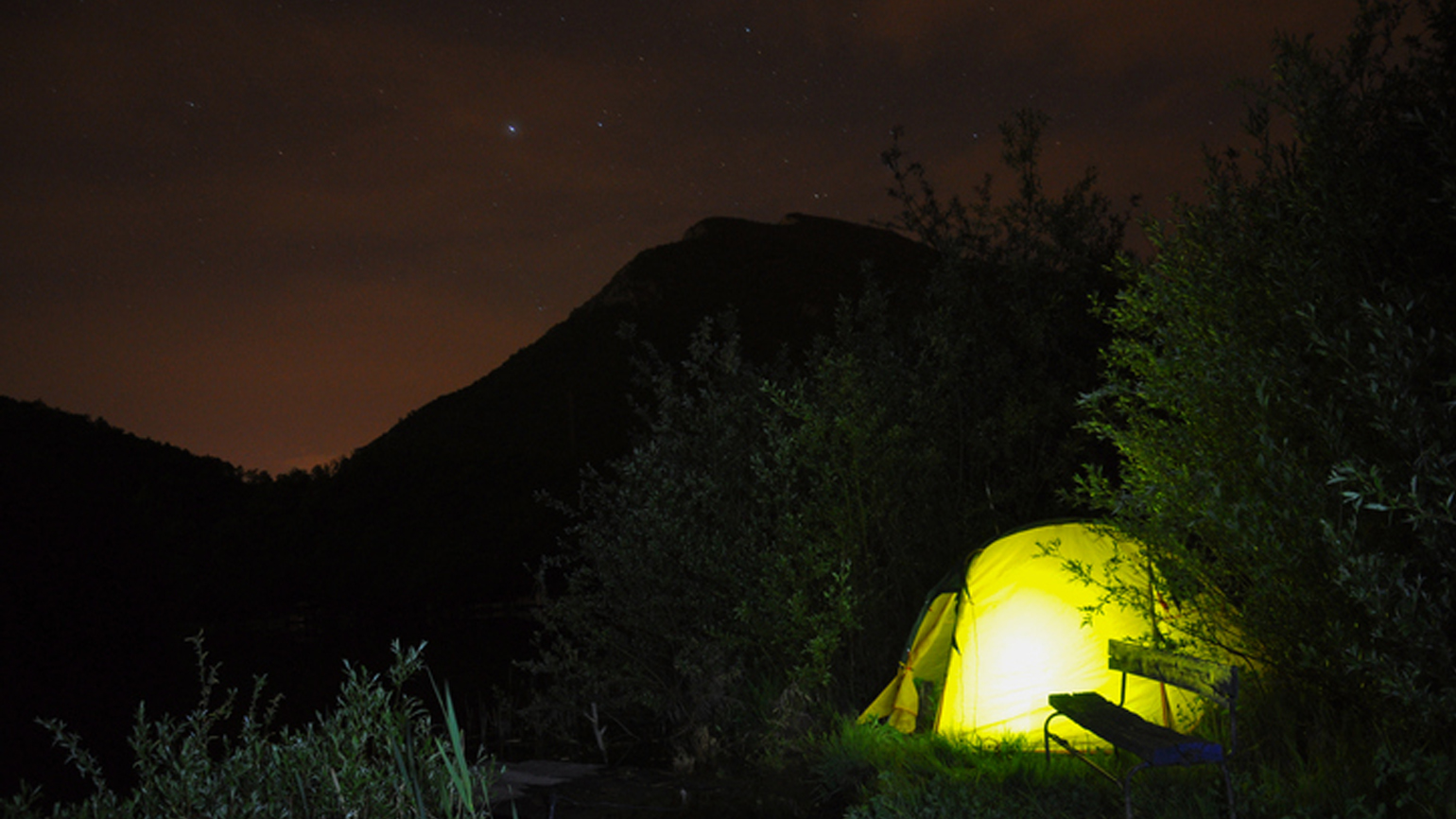
Click! My eyes flew open. It was pitch black inside the camper shell, a moonless night in the Honduran mountains. Someone—or something—was out there! I shook my husband, Dave, awake.

“Honey, what was that?” I whispered.

“Probably just an animal,” he said groggily. “Who knows what lives out here.” He fished a flashlight from his pack and shined it out the tiny window. “See? Nothing.”

He fell back asleep. I tossed and turned in the steamy heat, pleading with God to give me peace of mind. Was it just my fear of the unknown? Dave and I had traveled to the small mountain village of San Luis in the wake of Hurricane Fifi to help relief efforts alongside our missionary friend Gary. With limited space in the village for volunteers, Dave and I chose to sleep in the back of a pickup covered by the camper shell. Maybe I was so tired I was hearing things.

Click!

“There it is again!”

“Kay, go back to sleep,” Dave mumbled, rolling over. It took me another fitful, fretful hour, but finally I drifted off.

By the time we returned to Ohio, I’d dismissed the whole strange incident as a case of nerves. I forgot all about that night. Until later, when Gary returned to the States.

“Have I got a story for you,” he said. “A month after you left, something peculiar happened. . . .”

One of the villagers in San Luis had come into the church, wanting to devote himself to God. “He told us that one evening, he’d gotten drunk and decided to take out his anger over the losses he had suffered on some of the volunteers,” Gary said. “He armed himself with a pistol and approached a pickup with a camper shell. His intent was clear.”

I gasped.

“The strangest thing happened,” Gary continued, “and he took it as a sign. When he pulled the trigger, the gun jammed. Not once but twice.”

A Father’s Prayer for His Alcoholic Son

Most afternoons, I pick up my son’s daughter from preschool and bring her to my house for snacks and playtime. It’s the highlight of my day. She’s the apple of my eye. She munches carrots at our kitchen table, then plays alphabet games on the computer, or we go to the mall to watch people ice-skating and do a little shopping.

This year my granddaughter turns five, an age etched deeply in my heart. It’s how old my son, Paul, was when something happened to him that I’ll never forget.

Now Paul is in his fifties, and I haven’t spoken to him in years. He’s struggled with alcoholism and has been in and out of Alcoholics Anonymous programs, the reason I’m writing this true story without our last name. He and his wife divorced soon after their daughter was born, and Paul lost custody. I’m not even sure where he lives. Still, I pray every day that God will heal him from his demons. Maybe it seems naïve to believe that God will help save someone who appears to have no interest in saving himself. But there is a reason I believe.

The year Paul turned five, everything was changing in our family. I had gotten a promotion at my accounting firm, and my wife and I moved with our three children, Paul and his two sisters, from Florida to Colorado. I was torn about the move. I grew up in Florida and most of our extended family lived there.

But we found a two-story wood-frame house to rent in a pretty neighborhood in Wheat Ridge, a suburb west of Denver, with a spectacular view of the mountains. We joined a church and enrolled the kids in school. We quickly made friends with some of the people from church.

Try These Self-Help Books to Reach Your God-Given Purpose

One afternoon, about three months after the move, my phone rang at the office. It was my wife, crying hysterically.

“Paul is in the hospital!” she managed to get out between sobs. “He was playing upstairs and stood on the windowsill. He fell through the screen onto the concrete driveway. It looks really bad. . . .”

I fought my way frantically through the Denver traffic, repeating my favorite Bible verse, Isaiah 43:2: “When you pass through the waters, I will be with you; and when you pass through the rivers, they will not sweep over you. . . .”

All I could think about was the day Paul was born, a healthy nine-pound, three-ounce baby, the son I’d always wanted. How could this have happened to him? All my adult life I’d used my analytical mind to succeed in my career and in everything else. Now my mind was useless. I blamed myself for choosing the promotion and the move. We’d lived in a single-story house in Florida. This never could have happened there!

I finally got to the hospital. I raced to Paul’s room. My wife was with him, along with a doctor and a nurse. Our Sunday school teacher, our pastor and two other friends from church had heard the news and gotten to the hospital before me. Paul lay motionless in a bed that looked like a crib, with protective railings on all sides. He was in a hospital gown, his eyes closed, his body a mass of bruises.

“He’s bleeding internally,” the doctor told us. “He has several broken ribs, a blood clot in his brain and severe damage to his back. I’m very sorry, but we don’t expect him to survive.” The doctor and the nurse gave us the room to contemplate our son’s fate.

Sign Up for Guideposts Free e-Newsletters and Get Inspiration Delivered to Your Inbox

My knees gave way. I sank to the floor. My wife knelt beside me and I held on to her, trying to keep from dissolving. I heard my pastor praying.

I knew I should pray too. It was hard to focus my mind. I began to pray in a whisper, “Please, God, save my son.” Even those words were difficult to say. “Take all of me,” I prayed. “From now on I give everything to you. Just please, save my son.”

A certain feeling, unlike anything I had ever felt before, came over me. Like a shift in the room’s atmosphere. As if it was being pumped full of something, heavier than the air but colorless and odorless. It enveloped me, a light pressure at first, then increasing with strength. It rippled down my shoulders, tightened the muscles in my chest and squeezed my stomach until it hurt. Some presence in the room seemed to be holding my trembling body close, taking away my breath and all my terrified, despairing thoughts.

The feeling intensified until I worried I might be crushed. Then all of a sudden it vanished.

The change lasted no more than a moment. Before I even opened my eyes, I heard a whimper. I looked up to see Paul . . . standing on the bed, his hands on the railings.

“Daddy, I’m hungry,” he said.

I leaped to my feet and wrapped my son in my arms, forgetting for a moment about his broken ribs, his internal injuries. I came to my senses and pulled away, but Paul hadn’t flinched, didn’t wince in pain. Instead, he grinned. I hugged him again, even tighter.

My wife, our pastor and everyone else rushed to join us and we became one tangle of tearful joy. I knew God had visited that room. Paul had been healed.

Pandemonium broke out as our friends from church began praising God and the doctors and nurses ran back in to see what was happening. “We need to do more X-rays,” the doctor said. “I don’t understand what’s going on. What we’re witnessing is impossible.”

To me, Paul looked ready to go home. But I told the doctor he could keep him at the hospital as long as necessary. “For two days, I think,” the doctor said.

My wife and I remained at Paul’s side until visiting hours were over. Then we went home. Neither of us could sleep that night.

“Did you feel it?” my wife asked. “In the hospital room?”

“You felt it too?”

The following morning, the nurses, at their wits’ end trying to get our five-year-old to sit still in his room, called us to come take him home. His latest scans had shown no internal injuries at all.

Many years have passed since then. I’m retired, remarried, living in Texas now. But the memory of that day hasn’t faded one bit. I still see Paul’s grin every time his little girl lights up at something I say that she finds funny, and I remember my son standing on his hospital bed. The presence, the embrace that I felt, that my wife felt. I ask myself, did Paul feel it too?

I’m not sure when Paul will stop falling. But I hope that he reads this and knows he is not alone. I hope he can find the healing and peace only God can deliver. I’ve witnessed it before, and I believe someday I’ll witness it again.

FIND RESOURCES FOR THOSE COPING WITH ADDICTION.

A Family Divinely Connected Through Historical Photos

We were at my husband Jeff’s grandparents’ house for dinner. Spending time with them at their home near Kansas City, Missouri, was always a treat. From the first time meeting them, I’d felt at home with Jeff’s relatives. I was especially drawn to Grandmother Ruth. She was elegant and graceful, but at the same time so warm and inviting.

“Would you like to see some family scrapbooks?” Ruth asked when dinner was over.

“I’d love to!” I said. Jeff ’s grandfather walked over to some shelves beside the fireplace and took down a thick, leather-bound album I hadn’t seen before. Jeff and I hadn’t been married long, but his grandparents already knew how much I loved looking through their old photos.

Maybe I loved old photos so much because of my interest in my own family history. My mother, Neva, was born to an unmarried woman in 1926. At that time, having a baby out of wedlock was a scandal. Women who found themselves in such trouble had nowhere to go. But my biological grandmother was lucky; she found The Willows in Kansas City.

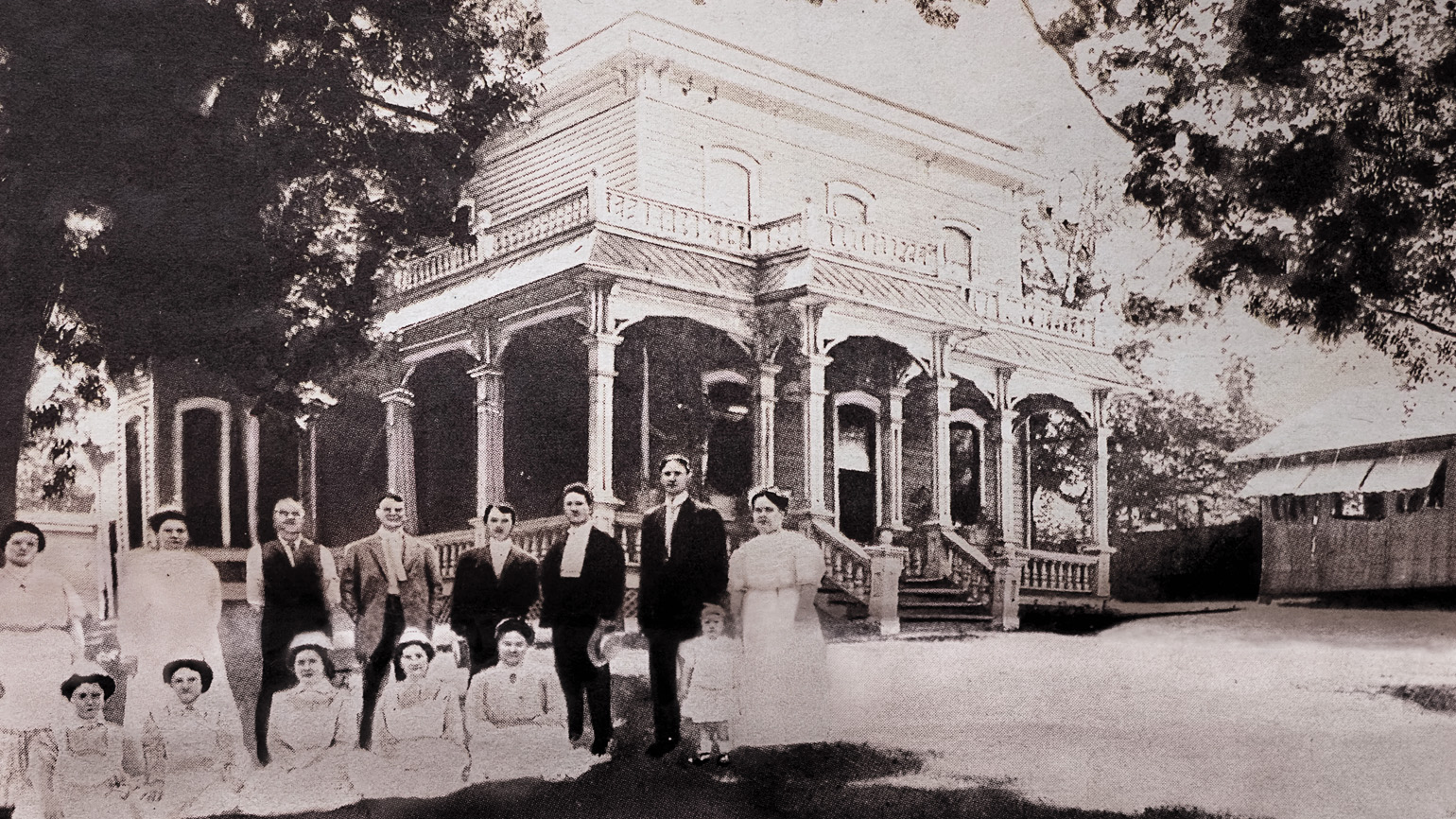
The Willows was started in 1905 by a couple named Cora and Edwin Haworth. They bought an elegant mansion and transformed it into a place where pregnant women got excellent medical care. Other people may have looked down on the expectant women, but at The Willows, they were treated with compassion and respect. From 1905 until the 1960s, the Haworths found homes for approximately 30,000 babies.

I never knew my biological grandmother’s name. The Willows kept all identities of the women secret. When she was 10 days old, my mother was adopted by Roy and Stella Crist. The Crists had lost four babies of their own—I’d seen the four graves my grandfather had dug himself. They came to The Willows looking for a child to love, and they chose my mother.

Turning the pages of Grandmother Ruth’s album, full of relatives of Jeff’s I didn’t know, I couldn’t help but think about how my own family had found each other. The Crists didn’t have a lot of money, but my mother always said she won the parental jackpot. As a child, she proudly told her classmates at school how her parents had chosen her. As an adult, on every birthday, she celebrated her birth mother’s courage. “How brave and selfless she was to allow me to be adopted by the most wonderful parents,” she told me one year. “I’ll always be thankful to her for it.”

Blood ties aren’t as important as love, I thought, studying the old black-and-white pictures in the album. Like what I was feeling now—I hadn’t known Grandmother Ruth long, but she somehow already felt like family.

I turned the page to a photo of a group of people, including a couple and their little girl, standing in front of a house. Not just a house—a mansion. A very familiar one. The Willows!

“My mother was born there!” I said. “Why do you have a picture of it?”

“Why, honey,” said Ruth. “Cora and Edwin Haworth—the founders of The Willows—were my parents. The little girl in the picture is me. Growing up, I helped take care of all the babies there.”

Jeff and I looked at one another in surprise. Neither of us had any idea our families were connected through The Willows.

Ruth thought a moment. “I must have bathed and rocked your very own mama after she was born!”

I imagined young Ruth with my mother in her arms, giving my mother her first memories of love and care. Welcoming her into the world the way she’d welcomed me into her home. No wonder Ruth felt like family to me. She was.

A Donation of Hope

Melody
For 24 years my world revolved around my only child, my daughter, Jill. Her father and I had divorced, and it was just the two of us.

Jill was such a warm and giving person, and the career she’d chosen—teaching elementary school children—seemed just right for her. I was so proud her first day of school last fall, I couldn’t resist taking a picture of her.

Now it was September again, a year later. I sat at my kitchen table, trying to start a letter. Instead, I kept looking at that snapshot of my daughter, with her big smile that could light up a room.

But that light had gone out Memorial Day weekend, when Jill was killed in a car accident. Ever since, my world had seemed dimmed…darker and smaller and lonelier. Not that my friends from church and from the bank where I worked weren’t supportive—they were wonderful—but I needed a comfort they couldn’t give.

What I’d clung to these past months was that some good had come out of Jill’s death. Her other organs had been badly damaged, but her liver had gone to a 58-year-old woman here in Colorado. That was all I knew and I ached to know more.

Enough time had passed that I could contact the recipient through Donor Alliance, the group that coordinated the transplant. I’d been thinking about this letter for months, but how do you sum up 24 years in a few paragraphs?

Finally I picked up my pen. “I am writing to wish you well with your liver transplant, and to acquaint you with the donor, my daughter, Jill. Jill chose to be an organ donor when she got her license. That is truly the kind of person she was.”

I told her a little more about Jill and finished with, “I hope you will be interested in corresponding with me.” Then I put the letter in an envelope, along with Jill’s photo tucked inside a smaller envelope, said a prayer, and headed out to the mailbox.

Carole
That letter from my donor’s mother haunted me. I knew I should write back, and every few months, I’d try, but I couldn’t find the words any more than I could bring myself to open up the little envelope she’d enclosed and look at Jill’s picture.

The first time, I’d started simply: “Thank you so much for your letter and your memories of your daughter, Jill. I know she meant the world to you, as I have a 27-year-old daughter.”

That’s where I’d stopped. What if it had been my daughter, Kim, who’d died? I would have been grief-stricken, unable to function. Yet this mother, at the moment of her greatest devastation, had found the strength to give a perfect stranger an incredible gift. I felt so unworthy!

The second time, I tried to tell her how the transplant came right when I’d given up hope.

“At my weekly visit the doctor told me he wouldn’t be seeing me again. After five years of waiting for a liver and twice having transplants fall through, there was nothing he could do. I went home to die. That’s when I got the call about Jill’s liver.”

Then I was unable to go on. It didn’t seem right that I was getting a second chance at age 58 when her daughter’s life had been snuffed out at 24.

The third time, I wanted to tell her what a blessing the transplant was, how grateful I was to be able to experience life—an active, energetic life—for the first time in years. But what could I say that could possibly make up for what she had lost?

Now I was about to leave for a visit with Kim in D.C. I found myself sitting down at my desk in the den, opening the drawer where I kept the letter from Jill’s mother. There, next to it, was the envelope with the photo I’d never been able to look at. It had been over a year since the transplant. How could I write back now? What must she think of me?

God, forgive me, I thought as I closed the drawer, feeling ashamed of myself. You know how grateful I am. Help me find a way to honor Jill and her mother someday.

Melody
Nine months since I’d written the recipient, and still no word from her.

At first, I was worried. I even called Donor Alliance, afraid she’d fallen ill again or died, but they assured me she was well. Then I fumed. How hard was it to write back? Could this woman really be so unfeeling?

I still checked the mail as soon as I got home from work, but now I was more resigned than angry. Maybe there was a reason I hadn’t heard back. Maybe God would show me another way to make the end of Jill’s life matter as much as the rest of it had.

One evening I tossed the mail on the kitchen table. Just the usual bills and catalogs. But as they scattered, a flyer caught my eye: “Donor Dash 2004. A 5K run/walk honoring the lives of organ donors and recipients.” Why not?

The Donor Dash was on a perfect summer day. With two friends, I walked the route around Washington Park, on Denver’s south side.

There were a few hundred people—some ran, some walked, some had dogs or kids in strollers with them. All of them, in some way, had gone through what I had. Maybe it was that sense of community, but for the first time since Jill’s death, I found myself laughing.

“That was fun,” I heard myself saying as we crossed the finish line. I noticed a number of people did the Dash in teams, wearing T-shirts with photos of donors. Next year I’ll do that, I thought. Round up some more friends and put Jill’s picture on our shirts.

Carole
Not long after Kim moved to Colorado, I saw a flyer for the Donor Dash 2007. It stopped me cold.

I thought of Jill and her mother, and the time their gift had given me to spend with my daughter. Had it really been four years since the transplant?

I decided that Kim and I were going to do the Dash, even if it was just two days away. Some of the people shown in the flyer wore shirts with photos of their donors. I knew where I had a picture like that.

I went to my desk in the den and opened the drawer. I took out that little envelope. Slowly, carefully, I pulled out the photo of Jill and looked at it for the first time. She was lovely, with a big, bright smile that reminded me of Julia Roberts. My fingers trembled as I held the photo. Maybe, after all this time, I had found a way to show my gratitude.

The day of the dash was sunny and warm. The course was jammed with more than a thousand people. I couldn’t believe how many lives were touched by organ donation.

By the time Kim and I could see the finish line, sweat was cascading down my face. I’d walked the entire route so far. Not bad for someone who just a few years earlier barely had the energy to stand.

The last hundred yards or so, I noticed a woman in a blue T-shirt staring at Kim and me. She finally came up to us and asked, “How come you have Jill’s picture on your back? Are you a friend of Mel’s?”

“I don’t know who Mel is,” I said, a little startled. “But Jill donated the liver that’s keeping me alive.”

Her eyes got huge. “You’re…you must be…would you like to meet Jill’s mother?” she burst out. “I know where she is.” Before I could answer she dashed off toward the finish line.

Mel…of course, that had to be short for Melody, Jill’s mother. We hurried after the woman in blue. I crossed the finish line and there were dozens of people, all wearing those blue T-shirts in memory of Jill, all applauding.

So many people started reaching out to hug me that I couldn’t find Melody at first. When I did, all I could get out was, “I’m Carole” before we fell into each other’s arms and burst into tears.

Melody
Finally I took a step back so I could look into Carole’s eyes. Then I asked what I’d been wondering all these years. “Why didn’t you ever write?”

I thought Carole was going to start crying all over again. “Have you ever received a gift so precious that you didn’t know how to say thank you? I couldn’t even look at Jill’s picture until a couple days ago,” she said, then held me close again. “I’m so glad I got a chance to thank you in person.”

At last I understood. Carole hadn’t been unfeeling at all. If anything, she’d felt too much, like me.

I think God was patiently waiting for the right time to bring us together. That moment at the finish line was the start of a great friendship and partnership, kind of like the way the end of Jill’s life gave Carole a new beginning.

Together, Carole and I give talks about organ donation, and the more people we reach, the bigger and brighter and more connected the world seems.

A Dollar-Bill Miracle

I’m sure we’ve all found random numbers and letters scribbled on the money in our wallets. The kind of thing you ignore when dishing out a few bucks for coffee. Maybe, though, we should be paying closer attention.

This week I came across an ABC News story about 86-year-old Peter Bilello and his wife, Grace. The Connecticut couple was married for 50 years and had two children and four grandkids. When Grace was diagnosed with cancer in 2001, Peter never left her side.

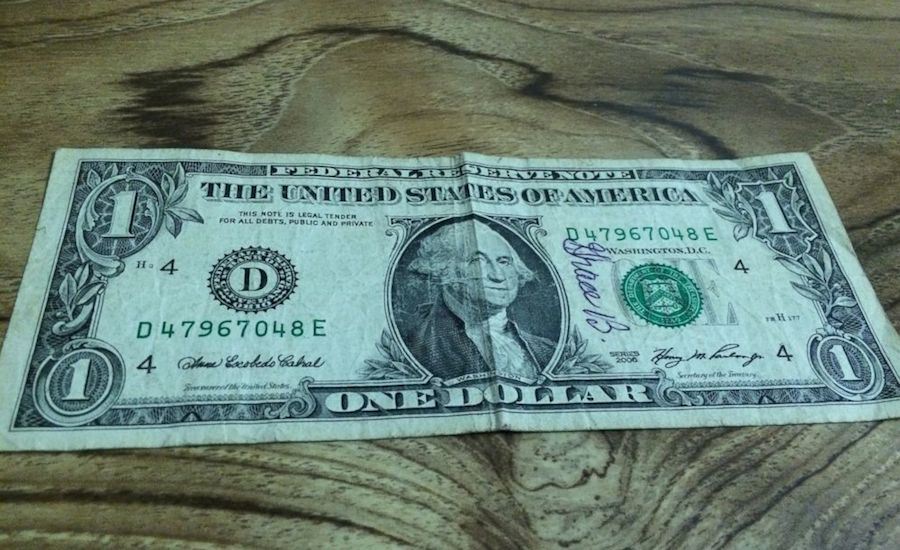
One day, in 2009, an idea popped into Peter’s head. He pulled out two dollar bills.

“I told my wife, ‘I’m going to sign one on the front: Peter B. I want you to sign one, too, for Grace B.,’” Peter said. “I put those two dollars in my wallet.”

He intended to keep the bills in his wallet forever. A testimony of sorts to their love. But a year later, while shopping, Peter reached into his wallet for cash and used the two signed bills by mistake. He was crushed. There was no way on earth he could track the bills down. They were gone for good.

This past November, Grace passed away from breast cancer. But her and Peter’s love story wasn’t over just yet.

You see, a few weeks ago, Peter was out with his 14-year-old granddaughter, Ashley. He handed her a $10 bill to get a bite to eat. She returned with the change. Three dollar bills. Written on one was a name in very familiar script–Grace B.

The dollar had returned after five long years.

“I said, ‘Oh my god, Ashley, look.’ We started to cry,” Peter said. “We were so happy to get the dollar back. I never thought I’d get that dollar back.”

For Peter, there’s no question about it–the incident was a miracle.

“Who knows how many million people got that dollar in their hands,” he said. “It happened to be … the right time and right place. Nothing like this could happen. It’s got to be a miracle.”

At Mysterious Ways magazine, we’ve shared stories like Peter’s before. Like a fateful $50 bill or the dollar that predicted love. These “monetary miracles” always amaze me. God uses everything around us, even something as simple as the change in our wallets, to connect us with one another. To remind us of the power of love.

What do you think? How do you explain the return of Grace’s dollar bill to Peter? Share your thoughts below! Studying these features in detail, many experts come to the conclusion that it is necessary to introduce gaming technologies (gamification) in this area.

A Divine Nudge Healed This Mother-Daughter Relationship

A friend and I had just finished having dinner at our favorite spot in Reno, Nevada, where I’d lived for 23 years. We paid the bill, got up and hugged in a tearful goodbye. She was the last friend I’d see before I moved across the country.

“Are you sure about this, Joanie?” she asked. “What is there for you in West Virginia?”

It was a question I couldn’t answer. I’d simply woken up one morning in early February with an undeniable urge to return to Huntington, West Virginia. I asked God why. In Reno, I had friends, a business—a full life. The only person I knew in Huntington now was my mother, and she and I didn’t get along.

When I was growing up, I never felt close to my mom. She was guarded around me. She hardly ever hugged me or held my hand. She was distant and bitter, often keeping to herself and watching TV in her sewing room. At 15 years old, I learned that she’d been diagnosed with paranoid schizophrenia. That may have explained her behavior, but for a daughter who wanted to know her mother’s love, the diagnosis didn’t erase the hurt her behavior had caused. My father loved us both and had always hoped that Mom and I would somehow develop a real relationship. Dad had died without seeing it come to pass. I couldn’t imagine it ever happening.

“I can’t explain it,” I told my friend. “I just know I have to go.”

I’d arranged to stay with my mother while I looked for my own place. I’d sold my business and given away most of my possessions, and now I’d said goodbye to my friends. I packed up my Saturn and drove some 2,290 miles to Huntington. When I finally arrived, I walked up to the door with my suitcase and rang the bell. Mom answered, stone-faced. She eyed me up and down.

“Oh, it’s you,” she said.

She let me in and led me to my old room. On the way, I peeked into her sewing room. What am I doing here?

Over the next month, I settled into my new life and found an apartment nearby. I visited almost every day out of a sense of duty. Mom and I fell into a kind of routine. I’d come over with food, work in her garden. One day I joined her in the sewing room, where we sat quietly, watching TV.

“I had a dream about your father,” Mom said out of the blue. She went on to explain. She’d been standing here, in the sewing room, when Dad walked in. He took her hand and sat her down in her armchair. Then he grabbed another chair and put it in front of her, facing her. “Wait here,” he said in her dream. “I’m going to get Joanie.” He left the room, and Mom woke up. It was more than she’d revealed to me about anything since I’d arrived.

“When did you have this dream?” I asked.

“Back in early February,” she said, “before I knew you were coming.”

The same time I felt my urge. Mom retreated into her shell before I could tell her. She didn’t mention the dream again, and I didn’t ask about it. She’d never shared anything so personal with me before. I didn’t want to ruin it by prying.

Our visits continued, unchanged. Until Mom’s forgetfulness became alarming. I took her to the doctor, who diagnosed her with dementia. Because I was the only family she had and we had a steady routine, the best solution was for me to move back in. I became her full-time caregiver.

As Mom’s dementia progressed, her guardedness fell away. She became sweet and easy to get along with. We talked more and even laughed together. She spoke a lot about when she was younger, as if she were reliving those days. She mentioned her sister, Margaret, a lot. I knew Margaret had died when my mom was in her early twenties, before schizophrenia took over her life. Perhaps I was seeing Mom as she was back then, as the woman she used to be. The possibility filled me with a new kind of compassion for her.

One day, I went to ask Mom what she wanted for lunch. She was sitting in her sewing room, and I sat down in front of her to help her focus. She leaned forward and took hold of my hand. I froze. She’d never touched me in such a way. She talked about some far-off memory. As she spoke, she played with my fingers, as a child would, then grasped my hand and looked deeply into my eyes. She held my hand in hers with the love and tenderness I’d longed for my whole life.

I wish Dad could see this, I thought, blinking back tears. Then I remembered Mom’s dream—and the divine nudge that brought me home. I believed it wasn’t only Dad who was looking down on us now.

Mom died peacefully a few years later. When I think of her, I remember her as the mother who held my hand that day in the sewing room. It was a healing experience that I will cherish forever. That’s what I had waiting for me back in West Virginia.

A Divine Encounter at the Bathroom Sink

Today’s guest blog comes from writer, animal law professor and Mysterious Ways super-contributor Dana Apple. I call her a super-contributor because Dana is always sharing mysterious moments from her life with our readers on Facebook, this blog and in our magazines. She’s experienced some pretty amazing and wondrous things!

But, as I recently discovered, Dana wasn’t always so open about sharing the mysterious ways in her life. In fact, it wasn’t until a divine encounter at her bathroom sink that she decided to share, share, share.

Here’s Dana’s story…

I’ve had mysterious “experiences” my whole life. At an early age, though, I realized that most people DON’T, so I didn’t share them.

But then something strange happened. I often use an “ask and open” technique with the Bible (I’ll ask God a question, randomly open the Bible to a page and there’s my answer). A few years ago, I kept getting “directed” repeatedly, regardless of the question, to a passage in the Old Testament that indicated I should share my miraculous and wondrous experiences, no matter how small, with others: “Write the vision; make it plain upon tablets” (Habakkuk 2:2).

Read More: A Mother’s Heartwarming Goodbye

My response to this divine direction was, “No. No way. Not going to do that. People will think I’m crazy. No. Uh-uh. NO!” But the nudge persisted. Finally, I asked God, “Why? Why should I do that?” The answer came in the New Testament passage about how much easier it is for those who have seen to believe than for those who have not seen.

Even with an answer, I continued to resist sharing my stories. Until one day, I was standing at the bathroom sink, and the urge whacked me again. This time, I said out loud, “I DO NOT want to do this. Do You understand me? I DO NOT WANT TO DO THIS!”

From above and to the left came the response: “You don’t have to.”

What? I didn’t have to? You’d think I’d be relieved, happy, even ecstatic to hear this news. I wasn’t. I stood at the bathroom sink as the fundamental truth washed over me–it was my choice; God wasn’t going to make me do anything. In that moment, I was blown away by the overwhelming feeling of love that had accompanied God’s statement.

Read More: A Message of Hope from a Cat Named Seth

I knew without a doubt that God would not love me one iota less if I chose not to do what He’d asked. But the bottom line was this: if you’re pretty sure you know what God’s will is, and you know what your own will is, and you’re going to choose one or the other, you’ve got to figure God’s is better. I mean, you’re you and God is, well, God!

I chose God’s will. These days, I share my “mysterious ways” with just about everyone. And no one has called me crazy or disowned me yet! In fact, once I started sharing, a funny thing happened. Others started sharing their inexplicable experiences too.

So what are you waiting for? Share your story!

Have you ever heard a voice or felt a nudge from God? Tell us about it on Facebook or take our survey about God’s voice here.